
If your dog bolts, freezes or panics at the sound of a motor, you are probably shopping for the wrong specification. Most owners compare decibel numbers, buy the quietest-looking clipper on the shelf, and finish up exactly where they started. The best quiet dog clippers for nervous dogs are chosen on three things at once: motor pitch, vibration and how cleanly the blade cuts.
Let me be straight about the headline question first, because the top result on Google for this query is a grooming forum thread with the same title. No, there is no silent clipper. Every motor on the market makes noise. What you can buy is a clipper whose noise sits low in pitch and low in volume, whose blade glides instead of dragging, and whose vibration you can damp out. That combination removes most of the startle response. It does not remove fear on its own, and I will keep saying that throughout this guide.
I went through ten of the most-reviewed low-noise clippers available now, comparing motor type, stated noise figures, blade material, runtime, weight and the complaints owners actually report in reviews. What surprised me is how little the published numbers tell you. Almost every dB figure on a pet clipper listing is a manufacturer claim with no test conditions attached, no measurement distance and no sample size. I have flagged every figure below as a claim rather than treating it as a measurement, because treating marketing numbers as lab data is how nervous-dog owners end up disappointed twice.
Here is what actually works. Get the right clipper, then run a staged desensitization protocol over two to four weeks of five-minute sessions before you cut a single hair. Owners who skip the protocol and jump straight to a trim are the ones still buying replacement clippers next spring. Owners who do both usually stop dreading grooming within a month.
Table of Contents
Top 3 Quiet Dog Clippers for Nervous Dogs
The three picks below are the ones I would put in front of a dog who is already frightened of grooming. Each one earns its place for a different reason: overall balance, battery and blade value, and a two-tool setup for owners who want to avoid touching sensitive areas with a full-size machine.

oneisall Low Noise Grooming Kit
- Below 50 dB stated motor noise
- 6 guide combs
- curved skin-safer blade
- one-second detachable head

HOLDOG 3-Speed Cordless Clipper
- About 50 dB with low vibration
- 33-tooth titanium-ceramic blade
- 3 speeds
- 2200mAh battery

oneisall 2-in-1 Clipper and Paw Trimmer
- Clipper plus separate paw trimmer
- noise controlled within 60 dB
- 4 hour runtime
- works while charging
Quiet Dog Clippers for Nervous Dogs in 2026
Here is the full comparison. Every noise figure in this table is a manufacturer or seller claim, not an independent measurement, and they are not measured under identical conditions, so treat them as relative rather than absolute.
| Product | Specifications | Action |
|---|---|---|
| oneisall Low Noise Grooming Kit |
|
Check Latest Price |
| HOLDOG 3-Speed Cordless Clipper |
|
Check Latest Price |
 Ceenwes Low Noise Rechargeable Kit Ceenwes Low Noise Rechargeable Kit |
|
Check Latest Price |
 Highdas Cordless Low Noise Kit Highdas Cordless Low Noise Kit |
|
Check Latest Price |
 Wahl Bravura Lithium Ion Wahl Bravura Lithium Ion |
|
Check Latest Price |
 SMINIKER 5-Speed Rechargeable Kit SMINIKER 5-Speed Rechargeable Kit |
|
Check Latest Price |
| oneisall 2-in-1 Clipper and Paw Trimmer |
|
Check Latest Price |
 HEAPETS Rechargeable Low Noise Clipper HEAPETS Rechargeable Low Noise Clipper |
|
Check Latest Price |
 Veeconn 4-in-1 45 dB Kit Veeconn 4-in-1 45 dB Kit |
|
Check Latest Price |
 Wahl Pro Ultra Quiet Torque Corded Wahl Pro Ultra Quiet Torque Corded |
|
Check Latest Price |
The Clipper Is Rarely the Loudest Thing in the Room
Before you spend anything, spend two minutes diagnosing where the noise is actually coming from. In most homes where a dog panics at grooming, the clipper is not the main offender. The blow dryer, the vacuum, the metal grooming table, or a pair of scissors snapping through thick hair will produce far more noise than a 50 dB motor.
Run a simple test. Turn on each tool one at a time at arm’s length from your dog and watch their reaction. Note what happens with the clipper alone, then with the dryer, then with the vacuum running. If the dog is fine with the clipper and panics at the dryer, buying a quieter clipper solves nothing and you have just spent money on the wrong problem.
It also helps to know what the numbers mean. Around 40 dB is a quiet library. 50 dB is close to a refrigerator humming or light traffic outside. 60 dB is normal conversation. A 70 dB clipper is about a vacuum cleaner, and at that level most nervous dogs will already be showing stress. Every figure below sits between roughly 45 and 60 dB on paper, which is the range where the mechanism stops being the problem.
One more distinction matters more than volume: pitch. A low, steady hum at the same decibel reading is far easier for a dog to tolerate than a high, thin whine, because the frequency climbs into the range where canine hearing is most sensitive. This is why several owners describe a mid-priced clipper as calmer than a far more expensive one. Judge the sound, not just the number, and if you can, listen to a sample before you commit.
Finally, vibration. A small motor shaking hard against the skin feels worse to a dog than a slightly louder but damped machine. Look for a housing described as low-vibration or shock-absorbing, and keep a firm but gentle grip so the clipper does not judder against the coat.
How to Introduce Clippers to a Nervous Dog
The protocol below is the part that actually resolves clipper anxiety. Treat it as a behaviour exercise with a motor, not as a grooming task. Work through the steps in order, and never advance to the next step until the current one is genuinely relaxed.
Day 1 to 3: the clipper does not turn on. Put the clipper on the floor near your dog while they eat their dinner. Let them sniff it, walk away, come back. No motor, no pressure. Feed a piece of their favourite treat whenever they voluntarily approach it. Three short sessions of 60 seconds beats one long one. If your dog eats fast and bolts the bowl, an [automatic feeder for large dogs](https://www.wpa-pool.com/best-automatic-dog-feeders-for-large-dogs/) that dispenses a few pieces slowly makes this first stage far easier to repeat.
Day 4 to 6: motor on, out of reach. Sit in the same room and switch the clipper on for one second, far away, while your dog eats something good. Repeat several times per session. The goal is that the sound appears predictably alongside something pleasant, not that your dog approaches the machine.
Day 7 to 9: the clipper touches, still off. Hold the switched-off clipper against your dog’s paw, shoulder or flank for a few seconds while treating. Move it around. If your dog moves away, that is fine, simply repeat. Behaviourists working on cooperative care use this same treat-and-touch sequence as the foundation, and it is the step most owners rush past.
Day 10 to 14: the motor on, near the coat. Run the clipper in the air a few inches above your dog’s back for one second, then treat. Repeat ten times in a single session. If your dog’s tail tucks or they freeze, drop back to the previous step for two days. That is not failure, it is information.
Day 15 onward: the blade on the coat, no cutting. Press a guarded blade lightly onto the coat in one spot, treat, release. Repeat in a few locations. Build to five-second passes over a small area. Still no length being removed.
Day 21 to 30: the first real trim. Take one small section. One section. Stop while your dog is still relaxed, not when they are finished, and finish the job tomorrow or the day after. Your dog learns that the session ends predictably and early, which is the opposite of the pattern that creates panic. Running the practice sessions on a non-slip surface such as one of our [dog beds for small dogs](https://www.wpa-pool.com/best-dog-beds-for-small-dogs/) recommendations also removes the footing anxiety that gets mistaken for clipper fear.
For severely noise-averse dogs, expect two to four weeks before a full body trim is realistic. There is a widely repeated three-three-three rule for dogs with anxiety: three days to notice a change, three weeks to build a new habit, three months to stabilise it. It is a rough frame rather than a deadline, and desensitization usually runs on the slower end of it. Some dogs never fully complete the process, which is a real and frequently reported outcome rather than a sign that you did something wrong.
If progress stalls or regresses after a bad session, step back one stage rather than starting again, and space your sessions further apart rather than pushing harder. Force-restraint is not the answer for a clipper-phobic dog. If sessions continue to end in distress, a certified fear-free groomer or a veterinary behaviourist is the better call, and paying a professional is a completely legitimate outcome of this process.
Reading Your Dog’s Stress Signals Mid-Session
You do not need to be a behaviourist to read your dog during a trim. Learn these five signals and you can decide in real time whether to continue, pause or stop, which is the single most useful skill an owner of a nervous dog can build.
Loose body, soft eyes, natural sniffing. Comfortable. Keep working at the same pace you have now.
Lip licking, yawning, turning the head away. Mild stress, an early warning. Slow down, offer a treat, and put your hand on the dog without reaching for the clipper. If the signal continues after a break, end the session there.
Freezing, weight shifting backward, ears pinned. Moderate to strong stress. Stop the clipper immediately and hold still. Do not coax, do not reassure verbally. Let the dog move away if they want to.
Tail tucked, crouching, trembling, whale eye. Stop now. Put the clipper on the floor and give the dog room to leave. Continuing at this point is how dogs learn to bite and how owners get hurt.
Panting when it is not hot, frantic escape attempts, vocalising. Stop and end the session completely. This dog needs a day or more before another attempt, and the next attempt should start a stage back.
Keep sessions short by default. Five to ten minutes is plenty for most nervous dogs, and a calm half-finished job tomorrow is better than a completed job that sets your dog back a week.
1. oneisall Low Noise Grooming Kit – Best Overall for Nervous Dogs
- Below 50 dB claimed motor noise that owners say does not startle their pet
- Cuts long thick coats without pulling hair or skin
- Six guide combs cover most lengths for a first trim
- One-second detachable cutter head that rinses clean
- Guide combs can glide over fur rather than cut into it
- Needs the guide removed periodically to clear trapped hair
- Not suited to very fine rabbit-type coats
This is the one I recommend to most nervous dogs, and the reason is not the sound figure. It is the combination of a genuinely quiet claimed motor, a blade that people describe as not pulling, and a body light enough that you can keep short sessions short without your own hand getting tired.
What the Quiet Motor Claim Means Day to Day
The stated motor noise sits below 50 dB, which the manufacturer attributes to a 17 percent noise reduction in the motor itself. Owners of noise-sensitive senior dogs and rescues repeatedly credit this with making home trims possible at all, which matches what I read across thousands of reviews rather than a handful of glowing testimonials.
The curved upgraded blade carries a three-layer skin protection design, and in practice that means fewer accidental nicks when you are working on a dog who is moving. The six included combs run from 3mm to 18mm, which covers the range most owners actually use, from a tidy-up to a fairly short summer cut.
Two practical details matter for a nervous dog. The cutter head detaches in about a second and rinses clean, so cleanup between five-minute sessions takes seconds instead of becoming a reason to put the tool away. And it can run while plugged in, so a flat battery never becomes the reason a session gets skipped.
Where the Guide Combs Let You Down
The honest limitation is the guide combs. Owners report they can glide over the coat rather than biting into it, so on a nervous dog you often need a second hand to lift the coat while the guide does its work. A few users also see visible clip lines even with careful preparation, which matters more on a show coat than on a pet trim.
If you want more detail on how these compare with a broader field of clippers, our [general dog clipper roundup](https://www.wpa-pool.com/best-dog-clippers/) covers the non-anxiety cases in more depth.
2. HOLDOG 3-Speed Cordless Clipper – Best Value for Thick Coats
- About 50 dB with minimal vibration that owners of sensitive dogs report calms them
- Titanium-ceramic 33-tooth blade cuts double coats and dirty fur well
- Three speeds and a 2200mAh battery handle full-body clips
- Kit includes shears
- metal comb
- brush and oil
- Battery runtime degrades after roughly a year of heavy use
- On and off switch can need several presses to activate
- Replacement blades are not widely available
This is the pick for a double-coated dog that gets properly dirty, and it undercuts the assumption that heavy coats require a professional machine. Several owners describe it as the only clipper that got through a thick or matted coat for them, and one Newfoundlander owner in a grooming forum called it quiet and cheap while praising its work in matted areas.
Why the Titanium-Ceramic Blade Is the Deciding Part
The 33-tooth titanium-ceramic blade with a ceramic movable blade is the reason. Ceramic stays sharp longer and runs cooler than plain steel, which matters twice over for an anxious dog: it drags less, and it does not heat up against thin skin during a long pass.
Three speed settings let you start on low for the introduction phase, then move up once your dog is settled. The 2200mAh battery gives roughly three to four hours of use after a three-hour charge, which is enough for a full body clip on a large dog without a mid-groom panic about power.
Weight, Battery Life and Switch Behaviour in Practice
At 8.1 ounces it is one of the lighter bodies in this roundup, so it suits owners who are grooming older dogs and do not want to wrestle a heavy tool. The kit is generous too, with shears, a metal comb, a cleaning brush, oil and technical support included.

The recurring complaint is battery longevity. After roughly a year of heavy monthly use, runtime drops noticeably. The switch can also take several presses to activate, which is worth knowing before you blame your dog for the delay in starting. Blades and heads can run hot on very long sessions, so take breaks rather than grinding through a dense coat in one pass.
3. Ceenwes Low Noise Rechargeable Trimmer – Best All-in-One Kit
- Quiet low-vibration motor with a fine copper spindle that avoids clamping the coat
- Sharp titanium and ceramic blade gives a smooth cut
- Contour-following combs help beginners avoid nicks
- Works cordless and with a cord
- Eleven-piece accessory set
- Louder than dedicated ultra-quiet models
- 600mAh battery is modest on large coats
- Accessories are hidden under the case
- Not built for very heavy double coats
Ceenwes is the option for someone who wants one box to contain the whole job: clipper, shears, steel comb, nail clipper, nail file and four guide combs. Owners typically frame it as the kit that replaces routine salon visits, which is exactly the use case that motivates nervous-dog owners to groom at home in the first place.
Sound Level Versus Blade Comfort
The stated noise figure is about 60 dB, which is higher than the sub-50 dB claims on several cheaper rivals. What the reviews consistently praise instead is the copper spindle, which keeps the motor from grabbing and tugging the coat as it passes. For many nervous dogs, a blade that does not pull does more for tolerance than a slightly quieter motor does.
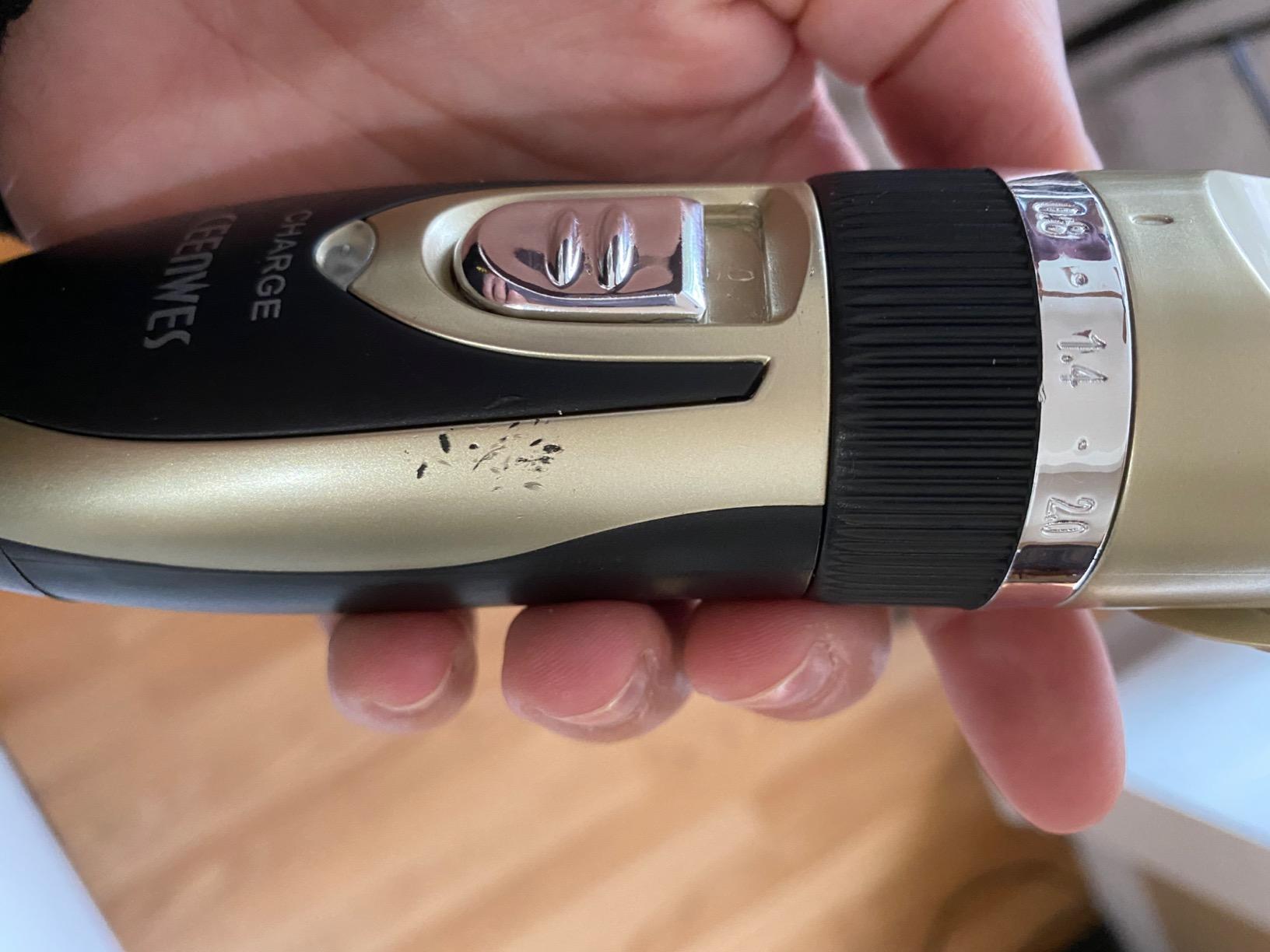
The blade adjusts across five positions from 0.8mm to 2mm, which lets you dial a shorter cut without changing combs mid-session. That matters when your dog can only manage five minutes: you can change length without stopping to swap parts, and the session ends before the dog escalates.
Accessories, Battery Capacity and Storage
The 600mAh battery gives 70 to 80 minutes after a 50-minute charge. That is adequate for routine trims on small and medium dogs and tight for a full body clip on a large one. It also works with a cord, which is a genuinely useful fallback if your dog’s anxiety spikes precisely when the battery dies.
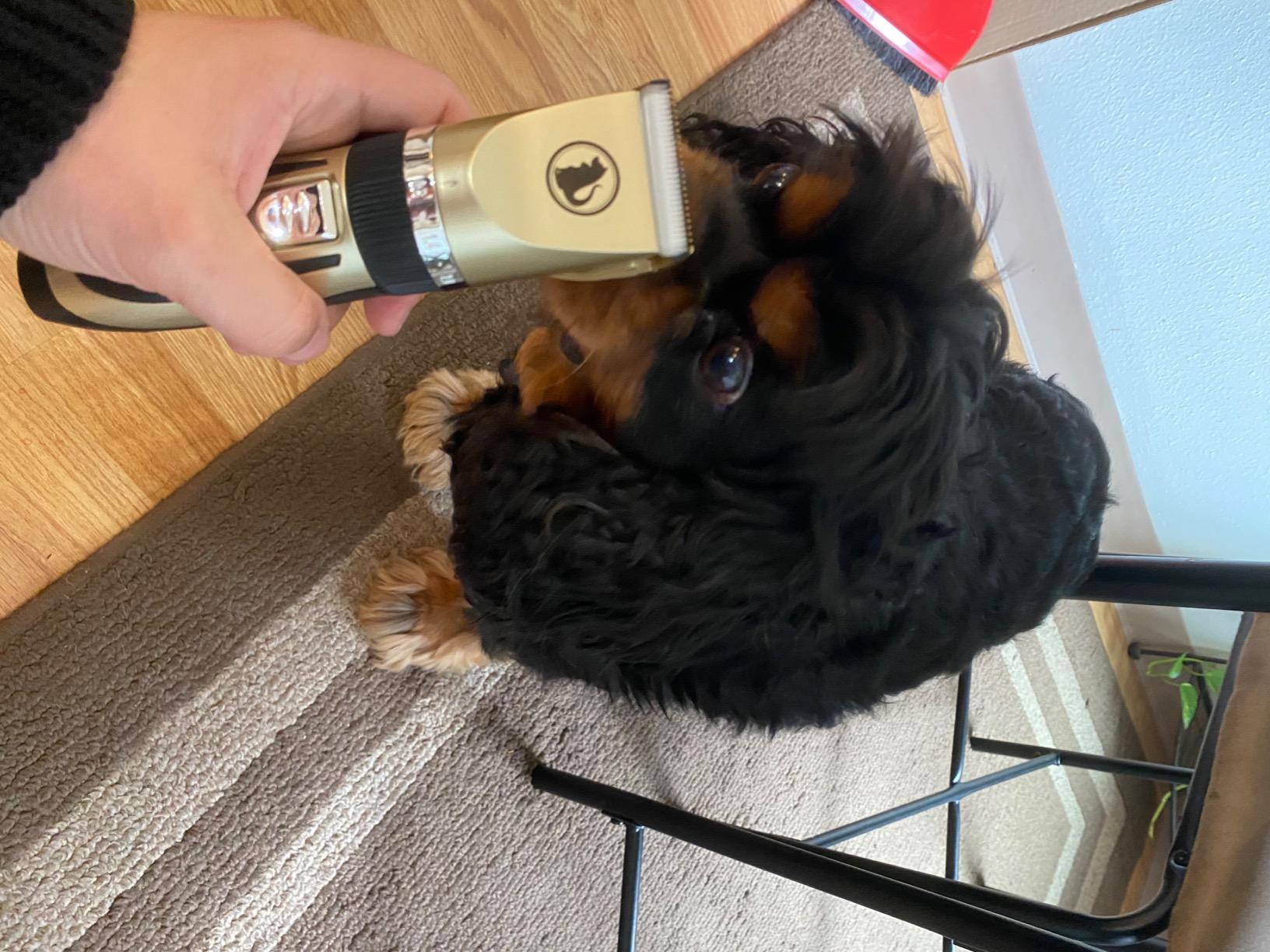
Two honest notes. The accessories are stored underneath the case, so on day one you will almost certainly miss the scissors. And at about 60 dB this is not the pick for a dog who is severely noise-averse; it suits a dog who dislikes grooming but tolerates normal household sound.
4. Highdas Cordless Low Noise Kit – Best for Short Coats and Beginners
- About 50 dB low-vibration motor aimed at sensitive dogs
- Stainless steel and ceramic blades cut without pulling
- Up to 120 minutes of cordless runtime covers thick coats
- Washable detachable blade head makes maintenance simple
- Underpowered on very thick or dense double coats
- Entry-level construction feels light
- Runtime falls short of the claim on larger animals
- Basic accessory set
Highdas is the low-stakes starter tool. If your dog is nervous about the idea of grooming but not yet phobic, and the coat is short or medium, this does the job without a steep learning curve for you.
What the Blade Combination Buys You
The stainless steel and ceramic blade combination resists both pulling and overheating, and that pair of qualities is the single best thing you can look for in a first clipper. Warm blades show up hours later as skin irritation, and pulling is felt immediately, so a blade that does both jobs well protects your desensitization work rather than undermining it.

Up to 120 minutes of runtime per charge is generous for the class, and the detachable blade head washes under running water. Maintenance being quick matters more than it sounds, because every extra step between sessions is a step where a busy owner decides to skip the practice.
Where Power and Runtime Fall Short
The built-in adjustment dial plus four guard combs at 3, 6, 9 and 12mm cover the lengths most people need. One-button operation also means fewer reasons for the start of a session to feel complicated and hesitant.
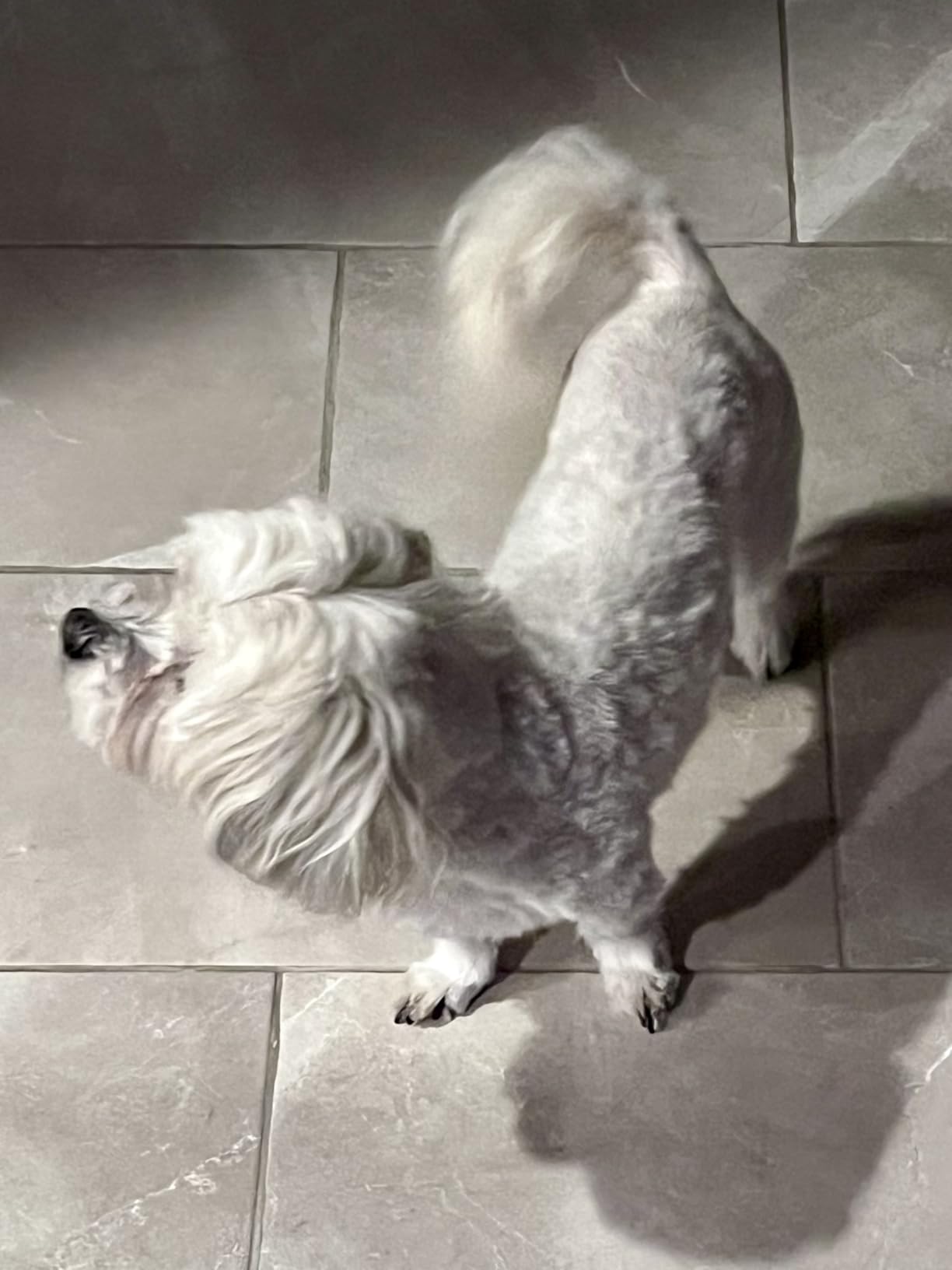
The honest limit is power. Several users find it underpowered on dense double coats, and runtime on larger animals does not reach the advertised figure. If you have a thick-coated or mat-prone dog, move up to the HOLDOG or the Wahl corded unit instead of fighting this one.
5. Wahl Professional Animal Bravura Lithium Ion – Best for Small and Senior Dogs
Wahl Professional Animal Bravura Lithium Ion Clipper, 41870-0438, Turquoise
- Professional-grade Wahl build from a century of clipper making
- 5-in-1 blade covers several finishing lengths in one head
- Very light body suits small and senior dogs
- Fast recharge and 90 minutes of cordless use
- Full accessory set with charge stand and case
- Considerably pricier than consumer-grade alternatives
- Light duty and not built for thick double or wire coats
- Replacement blades and parts cost extra
- Not the quietest option for very sound-sensitive dogs
The Bravura answers a specific problem that gets missed: grooming an older dog who cannot stand for long, or a small breed that reacts to the sheer size and weight of a full-size machine. At 8.8 ounces with a compact body, it is one of the least imposing tools in this roundup, and size alone puts nervous dogs off.
Size and Weight for Small or Senior Dogs
Owners frequently pair it with a heavier clipper, using the Bravura for faces, paws and finishing work and something heavier for the body. If you are desensitizing a dog from scratch, that split is genuinely useful, because you can do the sensitive parts with the small tool first and let the dog end the session on a win.
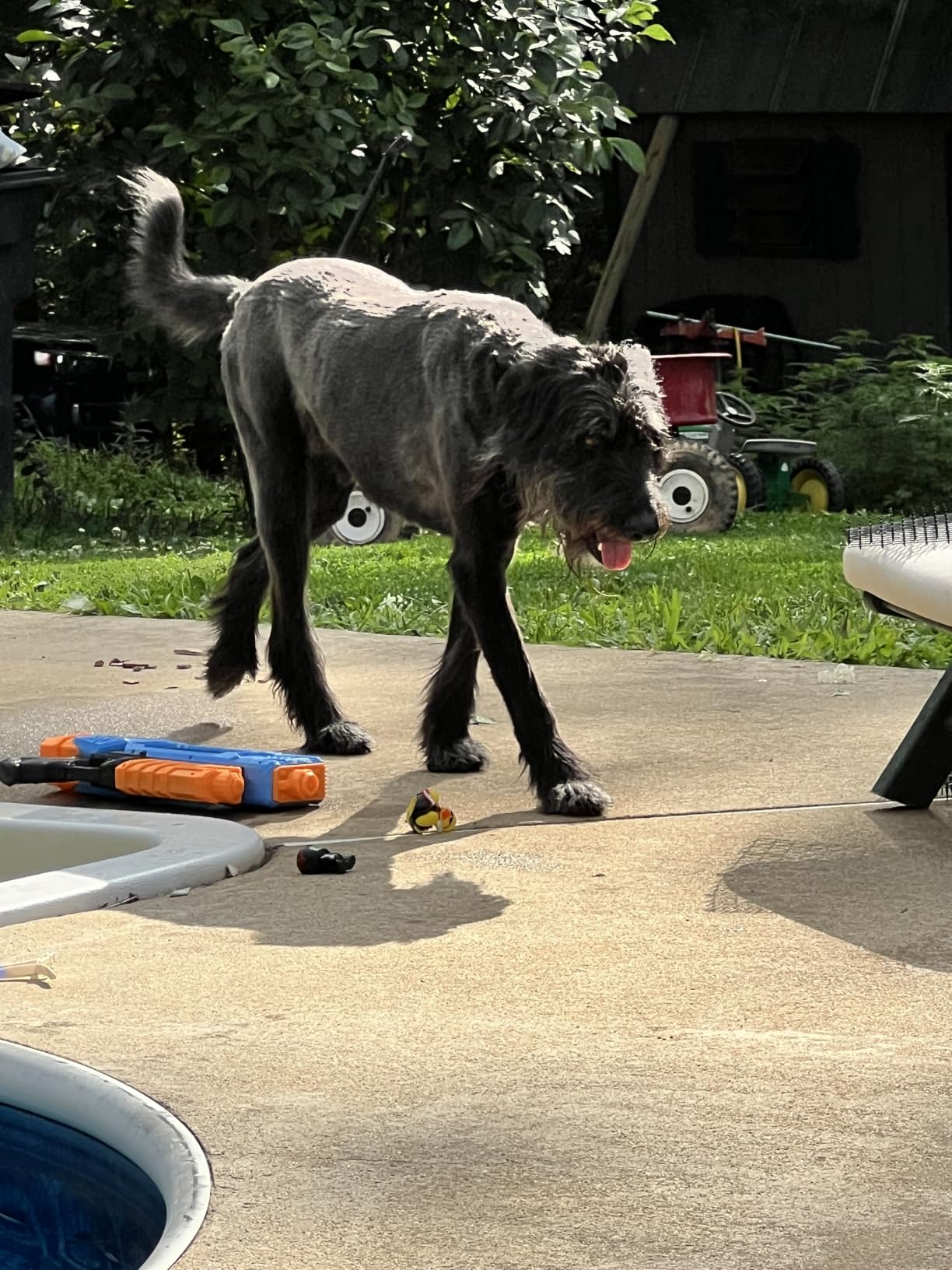
The adjustable 5-in-1 fine blade covers #9, #10, #15, #30 and #40 finishing lengths in a single head. Fewer blade changes means fewer pauses, and pauses are where nervous dogs escalate.
It gives 90 minutes of cordless operation with a 60-minute quick recharge, and it runs plugged in when you want it to. The package includes six plastic guide combs, a cleaning brush, blade oil, a charger, a charge stand and a soft storage case.
Light-Duty Limits and Cost Reality
Two things to be clear about. This is a light-duty tool intended for feet, face, finish work and light body clipping, so it is not the answer for a thick double coat or a wire coat. And it is not the quietest option here, which matters if your dog’s fear is primarily about motor sound rather than about handling.

The cost is the other consideration. Owners who buy it for the light duty it handles often wonder whether a cheaper detail tool would have done the same job. Buy it if you specifically need professional finishing capability; do not buy it expecting it to replace a body clipper.
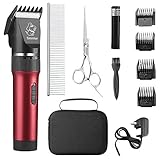
6. SMINIKER 5-Speed Rechargeable Kit – Best for Cool-Running Blades
Sminiker Low Noise Horses Clippers Rechargeable Cordless Pet Clippers Grooming Kit with Storage Bag 5 Speed Professional Animal Clippers Pet Grooming Kit
- Very low low-pitched hum that noise-fearing pets tolerate
- Blade stays sharp and does not run hot
- Five speeds and an R-shaped edge give good control
- Raised edge design reduces accidental skin contact
- Louder with plastic guards fitted because of rattling
- Ceramic blade needs frequent cleaning when working through mats
- Guard combs do not suit very long hair
- Still needs settling time before starting
The defining characteristic here is heat. Owners on small, thin-skinned breeds raise the same worry repeatedly: that a clipper gets uncomfortably warm against the skin, and that the dog learns to associate warmth with the grooming session. This model’s ceramic and titanium blade is specifically built to resist heat build-up, and reviewers confirm it stays cool even with the plastic guards fitted.
Blade Temperature and Low-Pitched Hum
Sound-wise it is described as a low-pitched hum rather than a whine. If your dog tolerates a steady rumble and reacts to thin high-frequency sound, that pitch difference is often the whole conversation. It also runs at about 50 dB claimed, with low vibration.

Five speed settings and an R-shaped blade edge give good control on sensitive areas, and the raised edge profile is intended to reduce accidental skin contact when you are working around paws, ears and sanitary areas.
Runtimes, Guards and Reported Owner Results
Runtime is the standout: a three-hour charge gives up to eight hours of use, and a storage bag is included. For someone doing many short desensitization sessions rather than occasional long trims, that means the tool is always ready and you never wait on a charge before a practice run.
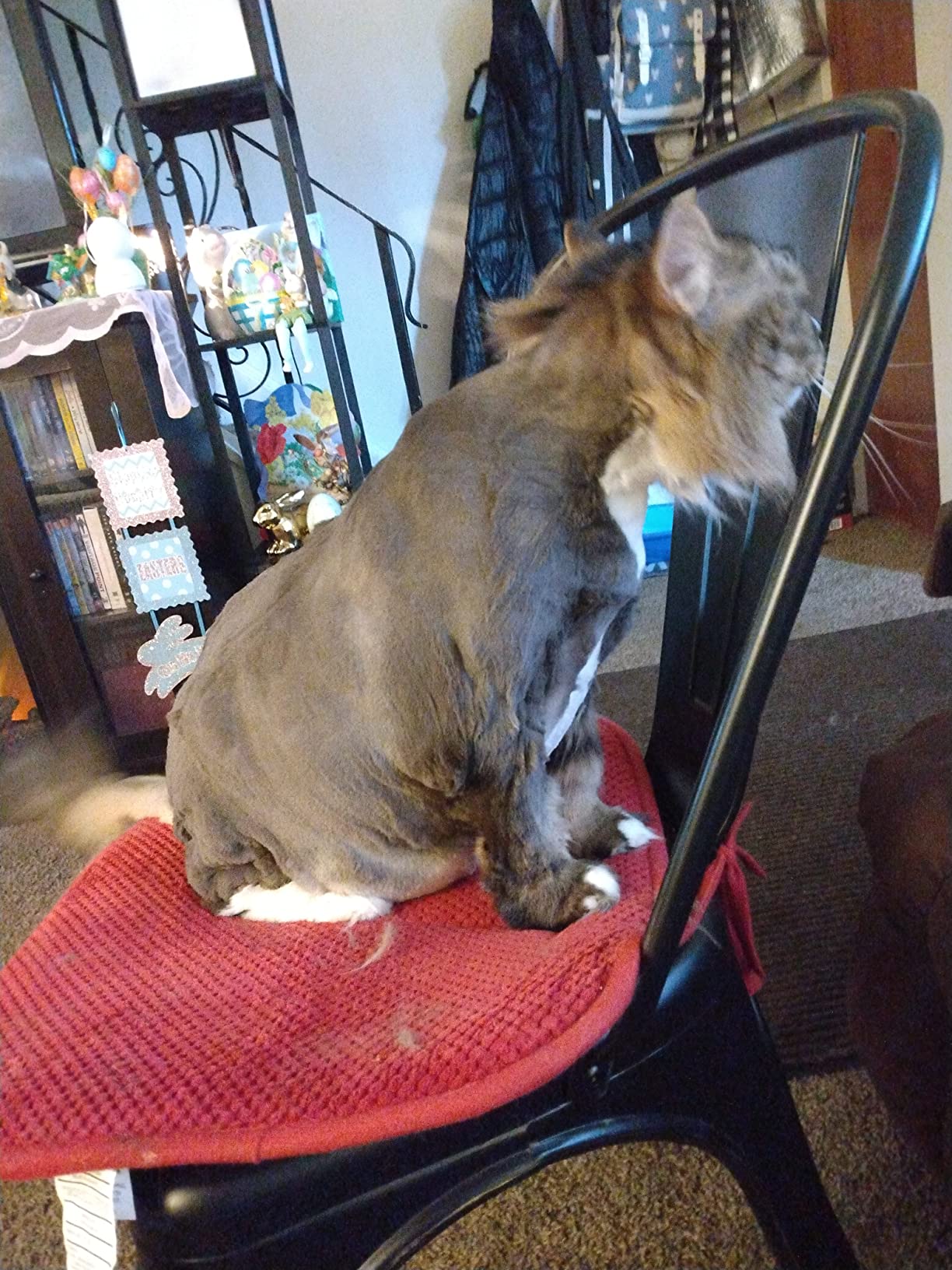
Be aware it gets louder with the plastic guards attached, because of the rattle, and the guard combs do not suit very long hair well. The ceramic blade also needs frequent cleaning when working through mats. The most interesting review pattern here is behavioural rather than mechanical: several owners describe gradually introducing the clipper over several short sessions until the pet relaxed or fell asleep, which is exactly the protocol above working in practice.
7. oneisall 2-in-1 Clipper and Paw Trimmer Kit – Best Two-Tool Kit
oneisall 2 in 1 Pet Cat & Dog Grooming Kit – Quiet Cordless Dog Clippers & Paw Trimmer for Grooming Pet Hair
- Two tools handle body coat and delicate areas separately
- Within 60 dB with low vibration
- Long battery life covers multiple pets on one charge
- Six guard lengths for fine control over finish
- 60 dB is louder than dedicated ultra-quiet models
- Two devices means two batteries to maintain
- Bulkier and pricier than single-tool kits
- Paw trimmer suits detail work only
This solves a problem the other single-tool options create. A nervous dog often tolerates the idea of a trim on the body and reacts strongly to a blade near the face, ears or paws. Giving those two jobs to two different tools means the small, delicate areas get a small, delicate machine.
Separating Body Coat From Sensitive Areas
The main clipper runs for four hours on a three-hour charge, and the paw trimmer runs for two hours on a two-hour charge. Both are USB rechargeable with an indicator light, and the main clipper works while charging so a flat battery never has to end a session early.
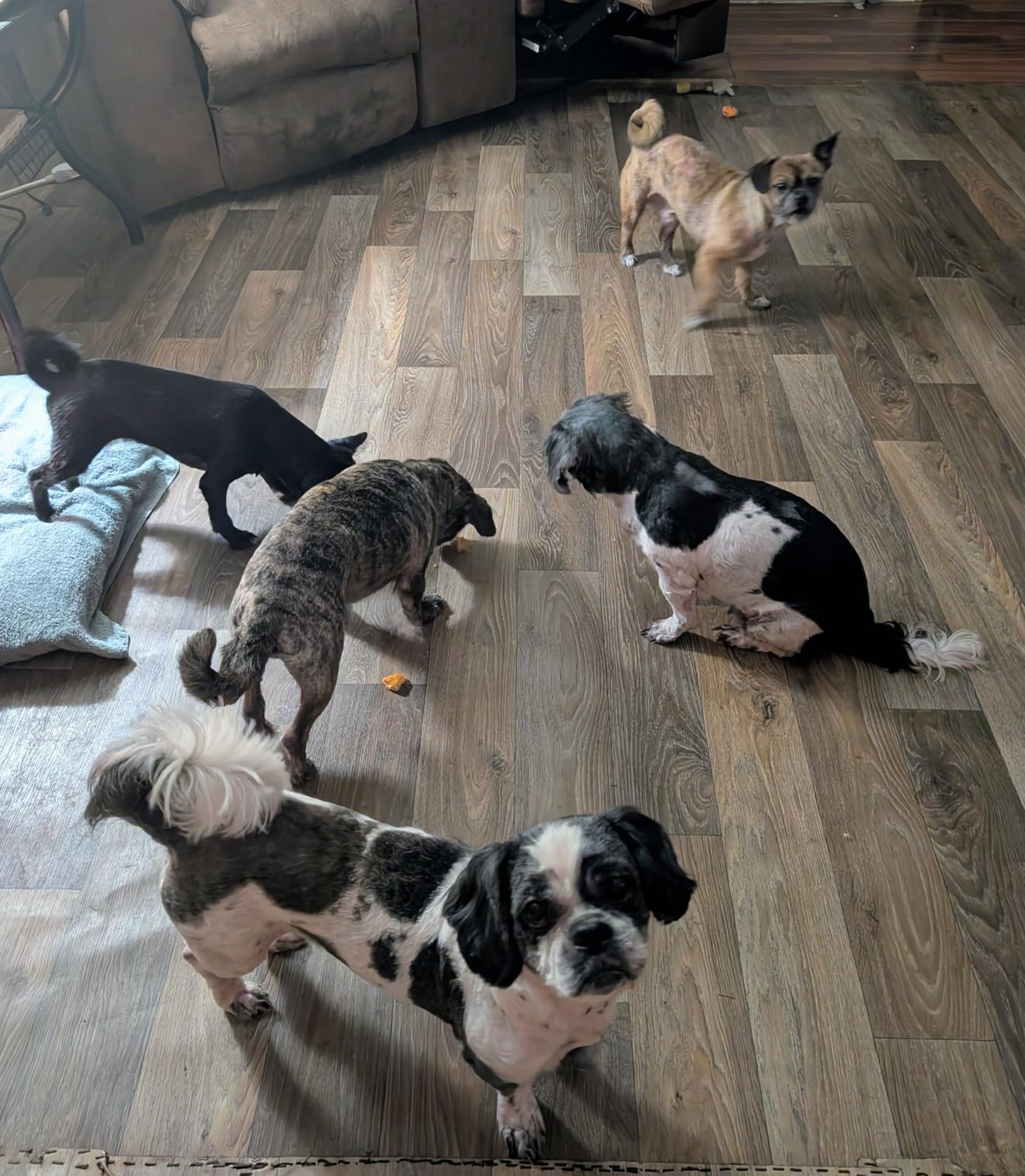
The upgraded motor controls noise within 60 dB with reduced vibration. That is higher than the sub-50 dB claims from some cheaper rivals, and the difference is audible in side-by-side terms, so it is not my pick for a severely sound-phobic dog. It is a strong pick when the fear is about handling and restraint rather than decibels.
Battery Management, Bulk and Guard Range
Six guide guards from 3mm to 18mm plus a cleaning brush, comb and scissors cover routine trims, and the separate paw trimmer handles pads, sanitary areas, eye corners and ear fringes without you needing a full-size blade near sensitive skin.
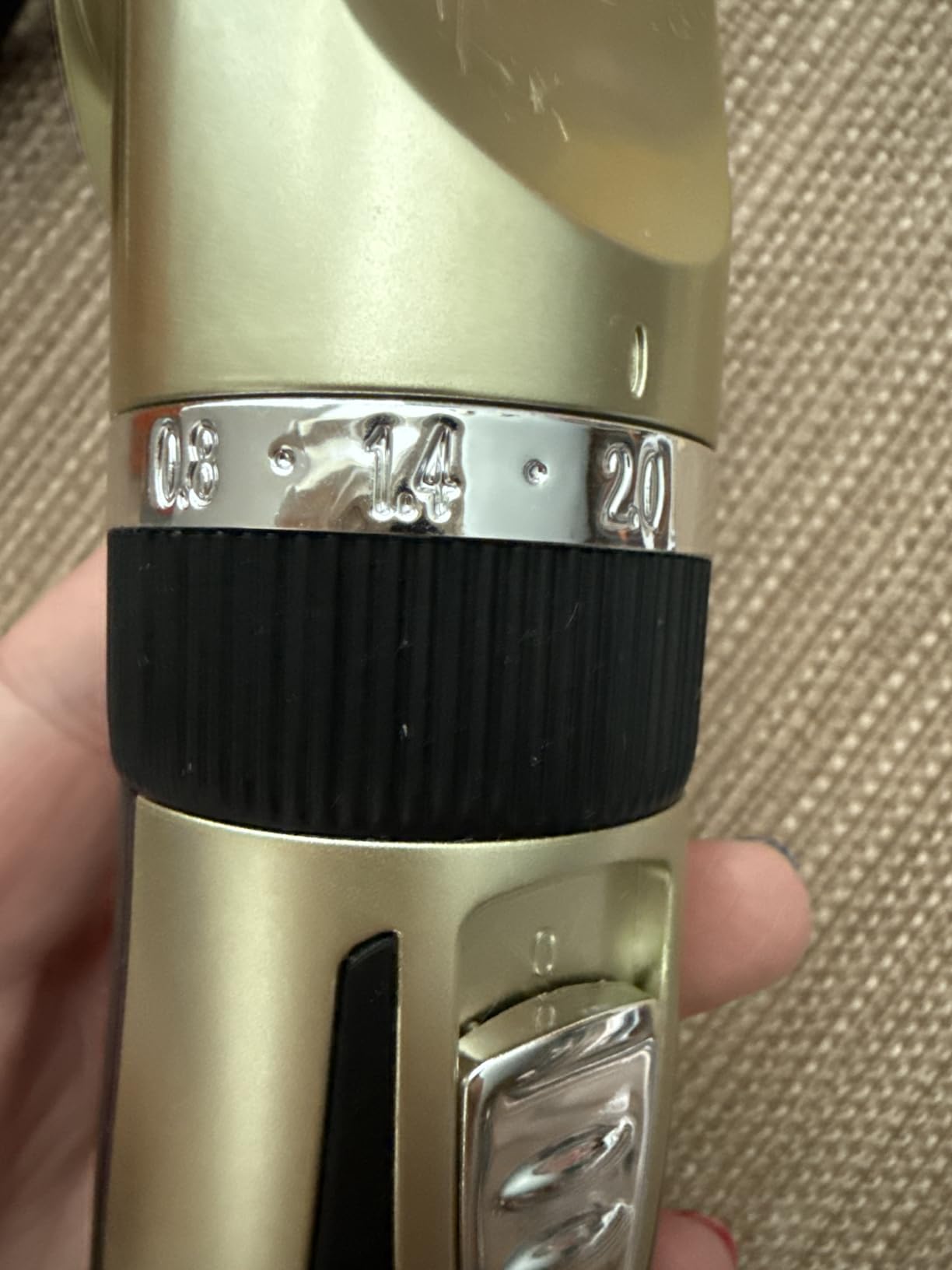
Two devices means two batteries to maintain and charge, which is real friction for owners who will forget. It is bulkier and pricier than single-tool kits. And the paw trimmer is small, so treat it as a detail tool rather than something that will take a thick body coat quickly.
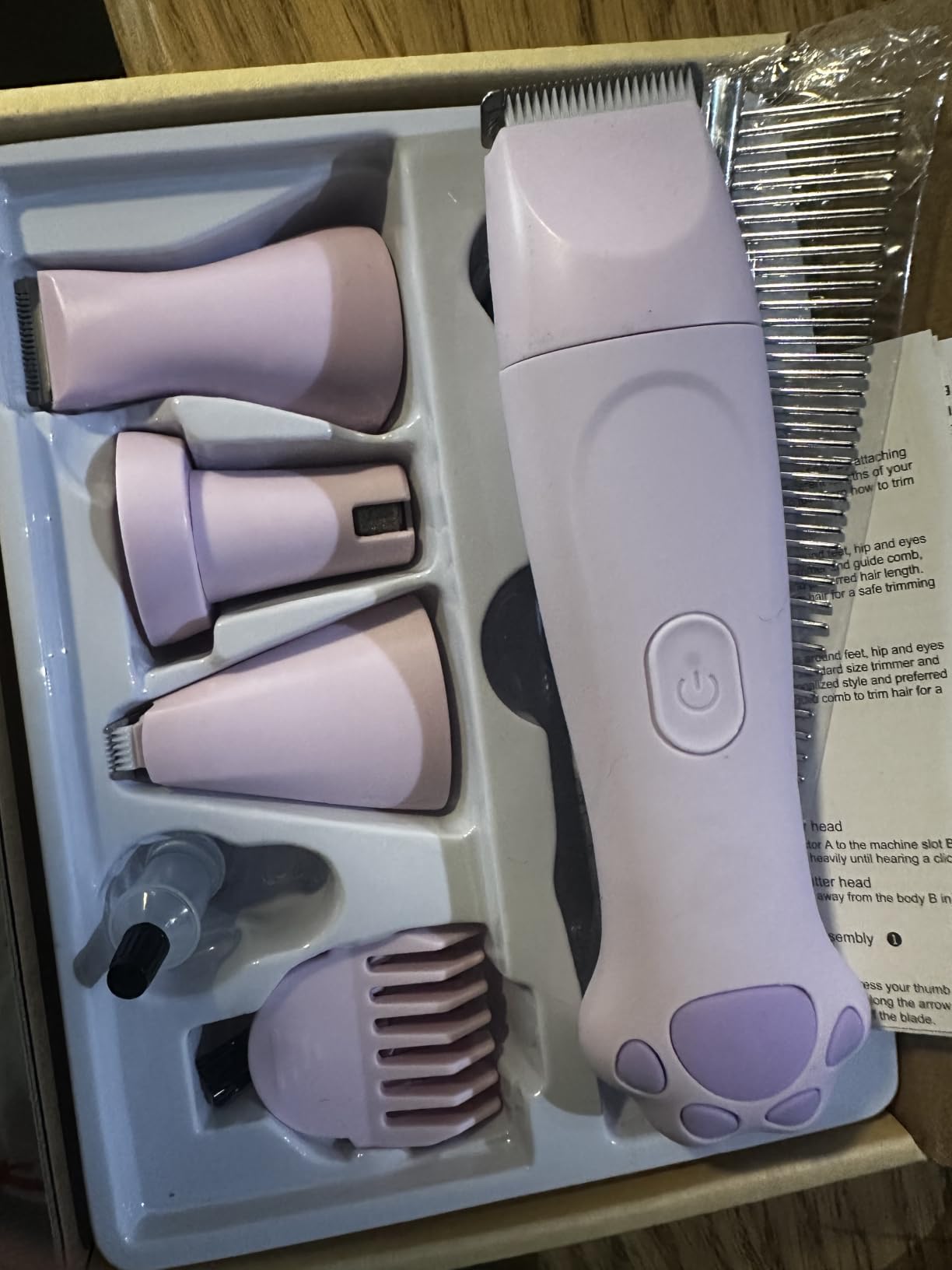
8. HEAPETS Rechargeable Low Noise Clipper – Budget Pick
- About 50 dB operation so timid pets can be groomed without fear
- Ceramic blades trim thick hair without snagging or pulling
- High-speed motor keeps blades moving through dense coat
- Long 180 minute runtime on a three hour charge
- Waterproof detachable head rinses clean
- Needs scissors pre-cutting on long thick coats or blades can jam
- Lightweight plastic body flexes under pressure
- Basic accessory set
- Newer listing with fewer long-term reliability reviews
HEAPETS is the cheapest way to start a desensitization program well. You are buying a low-cost tool to practise with, and practising with an unfamiliar expensive machine is a mistake, because your dog is learning an association with that specific object.
Blade Quality at the Entry Price
The stated noise figure is about 50 dB from a high-speed rotating motor, and the ceramic blades are reported to cut without snagging or pulling. For the price bracket, a ceramic blade is unusual and it is the right priority, because a dragging blade undoes every quiet-motor advantage you paid for.
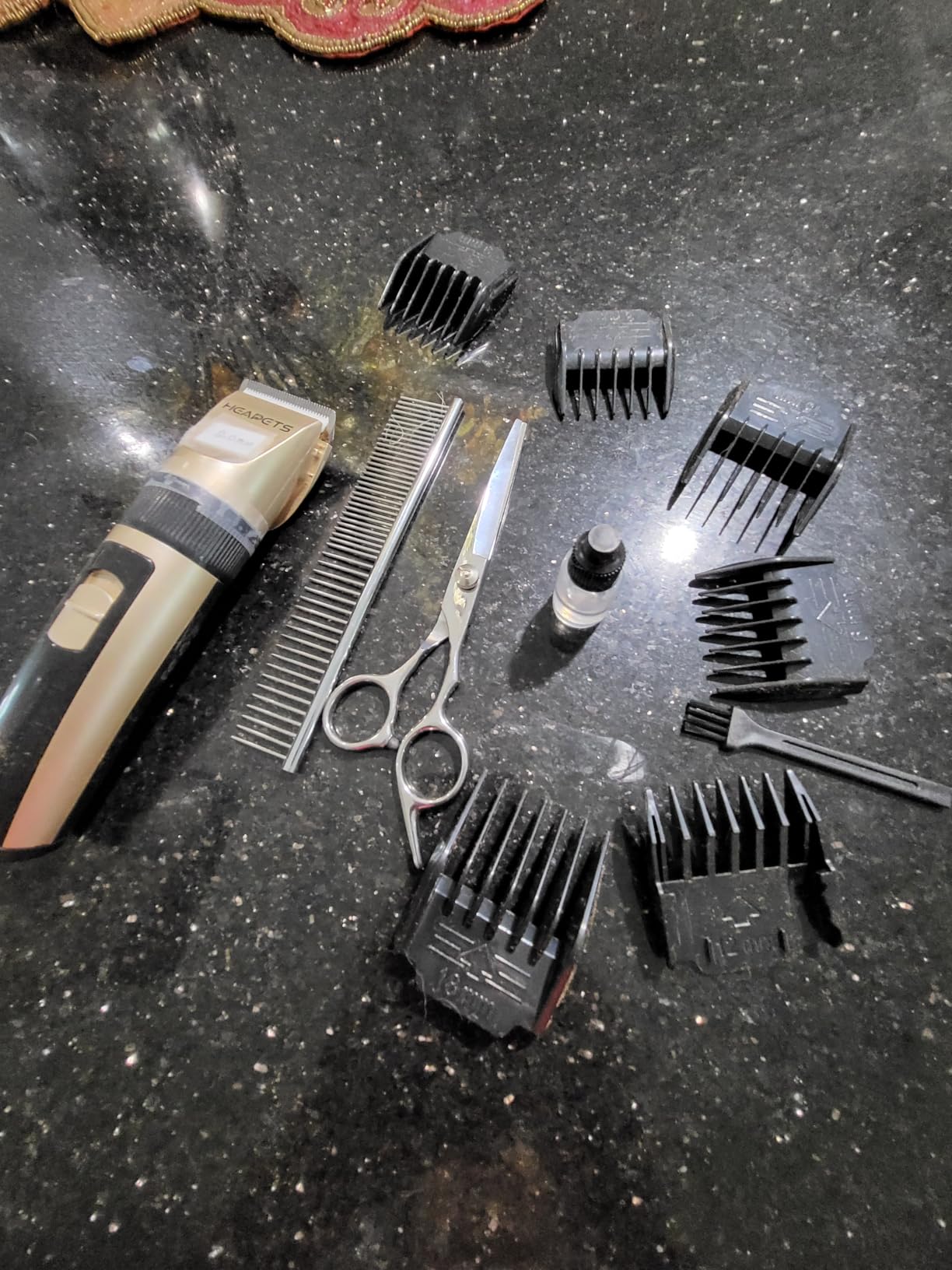
Runtime is the practical strength here: roughly 180 minutes of continuous use from a three-hour charge. Charging from a wall adapter, a power bank, a desktop or a laptop means you can top it up between practice sessions rather than planning around a socket.
Pre-Cutting, Jam Risk and Build Quality
Six length options from 3mm to 18mm cover most needs, and the detachable waterproof blade head rinses under running water. Fast cleanup matters more than usual with a nervous dog, because a five-minute session should not be followed by a fifteen-minute cleaning job.
The main caveat appears repeatedly in reviews: on long or thick coats you must pre-cut with scissors first or the blades can jam. Jammed blades mean stopping, restarting and a dog who has learned that the sound precedes an interruption. The plastic body also flexes under pressure, and this is a newer listing with fewer long-term reliability reports behind it.
9. Veeconn 4-in-1 45 dB Grooming Kit – Lowest Stated Noise Figure
4-in-1 Dog Clippers for Grooming Kit – 45dB Quiet 150-Min Run Non-Slip Grip
- Lowest stated noise figure in this roundup at about 45 dB
- Four heads cover body
- face
- paws and nails in one package
- Very light at 4.7 oz with a non-slip grip reducing hand fatigue
- USB-C fast charge with 150 minute runtime
- IPX7 waterproof body rinses clean
- Lowest customer rating in this group with a higher share of one-star reviews
- Only three guide combs limit length options
- Newer listing with a shorter track record
- More reports about power on thick coats
This is the quietest claim in the group at about 45 dB, and it comes with a shock-absorption layer plus a very light 4.7 ounce body. If your dog reacts to motor sound above all else and the coat is short, the specification here is the closest fit to your problem.
Four Heads in One Package
It is also the only kit in this roundup with four detachable heads: a full-body clipper, a face and ear detail trimmer, a paw trimmer and a nail grinder. That is a lot of function for a nervous dog’s owner who does not want to buy four separate tools.
Charging is fast and modern: 1.5 hours of USB-C gives 150 minutes of runtime with a four-level battery indicator, and the body is IPX7 waterproof so it rinses under the tap. Rounded ceramic blades with R-shaped edges are designed to hug the skin rather than sit flat on it.
Noise Claim Versus Cutting Power
I want to be direct about the catch. This has the lowest average customer rating in the group, and the critical reviews focus on cutting power with dense and thick coats rather than on noise. The noise claim is the appeal; the power complaints are the risk.
There are only three guide combs at 2mm, 3mm and 6mm, which is a narrow range compared with kits offering six sizes. It is also a recent listing with a short track record, so long-term reliability data simply does not exist yet. For a short-coated dog in a desensitization program, those are acceptable trade-offs. For a thick double coat, they are not.
10. Wahl Pro Ultra Quiet Torque Corded Clipper – Best Corded Workhorse
Wahl USA Pro Ultra Quiet Torque Corded Hair Clipper, Metal Housing
- Double-insulated metal housing is a quiet mechanism and runs cool
- Corded design removes battery anxiety during long sessions
- Torque motor handles thicker coats than plastic-bodied clippers
- Full 12 piece guard set for precise blending
- Made in the USA with a limited lifetime warranty
- Corded only with no cordless freedom
- Heavier at over 3 pounds and harder for small or elderly handlers
- Braided cable can snag in tight spaces
- Marketed primarily as a human hair clipper
This is the mechanism that is genuinely quietest, and the reason is mechanical rather than marketing. A double-insulated metal housing damps vibration and runs cooler than the plastic bodies that dominate the budget end of this category, which is exactly the combination that decides whether a nervous dog tolerates a clip.
Why Metal Housing Changes the Sound
There is a real advantage to going corded for a frightened dog: there is no battery anxiety, no mid-session failure and no charging ritual to manage. You plug it in and it runs for as long as the session lasts, which for some owners removes one more source of hesitation.
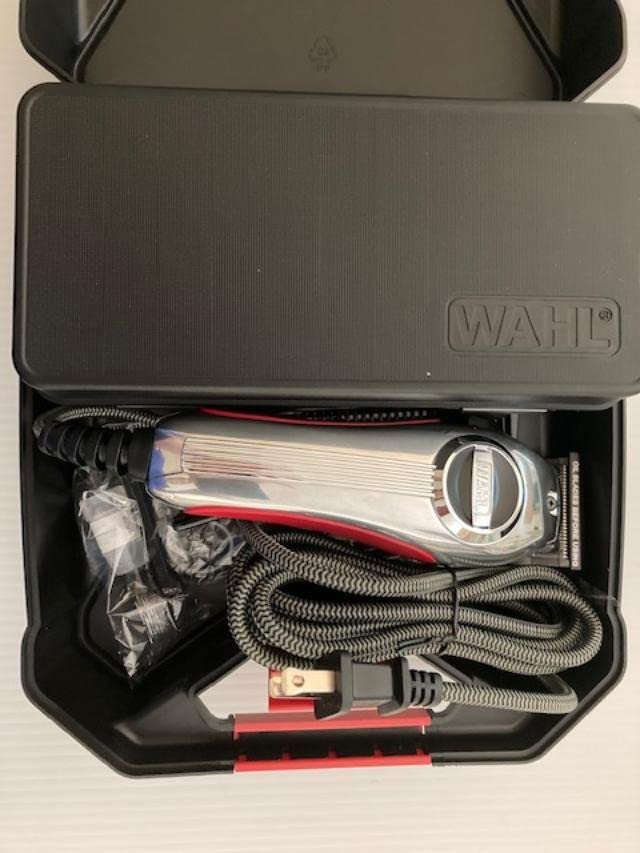
The torque motor also gets through denser coats than lightweight plastic clippers, and the twelve Secure-Snap stainless steel guards run from 1/16 inch up to 1 inch, which gives genuine blending control for finishing work. It ships with a hard storage case, guard caddy, comb, scissors and clipper oil, and carries a limited lifetime warranty.
Weight, Cable and Corded Limits
The weight is the honest drawback: over three pounds, which is heavy for a small dog or an owner with limited grip strength. The braided cable is a durability win but can snag or restrict movement in a tight space.
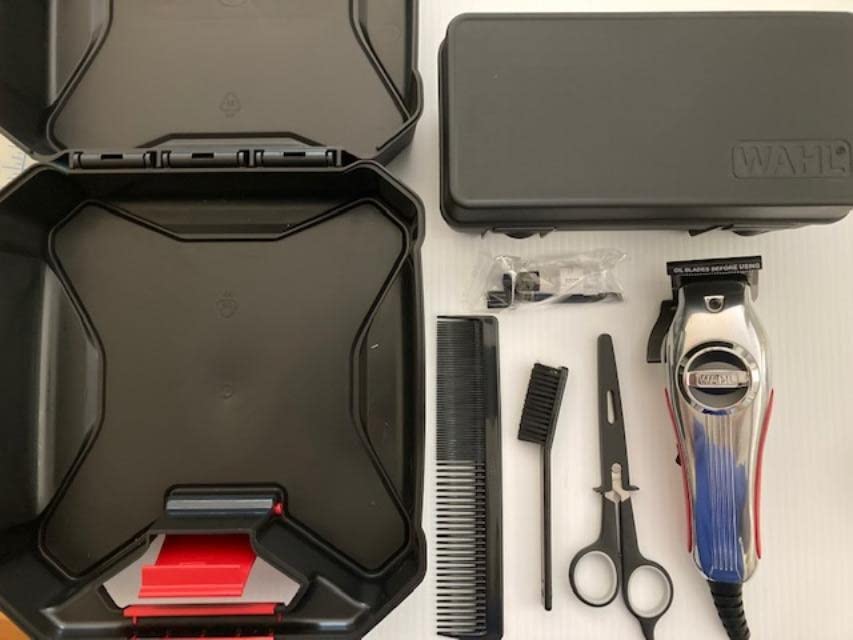
Two more caveats. It is corded only, so the freedom of movement that helps with a moving dog is gone, and owners regularly report that as the main trade-off for pets who are fussy about being handled. And it is sold primarily as a human hair clipper, which means you are buying a general-purpose tool rather than one designed around pet coat geometry.
How to Choose Quiet Dog Clippers: The Buying Guide
Evaluate these in order. Noise matters, but it is the first item on the list rather than the only one, and the order itself is the reason some owners succeed where others keep replacing clippers.
1. Pitch and housing before decibel figure. A low hum in a damped housing beats a high whine in a plastic shell even at a similar reading. If a listing describes shock absorption, double insulation or low vibration, that is more meaningful than another five decibels.
2. Blade quality next. Look for ceramic or titanium-blended blades. A sharp blade cuts; a dull blade drags, and dragging is felt instantly and hurts more than the motor ever will. Owners on small, thin-skinned breeds worry most about heat, so cool-running blades matter twice over.
3. Weight and grip. For senior or mobility-limited dogs, and for owners doing the grooming, a lighter body with a non-slip grip reduces hand fatigue and lets you keep sessions short without straining. Lighter bodies also look less threatening to a frightened animal.
4. Power source. Cordless gives freedom of movement and no cable to snag; corded gives uninterrupted power and a quiet metal mechanism. Nervous dogs who flinch at being handled often cope better with cordless, since you can move freely around them.
5. Two speeds minimum. A low speed is not a nice-to-have. It is what lets you start a session gently while a dog is still learning, and it reduces the force you need to apply, which reduces both pulling and blade heat.
6. Runtime and blade head removal. Five-minute sessions mean the tool needs to be ready often. Look for a detachable or rinsable head and a charge time you can work around, and treat fast cleanup as a feature rather than a detail.
7. Guide comb range. Six sizes covers most home trims. Three sizes, as on the four-head kit here, limits you to very short work. For a first clipper on a nervous dog, a wider range means fewer mid-session adjustments and fewer reasons to stop early.
Coat matching in brief. Short and medium coats are handled by everything in this roundup. Thick and double coats need blade strength and torque, which points to the titanium-ceramic or corded torque options. Wire coats and very fine rabbit-type coats are the two categories where these consumer machines are weakest, and both are better handled by a professional groomer or a specialist blade.
A note on nail trimming versus coat clipping. These are different tools. Nail clippers and grinders work on keratin, not coat, and the fear a nervous dog shows toward a loud motor does not always transfer to nail handling. If your dog tolerates nail work, keep that job separate and do not let a bad clipper session contaminate it. A grinder at low speed with frequent pauses, a file for smoothing, and treats delivered by a helper rather than by the person holding the paw all reduce the stress load. If nails are the problem rather than the coat, clipper noise is the wrong variable to optimise.
Why not use human clippers. The mechanical reasons are real. Pet blades are set to run a small distance above the skin with a protective tooth geometry; human blades are set closer and sit flatter, which is why they nick and pull on thin animal skin. Pet blades are also designed to stay cooler at the speeds they run. A human clipper on a nervous dog is more likely to cause pain and heat, which damages the association you are trying to build.
Maintenance decides whether the blade stays good. Clear hair from the head after every session, rinse if the head is washable, and put a drop of clipper oil on the blades regularly. Dry blades dull quickly, and a dull blade is the fastest route to a dog who now hates the sound. Replace or sharpen heads on a schedule you set rather than waiting for them to drag.
What about the dryer and vacuum? If the clipper is not your loudest problem, no clipper in this roundup will fix the problem. A towel-dry method, a lower dryer setting held further away, or simply air-drying for short coats removes more noise from the session than any motor change.
Finally, on cost. A salon visit typically lands somewhere around 40 to 70 dollars per trip depending on your area and coat, and nervous dogs often need more visits than average because sessions are short. Check the running costs of home grooming against that before deciding a professional-grade tool is out of reach, and factor in blade oil and replacement heads rather than the purchase price alone.
Frequently Asked Questions
What are the quietest dog grooming clippers?
The quietest widely available pet clippers sit in the 45 to 60 dB range by manufacturer claim, which is roughly the level of normal conversation or a refrigerator hum. Among the options in this guide the Veeconn 4-in-1 kit makes the lowest stated claim at about 45 dB, while the oneisall Low Noise kit, the HOLDOG, the Highdas and the SMINIKER all state figures of about 50 dB, and the Wahl Pro Ultra Quiet Torque earns quietness from a double-insulated metal housing rather than a headline number. Treat every one of these figures as a manufacturer claim, since no independent test conditions are published.
Is there such a thing as silent dog clippers?
No. Every motor makes noise, and no pet clipper on the market is silent. What you can buy is a relatively quieter clipper: one with a low-pitched motor instead of a high whine, a damped housing that limits vibration, and a sharp blade that cuts rather than drags. Those three together remove most of the startle response, but they do not remove fear on their own. For a dog who is already frightened, the desensitization protocol matters more than the hardware.
How do you desensitize a dog to clippers?
Work in stages and never advance until the current stage is genuinely relaxed. Days 1 to 3, put the switched-off clipper near your dog while they eat. Days 4 to 6, switch it on briefly in the same room during a meal. Days 7 to 9, touch the switched-off clipper to the paw or shoulder while treating. Days 10 to 14, run it in the air just above the coat for one second at a time. Days 15 to 20, press a guarded blade onto the coat without cutting. Day 21 onward, take one small section and stop while your dog is still relaxed.
How long does it take to desensitize a nervous dog to clippers?
For a severely noise-averse dog, expect two to four weeks of short daily sessions before a full body trim is realistic. A commonly used frame is three days to notice a change, three weeks to build a new habit and three months to stabilise it, though desensitization usually runs on the slower side of that. Some dogs never fully complete the process, which is a genuinely reported outcome rather than a failure on your part. If sessions keep ending in distress, step back one stage and consider a certified fear-free groomer.
Are cordless dog clippers as quiet as corded ones?
Not always. A corded clipper with a double-insulated metal housing, such as the Wahl Pro Ultra Quiet Torque, can be mechanically quieter and runs cooler than most plastic-bodied cordless models. Many cordless options state figures around 50 dB, which is genuinely quiet. The practical advantages of cordless are freedom of movement and no battery anxiety, and for a dog who flinches at being handled or moved around, that freedom often matters more than a few decibels.
Can I use human hair clippers on my dog?
It is not recommended. Pet blades sit a small distance above the skin with protective tooth geometry, while human blades are set closer and flatter, which is why they nick and pull thin animal skin. Pet blades are also designed to run cooler at their operating speeds. Using a human clipper on a nervous dog increases the chance of pain and heat, which damages the association you are trying to build. If you already own one and want to try it, only use it on a fully coat-on area away from the face, ears and paws.
Our Verdict on the Best Quiet Dog Clippers for Nervous Dogs
Start with the oneisall Low Noise Grooming Kit if your dog reacts to sound above all else and the coat is not unusually thick. Its claimed sub-50 dB motor, curved skin-safer blade and 13.4 ounce body cover the three things that matter most in one package, and the huge review history gives you a realistic picture of its limits.
Choose the HOLDOG if the coat is thick, double or prone to matting, since the titanium-ceramic blade and three speed settings handle what lighter plastic machines stall on. Choose the Wahl Bravura if you are grooming a small or senior dog and need a light, compact body for faces, paws and finishing rather than body length.
Then do the part that decides the outcome. Run the staged protocol for two to four weeks before you take a single full trim, keep sessions to five or ten minutes, and learn your dog’s five stress signals well enough to stop on a tail tuck. Hardware gets you the first successful minute; the protocol is what makes grooming boring rather than frightening.
And if it stalls, that is information, not a verdict on you. Step back one stage, space the sessions out, and keep a certified fear-free groomer in your back pocket. We cover the wider tool question in our [full dog clipper guide](https://www.wpa-pool.com/best-dog-clippers/), but no clipper at any level replaces the training.