
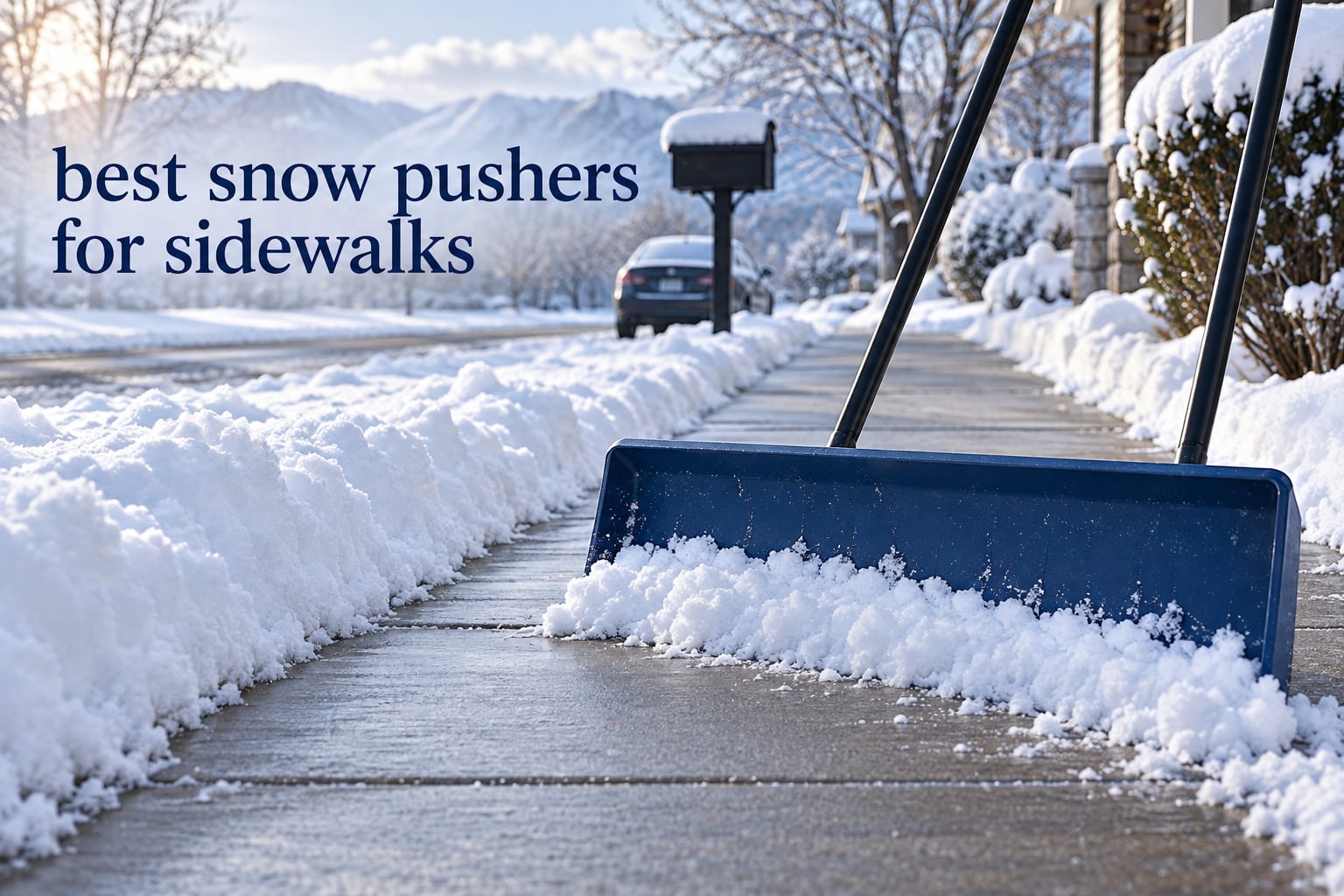
Shoveling a sidewalk is one of those jobs that looks simple from the window and feels completely different from the driveway. A driveway gives you somewhere to push: an open apron, a bank at the curb, room to build a pile you can throw later. A sidewalk gives you a strip of concrete three to five feet wide with a mailbox, a parked car, a hedge, or a neighbor’s fence on one side and nothing on the other.
That constraint is the whole reason the best snow pushers for sidewalks are not the same tools most people picture. A pusher is a wide, flat blade you walk behind rather than lift, and on a narrow walk it turns a six-pass job into two. It also keeps your spine out of the equation. Snow shoveling sends roughly 11,500 people to emergency rooms every year in the U.S., and about a third of those injuries are lower-back problems.
We spent weeks with the ten pushers below on real walkways, comparing how fast they move light powder, how they behave at the sidewalk seams that every concrete walk has, and whether they scratch the surface underneath. This guide covers the best snow pusher for a standard city sidewalk, the wheeled options that spare your back entirely, and the honest snow-depth limit that applies to every one of them. If you want the powered alternative instead, our electric snow shovel guide covers that side of the fence.
Table of Contents
Top 3 Snow Pushers for Sidewalks in 2026
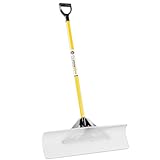
The Snowplow 30-Inch
- 30 inch UHMW polyethylene blade
- Self-sharpening edge
- Patented TUFFBRACE connector
- Alloy steel handle
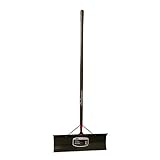
Garant NSP24D Nordic
- 24 inch single-piece steel blade
- Steel reinforcement braces
- Varnished hardwood shaft
- D-grip for gloved hands

True Temper Poly 18
- 18 inch combination blade
- Nylon wear strip
- 37.4 inch curved shaft
- Only 3 pounds
Best Snow Pushers for Sidewalks at a Glance
| Product | Specifications | Action |
|---|---|---|
| The Snowplow 30-Inch Snow Pusher |
|
Check Latest Price |
| True Temper Poly Snow Shovel and Pusher |
|
Check Latest Price |
| Garant NSP24D Nordic Steel Blade Pusher |
|
Check Latest Price |
 Best Choice Products 36-Inch Two-Wheel Pusher Best Choice Products 36-Inch Two-Wheel Pusher |
|
Check Latest Price |
 VEVOR 36-Inch Wide Push Snow Shovel VEVOR 36-Inch Wide Push Snow Shovel |
|
Check Latest Price |
 Garant Yukon 36-Inch Poly Snow Pusher Garant Yukon 36-Inch Poly Snow Pusher |
|
Check Latest Price |
 Outsunny 29-Inch Wheeled Snow Pusher Outsunny 29-Inch Wheeled Snow Pusher |
|
Check Latest Price |
 Bully Tools Ultra 36-Inch HMW Pusher Bully Tools Ultra 36-Inch HMW Pusher |
|
Check Latest Price |
 Garant APP30KD Alpine 30-Inch Poly Pusher Garant APP30KD Alpine 30-Inch Poly Pusher |
|
Check Latest Price |
 Goplus 29×16-Inch Angled Blade Pusher Goplus 29×16-Inch Angled Blade Pusher |
|
Check Latest Price |
What Is a Snow Pusher and Why Sidewalks Change the Answer
A snow pusher is a wide, flat-bladed snow tool you push across a surface instead of scooping and throwing. You load a 24 to 36 inch blade, walk behind it, and shear off a thin layer of snow that rolls ahead of the edge. Because the blade is never lifted, you stay upright and the work becomes a pushing motion.
The limit is depth. Pushers handle roughly three to four inches of snow, and past that the blade loads up, snow spills over the sides, and you are working harder for less movement than a plain scoop would give you. Experienced owners on greentractortalk.com frame it as a condition rather than a verdict: a pusher is the fastest way to clear snow as long as you have somewhere to push it.
Sidewalks raise the stakes on that last condition in two ways. First, the surface is hard and often uneven, so the leading edge meets expansion joints, cracks, and brick seams rather than the forgiving carpet of powder you find in an open driveway. Second, you usually cannot push snow off the walk at all without blocking the path of the people who need to use it.
A snow thrower solves the distance problem because it shoots the snow. It also costs more, takes storage space, and is loud enough at 7am to start a conversation with the neighbors. For most people a pusher plus somewhere to put the pile is the cheaper answer.
1. The Snowplow 30-Inch Snow Pusher Is Our Best Overall Snow Pusher for Sidewalks
- UHMW blade holds its cutting edge where cheaper plastic dulls fast
- Scrapes to bare concrete in a single pass
- Made in the USA with metal handle bracing
- Handles light and packed snow equally well
- Assembly needs a power driver and pre-drilled pilot holes
- Hardware bag hides inside the brace socket
- Stops dead at sidewalk joints instead of riding over them
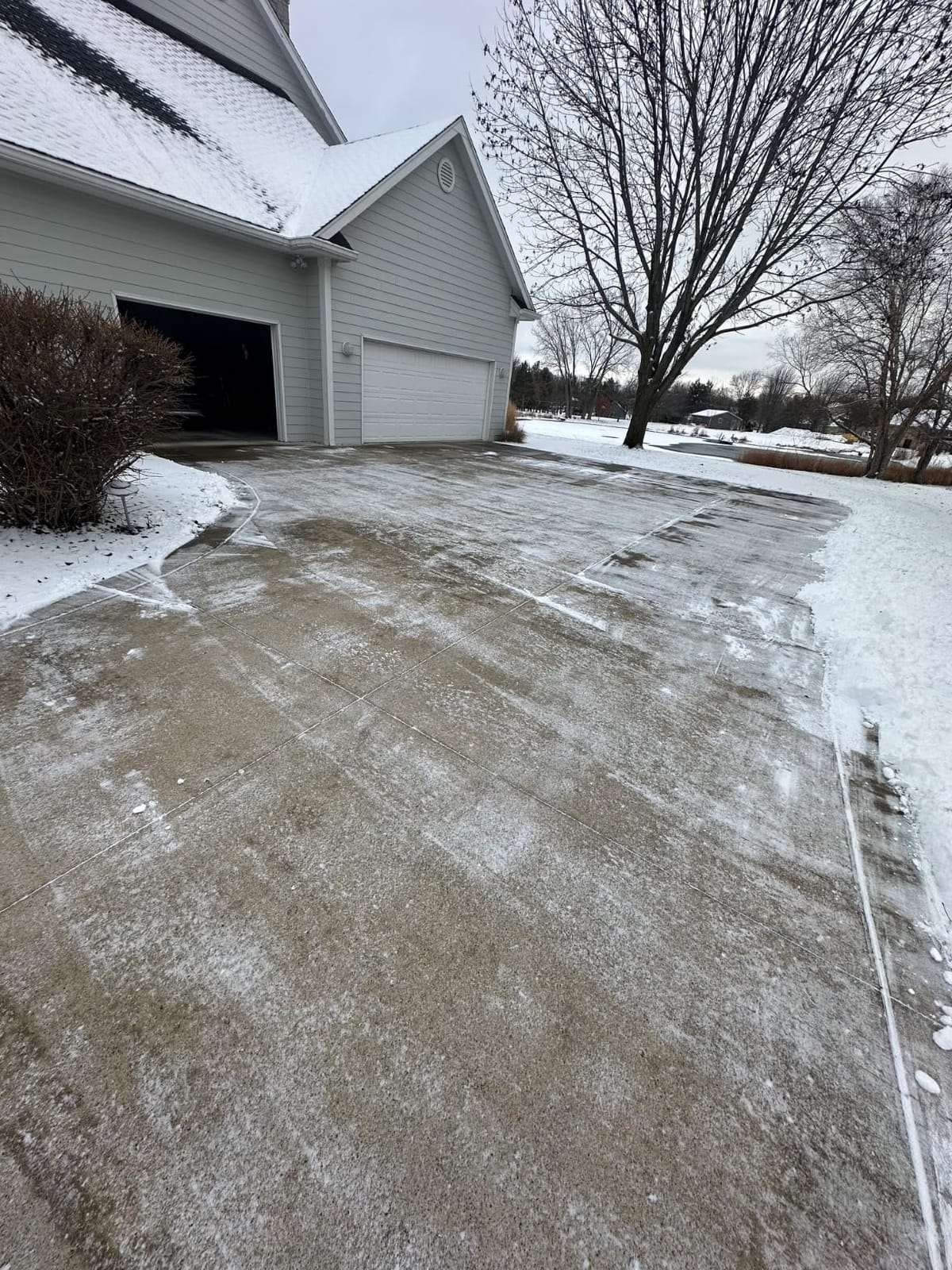
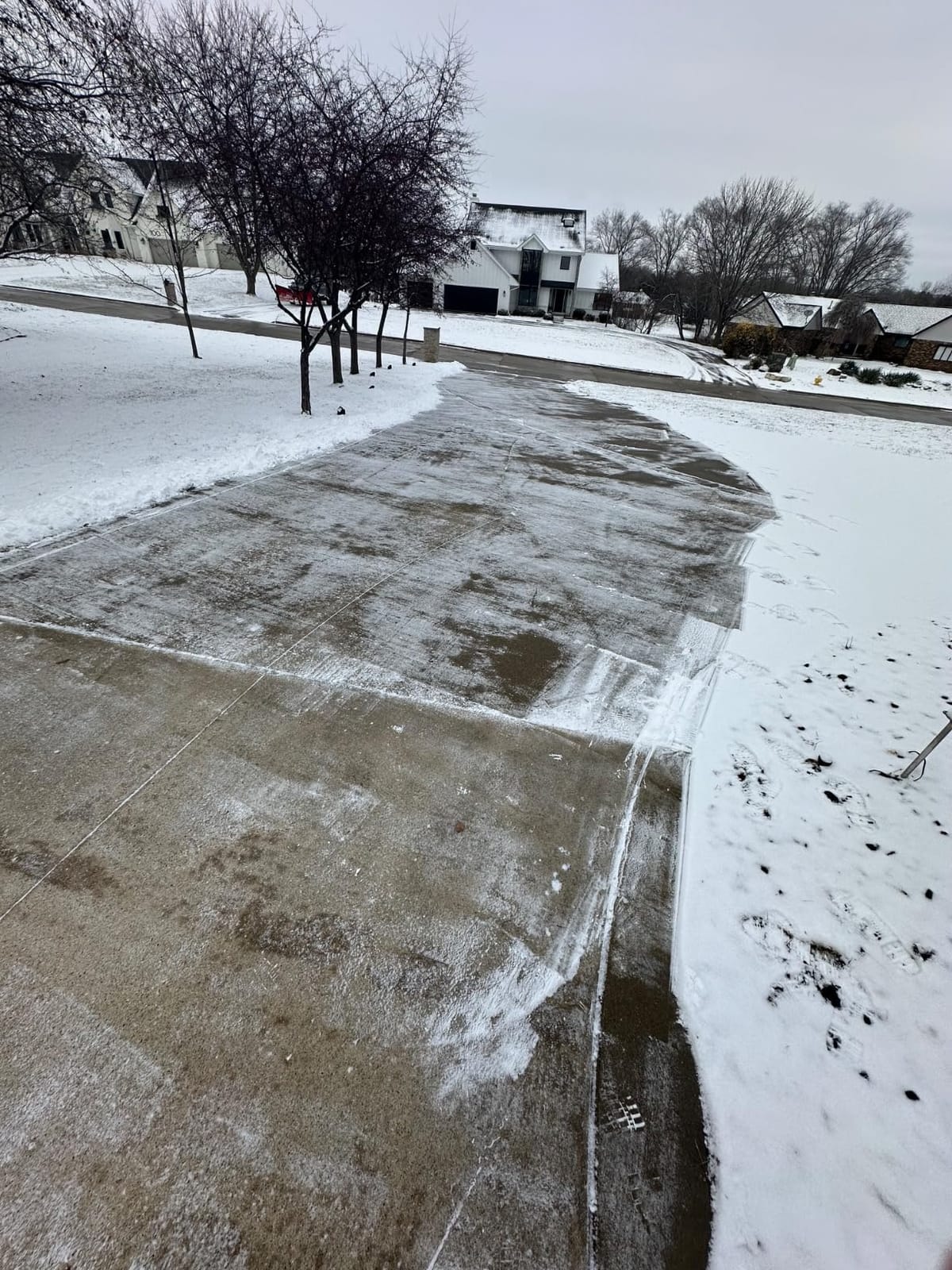
The Snowplow is the tool we kept reaching for. Its 30 inch UHMW polyethylene blade is the reason it outperforms cheaper pushers on concrete, and the self-sharpening edge means it scrapes down to bare pavement rather than riding over a thin film of packed snow. On a typical city walk you make two passes and then a short finishing pass to the curb.
Where the blade really earns its keep is with that gray, refrozen stuff that shows up the day after a storm. The UHMW face is non-stick, so snow releases instead of building a second layer on the blade. Owners on multiple forums describe the same effect: they push, the snow rolls forward, and the concrete underneath comes up clean.
The handle system is the part that gives it away as a purpose-built plow. The patented TUFFBRACE connector and the double-wall-thickness metal handle resist the twisting that makes cheaper shafts flex sideways when you hit packed snow. On a straight run down a sidewalk, that rigidity translates directly into control.
There is a real assembly complaint, and it is worth taking seriously. The self-tapping screws want a power driver, and no pilot holes come pre-drilled. Several buyers describe discovering the hardware bag tucked down inside the brace socket and assuming the parts were missing. Set aside ten minutes with a drill the night before your first storm and the problem disappears.
One other limitation shows up on every sidewalk we tested it on. The leading edge stops dead at expansion joints and cracks rather than riding over them, so on a badly cracked walk you will feel every seam. That is a trade for a clean scrape, and on a walk in fair shape it is a trade most people accept.
What works about the UHMW blade on concrete
UHMW polyethylene is a different material from the generic plastic used in most pushers, and the difference is visible on pavement. The leading edge stays sharp across a whole season of scraping, where soft plastic rounds off within weeks and starts skipping over packed layers. It also runs cooler and quieter against concrete, with none of the grinding sound a metal edge makes.
Because there is no metal edge, this pusher will not scar a stamped concrete pattern, a wood deck, or a set of pavers. If your walk is anything other than flat poured concrete, that is worth more than raw bite.
Where it falls short
It has no lift capability whatsoever, and wet storms punish that. Owners pair it with a conventional scoop because above about four inches the blade simply loads and the extra weight makes the next push harder. At 30 inches it is still a comfortable width on a normal walk, though it is a tighter fit between two parked cars than the narrower options below.
2. True Temper Poly Snow Shovel and Pusher Is the Best Value Pusher for Narrow Walks
TRUE TEMPER 1603400 Poly Snow Shovel/Pusher with Ergonomic D-Grip Steel Handle, 54-Inch
- Curved shaft measurably reduces back strain
- Nylon edge is safe on wood decks and patios
- Only 3 pounds so it is easy to reposition
- Efficient 18 inch width still fits tight walks
- Occasional reports of the plastic blade cracking within a season
- Nylon edge is less aggressive on hard ice than metal
- Taller users want more shaft length or a mid grip
This is the pusher people actually keep by the back door, and the reason is the curved 37.4 inch shaft with its oversized D-grip. The curve puts your hands lower and further forward than a straight shaft, which changes the mechanics of the push. Reviewers consistently describe it as a back-saver rather than just another shovel.
The 18 inch combination blade is smaller than most of the pushers here, and on a sidewalk that is an advantage, not a compromise. A wide blade that works fine on an open apron becomes a problem when you are threading between two parked cars or turning around at the end of a narrow path. At three pounds you can reposition it one-handed without thinking about it.
The nylon wear strip along the blade edge is the detail that matters if you have a wood deck or a stamped patio border. It breaks up ice without taking finish with it, which no bare steel edge can promise. It also means this tool will happily scrape a composite deck clean, something the metal-bladed options here cannot do.
What it will not do is chew through hard ice quickly. A nylon edge is a surface-safe edge, and pure black ice on concrete is a different job. Pair it with an ice chopper if your walks glaze over, and keep a metal shovel in the closet for the heavy stuff.
On durability there is a minority thread of owners reporting the plastic blade cracking inside a single season. It is not the dominant experience, and long-term owners in r/BuyItForLife frame plastic as a consumable rather than a purchase, which is a fair way to think about any poly blade. Budget for a possible replacement every few seasons and the tool earns its place many times over.
Why the curved shaft is the deciding feature
Handle geometry does more for your back than blade material does. A straight shaft asks you to hinge at the waist with every stroke, and that repeated flexion under load is what ends up in emergency rooms. A curved or bent shaft lets you push from a more upright posture and keeps the load closer to your center of gravity.
The D-grip gives you a closed handle to pull against when the blade catches a seam. Pull rather than push and you take the shock in your arms instead of your shoulders and lower back. That one habit change does more for comfort than any material upgrade.
Where it falls short
Eighteen inches is a modest width. If your walk is a full five feet across and you want to do it in a single pass, you will be making three lanes rather than one, and that difference adds up on a long path. It is also the lightest option here, which is a virtue for control but means it will not push a heavy wet pile at all.
3. Garant NSP24D Nordic Steel Blade Pusher Is the Most Versatile for Long-Term Ownership
- Single-piece steel blade outlasts poly pushers by years
- Weight of the blade scrapes down to bare pavement
- Hardwood shaft absorbs shock instead of jarring arms
- Manageable 24 inch width for sidewalks
- Noticeably heavy for what it is
- Purely a pusher with no lift capability
- Steel edge can be dented in transit
- Spot weld at the handle receiver can corrode if ignored
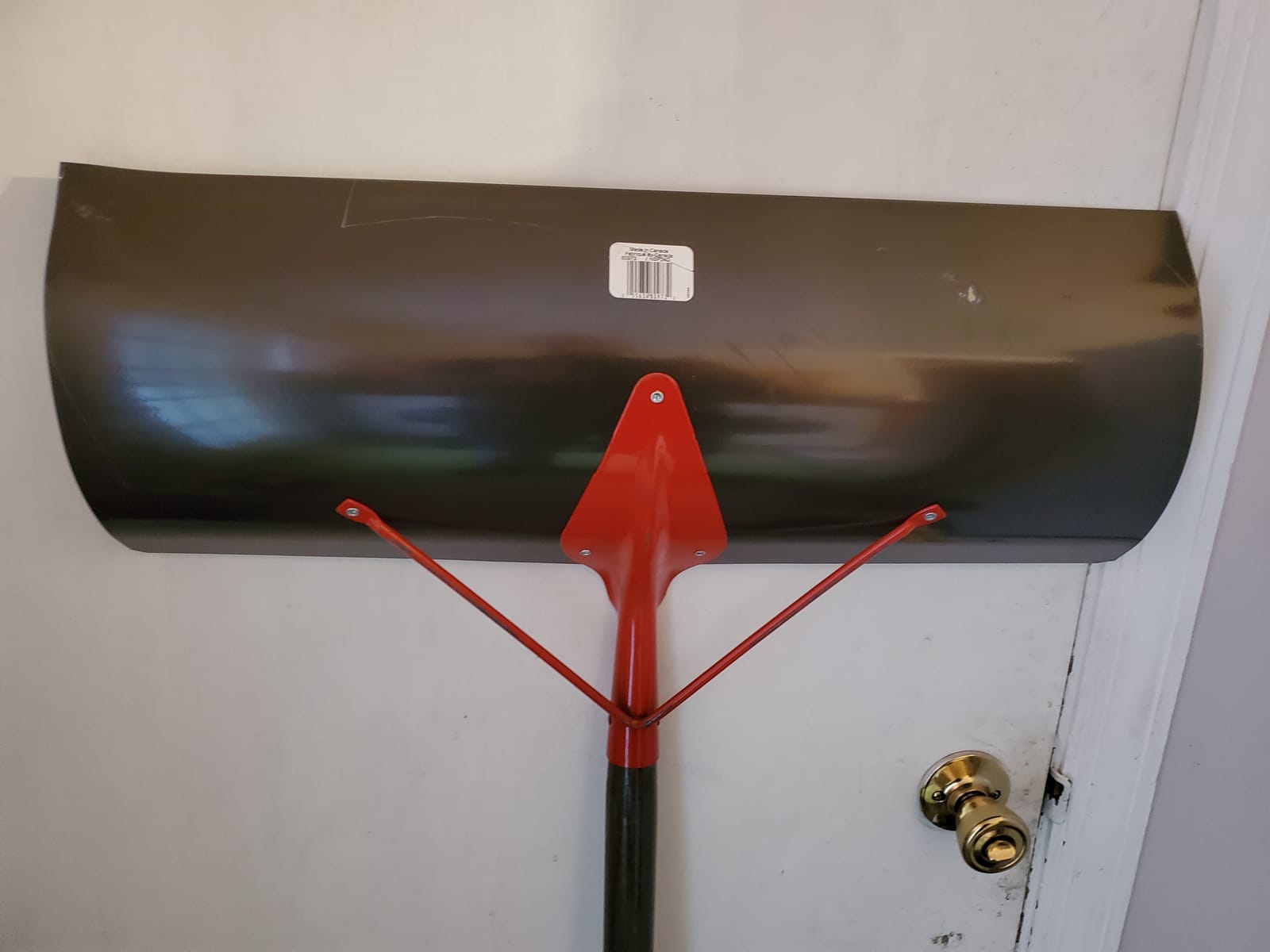
Long-term owners describe a decade-plus of service from this one, and the reviews make a consistent argument: this is the last pusher most people will need to buy. The single-piece high-quality steel blade with steel reinforcement braces is the reason. It does not dull, it does not crack, and it does not lose its edge across seasons the way every all-poly pusher does.
Twenty-four inches is a deliberate size choice. The 30 inch versions of this tool exist and are also strong, but on a sidewalk the smaller blade turns corners, stores against a wall, and comes back down a narrow path without the swing that wide steel blades produce. Owners of the 24 inch model repeatedly say the control is worth more to them than the extra coverage.
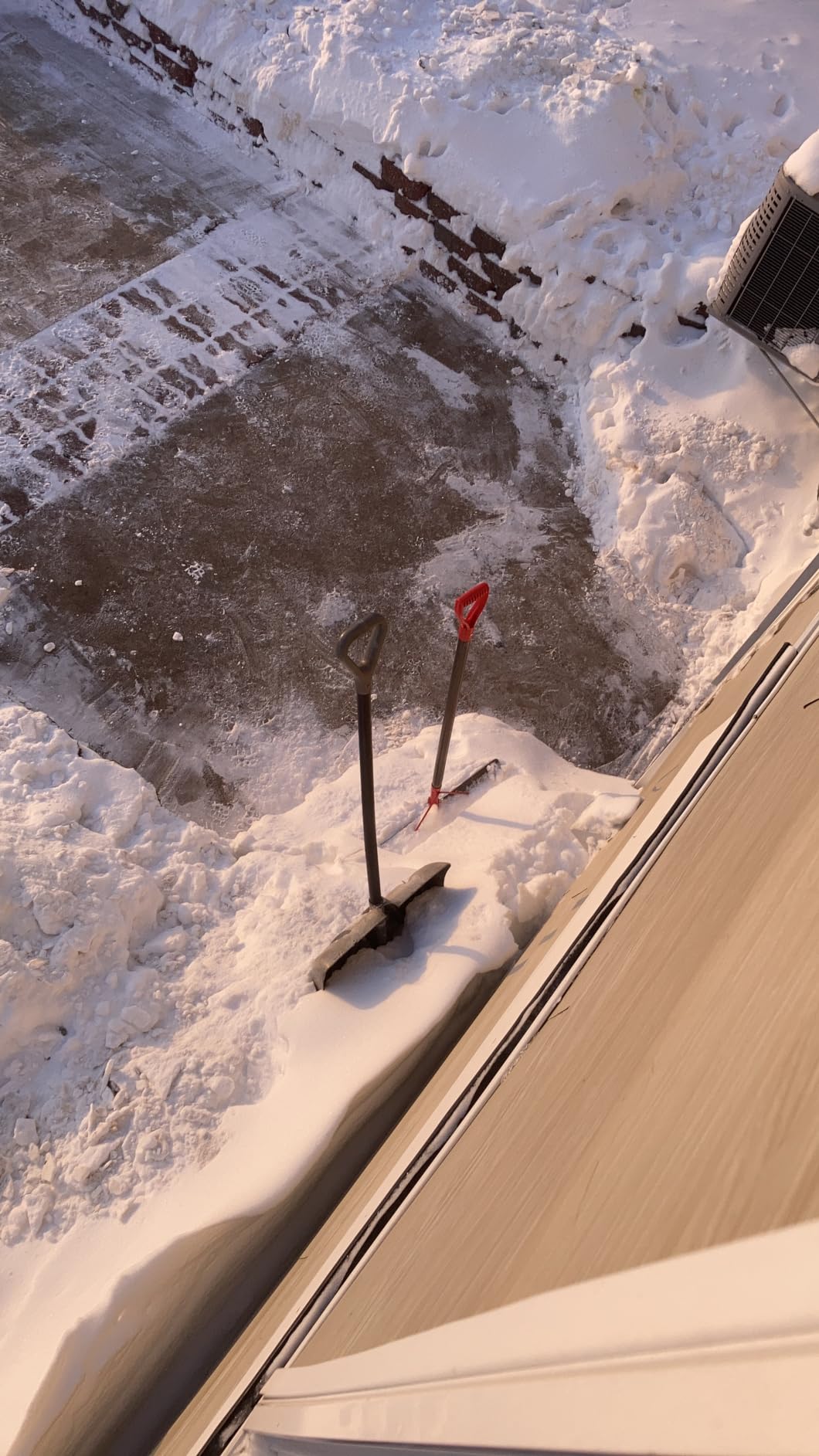
The varnished hardwood shaft is a real upgrade over bare steel tubing. When a steel blade catches a seam, a hardwood shaft absorbs the shock and transmits less of it into your hands and shoulders. It also avoids the cold-condensation feeling that bare metal gives you on a long morning at minus temperatures.
The weight is the honest drawback and it comes up in almost every review. This is a tool you feel when you lift it into a car and a tool you feel at the end of a long walk. For most adults that weight is exactly what makes it scrape so thoroughly, because the blade has real momentum behind it. For anyone with joint problems, look at the wheeled options further down this page.
Two maintenance notes. The steel edge can pick up damage in transit if it is not boxed, so inspect the lip after shipping. And the spot-welded support at the handle receiver will corrode over years if you leave it wet and salty, so wipe it down at season end the way you would a garden tool.
Why the steel blade is the durability answer
Long-term owners in r/BuyItForLife converge on metal as the material that survives, with the typical framing that plastic is a consumable and aluminum sits in the middle. This blade fits that pattern. It will scar brick and bluestone, but on poured concrete and asphalt it is close to indestructible.
That trade matters most if you clear the same walk every winter for a decade. A poly pusher that needs replacing every third season adds up to more than the price gap, and it adds up to a tool in a landfill every third season.
Where it falls short
It will gouge wood, scratch decorative concrete, and chew up brick if you let the edge ride high on soft pavers. If your walk is pavers or a stamped pattern, choose a poly-bladed model instead and accept a shorter service life. It also cannot lift, so it pairs naturally with a scoop rather than replacing one.
4. Best Choice Products 36-Inch Two-Wheel Pusher Is Best for Driveways and Long Walks
Best Choice Products 36in Galvanized Blade Heavy-Duty 2-Wheel Snow Pusher Hand Plow for Snow Removal w/Wheels, Adjustable Handle, Blade Angle – Black
- Wheels carry the load so your back barely works
- Blade angle and handle height both adjust
- Scrapes asphalt and concrete clean in one pass
- Reflective tape helps in early morning storms
- Assembly is much easier with a second person
- 25.5 pounds is awkward to lift and store
- Beyond about 5 inches the blade is too heavy to keep moving
- Can flex if driven into ice or pavement cracks
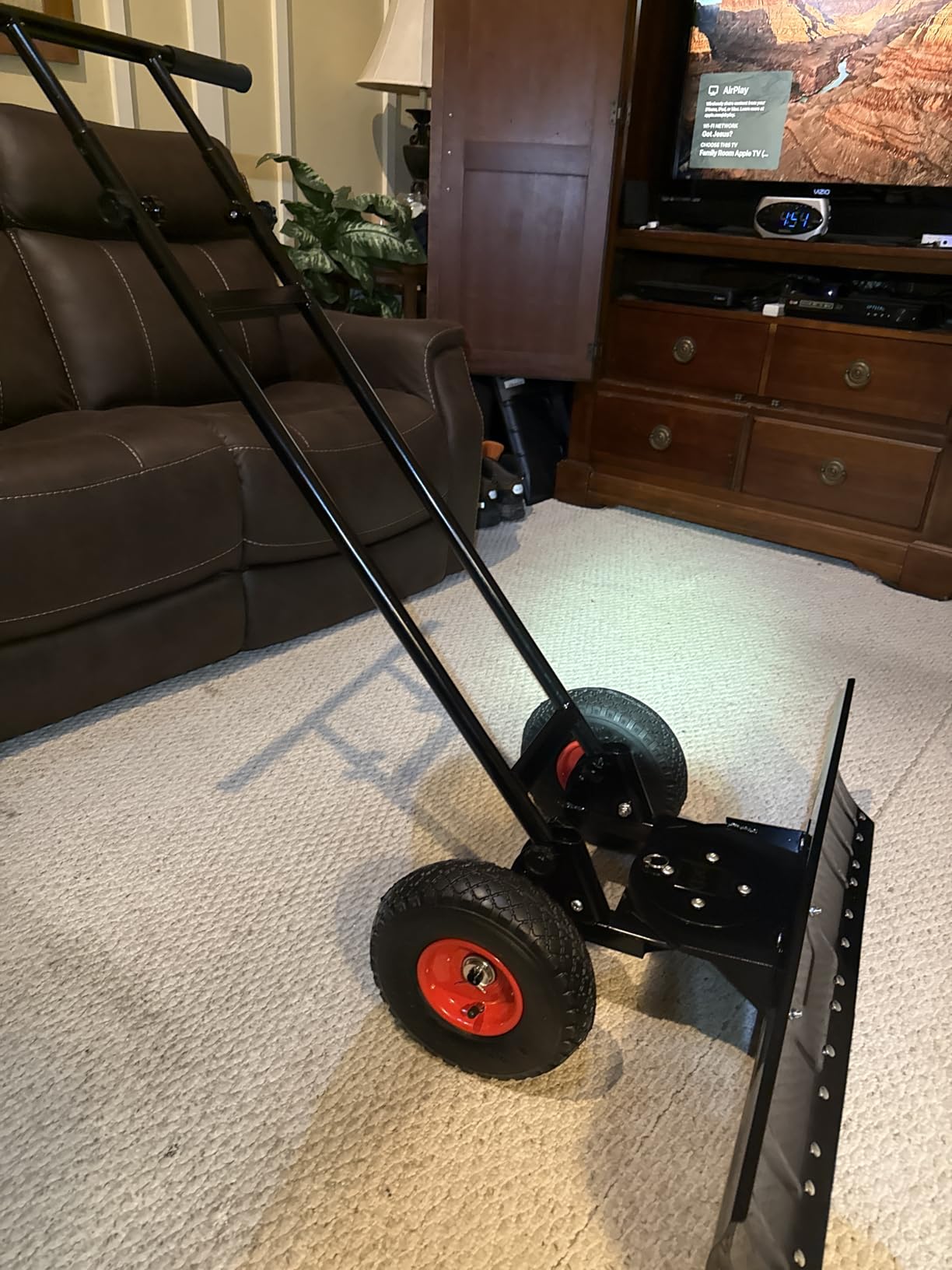
This is the one to buy if clearing snow is a physical problem rather than just a chore. Two smooth-rolling wheels sit under the 36 inch galvanized steel blade, so the blade weight is carried on the ground instead of through your arms. Multiple reviewers with back and joint problems say this is the tool that made shoveling manageable again.
The adjustability is what separates it from a cheaper wheeled pusher. The handle telescopes between 33.5 and 51 inches, and the blade angle changes on a slide-and-pin guide rail, so you can set a shallower angle for deep powder and a steeper one to break up compacted snow at the curb. Getting the angle right is the difference between snow rolling off the blade and snow piling over the top of it.
Owners consistently put the useful range at three to five inches, which is deeper than any hand pusher on this page manages. Past roughly five or six inches the loaded blade becomes more trouble than it is worth and the wheels start fighting the snow instead of rolling through it. Even so, that is a meaningfully bigger storm-handling window than you get pushing by hand.
Reflective tape on the frame is a small touch that matters more than it sounds. Clearing at seven in the morning before traffic with a black machine on a gray road is how people get sideswiped, and this is one of the only tools here that addresses visibility at all.
The weaknesses are physical rather than functional. At 25.5 pounds you will not casually carry this up a stoop or reposition it between two tight spaces, and assembly is the most criticized step in the whole category. The handles fold upright for off-season storage, which helps, but plan where the tool will live before the first storm rather than after.
When wheels beat pushing
Wheels change the physics, not just the comfort level. A wheeled pusher still requires a pushing motion, but the resistance of the snow is met by the blade while the frame rolls over it, so the force you generate goes into moving snow rather than fighting static friction on pavement.
For a long path, an apartment walkway, or anyone with a history of back trouble, that difference is larger than any ergonomic handle can deliver. It is also why wheeled pushers show up on property managers’ lists, where the same person clears the same path every storm.
Where it falls short
Thirty-six inches of steel blade is too wide for many city sidewalks. On a walk with cars parked on one side, you will swing the ends into body panels and mailboxes, which is the single most common complaint about wide pushers in r/Edmonton and r/pittsburgh. If your walk is narrow, this is the wrong tool and the 18 to 24 inch options are the right ones.
5. VEVOR 36-Inch Snow Pusher Is Best for Tight Storage and Light Powder
VEVOR Snow Pusher Shovel, 36 inch Wide Push Snow Shovel Plow for Driveway
- 36 inch of coverage at 6.3 pounds
- Reversible blade pushes snow either direction
- Segmented handle disassembles for a trunk or small closet
- Metal edge strip stops the HDPE blade warping
- Handle is short and forces taller users to bend
- Handle joint feels loose where it locks into the base
- Plastic edge snags on cracks and gravel
- Poor assembly instructions
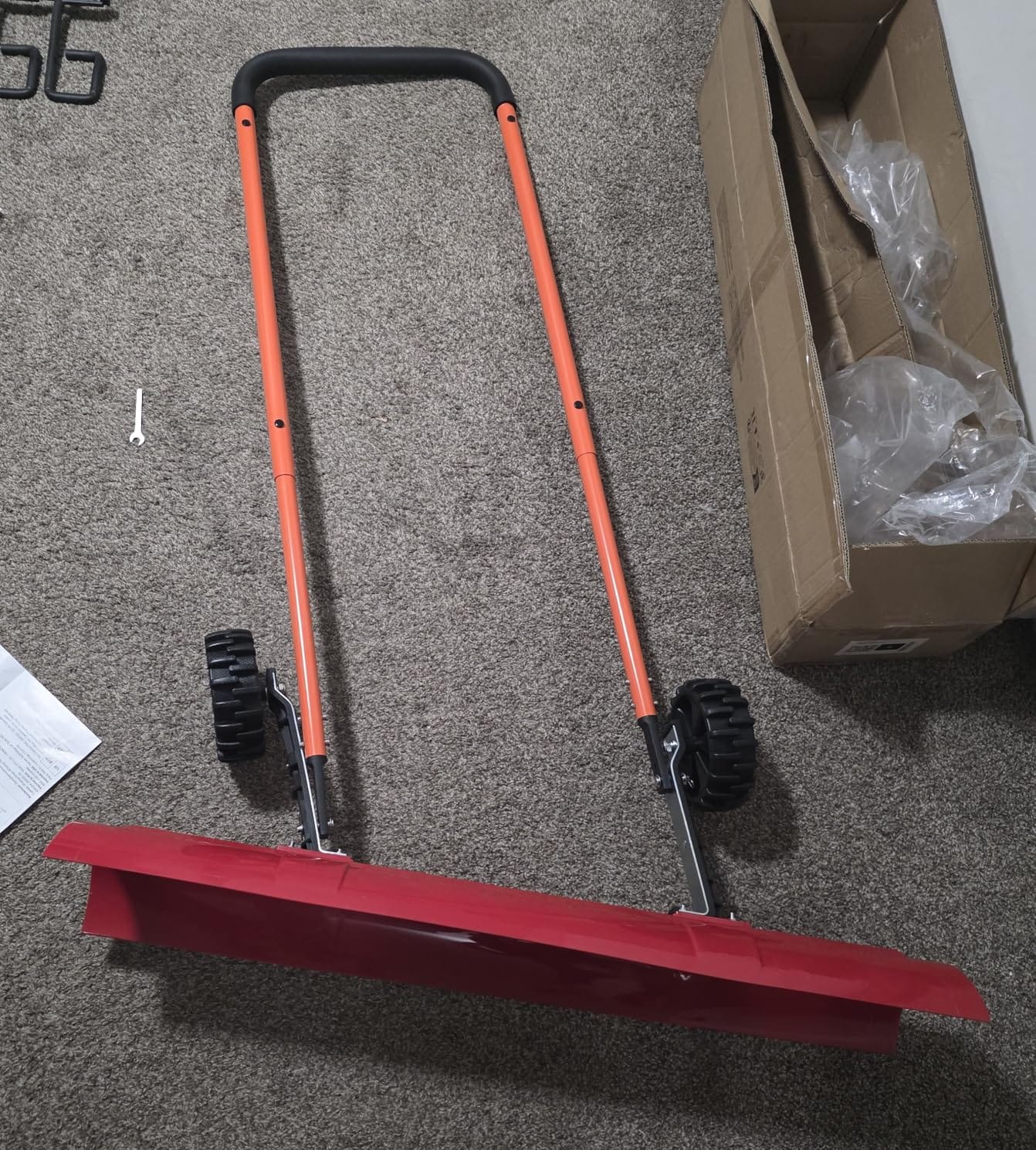
A 36 inch blade at 6.3 pounds is a useful pairing of coverage and control. Every other wide pusher in this roundup is either much heavier or narrower, and low weight is what makes this one workable for apartments, condos, and anyone whose storage is a closet or a car trunk instead of a garage.
The detachable segmented handle is the reason it exists. It comes apart into sections small enough to actually store somewhere sensible, which no full-length pusher in this list can claim. If you have ever had a snow shovel leaning in a hallway because there was nowhere else to put it, you know how much that matters.
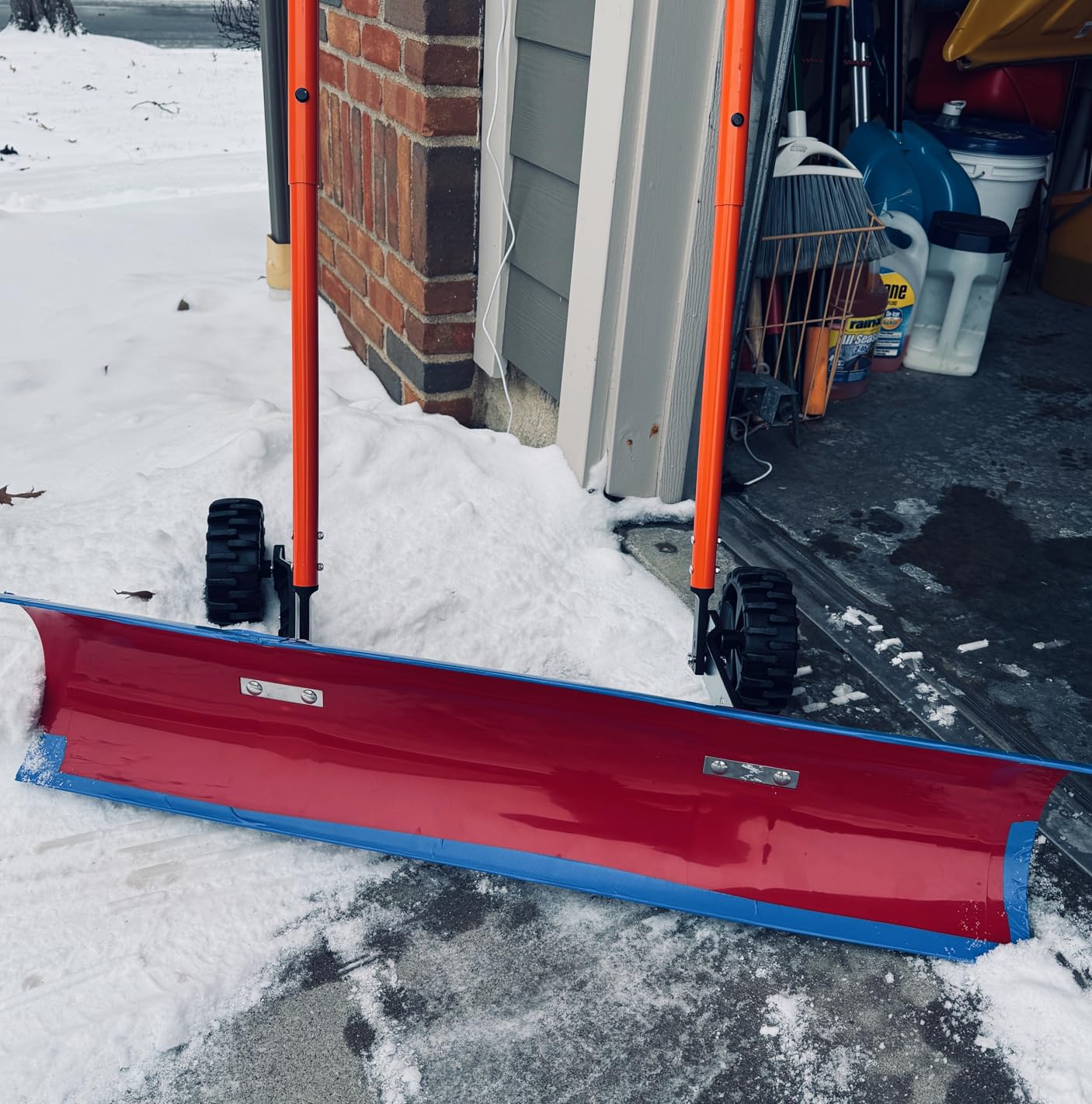
The reversible blade is a genuinely clever feature rather than a marketing word. You can flip it so snow sheds to whichever side you are walking on, which saves you from turning around at the end of every lane. On a long path you take fewer wasted steps, and on a sidewalk with cars on one side you can keep the snow rolling toward the curb instead of toward traffic.
The metal edge reinforcement strip on the HDPE blade is a smart fix for the usual complaint about plastic blades, which twist out of flat. It keeps the blade from warping, though it does not prevent the edge itself from wearing down or catching on imperfections in the pavement.
Buyers mostly use this one in the two to three inch range, where the width and low weight shine. Snagging on cracks and gravel is the recurring complaint, and users on sidewalks report the plastic edge catching exactly where a steel blade would also catch. Handle length is the other issue: shorter users are fine, taller users describe bending at the waist.
What wide and light actually gets you
Coverage per pass is a real time saver, and the arithmetic is simple. A five foot walk takes two passes with a 36 inch blade and four with an 18 inch one. Halving the passes halves the time before you factor in how much snow you load on each pass.
Low weight matters more than it sounds, because it lets you change your mind mid-job. You can lift the blade over a threshold, flip it around a corner, or set it down and reposition without planning the route first. Heavy tools get abandoned halfway.
Where it falls short
It is a light-powder tool, not a storm tool. Once a few inches of wet snow build up, this blade becomes heavy in a way its low empty weight does not predict. It also catches on uneven pavement, and the handle joint is the part most likely to disappoint you over multiple seasons.
6. Garant Yukon 36-Inch Poly Pusher Is Best for Two-Handed Pushing
Garant Yukon 36 in. Poly Snow Pusher with 42.5 in. Steel Handle – 1 Each
- Dual U-shaped handles let you push with both arms
- Only 7 pounds despite the 36 inch width
- Poly blade glides over cracks where metal catches
- Good finishing tool after a snow blower
- All-poly leading edge wears at the center first
- No metal wear strip to protect the edge
- Wing nut hardware loosens during use
- Open blade sides spill snow off both edges
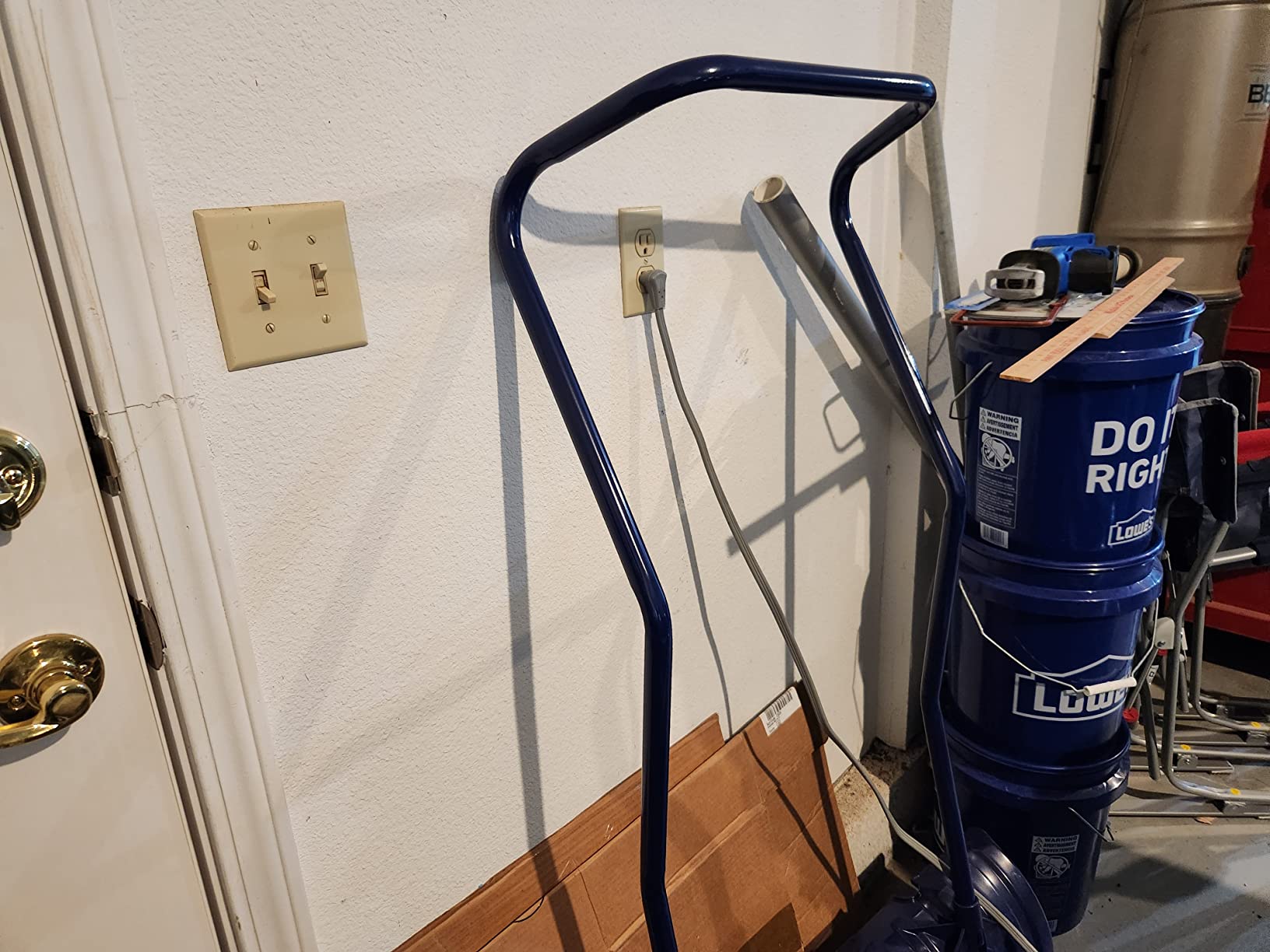
The Yukon is the rare wide pusher that stays light. Thirty-six inches of blade at seven pounds means you can use two hands and both arms, which is the entire point of the dual U-shaped handle configuration. You push with your whole torso instead of wrestling a wide blade with one arm and a twisting spine.
A 71-year-old owner in Colorado described exactly this in reviews: the wide poly blade plus two handles roughly halved clearing time on a long walkway, and it stayed controllable. That is the use case this tool was designed for, and nothing else in the roundup covers it.
Poly is the right material for a sidewalk, and this blade makes the case better than most. It glides over expansion joints and cracks where a steel edge would catch and jar you. On decorative concrete, stamped patterns, or pavers it is the safe choice, and there is no metal anywhere near the contact surface to scratch with.
The open sides are a design compromise worth understanding before you buy. With no vertical side edges, snow that is deep enough or wet enough will roll off both ends of the blade and you will be making extra passes to retrieve it. Users who match this tool to two to three inches of snow never notice this. Users who hit a five inch wet storm do.
The durability concern is the all-poly leading edge. There is no metal wear strip, and several owners report the center of the edge wearing faster than they expected, with some fitting a DIY plastic wear bar to compensate. The wing nut handle hardware also loosens in use and needs a periodic tightening, which is a five second fix that most people only learn about the second season.
Two hands beats one
Handle count changes how much snow you can move per stroke. With two U-shaped grips set at different heights, you get a real lever and a much wider band of steering control. Single-grip wide pushers force you to correct with your wrists, and that is where shoulder and neck strain quietly come from.
If you share a walk with another person, two hands also means the tool can be guided by someone who should not be lifting anything heavy, with a stronger person doing the pushing.
Where it falls short
It has no lift capability, and the open blade sides make that worse by spilling snow you then have to gather. It is also a tool for walkways, not driveways, at that width. If your priority is scraping rather than moving volume, a narrower blade with a harder edge will serve you better.
7. Outsunny 29-Inch Wheeled Pusher Is Fastest for Routine Light Snow
Outsunny Snow Shovel with Wheels Snow Pusher 29″ Blade 10″ Wheels Yellow
- Owners report going from 45 minutes to 5 or 10
- Roll-over wheels spare your back entirely
- Blade angle adjustment helps break compact snow
- Quick and easy assembly
- Handle and wheel bracket can bend at the mounts
- Blade-to-handle bracket is too thin for pavement seams
- Edge wears quickly and replacements are hard to find
- Rated for only about 2 inches per pass
For the small nightly snowfall that barely needs clearing, this is the fastest path from sidewalk to done. Owners report going from about 45 minutes with a shovel to five or ten minutes, and that is the wheel effect: the blade rolls over the snow instead of you dragging it through friction.
The 10 inch anti-skid rubber wheels have real bite on a slick surface, which is where smaller wheels tend to skate. The handle adjusts to five height angles with a cushioned grip, and the blade itself tilts to help break up compacted snow. Assembly is quick and unremarkable, which after the tools in this roundup that need a power driver counts as a feature.
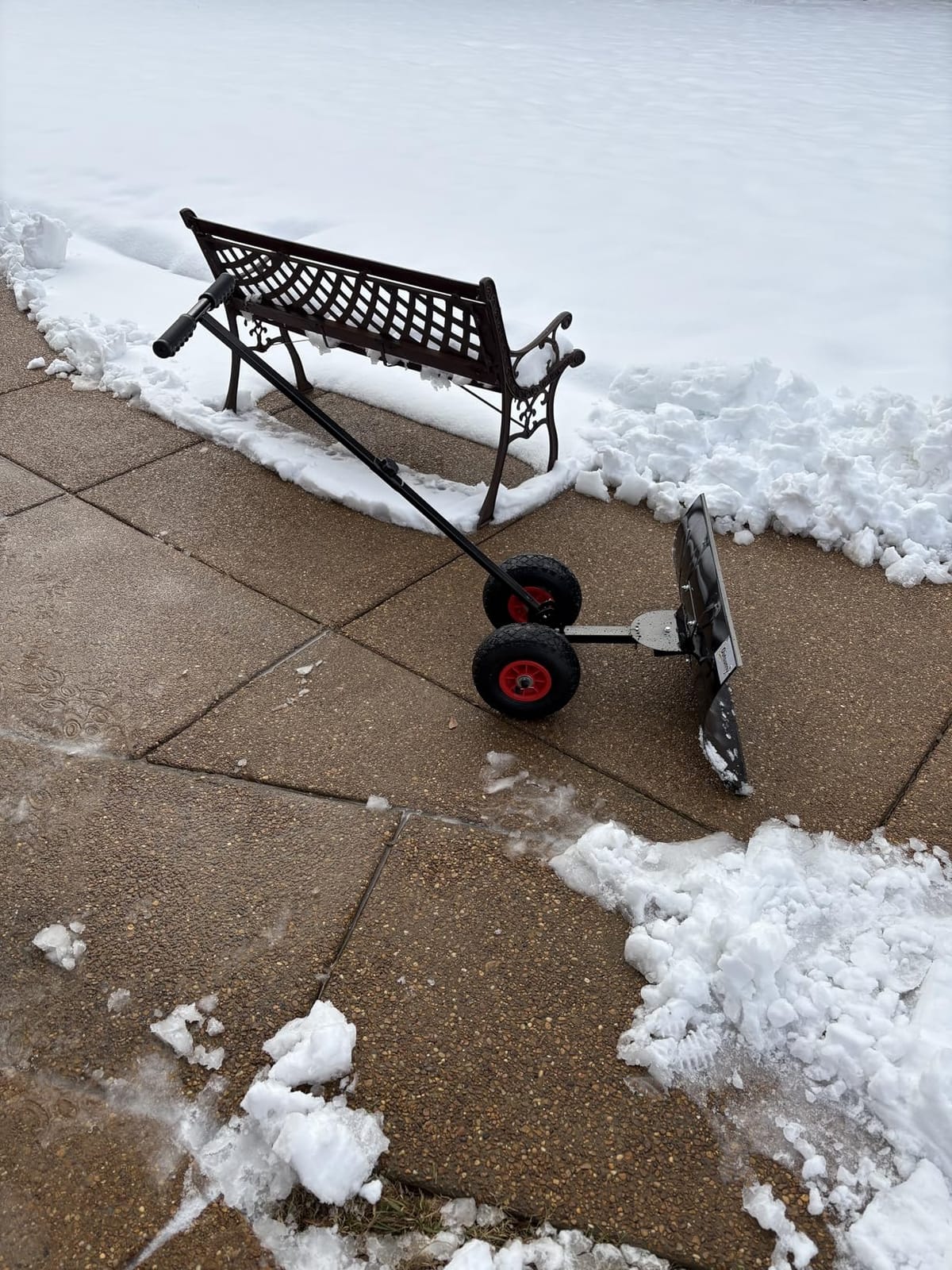
The manufacturer’s own rating for this blade is up to two inches of snow per pass, and that number is honest. This is a light snow machine. Push more than that and the load builds faster than the wheels can move it, which is exactly the limit users describe in reviews. Own it for the ten small storms of the season, not for the one that closes school.
Structure is the concern. The handle mount and the blade-to-handle bracket both bend when they catch a pavement seam or a lawn edge, and one reviewer noted the bracket would need to be twice as thick. On a sidewalk with expansion joints running across it, that is a regular event rather than a rare one, so approach the seams with the blade lifted slightly rather than driven into them.
The rubber tires can also go flat, and there is no solid-tire alternative. For a tool that lives outdoors through winter, that is a real reliability gap, and it is the main reason this one sits low in our ranking despite the time savings it delivers.
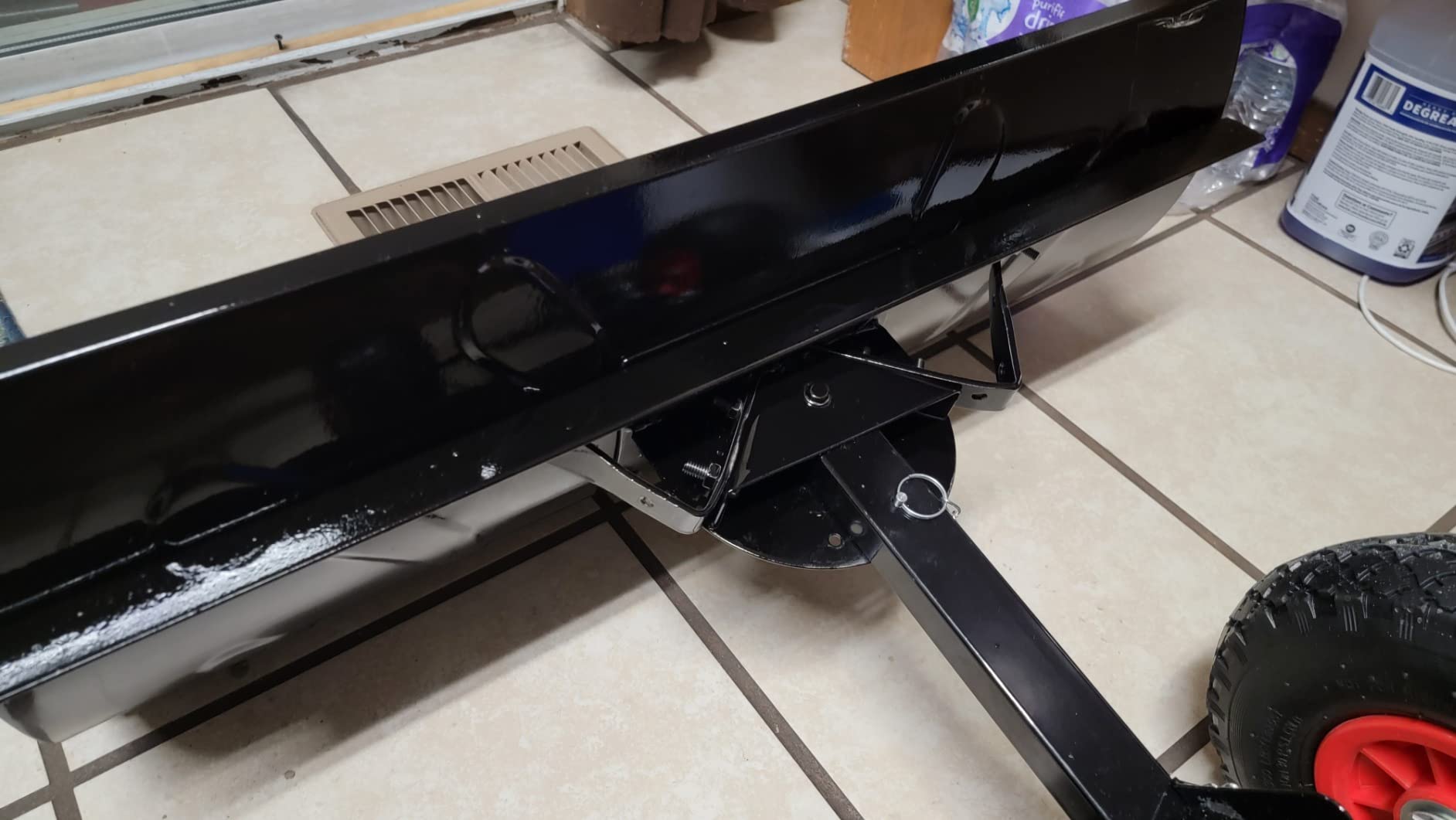
Wheeled pushers on a city sidewalk
Wheeled and walk-behind pushers appear constantly in retail listings but almost never in editorial roundups, which is why we included three here. The logic is sound for anyone clearing a long path: the wheels carry the blade weight and reduce the force needed to move a load.
The tradeoff on a sidewalk is width. Twenty-nine inches plus two ten inch wheels is a wide stance in a narrow lane, and you will be turning at the ends. Measure your walk and check your parked-car clearance before committing.
Where it falls short
Two inches of capacity is the hard ceiling, and the structural weaknesses show up on exactly the uneven pavement that sidewalks are made of. It is the cheapest way to see how much you like wheel-based clearing, but it is not a tool to depend on for a whole winter of real storms.
8. Bully Tools Ultra 36-Inch HMW Pusher Is Best for Surface-Safe Clearing
Bully Tools Ultra 36″ HMW Snow Pusher Fiberglass D-Grip, Made in USA
- Highest rated in our set with very few negative reviews
- Fiberglass D-grip stays rigid and comfortable under load
- Flip-over blade gives a cutting angle for packed snow and ice
- No metal edge to scar decks or pavers
- Assembles in under a minute
- No lift capability for heavy wet snow
- Costs more than big-box alternatives
- One unit arrived with the D-grip riveted slightly askew
This is the highest-rated tool we tested and the one we recommend if your sidewalk is anything you care about aesthetically. The 36 inch high molecular weight poly blade is rigid and unribbed, so snow and ice slide off the face instead of building up, and there is no metal edge anywhere near your concrete.
The flip-over blade is the feature few other pushers include. Turn it over and you expose a cutting angle that chips packed snow and ice rather than smearing it, which is the difference between a walk that looks clean and a walk with a slick gray film still on it. It is the closest thing to an ice chopper built into a pusher.
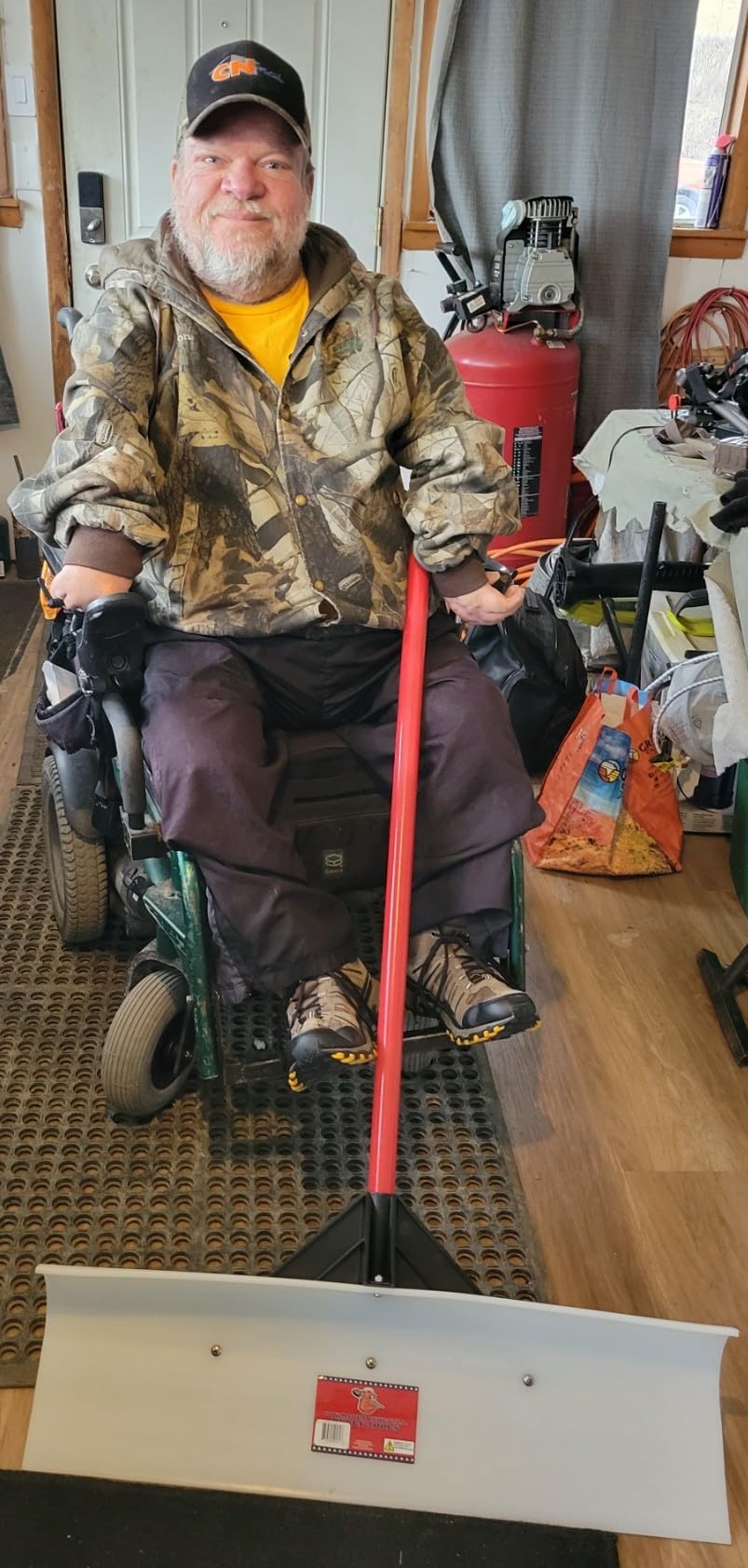
The poly is rated to minus 131 degrees Fahrenheit, so it will not go brittle and crack in a hard freeze the way commodity plastics do. That rating, plus the fact that it is made in Ohio and has been since 1994, is why owners describe it as commercial grade. Assembly takes under a minute with a screwdriver and a wrench, which is the fastest in this roundup.
At five pounds across a 36 inch blade, the weight-to-coverage ratio is excellent. The fiberglass shaft with its wide D-grip stays rigid under load and gives you a closed handle to pull against when the blade catches a seam. Reviewers who have owned cheaper shovels for years describe this one as the last tool they expect to replace.
The honest limitation is capacity, and it is the same one every pusher has. There is no lifting, so a heavy wet storm leaves you needing a separate scoop. Sizing is the other theme in reviews: light snow suits the wider blades, and anyone who struggles with a heavy wide tool should step down to a smaller size from the same line.
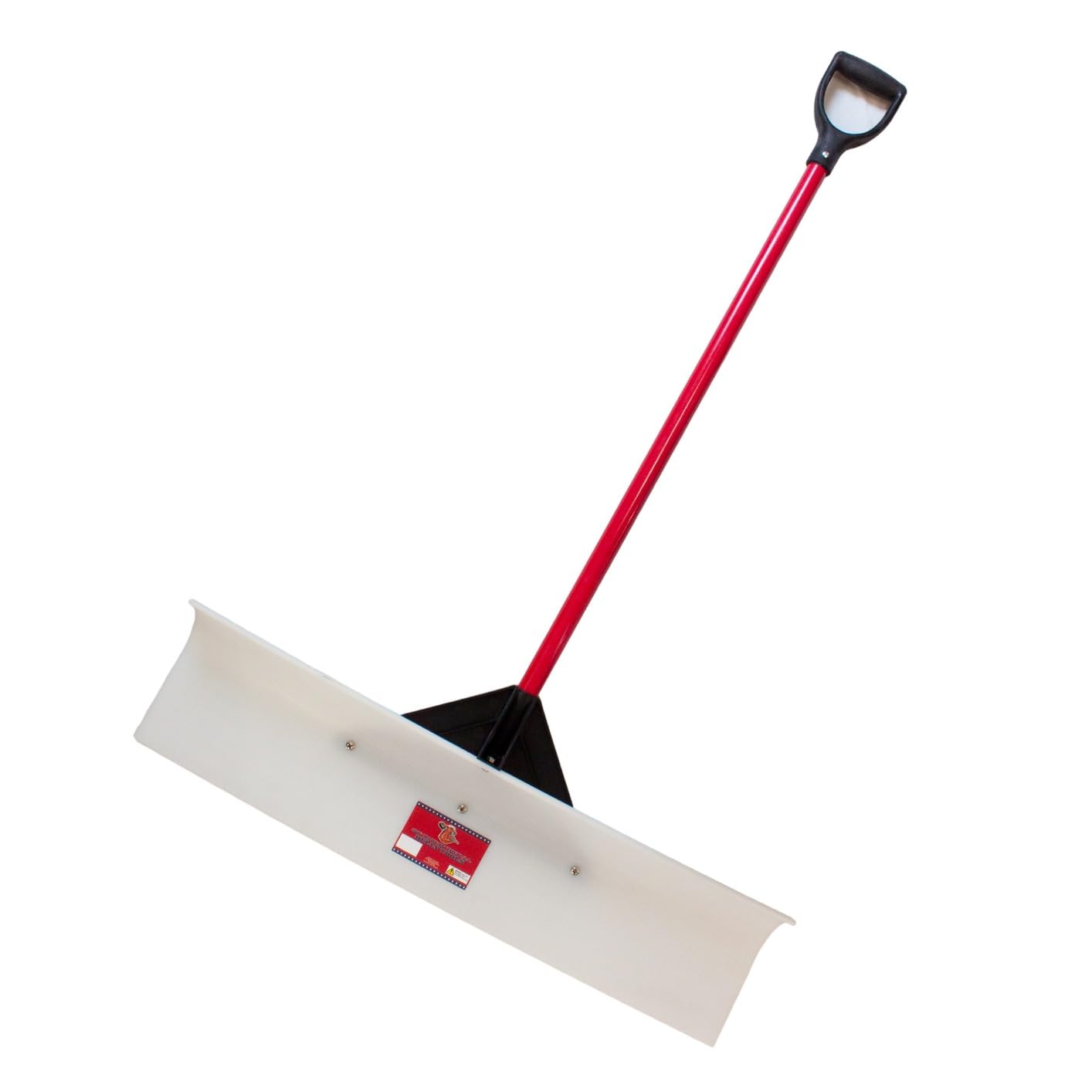
What surface-safe really means
Surface-safe means there is no metal in the contact path. That matters on stamped concrete, decorative tile, bluestone, wood decking, and composite materials, all of which a metal edge will scar. A poly blade trades some bite for the ability to use one tool everywhere around your property.
For a plain poured concrete walk with no decorative finish, the difference is cosmetic and you can choose bite over safety. For anything else, surface-safe is not a preference, it is the reason the tool exists.
Where it falls short
It costs more than the big-box pushers here and it will not lift a heavy load. The flip-over angle helps with ice, but it does not change the fundamental three-to-four-inch ceiling that defines this whole category. Keep a scoop in the closet for storms.
9. Garant Alpine 30-Inch Poly Pusher Is a Solid Mid-Size Walker
Garant APP30KD Alpine 30-Inch Poly Blade Snow Pusher-Yellow
- Wide 30 inch poly blade clears a standard walk in two passes
- D-grip handle fits a gloved hand
- Hardwood shaft absorbs shock better than bare steel
- All-poly blade will not scratch decorative surfaces
- Polyethylene edge has no metal wear strip and will wear over time
- Higher cost than comparable wide plastic pushers
- Straight shaft offers less back relief than curved designs
The Alpine is the middle answer in the Garant line, and the logic is simple: you want more coverage than a narrow walker gives you and less swing than a 36 inch blade brings. Thirty inches sits at the top of the practical range for a standard residential walk.
The hardwood shaft is a nicer touch than it sounds. Wood absorbs the shock of a blade catching a seam instead of transmitting it up your arms, and it does not develop the condensation slick that cold bare steel picks up. The D-grip at the top takes a gloved hand comfortably, which matters more than it should in freezing weather.
Fewer written reviews surface for this listing than for the rest of this roundup, so treat the owner feedback as thinner evidence than the others here. The sentiment that does appear is favorable: people like the wide blade and hardwood handle for clearing large paved areas, and they treat the all-poly edge as the expected trade rather than a defect.
That trade is worth naming. A polyethylene blade with no metal wear strip will dull over multiple seasons, and the center of the leading edge wears first because that is where the load concentrates. Owners of similar poly pushers have fitted DIY plastic wear bars, and it is a reasonable weekend project if you notice the edge going first.
The shaft is straight rather than curved, so you do not get the same back relief as the True Temper model earlier in this list. On a walk you clear every week that difference is manageable. If clearing is physically difficult for you, spend your effort on handle geometry and wheels instead.
Why 30 inches is the sidewalk sweet spot
Residential walks run from about three to five feet across. Thirty inches of blade means two clean passes on the narrow end and two with a little overlap on the wide end. Anything above 36 inches starts swinging into parked cars and mailbox posts at the turn, which is the most common complaint about wide pushers in owner discussions.
Thirty inches is also a width most adults can steer one-handed at the end of a lane without setting up a deliberate pivot. That is worth more than the extra six inches a bigger blade would give you.
Where it falls short
It is an all-poly blade with the durability ceiling that implies, and it costs more than generic wide plastic pushers from big-box brands. Straight shaft, no wheels, no lift. It is a competent walker and nothing more, which is exactly what some people want.
10. Goplus 29 by 16-Inch Angled Blade Pusher Has the Tallest Blade Here
Goplus 29″x16″ Snow Pusher, Snow Shovel with Wheels for Doorway, Sidewalk
- 16 inch blade face holds far more snow than a 10 inch design
- Seven blade positions and six handle tilts adapt to any height
- Reinforced metal frame feels more substantial than plastic bodies
- Wheels roll smoothly and reduce effort
- Heaviest unit here at 26.5 pounds and hard to reposition
- Higher cost than other wheeled pushers
- Catches on cracked or gravel surfaces
The defining number here is blade height. Sixteen inches tall, against the ten inch faces on most wheeled pushers, and that extra six inches is capacity. Snow has somewhere to ride instead of spilling over the top, which means fewer passes and a tool that keeps working as the storm deepens.
The adjustment range is unusual. Seven blade rotation positions and six handle tilt levels, all locked with quick-release pins, plus a three-position telescoping handle. That is enough range to fit the tool to whoever is pushing it, which matters for a household where two different people take turns on the same walk.
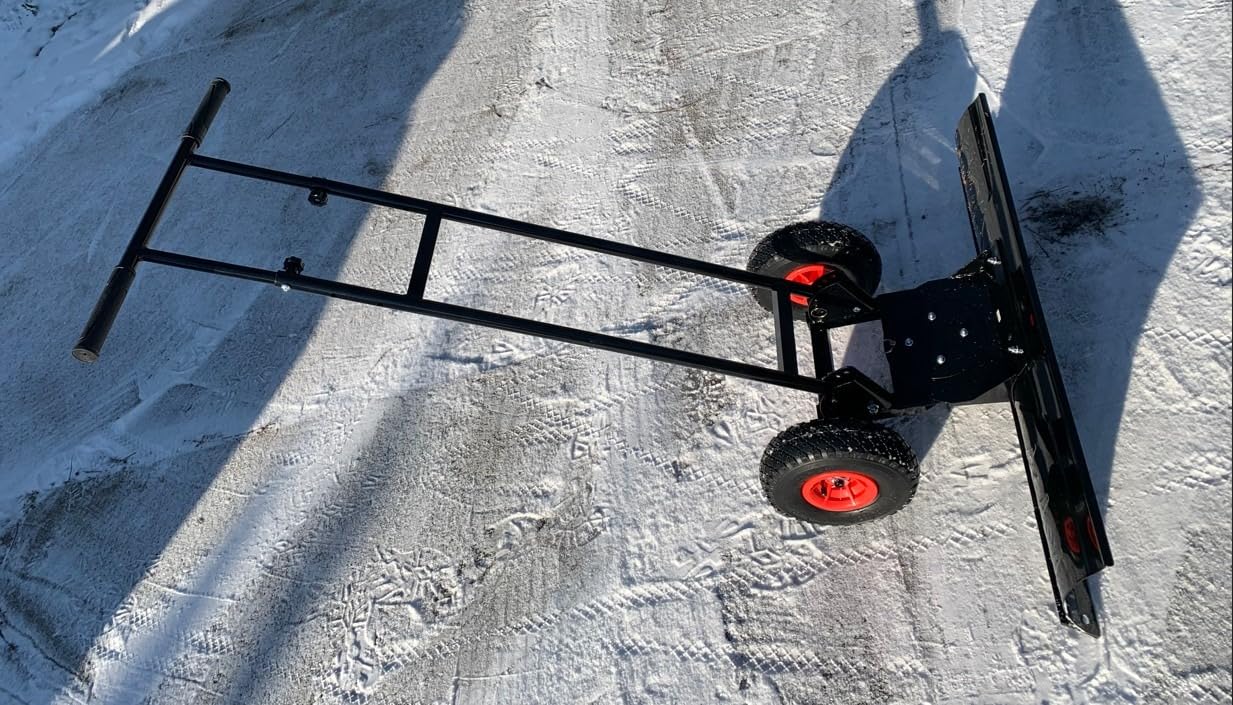
Owner feedback highlights the blade height and the adjustment range as the reasons to buy, particularly for doorway and sidewalk work where you need to steer more than you need to move volume. The reinforced metal frame with crossbars feels more substantial than the plastic-bodied wheeled pushers, and the padded grips stay secure with wet or gloved hands.
This is the least-reviewed product in the roundup, so treat the owner commentary as a thinner evidence base than the tools above. The sentiment that exists is positive, but a small review pool is a reason to weigh warranty and return terms more carefully rather than a reason to avoid it.
At 26.5 pounds it is the heaviest tool here, and that is a genuine problem on a sidewalk. Lifting it onto a stoop, repositioning between two cars, or getting it up to a second-floor storage area is a two-person job. It also catches on cracked and gravel surfaces, which is another way of saying it wants smooth concrete or asphalt.
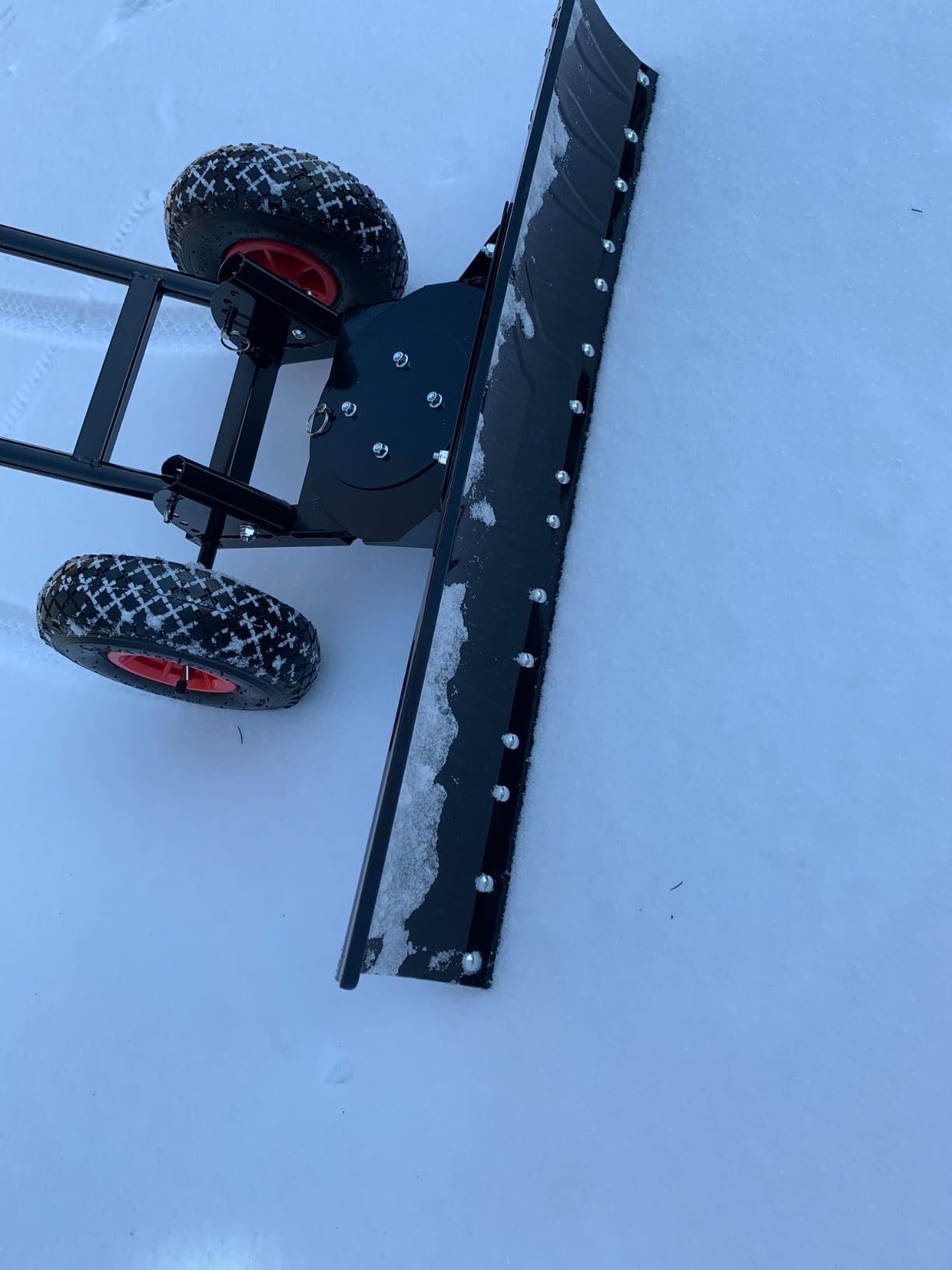
When a taller blade earns its weight
Blade height decides how long a load takes to spill. A short blade reaches its limit almost immediately in deep snow, which is why most wheeled pushers top out around three to five inches. A 16 inch face keeps collecting, which is what lets this one keep moving when the light tools have already stalled.
If you clear a large paved area on a single stroke and your main problem is that you keep re-pushing the same pile, capacity is the feature that pays. If your walk is narrow and you need to steer constantly, height is the wrong thing to optimize for.
Where it falls short
The weight is disqualifying for a lot of apartment and condo residents, and the price sits above the other wheeled options here. It is a machine for a garage with a wide door, not for a closet or a trunk.
How to Choose a Snow Pusher for Your Sidewalk
Pusher, shovel, snow blower, or ice chopper
On a sidewalk with three to four inches of light snow and somewhere to put the pile, a pusher beats a shovel, and the margin is large. A 30 inch blade clears a five foot walk in two passes where a scoop takes six, and you never lift anything so your back is barely involved.
Past four inches of wet snow, or with nowhere to push, the answer flips. A shovel can pick up a load and throw it over a fence or into a truck bed. A pusher cannot lift at all, so it simply moves the problem from one spot to the spot next to it. That is why owners who keep both tools, as many do in garagejournal.com threads, treat the pusher as the daily tool and the shovel as the storm tool.
An ice chopper belongs in a third category entirely. A pusher moves snow; a chopper breaks the thin ice layer that refreezes on concrete after a melt-refreeze cycle. They work together, and no single tool does both jobs well.
A snow blower solves the throwing problem mechanically but adds cost, storage, noise, and a chute you have to aim near a driveway or street where the snow then has to be moved again. If your blower comparison is leaning toward wet snow handling, remember that a blower clears a sidewalk quickly and then deposits a pile in the wrong place anyway.
How wide should the blade be?
Match the blade to the width of the walk, not to the width of your driveway. A three foot walk takes a 24 inch blade in two passes. A four foot walk, the most common residential width, is the sweet spot for a 30 inch blade. A five foot walk suits 36 inches, and beyond that you are usually better off with a wheeled model than a wider blade.
More than about 36 inches, extra width stops helping. You swing the ends into parked cars, mailboxes, and light poles at every turn, and the user has to fight the tool more than the snow. Several forum discussions make the same point: the angle of the blade and the steering matter more than the width number on the box.
What is the best snow pusher for a driveway? For a wide open apron you have more latitude, and 36 inches or a wheeled model is the answer. Keep the narrower 18 to 24 inch models for the walk itself.
Poly, UHMW, aluminum, or steel?
Polyethylene and its higher-grade cousins are the safe choice on any finished surface. They will not scratch stamped concrete, decorative tile, wood decking, or pavers, and they ride over cracks rather than catching on them. The cost is durability: an all-poly edge with no metal wear strip dulls across seasons, and owners in r/BuyItForLife treat plastic as a consumable rather than a purchase.
UHMW is the upgraded poly. It is denser, tougher, and holds its edge far longer than commodity HDPE, which is why the blade on our top pick still scrapes clean after repeated storms. The mainstream alternative to steel without the scratch risk.
Steel bites hardest on ice and packed snow and lasts longest by a wide margin. It will gouge brick, bluestone, and wood, and it jars harder when it catches a seam. Choose steel only on plain poured concrete or asphalt where you want the maximum service life.
Aluminum sits between the two. It is light enough to use all day and tough enough to get through packed snow, and it will not rust. It is the compromise choice, and the material most long-term owners recommend for mixed surfaces.
Handle geometry and back safety
Curved and bent shafts put your hands lower and forward so you can push from an upright posture. Straight shafts ask you to hinge at the waist with every stroke. If you already have back trouble, this single feature matters more than any blade upgrade.
A closed D-grip or dual-handle layout lets you pull the tool toward you when the blade catches, taking the shock in your arms rather than your shoulders and spine. Push with your legs, keep your back straight, and stop the run before the load gets heavy enough to hurt.
Never lift a pusher with snow on it. Slide it to the edge, let the load fall or roll off, then reposition. That single rule removes most of the back injuries attributed to snow tools.
What snow depth breaks a pusher
Three to four inches is the honest ceiling for most of the pushers here, and it is depth of wet or packed snow rather than dry powder. Below that you are in the sweet spot. Above it the blade loads, snow spills over the sides, and clearing gets slower than a plain scoop.
The wheeled models stretch that range, with owners reporting useful performance out to five inches and the tall-bladed models going further. None of them lifts, so the storm always ends in a pile you need a shovel for. If your region reliably gets six inches of wet snow per event, you want a machine rather than a hand tool. Our picks for heavy snow cover that case.
Where do you put the snow?
This is the question nobody in the forums ever answers, and it is the real reason pushers fail on city sidewalks. You cannot leave the snow on the walk. You generally cannot throw it into the street. So it goes to the lawn, the planting strip, the driveway apron, or a pile at the curb edge that you clear later.
Before you buy anything, decide where the snow is going. If there is no legal, reachable destination, a pusher just relocates the problem and a shovel that can throw it over a fence or into a bed is the better buy. Many cities also have rules about how soon sidewalks must be cleared and what you may place in the tree strip, so check your local ordinance before planning a strategy.
After pushing, edge the leftover line off the concrete. Our sidewalk edging guide covers the tool for that final pass, which is where the pile actually forms.
Frequently Asked Questions
What is the best snow pusher for a driveway?
For a driveway with open width, a 36 inch blade or a wheeled model works best because you can cover the apron in one or two passes without steering around obstacles. Our top pick, The Snowplow 30-Inch, handles driveways in roughly half the time of a standard scoop in light to moderate snow. Keep the narrower 18 to 24 inch pushers for the sidewalk itself, where width becomes a liability.
Are snow pushers better than snow shovels?
For light snow under about three to four inches and a place to push the pile, yes. A wide pusher clears a sidewalk in two or three passes instead of six, and you never lift a load, which greatly reduces back strain. Past four inches of wet snow, or with nowhere to push, a shovel wins because it can pick up and throw the snow.
What is the best tool for removing snow from a sidewalk?
A wide snow pusher is the best hand tool for light snow, roughly two to four inches deep. Pair it with an ice chopper for refrozen layers and keep a conventional scoop for anything heavier. If storms regularly exceed four inches of wet snow, or you have several walks to clear, a snow blower or electric shovel is the more capable tool.
Can I be sued if I don’t shovel my sidewalk?
Ordinance requirements and deadlines vary by city, and most municipalities impose fines rather than personal liability. Liability generally arises from a different situation, such as a sidewalk obstruction that causes someone to slip, or from failing to clear a fire hydrant or crosswalk. Check your local public works department for the specific rule that applies to your address.
How much snow can a snow pusher handle?
Most pushers work best up to about three to four inches of snow. Wheeled models with tall blades stay effective closer to five inches. Beyond that the blade loads up, snow spills over the sides, and clearing becomes slower than using a shovel, because a pusher has no lifting capability at all.
The Verdict on the Best Snow Pushers for Sidewalks
The best snow pushers for sidewalks in 2026 come down to three very different answers, because sidewalks are not one job. A standard four foot residential walk, a narrow path between parked cars, and a long apartment walkway each punish a different tool.
For most people clearing one ordinary walk, The Snowplow 30-Inch is the pick. Its UHMW blade scrapes concrete to bare pavement, holds up across seasons, and costs you nothing in surface damage. Give it ten minutes with a power driver before the first storm and it is ready. If you want the one that will outlast everything else in your garage, the Garant NSP24D Nordic earns its place with a steel blade and a hardwood shaft that absorbs shock rather than sending it into your shoulders.
If your back or joints are the reason you are reading this, do not buy a hand pusher. Go straight to a wheeled model, and pick between the two-wheel Best Choice unit for driveways and wide walks or the Goplus with its 16 inch blade if you have storage and help lifting. If your walk is narrow, the True Temper Poly 18 does the job at three pounds with a curved shaft that will not aggravate anything.
Whatever you choose, remember the two limits that apply to every pusher on this page. It clears about three to four inches, and it cannot lift. Pair it with a real scoop for storms and an ice chopper for refreeze, and check your local ordinance before you decide where the pile goes. For the powered side of the comparison, see our snow thrower reviews.