

Nobody buys a heated driveway mat because snow is inconvenient. They buy one because the plow contract costs four figures every winter, or because an elderly parent took a bad fall on an icy front step, or because the one time nobody could get a shovel out to the house was the morning of a funeral. A heated driveway mat for snow is a small electrical appliance that turns a recurring, unpleasant, slightly dangerous chore into a switch you flip before bed. That is the entire pitch, and it holds up.
It also helps to know what you are buying. The single most common mistake is expecting a mat sold as a “heated driveway mat” to clear a driveway. Almost everything sold under that name is a strip 10 to 30 inches wide. A two-car driveway is roughly 20 feet across, so full coverage means four mats laid in the tire tracks plus a power source, and that arrangement is a lot different from one mat in front of a garage door. We looked at ten options, from a 120V strip that covers a single doormat area to a 120 square foot system buried under concrete, and the differences in output are large enough to change what you should buy.
Our approach was spec-first. We compared voltage, amperage, watts, coverage area, surface temperature, element spacing, daisy-chain limits, warranty length, and the physical build of the mat, then cross-checked those numbers against the review record on each product so that the marketing claims and the buyer experience lined up. Every pick below carries its own review, its own limitations, and a plain verdict on who it suits. Snow blower buyers should also read our guides to snow blowers for wet snow and snow blowers for heavy snow, because a mat is a complement to a plow, never a replacement for one.
Table of Contents
Top 3 Heated Driveway Mats for Snow

HeatTrak 30×60 Walkway Mat
- Melts 2 inches per hour down to -8F
- 30x60 inch coverage
- Chains to 13 amps with a HeatTrak power unit
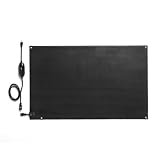
HeatTrak 30×48 Entrance Mat
- GFCI power unit included
- 2 inches per hour melt rate
- Supports up to 14 amps

HETFOENT 3-Pack 10×30
- Three mats pre-connected in series
- IP68 sealed connectors
- Mounting holes at each corner
The HeatTrak 30×60 wins this roundup on evidence rather than on paper specs. It has the largest review pool of any portable mat we analyzed, at 1,671 ratings, and 73% of those are five-star. The HeatTrak 30×48 is the smarter buy if you want a power unit in the box rather than as an add-on, and at 4.6 stars from 607 ratings it has the strongest review record of the full-size mats. The HETFOENT 3-pack covers a set of steps or a ramp in one order, because the three mats arrive already wired together.
All 10 Heated Driveway Mats for Snow at a Glance
The table below lists every mat in this roundup with the specs that actually predict performance: how it draws power, how much area it holds, how hot it runs, and how long the manufacturer warrants it. Note that the last two rows behave differently from everything above them, because they are embedded systems rather than mats you lay on top of pavement.
| Product | Specifications | Action |
|---|---|---|
| HeatTrak 30×60 Heated Outdoor Mat |
|
Check Latest Price |
| HeatTrak 30×48 Entrance Mat with GFCI Power Unit |
|
Check Latest Price |
 RVSNAIL 20×60 Heated Snow Melting Mat RVSNAIL 20×60 Heated Snow Melting Mat |
|
Check Latest Price |
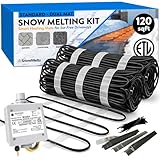 SNOWMELTZ 120 Sq Ft Embedded Heated Driveway System SNOWMELTZ 120 Sq Ft Embedded Heated Driveway System |
|
Check Latest Price |
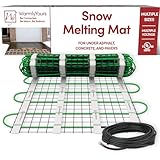 WarmlyYours PowerMat 3×15 Ft Embedded Mat WarmlyYours PowerMat 3×15 Ft Embedded Mat |
|
Check Latest Price |
 HeatTrak Starter Kit Walkway and Stairs HeatTrak Starter Kit Walkway and Stairs |
|
Check Latest Price |
| HETFOENT 3-Pack 10×30 Heated Mats |
|
Check Latest Price |
 SECIVLOT 3-Pack 10×30 Heated Snow Mats SECIVLOT 3-Pack 10×30 Heated Snow Mats |
|
Check Latest Price |
 Pawfly 20×30 Graphene Heated Mat Pawfly 20×30 Graphene Heated Mat |
|
Check Latest Price |
 JOJOCY 14 Inch x 15 Ft Heated Roll Mat JOJOCY 14 Inch x 15 Ft Heated Roll Mat |
|
Check Latest Price |
Portable 120V Mats vs Embedded 240V Systems vs Snow-Melting Cables
There are three product families sold to solve this problem, and choosing wrong is expensive. A portable mat is a 120V appliance you lay on the pavement and plug into a GFCI outlet. An embedded system is a 240V grid of heating cable or conductive mat buried under concrete, asphalt, or pavers, and it needs a dedicated circuit, a controller, and usually an electrician. A snow-melting cable is the middle ground: the same 240V heating element as an embedded system, but sold on a spool so it can follow a curved or irregular layout that a rigid mat cannot match.
The decision rule is simple. If you rent, or you have a concrete driveway you are not going to tear up, or you want to test the idea before spending on an install, a portable mat is the only honest choice. If you are pouring a new driveway, replacing pavers, or building a garage apron, embedded is cheaper per square foot in the long run and invisible when it is done. The portable mat is a ten-year tool you can move; the embedded system is a twenty-plus-year commitment to one piece of ground.
Placement matters more than brand. A two-car driveway is about 20 feet wide, and no consumer mat comes close to that. The practical layout is one mat per tire path, four mats total, which is where the amperage limit on a single power unit starts to bite. HeatTrak’s 30×60 connects to configurations up to 13 amps and the 30×48 to 14 amps, so two of the larger mats will not hang off one unit without splitting the load. Check the amperage of every mat you plan to run at once and add it up before you assume one outlet will carry the lot.
1. HeatTrak 30×60 Heated Snow Melting Mat for Walkways and Driveway Tire Tracks
- Largest review pool in the category at 1671 ratings
- Melts about 2 inches per hour and works down to -8F
- Textured non-slip surface that stays grippy when wet
- Weather-tight quick-connect fittings for chaining mats
- 30x60 inch footprint is wide enough for a wheel path
- Ends curl upward if the mat is not secured to the ground
- Linking mats side to side needs extra cable extenders
- Power unit is a separate purchase
At 23.1 pounds and 60 by 30 by 0.04 inches, this is a genuinely substantial mat rather than a thin sheet of coated mesh. The element is rated to push the surface 40 degrees above ambient and to hold a melt rate near 2 inches per hour, which lines up with what buyers describe: snow clearing within roughly half an hour of the unit going live. It is specified to work down to minus 8 degrees Fahrenheit, and the construction is described as corrosion-resistant for year-round outdoor placement.
This is the mat we would put in a tire track. Thirty inches of width covers a wheel path with margin, and at 60 inches long it spans a usable run from the garage apron toward the street. The connectors are weather-tight, and one HeatTrak power unit handles a configuration drawing up to 13 amps, so you can pair it with a narrower mat down the same circuit if the math works.

The honest complication is the physical installation rather than the heating. Reviewers most often describe mats curling at the ends when they are not pinned down, and connectors that stand proud enough to catch a shoe or a snowblower wheel. Side-to-side runs also need cable extenders, which are not in the box, so plan the layout before you unroll anything. We suggest weight or anchoring the corners and routing the connector away from the walking line.
One recurring note in the 1,671-rating pool is that a small number of individual mats stopped heating after a period of use, and a few buyers found support hard to reach. The 8% one-star share here is almost entirely installation and durability rather than heating performance. If you want a mat that just works with the fewest decisions, this is still the one to buy.

How the HeatTrak 30×60 handles a two-car driveway
One mat per tire path is the standard layout, so a two-car driveway needs two of these for the wheel lines, or four if you want the full 20-foot width covered. Because a single power unit tops out at 13 amps, you will likely need a second outlet and a second unit for the back pair. Total load is the constraint, not the mat.
Where the 30×60 falls short
Drive-on rating is not stated anywhere in the listing, so treat it as a walk-on mat and keep vehicle traffic off it. It also does not include a power unit, and the warranty is two years, which is short against the ten years some embedded products carry.
2. HeatTrak 30×48 Heated Entrance Mat with Included GFCI Power Unit
- Power unit and 6 foot cord included in the box
- 4.6 stars from 607 ratings
- Supports stair and walkway layouts up to 14 amps
- Water-resistant non-slip entrance surface
- Gentle heat that clears ice without scorching nearby surfaces
- 6 foot cord is short so outlet placement decides the layout
- Water can pool where the cord meets the mat connector
- Some owners report units that stopped heating after about a year
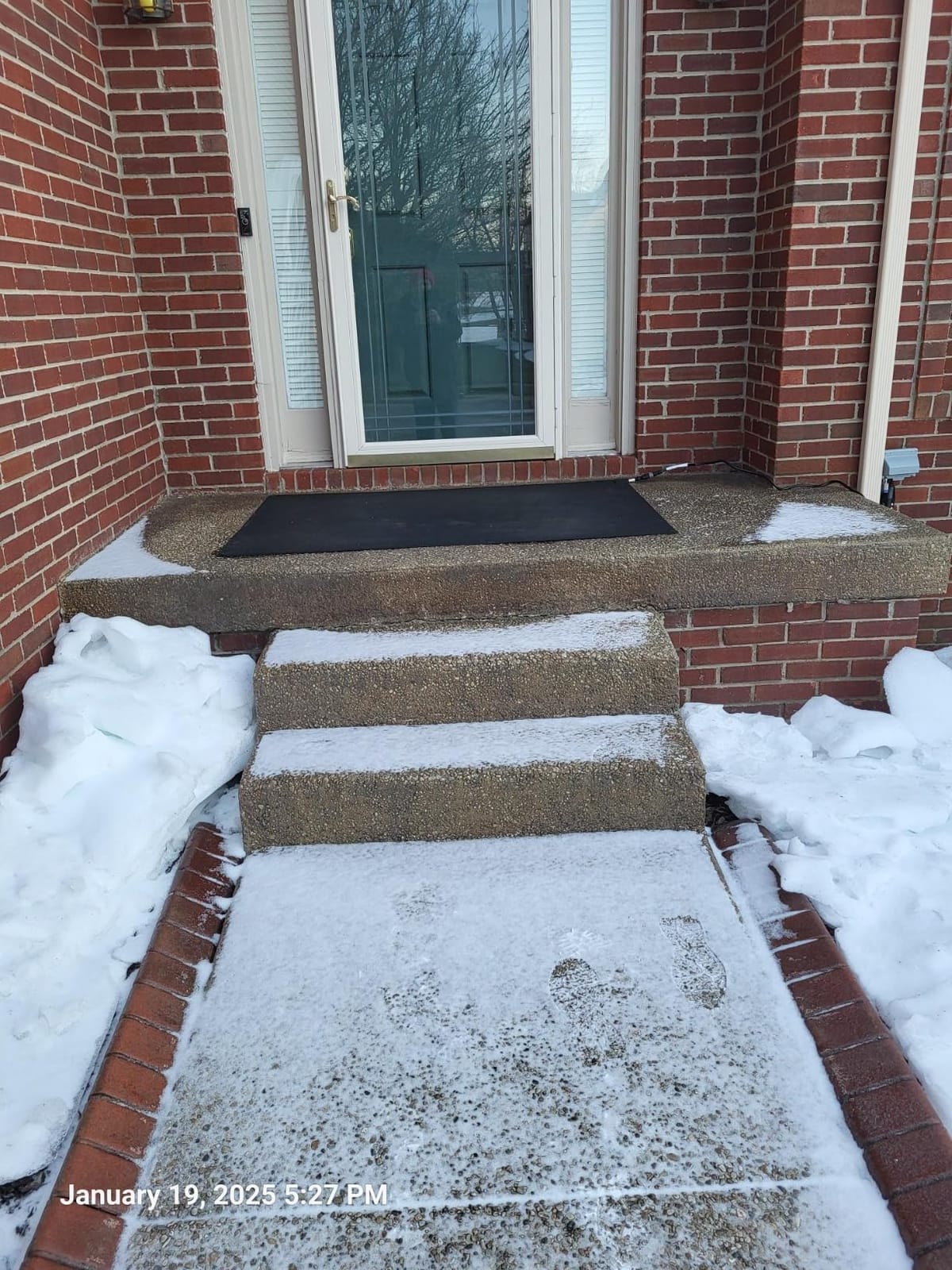
This is the version of the HeatTrak that solves the problem people actually hit. The 30×48 entrance mat ships with an outdoor-rated GFCI power unit and a 6-foot cord, so you are not hunting for a separate box at checkout. It draws about 1.9 amps at the smaller 24 by 36 inch size, and the power unit supports configurations up to 14 amps, which makes it a one-box solution for a front door, a garage side door, or a set of porch steps.
Buyers rate this one 4.6 stars across 607 ratings, with 79% five-star and only 3% one-star. A pattern that shows up repeatedly is ice caused by roof ice dams refreezing at the entrance, and owners say this mat ends that problem within a day of being placed. Several people pair the GFCI box with an inexpensive outdoor smart plug so they can cycle it from inside.
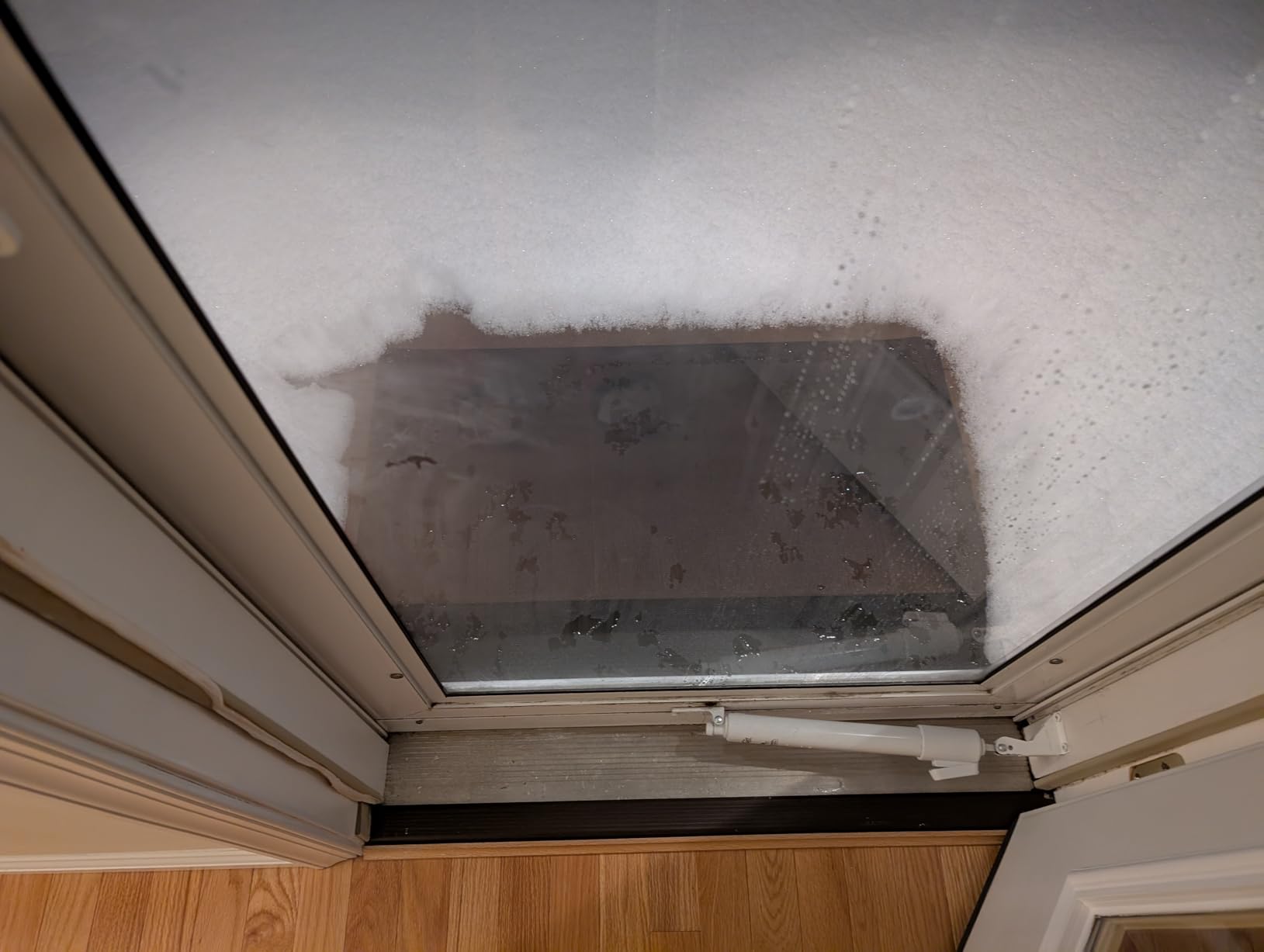
Two practical issues come up. The 6-foot cord is short, so the outlet dictates the layout and you may need an extension or a closer receptacle. The cord also exits the mat and sits above the concrete, which means it has to be routed where nobody walks and where ice does not sit, and water tends to collect at the mat-to-power connector where it meets the ground.
Weight is 7.71 kilograms, so it is heavy enough to stay put in wind but still portable by one person. The care instructions are sensible: mild detergent and a soft brush, never cover the mat, and do not activate it indoors or inside a pet enclosure. A handful of owners report units that stopped heating after about a year, so keep the two-year warranty details with the receipt.
Why the included GFCI power unit matters more than the wattage
Ground fault protection is the reason many owners are comfortable leaving a mat energized overnight. Having the certified unit and the six-foot cord in the same box removes the most common reason a buyer ends up with a mat and no way to power it, and it is the single biggest difference between this and the 30×60 at the top of the list.
Where the 30×48 entrance mat falls short
It is not a full-coverage driveway solution. At 30 by 48 inches it handles an entrance, a ramp, or a short path, and covering a two-car driveway means buying four of them and finding circuit capacity for all four. Cord length is the other limit; measure before you order.
3. RVSNAIL 20×60 Heated Snow Melting Mat with 7mm Industrial-Grade Rubber
- 7mm industrial rubber is far thicker than most portable mats
- Highest average rating in the roundup at 4.7 with no 1 or 2 star reviews
- Automatic cycling between 88F and 122F cuts energy use
- Dual grip: clover texture on top and a high-friction strip underneath
- Stainless steel retaining ring resists shifting
- 400W per mat means separate circuits above roughly 1300W
- The 31-rating review base is small and new
At 16.76 pounds for a 60 by 20 by 0.28 inch mat, the physical build is the story here. The heating element is sandwiched in 7mm of industrial-grade rubber, several times the thickness of the coated mesh used on lighter mats, and the manufacturer rates it for a five to ten year lifespan with a three-year warranty, the longest warranty in the portable group. Rated to 400 watts, it draws more than any other portable mat in the roundup.
The claimed melt rate is up to 3 inches per hour, and the temperature control cycles off at 122 degrees and back on at 88 degrees, which the listing says saves up to 60% of energy compared with running continuously. The IP68 sealing and a leak-proof safety plug with a test button address the most common failure mode in this category, water reaching a joint.
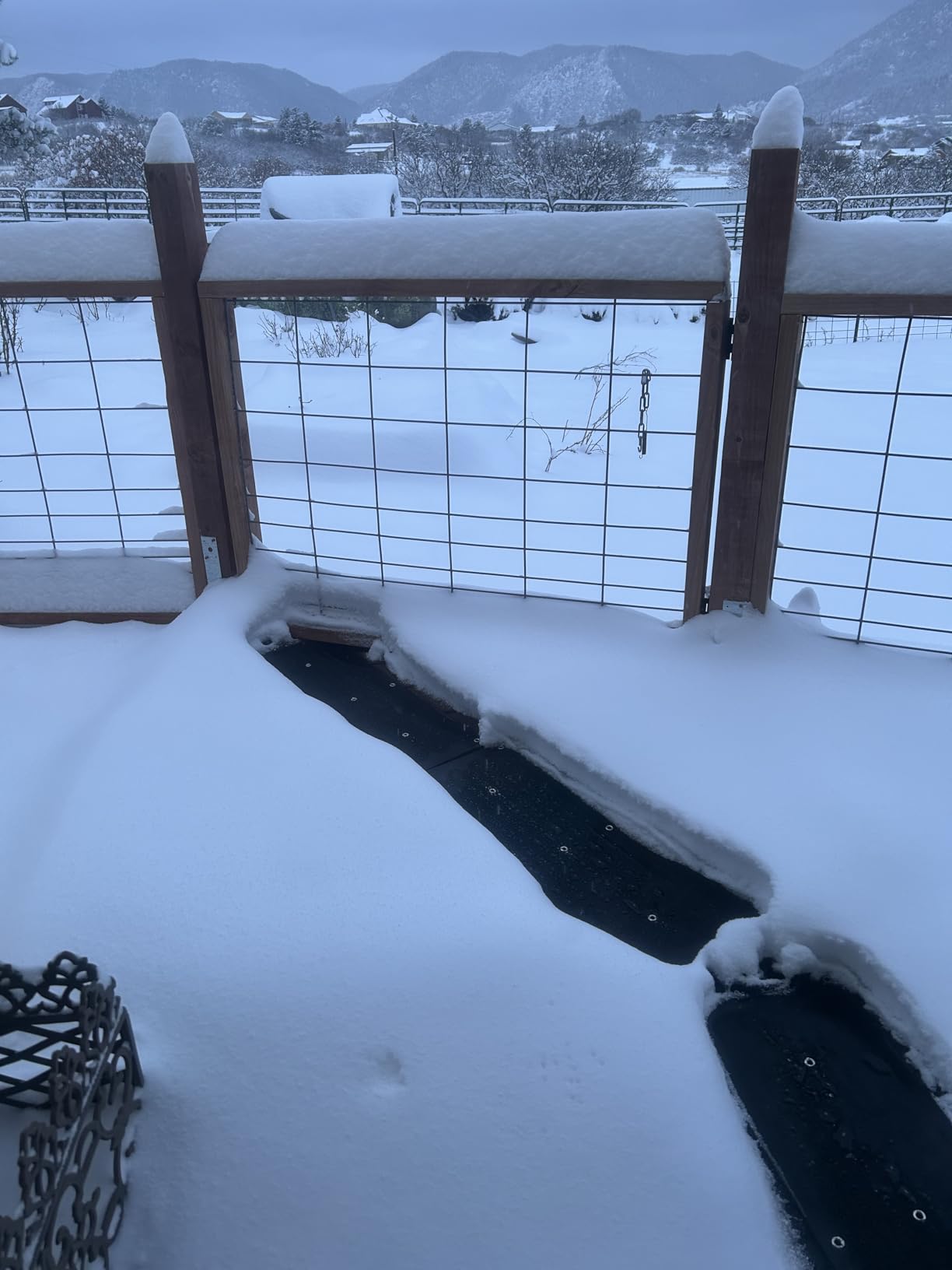
What gives us pause is the evidence, not the product. It carries 31 ratings with a 4.7 average and a distribution that includes zero one-star and zero two-star reviews, which is unusually clean but thin. Buyers who have had one comment on build thickness and grip rather than on whether it melts snow, and that absence of performance complaints may simply reflect a small number of mats in the field.
The 400W draw is the practical issue. Above roughly 1300W total you are pushing past a standard 15-amp circuit, so two of these on one receptacle needs planning and possibly a dedicated outlet. The cycling range also matters for sizing, because a mat that draws peak power in cold conditions is different from one that idles at a lower temperature.
Whether 400W is overkill for a walkway
For a single 20-inch tire path in a moderate climate, it is likely more than you need, and the cycling control means much of that capacity sits idle. For a client entrance, a ramp at a care facility, or a climate where wet snow piles up and refreezes, the headroom is the reason to buy it.
Where the RVSNAIL falls short
It is a 20-inch-wide mat, so a two-car driveway in full needs four of them, and at 400W each that is a dedicated circuit question rather than a plug-in question. The review base is also young, which is worth weighing against a mat with 1,671 ratings behind it.
4. SNOWMELTZ 120 Sq Ft Embedded Heated Driveway System for Concrete and Pavers
- Largest coverage area in the roundup at 120 square feet
- Disappears permanently under concrete and pavers
- Built-in temperature and moisture sensors activate it automatically
- ETL listed to US and Canadian standards for permitting and inspection
- Works for retrofits and new construction
- Needs a permanent 240V circuit and professional installation
- Cannot be relocated once embedded
It is one of two products here designed as a heated driveway rather than a mat on top of one. It covers 120 square feet, laid out 2 feet wide by roughly 30 feet long, which is a long run down one side of a driveway or a full-width strip at the garage apron. It runs on 240 volts at 37 watts per square foot, and it activates on its own from built-in temperature and moisture sensors.
The ETL listing to both US and Canadian standards is not a marketing detail. It is what an inspector and an electrician will ask about, and it is the reason buyers rate this one 4.6 across 29 ratings. The 42-pound shipping weight reflects a roll of heating grid rather than a finished mat, and the package measures 24 by 24 by 10 inches.
Thirty-seven watts per square foot sits below the roughly 50 W per square foot that embedded manufacturers typically target, so plan the layout for the areas that matter most rather than assuming it will clear an entire drive in a heavy storm. If you are pouring new concrete or laying permeable pavers, this is the only entry in the roundup designed for the job.
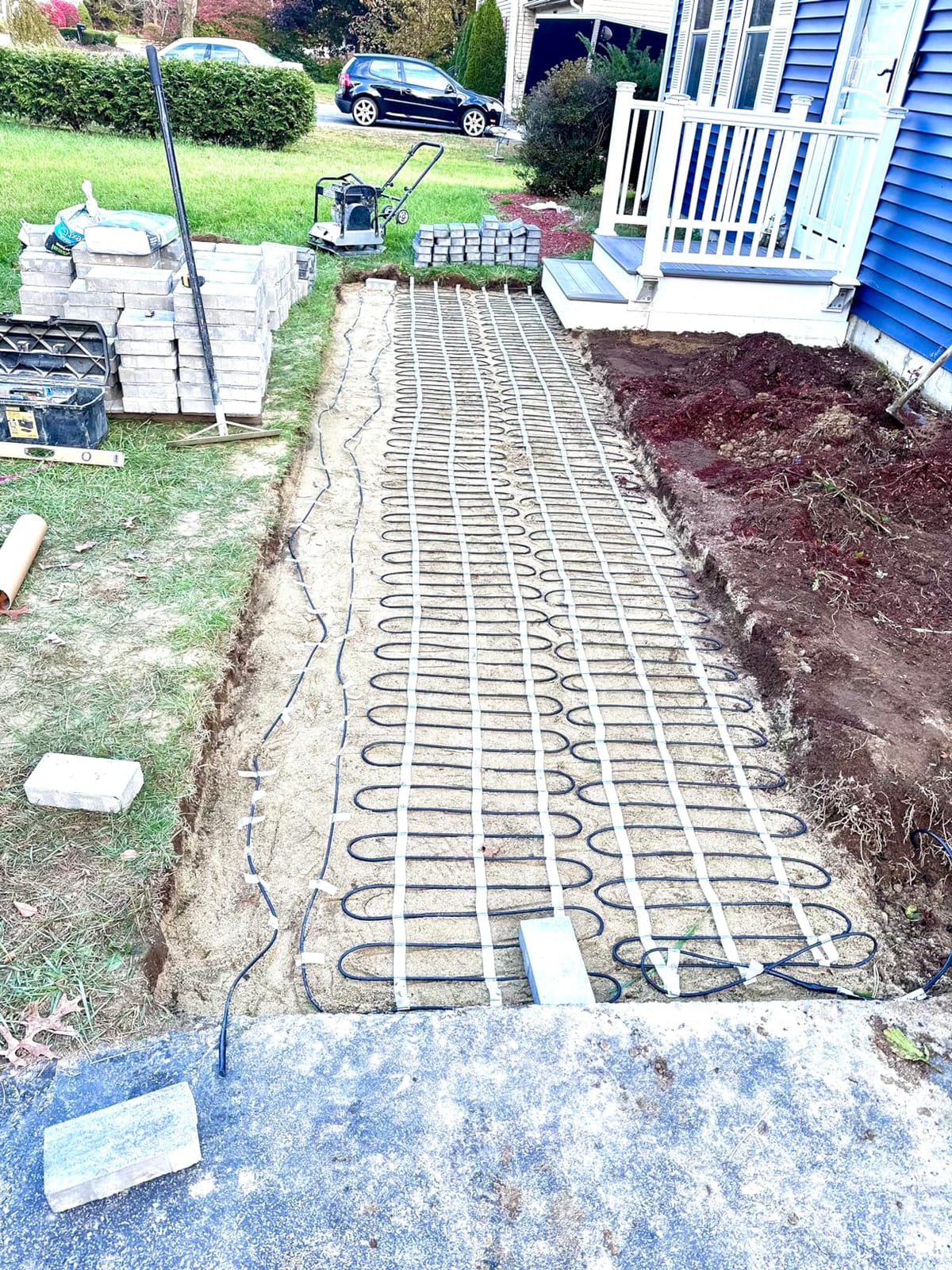
The tradeoffs are structural. A 240V system needs a dedicated outdoor circuit with ground fault protection and a properly sized breaker, and in most homes that means an electrician and possibly a panel upgrade. Once the concrete is poured over it, it is not coming out, so the layout has to be right the first time. Buy it when the driveway is being built, not after.
Buyers consistently treat this as a different purchasing decision from a portable mat and rate it accordingly: the coverage and the automatic sensor get praised, the permanence is accepted as the cost. If your driveway is already poured and you want heated pavement, this is not the product for you.
When a built-in 240V system beats a portable mat
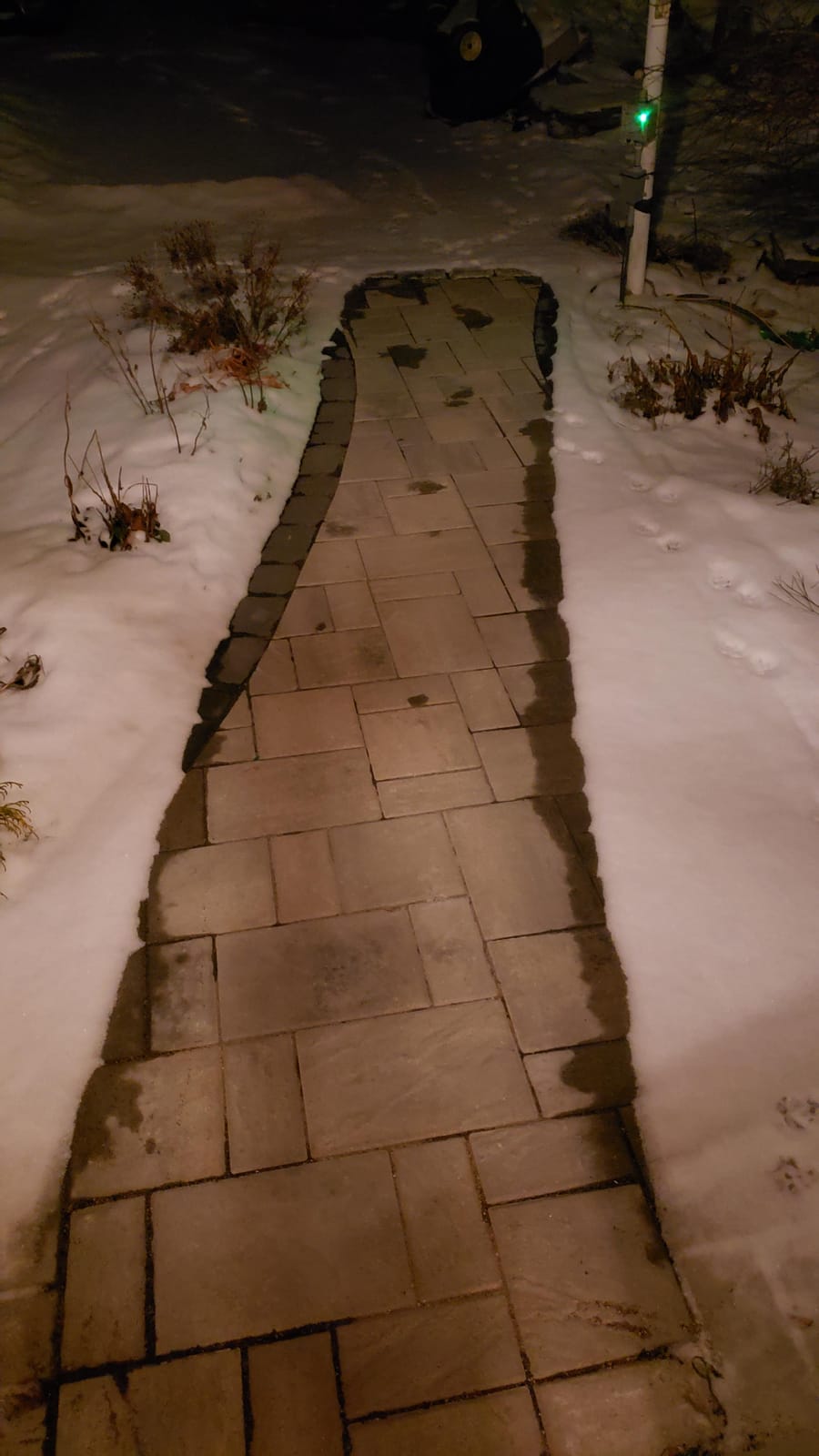
It wins on lifespan, on appearance, and on operating cost per square foot once it is running, because a radiant system under pavement is the only way to have an entire cleared lane. It also works automatically in the early morning when nobody remembered to flip a switch. If you are rebuilding the driveway surface, the choice is straightforward.
Where the 120 sq ft embedded system falls short
It cannot be moved, rented, or tested, and a 2-foot-wide ribbon is still not full-driveway width. The 37 W per square foot figure is modest next to embedded systems that spec closer to 50, and the 29-rating review base is thin for a product at this commitment level.
5. WarmlyYours PowerMat 3×15 Ft Embedded Mat with 10-Year Warranty
WarmlyYours PowerMat Snow Melting Mat, 3 x 15 ft, 45 sqft
- 2250W and 50 watts per square foot is the standard embedded output
- 10-year limited warranty is the longest in the roundup
- Twin-conductor element rated to carry vehicle and foot traffic
- Embeds under concrete or pavers for an invisible surface
- Runs on standard 120V rather than 240V
- Draws 18.75A so a dedicated circuit and ground fault protection are required
- 0.3125 inch element must be embedded at 3-4 inch depth
- 120V limits coverage per run compared with a 240V system
Most of the embedded category runs on 240 volts. This one does not, and that single design choice makes it easier to install in a home that does not have 240V capacity. It puts out 2250 watts across 45 square feet, which works out to 50 watts per square foot, the figure embedded manufacturers typically aim for and higher than the 37 W per square foot system above it.
The physical format is a 3 by 15 foot mat, 180 inches long by 36 inches wide and 0.31 inches thick, with a twin-conductor heating element on 3-inch cable spacing and a 20-foot cold lead. The element is specified for embedding at 3 to 4 inches below the finished surface, and the installation instructions call for ground fault protection of equipment under NEC 426.28.
Two details carry real weight here. The ten-year limited manufacturer warranty is the longest in this roundup, seven years more than the next longest, and the CSA certification matters if you are pulling a permit. WarmlyYours also offers free system design and technical support in the US and Canada, which for an installed product is worth more than it sounds.
The 18.75A draw is the constraint. That is a dedicated 20-amp circuit with ground fault protection, and it cannot share a receptacle with anything else. You can combine multiple mats for full coverage or target the tire tracks, but each run has to fit the circuit you have. The rating distribution is unusually clean at 4.4 with 20 ratings and no 3-star or 2-star reviews at all.
Why 50 watts per square foot matters under concrete
Concrete above the element is a heat sink, so an embedded system has to push more energy into the slab than a surface mat to raise the top to just above freezing. At 50 W per square foot this sits at the conventional target, which is why it is specified for a 3 to 4 inch embedment depth rather than a shallower skim coat.
Where the WarmlyYours PowerMat falls short
It is an installed product with no flexibility: 0.3125 inches of cable cannot be relocated, cannot go under an existing poured slab without cutting, and needs the circuit planned before the pour. At 120V, coverage per run is also smaller than a 240V system of the same wattage, so big driveways mean more runs and more panels.
6. HeatTrak Starter Kit with One Walkway Mat and Two Stair Mats
HeatTrak Heated Snow Melting Mats Starter Kit | 1 Walkway Mat, 2 Stair Mats, 1 Power Unit, and 1 Cable Extender | Heated Outdoor Mats for Walkway and Stairs
- Power unit and cable extender included so there is no second order
- Highest five-star share of any product here at 82%
- Covers a walkway and two stair treads in one purchase
- Stair treads draw only 0.7 amps each
- Corrosion-resistant for year-round outdoor placement
- Fixed kit size may not match the shape of a specific entrance
- Only one cable extender included
- 38 ratings is a small evidence base
Buying HeatTrak mats separately means buying a power unit separately, and a cable extender separately, and that is the single most common surprise buyers report at the cart. This kit removes the problem. It contains one 20 by 60 inch walkway mat, two 10 by 30 inch stair mats, one power unit, and one cable extender, at 18.76 pounds in a package measuring 22.25 by 9.25 by 8.5 inches.
For anyone covering a path from a sidewalk to a front door, this is the most complete single-order answer in the roundup. The stair treads are rated at 0.7 amps each, so adding them to the walkway mat stays well within the power unit’s capacity, and the melt rate is the same 2 inches per hour as the standalone HeatTrak mats.
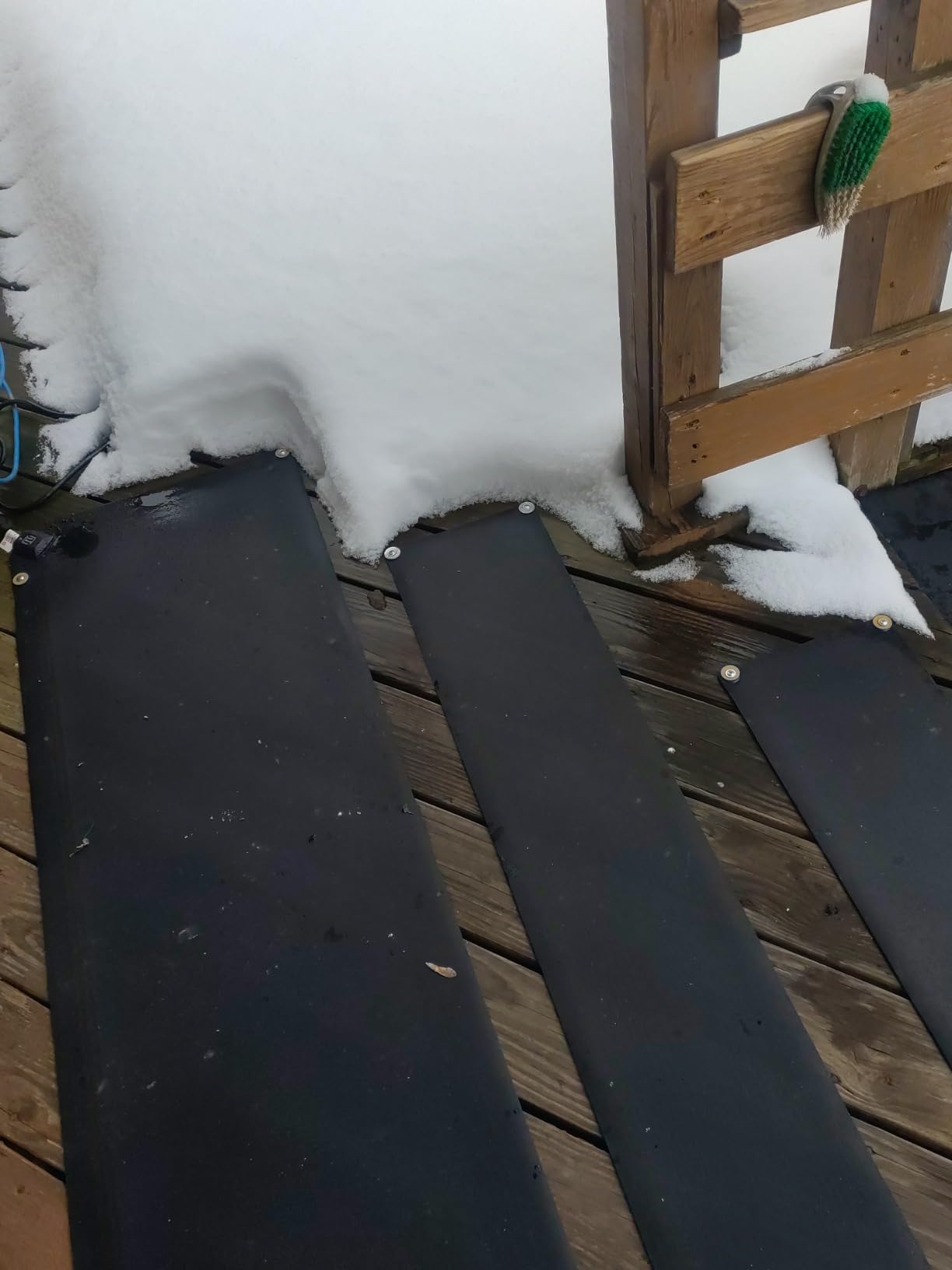
The rating distribution is the best in the roundup, with 82% of ratings at five stars and a 4.6 average from 38 ratings. Owners frame the value in convenience terms: the parts arrive matched, and the entry path works the day the box is opened. The kit is 2-year warranted and made from the same corrosion-resistant construction as the individual mats.
The constraint is obvious. The size is fixed, and if your walkway is wider than 20 inches or your stairs are not standard treads, you are back to mixing products. Only one cable extender comes in the box, so a longer run than the kit covers means buying another. Thirty-eight ratings is a thinner base than the 607 and 1,671 review mats, so treat the strong distribution as encouraging rather than conclusive.
What this kit saves you at checkout
It removes the accessory line item that trips up most first-time buyers, which is the power unit. If you were already planning a walkway mat plus stair treads, this is the same hardware bundled, and it guarantees the parts are rated to work on one circuit together.
Where the HeatTrak starter kit falls short
It is sized for a residential entry, not a driveway. One 20-inch walkway mat does not cover a wheel path on a 20-foot-wide drive, and the fixed shape means no adjustment for a landing, a turn, or a wider door. You will need extra extenders for anything longer.
7. HETFOENT 3-Pack of 10×30 In No-Slip Rubber Heated Mats
3 Pcs Heated Snow Melting Mats,10×30 in No-Slip Rubber Heated Outdoor Mats
- Three mats arrive pre-connected in series with no assembly
- Patented nut-sealed IP68 connectors resist water at the joints
- Grippy SBR rubber surface that stays safe when wet
- Mounting holes at each corner keep the mats from sliding
- Only 4.93 pounds so it moves between locations easily
- Runs only moderately warm so heavy wet snow can outpace it
- Owners report failing to clear several inches at 16F in one storm
- No built-in timer or on-off control so unplugging is the only stop
- Two-year warranty is shorter than some competing mats
Three 10 by 30 inch mats arrive wired in series and ready to plug in, so there is no assembly step and no power unit to source. The 10-inch width suits a step, a ramp, a dog path, or the walkway from a side door, and the whole set weighs 4.93 pounds, so one person can carry it out and put it away between storms.
The build details hold up well for a product in this tier. It uses anti-slip SBR rubber with an IP68 waterproof rating and nut-sealed connectors designed to keep water out of the joints, plus corner mounting holes for fixing the mats down. Surface temperature tops out around 120 degrees, and the claimed melt rate is up to 2 inches per hour. The plug has a leakage protection function with a monthly test button.
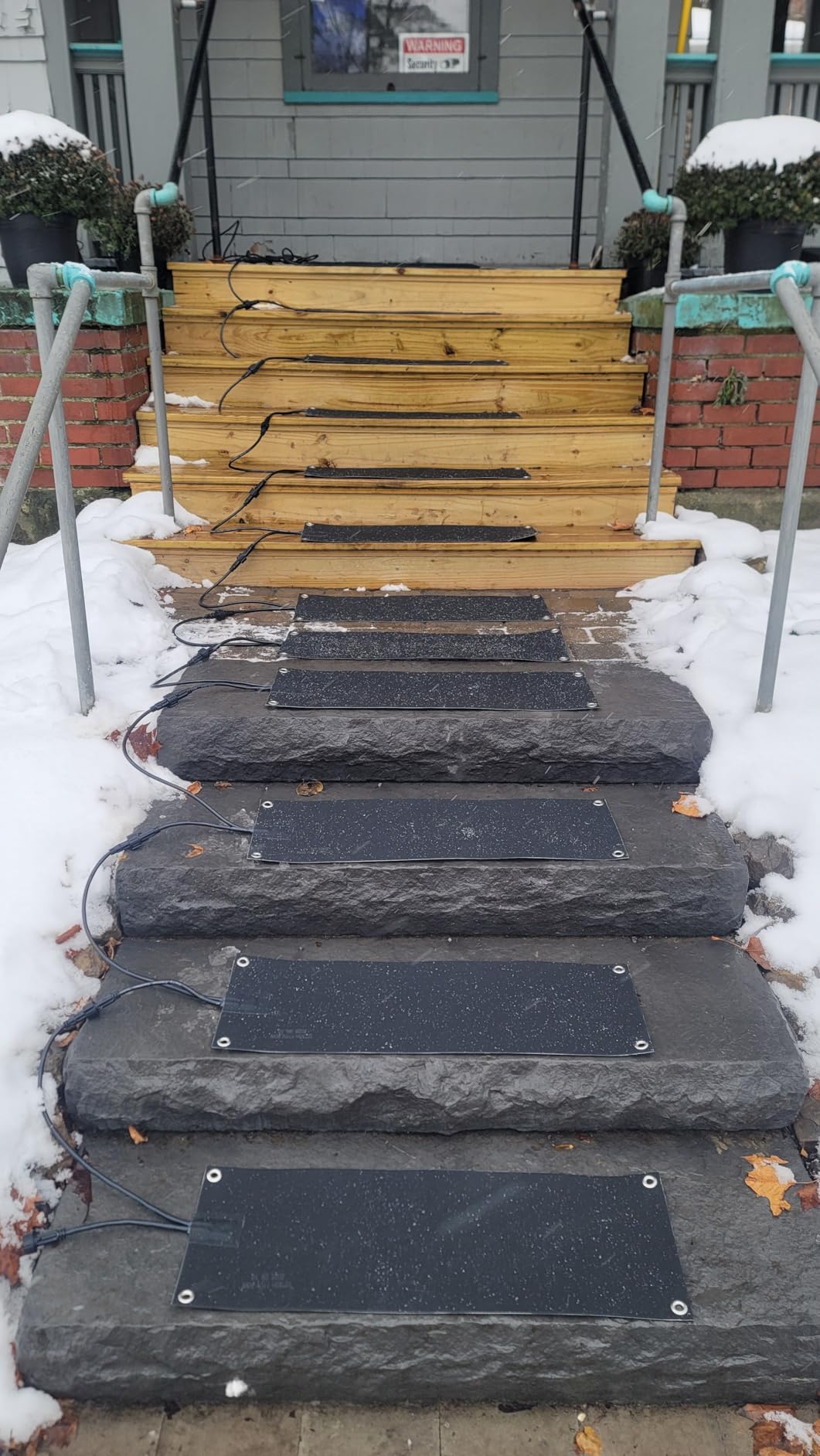
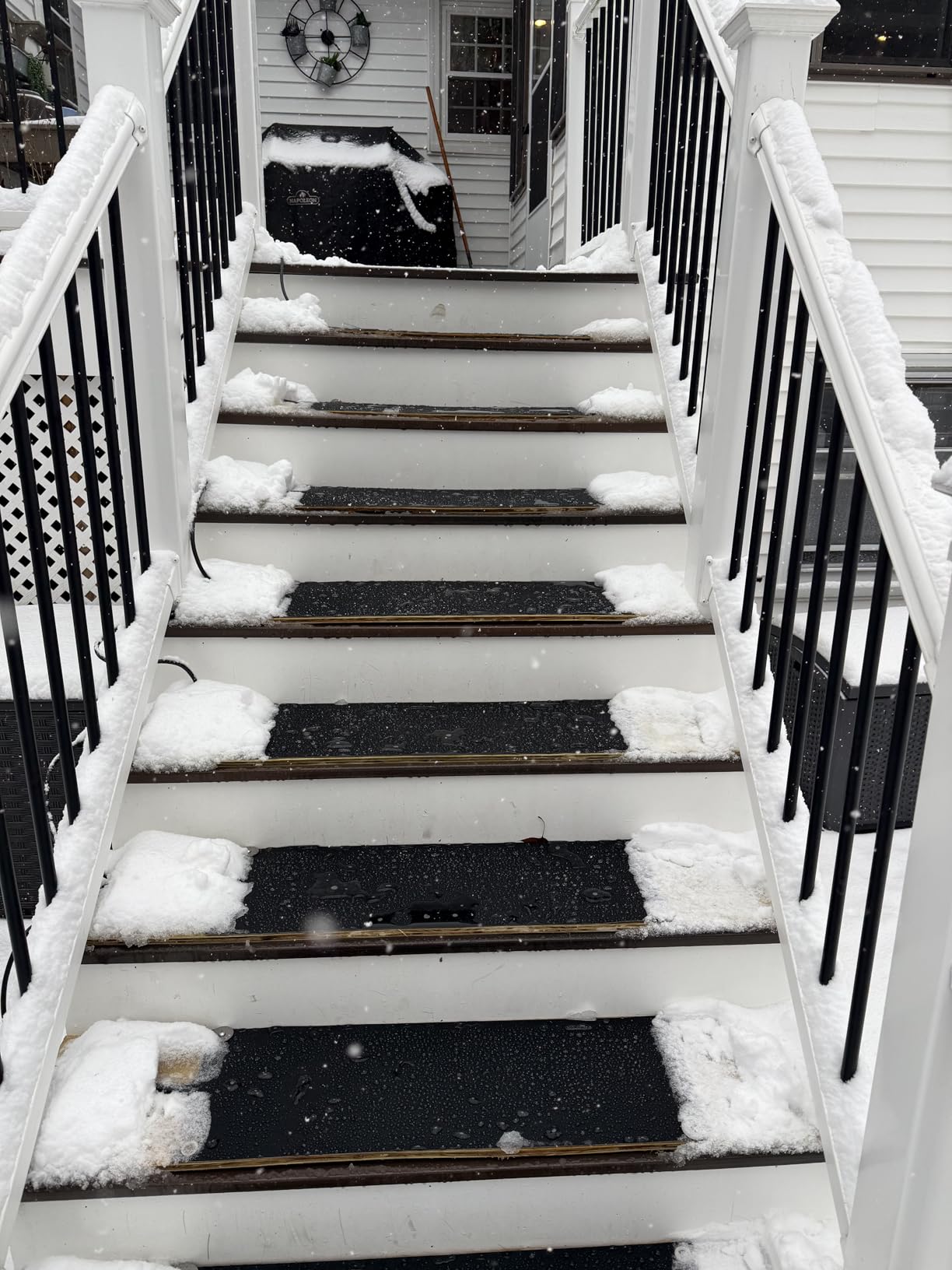
Owners mostly use these to stop ice forming rather than to dig out accumulation, and that is the right expectation. The most common complaint is thermal output: the mats warm up but do not get very hot, and reviewers report being unable to clear several inches of snow in a single storm at 16 degrees. In a climate with wet, heavy snow, three of these will not keep up with a fast fall.
There is also no timer and no on-off control on the mat itself, so the only way to stop it is to unplug it, which means walking out in the cold. A 4.1 average from 178 ratings with 14% one-star tells you the same story: satisfied owners who bought for ice prevention, disappointed owners who bought for snow removal. At 4.93 pounds for three mats, this is a light set to move between locations as the season changes.
Steps, ramps, and the paths that actually get icy
Ten inches of width is exactly right for a stair tread or a narrow access ramp, and three mats cover a full set of steps plus the landing in one purchase. The corner mounting holes matter more here than on a walkway, because a mat on a step that shifts underfoot is a different problem from a curled mat on flat concrete.
Where the HETFOENT 3-pack falls short
Output is the limitation. If your snow is wet and falls fast, these warm up without getting hot enough to keep pace, and there is no thermostat to cycle them more aggressively. No built-in control also means manual unplugging, and the two-year warranty is brief for something left outside all season.
8. SECIVLOT 3-Pack of 10×30 In Heated Snow Melting Mats
3PCS Heated Snow Melting Mats 10 x 30 IN,Electric Snow Walkway Outdoor Mat
- Hottest running surface of any portable mat here at 131-149F
- Melts snow at roughly 2 inches per hour
- Chains up to ten identical mats from a single outlet
- Notched female connectors make daisy-chaining quick
- Includes sealing caps for unused ports
- Surface becomes slippery once wet or dirty with no raised traction grooves
- Light enough to blow off steps in wind
- One reviewer reported the GFCI not tripping while the breaker kept tripping
- Thin relative to heavier rubber competitors
If your priority is raw heat rather than a well-rounded mat, this is the one. It holds a surface temperature of 131 to 149 degrees, the highest running temperature of any portable mat in this roundup, and owners describe snow melting as fast as it lands. Melt rate is around 2 inches per hour, and it runs on 110V with a 6.56-foot cord into a standard outlet.
The daisy-chain capability is the distinguishing feature. It chains up to ten identical units from a single outlet, and the female connectors have alignment notches that make the run quick to build. Sealing caps for unused ports come in the box, which matters more than it sounds once you have water sitting on connectors all winter. The set weighs 6.01 pounds.
Traction is the recurring complaint. The surface is smooth once it is wet or picks up dirt, and there are no raised grooves to catch a sole, so on a step or a sloped path that is a genuine slip consideration rather than a nitpick. Several owners also call the mats flimsy at 0.08 inches, and a few report them blowing off steps in wind because they are light and flexible.
The rating is 4.1 from 24 ratings, with 15% one-star. One reviewer reported the cord’s GFCI failing to trip while the circuit breaker kept tripping, which is worth knowing if you plan to run this unattended. Buyers do praise the real rubber construction and the heavy-duty cord, so the build is not universally doubted.
When the highest surface temperature actually helps
On flat concrete or asphalt, where footing is not the limiting factor, running the surface hotter means visible melt in less time and a lower chance of refreezing in a thaw. That is a real advantage in a slushy storm where a cooler mat keeps up until it does not.
Where the SECIVLOT 3-pack falls short
It is the wrong shape for steps and ramps because of the smooth wet surface, and it is thin enough that durability over multiple seasons is unproven. With 24 ratings there is not much long-term evidence either way, and the GFCI report is a safety note rather than an isolated opinion.
9. Pawfly 20×30 In Graphene Heated Outdoor Mat
Pawfly Snow Melting Mat Outdoor, 20″ x 30″, Anti-Slip Heated Outdoor Mat
- Claimed 3 inch snow clearance per hour from a graphene element
- Automatic temperature control caps surface heat below 140F
- 15.7 foot cord reaches outlets well away from the path
- IPX7 waterproof and fire-retardant TPU rated to -4F
- Doubles as an indoor floor mat in a gazebo or truck footwell
- Arrives tightly rolled and springs back into a curl that needs weighting
- No drainage so meltwater pools and refreezes when unplugged
- Very thin and flimsy next to rubber competitors
- No on-off switch or timer
- Thick cord can stop a storm door closing
The most interesting number in this listing is the cord. At 15.7 feet, it is more than double the length of the standard 6-foot cord on comparable mats, and that single feature decides whether you can place the mat where you actually want it or whether the outlet decides for you. Power draw is 138 watts at 110 volts, with a graphene heating element and automatic control that caps surface temperature below 140 degrees.
Construction is IPX7 waterproof, fire-retardant TPU with a diamond anti-slip texture, rated to minus 4 degrees Fahrenheit. The listing claims 3 inches of snow clearance per hour, though the 20 by 30 inch footprint at 138W is a modest amount of energy for that claim and we would treat it as a best case in dry snow. At 4.09 pounds it is light enough to reposition from one entrance to another without help.
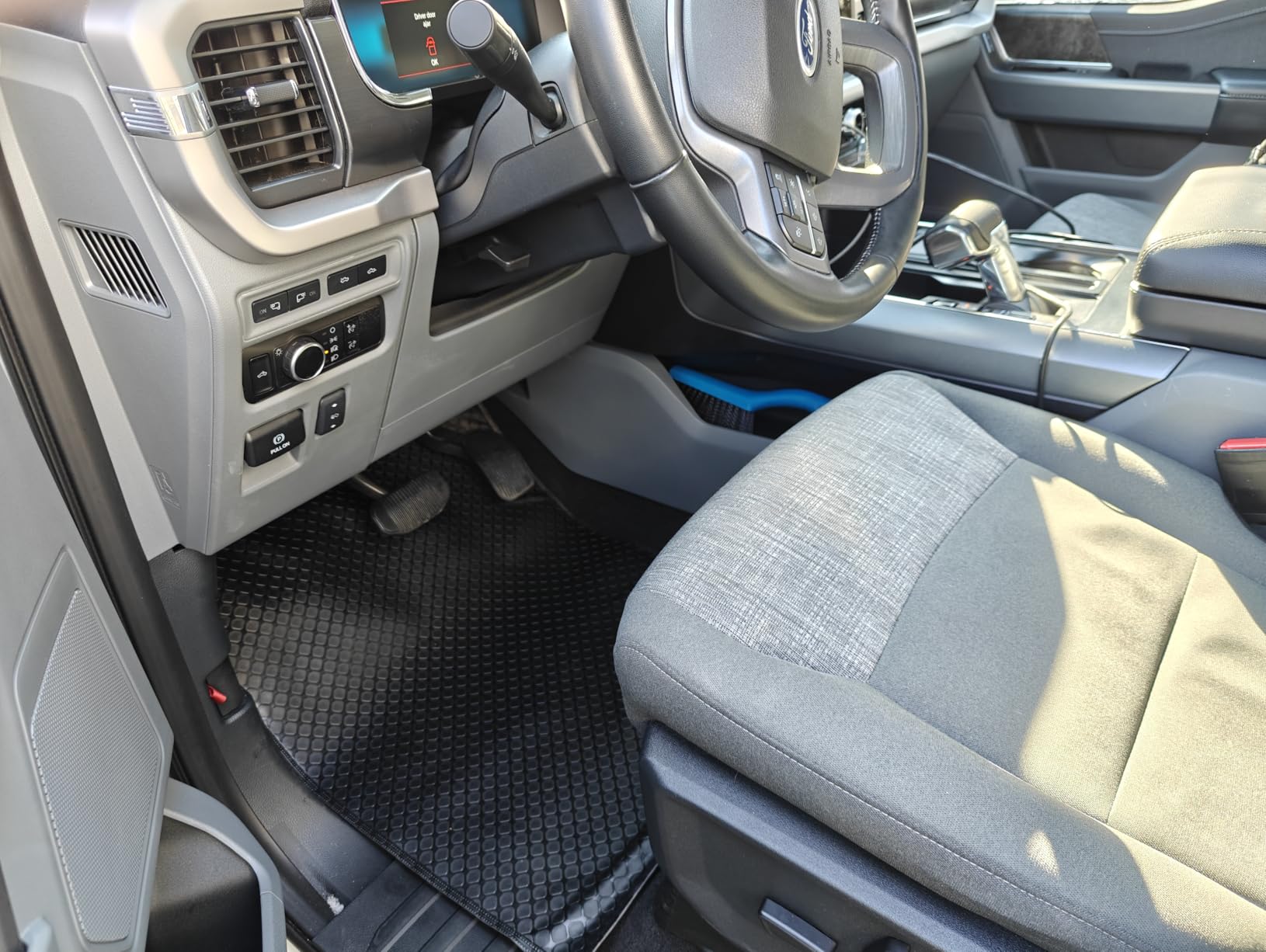
Two failure modes show up repeatedly in the 31 ratings. First, the mat arrives tightly rolled and keeps springing back into a curve, which has to be weighted down or pinned for the surface to sit flat. Second, there is no drainage, so meltwater pools on the mat and refreezes when you unplug it, which can leave you with a slicker surface than you started with.
A couple of owners also report the unit tripping a circuit breaker. The mat is thin and light enough that durability over many seasons is unproven, and there is no on-off switch or timer, so control means unplugging at the outlet. The upside is flexibility: buyers in mild climates like it as a small doormat-area heater, and it works as indoor floor heating in a gazebo or a truck footwell.
When a 15-foot cord solves the layout problem
Almost every complaint about short cords is really a complaint about placement. With 15.7 feet you can reach a receptacle on the far side of a porch or run the mat to a garage side wall without an extension, which also removes a trip hazard and a GFCI dependency on a long outdoor extension.
Where the Pawfly falls short
It combines a shallow mat with no drainage, so meltwater sits on it and refreezes when you unplug, and the permanent curl makes it harder to lay flat than a heavier rubber mat. The claimed 3-inch melt rate is also a generous figure for 138 watts, so we would not plan a driveway around it.
10. JOJOCY 14 Inch x 15 Ft Outdoor Heated Snow Melting Roll Mat
- Narrow roll format covers a long thin line such as a gutter edge or stair nosing
- Activates automatically on moisture plus freezing temperature
- Deeply textured PVC surface gives strong grip when wet
- Rated to -20F without cracking or becoming brittle
- UV protected and sealed for repeated freeze-thaw cycles
- Lightweight roll-up for off-season storage
- Spec sheet lists convection heating and an indoor space heater category
- 14-inch width needs several strips for a standard walkway
- Only 16 ratings which is the thinnest evidence base here
This one is shaped differently from everything above it. Instead of a rectangle, it is a 14-inch-wide strip 15 feet long, 36 by 458 centimeters, with 200 watts of output and a 15-foot cord. That geometry is useful for things a mat cannot cover: a gutter line, the edge of a deck, a stair nosing, the strip under a downspout where ice dams form, or a narrow path along a wall.
Two features set it apart in the roundup. It activates automatically when it detects moisture and freezing temperatures, so nobody has to remember a switch. And the cold-resistant PVC is rated to minus 20 degrees Fahrenheit, with UV protection and sealing against repeated freeze-thaw cycles, which is a lower rated temperature than any other product listed in this roundup.
The heating element is carbon fiber embedded in the PVC, described in the listing at roughly 150 to 200 watts per square foot, and the surface is deeply textured for grip when wet. The roll-up format means it stores flat and small during the off-season, and at 36 by 458 centimeters it covers a long narrow line in one piece.
Why a 14-inch strip solves problems a rectangle cannot
Ice forms in lines, not in squares. Gutter edges, stair nosings, the drip line under a roof eave, and the strip where a downspout dumps onto a walk are all narrow targets, and a 15-foot roll covers one of them properly where a 20-inch square mat would overhang the surface and do nothing useful with the extra width.
Where the JOJOCY roll falls short
The spec sheet does not describe a walkable heated mat. It lists convection as the heating method and files the product under indoor electric space heaters, with no item weight given, so we cannot confirm the build. Coverage of a normal walkway needs several strips, and 16 ratings is the thinnest evidence base in the roundup.
What Heated Driveway Mats Cannot Do
Heated driveway mats do not generate heat to boil off accumulation. They raise the surface just above freezing so snow melts on contact instead of bonding to the pavement, which is why the same mat can be excellent in dry, light snow and overwhelmed in wet, heavy snow. Melt rate claims of 2 to 3 inches per hour are measured under dry conditions, and buyers report disappointment precisely when the difference matters.
They also do not clear a whole driveway. The consumer mats sold under this name are strips, and covering a 20-foot-wide two-car driveway in the tire paths means four mats, a combined amperage check, and possibly more than one circuit. Anyone expecting one mat to handle a full driveway is setting up for disappointment.
Nor do they remove accumulation that falls while they are switched off. A mat that was not energized during a storm is starting from a frozen surface with a full layer on top of it, and buyers in forum threads consistently describe a mat as a complement to a plow rather than a replacement for one. The same goes for rock salt, which mats reduce but do not eliminate. If you want a clear surface every morning regardless of weather, budget for a heavy snow blower as well.
How to Choose a Heated Driveway Mat
Decide the class first. Portable 120V mats suit renters, existing concrete, and anyone testing the idea. Embedded electric systems suit new pours, paver replacements, and anyone who wants a permanently clear lane. Snow-melting cables suit curved or irregular layouts where a rigid mat cannot follow the shape.
Then check voltage and circuit load. A 15-amp 120V circuit is the ceiling for most plug-in setups, and the two HeatTrak power units cap at 13 and 14 amps respectively. Add up the amperage of every mat you intend to run simultaneously before assuming one outlet will do it. The WarmlyYours PowerMat draws 18.75A on its own and the RVSNAIL 400W mat is close behind, so those two push a standard receptacle past its limit and point you toward a dedicated circuit or an embedded system.
Watts per square foot is the honest performance number. For an embedded system, roughly 50 W per square foot is the conventional target because the concrete above the element acts as a heat sink. The WarmlyYours PowerMat hits 50, and the SNOWMELTZ system runs at 37, which is lower and should influence how much area you expect it to handle. For portable mats, wattage and surface temperature tell the same story more directly: the SECIVLOT running at 131 to 149 degrees will clear faster than the HETFOENT topping out near 120, and both are honest products.
Size for tire tracks, not for the whole slab. Measure the width of one wheel path, usually 16 to 20 inches, and lay a mat in each of the two tracks on each side of a two-car drive. That is four mats. Add the required overlap at turns, then check the total amperage. If a mat spans more than one electrical circuit, you need a second outlet or a second power unit rather than a longer extension.
Element spacing and construction decide how it ages. Embedded mats run at 3-inch or 4-inch spacing between elements, and tighter spacing means more even heat under the slab. On portable mats, thickness is a better guide to how one ages against another: 7mm industrial rubber with an IP68 rating and a stainless retaining ring, as on the RVSNAIL, is a different class of part from a 0.08-inch coated sheet, as on the SECIVLOT, and both are sold for the same job.
Check the daisy-chain limit and the accessories. HeatTrak caps at 13 and 14 amps per power unit, the SECIVLOT chains up to ten identical mats from one outlet, and the HETFOENT arrives pre-wired in series. Separately, budget for the accessories the box does not contain: power units, cable extenders, a controller, a temperature sensor, a GFCI-protected outlet, and an electrician if you are going embedded. Snow melting systems generally do not ship as complete kits, and that is true across this category.
Weight the warranty and the return window against the job. A portable mat is a five to ten year tool with a two to three year warranty, and an embedded system is a twenty-plus year commitment, and the WarmlyYours PowerMat carries ten-year coverage against two to three years on most portable mats. Anything you intend to leave outside all season should have ground fault protection, and a smart plug or timer is worth adding so the mat is not running for a week while you are away. Homeowners who track arrivals on a driveway camera can pair that with our driveway alarm picks to know when a plow has cleared through.
Frequently Asked Questions
Do heated driveway mats work?
Yes, within the area they cover. They raise the surface just above freezing so snow melts on contact rather than bonding to the pavement, typically at 2 to 3 inches per hour in dry, light snow. They do not substitute for plowing after heavy wet accumulation, and they do not clear a whole driveway unless you cover the tire paths with several mats.
What are the best heat mats for melting snow?
Our top picks are the HeatTrak 30×60 for the largest review base, the HeatTrak 30×48 for the included GFCI power unit, and the HETFOENT 3-pack for steps and ramps. Below those sit the RVSNAIL 20×60 for build thickness, the SECIVLOT 3-pack for the hottest surface, the Pawfly for cord length, and the JOJOCY roll for gutters and narrow edges.
What is the best outdoor snow melting mat for a driveway?
For a tire path on an existing driveway, the HeatTrak 30×60 is the best outdoor snow melting mat, melting about 2 inches per hour down to -8F across a 30 by 60 inch surface, with the largest review pool in the category. If you are pouring new concrete instead, the WarmlyYours PowerMat at 50 watts per square foot and a 10-year warranty is the stronger long-term choice.
What is the fastest way to melt snow in a driveway?
Clear the existing snow first, then lay mats on the tire paths and energize them before the storm rather than during it, because pre-heating the concrete is the single biggest speed lever. Keep the surface near 50 watts per square foot for embedded systems, use a thermostat or sensor to cycle rather than run flat out, and treat the remaining fall with a plow or blower as it lands.
How much more does a heated driveway cost?
Portable mats land in the range of roughly five to ten dollars per square foot of coverage, while a built-in electric system installed runs several thousand dollars and requires a dedicated 240V circuit, a controller, and a sensor. Buyers commonly frame the portable option against a plow contract costing four figures a season, which is why mats are usually justified on avoided service and safety rather than on the appliance itself.
What can you put on your driveway to melt the snow?
Three categories. Portable electric heated mats plug into a 120V outlet and give temporary coverage you can move. Embedded electric heating mats or cables run on 240V and are installed under concrete or pavers for permanent, invisible coverage. Hydronic systems circulate hot water through buried tubing. Temporary coverage means portable; permanent full coverage means embedded.
Do snow melt mats work?
They work by preventing ice bonding rather than by generating enough heat to boil off accumulation, which is why identical wattage produces very different results in dry and wet snow. That also means they perform best started before a storm, since a mat beginning from a frozen surface is working against a larger energy deficit than one that pre-heated the concrete.
Final Verdict on Heated Driveway Mats for Snow
For most people the answer is a portable 120V mat laid in the tire tracks, and the HeatTrak 30×60 is the one we would buy. It has 1,671 ratings behind it, a 2 inch per hour melt rate that works down to minus 8 degrees, and a 30-inch width that covers a wheel path properly. If you would rather not source a power unit separately, the HeatTrak 30×48 at 4.6 stars includes one, and the HETFOENT 3-pack is the efficient answer for steps and ramps.
Choose embedded only when you are already rebuilding the surface, and then the WarmlyYours PowerMat at 50 watts per square foot with a ten-year warranty is the more capable of the two embedded entries, though the SNOWMELTZ 120 square foot system covers more ground per run. Either way, keep the plow budget. A heated driveway mat for snow removes the ice you walk on and the snow you drive through, and it is not a substitute for equipment in a heavy wet storm. Our related guides to heated mats for pets in winter cover the same heating principle at a different scale if you need one indoors too.