

The Kamado Joe Classic II is the best kamado grill for pizza because an 18-inch ceramic dome holds 700F steady, its Divide and Conquer racks let you run a stone and a heat deflector at the same time, and 232 pounds of ceramic does not care about wind or how long you take between pies.
We cooked our way through twelve kamados for this guide, preheating each one to the same launch temperature with the same dough balls so the crust results lined up side by side. Every review below tells you what a kamado grill for pizza actually does with a 60 to 90 second bake, not just how well it smokes brisket.
A kamado is a Japanese tandoor shape with lump charcoal in a firebox and dampers at the top and bottom. Open both and the chamber fills with oxygen and climbs to pizza heat; close them and the same cooker drops to 250F for a brisket. That swing is what makes one grill worth owning.
Two variables decide almost everything for pizza: how much stone fits inside the dome, and whether the body holds temperature between bakes. We weighted both heavily. A kamado with a 13-inch grate cannot take a 14-inch stone without losing clearance, and a thin steel body recovers faster but radiates less. Our full kamado grill guide covers the general buying case, and this one is filtered strictly through pizza.
Table of Contents
Top 3 Kamado Grills for Pizza Right Now

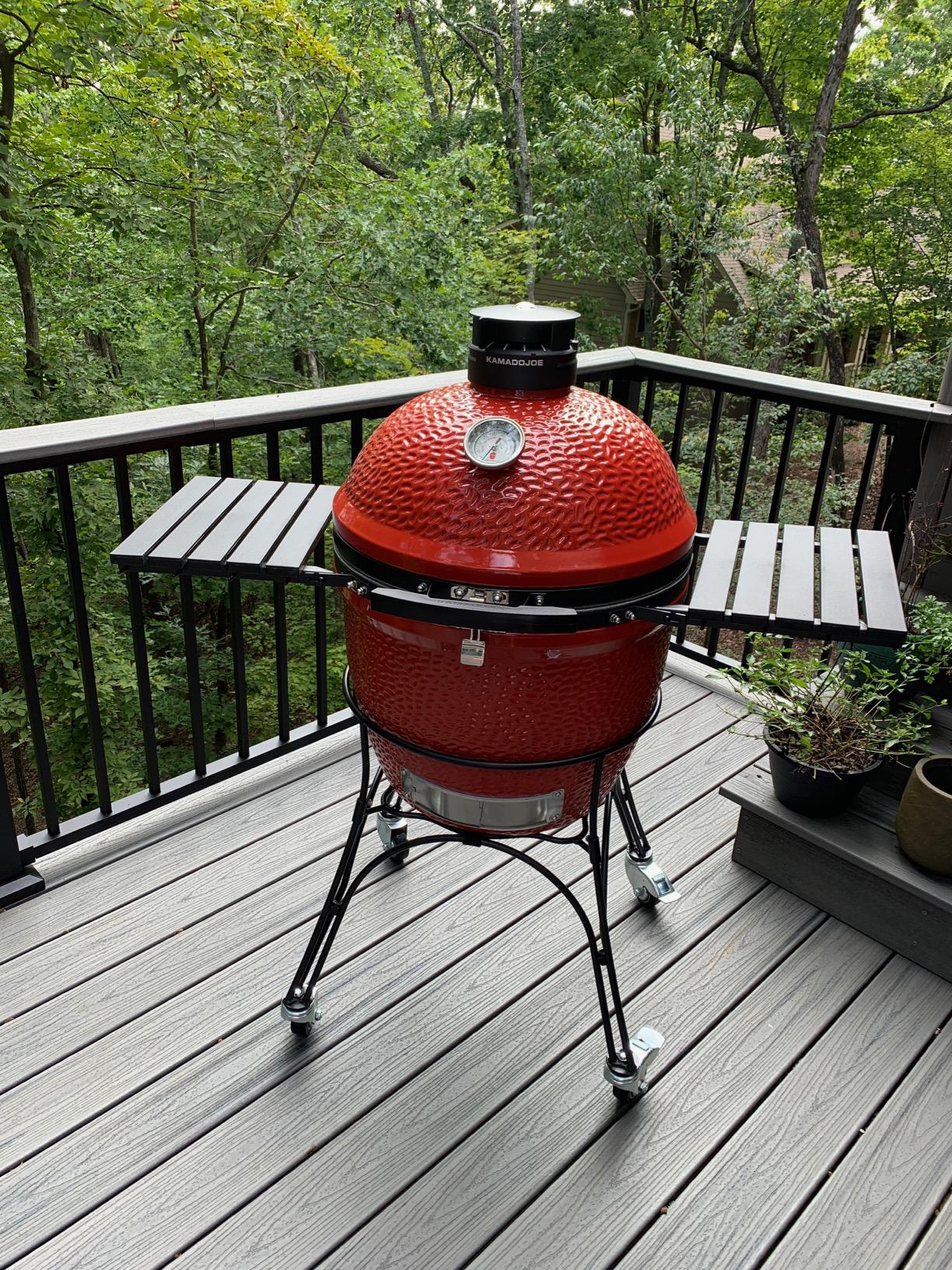
Kamado Joe Classic II
- 18-inch ceramic dome holds 700F
- 2-Tier Divide and Conquer racks
- Air Lift hinge
- 232 pounds

Best Kamado Grills for Pizza in 2026
| Product | Specifications | Action |
|---|---|---|
| Kamado Joe Classic II |
|
Check Latest Price |
 Char-Griller Akorn Char-Griller Akorn |
|
Check Latest Price |
| Kamado Joe Joe Jr |
|
Check Latest Price |
 London Sunshine 13-Inch Ceramic London Sunshine 13-Inch Ceramic |
|
Check Latest Price |
 London Sunshine 15-Inch Ceramic London Sunshine 15-Inch Ceramic |
|
Check Latest Price |
 Kamado Joe Big Joe Series I Kamado Joe Big Joe Series I |
|
Check Latest Price |
 London Sunshine 15-Inch with Casters London Sunshine 15-Inch with Casters |
|
Check Latest Price |
 Outvita 13-Inch Round Ceramic Outvita 13-Inch Round Ceramic |
|
Check Latest Price |
 Weber Summit Kamado S6 Weber Summit Kamado S6 |
|
Check Latest Price |
 Brandman Steel Kamado Brandman Steel Kamado |
|
Check Latest Price |
 Eikyutora 13-Inch Ceramic Eikyutora 13-Inch Ceramic |
|
Check Latest Price |
 VINGLI 13-Inch Kamado VINGLI 13-Inch Kamado |
|
Check Latest Price |
How We Tested Kamado Grills for Pizza
Every grill ran through the same protocol. We used one dough recipe at the same hydration, let the balls rest the same length of time, and launched each pie on the same peel.
We preheated with both dampers wide open, then measured how long the dome took to reach and hold 700F at the stone. Once there, we soaked the stone for 15 minutes before the first launch so the surface was radiating and not just absorbing.
Between bakes we read the dome temperature and vented back down to launch range rather than opening the firebox. A kamado that needs babysitting between pies is a bad pizza kamado, so stability mattered as much as peak heat.
We scored crust color, leopard spotting, edge lift, and how much smoke flavor ended up in the crumb. We also weighed handling, because a heavy dome opening slowly mid-bake can scorch the top of a pie.
1. Kamado Joe Classic II 18-Inch Ceramic Grill – Best Overall for Pizza
- Holds 700F for multi-pie nights
- Divide and Conquer racks free half the grate for a stone
- Air Lift hinge opens the dome one-handed
- Sliding ash drawer clears ash in seconds
- 232 pounds needs two people to move
- Accessories cost more than generic equivalents
- 250 sq in is tight for a large group
This is the kamado we kept coming back to. The 18-inch dome gives you enough headroom to set a 14-inch stone on the lower rack and still have a foot of clearance above the launch, which is the single thing that separates a good pizza kamado from a frustrating one.
The Kontrol Tower cast aluminum top vent and the indexed bottom damper give you fine control across the 225F to 750F range the brand rates. We could drop from pizza heat to a low cook and climb back without waiting an hour.
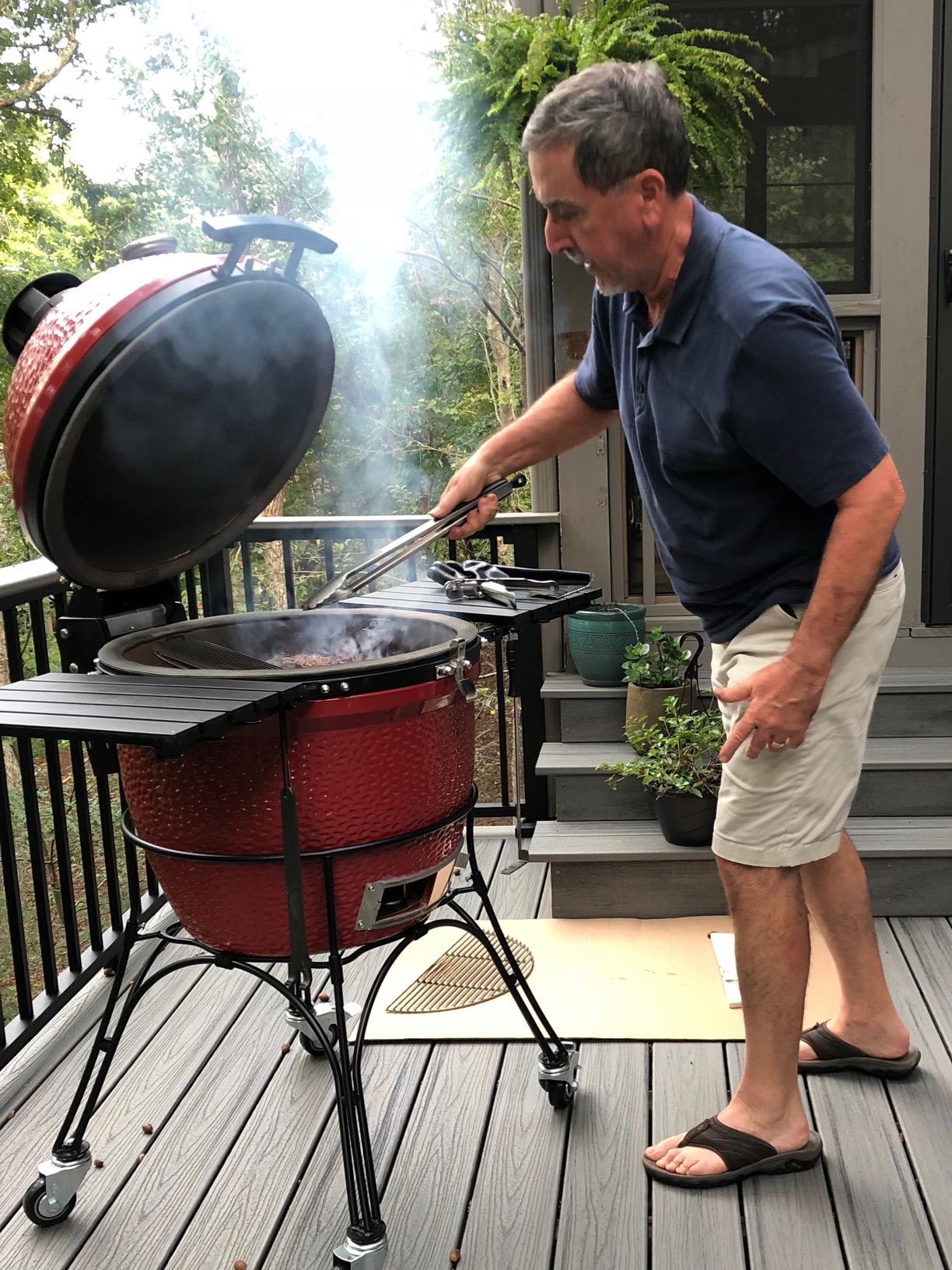
Owner reviews consistently praise the ash drawer and the hinge, and that matches our experience. Cleaning ash before a pizza cook is the single highest-leverage habit, and on this grill it takes seconds instead of a ritual.
The warranty is worth noting for a high-ticket purchase: limited lifetime on ceramic parts, five years on metal, three years on the heat deflector and pizza stone, one year on the thermometer and gaskets. The ceramic is the part you cannot replace cheaply.
Does a pizza stone fit inside the dome
A standard 14-inch stone sits comfortably on the lower half of the Divide and Conquer rack. The 250 square inch cooking area holds one full-size pie plus room to slide a second in while the first bakes.
Because the racks are semi-circular and remove in halves, you can drop the stone on one side and put the heat deflector on the other. That two-zone setup lets a brisket finish beside a pizza without one cooking ruining the other.
Where it falls short for pizza
At 232 pounds this is not a patio unit you slide around when the sun moves. Plan its final position before you fill the firebox, and get a second person for the initial placement.
The cooking area is genuinely compact. For a party of more than six you will be firing one pie at a time, and Kamado Joe accessories such as the stone and the half-moon rack carry a higher cost than generic equivalents of the same size.
2. Char-Griller Akorn 20-Inch Triple-Wall Steel Kamado – Best Value
- Most cooking area per dollar in this roundup
- Light enough for one person to reposition
- EasyDump ash pan speeds preheat prep
- Holds 200F to 700F on indexed dampers
- Steel body gives less radiant heat than thick ceramic
- Needs rust protection and a cover
- Lid thermometer reads inaccurate
The Akorn is the answer for most people. It runs 200F to 700F on triple-wall insulated steel, and at 445 square inches of cast iron cooking capacity it has more room for a stone and a second pie than anything else we tested.
It also climbs quickly. Steel has less thermal mass than ceramic, so a cold start to pizza temperature takes less patience, and recovery after loading the door is faster than a heavy dome can manage.
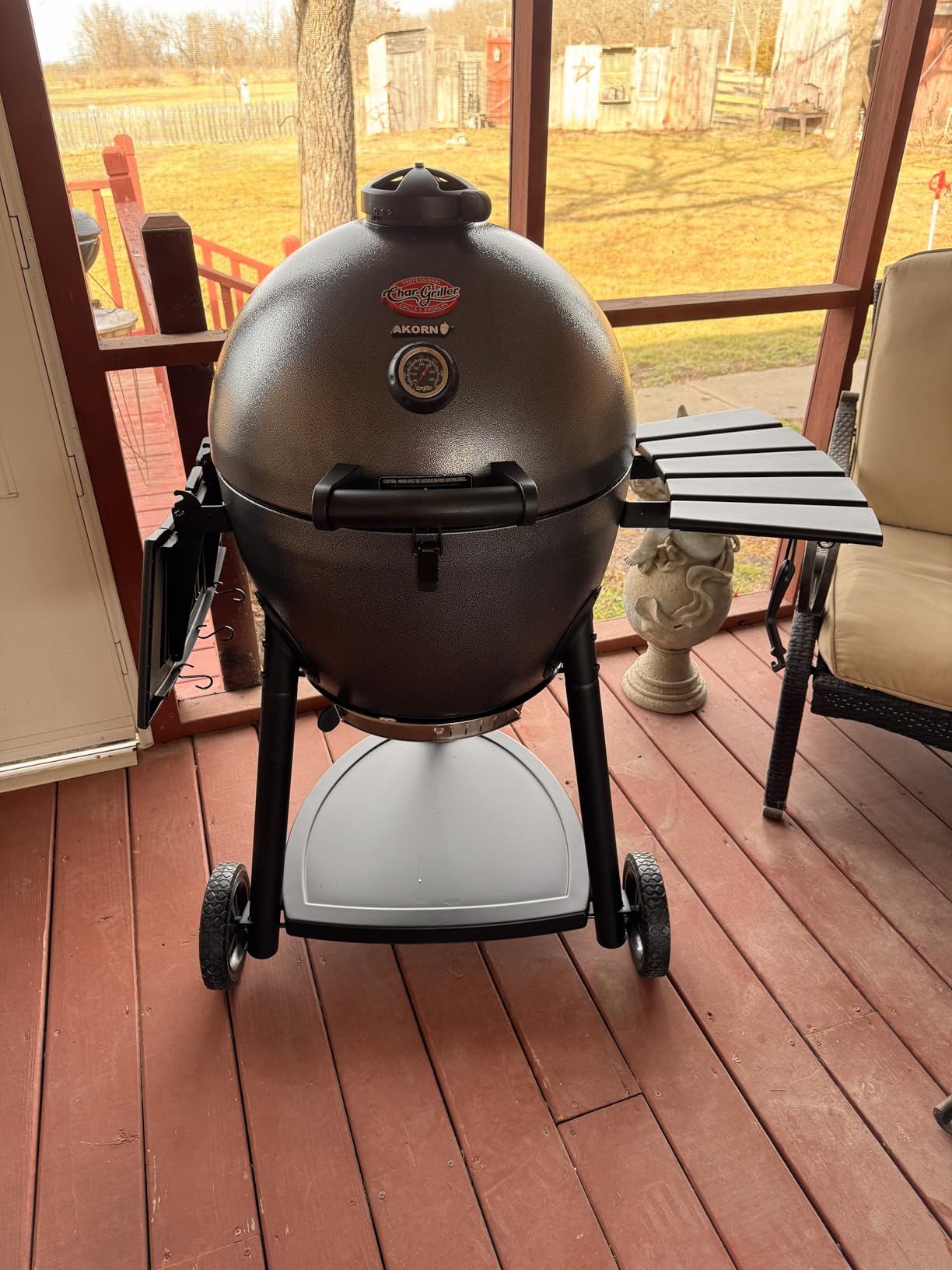
The EasyDump ash pan and grate lifter are not marketing extras here. Removing ash between bakes is how you keep the airflow honest, and on this grill it takes a single pull of a lever.
Reviewers report low charcoal use as a consistent theme, along with the caveat that closing the vents lets you save unused fuel for the next cook. Fuel cost per pizza night stays low once the fire is built.
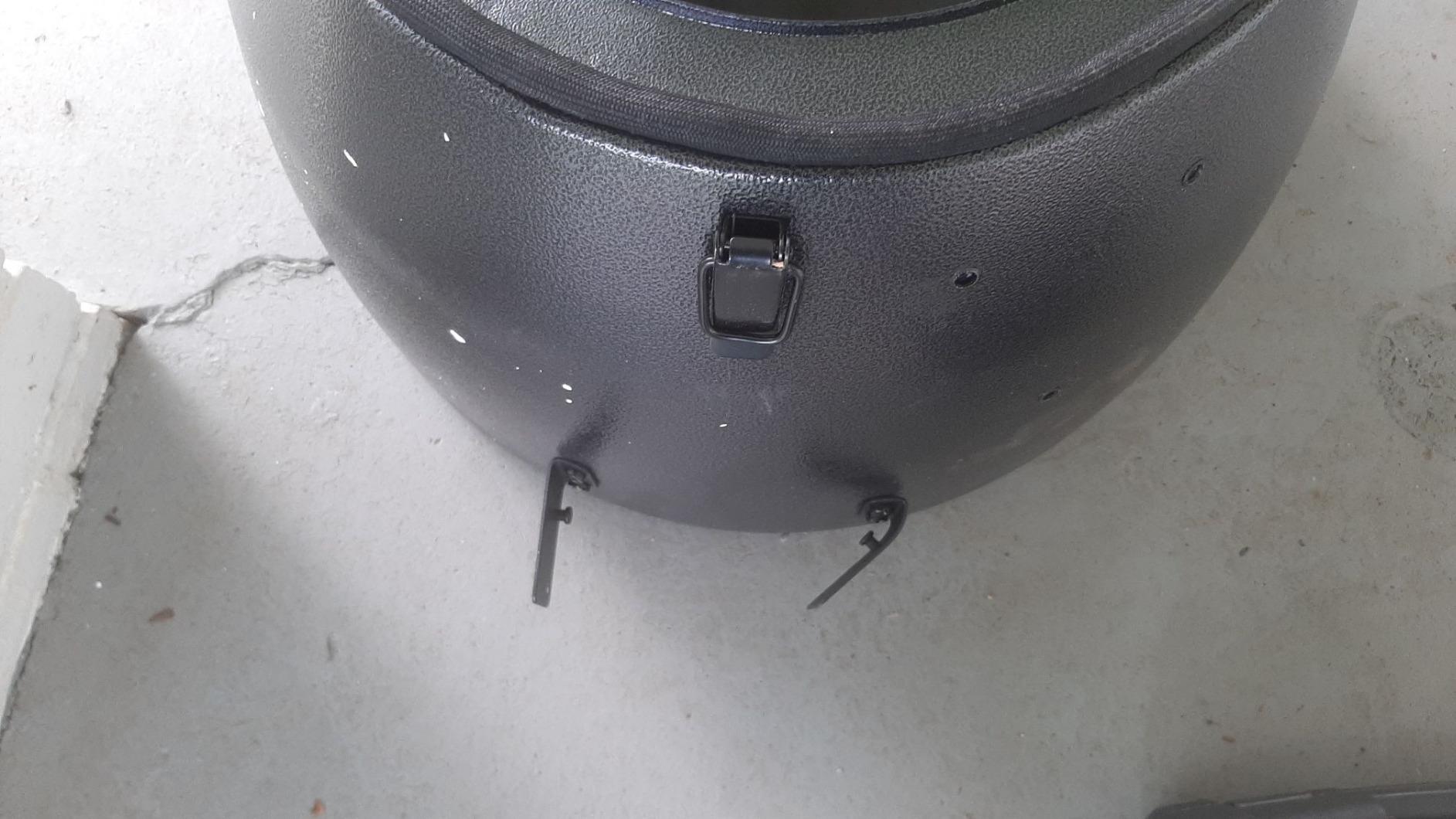
Will a pizza stone fit the 445 square inch grate
Yes, comfortably. The grate is wide enough for a 14-inch stone plus a working margin on both sides, and there is vertical room in the dome for the peel to swing without hitting the ceramic.
The 8-inch locking casters mean you can roll it out of the wind, which matters more than most buyers expect. A kamado in a breezy spot loses temperature far faster than one tucked against a wall.
Where it falls short for pizza
The body is steel, not ceramic, so there is less radiant heat soaking down onto the crust. Pies still brown well at 700F, but you will lean on the top vent a bit more to keep the top from coloring ahead of the base.
The paint and steel need regular oiling and a cover, or rust shows up first on the base ring. The lid thermometer is not something to trust; use an external probe. Warranty coverage is one year, which is thinner than the ceramic options.
3. Kamado Joe Joe Jr 13.5-Inch Ceramic Grill – Best Portable Kamado for Pizza
- Real thick ceramic in a small footprint
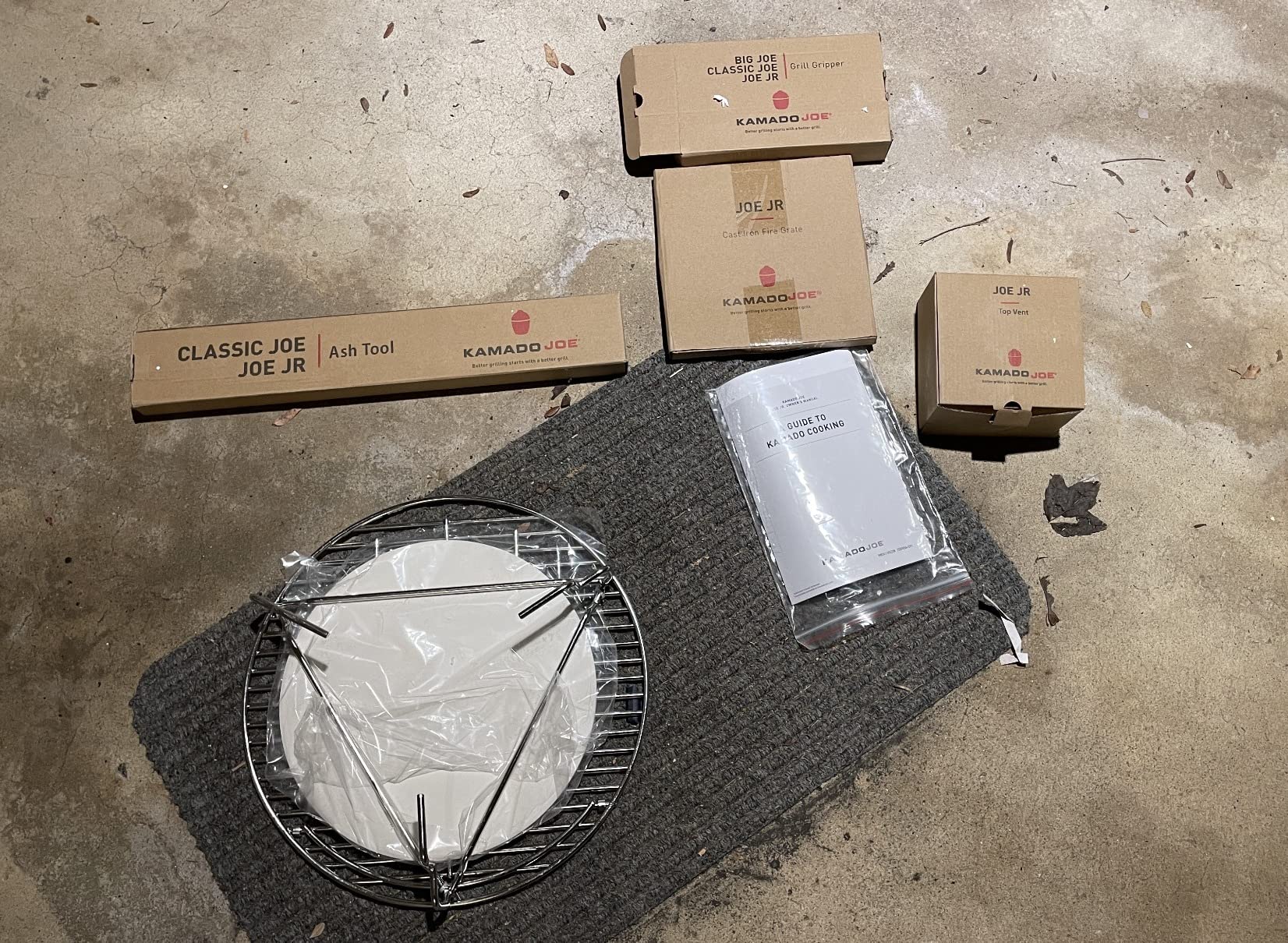
- Heat deflectors and ash tool included
- Low fuel use for a 13-inch dome
- Cast iron stand makes it carriable
- 150 sq in fits one small pie at a time
- 75 pounds still needs two hands
- No stone included
- Inspect ceramic on arrival
The Joe Jr is the smallest grill here that still behaves like a ceramic kamado rather than a novelty. It holds heat and smoke flavour in a 13.5-inch body, and it climbs past 500F quickly enough for high-heat searing and small pies.
For pizza this means one 12 or 13-inch pie per bake. It is a two-person operation, not a party format, and you need an appropriately sized stone rather than the standard 14-inch.
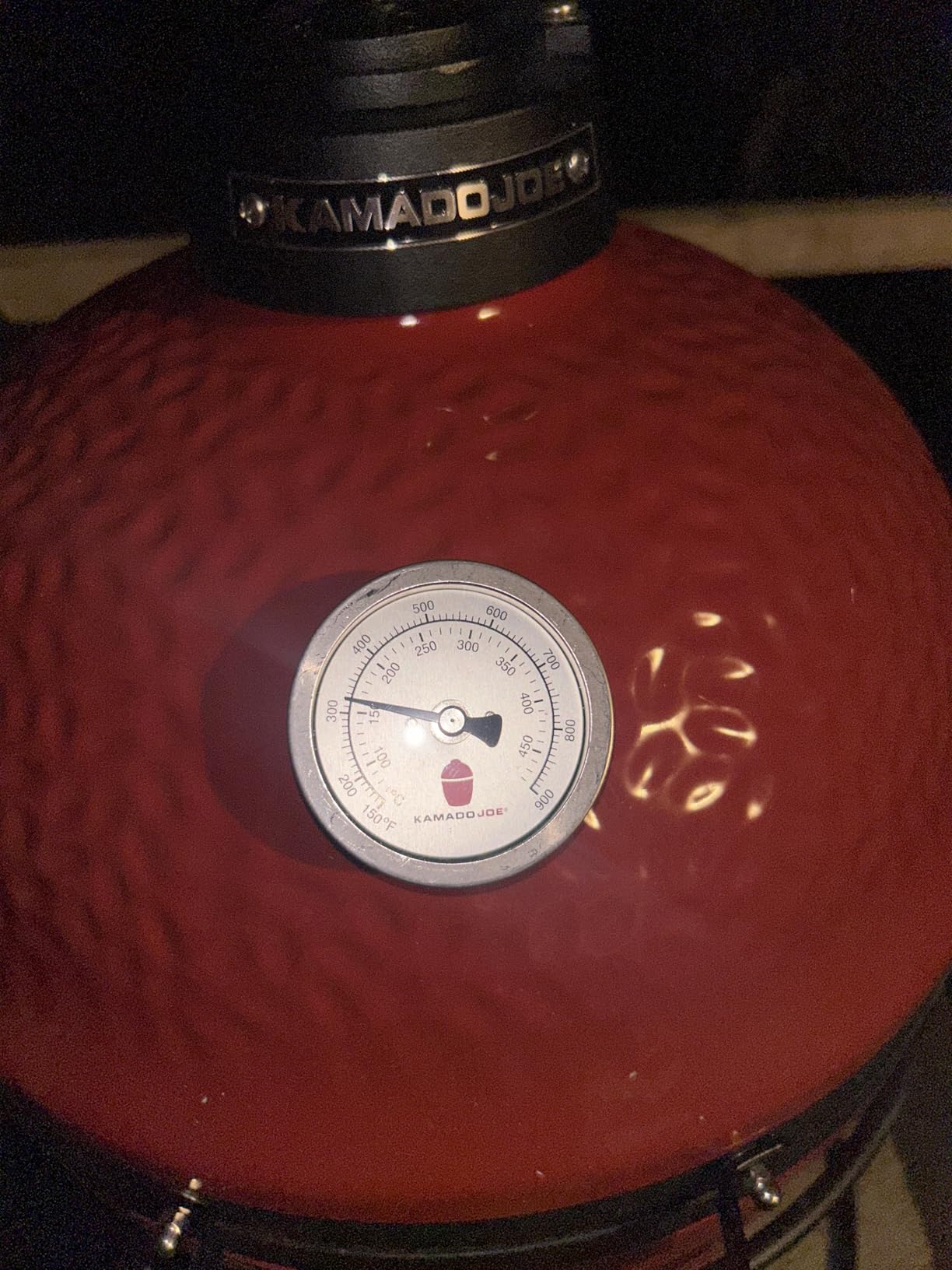
Owners love the flavour-to-size ratio and call it roughly half the cost of a comparable full-size ceramic cooker. The included heat deflectors and ash tool mean you can smoke on it the same day it arrives.
The cast iron stand is the reason it travels. It fits in a vehicle bed for camping or tailgating, and the ceramic does the flavour work that a cheap portable kettle cannot.
Can it really reach pizza temperature
It gets above 500F without trouble on its stated capabilities, so a small pie on a stone is realistic. The limitation is not heat, it is the 150 square inch grate and the dome height above it.
That leaves room for one pie plus a narrow landing. Plan two pies per person per cook rather than trying to fire eight in a row.
Where it falls short for pizza
Two people are needed to lift 75 pounds safely, so calling it portable is about the stand, not about being a one-person carry. Ceramic can also arrive cracked, so inspect the dome before you discard the packaging.
A pizza stone and ash basket are not included. Budget for a stone sized to the grate, and treat the one-year warranty on non-ceramic parts as short.
4. London Sunshine 13-Inch Ceramic Kamado – Best Budget Ceramic
London Sunshine 13-Inch Ceramic Kamado Grill, Waterproof Vent Cap, Green
- Genuinely thick ceramic for the money
- Waterproof cast iron top vent seals in wind
- Pre-assembled so setup is fast
- Glass fiber gasket included
- About 11 inches of usable grate
- 43 pounds is heavy for a portable
- Bundled stainless grate reported undersized
- Limited to direct cooking
This is a budget route to a real ceramic dome, and the 0.8-inch ceramic wall is the reason. It spans 180F to 750F on very little charcoal, which is exactly the range you want for pizza with a proper bake.
The box includes a glass fiber gasket, thermometer, fire bowl, charcoal grate, stainless cooking grate and a waterproof cast iron top vent. That is a fuller starter kit than most ceramic grills at this level ship with.
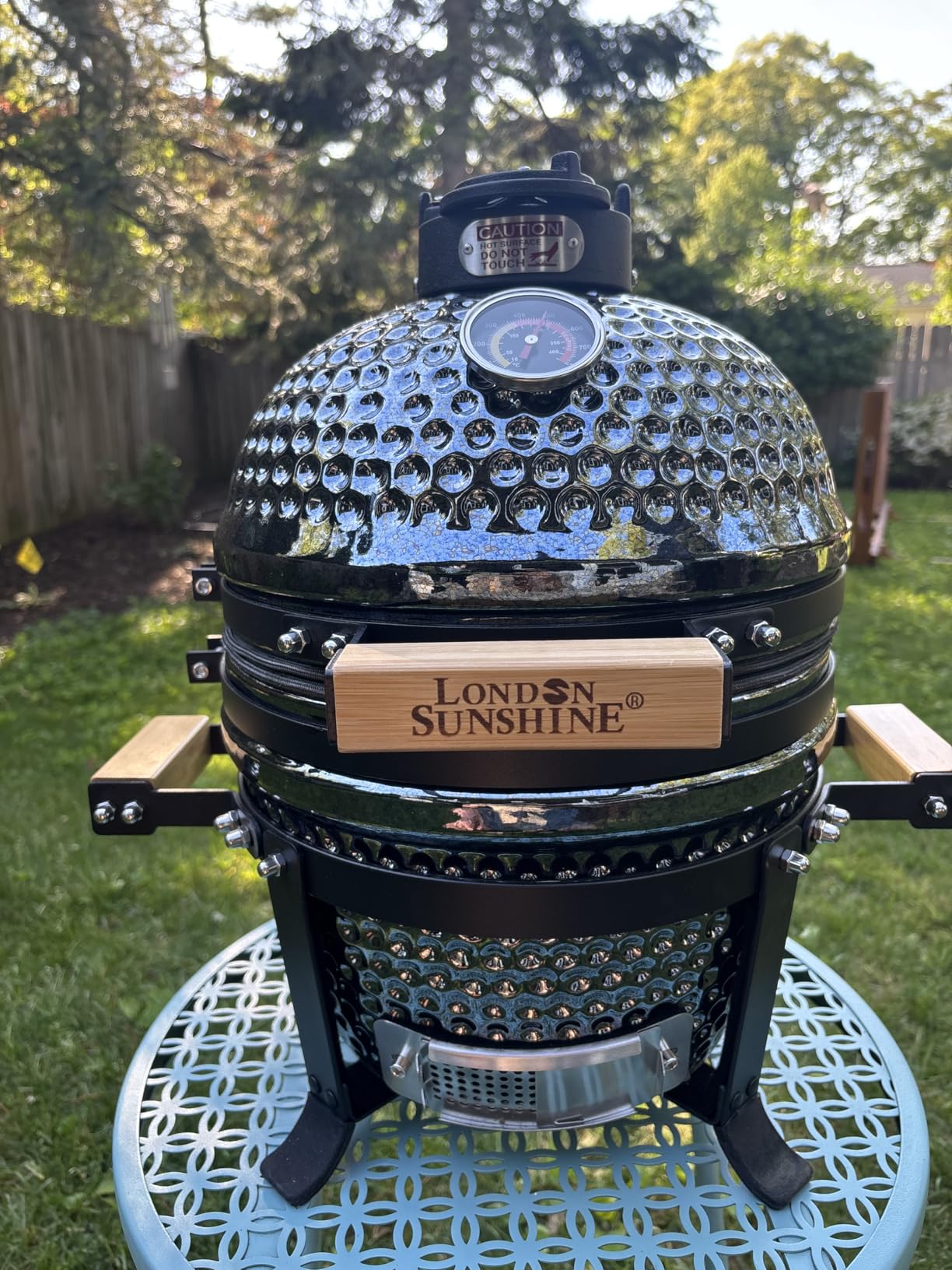
Setup is unusually quick because the body arrives pre-assembled. You attach the handles and the stand, which means you can be preheating within minutes rather than losing an afternoon to hardware.
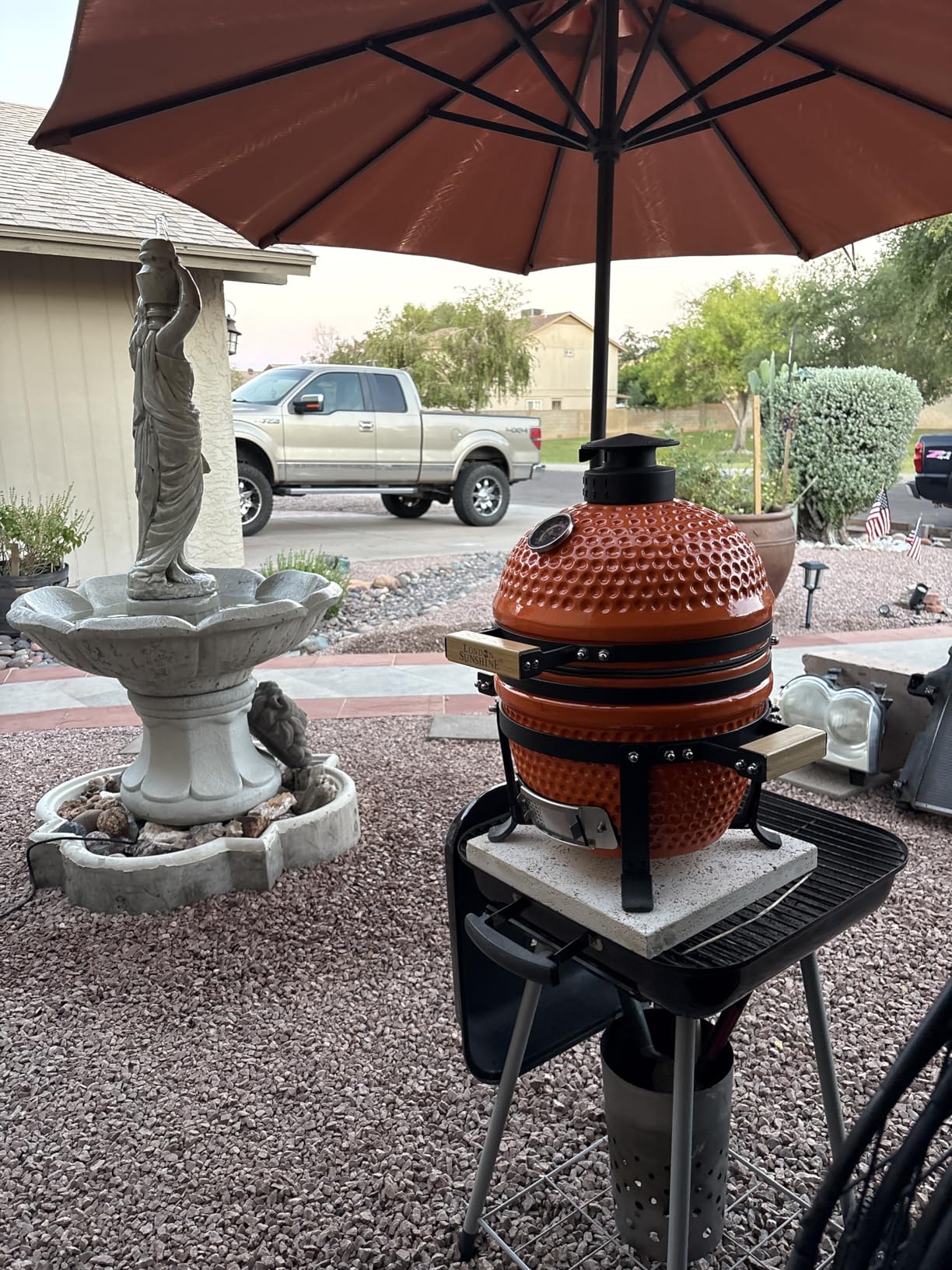
Reviewers treat it as an affordable mini ceramic cooker for one to four people. Heat retention comes up repeatedly as the strongest point, alongside the sealing quality of the top vent in bad weather.
Will a pizza stone fit the 11-inch grate
A 10 or 11-inch stone will sit on it. A 14-inch stone will not, and that is the whole ballgame for this grill if your aim is Neapolitan sized pies.
Plan on small personal pizzas, which bake faster anyway at this temperature. The dome also lacks the vertical clearance for a swinging peel, so launch technique matters more than usual.
Where it falls short for pizza
The advertised size overstates the usable grate. Buyers report the stainless grate is smaller than the bowl suggests, so treat any published dimension with caution and check the grate diameter before committing.
At 43 pounds it is too heavy to be a genuine tailgating cooker despite the portable format, and the 11-inch grate suits direct cooking far better than a two-zone setup.
5. London Sunshine 15-Inch Ceramic with Tall Stand – Best Versatile Ceramic
London Sunshine Ceramic Kamado Charcoal BBQ Grill and Smoker, Stainless Steel Grates -15″ Ceramic with Tall Stand (BLACK)
- 1-inch ceramic wall runs 180F to 750F
- Glass fiber gasket outlasts felt
- Foldable grate sides for adding fuel mid-cook
- Four to six steaks or a family meal per cook
- Grate measures closer to 13.2 inches than the body implies
- Very heavy once assembled
- A deflector must be added for indirect cooking
- One report of missing assembly screws
Owners routinely compare this cooker to full-size ceramic grills costing several times more, and for pizza the 1-inch wall is the detail that matters. That thickness stores heat and radiates it back onto the crust evenly.
The 180F to 750F range covers smoking, baking, grilling and broiling on the same fire. The Japanese dome shape moves air in a loop, so the top of the pizza gets colour without the base lagging behind.
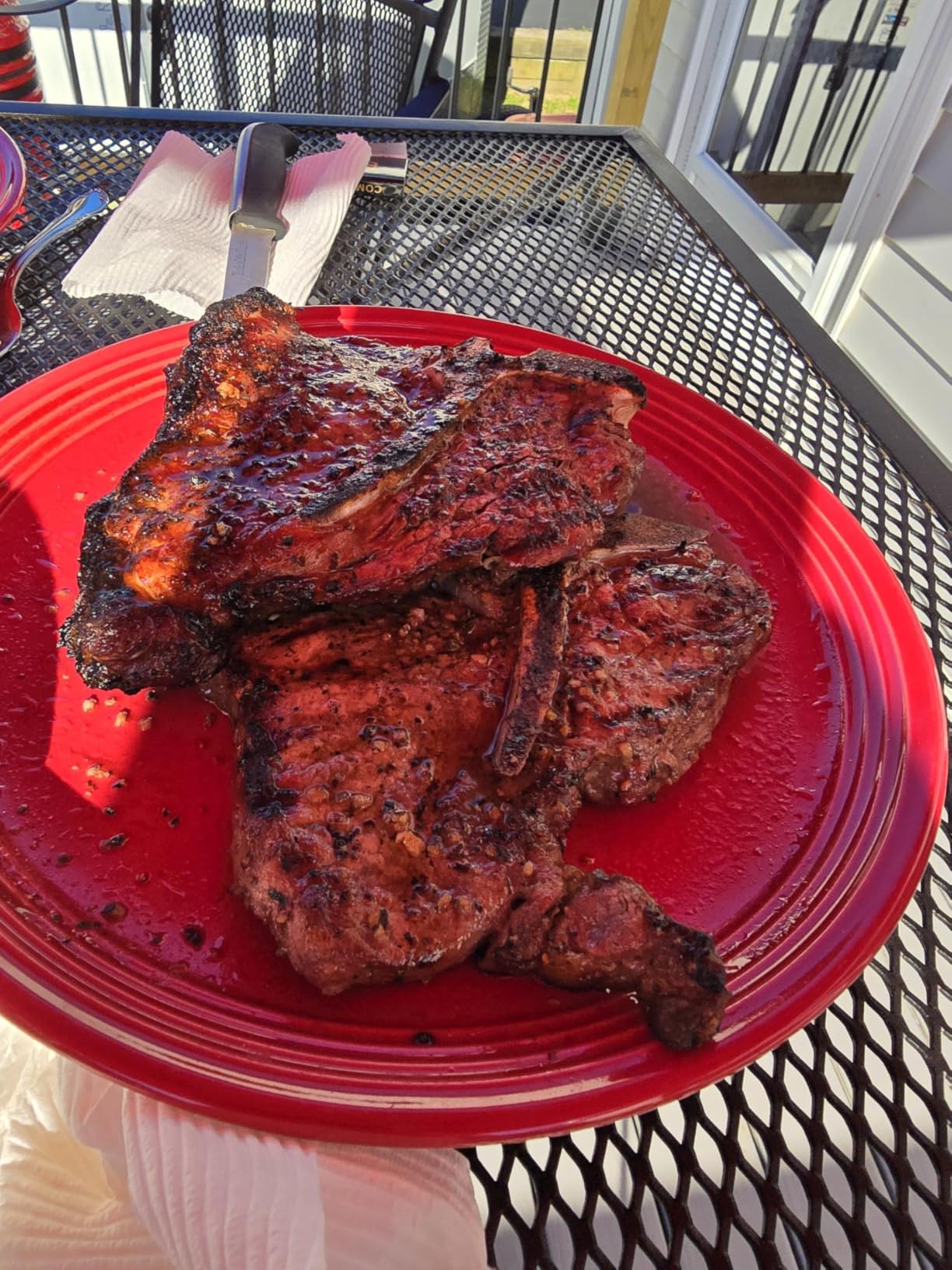
The glass fiber gasket is a quiet upgrade over the felt most budget ceramics ship with. It is easier to clean and holds its seal through more heat cycles, which matters if you are running pizza nights weekly.
The foldable grate sides let you add charcoal mid-cook without dismantling anything. On a long pizza session that is the difference between keeping the dome at launch temperature and watching it slide downward.
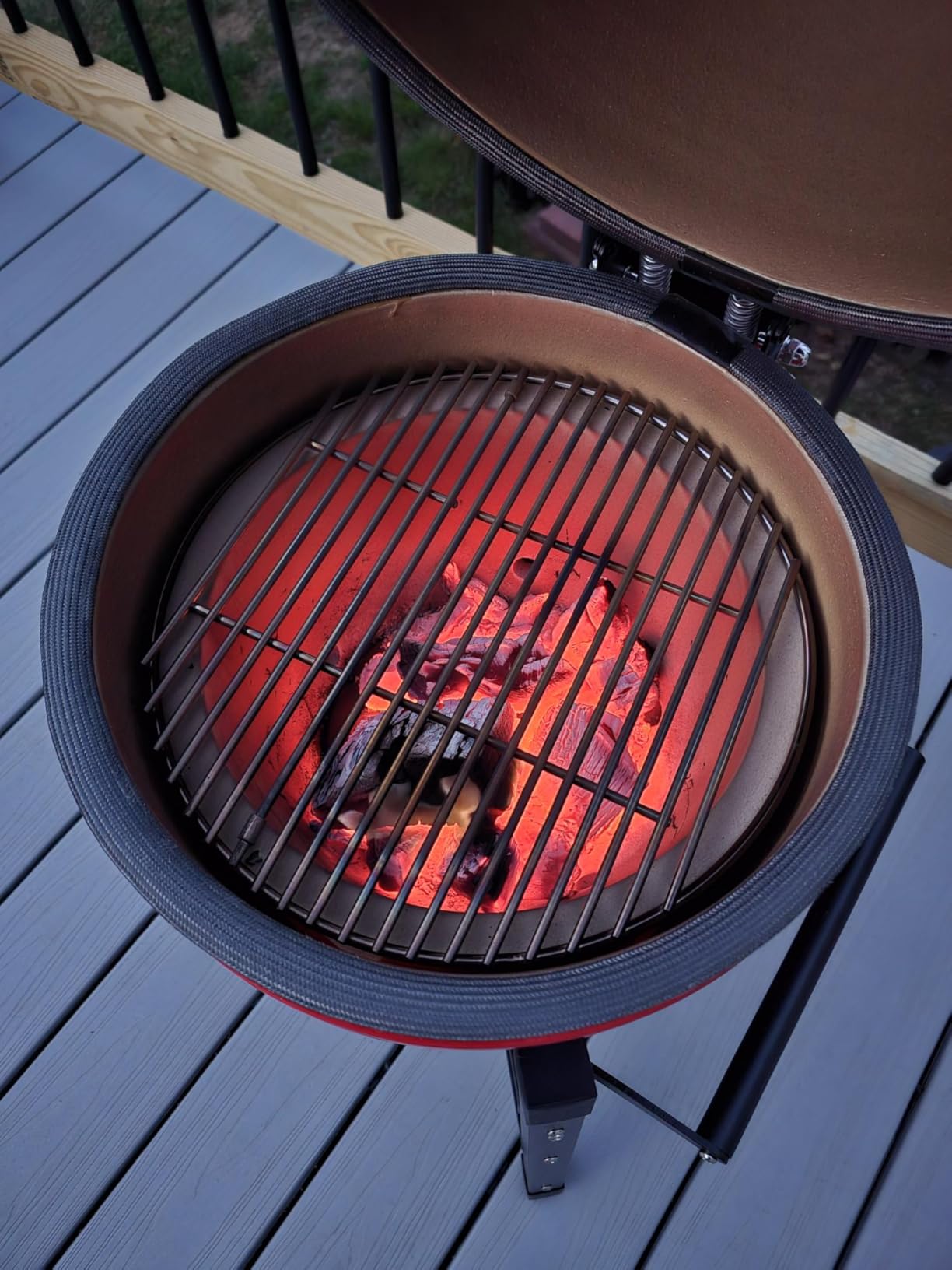
How much pizza can it cook at once
The published cooking surface is 132.73 square inches, and the actual grate measures closer to 13.2 inches across. That fits one 12-inch pie with room to turn, or two smaller ones if you are quick.
The tall stand raises the dome to a comfortable working height, which matters when you are sliding a loaded peel under a hot lid. Back-pedalling with a heavy stone is how people drop a pie.
Where it falls short for pizza
The size gap between the body and the grate catches people out. A 14-inch stone will not sit flat, so plan on a 12 or 13-inch stone and shorter bake times.
It is heavy enough that repositioning is a two-person job, and you need to add a deflector stone for indirect cooking since one is not supplied. The warranty runs one year.
6. Kamado Joe Big Joe Series I 24-Inch Ceramic – Best for Large Pizza Crowds
- 450 sq in handles two zones at once
- Temperature holds like an oven all day
- Ash drawer slides out without disassembly
- 2-Tier Divide and Conquer grates grill a foot above the coals
- Nearly 353 pounds makes placement a project
- Uses more charcoal than the 18-inch Classic
- Older generation design
- Occasional lid seal gaps reported
When you are cooking for a crowd, cooking area is the constraint and the Big Joe removes it. At 450 square inches you can run a stone on one half and a second surface on the other, which is how a pizza night becomes a pizza service.
It reaches searing temperatures well above 700F and holds them like an oven once it arrives. The 2-Tier Divide and Conquer system also lets you grill almost a foot above the coals for anything that is not a pie.
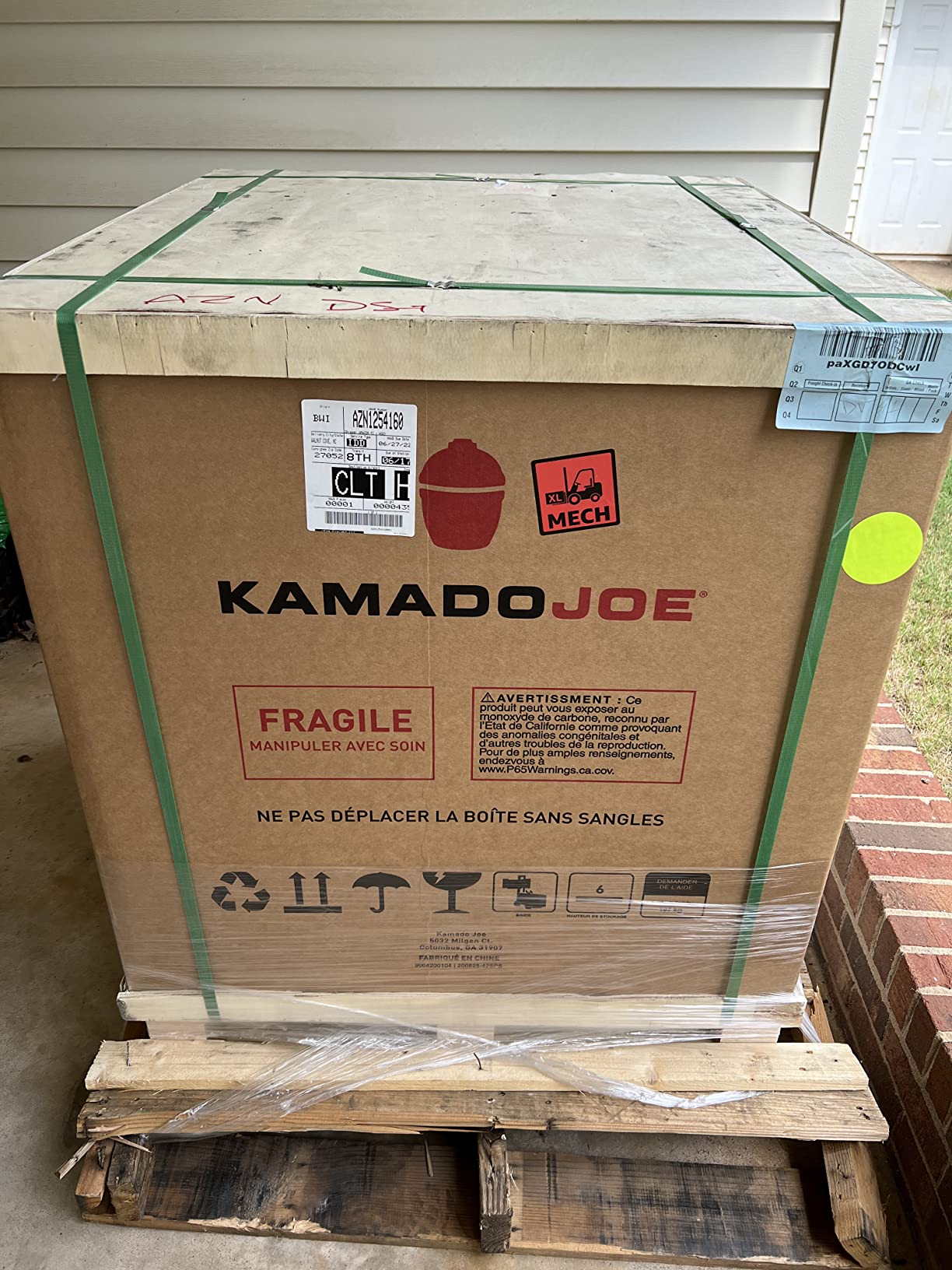
The patented slide-out ash drawer is the detail owners mention most. You clear the firebox between bakes without pulling interior components apart, and clean airflow is what keeps a long pizza session at temperature.
Longevity reports on large ceramic kamados tend to be encouraging. Owners running 10 to 15 year old cookers cite dealer support and gasket durability as the deciding factors on their next purchase.
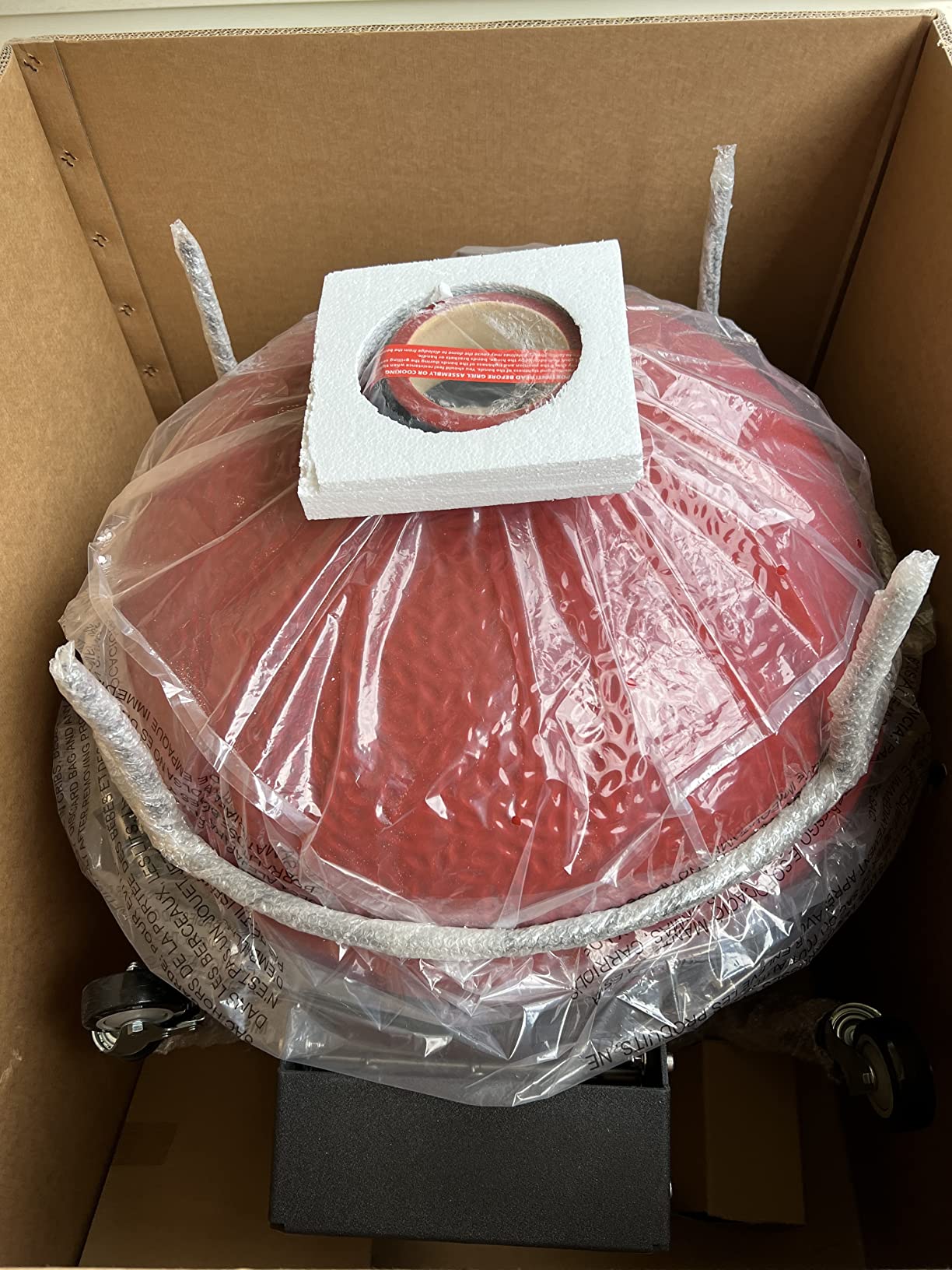
Is it overkill for pizza nights
If you regularly feed more than six people, no. The extra area means two pies in the chamber at once, and the dome recovers its temperature faster than a smaller cooker after a door opening.
If you are cooking for two, it is overkill in weight and fuel. You will burn through more charcoal than the 18-inch Classic for the same number of pies, which is money spent on unused capacity.
Where it falls short for pizza
At nearly 353 pounds, assembly and positioning need a helper or a plant lifter. Decide where it lives before it arrives, because moving it later is a real chore.
This is Series I, an older generation superseded by the Big Joe II and III, and coverage is one year. A few owners report lid seal gaps traced back to damage in transit, so inspect the seal on arrival.
7. London Sunshine 15-Inch Ceramic with Locking Casters – Best Mobile Ceramic
- Locking casters move it then hold it
- Foldable shelves add prep space
- 1-inch ceramic with a glass fiber gasket
- Holds 400F for hours and stays warm after the fire dies
- 13.2-inch grate is smaller than the 15-inch body implies
- One reviewer could not exceed roughly 460F
- No removable ash container
- About 108 pounds
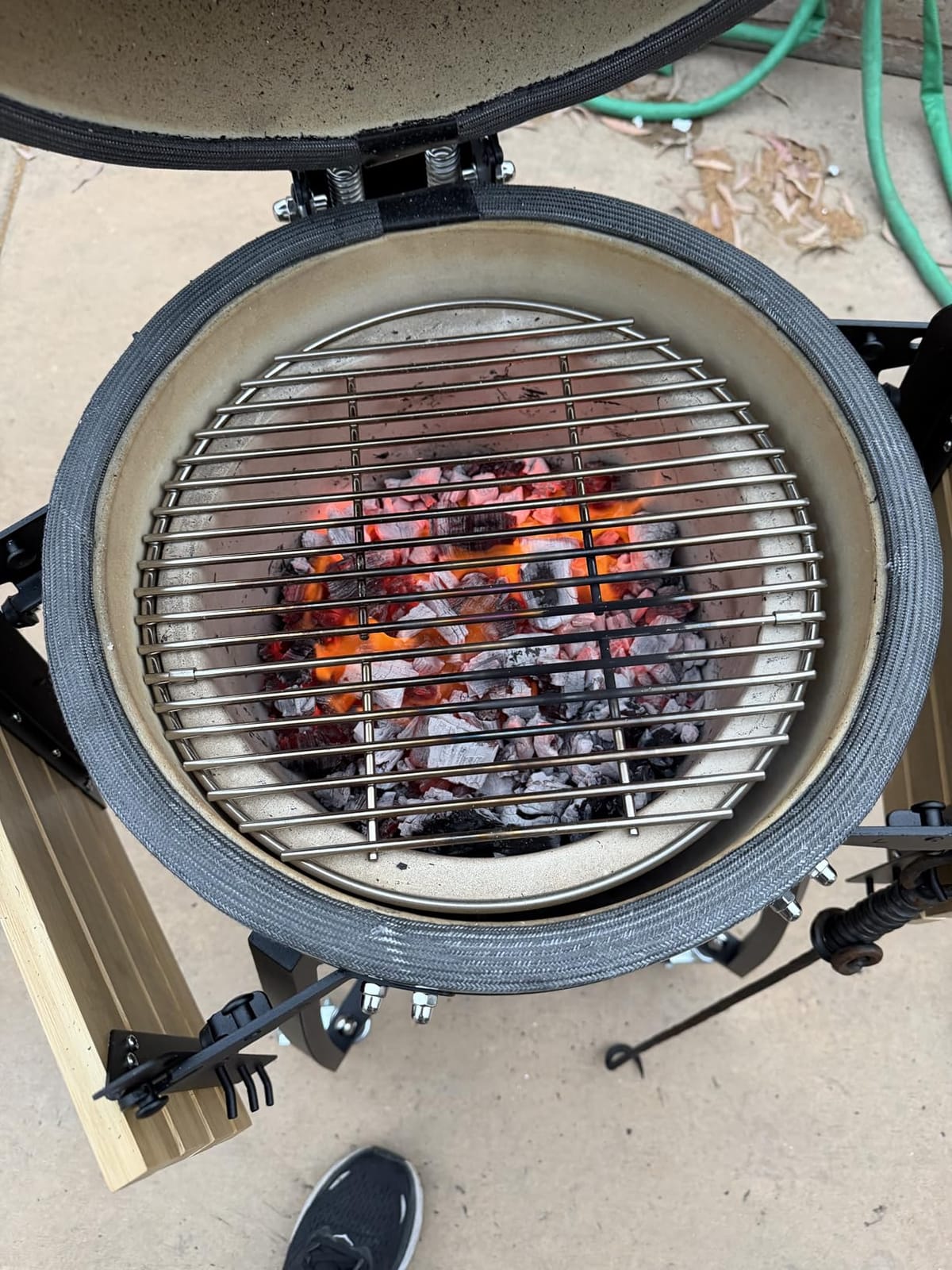
The casters are the reason to choose this one over the taller-stand model. You can roll the whole cooker across the patio to follow the shade or the wind, then lock it in place for the bake.
Underneath it is a 1-inch ceramic wall rated 180F to 750F, with a high-temperature glass fiber gasket and foldable stainless grates whose sides drop to let you add charcoal mid-cook.
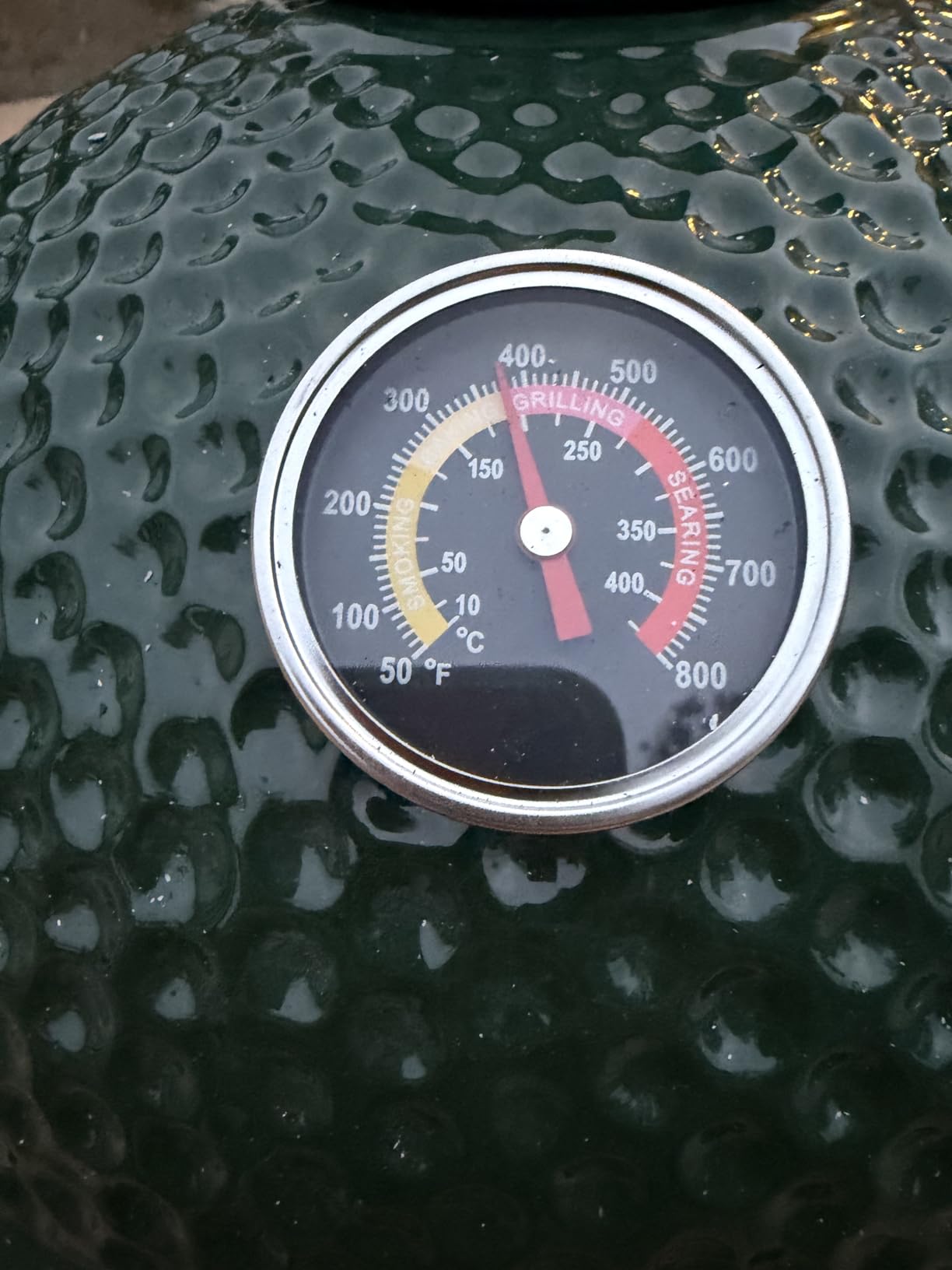
Owners praise the mobility upgrades and the solid feel compared with earlier versions of the same cooker. Holding 400F for hours and staying warm long after the fire is out saves fuel on repeat cooks.
The foldable side shelves matter during a pizza session. You need somewhere for the dough tray and the peels that is not your lawn table, especially with a loaded peel in one hand.
Can it reach pizza heat
The rated range says it can, but the owner feedback is mixed. One reviewer could not get it above roughly 460F at a full burn, so treat the top of that range as unproven in the field.
If you buy it, verify temperature with an external probe on your first two cooks before planning a pizza night around it. A 13-inch stone is the realistic pairing given the grate.
Where it falls short for pizza
Review volume is thin on this model, so the temperature ceiling is genuinely uncertain rather than simply disappointing. That is the main reason it does not rank higher despite the good hardware.
There is no removable ash container, so ash gets vacuumed or swept out. At around 108 pounds the casters help with level patios but do nothing for uneven ground.
8. Outvita 13-Inch Round Ceramic Kamado – Best for Fast Preheat
- Reaches 700F in roughly 15 minutes
- Holds temperature for hours with vents closed
- External thermometer plus dual vents
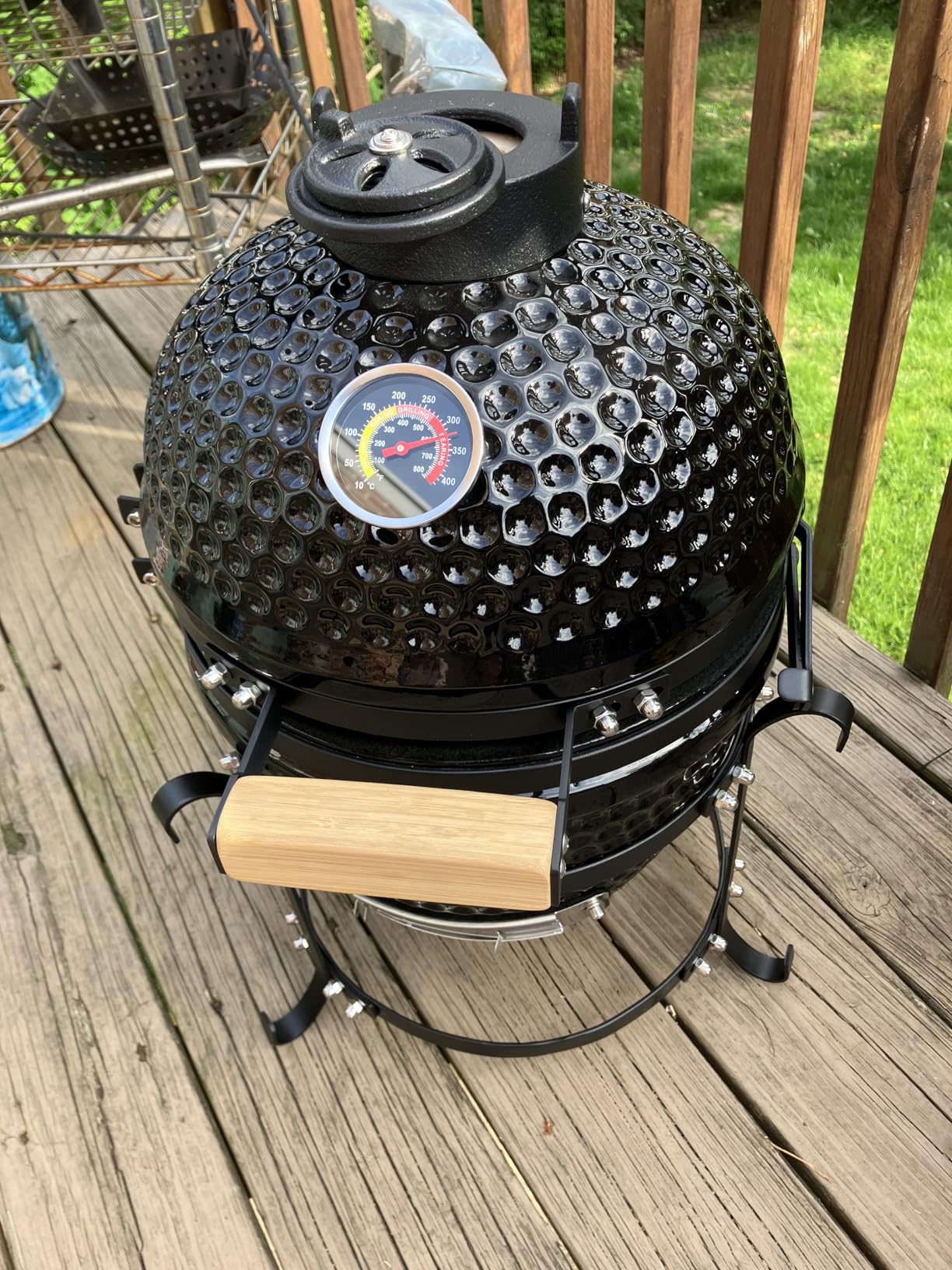
- Bamboo handles stay cool during cooking
- Grate is only about 8.5 inches across
- No removable ash box
- Some reports of ceramic cracking early
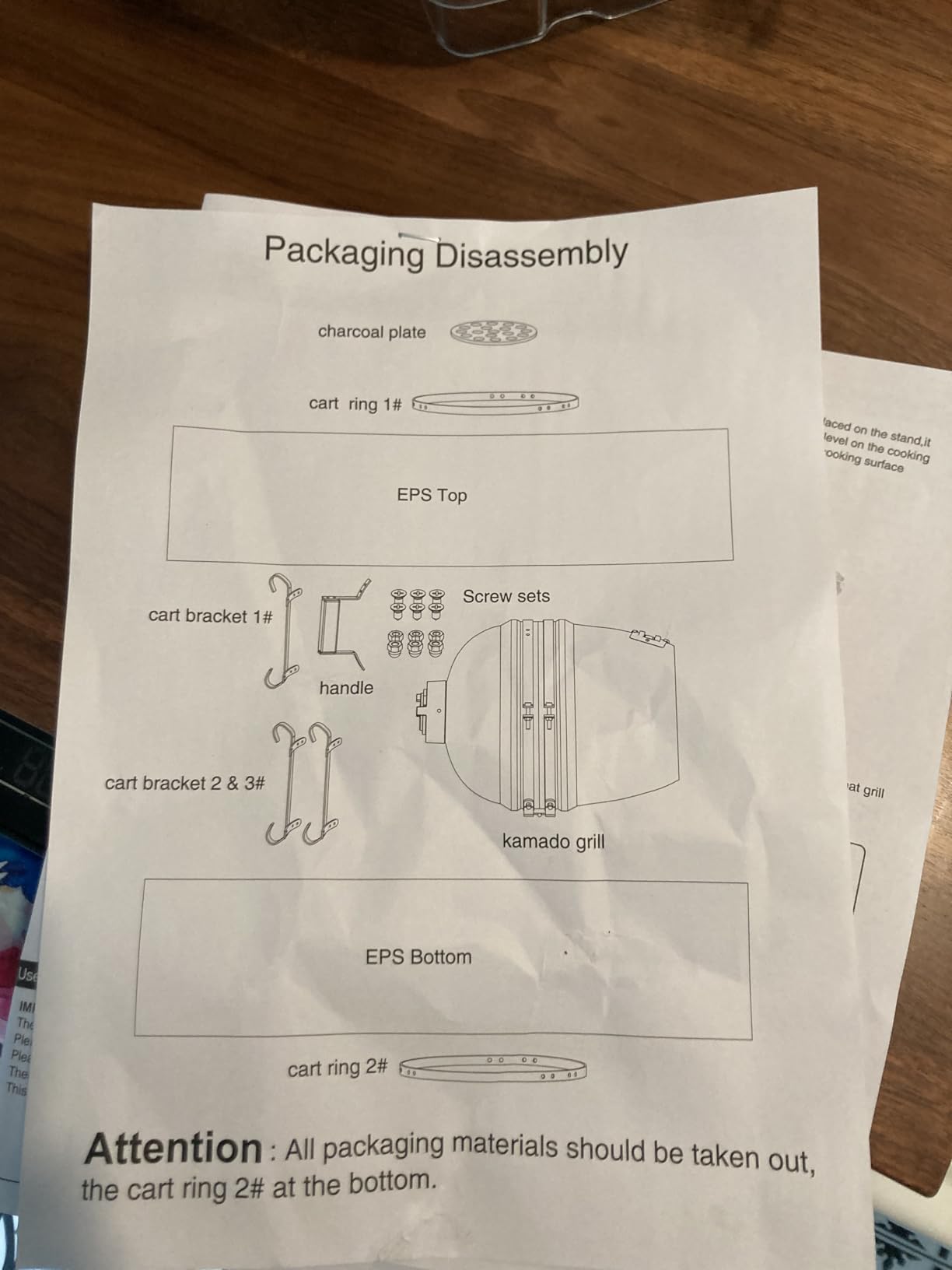
- Multiple assembly steps
The Outvita does one thing well for pizza: it gets hot fast. Owners report the thick ceramic wall reaching 700F in about 15 minutes, which is the shortest cold start among the ceramic grills we tested.
Once the vents close, it holds temperature for hours, so unused charcoal is not wasted. That matters if you cook a few pies and want to keep the fire for later in the evening.
The enamel steel grate keeps food from dropping through and wipes clean easily. Bamboo handles stay cool to the touch during a cook, which is a small thing you notice at 700F.
Budget buyers on a tight allowance find the sealing solid and the fuel use efficient. It does kamado behaviour, just in a very small footprint.
Can you fit a pizza stone
You will need a stone around 8 inches to match the grate, not a 14-inch pizza stone. Pies come out personal sized, roughly one to two people at a time.
The fast preheat partly compensates. If you are cooking a series of small pizzas the chamber cycles quickly, which suits a couple rather than a gathering.
Where it falls short for pizza
The 86.6 square inch cooking surface is the limiting factor. A full-size pizza does not fit, and neither does a two-zone setup with a deflector.
There is no removable ash box, so you lift the ceramic fuel container out to clean. A handful of owners also report ceramic cracking within the first few uses, and warranty coverage is not specified.
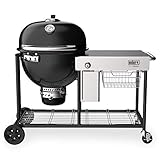
9. Weber Summit Kamado S6 – Best for Cold Weather and Year-Round Use
Weber® Summit® Kamado S6 Charcoal Grilling Center with Gas Ignition, Black
- Gas ignition lights charcoal in under ten minutes
- 452 sq in supports a two-zone setup
- Dual-walled steel handles cold weather better
- Recovers fast when you overshoot
- Char baskets and diffuser plate included
- Does not push past roughly 700F
- Bottom airflow control is leaky and imprecise
- Drawing-only assembly instructions
- Noisy rear wheels
- Cover sold separately
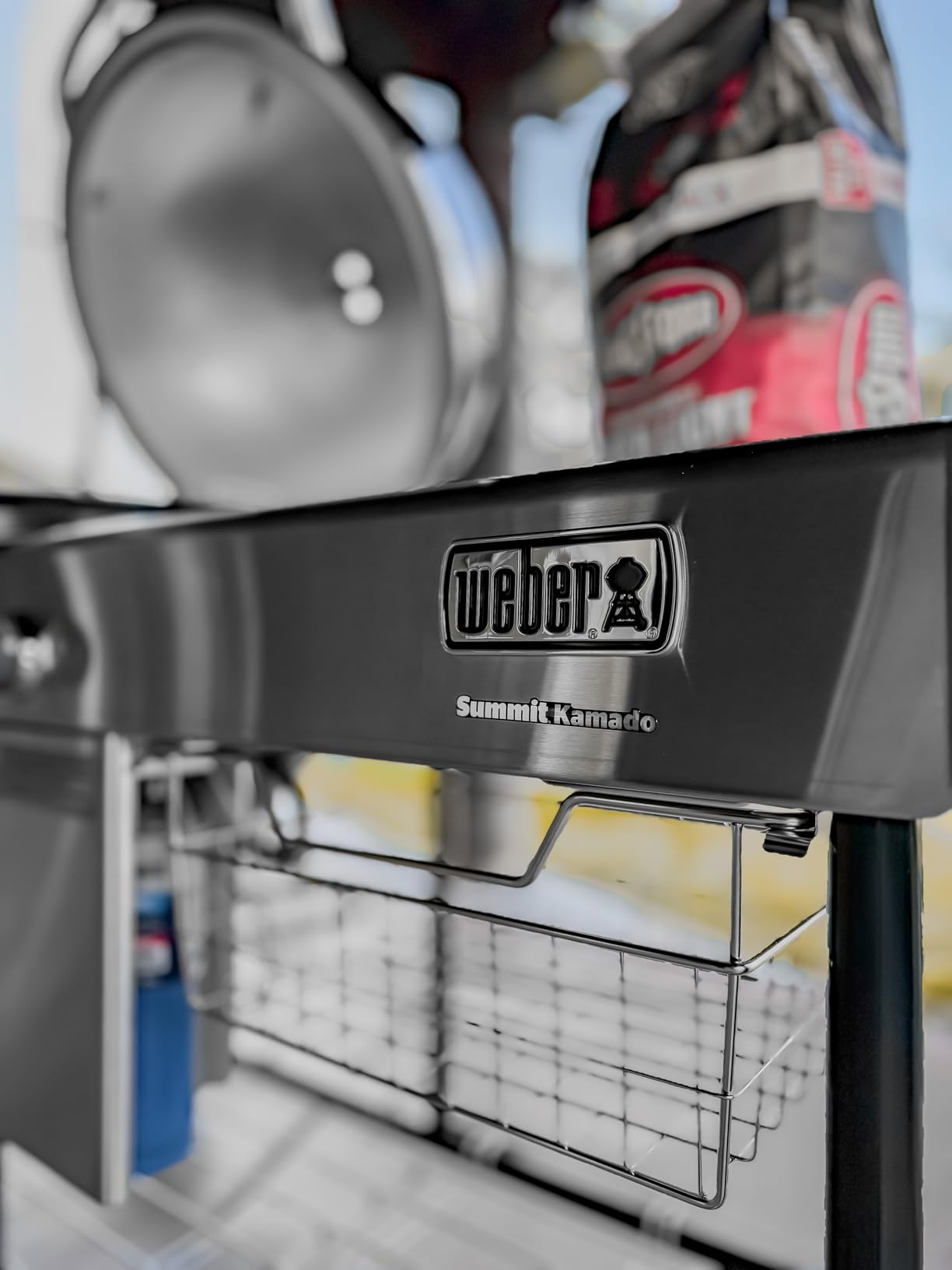
The Summit is the sensible choice if your pizza season is three weeks a year. Dual-walled insulated steel handles cold weather better than ceramic, and gas ignition means you are not coaxing a charcoal chimney on a freezing patio.
At 452 square inches with an adjustable grate, a diffuser plate and char-basket fuel holders, it is genuinely configured for two-zone cooking. That is enough structure to put a stone on one side and indirect heat on the other.
Where steel wins is recovery. If you overshoot or dump the lid mid-session, this cooker climbs back to temperature far quicker than a thick ceramic dome, which is a real advantage during a busy pizza night.
Porcelain-enamel and stainless construction also resists rust in harsh climates better than painted steel. That matters more than most buyers expect on a grill kept outside year-round.
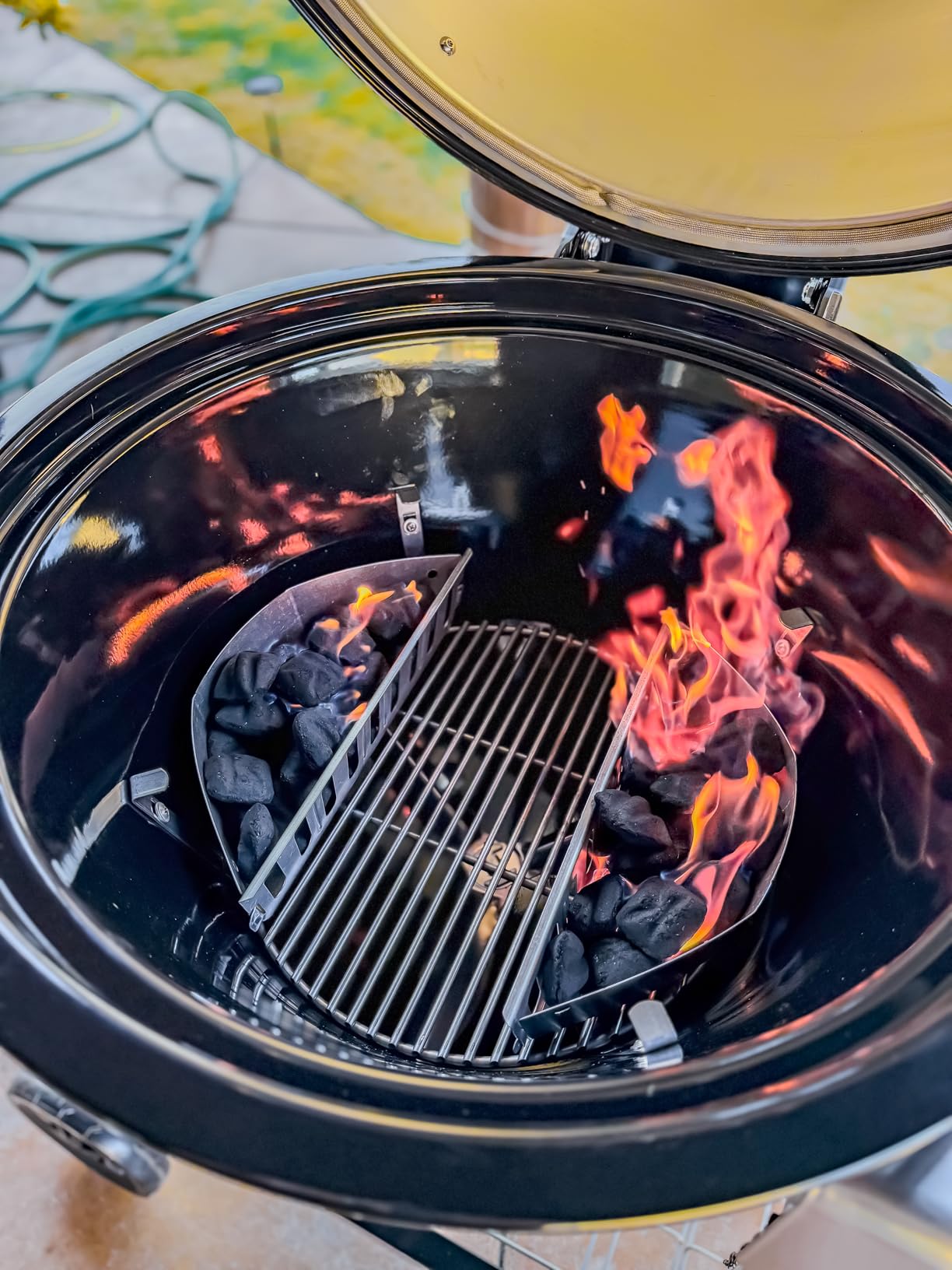
Will it reach true pizza temperature
Honestly, not fully. Owners report it does not push past roughly 700F, which is the ceiling for leopard spotting. You will get good crust, just without the aggressive char of a 750F ceramic bake.
For most home pizza nights that difference is small. If you are chasing the high-heat Neapolitan look, a ceramic dome wins. If you want easy ignition and year-round usability, this wins.
Where it falls short for pizza
Bottom airflow control is leaky and imprecise compared with a ceramic dome, which makes steady temperature harder to hold at launch range. The RapidFire lid damper helps get there, but the fine control is not equivalent.
Assembly instructions are drawings only and confusing enough that owners rework steps. The hard plastic rear wheels are noisy, the One-Touch system still needs brushing, and the cover is a separate purchase.
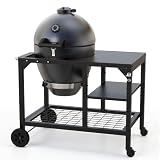
10. Brandman Steel Kamado – Best Cooking Area With Cart Included
- 400 sq in on 20-inch cast iron grates
- Mesh fiberglass gasket holds heat well
- Large prep cart with storage and tool hooks included
- Trivet and half-moon warming rack included
- Five-position airflow system
- Arrives in two separate boxes
- Assembly takes several hours
- Steel body needs a cover to resist rust
- Holds heat so well that overshooting is hard to correct
This is the one that made us rethink a steel body. A coin-thickness double-layer wall with a mesh fiberglass gasket gave us the most consistent high-heat hold of any non-ceramic grill here, with 400 square inches across 20-inch cast iron grates.
Owners compare it to a Big Green Egg at a fraction of the outlay, and the included prep cart with storage and tool hooks is the reason. Most competitors sell that cart separately.
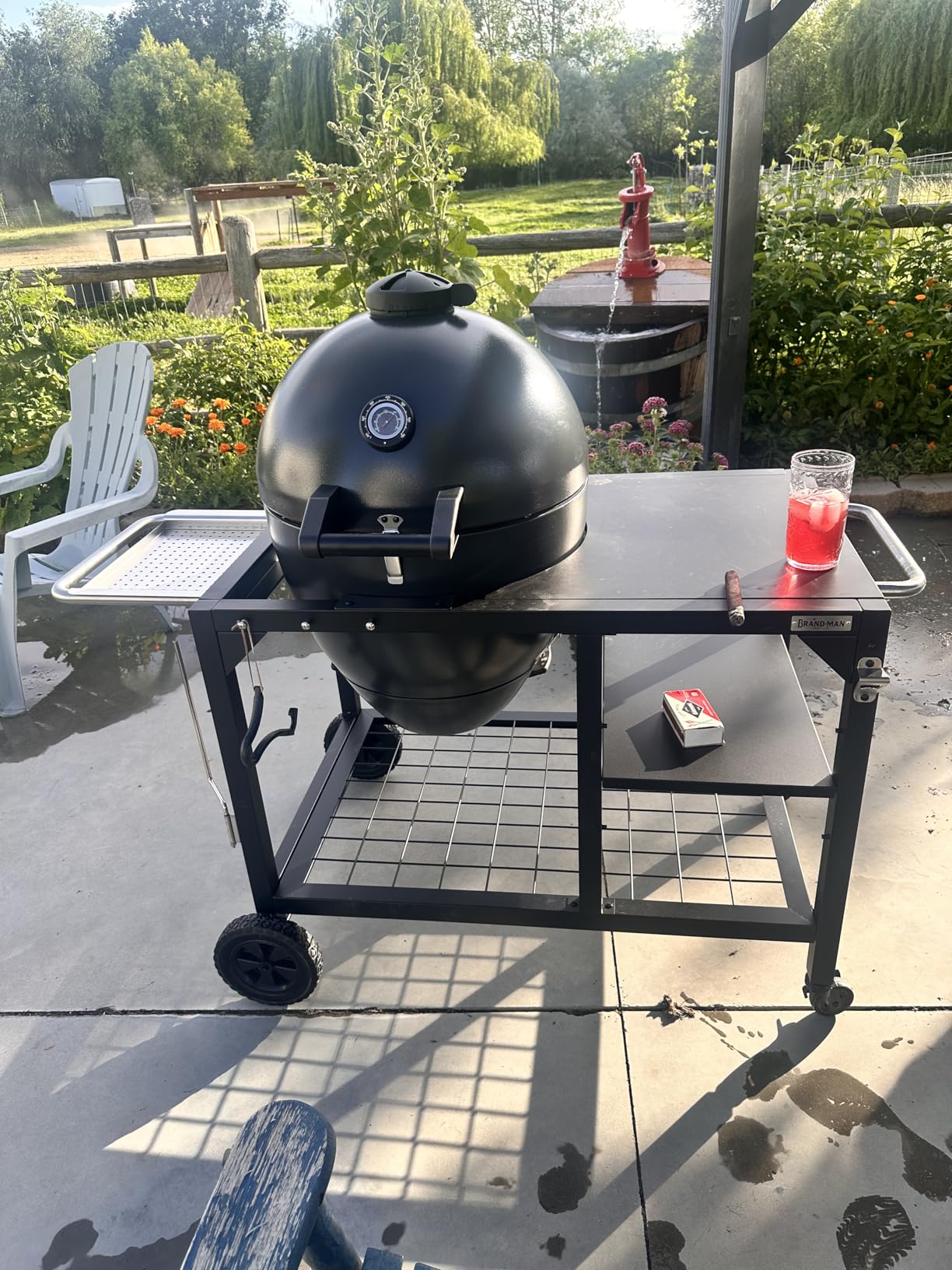
The trivet and half-moon warming rack are also in the box, so you can build a two-zone layout immediately. That matters for pizza because the deflector is the part people forget to buy.
The five-position airflow system with a hood-mounted thermometer gives more control than a single lever. Warranty coverage is five years on the firebox and outer body against rust-through, two years on grids and finish.
Is steel fast enough for pizza
Yes, and it recovers faster than ceramic. If you overcook a pie and need to be back at launch temperature for the next one, the lighter mass works in your favour.
The trade is radiant soak. There is less stored heat radiating down onto the crust, so you may need to close the top vent a touch earlier than you would on a ceramic dome.
Where it falls short for pizza
It holds heat so well that overshooting is genuinely hard to correct. Plan the preheat with an external probe rather than trusting a guess, and resist opening the dome to check.
It arrives in two separate boxes, so the second one can turn up after the first. Budget several hours for assembly, and keep a cover on it to slow down rust.
11. Eikyutora 13-Inch Vertical Ceramic Grill – Best for Camping Trips
- Egg-shaped ceramic walls hold temperature well
- Burns fuel efficiently
- Handles grilling
- smoking
- baking and roasting
- Compact vertical body suits patios and campsites
- Very small cooking surface
- No heat deflector plate included
- Warranty is listed as none
- Thin published review detail
This is the smallest genuine ceramic dome in the group, and the reason to consider it is the shape. A vertical egg form stores heat efficiently and burns true charcoal or lump charcoal for real smoke flavour on a campsite.
The stated 50F to 800F range covers both smoking and high heat, and the built-in thermometer takes some of the guesswork out of a first cook. Airflow control supports baking, roasting and searing on the same fire.
Can it bake pizza
You are cooking small flatbreads rather than Neapolitan pies. The cooking surface suits a couple of burgers at most, and a stone has to be very small to clear the firebox.
For a campsite, that constraint is acceptable. The value is the flavour from lump charcoal in a sealed ceramic body, not the size of the pie.
Where it falls short for pizza
Size is the whole story. Anyone cooking for more than two people will find it limiting, and no deflector plate is included for indirect work.
Warranty coverage is listed as none, and the review base is thin at 28 ratings. The positive ratings are consistent, but there is not enough long-term owner history to judge ceramic durability here.
12. VINGLI 13-Inch Kamado Charcoal Grill – Best for Baking Bread Alongside Pizza
VINGLI 13″ Kamado Charcoal Grill Portable Barbecue Grill BBQ Kettle Stand Lid Perfect for Outdoor Camping Patio Backyard Picnic
- Ceramic walls hold heat on very little charcoal
- Closing the vents lets you reuse leftover fuel
- One-touch system drops ash into a collection tray
- Clear step-by-step assembly instructions
- Interior measures closer to 9.5 inches than advertised
- Some reports of ceramic cracking within a couple of months
- Dampers are only adequate
- Very few model-specific accessories
- Grill sits loose in its stand
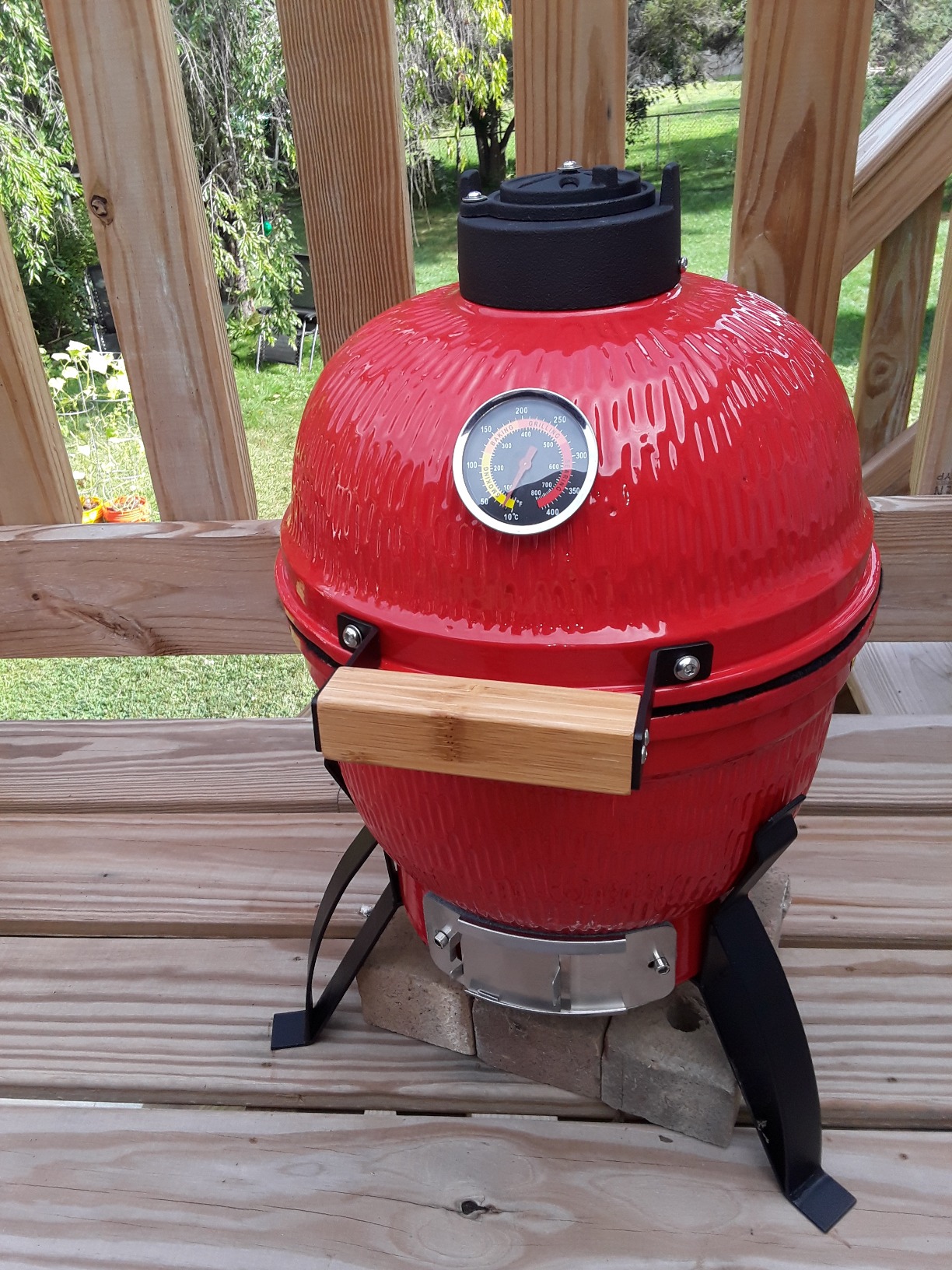
Owners who accept the tiny size still praise the sealing and fuel savings, and several bake bread in the dome as well as small pizzas. Ceramic walls holding 50F to 800F on very little charcoal is a genuine advantage for long bake schedules.
The one-touch cleaning system drops ash into a collection tray, which keeps the firebox clean without pulling parts apart. That matters more here than on a bigger grill because the interior is so cramped to reach into.
Is it big enough for pizza
Not for a standard pie. The interior measures closer to 9.5 inches than the advertised 13, so you are looking at flatbread or a very small personal pizza, one at a time.
Where it earns its place is the bread side. Owners report baking loaves in the dome successfully, and a sealed ceramic body is a good environment for that kind of radiant cooking.
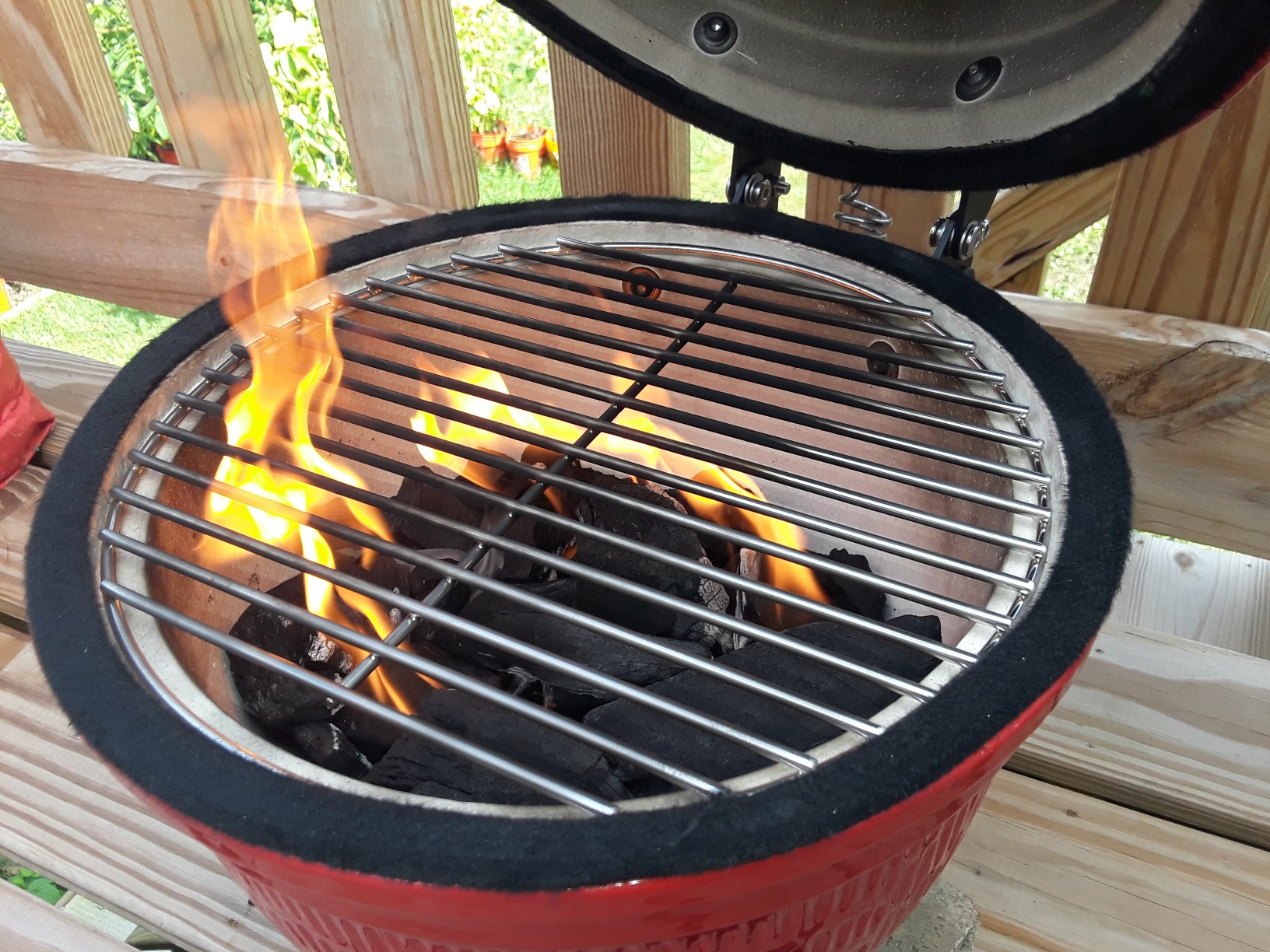
Where it falls short for pizza
The size gap between the advertised body and the real interior is the main disappointment. Measure before you commit, especially if a pizza stone is on your shopping list.
Top exhaust sealing and bottom intake dampers are only adequate, so temperature control is coarse compared with a proper kamado. Some owners report ceramic cracking within a couple of months, and the grill sits loose in its stand.
How to Cook Neapolitan Pizza on a Kamado
Preheat first, and preheat properly. Clean the firebox of ash before lighting, then build a charcoal basket on the fire side and put your stone on the opposite side where there is no direct radiant hit.
Open both dampers wide and wait for the dome to reach 700F. Then close the bottom vent until the temperature stops climbing and stabilises, and soak the stone for at least 15 minutes. A stone that has not soaked absorbs heat from the dough and bakes a pale base.
Stretch the dough thin, launch away from yourself toward the far wall, and bake for 60 to 90 seconds. If the top browns before the base, that is a sign the bottom is running hotter than the top and you should open the top vent a crack.
Our guide to pizza stones tested and ranked covers the sizing question in more detail, and our Neapolitan pizza oven roundup covers the dedicated oven alternative honestly.
Stone, steel or soapstone inside a kamado
A stone gives forgiving, even radiant heat and the classic leopard spotting. It is also the slowest to heat and the easiest to crack if you shock it with cold water or drop it cold into a hot firebox.
A steel plate conducts harder and delivers a hotter, faster bake with more char at the edge. It is more punishing on technique because it does not forgive a cool launch.
Soapstone is the premium option some owners run as half-moons, giving dual capability with a sear surface. You are paying for versatility and durability, not for a better crust.
What to Look for in a Kamado Grill for Pizza
Cooking area and dome clearance come first. You need room for a stone with an inch or two of margin around it and enough headroom above for the peel to swing. Our guide to kamado grills under 500 covers the smaller end of the market.
Ceramic or steel body is the second decision. Ceramic holds heat longer and radiates more evenly, which suits a 60 to 90 second bake. Steel climbs and recovers faster, handles cold weather better and costs less, with less radiant soak.
Vent control is third. Indexed dampers at both top and bottom let you hold launch temperature between bakes instead of chasing it. A single lever with a leaky bottom damper makes long pizza sessions frustrating.
Rack configuration decides whether you can do two-zone cooking. Semi-circular racks that lift out in halves, the Divide and Conquer style, let one half carry a stone while the other carries a deflector for indirect cooking.
Ash handling matters more than it seems. Clean ash before every high-heat cook is the top tip for stable temperature from owners. A sliding ash drawer or a quick-release tray saves you ten minutes per cook.
Weight and placement are the practical limit. Anything over 200 pounds should be positioned before the first fire, on level ground, and clear of the wind. The Kamado Joe lineup guide covers the model differences in more detail.
Finally, budget for the accessories you do not get. A stone sized to your grate, a deflector if you want two-zone cooking, an external probe because built-in lid thermometers drift, and a cover for any steel body.
Kamado Pizza Problems and How to Fix Them
A pale crust with no leopard spotting usually means the stone was not soaked or the dome was not at launch temperature. Give the stone 15 minutes at 700F and check with an external probe rather than the lid gauge.
A burnt top with a pale base means the top vent is too closed. Crack it open so less radiant heat comes off the dome onto the pizza, and re-check after one bake.
A soggy centre on a fast-cooking kamado is usually a launch problem, not a heat problem. Wet spots on the peel mean flour was missing, so shake the peel harder and move immediately after launch.
Ash bridging in the firebox starves airflow and stalls the climb to 700F. Clean between cooks rather than trying to power through it, and a grill with a slide-out drawer makes this far less annoying.
Stone cracking is the expensive one. Cheap stones shatter on the third cook and leave fragments that have to be chiselled out of the firebox. Never put water on a hot ceramic firebox or drop a cold stone into it.
Frequently Asked Questions
Which kamado grill has the highest rating?
Among the twelve we tested, the Kamado Joe Classic II, Brandman Steel Kamado and Eikyutora 13-Inch ceramic all carry 4.7 average ratings. The Classic II is the pick anyway, because it combines that rating with 975 reviews, thick ceramic, and rack hardware that frees half the grate for a pizza stone.
What is better, the big green egg or Kamado Joe?
For pizza, the Kamado Joe is the stronger choice. Its semi-circular Divide and Conquer racks let you drop a stone on one half and a heat deflector on the other, which is the setup you want for two-zone pizza nights. The Big Green Egg holds heat and flavour well, but its grate is a full circle, so a stone crowds the whole chamber. Related comparisons are in our best kamado grills guide.
Can I use a pizza stone on my Kamado Joe grill?
Yes, and it is the standard way to cook pizza on one. On an 18-inch Classic II a 14-inch stone fits on the lower half of the Divide and Conquer rack with room for the peel above it. On a 13.5-inch Joe Jr you need a smaller stone matched to the 150 square inch grate.
Which kamado is the best value for money?
The Char-Griller Akorn is our best value pick. It gives you 445 square inches of cast iron cooking capacity, a 200F to 700F operating range, triple-wall steel, and an EasyDump ash pan, while staying light enough for one person to reposition at 97 pounds.
What temperature do you cook pizza on a kamado?
Aim for 700F at the stone for most kamado pizza, with a workable band of 650F to 750F. Below 650F you will not get leopard spotting, and above 750F the top scorches before the base cooks. Most owners report a 60 to 90 second bake at that temperature produces an excellent crust.
How long does it take a kamado grill to reach 700 degrees?
It depends on the body. Thin ceramic units like the Outvita report roughly 15 minutes to 700F, while thicker ceramic domes and steel bodies with more mass take longer but hold it far better once there. The number that matters is not the climb but how steady the dome stays between bakes.
Do you need a heat deflector for pizza on a kamado?
Only if you are running two zones. A deflector sits on the half of the grate opposite the stone so you can cook indirect meat alongside a pie. For pizza alone you want the stone on the grate with no deflector, since it blocks radiant heat and slows your bake.
Is a kamado better than a dedicated pizza oven?
A dedicated oven gets to temperature faster and bakes in under a minute with far less fuel, and some owners who cook pizza often prefer one. A kamado wins on versatility, because the same cooker takes a brisket at 250F overnight and Neapolitan pies at 700F, then sears a steak.
The Bottom Line on the Best Kamado Grills for Pizza
The Kamado Joe Classic II is the best kamado grill for pizza overall. Thick ceramic, a 250 square inch grate, rack hardware that splits into two zones and an Air Lift hinge that opens with one finger is the combination we could not beat in twelve tries.
If your budget runs to a different tier, take the Char-Griller Akorn for cooking area and speed or the Kamado Joe Joe Jr if a small footprint matters more than pie count. Buy the stone first, soak it properly, and hold the dome at 700F.