
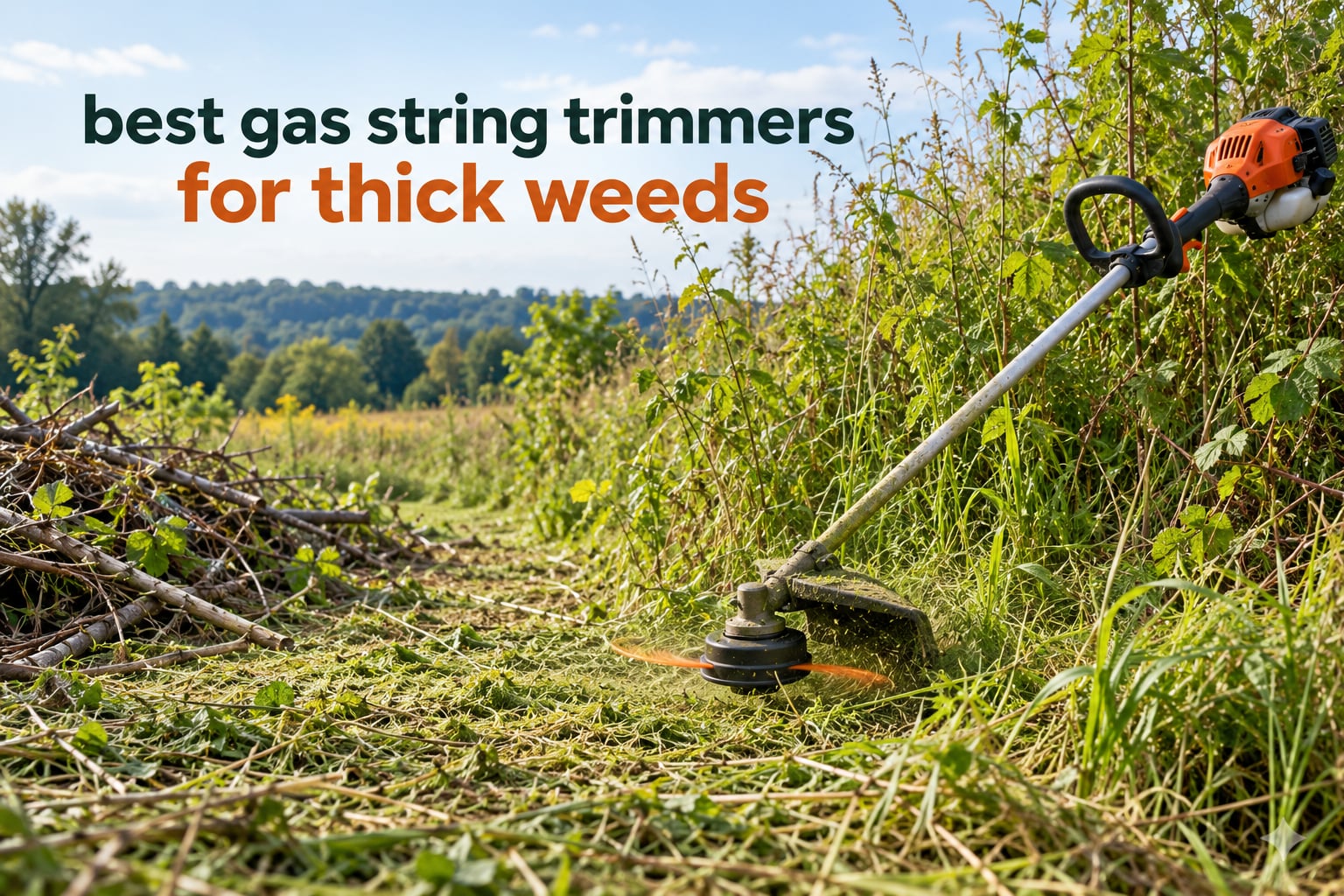
Three things decide whether a gas string trimmer can handle thick weeds: engine displacement, torque gearing and the largest line diameter the head will accept. A 25cc-or-larger two-cycle with a 0.095-inch line head and a straight shaft will chew through knee-high grass, brambles and saplings without stalling. The PowerSmart 25.4cc leads our list of the best gas string trimmers for thick weeds for exactly that reason, with the Husqvarna 330LK and the AMERISUN 26cc close behind.
We spent weeks comparing engine sizes, swath widths, shaft layouts and owner feedback across ten gas trimmers, then focused on the one job that separates them from ordinary weed eaters: growth that is tall, dense and starting to go woody. Two of these machines also accept a metal blade, which is the tell that the manufacturer built them for real brush work rather than lawn tidying.
This roundup is written for property owners, small crews and anyone reclaiming an overgrown lot. If you have a tidy quarter-acre lawn and a 40-minute job, a battery trimmer is the better purchase. If you have fence lines, ditches, vacant ground and brambles, keep reading.
Table of Contents
Top 3 Gas String Trimmers for Thick Weeds in 2026

PowerSmart 25.4cc 2-Cycle Trimmer
- 25.4cc 2-cycle engine
- 10-inch metal brush blade
- 0.095-inch line
- 16-inch swath

Husqvarna 330LK Straight Shaft
- 20-inch cutting width
- Detachable attachment shaft
- LowVib anti-vibration
- Rapid Replace head

AMERISUN 26cc 3-in-1 Cutter
- 25.4cc 2-stroke engine
- 10-inch metal blade
- 16-inch cutting width
- 50:1 fuel mix
All three top picks ship with what you need to attack brush, and all three have enough owner feedback to make the verdict more than a spec-sheet guess.
Quick Comparison of All 10 Gas String Trimmers in 2026
| Product | Specifications | Action |
|---|---|---|
| PowerSmart 25.4cc 2-Cycle Trimmer |
|
Check Latest Price |
 Troy-Bilt TB25CB 25cc Curved Shaft Troy-Bilt TB25CB 25cc Curved Shaft |
|
Check Latest Price |
| Husqvarna 330LK 20-Inch Straight Shaft |
|
Check Latest Price |
 LawnMaster 25cc Electric Start Trimmer LawnMaster 25cc Electric Start Trimmer |
|
Check Latest Price |
| AMERISUN 26cc 3-in-1 Trimmer and Brush Cutter |
|
Check Latest Price |
 Husqvarna 122C 22cc Curved Shaft Husqvarna 122C 22cc Curved Shaft |
|
Check Latest Price |
 WORKIT 52cc 3-in-1 with Two Blades WORKIT 52cc 3-in-1 with Two Blades |
|
Check Latest Price |
 VEVOR 26cc 7-in-1 Multi-Tool Kit VEVOR 26cc 7-in-1 Multi-Tool Kit |
|
Check Latest Price |
 LINASHI 52cc Weed Eater with 3-Tooth Blade LINASHI 52cc Weed Eater with 3-Tooth Blade |
|
Check Latest Price |
 ZTGD 52cc Brush Cutter with U-Handle ZTGD 52cc Brush Cutter with U-Handle |
|
Check Latest Price |
1. PowerSmart 25.4cc 2-Cycle with 10-Inch Blade – Our Top Pick
PowerSmart Gas Weed Wacker 2-Cycle 25cc Gas String Trimmer/Edger 16″ and 10″ Brush Cutter & Shoulder Strap Included
- Enough power for massive weeds and brush
- Works with 0.095-inch line and the 10-inch blade
- Low vibration with the shoulder strap
- Starts on the second or third pull
- Assembly directions omit steps
- Handle failed on one report
- Choke switch failures on some new units
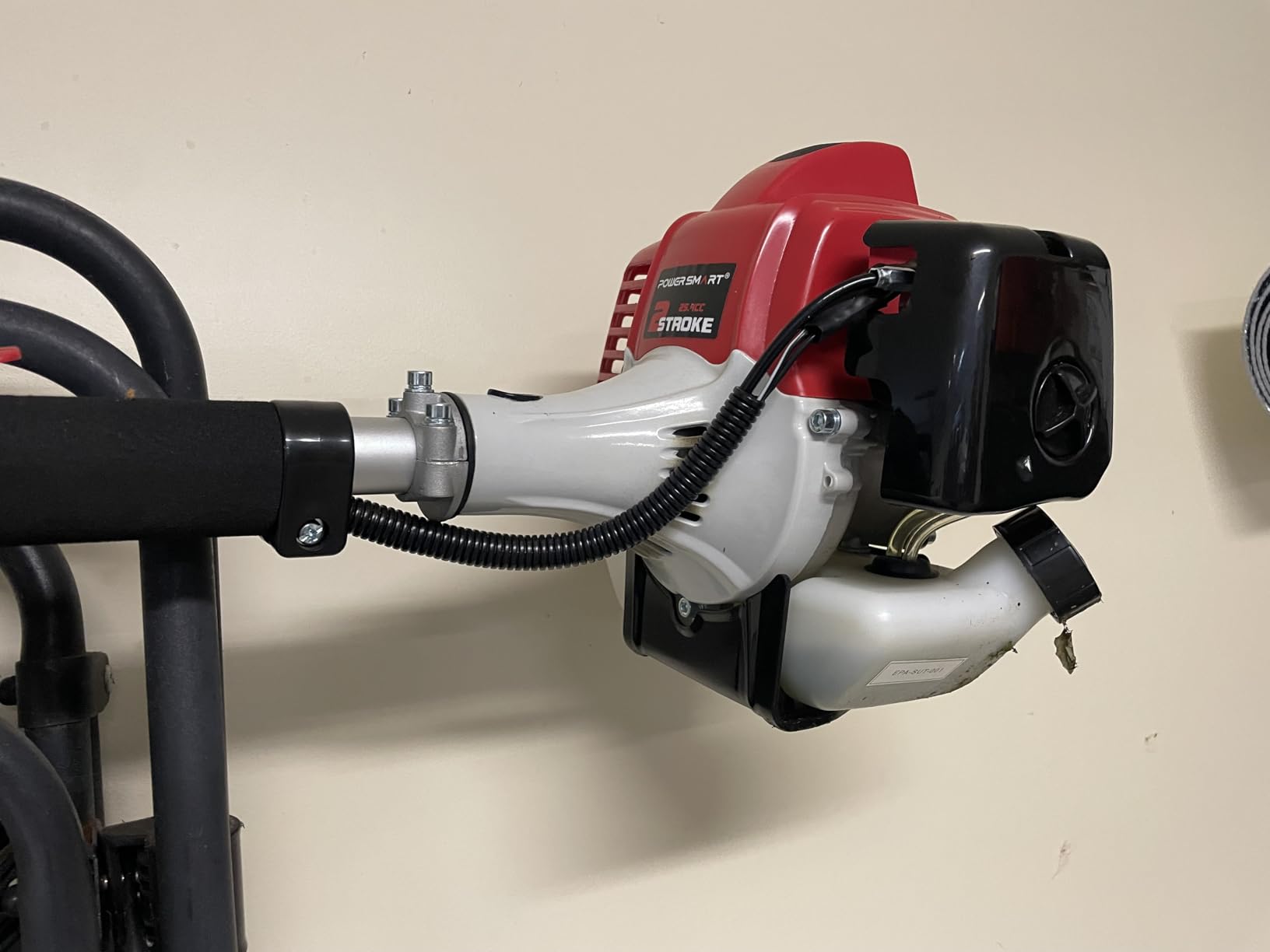
This is the machine we would hand to someone clearing a first-year-overgrown lot with a fence line and a drainage ditch. The 25.4cc two-cycle has the low-end grunt to keep the head turning when the line is buried in dense grass, and the 16-inch swath means fewer passes across tall growth.
It ships as a genuine two-in-one: a 0.095-inch trimmer head and a 10-inch metal brush blade, so you can switch to the blade once stems get woody. The included shoulder strap and balanced layout keep a long afternoon tolerable, and owners report lower vibration than trimmers they replaced.
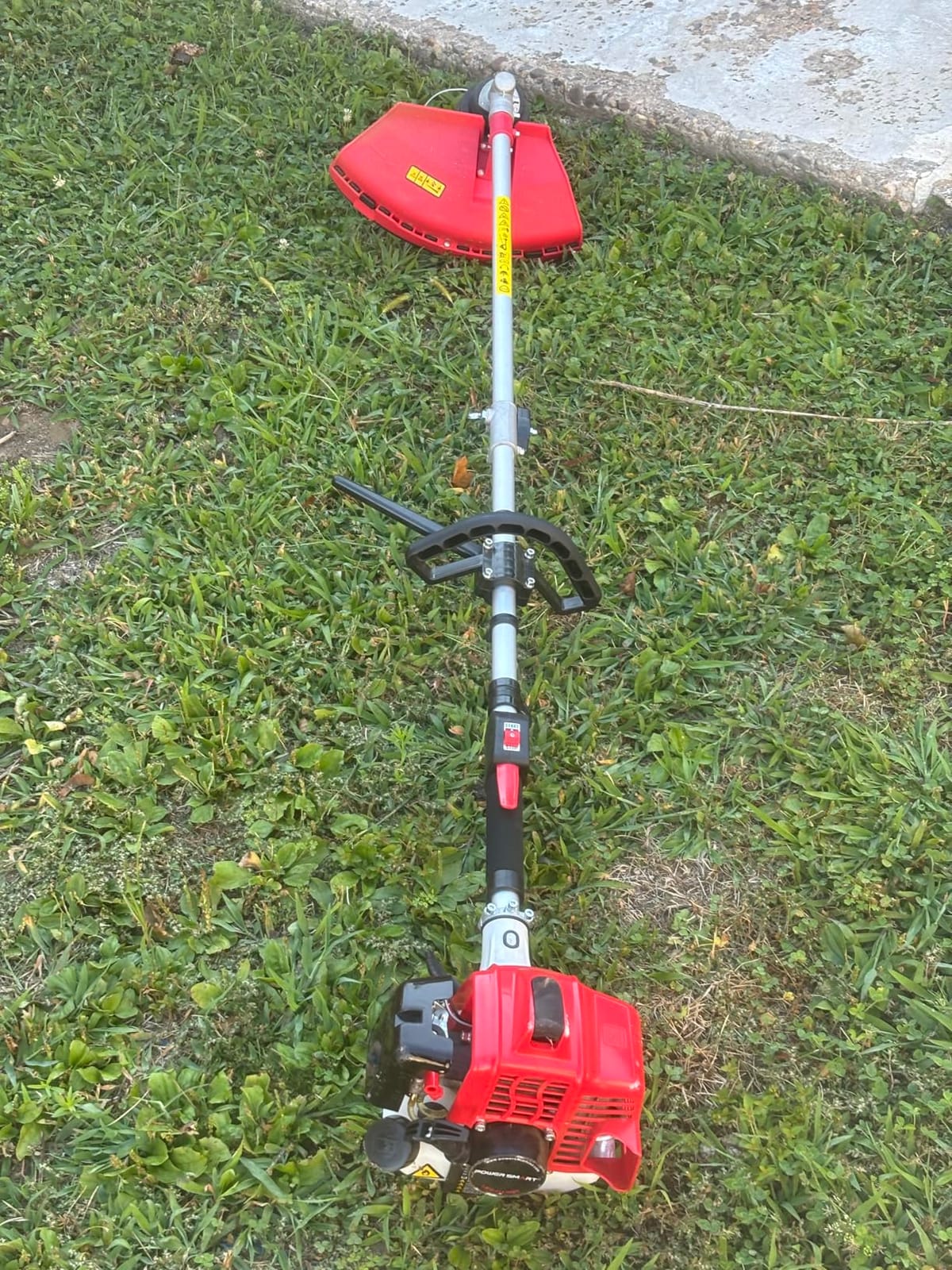
At 4 stars across 302 reviews, it has the largest review pool in this group, which makes the feedback unusually useful. Repeated praise covers three things: power on heavy brush, easy cold starts, and a head that accepts real 0.095-inch line rather than the thin stuff.
The weak points are the small plastic parts and the paperwork. Assembly directions skip steps, including removing a bolt before mounting the head, and a few owners reported a broken handle or a dead choke switch on units arriving new.
Best for property owners clearing mixed growth
It suits anyone with rough grass, weeds and early bramble stems on a lot, ditch or field edge. The 16-inch swath and the metal blade cover both open ground and woody patches without a second tool.
If you want a quiet machine for a small lawn, look elsewhere. This is a working tool with a working sound level.
Consider another model if you are fussy about assembly
Budget five extra minutes and read the manual before you start, because the directions genuinely skip a step. Some owners also replace the factory plastic head with a universal bump-feed head within the first season.
Owners who need maximum torque on woody stems should step up to the Husqvarna 330LK reviewed below.
2. Troy-Bilt TB25CB 25cc Curved Shaft – Easiest Curved-Shaft Handling
Troy-Bilt Gas String Trimmer, 25cc, 16-inch (TB25CB), Red
- Lightweight 25cc engine
- SpringAssist makes starting easier
- Curved shaft gives a clear view of the cut line
- Multi-position handle limits vibration
- 18 percent of reviews are one-star
- Durability complaints across the sample
- No customer photos on the listing
The curved shaft is the reason to look at this one. It keeps the trimmer head closer to your feet, which makes it far easier to thread around trees, shrubs and fence posts without swinging the tip into something you care about.
SpringAssist pull-start technology takes some of the sting out of cold starts, which matters if the fuel has been sitting since last season. The 16-inch cutting swath is a sensible size and the multi-position handle helps spread vibration across a long session.
At 3.9 stars from 157 reviews, satisfaction is solid but not exceptional. The 18 percent one-star share is the main caution, and durability is the theme in those complaints rather than cutting ability.
It is a 25cc two-cycle with no metal blade in the box, so it is built for grass and weed height rather than bramble thickets. For woody stems you would be adding an accessory the manufacturer did not intend. Homeowners with only lawn and tidy borders will find this more than adequate.
Best for landscaped beds and obstacle-heavy yards
The curved shaft and clear sightline make this a comfortable choice around trees, drip lines and garden edges. It also stays balanced through a long evening of trimming work.
It is also a sensible first gas machine for a new homeowner, provided the job list stays at grass and weed height rather than brush.
Consider another model if you plan to cut saplings
There is no brush blade listed for this model, so anything genuinely woody is out of its comfort zone. If your job list includes blackberry canes or small stems, pick one of the blade-equipped machines instead.
Long-term owners on forums tend to rate Stihl, Echo and Husqvarna models well above entry-level machines for build life, and several also say non-ethanol fuel is what keeps them running year after year.
3. Husqvarna 330LK 20-Inch Straight Shaft – Built for Big Properties
- Powers through thick vegetation
- Attachment-capable detachable shaft
- Rapid Replace head speeds line changes
- LowVib reduces fatigue on long jobs
- 24 percent one-star share
- Straight shaft is awkward in tight spots
- Heavier and pricier than entry 25cc models
This is the pick for acreage, commercial grounds work and anyone who clears fence lines along a road. Its detachable shaft accepts click-on attachments, so one powerhead can cover trimming, edging and brushing once you add the tools.
The most interesting feature for thick weeds is the adjustable cutting width: 20 inches for open ground, or 18 inches when you want maximum power in denser vegetation. A narrower head concentrates the same energy into less material, which is a smart lever for heavy growth.
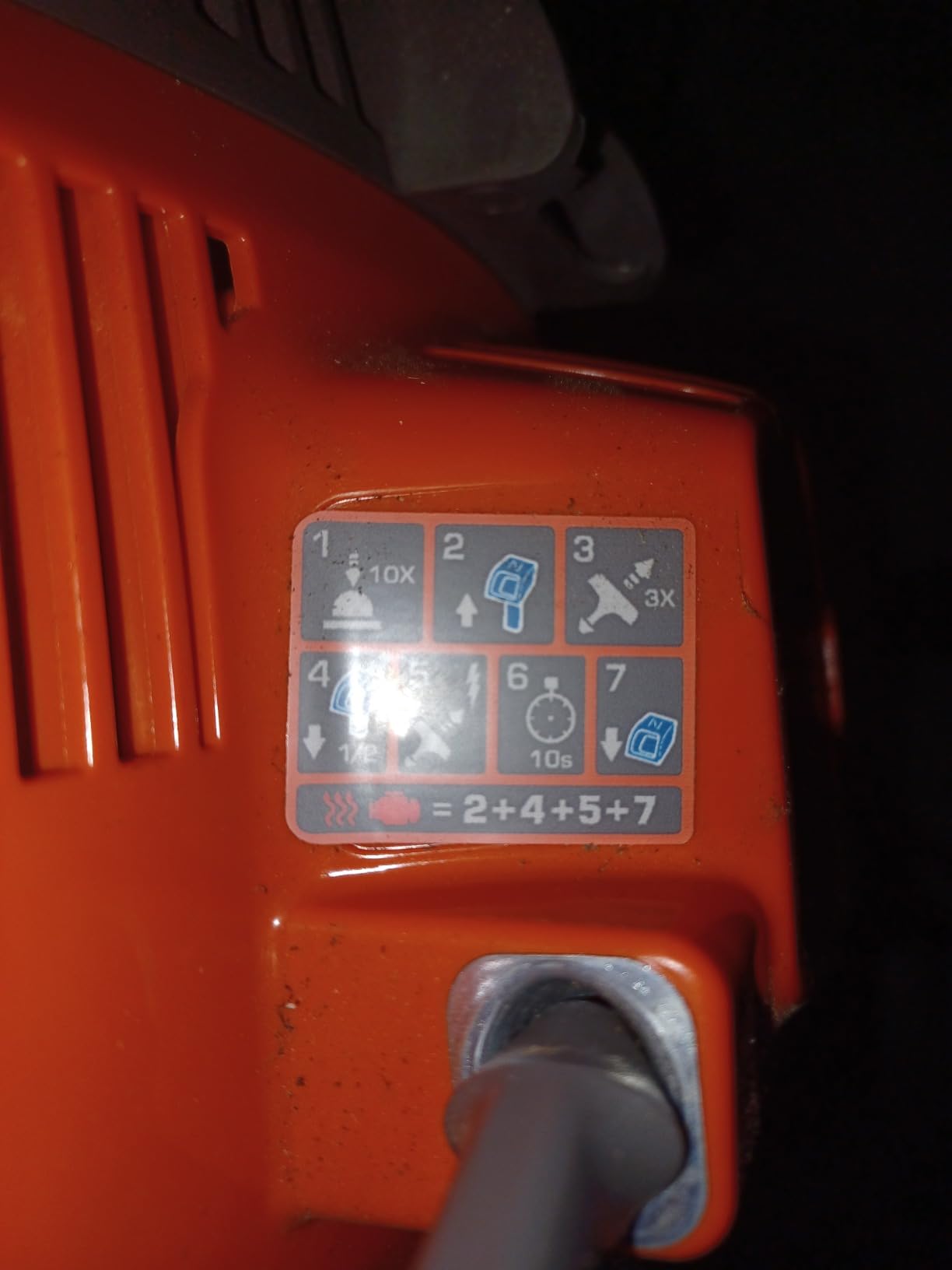
At 12.9 pounds it is lighter than most 52cc machines here, and the LowVib anti-vibration system and comfortable handle are aimed at long jobs. Spring-assisted start, Air Purge and an automatic stop switch make cold starting straightforward.
The 3.6 average across 241 reviews is the weak point, with 24 percent of reviews at one star. That tail is worth understanding: this is a professional-class design meeting buyers who expect cheap construction, and the mismatch shows up in reviews.
Best for multi-acre upkeep and professional crews
Choose this for a farm, ranch, campus or large property where the work is weekly rather than occasional. The straight shaft keeps the head out in front where you can see it, and the quick line changes reduce downtime on long days.
It is also the strongest option here if you want one engine to grow into more tools later.
Consider another model if you work in tight spaces
A straight 20-inch shaft is harder to maneuver around trees and inside a shrub bed than a curved-shaft trimmer. The 3.6 rating also means you should expect some build-quality disappointment relative to a pro dealer machine.
On professional forums, owners of commercial-grade gas equipment commonly report decade-plus service lives when they run non-ethanol fuel and store the machine properly over winter.
4. LawnMaster 25cc with Electric Start – Easiest Engine Starting
- No pull cord effort
- 420mL tank for longer runtime
- 17-inch swath covers more per pass
- Split-shaft converts into other tools
- Drive shaft and clutch failures reported
- Unreliable starter switch
- Heavier than typical small weed eaters
The selling point is obvious: you press a button instead of hauling on a starter rope. The starter is rated for up to 150 starts on one charge, which is genuinely useful when you are stopping and starting all afternoon in overgrown ground.
The 420mL fuel tank is larger than most in this class and gives useful runtime on bigger yards. A dual-line bump-feed head running 0.080-inch line handles tough weeds and overgrown grass adequately, and the split-shaft design converts into other yard tools quickly.
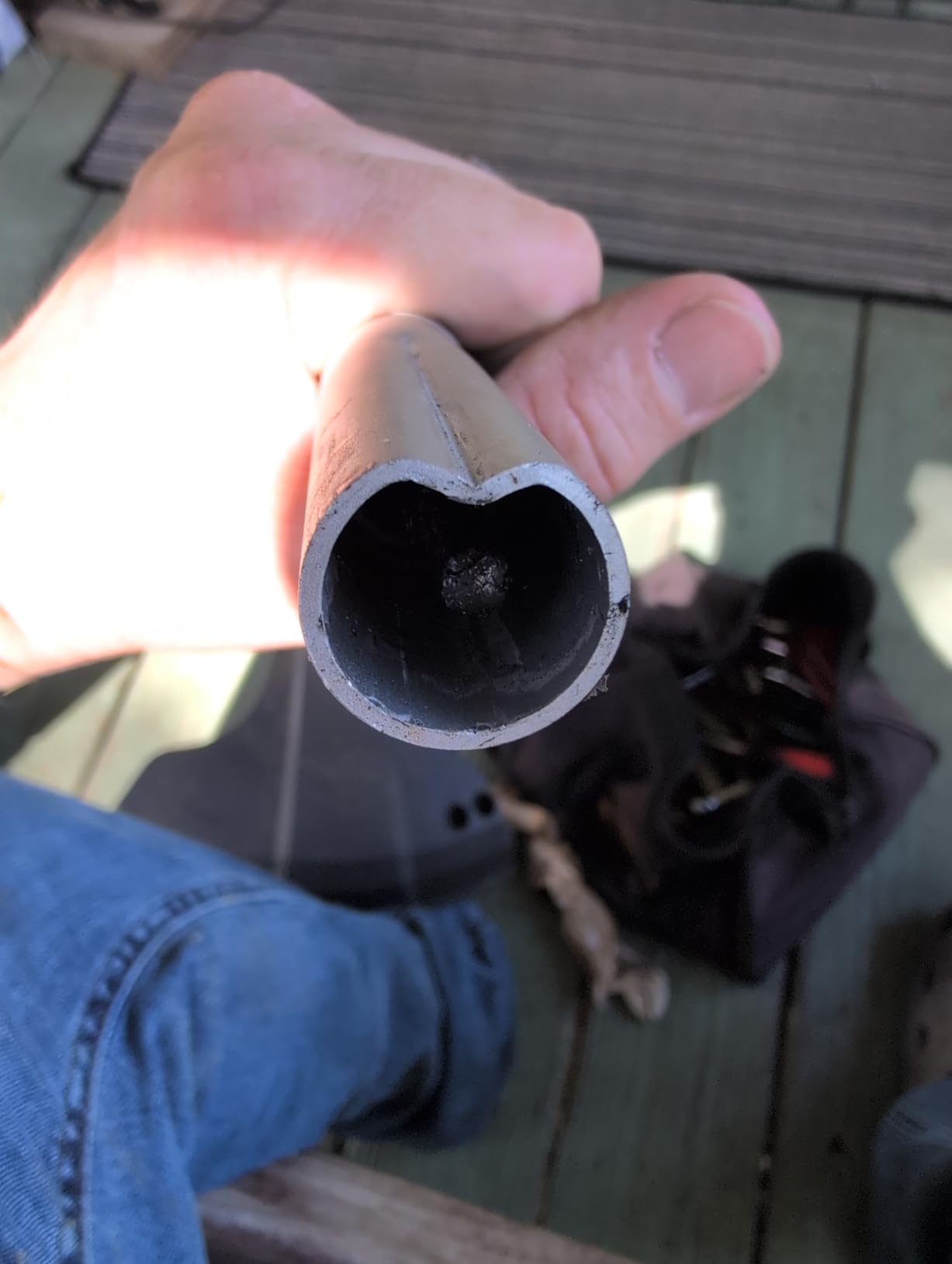
Reliability is the issue. Several owners report drive shaft or clutch failures within minutes of first use, and the electric starter switch itself needs contact cleaning. The 3.5 average from 106 reviews reflects that split: happy owners of working machines, and a distinct cluster of early failures.
The 0.080-inch line spec also caps its brush potential compared with the 0.095-inch head on the PowerSmart.
Best for users who struggle with a pull cord
If recoil starting is the reason you avoid gas trimmers, this removes the objection entirely. The larger tank and 17-inch swath also make it practical for medium-to-large yards.
It is a reasonable pick for a small farm or a groundskeeper who starts and stops the machine frequently.
Consider another model if reliability matters most
The reported early-failure cluster on drive shafts and starter switches is significant, and roughly a quarter of its reviews are one-star. Anyone buying this should keep the receipt and know exactly what the warranty covers.
A pull-start two-cycle from a dealer-backed brand may be the safer long-term choice if you can manage the cord.
5. AMERISUN 26cc 3-in-1 – Highest Owner Rating in the Group
- 4.3 stars from 68 reviews
- Only 5 percent one-star feedback
- Handles trimming
- edging and brush cutting
- Universal heads accept Echo speed-feed spools
- Not as heavy duty as a professional machine
- Finish and grip feel cheap
- Flimsy guard catches on vegetation
This is the one model in the group where owner satisfaction outpaces brand reputation. It holds a 4.3 average from 68 reviews with only about 5 percent one-star feedback, and several owners say it outperforms trimmers costing far more.
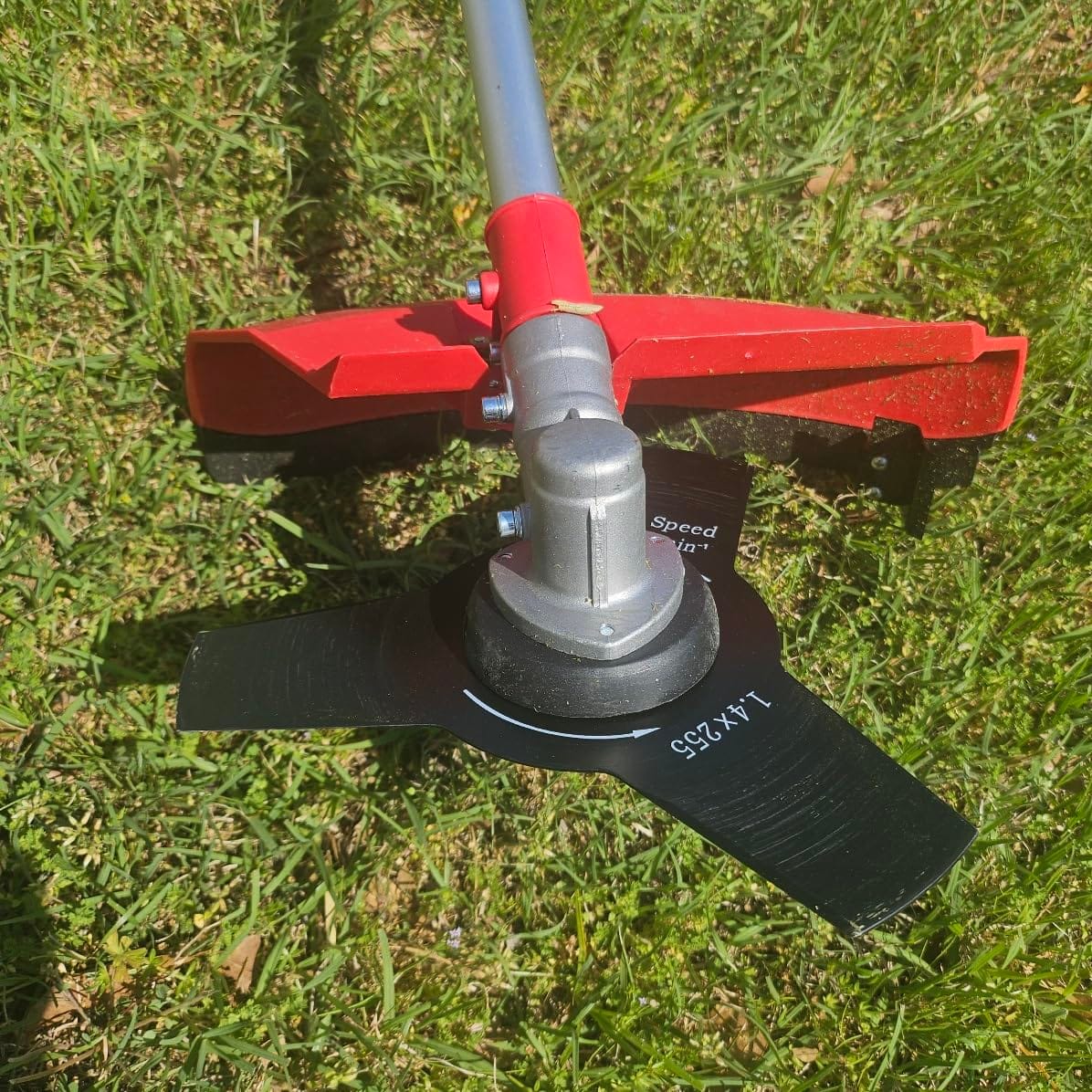
The 3-in-1 layout switches between a trimmer head, edger mode and a 10-inch metal blade. The 25.4cc air-cooled two-stroke and 16-inch cutting width give it real brush capability, and the 59-inch shaft section is adjustable for reach and balance.
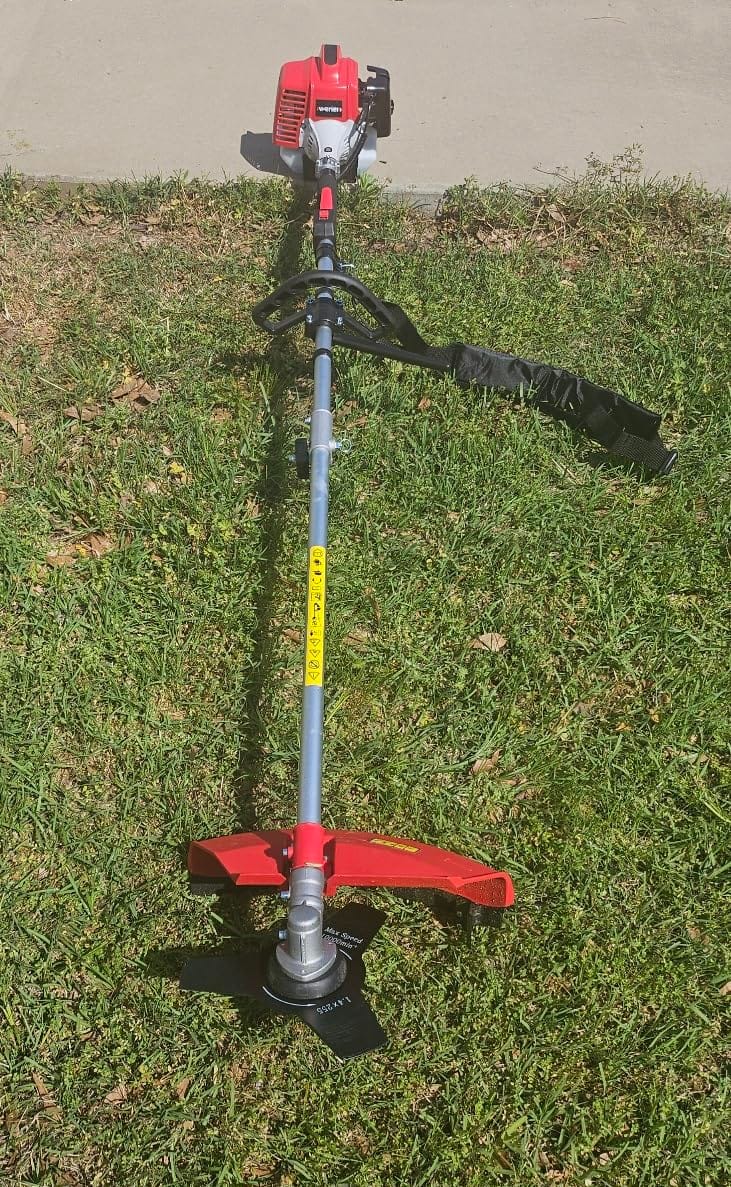
It runs on a 50:1 unleaded mix. A detail owners like: the universal heads accept Echo speed-feed spools, so if the factory head gives up you can fit a well-made replacement without hunting for a proprietary part.
The 18.7-pound weight is honest for a machine with a 10-inch blade on it, and the shoulder strap keeps it manageable.
Best for value buyers who still need brush capability
This is the pick if you want metal-blade ability without a professional price. The rating profile is the strongest in the set, and the 10-inch blade handles stems that would stall a line-only trimmer.
It suits a homeowner with a couple of acres, a small ranch, or anyone tired of replacing cheap trimmers every few seasons.
Consider another model if finish quality matters to you
Owners describe the grip and finish as cheap, and the trimmer guard is called flimsy and prone to catching on vegetation. The shaft also did not always click into place as the directions stated.
It is not a substitute for a professional-grade machine on sustained commercial work. Owners describe the result consistently as strong cutting power in a lightweight finish.
6. Husqvarna 122C 22cc – Lightest and Quietest for Tight Work
Husqvarna 122C, 22-cc 2-Cycle, 17-inch Curved Shaft Gas String Trimmer with Tap N’ Go Trimmer Head, 966712703
- Lightest machine in the group at 6.9 pounds
- Curved shaft simplifies tight work
- Low-noise engine design
- Tap N Go head feeds line without disassembly
- 22cc is underpowered for woody brush
- Only 41 reviews for long-term feedback
- Tap N Go head spins off instead of winding line
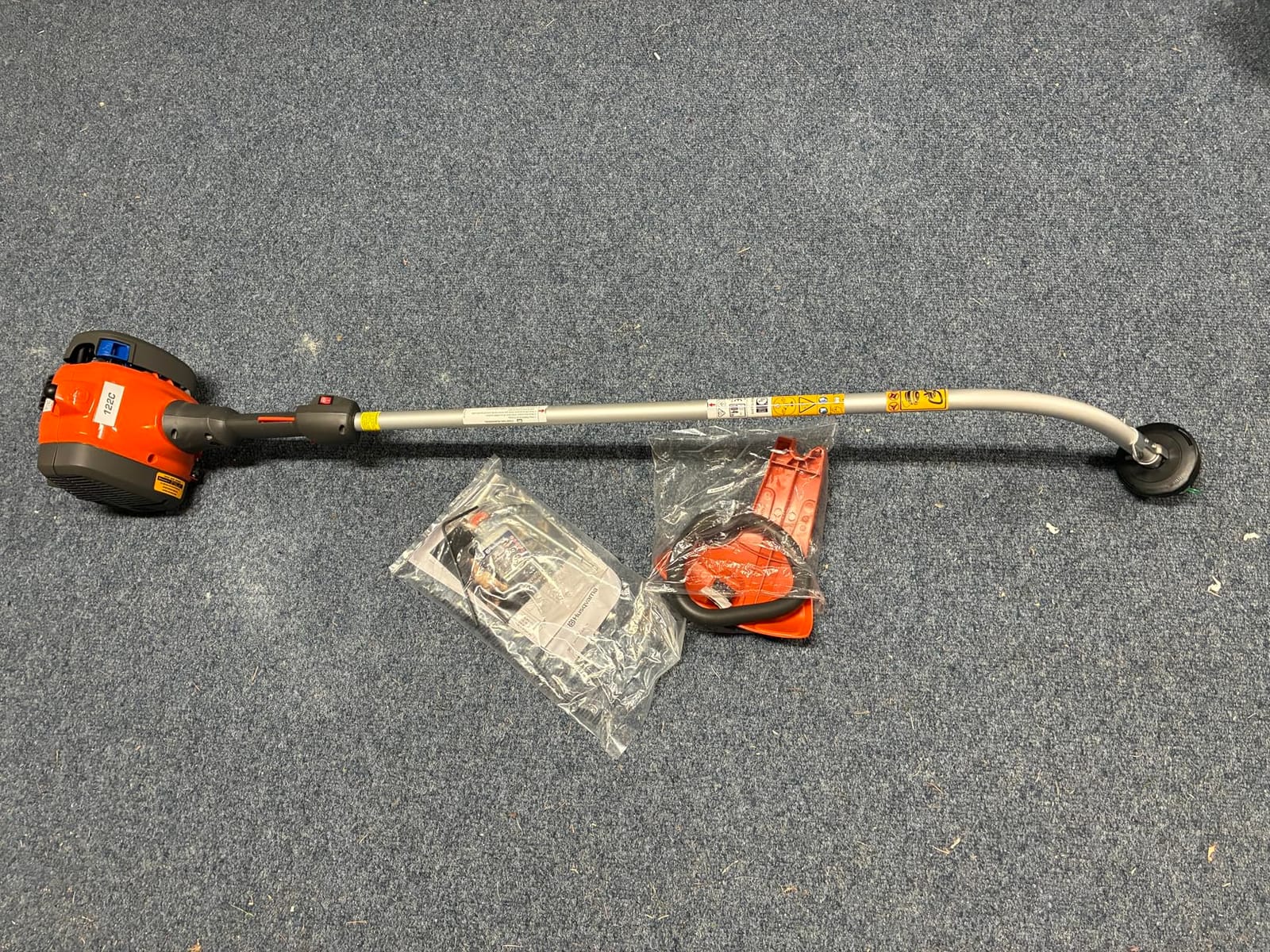
At 6.9 pounds, this is by far the lightest machine we compared, and the curved shaft keeps the head close to the ground. If you have to work around delicate plantings or hold the tool overhead, that combination is genuinely easier on the body.
Smart Start and Air Purge make starting quick, and the Tap N Go twin-line head feeds without taking the spool apart. The low-noise engine design is a real plus in residential neighborhoods where sound matters.
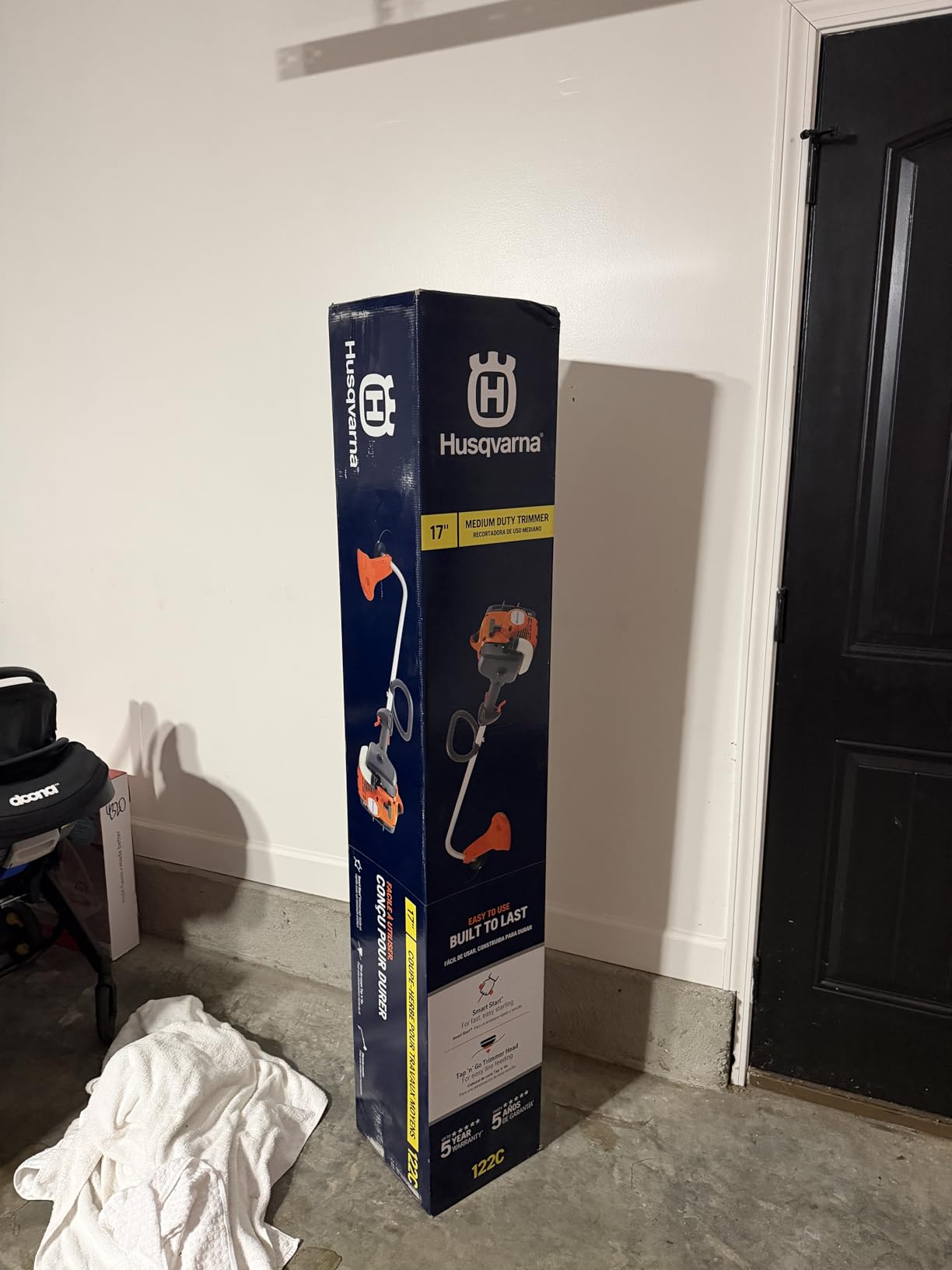
Be clear-eyed about the limit: a 22cc engine and a 17-inch swath are built for grass, weeds and fence lines, not for woody overgrowth. With 59 percent five-star ratings across 41 reviews, the feedback pool is also the thinnest of any Husqvarna here.
Owners also note the Tap N Go head spins off rather than winding line onto the spool, which is a design choice rather than a fault.
Best for fence lines, beds and noise-sensitive yards
It is the trimmer to reach for when you are working between shrubs, along a walkway or near a property line at odd hours. The weight difference is obvious over a long session.
Long-term owners of Husqvarna straight-shaft two-cycles on enthusiast forums report several years of easy starts, which is a good sign for the brand.
Consider another model if your weeds are actually thick
Under about two feet of dense growth, this is fine. Past that, or on brambles and woody stems, you will want a larger engine with a metal blade.
There is no attachment system or blade compatibility in the spec sheet, so it stays a dedicated lawn trimmer.
7. WORKIT 52cc 3-in-1 – Most Blade Options in One Box
- Raw power for thick overgrowth and brush
- 3T and 40T blades plus a head in the box
- Auto bump-feed keeps line moving
- 18-inch path covers ground fast
- 25 percent one-star share
- Heavy at 24.2 pounds
- Large package to handle
On paper this is the most capable machine in the group: a 52cc two-stroke, an 18-inch cutting path, 0.095-inch dual line with auto bump-feed, and both a 3-tooth and a 40-tooth blade in the box. The 40T blade is the right tool for bramble thickets and heavier stems.
Its 18-inch cutting path means you cover a lot of ground per pass, which matters when the job is an acre of neglected grass rather than a single ditch. The 330LK reviewed earlier has a wider 20-inch head, so this machine trades swath width for the bigger engine and the two supplied blades.
Where it falls short is execution. The 3.6 average and 25 percent of reviews at one star point to build and assembly quality rather than a lack of cutting power, and at 24.2 pounds the machine is tiring without the shoulder strap properly fitted.
The 50:1 fuel mix and simplified start system are designed to make ignition smooth, though the listed 105-inch length means a bulky package to store and maneuver.
Best for large areas of mixed weeds and light brush
This suits a farm field, a large lot or a rough-edges property where a wide swath and two blades earn their keep. The 52cc class gives real headroom when the grass is thick and wet.
You get the widest cut and the most blade options in this roundup for the money.
Consider another model if you will use it for long stretches
At 24.2 pounds, this is a heavy machine for a long session, and the one-star share suggests quality-control variance. Owners who cut all day tend to favor lighter machines with anti-vibration isolation.
If the job is mostly grass with occasional thick patches, a 25cc with a 16-inch swath will be easier on your shoulders.
8. VEVOR 26cc 7-in-1 Multi-Tool – Seven Tools, One Engine
- One powerhead covers trimming
- edging
- brush and hedge work
- Engine starts easily and cuts with real force
- Protective gear and dual straps included
- Manganese steel blades
- Very heavy at 35.1 pounds
- Attachment locking ring broke on first swap
- Pole saw oiler reported defective
- Hot cowling near the hand
The pitch here is coverage. A single 26cc two-stroke engine spins to 8500 RPM and drives a hedge trimmer, string trimmer, 3T and 40T brush cutters, an edger and a pole saw, with a 30-inch extension pole for overhead work.
For someone clearing thick weeds along a property edge who also has hedges to shape, bundling it into one engine removes the cost and storage of separate tools. The included deflector, face shield, glasses, earmuffs and gloves are a nice touch for a kit sold to first-time brush cutters.
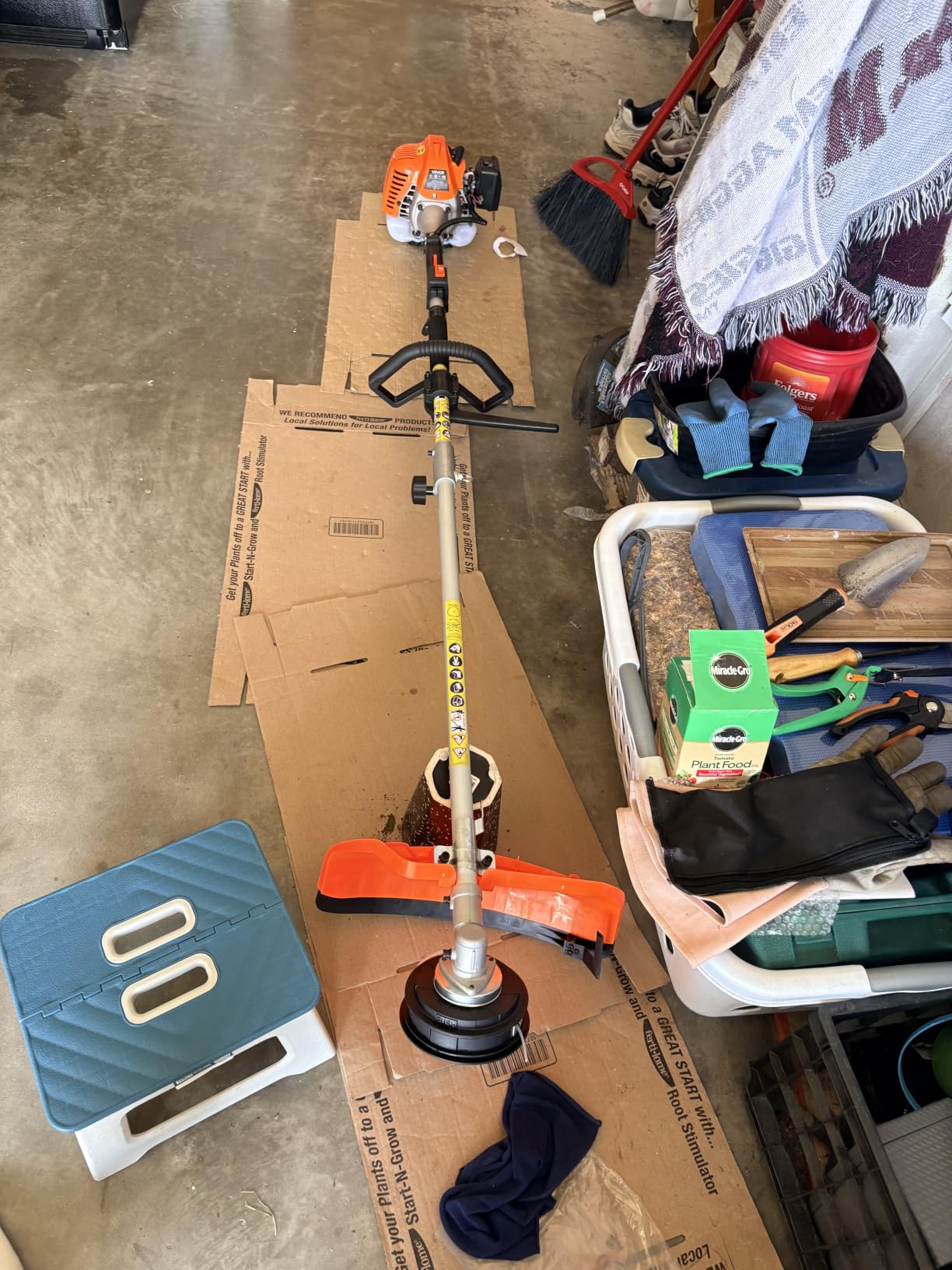
The weed eater and hedge functions work well according to owners, but the extras are where the complaints live. The pole saw oiler has been reported defective, the attachment locking ring is described as cheap and has broken on a first swap, and the front cowling near the hand runs hot enough to blister on contact.
The VEVOR bundles the head with the engine, at the cost of added weight and less durable attachment hardware. At 35.1 pounds before attachments, it is the second-heaviest machine in the roundup, and the prime bubble position is awkward to reach. If you only need a trimmer, a 16-pound 25cc does the same job far more comfortably.
Best for all-in-one toolkits and multi-task properties
Pick it if you want trimming, edging, brush cutting and hedge work from one engine and accept the weight. The 3T and 40T blades mean thick weeds are within reach once the head is swapped.
It suits park maintenance, small crews and anyone who would otherwise buy three separate machines.
Consider another model if the pole saw is not for you
The attachment hardware and the pole saw attachment are the weak points, and the 35.1-pound weight is the real limit for anyone carrying it across a property.
Check the prime bubble position, which owners report is awkward to reach.
9. LINASHI 52cc with Full Accessory Kit
52cc Gas Weed Eater, Gas Powered Weed Wacker, Brush Cutter & String Trimmer
- Serious 2.2KW output for thick grass and brush
- Head and 3-tooth blade both included
- Full kit with gloves
- glasses
- funnel and oil can
- Anti-vibration balance
- Lowest rating in the set at 3.3 with 32 percent one-star
- Primer bulb will not stay primed
- String head drops line
- Illegible assembly instructions
The spec sheet is impressive: 52cc, 2.2KW, up to 8500 RPM, a string head and a 3-tooth metal blade, and an accessory kit that includes gloves, safety glasses, a funnel, an oil can and an install kit. The side-mounted engine and U-shaped handle are sensible for balance, and the anti-vibration design is intended to help during longer jobs.
Owner feedback is the weakest in this group. The 3.3 average includes 32 percent of reviews at one star, and the recurring complaints are practical ones: the primer bulb will not stay primed so the engine dies and hard restarts, and the string head feeds line out and drops it.
Assembly documentation is described as small and illegible, and the bristle-mounted spool design is prone to coming apart. The machine is also hard to balance even with the harness.

Best for buyers who want a full kit in the box
Everything needed to start is included, including safety gear and mixing tools, which matters if this is your first gas machine. The 3-tooth blade handles light brush once you get past the head issues, and some owners do report it powering through brush and trails.
It is worth considering if you value the accessory bundle and expect light use.
Consider another model if you plan heavy use
A primer that will not hold and a head that drops line are the two failure points that show up most. The lowest rating in the set, with a third of reviews at one star, is a meaningful signal.
Any 52cc machine with a well-reviewed head would serve a demanding property better.
10. ZTGD 52cc Brush Cutter – Budget Power for Saplings
- Owners report taking down multi-inch saplings
- Cuts a large neglected yard on under one tank
- Starts in about two pulls
- Full tool kit and goggles in the box
- Heaviest machine here at 41.5 pounds
- Thin shafts can snap at the twist
- Hot exhaust vents
- Trimmer head is hard to re-string
Owners frequently describe this as a genuine brush cutter rather than a trimmer with a big engine. Multiple reports describe taking down multi-inch saplings and plowing through tough grass without the head binding.
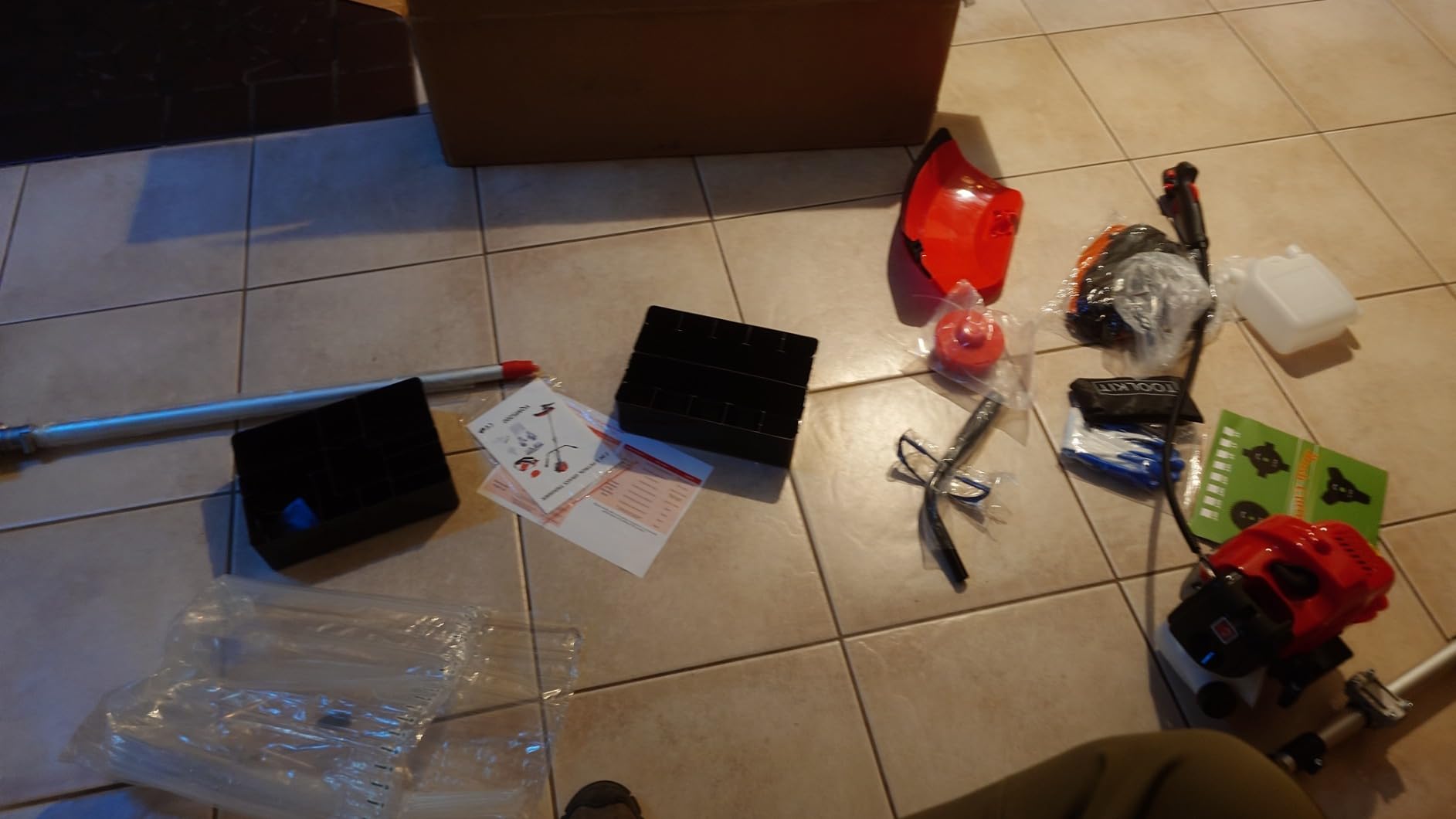
It also cuts a large neglected yard on less than one tank, starts in roughly two pulls after a brief warm-up, and ships with a full tool kit and safety goggles. The side-mount U-handle gives real control when the blade is in the ground.
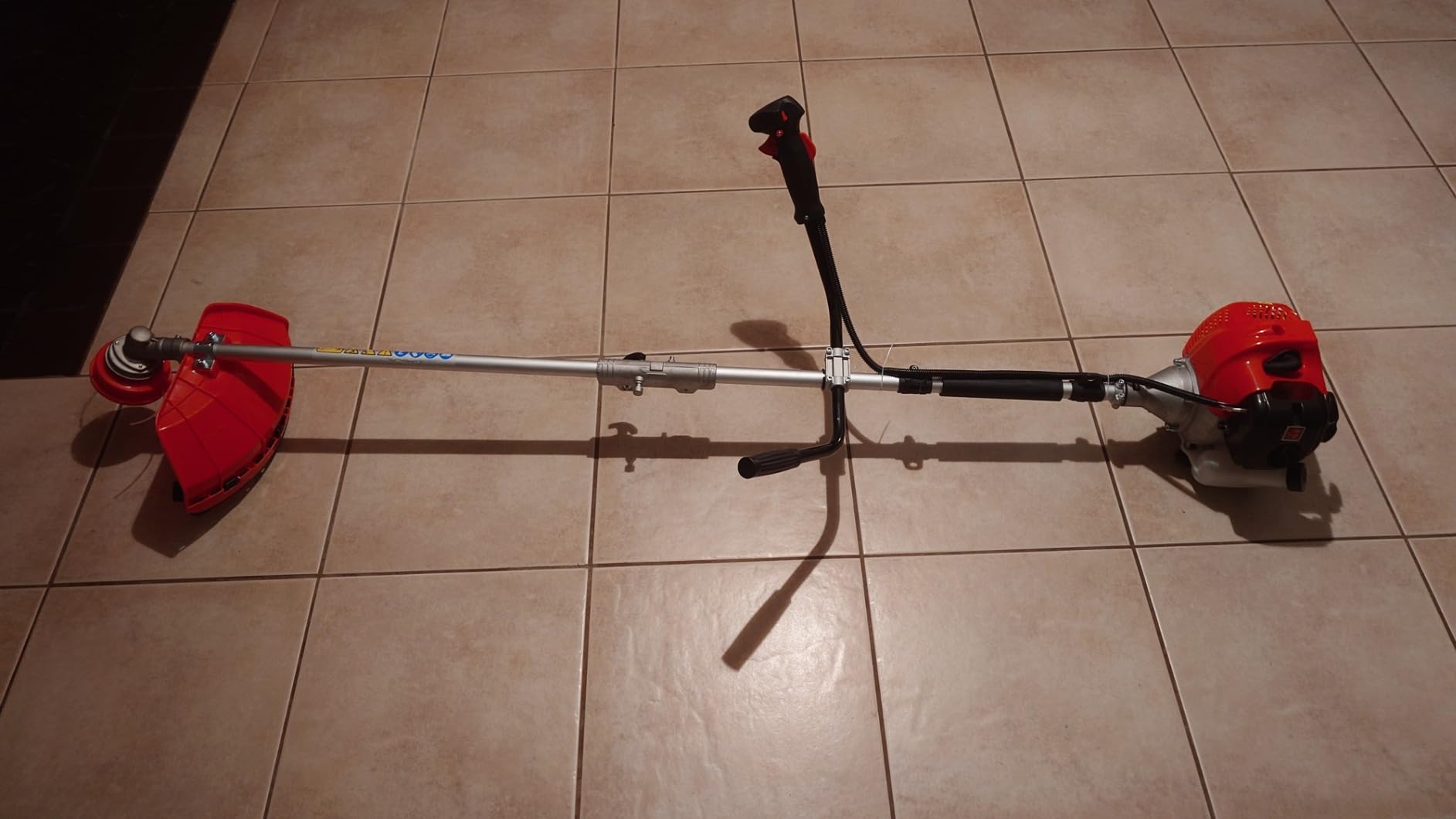
Durability is the split verdict. Several long-term buyers report replacing machines yearly, and 26 percent of its reviews sit at one star, reflecting carburetor, starter rope, shaft and heat problems. The factory carburetor has also arrived clogged with plastic on some examples.
At 41.5 pounds it is the heaviest machine we compared, and the exhaust vents sit high enough to blister an arm. The included harness reportedly takes a season to fit comfortably.
Best for landowners cutting real woody growth
If your job includes saplings, fence-post growth and bramble patches, this is the most capable woody-growth cutter in the group. The 3-tooth blade and 52cc two-stroke have the torque to do what a line head cannot.
Owners with multiple units in service over several years show the design works when maintained.
Consider another model if you value weight and finish
Forty-one pounds plus a hot exhaust is a lot to carry across a property, and the fuel tank gasket has needed epoxy repairs on some units. Many owners replace the factory head with an Echo head because re-stringing it is difficult.
On forums, owners looking for decade-long durability consistently name Stihl, Echo and Husqvarna as the tier that holds up, and they stress non-ethanol fuel and proper winter storage.
Gas Trimmer or Brushcutter: Which One Do You Actually Need?
A string trimmer spins nylon line and is built for grass, weeds and light brush. A brushcutter is the heavier, higher-torque version that also accepts a metal blade, which is the only reliable way through stems and saplings. The deciding question is simple: are the stems you face woody enough that line would break rather than cut?
Below about two feet of pure weed and grass growth, a 25cc two-cycle trimmer is the right tool and there is no reason to spend more. Once you are into bramble canes, blackberries, dead stalks or seedlings with real diameter, move to a machine that takes a 3T or 40T blade.
A second consideration is whether the stems are tough or just tall. Tall grass can overwhelm a small head because there is more of it, which is a volume problem. Woody growth is a density and material problem, and only a blade solves it.
Match the tool to the job
For lawn edges, fence lines, flower beds and light weeds, a curved-shaft trimmer such as the Husqvarna 122C or the Troy-Bilt TB25CB is lighter and easier to control.
For knee-high weeds, field edges and overgrown lots, a 25cc-plus trimmer with a 0.095-inch head and a shoulder strap, such as the PowerSmart, is the practical middle ground.
For brambles, saplings and woody stems, choose a machine with a metal blade: the ZTGD and WORKIT 52cc models, or the AMERISUN and PowerSmart with their 10-inch blades.
The best combo is often one powerhead that accepts a shaft with several heads. The Husqvarna 330LK has a detachable shaft for click-on attachments, sold separately, so trimming, edging and brushing can share a single engine.
What blade to use
A 3-tooth blade, usually 3 inches, is the general-purpose option for grass, small brush and light saplings. It clears fast and sheds less than a toothed blade on soft growth.
A 40-tooth blade cuts woody material and thick weeds, at the cost of more drag and slower cutting in grass. The four-tooth brush blade is the broadacre option for heavy, fibrous growth and should not be run into soil or rock.
Both the WORKIT 52cc and the VEVOR 26cc kit ship with 3T and 40T blades, which makes the choice easy once you get there.
Trimmer Line: Why Gauge and Shape Decide Thick-Weed Performance
Line is the cheapest upgrade you can make and the one most people skip. Almost every trimmer in this group accepts 0.080-inch or 0.095-inch line in a bump or speed-feed head, and the difference in thick growth is dramatic. Landscaping pros consistently call 0.095-inch the minimum worth running.
Avoid the skinny 0.065-inch line on heavy jobs. It snaps the moment it touches a stem, and constant reloading is the fastest way to end a session early. Where the head will take it, 0.105-inch line adds real bite on bramble and heavy weed mats, but confirm the head and gear case accept that diameter first.
Shape matters as much as thickness. Round line is general purpose and lasts longest. Square twist line has flat faces that cut sharper and resists abrasion, which suits weeds. Diamond line has multiple cutting edges and works well in dense, woody growth at the cost of shorter life. The 40T blade in a heavy kit is still the right answer once the growth is genuinely woody.
How to Cut Down Large, Thick Weeds Without Stalling
Cutting technique matters as much as the machine. Most stalling complaints are technique, not engine size.
First, cut from the top down in stages rather than attacking the base. Take a third off the height, walk back, take another third, and repeat. Each pass is a fraction of the load the last one would have been.
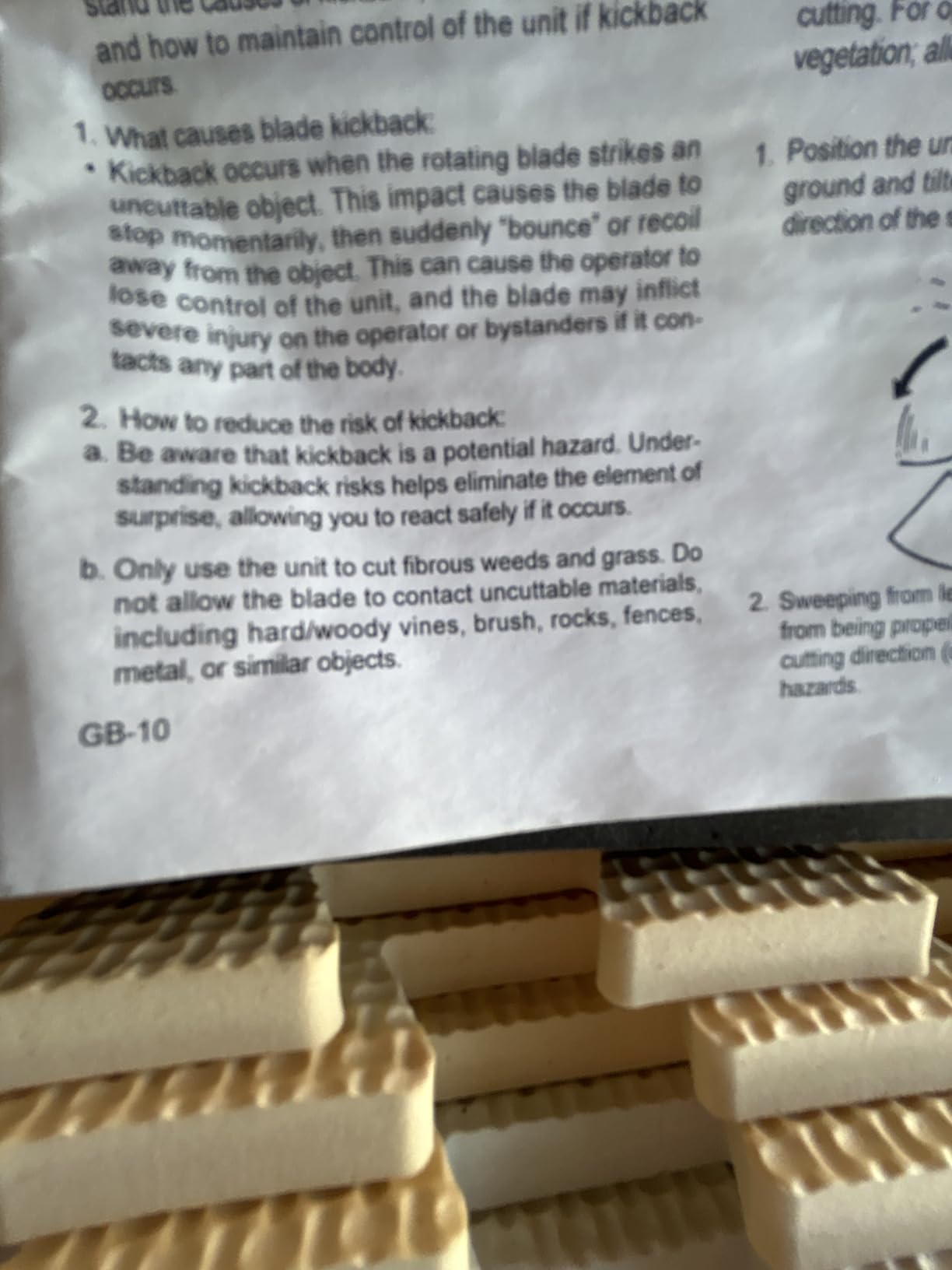
Second, sweep the head away from your body at a shallow angle and keep the guard between you and the head. Never cut downward into the base of a clump, and never pivot the head into your legs to change direction.
Third, walk the job rather than standing in one spot. If you have to lean on the head to make progress, the engine is undersized for that growth and you should switch to a blade.
Fourth, check for hidden debris before every session. Wet grass hides wire, fence staples, irrigation heads and roofing nails, and a nylon line will find all of them.
Fifth, wear eye and ear protection plus chaps when cutting tall growth. Keep bystanders and pets well outside the arc, and never operate the tool above shoulder height.
How to Choose a Gas String Trimmer for Thick Weeds
Engine displacement sets the ceiling. Twenty-two cc machines handle grass and light weeds well and stay light; 25cc is the practical entry point for thick growth; 52cc machines are brush cutters in everything but name and come with weight you will feel. Choose on the densest growth you expect, not the average.
Torque versus top speed is the second decision, and it is the one most buyers miss. High-RPM machines cut thin line beautifully but bog when the line is buried. Machines with gear reduction trade a little top speed for the torque to keep pulling through a heavy mat. For thick weeds, torque wins every time.
Line capacity is the third. A head that takes 0.095-inch line gives you a lever most people never use. Check the head spec before you assume, and confirm whether 0.105-inch is allowed on that particular model.
Two-cycle versus four-cycle comes down to maintenance appetite. Two-cycles are lighter, cheaper and stronger for the money, but they require mixing fuel and oil at 50:1 or 25:1 depending on the model. Four-cycles run straight gasoline with no mixing, are easier to start, and cost more. Most of this group is two-cycle, so budget for a mixing bottle and fresh fuel.
Shaft layout matters more in brush than in grass. A straight shaft keeps the head out where you can see it and resists the side load that comes from pushing through stems, which is why brush cutters are always straight shaft. A curved shaft is easier around trees and beds but flexes under load. For thick weeds specifically, straight shaft wins.
Weight is a maintenance issue disguised as a spec. The heaviest machine here is 41.5 pounds and the lightest is 6.9. A shoulder strap, a well-fitted harness and taking half-hour breaks matter more than most buyers expect on a full day of brush work. For a machine you will carry any distance, a 16-pound 25cc is far kinder on the shoulders than a 41-pound 52cc, and most of the cutting difference comes from the blade rather than the engine size.
Brand durability and parts access deserve real weight. On forums, owners consistently place Stihl, Echo and Husqvarna in the durable tier and praise dealer networks for parts and service. They also report commercial-grade machines lasting 10 years or more on non-ethanol fuel, versus fuel with ethanol that degrades and gums the carburetor.
Finally, consider noise. A low-noise engine design changes what neighbours tolerate, and local rules can constrain when you can work. If you have close neighbours, a 22cc low-noise curved-shaft model is the polite choice for fence-line jobs.
One last practical note: keep a spare spark plug, fuel filter, air filter and a second trimmer head on hand. On a two-cycle, most small repairs are a part swap rather than a workshop visit, and forums note that carburetor and air filter condition causes more starting trouble than anything else.
Frequently Asked Questions
What string trimmer is best for thick weeds?
The best gas string trimmers for thick weeds have at least a 25cc two-cycle engine, torque-favoring gearing and a head that accepts 0.095-inch line. Among the models here, the PowerSmart 25.4cc and the AMERISUN 26cc lead because both also accept a 10-inch metal brush blade. For true woody growth, choose a 52cc brush cutter such as the ZTGD or WORKIT with a 3T or 40T blade.
What is the best tool to cut through thick weeds?
Height and woodiness decide the tool. A string trimmer with 0.095-inch line handles weeds and tall grass up to roughly two feet. Once stems are woody, switch to a brushcutter with a metal blade: a 3T blade for small brush and light saplings, a 40T blade for brambles and heavier stems. A hedge saw is the right tool for woody growth that is above head height.
What is the best string trimmer line for heavy weeds?
For heavy weeds run 0.095-inch line as a minimum, and 0.105-inch where the head and gear case allow it. Landscaping pros consistently advise skipping 0.065-inch on thick jobs because it snaps constantly. Round line lasts longest, square twist cuts sharper and resists abrasion, and diamond line performs well in dense woody growth at the cost of shorter life.
How to cut down large, thick weeds?
Cut from the top down in stages, removing roughly a third of the height per pass, instead of attacking the base. Sweep the head away from your body at a shallow angle, keep the guard between you and the head, and walk the job rather than leaning on the trimmer. Check wet grass for wire and debris first, and wear eye and ear protection with chaps.
When to use brush cutter vs string trimmer?
Use a string trimmer for grass, weeds, lawn edges and light brush up to about two feet. Upgrade to a brushcutter when the growth includes woody stems, bramble canes, blackberries or seedlings with real diameter, because line breaks instead of cutting them. A brushcutter has the torque and gear case strength to run a metal blade safely.
What is the best string trimmer and brush cutter combo?
The most efficient combo is a single powerhead with a detachable shaft that accepts click-on heads, so one engine covers trimming, edging and brush cutting. The Husqvarna 330LK in this roundup has a detachable attachment shaft, with the click-on tools sold separately. Kits such as the VEVOR 26cc bundle the heads with the engine, at the cost of added weight and less durable attachment hardware.
What is the best brush cutter blade for cutting thick grass?
For thick grass and weeds, a 3-tooth blade around 3 inches is the fast general-purpose choice and sheds less when it clips the ground. For brambles, dead stalks and heavier stems, a 40-tooth blade cuts woody material but creates more drag. Keep blades sharp, check the shaft and gear case for cracks, and never run a toothed blade into soil or rock.
The Best Gas String Trimmers for Thick Weeds in 2026: Final Verdict
The PowerSmart 25.4cc 2-Cycle is our pick for the best gas string trimmers for thick weeds, because it pairs real low-end torque with a 10-inch metal blade and the largest review pool we evaluated. The AMERISUN 26cc is the value pick with the best owner rating in the group, the Husqvarna 330LK is the choice for acreage and attachments, and the ZTGD or WORKIT 52cc models are what you buy when stems are genuinely woody.
Whichever one you pick, run 0.095-inch line, cut from the top down in passes, and keep non-ethanol fuel in the tank. Those three habits will do more for your results than any spec on this list.