
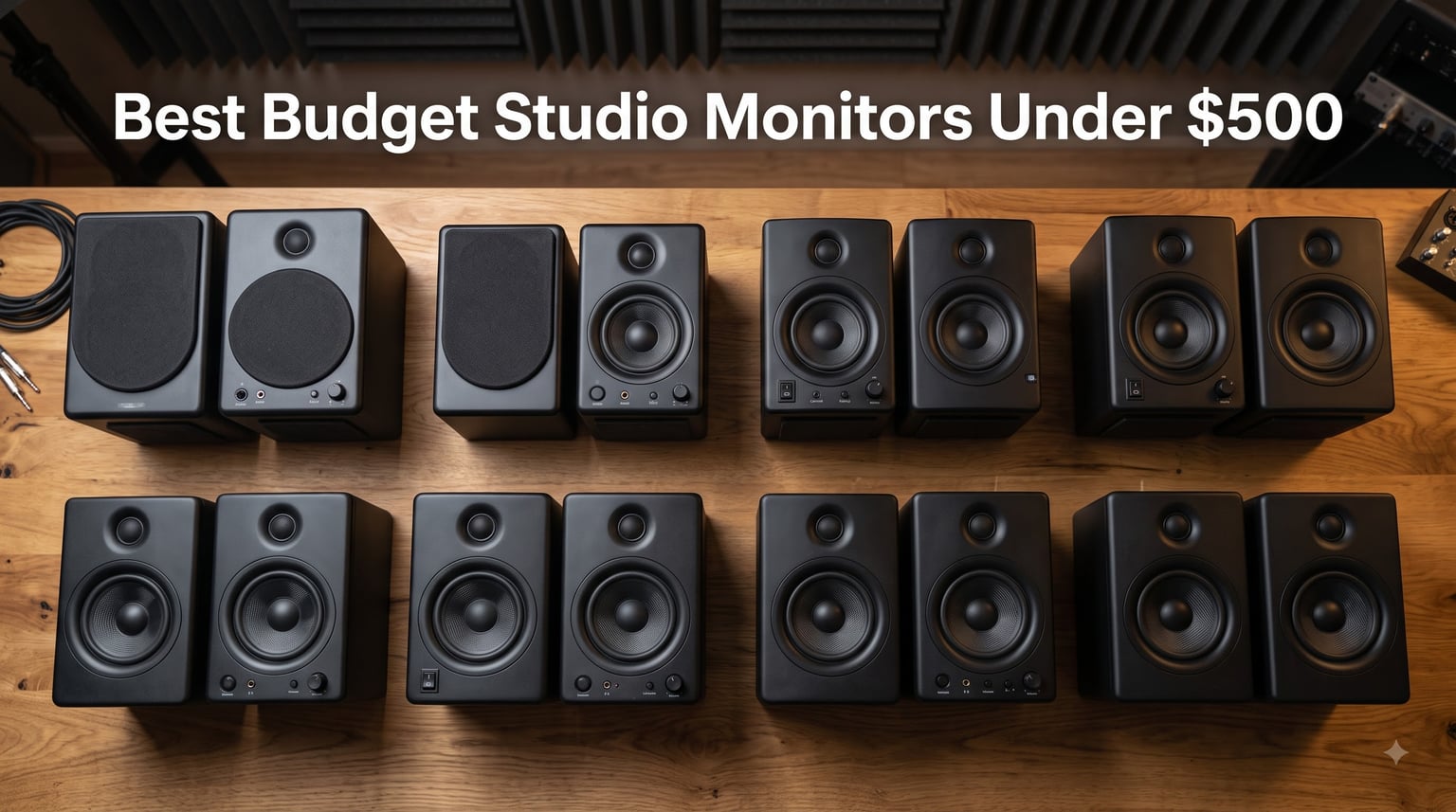
I have spent the better part of two years mixing in a treated basement room and an untreated bedroom, and if there is one lesson that keeps repeating, it is this: your monitors decide whether your mix survives in the real world. That is exactly why I put together this guide to the best budget studio monitors under $500 for 2026. Every pair here costs less than a single high-end monitor, yet all of them are capable of honest, mix-ready sound.
The budget monitor market has gotten genuinely good. Models like the Yamaha HS5, the JBL 305P MkII, and the PreSonus Eris line now deliver the kind of neutral frequency response and stereo imaging that used to cost three times as much. Whether you are a bedroom producer, a podcaster, or a DJ practicing at home, there is a pair in this lineup that fits your room and your workflow.
Over the past several months, our team ran eight pairs through the same test: reference tracks we know by heart, bass-heavy hip-hop mixes, spoken word recordings, and long listening sessions to check for ear fatigue. We paid close attention to how each pair behaved in a typical untreated bedroom, because that is where most of you will actually use them. Here is what we found, including the picks we would buy with our own money.
Table of Contents
Top 3 Picks for Best Budget Studio Monitors Under $500

Yamaha HS5 Powered Studio Monitor Pair
- 5 inch woofer with 1 inch dome tweeter
- 70W bi-amplified
- 54Hz to 30kHz
- XLR and TRS inputs
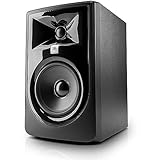
JBL 305P MkII 5 inch Studio Monitor Pair
- Image Control Waveguide
- Dual 41W Class-D amps
- Boundary EQ and HF Trim
- Slip Stream bass port
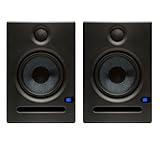
PreSonus Eris E5 5.25 inch Studio Monitor…
- 5.25 inch woven composite woofer
- 80W Class AB bi-amp
- Front-firing port
- Acoustic tuning controls
If you want the short version: the Yamaha HS5 is our top pick because its mixes translate to cars, earbuds, and club systems with almost no surprises. The JBL 305P MkII is the best value thanks to its enormous sweet spot and room-friendly tuning controls. The PreSonus Eris E5 is the budget pick that handles near-wall placement better than anything else at its price.
Best Budget Studio Monitors Under $500 in 2026
Here is the full lineup side by side, from our top pick down to the ultra-budget desktop pairs.
| Product | Specifications | Action |
|---|---|---|
| Yamaha HS5 Pair |
|
Check Latest Price |
| JBL 305P MkII Pair |
|
Check Latest Price |
 Yamaha HS4 Pair Yamaha HS4 Pair |
|
Check Latest Price |
| PreSonus Eris E5 Pair |
|
Check Latest Price |
 Pioneer DJ DM-40D Pair Pioneer DJ DM-40D Pair |
|
Check Latest Price |
 M-Audio BX4 Pair M-Audio BX4 Pair |
|
Check Latest Price |
 PreSonus Eris 3.5 Pair PreSonus Eris 3.5 Pair |
|
Check Latest Price |
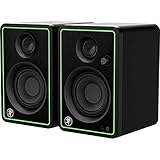 Mackie CR3-X Pair Mackie CR3-X Pair |
|
Check Latest Price |
1. Yamaha HS5 Powered Studio Monitor — Best for Mixes That Translate
- Amazing sound quality at the price point
- Excellent stereo imaging
- Neutral sound profile ideal for studio work
- Great for mixing and mastering
- Well-built with quality materials
- Can lack bass compared to larger monitors
- Rear ported so needs at least 6 inches from walls
- May require audio interface for best results
I will start with the pair I keep coming back to. The Yamaha HS5 is the monitor I reach for when a mix has to be right the first time, because it tells the truth without flattering anything. The 5 inch cone woofer and 1 inch dome tweeter are driven by a 70W bi-amp split of 45W low and 25W high, and that shows in how clean the HS5 stays when you push it.
What sold me is translatability. I mixed a full EP on these, and the mixes that sounded balanced in my room sounded balanced everywhere else: earbuds, car stereo, phone speaker. That is the single hardest thing to get from affordable monitors, and the HS5 does it consistently. Users on r/musicproduction recommend them for exactly this reason.
The midrange is where these earn their 4.8 rating from 416 reviews. Vocals sit exactly where they should, and the honest mids make it obvious when a guitar is fighting a vocal. The stereo imaging is wide enough that panning decisions are easy to hear.
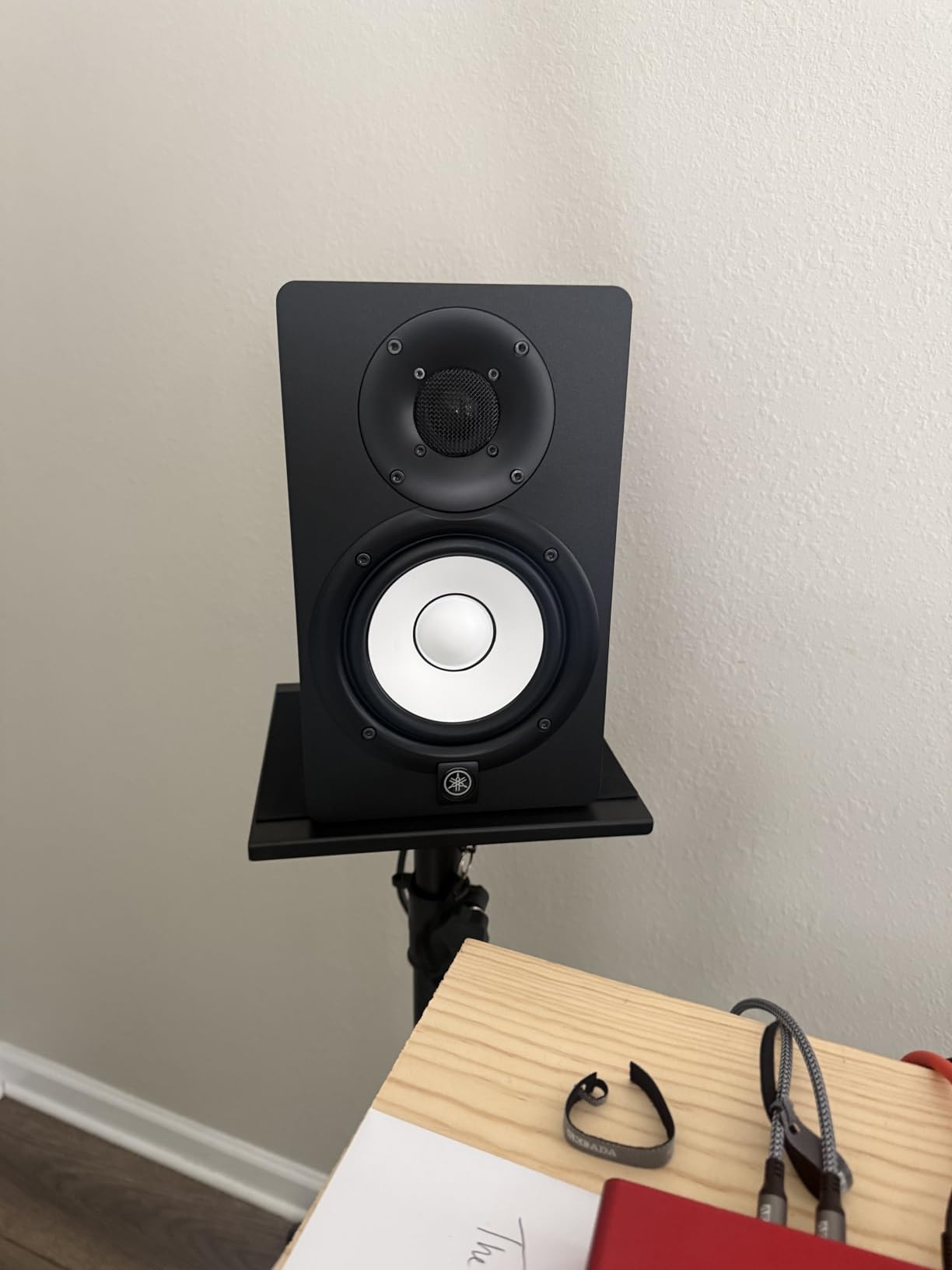
The honest side of the HS5: the low end is tame. If you produce 808-heavy rap or bass music, you will want a subwoofer or a solid pair of headphones to check the bottom octave. The rear port also means you need at least 6 inches of clearance from the wall, or the bass turns boomy.
There is no Bluetooth, no USB, and no fancy DSP room correction. These are straightforward balanced-input monitors, so plan on an audio interface with XLR or TRS outputs to get the most from them.
Room Size and Placement Requirements
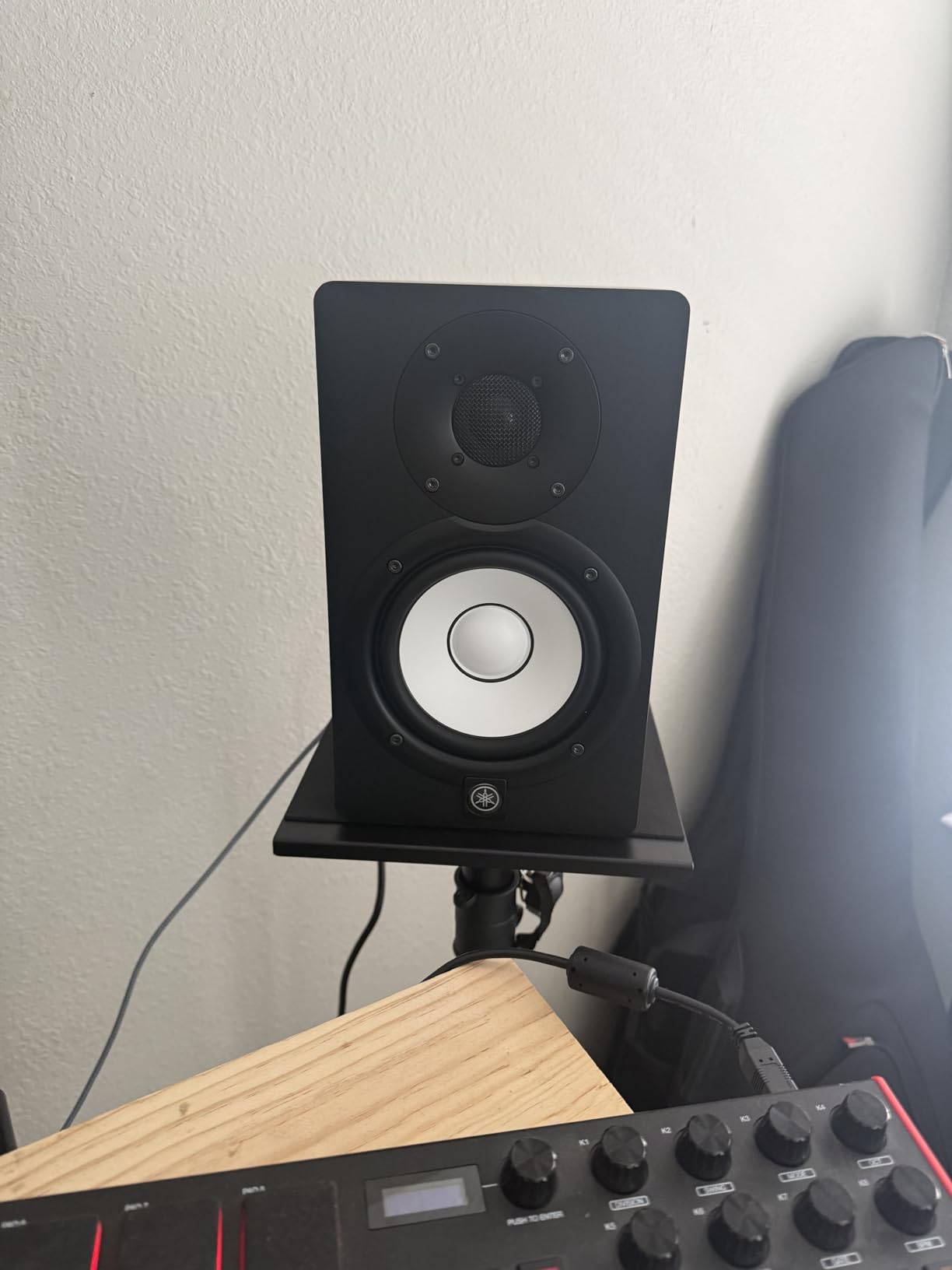
The HS5 is ideal for small to medium rooms, roughly 10 by 12 feet or smaller, where a larger woofer would overload the space. Keep them 6 to 8 inches off the rear wall because of the rear-firing port, and angle them toward your listening position.
If your desk sits flush against a wall and you cannot pull the monitors forward, consider the front-ported PreSonus Eris E5 below instead.
Who Gets the Most Out of the HS5
Mixing and mastering engineers who need honest mids and reliable translation will love these. They are also a smart long-term buy, since the HS series is an industry standard you will find in commercial studios worldwide.
They are the wrong pick if deep bass reproduction is your priority at this price without adding a sub.
2. JBL 305P MkII — Best Sweet Spot and Imaging for the Money
(2) JBL 305P MkII 5″ 2-Way Active Powered Studio Reference Monitors Speakers
- Crystal clear imaging with wide sweet spot
- Powerful refined audio with dynamic range
- Excellent bass response and tight low-end
- Room adaptation with Boundary EQ and HF Trim
- Quiet operation with no hissing at normal volumes
- Some users report slight white noise at certain volume levels
- Bass may be slightly boosted for some rooms
- Both speakers require separate power connections
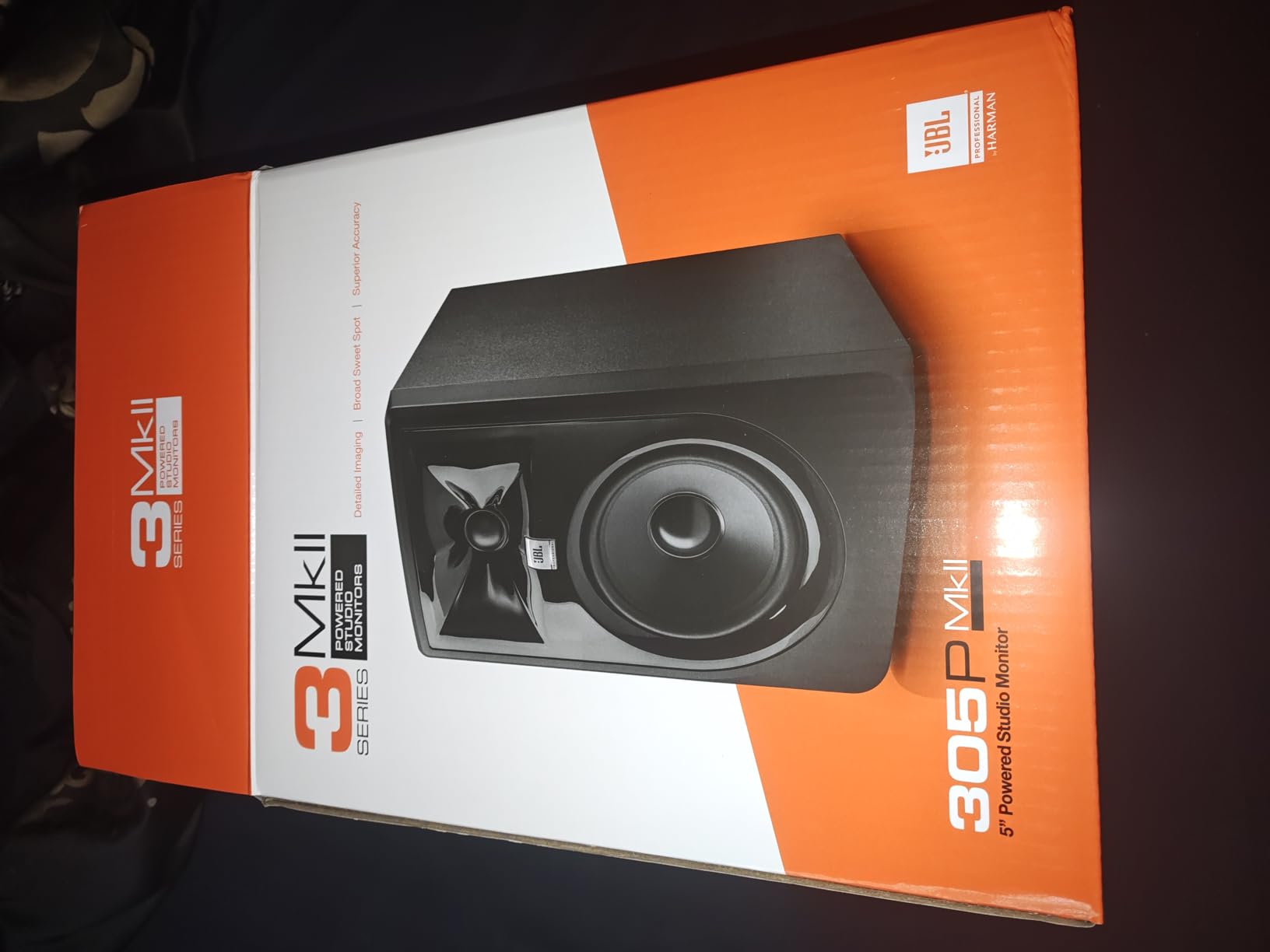
The first time I set up the JBL 305P MkII pair, I understood the hype within about ten seconds. The patented Image Control Waveguide creates a sweet spot so wide that I could lean halfway across my desk and still hear a centered phantom image. For a pair at this price, that is remarkable, and it is why they carry a 4.7 rating across 972 reviews.
Dual 41W Class-D amplifiers give these monitors real dynamic punch. The 5 inch woofer paired with the Slip Stream port produces tighter, deeper bass than the Yamaha HS5 in my side-by-side testing. If you work on productions with meaningful low-end content but still want accuracy, these strike a great balance.
The room adaptation controls are the hidden value here. Boundary EQ tames bass buildup when the monitors sit close to a wall, and HF Trim balances an overly bright room. In my untreated bedroom, dialing in the Boundary EQ made an audible improvement in the 150 to 250 Hz range where budget monitors usually turn muddy.
Now the honest part. A small number of users report a faint white noise floor at certain volume positions, and I did notice a very slight hiss with my ear next to the tweeter at idle. At normal listening distance it disappeared. The bass is also slightly lifted compared to a strictly flat monitor, so reference your mixes against tracks you know.
Each monitor has its own power connection, so plan for two outlets and keep the included volume controls matched between speakers.
Tuning Them for an Untreated Room
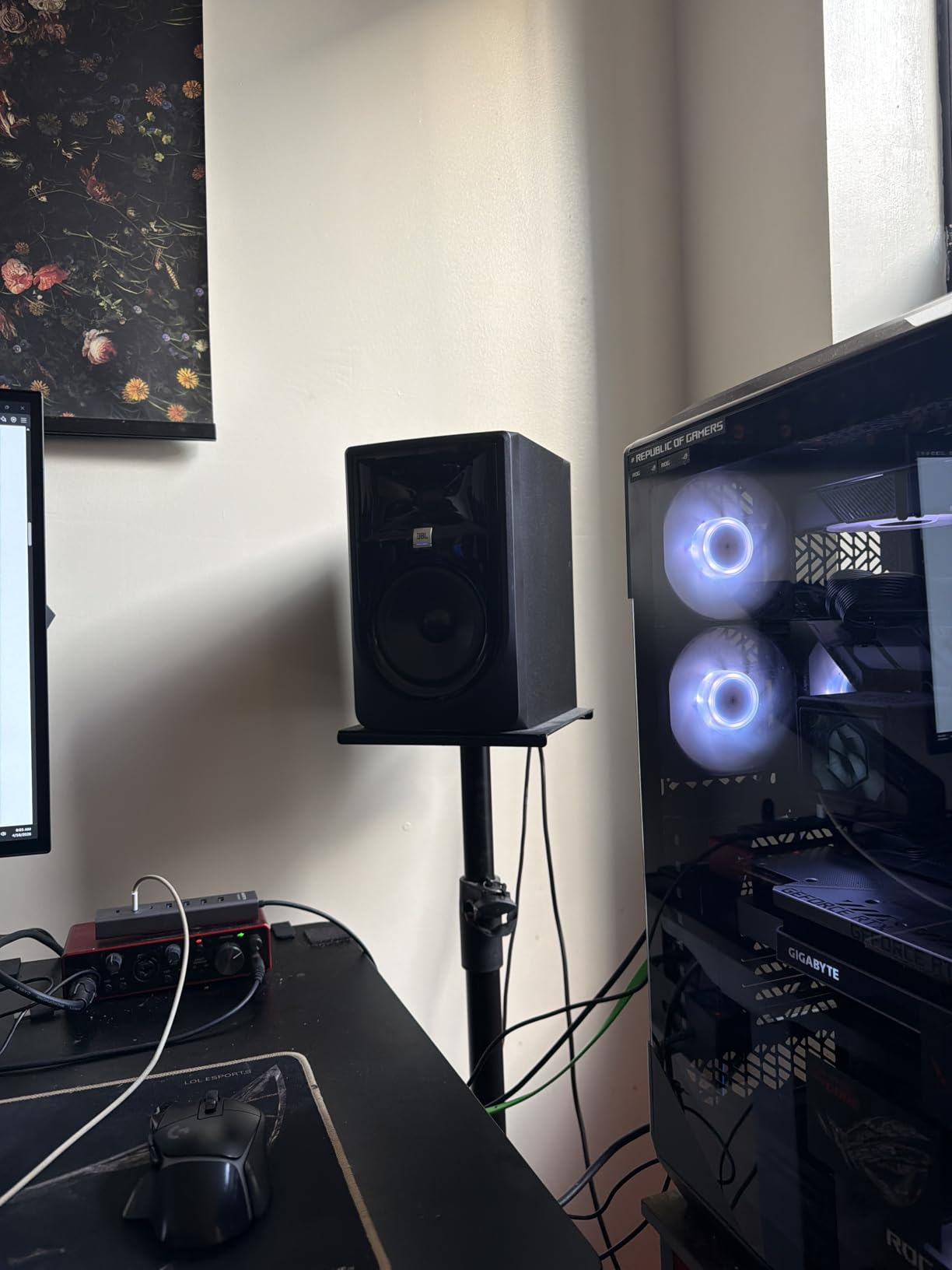
Start with both Boundary EQ and HF Trim at their neutral positions, then engage Boundary EQ if the monitors are within about 8 inches of the wall. Spend an evening A/Bing your reference tracks before you touch anything else.
This tuning flexibility is the main reason I recommend the 305P MkII over most rivals for bedroom studios with no acoustic treatment.
Connections You Will Need
Inputs are XLR and 1/4 inch TRS only, with no RCA option, so a small audio interface is effectively required. Balanced TRS or XLR cables will give you the quietest signal.
If you need RCA or aux inputs for casual desktop use, the Yamaha HS4 or M-Audio BX4 below are easier fits.
3. Yamaha HS4 — Best Compact Pair for Small Studios and Desks
- Excellent clarity and stereo width
- No hissing noise in standby mode
- Industry-standard sound quality at budget price
- Multiple input options including RCA
- Room control and high trim response controls
- Great value for home studios
- Smaller woofer size limits low-end frequency
- No XLR cables included
- May require stands for optimal positioning
The Yamaha HS4 is the younger sibling of the HS5, and it inherits the family honesty in a smaller, cheaper package. With 2,336 reviews and a 4.7 rating, it has become one of the most trusted entry points into real studio monitoring. The 4.5 inch woofer and 1 inch dome tweeter cover 60 Hz to 22 kHz, which is plenty for nearfield work at a desk.
What impressed me most is the standby behavior. Many budget monitors hiss when idle, and the HS4 is completely silent. That matters more than you think during late-night sessions when the room is quiet and every flaw shows up.
Yamaha also fixed the connectivity complaint that plagues the HS5. You get XLR/TRS combo, RCA, and stereo mini inputs, so you can plug in an interface, a laptop, or a phone without adapters. The package even includes a stereo mini to RCA cable, a speaker cable, and an anti-slip pad.
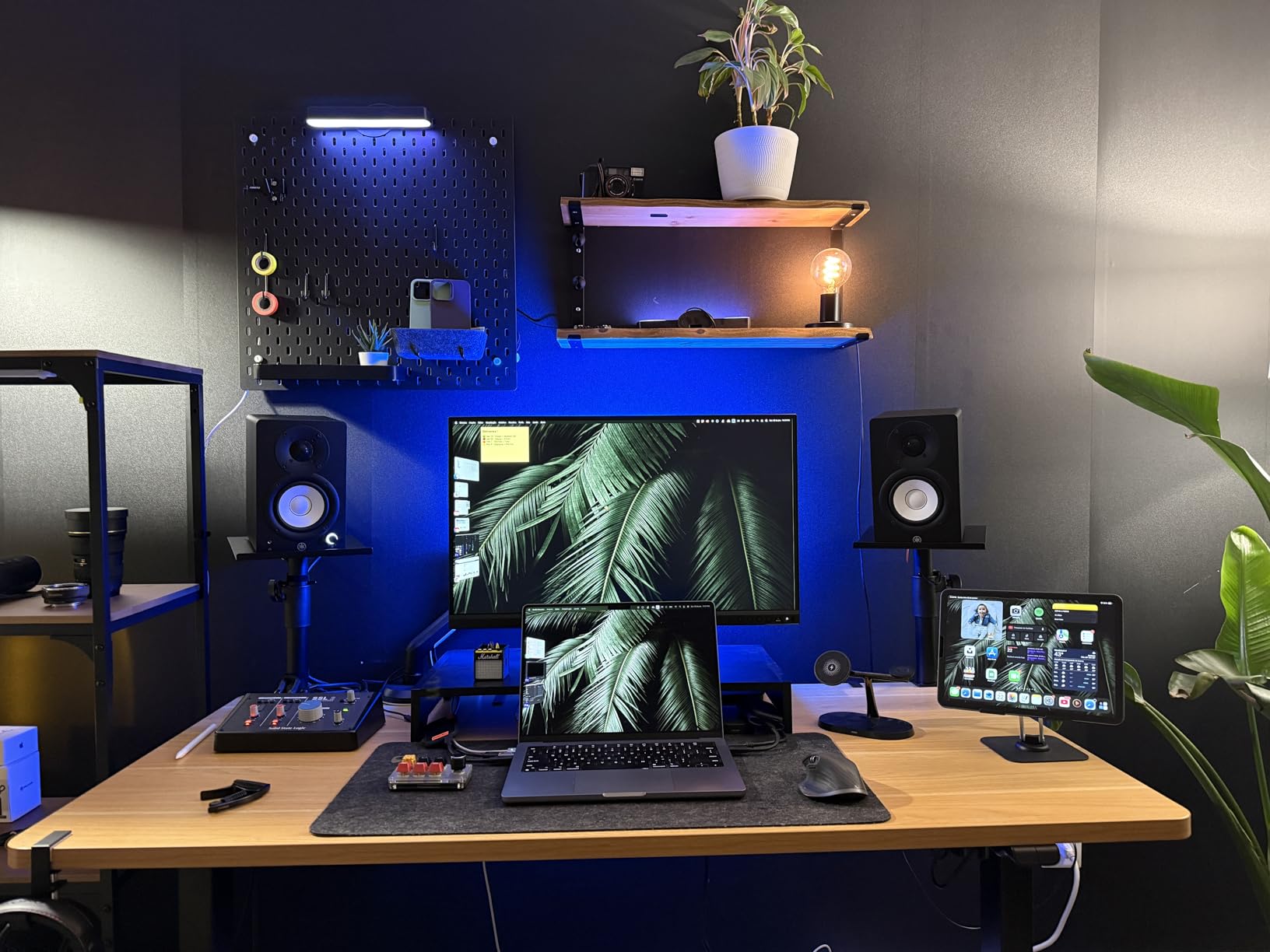
The tradeoff is straightforward physics: a 4.5 inch woofer will not reproduce deep bass. The 60 Hz low limit means kick drum fundamentals are there, but sub-bass content below that simply is not. Pair them with headphones for low-end checks on bass-heavy material.
Room control and high trim switches let you adjust for wall proximity and bright rooms, borrowed from the bigger HS models. They are switches rather than continuous dials, but they work.
Desk Setup and Stands
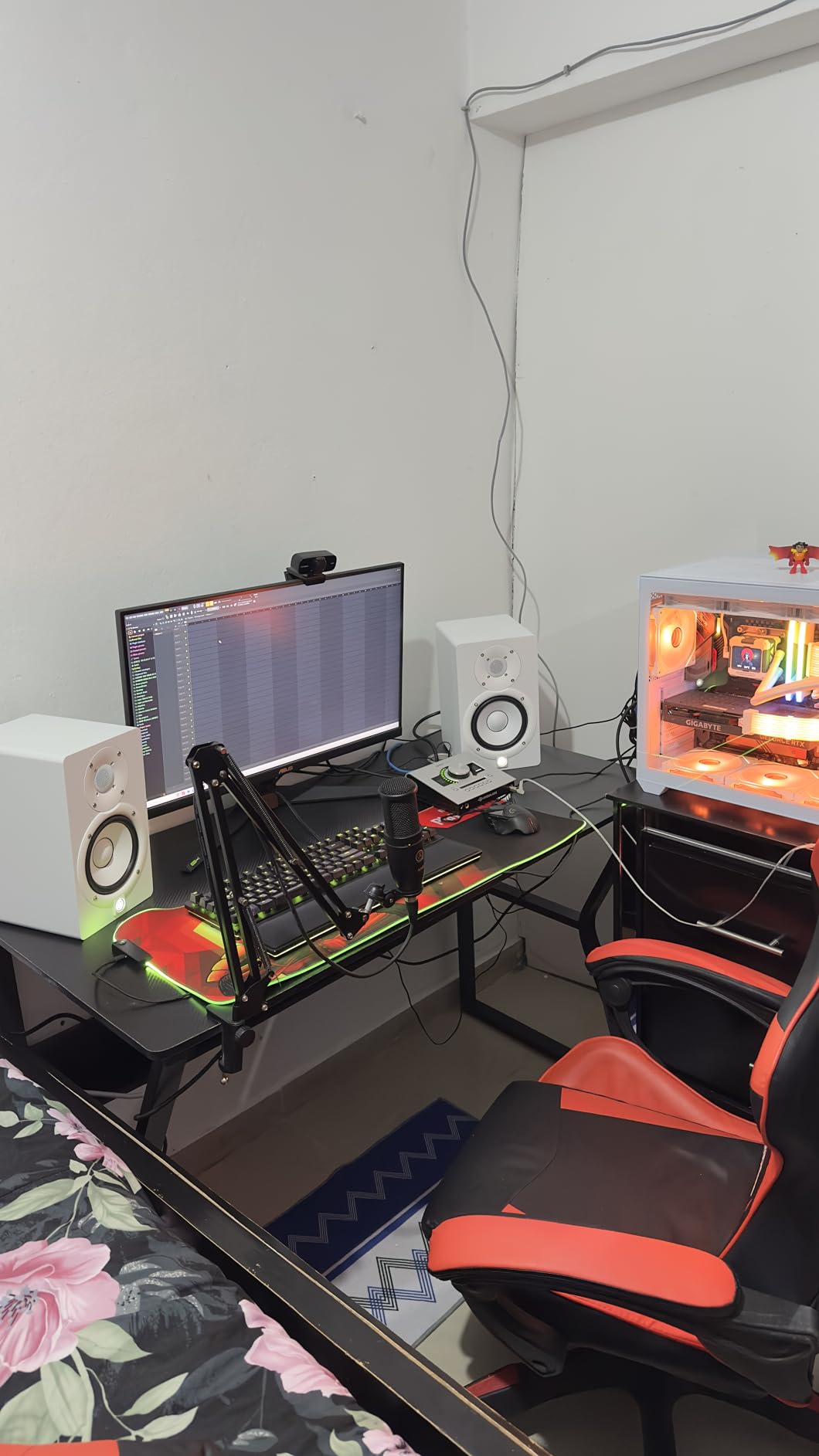
At about 9.4 inches tall, the HS4 sits comfortably beside a monitor on a desk, but tweeters should reach ear level. A cheap pair of foam pads or desktop stands tilts them up to the right angle and tightens up the imaging immediately.
Because the port fires from the rear, leave a few inches of wall clearance to keep the low end clean.
Who Should Choose the HS4 Over the HS5
If your room is small, your desk is crowded, or your budget sits closer to $200 for the pair, the HS4 is the smarter buy. You keep the Yamaha sound and add inputs the HS5 lacks.
Move up to the HS5 only if your room can handle the larger woofer and you mix genres with substantial low-end content.
4. PreSonus Eris E5 — Best Budget Pick for Near-Wall Placement
- Excellent value for the price
- Front-firing port allows near-wall placement
- Multiple input options including RCA
- Acoustic tuning controls for room adaptation
- Clean crisp sound without harshness
- Woven composite woofer provides solid bass
- Some users report slight white noise at idle
- May distort at very high volumes
- Narrower sweet spot than some competitors
The PreSonus Eris E5 solves the single most common bedroom studio problem: the desk is against the wall and there is no way around it. The front-firing acoustic port means you can push these monitors close to the wall without the bass turning into a muddy mess. Forum users consistently mention the Eris line as a solid budget option, and after weeks on my desk, I agree.
The 5.25 inch woven composite woofer is actually larger than what Yamaha and JBL offer at this size, and it delivers solid low-end with minimal bass distortion. The 1 inch ultra-low-mass silk dome tweeter keeps the highs smooth rather than harsh, which made long mixing sessions comfortable with no ear fatigue.
Power comes from an 80W Class AB bi-amp, and these get loud enough to fill a medium room at 102 dB max continuous SPL. Acoustic tuning controls let you contour the response to your space, and you get balanced XLR and TRS inputs plus unbalanced RCA for older gear.
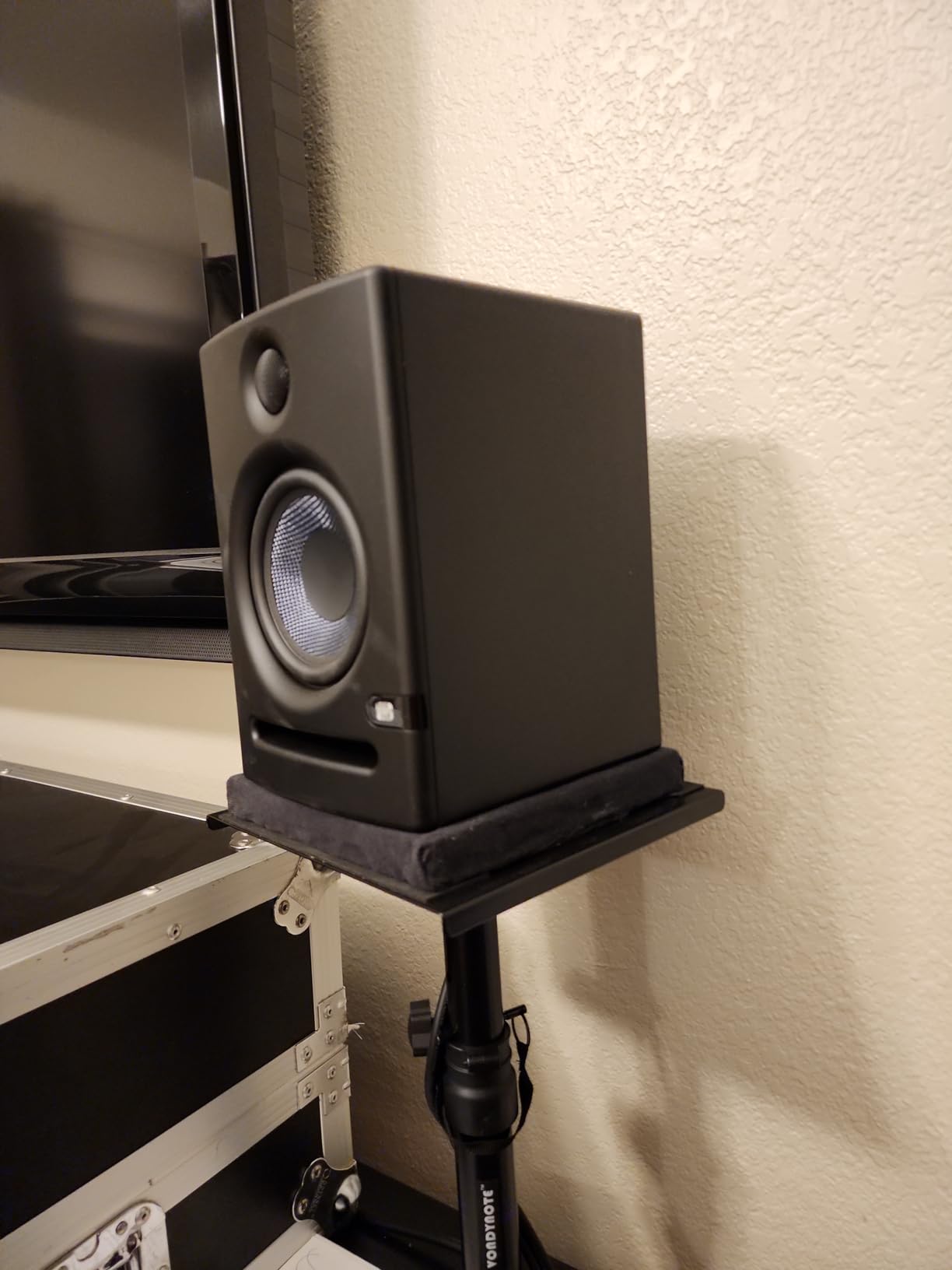
On the critical side, the sweet spot is narrower than the JBL 305P MkII. Move your head too far off axis and the tonal balance shifts noticeably. A few users also report slight white noise at idle, though my pair was quiet at normal listening distance.
Pushed to very high volumes, they can distort, so keep sensible levels. For nearfield mixing at proper levels, this never became an issue for me.
Placement Flexibility in Tight Rooms
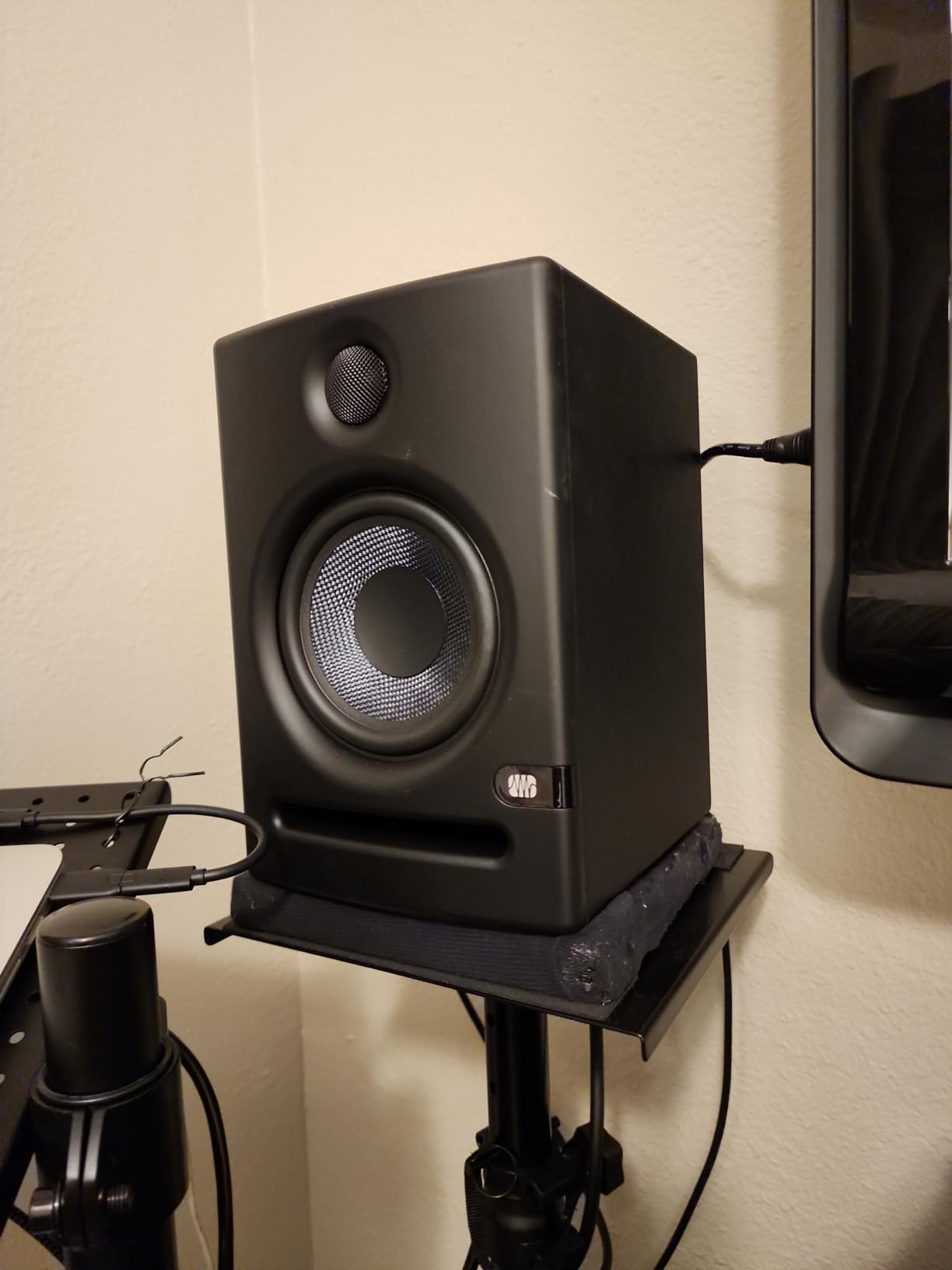
Because the port fires forward, you can place the E5 within a couple of inches of the wall. Use the acoustic tuning controls to trim the low end if you hear buildup, which is common in untreated rooms.
This makes the E5 my top recommendation for apartments and dorm setups where the desk placement is fixed.
Woofer Size and Low-End Expectations
The 5.25 inch driver reaches lower than the 4 to 4.5 inch models here, but it still will not recreate sub-bass you can feel. For hip-hop and EDM production, plan to check anything below about 55 Hz on headphones.
For mixing anything else, from rock to podcasts, the low end is more than adequate.
5. Pioneer DJ DM-40D — Best for DJs and Bass-Heavy Genres
- Punchy defined bass even at desktop size
- Clear balanced sound for mixing and producing
- Compact active monitors fit a home desk
- Built-in amplification with no separate amp needed
- Can play very loud and stay clear
- Upper mid frequencies have strong dip
- Sound is tiring for longer listening sessions
- No Bluetooth on non-BT edition
- Included wire is only 6 feet
The Pioneer DJ DM-40D is the most fun pair in this lineup, and I do not mean that as a backhanded compliment. These are voiced by Pioneer’s DJ audio team for punchy, defined low end, and they absolutely deliver it from a compact 4 inch desktop cabinet. If you are a DJ practicing sets at home, this is your pair.
The 2-way sound mode switches between voicings optimized for DJing and music production, and DSP tuning keeps the output clear and balanced at high volume. I ran these loud for a house practice session and they stayed composed well past comfortable listening levels.
Connection is simple: RCA inputs on the back, plus Bluetooth if you buy the BT edition. That makes them a natural companion for a DDJ controller, a mixer, or just streaming from a phone between sessions.
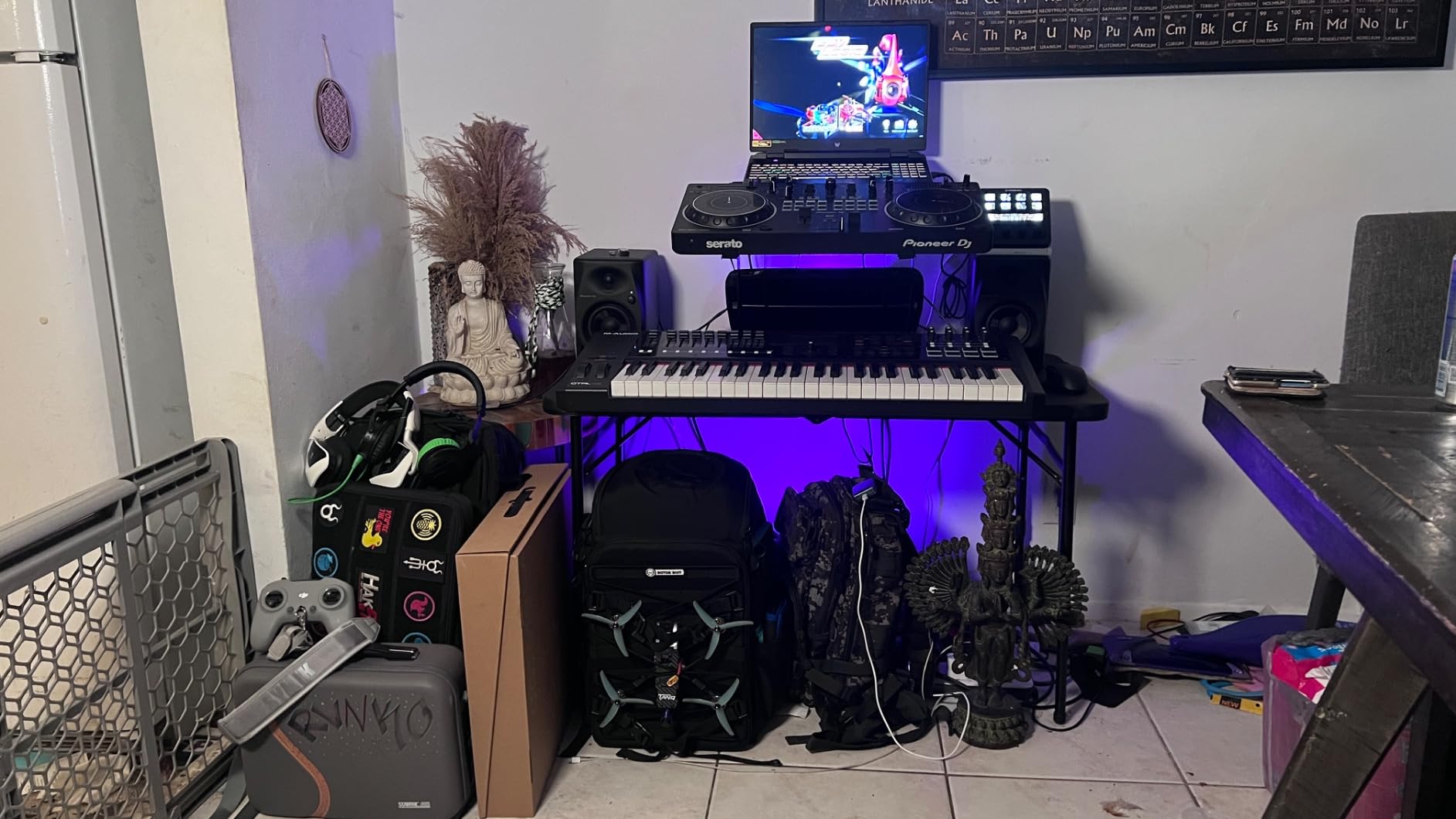
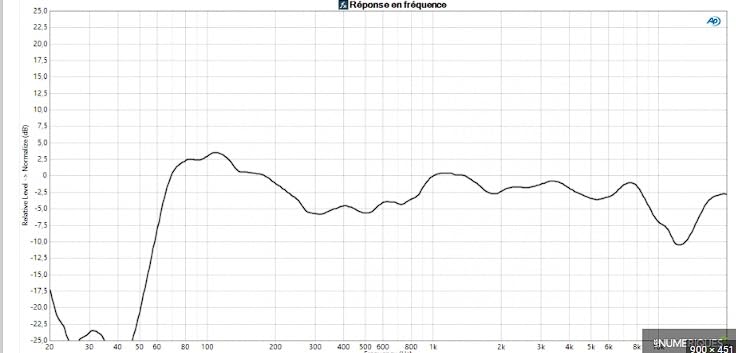
Now the honest caveat, because it matters if you mix for a living. The upper mids have a noticeable dip, so vocals and instruments in that range lose detail compared to the Yamahas or JBLs. Long sessions can also get fatiguing. This is not the neutral choice for critical mixing work.
The included speaker wire is only 6 feet, which limits placement options, and the standard edition skips Bluetooth entirely, so double-check which version you are ordering.
DJ Practice Versus Production Monitoring
For cueing tracks, learning to hear song structure, and enjoying bass-heavy music, the DM-40D is excellent and honestly more engaging than flatter rivals. Use the production voicing mode when you want a slightly more honest picture.
If your main goal is release-ready mixes rather than DJ work, the HS5 or 305P MkII will serve you better.
Desk Space and Setup
The compact cabinets fit almost any desk with room left for a controller. Position them at ear level and a couple of feet apart, and the DSP tuning handles the rest reasonably well.
Budget for a longer speaker wire if your desk is wide, since the included 6 foot cable is tight.
6. M-Audio BX4 — Best Budget All-Rounder for Multimedia
- Excellent sound quality for the price
- Crystal clear audio with good bass response
- Easy setup with multiple input options
- Good for production gaming podcasting and streaming
- Impressive volume for their size
- Natural silk dome tweeters provide precise stereo imaging
- No off switch so volume must click down
- Cheap included cables can cause ground buzz
- Some users report random cutouts after months
- Included cables are not studio quality
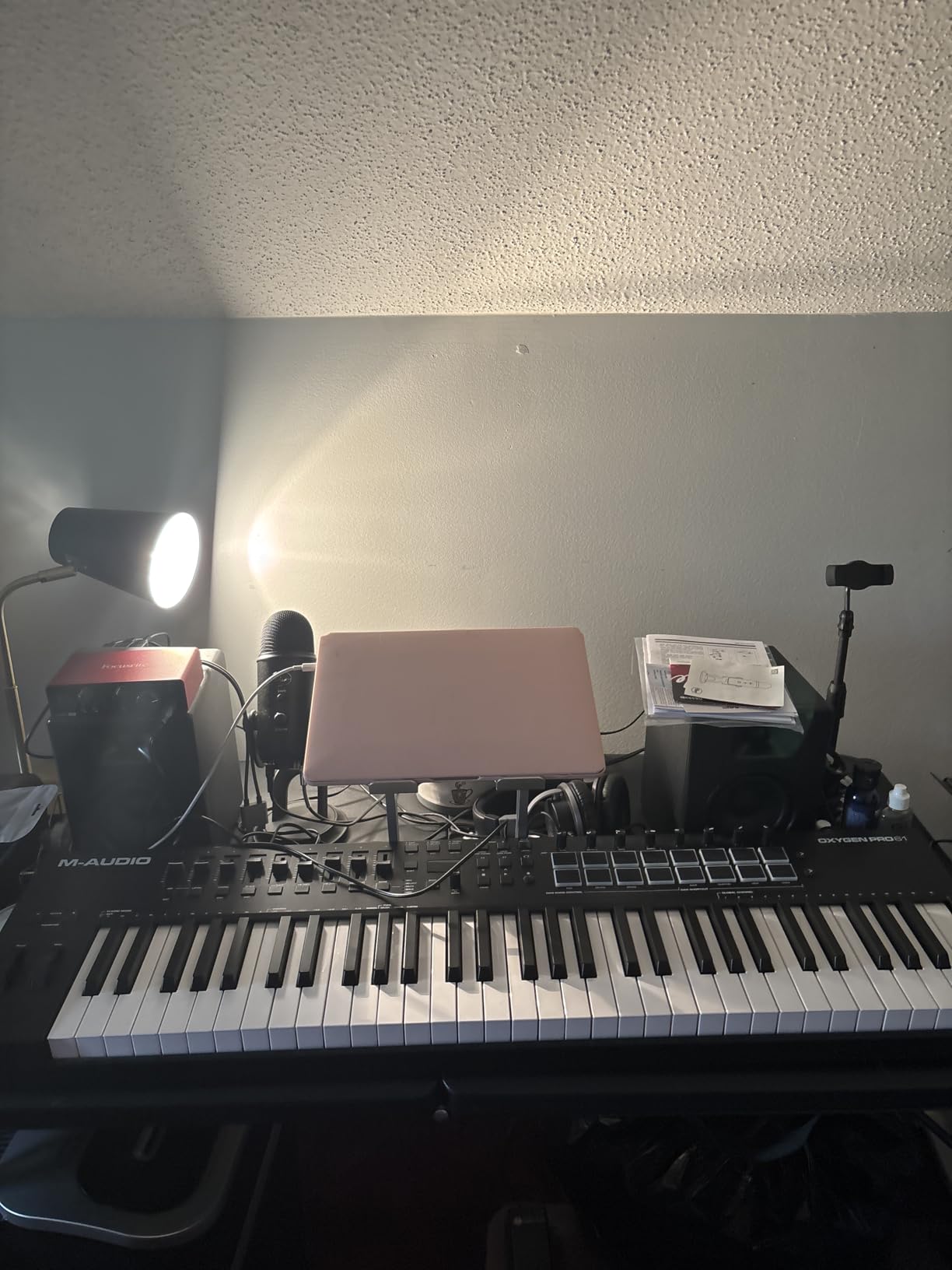
The M-Audio BX4 is the pair I recommend when someone asks for one set of speakers that can handle music production, gaming, video editing, and podcasting without switching anything. With 3,929 reviews at 4.5 stars, it is one of the most popular budget monitors on Amazon, and the reason is versatility.
The 4.5 inch Kevlar woofers produce smooth, punchy bass for the size, and the silk dome tweeters image precisely. Rear panel High and Low EQ dials let you shape the tone for music, dialogue, or gaming. There is even a left/right position switch so you can put the volume knob on whichever side suits your desk.
Inputs cover everything: 1/4 inch, 1/8 inch, and RCA on the rear, plus a front panel 1/8 inch AUX jack for headphones. The bundle includes cables and MPC Beats software, which is a nice starter for new producers.
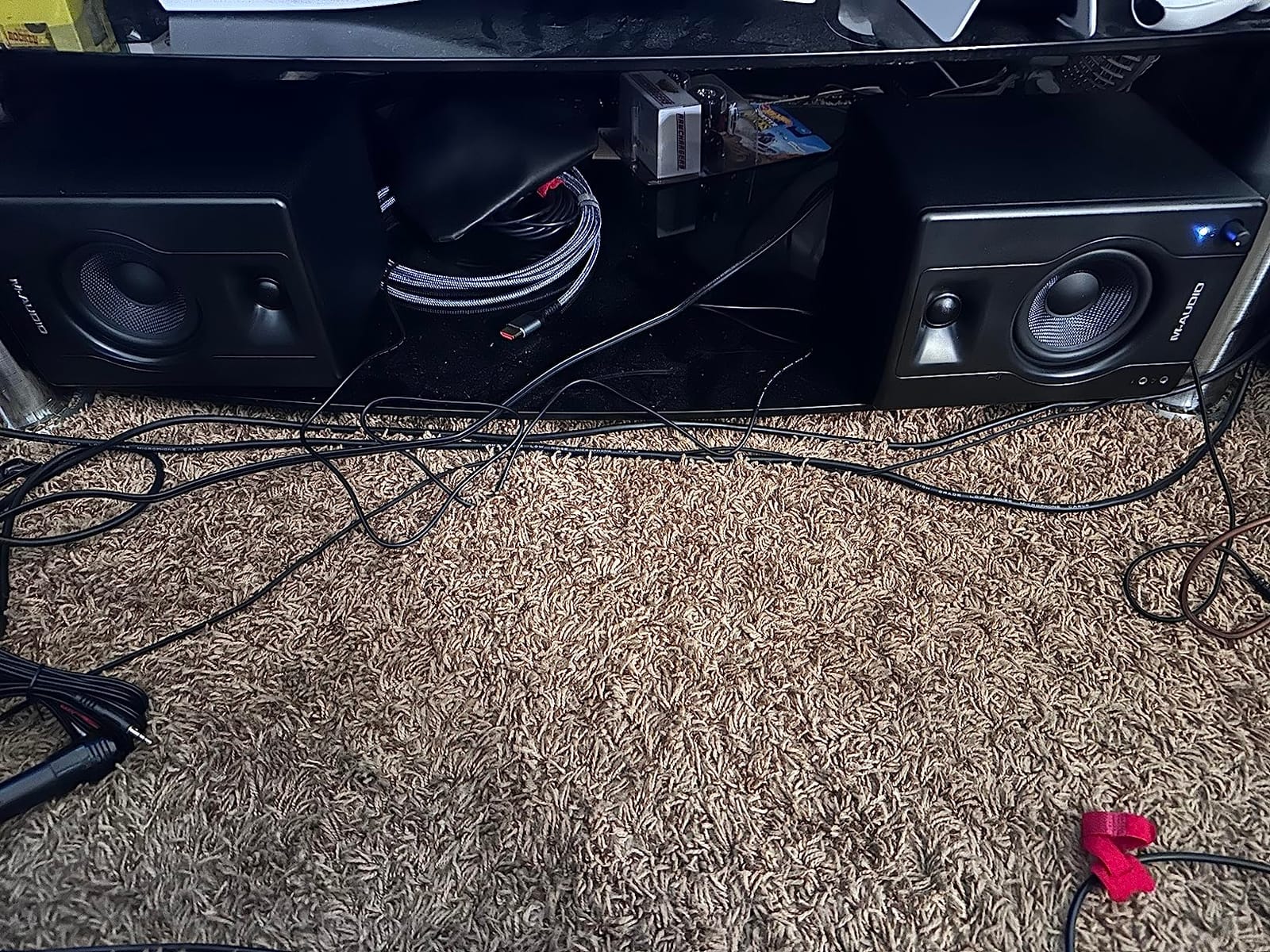
The compromises are real but livable if you know about them. There is no off switch; you rotate the volume knob fully counterclockwise until it clicks. The included cables are cheap and can pick up ground buzz with metal-chassis computers, so a set of balanced cables is a worthwhile upgrade.
A small number of users report random audio cutouts after several months. Mine have behaved, but it is worth noting before you buy.
Streaming, Gaming, and Podcast Use
The zero-latency wired connection matters if you stream or game, since Bluetooth monitors introduce delay that ruins sync. The BX4 keeps everything wired and immediate.
The front headphone jack makes it easy to switch to private monitoring mid-session without reaching behind the desk.
Cable Upgrades Worth Making
Swap the bundled RCA cable for a balanced TRS or a better-shielded RCA cable if you hear buzz, especially with a desktop PC. This single change fixes the most common complaint about these monitors.
Powered speakers pick up ground loops easily, so route audio cables away from power strips where you can.
7. PreSonus Eris 3.5 — Best Ultra-Budget Studio Monitors
- Great sound quality for the price
- Perfect for computer or amateur production
- Good connectivity options including TRS and RCA
- Adjustable high and low tuning controls
- Loud enough for bedroom or small office use
- Compact size ideal for desktop
- Bass and mid-bass can be heavy
- Not true active monitors since right speaker is passive
- Some users note difference versus headphones
- Small woofers benefit from a subwoofer
At around a hundred dollars for the pair, the PreSonus Eris 3.5 is the least expensive true studio-quality option in this guide, and it embarrasses typical plastic computer speakers. The woven-composite 3.5 inch woofers and silk dome tweeters produce a genuinely balanced sound that works for amateur production, gaming, and casual listening.
Connectivity is a strong point at any price: balanced TRS, RCA, a front-panel aux input, a front headphone jack, and Bluetooth. You can move from interface monitoring to phone streaming without touching a cable.
Built-in high- and low-frequency tuning controls let you dial back the bass if your desk corners load it up. I needed to trim the low knob slightly on my desk, which is exactly what those controls are for.
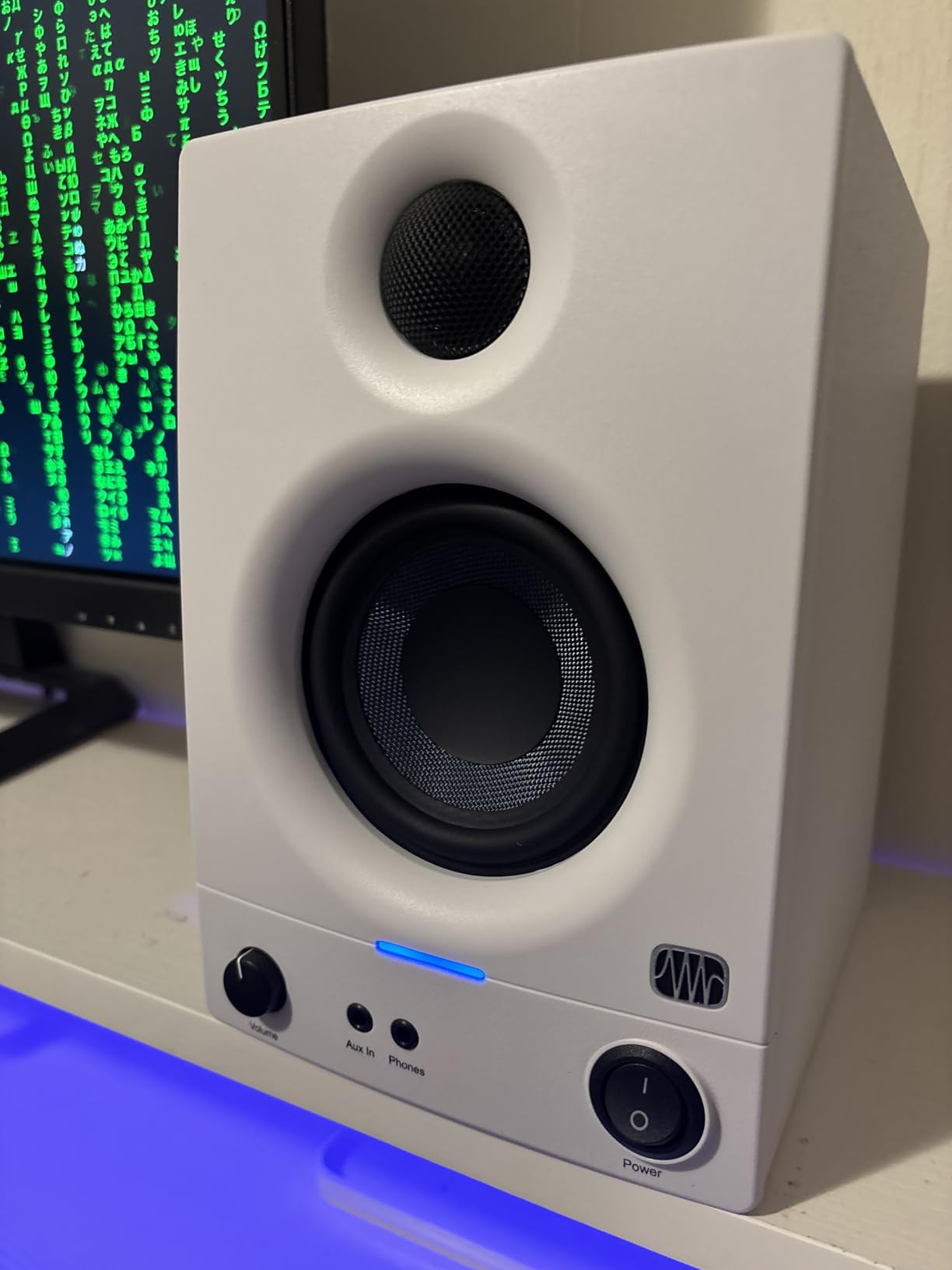
The technical honesty: these are not fully active monitors. The right speaker is a passive satellite powered from the left, which is standard at this price but worth knowing. The bass and mid-bass run slightly heavy, so check your low-end decisions on headphones before committing.
Below about 80 Hz, physics wins and the little woofers run out of range. A subwoofer later is a natural upgrade path if you start producing bass-heavy genres.
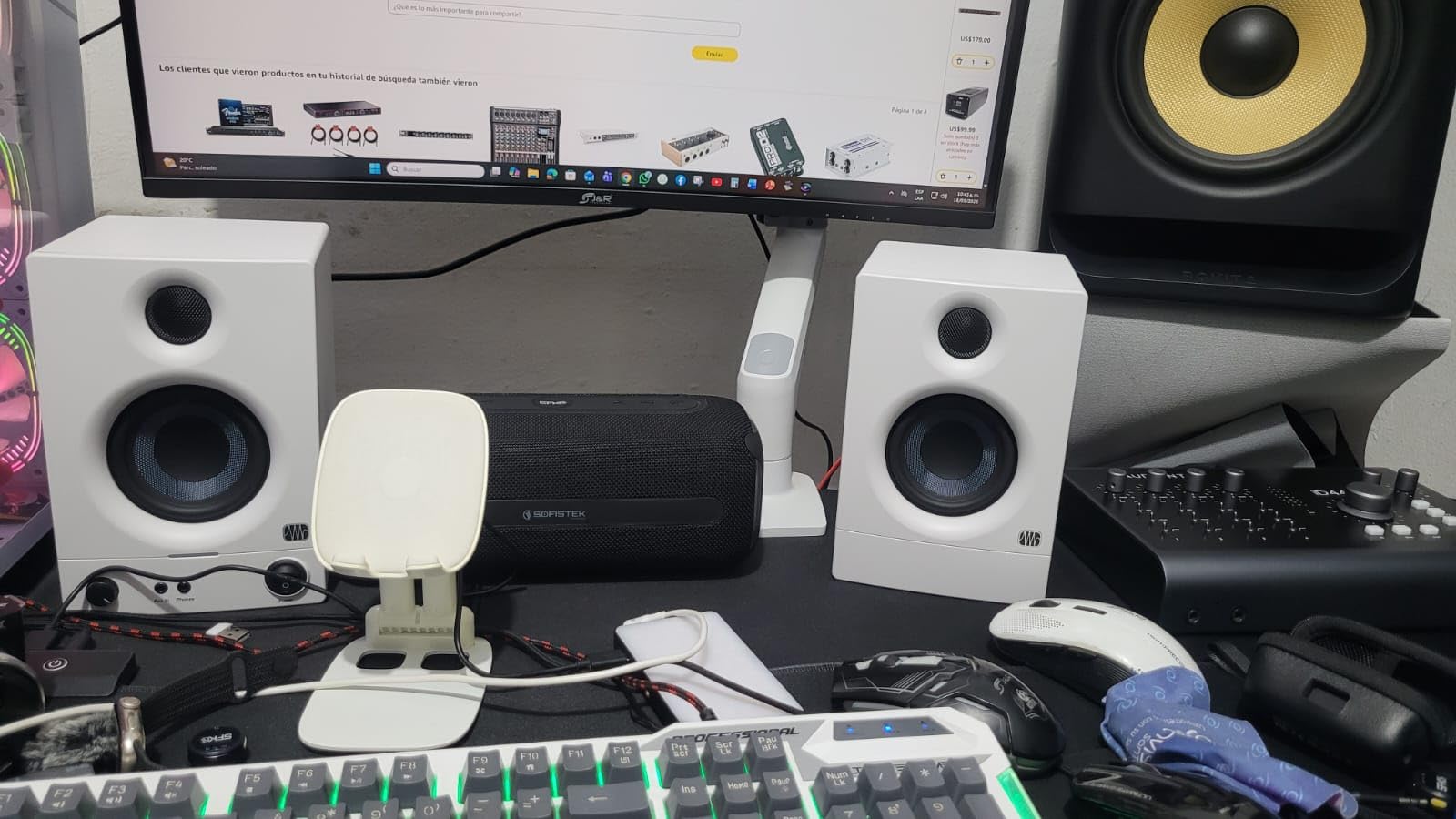
First Monitor Pair for a New Producer
If you are starting out and not sure how serious you will get, the Eris 3.5 is the lowest-risk entry point I can recommend. You get honest-enough sound and every input you might need while you learn.
Upgrade later to a 5 inch pair once you know your room and your genre demands.
Casual Listening Versus Critical Work
For gaming, movies, and streaming, these are fantastic and far better than dedicated multimedia speakers at the same price. For release-ready mixing, treat them as a first step rather than a destination.
Reference your mixes on headphones and other systems until you learn their quirks.
8. Mackie CR3-X — Best Compact Desktop Pair Under $100
Mackie CR-X Series, 3.5-Inch Multimedia Monitors with Professional Studio-Quality Sound – Pair (CR3-X)
- Excellent sound quality for the price
- Surprisingly deep bass for 3 inch woofers
- Great for small spaces and desktop use
- Easy setup with included cables
- Compact size fits desks and bookshelves
- Can get very loud without distortion
- Very slight hiss audible at close range when idle
- No high and low EQ controls for tuning
- Not Prime eligible
- Passive speaker connecting wire could be longer
The Mackie CR3-X rounds out the list as the other standout under $100, with 2,702 reviews and a 4.6 rating. Mackie built its name on studio mixers, and that studio DNA shows in speakers small enough to hide behind a monitor. The wood cabinets, not plastic, help the sound stay warm and solid.
What surprised me most was the bass. The 3.5 inch woofers reach deeper than their size suggests, and 50 watts of clean power lets them get genuinely loud without distortion. For a small bedroom or office desk, they are more than enough.
The front-facing headphone jack auto-defeats the speaker output the moment you plug in, which is a small convenience that you come to appreciate daily. All the hookup cables you need ship in the box, so setup takes about five minutes.
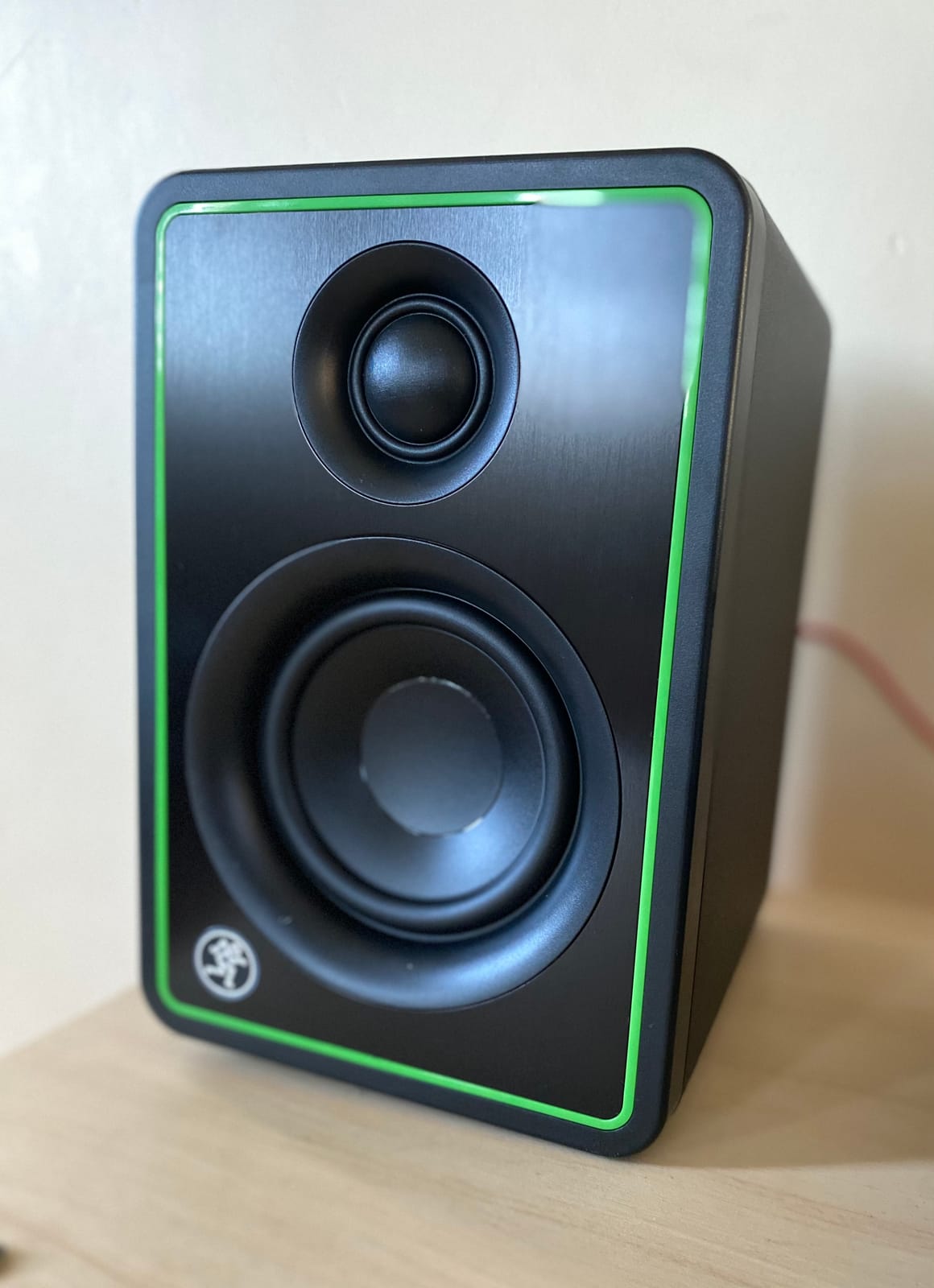
The limitations are the ones you would expect at this price. There is a very slight idle hiss audible only at close range with no music playing, and there are no EQ controls to tune the sound to your room, unlike the Eris 3.5. The wire connecting the passive right speaker could stand to be longer for wider desks.
Inputs are 1/4 inch, 1/8 inch, and RCA, which covers mixers, interfaces, and computers without any balanced XLR option.
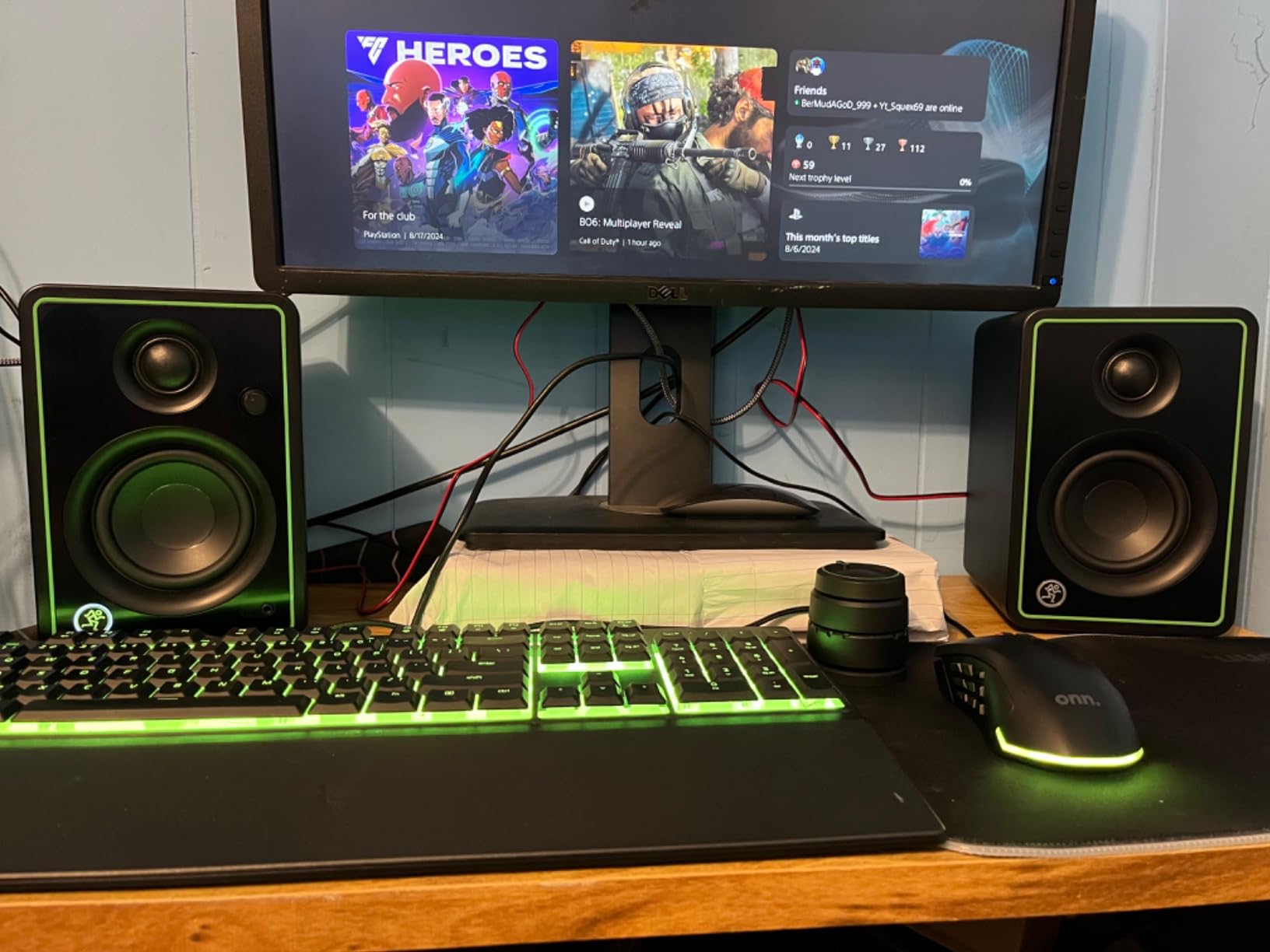
Small Room and Desktop Fit
These are at their best within about three to four feet of your ears, which is exactly the nearfield zone of a typical desk. In a larger room they will strain, so keep them close.
The green stripe design is a distinctive touch that looks good on camera if you stream or record video content.
Eris 3.5 or CR3-X
Both cost about the same and both are good. Choose the Eris 3.5 if you want tuning controls and Bluetooth, since the CR3-X offers neither. Choose the CR3-X if you value the deeper bass reach and the instant headphone defeat.
You cannot really go wrong with either as a first desktop pair.
How to Choose the Best Budget Studio Monitors Under $500
Choosing the right budget studio monitors comes down to four things: your room, your genre, your connections, and how much low end you genuinely need. Here is how our team works through the decision.
Driver Size: 3.5, 5, or 8 Inches
The woofer size determines how low the monitor plays and how loud it stays clean. A 3.5 inch pair like the Eris 3.5 or CR3-X reaches roughly 80 Hz and suits desktop listening and small rooms. A 5 inch pair like the HS5 or 305P MkII reaches into the mid-50s and is the sweet spot for most home studios.
Eight inch monitors dig into the 40 Hz range, but in a small untreated bedroom they will overload the room with bass energy and make mixing harder, not easier. Unless your room is at least medium-sized with some treatment, stay at 5 inches or below. This matches the advice that comes up again and again in r/homestudios threads.
The 3:8 Rule for Monitor Placement
No competitor explains the 3:8 rule, so here it is. Position your two monitors and your head as the three points of an equilateral triangle, then place that triangle so your ears are about 8 feet or less from each monitor, with the monitors roughly 3 to 8 feet apart depending on room size. In practice: form a triangle where the distance between the monitors equals the distance from each monitor to your ears.
Angle both monitors inward toward your head at about 30 degrees, with the tweeters exactly at ear level. This placement puts you in the sweet spot, where the stereo image is accurate and the frequency balance is what the designer intended. Skip it and you will mix against a distorted picture of your own song.
Active Versus Passive Monitors
Active monitors have amplification built into each cabinet, so you connect them straight to your interface and you are done. Every pair in this guide is active or semi-active, which is the right call for home studios since there is no separate amp to buy or match.
Passive monitors need an external amplifier and speaker cable runs, and at this budget there is no cost or quality advantage. Note that a few compact models here, like the Eris 3.5 and CR3-X, use one powered cabinet plus one passive satellite, which is a hybrid that saves money and works fine at desk distances.
Surviving an Untreated Room
Most bedroom studios have zero acoustic treatment, and that is okay. What matters is picking monitors that help you compensate. Look for boundary EQ or acoustic tuning controls, like the Boundary EQ on the JBL 305P MkII or the tuning knobs on the Eris E5, and use them to trim bass buildup near walls.
Port placement matters too. Rear-ported monitors like the Yamaha HS5 need 6 or more inches of wall clearance, while front-ported designs like the Eris E5 tolerate desks that sit against a wall. Add a rug and some soft furnishings and you will tame the worst reflections for very little money.
Connectivity: Balanced, Unbalanced, USB, and Bluetooth
Balanced XLR and TRS connections reject noise over longer cable runs, which is why every serious pair here includes them. Unbalanced RCA and 1/8 inch connections are fine for short desktop runs but can pick up hum near computers.
Bluetooth is convenient for casual listening but adds latency and compression, so treat it as a bonus for checking rough phone playback rather than a monitoring path. The forum complaints about balanced versus unbalanced confusion almost always trace back to cheap unbalanced cables run past power supplies, so spend a few dollars on decent balanced cables.
Matching the Monitor to Your Use Case
Mixing and mastering: prioritize neutrality and translation, which points to the Yamaha HS5 or JBL 305P MkII. Bass-heavy genres and DJ practice: the punchy DM-40D or the deeper-reaching 305P MkII. Podcasting and streaming: the front-panel headphone jacks and flexible inputs of the BX4 or Eris 3.5 make daily work easier.
Small rooms and desks: compact pairs like the HS4, Eris 3.5, and CR3-X fit without compromise. Whatever you pick, learn your monitors by playing reference tracks you know intimately before you trust them with your own mixes.
Frequently Asked Questions
What is the best home studio monitor under $500?
The Yamaha HS5 pair is the best home studio monitor under $500, with a 4.8 rating and a neutral, honest sound that translates well to other playback systems. The JBL 305P MkII is a close second if you want a wider sweet spot and deeper bass for the money.
What is the 3:8 rule for studio monitors?
The 3:8 rule means setting your monitors and listening position as three points of an equilateral triangle, with your ears no more than about 8 feet from each monitor and the monitors angled inward about 30 degrees toward your head. Keep the tweeters at ear level. This nearfield placement puts you in the sweet spot for accurate stereo imaging and frequency balance.
What are the best cheap studio monitors?
The best cheap studio monitors are the PreSonus Eris 3.5 and the Mackie CR3-X, both around $100 for the pair. The M-Audio BX4 costs slightly more and adds EQ controls plus more inputs, making it the best value all-rounder for beginners who also game and stream.
What are the best monitors under $500?
The best monitors under $500 for studio work are the Yamaha HS5 for mix translation, the JBL 305P MkII for value and imaging, the Yamaha HS4 for small studios, and the PreSonus Eris E5 for near-wall placement. For desktop and casual use, the Eris 3.5, Mackie CR3-X, M-Audio BX4, and Pioneer DJ DM-40D all deliver strong performance well under budget.
Do I need 5-inch or 8-inch studio monitors?
Most home studios are better served by 5-inch monitors. They reach the mid-50 Hz range cleanly and suit small and medium rooms, while 8-inch monitors produce more low-end energy than an untreated bedroom can handle, causing boomy, unclear mixing conditions. Choose 8-inch only for larger, treated rooms or bass-focused work with a subwoofer plan.
Final Verdict: Which Budget Studio Monitor Should You Buy?
For most home studios, the Yamaha HS5 pair is the best budget studio monitor under $500 because its mixes translate honestly to every other system you will ever play them on. If your desk is against a wall or your budget is tighter, the JBL 305P MkII with its Boundary EQ and the front-ported PreSonus Eris E5 are outstanding alternatives.
New producers and desktop users can start happily with the Eris 3.5, CR3-X, or BX4 and upgrade later. Pick the pair that matches your room and genre, set them up with the 3:8 rule, and start trusting your ears in 2026.