
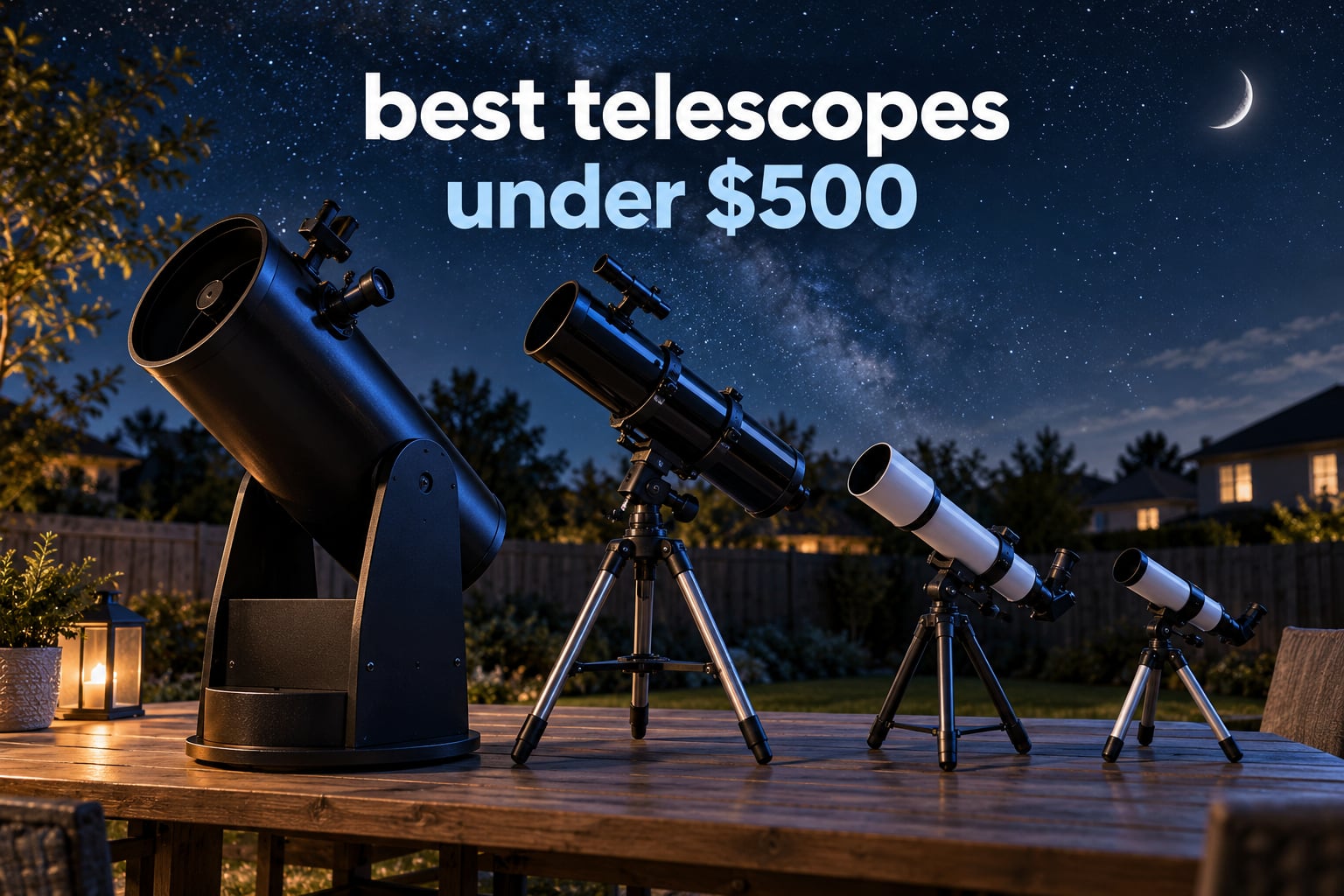
The best telescopes under 500 dollars are not the ones with the biggest number printed on the box. They are the ones that gather the most light and sit the steadiest on a tripod. My pick for 2026 is the Celestron AstroMaster 130EQ, a 130mm Newtonian reflector on a German equatorial mount that gathers more than three times the light of a 70mm starter scope and still sits comfortably inside this budget.
I have been putting budget telescopes through their paces for years, mostly from suburban backyards where the sky glows orange and the neighbour’s shed light bounces off the underside of every cloud. That matters, because it is where most readers actually observe. A scope that looks impressive in a dark-sky park can be a frustrating, blurry disappointment in a city backyard, and the marketing numbers on the side of the box will never tell you that.
Below I break down 12 telescopes that hold up under this budget, ordered from the model I would actually buy down to the ones that make sense as gifts, travel scopes or first-night-only options. Each one covers a different corner of the market: tabletop Dobsonians, manual equatorial reflectors, app-guided refractors and sub-$100 kit-style packages. If you are brand new to the hobby, our beginner telescope guide covers the basics before you pick a model.
Table of Contents
Top 3 Picks for the Best Telescopes Under 500 Dollars
These three cover the most common buying situations: the best overall instrument, the cheapest credible first telescope, and the best all-rounder for people who will use it indoors as well as outside.

Celestron AstroMaster 130EQ
- 130mm Newtonian reflector
- 650mm focal length
- German equatorial mount
- 2-year warranty

Gskyer 70mm Refractor
- 70mm aperture
- 400mm focal length
- Fully coated optics
- Phone adapter and carry bag
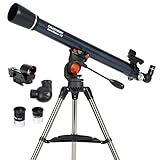
Celestron AstroMaster 70AZ
- 70mm fully coated refractor
- 900mm focal length
- StarPointer red dot finder
- 2-year warranty
All 12 Telescopes Side by Side
Here is every telescope in this guide with the specs that actually matter at purchase. Aperture drives light gathering, focal length drives field of view, and mount type decides whether pointing the tube is simple or fiddly.
| Product | Specifications | Action |
|---|---|---|
| Celestron AstroMaster 130EQ |
|
Check Latest Price |
 Sky-Watcher Heritage 150 Tabletop Dobsonian Sky-Watcher Heritage 150 Tabletop Dobsonian |
|
Check Latest Price |
 Gskyer 130EQ Reflector Gskyer 130EQ Reflector |
|
Check Latest Price |
 Celestron PowerSeeker 127EQ Celestron PowerSeeker 127EQ |
|
Check Latest Price |
 MEEZAA 150EQ Newtonian MEEZAA 150EQ Newtonian |
|
Check Latest Price |
| Celestron AstroMaster 70AZ |
|
Check Latest Price |
 Gskyer 90mm AZ Refractor Gskyer 90mm AZ Refractor |
|
Check Latest Price |
 MEEZAA 90mm 800mm Refractor MEEZAA 90mm 800mm Refractor |
|
Check Latest Price |
| Gskyer 70mm Refractor |
|
Check Latest Price |
 Koolpte 80mm Refractor Koolpte 80mm Refractor |
|
Check Latest Price |
 Celticbird 80mm Refractor Celticbird 80mm Refractor |
|
Check Latest Price |
 EACONN 80mm Travel Refractor EACONN 80mm Travel Refractor |
|
Check Latest Price |
1. Celestron AstroMaster 130EQ: Best Overall Telescope Under 500 Dollars
- 130mm aperture gathers several times more light than a 70mm scope
- Genuine German equatorial mount with slow-motion controls
- Built-on StarPointer finder
- Two-year warranty with US support
- Needs collimation before every session
- 17 lbs is heavy to carry assembled
- EQ mount has a learning curve
This is the telescope I keep coming back to. A 130mm primary mirror pulls in enough light to reach down to faint galaxies and globular clusters that a 70mm refractor simply renders as grey smudges, and the 650mm focal length keeps the image bright and contrasty rather than thin and watery.
The mount is the real headline. A German equatorial mount lets you swing the tube in two axes, so once Saturn is in frame you can nudge it with the slow-motion knobs while it drifts across the field. That is the difference between a scope you use and a scope you abandon after two nights.
Two honest caveats. The supplied 20mm eyepiece has an erect image corrector built into it, which flips the view for terrestrial use but leaves the optics slightly compromised for astronomy. And the tripod wobbles at full extension, so for planetary work I shorten one leg and work at lower power.
The included red dot finder is permanently mounted, which I actually prefer to the flip-down design on cheaper scopes. You line up a star, look through it with your eye, then look through the main eyepiece and repeat until both match. It takes about a minute the first night and ten seconds after that.
What the 130mm aperture actually shows you
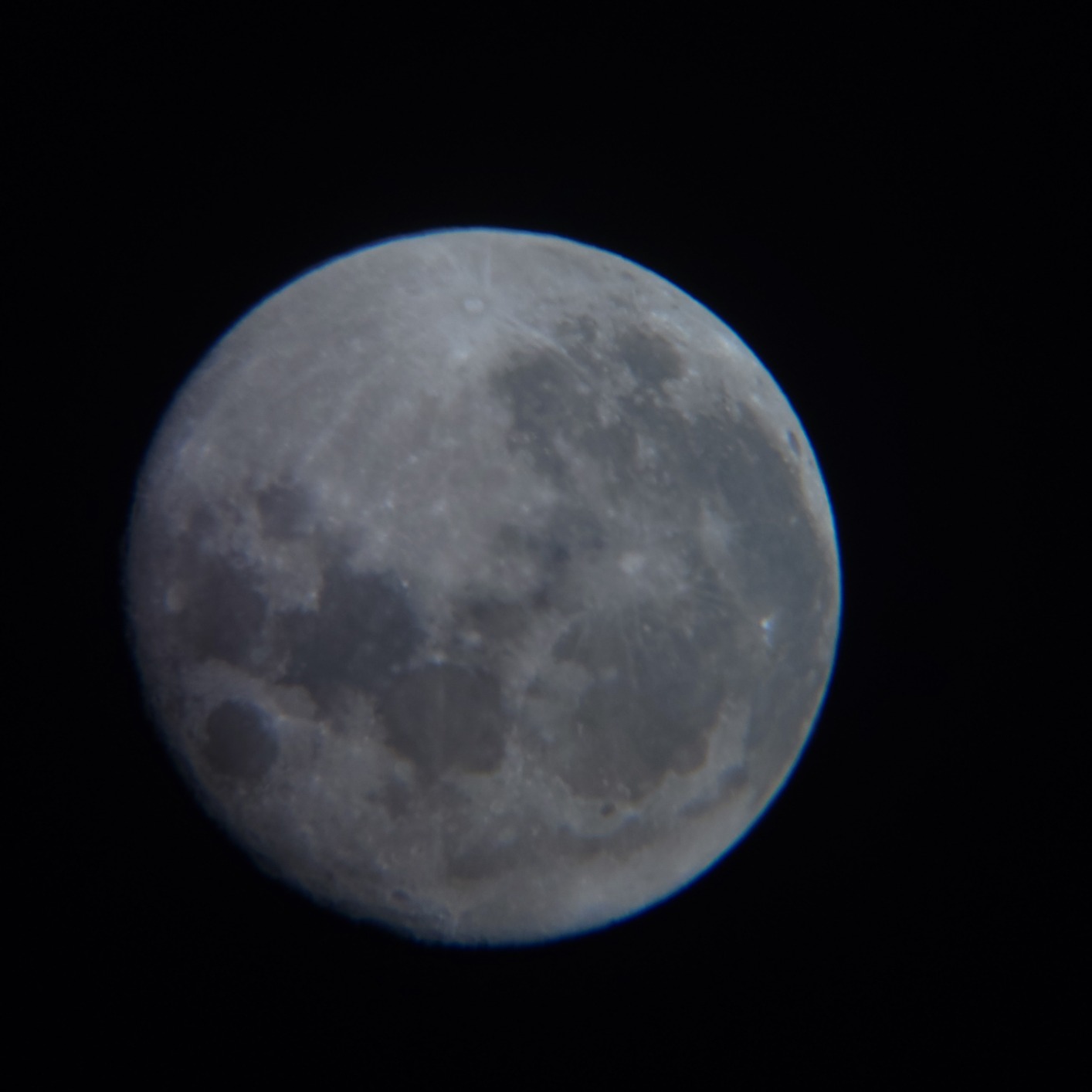
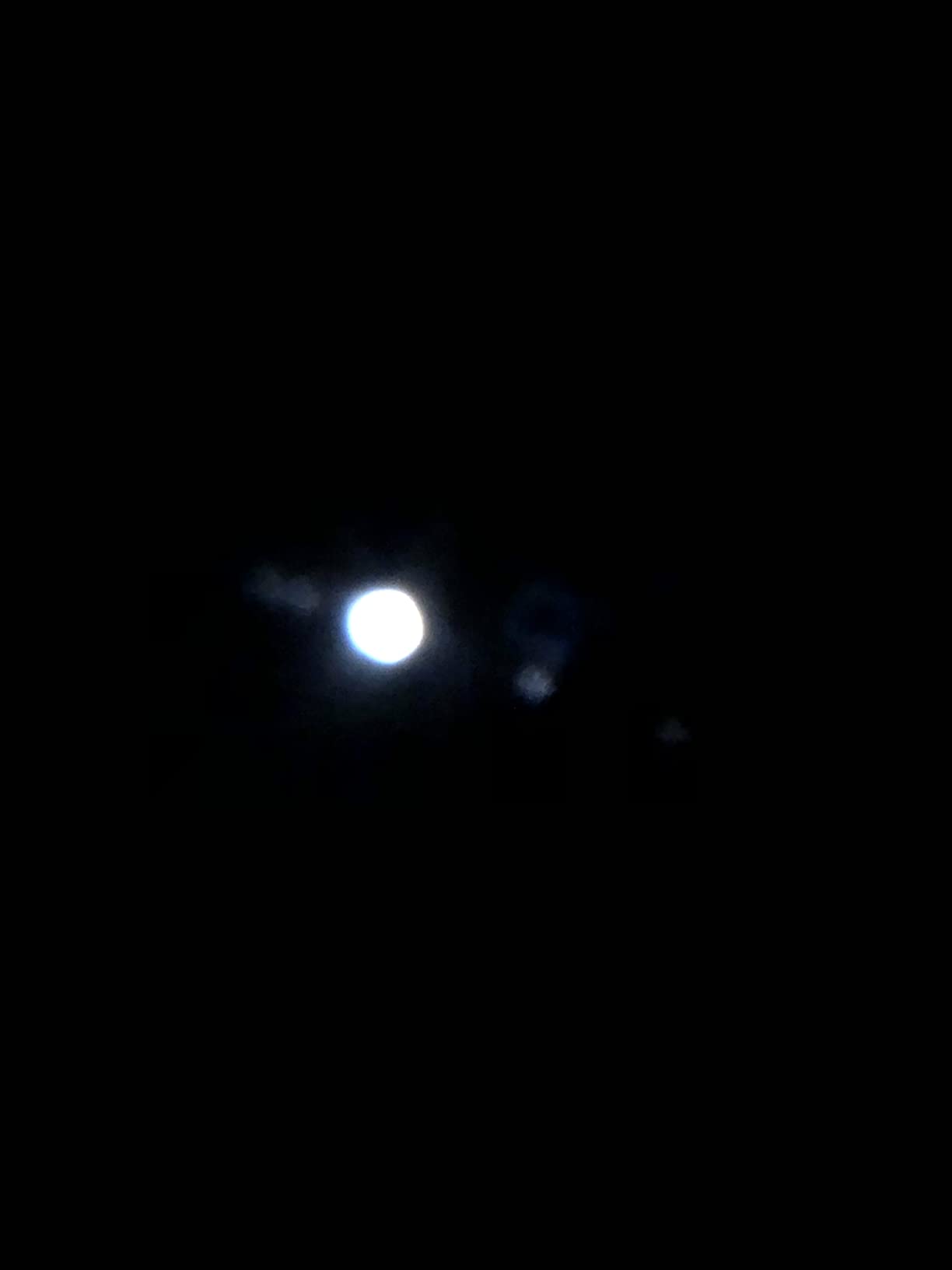
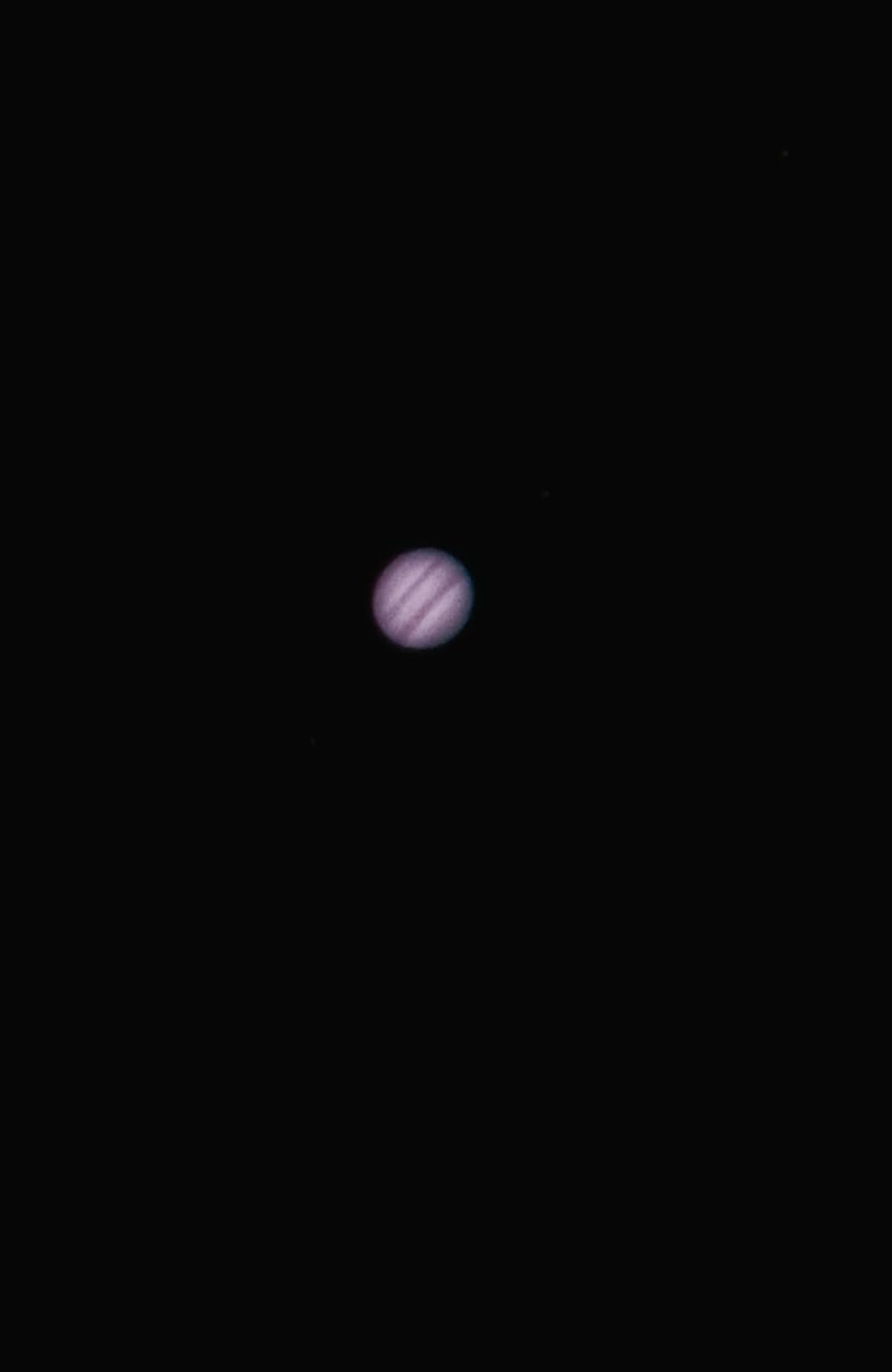
Jupiter shows three cloud bands and the four Galilean moons shifting position over an hour. Saturn resolves into a ball with a visible gap in the rings, though you will not see the Cassini division until you spend time and let your eyes dark-adapt. The Moon is the real showstopper: terminator craters with sharp shadow edges, maria that look like grey seas.
Deep sky is where the aperture earns its keep. The Orion Nebula, the Andromeda Galaxy and the Hercules Cluster are all reachable from a suburban backyard on a decent night. Faint galaxies like M82 need darker skies, but the brighter Messier objects fill a 25mm eyepiece field comfortably.
Who should skip this telescope
Skip it if you want to photograph deep sky. The mount has periodic error and no motor drive, so long exposures produce trailed stars rather than pinpoints. It is also the wrong choice if you live in an apartment and need to carry the whole rig up stairs, because at 17 lbs the assembled tube and tripod are a two-hand job.
Also skip it if you refuse to collimate. The Newtonian needs its mirrors aligned, which is a five-minute job once you learn it, and a cheap laser collimator makes it painless. If that sounds like a dealbreaker, a refractor that never needs collimation is the calmer choice.
2. Sky-Watcher Heritage 150 Tabletop Dobsonian: Best Telescope for Small Spaces
- 150mm aperture in a compact tabletop package
- Parabolic primary with premium RAQ coating
- Collapsible tube keeps collimation after transport
- Set up in minutes with no polar alignment
- Needs a table or sturdy bench at the right height
- Only 1.25-inch helical focuser
- Not built for tracking or imaging
The Heritage 150 solves a problem nobody else on this list solves. It is a genuine 6-inch Dobsonian that sits on a table instead of a tripod, which means it works in a flat, in a small balcony, or anywhere you have a waist-high surface and two feet of floor space.
Optically it is among the best-equipped instruments here. The borosilicate parabolic primary is the kind of mirror normally found on scopes costing far more, and the Radiant Aluminum Quartz coating is a genuinely premium touch that holds contrast better than the standard aluminium-only coatings on most competitors.
The collapsible tube is the sleeper feature. You unscrew the front section, pack the whole thing into a carry case, and when you set it back up the collimation is still good because the mirror cell never flexed. For anyone who travels to dark skies, that is worth more than any GoTo motor.
At 750mm focal length the f/5 ratio gives a wide, bright field that suits deep sky more than planets. You will see the Veil Nebula’s structure, M13 resolve into separate stars at the edges, and double stars show clean coloured fringes.

Why the tabletop form works better than it sounds
Most tabletop mounts are tiny 3-inch instruments you outgrow in a year. This one is 6-inch class, so it stays useful for a decade. The rubber feet grip a table edge, and the altazimuth base moves in two smooth arcs with no counterweights and no alignment ritual before you start.
My only real complaint is the focuser. A helical 1.25-inch focuser is smooth and never needs collimating, but it will not accept 2-inch eyepieces, and the wide-field 2-inch designs are where the deep sky payoff lives. It is a deliberate trade Sky-Watcher made for durability.
Where it falls short
The table height is the limiting factor. If your surface is a low coffee table, you will spend every session crouched. A bar-height stool or a sturdy workbench solves it entirely, but you do need one of those before you buy.
There is also no tracking at all. Objects drift out of a high-power field in a couple of minutes, which is fine for sweeping the sky at low power but frustrating when you want a long look at a faint galaxy. Plan your sessions around short, targeted visits rather than all-night marathons.
3. Gskyer 130EQ: Best German Equatorial Reflector With Full Accessory Set
- Same aperture as the AstroMaster at f/5
- Three eyepieces plus 3x Barlow in the box
- Bluetooth camera remote for phone shots
- Lifetime maintenance support
- 30.1 lbs makes it the heaviest package here
- EQ assembly has a real learning curve
- Manual focus takes practice
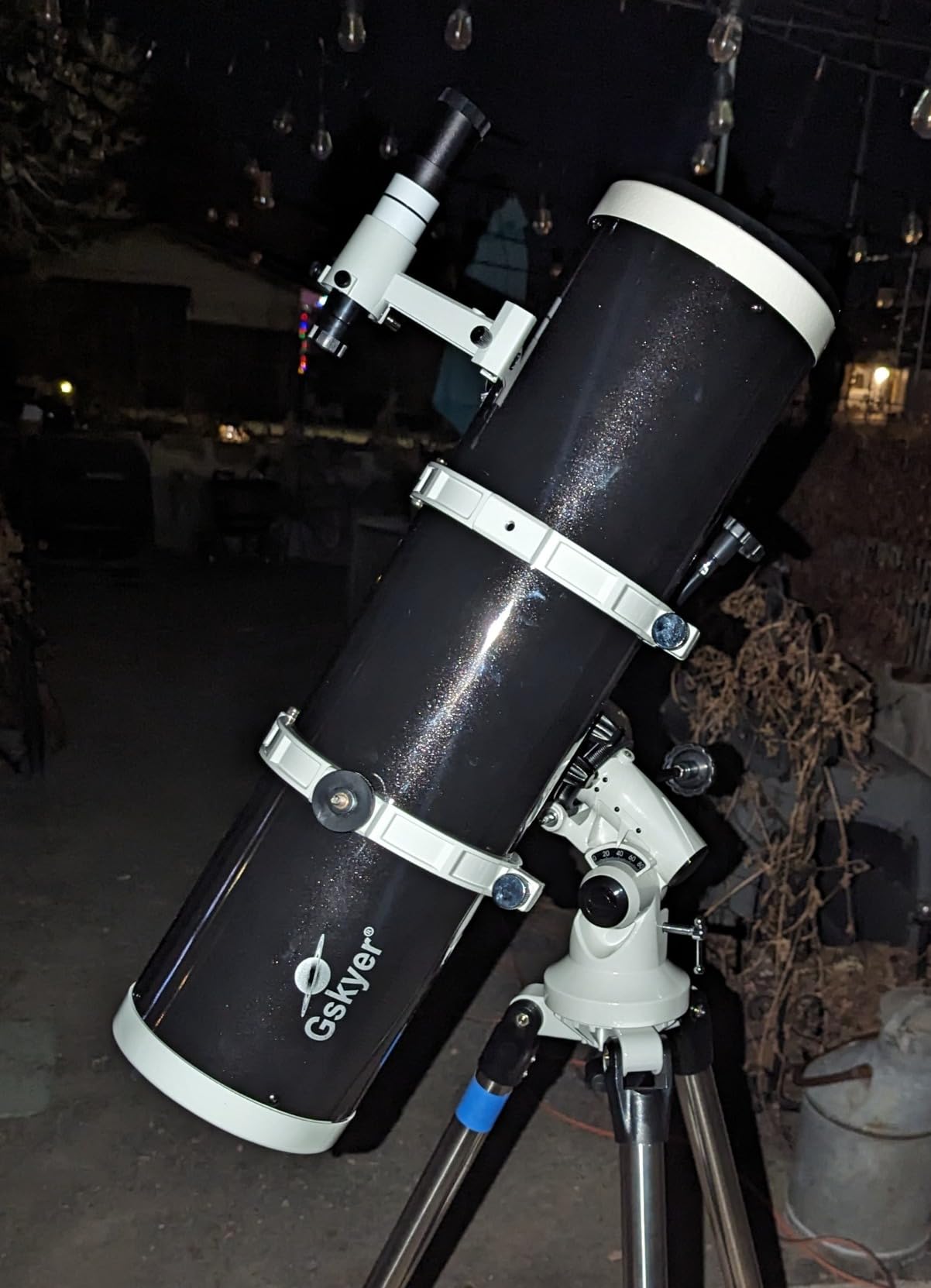
Spec for spec this is the same optical design as the AstroMaster 130EQ: a 130mm primary, 650mm of focal length, an f/5 focal ratio. What you get extra is the accessory bundle, with three eyepieces and a 3x Barlow instead of two eyepieces, plus a Bluetooth shutter remote for phone photography.
The rating here sits a touch higher than the Celestron, at 4.4 across its reviews, though its review count is far smaller. Treat that as a smaller sample rather than proof of superiority. The optics are in the same class.
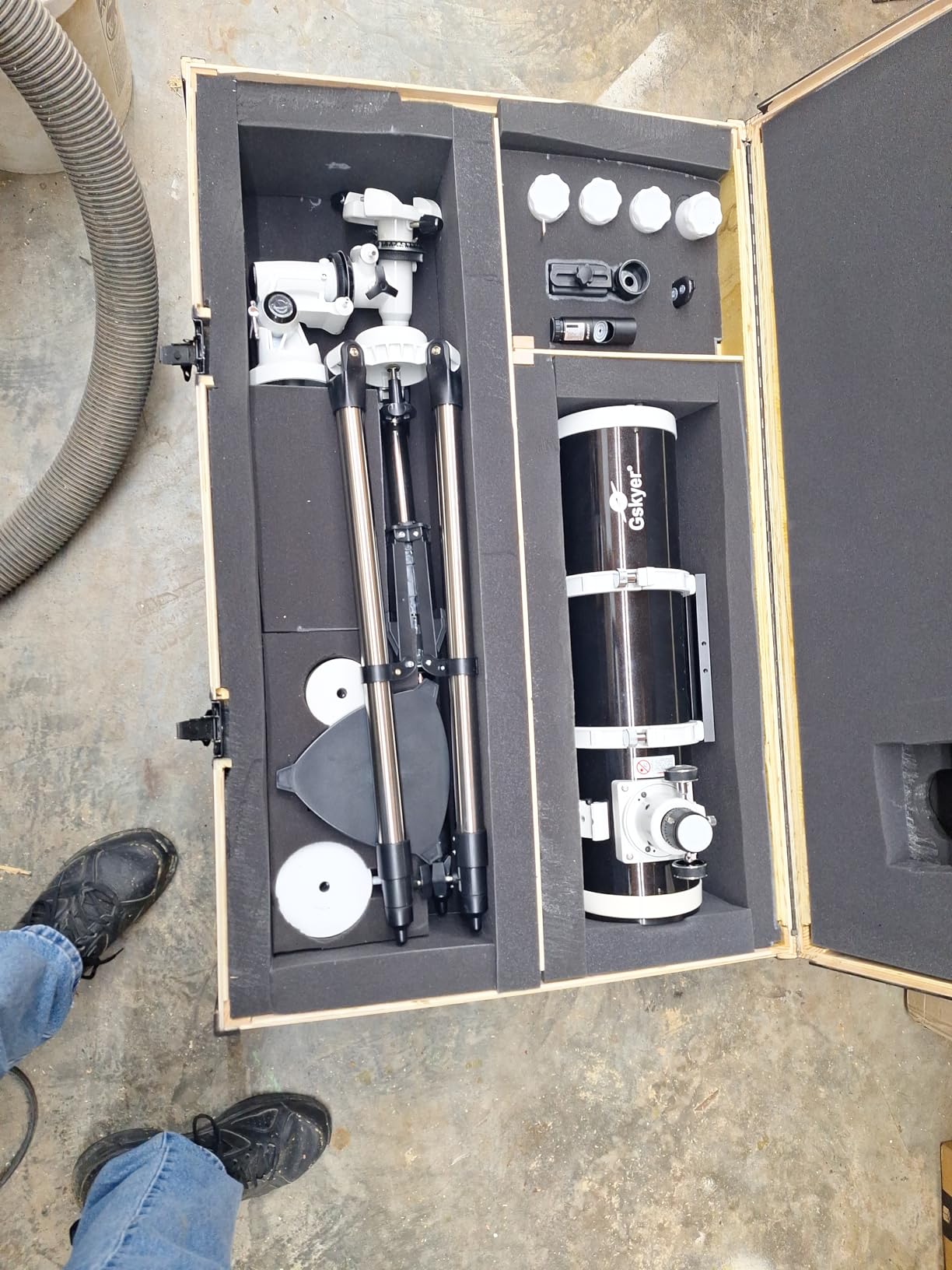
At f/5 the 650mm tube gives a wide field that suits deep sky, and the third eyepiece means you have a usable focal length range straight out of the box. Most budget scopes give you two eyepieces that cover barely a factor of two between them.
Collimation matters more here because the tube is longer and lighter relative to its mount. The toothless focusing base is a nice touch, since it holds position better than the spring-loaded rings on cheaper reflectors, but you still want a collimation cap or laser tool before your first session.
When this beats the AstroMaster
It wins on included accessories. If you want a Barlow and a third eyepiece in the box rather than buying them in your first year, the money you would spend on accessories is already spent here. That shifts the real cost of ownership in your favour over two or three years.
It also wins on service. The package includes a one-year warranty plus lifetime maintenance support, and reviewers single out fast replacement for defects, which matters if you are far from a major retailer.
What you give up to get it
Weight, mostly. At 30.1 lbs this is the heaviest telescope in the guide, and that number covers the assembled package rather than one component. Carrying it to a park or a field trip is a two-person job or a very deliberate one-person job.
The eyepiece quality is the second compromise. Three eyepieces sounds generous, but they are basic Plossl designs, and the 3x Barlow on a budget reflector often introduces colour fringing that you would not tolerate in a premium scope. Treat the set as a placeholder and upgrade one piece at a time.
4. Celestron PowerSeeker 127EQ: Best Backyard Reflector for Planetary Detail
Celestron PowerSeeker 127EQ Reflector Telescope for Home Astronomy
- 1000mm focal length gives high magnification
- Large aperture for the money
- Two-year warranty with US support
- Light reflector build at 13 lbs
- The 4mm eyepiece has very poor eye relief
- Mount has backlash
- Needs regular collimation
The PowerSeeker 127EQ is the longest focal length telescope here, and that single fact changes what it is good at. A 1000mm tube turns a 10mm eyepiece into 100x, which is where planetary detail like Jupiter’s bands and Mars at opposition starts to reward magnification.
At 13 lbs it is a manageable reflector to carry and set up, noticeably easier to move than the 30.1 lb Gskyer 130EQ and only a couple of pounds heavier than the Celestron AstroMaster.
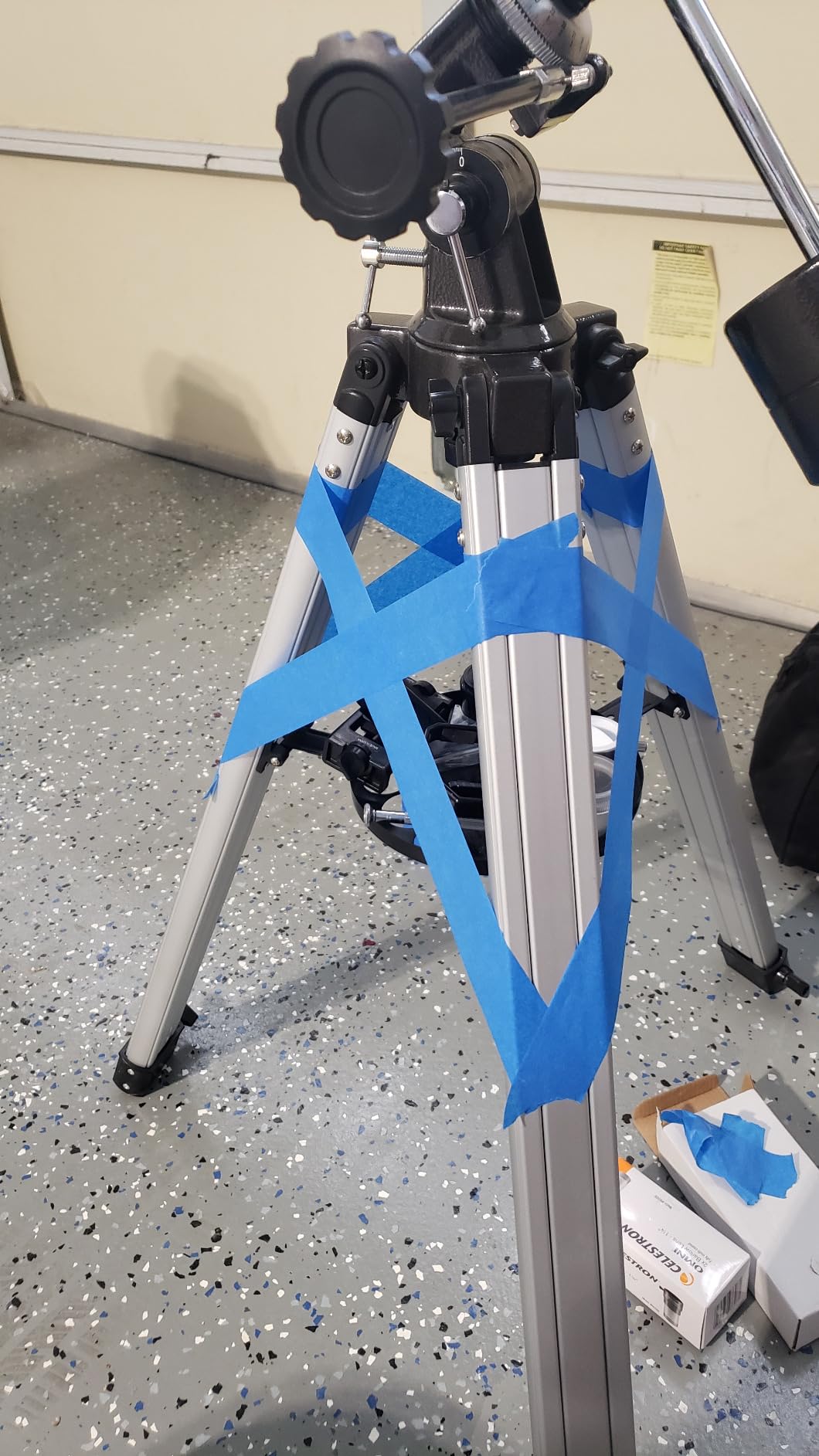
The mount includes slow-motion controls on both axes, which matters more on a long tube because the tube swings further when you nudge it. Without them, centring a planet at high power becomes a wrestling match.
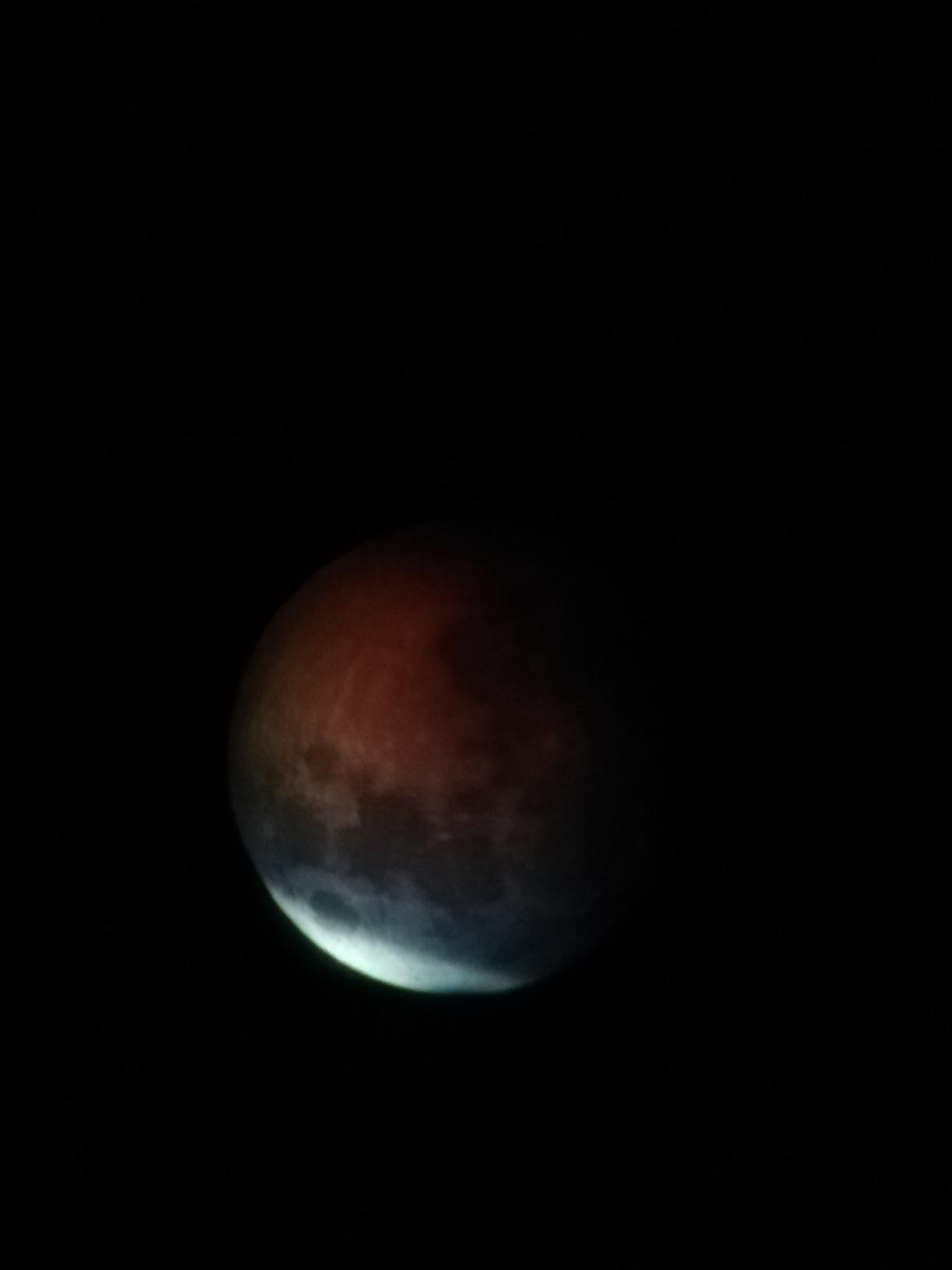
Aluminium and silicon dioxide coatings on both mirrors are a step above the bare-aluminium coatings on most scopes at this tier, and they help surface contrast on the lunar terminator where shadows are deepest.
Long focal length, long consequences
A narrow field of view is the trade. The included finder is basic, and once you centre something in it the target can drift out of a high-power eyepiece view. Finding becomes a two-step process rather than one, so budget extra time for pointing.
The Dawes limit of 0.91 arc seconds tells you the theoretical resolution ceiling. At 1000mm focal length you can drive magnification to about 200x before you are simply enlarging an empty patch of sky.
The eyepiece problem nobody mentions
The included 4mm eyepiece is the weak link. It delivers huge magnification with an eye relief of a few millimetres, so most people cannot hold an eye in the right position and end up seeing a black disc with a bright ring of eyelashes. Leave it in the box.
The mount also develops backlash, meaning the tube does not land exactly where you left it after a fine adjustment. Budget several nudges to centre a planet, and avoid touching the focus knobs mid-session since the small base has enough give to wobble the view.
5. MEEZAA 150EQ: Best Newtonian for the Largest Aperture and Bundled Extras
- 150mm aperture is among the largest here
- Bundled moon filter and solar filter
- Stainless steel tripod with accessory tray
- Carry bag included
- Plastic focuser rather than metal
- Basic Kellner eyepieces
- One reviewer disputes the stated aperture
On raw aperture it sits at the top of the guide. A 150mm primary mirror gathers close to 30 percent more light than a 130mm, and that extra light is what turns the fainter Messier objects from smudges into shapes with visible structure.
It is also the only telescope here that ships with a solar filter, alongside a moon filter. That matters more than it sounds: a proper solar filter is the only safe way to look at the Sun, and the moon filter takes the glare off a full Moon so you can look at craters instead of a flat white disc.
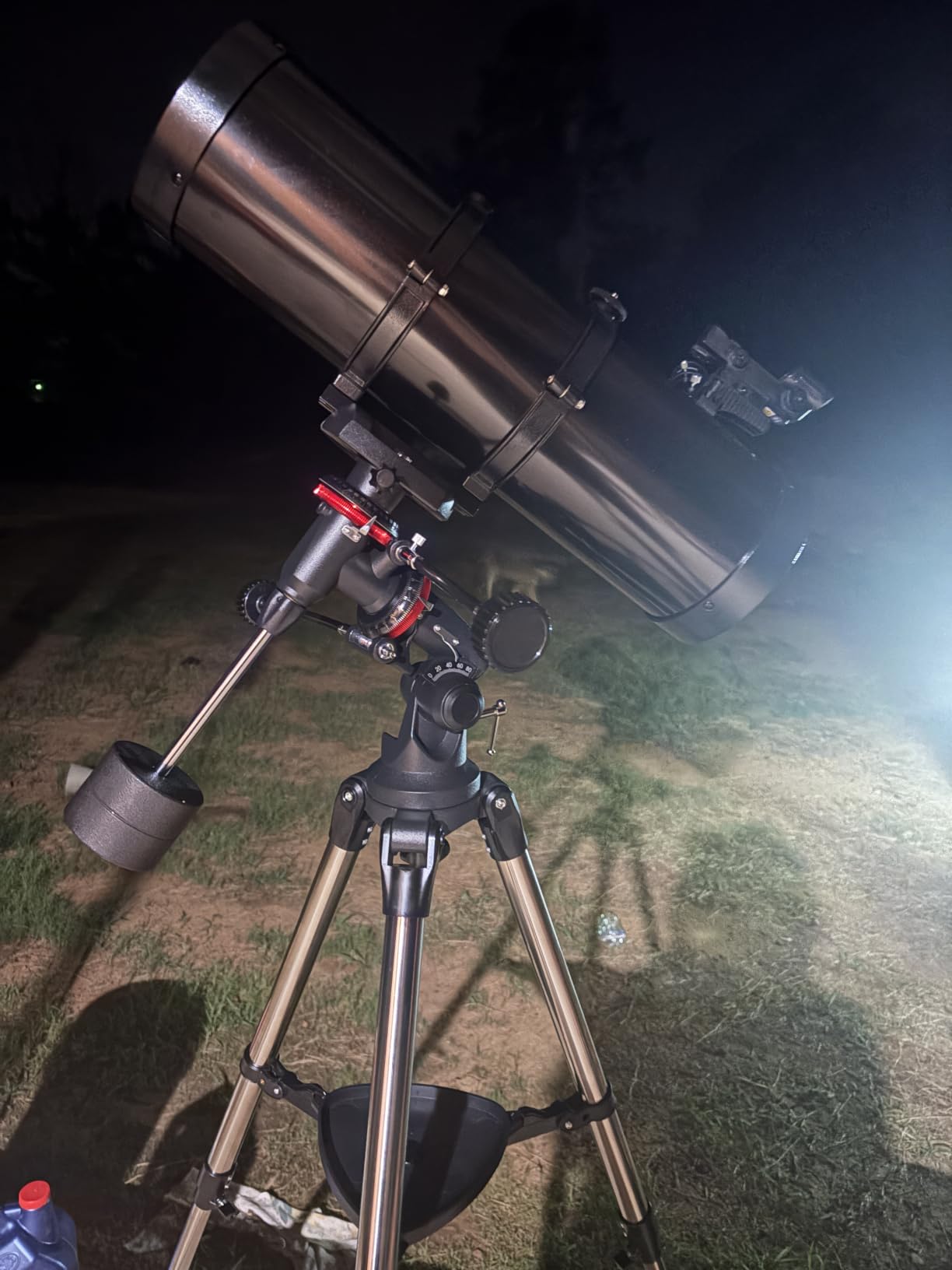
The stainless steel tripod and accessory tray are sturdier than the aluminium legs on most budget reflectors. The tray matters more than it should, because it is where the eyepieces, filters and a phone adapter live while you are actively observing.
Magnification runs from 26x to 130x using the supplied 25mm and 10mm Kellner eyepieces with the 2x Barlow. That range is honest and usable, which is more than you can say for scopes advertising 600x.
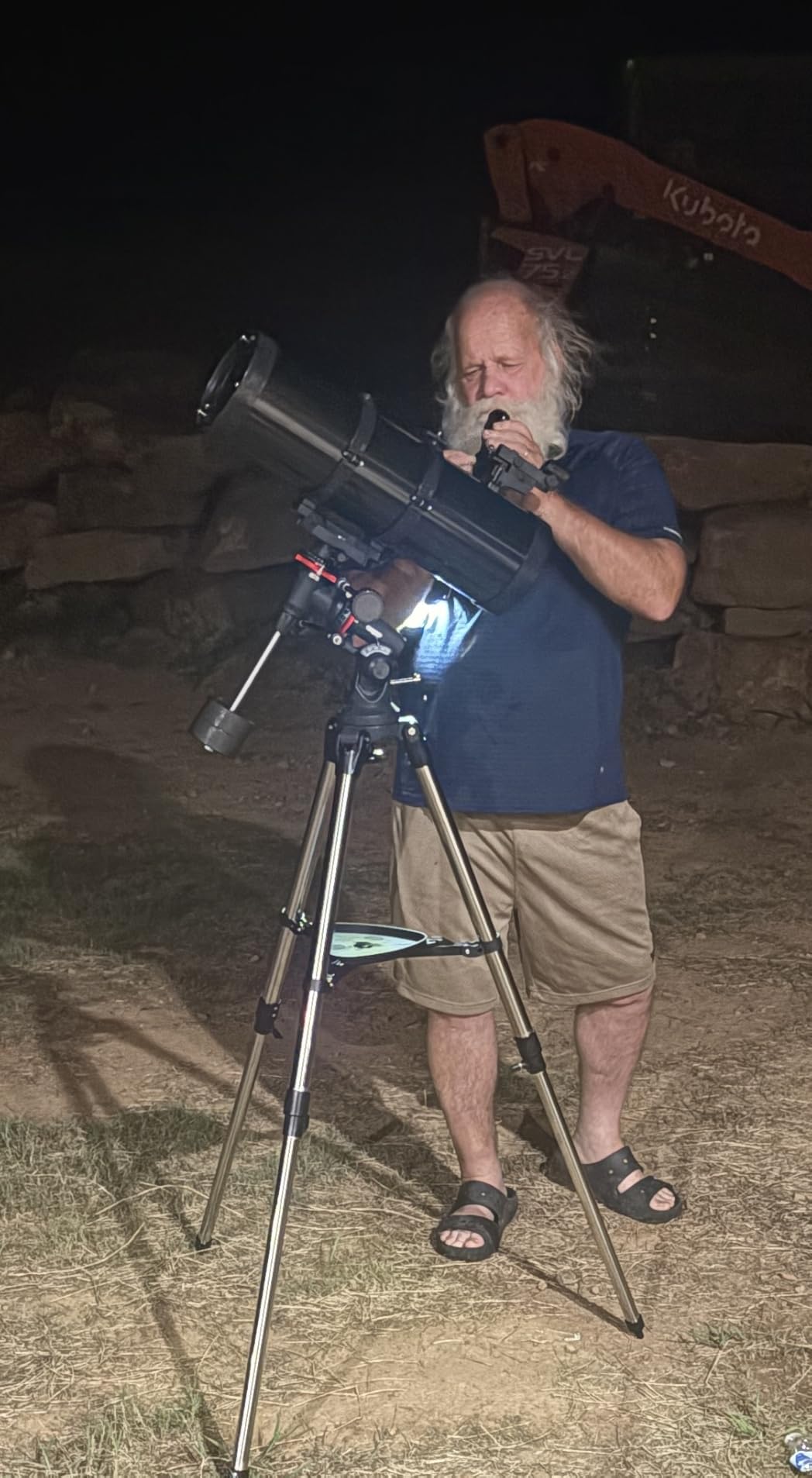
The aperture advantage in practice
Compare it to the 130mm reflectors in this list and the difference shows up under suburban skies. The Hercules globular resolves into a swarm of individual stars rather than a fuzzy ball. The Dumbbell and Ring nebulae become identifiable objects. Spiral structure appears in the brighter Whirlpool galaxy on a good night.
You still need dark skies for the fainter targets. Light pollution does not disappear because your aperture is large, it just raises the floor on what you can reach from your own backyard.
Points to check before you commit
The plastic focuser is the main build-quality concern. It works, but it holds position less reliably than a metal rack-and-pinion unit, so refocusing during a session is normal rather than exceptional.
One reviewer disputes the advertised 150mm aperture, suggesting the tube may actually be 130mm class. If aperture is the deciding factor for you, measure the mirror or verify with the manufacturer before you commit, because that claim is the whole reason to pick this over a 130mm.
6. Celestron AstroMaster 70AZ: Best Refractor for Moon and Planet Viewing
Celestron AstroMaster 70AZ Refractor Telescope for Moon & Planet Viewing
- Crisp contrast on the Moon and planets
- No collimation ever needed
- Works for daytime and terrestrial viewing
- Two-year warranty with US support
- 70mm aperture is real limiting at deep sky
- Altazimuth mount cannot track for imaging
- Tripod stability drops at full extension
Refractors trade aperture for convenience, and this is the clearest example in the guide. There is no mirror to collimate, nothing to align, no risk of a diagonal getting knocked out of alignment in the car. You set it up and look.
The 900mm focal length is long for a 70mm tube, which means it gives decent magnification without the wobbly high-power views you get from short 400mm scopes. Jupiter’s bands and the phases of Venus are both clearly resolved.
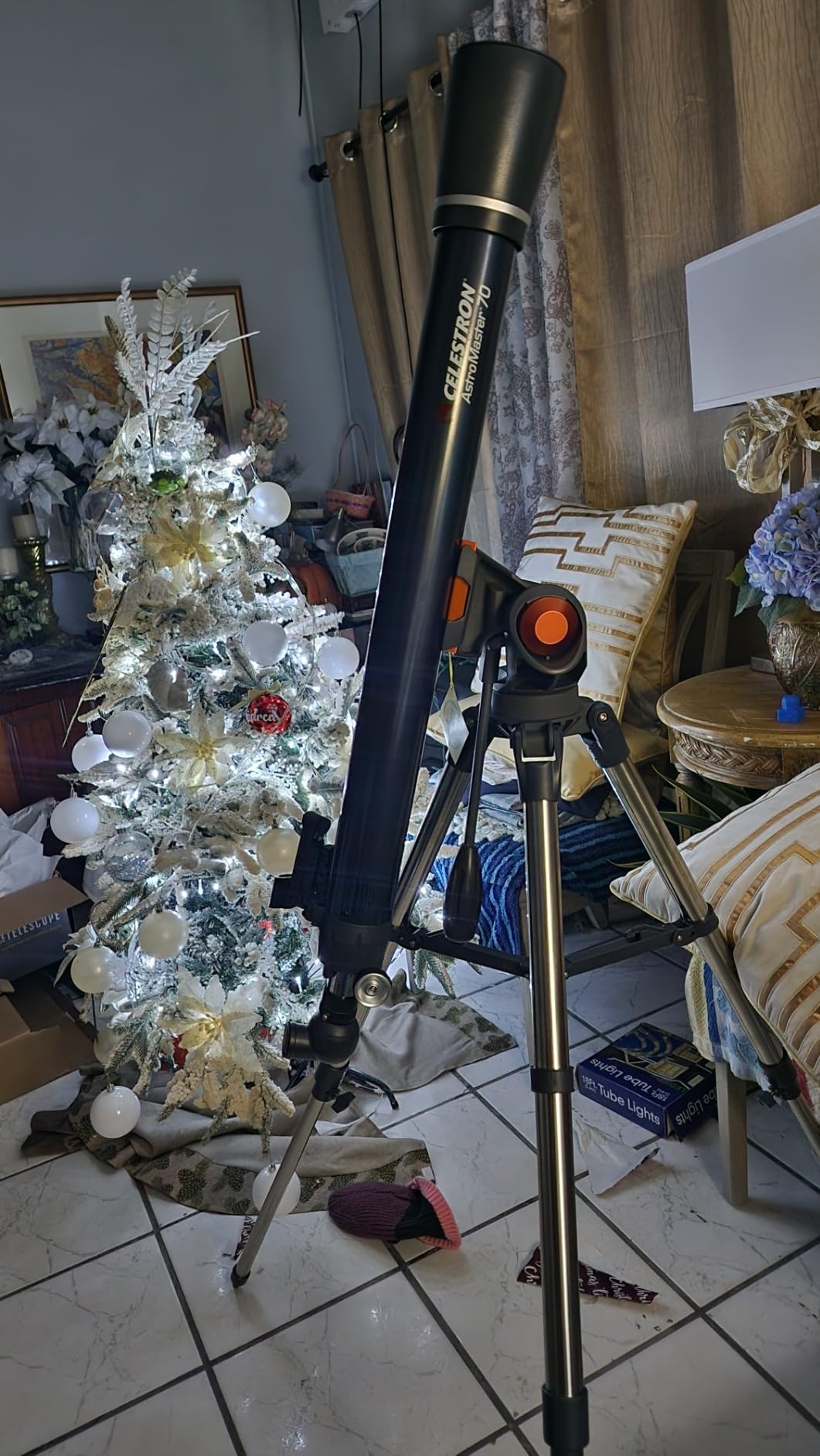
The erect image diagonal is the reason this doubles as a daytime scope. Flip the diagonal and you get upright, left-right correct views of distant scenery, birds or a football field, which is a genuinely nice trick for kids who will not wait until dark.
The permanently-mounted red dot finder is the part that takes practice. You look through the finder with your eye, spot a star, then swing your head to the main eyepiece. Once that reflex is trained it takes seconds.
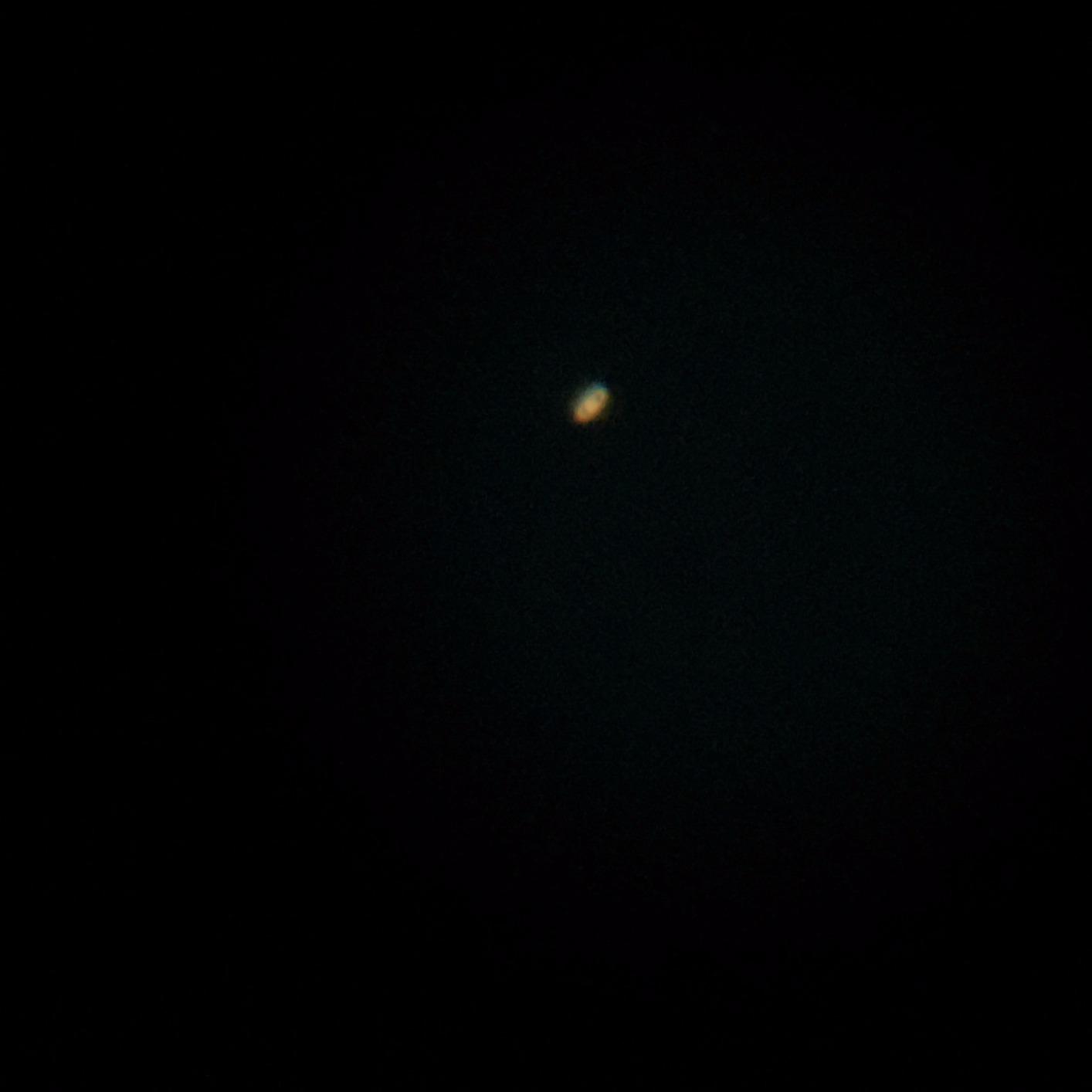
What 70mm aperture shows and what it hides
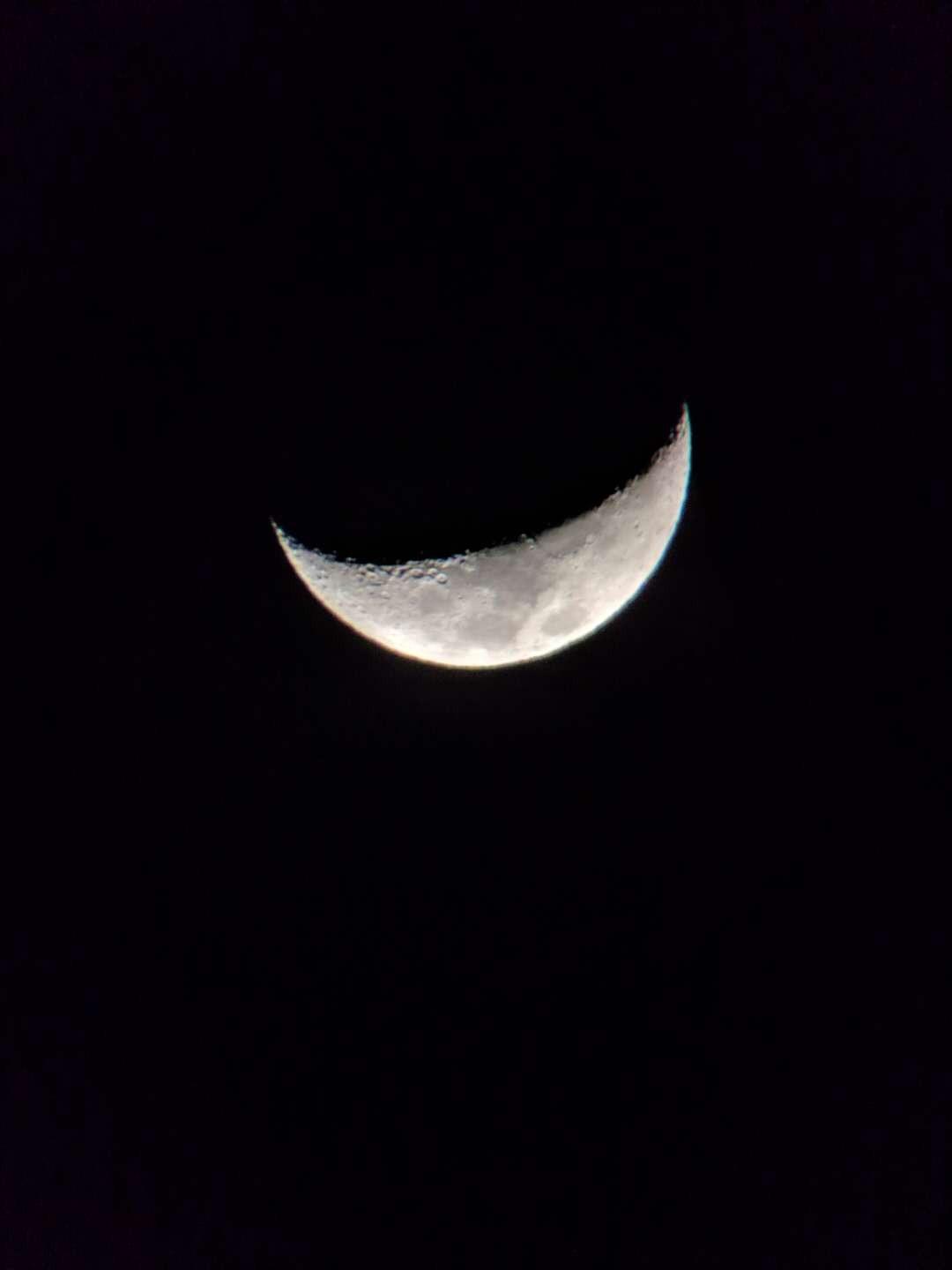
The Moon is superb. Terminator craters show sharp shadows, crater chains along the limb are obvious, and because the aperture is small the view is less washed out at full Moon than a larger scope. Jupiter shows the four Galilean moons and two or three cloud bands. Saturn shows as an oval with hints of ring structure.
Deep sky is where 70mm runs out. The Orion Nebula is visible, Andromeda is visible, but both look like vague patches. Galaxies and faint globular clusters simply do not give up enough light to show structure.
Where it is the wrong tool
If your goal is faint deep sky objects, a 70mm refractor will frustrate you within a month. The aperture is a hard limit set by physics, not by build quality, and no eyepiece upgrade changes it.
It is also not an imaging telescope. An altazimuth mount with no tracking means any exposure beyond a fraction of a second shows star trails. And the tripod loses stability at full extension, so work at a lower eyepiece setting for steadier planets.
7. Gskyer 90mm Refractor: Best Telescope for Daytime and Terrestrial Viewing
Gskyer Telescope 600x90mm AZ Astronomical Refractor Telescope for Adults
- Largest aperture in the entry refractor group
- 48-degree erecting prism for correct daytime views
- Three eyepieces plus 3x Barlow in the box
- Fast replacement service reported by reviewers
- 17.5 lbs and no carry bag
- One-year warranty is the shortest here
- Focus mechanism issues reported
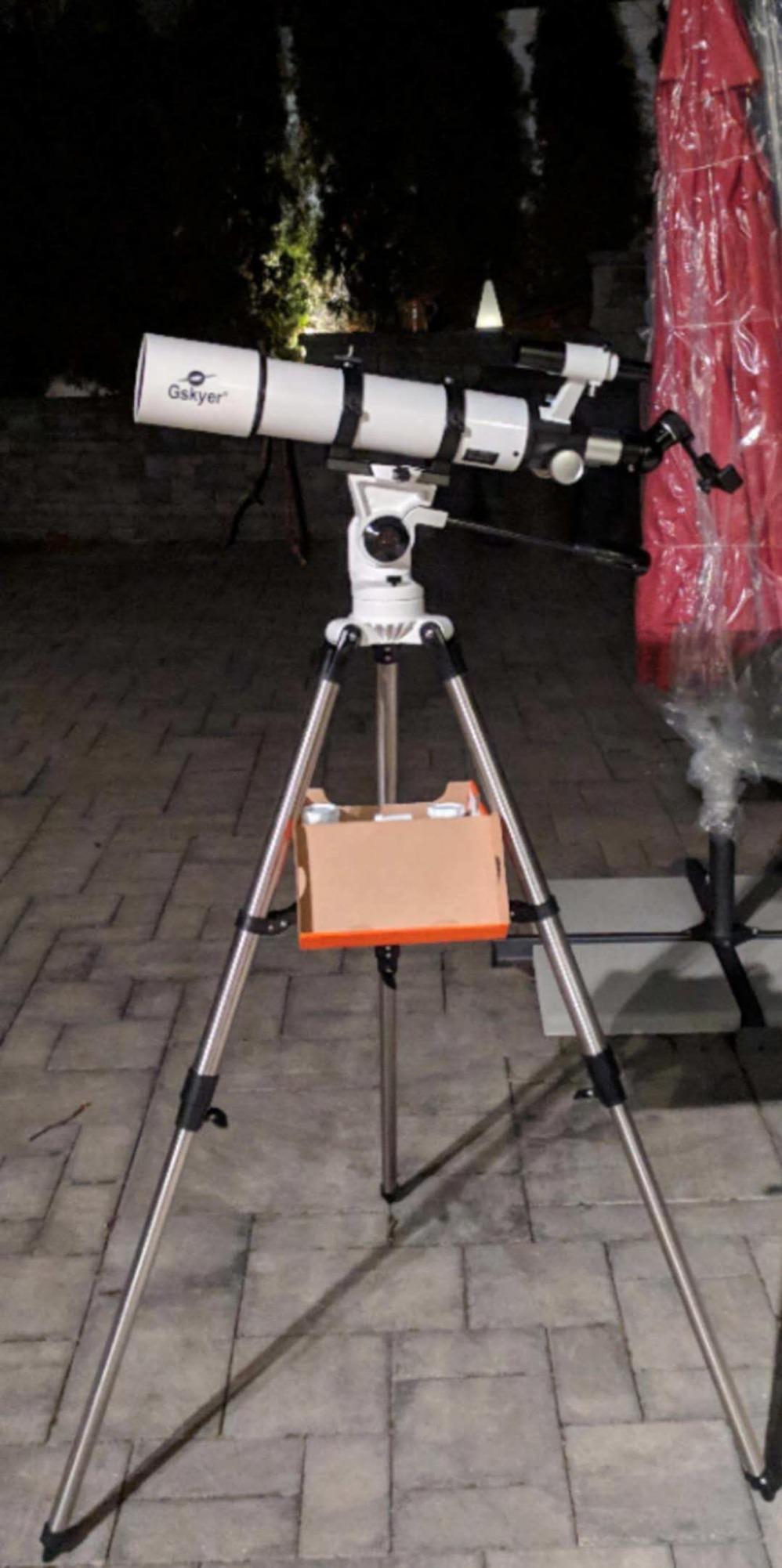
This is the scope to buy if your telescope will spend a meaningful share of its life pointed at something on Earth. The 48-degree erecting prism produces an upright and correctly oriented image rather than the inverted, mirrored view you get from a standard diagonal, which makes following a bird or watching a distant game actually pleasant.
At 90mm it also collects noticeably more light than the 70mm and 80mm refractors in this guide.
Three eyepieces rated at 24x, 60x and 120x, plus a 3x Barlow, give you a genuinely usable range out of the box. That is more than most competitors offer, and it means you are not buying eyepieces in your first month.
Customer service is the quiet strength here. Multiple reviews describe fast replacement for defective units, which matters for a budget purchase where a crack in the tube or a seized focuser feels like a total loss.
Handling the weight problem
At 17.5 lbs this is heavy for a refractor, and there is no carry bag in the box. It is a backyard instrument that lives on a deck or in a garage rather than something you take to a field.
The tripod adjusts between 31.5 and 49 inches, which is a workable range, but reviewers repeatedly flag that the maximum extension still sits low for tall observers. Check your height against that range before you order.
Where the marketing number misleads
The listing advertises 600x capability. That figure comes from stacking the 120x eyepiece with the 3x Barlow, and it is not a real observing magnification. At 600x on a 90mm aperture you are seeing a featureless blur, because the optics cannot deliver that resolution.
There have also been reports of focus mechanism faults requiring warranty service. If you buy this, test the focuser thoroughly in the first week while returns are easy, and keep the packaging.
8. MEEZAA 90mm 800mm Refractor: Best Long Focal Length Refractor for Globular Clusters
- Long 800mm focal length at f/8.9 for high contrast
- Carry bag and phone adapter included
- Light enough for one person to carry
- Ten to twenty minute assembly
- Straight-through finder shows an inverted view
- Phone adapter is fiddly to align
- Marketing photos overstate lunar detail
A 90mm aperture at 800mm focal length works out to f/8.9, which is a slow, high-contrast design. Slower focal ratios tend to give cleaner, more contrasty planetary images than fast Newtonians, and this is the one scope in the guide tuned that way for planetary work.
The tube is 80 centimetres long, so it is a proper instrument rather than a pocket model. It still weighs little enough that one person can carry it, which the manufacturer makes a selling point for younger observers.
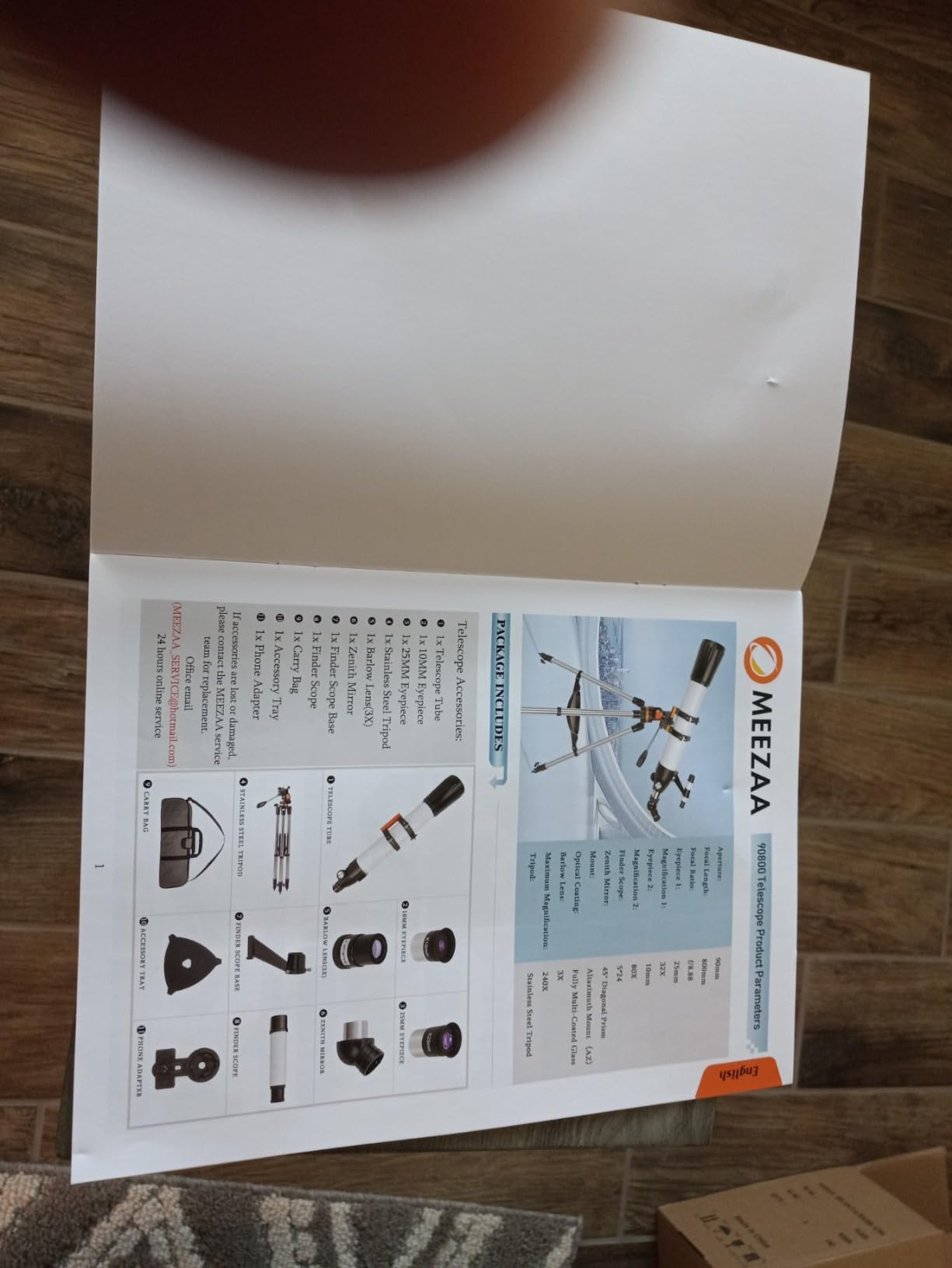
The stainless steel tripod adjusts from 28 to 46 inches, a wider range than the Gskyer and a genuine improvement for taller users who struggle with the low tripods common at this price.
Kellner eyepieces at 10mm and 25mm cover a 32x to 240x advertised range with the Barlow. As always, treat the top of that range as theoretical rather than practical.
The inverted finder problem
The straight-through finder scope shows an upside-down view. That is a normal optical design, but it catches out every beginner, because you naturally try to match the view to the sky chart and fail. Work with it for two nights and it stops mattering.
A red dot finder solves it instantly for the cost of one accessory, and it is the first thing I would add to this package.
Smartphone shooting with this scope
The phone adapter holds a phone over the eyepiece for lunar and terrestrial shots. It works, but reviewers report three recurring problems: the adapter is hard to align exactly, phone weight pulls the tube out of focus, and touching the focus knob causes a wobble that ruins the frame.
Reviewers also note that the marketing photographs showing heavy lunar cratering tend to overstate what the supplied eyepieces actually deliver. Expect solid crater detail along the terminator, not the high-resolution surface shots in the listing images.
9. Gskyer 70mm Refractor: Best Cheapest First Telescope
- Lowest barrier to owning a real telescope
- 22000+ reviews means abundant owner feedback
- Carry bag makes it genuinely portable
- Phone adapter and wireless shutter included
- Short 400mm focal length limits magnification
- Tripod runs low for taller adults
- Entry-level design caps deep sky potential
You can own a real, coated, portable telescope for less than the cost of a nice dinner. That is what makes this the pick for a child, a gift, or anyone who is not yet sure whether astronomy will stick.
The review count tells the real story here. More than 22000 ratings means you will find dozens of people documenting exactly the same setup issues and fixes, which is worth more than any marketing claim at this price.
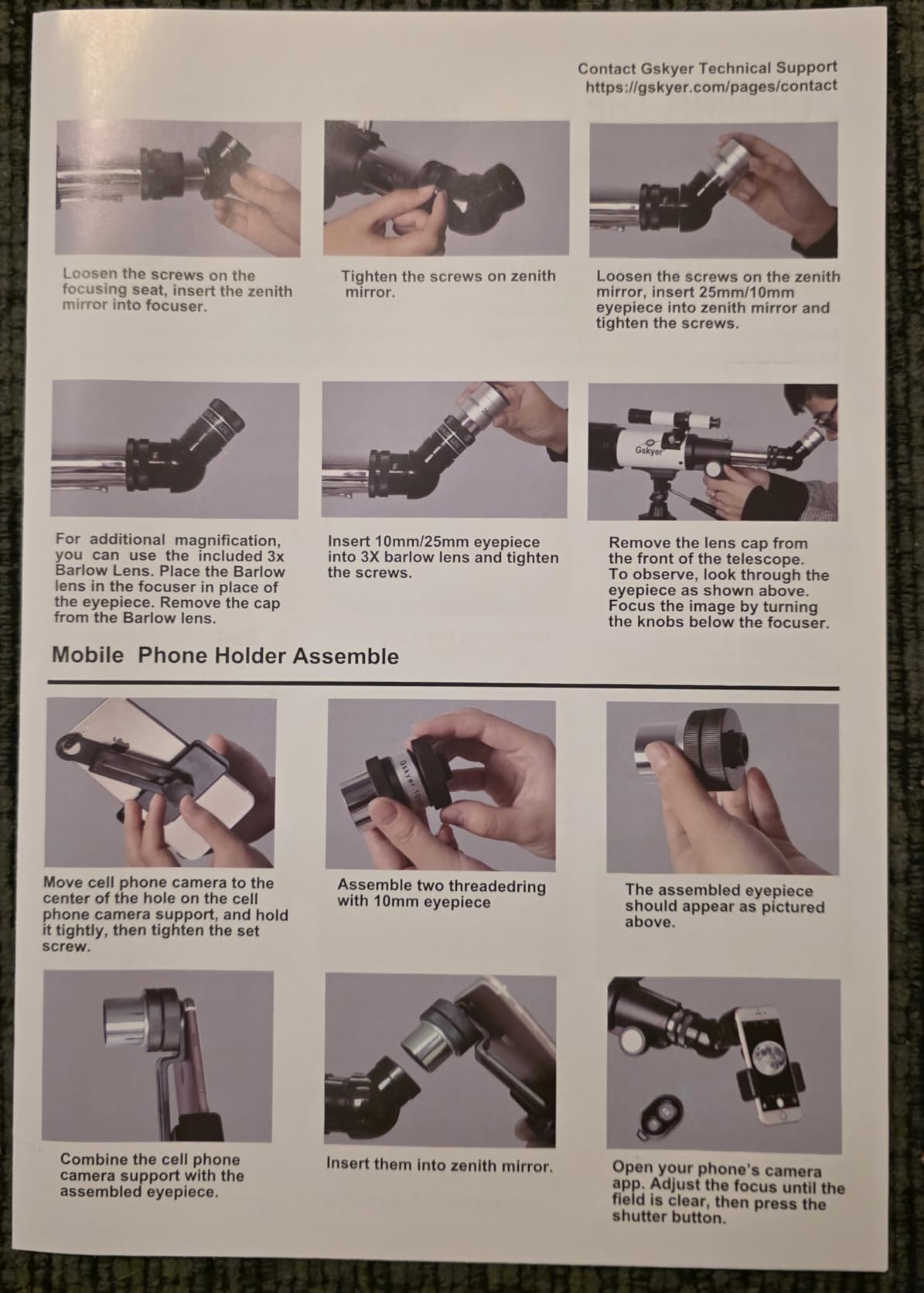
Two eyepieces and a 3x Barlow give you a small range of magnifications, and the 5×24 finder with crosshairs is enough to centre the Moon or a bright planet. Setup is genuinely tool-free and takes a few minutes.
Fully coated glass helps transmission, which matters at the bottom end where every percent of light counts. The images are not stunning, but they are honest and steady enough to keep most beginners engaged for months.
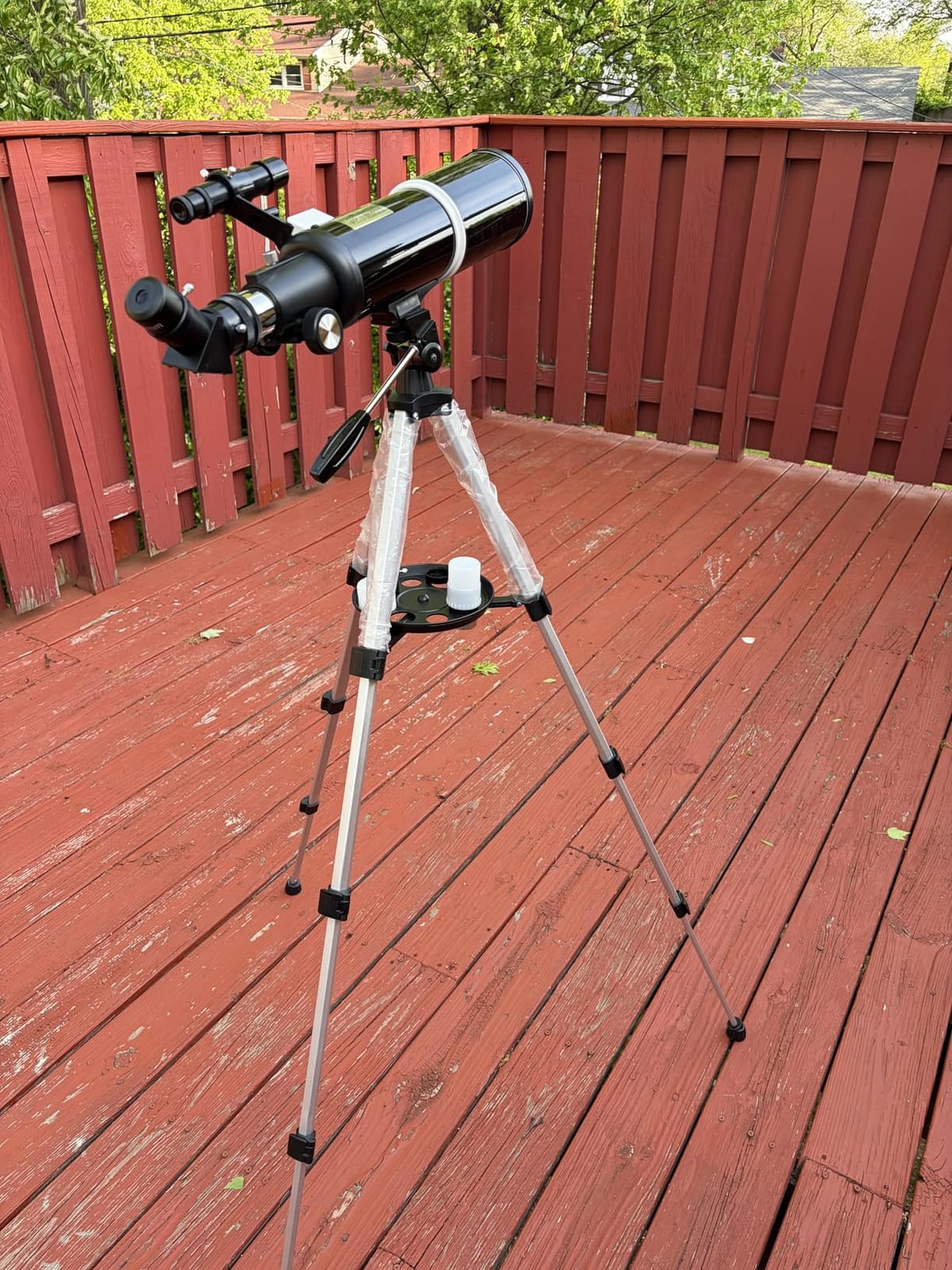
What 70mm at 400mm actually gives you
Magnification tops out lower than you might expect on longer scopes. The 400mm focal length means the same eyepiece gives you roughly half the power it would on a 900mm tube, so planets look smaller and less detailed.
You get a crisp lunar view and the bright planets as discs, plus the Moon’s phases as the most rewarding target. Deep sky is limited to the brightest few objects. For a child learning that the sky is full of things, that is plenty to start.
Honest limitations before you buy
The tripod height is the most common complaint and it is a real one. Owners frequently note that adults over six feet spend the whole session bending down, which is exactly the kind of thing that ends a first astronomy habit.
Manual focus also needs practice. Coarse and fine adjustment rings are small, and at first touch you will overshoot and knock the view out of focus. Add that to the fact that manual focus on a cheap refractor is all you get, and it is worth spending a little more on a scope with a smoother focuser if the recipient is an adult.
10. Koolpte 80mm Refractor: Best Telescope for Kids and Travel
- No-tool assembly gets kids set up unaided
- Carry bag makes transport simple
- Wireless remote and phone adapter included
- Fully multi-coated glass
- Lightweight tripod struggles in wind
- Entry-level altazimuth mount limits tracking
- Basic reflex finder
Approximately 30 percent more light than a 70mm aperture, and the fully multi-coated glass holds contrast better than the single-coated lenses on cheaper kits. It is the point where the image stops looking washed out.
Assembly needs no tools, which is the feature that decides this scope for children. A ten-year-old can put it together without an adult, and that autonomy is what keeps them interested the following weekend.
The carrying bag, phone adapter and wireless shutter remote come in the same box. That combination means a parent can pack the whole thing into a car on a spur-of-the-moment trip to a dark site without hunting for accessories.
Two Kellner eyepieces at 25mm and 10mm, plus a 3x Barlow, cover a reasonable range for lunar and planetary work. Kellner eyepieces are a better starting point than the cheapest Plossl designs, with noticeably less edge distortion.
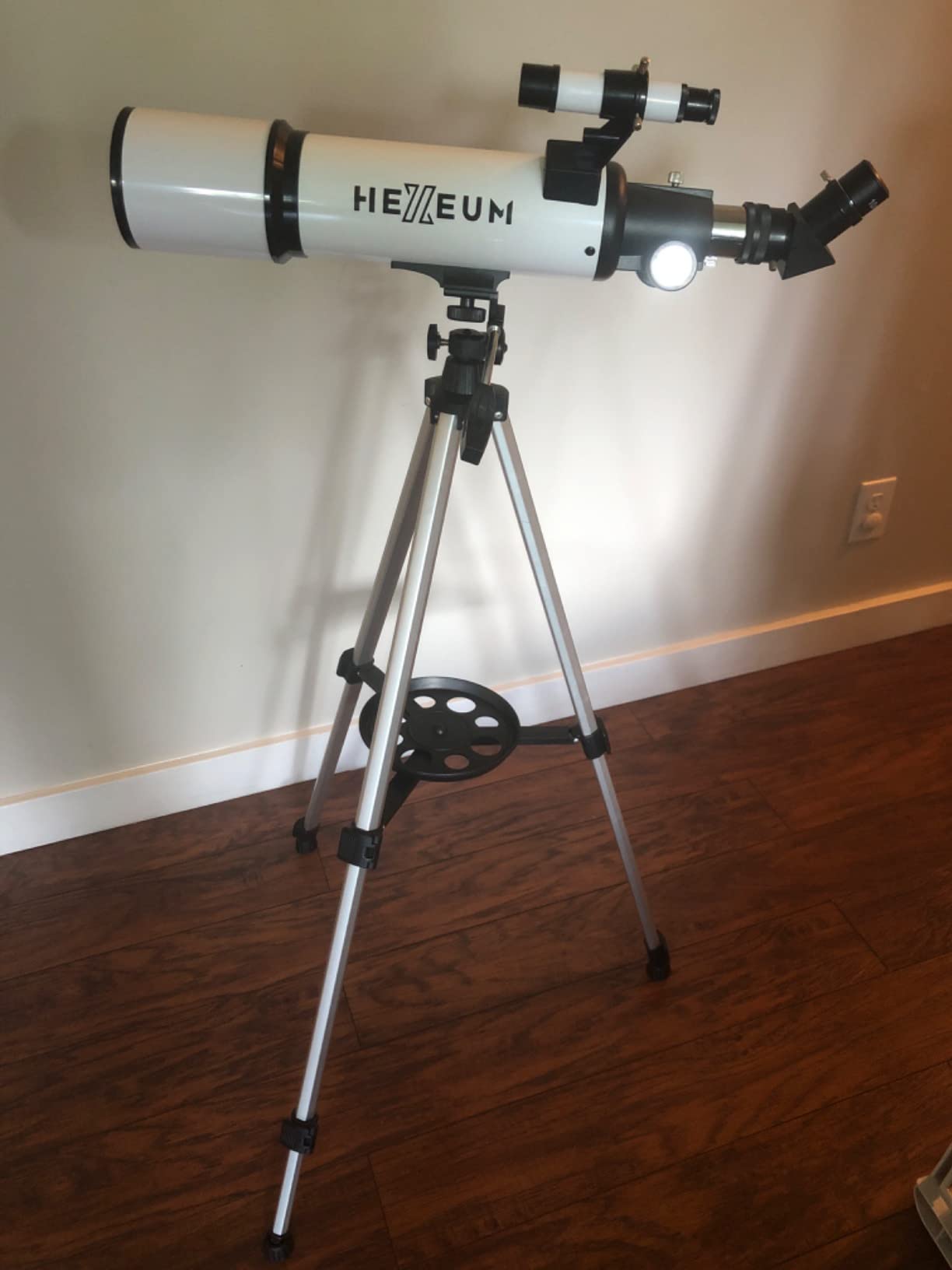
Travel is the real use case
This is one of the few telescopes here that genuinely lives in a car boot. The 600mm tube is short, the bag is included, and the whole package assembles in minutes at a dark site. If your only dark-sky option is a two-hour drive, portability is the feature that matters most.
At 80mm the Moon and Jupiter look good. A 5-degree field of view means the Moon fills the eyepiece nicely, and the wireless remote plus phone adapter make it easy to capture something worth showing other people.
Where wind and wobble become a problem
The tripod is light, which is the trade for portability. In anything above a light breeze, the image shimmers and high-power planetary viewing becomes frustrating. This scope is best used at lower magnification outdoors.
The altazimuth mount has no tracking at all, so objects drift steadily out of field. Plan short sessions, avoid trying to follow a target at high power, and expect to re-centre often.
11. Celticbird 80mm Refractor: Best Telescope for Families and Small Groups
- Weighs 5.8 lbs so one person can carry it
- Backpack and moon filter included
- Tripod extends 17.7 to 52 inches for all ages
- Three-year satisfaction service
- 66x maximum magnification is modest
- Kellner eyepieces are entry-level
- Small aperture caps deep sky potential
At 5.8 lbs this is the lightest telescope we could verify a weight for, and that low mass is the whole design brief. One child can carry it out of the house, set it up and put it away again without an adult lifting anything.
The tripod extends from 17.7 to 52 inches, which covers everything from a small child standing on a step to a full-height adult. Very few budget tripods handle that range cleanly, and most scopes in this guide top out far lower.
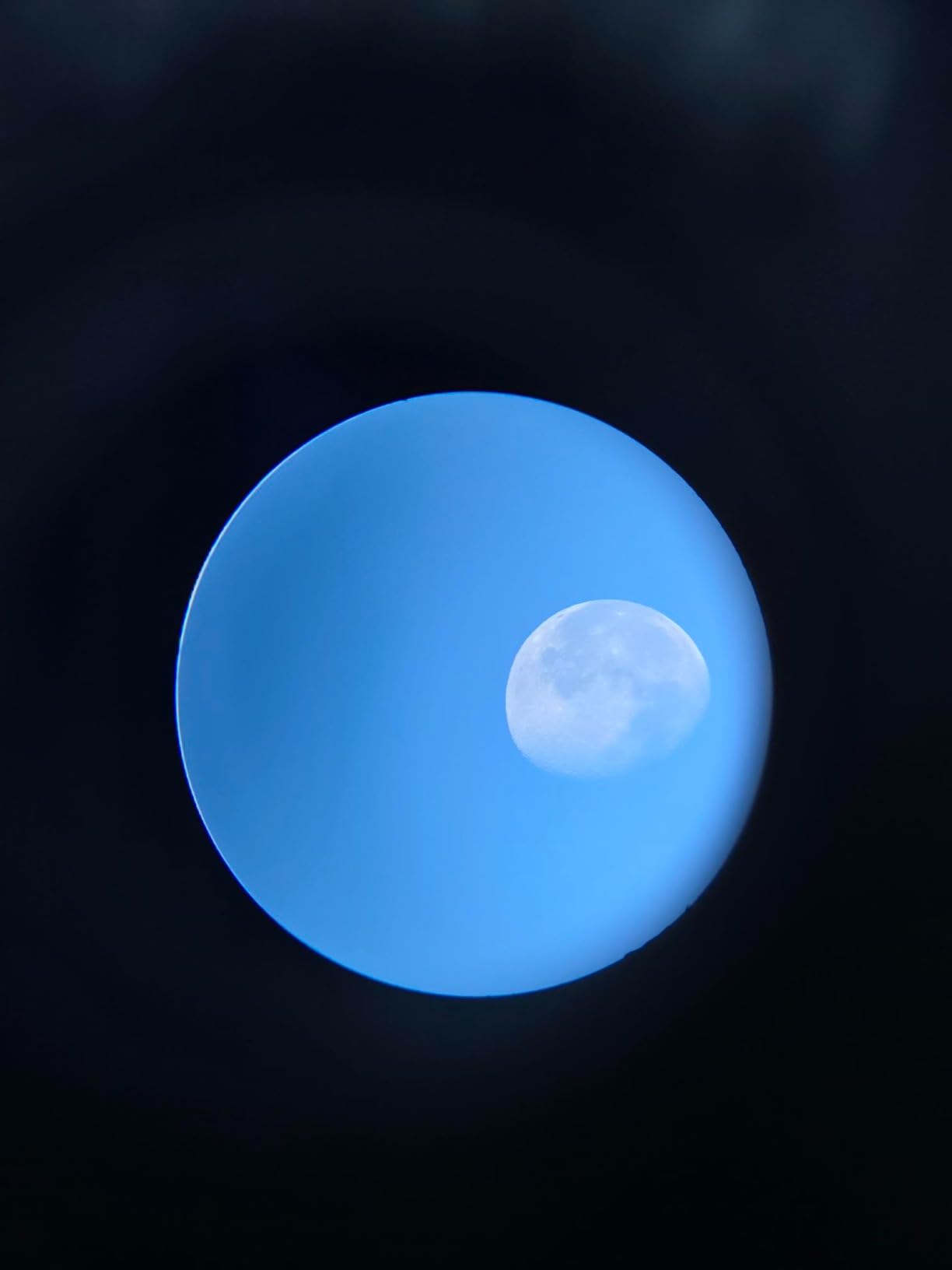
The included moon filter transmits 13 percent of the light, which is a gentle reduction that makes a full Moon far more comfortable for younger eyes and less dazzling for adults. It is a small accessory that has an outsized effect on whether a family keeps observing.
Two Kellner eyepieces at 20mm and 9mm give 30x and 66x. That is enough for the Moon, Jupiter’s moons and Venus, and honestly not much more.
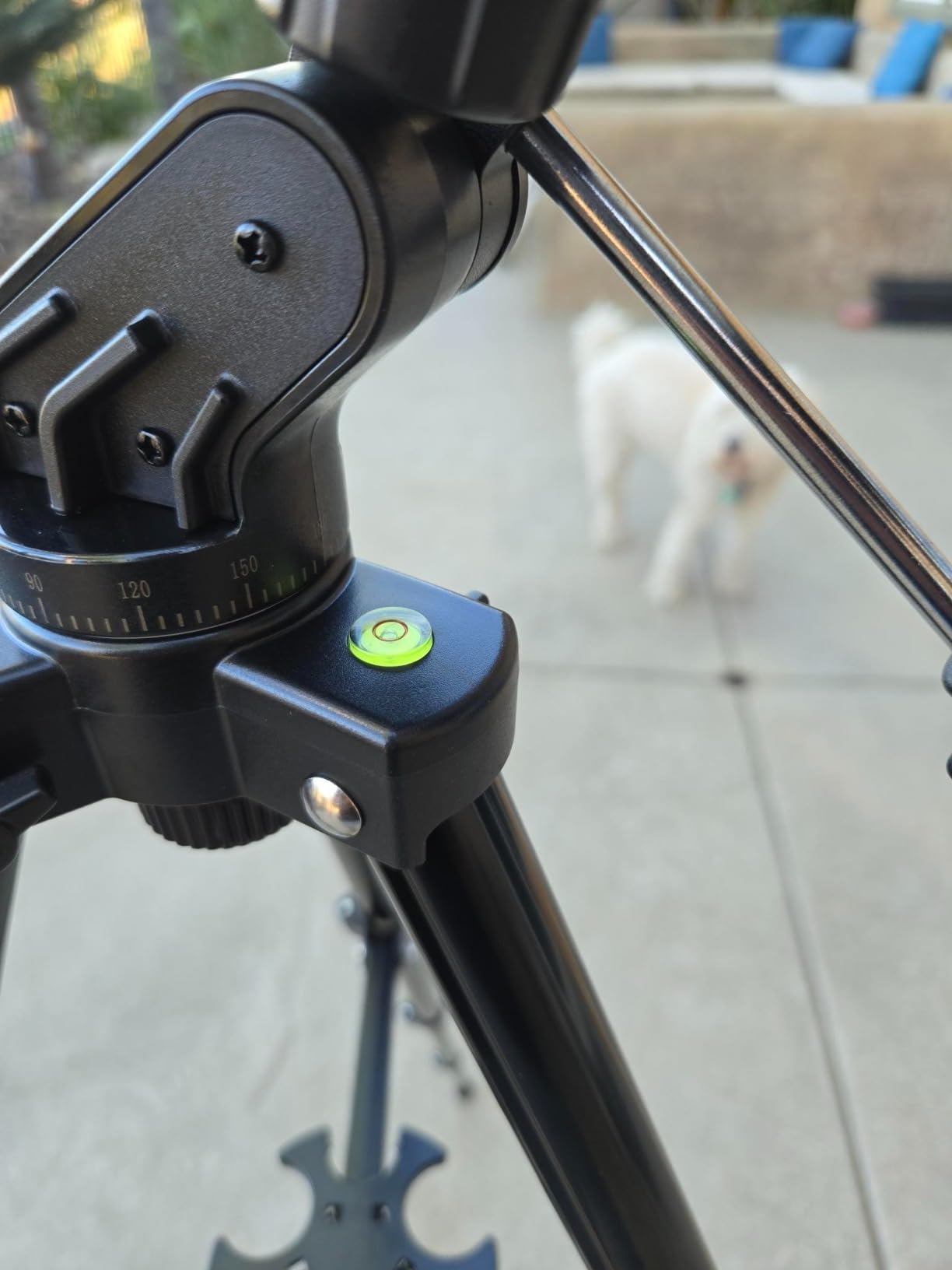
Why weight matters more than you think
Every telescope on this list that is heavy is heavy for the same reason: a tripod long enough to put the eyepiece at eye level for an adult. The trade-off is that the whole assembly only gets carried out to the garden once, and then it lives on the tripod.
This scope inverts that. Light enough to bring inside, assemble in a warm room and then carry to a clear patch of lawn or a nearby field, it gets used more often, which matters more than any spec.
Where the ceiling is
66x is the practical maximum, and at that power on an 80mm aperture you are close to the useful limit anyway. Jupiter shows as a disc with visible banding, Saturn shows rings, and the Moon is the target you will return to.
Deep sky is limited by aperture rather than by any fault of the design. If your goal is galaxies and nebulae, put the money toward a 130mm or 150mm reflector instead and accept the extra weight. For family use, this scope wins on a different criterion entirely.
12. EACONN 80mm Travel Refractor: Best Telescope for Phone Astrophotography
Telescopes for Adults Astronomy, 80mm Aperture 600mm Refractor Telescope for Kids & Beginners, Compact and Portable Travel Telescopio with Backpack
- Phone adapter has marked positions per eyepiece
- Backpack included for real portability
- Two-year warranty
- Detailed manual and video instructions
- Tripod is light in wind
- Altazimuth mount cannot track for long exposures
- Basic reflex finder
The phone adapter is the reason this scope is on the list. Most phone adapters are a single open frame and you work out the alignment yourself. This one has marked positions corresponding to each supplied eyepiece, which removes most of the trial and error on your first attempt.
A rough adjustment gimbal with a printed scale handles the altitude and azimuth positioning. It is not fine control, but for lunar snapshots through a phone at moderate magnification it is genuinely useful.
Two Kellner eyepieces at 20mm and 9mm cover 30x to 66x, with the Barlow extending the top end. The Moon is the best phone target by a wide margin, because it is bright enough to expose quickly at low ISO without a tracking mount.
Assembly is straightforward with a printed manual and video instructions, and the two-year warranty is longer than the one-year cover on several competing scopes.
What phone astrophotography can and cannot do
A phone held to the eyepiece produces crisp images of the Moon, the brightest planets and terrestrial targets. It cannot produce deep sky images. Without tracking, any exposure long enough to gather faint nebula light produces star trails instead of detail.
There is no amount of processing that fixes trailing stars. If deep sky photography is your real goal, this scope is the wrong instrument and no phone adapter changes that.
Stability and drift
The tripod is light, so wind moves the image around noticeably. It is workable for the Moon, which is large in the field and forgiving of small movements, and poor for planets, where any wobble destroys fine detail.
Because there is no tracking, everything drifts out of field within a few minutes at higher power. Work at low magnification, re-centre between shots, and treat this as a grab-and-go scope rather than one for long sessions at a single target.
How to Choose a Telescope Under 500 Dollars
At this budget the differences between telescopes are dominated by one number and one decision. Get those right and the rest is detail. Here is the framework I use when talking people through a purchase.
Aperture: the only spec that changes what you see
Aperture is the diameter of the main lens or mirror, and it governs both how much light you collect and how much detail you can resolve. Light gathering scales with the square of the diameter, so a 130mm mirror collects roughly 3.4 times the light of a 70mm one. Detail resolution scales linearly, so a 130mm resolves about 1.9 times finer than a 70mm.
That is why every recommendation in this guide leads with aperture. A 70mm scope on a rock-steady mount shows you less than a 130mm scope on a mediocre one, and the 130mm can be levelled with a vibration-dampening pad for the cost of an eyepiece.
Among the telescopes here, the MEEZAA 150EQ and the Sky-Watcher Heritage 150 lead on aperture, the two 130mm reflectors follow, and the refractors sit at 70mm to 90mm where planetary and lunar work is the priority.
Refractor, reflector or catadioptric
Refractors use a lens. They need no collimation, give high contrast and doubled images, and are the easiest possible first telescope. Their limit is aperture, because doublet lenses get expensive fast as they get wider.
Reflectors use a curved primary mirror with a small diagonal to bend the light to the side. They deliver the most aperture for the money by a wide margin, which makes them the value choice. The cost is periodic collimation and inverted images.
Catadioptrics use a mirror and a corrector plate, giving long focal lengths in short tubes. None appear in this price bracket in quantity, which is why you will see them starting to appear above this budget.
Altazimuth or equatorial mount
An altazimuth mount moves in two axes: left-right and up-down. It is simple, intuitive and needs no setup beyond plugging in a finder. Every refractor in this guide uses one.
A German equatorial mount tilts the tube to align with the Earth’s axis. Once aligned, one axis alone tracks the sky, and slow-motion knobs let you nudge a drifting target. It is the right choice for visual work on planets and deep sky, at the cost of a setup routine and more moving parts.
A useful test I recommend before buying any tripod-mounted scope: tap the optical tube lightly and see whether it keeps jittering. If it settles within a second, high-power viewing will be fine. If it rings, buy a Dobsonian or spend part of your budget on a better mount.
Focal length and focal ratio
Focal length is the distance from the lens or mirror to where the image forms, and it determines how much you magnify with a given eyepiece. Focal ratio is focal length divided by aperture. A fast scope at f/4 to f/5 gives a wider, brighter field, which favours deep sky. A slow scope at f/8 to f/10 gives higher contrast, which favours planets.
The Sky-Watcher Heritage 150 at f/5 and the Celestron PowerSeeker 127EQ at roughly f/8 are the two ends of this range in the guide, and they suit noticeably different targets.
Magnification: the 2x rule and the marketing lie
Useful magnification is about twice the aperture in millimetres, so a 70mm scope tops out usefully around 140x and a 150mm around 300x. Beyond that you are magnifying an empty patch of sky and the image turns grey and soft.
Numbers like 600x on a 90mm scope come from multiplying eyepiece power by Barlow factor, and they describe what the tube can mechanically reach, not what the optics can deliver. Ignore them entirely.
Where to spend the upgrade money
Once you own a telescope, the biggest visual gains come from eyepieces rather than a bigger tube. A set of quality Plossl eyepieces across a spread of focal lengths will reveal more on an existing scope than the same money spent on a marginal aperture increase.
Planetary observing rewards a 6mm to 9mm eyepiece for high power and a 25mm or wider for locating targets. Deep sky rewards wide-field eyepieces above 30 degrees. A 2x Barlow doubles power for planetary work but dims deep sky images, so use it selectively.
Light pollution: what to expect from a city backyard
From a typical suburban sky, a 130mm reflector will show you the Moon, Jupiter and Saturn, the Orion Nebula, Andromeda and a handful of globular clusters. Faint galaxies and dim nebulae are out of reach, and no telescope changes that.
You can improve the situation cheaply. Shields that block direct light sources, observing away from the house, and letting your eyes dark-adapt for twenty minutes all help. A planisphere plus a red torch keeps you from ruining that adaptation with a phone screen.
Our broader telescope buying guide covers the same physics across a wider price range, if you are considering stretching the budget for a larger aperture.
What to Skip Under 500 Dollars
Some categories are worth avoiding at this price, and the reasons are worth stating plainly.
Skip marketing magnification claims. Any listing leading with 600x, 1200x or 1400x is describing a number you will never use. Cross-check the aperture and focal length instead, and compute the maximum magnification yourself using the 2x rule.
Skip bundles whose value is mostly accessories. Telescope kits advertised with a wall of eyepieces, filters, a phone adapter and a carrying case often load up on plastic parts and one usable eyepiece. The extras feel generous until you realise the finder is unsteady and the third eyepiece is unusable.
Skip scopes where the tripod is the weakest component. A budget telescope with a good 70mm or 80mm optic and a poor mount is a false economy, because wobble ruins everything above about 40x. Check the mount test before you settle.
And be careful with glass cleaning. Never use household glass cleaner, paper towels or your shirt sleeve on coated optics. Use a lens cloth and a proper optical cleaning fluid, and never touch the anti-reflective coating on a diagonal with bare fingers.
Frequently Asked Questions
What is the cheapest but best telescope?
The cheapest credible first telescope is a 70mm to 80mm fully coated refractor with an altazimuth mount. Models like the Gskyer 70mm and the Celticbird 80mm cost very little, need no collimation, and show the Moon and bright planets clearly. They are honest tools for learning the sky, though aperture caps their deep sky potential.
What is the best telescope to buy for the money?
The Celestron AstroMaster 130EQ is the strongest overall buy in this price range. A 130mm primary mirror gathers several times more light than a 70mm scope, the German equatorial mount lets you nudge drifting targets, and a two-year warranty covers the parts that break. You can upgrade the eyepieces later without changing the instrument.
What is the best telescope at the lowest price?
A tabletop Dobsonian or a small reflector gives the most light for the least money. If a 70mm refractor is the cheapest option, a 130mm Newtonian reflector on a German equatorial mount typically costs little more and resolves several times more detail. Aperture is the spec that separates them, not brand or accessories.
What are the top 5 telescopes?
Our top five are the Celestron AstroMaster 130EQ for overall use, the Sky-Watcher Heritage 150 tabletop Dobsonian for small spaces, the Celestron PowerSeeker 127EQ for planetary detail, the Celestron AstroMaster 70AZ for low-maintenance refracting, and the MEEZAA 150EQ for the largest aperture and bundled filters. Each covers a different observing style.
Do I need a computerized telescope?
A computerized GoTo or app-guided mount is helpful if you do not want to learn the sky, but it adds cost, weight and failure points. A manual scope with a planisphere teaches you to navigate by stars, which experienced observers often prefer. Newcomers who want guided finding should read our beginner telescope guide before deciding.
What magnification is actually useful?
Useful magnification is roughly twice the aperture in millimetres. A 70mm scope works well up to about 140x and a 150mm scope to about 300x. Beyond that limit the image turns grey and soft because the optics cannot resolve finer detail, no matter what the packaging claims.
Final Verdict
The best telescopes under 500 dollars come down to aperture and mount stability, in that order. The Celestron AstroMaster 130EQ takes our pick because a 130mm primary mirror on a genuine German equatorial mount delivers a lot of usable observing power, and it leaves room in your spending limit for a better eyepiece later.
If you need a smaller footprint, the Sky-Watcher Heritage 150 tabletop Dobsonian gives you the same class of aperture on a table instead of a tripod. If you want zero maintenance, the Celestron AstroMaster 70AZ never needs collimation. And if the goal is simply to get a child hooked on the sky, the lightweight Gskyer and Celticbird refractors are a good way to get a child hooked on the sky without a heavy tripod.
Check the specs, ignore the magnification numbers, and pick the largest aperture you can comfortably carry. That decision will still be the right one in 2026.