
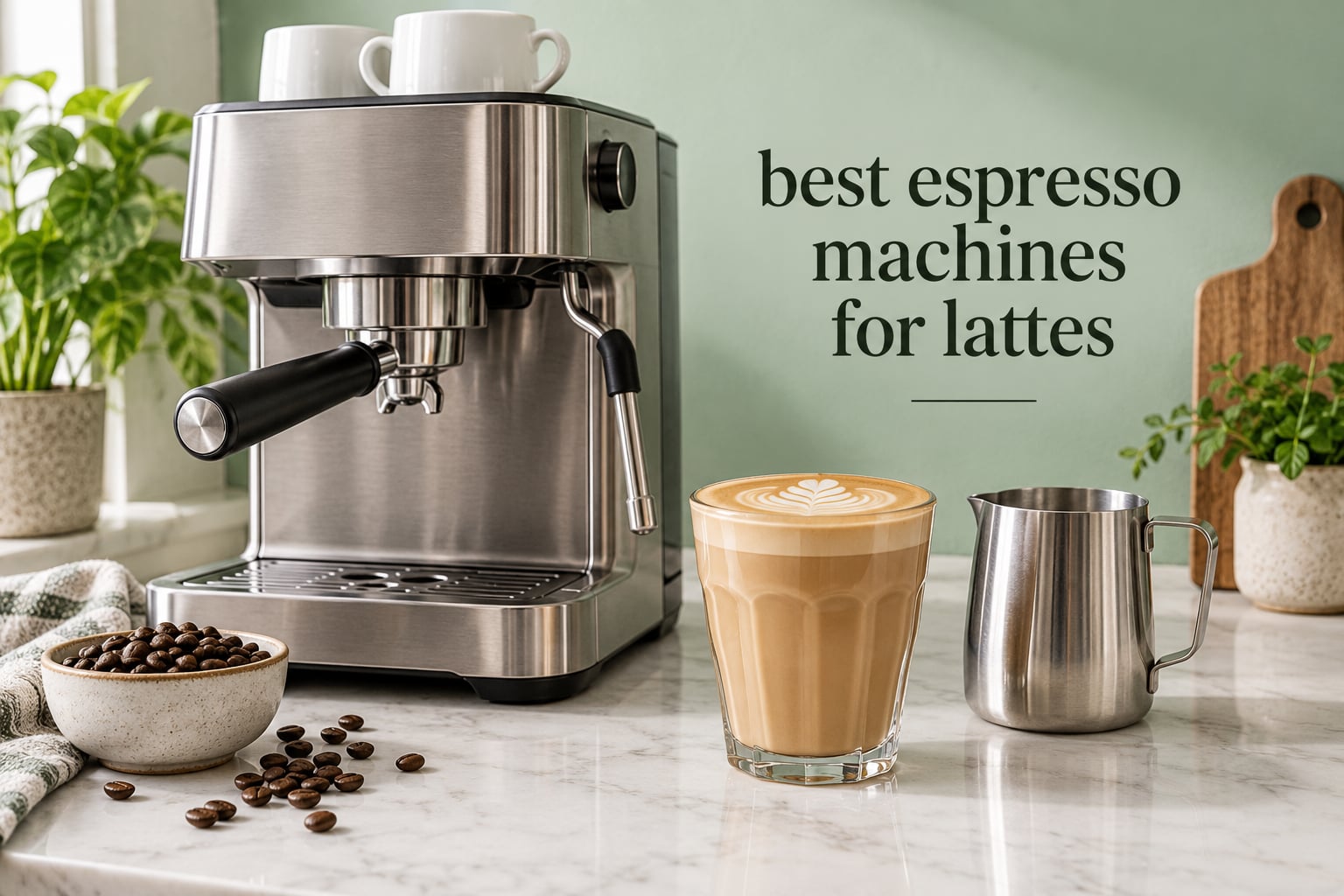
A latte is two jobs in one cup: a properly extracted shot and milk that has been steamed to a glossy microfoam rather than boiled into flat, bubbly froth. The best espresso machines for lattes do both without making you choose between them, which is exactly why so many machines that pull great espresso disappoint once the steam wand comes out.
We spent weeks with these ten machines, pulling shot after shot and texturing pitcher after pitcher, and we judged every one of them on the same four questions. How fast does the machine go from cold to steaming? How much control do I have over milk texture and temperature? Can I make a second drink right after the first? And how much cleanup does it demand before I can make the next one?
This is a latte-first list, not a general espresso list. Every machine here earns its place because of what it does with milk, and we tell you plainly where the milk system falls short. If you are still narrowing the field, our best espresso machines for home guide covers extraction-heavy picks, and best espresso machines for beginners is worth a read if technique is new to you.
Table of Contents
Top 3 Espresso Machines for Lattes

Breville Barista Express
- Integrated conical burr grinder
- Powerful steam wand for microfoam
- PID temperature control
- Pressure gauge for dialing in

CASABREWS CM5418
- 20 bar pump with pressure gauge
- Steam wand for quick microfoam
- Compact counter footprint
- 34 oz detachable tank
Breville Bambino
- Automatic steam wand with texture control
- ThermoJet heats in 3 seconds
- PID temperature regulation
- 54mm portafilter
The Barista Express takes the top spot because it is the only machine here that solves the whole latte workflow in one box: it grinds the beans, extracts the shot with PID-controlled water, and steams milk with enough steam power to produce microfoam thin enough for a rosetta.
The CASABREWS CM5418 earns the value slot because its 20 bar pump and built-in pressure gauge cost far less than rivals and still produce drinkable microfoam, while the Breville Bambino wins on heat-up speed and hands-free frothing in a narrow body that suits small counters.
All 10 Espresso Machines for Lattes at a Glance
| Product | Specifications | Action |
|---|---|---|
| Breville Barista Express |
|
Check Latest Price |
 De’Longhi Stilosa De’Longhi Stilosa |
|
Check Latest Price |
| CASABREWS CM5418 |
|
Check Latest Price |
 Gevi 20 Bar Compact Gevi 20 Bar Compact |
|
Check Latest Price |
 CASABREWS 3700 Essential CASABREWS 3700 Essential |
|
Check Latest Price |
| Breville Bambino |
|
Check Latest Price |
 Mr. Coffee 4-Shot Mr. Coffee 4-Shot |
|
Check Latest Price |
 Chefman CafeMaster Pro Chefman CafeMaster Pro |
|
Check Latest Price |
 De’Longhi Magnifica Evo De’Longhi Magnifica Evo |
|
Check Latest Price |
 atatix 20 Bar atatix 20 Bar |
|
Check Latest Price |
Two columns in that table deserve a note before the reviews. Only the Barista Express, the De’Longhi Magnifica Evo grind whole beans internally, and only the Magnifica Evo froths milk without you holding a pitcher.
Everything else needs ground coffee and a wand, which is not a downgrade so much as a trade: you gain control over texture and lose time.
1. Breville Barista Express: Our Best Espresso Machine for Lattes Overall
Breville BES870XL Barista Express Espresso Machine, Brushed Stainless Steel
- Integrated burr grinder means no separate grinder purchase
- Steam wand powerful enough for thin microfoam and latte art
- PID control makes shots repeatable shot after shot
- Pressure gauge speeds up dialing in
- 67 oz tank needs frequent refills because the machine flushes itself
- Drip tray empties often
- Top and lower side panels are plastic not steel
The Barista Express is the machine we kept coming back to through all of this testing. It is the only one in this roundup that handles the entire latte chain in a single unit: grind, dose, extract, steam, and finish.
Pull a shot and the extraction lands somewhere in the sweet spot without much fuss. PID digital temperature regulation holds the water where it should be, so your second shot tastes like your first instead of drifting hotter or cooler.
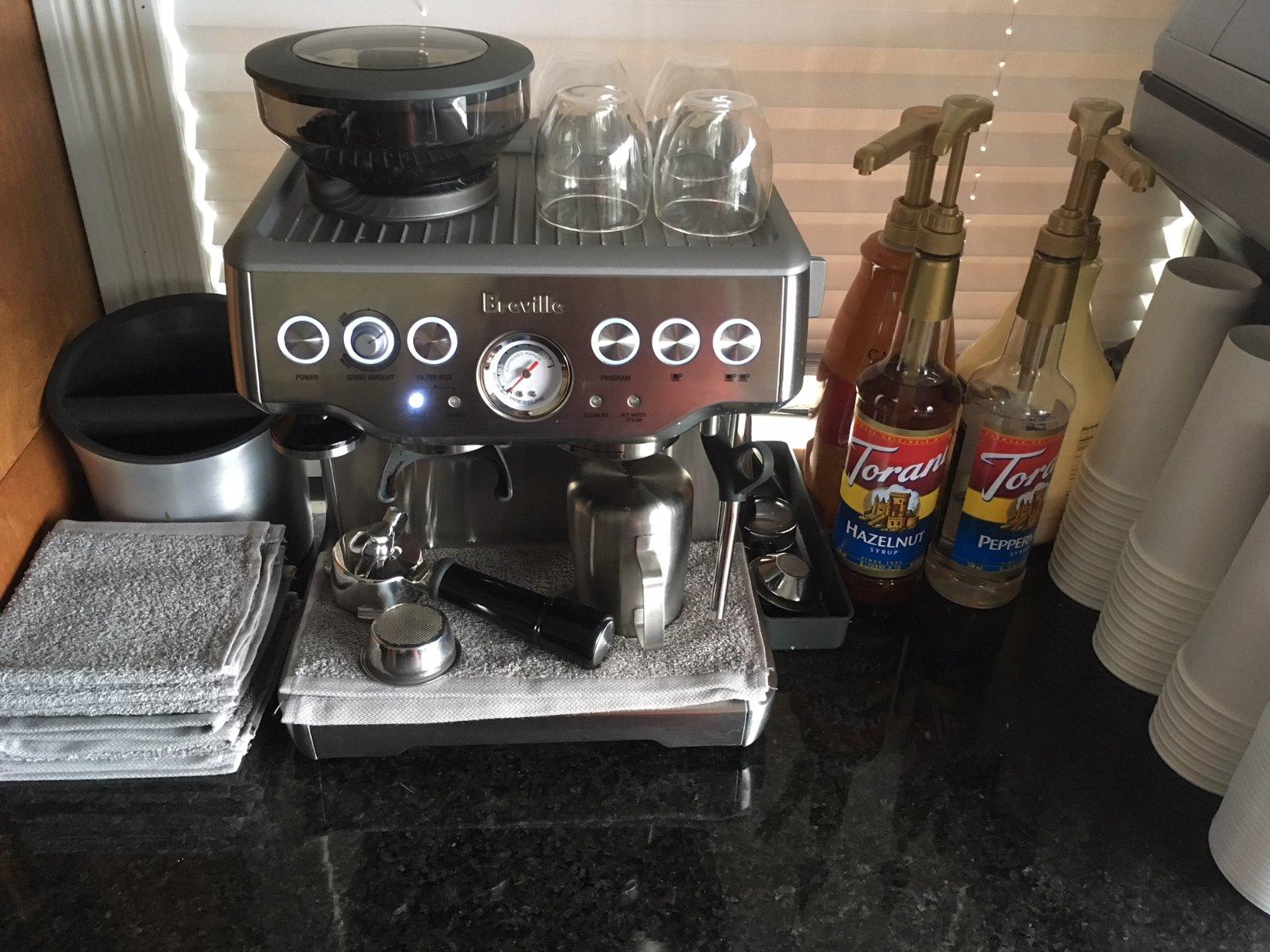
The steam wand is the part that matters most for a latte and it is the strongest here. Steam comes on hard, which is what you need to roll a pitcher into glossy microfoam rather than a foam of large bubbles, and the wand angle gives you control over how you position the pitcher.
The integrated conical burr grinder is a genuine time saver. Grinds fresh directly into the portafilter, with an adjustable grind size dial that covers any roast from light to dark, and a dose trim tool that sweeps loose grounds off the basket rim after tamping.
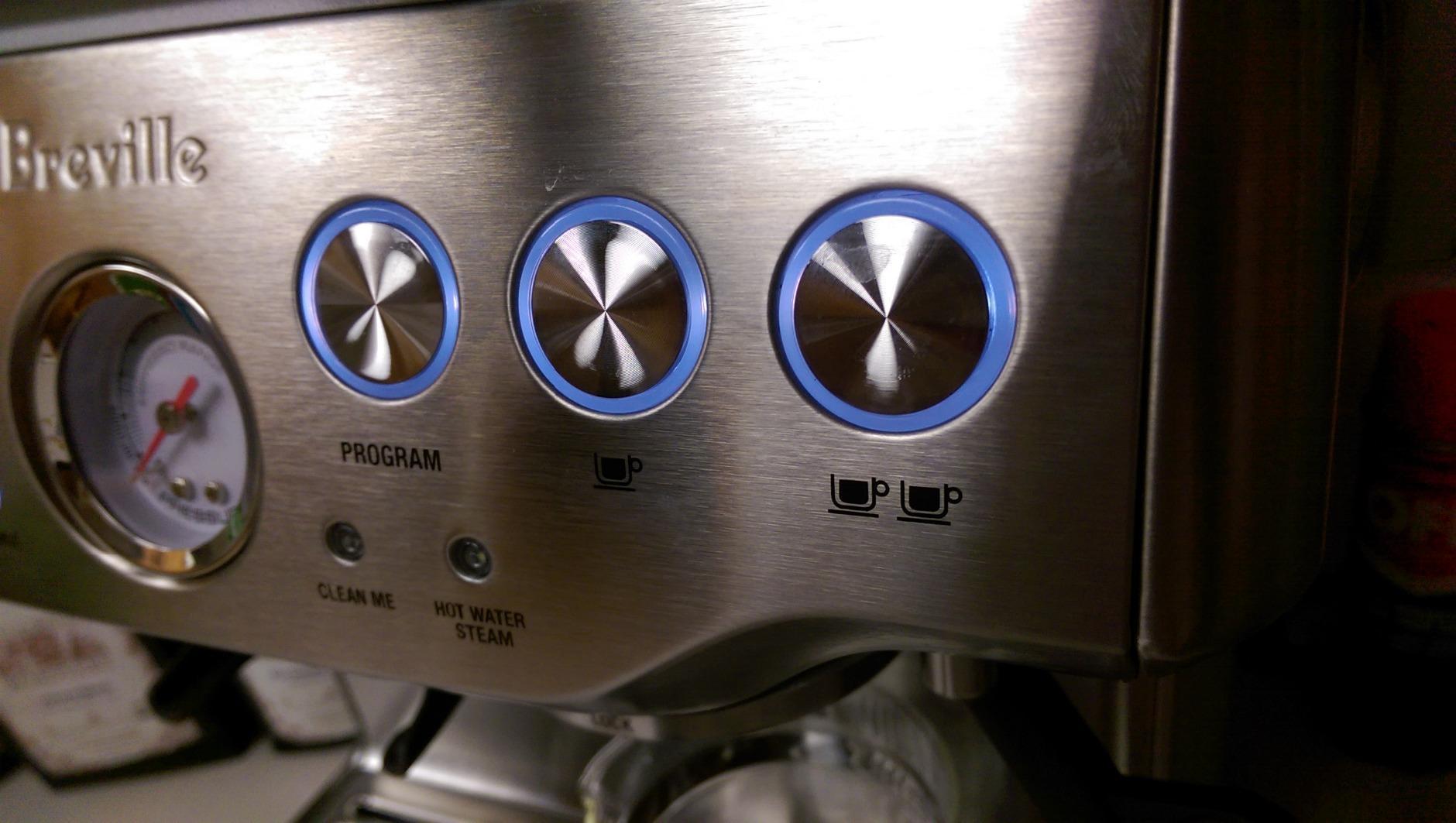
Low pressure pre-infusion ramps the pressure up gradually, which gives the puck an even soak and a more balanced-tasting result in the cup. A pressure gauge sits front and centre so you can watch what the shot is doing instead of guessing.
Who the Barista Express suits
It suits anyone who wants to move from instant coffee to real espresso without buying three separate appliances. Grinder, machine, tamper, jug and cleaning tools all arrive in the box, so the total number of things you must buy is one.
If you drink two or more milk drinks a day and want the texture to be repeatable without thinking about it, the PID loop and the grind dial do most of the adjusting for you. It also works as a learning machine, because the pressure gauge tells you what is happening while you learn to read it.
Where it falls short
The water tank is the most common complaint, at 67 oz, and the machine flushes itself regularly, so a two-drink-a-day household refills it more often than you might expect. The drip tray needs the same attention.
It is also 22.1 pounds and measures 13.8 by 12.5 by 15.9 inches, so it claims a real piece of counter. The plastic top and lower side panels feel less premium than the stainless front, and owners do report long-term grinder and solenoid repairs appearing after a few years of daily use.
2. De’Longhi Stilosa: Best for Lattes in a Very Small Kitchen
De’Longhi Stilosa Compact Manual Espresso Machine, Manual Milk Frother
- Smallest footprint in the roundup
- Stainless steel boiler built for long service
- Manual wand textures milk for cappuccinos and lattes
- Simple to learn and cheap to run
- No built-in grinder so pre-ground coffee is required
- Hands-on workflow takes practice for consistent shots
- Basic accessory set
The Stilosa is the machine to buy when counter space is the constraint that matters most. At 12.13 by 9.45 by 14.17 inches and 8.6 pounds, it is less than half the mass of the Barista Express and it slides into spaces the bigger machines cannot.
It is a manual piston design, which means you push the lever rather than press a button, and the workflow is deliberately hands-on. Grinds go in, you tamp, you pull, you steam. Nothing is automatic and nothing is hidden.
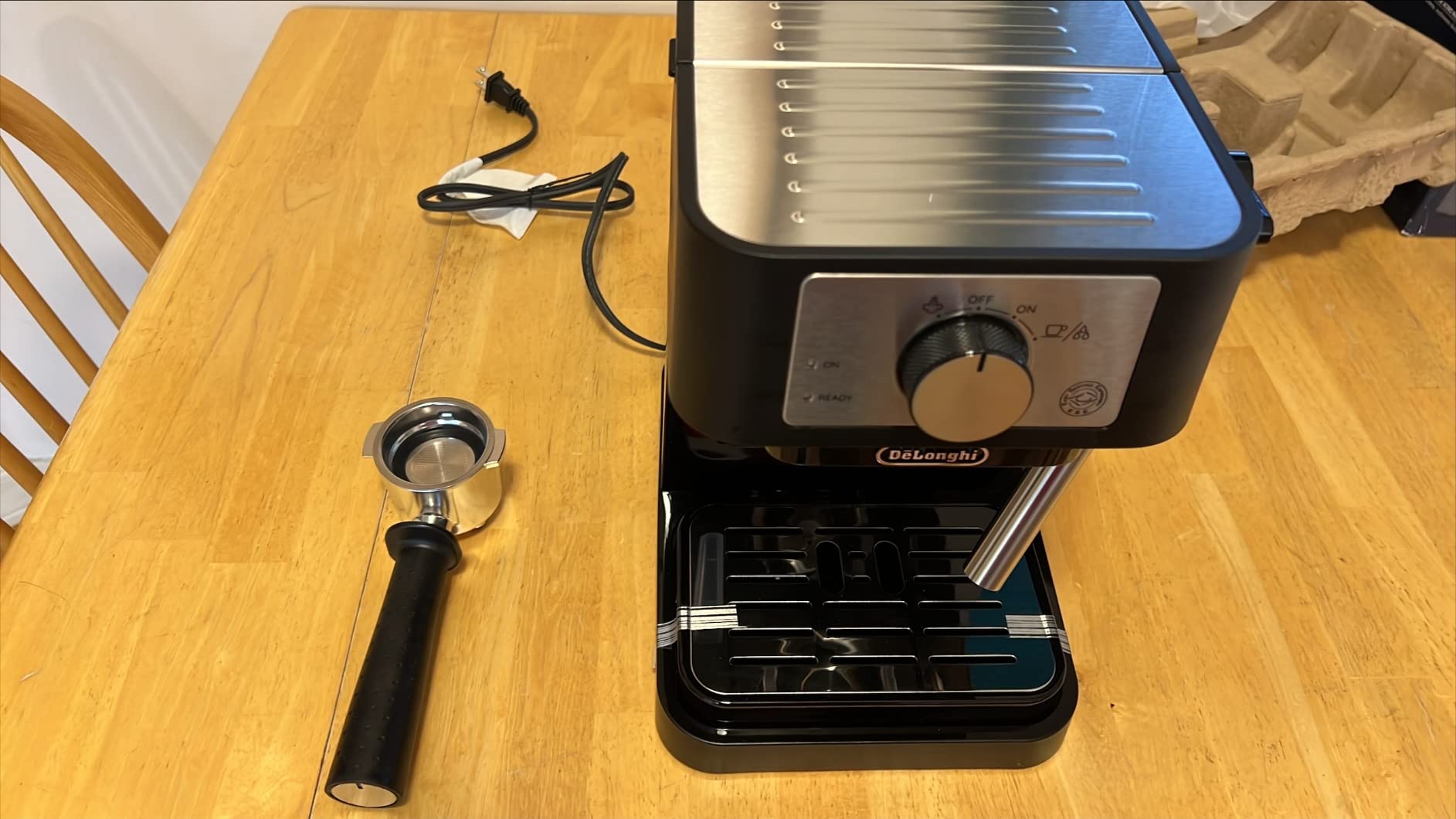
The stainless steel boiler is the part that gives this budget machine its reputation for durability. It is designed to run for years, and De’Longhi lists spare part availability in Europe for five years, which is unusual reassurance at this level.
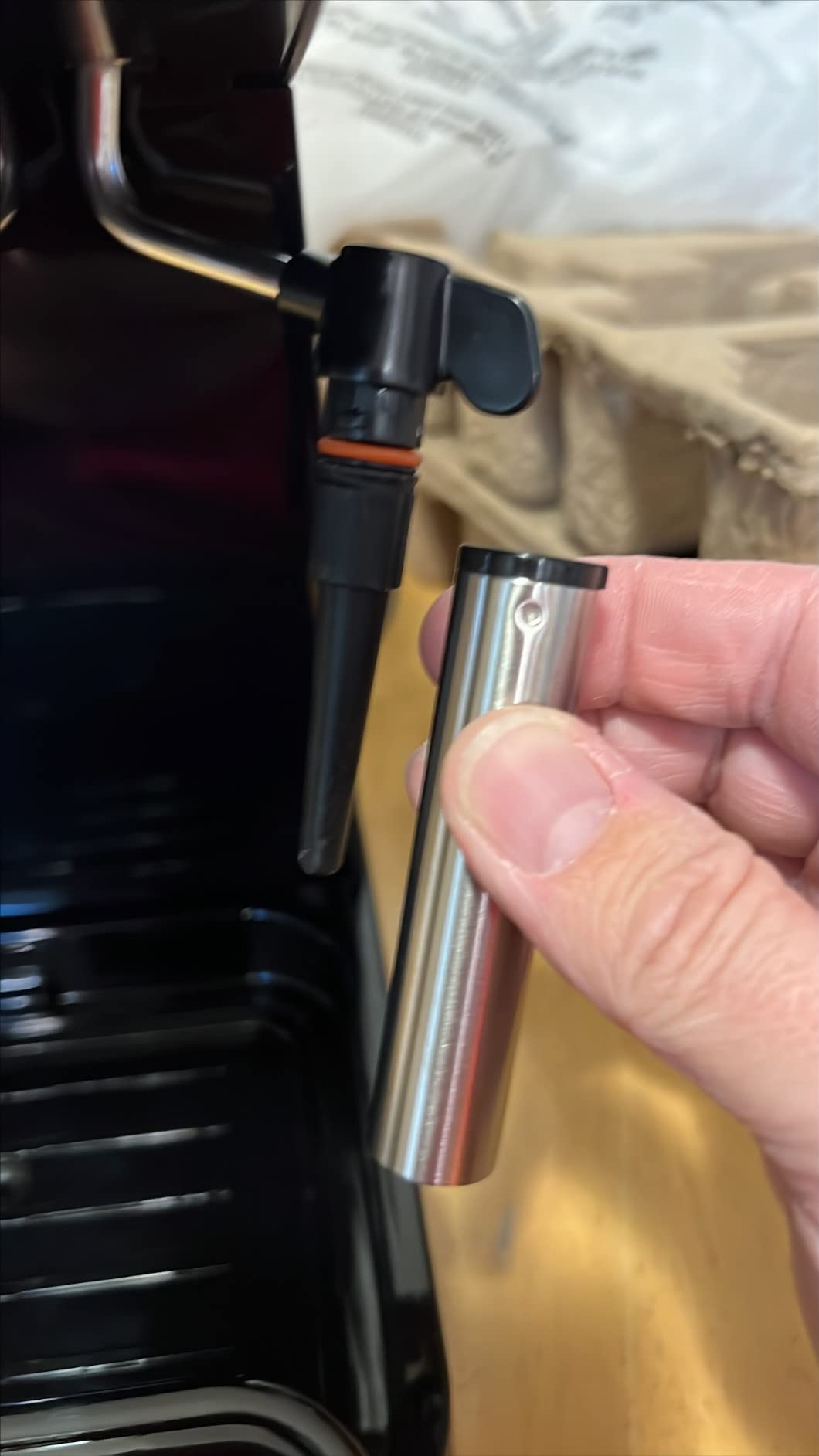
The steam wand is manual but adequate for lattes and cappuccinos. You have to learn the texture yourself, and the pitcher technique matters more here than on a wand with an automatic setting, but the steam is there.
What you give up is clear. There is no grinder, so you are buying pre-ground coffee and losing the freshness that makes espresso taste like espresso, and the included accessory set is basic.
Who the Stilosa suits
It suits a first espresso machine in a rented flat, a dorm room, or a kitchen where the machine has to live in a cupboard between uses. The 1000 ml capacity and single or double shot portafilters cover one or two drinks, not a crowd.
It also suits anyone who wants a manual ritual rather than a gadget. If you enjoy tamping and lever-pulling, the hands-on nature is a feature rather than a flaw.
Where it falls short
Because there is no grinder, the shot quality is capped by the coffee you can buy. Pre-ground beans lose aroma within days, and no amount of technique fixes stale grounds.
The learning curve is real. Owners consistently report that the first few shots are uneven, and the 15 bar figure is a pump rating rather than a guarantee of a well-extracted cup. The wand also gives you no help with temperature, so scorched milk is an easy mistake.
3. CASABREWS CM5418: Top Rated Espresso Machine for Lattes
- Built-in pressure gauge at this price is unusual and useful
- 20 bar pump extracts consistently
- Steam wand produces microfoam quickly
- Compact body suits small counters
- Must cool down between frothing and brewing
- Included plastic tamper is low quality
- No milk pitcher included
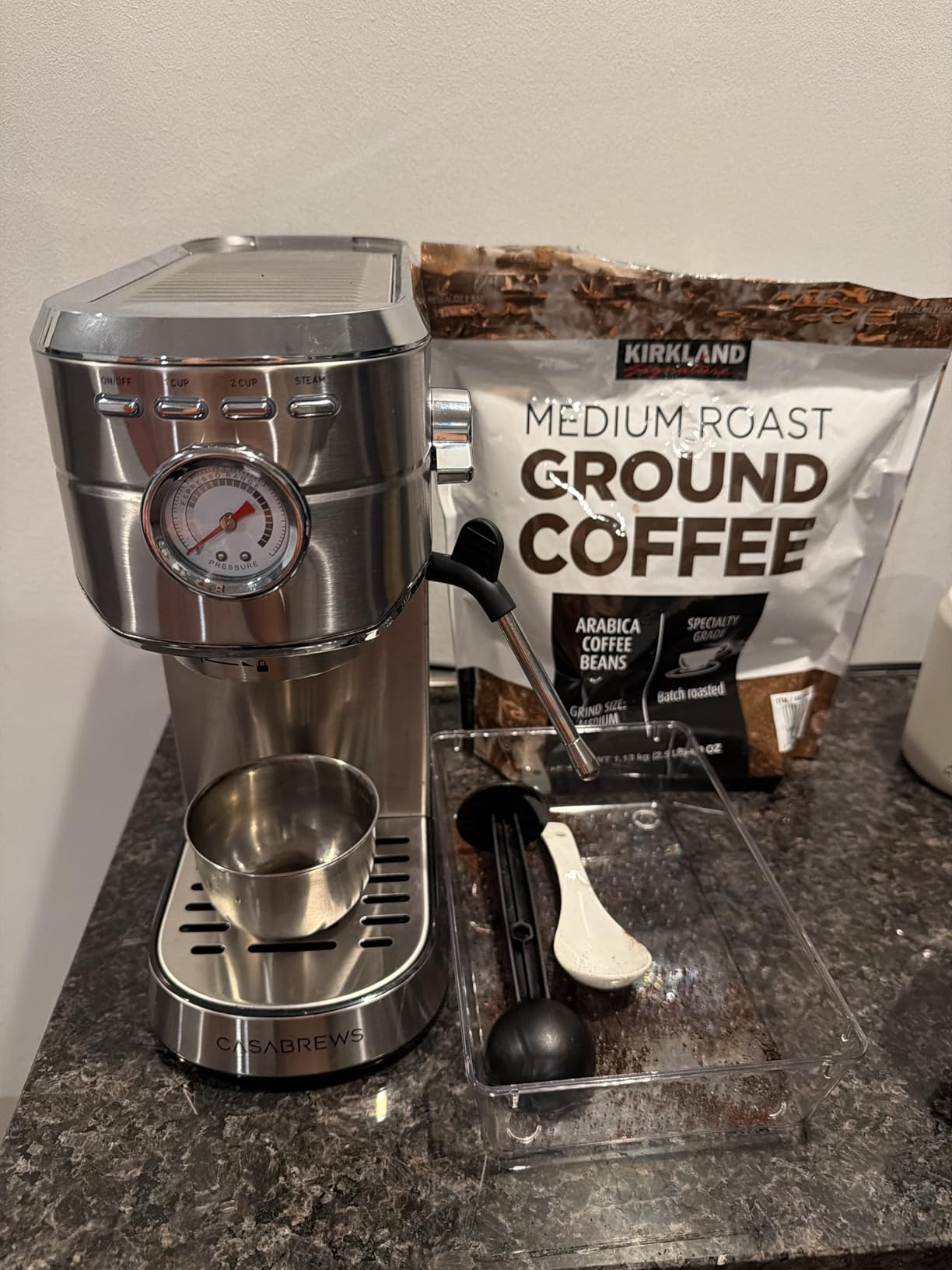
The CM5418 is the machine we would hand to someone who wants a real latte setup without spending serious money. A built-in pressure gauge is the standout feature, and most machines at this level do not include one.
The 20 bar Italian pump drives a 1350 watt boiler, and with fresh ground coffee it produces a rich, sweet shot with visible crema. It is not the most forgiving machine to dial in, but it rewards a finer grind once you get there.
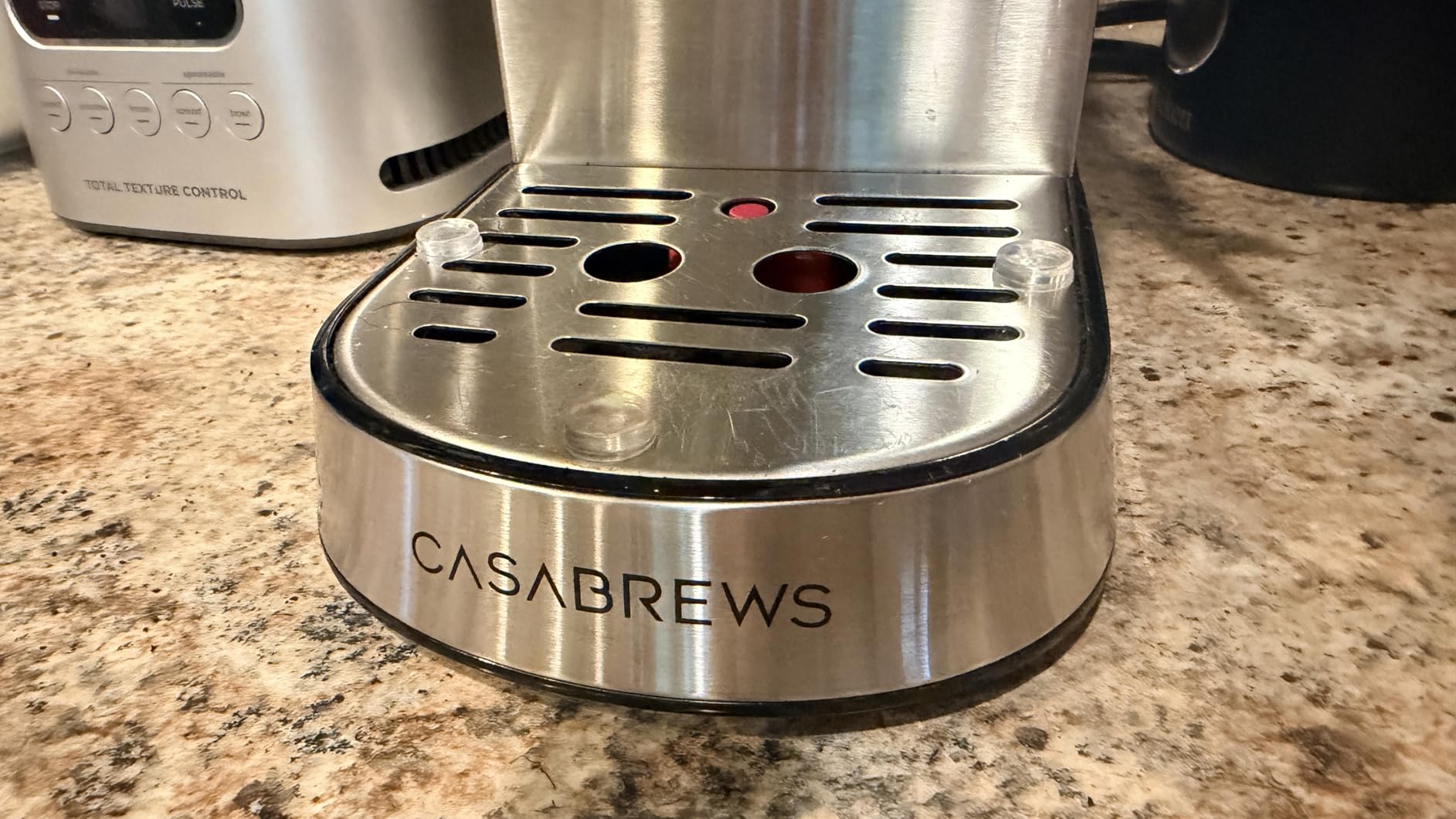
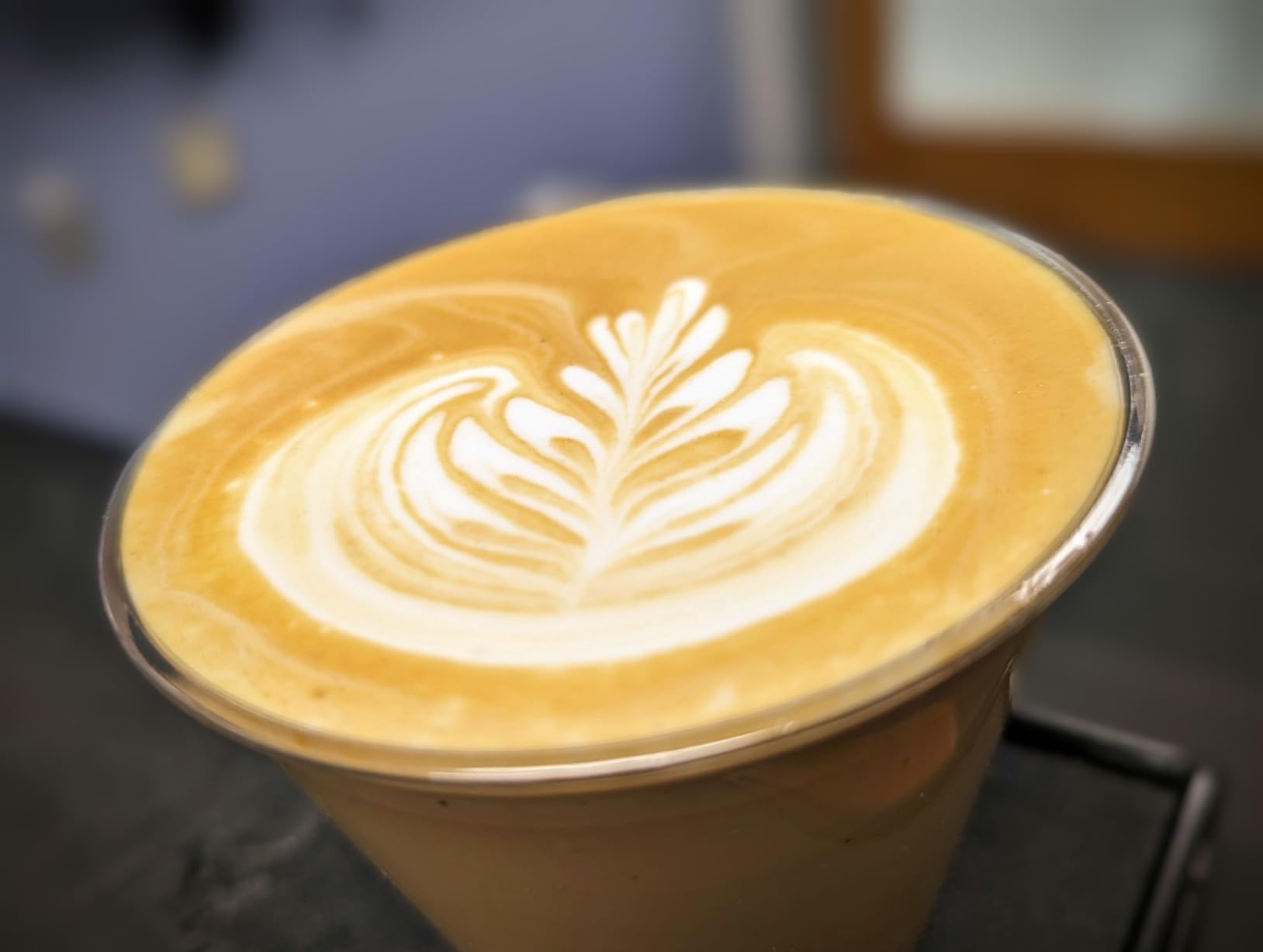
For lattes, the steam wand is genuinely capable. It heats quickly and produces smooth microfoam fast enough that the drink comes together without a long wait, which matters when you are making one on the way out the door.
The body is brushed stainless steel and measures 12.28 by 5.47 by 11.97 inches, so it is genuinely narrow. The 34 oz removable water tank means you refill more often than machines with bigger tanks, but it detaches for filling.
Single and double shot filters come in the box along with the 51mm portafilter, a tamper, and a set of recipes. Colour variants include Sapphire Blue, Pastel Green, Creamy, Blue Willow, Black and A-Silver.
Who the CM5418 suits
It suits daily latte drinkers on a budget who already own, or will buy, a burr grinder. Paired with a separate grinder it covers the whole workflow for a fraction of the price of an integrated-grinder machine.
It also suits anyone who likes seeing numbers. The pressure gauge turns dialing in from guesswork into a small feedback exercise, which is a better teacher than a machine that hides everything behind presets.
Where it falls short
The cool-down cycle is the biggest practical issue. After frothing, the machine enters over-heating protection and you cannot brew immediately, so the shot-then-steam order sometimes has to be reversed.
No milk pitcher is included and the plastic tamper is an obvious first upgrade. Some buyers also report leaking from the bottom of the water container, and the frother nozzle sits low enough to be awkward with a larger cup.
4. Gevi 20 Bar Compact: Best for Dialing In With a Pressure Gauge
Gevi 20 Bar Compact Espresso Machine for Home,Latte、Cappuccino Coffee Maker
- Pressure gauge with NTC temperature control and pre-infusion
- Removable froth nozzle is easy to clean
- One-touch single and double shot buttons
- Compact stainless steel body
- Machine shuts off after steaming so a second shot waits
- Included plastic tamper is cheap
- Steam wand is loud and takes practice
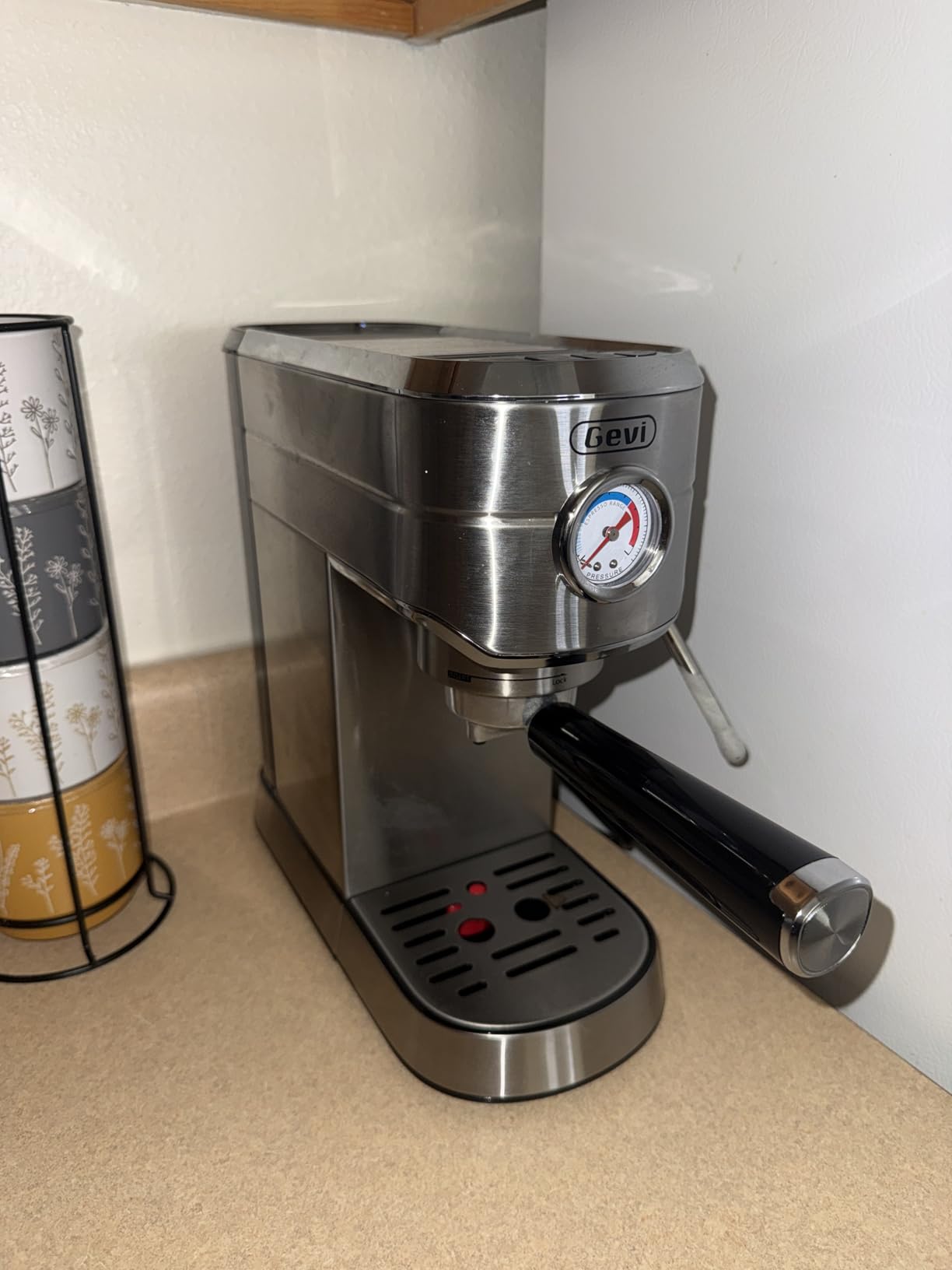
The Gevi ECMG0 is the machine here that treats dialing in as a first-class activity. A 20 bar pump, NTC temperature control, pre-infusion and a pressure gauge give you four instruments instead of one.
In practice that means the shot is easy to reason about. You change one variable, watch the gauge, and repeat, which turns the learning curve into something short rather than mysterious.
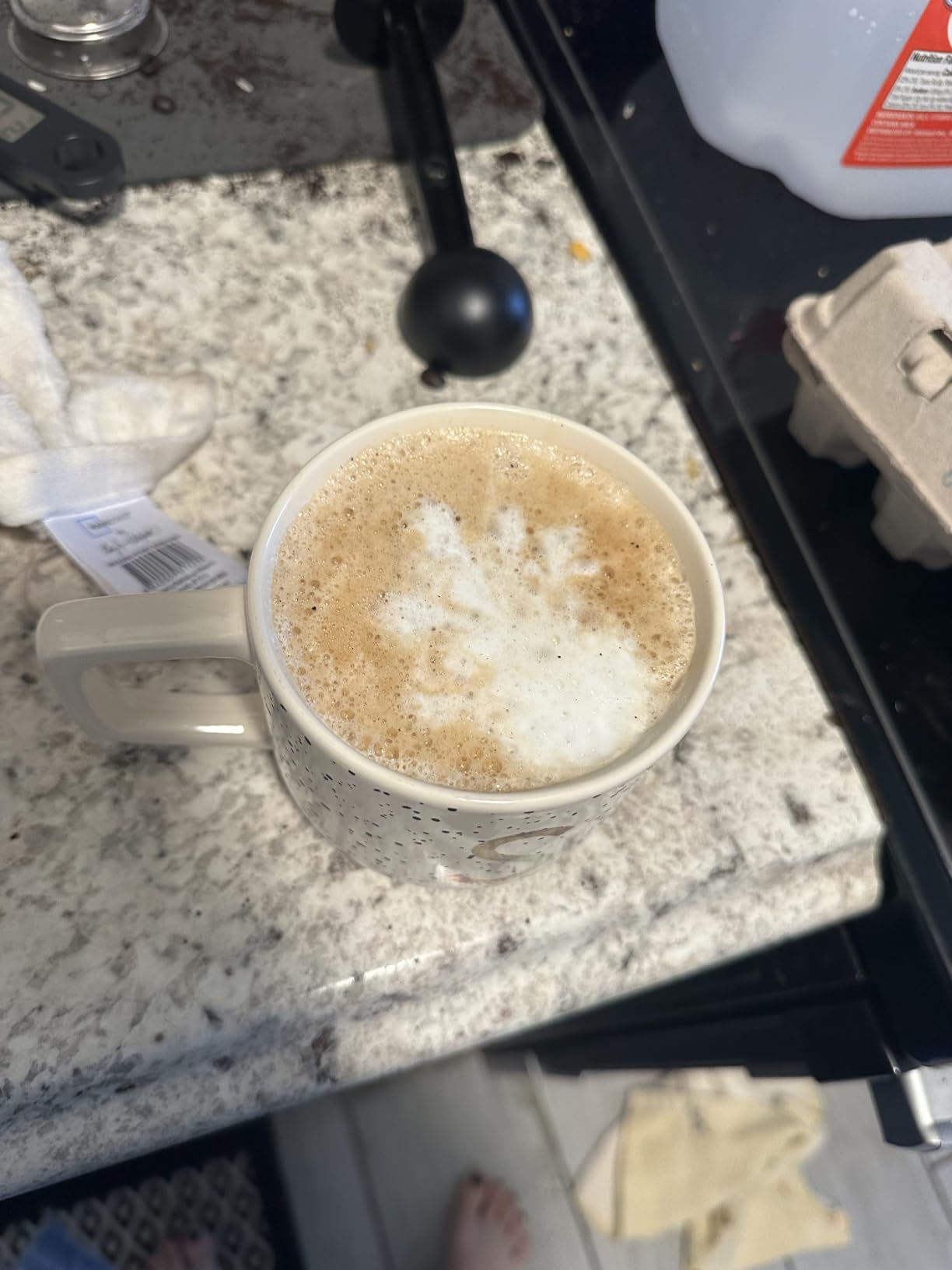
The steam wand produces silky microfoam and uses a removable froth nozzle, which is a small design decision that pays off every day. Pulling the nozzle off and rinsing it takes seconds instead of the usual soak-and-scrub.
Buttons for single and double shots remove the guesswork from dose volume, and the cup warmer on top plus a hot water function for Americanos and tea round out a tidy feature set.
The housing is full stainless steel rather than plastic with a metal wrap, and at 12.3 by 5.5 by 12 inches it stays narrow. A 12-month warranty comes with lifetime technical support through authorized channels.
Who the Gevi suits
It suits the person who wants to understand what they are doing. If you enjoy adjusting a grind and watching pressure move, the gauge and pre-infusion make that process visible in a way most machines at this size do not.
It also suits small kitchens, since the narrow footprint and the one-liter tank are proportionate to a household making a drink or two a day rather than a queue.
Where it falls short
The shutdown behaviour after steaming is the main annoyance. The machine powers down once you finish frothing, so pulling a second shot means waiting for it to come back on.
The included plastic tamper is a placeholder, the single and double puck sizes are small enough that you reload often, and the steam wand is loud and demands practice before the foam stops looking bubbly.
5. CASABREWS 3700 Essential: Most Versatile for Everyday Lattes
CASABREWS 3700 Essential Stainless Steel Espresso Machine with Steam Wand
- Large 43.9 oz tank rarely needs refilling
- Steam wand makes smooth creamy foam
- Compact body with a removable drip tray
- Long-term owners report solid performance
- No pressure gauge on this model
- Single boiler means a wait when switching modes
- Included plastic tamper feels flimsy
The 3700 Essential is the straightforward budget answer. It has a 20 bar professional pump, a 1350 watt heating system and a steam wand, and it does not try to be clever about any of it.
With fresh grounds it produces rich, flavorful espresso with good crema, and the steam wand makes the smooth, creamy foam you need for a latte. Owners report two-plus years of solid performance, which is worth more than a feature list.
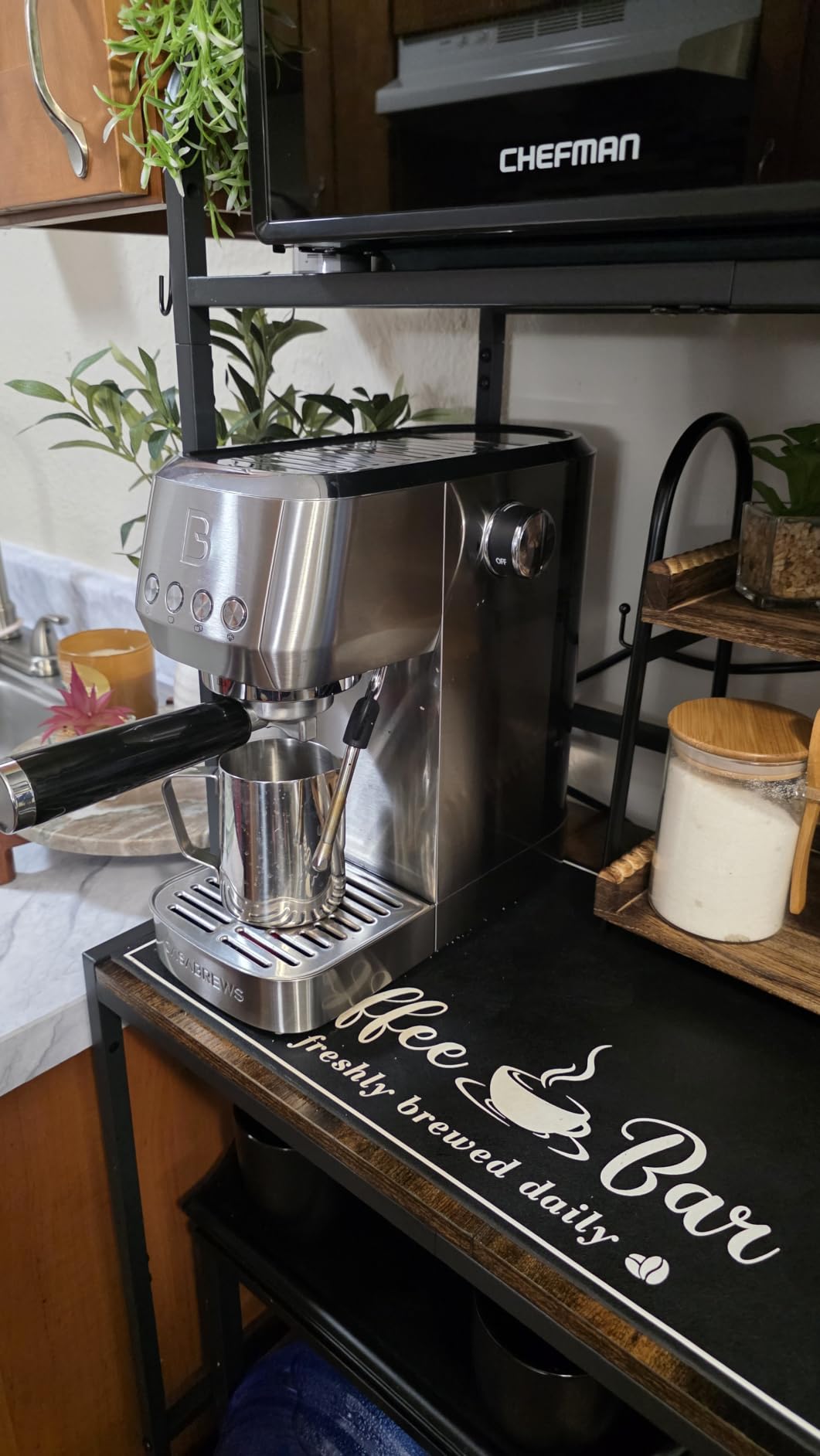
The 43.9 oz detachable water tank is the quiet hero here. It is large enough that most households refill it once or twice a week rather than daily, and it detaches for filling.
Construction is brushed stainless steel and the footprint is 12.6 by 5.7 by 12.5 inches at 8.1 pounds. It heats up quickly and holds pressure consistently over long sessions.
The one and two cup filters, portafilter, tamper and a recipe booklet are in the box. Finish options include Black, Pastel Green, A-Silver, Creamy and Sapphire Blue.
Who the 3700 Essential suits
It suits a household making several milk drinks a day on a single boiler budget, and anyone who does not want to hunt for a grinder, a pitcher or a tamper separately.
It also suits people who dislike gadgetry. Buttons and a dial, no menus and no firmware, and cleaning is a removable drip tray and a water tank you can take to the sink.
Where it falls short
There is no pressure gauge on this model, so dialing in happens by taste and by results rather than by observation. That is the main thing you give up against the CM5418.
Because it is a single boiler, there is a wait of a few seconds when switching between brewing and steaming, and the steamer has a continuous run-time limit. Some owners also find extraction inconsistent and report the steam control dial drifting out of position during extraction.
6. Breville Bambino: Best Compact Machine With Hands-Free Milk
- Automatic steam wand adjusts milk temperature and texture
- ThermoJet reaches extraction temperature in about 3 seconds
- PID control and low pressure pre-infusion
- Compact body suits tight counters
- No integrated grinder so a burr grinder is a separate purchase
- Small water tank for its footprint
- Single boiler so no simultaneous brewing and steaming
The Bambino is the machine to buy if counter space is tight and you still want hands-free milk. It measures 13.7 by 6.3 by 12 inches at 10.9 pounds, and the automatic steam wand does the texture work for you.
The heating system reaches extraction temperature in about three seconds, which is among the fastest here and the one you notice most in a morning routine. No waiting for a boiler to come up before the first shot.
For a latte drinker the automatic wand is the key feature. It stops the milk at a set temperature and texture, so you get repeatable foam without learning the pitcher angle yourself, and the result is closer to microfoam than most manual wands at this size.
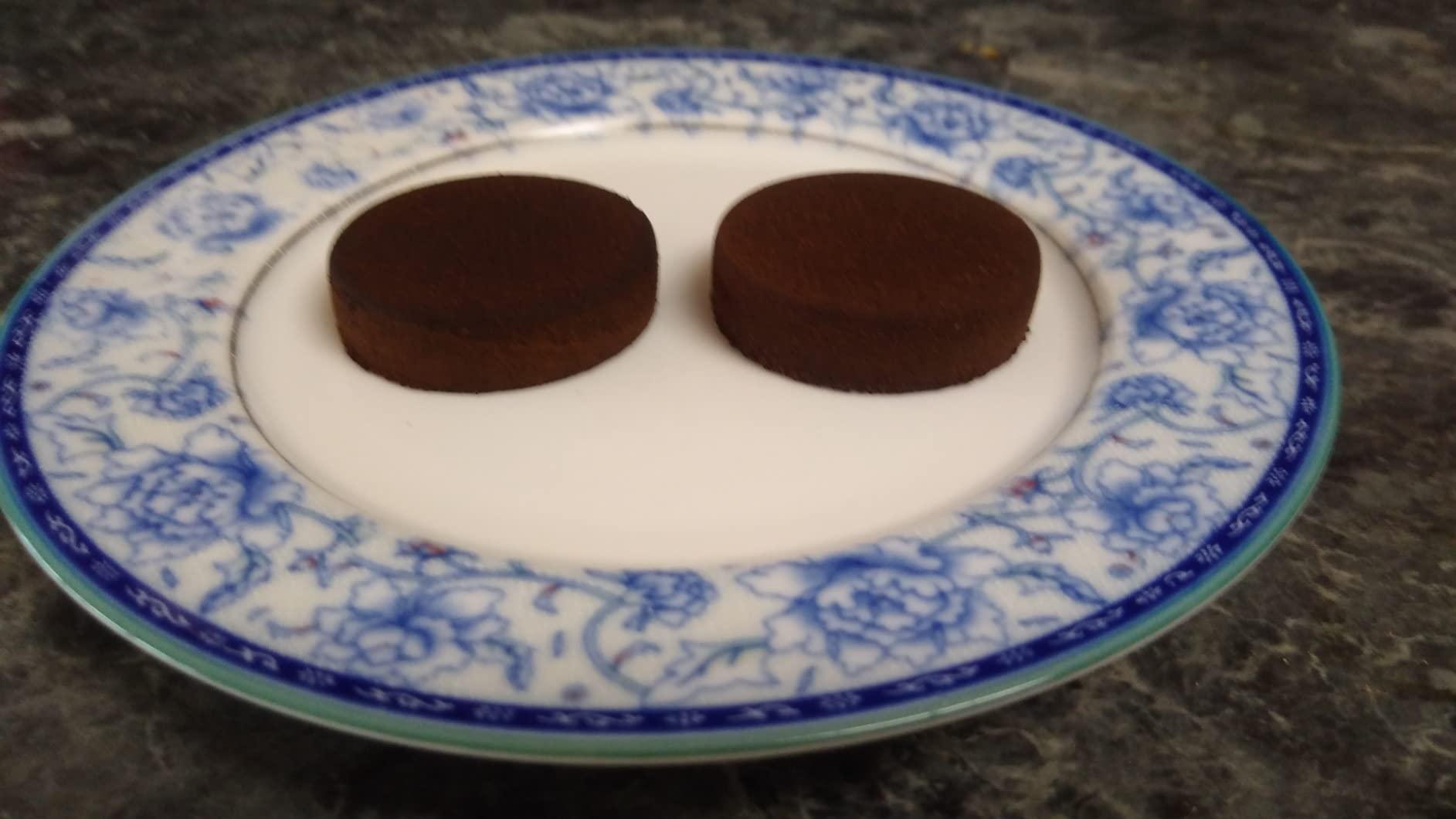
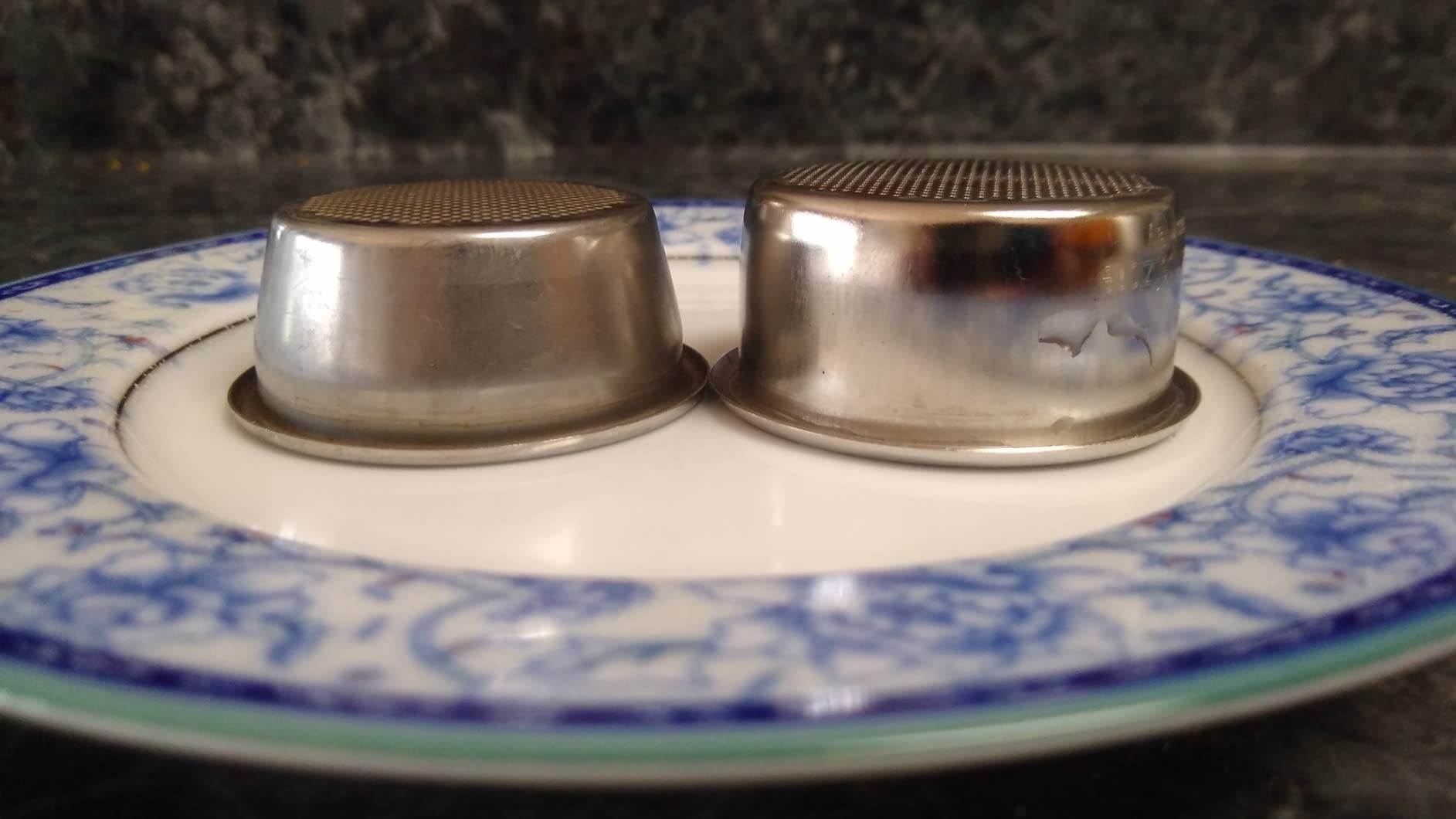
Extraction is handled by PID digital temperature regulation with low pressure pre-infusion, and the 54mm portafilter holds a 19 gram dose with single and dual wall baskets in the box.
Accessories cover most of what you need: milk jug, portafilter, tamper, filter baskets, a steam wand cleaning tool and descaling powder. It carries a one-year limited warranty.
Who the Bambino suits
It suits anyone making one or two drinks a day in a kitchen where a full size machine will not fit, and anyone who wants the milk step handled without practice.
It also suits a first espresso machine purchase, because the automatic wand removes the hardest skill while the rest of the workflow stays hands-on enough to learn properly.
Where it falls short
There is no integrated grinder, so a separate burr grinder is required and freshness is on you. The water tank is small relative to the machine footprint and refills come up often.
Because it is a single boiler, brewing and steaming cannot happen at the same time, which means back-to-back drinks for a family mean a short wait. The manual workflow still takes practice to get consistent shots.
7. Mr. Coffee 4-Shot Steam Espresso Maker: Best for Batch Lattes
Mr. Coffee 4-Shot Steam Espresso Cappuccino and Latte Maker with Stainless Steel Frothing Pitcher
- Extra-large portafilter brews up to 4 shots at once
- Integrated frothing wand for cappuccinos and lattes
- Stainless steel frothing pitcher included
- Marked water pitcher and measuring scoop in the box
- Steam espresso rather than pump pressure extraction
- Mostly plastic and metal build
- No pressure gauge
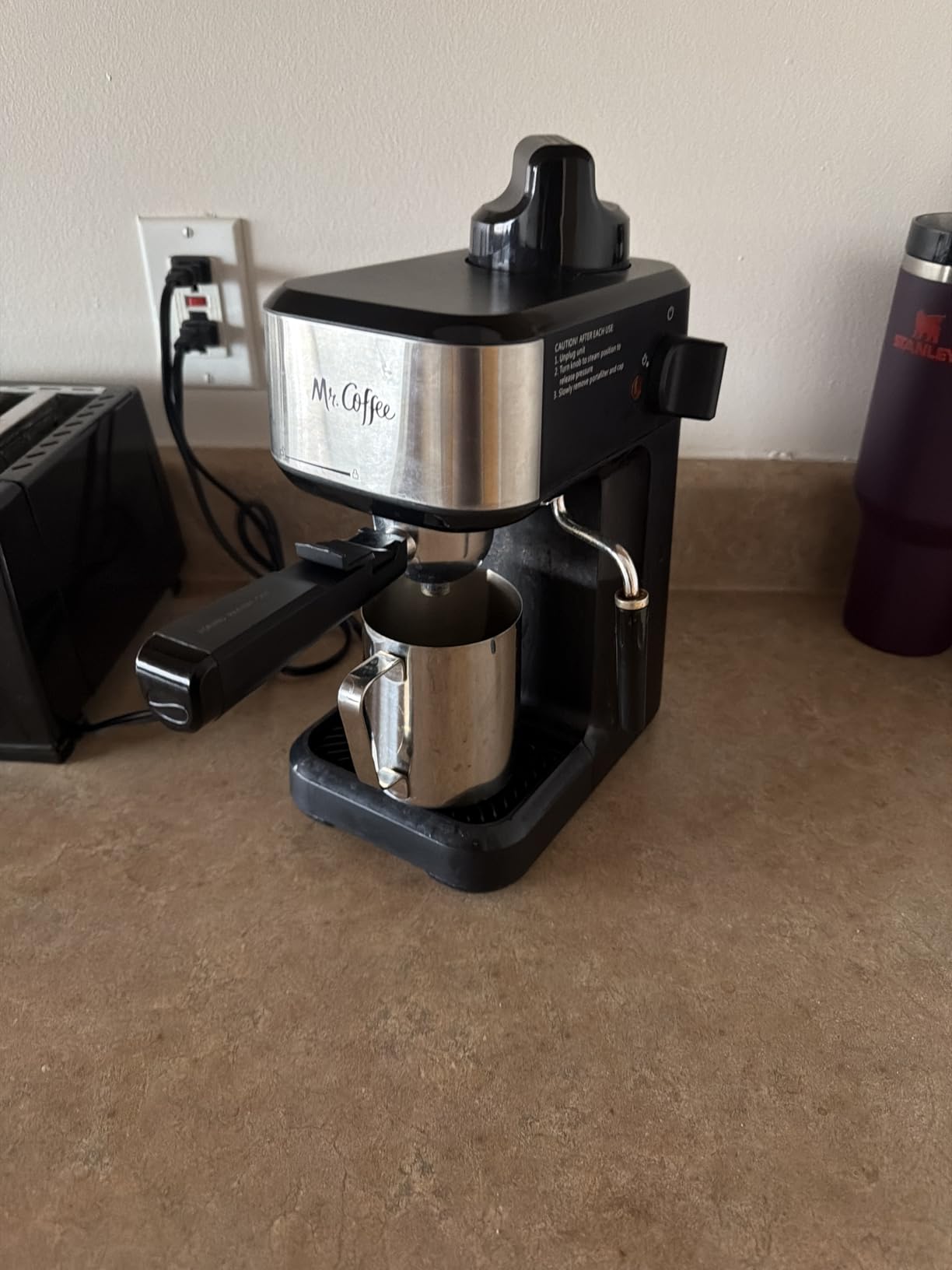
The Mr. Coffee 4-Shot solves a problem the other machines here do not: two or more drinks at once. The extra-large portafilter brews up to four shots of espresso in a single pass.
That changes the maths for a household. One shot at a time means a two-minute cycle per drink, while a four-shot brew means the whole table is served from one pull.
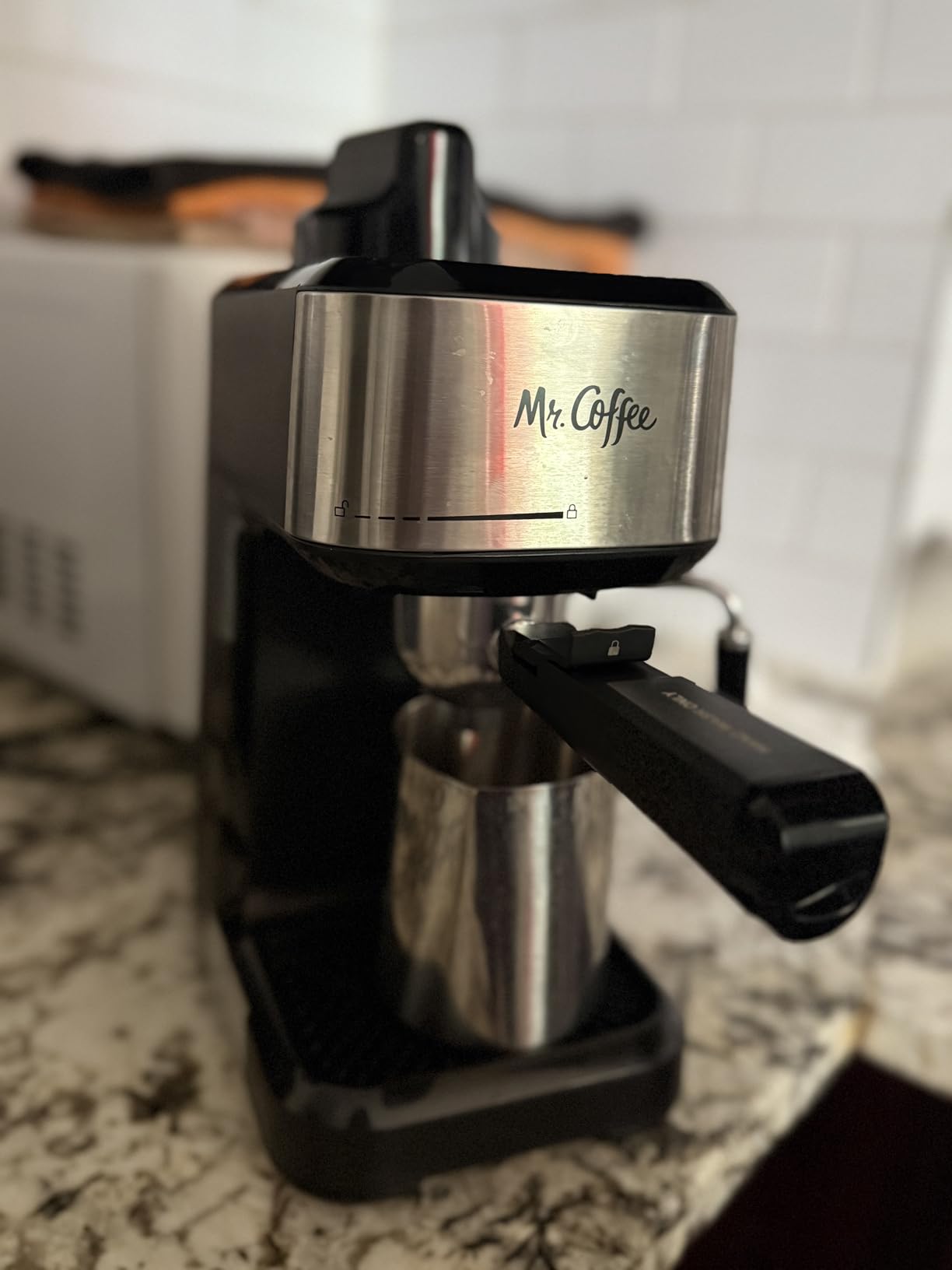
Milk is handled by an integrated frothing wand that dispenses straight into the cup, and a stainless steel frothing pitcher is included, which is unusual at this level. Most buyers would have bought one separately.
A marked water pitcher and a measuring scoop round out the box, so the proportions are repeatable. Operation is a matter of buttons, and cleanup is a wipe of the wand.
At 1.3 pounds and 11.2 by 11.2 by 15 inches it is the lightest machine here and it is nearly portable in size terms. Power draw is 1200 watts, so it can run on a standard kitchen circuit.
Who the 4-Shot suits
It suits anyone who serves more than one person at a time, or who wants to make a strong latte in the morning rather than a single mild one. Four shots in the portafilter is the closest thing here to the strong double-shot lattes people ask for.
It also suits a first machine on a tight budget, since the frothing pitcher and measuring tools are included and there is very little to learn.
Where it falls short
This is steam brewing rather than pump pressure extraction, and there is no pressure gauge, so shot strength depends more on grind and tamping than on any control you have.
The build is mostly plastic and metal in a square tower footprint, which is visible and tactile rather than hidden. Brew volume is basic, so it does one job per pass rather than a range of recipe adjustments.
8. Chefman CafeMaster Pro: Best for Large Reservoir and Simple One-Touch Lattes
- 1.8 liter detachable reservoir serves a group without refills
- Detachable frother dispenses milk straight into the mug
- One-touch controls keep the workflow simple
- Built-in internal cleaning function
- Detachable milk frother needs regular cleaning
- Ground coffee workflow with no integrated grinder
- Stainless and plastic build is lighter duty
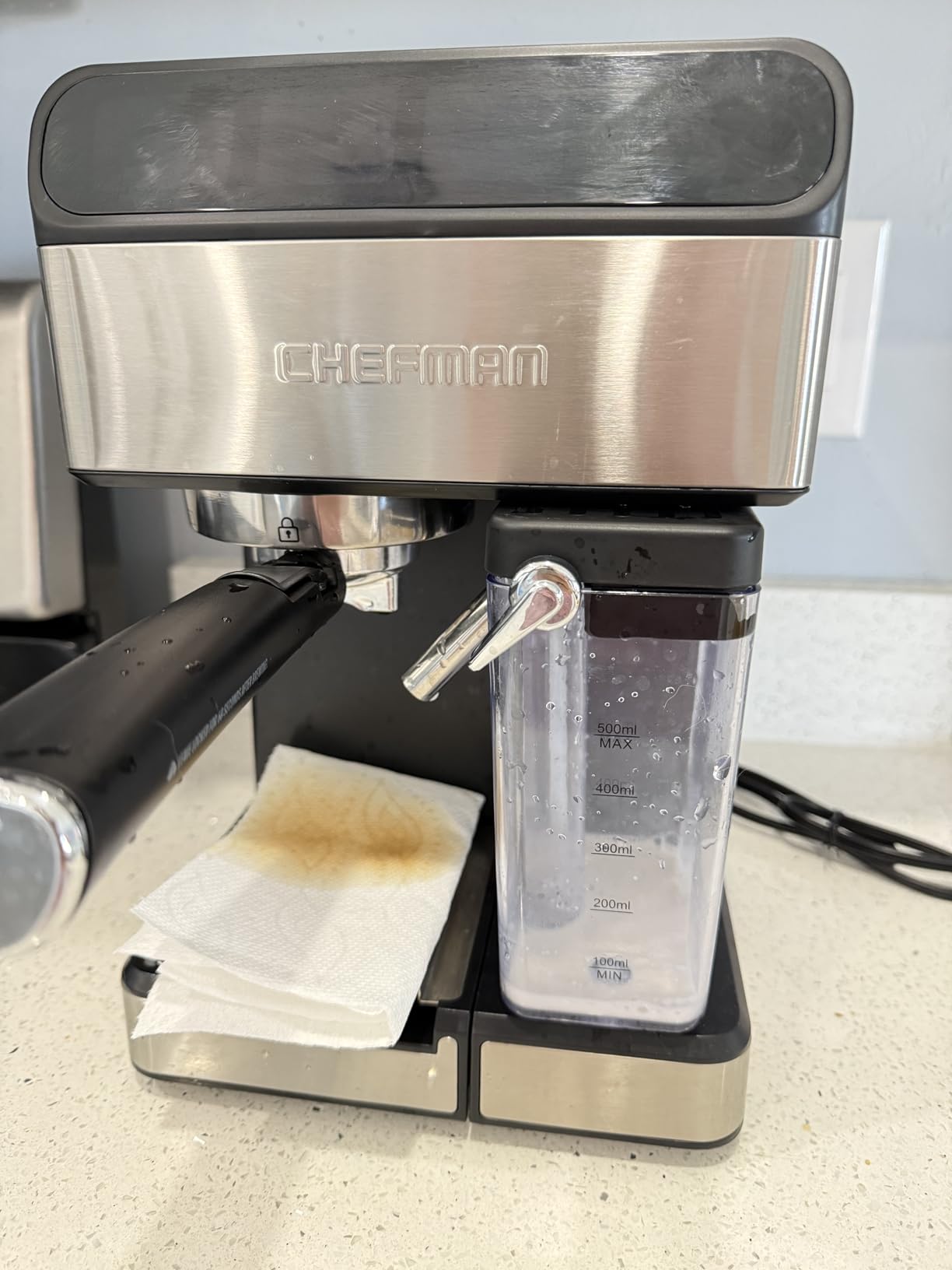
The CafeMaster Pro is a 6-in-1 machine, and the part that matters for lattes is the detachable milk frother. It sits under the group head and dispenses steamed milk directly into the mug.
Because the frother detaches entirely, it can go into the fridge between uses instead of living on the machine, which matters in a kitchen where counter space is contested.
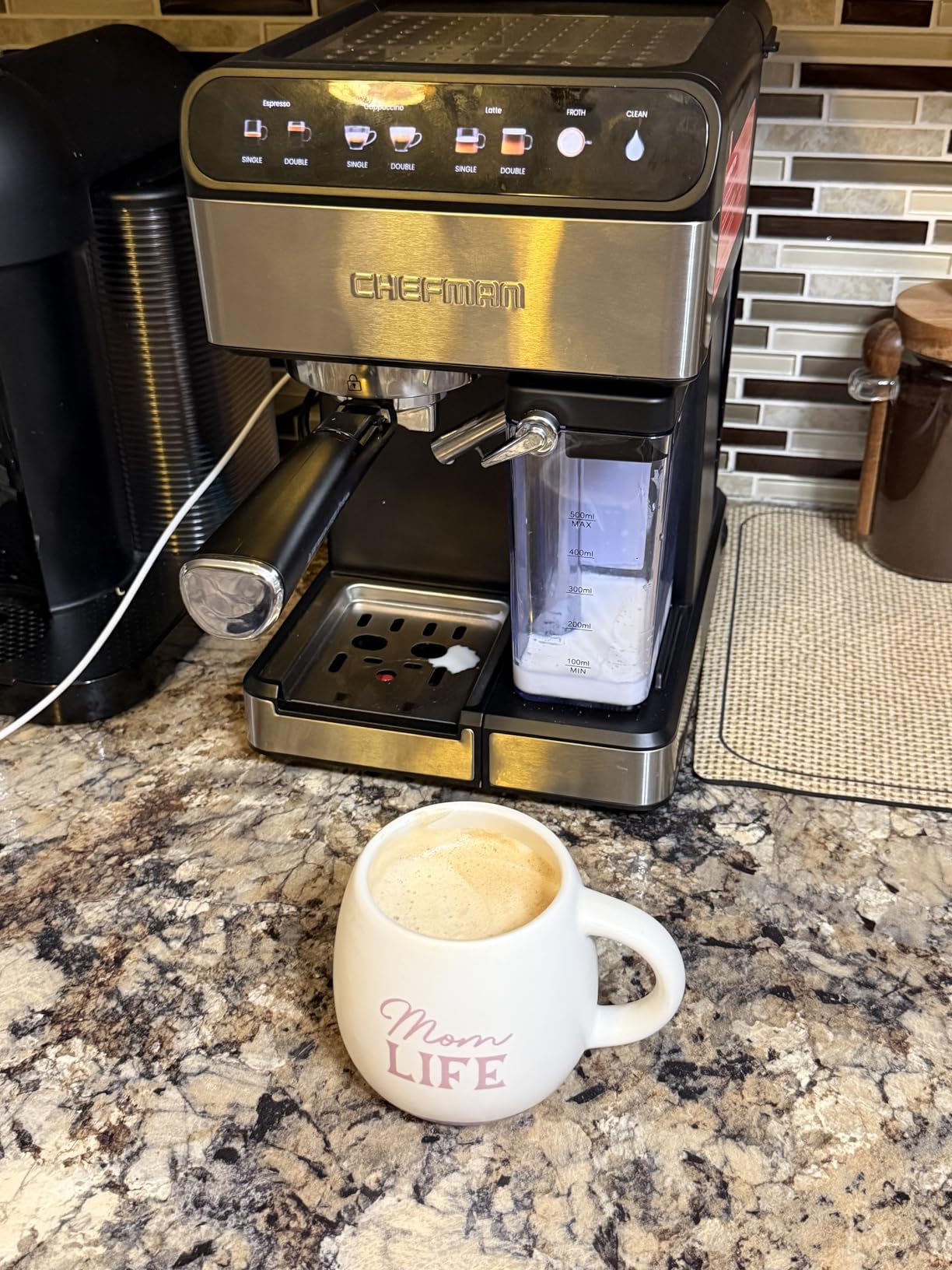
The 15 bar pump and 1350 watt draw are adequate for ground coffee, and one-touch controls handle single and double shot brewing and frothing without a menu to learn. A coffee scoop and tamper are included.
The 1.8 liter detachable reservoir is unusually large, so a shared machine goes days without a refill. There is also a built-in internal cleaning function.
The machine is 11 by 8.3 by 12.6 inches at 10.9 pounds and it is cETL approved with a one-year Chefman assurance.
Who the CafeMaster Pro suits
It suits shared kitchens, offices and family homes where several people make drinks through the day and nobody wants to refill a tank mid-morning. The touchscreen also suits users who would rather tap than operate a lever.
It suits anyone who wants milk poured into the mug rather than jugs cleaned at the sink, since the frother does the pour and detaches for storage.
Where it falls short
The detachable frother needs regular cleaning, and a frother nobody cleans turns into a problem within weeks. That is the ongoing cost of the hands-free workflow.
There is no integrated grinder, so you supply ground coffee yourself, and the stainless and plastic build is lighter duty than premium machines. Extraction quality depends entirely on how well you dose and tamp.
9. De’Longhi Magnifica Evo: Best Super-Automatic for Lattes With No Technique
De’Longhi Magnifica Evo Automatic Espresso Machine, Milk Frother, Silver
- One-touch recipe presets make a good latte repeatable
- Automatic LatteCrema system handles milk for you
- Adjustable grind size
- strength and temperature
- Removable dishwasher-safe parts and auto clean cycle
- Large countertop footprint at 19.53 by 12.09 by 16.06 inches
- Grinder and boiler are noticeably loud
- Daily maintenance includes refills
- grounds bin and carafe washing
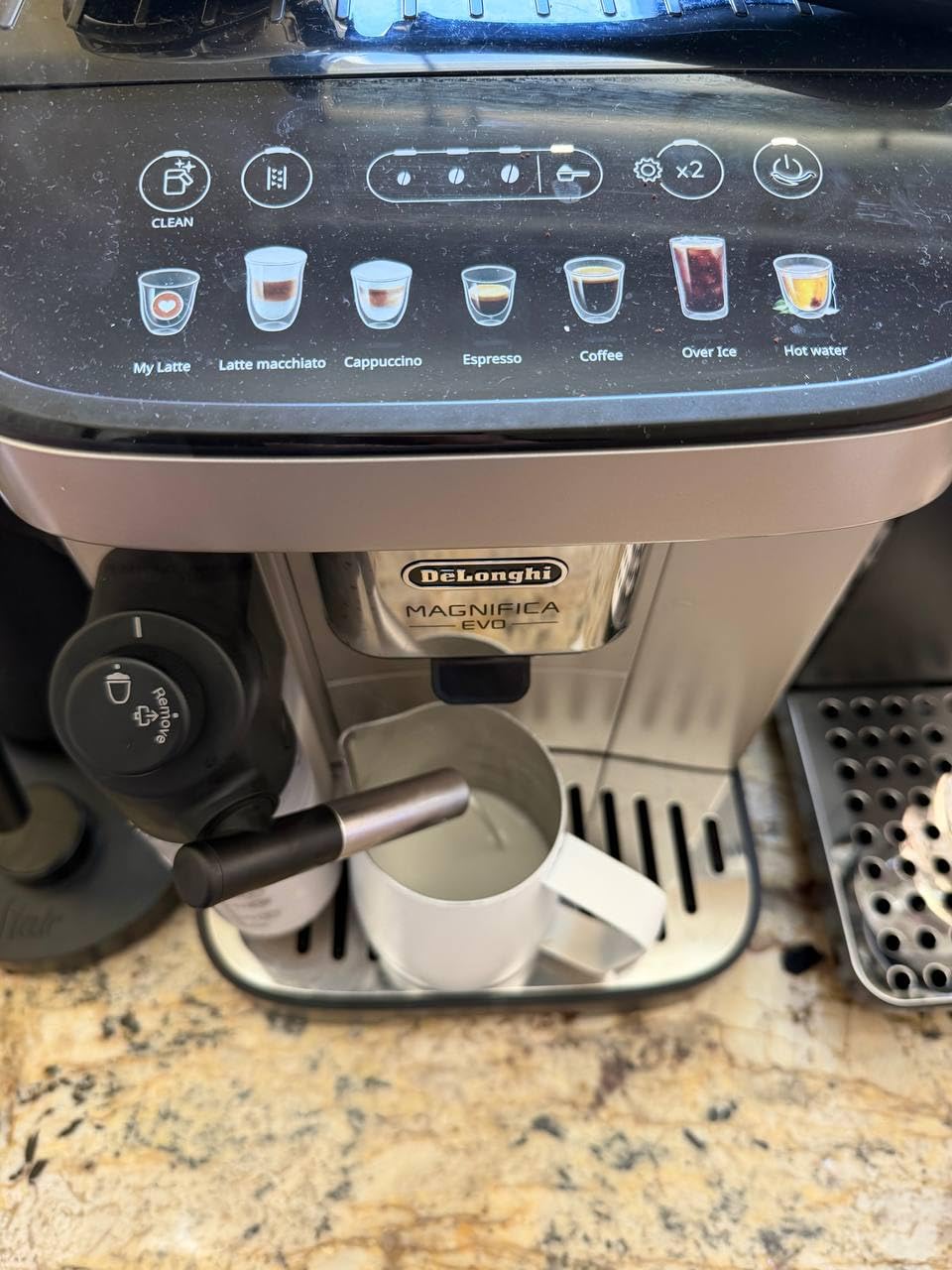
The Magnifica Evo is the machine for someone who does not want to learn a technique at all. It grinds beans, extracts, froths milk and pours a latte from one button, and it does it the same way every time.
The LatteCrema system produces a consistent, creamy foam layer with no pitcher and no wand technique. My Latte profiles let you save your own drink recipes, so a stronger shot with less milk is a preset rather than a new recipe each morning.
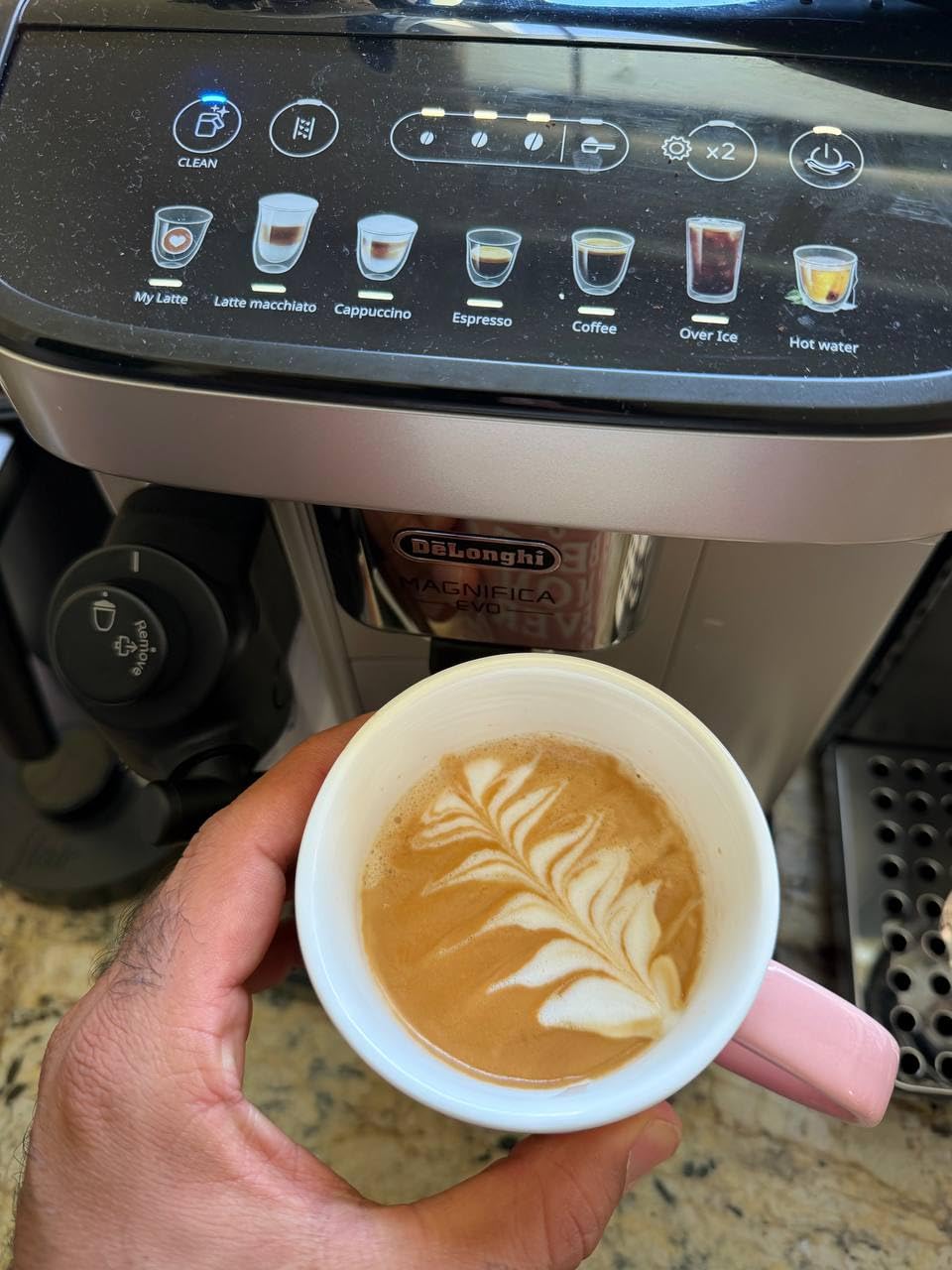
Behind the automation there is real adjustability: grind size, coffee strength and temperature are all settable, which means the drinks are consistent and still tunable rather than fixed.
Removable, dishwasher-safe parts and an automatic cleaning cycle reduce upkeep. It makes espresso, cappuccino, latte, Americano and iced coffee, and the grounds bin empties into the drip tray.
The warranty is the longest here at two years, with an extra year when you register the product. That matters because the daily maintenance routine is real rather than optional.
Who the Magnifica Evo suits
It suits office kitchens and busy households where several people make drinks without anyone wanting to learn tamping. Each user can have their own profile, so a weaker drink for one person is not a compromise for the rest.
It also suits anyone who drinks a lot of milk drinks and does not want a cleanup routine. Washing a carafe and emptying a bin is the trade you make for never touching a pitcher again.
Where it falls short
It is the largest machine here at 19.53 by 12.09 by 16.06 inches and 21.2 pounds. On a small counter it will dominate the space, and the grinder and boiler are noticeably loud in an open-plan room or a quiet apartment.
Daily maintenance is not optional: water refills, grounds bin emptying and carafe washing. The machine also purges water before and after each drink, so the drip tray fills quickly, and the descaling cycle can take around 90 minutes. Some users also find the shot strength weaker than a manual machine, and it will not brew into a tall travel mug without removing the tray insert.
10. atatix EM3111: Best for Fast Preheat and Dense Microfoam
atatix Espresso Machine with Milk Frother, 20 Bar Pressure Espresso Maker
- Preheats in about 30 seconds with NTC control at the 90-96C range
- Auto and manual extraction modes in one machine
- Steam wand produces dense glossy microfoam
- Detachable tank and drip tray for easy cleaning
- Instructions are incomplete for first-time users
- Double basket holds well under the advertised dose
- No integrated grinder
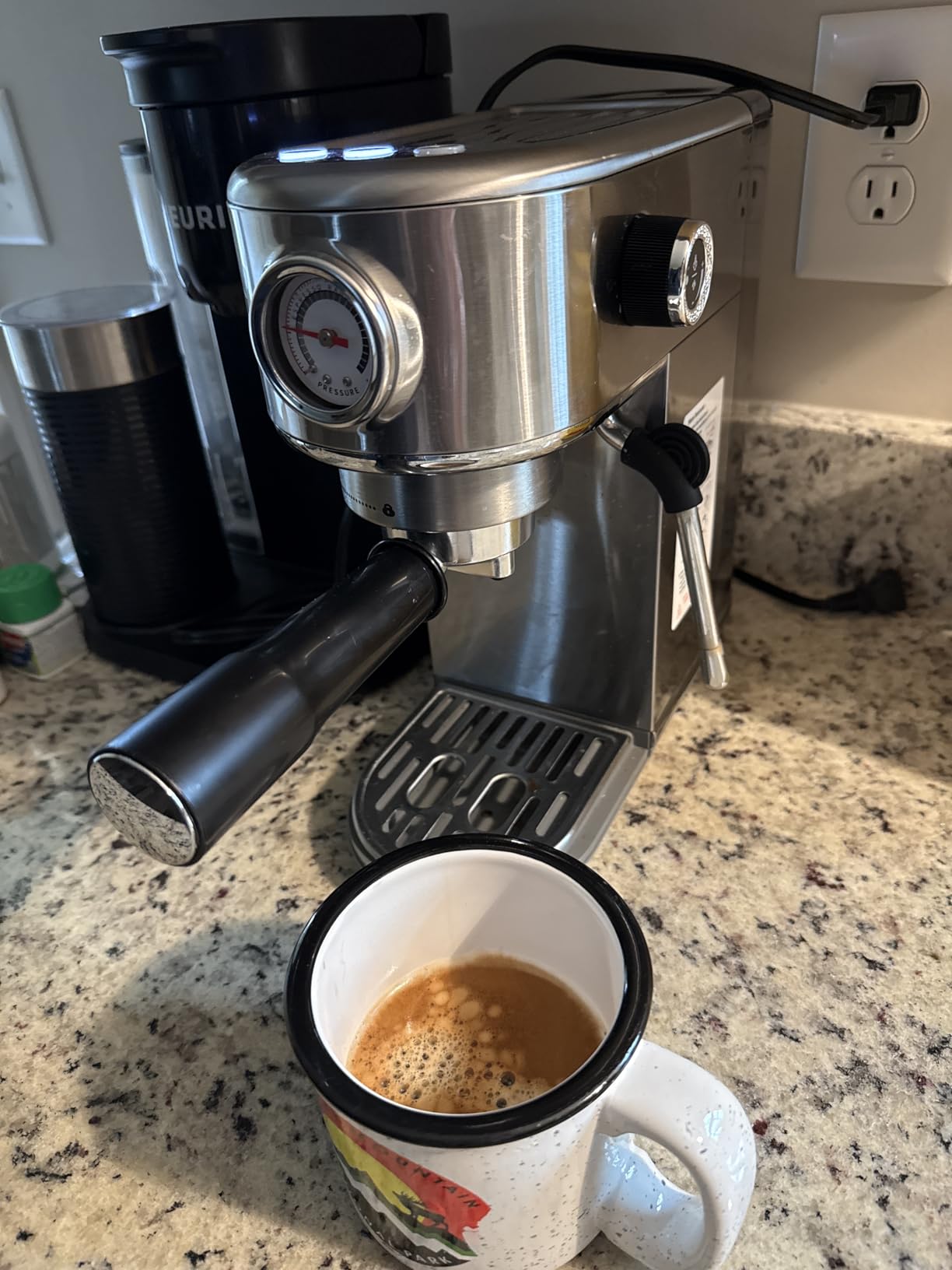
The atatix EM3111 is the most unusual machine in this roundup, and the reason is its extraction control. It runs a 20 bar system while sustaining 9 to 10 bar through the shot, which is the range that actually matters for flavour.
NTC precision temperature control holds water in the 90 to 96C window and preheats in about 30 seconds, and the result is a shot that avoids both the sour and scorched flavours you get from a machine that swings between extremes.
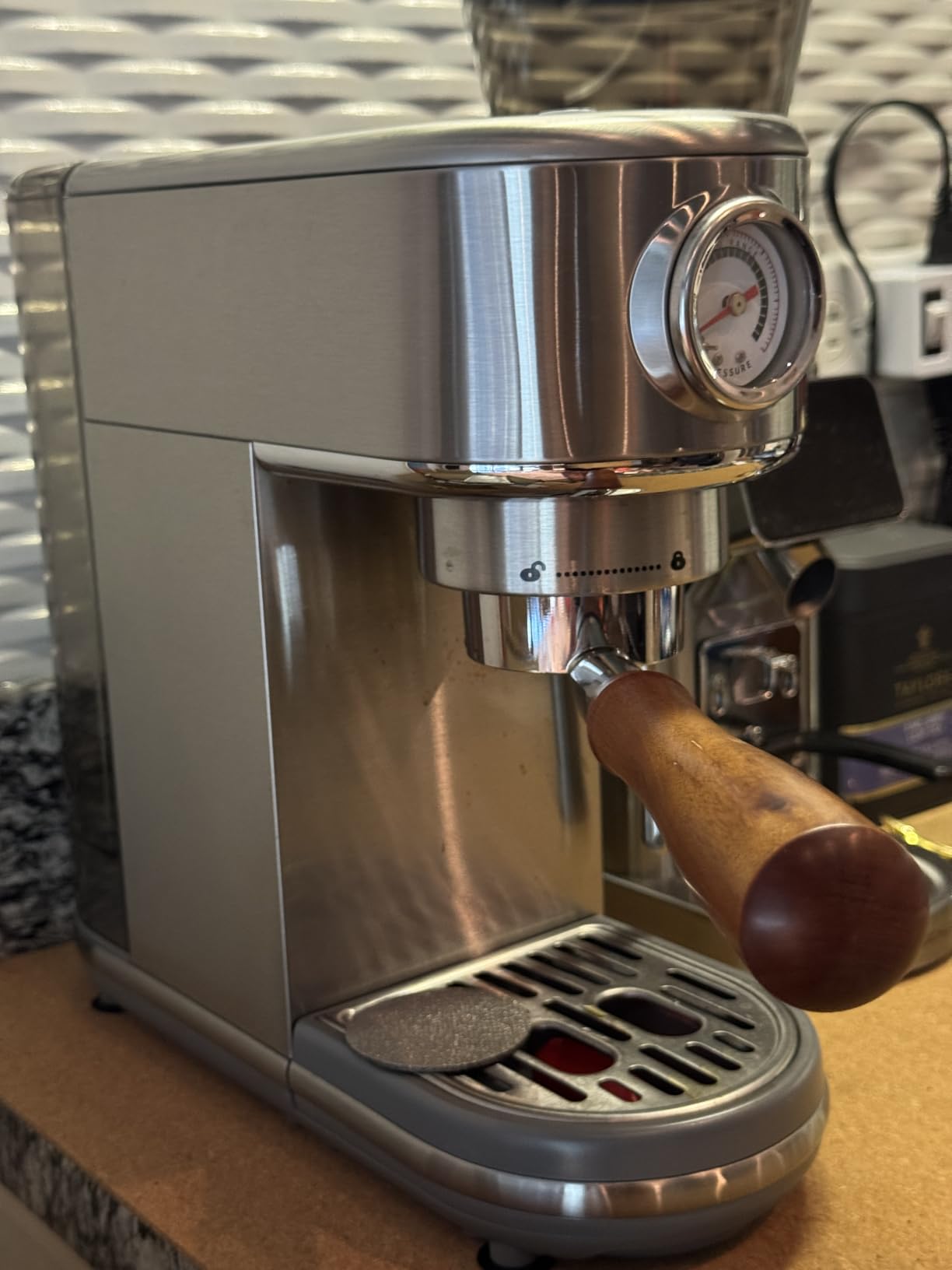
The steam wand is the latte story here. Owners describe dense, glossy microfoam good enough for latte art, and dense foam is what separates a latte from a mug of hot milk with coffee under it.
Extraction runs two ways. Automatic presets pull a single shot in about 28 seconds at 25 to 40 grams or a double in about 42 seconds at 55 to 85 grams, and manual mode runs up to 102 seconds for longer drinks.
The brushed stainless body has silicone suction cup feet so it does not walk across the counter, and the 45 oz tank and drip tray both detach for cleaning. Finish options run from Red to Light Green to Dark Blue.
Who the atatix suits
It suits people who like control without the size. At 12 by 5 by 11 inches and 7.5 pounds it is one of the smallest machines here, but it gives you manual extraction timing and dual operating modes.
It also suits anyone who wants both fast start and adjustable strength, since a 30 second preheat and manual mode up to 102 seconds cover both a fast morning shot and a slow, concentrated one.
Where it falls short
The documentation is the weak point. Owners report incomplete instructions for first-time espresso users, and the small double basket holds well under the advertised dose, so you are dosing by eye.
There is no integrated grinder, and the cup warming top does not actually keep cups warm. Early batches can taste of burnt plastic before they are flushed properly, so run the first-use cycle before judging the coffee.
How We Picked the Best Espresso Machines for Lattes
We weighted this roundup toward milk rather than espresso alone. Most lists rank machines on shot quality and treat frothing as a footnote, which is why so many of them produce disappointing lattes.
Our first pass judged milk performance: how quickly steam comes up, how much control the frothing system gives over texture and temperature, whether the wand or carafe can handle plant milk, and how long the cleanup takes after each drink.
The second pass looked at what happens around the milk. Time from cold to first drink, whether a second drink can follow immediately, tank size, and whether the machine can be relied on by more than one person. We also weighed the review data available for each machine, which spans from about a thousand reviews to nearly twenty-eight thousand.
How to Choose an Espresso Machine for Lattes
Semiautomatic, super-automatic, or manual
These three types decide how much of the latte you are actually making. A manual machine hands you every step. A semiautomatic gives you a shot button and a steam wand and expects you to handle the pitcher. A super-automatic grinds, extracts and froths from one button and lets you change only the strength.
Choose manual or semiautomatic if you want to learn latte art, adjust strength, or save money by buying beans instead of pre-ground coffee. Choose super-automatic if you want a repeatable drink with no technique and do not mind a daily cleanup routine. Forums like r/espresso and r/superautomatic reflect exactly this split, with the strongest recommendations splitting by how many drinks a household makes.
The milk system decides the latte
A steam wand gives the most control and the widest range, because you set the temperature by feel and the texture by pitcher technique. An automatic carafe gives consistency and zero technique, at the cost of a fixed foam style. A frother built into the machine, like the one on the Chefman, gives a fast pour into the mug and detaches for cleaning.
The catch with automatic systems is foam style. Carafes aim for a cappuccino-style foam layer, which is thicker than a flat white wants. If your order is usually a flat white, a wand will serve you better than a carafe.
Plant milk and what clogs
If you drink oat or almond milk, a wand is safer than a carafe. Plant milk proteins coagulate and lodge in the narrow internal tubes of automatic milk systems, and the clogging complaints about carafe-based machines come up repeatedly in owner reviews.
Whichever system you choose, purge the wand immediately after use and wipe it down while the milk is still liquid. That single habit prevents most of the reported problems.
Boiler type and back-to-back drinks
A single boiler heats water for both brewing and steaming, so you wait when switching between them. The 3700 Essential and the Bambino are single boiler. A thermoblock, like the Bambino’s ThermoJet system, heats fast but still shares one circuit. A dual boiler runs both at once and is the reason cafes can serve two milk drinks at a time.
None of the machines in this roundup has two boilers, so if your household makes several drinks back to back, plan the order of operations. Several compact machines also shut down after steaming, which forces you to steam first and brew second.
Grinder, water, and the basics
Only the Barista Express and the Magnifica Evo grind beans internally. Everything else needs a burr grinder, and buying one is part of the real cost of an espresso machine for lattes rather than an optional extra.
Water matters too. Hard water dulls flavour and accelerates scale in the boiler, so use filtered water and run the descale cycle on the schedule the machine gives you. Add a knock box, a scale, a tamper and a decent milk pitcher to your list, because those four items decide how good the finished drink is.
Latte, flat white, or cappuccino
A latte is roughly one part espresso to three or four parts textured milk with a thin foam layer. A flat white is smaller with less foam and a double ristretto or short shot. A cappuccino is equal parts espresso, milk and foam.
A machine with an automatic carafe tends to produce cappuccino-style foam, so for flat whites pull the microfoam thinner yourself with a wand. Target milk temperature is around 160F, and going hotter than that is what makes milk taste flat and cooked.
Starting settings for a first latte
Start at 18 grams of coffee in and 36 grams of espresso out in 25 to 35 seconds. Adjust the grind finer if the shot runs fast and gushery, coarser if it drips and stalls. Steam about 6 ounces of milk to roughly 140F, then take it to 160F for texture.
Change one variable at a time, and give any new machine a week before you judge it. Grinders on budget machines in particular often need twenty to thirty drinks before the coffee tastes right, according to owner reports in coffee forums.
Frequently Asked Questions
Which espresso machine is best for lattes?
The Breville Barista Express is the best all-round choice because it grinds beans, extracts with PID temperature control and steams milk with a wand powerful enough for microfoam and latte art, all in one machine. For the least effort per drink, the De’Longhi Magnifica Evo makes a repeatable latte from one button. For a tight budget, the CASABREWS CM5418 gives you a pressure gauge and a capable steam wand.
Which coffee machine is best for making lattes at home?
A semiautomatic machine with a manual steam wand gives the most control, while a super-automatic gives the most consistency. The Barista Express and the De’Longhi Stilosa suit people who want to learn technique, the CASABREWS CM5418 suits a budget, the Breville Bambino suits small counters, and the De’Longhi Magnifica Evo suits anyone who does not want to handle a pitcher at all.
What type of espresso is best for making a latte?
A double shot is the standard base, pulled at roughly 18 grams of coffee in and 36 grams of espresso out over 25 to 35 seconds. That ratio survives the addition of several ounces of milk, whereas a single shot disappears into it and leaves you with coffee-flavoured milk rather than a latte.
Which espresso machine makes the best flat white at home?
Flat white needs less foam than a cappuccino, so a machine with a manual steam wand beats an automatic carafe, which tends to produce a thicker foam layer. The Breville Barista Express and the atatix EM3111 both steam dense microfoam you can control, and the Breville Bambino’s automatic wand lets you dial the texture thinner than its default setting.
Do I need a dual boiler to make lattes?
Not to make good lattes. A dual boiler is about making a second drink immediately, because brew and steam run at the same time. Every machine in this roundup uses a single boiler or a thermoblock, so plan to steam or brew first and wait briefly before switching, and choose the Breville Bambino for its three-second heat-up if speed between drinks matters most.
Which budget espresso machine still makes a good latte?
The CASABREWS CM5418 is the strongest budget pick because it includes a pressure gauge and a 20 bar pump, both of which are usually reserved for pricier machines. The Breville Barista Express is the stronger step-up, adding an integrated grinder and PID control. If your budget is tighter still, the De’Longhi Stilosa and the CASABREWS 3700 Essential both make drinkable lattes with ground coffee.
Our Verdict on the Best Espresso Machines for Lattes
The Breville Barista Express is the pick we recommend most often in 2026, because it is the only machine here that gets the grind, the extraction and the milk right in one box, and the steam wand produces genuine microfoam.
Pick the CASABREWS CM5418 if you want most of that control for less and will buy a grinder. Pick the Breville Bambino if counter space is tight and you want the milk step handled for you. Pick the De’Longhi Magnifica Evo if you would rather press one button than learn a technique.
Whichever you choose, the milk is the part to practise. Purge the wand, steam to around 160F, and adjust one thing at a time, and you will be making a better latte than most cafe flat whites within a fortnight.