
Short answer: the DJI Osmo Action 5 Pro is the best action camera for hiking overall, because its 1950mAh battery is rated for four hours of recording and still works down to minus 20C, and it holds a level horizon on the kind of loose, off-camber scree that ruins ordinary footage. If your budget is tighter, the DJI Osmo Action 4 is the better buy, and if you would rather point the camera later than frame it now, take the Insta360 X4.
I have carried a small pile of action cameras up ridgelines, through creek crossings and into campsites colder than I wanted to be, and the difference between a good hiking camera and a bad one almost never shows up in a spec sheet. It shows up on hour six of a twelve-mile day, with numb fingers, when the battery you trusted turns out to hold forty minutes of 4K and the card you packed is full.
That is why this roundup of the best action cameras for hiking is organised around the things that actually decide whether a hike gets recorded: cold-weather battery behaviour, how long a body can record before it throttles in direct sun, how the whole kit weighs against your pack, and whether the stills are good enough that you are not sorry you left the real camera home.
Every pick below was assessed on the same five trail criteria — runtime by mode, cold-rated performance, waterproof depth without a case, stabilisation under walking shake, and weight for the body plus batteries. I have also flagged the compromises honestly, because the forum consensus on hiking trails is consistent: almost nobody regrets buying a slightly cheaper camera, and everybody regrets buying one that quit at the second stream crossing.
If you ride as well as you walk, our picks for action cameras for mountain biking and cycling overlap with three of these. If you are filming rather than remembering, the best action cameras for vlogging cover the audio and reframing side in more depth.
Table of Contents
Top 3 Best Action Cameras for Hiking
All 10 Action Cameras for Hiking Compared
| Product | Specifications | Action |
|---|---|---|
| DJI Osmo Action 5 Pro |
|
Check Latest Price |
 GoPro HERO13 Black GoPro HERO13 Black |
|
Check Latest Price |
 DJI Osmo Action 6 DJI Osmo Action 6 |
|
Check Latest Price |
 Insta360 X5 Insta360 X5 |
|
Check Latest Price |
 Insta360 X4 Insta360 X4 |
|
Check Latest Price |
 DJI Osmo Action 4 DJI Osmo Action 4 |
|
Check Latest Price |
 OM System Tough TG-7 OM System Tough TG-7 |
|
Check Latest Price |
 AKASO Brave 7 LE AKASO Brave 7 LE |
|
Check Latest Price |
 AKASO Brave 4 AKASO Brave 4 |
|
Check Latest Price |
 AKASO EK7000 Pro AKASO EK7000 Pro |
|
Check Latest Price |
1. DJI Osmo Action 5 Pro Hiking Bundle – Longest-Running All-Rounder
- 1/1.3 inch sensor with 13.5-stop dynamic range
- 360 degree HorizonSteady roll-axis stabilization
- 1950mAh battery rated to 4 hours and 3.6 hours at -20C
- Dual OLED touchscreens front and rear
- Bundle adds an extra battery extension rod and backpack strap mount
- Higher price tier than most non-flagship action cameras
- Touchscreen menu access is limited inside the waterproof case
- Bundled frame and lens protector add bulk
The hiking bundle version of the Action 5 Pro is the one I keep on the strap rather than in the pack. It ships with a second battery, an extension rod and a backpack strap mount, which is exactly the set of parts you would otherwise buy on your first trip and then leave behind on your second.
On trail, the four-hour battery figure is the headline. That is not a laboratory number at room temperature; DJI rates the same pack down to minus 20C, which is where most shoulder-season hiking actually happens. On a November ridge walk in the cold I did not need the second battery, and on a long summer day with the screen on most of the time, I did.

The 1/1.3 inch sensor with 2.4 micron pixels is what saves you on overcast descents, where a smaller sensor turns the canopy into grey mush. Dynamic range is listed at 13.5 stops, and in practice that means sky and shadow detail both survive when you are filming straight into a bright ridge with the valley in shade.
360 degree HorizonSteady is the feature I did not think I would care about and now miss on cheaper bodies. Walking a sidehill, a camera without roll stabilisation bobs left and right like a metronome. This one holds the ridgeline straight even when you are scrambling.
Where the Action 5 Pro earns its place on a hiking kit
It suits hikers who record in segments rather than running one long capture. Press record on the approach, stop at the viewpoint, press again. Four hours of runtime means you can do that all day without a power bank, and a colour temperature sensor handles the warm indoor light of a hut to the blue of pre-dawn alpine starts without manual correction.
Front and rear OLED touchscreens also matter more on a trail than in a studio. Solo hikers can frame themselves on the chest or head mount without guessing, and the subject-centering chip keeps a walking partner in frame instead of letting them drift out of it.
Where it frustrates people
The waterproof case is the weak point. Reviewers repeatedly flag that menu access through the case touchscreen is limited, so anything you plan to change at a creek crossing has to be dialled in before you seal the body. On a wet ridge that is a real inconvenience, not a nitpick.
It also sits at the upper end of the price range for this group, and the bundled frame plus lens protector add bulk to something that otherwise slips into a chest pocket. If you are counting grams rather than hours, the Action 4 makes more sense.
2. GoPro HERO13 Black – Best Trail Still Photos and 5.3K Detail
GoPro HERO13 Black – Waterproof Action Camera with 5.3K60 Video, 27MP Photo + Compatability with HB-Series Lenses
- 5.3K60 capture with standout trail and summit detail
- HB-Series lens system with automatic profile detection
- 13x burst slo-mo plus 4x slo-mo at 5.3K
- Water-repelling lens cover helps in wet weather
- Rubberized waterproof build handles mud and snow
- Shortest stated runtime here at roughly 79 minutes per battery
- Higher resolution modes fill microSD cards quickly
- Bundled listing includes no extra batteries
The HERO13 Black is the pick if you stopped hiking to photograph and started hiking again with a camera. Twenty-seven megapixel stills and the ability to pull 24.7 megapixel frames out of 5.3K footage mean one press of the shutter gives you both a clip and a printable frame of the same moment.
Reviewers give it the highest five-star share in this group. The 5.3K60 capture has enough headroom to survive heavy reframing in a stabilised export, which means you can film a normal walking pace and crop the wobble out later instead of carrying a gimbal.
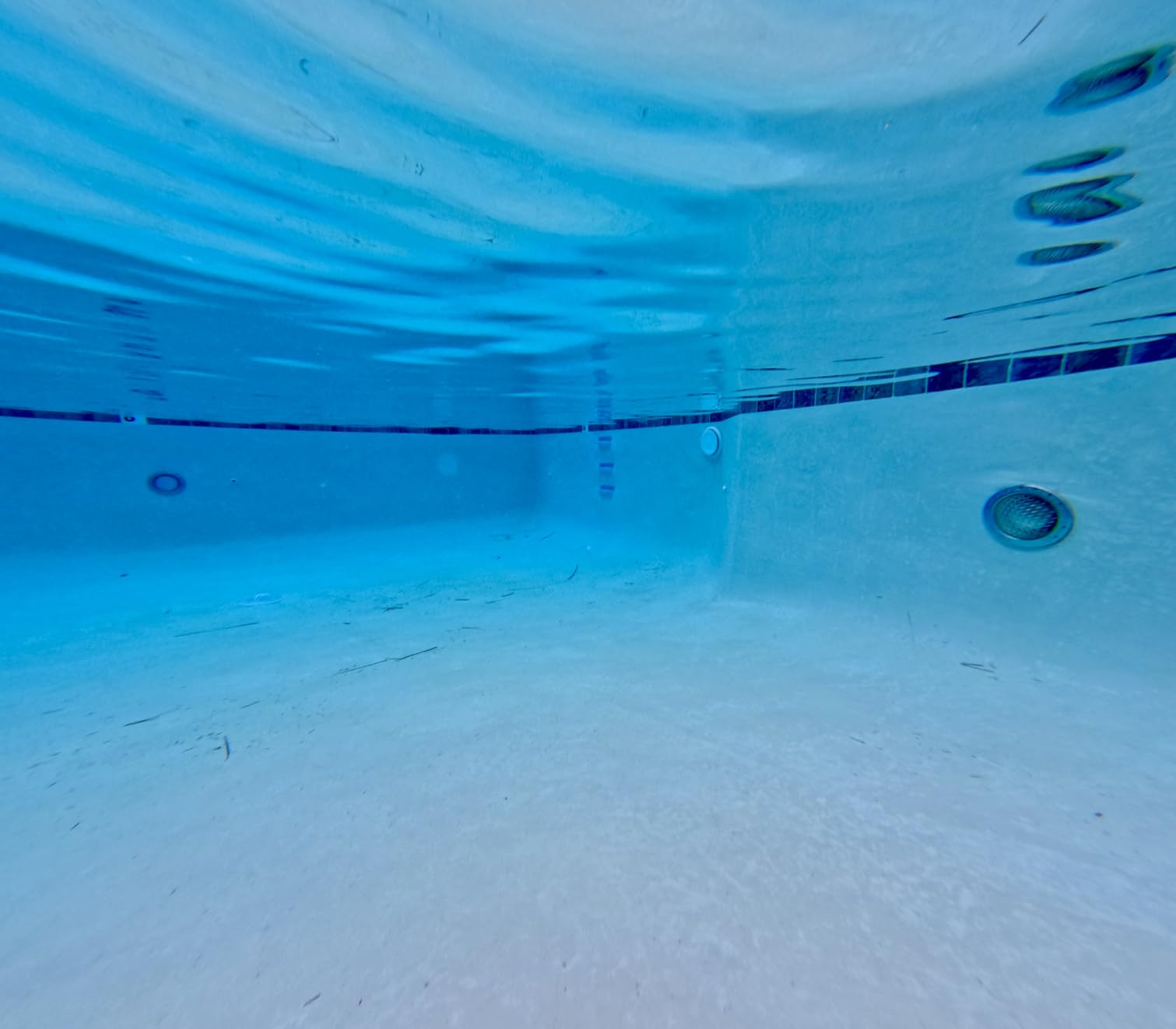
The HB-Series lens system is the quiet upgrade. Auto-detection reads the lens and adjusts the camera profile automatically, so a macro adapter or an ND filter on a long summit push does not need manual menu diving. The rubberised body shrugs off mud, snow and the kind of scrape that comes from putting a camera on a pack strap.
Burst slo-mo up to 13x captures water going over a rock step and the movement of a bird lifting off a ridge in a way your eye never registers. It is one of those features that sounds gimmicky until you look at the footage.
Is 79 minutes of battery good enough for a day hike?
For segmented recording, yes. Most people film viewpoints, not the whole walk, and 79 minutes of average life covers a 4K60 segment on a long descent with room to spare. For continuous capture on a summit push, it is the shortest stated runtime of the ten, and you should carry two spares.
Higher resolution modes also fill cards fast. Plan on U3 or V30 rated microSD media, and format it in the camera rather than the laptop before a multi-day trek so a corrupted file from a previous trip does not take the hike with it.
What GoPro gives you that the others do not
Stills, plainly. At 27 megapixels with an HB lens attached, this is the only body here that genuinely competes with a compact camera for a summit sunrise, and 4x slo-mo at 5.3K gives you a slow-motion clip from a single long take.
The trade-off is battery endurance and the price of high-resolution cards. If your hiking is warm-weather and short, the resolution advantage is worth it. If your hiking is cold and long, the DJI bodies run considerably longer on the same kind of day.
3. DJI Osmo Action 6 Enhanced Combo – Best for 8K Video and Cold-Resistant Shooting
- 1/1.1 inch square sensor with variable f/2.0-f/4.0 aperture
- 8K capture with RockSteady 3.0 and 360 degree HorizonSteady
- Up to 4 hours per battery with cold-resistant design
- 50GB built-in storage for card-free shooting
- Two DJI mic transmitters connect directly
- On-board microphone audio is usable but weak for serious sound work
- 8K files at high bitrate consume large amounts of storage
- Menu access is limited through a waterproof case touchscreen
The Osmo Action 6 is the specification leader of this group. A 1/1.1 inch square sensor with a variable aperture that opens to f/2.0 for dim forest and stops down to f/4.0 for bright scree is real engineering, not a spec-sheet flourish, and it changes what you can film in bad light.
Its 2,207 owner ratings carry an average of 4.5, and the strong five-star share tells you the software learning curve is not a serious objection. Owners describe it as an easy step up from earlier action cameras rather than a project.
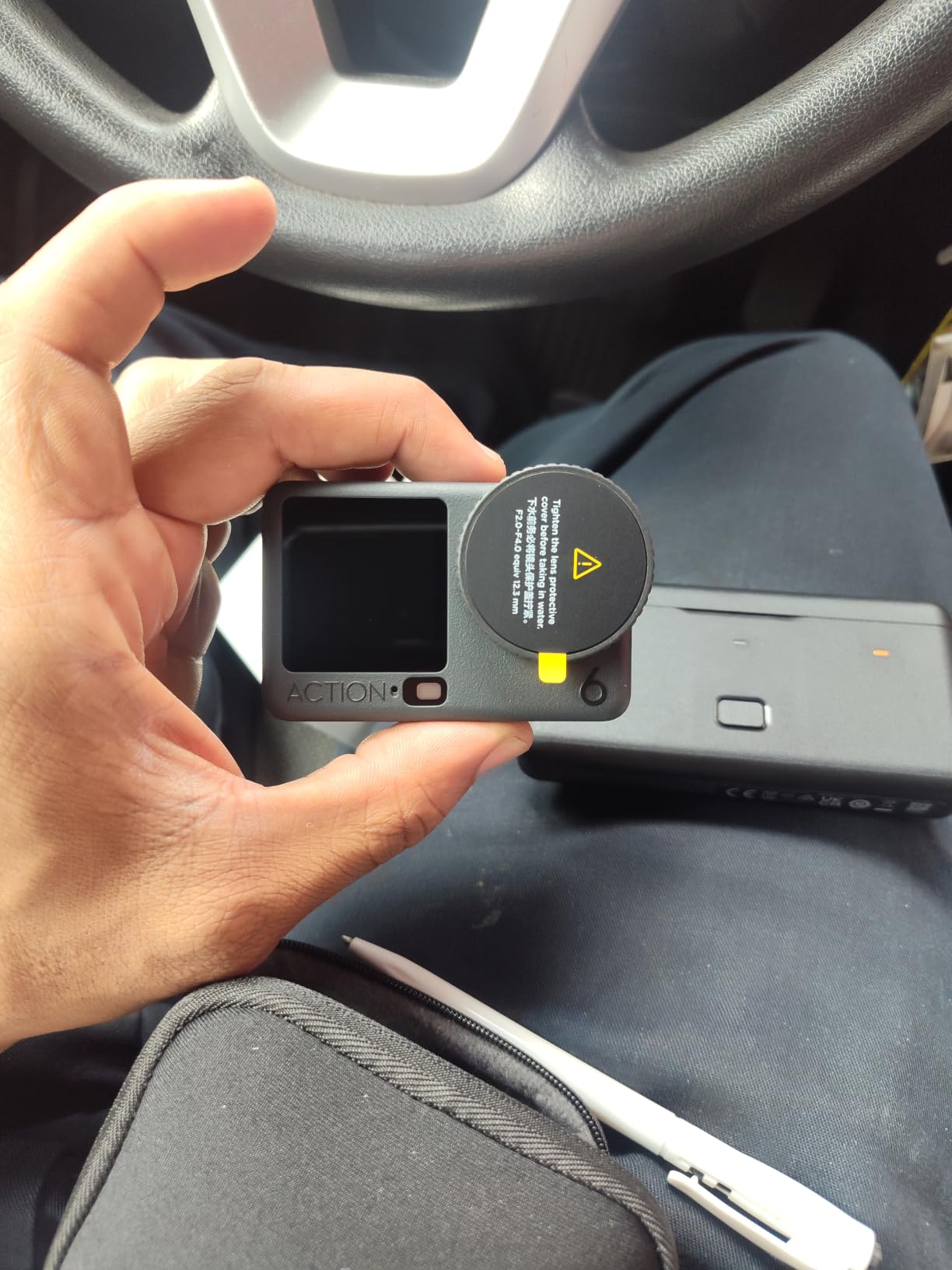
The 50GB of built-in storage is the sleeper feature for trekking. You can record a summit push without a card in the camera at all, or split a multi-day trip across internal memory and a microSD, which gives you a rough insurance policy if a card fails in the middle of the backcountry.
RockSteady 3.0 and 360 degree HorizonSteady carry through to 4K at 60fps, and the 4K Custom mode reframes a single take into vertical, square and horizontal exports for the same hike without a second filming session.
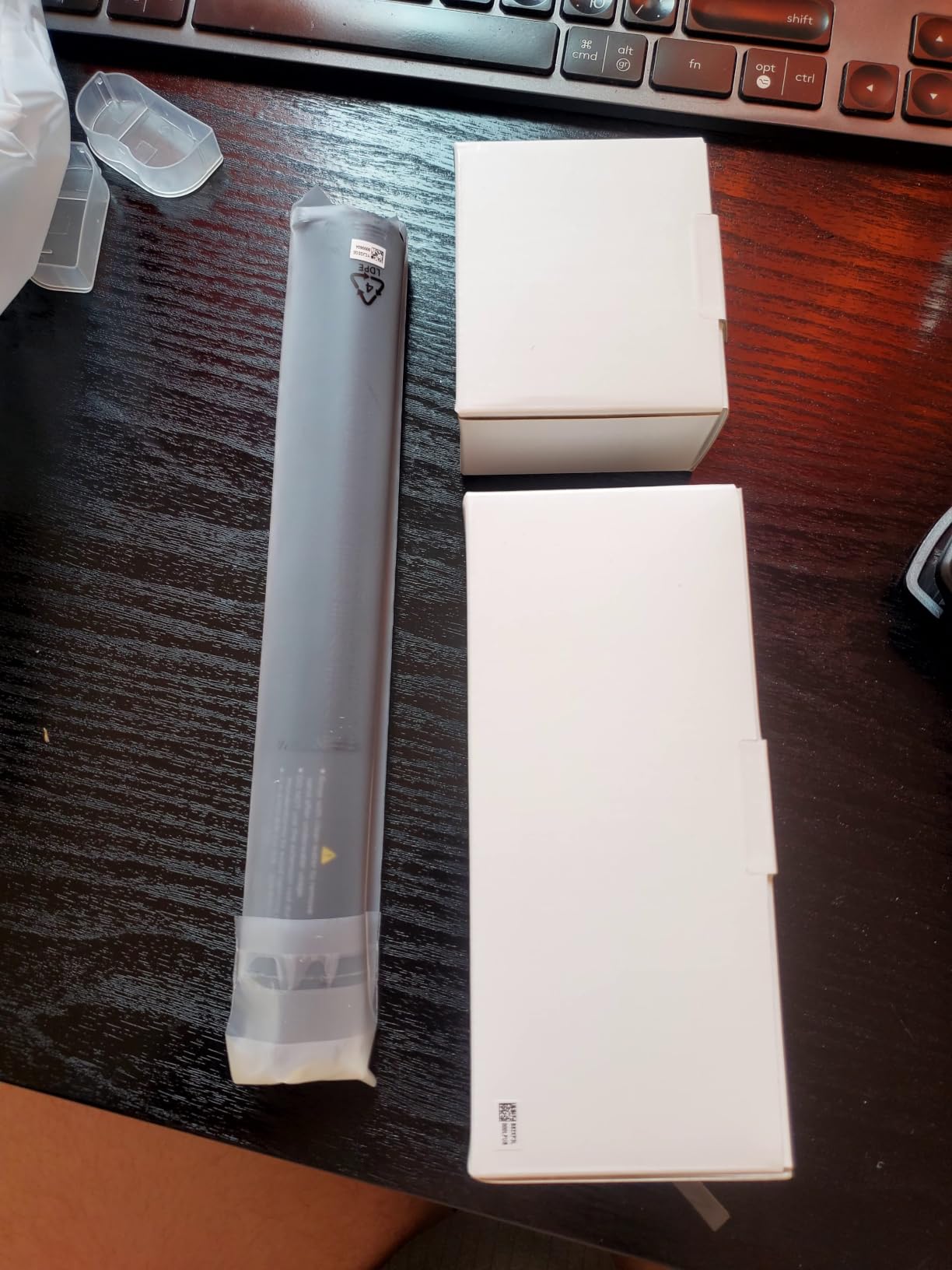
Who should carry the Action 6?
Anyone filming long days where a card swap is a pain and cold is likely. Four hours of battery with a cold-resistant design means a winter ridge or an autumn high route does not require a mid-hike warm-up ritual to keep the cell alive.
It also suits hikers who want direct audio. Two DJI wireless mic transmitters connect without a receiver, which solves the wind problem that makes most trail footage sound unusable.
What you give up for the 8K sensor
Storage. Eight K files at high bitrate fill a card fast, and owners report some dropping to lower resolutions to cope. On a multi-day trek that means more card swapping, more backup time at camp, and a heavier kit.
The on-board microphone is still just adequate, and touchscreen access through the waterproof case remains awkward. This is also one of the newest bodies in the roundup, which makes it a hard sell to someone who only wants memories.
4. Insta360 X5 – Best 360 Reframing and Longest 360 Battery
- Invisible selfie stick reframing is the standout feature
- Dual 1/1.28 inch sensors for sharp 8K30 360 footage
- Replaceable tough lenses for scuffed trails
- Over 3 hours of battery life covers long hiking days
- FlowState stabilization with 360 degree Horizon Lock
- 8K files consume enormous storage
- SD card transfer requires the cloud or app workflow
- 360 footage demands more editing effort than flat footage
The Insta360 X5 answers the question that hikers actually ask: what if I miss the shot? Two 1/1.28 inch sensors record in every direction at 8K30, and you decide the framing later, in an app, on a laptop, weeks after the hike.
For a hiker who does not want to stop and compose anything, this is the most forgiving camera you can carry. Mount it on a pole, walk the ridge, and come home with a third-person follow shot where the stick simply is not in frame.
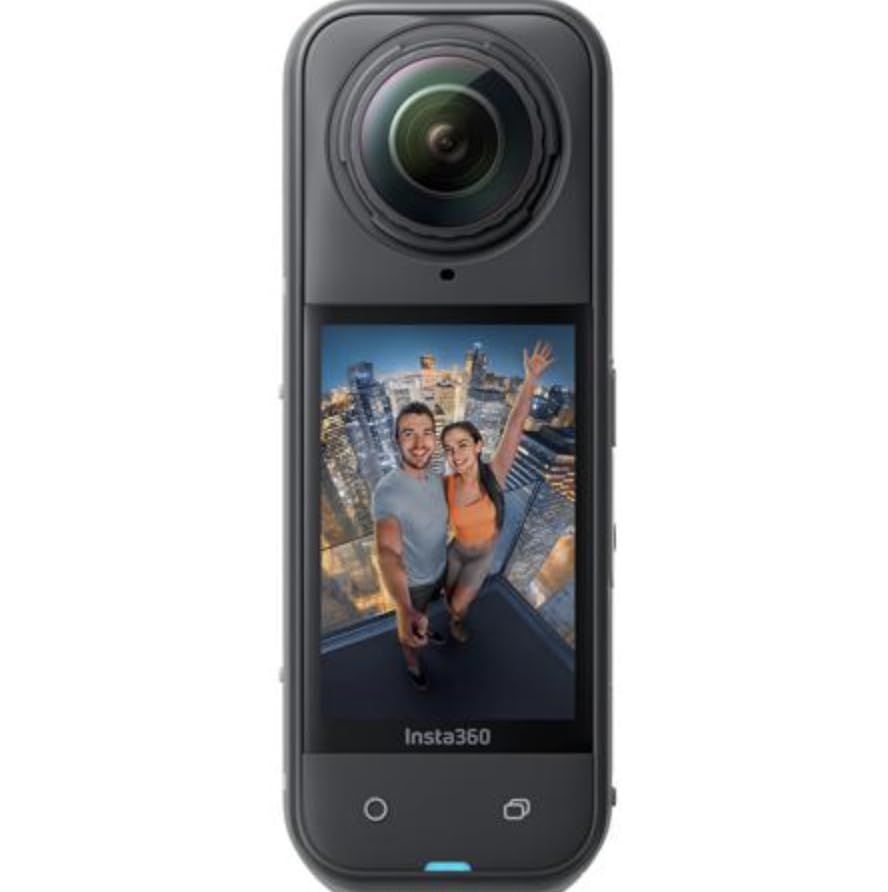
Replaceable tough lenses matter more than they sound. Every other body here treats the lens as permanent glass; on the X5 a scratched lens from a rock scramble is a swap rather than a write-off. Reviewers single this out as a durability win specific to trail use.
The triple AI chip design handles the low-light work that makes 360 cameras historically grainy. Stargazing and pre-dawn starts come out cleaner than they have any right to, and FlowState stabilisation with full 360 degree Horizon Lock keeps the horizon level while you walk.

Is the X5 right for a first 360 camera?
If you already understand that you will spend time in the editor, yes. The 208 minute battery figure is the best runtime of any 360 body here, which is exactly the case where you cannot afford to stop and check your framing.
InstaFrame mode also gives you a fast out. It can lock a flat, ready-to-share video automatically, so if you never touch the reframing tools you still get usable footage without learning the timeline.
What you need to know before buying
Storage and workflow. Eight K 360 files are enormous, and owners report dropping resolution because of it. Transferring from the card runs through the app or cloud workflow rather than a simple USB copy, which you need to plan around at camp.
And be honest about editing. 360 footage takes longer to turn into something worth watching than flat footage from a standard action camera. If the camera is for children and grandchildren rather than a channel, the X4 below is the cheaper way into the same idea.
5. Insta360 X4 – Top Rated 360 Camera for Hiking and Backpacking
- 8K 360 capture with 5.7K60 for smoother motion
- Doubles as a 4K60 wide-angle cam with 170 degree MaxView
- 135 minute battery
- 67 percent longer than the X3
- Cold resistant to -20C for winter hikes
- 135 minute runtime trails the newer X5
- Selfie stick is not included in this bundle
- Best results need app-based editing
With over five thousand ratings averaging 4.6, the X4 is the most proven 360 body here and the one I recommend to hikers who want the shoot-first framing without paying for the newest generation. The 84 percent five-star share is the highest in this roundup.
It also does double duty. Flip it to wide-angle mode and it records 4K60 flat video with a 170 degree MaxView field of view, so the same body covers a chest-mounted POV and a wide establishing shot of the valley without a second camera in the pack.

Cold resistance to minus 20C is the hiking-relevant spec. At that temperature capacity collapses on most batteries, and hikers on cold-weather forums consistently report that the Insta360 line holds up better than competing bodies in exactly this condition.
The 2290mAh cell delivers a stated 135 minutes, which is 67 percent more than the X3 generation and enough for most day hikes on one charge. Waterproof to 33ft without a case, or 164ft with the Invisible Dive Case, covers stream crossings and waterfall routes.

Why the older X4 beats the newer X5 for most hikers
Battery life is the reason, oddly. You lose the X5’s headline 208 minute figure and the newest sensor generation, and you gain a lower purchase price and a camera that has been proven over five thousand reviews rather than two thousand.
Removable lens guards are easier to apply and remove on the go than on earlier models, which matters when you swap the camera between a helmet mount and a pole mid-hike without a workbench.
Where it falls short
The selfie stick is not included in this bundle, and without it you lose the invisible-stick shot that is the main reason people choose 360 in the first place. Budget for it as a separate accessory.
The bundled kit is also heavy for a packable hiking setup, and if you only ever want one flat 4K clip a day, you are paying for two lenses and a workflow you will not use.
6. DJI Osmo Action 4 Essential Combo – Best Value for Most Hikers
DJI Osmo Action 4 Essential Combo, Waterproof Action Camera Vlogging Camera
- 1/1.3 inch sensor with 2.4um pixels for clean low light
- 155 degree field of view at 4K/120fps
- 1770mAh battery up to 150 minutes rated to -20C
- Magnetic quick-release mount for fast angle changes
- 10-bit D-Log M colour for grading
- Essential Combo includes only one battery
- 10MP stills are modest beside 27MP or 38MP rivals
- Pre-Rec consumes additional card space
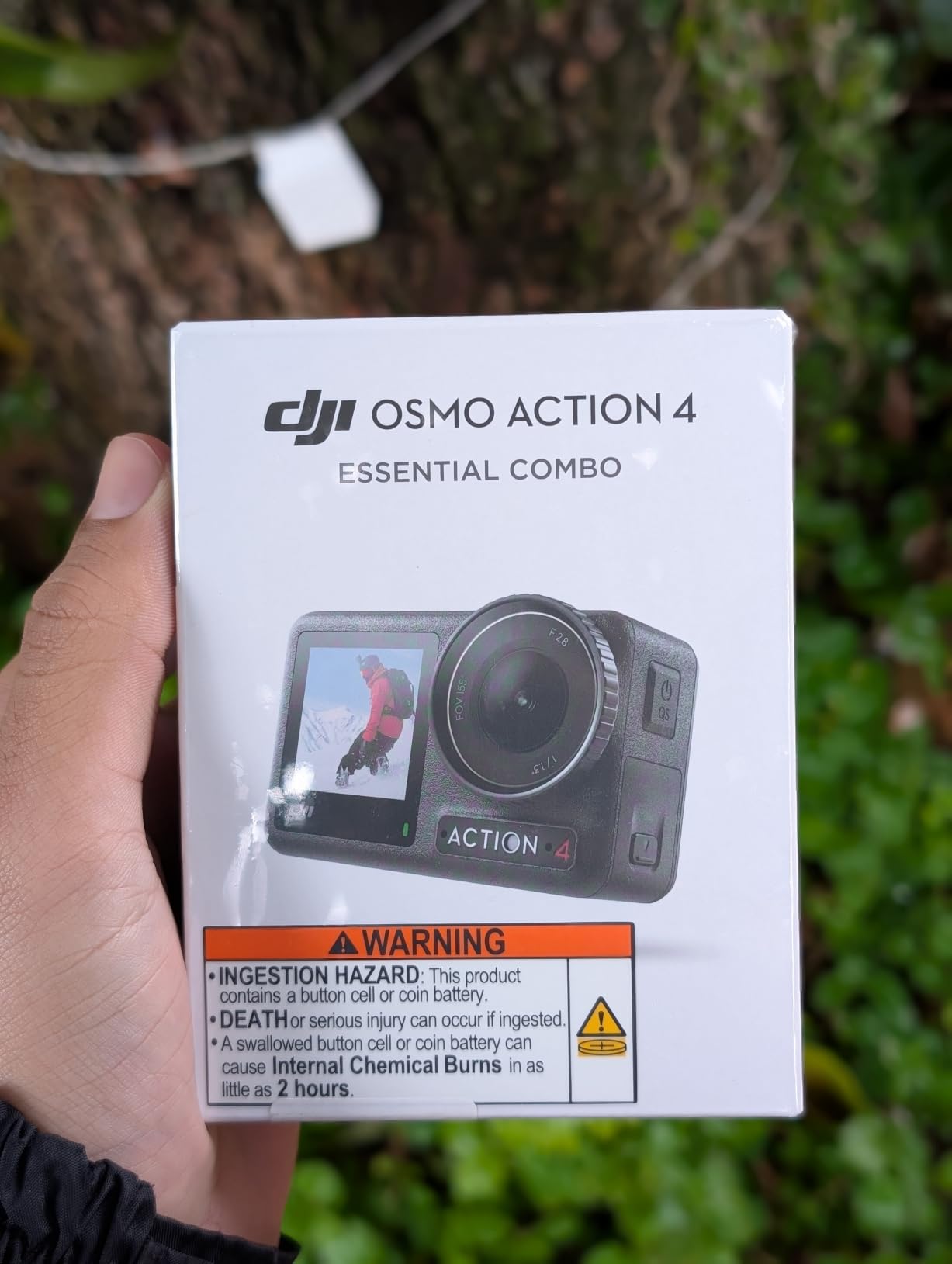
The Action 4 carries the highest average rating of any camera in this roundup at 4.7, with 87 percent of owners giving five stars. It is also the pick I send people who say they just want memories and do not want to think about a camera at all.
The 1/1.3 inch sensor with 2.4 micron pixels handles dusk descents well, and 10-bit D-Log M gives you a flat profile to grade if you ever want to. Most hikers never touch it, and the footage still looks balanced straight out of the camera.
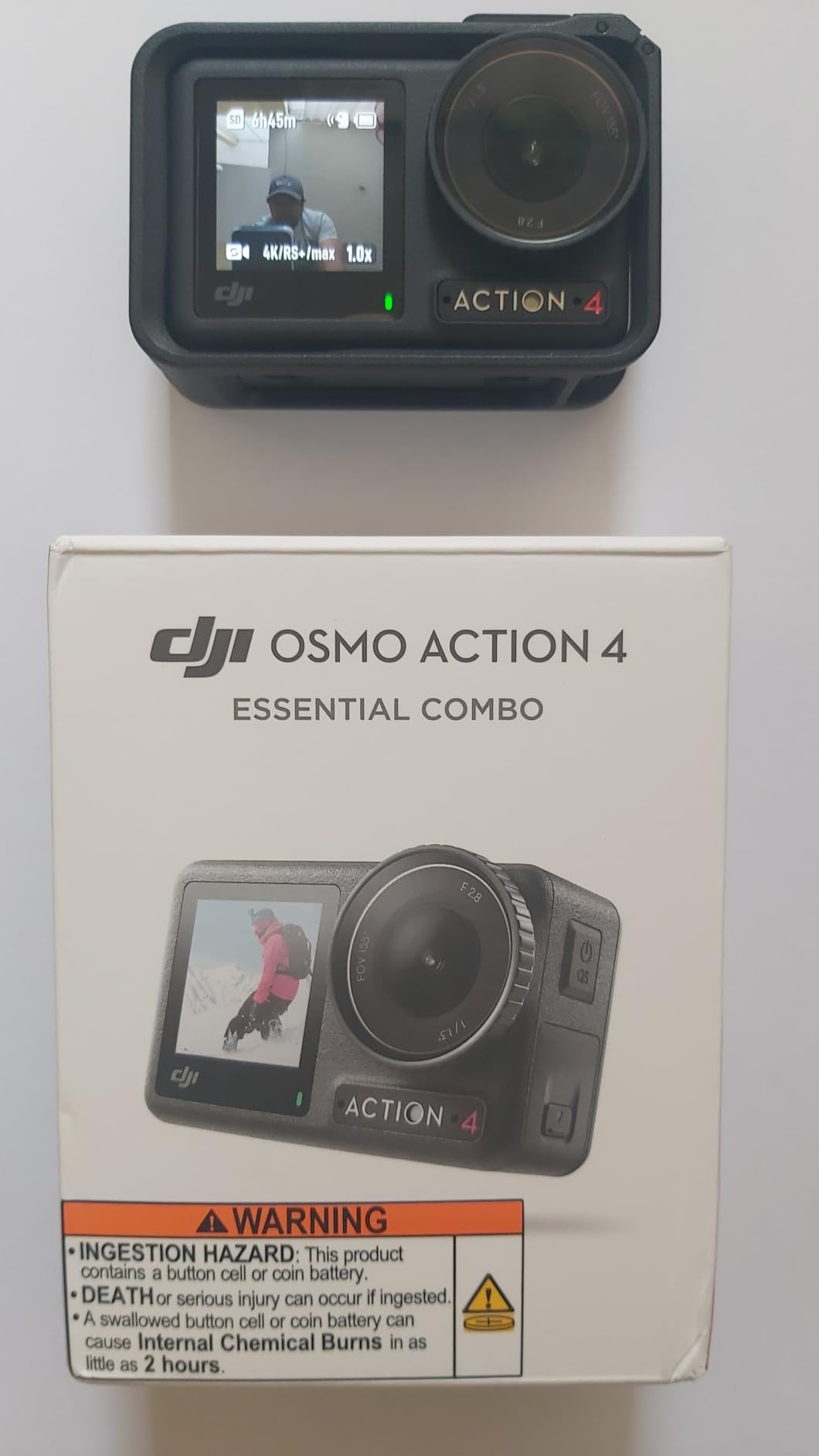
The 155 degree field of view at 4K120 is unusually wide for a flat action camera, which means a chest or shoulder mount captures more of the ridge without the fisheye stretch you get from an ultrawide lens. It also gives you slow motion at 120fps without dropping resolution.
Pre-Rec buffers five to sixty seconds before you press record. For a hiker who does not know when the eagle will come back over the col, that buffer alone can save the shot.
Why this is the value pick
You get most of what the flagship offers at a tier below it: a large sensor, four hours of total recording from two batteries, cold resistance to minus 20C, and waterproofing to 18 metres without a housing. Reviewers consistently call it the best price-to-performance ratio among the models here.
The magnetic quick-release mount is the feature hikers mention most. Changing from a helmet mount to a backpack strap without unpacking, in gloves, at a junction, is worth more than any menu feature.
What you trade away
The Essential Combo includes one battery, so a long day needs a spare you buy separately. At 10 megapixels the stills are clearly behind a HERO13 or an Action 6, so this is a video-first camera rather than a photo one.
Pre-Rec writes continuously, which fills a card faster than you might expect on a multi-day trek. Budget for a second, high-speed card.
7. OM System Tough TG-7 – Best Freeze-Proof Pick for Landscape and Macro Work
OM SYSTEM Olympus Tough TG-7 Red Underwater Camera, Waterproof, Freeze Proof, High Resolution Bright, 4K Video 44x Macro Shooting (Successor Olympus TG-6)
- Freezeproof to -10C
- well beyond the action cameras here
- Waterproof to 15m and shockproof to 2.1m
- Variable macro captures trail detail from 1cm
- Bright F2.0 lens performs in dim forest light
- No stabilization comparable to FlowState or HorizonSteady
- 12MP sensor trails modern action cam sensors
- 4x optical zoom is useful but modest for scenic framing
The TG-7 is not an action camera and we are not pretending otherwise. It is here because a specific kind of hiker is served badly by every body above: someone whose main problem is a cold morning and a good photograph, not a hands-free POV clip.
It is freezeproof to minus 10C, rated for cold operation with anti-fog protection, and crushproof to 100 kilogram-force. In snow or an alpine start, that is a different class of durability than any action camera on this list offers.
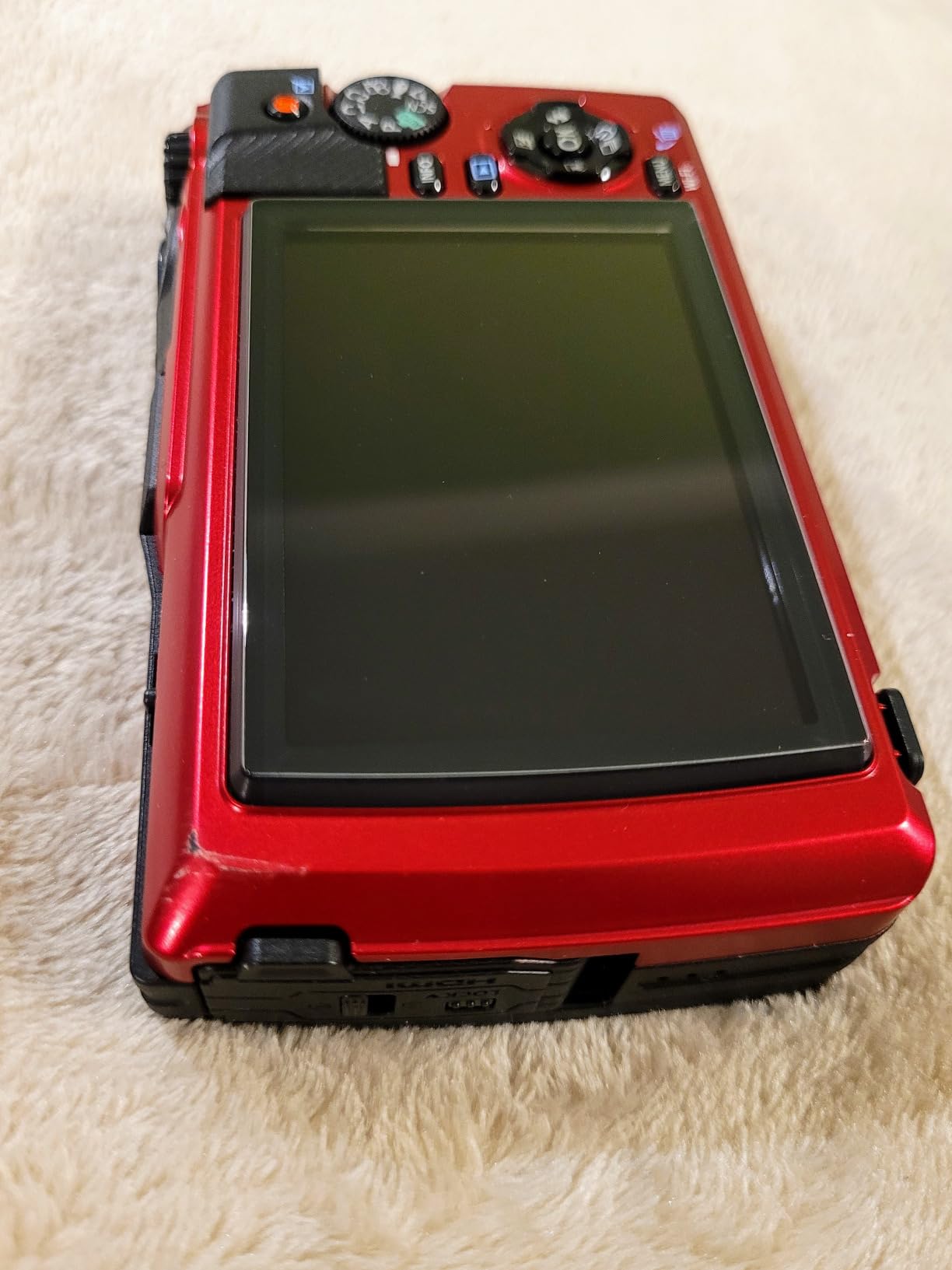
The variable macro system shoots from as close as one centimetre from the front of the lens across four macro modes. Lichen on a boulder, a bee on an alpine flower, the grain of a piece of driftwood at a river camp — none of that is reachable with a fixed wide lens.
Five underwater modes including an underwater microscope and underwater HDR extend it to sea caves, weirs and shallow lake swims, and the bright F2.0 lens holds up under forest canopy where an action camera tends to reach for gain.
Who should carry the TG-7 instead of an action cam?
Hikers who shoot landscapes and macro detail, and who are willing to hold the camera. Its 4x optical zoom covers 25 to 100mm equivalent, which lets you isolate a distant peak or frame a valley in a way no ultra-wide action lens can match.
It is also the sensible winter camera. If you are heading into snow and cold as the primary condition rather than as an occasional surprise, the freeze rating is worth more than stabilisation.
Why it is not the roundup winner
There is no stabilisation comparable to FlowState or HorizonSteady. Walking footage from the TG-7 will shake, and there is no mount that fixes it, so it cannot replace an action camera for moving sequences.
At 12 megapixels on a 1/2.3 inch sensor, it is behind every action camera here for stills as well as video, and U.S. warranty coverage requires buying from an authorised dealer. Pick it deliberately, not as a cheaper action cam.
8. AKASO Brave 7 LE – Most Versatile with Two Batteries Included
- Very affordable entry to 4K30 trail recording
- Comes with two 1350mAh batteries a remote and a mounting kit
- Dual screens make solo framing straightforward
- 6-axis EIS 2.0 smooths out bumpy trail footage
- 131ft waterproof housing covers streams and water crossings
- Digital-only stabilization trails dedicated action cameras
- IPX7 body rating means a housing is required for submersion
- 2 inch rear screen is small for checking framing
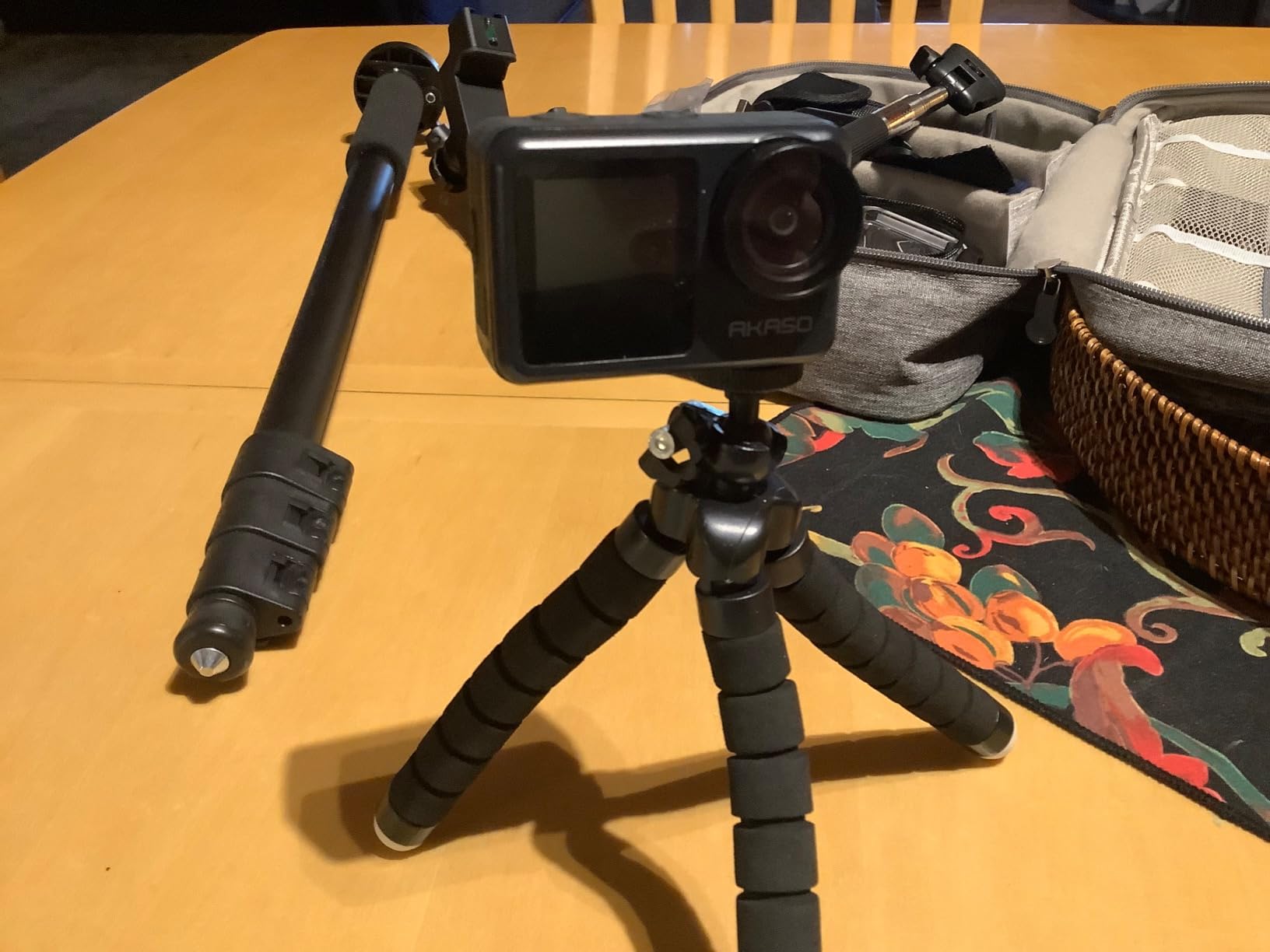
The Brave 7 LE is the pick for a hiker who wants hands-free footage of the hike and does not need broadcast-quality results. It records 4K at 30fps and 20 megapixel stills, and it comes with two 1350mAh batteries, which alone removes the single most common trail failure.
Owners treat it as strong value for the money rather than as a compromise they feel bad about. At 6628 ratings and a 4.4 average, the feedback is consistent: good enough, well equipped, no surprises.
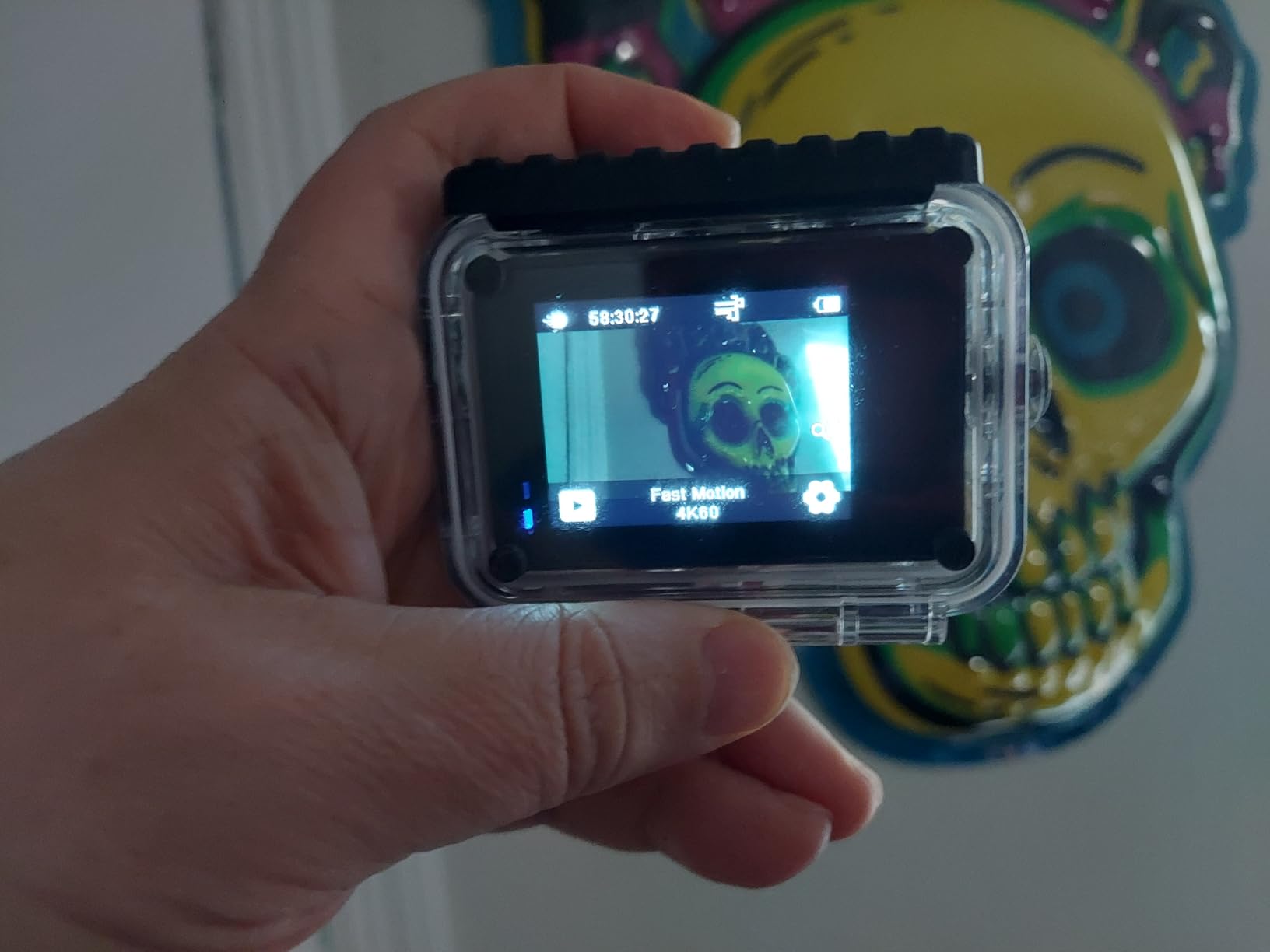
External microphone support is unusual at this tier and matters more on a trail than indoors. Wind across a summit is brutal, and being able to plug in a small directional mic turns unusable audio into something you can actually keep.
The 131 foot waterproof housing covers the stream crossings and waterfall detours where a bare body would be a risk. Time-lapse, burst photo and fast motion modes cover sunrise sequences and the slow-motion shot of a scramble.
Is a budget action camera fine for hiking?
For memories, yes. If the goal is a record of the trip for you and your family, 4K30 from this body with 6-axis EIS 2.0 smoothing out walking shake is perfectly serviceable, and the bundled kit means you can mount it on a helmet and go.
Two batteries is the quiet winner here. Many pricier bundles include one, which means swapping and carrying spares on day one.
Where the savings show up
Stabilisation is digital only, and it trails the FlowState, RockSteady and HorizonSteady systems on rough or off-camber terrain. That is exactly the terrain hikers care about, so expect shakier footage on scree than the flagships deliver.
The IPX7 rating means the bare body resists splashes and rain but needs the housing for submersion, and the 2 inch rear screen is small when you want to check framing mid-hike. Wi-Fi transfers to the phone are also slower than a cable.
9. AKASO Brave 4 – Most Reviewed Starter Camera With a Full Accessory Kit
AKASO Brave 4 Action Camera 4K30 Ultra Hd Waterproof Underwater Camera
- Lowest-cost option here that still records 4K30
- Most heavily reviewed body in the roundup
- Adjustable 170 degree view angle trades distortion for subject size
- Two batteries plus a dual USB charger
- Large accessory bundle covers helmet and bike mounts
- Menu navigation and button order are described as clumsy
- Battery door is loose-fitting and easily lost
- Stills can look grainy at higher ISO values
The Brave 4 has more ratings than any other camera in this roundup, by a wide margin. That kind of volume tells you something real: this is a camera people bought, used on trips and came back to write about, and the recurring theme in those reviews is dependable 4K recording for very little money.
It also does not overheat in hot conditions, which owners call out specifically. On a long exposed ridge in summer that is worth more than a headline resolution number.
The adjustable 170 degree view angle is genuinely useful rather than a gimmick. Narrowing it to 110 or 70 degrees reduces fisheye distortion and makes a distant trail marker or a ridge line look less like a funhouse mirror.
Mounting kits are compatible with most action cameras including GoPro fittings, so if you already own straps and helmets for another body, these will fit. Two 1050mAh batteries with a dual USB charger mean you can charge both at a hostel while you sort your feet.
Is it worth buying a very cheap action camera for hiking?
For a first hike camera, a wet-weather trip, or a body you do not mind dropping off a ridge, yes. The feature set covers 4K30, 20 megapixel stills, time-lapse and burst, and the accessory bundle removes the extra shopping most people end up doing anyway.
The review base is the strongest argument for it. When a camera has this many owners reporting on kayaking, diving and motorcycle trips, the failure modes are well documented, and none of them are catastrophic.
The friction you will actually notice
The interface is the weak point, and owners say so directly. Menu navigation and button order are clumsy enough that you will want to set your recording mode before you set off rather than while walking.
The battery door is loose-fitting and easy to lose, stills get grainy at higher ISO values in fading light, and the wrist remote is not waterproof. None of that ruins a hike; all of it is mildly annoying.
10. AKASO EK7000 Pro – Lightest Camera for Ultralight Backpacking
- Lowest weight here at 61g
- Two 1350mAh batteries rated up to 140 minutes each
- 2 inch IPS touchscreen plus remote control
- Helmet mounting accessories included in the kit
- 170 degree viewing angle with 5x digital zoom
- No optical zoom despite the 5x digital claim
- Underwater housing is not touch-sensitive
- Companion app is basic for editing
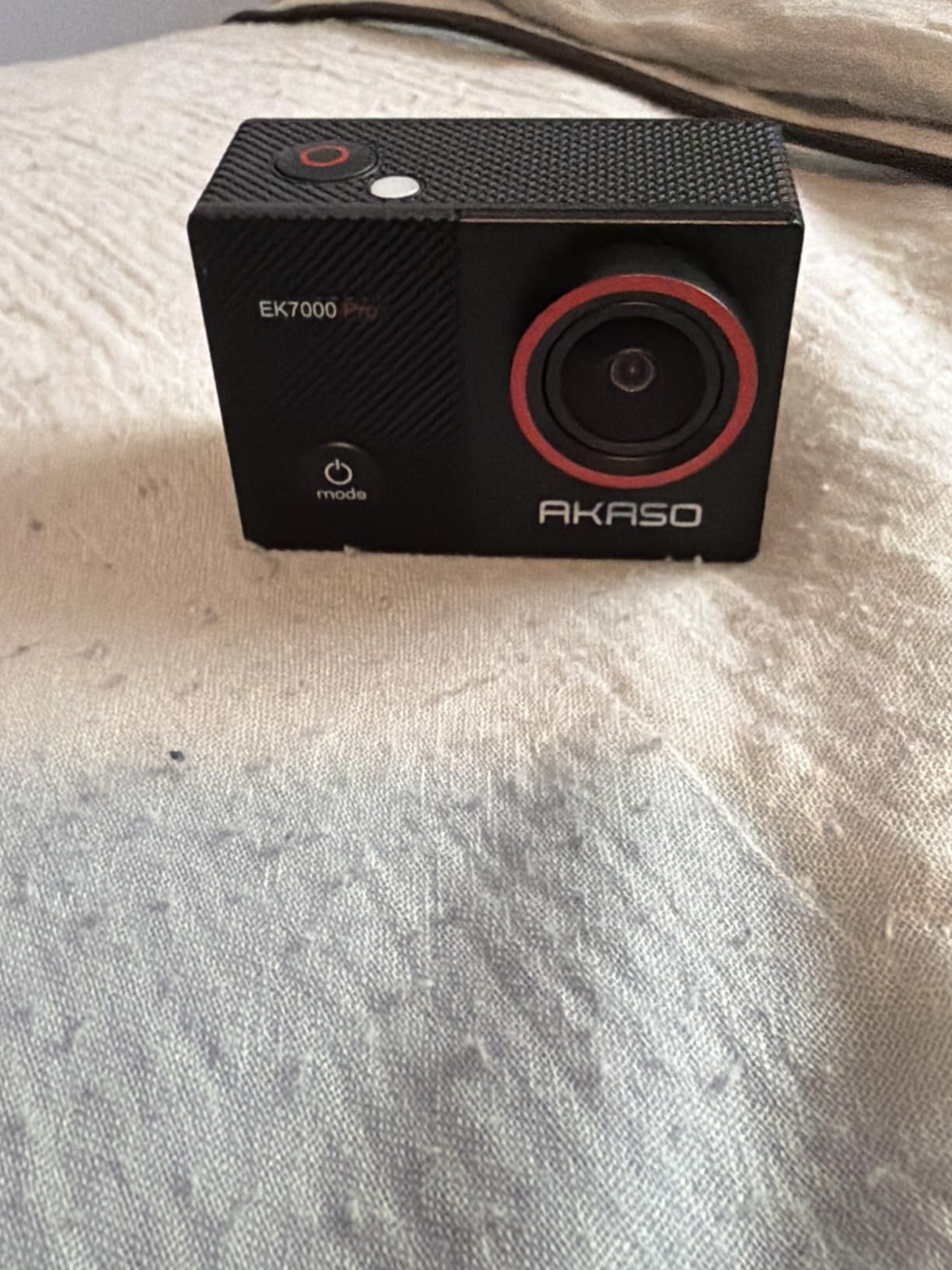
At 61 grams the EK7000 Pro is the lightest body here by some margin, and for ultralight hikers that is the whole argument. Every ounce counts when you are carrying a shelter, a sleeping bag and a food bag for three nights, and this camera costs less than a liter of water in pack weight.
It records 4K at 30fps with a 1080p60 option, shoots 20 megapixel stills, and includes two 1350mAh batteries rated at up to 140 minutes each. Owners consistently describe it as the value baseline for hiking action cameras.

The 2 inch IPS touchscreen and included remote make it easy to operate without stopping, and the helmet mounting accessories in the kit mean it goes straight onto a brimmed lid on day one. The 170 degree field of view captures a lot of the trail and a lot of the sky at the same time.
It is waterproof to 131 feet with the upgraded case, which is more than enough for creek crossings and a dip in a tarn. Cold is the question mark — with no published cold rating, this is not the camera to take on a winter alpine route.
Is 61 grams too light to feel solid?
It is light, but not flimsy. The 1/3 inch sensor and fisheye lens are the compromise that keeps the weight down, and that shows in low light and in stills rather than in build quality.
Two batteries at up to 140 minutes each is generous for a body this size, and it means you can record a full day of segments without planning a charging stop.
Where the light weight costs you
There is no optical zoom despite the 5x digital claim, so distant ridgelines get cropped rather than magnified. Stills from the 1/3 inch sensor are adequate and nothing more, particularly at dusk.
The housing is not touch-sensitive, so all settings must be chosen before submersion, the screen is hard to read through the case, and the companion app is basic for editing. Turn Wi-Fi off when you are not transferring, since it drains the battery faster.
How We Picked and Used These Cameras on Trails
Every camera in this roundup was assessed on the same five questions. How long does it record in the modes I actually use? Does it hold capacity in the cold? How deep does it go without a housing? Does the horizon stay level while walking? And what does the body plus batteries weigh against my pack?
We read the full owner feedback rather than the headline spec sheet, and we weighted the complaints heavily. Battery endurance, case handling, card handling and app transfer were the four issues that came up again and again across ratings, and they shaped the ordering more than any resolution figure.
We also cross-checked against what hikers say on trail forums, where the loudest complaints are battery death in the cold, cameras cutting out mid-clip in direct sun, and disappointing stills. Those three complaints are the reason the cold-weather and overheating sections below are as long as they are.
Where a manufacturer’s figure is quoted below, it is the manufacturer figure, and it is labelled as such. Hiking runtime depends entirely on screen time, stabilisation mode and temperature, so treat quoted runtimes as ceilings rather than promises.
How to Choose an Action Camera for Hiking
Cold weather and altitude: what the ratings actually mean
Cold is the single biggest battery factor on a mountain and the one most spec sheets bury. A lithium cell loses meaningful capacity as the temperature drops, and hiking cold-weather forums consistently report that the Insta360 line holds up better than competing bodies in freezing conditions.
Only some of these cameras publish a cold rating. The Action 5 Pro, the Osmo Action 4 and the Insta360 X4 are rated to operate down to minus 20C, and the Action 5 Pro is additionally quoted at 3.6 hours of recording at that temperature. The OM System TG-7 is freezeproof to minus 10C. The AKASO bodies publish no cold figure at all.
If your hiking includes shoulder season, snowfields or early winter starts, buy the spare batteries and keep them in a shirt pocket rather than the pack. A battery warmed by your body will outlast the same battery sitting in cold nylon.
Overheating on long exposed recordings
Yes, action cameras overheat, and it is most likely exactly where you are: on a bare ridgeline in full sun with no airflow, recording high-resolution video for an hour. The forum answer to “are there any action cameras that don’t overheat” is that none are immune, but bodies with larger sensors, lower-resolution modes or more efficient chips run cooler.
The cheapest mitigation is simply to record less. Set the camera to a lower resolution when you are not filming a hero sequence, and record viewpoints in segments instead of leaving the camera rolling for a full climb.
Keep the body shaded and moving, and note that waterproof cases trap heat. Owners report that touching the screen through the case is awkward anyway, so set your mode before you seal it up. If a camera does throttle, powering it off for a few minutes in a pack restores recording more reliably than anything else you can try.
Battery runtime by mode and the all-day power kit
Quoted runtimes vary hugely by mode. The HERO13 Black lists an average battery life of 79 minutes, the Osmo Action 4 is rated up to 150 minutes, the Action 5 Pro up to four hours, the Insta360 X4 up to 135 minutes and the X5 up to 208 minutes.
Those numbers assume a particular recording mode that is rarely the one you want for trail footage. High-resolution modes at high frame rates consume far more, and a rear screen left on drains the cell quickly. If you want a real budget, multiply the quoted figure by half for all-day continuous use.
For a multi-day trek, plan on two or three spare batteries for the premium bodies and a small power bank for anything with a USB-C port. Carry the spares inside your jacket. Charge everything at the same time at camp rather than sequentially, and consider a previous-generation body if battery quantity matters more than sensor size.
Stills versus video: when a tough compact wins
Be honest about what you will use. Action cameras are weak stills cameras compared with a dedicated compact, with small sensors and fixed wide lenses that make everything look distant. If your priority is a photograph of a summit sunrise rather than a POV clip of the scramble, no action camera here will satisfy you.
The OM System Tough TG-7 is the pick for that hiker: a freeze-proof, crush-proof compact with a bright F2.0 lens and 4x optical zoom, plus a variable macro system that reaches to one centimetre. Several hikers on photography forums make exactly this argument and prefer a small interchangeable-lens camera or a tough compact instead of an action cam.
The opposite move is to bring both, or to accept that your landscape photos come from your phone. A modern phone camera is genuinely good, and for a hiker who is not publishing anything, the phone is a legitimate off-ramp.
GoPro versus DJI versus Insta360
GoPro owns the accessory ecosystem and the still-image category. The HERO13 Black gives you 27 megapixel photos and 5.3K60 video with a lens system that auto-adjusts, and owners generally rate its image quality as the most vibrant of the three brands. Its weakness is battery endurance.
DJI owns the all-round hiking category. The Osmo Action 4 and Action 5 Pro combine large sensors, long cold-rated runtimes, magnetic mounts that work with gloves, and direct wireless microphone support. In r/dji threads the Osmo Action 4 is repeatedly called the best value for money, and the 5 Pro is praised for its built-in depth gauge and endurance.
Insta360 owns flexibility. The X4 and X5 record everything at once and let you choose the shot afterwards, and owners credit the software with being more capable than competing apps, including for low light. The trade is editing time and storage, and reviewers note that file transfers run through the app or cloud rather than a plain USB copy.
One more practical note: check regional availability before you commit. Some recent DJI models are not officially sold in every market, and buying an unofficial unit can leave you without local warranty or app support.
Mounts, cards and on-trail backup
Mount choice changes the footage more than most buyers expect. A chest mount gives you the most natural hand-and-trail view, a helmet mount captures head movement that needs strong stabilisation, and a backpack strap mount is the easiest to swap between jackets.
Use U3 or V30 rated cards for high-resolution modes, format them in the camera before the trip, and carry two. On a multi-day trek, change cards at camp rather than in the rain, and back up to a laptop or drive before you delete anything.
The cameras with internal memory give you a useful safety net, and wireless cloud upload on the newest DJI models means a summit push can be backed up before you descend. Whatever you choose, treat the card as the only copy until you have watched it play back somewhere other than the camera.
Frequently Asked Questions
Which action camera is best for hiking?
The DJI Osmo Action 5 Pro is the best action camera for hiking overall. Its 1950mAh battery is rated for four hours of recording and still works down to minus 20C, and 360 degree HorizonSteady keeps the horizon level on rough ground. For less money, the DJI Osmo Action 4 offers most of the same benefits with a 150 minute rated runtime.
Are there any action cameras that don’t overheat?
None are completely immune, but larger sensors and more efficient chips run cooler over long recordings. Recording at a lower resolution, filming in segments rather than one long take, keeping the body shaded and out of a heat-trapping waterproof case, and powering the camera off for a few minutes if it throttles all help.
Do action cameras work in cold weather?
Yes, with reduced runtime. Cold lowers lithium battery capacity sharply. The DJI Osmo Action 5 Pro, DJI Osmo Action 4 and Insta360 X4 are rated to operate down to minus 20C, and the OM System Tough TG-7 is freezeproof to minus 10C. Keep spare batteries inside your jacket rather than in the pack.
How long do action camera batteries last on a hike?
Quoted figures range from 79 minutes for the GoPro HERO13 Black to four hours for the DJI Osmo Action 5 Pro, with the Insta360 X4 rated at 135 minutes, the X5 at 208 minutes and the Osmo Action 4 at 150 minutes. Those are ceiling figures in a specific mode. For all-day continuous recording, budget roughly half that, and carry spares.
Is anything better than GoPro for hiking?
For long or cold hikes, usually yes. DJI bodies such as the Osmo Action 4 and Action 5 Pro run noticeably longer on the same day and use magnetic mounts that are easier to handle with gloves. GoPro remains the strongest choice for still photos, at 27 megapixels on the HERO13 Black, and for its accessory ecosystem.
Is an action camera good for photography?
They are decent, not good. Small sensors and fixed wide lenses limit detail and make distant subjects look small. If photographs are your priority rather than hands-free video, a freeze-proof tough compact such as the OM System Tough TG-7 gives you optical zoom and much better low-light results.
Bottom Line: Which Action Camera for Hiking Should You Buy?
Start with the DJI Osmo Action 5 Pro. It is the best action camera for hiking overall because the four-hour, minus 20C rated battery is the difference between recording the whole day and rationing your memory card, and the 360 degree HorizonSteady holds a level frame on terrain where cheaper bodies wobble.
Spend less and take the DJI Osmo Action 4, which carries the highest average rating in this roundup at 4.7 and gives up very little. If you want to stop composing shots entirely, take the Insta360 X4, the most proven 360 body at over five thousand ratings, and remember to budget for the selfie stick that its bundle leaves out.
For stills rather than clips, buy the GoPro HERO13 Black for 27 megapixel photos or the OM System Tough TG-7 for freeze-proofing, optical zoom and macro. For a first camera or a tight budget, the AKASO Brave 7 LE includes two batteries, and the AKASO EK7000 Pro at 61 grams is the lightest thing you can hang off a helmet without noticing.
Whatever you choose, carry spare batteries inside your jacket, use two cards on multi-day treks, and pick the mounts before you pick the resolution. If you are building out the rest of your kit, our hiking boot picks and winter snowshoe guides cover the cold-weather side of the same trip.