
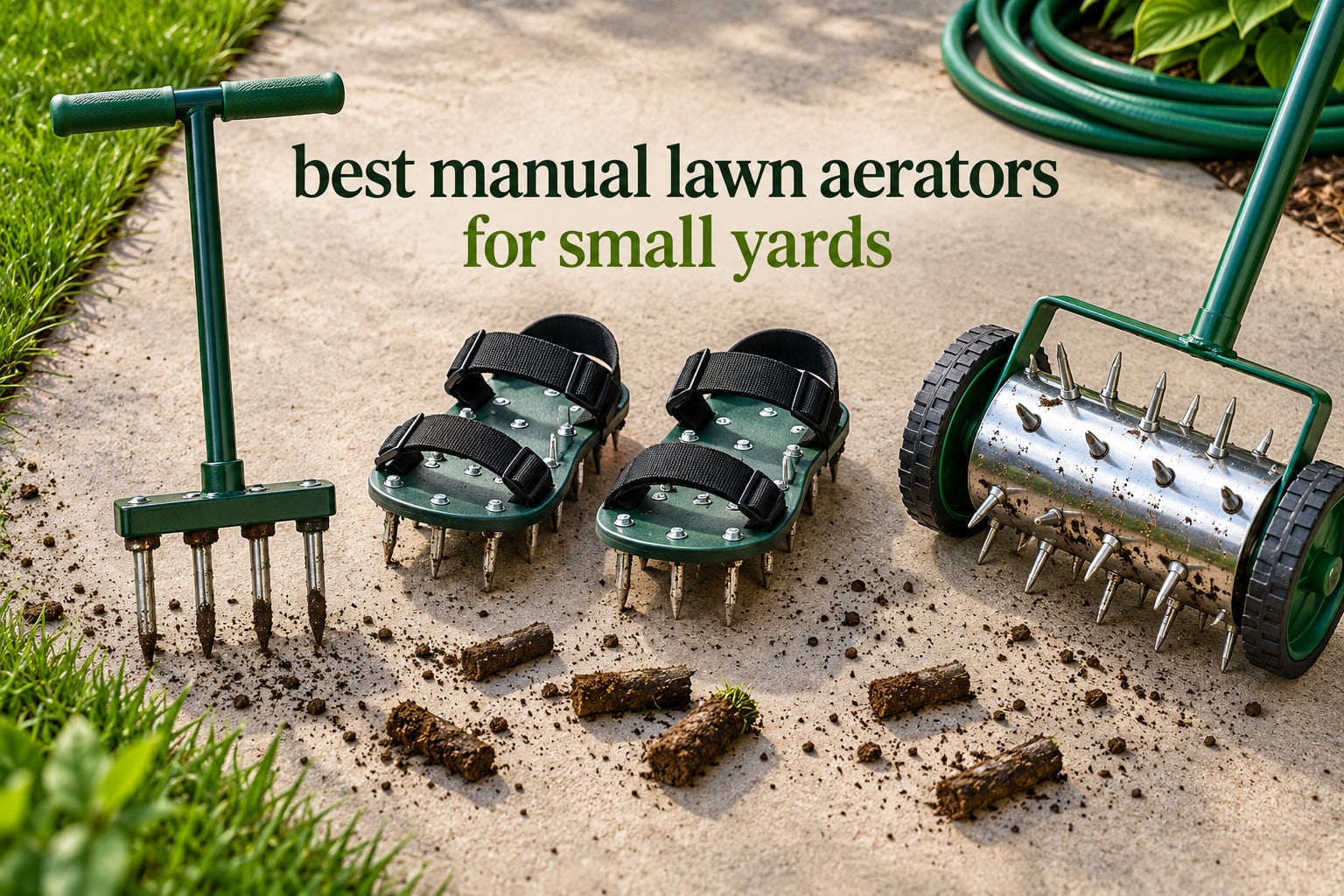
Most lawn aerator roundups hand you a list of tools built for half an acre of grass. This one is scoped to the opposite problem: a small yard of roughly 1,000 to 2,000 square feet where a tow-behind or powered machine is more machine than the job needs. There are only three manual lawn aerator form factors worth owning at that size, and the right one depends on whether your soil compaction is mild or serious.
A spike aerator drives solid steel spikes into the ground to open drainage channels. A core aerator, also called a plug aerator, uses hollow tines to lift actual plugs of soil out of the root zone. A rolling push aerator spins star-shaped spikes on a drum you walk behind. The spike and core tools need a foot plate and a T-handle so you can push down with body weight. The drum needs a handle and a lot of lawn in front of it.
Our top pick, the Yard Butler ID-6C, is the one we would carry to a small yard first. It pulls real cores with dual hollow plugs, weighs 1.77 pounds, and has the deepest review history in this group at 8721 ratings, which tells you a lot about whether it holds up over seasons. Below it, we cover the eight tools that make sense under about 2,000 square feet, plus a sizing decoder, a tine-depth threshold you should not go below, and a step-by-step method that works on any of them. Everything below was updated for 2026.
Table of Contents
Top 3 Manual Lawn Aerators for Small Yards (2026)

Yard Butler ID-6C Coring Aerator
- Dual hollow coring plugs
- Foot bar for leverage
- Powder-coated steel
- Only 1.77 pounds

Walensee 4-Row Spike Aerator
- 20 steel spikes
- 2.8 inch spikes
- Four-row layout
- 34.6 inch length

Jardineer 36-Inch Spike Aerator
- 12 heat-treated spikes
- 36 inch handle
- Pre-assembled
- Detaches for storage
If you want the short version: the Yard Butler ID-6C is the best manual lawn aerator for most small yards because it cores rather than spikes, and coring is what actually relieves soil compaction. The Walensee 4-Row is the fastest per step and the best value if you only have a small patch to treat. The Jardineer 36-Inch is the cheapest way to cover a whole small lawn when you do not mind leaving plugs behind.
Best Manual Lawn Aerators for Small Yards at a Glance
Every pick below suits a yard in the 1,000 to 2,000 square foot range, which is the band where manual tools actually beat renting. Tine depth matters more than any other spec on this list. Anything that cannot reach past 3 inches is punching at the surface crust instead of the compacted layer, and the 3 inch mark is the pass/fail line we use.
| Product | Specifications | Action |
|---|---|---|
| Yard Butler ID-6C Coring Aerator |
|
Check Latest Price |
| Walensee 4-Row 20-Spike Aerator |
|
Check Latest Price |
| Jardineer 36-Inch Spike Aerator |
|
Check Latest Price |
 Dolibest 4-Plug Coring Aerator Dolibest 4-Plug Coring Aerator |
|
Check Latest Price |
 Colwelt Deep Spike Aerator Colwelt Deep Spike Aerator |
|
Check Latest Price |
 Seeutek 18-Inch Rolling Aerator Seeutek 18-Inch Rolling Aerator |
|
Check Latest Price |
 Onadak 15-Spike Spring-Assist Aerator Onadak 15-Spike Spring-Assist Aerator |
|
Check Latest Price |
 Xuperace 3-Prong Core Aerator Xuperace 3-Prong Core Aerator |
|
Check Latest Price |
1. Yard Butler ID-6C Coring Aerator – Best Overall for Small Yards
- Pulls real soil cores instead of just puncturing
- Foot bar lets you work without bending
- Only 1.77 pounds so it moves easily around beds and shrubs
- Long cushioned handle lowers back strain
- 8721 ratings show long-term owners keep using it
- Soil cores need manual cleanup after each pass
- Manual operation only so anything past a small yard is labor intensive
The Yard Butler ID-6C is the tool I recommend to anyone who asks which manual lawn aerator is best for a small yard. It works on a coring principle: two hollow plugs punch into the turf and lift a core of compacted soil out with them, which is a different job from the spike tools further down this list. The cores are what tell you the soil was compacted, and removing them is what gives air and water a path to the grass roots.
Two design details make it easier than most corers. The foot bar gives you a step-on plate for leverage, so you can push a plug into ground without hinging at the waist, and the long handle with cushioned grips keeps your spine out of the work. At 1.77 pounds it is the easiest tool here to carry to a side yard, lift over a raised bed edge, or store on a hook.
The specs are unremarkable in the way good tools are: powder-coated steel body, 38 by 11 by 2 inches overall, model number 100051046. What stands out is the review history. 8721 ratings averaging 4.3 stars, with 63 percent five-star, is the largest base in this group, and that is the number I trust most when the question is whether something survives five seasons of wet clay.
Owner feedback clusters on two points. People like the leverage and the fact that the coring action genuinely loosens hard ground, and they consistently note the same tradeoff: the cores have to be cleaned up and dealt with afterward. Ratings skew positive with a steady minority of complaints about physical effort and post-use cleanup, which is honest for any coring tool.
When the Yard Butler earns its counter space
This is the right pick when your problem is real compaction rather than cosmetic thatch. On r/lawncare, the most useful diagnostic people share is the screwdriver test: if it takes genuine force to push a screwdriver more than a few inches into the turf, you have compaction deep enough to justify pulling cores.
It also handles awkward geometry well. Between shrubs, along a walkway, in the strip between the fence and the house, a corer with a foot bar is far more controllable than a 22-pound rolling drum. And because the tool is light, you can work in ten-minute bursts, which is how most people actually manage a fall aeration.
When another tool suits you better
Skip it if your compaction is mild and you only want to improve water penetration in a thin, patchy area. A spike tool is faster, leaves no cores to clean, and costs less. The Yard Butler is also a two-hand, full-body tool, so anyone with lower back or knee limits should look at the Onadak spring-assist design or the Jardineer’s detachable shaft instead.
2. Walensee 4-Row Aerator – Best Value Spike Coverage
- 20 holes punched per press so coverage builds fast
- Number one best seller in Manual Lawn Aerators
- Alloy and iron steel with rust-resistant powder coating
- T-handle plus foot bar for good leverage
- Owners report thicker grass after a reseeding pass
- Solid spikes can surface rust if stored damp outdoors
- Smallish footprint makes full-yard passes slow
- Spikes are solid so holes close over quickly
The Walensee 4-Row is the fastest spike tool per step in this group, and that is the entire reason to buy it. Twenty steel spikes arranged in four rows punch twenty holes every time you step down, which means a 1,500 square foot yard takes roughly half the number of presses a four-tine tool would need. For a small yard that is a meaningful difference in how long you are out there swinging a foot plate.
Construction is heavier than the price suggests. The body is alloy steel and iron, the spikes are 2.8 inches long, and the finish is a rust-resistant powder coat. Overall length is 34.6 inches with a 9.2 by 5.5 inch foot plate, and the T-handle and foot bar combination lets you put real body weight into the press.
It ranks number one in the Manual Lawn Aerators category on Amazon with 2787 ratings at 4.3 stars, and 62 percent of those are five-star. Owners repeatedly credit the sturdy build, quick assembly, and visible greening after a pass, particularly when the tool is used to prep a lawn for overseeding rather than to treat deep compaction on its own.
The honest limit is that these are solid spikes. They open drainage channels and they help seed and water move into the root zone, but they do not remove material, and in hard clay a solid spike tends to push soil sideways rather than apart. It is a maintenance tool and a seeding-prep tool more than it is a compaction cure.
Storage is where this one loses points. A reviewer found every spike rusted after the tool spent a season on a damp patio, which is a fair warning for anyone storing it outside. A light coat of spray lubricant and a dry spot is the difference between a tool that looks good next spring and one that does not.
Where the Walensee earns its keep
This is the pick for the front strip, the patchy area by the mailbox, the worn path from the back door, and any small yard where grass is thin rather than packed. It also works well immediately before overseeding, because twenty fresh holes per step is a lot of places for seed to land and for water to soak in.
For a yard under about 1,000 square feet it is arguably the best manual lawn aerator for the money, and for anything bigger than 1,500 square feet you will feel the repetition by the second hour. If your soil is heavy clay, pair it with a corer rather than choosing between them.
Where it falls short
The solid spikes mean holes close over quickly, so expect to re-treat high-traffic zones annually instead of every other year. The footprint is also small relative to the Walensee’s competitors here, which means more passes for the same square footage, and the tool does nothing to remove thatch or bring plugs to the surface.
3. Jardineer 36-Inch Spike Aerator – Most Versatile
- Pre-assembled so you can start immediately
- 36 inch height with rubber grip cuts hand and back fatigue
- Thick powder-coated steel foot plate takes full body weight
- 12 heat-treated spikes handle clay sand and loam
- Detaches for compact storage
- Only 12 spikes so passes take longer than four-row tools
- Listed 5.1 pound weight is heavier than lighter steel spike aerators
- Spikes at 2.75 inches are among the shallowest in this group
The Jardineer is the most friction-free starting point in this roundup, and the reason is boring but important: it arrives pre-assembled. Model US1130 comes ready to use, and it detaches for storage, so a small yard, a garage shelf, and a rainy weekend in spring is genuinely all it takes to get through an annual aeration.
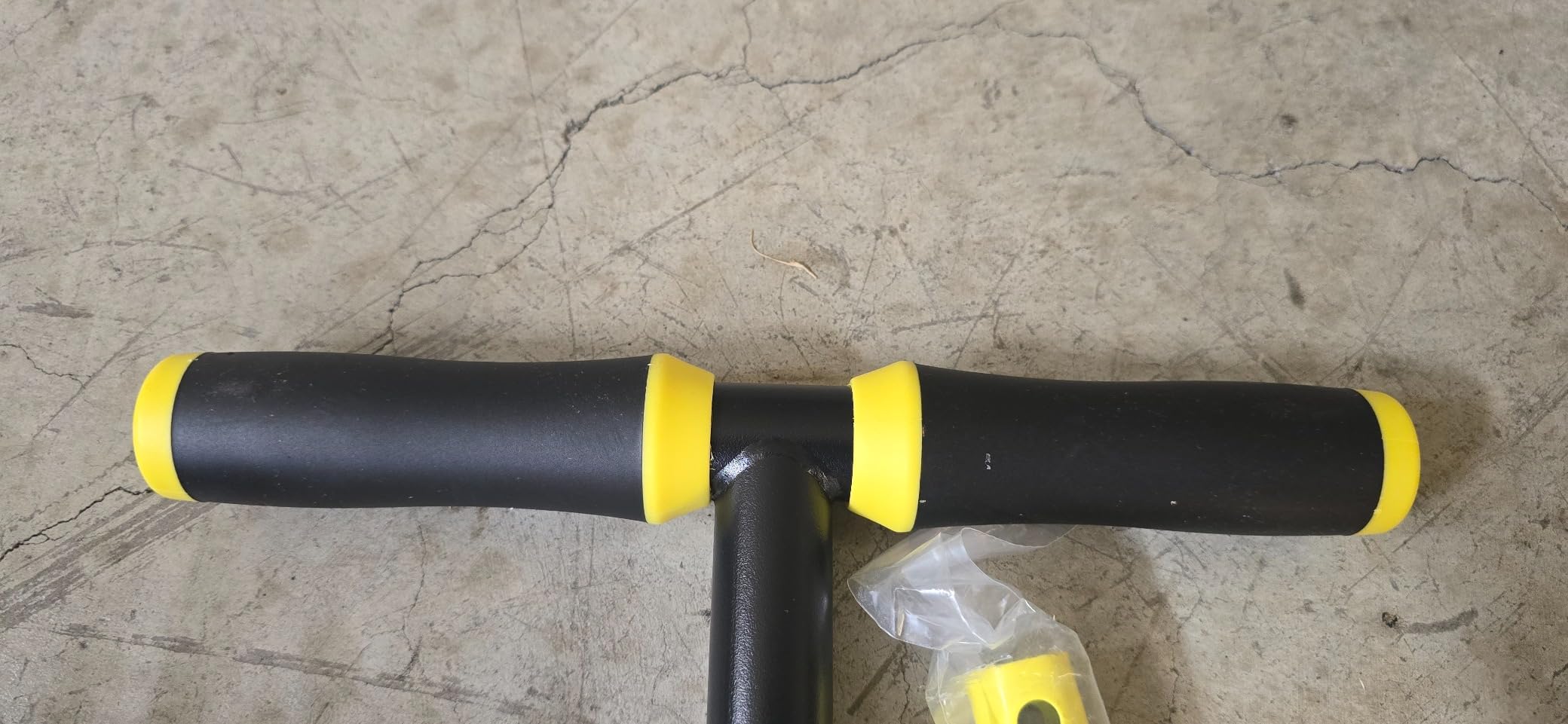
Twelve heat-treated steel spikes at 2.75 inches work at once, driven through a thick powder-coated foot plate. The 36-inch shaft with a rubber grip is tall enough that you can work with a mostly upright posture, and the plate is rigid enough to take your full weight without flexing. At 5.1 pounds it is solid rather than nimble, but it is not unwieldy.
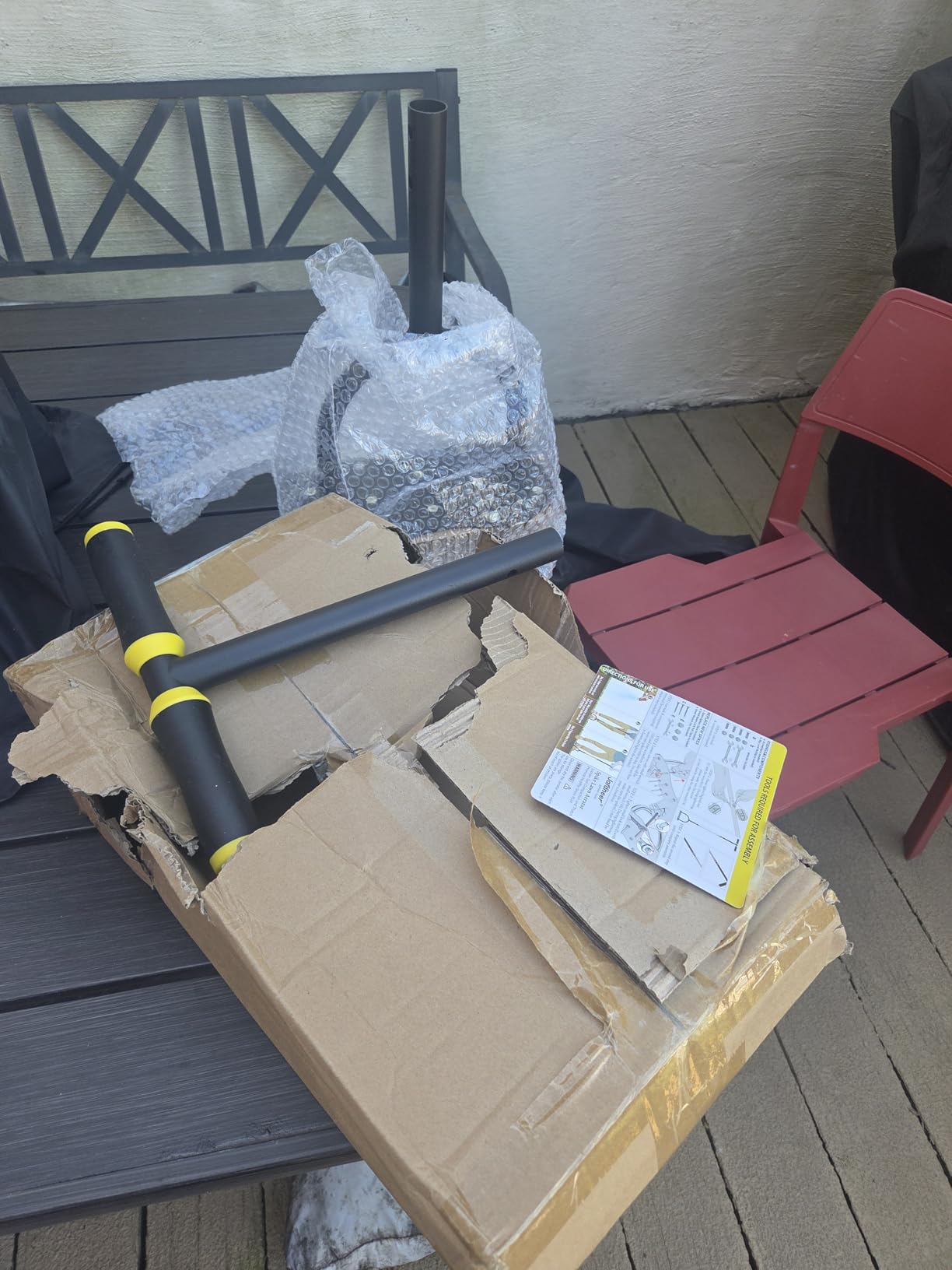
Ratings sit at 4.2 across 547 reviews, with 62 percent five-star. The feedback pattern is consistent: owners treat it as a dependable budget spike aerator and credit the adequate spike count and sturdy plate rather than premium performance. That is exactly what you should expect at this end of the range, and it is why the tool works well as a first aerator.
The 2.75-inch spike length is the catch. That is right at the 3 inch line I use as a minimum, and on anything softer than loam you are only breaking the crust. If you already know your soil compacts hard, the Colwelt’s 3.5-inch spikes reach meaningfully deeper for a similar up-front outlay.
Best fit for a first-time owner
For someone who has never aerated and owns about 1,000 square feet, this is the least intimidating place to start. The pre-assembly removes the usual failure point of a first tool, which is a confusing handle assembly at 8pm the night before you planned to work.
It is also the easiest to hand to a neighbor, a teenager, or a relative with a bad back who wants to help, since the detachable shaft means one person can do the passes and the other can rake. That division of labor is what makes hand aeration realistic on a whole small lawn rather than a single weekend casualty.
Where you will notice the limits
Twelve holes per step is a modest working area, and a 2,000 square foot yard will take real time. The listed 5.1-pound weight also makes it the heavier end of the spike tools here, which matters if you are working around beds where you have to lift and set it down repeatedly.
4. Dolibest 4-Plug Coring Aerator – Best Rust-Resistant Coring
- Stainless plugs and tray resist rust better than painted steel
- Storage tray catches plugs so you skip raking soil
- Raised crossbar and rubber grip reduce blisters and shoe interference
- Assembles in about two minutes
- Includes a 12 inch hand tool for cleaning and transplanting
- Reviewers report it clogs fairly easily in wet soil
- Cores sometimes need the included tool to clear
- Four plugs make small holes and are too slow for a large yard
The Dolibest takes the core-aeration approach and solves one of its two standard problems outright: rust. Both the four coring plugs and the soil core storage tray are SUS 304 stainless steel, mounted on a powder-coated solid steel rod. If you live somewhere humid or you tend to leave tools out, that material choice is the reason this one is on the list.
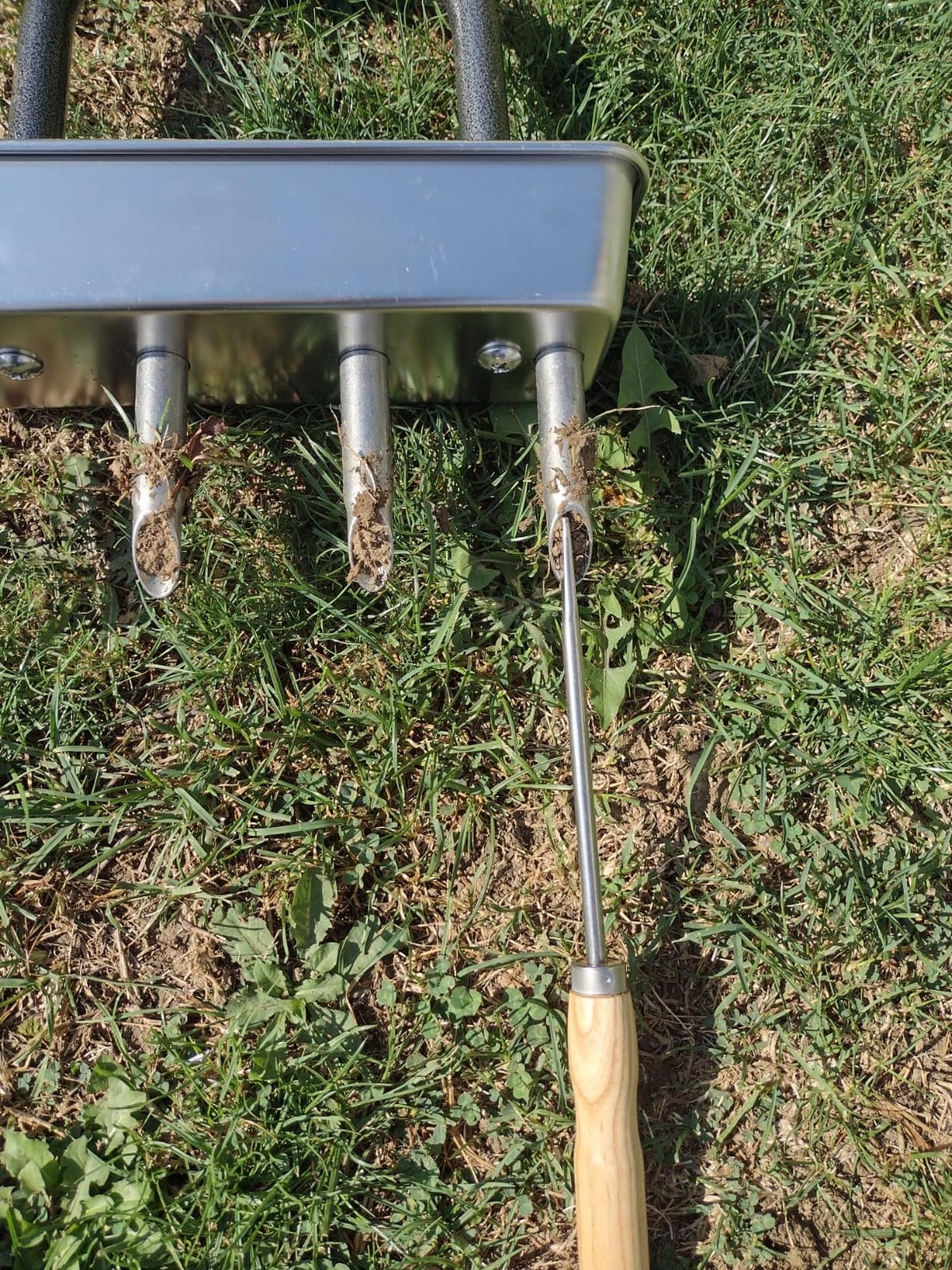
The storage tray is the other design idea worth calling out. Ejected cores land in the tray instead of scattering across the lawn, which cuts cleanup to a matter of tipping one container. The soft rubber grip and elevated crossbar keep your knuckles away from the plate and leave knee room, and the whole thing assembles in about two minutes from three parts.
At 4.2 stars from 276 ratings with 57 percent five-star, the feedback is warm but not glowing. Owners like the stainless build, the tray, and the fact that this is effectively the same tool design sold by big-box brands at a fraction of the cost. The 12-inch weeding and cleaning hand tool included in the box is a small touch that earns its place during core cleanup.
The recurring complaint is clogging. Reviewers report that in wet or clay-heavy soil the tine holes fill mid-pass, and cores sometimes need the included screwdriver-style tool to clear out. That is a real limitation in exactly the conditions where you most want to core, so water the lawn first and aim for moist rather than wet ground.
Where the Dolibest makes sense
Pick it for a small yard in a wet climate, for a lawn with clay soil you water often, or for anyone who wants coring benefits without handling a tray of mud and loose plugs across the whole lawn. The tray makes the job feel much more contained than a bare-plug corer.
It is also a genuinely useful spot tool. Around a tree, along a fence line, or across a 300 square foot patch of thin turf, four stainless plugs with a collection tray is manageable in a way that twenty full-yard passes is not. Model DBMLT-05-4N is a good companion to a spike tool rather than a replacement for one.
Where it will disappoint
On a full small lawn above 1,000 square feet, four small plugs per press is slow, and you will fight the clogging on clay. Wet soil is the worst case: cores swell, holes plug up, and you spend more time clearing the tool than aerating.
5. Colwelt Deep Spike Aerator – Best for Hard Clay
Colwelt Aerator Lawn Tool, Manual Lawn Grass Aerator with Rugged Wide Spike
- Deepest spikes in this group at 3.5 inches
- Handles compacted clay without much resistance
- 6 inch wide anti-slip plate takes larger feet and controls depth
- 38 inch height keeps you from bending
- Spikes survived rocks and tree roots in owner reports
- Some play between the pole sections reduces grip
- Four spikes means very limited coverage per step
- Real physical effort
- so it is for small lawns only
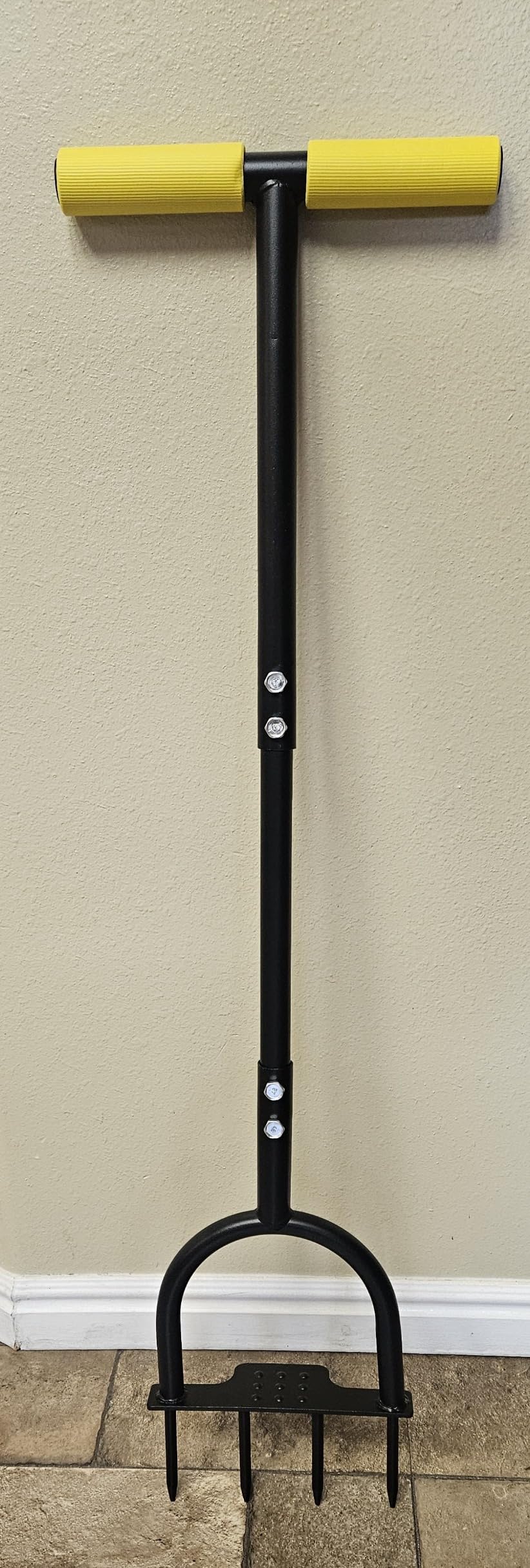
The Colwelt exists for one problem: hard, stubborn ground. Its four spikes are 3.5 inches long and two-fifths of an inch in diameter, which is both longer and thicker than the 2.3-inch spikes most tools in this range ship with. That extra length is the difference between breaking the surface crust and reaching the layer where compaction actually lives.
Owner feedback is unusually specific about that. Reviewers confirm the tines punch into hard clay with little resistance, and one user reports the spikes survived hitting rocks and tree roots without bending. At 4.5 stars with 76 percent five-star ratings, it holds the highest star rating among the spike tools in this roundup.
The foot plate is 6 inches wide and 5.5 inches deep with an anti-slip surface, which does two things: it takes your full body weight without flexing, and it fits larger feet that a narrow plate would push off balance. The cushioned T-handle on a 38-inch shaft keeps the working position upright, and the package includes fixings, tools, and a pair of work gloves.
The catch is coverage and handling. Four spikes is the smallest working area here, and the effort required is the dominant theme in the reviews, with several owners explicitly advising it for small lawns and touch-ups rather than whole-yard passes. That is fine if you follow the sizing rule, and frustrating if you do not.
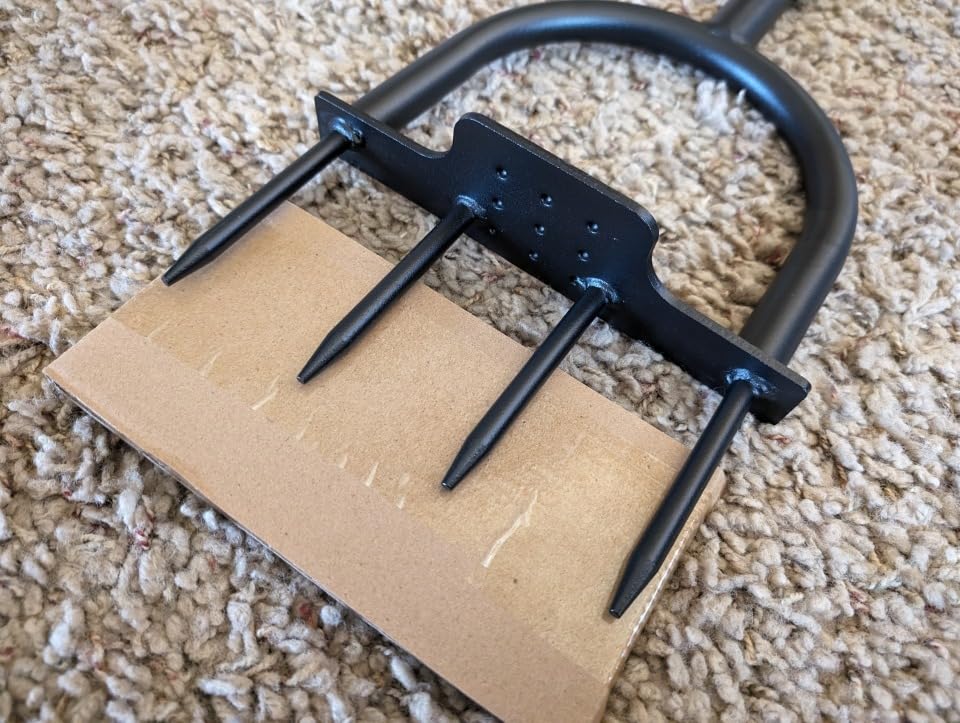
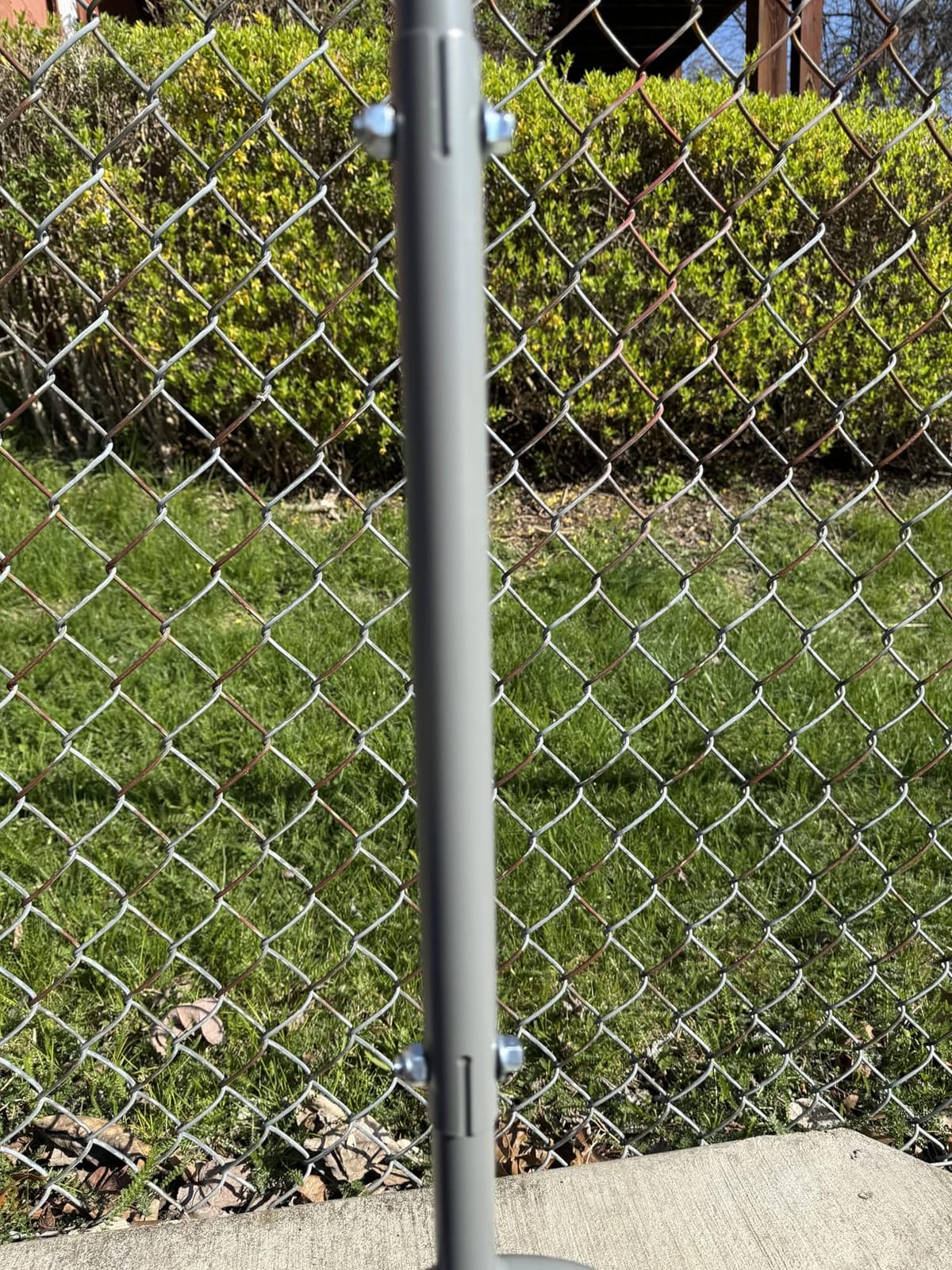
One practical note: a few users report play between the pole sections that reduces grip, and some tape the joint as a fix. At 4.31 pounds it is heavy for a hand tool, which is part of why the punches go in as easily as they do.
Who should buy the Colwelt
If your yard is clay, if nobody has aerated it in years, or if the screwdriver test comes back with real resistance, this is the spike tool to get. Depth is the whole argument, and 3.5 inches clears the bar I use as a minimum without asking you to keep stabbing at a compacted layer.
It is also well suited to the awkward zones: a narrow side yard, a bank, a bed edge, anywhere a spike tool needs to reach without you dragging a heavy drum through shrubs. The wide plate gives you a stable stance on uneven ground.
Who should skip it
Anyone with a lawn over roughly 1,200 square feet who wants the whole thing done in an afternoon. Four spikes per press plus high physical demand turns a project into a season. If your compaction is mild, the Walensee’s 20 holes per step will serve you better and take a fraction of the time.
6. Seeutek 18-Inch Rolling Aerator – Best Rolling Coverage
Seeutek 18Inch Rolling Lawn Aerator, Upgraded Heavy Duty Aerators
- Rolling drum covers far more ground per pass than spike-foot models
- Three height adjustments tune spike depth to the season
- Fill port takes water or sand for deeper penetration
- Laser-welded construction means no assembly
- Anti-rust painted finish on a high-density alloy body
- 22 pounds is awkward to lift and maneuver in tight spots
- 18 inch drum is short compared with 23 inch versions
- Star spikes puncture rather than core
- Lowest average rating in this group at 4.1
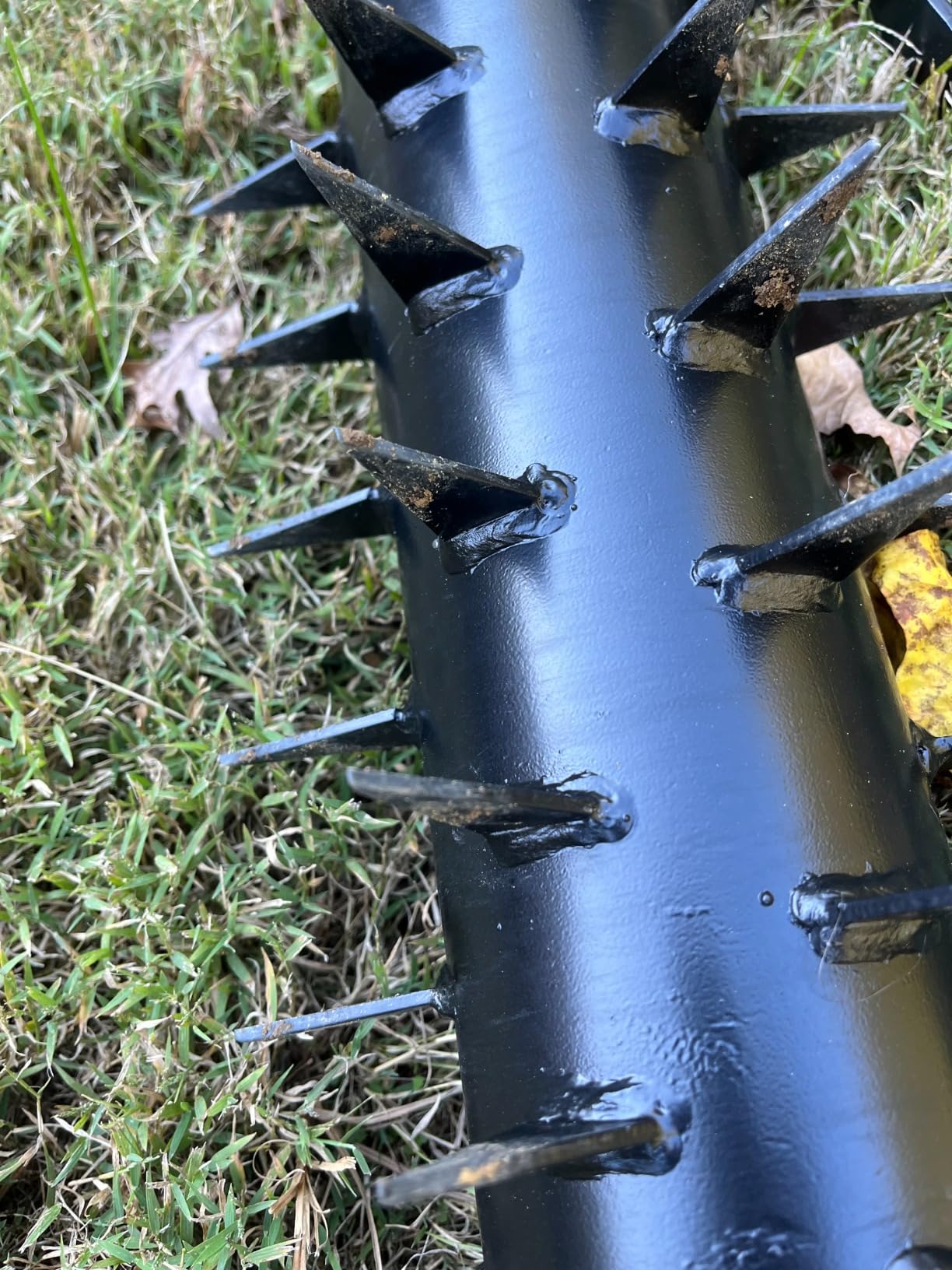
The Seeutek is the only rolling option here, and rolling is how you cover a small yard without repeating the same swing a thousand times. An 18-inch drum studded with 2-inch star-shaped spikes moves as you push, so a pass across a lawn lays down a continuous line of punctures. That is a fundamentally different throughput model from stepping a foot plate.
Three height adjustments let you tune spike depth to the season, and a side fill port accepts water or sand to add weight for deeper penetration in hard soil. Adding weight to the drum is the closest thing a manual tool has to the weight of a machine, and on compacted ground it is the difference between puncturing and reaching. The padded T-bar and tripod handle-to-roller connection are built to keep that pressure steady.
Construction is laser-welded, so there is no assembly, and the high-density alloy body carries a painted anti-rust finish. At 4.1 stars from 181 ratings, this is the lowest average in the group, and the 1-star share runs 12 percent, noticeably higher than the rest. Owners who have room to roll value the coverage; complaints concentrate on bulk, handling, and tightening.
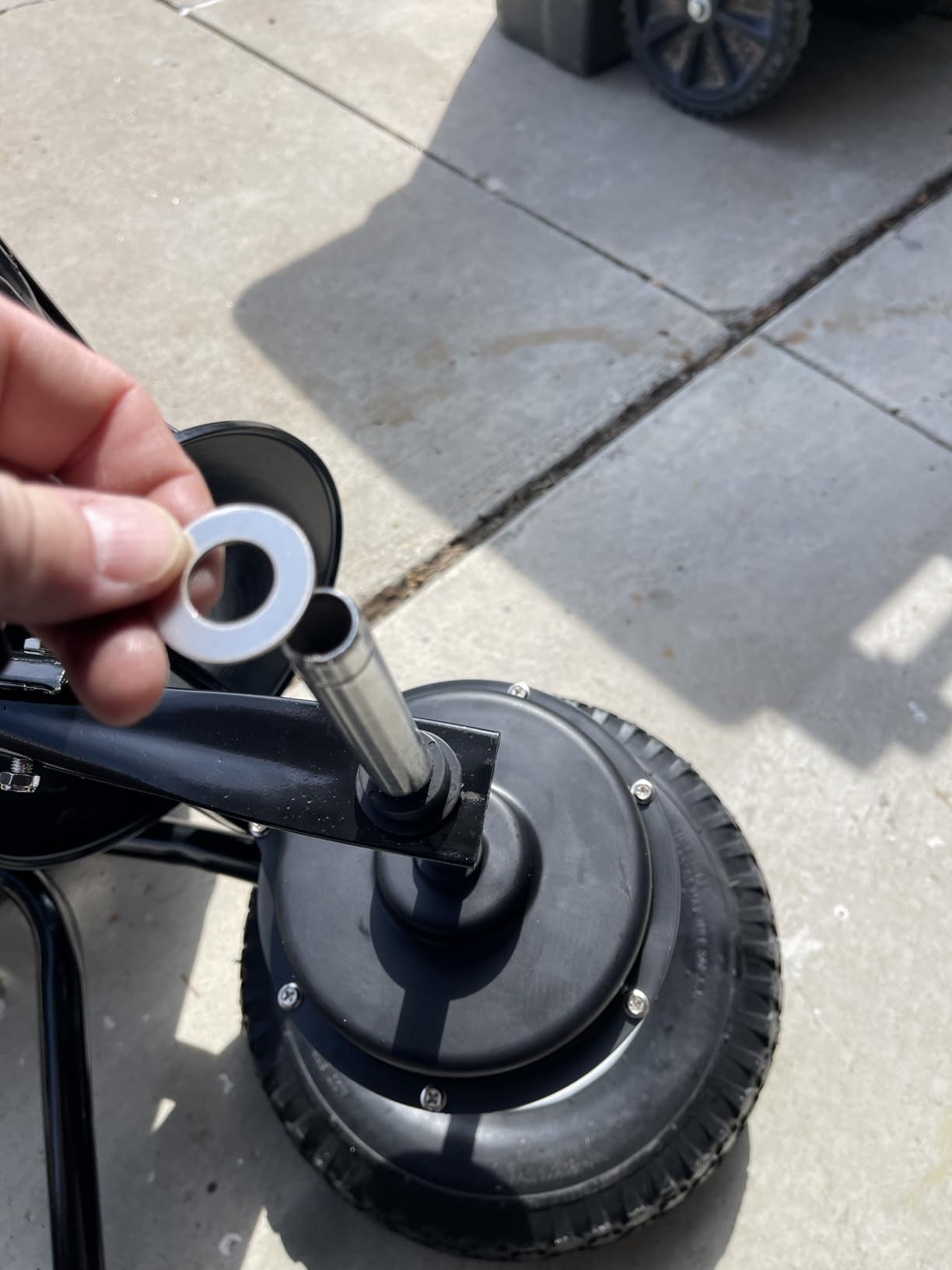
Be realistic about the weight. At 22 pounds this is a small machine, not a hand tool, and reviewers call it awkward to lift and maneuver in tight spots. It earns its place on an open lawn, not between shrubs.
When rolling is the right call
If your small yard is open, mostly rectangular, and you want to finish in an afternoon, a drum is the efficient choice. The spike-foot tools are sized for spot work and edge detail, and a straight run down a 40-foot lawn strip is exactly what a drum does well.
Adding sand or water to the fill port is the technique most owners underuse. On anything firmer than loam, an unfilled drum rides on the spikes and barely marks the surface. Fill it, push, and the same tool behaves like a much heavier machine.
When it is the wrong tool
It is wrong for a fragmented yard, a sloped one, or any space with beds, trees, or steps in the way. At 22 pounds you are hauling that weight up and down a slope repeatedly, and a 1-star complaint pattern that includes handling is a reasonable signal. For those yards, a spike tool with a 38-inch shaft is faster in practice.
7. Onadak 15-Spike Spring-Assist Aerator – Best for Lower Fatigue
Onadak 15 Steel Spikes Lawn Aerator with Spring Assist for Yard Garden
- Spring assist pops the plate back out so you can work in rhythm
- 15 three-inch spikes punch 15 holes per press
- Iron construction with baked enamel rust-resistant finish
- 10.6 by 0.8 inch foot plate supports full body weight
- Hoses off easily and stores compactly
- Concave tube joint can be assembled backwards
- One tube is slightly thinner so the handle can feel wobbly
- Supplied spanner may be too small for the nuts
- Spikes pull thin cores rather than surface plugs
The Onadak solves a specific ergonomic problem that nobody else on this list addresses. With a plain spike tool, every single pass is two jobs: drive the spikes in, then physically pull the tool back out of the soil. The spring inside this foot plate assists the lift, so the plate pops back on its own and you fall into a rhythm instead of wrestling each press free.
That difference matters more than the spike count. Fifteen metal spikes at 3 inches give you a real working area, and the 10.6 by 0.8 inch iron foot plate takes full body weight. The 38-inch padded T-handle keeps the working position upright, and at 4.4 stars from 203 ratings with 66 percent five-star, the enthusiasm in the reviews is mostly about how the tool feels to use.
Durability is the other theme. Owners note heavy-duty steel rather than thin stamped metal, spikes that stayed sharp and aligned after repeated sessions in clay, and a rust-resistant baked enamel finish. There are also reports of noticeably better drainage after a pass, and the whole thing hoses off and stores compactly once disassembled.
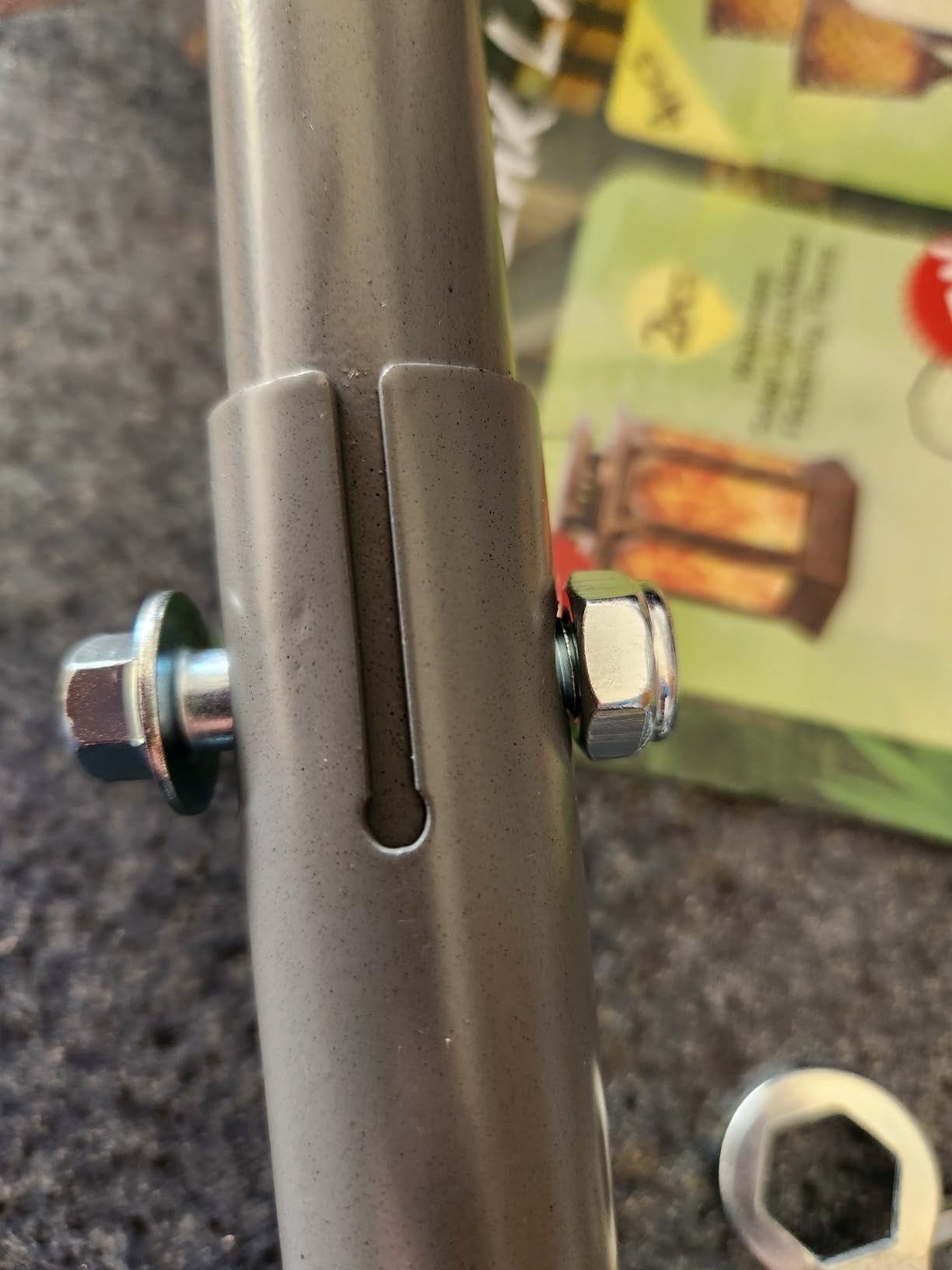
Assembly is the weak point. The concave tube joint can be fitted backwards, which the instructions warn about, and one tube is slightly thinner than the other so the handle can feel wobbly even when tightened. The supplied spanner may also be too small for the nuts, so have a proper wrench on hand.
Why the spring matters for a small yard
Hand aeration fatigue is mostly a repetition problem, not a strength problem. On r/lawncare the recurring complaint is that hand coring is quite a workout: one user covered about 4,000 square feet with a four-tine tool, noting it rarely clogged but pulled only about two plugs per push. Removing half the work in every press changes how long you can stay out there.
It also suits split work. Because the tool comes apart and stores flat, one person can aerate in twenty-minute sessions across a few evenings rather than committing a whole weekend to a job your body will argue with.
Where the compromises are
Three-inch spikes are a pass, not a win, so this is not the tool for severe clay compaction. And the thin-core behavior means you get drainage improvement more than you get soil removal. Check the joint alignment twice during assembly; that is the difference between a tight handle and a wobbly one.
8. Xuperace 3-Prong Core Aerator – Best Plug Ejection Design
Xuperace Lawn Aerator Tool, Core Aerator Lawn Tool with Alloy Steel Material, Sturdy Grass Aerator for Lawn Health Soil Yard Aerator
- Side-ejection design solves the clogging that plagues other corers
- Long constant-diameter hollow tines pull plugs 3.5 to 5.5 inches deep
- Open-center downtubes let you press without bruising your knee
- Replaceable screw-mounted tines with a spare screw and loctite included
- Highest star rating in the set at 4.6 with 80 percent five-star
- Costs noticeably more than the spike tools in this group
- Three tines still take real effort in firm soil
- Middle tine can be removed for hard ground
- Sharp tines need careful carrying and storage
The Xuperace is the most interesting piece of engineering in this roundup, and the reason is a single design decision: plugs eject out the side. Most hollow-tine corers fill up and jam. This one uses a patented side-ejection ramp so cores slide clear as you lift, and multiple owners report never having to clear the tines mid-job.
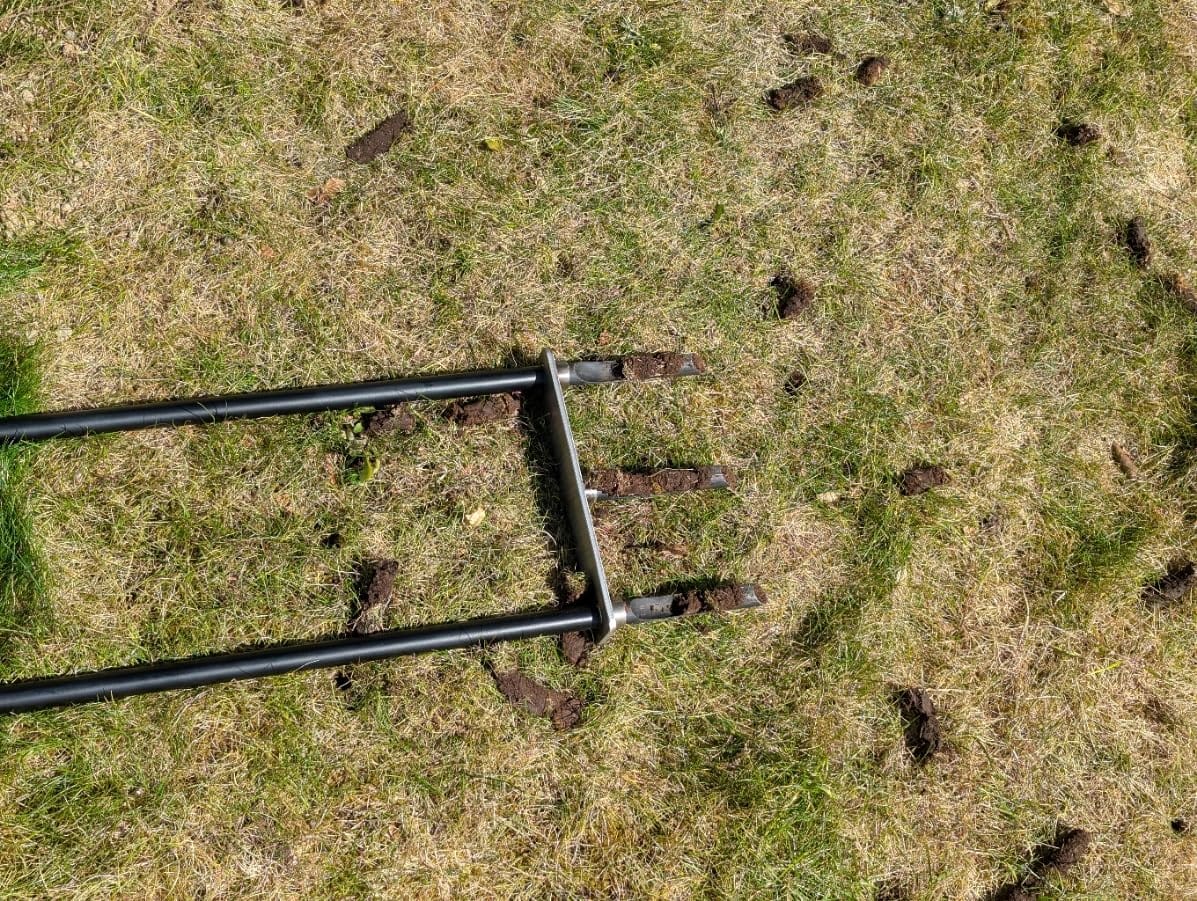
The tines are the other story. They are long and hold a constant diameter, which means the plugs come out at 3.5 to 5.5 inches deep, deeper than anything else here, and the holes stay round rather than tapering shut. That is real core aeration into the root zone, not surface puncturing.
The frame is a high-strength integrally formed alloy, 42 by 11 by 1.9 inches at 5.91 pounds, with open-center dual downtubes that leave knee clearance so you can direct force onto the center tine without your kneecap taking the impact. Tines are screw-mounted and replaceable, and the screws arrive with blue loctite plus a spare.
It carries the highest star rating in this group at 4.6, with 80 percent five-star. Its review base of 142 is also the smallest, so treat that number as a signal about how owners who have it feel, not as a track record. The consistent downside is that it costs more than the spike tools here.
When the deeper core matters
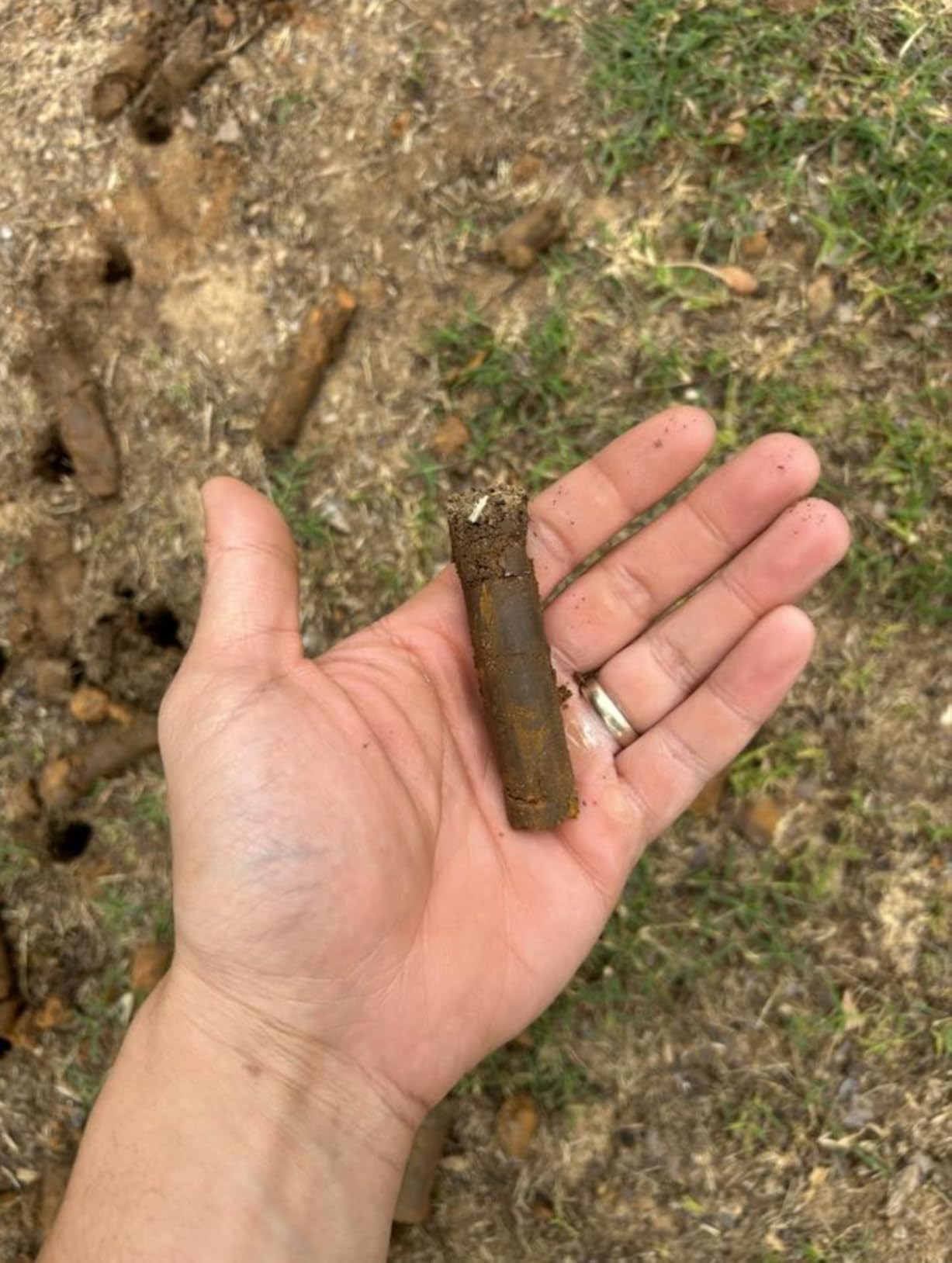
When a corer pulls a 3.5 to 5.5 inch plug, you can see the compaction layer in your hand. That is the diagnostic and the treatment in one motion, and it is the closest a manual lawn aerator gets to what a rented machine does. The side-ejection also means far fewer stops to clear the tool, which is where most hand corers lose their time advantage.
The knee-friendly open center is quietly important too. Coring is a press-down, stand-up motion repeated hundreds of times, and a design that keeps your knee out from under the load is the difference between a season of aeration and a season of limping.
When the cost is hard to justify
On a yard with mild compaction, a spike tool does the job for a fraction of the outlay. Three tines in firm soil is still demanding work, and if you have trouble with your back or knees, the weight and the effort are real considerations. The middle tine is removable for harder ground, which helps, but it does not turn this into a light tool.
How to Aerate a Small Yard: 6 Steps
Timing and technique decide the result more than the tool does. For cool-season turf such as fescue or kentucky bluegrass, early spring or fall is right. For warm-season grass such as bermuda or zoysia, aerate in late spring once growth is underway. In both cases, the soil condition matters more than the calendar.
- Mow first, at half the usual height. Clippings out of the way means you can see the soil and the holes you are making.
- Water the lawn the day before. A r/lawncare technique tip worth following: apply roughly a quarter inch of water and leave the soil moist, not saturated. Dry soil resists tines, saturated soil clogs them.
- Flag every sprinkler head before you start. A bent or buried head is the one mistake that actually causes damage. It is also the most commonly repeated warning in the forums.
- Rake up existing debris, then work in perpendicular passes. Go north-south, then east-west. Overlap by roughly a third and do not miss the edges, which are usually the most compacted areas.
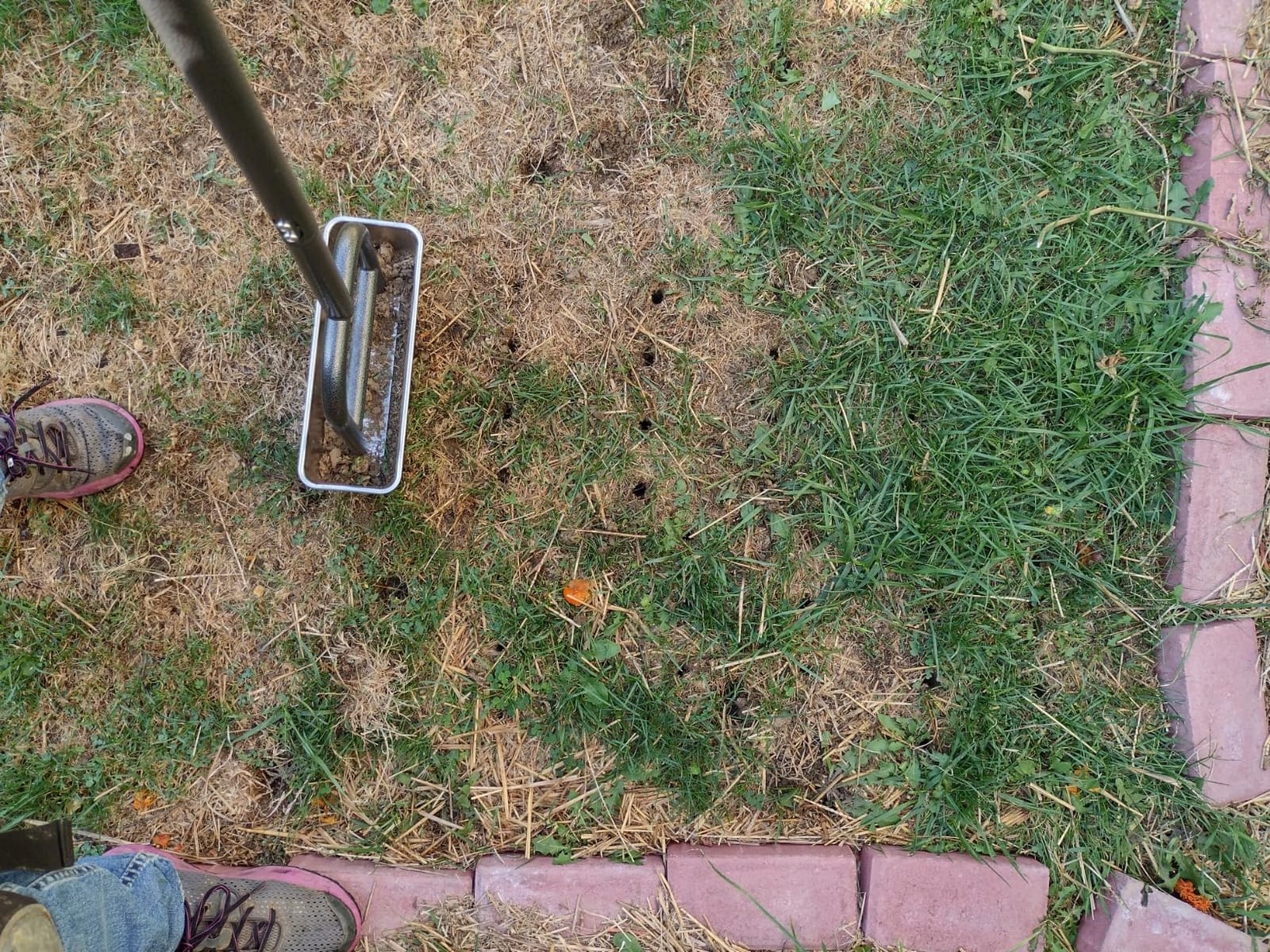
- Leave the cores on the lawn. They break down and return organic matter to the root zone. Rake only if the plugs are large enough to smother the grass, and use a bag or tray collector if you do not want to handle them twice.
- Follow immediately with seed and fertilizer. The community consensus is consistent here: aeration pays off most when paired with overseeding and a feeding, because seed falls into fresh holes and nutrients go straight down to the roots.
How to Choose a Manual Lawn Aerator for a Small Yard
Spike or core? Core wins on real compaction
A spike aerator punctures and displaces. A core aerator removes. That difference only matters if you have genuine compaction, and the honest way to find out is the screwdriver test people use on r/lawncare: if it takes real force to push a screwdriver more than a few inches into the turf, you have a layer worth opening. If it goes in easily, a spike tool will do the job for less effort and less money.
For hard clay specifically, expect criticism of solid spikes, because a solid spike driven into heavy ground tends to push soil sideways rather than apart. On clay, a corer with hollow tines is the right call even at the cost of cleanup.
The 3 inch tine depth rule
Below 3 inches, a tine is working the surface crust and you are mostly making holes for appearance. The Colwelt’s 3.5-inch spikes and the Xuperace’s 3.5 to 5.5 inch plugs clear that bar. The Walensee at 2.8 inches, the Jardineer at 2.75 inches, and the Onadak at 3 inches sit right at the line, and the Seeutek’s 2-inch star spikes are the shallowest here and the main reason that drum suits softer ground.
Size the tool to your square footage
Under 1,000 square feet: a spike tool with a wide foot plate is plenty, and a 4-tine design like the Colwelt is workable. Between 1,000 and 1,500 square feet: aim for 12 or more holes per press, which puts the Jardineer and Onadak in range and the Walensee comfortably ahead. Around 1,500 to 2,000 square feet: the Walensee’s 20 holes per step or a rolling drum like the Seeutek will save you hours.
That forum benchmark is the reason spike count and tine width matter so much below 2,000 square feet. Anyone planning a bigger project might also like our guide to portable greenhouses for small yards, since that is where most people start when space is the constraint.
Comfort, failure modes, and cleanup
Handle height is the ergonomic lever. Anything at 36 inches or taller lets you work upright, and spring assist or a foot bar cuts the strain per press. It is worth thinking about in the same way as picking a manual treadmill for home: the equipment that suits your body is the equipment you will actually use twice a year. Our picks of curved manual treadmills follow the same logic, in a different corner of the garage.
Watch for four failure modes. Tines bend on stones and tree roots, so keep an eye on alignment mid-job. Tines clog in wet clay, so aerate moist rather than soaked. Bare steel spikes rust if stored damp, so dry them before they go away. And plastic or telescoping joints develop play under load, which the Colwelt and Onadak reviews both mention.
On the plugs: leave them. They are the organic matter you just brought up, and they break down within a couple of weeks in normal weather. Rake them only if they are big enough to shade the grass, and if you would rather not deal with them, the Dolibest’s storage tray keeps them contained in one container.
Should You Rent or Buy a Lawn Aerator for a Small Yard?
Buy, if your yard is under about 2,000 square feet. That is the entire calculation. A hand tool costs less than a single rental session in most cases, needs no truck or trailer, and a recurring complaint on r/lawncare is exactly how hard it is to justify hauling a 250-pound machine for a small lot when you have nowhere to park it.
Rent, only if you have a genuine one-off need, such as preparing a large area for new sod, and can pick the machine up and return it without renting a vehicle to do it. A rolling drum walks, but it does not drive, so renting a tow-behind brings its own transport problem.
The other option people underweight is doing it together. Aeration effort is genuinely demanding, and a second person on the lawn with a rake or a broadcast spreader roughly halves the hours involved. A lot of the perceived workout in hand aeration is really a one-person-can’t-do-both-jobs-at-once problem.
Frequently Asked Questions
Are manual lawn aerators any good?
Yes, on a small yard. Below roughly 2,000 square feet, a hand tool can match a rented machine, and the 20-holes-per-step spike designs cover a small lawn faster than most people expect. The honest limits are effort and tine depth: anything that cannot pass 3 inches is only breaking the surface crust, and a core aerator leaves plugs to deal with afterward.
What is a good manual lawn aerator tool?
A good manual lawn aerator is a foot-plate spike tool with tines of at least 3 inches and a handle of 36 inches or more. For most small yards our top pick is the Yard Butler ID-6C, a coring tool that pulls actual plugs. For the fastest coverage per step on a small patch, the Walensee 4-Row punches 20 holes with each press.
What is the best way to aerate a small yard?
Mow at half height, water the lawn roughly a quarter inch the day before so the soil is moist rather than soaked, flag every sprinkler head, then work in two perpendicular directions with about a third of an overlap. Leave the soil cores on the lawn and follow immediately with overseeding and fertilizer so seed lands in the fresh holes.
What is a good manual plug aerator for my lawn?
A good manual plug aerator uses hollow tines that pull a core of soil out rather than solid spikes that only puncture. On a small yard, look for a tool that ejects plugs to the side so it does not clog mid-pass, and one with tines long enough to reach 3.5 inches or more. Leave the cores on the lawn after you finish.
Is a spike aerator worth it?
For mild compaction, yes. A spike tool opens drainage channels, speeds up water penetration, and prepares a lawn for overseeding at far less effort and cost than coring, and it leaves no plugs to clean up. The common objection on forums is that solid spikes can push soil sideways in heavy clay, which is fair: on real clay, use a hollow-tine corer instead.
Should I rent or buy a lawn aerator?
Buy if your lawn is under about 2,000 square feet. A manual lawn aerator costs less than a single rental session, needs no truck or trailer, and stores in a closet. Rent only for a genuine one-off such as large new-sod prep, and remember that a rolling drum still has to be transported, so a vehicle is part of the rental cost.
The Best Manual Lawn Aerator for Small Yards in 2026
The Yard Butler ID-6C is the best manual lawn aerator for most small yards because it pulls real cores rather than just puncturing, it weighs 1.77 pounds, and its 8721 ratings at 4.3 stars are the longest track record in this group. If your compaction is mild and you just want better water penetration, the Walensee 4-Row gets you 20 holes per press for the least effort per square foot.
Use the sizing rule and the rest takes care of itself. Under 1,000 square feet, any wide-foot-plate spike tool works. Between 1,000 and 2,000 square feet, pick by hole count, or roll the drum if your yard is open. Past 2,000 square feet, stop hand aerating and plan for a machine you will not regret renting. Whichever you choose, water the lawn first, flag the sprinklers, and pair the work with overseeding and a feeding.