
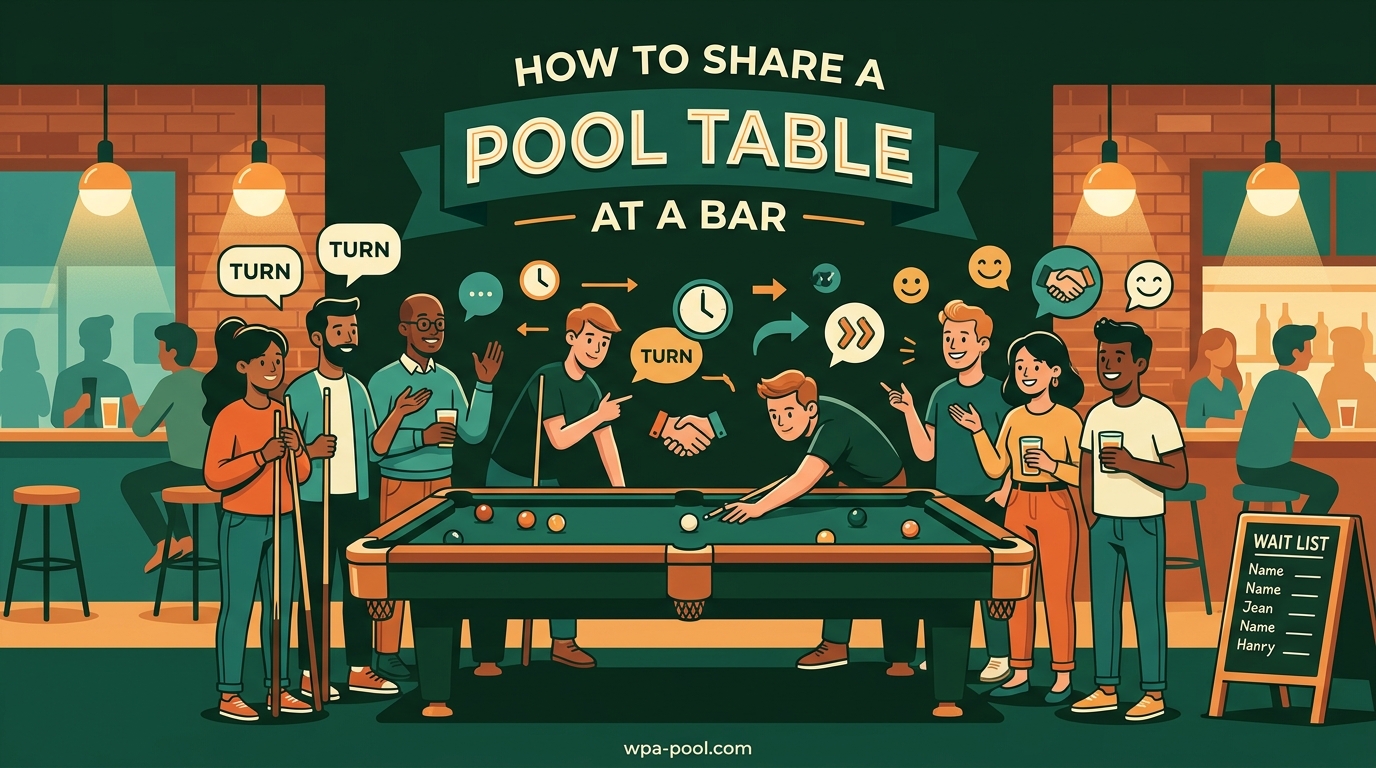
Walking into a bar with a pool table for the first time can feel intimidating. You see quarters lined up on the rail, groups of people waiting, and someone running the table game after game. I remember my first time watching from the sidelines, unsure if I was allowed to play or how to even get a turn.
The good news is that bar pool follows a simple system once you understand it. Whether you are playing at a dive bar, a sports pub, or your local tavern, the unwritten rules are surprisingly consistent across the country. In this guide, I will walk you through exactly how to share a pool table at a bar so you can walk in with confidence and get your shot.
Table of Contents
How to Share a Pool Table at a Bar: The Basics
Bar pool operates on a concept called “winner stays.” The person or team who wins a game retains ownership of the table and continues playing. Everyone else who wants to play must challenge the current winner. This keeps the action moving and gives skilled players a chance to enjoy longer sessions while newcomers can test themselves against the house champion.
Most bar tables are coin-operated, meaning you need quarters to play. The standard cost is $1 to $2 per game, depending on your location and the bar. Some establishments use dollar bill acceptors or card systems, but quarters remain the traditional currency of bar pool. I recommend bringing $5 in quarters to ensure you can play multiple games without hunting for change mid-session.
The beauty of the winner stays system is that it creates a natural rotation. If you win, you keep playing. If you lose, you go to the back of the line. This prevents any single group from monopolizing the table all night while still rewarding good play with more table time.
The Quarter System Explained
The quarter system is the backbone of bar pool etiquette. Here is how it works in practice. When you want to play, you place your quarters on the edge of the table rail, usually on the head end near where players break from. These quarters mark your place in the challenge queue.
The order of quarters determines who plays next. The quarter placed closest to the head of the table represents the next challenger. If multiple quarters are lined up, they form a queue. The winner of the current game always plays the next challenger in line. If the challenger wins, they become the new table owner. If the current winner wins, they face the next person in the quarter line.
Some bars use alternative queue systems. You might see a chalkboard with names written in order, or a digital waitlist at the bar. A few places even have numbered tokens. Always take a moment to observe how the particular bar handles their queue before jumping in. When in doubt, ask the bartender or a regular player. Most people are happy to explain their house system.
If the table opens up completely with no current game in progress, the first person to put quarters in the slot claims it. However, if quarters are already on the rail waiting, those people have priority. Never jump ahead of quarters that were placed before yours. This is the fastest way to create conflict at a bar pool table.
How to Challenge for the Table
Challenging for the table is straightforward once you know the steps. First, place your quarters on the rail in the proper queue position. Then, make eye contact with the current players and let them know you are waiting for the next game. A simple “I got next” or nod toward your quarters is usually sufficient.
Wait for the current game to finish completely. Never interrupt a game in progress to announce your challenge. Once the game ends, the current winner should acknowledge your challenge and prepare for the next match. Insert your quarters into the table slots when the previous game concludes and the winner is ready.
Some etiquette tips for challenging. If you are playing with a partner, only one set of quarters goes up for your team. Doubling up on quarters is considered poor form. If you are playing doubles, coordinate with your partner so you both know whose turn it is to break. If you win the challenge, you become the new table owner and will face the next challenger in the queue.
What if the current winner refuses to play you? This is rare but can happen. Most bars enforce the challenge system, and regulars will usually support the queue. If someone refuses to give up the table after losing or ignores the quarter line, speak to the bartender. They typically have the final say and can resolve disputes.
Bar Pool Etiquette: The Unwritten Rules
Good bar pool etiquette keeps the atmosphere friendly and ensures everyone enjoys their time. These unwritten rules separate welcomed regulars from players who wear out their welcome quickly. Follow these guidelines and you will fit right in at any bar table.
Give your opponent space during their turn. Standing directly in their line of sight or hovering over the table is distracting and rude. Step back to the rail and wait patiently. Keep your drinks off the table surface at all times. Spills damage felt and slate, and most bars will ask you to leave if you are careless with beverages near the playing surface.
Use house cues unless you have your own. Most bar tables have a rack of cues available, and these are fine for casual play. If you bring your own cue, be respectful about chalk usage and tip care. Some dive bars have warped or damaged house cues. You can learn more about why tables vary by reading our guide on standard pool table dimensions and how they affect play.
Always call your shots clearly. In bar pool, this usually means announcing which ball you intend to pocket and in which pocket. House rules vary on whether obvious shots need to be called, but it is always safer to be explicit. If you are unsure about a particular bar’s rules, ask before the game starts. This prevents arguments later.
Do not use jump shots unless everyone agrees. Jumping the cue ball over other balls can damage the table felt and is banned in many bars. Similarly, masse shots and extreme english can cause unnecessary wear. Play clean, straightforward pool and save the trick shots for practice tables.
Playing With Friends vs. Playing Solo
One area that confuses many newcomers is how group play works at bar pool tables. The system accommodates both solo players and groups of friends, but the dynamics change depending on your setup.
If you are playing with friends, you have two main options. You can play a closed game where only your group rotates, or you can open your table to challenges from other bar patrons. For a closed group game, simply keep playing among yourselves. When someone loses, they sit out and the next friend plays the winner. No quarters go on the rail because you are not accepting outside challenges.
If your group wants to play the winner stays format against the whole bar, the system works similarly to solo play. One set of quarters represents your group. When it is your turn, anyone from your group can play the challenge. This allows you to rotate partners and give everyone a chance without losing your place in line.
Solo players often have an advantage in the queue. They can focus entirely on their game without coordinating with partners. However, playing with friends adds a social element that many people prefer. I enjoy mixing both approaches. Start with friends, then open up to challenges once you have warmed up together.
One tip for groups. If you have four or more people, consider splitting into two pairs. This keeps wait times shorter and gets everyone more table time. Long waits between turns kill the fun, especially at busy bars where the quarter line moves slowly.
Handling Disputes and Difficult Players
Even with clear etiquette, conflicts occasionally arise at bar pool tables. Knowing how to handle these situations gracefully will save you stress and keep your night enjoyable. The key is staying calm and knowing when to involve the bartender.
The most common dispute involves table hogs. These are players who refuse to accept challenges, ignore the quarter line, or claim they have “next game” indefinitely. If you encounter this, politely remind them of the queue. Point to your quarters and say something like, “I have next after this game.” Most of the time, this resolves the issue.
If someone ignores the quarter system or becomes confrontational, do not escalate physically. Step back and involve the bartender or bar staff. They have the authority to enforce house rules and can remove problem players if necessary. I have seen bartenders ban regulars for repeatedly violating the queue system, so do not assume the staff will side with familiar faces.
Rule disagreements can also cause friction. Different bars have different house rules about scratches, ball-in-hand, and call shots. If a dispute arises during a game, pause and clarify the rules with both players agreeing before continuing. When in doubt, ask a neutral regular or the bartender to settle the question.
Sometimes you will encounter players who blame the table, the cues, or bad luck for every loss. These people are best handled with minimal engagement. Play your game, shake hands after, and move on. Bar pool is meant to be casual fun. Do not let one difficult person ruin your evening.
How does playing pool at a bar work?
Playing pool at a bar works on a winner stays system. The person who wins a game keeps playing against new challengers. Other players place quarters on the table rail to mark their place in line. When the current game ends, the winner faces the next challenger. If the challenger wins, they become the new table owner.
What is the quarter system in pool?
The quarter system is how players queue up for bar pool tables. You place quarters on the table rail to indicate you want to play next. The order of quarters determines who challenges the winner first. At most bars, quarters are lined up on the head rail, and the closest quarter to the table represents the next game.
How do you claim a pool table at a bar?
To claim a pool table at a bar, place your quarters on the rail to join the challenge queue. Make eye contact with the current players to let them know you are waiting. Once their game ends, you will play the winner. If you win, the table becomes yours until you lose to the next challenger.
What are bar pool etiquette rules?
Key bar pool etiquette includes giving opponents space during shots, keeping drinks off the table, calling your shots clearly, respecting the quarter queue, and using house cues unless you brought your own. Never interrupt a game in progress, and always ask about house rules before starting.
Can I refuse to play if someone challenges me at bar pool?
In traditional bar pool etiquette, the winner is expected to accept challenges from the quarter queue. Refusing to play is considered poor sportsmanship at most bars. However, after a long session, it is acceptable to finish your current game, announce you are done for the night, and let the next challenger have the table.
What should I do if someone hogs the pool table all night?
If someone refuses to share the table, politely remind them of the quarter queue and point to your quarters. If they continue to ignore the system, speak with the bartender or staff. Most bars enforce fair rotation, and staff can intervene if a player repeatedly violates bar pool etiquette.
Final Thoughts
Learning how to share a pool table at a bar opens up a world of casual competition and social connection. The winner stays system and quarter queue may seem mysterious at first, but they exist to keep games fair and flowing. Once you understand the basics, you can walk into any bar with a pool table and feel confident joining the action.
Remember the fundamentals. Respect the quarter line, give opponents their space, keep drinks away from the felt, and always call your shots. Whether you are playing solo or with friends, good etiquette earns you respect at the table. Now grab some quarters, find your local bar, and enjoy your next game of bar pool in 2026.