
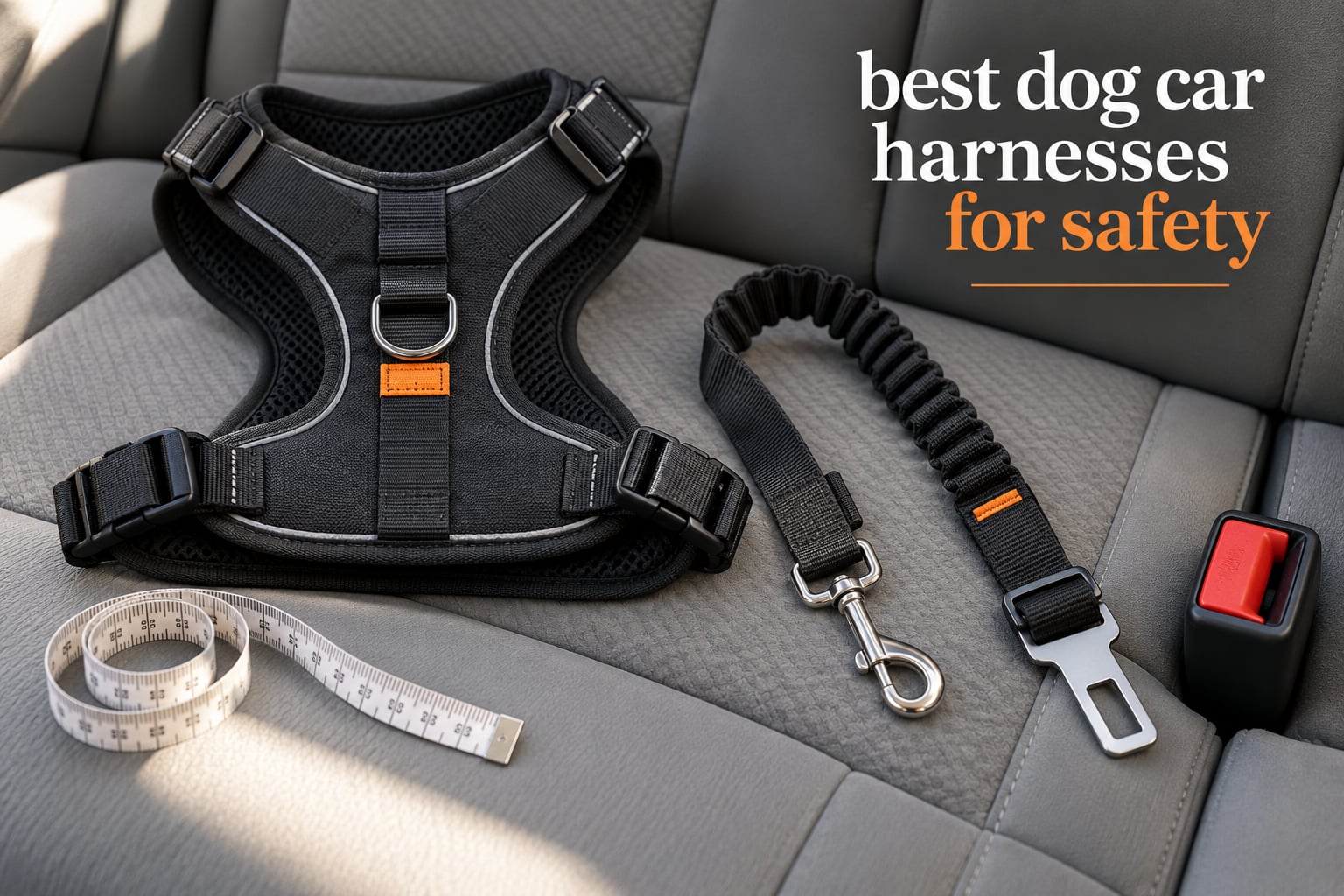
The Active Pets Car Seat Belt is the best dog car harness for safety in our 2026 lineup because it holds a 4.7 rating across more than 8,700 reviews while staying simple enough that owners actually buckle it in correctly every trip. If you own a large dog and you want a vest that names a published crash standard on its label, the EzyDog Drive is the one product here that states conformance to FMVSS 213.
That distinction matters more than it sounds. An unrestrained 10-pound dog carries roughly 500 pounds of force in a 50 mph collision, and a 60-pound dog carries close to 3,000 pounds, which is enough to shatter side glass and land a dog on the passenger footwell mid-drive. A restraint is not optional equipment for a dog who rides.
We analyzed eight dog car restraints sold on Amazon, reading every listed specification, measurement and review summary we could reach, then compared them on the same four questions: does it state a test standard, how strong is the hardware, does it fit by girth, and will your dog accept it. Our honest conclusion is that most of what is sold in this category is a tether rather than a crash-rated vest, and the article below says plainly which is which.
Table of Contents
Key Safety Tips
Seat every dog in the back seat. Never in the front passenger position, where an airbag can deploy into them.
Clip any tether to the back panel of a proper harness, never to a collar.
Treat elastic extension tethers as distraction devices, not crash protection.
Check the two-finger fit before every single trip, not just on day one.
Measure girth at the deepest part of the ribcage before you pick a size.
Replace the restraint after any collision, even when the webbing looks undamaged.
We also track the wider travel-safety category, including our picks for the best dog car seats and the best dog car barriers, because a harness solves only one of the three problems inside a moving car.
Top 3 Dog Car Harnesses for Safety in 2026

Active Pets Car Seat Belt
- 4.7 stars across 8700+ reviews
- 18 to 24 inch adjustable strap
- Zinc alloy hardware
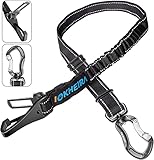
IOKHEIRA Dog Seatbelt
- 900 lbs tensile carabiner
- 19.6 to 31.5 inch adjustment
- Bungee cushioning

laqibak 3-in-1 Seat Belt
- Headrest buckle and leash modes
- 360 degree swivel
- Reflective bungee
Those three cover the realistic buying decision. The Active Pets model is the simplest thing that works, the IOKHEIRA model is the one with the strongest stated hardware, and the laqibak model gives you the most attachment options for the least money. Everything below #3 is worth reading for fit reasons rather than hardware reasons.
Quick Comparison Table of the Best Dog Car Harnesses in 2026
| Product | Specifications | Action |
|---|---|---|
| Active Pets Car Seat Belt |
|
Check Latest Price |
| IOKHEIRA Dog Seatbelt |
|
Check Latest Price |
| laqibak 3-in-1 Seat Belt Harness |
|
Check Latest Price |
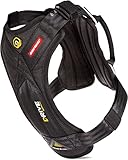 EzyDog Drive Harness Medium EzyDog Drive Harness Medium |
|
Check Latest Price |
 CarSafe Crash Tested Harness M CarSafe Crash Tested Harness M |
|
Check Latest Price |
 Mighty Paw Car Harness L Mighty Paw Car Harness L |
|
Check Latest Price |
 SlowTon Seat Belt Harness M SlowTon Seat Belt Harness M |
|
Check Latest Price |
 PetSafe Happy Ride Harness Small PetSafe Happy Ride Harness Small |
|
Check Latest Price |
What Crash Tested Actually Means for Dog Car Harnesses
Crash tested is a phrase with almost no legal definition in this category, so it is used on everything from a two-dollar stretch strap to a full vest. The label tells you a manufacturer ran a test. It does not tell you who ran it, to what protocol, or what happened to the test dummy.
The Center for Pet Safety is the independent body most owners in r/dogs and r/Whippet threads treat as the real credential. It is a nonprofit organization that crash tests pet products and then issues a one-to-five star rating based on how far the test animal travels forward after impact. That forward movement is called excursion distance, and it is the single most useful number in this whole category. A restraint that lets your dog lunge a foot and a half into the cabin in a collision has already failed, whatever its packaging says.
Test protocols follow child-restraint standards. FMVSS 213 is the U.S. federal motor vehicle safety standard for child restraints, and most dog harness testing is modeled on a version of it. ECE R-17 and ISO 27955 are the European and international equivalents. A credible claim names one of these, names a laboratory, and publishes a video anyone can watch.
Here is the uncomfortable part we found while analyzing this lineup: none of these eight listings publishes a Center for Pet Safety star rating. Only the EzyDog Drive names a standard at all. The others describe themselves as crash tested without a protocol, a lab, or a result. That is not an accusation, it is simply what the product pages say, and it is why we built the table above around published measurements instead of marketing adjectives.
One rule matters more than any other when reading these listings. An elastic extension tether is auto-disqualified from independent certification because it adds a spring between the dog and the seat. It reduces driver distraction in ordinary driving, which is useful, but in a crash that spring stretches instead of holding. Thread the vehicle seat belt through the harness loops and click it into the buckle instead. Threads on r/dogs repeatedly trip over this, because the headrest is where a leash clips, and it is the wrong attachment point in a collision.
1. Active Pets Car Seat Belt – Best Overall for Most Dogs
- Rotating clasp stops leash tangling
- Works in cars trucks and SUVs
- Attaches to a harness back panel
- 4.7 stars across more than 8700 reviews
- Clipping to a collar is unsafe in a crash
- Adjustment range stops at 24 inches
- No shock absorbing bungee section
This is the pick we ended up recommending most often, and it earned that place on evidence rather than enthusiasm. The listing carries a 4.7 rating across 8,733 reviews, which is the combination of score and review volume that gives us the most confidence in any product on this list. A 4.7 from 30 reviewers is an anecdote. A 4.7 from 8,733 is a pattern.
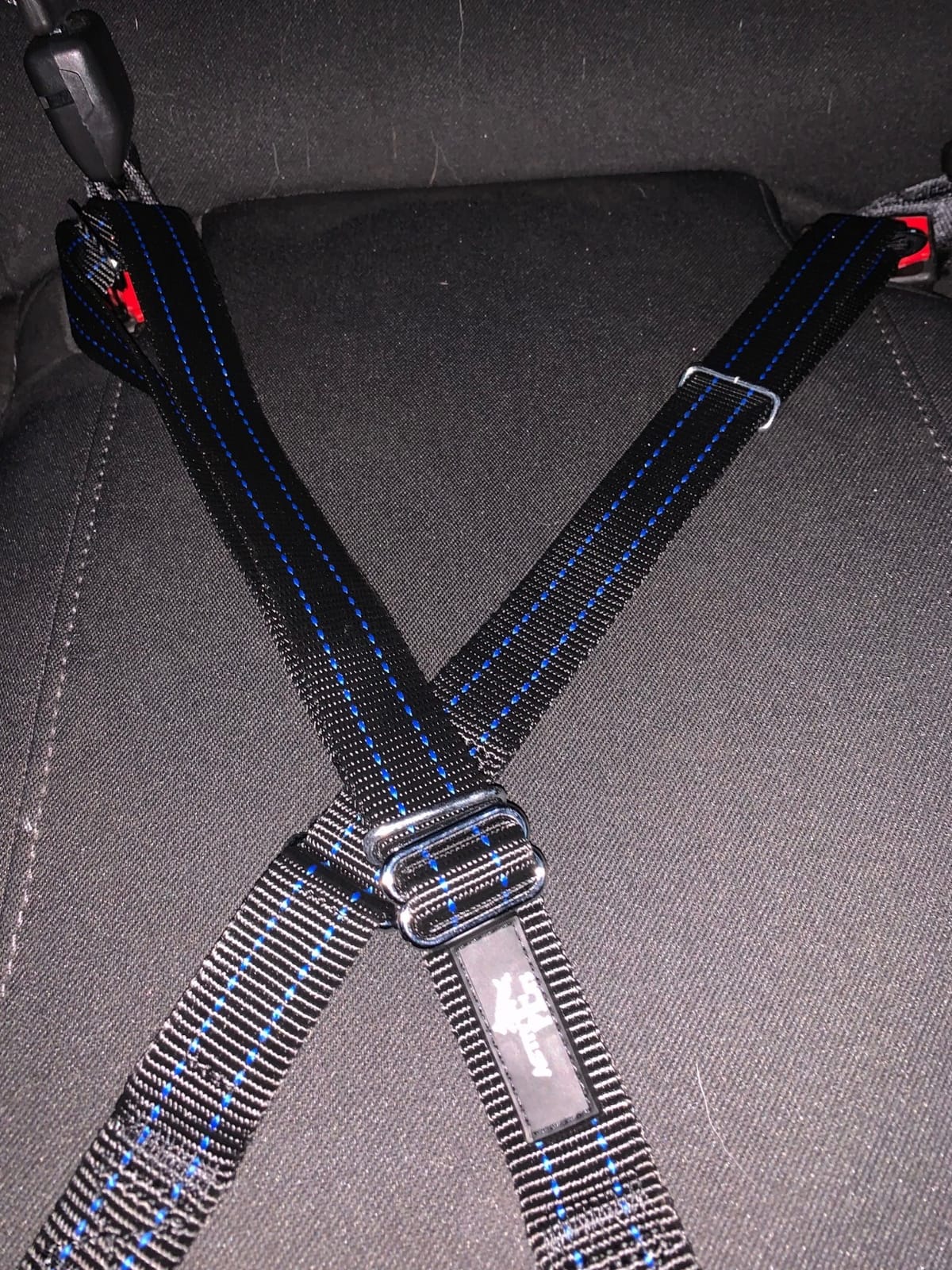
The build is unfussy in a way that works. Premium nylon fabric, zinc alloy hardware, a 360 degree rotating clasp so the strap never wraps around itself, and an adjustable length from 18 to 24 inches. That range suits small through mid-size dogs sitting, standing or lying across a back seat.
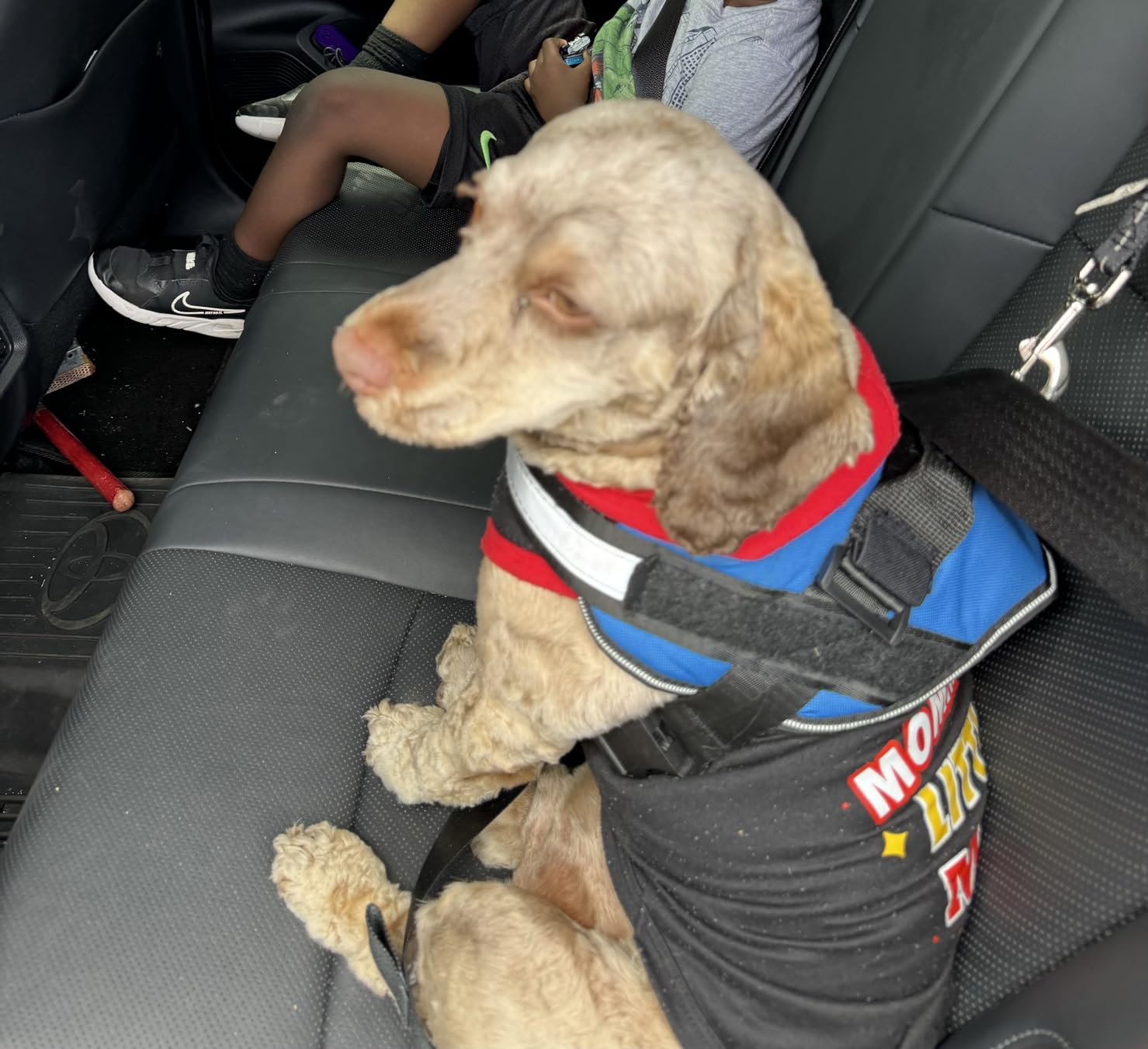
The design decision that keeps this product out of the second paragraph is that it attaches to a harness or a collar. Used correctly, that means clipping it into the back panel of a separate walking harness, which gives you one restraint and no gear swap. Used incorrectly, it means clipping it to the collar, and a collar is the one thing in this category that can strangle a dog in a collision. If you buy this, buy it as an add-on to a harness you already trust.
Fit is the other thing to manage. Because it is a strap rather than a vest, nothing stops your dog from stepping over it or ducking under it if it is set too long. We shortened it until two fingers barely fit under the strap, which is the number to use on every product in this article.
Who this harness fits best
Small to mid-size dogs on short and medium trips, especially owners who already own a walking harness and want to clip one strap into it rather than change gear twice a day. It is also the least fiddly option here, which matters more than it sounds when you are fitting a harness in a parking lot at 7 a.m.
Who should skip it
Dogs heavier than roughly 45 pounds, because the 24 inch maximum length gets tight fast on a large frame. Skip it too if your dog is an escape artist or if you would rather have a single garment that carries the seat belt rather than a strap plus a separate harness.
2. IOKHEIRA Dog Seatbelt – Best Hardware in the Lineup
- Carabiner rated to 900 lbs
- Dual buckle for belt and child seat anchors
- Reflective nylon webbing
- Seven color options
- A tether rather than a vest
- Length adjustment is fiddly
- Meant to pair with a separate harness
This one wins on the specification that matters most in a tether: the connector. The carabiner is aviation aluminum with a stated maximum tensile force of 900 pounds, which is a real published number rather than a phrase. The webbing is thick, wear-resistant nylon with reflective thread woven through it.
The second feature we liked is a dual buckle design. One side hooks to a child seat anchor or trunk latch, the other to a seat belt buckle, so it fits both a sedan and an SUV without a separate adapter. That solves the exact complaint we read repeatedly in owner threads about short straps that cannot reach the latch.
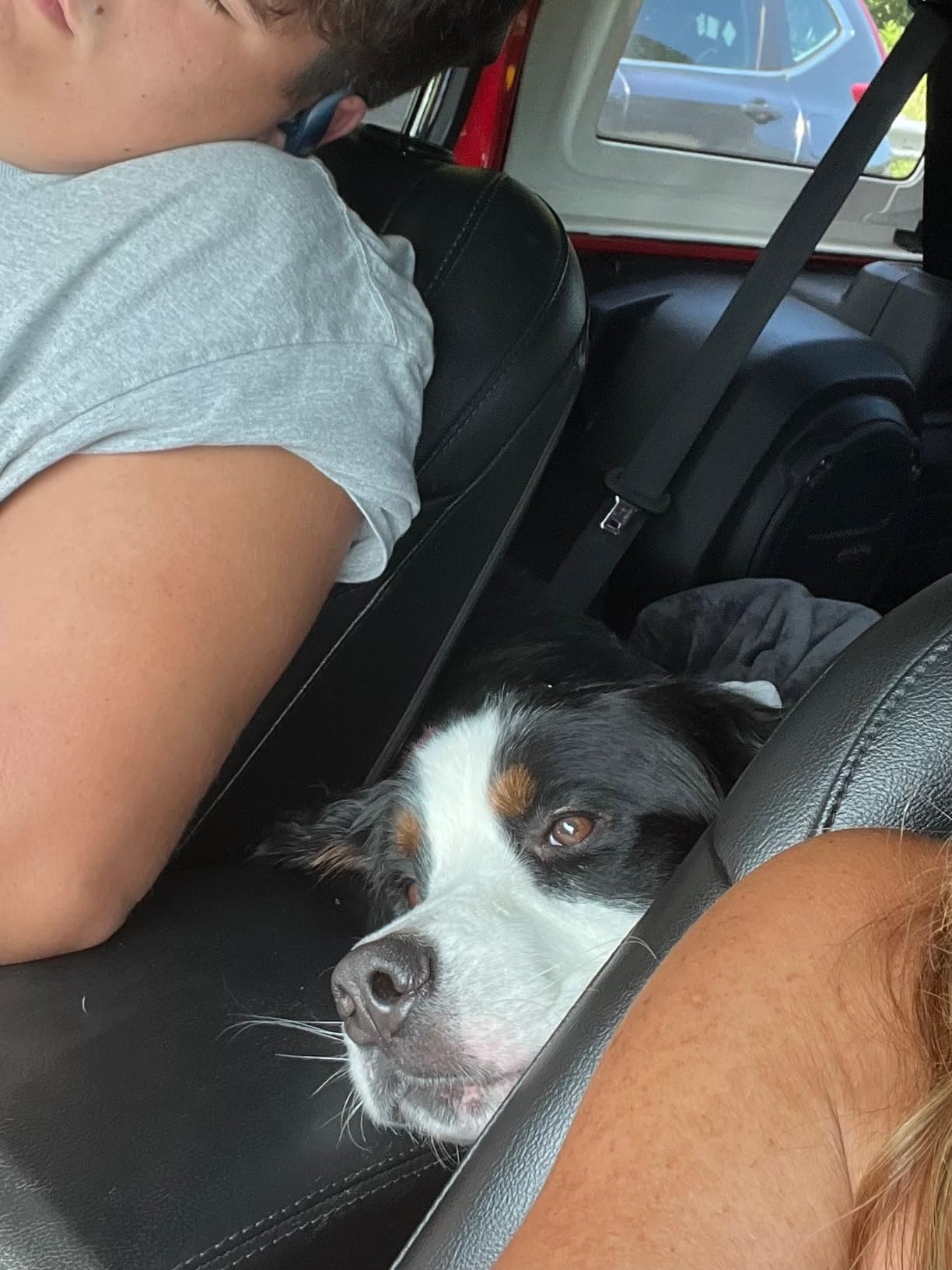
Adjustment runs from 19.6 to 31.5 inches, the widest range of any strap here, and a length of elastic bungee sits between the buckle and the carabiner to soften hard braking. Softening a stop is not the same as surviving a crash, and we would not describe this product as crash rated, but it does reduce the jolt your dog feels every time you brake hard.
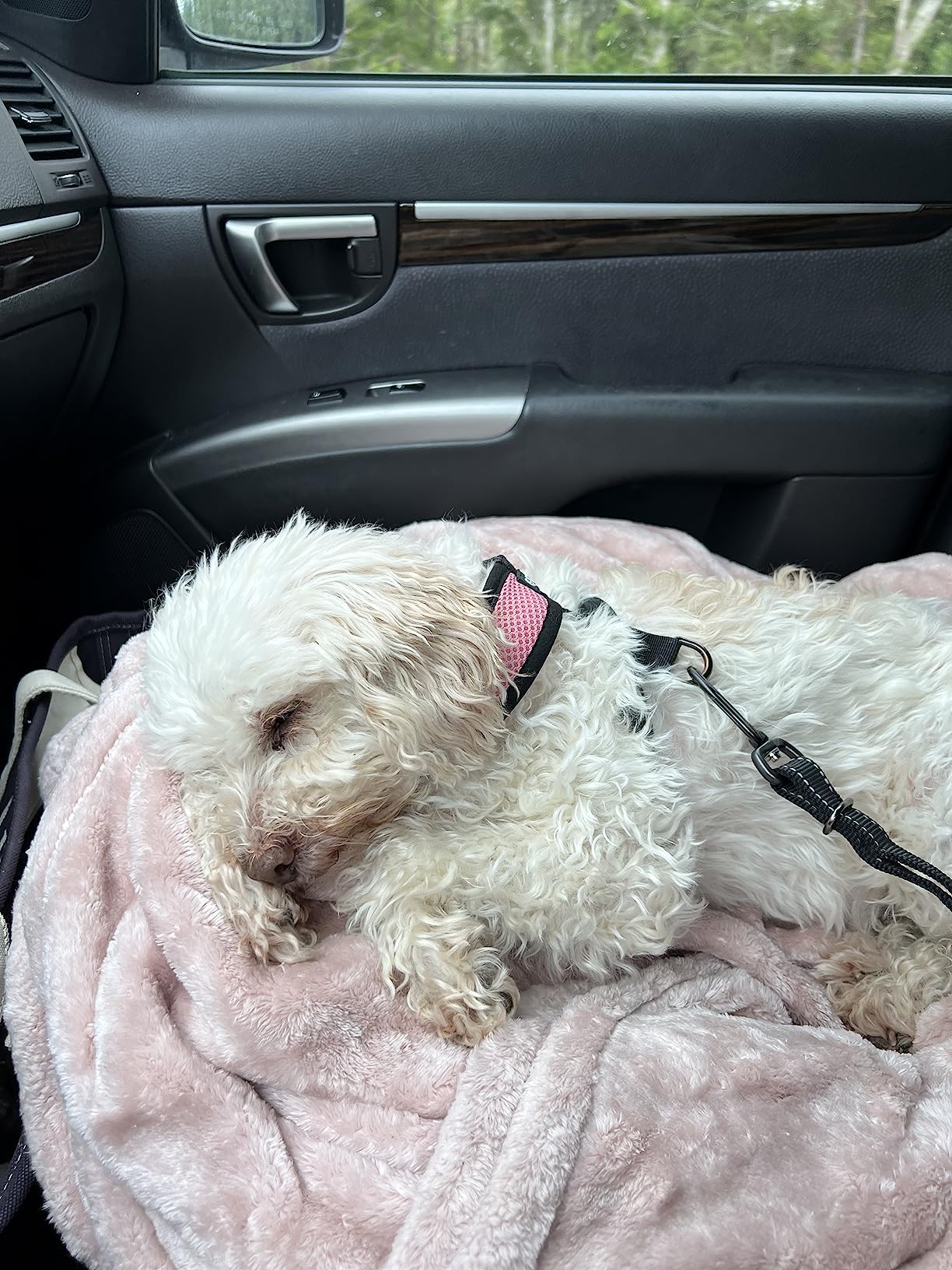
Owners of this strap almost universally describe it as something to pair with a harness rather than use alone. That is the correct configuration, and it also means you need a second product before this does anything useful.
Who this harness fits best
Owners with a dog harness they already like and want to add a strap to, plus anyone whose previous tether was too short to reach the seat belt latch. Seven color options also make it the easiest of the eight to coordinate with existing gear.
Who should skip it
Anyone buying a single product to solve car safety, since this is a tether and not a restraint on its own. Owners who want one item to last for years of road trips may also find the elastic section eventually stretches out of shape.
3. laqibak 3-in-1 Seat Belt Harness – Best Value Pick
Laqibak Removable Dog Seat Belt Harness for Car, 3 in 1 Pet Seatbelt Leash
- Three attachment modes in one strap
- Over 6100 reviews to draw on
- Removable buckle discourages chewing
- Reflective rope detail
- Elastic stretch lets dogs reach the window
- Bungee section is not crash rated
- Best used only as a tether
With 6,137 reviews at 4.6 stars, this is the second most proven product here, and it is the most flexible design in the set. The same strap works three ways: hooked to the headrest, clipped to the seat belt buckle, or used as a regular leash when you arrive at the dog park.
That three-mode design is genuinely useful in a multi-dog household or when you walk to the car rather than carrying your dog. A 360 degree swivel at the clip end stops the strap tangling, which is the failure that makes owners give up on tethers after a few months.
The removable buckle is a small design idea we liked more than expected. Because the hardware detaches, a dog that dislikes the sound and feel of a plastic buckle chewing on it is less likely to destroy the whole product, and reviewers describe the high-density nylon as standing up to chewing well.
The honest drawback is the bungee. Set long, it stretches enough for a dog to reach the side window or turn around in the seat. If you use this, shorten it so your dog cannot get its head over its shoulder, and treat it as a way to stop wandering rather than as protection in a collision.
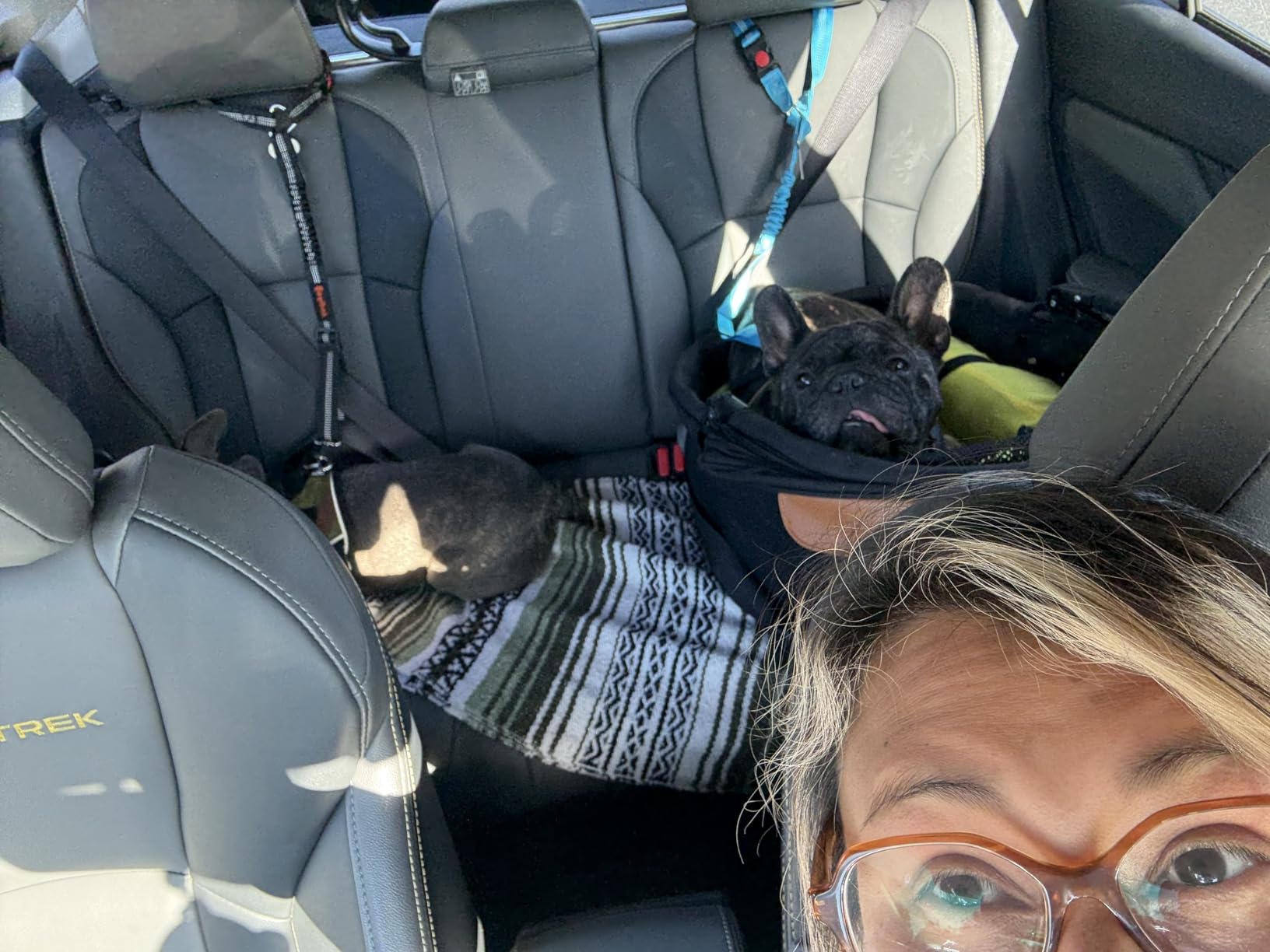
Who this harness fits best
Owners who walk to the car, live in multi-dog homes, or want one cheap product that covers short trips to the vet. It is the easiest recommendation in this article for a dog that spends ten minutes in the car rather than ten hours.
Who should skip it
Long highway drives and any dog large enough to reach the window line, since the elastic section does not hold position. It is also the wrong choice if you want a published crash standard, because none is listed.
4. EzyDog Drive Harness Medium – Best for Owners Who Read Test Standards
EzyDog Drive Dog Car Harness, Crash Tested and Certified – Medium
- Only vest here naming FMVSS 213
- Aluminum hardware and Crosslink webbing
- Dual SR buckles snap on fast
- Dual D-ring leash points
- Only black colorway listed
- Heaviest listed weight at 1 pound
- Medium size only in this listing
If you read specifications before you buy anything, this is the product in the lineup worth reading first. It is a true vest rather than a strap, it conforms to USA FMVSS 213 safety standards according to the manufacturer, and the hardware is aluminum alloy tri-glides rather than stamped steel.
The webbing is described as genuine vehicle-tested seat belt webbing, which is a meaningful upgrade over the flat nylon found on most tethers. The seat belt passes through the back of the vest and clips into the buckle, so the load runs through a garment designed to spread force across the chest rather than through a springy strap.
A Dual SR buckle closure system gives you two quick-release points on the chest, so getting this on and off is quick even for a dog that does not want to cooperate. Two D-rings on the back turn the same vest into a walking harness, which answers the double-harness complaint we read about constantly in owner discussions.
The 4.2 rating across 1,044 reviews is the second lowest score in this group, and reviews point at the usual two things: a heavier build than cheaper straps, and a single colorway in this listing. Owners of larger dogs on r/dogs name this model as a top pick for heavier builds, which matches what the webbing specification suggests.
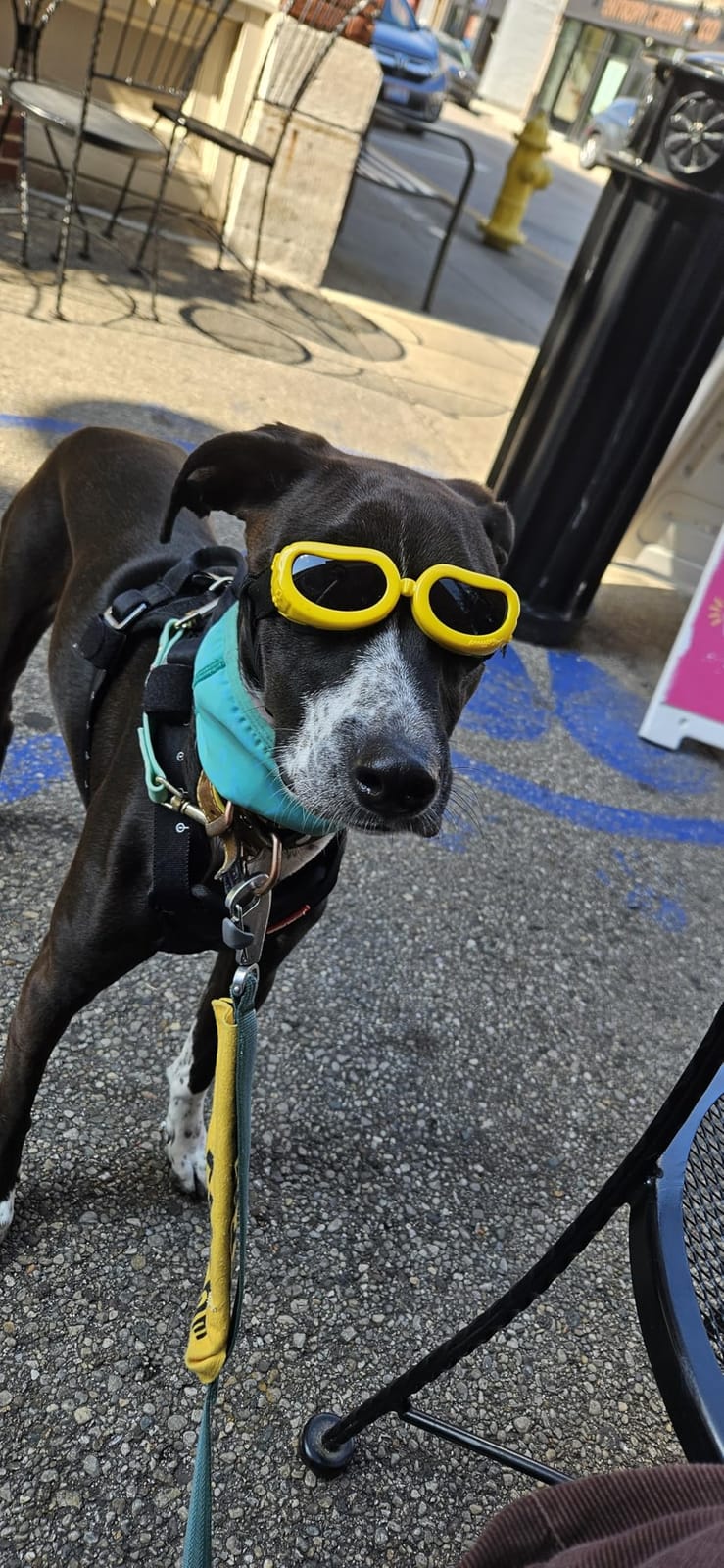
Who this harness fits best
Owners with a mid-size dog who want one garment for driving and walking, and anyone who reads a stated standard as more convincing than a five-star claim with no test behind it. The padded ergonomic chest plate also makes it the most comfortable option here on longer journeys.
Who should skip it
Sighthound and deep-chested owners, because a fixed chest plate on a narrow frame tends to ride up toward the throat. It is also the heaviest listed item in this roundup at one pound, which some small dogs notice as bulk.
5. CarSafe Crash Tested Harness M – Best Reflective Coverage
- Stated certification to 70 lbs
- Reflective fabric across the chest
- Breathable cushioned layers
- Front and back leash points
- Side clips are stiff to release
- Neck strap not adjustable on smaller sizes
- Rigid plate can press on a small neck
This vest states a certification ceiling of 32 kilograms, which is 70 pounds, and that figure is high for the price band this product sits in. It connects directly to the car seat belt with no adapter, which removes one of the two most common installation mistakes.
The fully reflective fabric on the chest piece is the distinguishing feature here. Most harnesses add reflective trim on the back where nobody sees it. Reflective material across the chest is what actually reads in headlights, and it is the reason this model makes sense for anyone driving at dusk on a regular basis.
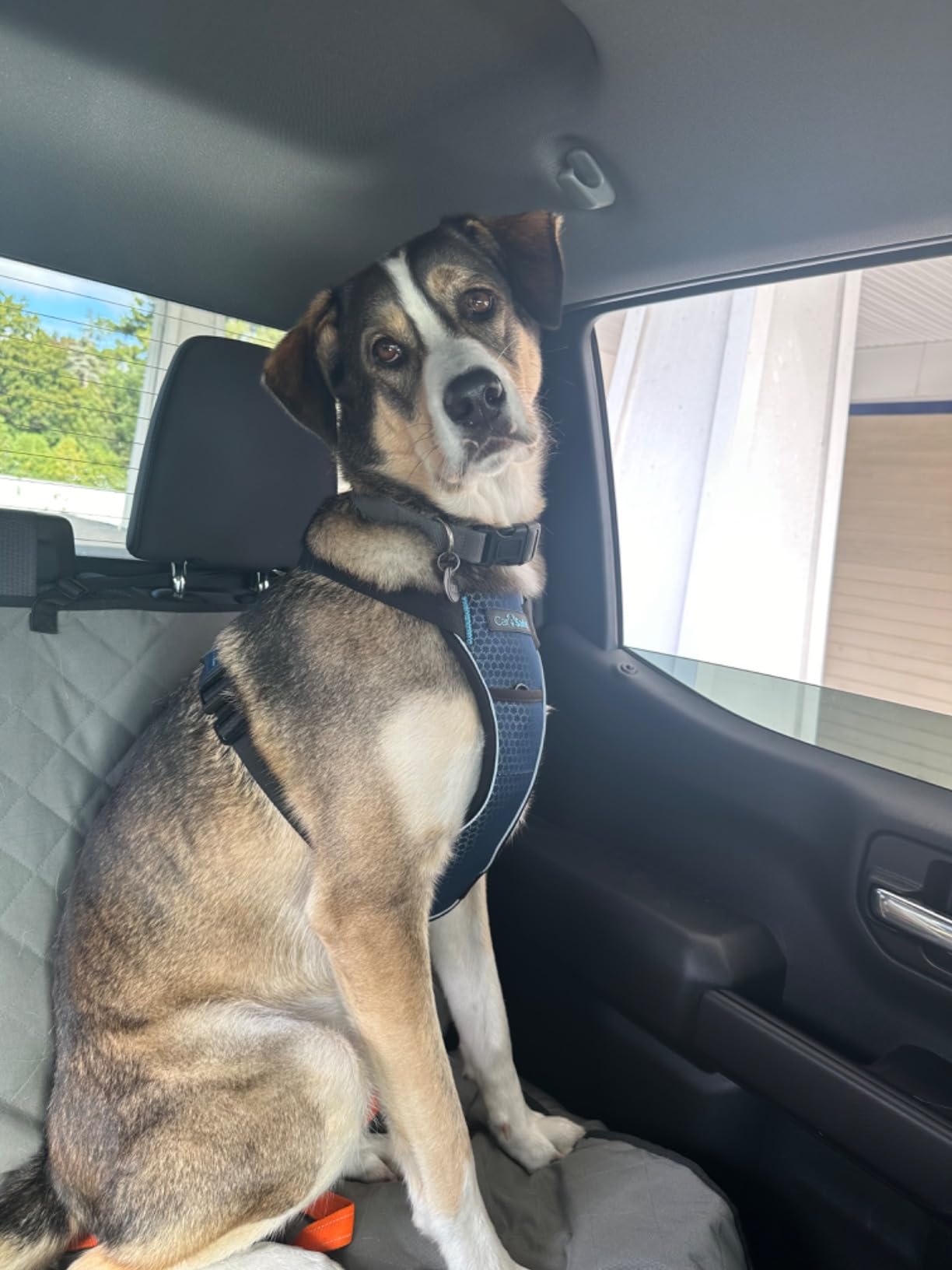
Cushioned, breathable chest layers matter more than a marketing term suggests. Vests without them chafe behind the front legs, and chafing is one of the most common reasons owners quietly stop using a harness after a few months of daily wear.
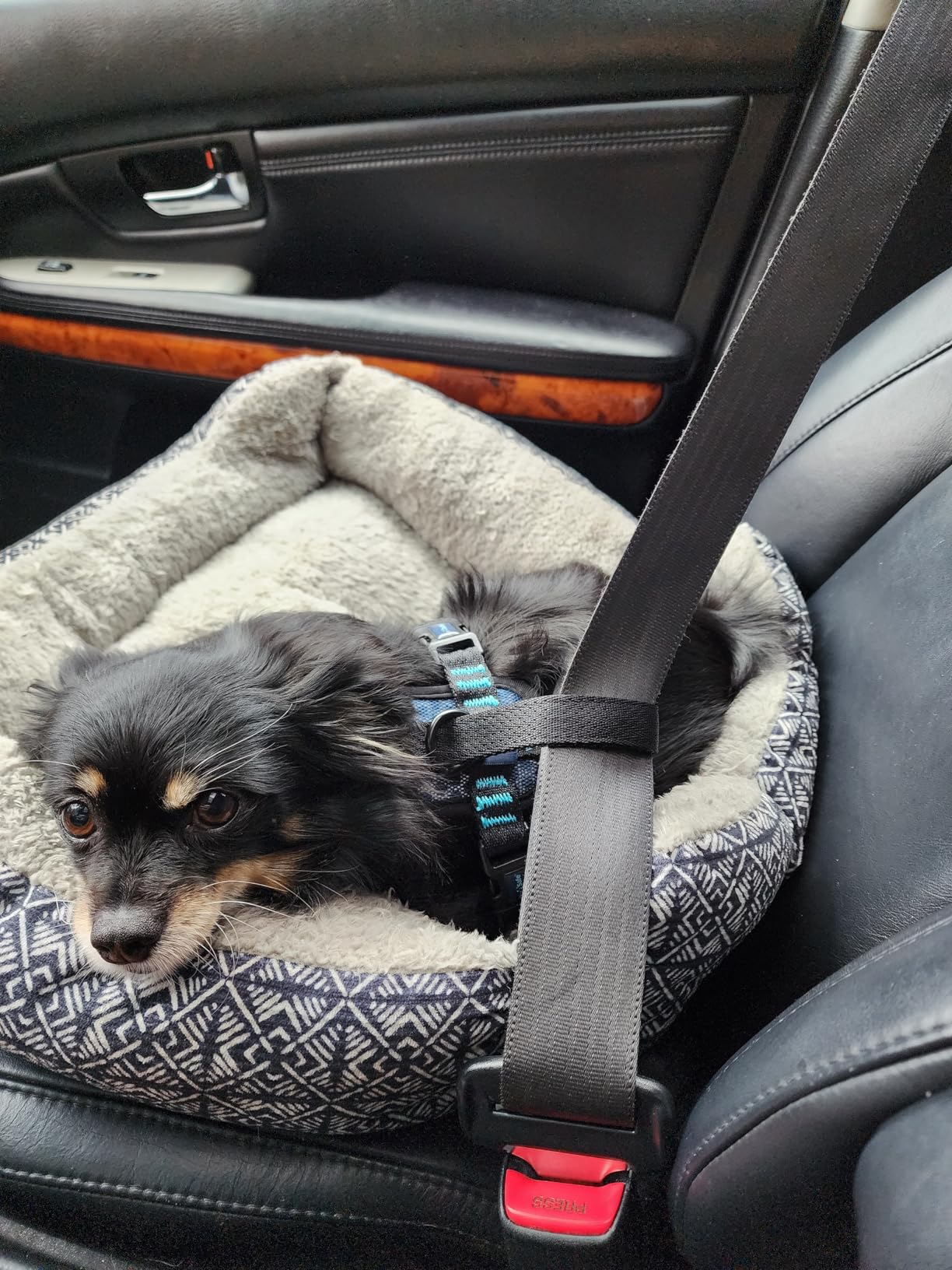
The 4.1 rating across 1,097 reviews sits near the bottom of this lineup, and the reviews explain it clearly: the side clips are difficult to release one-handed, and on smaller sizes the neck and shoulder area does not adjust. Fit complaints, not safety complaints, are what drag this one down.
Who this harness fits best
Dogs in the middle of the size range with a wide ribcage, and drivers who regularly travel at dusk. It also works as both a car restraint and a walking harness thanks to front and back leash connection points.
Who should skip it
Very small dogs, because the rigid chest plate can push toward the throat when the neck strap cannot be adjusted. Owners who need one-handed buckling will find the side clips frustrating in the dark.
6. Mighty Paw Car Harness L – Best Dual-Purpose Harness
- Neck and chest measurements per size
- Metal hardware
- Reflective stitching
- No-pull front leash ring
- Only two adjustment points
- No crash standard published
- Large colorway only in this listing
The sizing information is why this one works for the dogs that break other products. Each band lists a neck range and a chest range: the large size runs a 17 to 26 inch neck with a 24 to 35 inch chest. Those numbers let you self-select instead of guessing between a small and a medium.
It is also the lightest vest-style option here at 8.5 ounces, with metal hardware, weatherproof easy-to-clean material, reflective stitching and both a front no-pull leash ring and a rear attachment point. Owners who walk the same route to the car every day tend to be the ones who stick with this configuration long term.
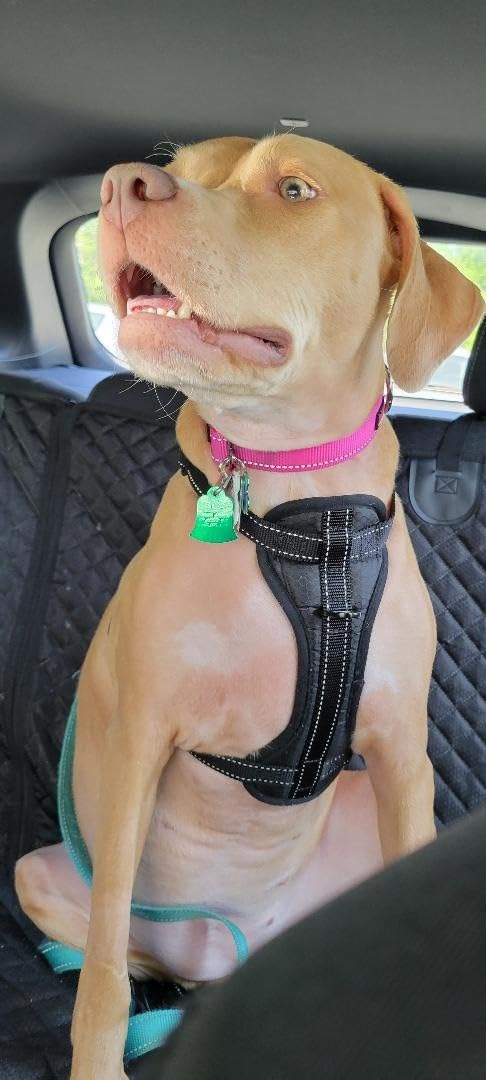
At 4.6 stars across 1,053 reviews, this is a well-liked product, and the review pattern is consistent: people like the adjustability and the metal hardware, and a smaller number wish there were more adjustment points.
That wish is legitimate. Two adjustment points is genuinely limited, and on a dog with an unusual shape, such as a long-backed or deep-chested dog, straps that cannot be re-positioned are exactly what makes a harness slip or ride up. Nothing in the listing names a crash test standard, so treat this as a well-fitted walking harness with car capability rather than a certified restraint.
Who this harness fits best
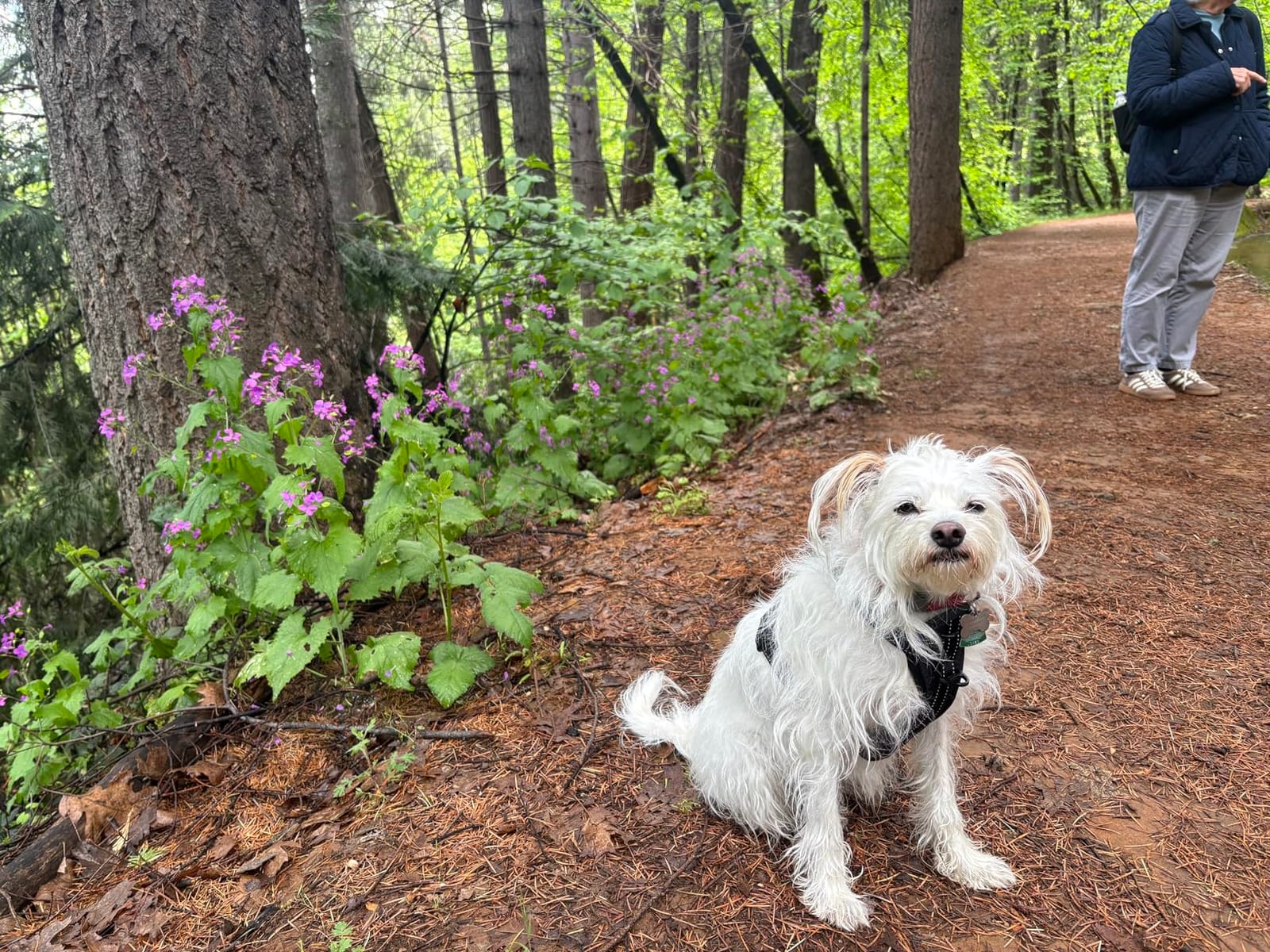
Owners who measure their dog and find a clean match in one of the four published bands, and who want a single garment for walks and car trips. The size chart is the most useful part of the whole listing.
Who should skip it
Dogs that fall between two bands, since only two adjustment points make a borderline fit hard to correct. Buyers who need independent crash certification should also look elsewhere, because no standard is named.
7. SlowTon Seat Belt Harness M – Best Size Range
SlowTon Dog Seat Belt and Harness for Car, 2 in 1 Seatbelt Buckle, FU M
- Runs from XXX-Small to Large
- Four adjustment loops
- Two quick-release chest buckles
- Lockable tangle-free carabiner
- Mesh may not suit heavy chewers
- Bungee stretch can be excessive
- Elastic section is not crash rated
The size range is the story here. Options run from XXX-Small all the way to Large in one product family, which is unusual and useful for households with more than one dog, or for a puppy that will outgrow a cheap tether in four months.
Four adjustment loops make this the most adjustable strap-and-vest hybrid in the lineup, and two quick-release buckles on the chest let you open the front rather than pulling it over your dog’s head. The 2-in-1 attachment works with either a latch bar or a headrest rod, and the carabiner locks so it cannot snag.
A breathable mesh vest with flannelette padded edges suits warm weather and short-haired dogs better than neoprene or padded nylon. The large chest panel spreads pressure rather than concentrating it on one narrow strap, which is what prevents the chafing behind the front legs that we see reported against other brands.
At 4.4 stars across 2,243 reviews, this is a well-reviewed budget choice with a comfortable design. The recurring caution is the elastic bungee: set too long, it lets a dog move around the seat far more than the product name implies. It is a distraction aid that doubles as light-duty restraint, nothing more.
Who this harness fits best
Owners with dogs at opposite ends of the size spectrum, warm-climate drivers, and anyone who wants chest buckles instead of an over-the-head step-in design. It is also one of the few here comfortable enough for a short walk around the block before the drive.
Who should skip it
Dogs who chew straps, since mesh fabric is the first thing to go. It is also the wrong choice for a dog large enough to reach across the seat while the elastic section is stretched.
8. PetSafe Happy Ride Harness Small – Best for Small Dogs
- Certification stated across three sizes
- Lightest listed weight at 0.32 ounces
- Fully padded breathable liner
- Seat belt tether included
- Very light build for strong dogs
- Small variant only in this listing
- Tether clips to collar as well as harness
This is the smallest and lightest item we analyzed at 0.32 ounces, and it is built for exactly the dogs it says: small dogs on short trips. PetSafe states crash-test certification across small, medium and large sizes, and the seat belt tether is included in the box rather than sold separately.
The fully padded vest with a breathable liner is the right call for a small dog, because a short-backed animal presses its sternum against the seat and a hard plate would rub. Adjustable straps and multiple tether connection points mean you can find a length that keeps your dog sitting rather than sliding.
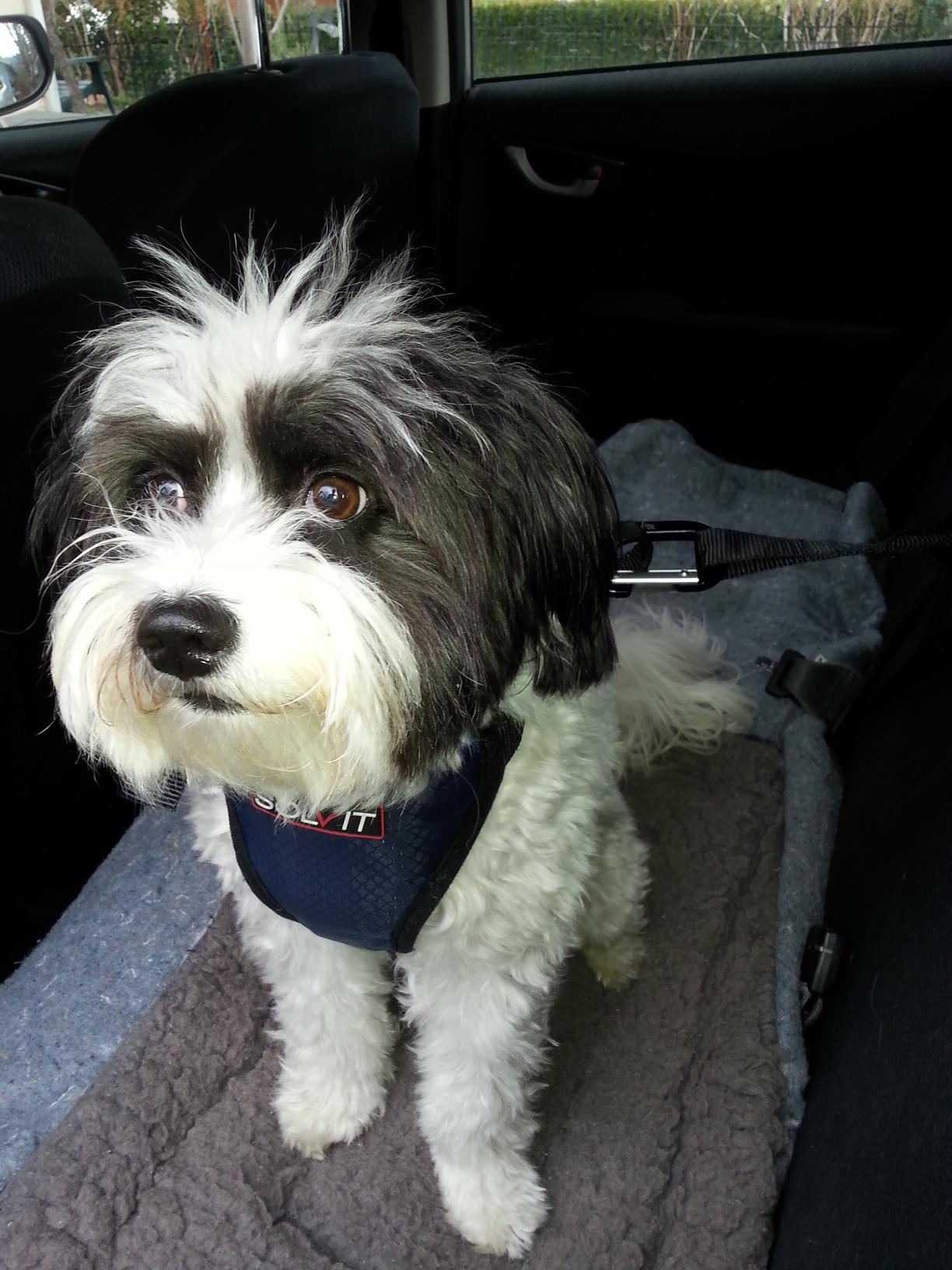
The included tether also attaches to a collar as well as a harness, which is the same trap we flagged at the top. On a small dog the collar attachment is tempting because it is faster, and it is exactly the configuration that can injure the neck in a collision. Clip the tether to the vest.
The 4.1 rating across 825 reviews is the lowest score-to-volume pairing here, and the reviews point at build weight rather than safety. Buyers describe it as well-made for the price and clearly built for small breeds, with the caveat that the light construction is not intended for a dog who drags against the strap.
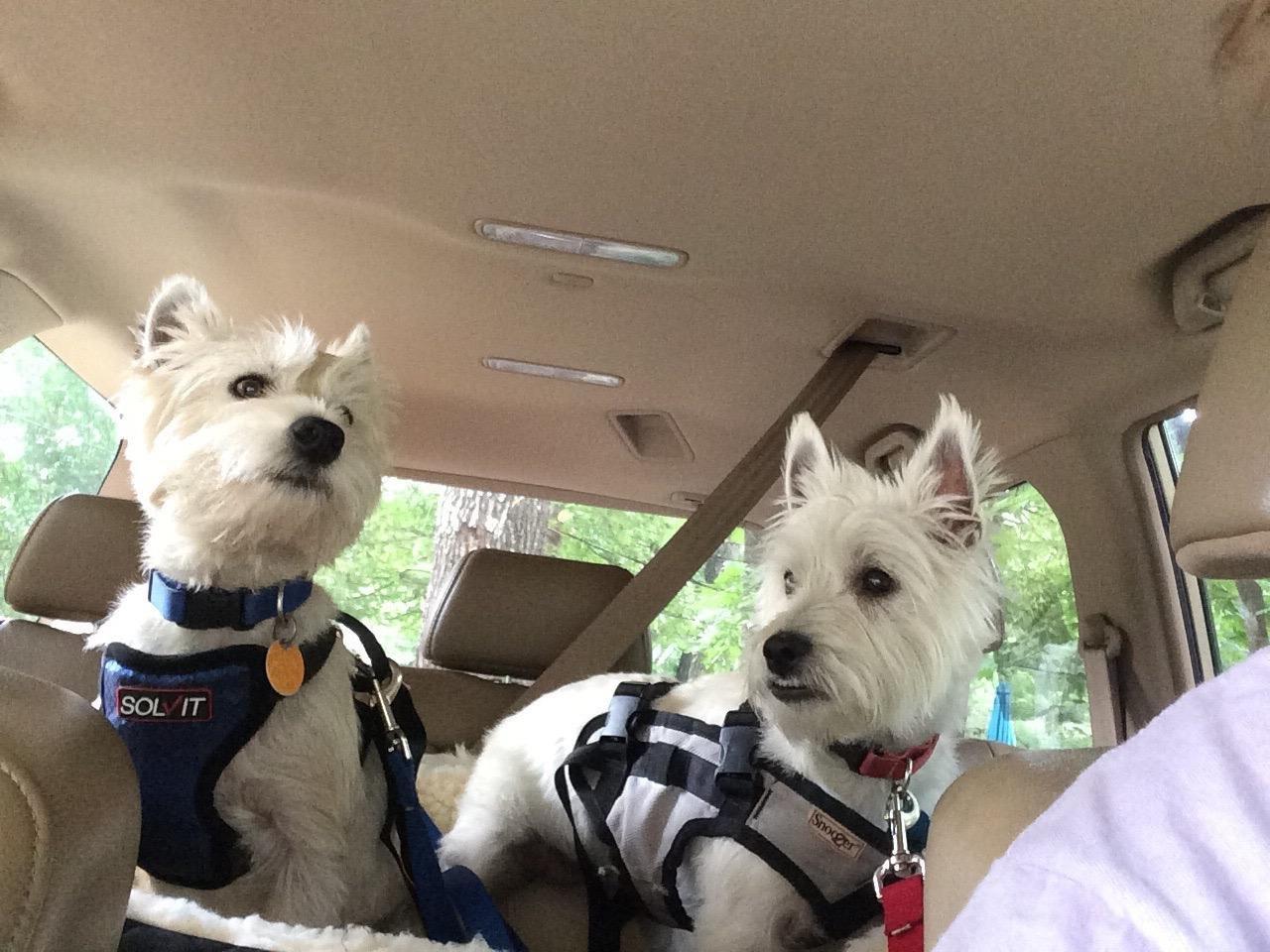
Who this harness fits best
Small dogs under roughly 20 pounds on neighborhood trips, vet runs and grocery stops. It is the simplest complete package here, since the tether arrives with the vest already in the box.
Who should skip it
Large or strong dogs, and anyone traveling highway distances. If your dog pushes forward against the strap, this is too light, and you should step up to a full vest with aluminum hardware instead.
How to Fit a Dog Car Harness and Get Your Dog Used to It
Installing a car restraint takes under a minute once you know the path. For a vest, feed the seat belt latch plate through both loops on the back panel, or through the single loop on a strap model, and click it into the buckle as normal. The belt should cross the dog diagonally with no slack. For a headrest-mounted setup, the belt or latch bar goes through the headrest posts, not around the headrest.
Then run a 30-second check before every trip. Try to pull the harness backward over your dog’s head; if it slides, it is too loose or the wrong size. Check that two fingers slide under every strap. Finally, buckle the seat belt and walk forward; if the strap has more than a small amount of give, shorten it.
If your dog resists the garment itself, use treats and go slowly rather than forcing it. Let your dog sniff the harness on the floor. Reward any contact with your hand on the harness. Lure a treat through the chest opening so your dog steps into it rather than being pulled through it. Close the buckles with a treat, then open them and repeat. Clip the restraint on and immediately lead your dog to a door, rewarding a step outside, then remove it and give a reward. Repeat the whole sequence, one more time the next day. Only then clip in the car and drive to the end of the street.
The owner threads about this are the most honest advice we found, and the recurring theme is that dogs who love the car will tolerate a harness they have been trained into, and fight one that appears without warning.
Buying Guide: Dog Car Harness, Carrier or Crate
Harness, carrier or crate is a genuine decision, and it depends mostly on dog size and trip length. A harness is the right answer for dogs above roughly 15 pounds, for anyone whose dog climbs into the front seat unannounced, and for trips where you want the dog to look out the window. A soft-sided carrier works for small dogs you can lift without straining. A hard crate gives the most protection in a serious collision, but only if it is strapped to a cargo anchor, since an unsecured crate becomes another projectile.
For sizing, ignore the letter on the box and measure girth, which is the circumference at the deepest part of the ribcage, just behind the front legs. Measure twice, once snug and once relaxed, and use the larger number. If your dog falls between two bands, size up, then use the adjustment straps to take the slack back out. Size down and the harness either rides up into the throat or pops over the shoulders.
Fit for specific shapes matters as much as size. Sighthounds such as Whippets and Greyhounds are narrow through the chest and often fall between standard bands, so look for a harness with a wide adjustment range rather than a fixed plate. Deep-chested breeds need a strap position low on the body. Broad-headed dogs need a headplate or a buckle shield that stops them reversing out of the vest. Escape artists need closed-back construction with no open neck line. If your dog is anxious in the car, comfort wins over maximum restraint, so start with a padded, less restrictive model and add security from there.
Frequently Asked Questions
What is the safest way to secure a dog in the car?
The safest setup is the back seat with the vehicle seat belt routed through the harness itself and clicked into the buckle, so the load runs through the garment instead of a neck collar or an elastic strap. Never ride with a dog in the front passenger seat, where an airbag can deploy into them. Check the two-finger fit before every trip, and replace the restraint after any collision.
What are the best crash-tested car safety harnesses for dogs?
Within this lineup the EzyDog Drive is the only product that names a standard, stating conformance to FMVSS 213, and it uses aluminum alloy hardware with vehicle-tested webbing. The Active Pets Car Seat Belt, IOKHEIRA Dog Seatbelt and laqibak 3-in-1 are stronger on proven owner satisfaction, with ratings from 4.6 to 4.7 across thousands of reviews, but they are tethers rather than certified vests. For maximum protection in a serious collision, a strapped crate beats any of these.
Which dog car harness is the most crash-tested?
In this group, the EzyDog Drive Harness is the most crash-tested in the sense that it publishes a protocol: FMVSS 213, the U.S. child restraint standard most dog harness tests follow. None of the other seven listings we analyzed names a testing laboratory, a standard or a result, and none publishes a Center for Pet Safety star rating. Treat the word crash tested on a label as a marketing claim until a standard, a lab and a video are attached to it.
Which dog harness do vets recommend?
Veterinary guidance tends to point at three things rather than a brand: the back seat, a restraint that routes the seat belt through the harness rather than a collar, and a fit that cannot slip. Certification from the Center for Pet Safety is the credential most professionals reference, because it measures how far the dog moves after impact. If your dog is anxious or painful, discuss a gradual acclimation plan with your vet before driving long distances.
Is a dog seat belt safe in a crash?
A plain elastic tether is not, because the spring stretches under load and lets your dog travel toward the front of the cabin, which is the configuration independent certification programs disqualify automatically. A seat belt strap clipped to the back panel of a proper harness is meaningfully better, and a vest that the belt runs through is better again. The most reliable option in a serious collision is a hard crate strapped to a cargo anchor.
Conclusion
For most owners in 2026, the Active Pets Car Seat Belt clipped into the back panel of a harness you already own is the best dog car harness for safety on this list, because a 4.7 rating across more than 8,700 reviews tells us more than any unverifiable crash-tested label. If you want a garment that names a published standard, choose the EzyDog Drive. Whichever you pick, measure girth, thread the seat belt into the buckle, keep your dog in the back seat, and never attach a restraint to a collar.