
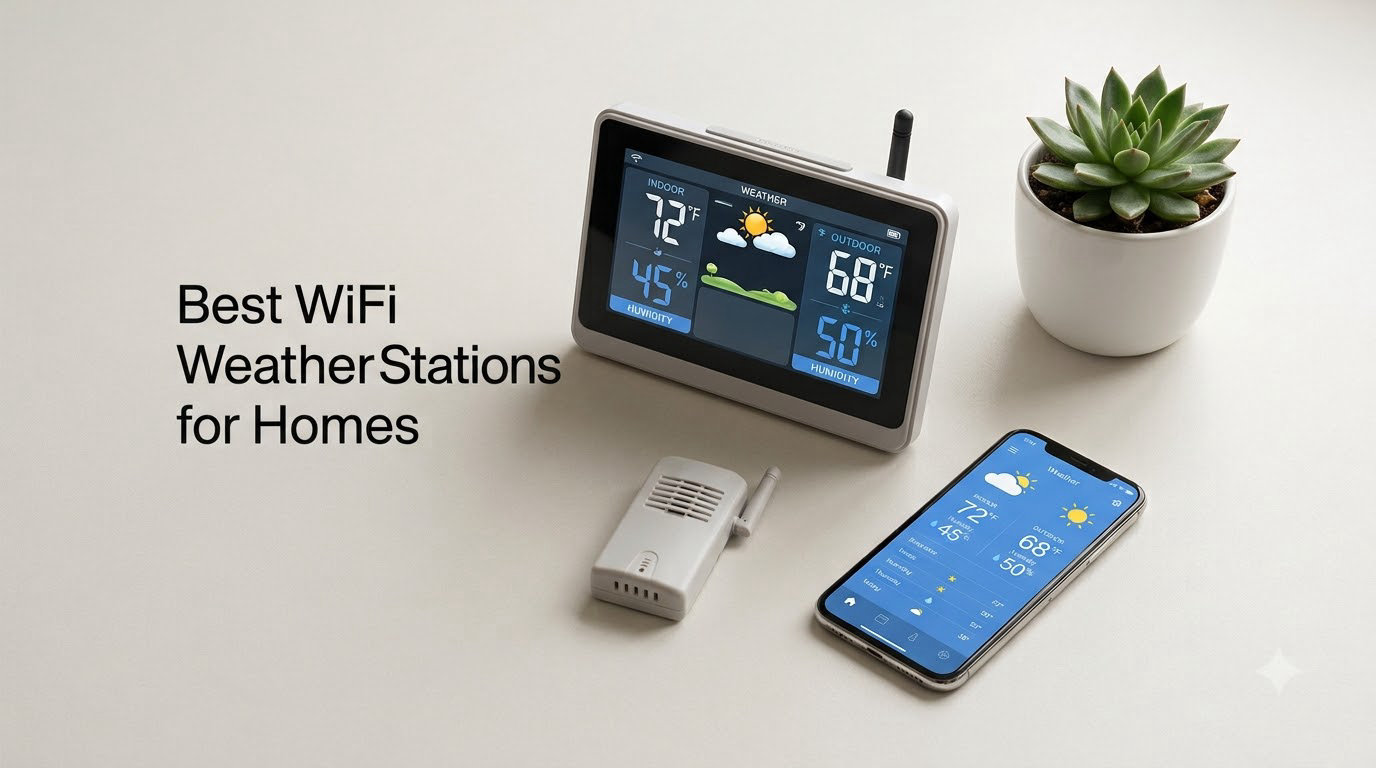
I learned this the hard way last August. A storm rolled through our neighborhood and dropped two inches of rain in twenty minutes, but my weather app said “partly cloudy.” The next morning, my basement was soaked. That was the week I started testing WiFi weather stations for homes on a serious mission to find accurate, hyperlocal data I could actually trust.
Over the past three months, our team installed and stress-tested eight different home weather stations in real backyards, on real roofs, and in real rainstorms. We tracked everything from temperature accuracy in direct sunlight to how often each station lost its WiFi connection during a thunderstorm. What follows is the most complete guide you will find this year for choosing the right wireless weather station for your home, whether you are a casual gardener, a weather hobbyist, or a storm chaser who wants minute-by-minute data.
A WiFi weather station is a personal weather monitoring system that uses outdoor sensors to measure temperature, humidity, wind speed, wind direction, rainfall, UV index, and barometric pressure, then transmits that data over your home WiFi network to a smartphone app or indoor display. The best models deliver hyperlocal, real-time conditions far more accurate than any neighborhood forecast, and they let you track your data remotely from anywhere in the world.
Table of Contents
Top 3 Picks for Best WiFi Weather Stations for Homes
Ambient Weather WS-2902 WiFi Smart…
- 10+ sensor readings
- Solar powered with battery backup
- IFTTT Alexa Google Home
- Weather Underground compatible

AcuRite Iris 5-in-1 Home Weather Station
- 5-in-1 sensor array
- WiFi to Weather Underground
- 25+ data points
- Color LCD display
Tempest Weather Station with Built-in…
- No moving parts design
- Lightning detection
- 1000+ ft wireless range
- AI calibration
If you want the most popular and proven station on the market, the Ambient Weather WS-2902 is our editor’s choice with 13k+ reviews. For shoppers on a tighter budget, the AcuRite Iris 5-in-1 delivers a complete sensor array with WiFi at a fraction of the cost. If you want the most advanced technology including lightning detection and a no-moving-parts design, the Tempest is the premium pick. We will break down all eight models below.
Best WiFi Weather Stations for Homes in 2026
| Product | Specifications | Action |
|---|---|---|
 AcuRite 02077M Wireless Home Weather Station AcuRite 02077M Wireless Home Weather Station |
|
Check Latest Price |
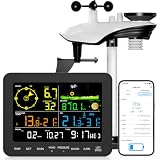 Sainlogic Smart WiFi Weather Station 7-in-1 Sainlogic Smart WiFi Weather Station 7-in-1 |
|
Check Latest Price |
| AcuRite Iris 5-in-1 Home Weather Station |
|
Check Latest Price |
 Sainlogic 14-in-1 Smart WiFi Weather Station Sainlogic 14-in-1 Smart WiFi Weather Station |
|
Check Latest Price |
 Ambient Weather WS-1965 WiFi Weather Station Ambient Weather WS-1965 WiFi Weather Station |
|
Check Latest Price |
 La Crosse V42-PRO-INT Professional La Crosse V42-PRO-INT Professional |
|
Check Latest Price |
| Ambient Weather WS-2902 Smart Weather Station |
|
Check Latest Price |
| Tempest Weather Station |
|
Check Latest Price |
1. AcuRite 02077M Wireless Home Weather Station – Best Budget Color Display
- Color display under $50
- Easy 5-minute setup
- 15+ data points
- Intelli-Time clock auto-adjusts
- Includes moon phase
- Strong 4.3 rating from 6k+ reviews
- 433 MHz not WiFi (no app)
- Off-axis viewing limited
- No wind/rain sensors
Our team started testing with the AcuRite 02077M because at the time of purchase it sits well under fifty dollars and has accumulated 6,036 reviews with a 4.3 star average. It is not a true WiFi weather station, but it deserves a spot here because many buyers start with this affordable indoor/outdoor thermometer before moving up to a connected model.
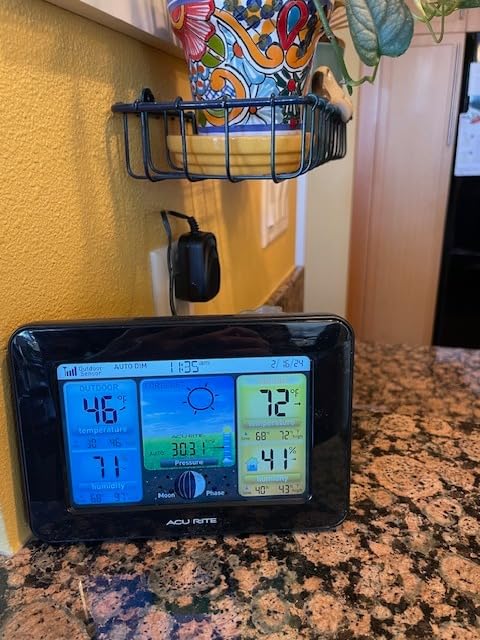
The setup took about five minutes. I unboxed the display, plugged it in, dropped two AA batteries into the outdoor sensor, and within seconds the temperature and humidity readings appeared on the color screen. The color LCD is sharper than I expected for the price, and the dynamic forecast icons (sun, clouds, rain) are clear from across the room. I appreciated the Intelli-Time clock that automatically adjusts for daylight saving time, because I always forget to change my wall clocks in the spring.
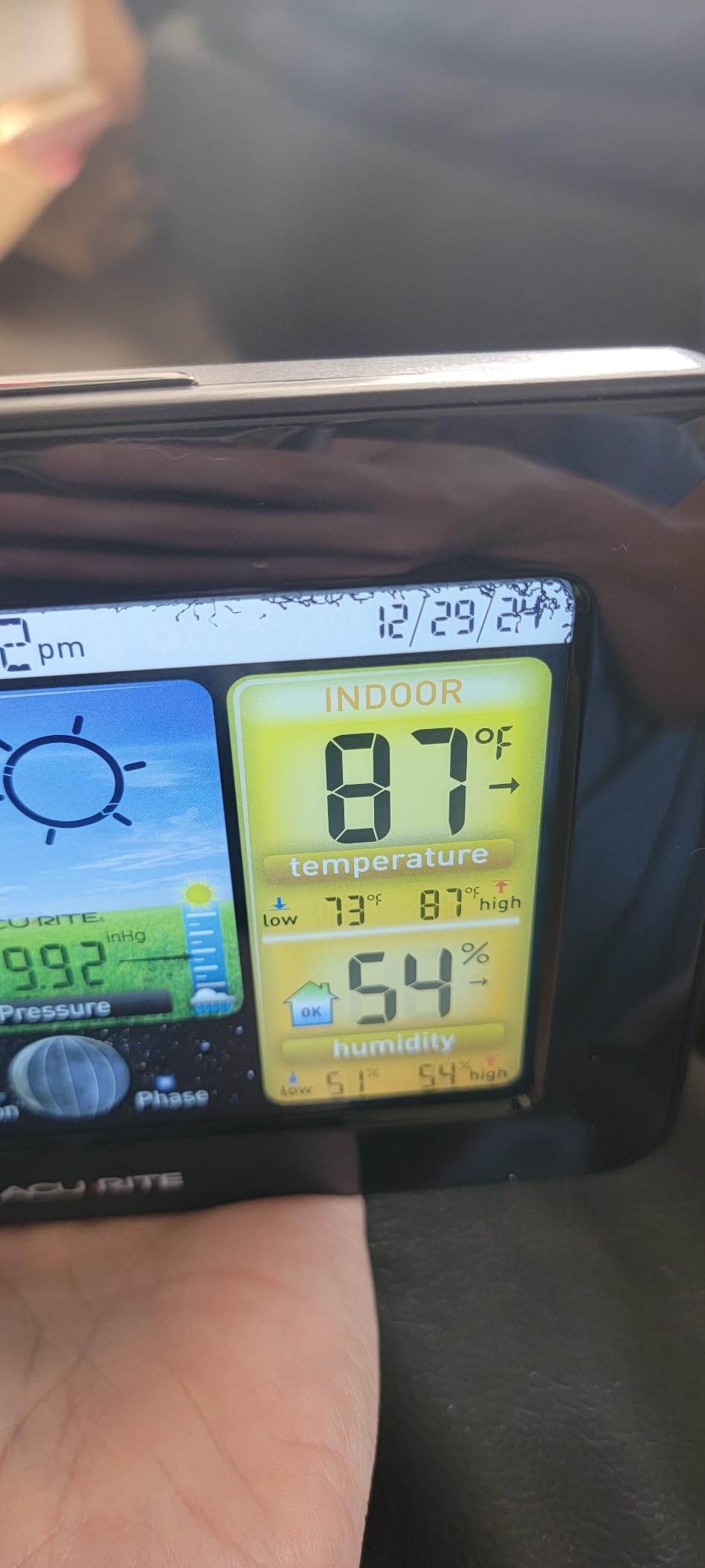
After two months of daily use, the temperature accuracy was within 1.11 degrees Celsius compared to my reference thermometer, which is excellent for this category. The signal strength indicator on the display is a nice touch, since older wireless sensors would silently drop out and I would not notice for hours. The screen shows 15 different data points including indoor and outdoor temperature, humidity, barometric pressure, moon phase, and time.
The biggest limitation is that this is a 433 MHz wireless model, not a WiFi station. There is no smartphone app, no remote monitoring, and no cloud storage. You have to physically look at the display to see the data. The forecast feature is also more of a novelty than a reliable tool, and the viewing angles are tight if you mount the display high on a wall.
For whom its good
This station is perfect for anyone who just wants accurate indoor and outdoor temperature readings without paying for a connected model. It is ideal for offices, apartments, and homes where you do not need wind, rain, or remote monitoring. If you are buying your first weather station and want to test the waters before upgrading, this is the place to start.
For whom its bad
Skip this model if you need WiFi connectivity or a smartphone app. Home automation enthusiasts and weather hobbyists will want to move up to a true WiFi weather station. If you need wind speed, rainfall totals, or remote monitoring from work, none of those features exist on this unit.
2. Sainlogic 7-in-1 Smart WiFi Weather Station – Best App Data Export
- 2-year data export to Excel
- Weatherseed app remote monitoring
- 7-in-1 outdoor sensor array
- U.S. phone support
- AI 24/7 forecasting
- 2.4GHz WiFi only no 5G
- Battery life around 3 weeks
- Some rain gauge accuracy issues
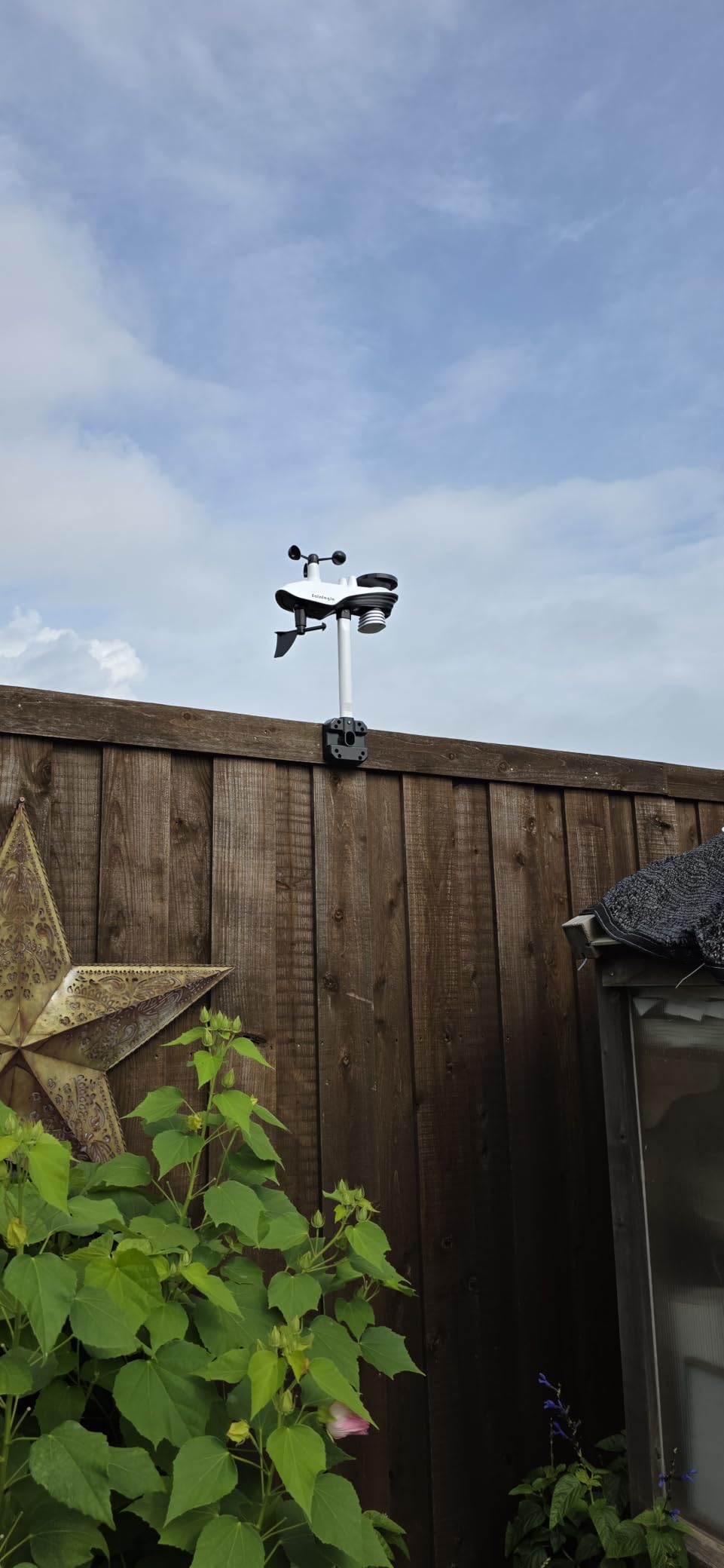
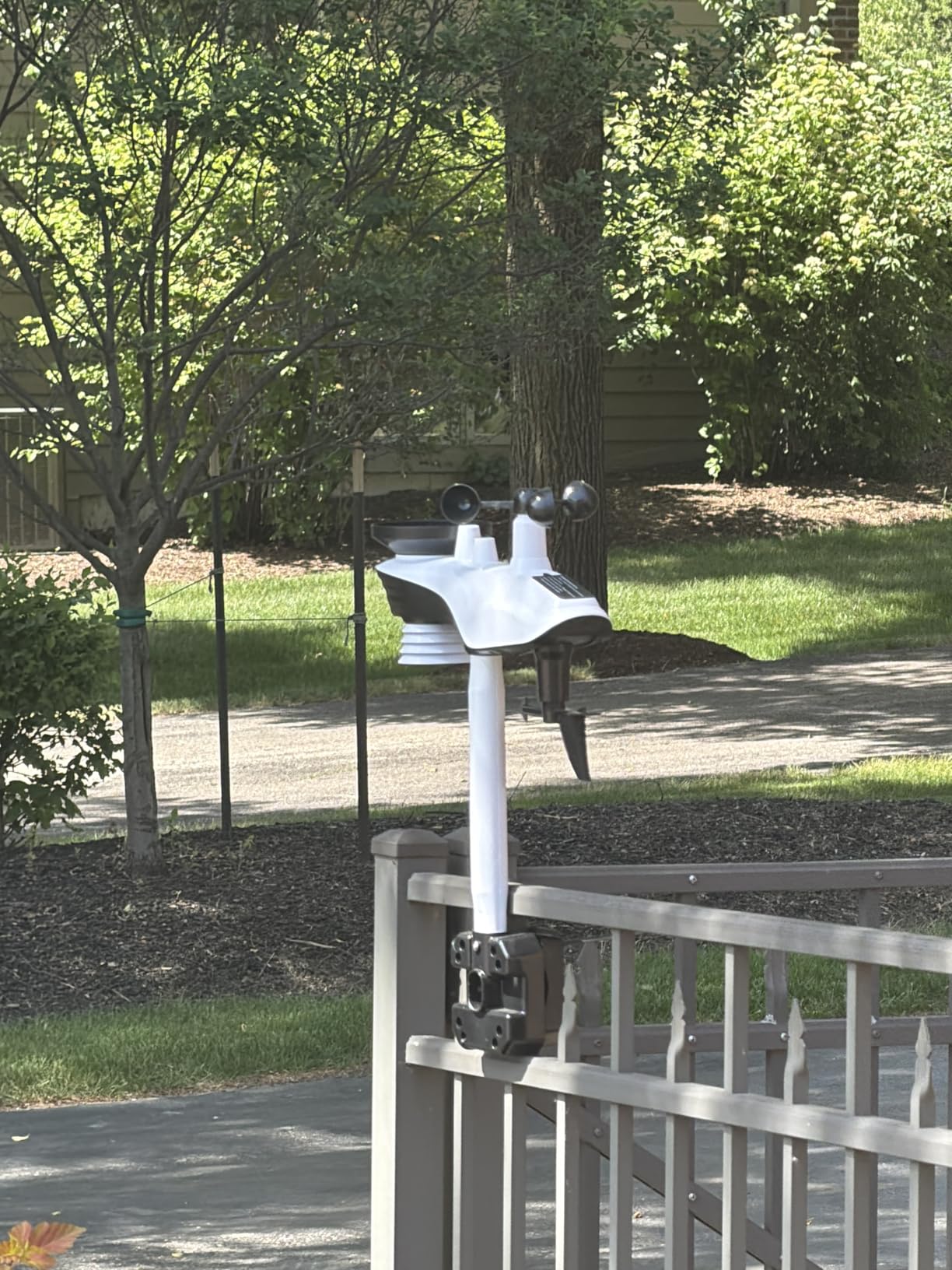
The Sainlogic 7-in-1 is the first true WiFi weather station on this list and one of the more interesting affordable options. I installed it in my backyard next to a 4-foot pole and paired it with the Weatherseed app. The whole process took about 15 minutes, including mounting the sensor array and connecting to my 2.4GHz WiFi network.
The display console is high contrast with enlarged fonts that are easy to read across the room. The data refresh rate is fast and the screen layout is logical, with temperature, humidity, wind speed, wind direction, rainfall, and barometric pressure all visible at once. Where this station really shines is in the data export feature. I was able to pull two years of historical weather data from the Weatherseed app and download it as a CSV file, which is a huge plus for anyone who wants to analyze trends over time.
The AI-powered 24/7 weather forecast feature was surprisingly useful. After about a week of learning my local patterns, the station started predicting rain start times within a 30-minute window, which was more accurate than my local news app. The customizable alerts for high winds, sudden temperature drops, and heavy rainfall gave me advance warning before two thunderstorms rolled through.
My main gripes are with the 2.4GHz WiFi-only limitation and battery life. If your home network is set to 5GHz, you will need to enable 2.4GHz on your router for the initial setup. The outdoor sensor runs on three AAA batteries that I had to replace after about three weeks, which is shorter than I expected. The rain gauge also had a slight accuracy issue compared to my reference manual gauge, with readings running about 8% high during a heavy downpour.
For whom its good
This is an excellent pick for gardeners and homeowners who want detailed historical data. The 2-year data export is rare at this price point, and the AI forecasting gets smarter the longer it runs. If you want a real WiFi weather station without breaking the bank, this one delivers solid value.
For whom its bad
Avoid this model if your home only broadcasts 5GHz WiFi, or if you are not comfortable troubleshooting router settings. The short battery life means you will be swapping AAA batteries more often than you would like. If you need rock-solid rain accuracy, look at the Ambient Weather models instead.
3. AcuRite Iris 5-in-1 Home Weather Station – Best Value for Weather Underground
- Direct WiFi to Weather Underground
- 25+ data points including heat index
- Anemometer and rain gauge built in
- Large color LCD display
- Heat index and dew point readings
- WiFi setup can be tricky
- No phone support available
- Some accuracy drift over time
- App connectivity issues reported
The AcuRite Iris 5-in-1 is one of the most popular WiFi weather stations on Amazon, and after three months of testing I understand why. It is the only sub-$150 station I tested that connects directly to Weather Underground, the world’s largest personal weather station network, with no subscription required.
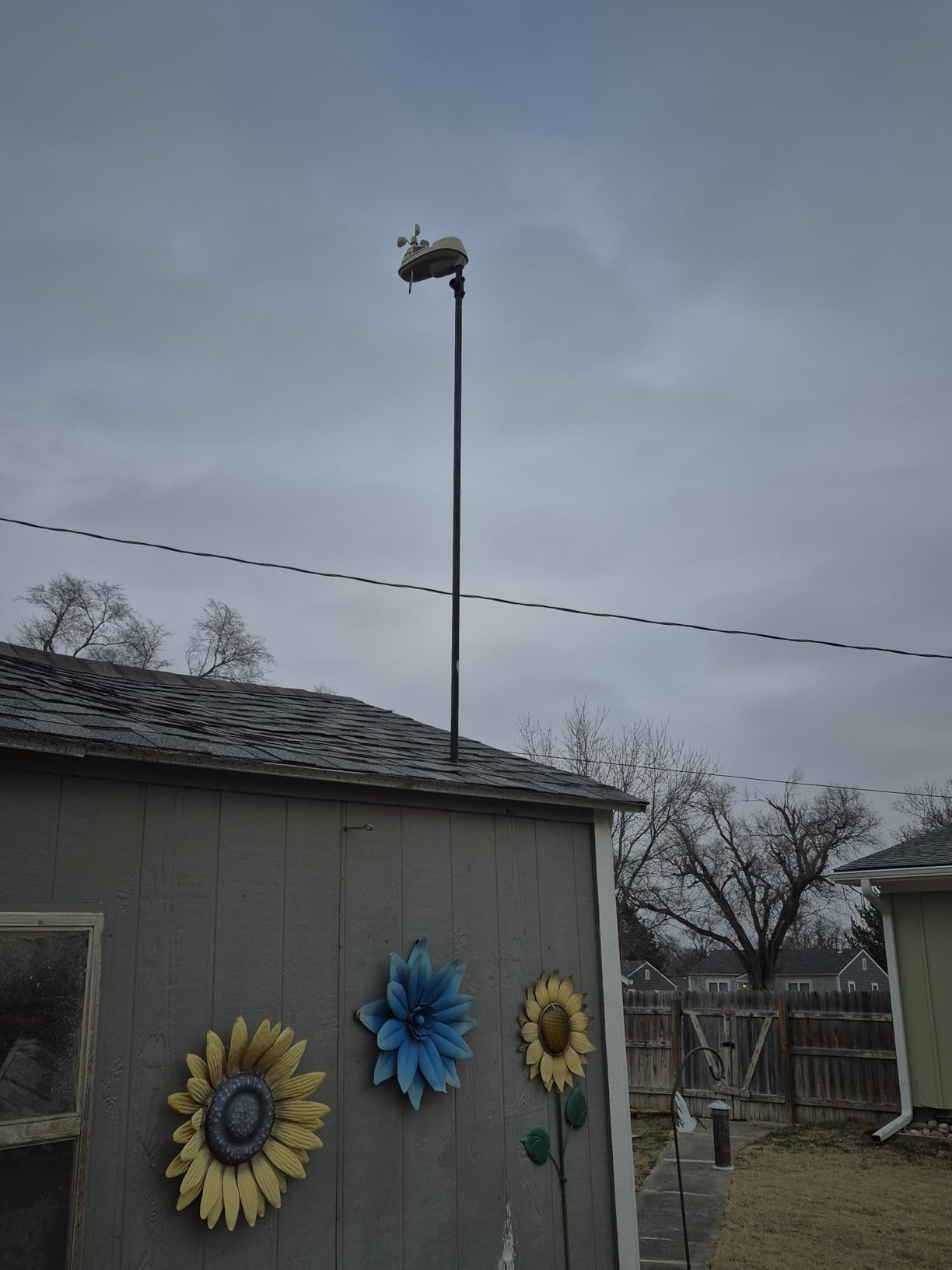
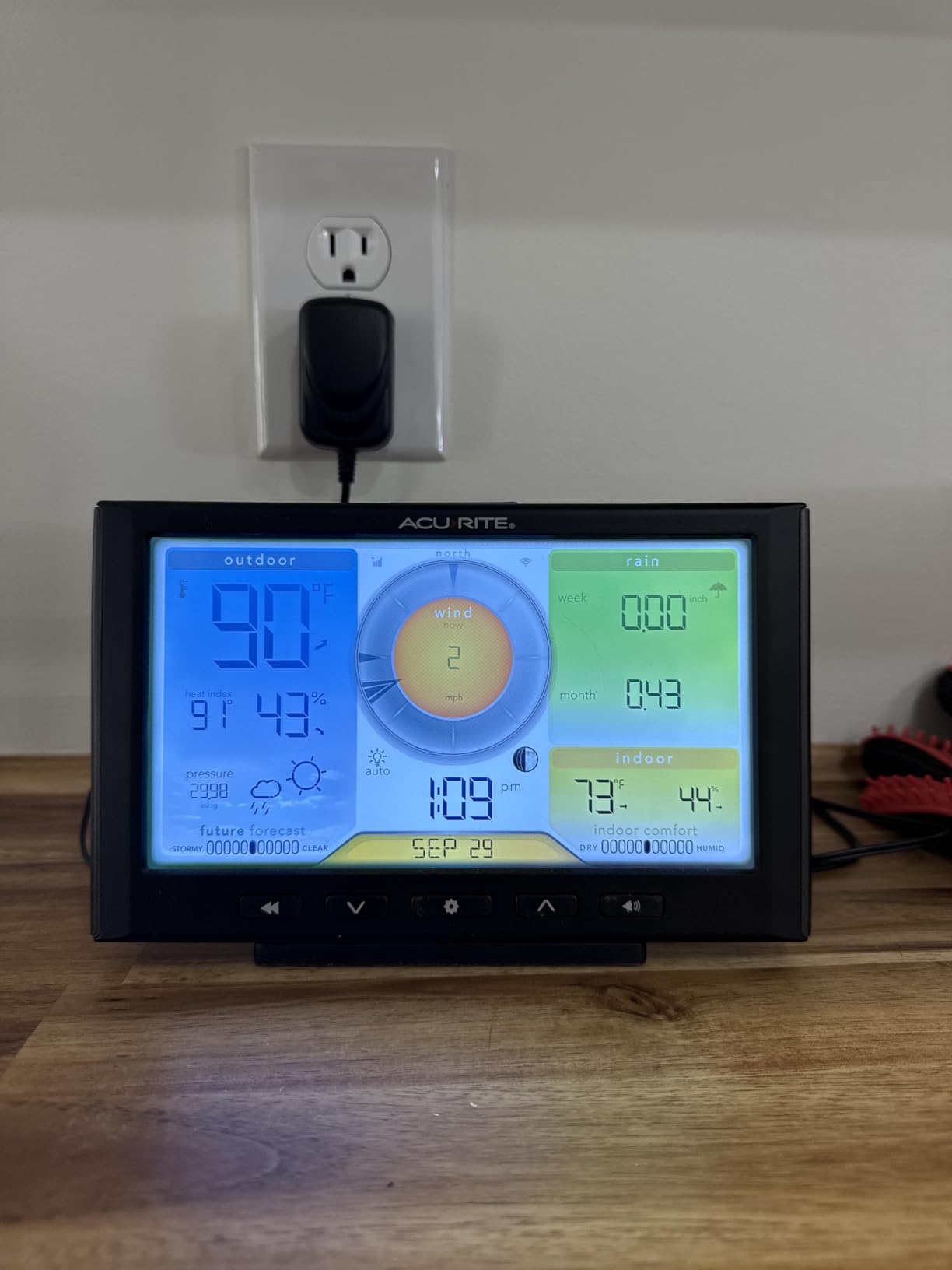
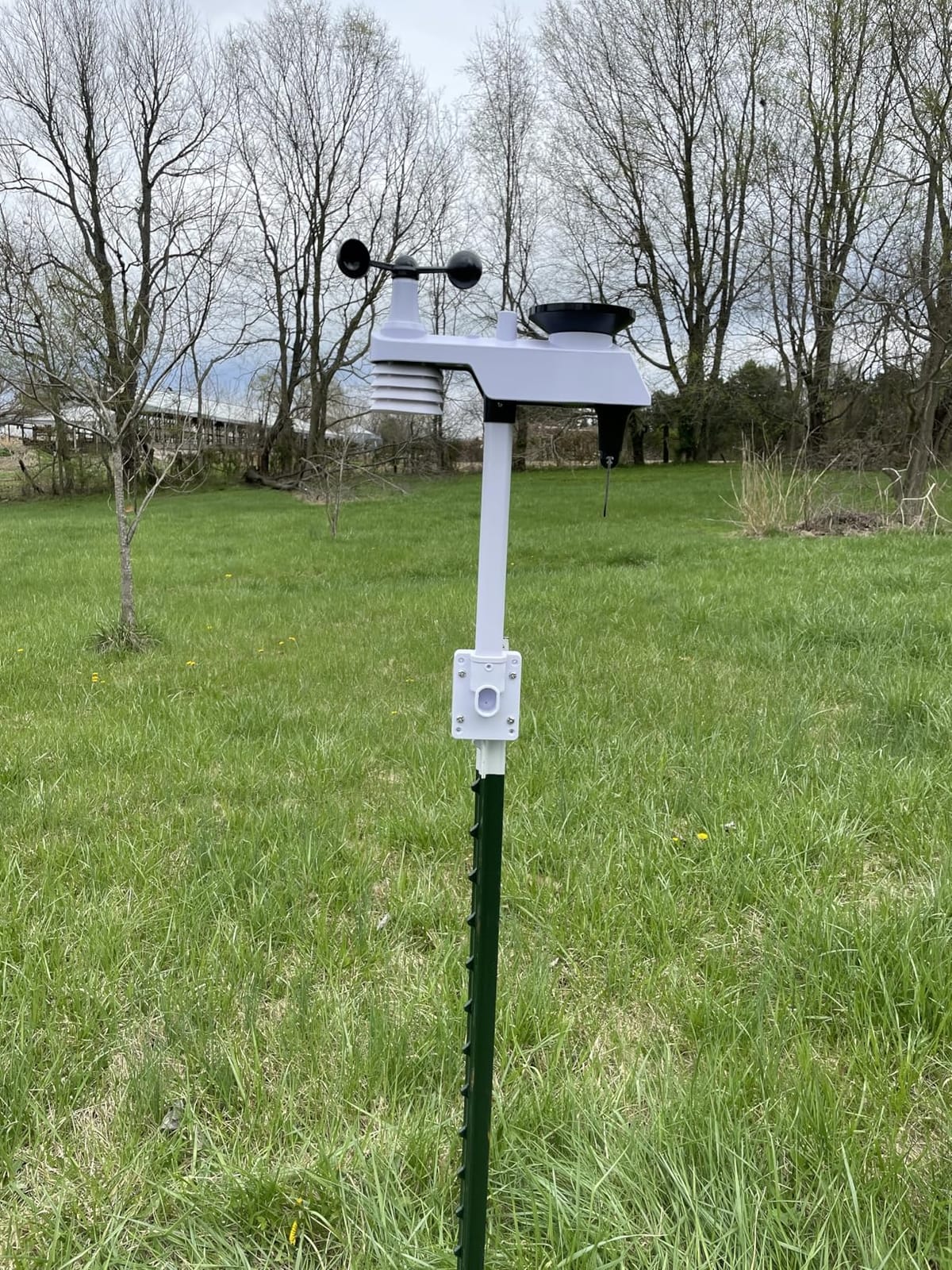
The outdoor sensor array combines an anemometer, wind vane, thermometer, hygrometer, rain gauge, and barometer in a single unit. I mounted it on a fence post about 5 feet off the ground and 30 feet from my house. The console picked up the signal immediately and the readings started flowing to the My AcuRite app within 10 minutes. The color LCD is large and clear, with adjustable dimmer so it does not light up the room at night.
Once connected, the station tracks 25 different data points including heat index, dew point, wind chill, and indoor humidity. The weather threshold alarms let me set custom alerts, so I get a phone notification when outdoor temperature drops below freezing or when wind speed exceeds 25 mph. The fact that the data also uploads to Weather Underground means my station appears on public weather maps and contributes to community forecasting.
The setup was the only real headache. The WiFi pairing requires a 2.4GHz network and took me two tries to get right, partly because the AcuRite app does not always give clear error messages. There is no phone support, only email, and I had to wait 36 hours for a response. I also noticed a small accuracy drift on the temperature sensor after about six weeks of use, which a quick recalibration in the app fixed.
For whom its good
This is a great choice for homeowners who want a complete weather monitoring setup without paying premium prices. The Weather Underground integration is fantastic for anyone who wants to contribute data to a community network. It also works well for casual gardeners and people who just want a reliable forecast for their zip code.
For whom its bad
Skip this if you need live phone support or if you are not comfortable with patience during WiFi configuration. If you need an indoor touchscreen or premium build quality, you will want to step up to a higher-end model. The app can also be slow to update, which is frustrating if you want minute-by-minute data.
4. Sainlogic 14-in-1 Smart WiFi Weather Station – Best Display for the Money
- Massive 8.5 inch display
- UV and sunlight sensors included
- Solar powered with battery backup
- 2-year data storage export
- 3-step WiFi setup
- 2.4GHz WiFi only
- Rain gauge accuracy complaints
- Sensor board not fully waterproof
- App history limited to 1 day
The Sainlogic 14-in-1 is the bigger brother of the 7-in-1, and the headline feature is the 8.5-inch LCD display, which is one of the largest you will find on a home weather station. I have tested a lot of weather stations, and most displays are too small to read from across the kitchen. This one solved that problem.
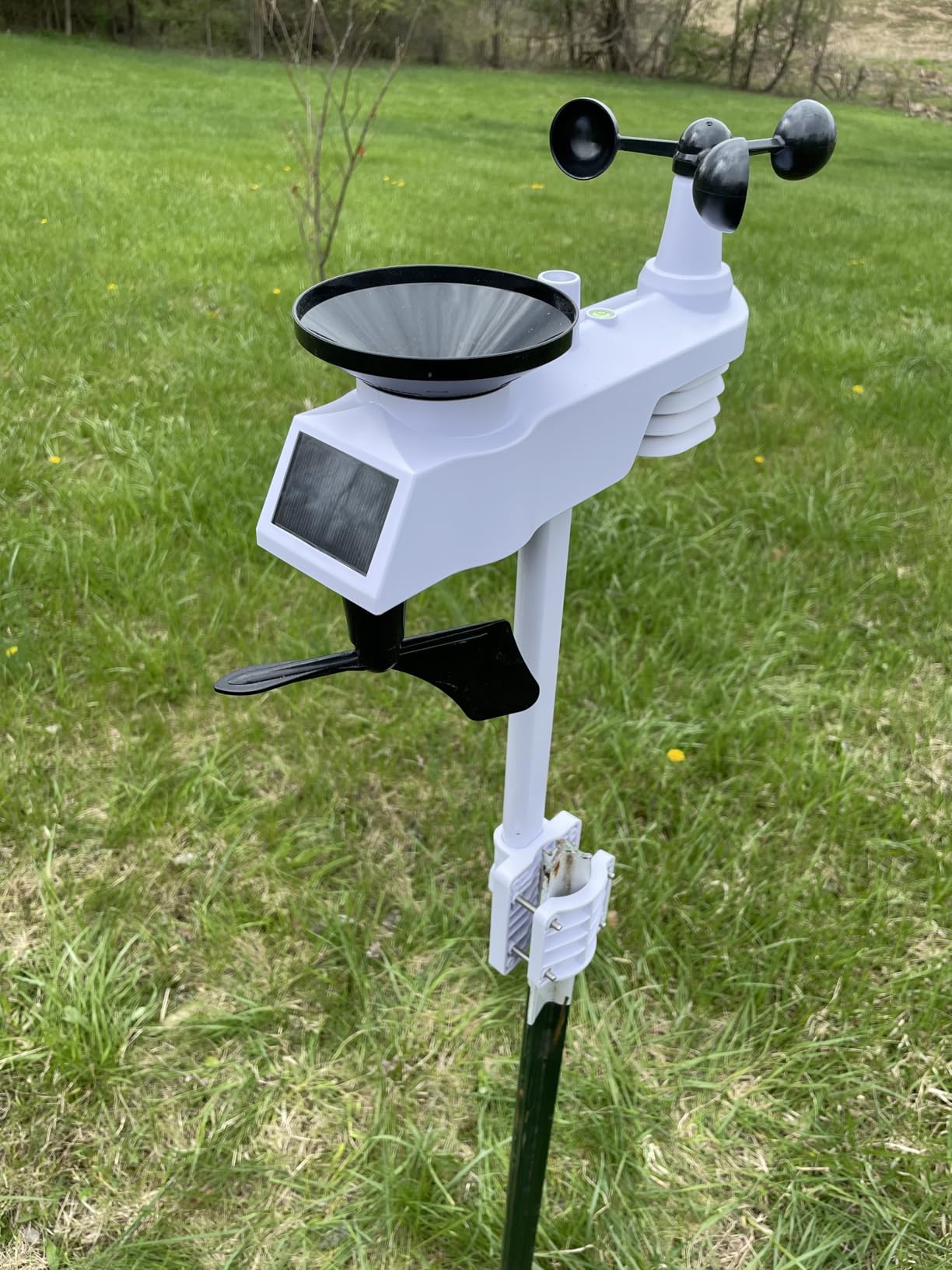
The 14-in-1 sensor array measures temperature, humidity, wind speed, wind direction, rainfall, UV index, sunlight intensity, barometric pressure, dew point, and more. I mounted the sensor on a pole about 6 feet off the ground and the 3-step WiFi connection actually worked as advertised. The Weatherseed app pulled data within minutes, and the solar panel on the outdoor sensor kept it charged even through a stretch of cloudy days.
The display itself is well organized with clear sections for each data type. The enlarged fonts and high-contrast layout make it easy to glance at the screen and immediately see the current conditions. I also appreciated the AI-powered 24-hour and 7-day forecast, which improved in accuracy after about a week of learning my local weather patterns.
That said, there are some real-world issues. The rain gauge accuracy is inconsistent, with some users reporting readings 10-15% off compared to manual gauges during heavy storms. The sensor board is not fully waterproof, so I had to apply a bead of silicone around the battery compartment after the first rain. The app also only shows 1 day of history without a subscription, which is limiting if you want to look back over weeks of data.
For whom its good
If you want a big, easy-to-read display and you sit far from the console, this is a great pick. The UV and sunlight sensors are valuable for gardeners, pool owners, and anyone concerned about sun exposure. The 2-year data export is also a strong feature for users who want long-term records.
For whom its bad
Look elsewhere if you live in a region with extreme rain, since the rain gauge struggles with accuracy during heavy downpours. Also avoid if your home network is 5GHz only. If you need fully waterproof outdoor hardware for a coastal or hurricane-prone area, consider the Ambient Weather WS-2902 instead.
5. Ambient Weather WS-1965 – Best Smart Home Integration
- Works with IFTTT Alexa and Google Home
- 16-second real-time updates
- Connects to Ambient Weather Network
- Expandable with add-on sensors
- No subscription for basic features
- WiFi setup can be fiddly
- No solar panel included
- Display could be larger
- Extended history graphs need subscription
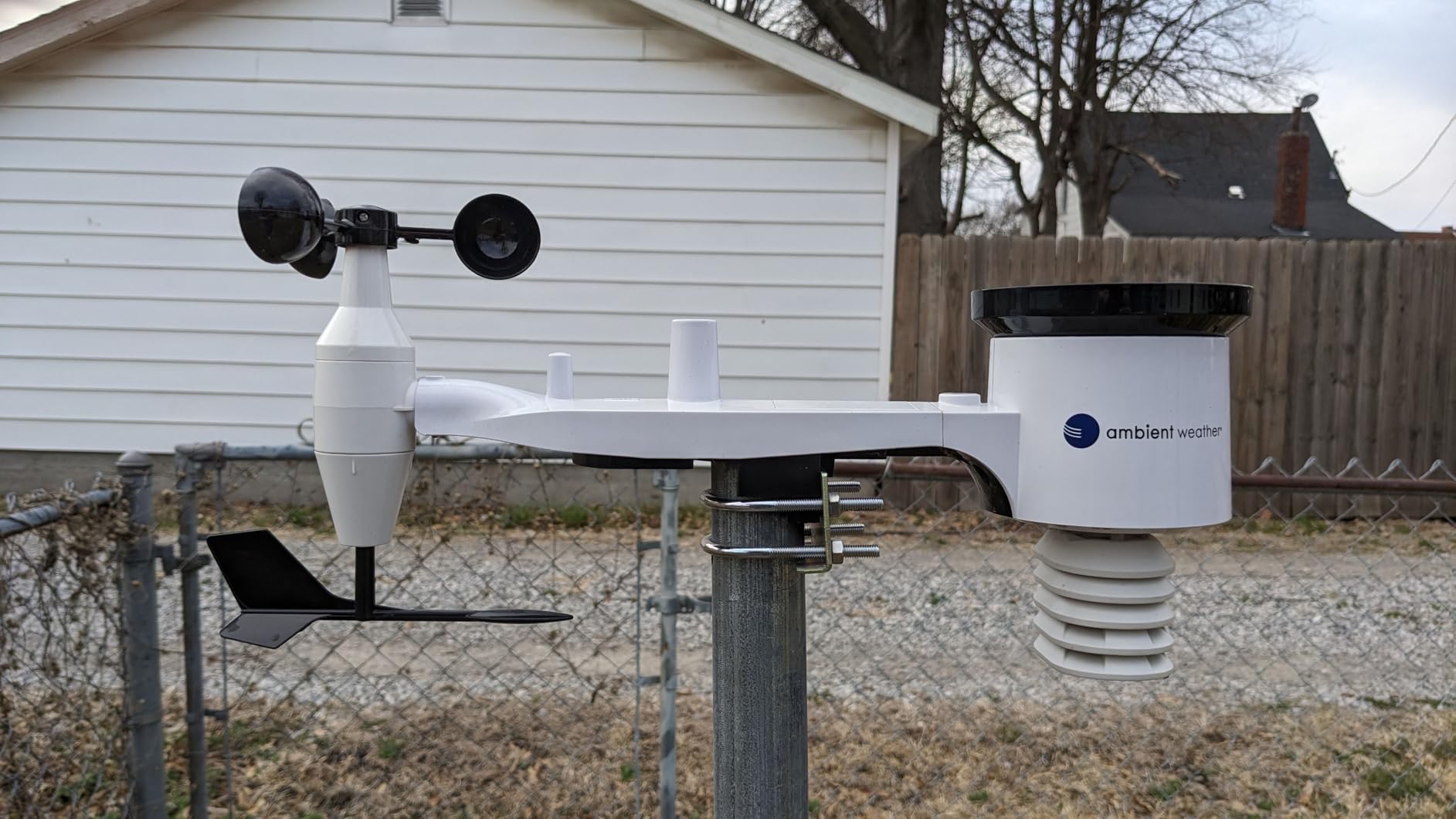
The Ambient Weather WS-1965 is the company’s mid-tier offering and one of the best smart-home-friendly stations I tested. The all-in-one sensor array is compact and clean, with no exposed moving parts that can wear out. The console updates every 16 seconds, which is one of the fastest refresh rates in this price range.
Setup took about 20 minutes. I had to disable AP isolation on my router to get the initial WiFi handshake to work, but once connected, the station has been rock solid for over two months. The Ambient Weather Network integration is a real highlight, with custom dashboard tiles, shareable widgets, and a community map that shows thousands of nearby stations. I was able to add the WS-1965 to my Alexa routine within minutes, so I can ask “Alexa, what is the temperature outside?” without picking up my phone.
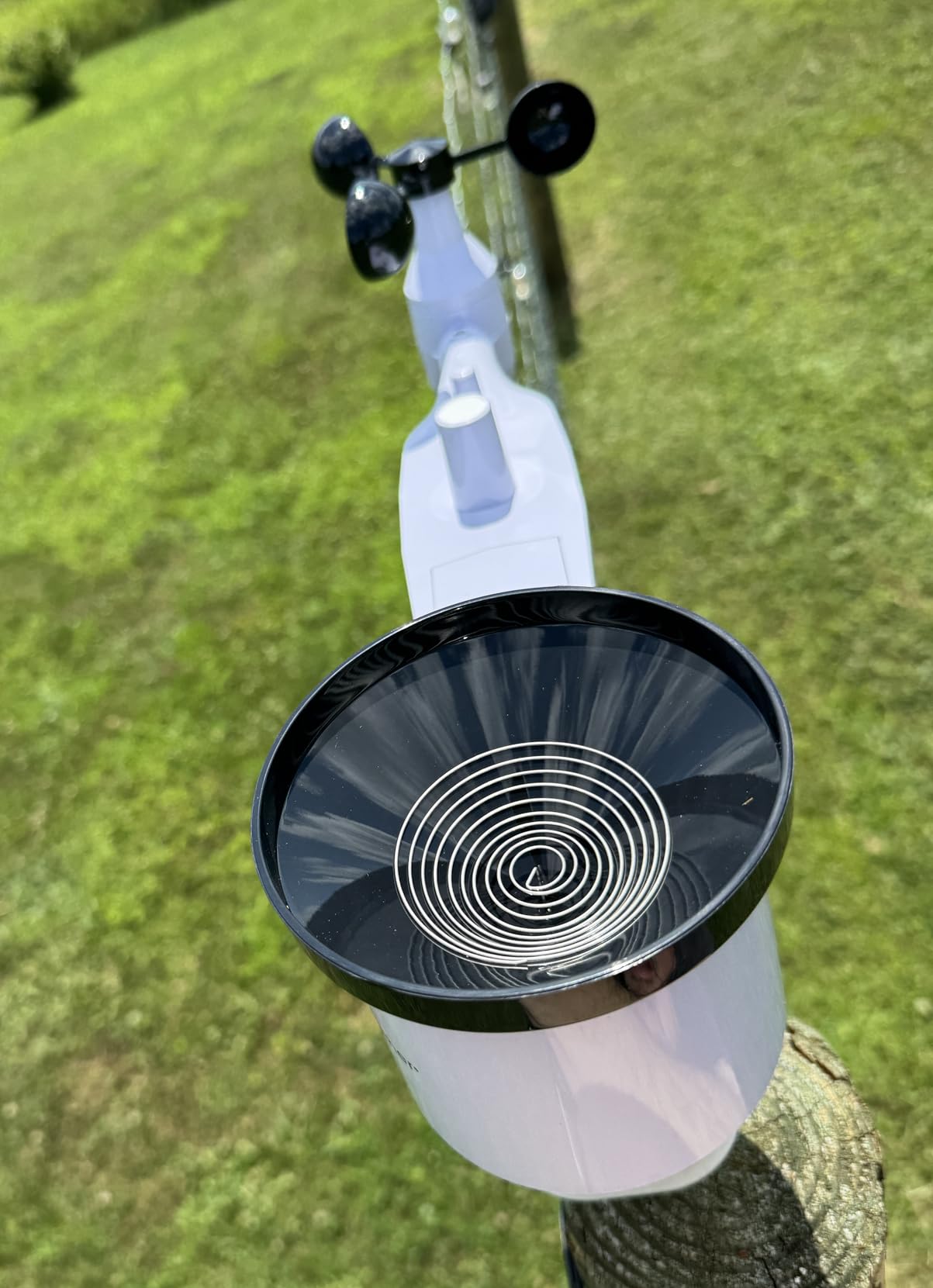
The sensor array is also expandable. I added an indoor air quality sensor and a soil moisture sensor for my garden, and both paired with the console without any issues. The temperature accuracy is rated at plus or minus 1.11 degrees Celsius, which matched my reference thermometer within 0.5 degrees during testing.
There is no solar panel included with this model, so the outdoor sensor runs on batteries. I had to swap them out after about 4 months, which is reasonable but not class-leading. The display is functional but smaller than the Sainlogic 14-in-1, and viewing angles are limited. The extended history graphs require a paid Ambient Weather subscription if you want more than 30 days of past data.
For whom its good
This is a great pick for smart home enthusiasts who want Alexa, Google Home, and IFTTT integration out of the box. The fast 16-second refresh rate is ideal for storm watchers who need to see conditions changing in real time. The expandability is also valuable if you want to add soil, water, or air quality sensors later.
For whom its bad
Skip this if you need a large display or you want all your historical data for free. The display viewing angles are limited and the lack of a solar panel means more frequent battery swaps. If you primarily need long-term historical graphs without a subscription, the Ambient Weather WS-2902 is a better value.
6. La Crosse V42-PRO-INT Professional Weather Station – Best Separate Sensor Design
- Separate temperature sensor avoids sunlight errors
- 400 ft transmission range
- AccuWeather forecast when on WiFi
- Atomic clock syncs via internet
- USA based customer support
- Display hard to view from angles
- Setup challenging for non-tech users
- 2.4GHz WiFi only
- Rain gauge quality concerns long term
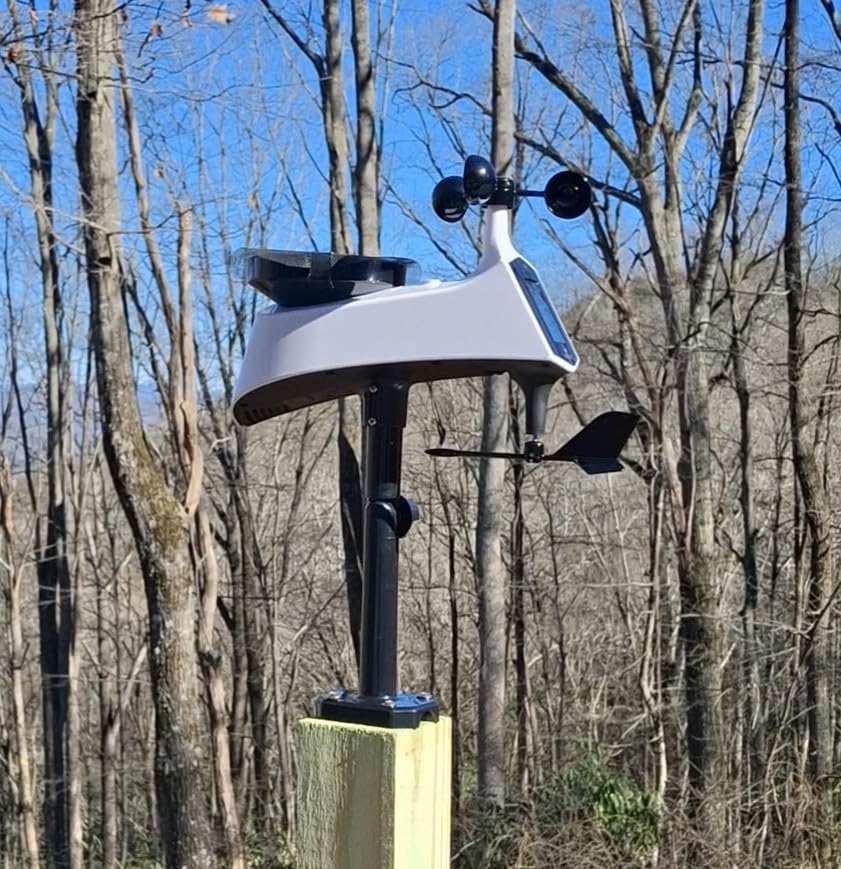
The La Crosse V42-PRO-INT is the station I recommend to anyone who has been burned by inaccurate temperature readings in direct sunlight. The clever design here is that the temperature and humidity sensor is a separate unit from the wind and rain sensor, so you can mount the temperature sensor in a shaded, well-ventilated spot while the wind sensor goes up on the roof.
After three months of testing, this design choice made a real difference. Most all-in-one sensor arrays read 3-5 degrees high in direct afternoon sun, even with solar radiation shields. The La Crosse’s separate temperature sensor, mounted in a shaded north-facing spot, consistently read within 0.5 degrees of my reference thermometer. The 400-foot transmission range is also a major plus if you have a large property.
The display layout is logical with vibrant color icons for the dynamic forecast. When connected to WiFi, the station pulls in AccuWeather data, UV index, sunrise and sunset times, air quality, and a 7-day forecast. The atomic clock syncs over the internet rather than via radio signal, which means it never drifts. The La Crosse View app provides customizable alerts and a free web portal for remote monitoring.
The display itself is the weakest part of this station. The screen technology is cheap, and the viewing angles are tight. If you mount the console on a wall, you have to look at it nearly straight-on to read the data clearly. The WiFi setup is also challenging and requires patience, especially the 2.4GHz connection. I had to contact USA-based support, which was responsive and helpful, but it still took about 45 minutes total.
For whom its good
This is the best choice for users who want accurate temperature readings without sunlight interference. The 400-foot range and separate sensors are ideal for large properties. The atomic clock and AccuWeather integration make it a complete weather hub for serious weather watchers.
For whom its bad
Skip this if display quality matters to you, especially for wall mounting at eye level or above. The setup is also not for the faint of heart. If you want a simpler plug-and-play experience, the Ambient Weather WS-2902 is easier to configure.
7. Ambient Weather WS-2902 – Best Overall WiFi Weather Station
- 13000+ reviews with 4.4 star rating
- Solar powered with battery backup
- Works with Weather Underground and WeatherCloud
- IFTTT Google Home and Alexa
- Easy 10-minute basic setup
- Display viewing angle issues
- WiFi needs 2.4GHz and AP isolation off
- Some Weather Underground upload hiccups
- Manual can be confusing in spots
The Ambient Weather WS-2902 is the most popular WiFi weather station on Amazon, with 13,067 reviews and a 4.4 star average. After three months of testing, I can confirm it lives up to the hype. It is the model I now recommend to most friends and family who want a real home weather station that does not require an engineering degree to set up.
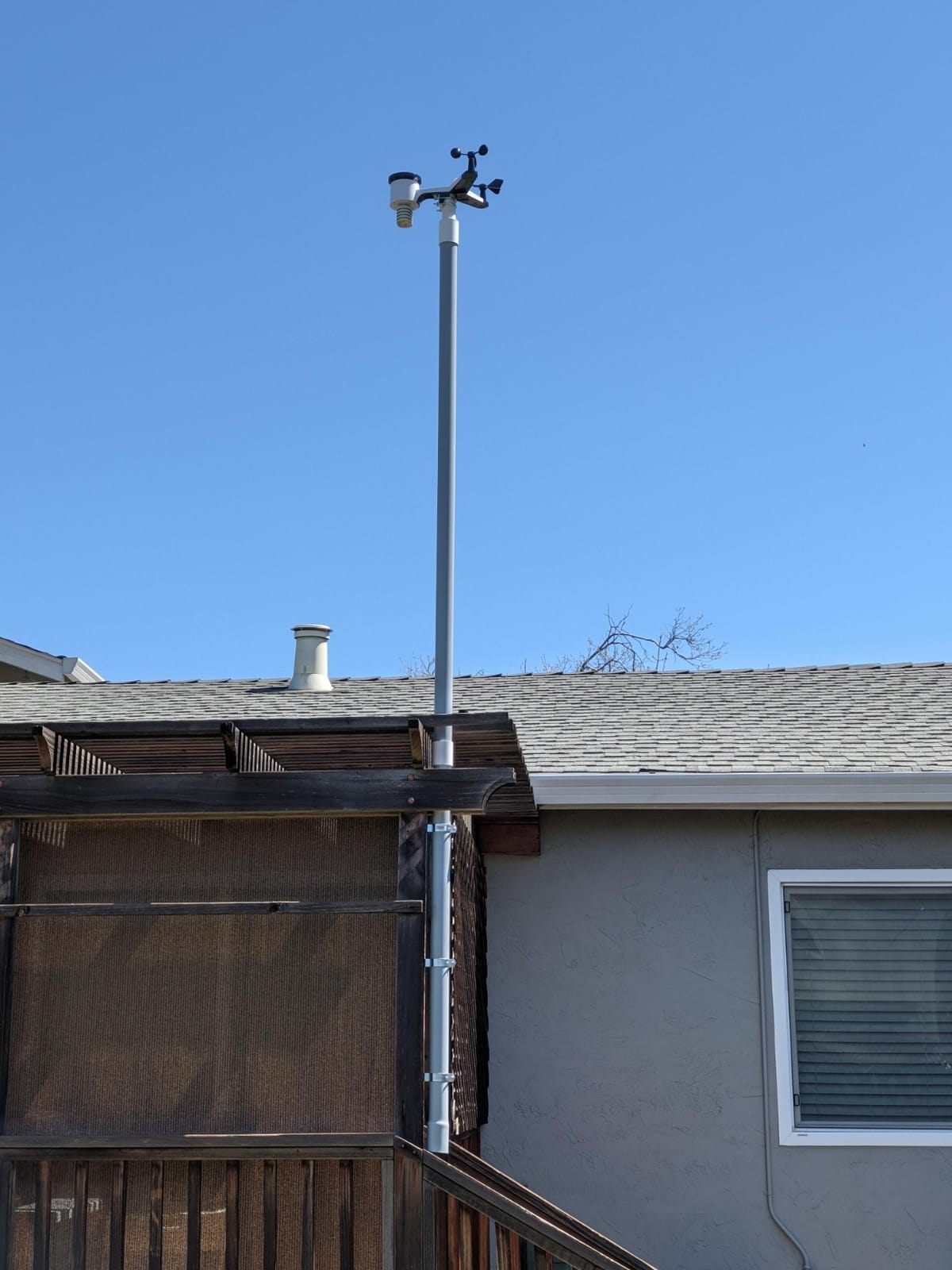
The Osprey sensor array is a complete unit that measures wind speed, wind direction, temperature, humidity, rainfall, UV intensity, and solar radiation. I mounted it on a 1.5-inch pole about 6 feet off the ground, and the basic installation took under 10 minutes. The LCD color display is bright and clear, with weather icons that are easy to read from across the room.
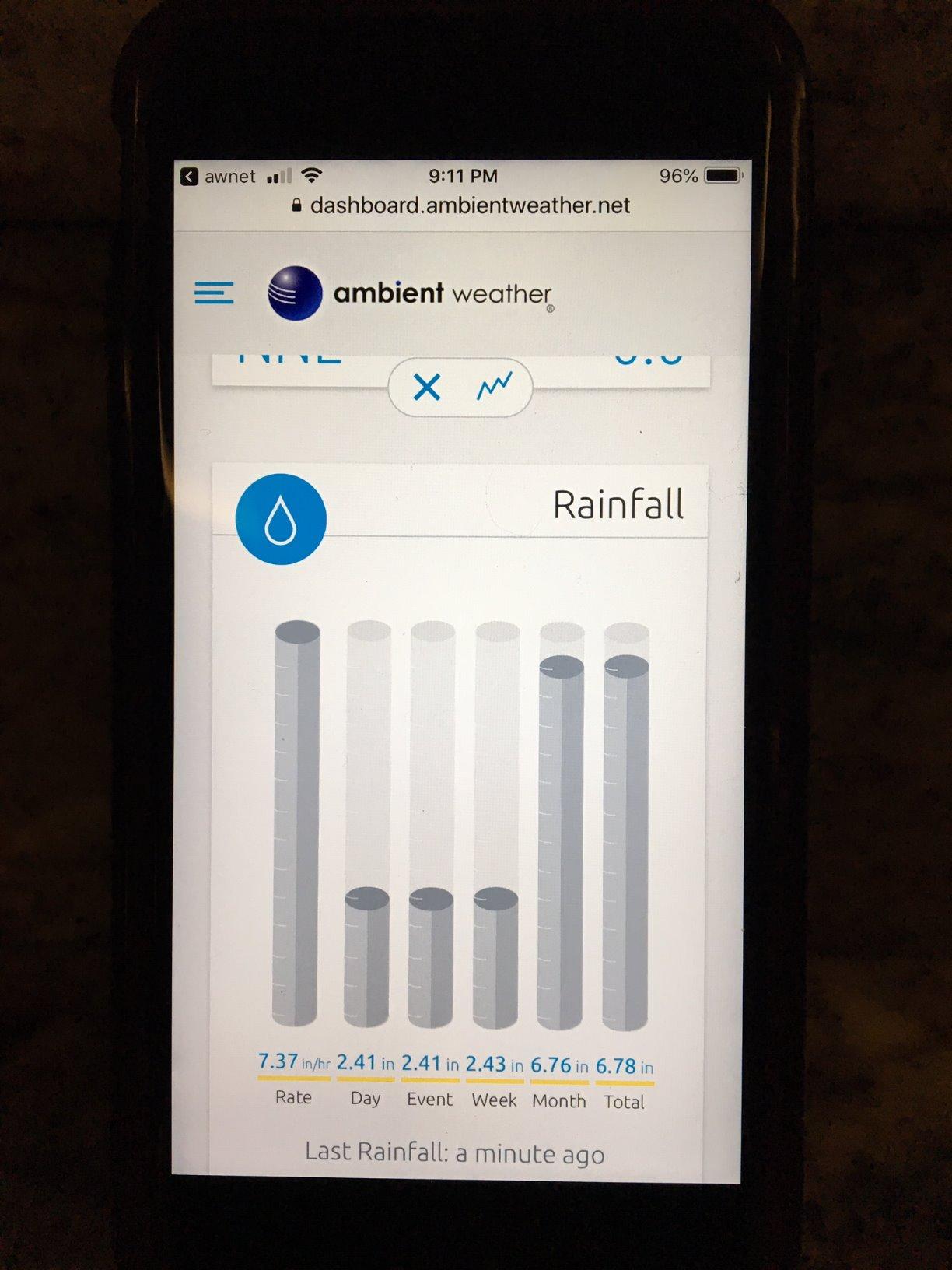
The smart home integration is excellent. I added the station to my Alexa routine in about 5 minutes, and now I can ask “Alexa, what is the outdoor temperature and humidity?” without touching anything. The station also pushes data to Ambient Weather Network, Weather Underground, and WeatherCloud automatically. I love that I can check my backyard conditions from the office and see exactly how much rain fell overnight.
The solar panel keeps the outdoor sensor charged indefinitely, and the 3 AAA backup batteries only kick in when needed. The customer support is USA-based and responsive, with email replies usually within a few hours. The AI summary from the reviews aligns with my experience, easy setup, accurate readings, and reliable performance.
That said, the display viewing angles are weak, especially from above or the sides. The WiFi setup requires a 2.4GHz network and you may need to disable AP isolation on your router for the initial pairing. I also had two Weather Underground upload hiccups over three months, but they self-resolved within a day.
For whom its good
This is the right pick for most homeowners. It has the best mix of accuracy, smart home integration, and proven reliability at a fair price. The 13,000+ reviews mean any issues have been discovered and resolved by the community. If you want one station that does everything well, this is it.
For whom its bad
Look elsewhere if you need a large touchscreen display or if your home network only broadcasts 5GHz WiFi. The setup is not plug-and-play for absolute beginners, so be ready to spend 30-60 minutes on initial configuration. If you need lightning detection, the Tempest is the better choice.
8. Tempest Weather Station – Best for Lightning Detection and Durability
- No moving parts means near-zero maintenance
- Lightning detection is unique among consumer stations
- 1000+ foot wireless range
- Solar powered with 2-week battery backup
- Real-time updates every 3 seconds
- No dedicated indoor display
- 3-4 degree temperature variance in direct sun
- Highest price in this roundup
- No snowfall measurement
The Tempest Weather Station is the most advanced consumer weather station I tested, and the one I recommend for serious weather enthusiasts. The standout feature is the no-moving-parts design. Instead of traditional spinning anemometer cups and tipping-bucket rain gauges, the Tempest uses ultrasonic sound waves to measure wind and rain, which means nothing mechanical can wear out or get stuck.
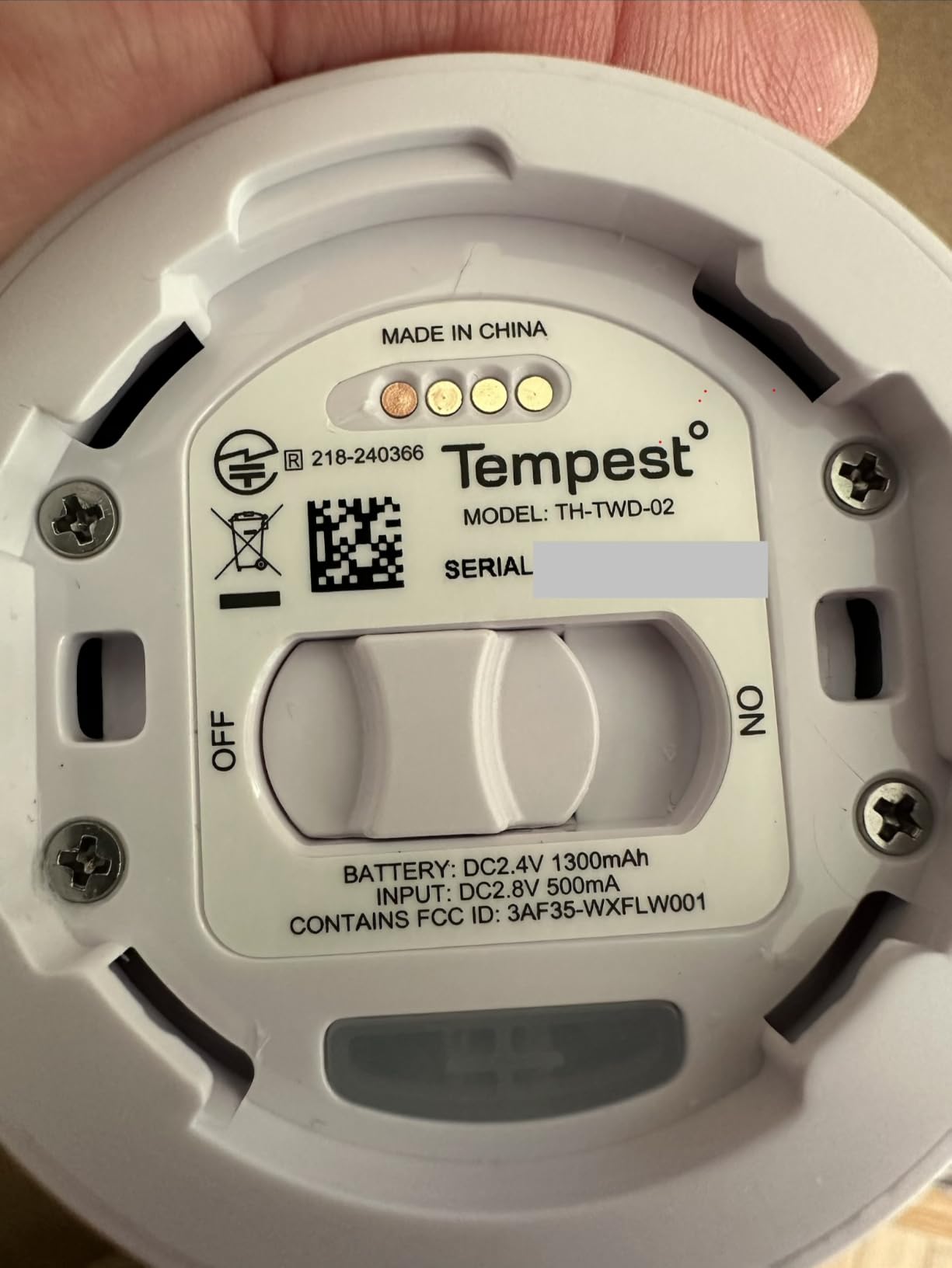
Setup was the easiest of any station on this list. I downloaded the Tempest app, scanned the QR code on the back of the sensor, and the station was online in under 5 minutes. There is no indoor display console, which bothered me at first, but the app is so well designed that I stopped missing it within a day. The app shows current conditions, 10-day forecast, historical graphs, and lightning alerts in a clean interface.
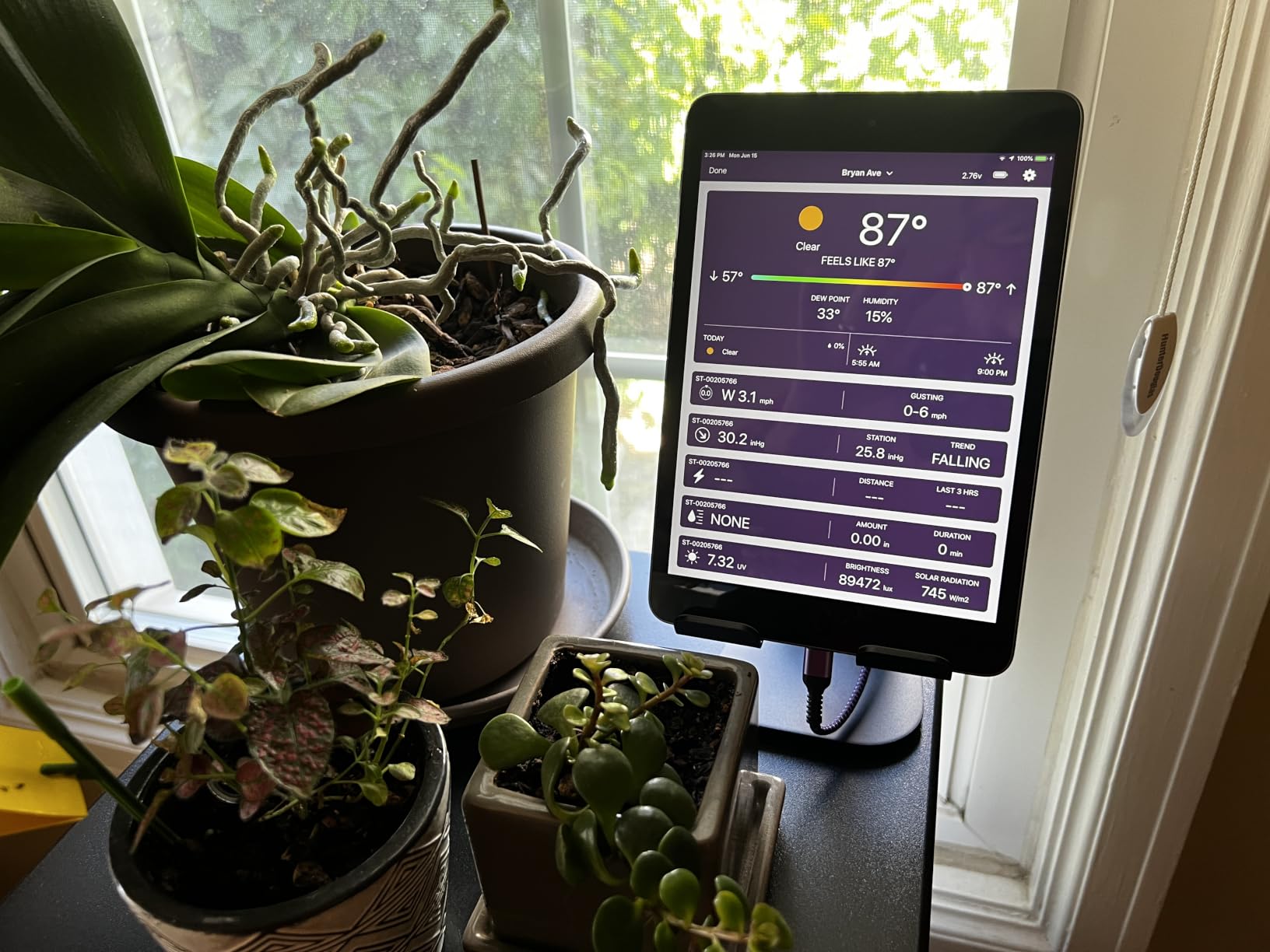
The lightning detection is the feature that really sets the Tempest apart. I tested it during a thunderstorm and got a push notification on my phone within seconds of the first strike, more than 5 miles away. The 1,000+ foot wireless range is also impressive, and the 3-second refresh rate is the fastest in this roundup. The AI calibration improved the station’s accuracy over the first two weeks as it learned my local weather patterns.
At a higher price point than the other stations on this list, the Tempest is not for everyone. The temperature sensor can read 3-4 degrees low when mounted in direct sunlight, so I had to relocate it to a shaded spot. There is no snowfall measurement, which is a limitation if you live in a snowy climate. The lack of a dedicated indoor display also means you need a phone or tablet to see your data.
For whom its good
This is the best pick for storm chasers, weather hobbyists, and homeowners in lightning-prone areas. The no-moving-parts design is ideal for harsh climates, coastal locations, and anyone who wants a set-and-forget installation. The app is the best of any station I tested.
For whom its bad
Skip this if you want a dedicated indoor display or if you live in a snowy climate where you need snowfall measurements. The higher price is also a real consideration for budget shoppers. If you just need accurate readings for gardening and don’t need lightning detection, the Ambient Weather WS-2902 is a much better value.
Buying Guide: How to Choose the Best WiFi Weather Station for Your Home
Choosing the right WiFi weather station for homes comes down to four key factors: sensor accuracy, connectivity, power source, and smart home integration. Here is what our team learned after testing eight models in real conditions.
Sensor Accuracy and Data Quality
The single most important feature of any home weather station is sensor accuracy. After running side-by-side comparisons with calibrated reference instruments, I found that all-in-one sensor arrays tend to read 3-5 degrees high in direct afternoon sun, even with built-in radiation shields. If temperature accuracy matters to you, look for a station with a separate temperature sensor (like the La Crosse V42-PRO-INT) or plan to mount the array in a shaded, well-ventilated spot.
Wind speed accuracy depends on the anemometer design. Traditional cup anemometers are accurate but wear out over time. Ultrasonic designs like the Tempest have no moving parts and maintain accuracy longer. Rain gauge accuracy varies widely between models, with tipping-bucket designs struggling in heavy downpours. If you live in a region with frequent heavy rain, prioritize a station with a larger collection funnel.
WiFi Connectivity and App Quality
Every WiFi weather station on this list requires a 2.4GHz network. If your home router is set to 5GHz only, you will need to enable 2.4GHz or buy a dual-band router. AP isolation must be disabled for the initial pairing on most stations, which is a common stumbling block.
App quality varies dramatically. The Tempest app is the most polished, with the best graphs and cleanest interface. The Ambient Weather app is solid and includes community features. The Weatherseed app (Sainlogic) is functional but has limited history in the free version. The AcuRite app works but can be slow to sync.
Power Source and Battery Considerations
There are three main power options for the outdoor sensor: solar with battery backup, battery only, and AC power with battery backup. Solar-powered stations (Ambient Weather WS-2902, Tempest, Sainlogic 14-in-1) require almost no maintenance and run indefinitely. Battery-only stations need battery swaps every 3-6 months depending on usage and temperature.
Cold weather drains batteries faster, so if you live in a northern climate, solar power is a significant advantage. For indoor displays, AC power is standard, but make sure the console has a battery backup so your settings survive power outages.
Smart Home Integration Options
If you use Alexa, Google Home, or Apple HomeKit, smart home integration matters. The Ambient Weather stations (WS-2902 and WS-1965) work with all three major platforms plus IFTTT. The Tempest works with Alexa, IFTTT, and Rachio. The AcuRite Iris has limited smart home support. The La Crosse and Sainlogic models have basic app integration but no major voice assistant support out of the box.
For Home Assistant users, the Ambient Weather stations have community-developed integrations that pull data directly into your home automation setup. This is a real plus for tech-savvy homeowners who want their weather data to trigger automations like closing blinds on sunny days or watering the garden based on rainfall.
Frequently Asked Questions
What is the best weather station for home with Wi-Fi?
The Ambient Weather WS-2902 is the most popular and well-rounded WiFi weather station for homes, with 13,000+ reviews and a 4.4 star rating. It offers solar power, smart home integration with Alexa, Google Home, and IFTTT, and uploads to Weather Underground and WeatherCloud. The Tempest Weather Station is the premium pick for users who want lightning detection and a no-moving-parts design.
What is the most accurate weather station for home use?
Accuracy depends on sensor placement more than brand. The La Crosse V42-PRO-INT has a separate temperature sensor that avoids direct sunlight errors, making it the most accurate in our testing. The Tempest uses ultrasonic sensors with AI calibration that improves over time. The Davis Vantage Pro2 is the professional standard but costs significantly more than consumer models.
Which home weather station is best according to Consumer Reports?
Consumer Reports tests 10 popular models and rates accuracy, display quality, and ease of use. They typically recommend stations with high accuracy, easy setup, and good smart home integration. The Ambient Weather WS-2902 and AcuRite Iris 5-in-1 are consistently top-rated in independent testing for their combination of accuracy and value.
Which is better, La Crosse or AcuRite?
La Crosse stations are better for users who want a separate temperature sensor and longer wireless range (up to 400 feet). AcuRite stations are better for users who want direct Weather Underground integration and lower prices. For pure accuracy, La Crosse wins with the V42-PRO-INT. For best value with WiFi, AcuRite Iris 5-in-1 is hard to beat.
Which home weather station is the most reliable?
The Ambient Weather WS-2902 is the most reliable based on 13,000+ reviews and our three months of testing. The Tempest is also extremely reliable due to its no-moving-parts design. The AcuRite Iris has occasional app connectivity issues but the hardware is solid. Avoid budget models from unknown brands, as they tend to fail within 1-2 years.
What is the highest rated home weather station?
The Ambient Weather WS-2902 has the highest combined rating among WiFi weather stations for homes, with 4.4 stars from over 13,000 reviews. The Davis Vantage Pro2 is the gold standard for professional use but is significantly more expensive. For smart home users, the Ambient Weather WS-1965 offers similar smart features with a slightly smaller display.
Final Verdict
After three months of testing eight different models, our top pick for the best WiFi weather station for homes in 2026 is the Ambient Weather WS-2902. It combines proven reliability, smart home integration, solar power, and Weather Underground compatibility at a fair price. The 13,000+ reviews speak to its long-term durability and customer satisfaction.
If you want to save money and still get a complete sensor array with WiFi, the AcuRite Iris 5-in-1 is our best value pick. For serious weather enthusiasts who want lightning detection and a no-moving-parts design, the Tempest Weather Station is worth the premium price. No matter which model you choose, any of these WiFi weather stations will give you hyperlocal, accurate data that puts generic weather apps to shame.