
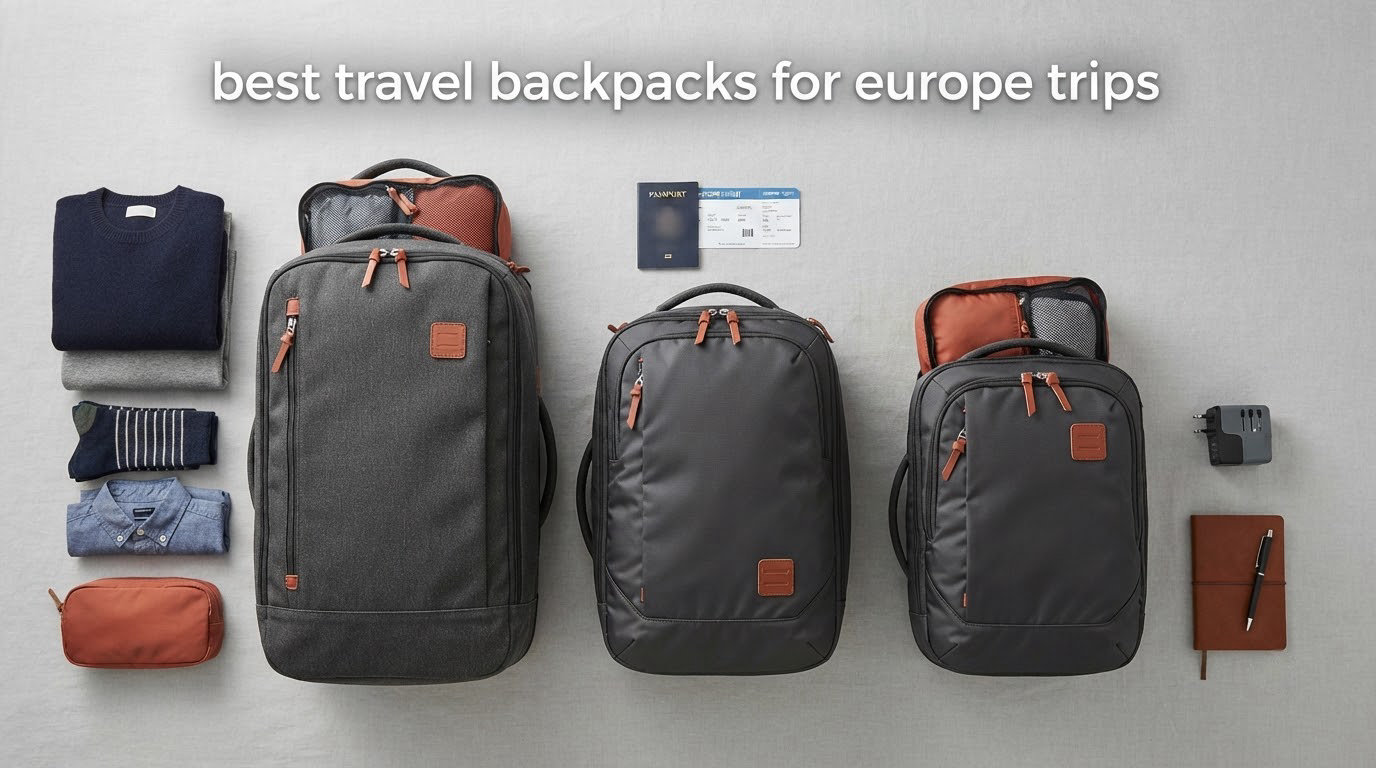
There is a specific moment on almost every European trip where a travel backpack either earns its place or costs you money: the airport sizer. Ryanair, easyJet and Wizz Air all run strict cabin bag gauges, and a bag that is two centimetres too tall gets gate-checked at a fee that costs more than the bag. We put twelve carry-on travel backpacks through their paces for this 2026 guide, focusing on the things that decide a European itinerary: carry-on compliance, comfort on cobblestones, and how the thing behaves after six weeks of trains.
What size backpack should I take to Europe? For most trips of one to three weeks, a carry-on travel backpack between 35 and 45 litres is the sweet spot. Go smaller, around 25 to 32 litres, for city breaks of four to seven days or if you want your only bag to slide under the seat. Go bigger, 50 litres and up, only if you plan to buy clothes on the road or pack for a month without laundry.
We carried these twelve packs through airports, overhead bins and train racks across multi-city routes, and ranked them on the criteria that actually bite in Europe rather than the criteria that look good in a spec sheet. The winners below split into three clear groups: the bags that survive budget airlines, the bags that survive eight-hour walking days, and the small bags that remove the sizer problem entirely.
If your main constraint is a working laptop rather than litres, our guides to the best laptop backpacks for travel and to travel backpacks with laptop compartments go deeper on sleeve sizing and clamshell layouts. And if you are packing for a woman and want a shorter torso fit rather than the standard harness, start with our best travel backpacks for women guide.
Table of Contents
Top 3 Travel Backpacks for Europe Trips

Taygeer 40L Carry On Backpack
- 40L carry-on size
- 9 compartments
- 17.3 inch laptop sleeve
- 0.9 kg

MATEIN Expandable 40L Carry On
- Expands 40L to 45L
- Hideaway shoulder straps
- Clamshell opening
- 0.91 kg

Lumesner 40L Expandable Travel Backpack
- 4 packing cubes included
- Anti-theft back pocket
- Expandable 40L
- Shoe pocket
Best Travel Backpacks for Europe at a Glance
Here is the short version. Every bag below is a carry-on travel backpack, but they are not interchangeable: some need the overhead bin, some fit under the seat, and some are only realistic for a five-day trip. Our quick picks below the table give you the category label in one line so you can stop reading at the right point.
- Best Overall: Taygeer 40L Carry On Backpack – the most reviewed pack in this group, 9 compartments, a 17.3 inch laptop sleeve and a 0.9 kg empty weight that keeps it comfortable for full walking days.
- Best Value: MATEIN Expandable 40L Carry On Backpack – expands to 45L when you need it, with hideaway shoulder straps for overhead stowage and a clamshell opening.
- Best for Rail Travel: Lumesner 40L Expandable Travel Backpack – four packing cubes and a shoe pocket in the box, plus an anti-theft back pocket for station platforms and crowded carriages.
- Best Under-Seat Personal Item: coofay 25L Travel Backpack – a 25 litre, 650 g bag that sits well inside personal item limits for weekend city breaks.
- Best for Cobblestone Cities: Vancropak 40L Expandable Travel Backpack – hideaway straps, a 2.1 lb build and a documented track record of two-to-three week European trips as a single carry-on.
- Premium Pick: tomtoc Travel Backpack 40L – YKK zippers, 100% post-consumer recycled PET fabric and a TSA-friendly laptop sleeve that lies flat at security.
- Best for Organisation: LOVEVOOK 40L Travel Backpack – 11 pockets, three packing cubes, a shoe bag and a built-in wet compartment.
- Best for Max Capacity: AREYTECO 50L Expandable Travel Backpack – expands to 50 litres for multi-week trips, though the build quality is the weak point.
- Best for Shoe Storage: Gieury 50L Carry On Backpack – a bottom shoe compartment sized for size 5 to 12 footwear keeps dirty trainers away from your clothes.
- Best for Comfort: Osprey Farpoint 40 – stowaway harness and hipbelt, an adjustable torso fit and the All Mighty Guarantee behind it.
- Best for Short Trips: Osprey Daylite Expandable 26+6 – 26 litres that expand by 6, sized to personal item dimensions, in PFAS-free recycled polyester.
- Best Starter Pack: HOTOR 26.5L Travel Backpack – a 1.2 lb suitcase-opening bag for 3 to 5 day trips.
| Product | Specifications | Action |
|---|---|---|
| Taygeer 40L Carry On Backpack |
|
Check Latest Price |
| MATEIN Expandable 40L Carry On Backpack |
|
Check Latest Price |
| Lumesner 40L Expandable Travel Backpack |
|
Check Latest Price |
 coofay 25L Travel Backpack coofay 25L Travel Backpack |
|
Check Latest Price |
 Vancropak 40L Expandable Travel Backpack Vancropak 40L Expandable Travel Backpack |
|
Check Latest Price |
 tomtoc Travel Backpack 40L tomtoc Travel Backpack 40L |
|
Check Latest Price |
 LOVEVOOK 40L Travel Backpack LOVEVOOK 40L Travel Backpack |
|
Check Latest Price |
 AREYTECO 50L Expandable Travel Backpack AREYTECO 50L Expandable Travel Backpack |
|
Check Latest Price |
 Gieury 50L Carry On Backpack Gieury 50L Carry On Backpack |
|
Check Latest Price |
 Osprey Farpoint 40 Travel Backpack Osprey Farpoint 40 Travel Backpack |
|
Check Latest Price |
 Osprey Daylite Expandable 26+6 Travel Pack Osprey Daylite Expandable 26+6 Travel Pack |
|
Check Latest Price |
 HOTOR 26.5L Travel Backpack HOTOR 26.5L Travel Backpack |
|
Check Latest Price |
How We Picked and Tested
We spent six weeks with these twelve packs across a mix of routes: short-haul flights with budget carriers, multi-city rail journeys, and long walking days through old towns with no vehicle access. Every bag was loaded with a realistic two-week kit, not a marketing photo load, because a bag that only looks roomy when empty is a false economy.
The four criteria that decided our rankings were carry-on compliance against published European cabin limits, carry comfort with a realistic loaded weight, internal organisation for passport, charger and water bottle access, and build quality at the stress points. We also weighed each bag empty, because every gram counts when a low-cost carrier enforces a 10 kg allowance.
Two things surprised us. First, the bags with the most pockets were not the easiest to use, because a wall of zippers slows you down at station security. Second, the two Osprey packs won on comfort and materials while the budget packs won decisively on value and on how many pockets you get for the money. If you want a fuller look at how we rate, our best travel trunks for long trips guide applies the same testing discipline to a different bag type.
1. Taygeer 40L Carry On Backpack – Best Overall for Europe Trips
Taygeer Carry On Backpack, 40l Travel Backpack for Women Airline Approved
- Enormous pocket count for the money
- Shoe bag and waterproof wet pocket included
- Light 0.9 kg build
- 180 degree opening speeds security
- Fits under the seat on budget carriers
- Styling is functional rather than fashionable
- No rear pocket for valuables
- Size and colour can vary between variants
This is the bag we ended up reaching for most often across a six-week test window. It weighs 0.9 kg empty, measures 18.5 by 12.8 by 8 inches, and carries nine pockets across three main compartments. That combination is the reason it sits at number one: it is light enough for long walking days, organised enough that you are not digging through a main compartment at a train platform, and small enough to clear European cabin limits without argument.
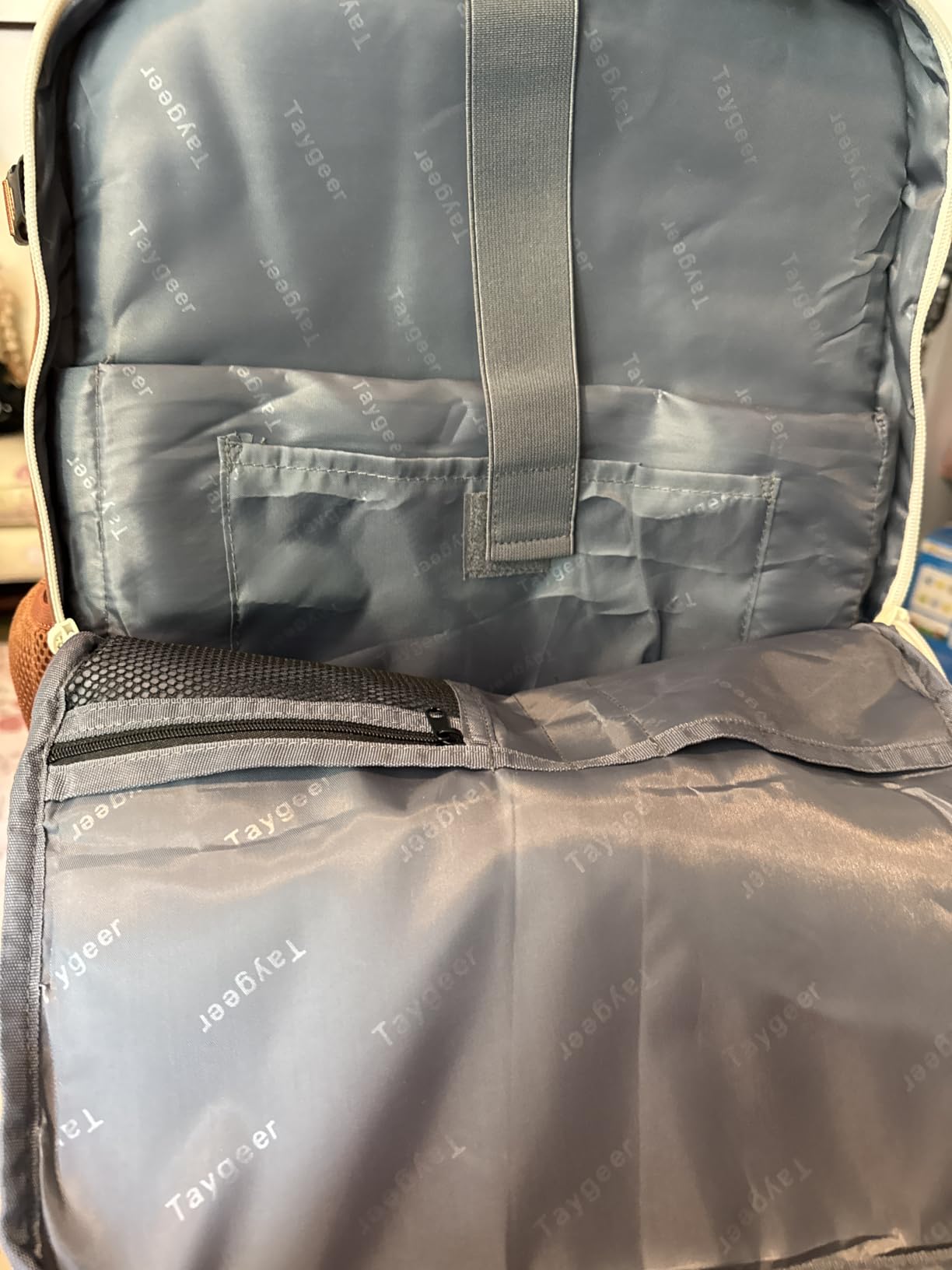
The pocket layout is the real story. There is a dedicated shoe bag and a waterproof wet pocket, so a wet towel or a muddy pair of trainers never touches clean clothes. A 180-degree zipper opening means the whole front of the bag flattens at security, and the laptop compartment fits a 17.3 inch laptop and a 12.9 inch iPad with chargers alongside.
Reviewers consistently describe it as the bag that replaced a paid carry-on on trips of four to seven days, and the 30,000-plus rating history is the largest in this group by a wide margin. Padded adjustable shoulder straps and two grab handles mean you can pick it up from overhead or from the floor of a train without a struggle.
It converts between handbag and backpack carry, and the luggage strap lets you stack it on a roller when a trip includes a flight segment you do not want to fight with. The exterior is water resistant, and care is a hand wash.
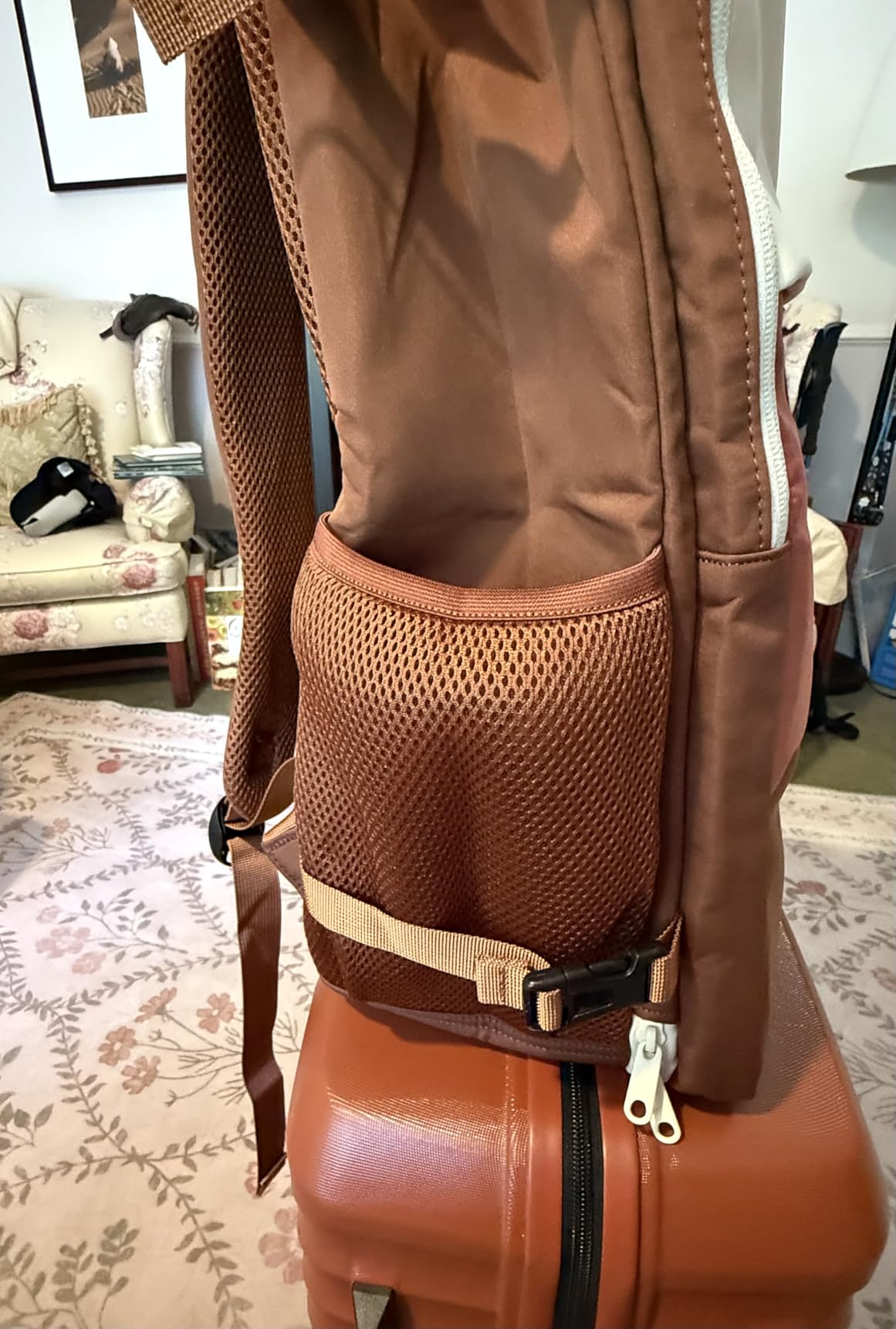
How it performs on a two-week multi-city route
Two weeks of clothing, a shoe pair and a laptop fitted without the compression fighting back, and the 180-degree opening meant nothing had to be repacked at the screening table. The wet pocket earned its place twice, once for a soaked jacket and once for swim gear in a coastal town.
For anyone working from trains and cafes, the 17.3 inch sleeve is generous, and the bag sits on a cafe chair beside you without looking like office equipment.
Where it falls short
The styling is plain, and if the look of a bag matters to you, this is not the one. There is no rear pocket, so valuables live in a front compartment that is more accessible to pickpockets. A minority of buyers also report size or colour differing from the listing across variants, so check the variant you receive.
2. MATEIN Expandable 40L Carry On Backpack – Best Value
- Expands from 40L to 45L for 3-7 day trips
- Hideaway straps stow flat for overhead bins
- Clamshell opening with internal compression straps
- Air mesh back panel with sternum strap
- Water resistant polyester with lockable zipper heads
- No dedicated water bottle pocket
- Several loose straps with long tails
- Heavy when fully loaded
The MATEIN is the value pick, and the reason is simple: it does the two things European travel asks for. It opens like a suitcase so you can see everything at security, and its shoulder straps disappear into a zippered back panel so the bag goes into an overhead bin without snagging on the way.
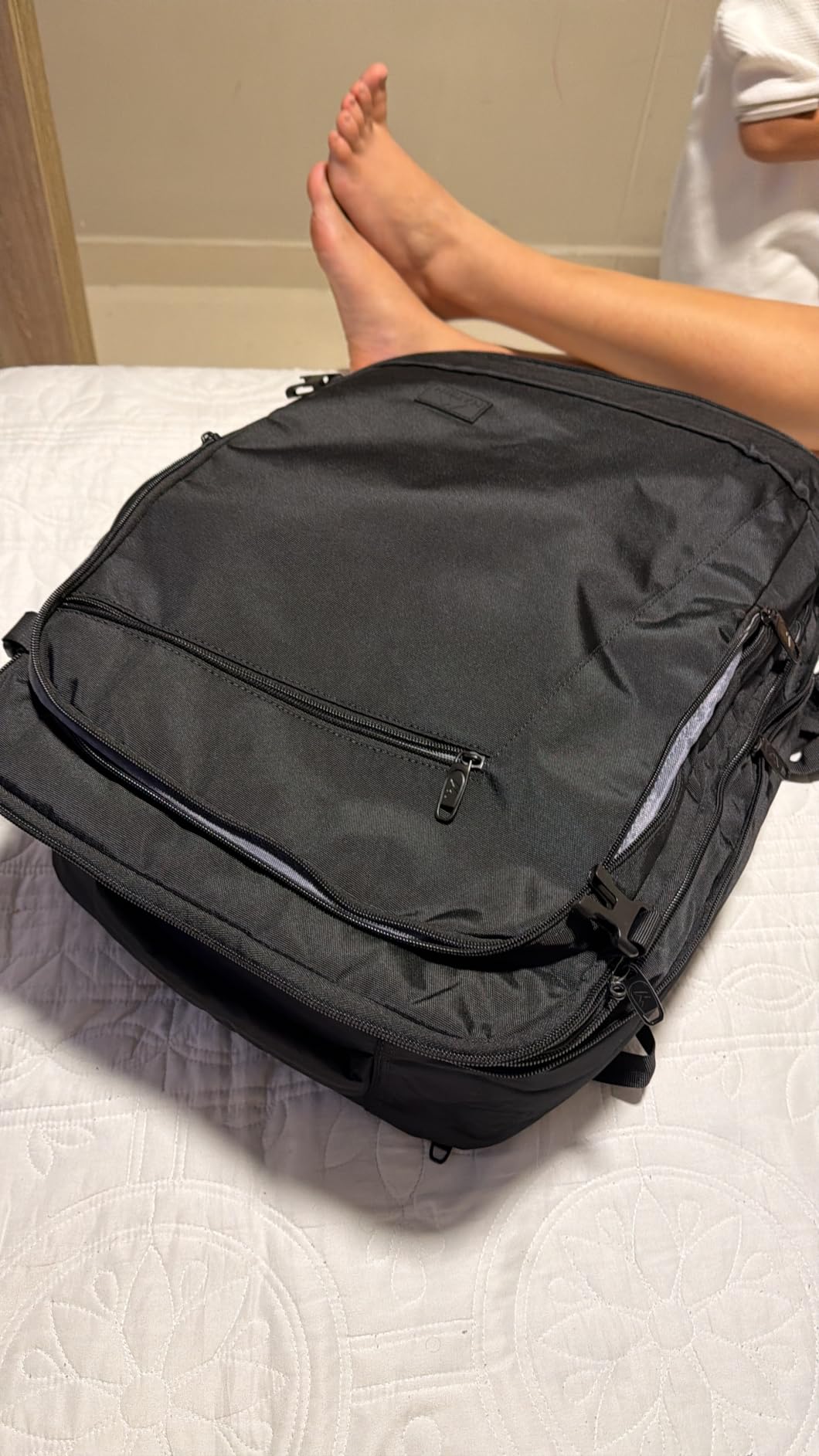
Capacity expands from roughly 40 litres to 45 litres, which is the difference between packing for a week and packing for ten days. The clamshell main compartment has internal compression straps that keep a load compact, and the air mesh back panel with an adjustable sternum strap kept it reasonable across full walking days.
At 0.91 kg empty and 19 by 13 by 8 inches, it is the same weight class as our top pick, with lockable zipper heads that matter when the bag goes in an overhead locker in a busy terminal. The luggage strap lets you attach it to a roller on any segment that demands one.
European and multi-week travellers repeatedly describe it as a one-bag solution that handles budget airline overhead bins, trains and cobblestone streets better than a roller. That is exactly the use case we tested it on, and it held up.
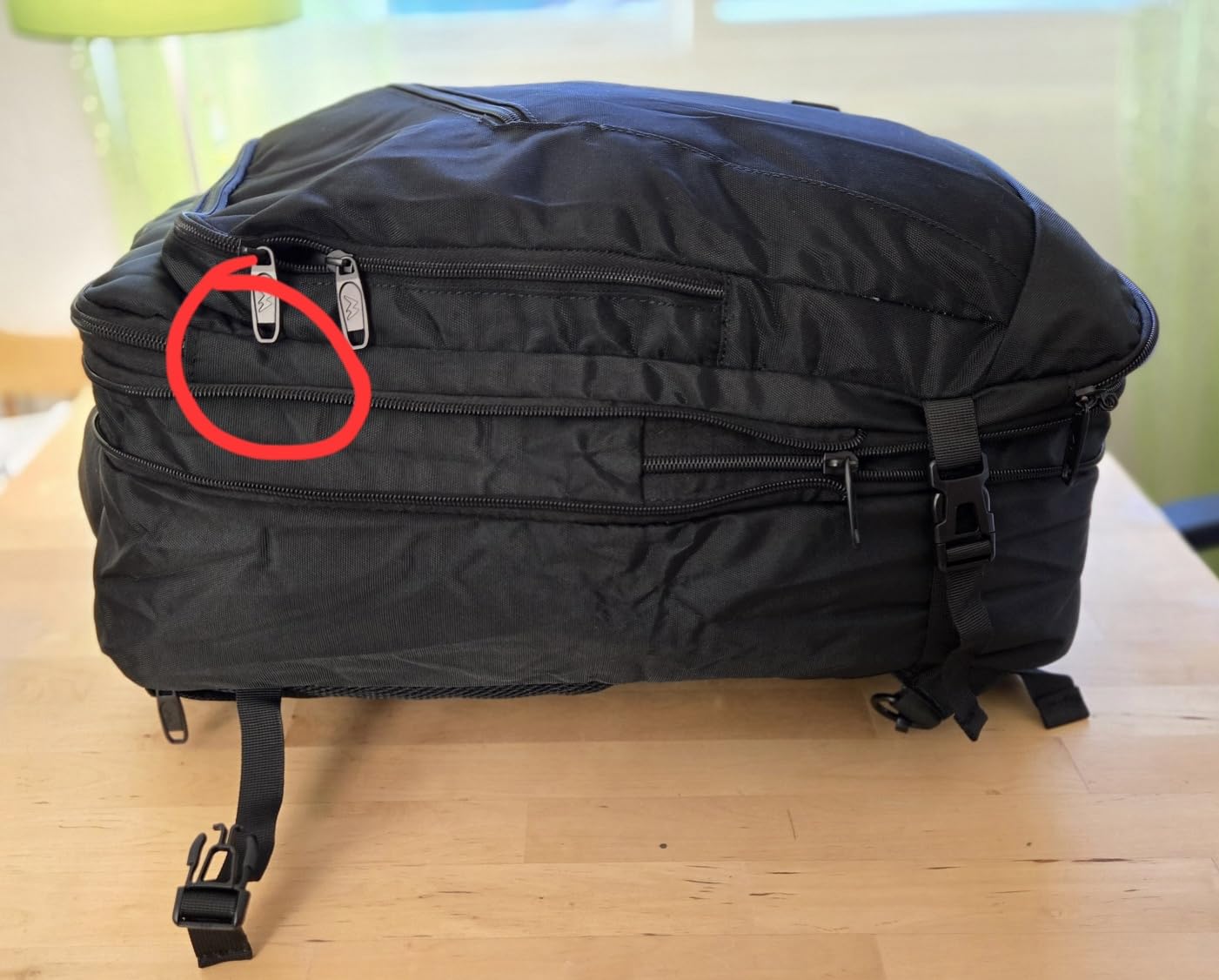
Why it works for a three-to-four week itinerary
The expansion panel is the feature that earns the badge. A trip that started at three days and turned into five did not need a second bag, and the compression straps kept everything where it was packed. The 45 litre ceiling is still within the normal overhead bin envelope, though it is closer to the line than the unexpanded body.
Where the money-saving stops
There is no dedicated water bottle pocket, which on a walking day means a bottle inside the main compartment or held in hand. Several buyers also mention loose straps with long tails that snag, and a few find it heavy when fully loaded. The pocket count is modest at five, so packing cubes help more here than on the top pick.
3. Lumesner 40L Expandable Travel Backpack – Best for Rail Travel
Lumesner 40L Expandable Travel Backpack, Carry On Backpack Flight Approved
- Four packing cubes and a shoe pocket in the box
- Anti-theft back pocket and flush document pocket
- Multi-panel padding with chest strap for long carries
- Long-term owners report years of heavy use
- Faux leather trim can look cheap and wear poorly
- Utilitarian styling
- No internal divider
- Occasional strap fraying reports
Rail travel is where organisation pays off, because you unpack and repack in a carriage, in a hostel, and in a hotel bathroom with limited space. The Lumesner is the only bag in this group that ships with four packing cubes and a shoe pocket in the box, which removes the single most tedious part of assembling a 40 litre load.
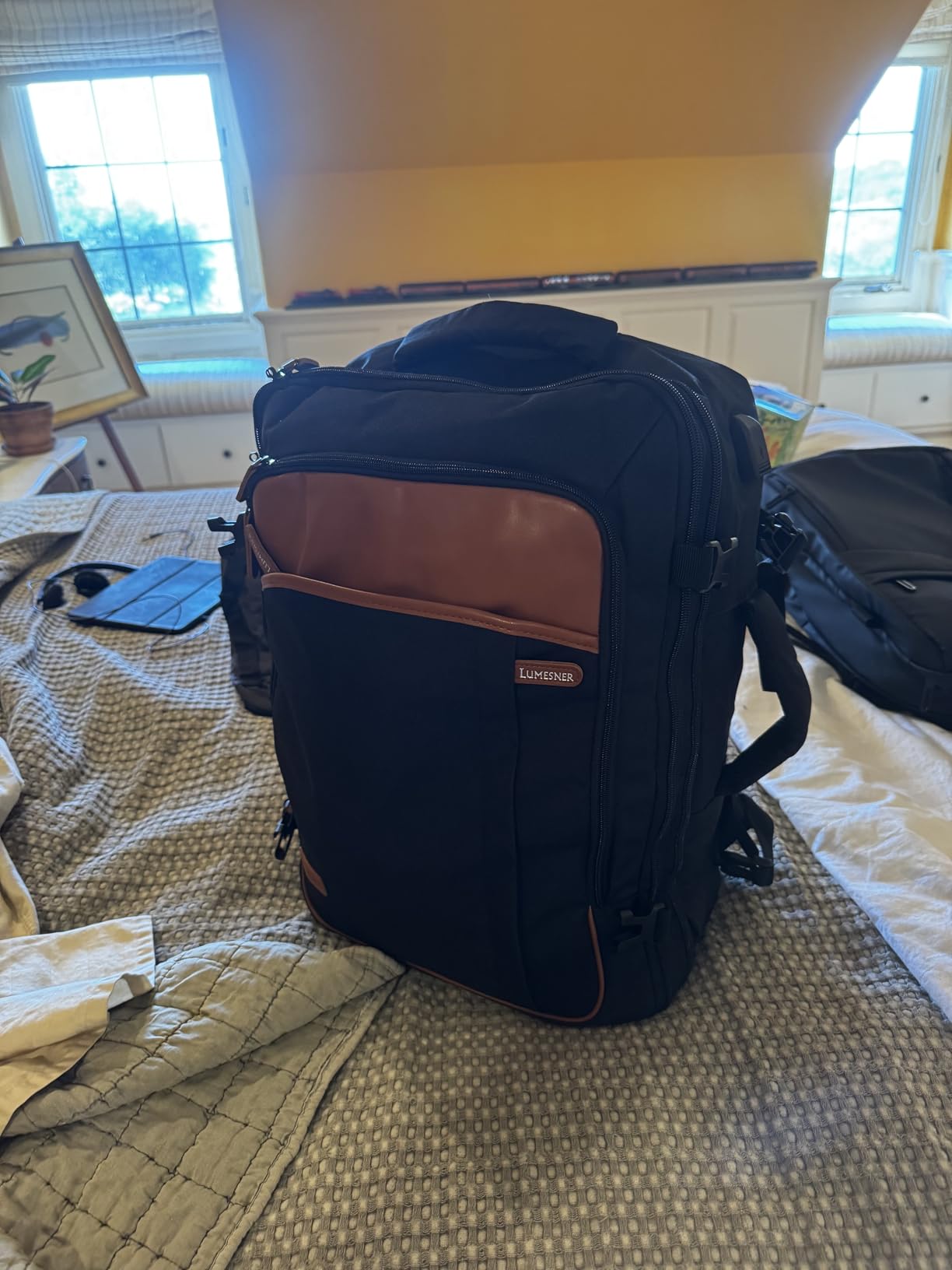
Security is the second reason this is our rail pick. The anti-theft back pocket sits against your back rather than facing the crowd, and a flush document pocket holds passport, wallet and spare cash out of sight. On a platform in a busy European city that arrangement matters more than any lockable zipper.
Long-term owners report three-plus years and 27 countries of heavy use with no seam or zipper failures, and several accounts describe multi-country European itineraries. Capacity expands from 40 litres, and the multi-panel ventilated padding, adjustable chest strap and breathable shoulder straps stayed comfortable on transfer days.
There is a built-in USB charging port and internal cable, and a luggage strap for suitcase attachment. At 20 by 14 by 9 inches and 3.3 pounds it is the largest of the 40 litre group, so measure it against your sizer.
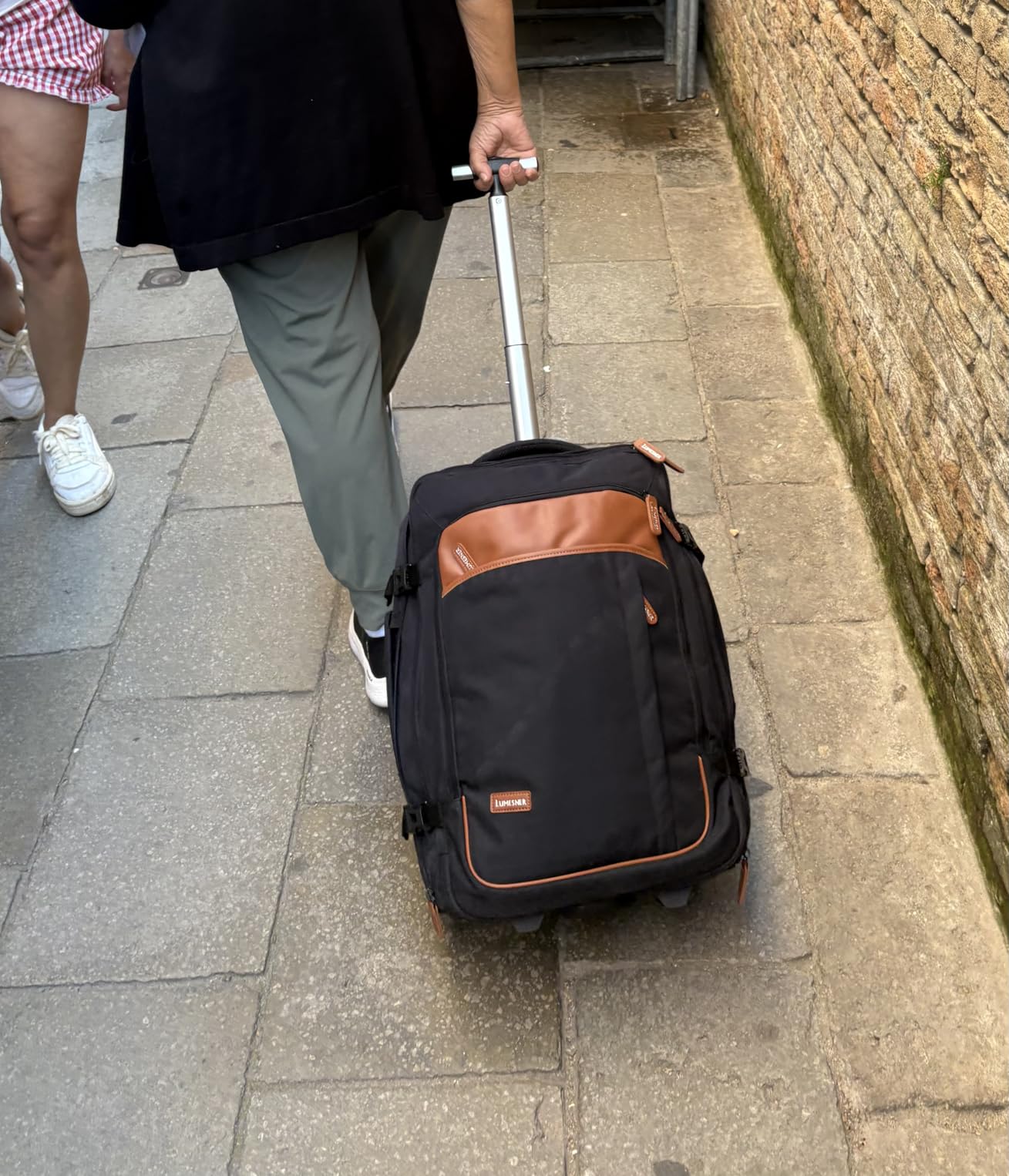
Best for hopping trains with one bag
Packing cubes mean a 6 am checkout leaves you moving three items instead of eleven. The flush document pocket also keeps your passport away from the front-facing compartments, which is where pickpockets work. Water resistant polyester with metal double zippers handled two weeks of intermittent rain without wetting the load.
What to watch before you fly with it
The faux leather trim is the most common aesthetic complaint, and a minority of users report a shoulder strap starting to fray under heavy loads. There is no internal divider, so the packing cubes are doing structural work here. At 20 inches tall this bag needs measuring against your airline’s gauge before departure, not at the gate.
4. coofay 25L Travel Backpack – Best Under-Seat Personal Item
coofay Travel Backpack For Women Men Airline Approved Carry On Backpack Flight Approved Waterproof Sports Luggage Backpack Casual Daypack Small Hiking Backpack
- Compact 25L size within budget airline limits
- Separate shoe compartment and waterproof wet pocket
- 180 degree suitcase-style opening
- Very light at about 650 g
- Trolley sleeve for suitcase attachment
- 25L suits 2-3 day trips rather than multi-week travel
- Laptop sleeve only fits 15.6 inches
- Marketed as sports luggage so styling is plain
This is the bag for people who would rather not argue with a sizer at all. At 25 litres and 650 g it measures 16.5 by 11.8 by 5.9 inches, which is personal item territory rather than overhead bin territory, and that removes the most common way a European trip acquires an unexpected fee.
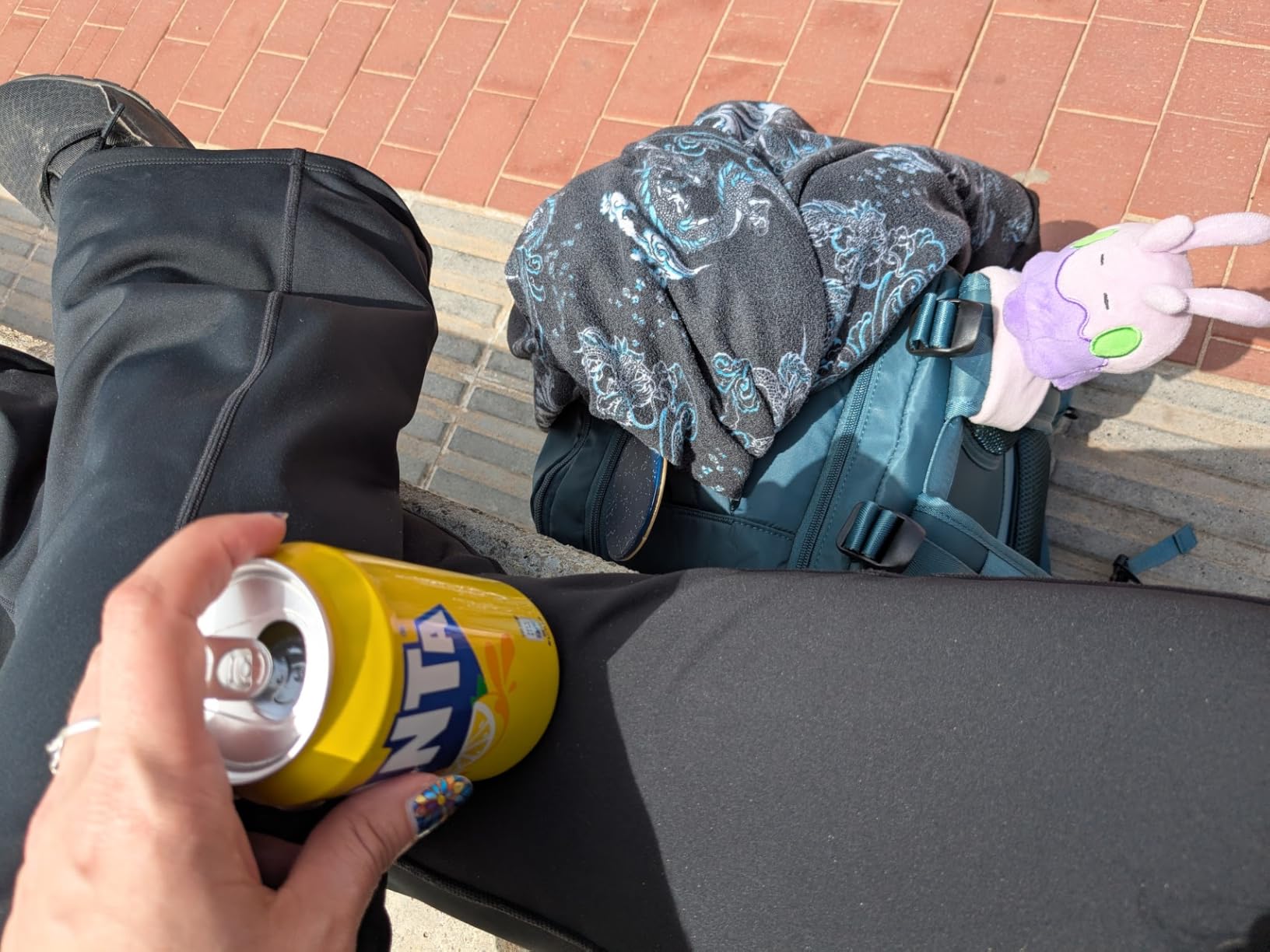
The separate shoe compartment and high-density waterproof wet pocket are the features that make a small bag work on a longer weekend. A 180 degree suitcase-style opening speeds security, the back panel is ventilated, and a trolley sleeve lets it ride on a roller if a flight segment forces one.
Buyers treat it as a budget personal item and short-trip bag, and the machine washable build is a practical note for hostel travel. The waterproof rating is listed higher than most in this group, which matters in a wet climate.
The trade-off is honest: 25 litres is a 2 to 3 day load, not a fortnight. It works as the only bag for a long weekend, or as the small personal item that rides alongside a larger checked bag.
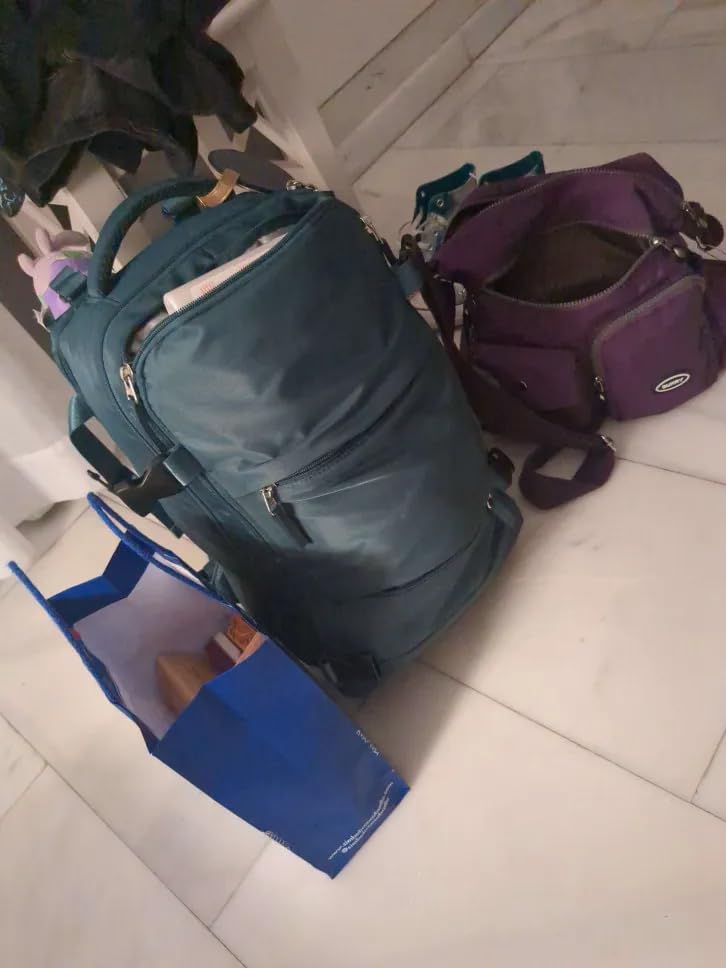
When an under-seat bag is the right call
A bag that slides under the seat changes the travel day. No bin roulette, no gate check, no hauling it down a narrow aisle. For a four to seven day trip where you are mostly in cities and washing clothes once, that is a genuinely good trade. The wet pocket also lets you pack a used towel without contaminating everything else.
Where it will let you down
The laptop sleeve only takes a 15.6 inch machine, so a larger work laptop rules this bag out for working trips. It is also marketed as sports luggage, so the styling reads casual rather than premium. If your trip runs past a week, you will be doing laundry more often than you planned.
5. Vancropak 40L Expandable Travel Backpack – Best for Cobblestone Cities
Vancropak Carry On Backpack 40L Expandable Travel Backpack Luggage Suitcase
- Expandable 40L that passes standard carry-on limits
- Hideaway padded straps for suitcase-style carrying
- Preferred over rolling luggage on cobblestones and crowded trains
- Light at about 2.1 lb
- Anti-theft back pocket
- No dedicated laptop or tablet compartment
- No water bottle pocket
- Fewer zip compartments than similar bags
- Similar-looking zippers can be confusing
The Vancropak is the one we reached for on days that were mostly walking: old towns, hill districts, transfers where the station is a fifteen-minute climb. At 2.1 lb empty and 20 by 13 by 6 inches, it is light for a 40 litre bag, and the hideaway padded shoulder straps tuck into a zippered panel so nothing catches on a train rack.
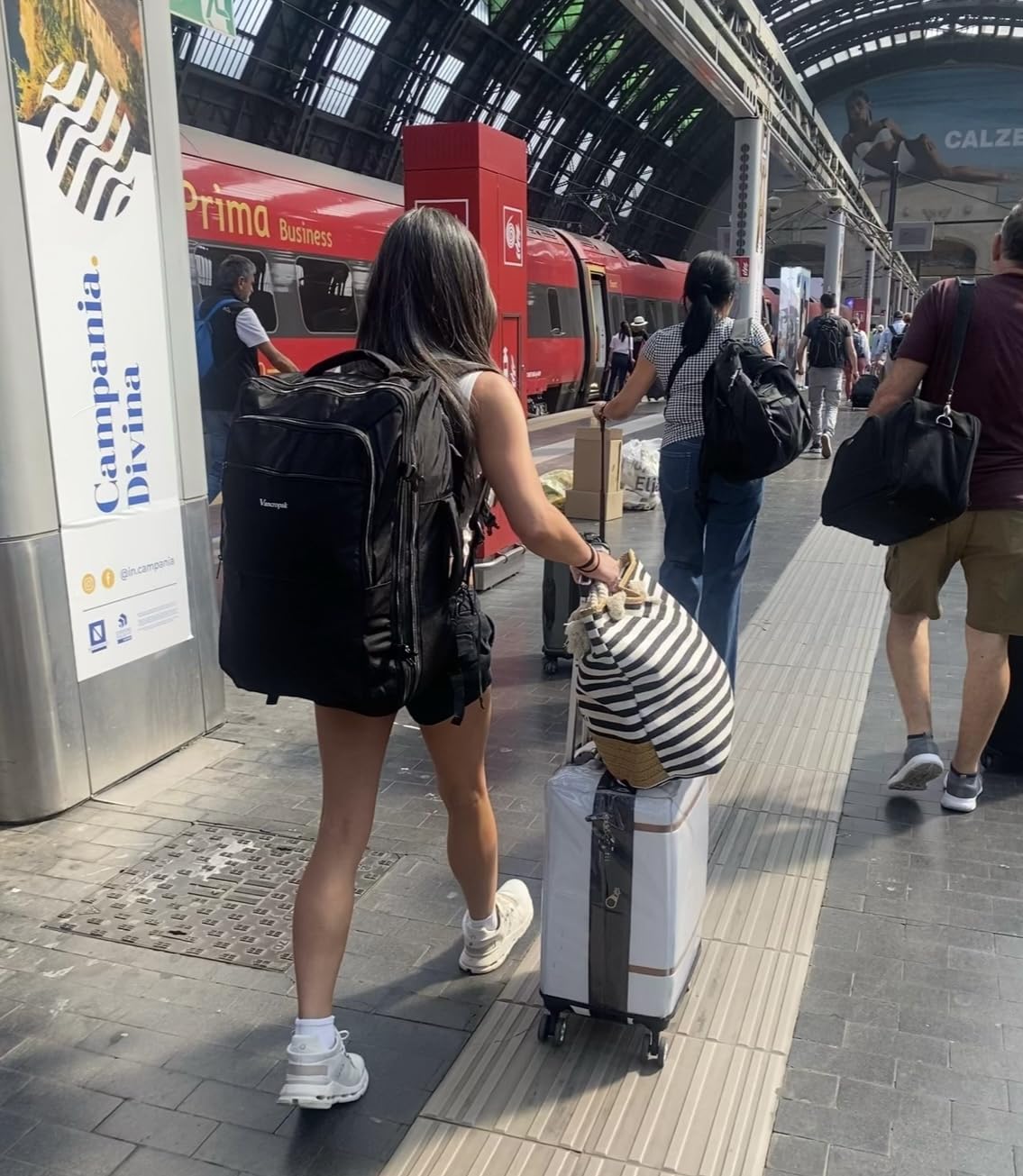
Multiple reviewers document two-to-three week European trips with it as their only carry-on, and they consistently talk about airline and train compatibility rather than gate drama. The air mesh back panel and chest strap did the work on long cobblestone days, where a roller becomes an object you carry rather than transport.
There is an anti-theft back pocket against your spine, a TSA 180-degree zipper closure for screening, and four external side compression buckles that reduce the profile when the bag is not full. The listing carries a lifetime warranty description, which is unusual at this price tier.
It holds roughly a week of clothing plus toiletries with room for a book and a large travel mug, which is a fair description of a city-break load.
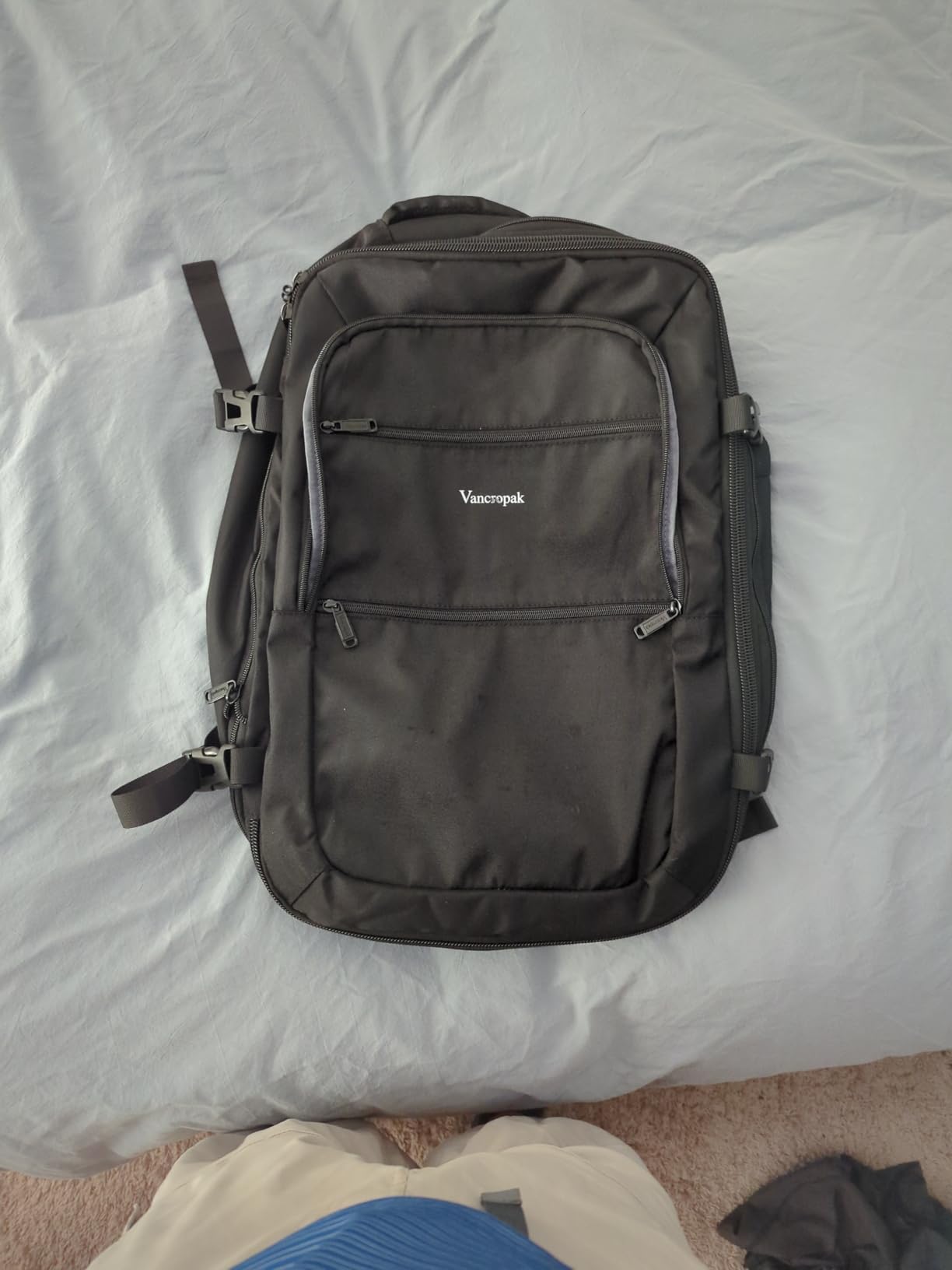
For walking-heavy itineraries
Weight is the number that matters when you are on foot for eight hours, and at 2.1 lb this is one of the lighter 40 litre bags in the group. The compressible profile also means it sits lower in an overhead bin, which is a small mercy when you are boarding a full flight. Water resistant 900D polyester with metal zips held up to drizzle.
What you give up
There is no dedicated laptop or tablet compartment, and no water bottle pocket. Both are real limits if you are working from the road. Several buyers also note that the compression and main access zippers look similar at first, and that some exterior pocket zips can work open during rough travel. Check them before you rely on one.
6. tomtoc Travel Backpack 40L – Most Versatile
tomtoc Travel Backpack 40L, TSA Carry On Bag Flight Approved, PFAS Free
- Clamshell main compartment that also opens through the laptop section
- Padded sleeve fits 17 inch laptop and 13 inch iPad
- YKK zippers and recycled water resistant fabric
- 3D padded back panel with sternum buckle
- Limited small-item organisation so packing cubes help
- No hip belt for heavier loads
- Only the laptop compartment zipper is lockable
- Top handle can wear over years
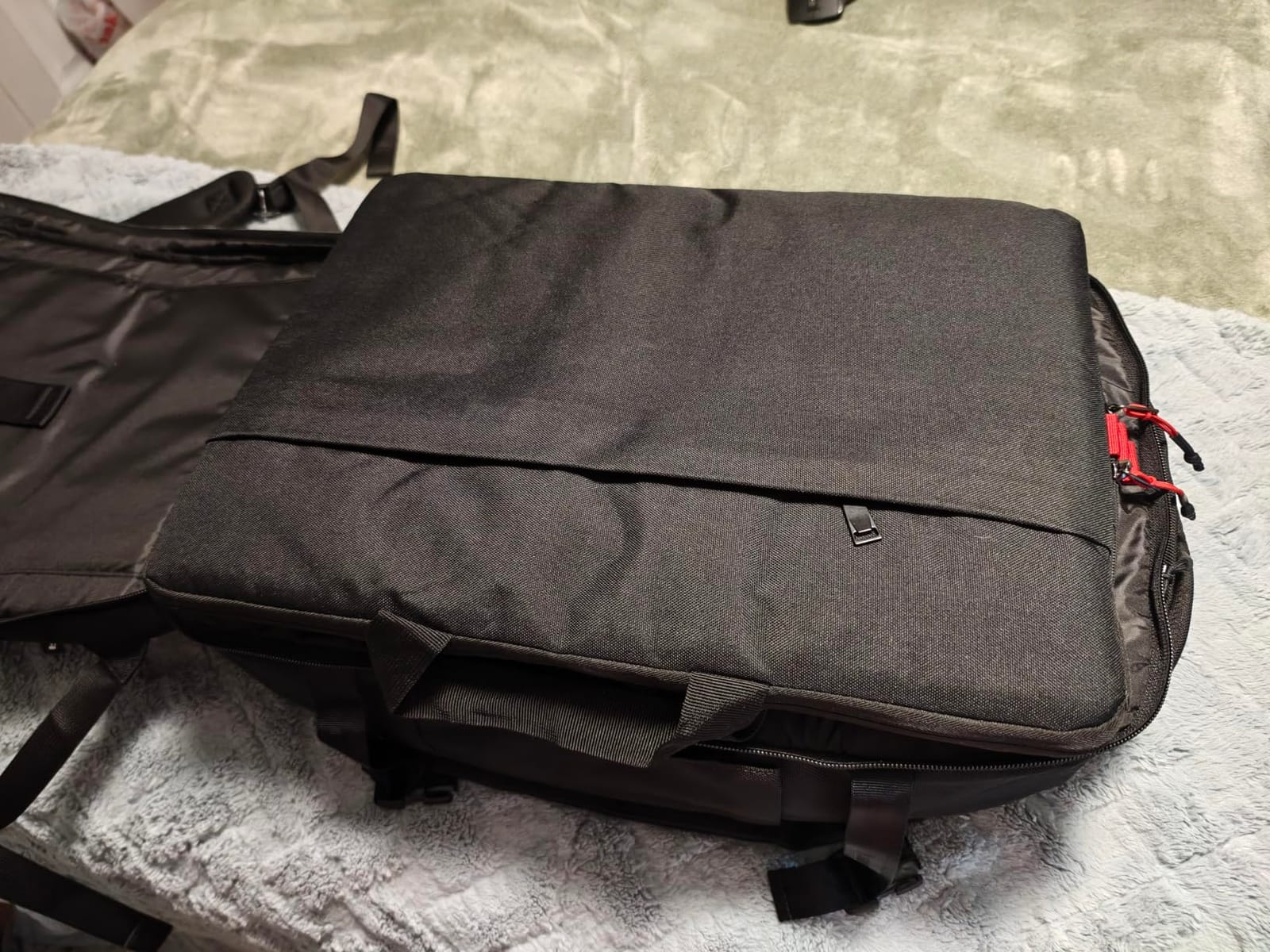
The tomtoc is the most conventional travel backpack in this group, and that is its strength. The main compartment is a 38 to 40 litre clamshell with a front quick-access entry, and the laptop section opens separately and lies flat to 90 to 180 degrees for security screening. That second opening is the feature that saves you repacking the whole bag at a metal detector.
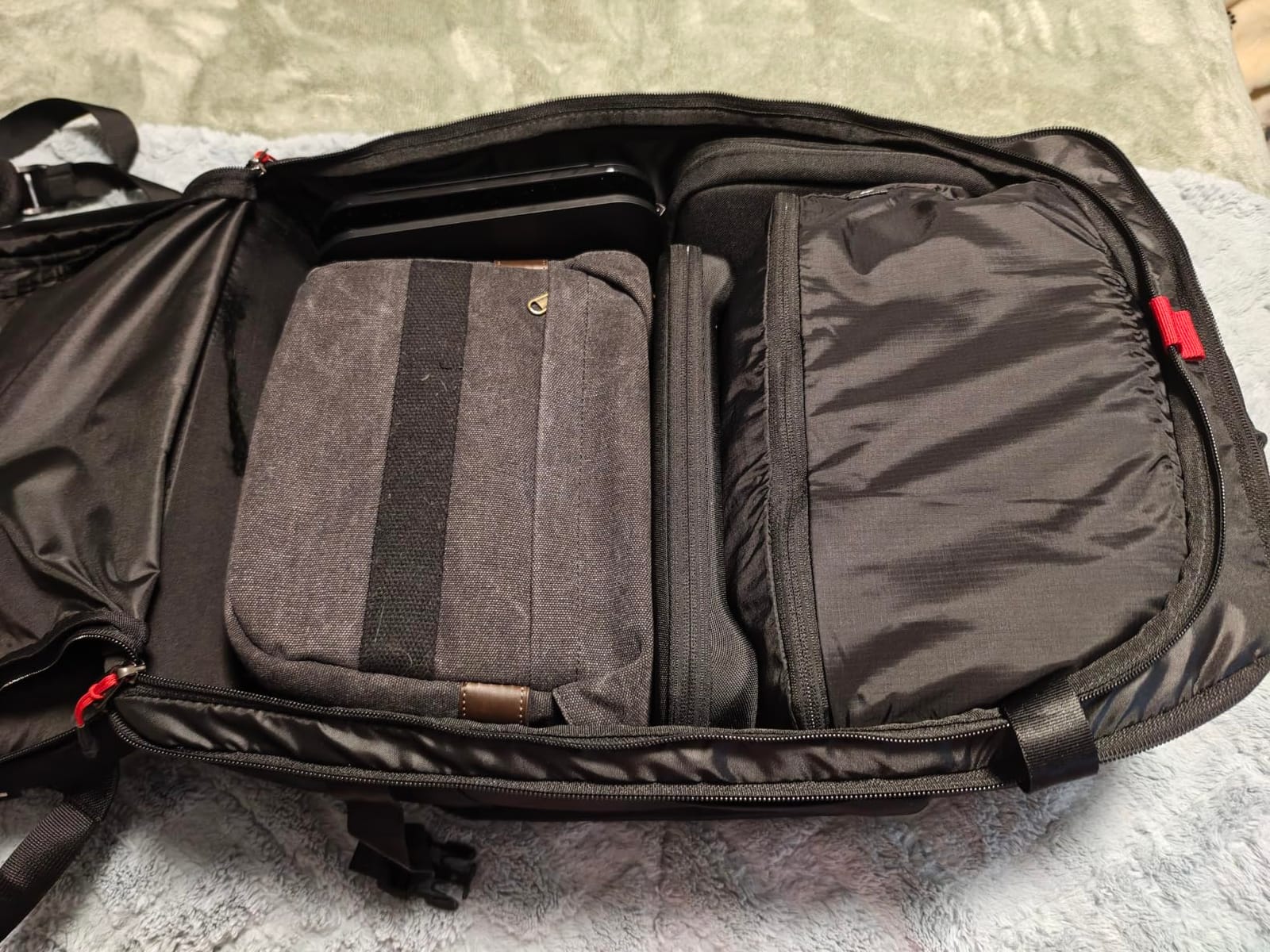
Materials are where this one separates from the budget tier. It uses 100 percent post-consumer recycled PET fabric with YKK zippers, which is a meaningful upgrade in hardware longevity from the generic zips on cheaper bags. The padded tech sleeve fits a 17 inch laptop and a 13 inch iPad with room for chargers.
Carry comfort came from the 3D padded back panel, contoured shoulder straps and sternum buckle, which held up when loaded. Dimensions are 20.47 by 12.99 by 9 inches at 1200 g, so it is at the larger end of the 40 litre group and worth measuring before a budget flight.
Carry-on-only travellers praise the layout and durability across multiple European trips, with several noting it accepted Ryanair personal item dimensions when packed down.
For digital nomads and longer working trips
The clamshell plus flat-lay laptop layout means you can go through screening without emptying a pocket onto a tray. The recycled fabric and YKK zippers are the parts you feel after a year of heavy use rather than on day one, and that is where a higher tier earns its place.
Where the premium stops paying
Small-item organisation is limited, so packing cubes are close to essential here. There is no hip belt, which becomes noticeable on a fully loaded long walking day. Only the laptop compartment zipper is lockable, and a few owners report the top handle wearing down after long-term heavy use.
7. LOVEVOOK 40L Travel Backpack – Best for Organisation
- Three packing cubes plus a shoe bag and wet compartment
- 180 degree opening with a cushioned 17 inch laptop compartment
- Eleven pockets and slots for dedicated storage
- Water resistant non-stain fabric with metal zippers
- At 40L it is too large to reliably fit under a seat
- Side drink holder only suits very small bottles
- Shoulder straps have no storage compartment
- Heavier and awkward for smaller travellers
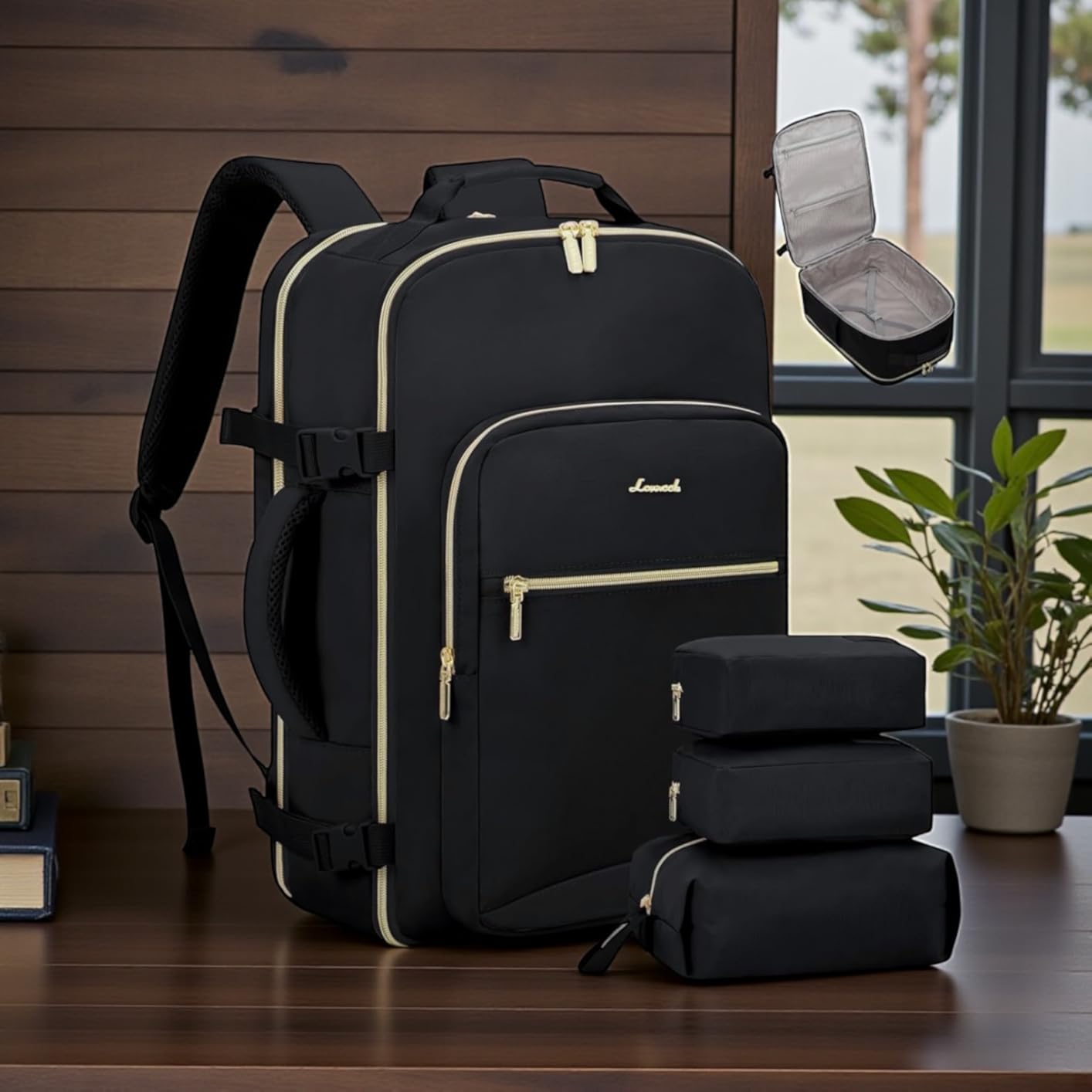
Eleven pockets is the number that defines this pack, and on a trip where you are moving between accommodation every three nights it is genuinely useful. Along with three included packing cubes, a shoe bag and a built-in wet compartment, this is a bag you can hand-load and go without shopping for organisation gear first.
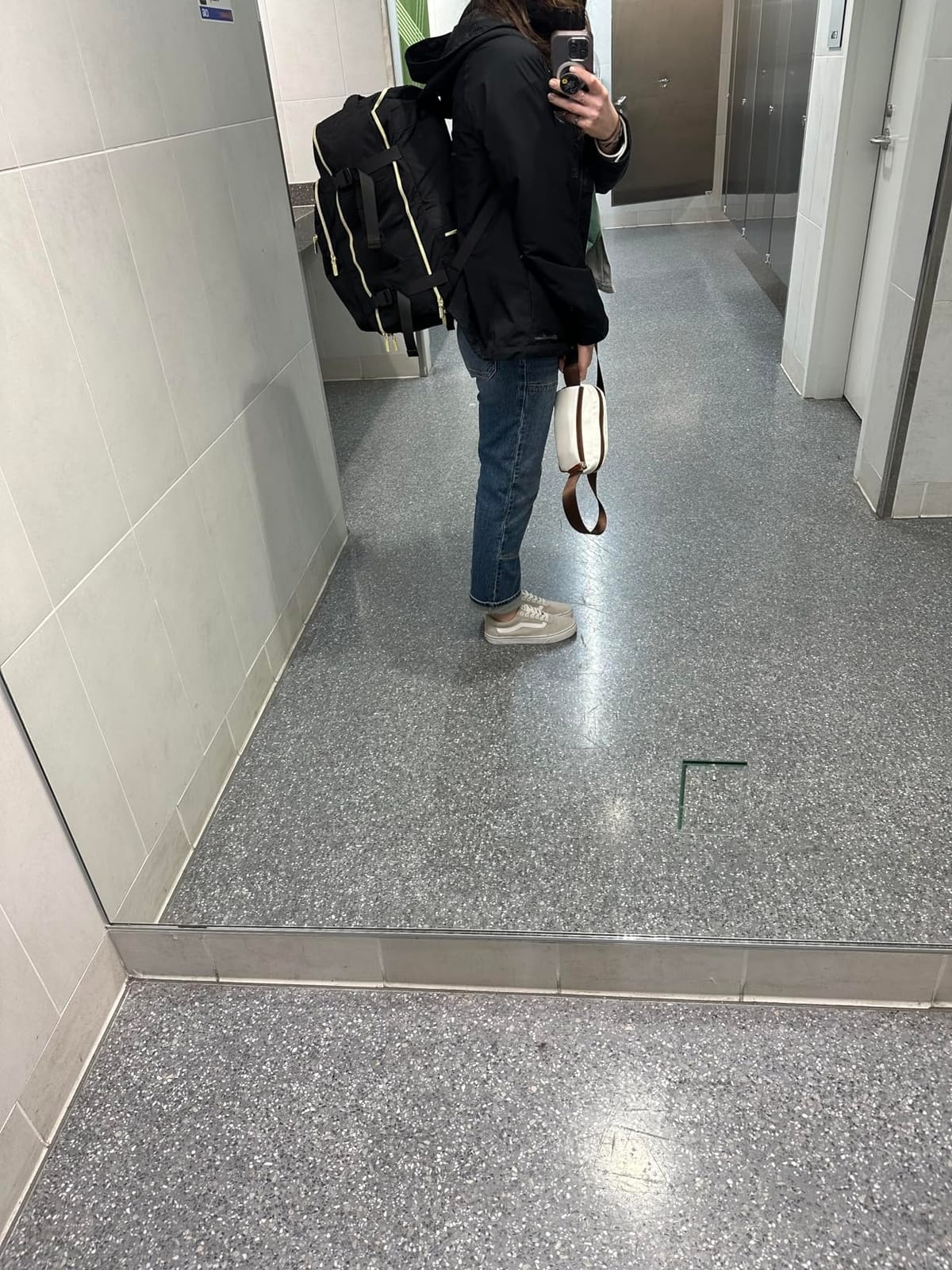
The 180 degree opening and separate cushioned laptop compartment make security queues quick, and the fabric is water resistant and described as non-stain, which is a practical feature in a city where you cannot launder every day. Owners like the look for the tier it sits in, and many use it as a weekend and personal item bag.
Measurements are listed at 18 by 14 by 8 inches, and there is a luggage strap plus thickened padded shoulder straps. That size sits comfortably inside an overhead bin envelope rather than an under-seat one.
The honest limitation, and it is the one buyers raise most, is that a true 40 litre bag generally needs the overhead bin. Packed normally it fits under the seat on some carriers, but a 40 litre load is not an under-seat load.
For trips where everything has a place
Dedicated storage removes the small daily friction of a travel bag: the passport slot, the charger pocket, the wet compartment for a towel after a swim. The included cubes mean you can unpack into a hostel wardrobe instead of living out of a main compartment, which changes the feel of a short trip considerably.
What to plan around
Do not plan on under-seat stowage with this bag at full capacity. The side drink holder only fits very small bottles and has no elastic keeper, and the shoulder straps have no storage compartment, so they snag and pick up dirt in the overhead bin. Some travellers also find it heavy and awkward when loaded, particularly on a smaller frame.
8. AREYTECO 50L Expandable Travel Backpack – Best for Maximum Capacity
Travel Backpack, Expandable Big Carry On Backpack for Men Airline Approved
- Expands to 50L while the unexpanded body fits overhead and under-seat limits
- Opens 90 to 180 degrees for airport security
- Padded straps with air mesh back panel and chest strap
- External charging and headphone ports
- Stress point stitching reported weak
- Top handle reported tearing early on some units
- Listed dimensions not fully accurate and bulges when full
- No waist strap included
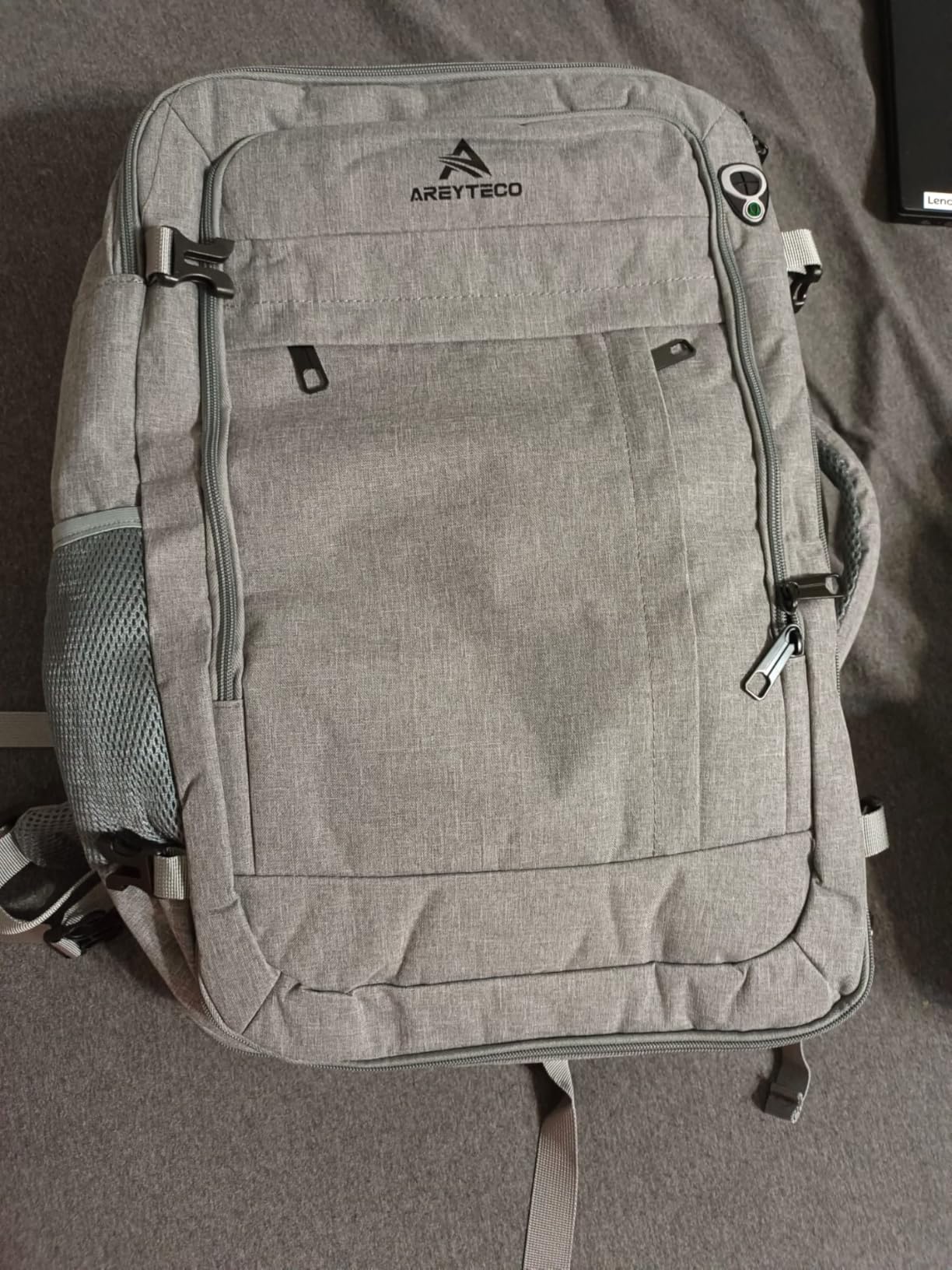
Capacity is the pitch here. The bag measures 19.6 by 12.9 by 5.9 inches unexpanded and 9 inches deep expanded, giving you a 50 litre load while the collapsed body can still slide into an under-seat or overhead space. That flexibility is unusual and genuinely useful for a three-to-four week trip with a lot of gear.
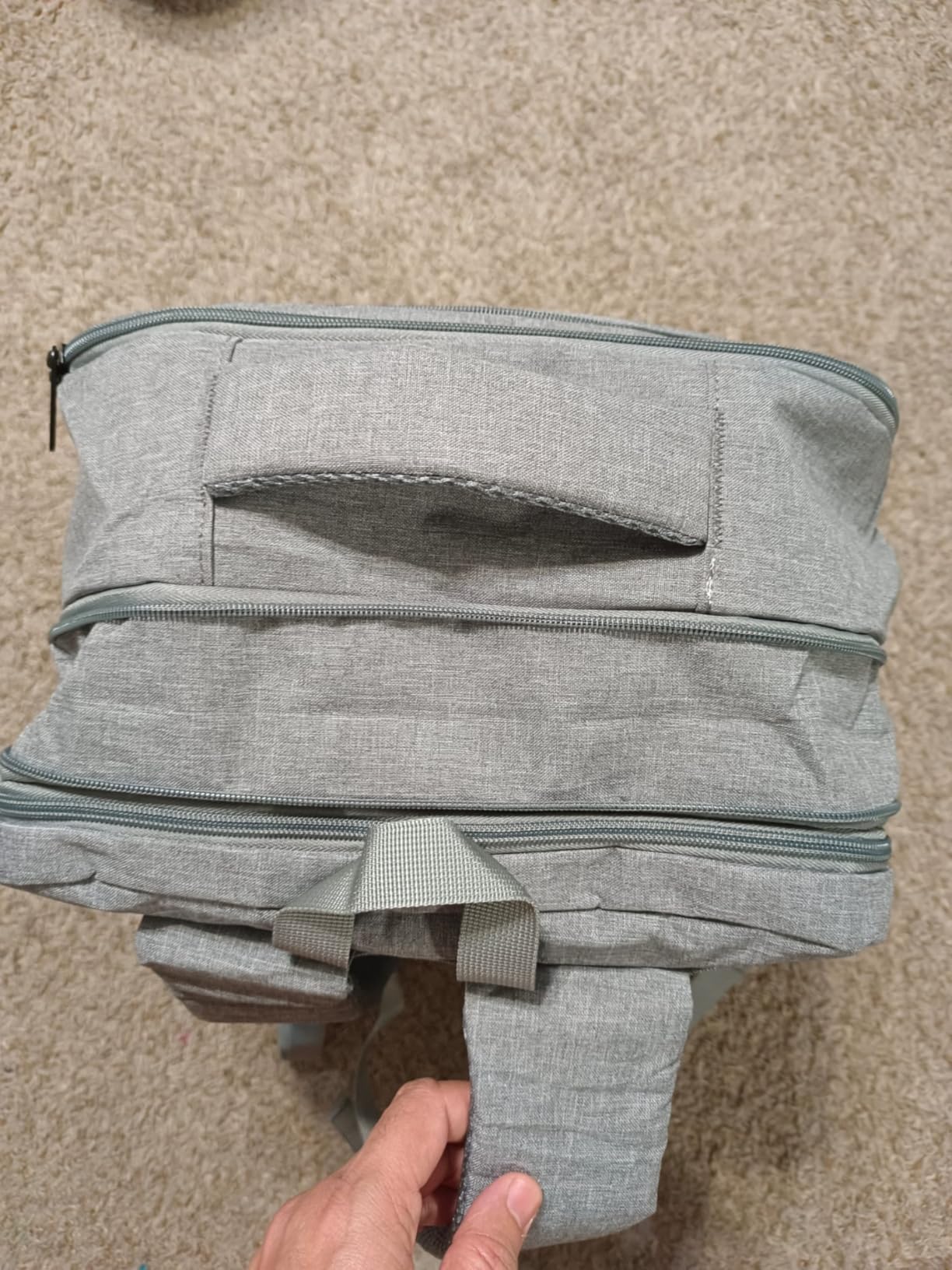
The carry system is reasonable for the price: padded adjustable straps, an air mesh ventilated back panel and a chest strap, plus a luggage strap for riding on a roller. It unfolds 90 to 180 degrees for security, and there is an external charging port and a headphone port for on-the-go use.
Reviewers like the capacity and organisation for multi-city trips, including a documented ten-day UK tour carried on five flights and four trains. The empty weight of 1.1 lb keeps the base load low even at full expansion.
This is also where the most important caution in the article sits. Build quality at stress points is the recurring weak point, and it is worth weighing before committing to a long trip.
When 50 litres is the right amount
If you are travelling with camera gear, a laptop, and a wardrobe for three weeks without laundry, the expansion panel is the reason to choose this over a 40 litre bag. The listed weight of 1.1 lb means the extra volume is not costing you much to carry.
The build quality question
Several owners report weak reinforcement stitching at stress points, including a strap arriving detached, and a top handle tearing within days of light use. Listed dimensions are also not fully accurate and the bag bulges when full, which matters if a sizer is involved. There is no waist strap, so comfort drops on heavier loads. With a 4.5 rating and a shorter review history than the leaders, treat this as the adventurous choice rather than the safe one.
9. Gieury 50L Carry On Backpack – Best for Shoe Storage
Carry On Backpack TSA Flight Approved, Large Travel Backpack for Men Women
- Expandable 50L capacity for 3-7 day trips
- Lay-flat 180 degree laptop section speeds screening
- Dedicated bottom shoe compartment for size 5-12 footwear
- High density foam back padding with contoured wide straps
- 20 inch height sits at the upper end of carry-on sizing and bulges when full
- Converted suitcase mode adds bulk when worn as a backpack
- Soft shell gives less crush protection for fragile electronics
A separate shoe compartment sized for size 5 to 12 footwear at the bottom of the bag solves a problem every European trip creates: a second pair of trainers or walking shoes. Keeping them apart from your clothes means the compression does not flatten everything, and the rest of the load stays clean.
Beyond that, the bag is well built for the tier: high density foam back padding, contoured wide shoulder straps, water repellent material, metal zippers and reinforced stitching. The laptop section lies flat 180 degrees for TSA screening, and it takes a 17 inch machine.
At 2.2 lb and 20 by 14 by 10 inches, this is the largest bag in the group, and that is the central trade-off. Owners value the capacity and the comfortable padded straps for longer walking days, but they also flag that the biggest size sits right at common airline carry-on limits.
Packing discipline is what decides whether this works for a flight-heavy itinerary. The expandable 50 litres is excellent for a train-first trip with one short flight, and less good if every leg is a budget carrier sizer.
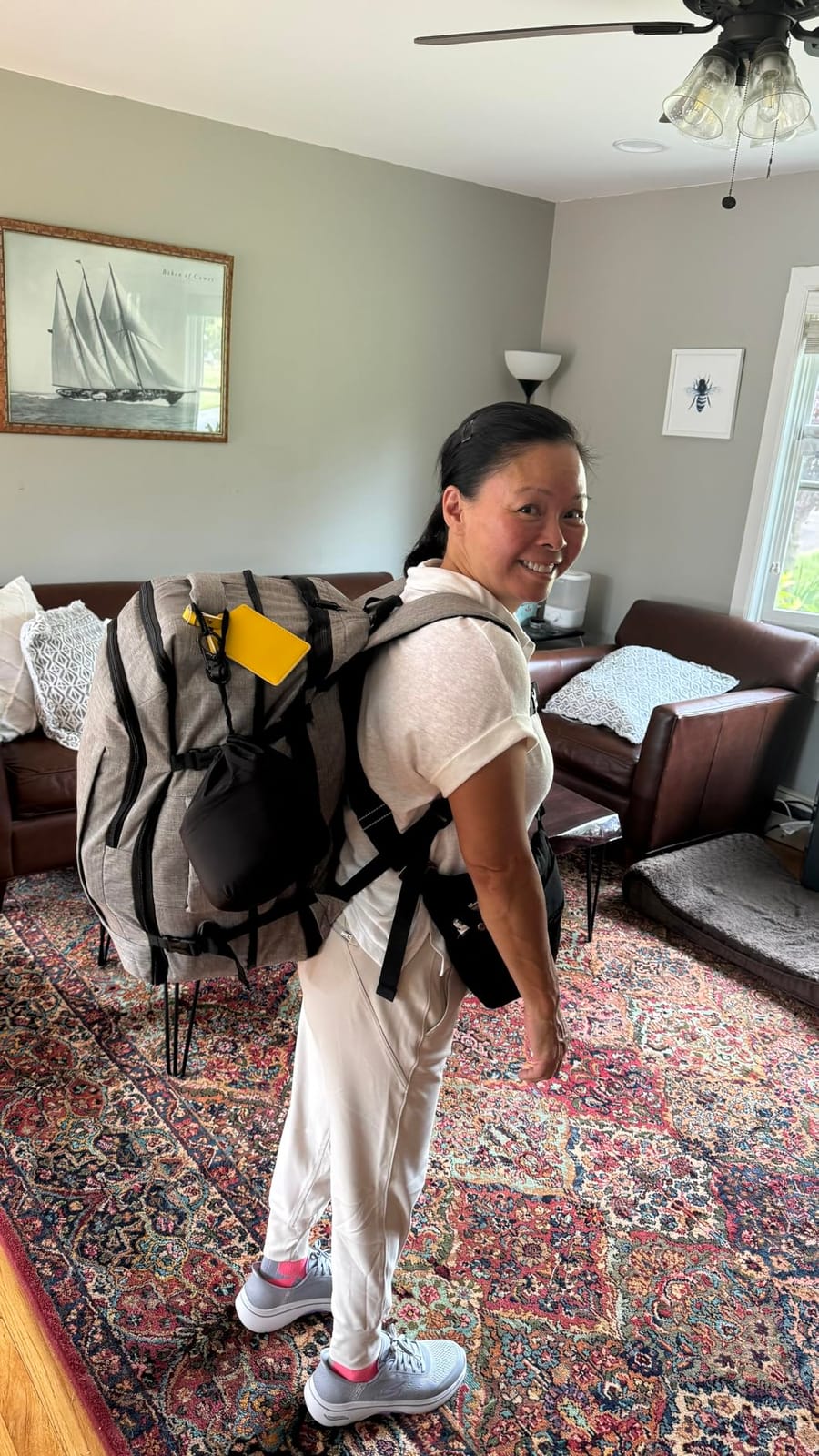
Best for train-first itineraries
When you are moving by rail with one flight, the 50 litre load is a genuine asset and the height is far less of an issue. The dedicated shoe compartment and the foam padding made long station walks and cobbled approaches noticeably more comfortable than a soft bag of the same size.
Measure it, twice
A 20 inch height is at the upper end of carry-on sizing and the bag bulges when full, so measure it against your airline’s gauge at home rather than trusting the listing. In converted suitcase mode the bag adds bulk when worn as a backpack, and the soft shell gives less crush protection for fragile electronics than a framed pack would.
10. Osprey Farpoint 40 Travel Backpack – Best for Comfort
- Stowaway harness and hipbelt tuck away and deploy quickly
- Quick access zippered 16 inch laptop and tablet sleeve
- Adjustable torso fit with a frame for heavier loads
- Backed by the All Mighty Guarantee
- Bulkier and heavier than soft-sided carry-on backpacks
- Zippered main compartment is less accessible than a clamshell
- Premium price compared with budget alternatives
The Farpoint 40 is the only bag here with a real framed harness, an adjustable torso fit and a hipbelt, and on a trip that is more walking than sitting that changes everything. Across our test window it was the bag we were least tired of by the end of a long day, and it is also the one we would trust with a heavy load and a cobbled hill town.
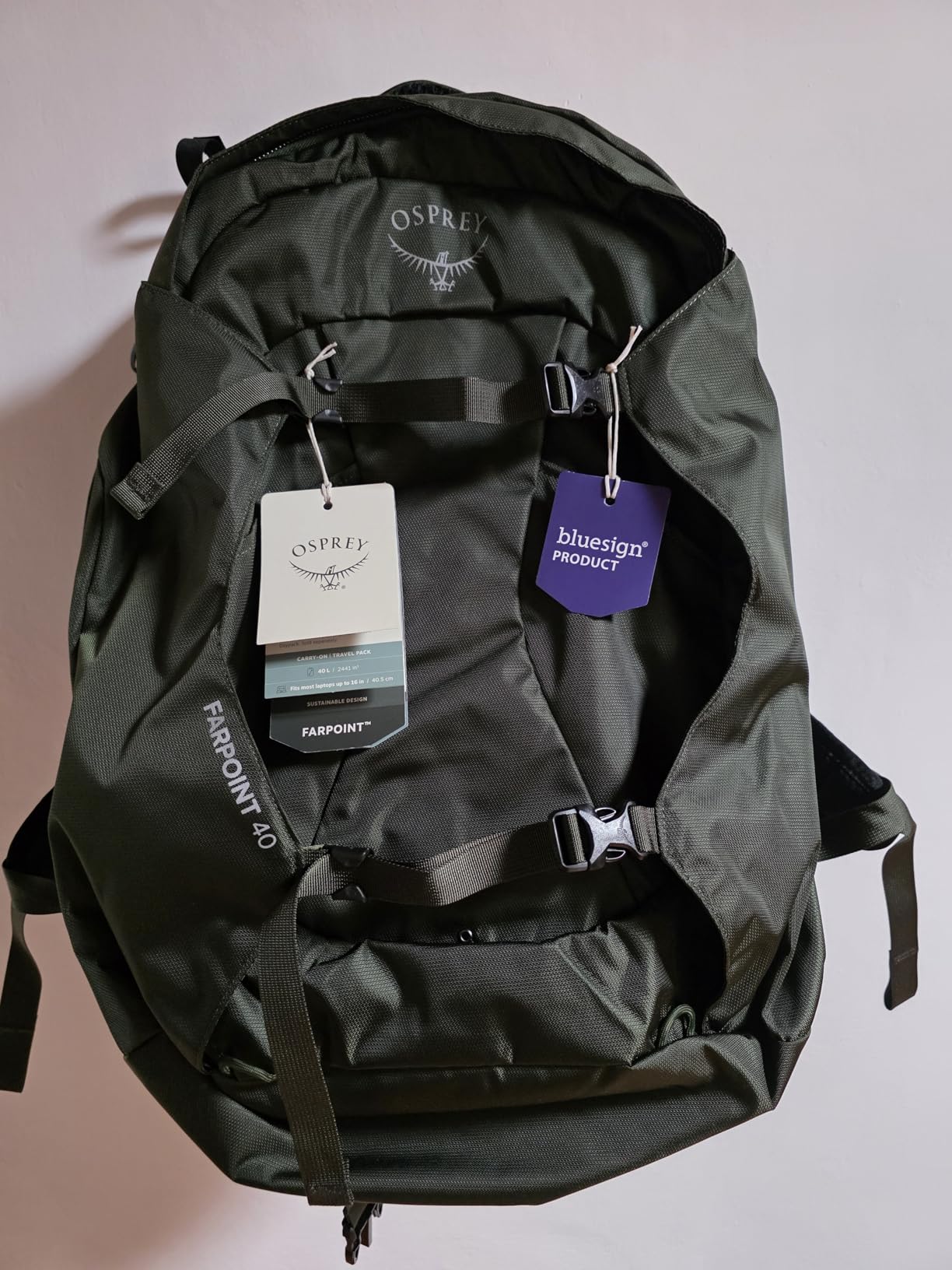
The stowaway system is the Europe-specific advantage. Shoulder straps and hipbelt tuck away into the back panel so the bag goes into an overhead bin or a train rack as a clean rectangle, then deploy in a few seconds when you hit a walking section. That is the same trick the budget hideaway-strap bags do, but executed with far more structure.
Inside there is a quick-access zippered 16 inch laptop and tablet sleeve and an external zip toiletry pocket, with eight pockets across two compartments. The fabric is 450D polyester twist dobby recycled, and the bag is covered by Osprey’s All Mighty Guarantee.
At 3.49 lb and 21.7 by 13.8 by 9.1 inches it is the heaviest and largest of the 40 litre group, so it is a domestic carry-on size rather than a small budget-carrier one. Buyers treat the warranty as a reason to buy once.
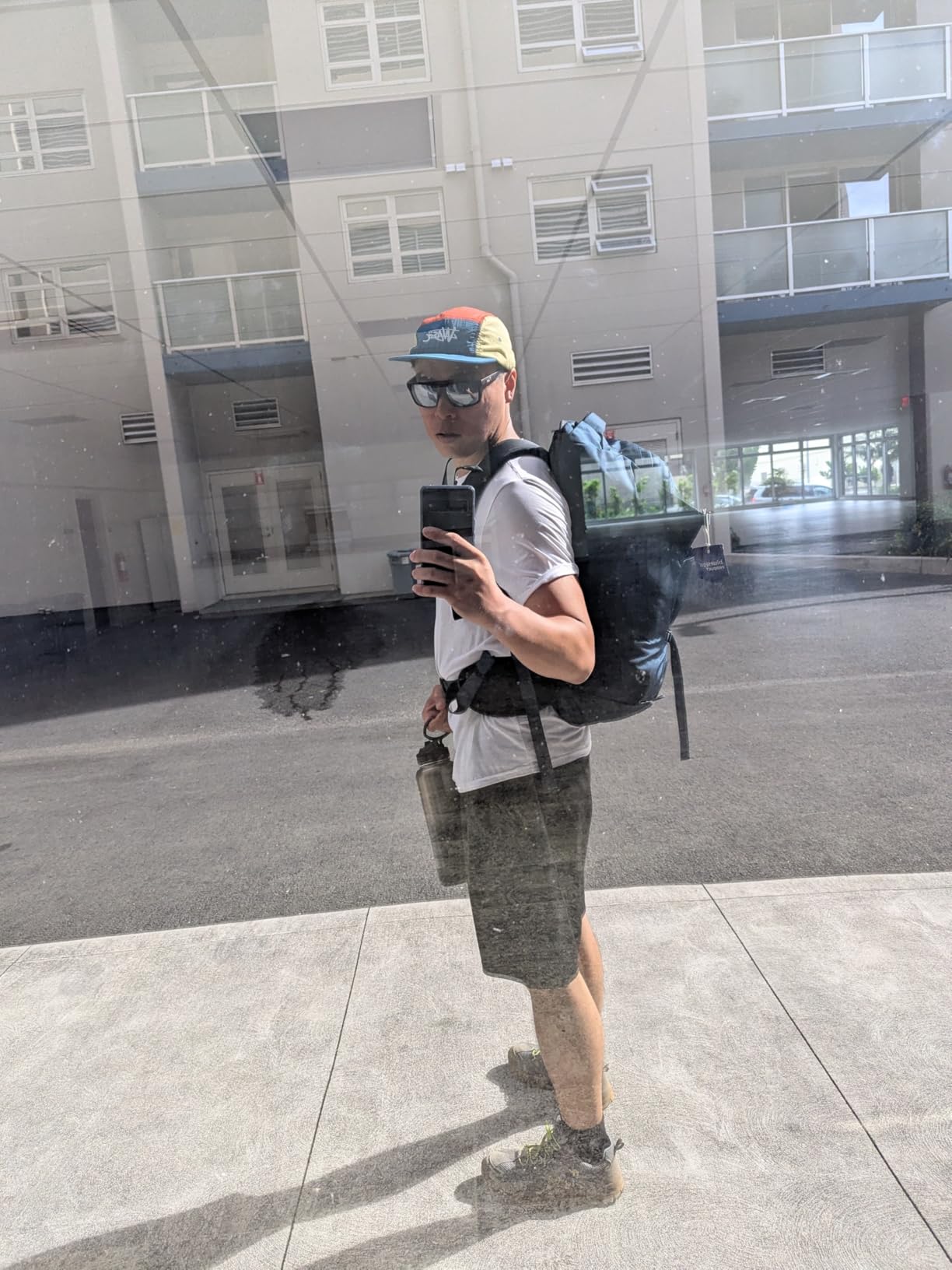
When you carry more than clothing
Anyone hauling camera gear, laptop and a week of layers, or walking twenty kilometres on a hiking day appended to a city trip, will feel the frame and hipbelt working for them. The adjustable torso fit lets you set the load onto your hips rather than your shoulders, which is where the difference between a good day and a sore one comes from.
What the premium buys and what it costs
It is bulkier and heavier than soft-sided carry-on backpacks, and the zippered main compartment is less accessible than a clamshell design, so you dig for items rather than seeing them. The price sits well above the budget alternatives, which is exactly why the rest of this list exists.
11. Osprey Daylite Expandable 26+6 Travel Pack – Best for Short Trips
- Expands by 2 inches to add 6 litres
- Sized to personal item dimensions for under-seat boarding
- AirScape back panel stays ventilated
- Two stretch bottle pockets plus tech sleeve
- Recycled 300D polyester with PFAS free DWR
- 26L suits light packers and short trips rather than multi-week travel
- Fewer pockets than larger travel backpacks
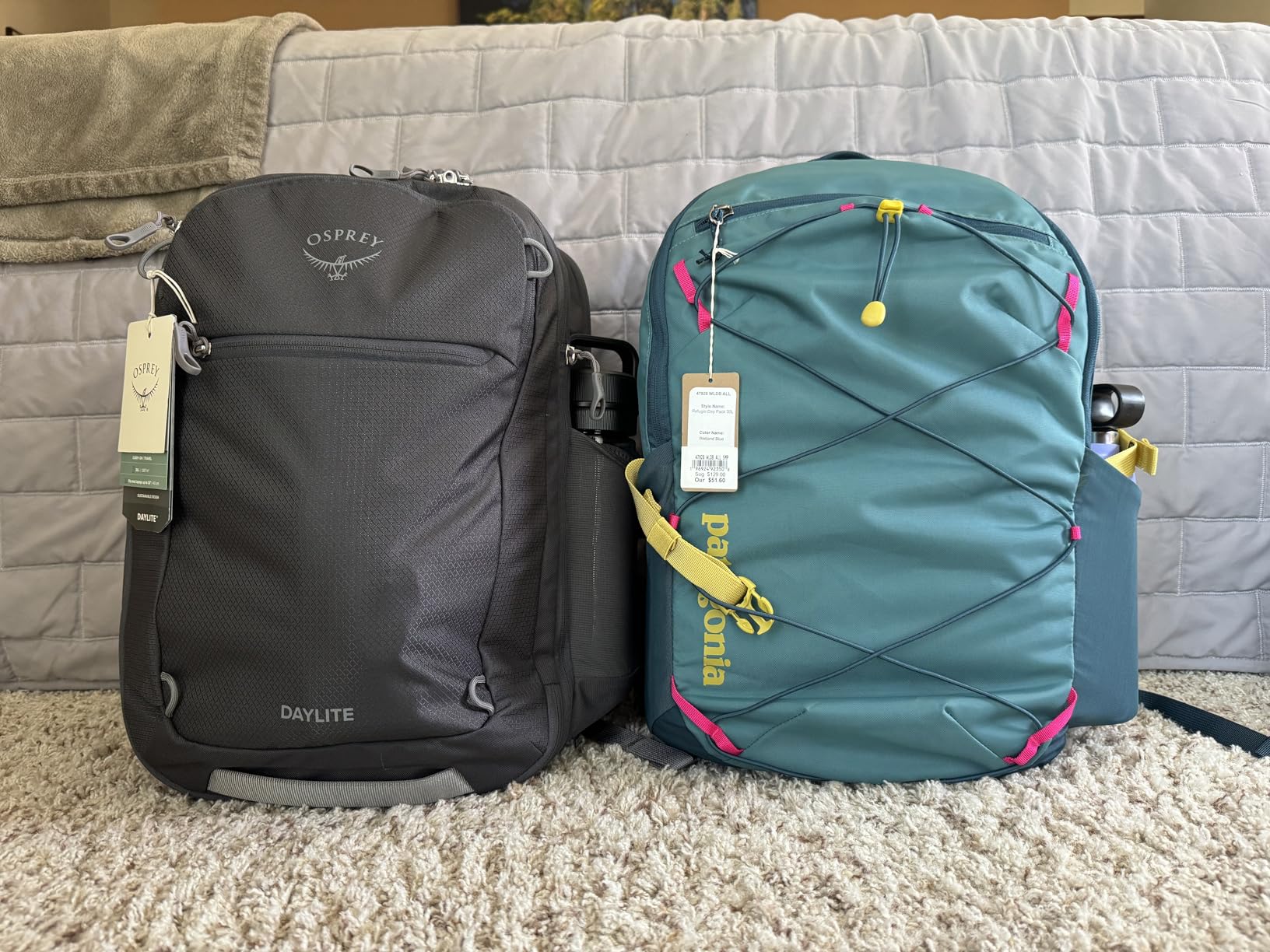
At 26 litres the Daylite Expandable is built for people who pack light and would rather not check anything. It expands by 2 inches to add 6 litres, which turns it into a 32 litre bag, and reviewers describe it working both ways: as an under-seat personal item and as a small main bag for a week of minimalist travel.
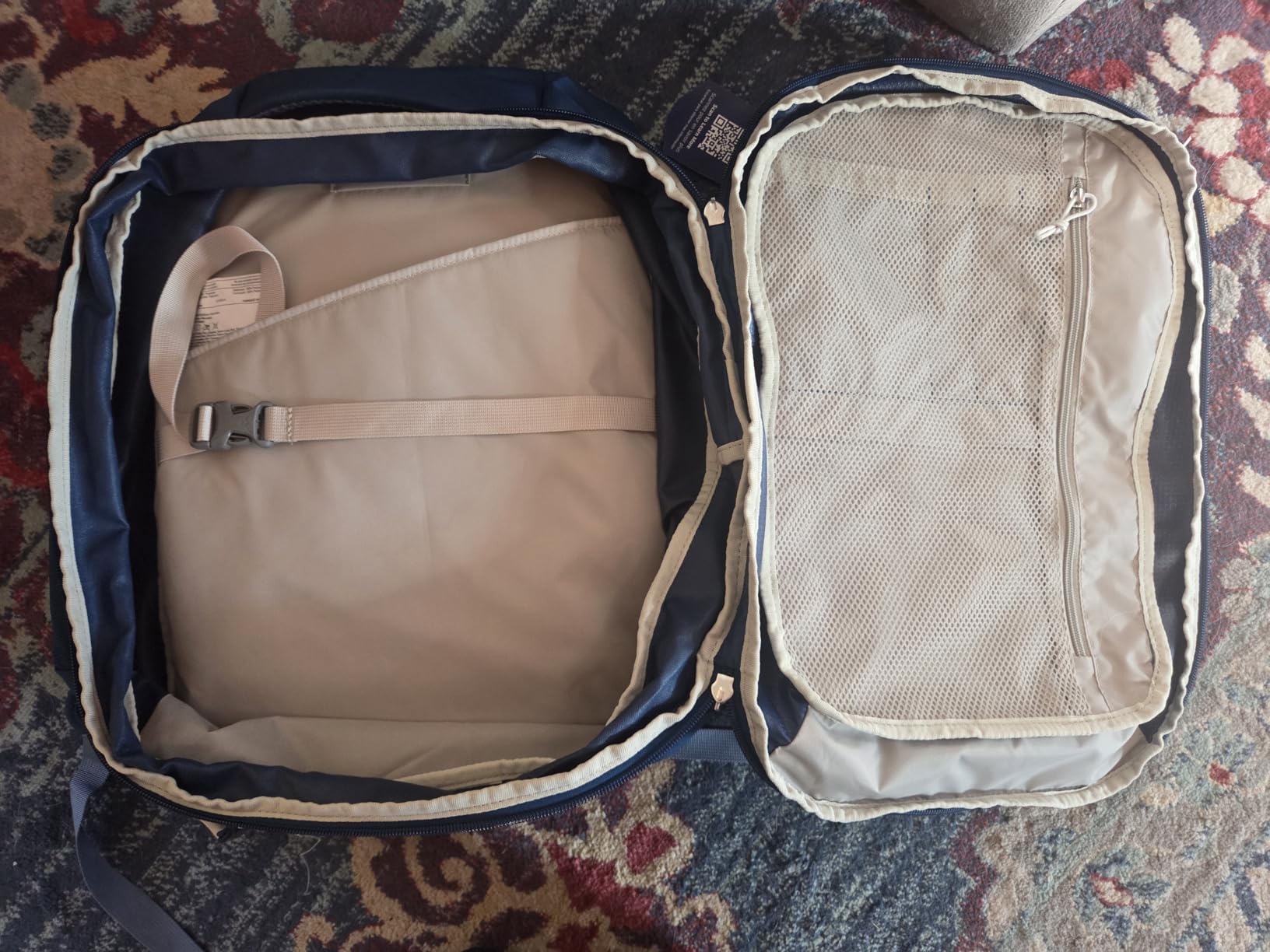
The 16.9 by 13 by 6.3 inch profile and 1.85 lb weight are the numbers that matter here, because they are what removes the gate-check risk entirely on a European low-cost carrier. There is a front zip pocket, a tech sleeve, a luggage pass-through strap and two stretch water bottle pockets, which is more than the other sub-30 litre bags here manage.
Materials are a step up from the budget tier: 100 percent recycled 300D polyester with a DWR treatment made without PFAS, and a matching recycled 200D lining. The AirScape back panel kept it ventilated on warm days.
This is the pack for a four to seven day trip with laundry, or as the personal item that rides with a larger bag. It is not a fortnight bag at any compression level.
For short trips done properly
Personal item sizing is the whole argument. On a route with three low-cost flights, a bag that fits under the seat removes the single most annoying travel failure mode. The expansion panel then gives you flexibility when a trip runs long, and the bottle pockets mean you are not carrying water in a hand.
Where it runs out
26 litres suits light packers and short trips, not multi-week travel, and the three pockets and single compartment are sparse next to the 40 litre bags. If you are the kind of traveller who wants a dedicated laundry compartment and a shoe pocket, this is not it. If you want one bag for everything for a month, look further up this list.
12. HOTOR 26.5L Travel Backpack – Best Starter Pack
- Main compartment opens flat like a suitcase with elastic hold-down straps
- Very light at about 1.2 lb
- Oxford fabric resists water stains and abrasion with dust-proof invisible zippers
- Six pockets including a wet pocket and side mesh pockets
- 26.5L aimed at 3-5 day trips
- Laptop compartment only fits 15.6 inches
- Side mesh pockets suit small items more than larger bottles
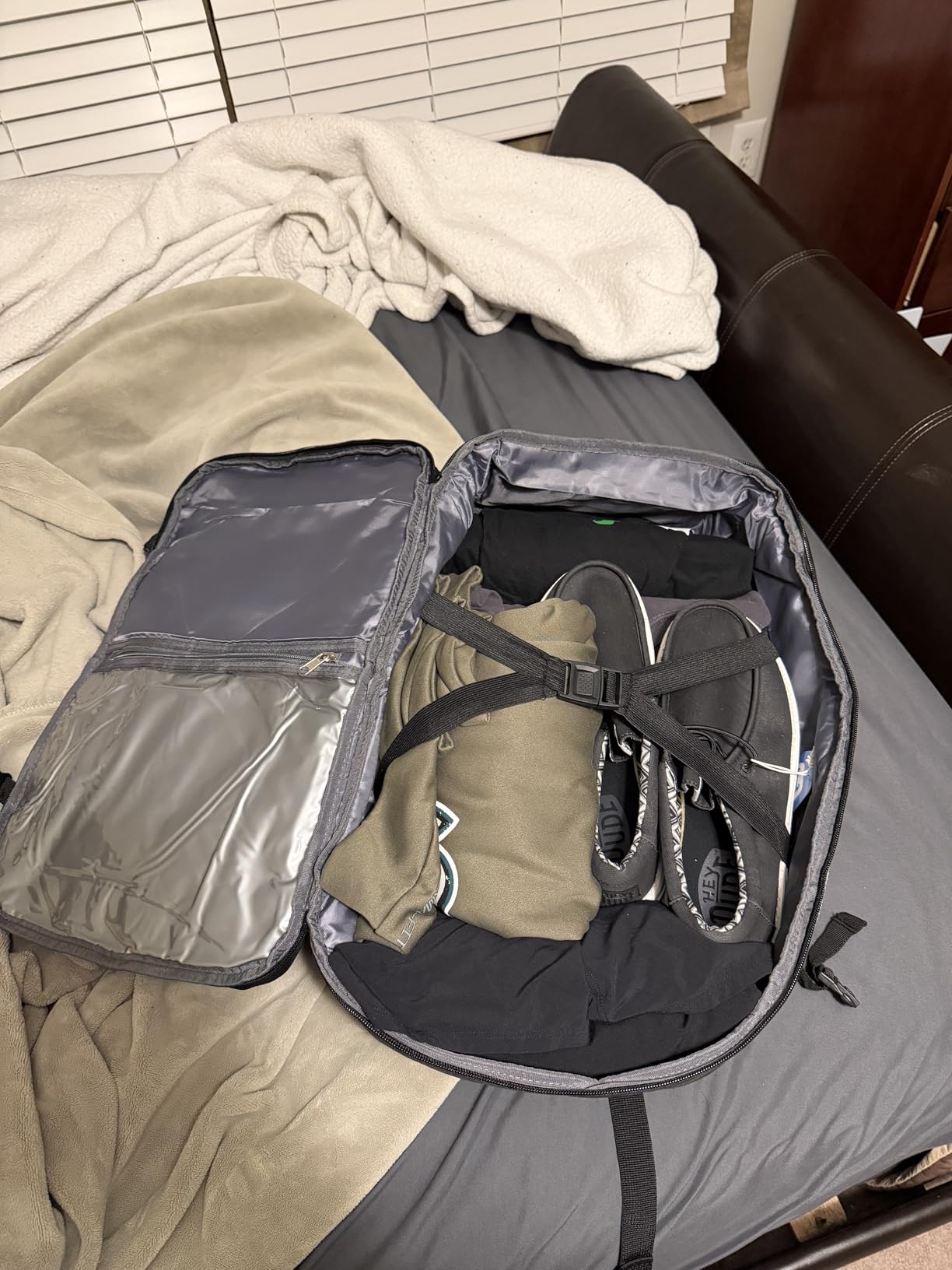
The HOTOR is the simplest good carry-on here, and for a first European trip on a small budget it does the job without fuss. It weighs about 1.2 lb, measures 17.3 by 11.8 by 7.9 inches, and its main compartment opens flat like a suitcase with elastic straps to hold clothing in place.
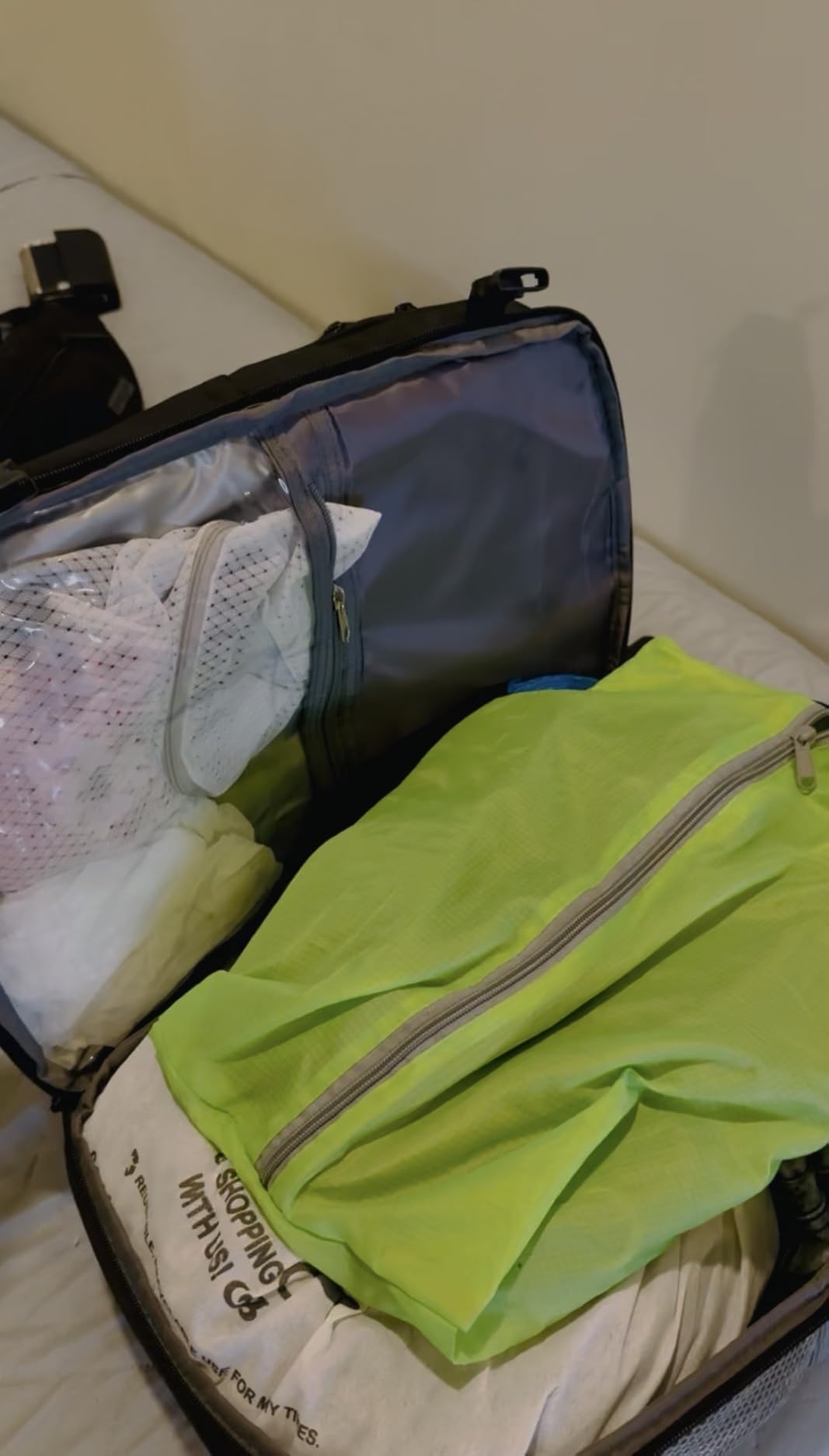
That suitcase opening is the part that matters more than it sounds. A flat-opening bag is much faster through a metal detector queue, and on a trip with four flights that time adds up. The Oxford fabric is listed as water resistant with dust-proof invisible zippers, and it takes a beating without looking tired.
There are six pockets, including a padded 15.6 inch laptop sleeve, a wet pocket for dirty or damp items, and side mesh pockets. A luggage strap handles the roller attachment case. Reviewers use it for 3 to 5 day trips and budget flights.
The size is approved for overhead bins or under seats depending on how you pack, and the breathable back panel and padded shoulder straps were fine over long station walks.
A sensible first bag
For someone who has never carried a backpack across a continent, the combination of low weight, a flat opening and durable fabric is the right set of basics. It is also light enough that you notice how little it weighs on a platform at 7 am, which is where most trips begin.
The ceiling on it
26.5 litres is aimed at 3 to 5 day trips, so a two-week itinerary means laundry. The laptop compartment only fits a 15.6 inch machine, and the side mesh pockets suit small items more than a full water bottle. If your trip is longer or your laptop is bigger, the coofay 25L and Osprey Daylite sections above cover similar ground with different trade-offs.
European Carry-On Size Rules You Need to Know
Budget carriers do not use a standard carry-on size, and this is the single most important thing to understand before you buy. The free cabin bag allowance on European low-cost airlines is typically much smaller than a full-size overhead bag, and the gauge at the gate is the version that counts.
Ryanair’s free small cabin bag is generally in the region of 40 by 20 by 25 cm, which is a personal-item-sized box, not a 40 litre backpack. Paying for a larger cabin bag on that airline usually moves you to a bigger allowance in the region of 55 by 40 by 20 cm, which is where most 40 litre packs live. easyJet and Wizz Air have their own large cabin bag allowances that are more generous, but they also change them.
Limits change, fare types differ, and priority boarding changes what fits, so the only reliable approach is to check the allowance attached to the specific fare you bought before departure. Bags that get rejected at the gate are gate-checked, and the fee is usually higher than pre-paying online.
Converting our picks to centimetres shows how tight this is. The Taygeer at 18.5 by 12.8 by 8 inches is about 47 by 32.5 by 20 cm, and the HOTOR at 17.3 by 11.8 by 7.9 inches is about 44 by 30 by 20 cm. The coofay 25L at 16.5 by 11.8 by 5.9 inches is about 42 by 30 by 15 cm. By contrast the Gieury at 20 by 14 by 10 inches is about 51 by 36 by 25 cm, and the Osprey Farpoint at 21.7 by 13.8 by 9.1 inches is about 55 by 35 by 23 cm.
Here is how to check a bag at home in four steps. Measure the outside of the bag, not the stated capacity, in the three axes airlines use. Add the protruding parts, including buckles, compression strap tails and external pockets. Compare the largest number against the smallest limit on your itinerary, not the average. Then pack it fully and re-measure, because a soft-sided bag bulges when full and that is when the extra centimetre appears.
Clamshell vs Top-Loading: Which Opening Style Wins in Europe
A clamshell bag opens flat like a suitcase. A top-loading bag opens at the top and is usually closed with a drawstring or a rolltop. Panel-loading is the middle option, where the front panel unzips down toward the base.
For Europe, clamshell wins on speed. With a flat-opening bag you see everything at the security tray, you do not fish through layers, and repacking after a screening takes seconds rather than minutes. On a trip with several low-cost flights, that difference adds up faster than the capacity gap between opening styles.
The cost is weight and flexibility. Clamshell bags need a frame or a stiff panel to lie flat, which adds grams, and a rigid shell gives up the stretch that lets a soft top-loader swallow one more jacket. The Farpoint 40 is the example of what a framed clamshell-like design costs you in bulk, while the coofay 25L shows the opposite extreme at 650 g.
A rolltop is worth considering if you are staying in one place for a long stretch, because the extra volume is genuinely usable. It is a poor fit for a security queue, though, and the drawstring is a security-lounge liability in busy terminals.
How to Choose the Right Bag Size for Your Trip Length
Match litres to nights, not to optimism. Most travellers underestimate capacity and then pack a 40 litre bag as if it were 50, which is the most common reason people do laundry on a trip they did not plan to.
A weekend city break of two to four nights works in 20 to 26 litres, which is where the HOTOR and the coofay 25L sit. A four to ten day trip is comfortable at 35 to 40 litres, the band where most of this list lives, and the MATEIN and Vancropak expand into it. Two to three weeks with laundry in your accommodation sits at 40 to 50 litres, which is where the AREYTECO and Gieury earn their capacity.
Two rules of thumb help. Five days of clothing in packing cubes is roughly 30 litres, so add ten litres for a week and you are near the middle of this list. And if you will not use a laundry service or a hostel washer at least once, take the larger bag rather than the smaller one.
Comfort and Fit on Cobblestones and Long Walking Days
European cities punish bags. Old town streets are cobbled, stations are far from where the train stops, and the difference between a comfortable day and a ruined one is usually a shoulder strap and a back panel rather than litres.
Start with torso measurement. Measure from the base of your neck to the top of your hip along your spine, then compare it against the range the pack is designed for. A harness set for a longer torso than yours puts the load too low, and a pack set for a much shorter torso leaves the weight on your shoulders.
The second thing is the hip belt. If a pack has one and it fits, the majority of the load transfers to your hips, which is why the Osprey Farpoint stays comfortable on days the Vancropak starts to complain. Padded shoulder straps and a sternum strap that can be adjusted on the move are the minimum for a walking-heavy itinerary.
Empty weight matters too, because you carry the bag whether or not you need anything from it. The spread here runs from 650 g on the coofay 25L to 3.49 lb on the Farpoint, and across a ten-hour walking day that difference is felt by evening.
One practical note for European trains: stowable or hideaway shoulder straps stop the pack catching on racks and other passengers when you lift it into a crowded carriage. Several travellers specifically prefer that detail when a hip belt is bulky and cannot be removed.
Materials, Durability and Rain in Europe
Backpack fabric is described in denier, which measures the thickness of individual fibres. A higher denier is a heavier, more abrasion-resistant yarn: the Vancropak uses 900D polyester, the Farpoint uses 450D recycled polyester, and the Osprey Daylite uses 300D recycled polyester with a 200D recycled lining.
Water resistant is not waterproof, and the difference matters in October. Water resistance means a durable water repellent coating sheds light rain, which is what most of these packs offer. The coofay 25L is the one here listed as waterproof, and it pairs that with a high-density waterproof wet pocket. Carry a pack cover for sustained rain regardless.
Zipper hardware is the other durability signal. The tomtoc 40L uses YKK zippers on 100 percent post-consumer recycled PET fabric, which is a genuinely better hardware tier than the generic zips on most of the budget bags here, and it is part of why it earns the premium badge.
Finally, check the warranty and repair story. The Farpoint carries Osprey’s All Mighty Guarantee, the Vancropak listing shows a lifetime warranty description, and the Daylite uses bluesign-approved recycled fabrics with PFAS-free DWR. Where there is no stated warranty, buy the bag for the trip rather than for a decade.
Keeping Your Backpack Safe in European Cities
Pickpocketing in European city centres is a real and common problem, particularly around stations, on metro turnstiles and in crowded queues. None of these bags makes you immune, but several features reduce the risk.
An anti-theft back pocket sits against your spine rather than facing the crowd, so it cannot be opened without taking the bag off. The Lumesner and the Vancropak both have one. A flush document pocket, which the Lumesner also carries, hides your passport and wallet away from a casual hand at a street market.
On a bag that converts to a briefcase, the hideaway strap panels on the MATEIN, Vancropak and HOTOR serve a second purpose: with the straps zipped away, the bag presents a flat front that a pickpocket cannot open quickly. The Taygeer and LOVEVOOK also open 180 degrees, which is convenient at security but means the front panel is not worn closed in a crowd, so keep valuables in the interior compartments there.
Two habits do more than any feature. Wear the bag on your front in a dense crowd, and keep your passport in a compartment that requires opening the bag rather than a front slip pocket. There is no RFID-blocking compartment in this group, so treat a zip-away cable pouch for cards as a sensible extra rather than a feature to rely on.
Trains, Rails and Baggage Rules Across Europe
Rail is a large part of a European itinerary and has different rules from air, which almost no buying guide covers. In general, mainline operators on routes such as Deutsche Bahn, SNCF, Eurostar, Renfe and Trenitalia allow luggage in the luggage spaces or overhead racks, and the practical limit is physical space rather than a published size.
The differences show up in the nooks and crannies. Some operators provide a dedicated luggage area rather than overhead racks, some fold down seats to make space on quiet services, and some restrict bulky items at peak times. Overnight and high-speed services differ from regional trains, where space is much tighter.
Two habits remove most of the problem. Board early on a popular route, because overhead space on a full train goes quickly. And keep the bag stowable, since a pack with loose straps is difficult to lift onto a high rack or push under a seat. The hideaway-strap bags on this list are noticeably easier to handle in that moment.
Pack your bag so the heavy items sit low and near your back. On a train you may be lifting it into a rack with one hand while boarding with a ticket in the other, and a dense low centre of mass is much easier to control than a bag with a heavy top.
How to Pack a 40L Carry-On for Two Weeks
A 40 litre bag holds two weeks of clothing only if you pack in layers of organisation and accept one laundry stop. Our order of operations at the hotel room is deliberate.
First, put your packing cubes in the main compartment flat, largest at the base. Clothes go in rolled rather than folded, and the compression straps pull the load tight so the bag does not become a pillow that will not fit in an overhead bin. Shoes go into the dedicated shoe compartment if the bag has one, or against the base of the main compartment inside a plastic bag.
Second, heavy items and the laptop go nearest your back, and liquids go into the top compartment so they can be removed first at security. The wet compartment, where a bag has one, takes the things that are still damp.
Third, lay out everything you will need in the airport or on the train rather than in the last five minutes: passport, wallet, phone charger, headphones, a book, a water bottle, and a layer for a cold carriage. That is the argument for front-access pockets on the tomtoc and Taygeer, and for the flush document pocket on the Lumesner.
Finally, weigh the packed bag. Budget carriers enforce a weight allowance, and a bag at the size limit is often heavier than it looks. Where your itinerary includes a small free cabin bag, weigh that bag alone and keep the rest as a separate personal item.
Frequently Asked Questions
What size backpack should I take to Europe?
For a one to three week European trip, choose a carry-on travel backpack between 35 and 45 litres. A 25 to 32 litre bag suits city breaks of four to seven days and can slide under the airline seat. Go above 50 litres only if you are packing for a month without access to laundry, since budget European carriers enforce both size and weight rules.
How strict is Ryanair with carry-on bag size?
Ryanair is strict, and the gauge at the gate is what matters rather than what you read online. The free small cabin bag allowance is a personal-item-sized box, and bags above it are gate-checked for a fee that is usually higher than paying online in advance. Measure your packed bag against the allowance for your specific fare before you leave, because limits and fare rules change.
Should you carry a backpack in Europe?
Yes, and it is the normal choice for multi-city trips. A backpack beats a roller on cobbled streets, on stairs, in train stations and on any segment where you walk more than fifteen minutes. The two adjustments people make are choosing a subdued colour and shape so it does not read as tourist gear, and keeping the bag in front of you in dense crowds.
Is a 40L backpack enough for two weeks in Europe?
A 40 litre bag is enough for two weeks for a light packer who does laundry once. Roll clothes, use packing cubes, and pack shoes in a separate compartment. Travellers who overpack treat a 40 litre bag as though it were 50 litres and end up doing laundry more than they planned. If you will not use a hostel or hotel washer at all, move up to the 50 litre options.
Do European trains allow large backpacks?
Generally yes. Mainline operators on routes including Deutsche Bahn, SNCF, Eurostar, Renfe and Trenitalia allow luggage in luggage spaces and overhead racks, and the real constraint is available space rather than a published size limit. Board early on busy routes, keep straps stowable so the bag can be lifted onto a rack, and pack heavy items low and near your back.
What should you look for in a carry-on travel backpack for Europe?
Prioritise in this order: published external dimensions within your airline limit, a suitcase-style or clamshell opening for fast security, stowable or hideaway shoulder straps for overhead and train stowage, a padded back panel and sternum strap for walking days, and low empty weight. Anti-theft back pockets, packing cubes and water bottle pockets are useful extras rather than deal-breakers.
Final Verdict
For most people planning a European trip, the Taygeer 40L Carry On Backpack is the right buy: the largest review history in this group, nine compartments, a 17.3 inch laptop sleeve and a 0.9 kg empty weight that keeps it comfortable from the airport gate to the last street of the night.
Buy the MATEIN if you want expansion capacity for a trip that might grow, the Lumesner if you are moving by train and want packing cubes and security storage in the box, and the Osprey Farpoint 40 if you are carrying heavier gear and will be on your feet for long days. For a weekend where you refuse to gamble with a sizer, the Osprey Daylite Expandable 26+6 or the coofay 25L removes the risk entirely.
Whatever you choose, measure the packed bag against the smallest cabin allowance on your itinerary before you fly, and check it again at home in the room. That single habit prevents the most expensive mistake in European travel. Our 2026 picks cover everything from a three-day city break to a month-long rail trip, and we update them as new models arrive.