
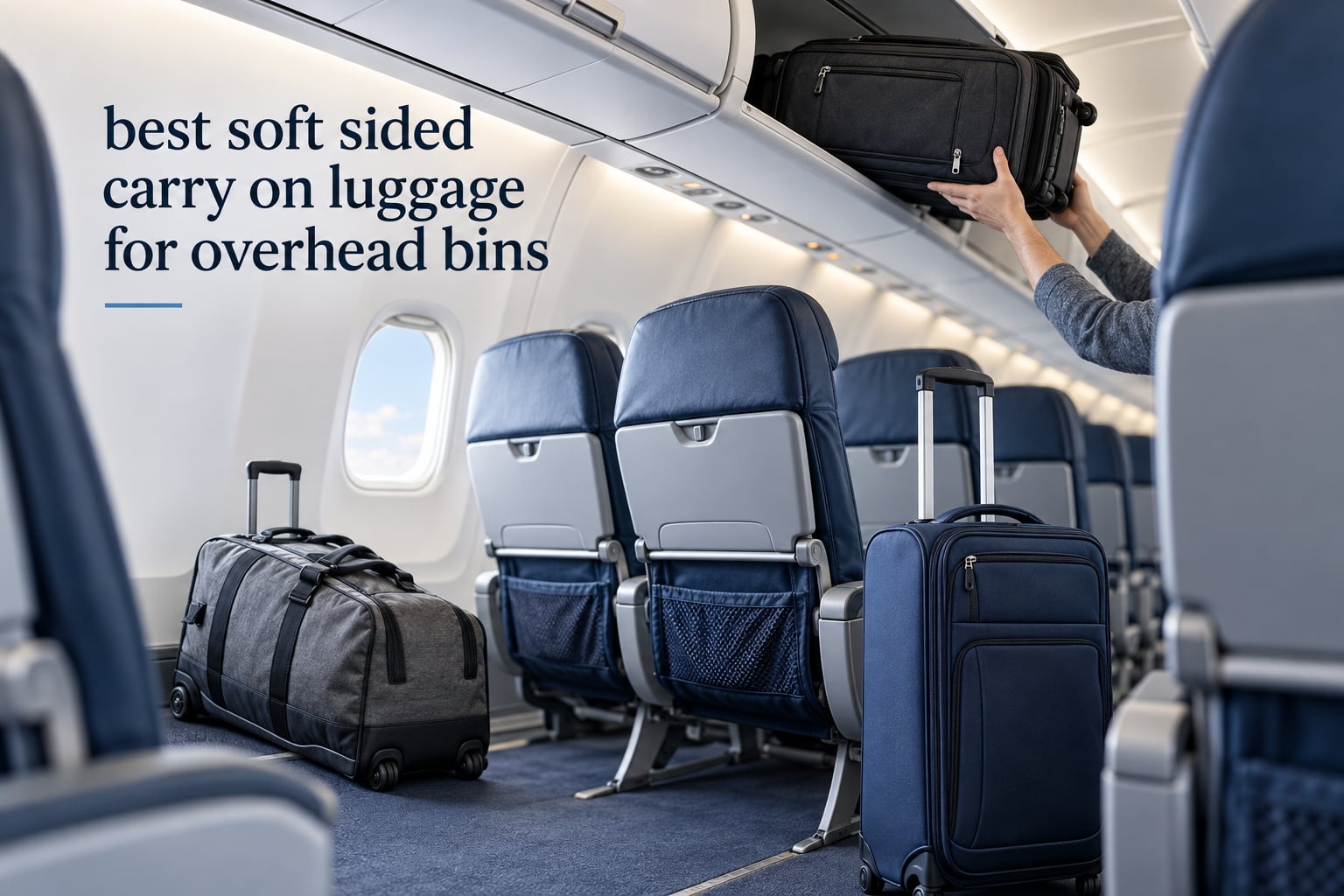
Most soft-sided carry-ons get sold on capacity and pockets, but the only measurement that matters at the jet bridge is whether the bag fits the overhead bin. The US standard is 22 inches tall by 14 inches wide by 9 inches deep, measured with the wheels and the retracted handle attached, and measured while the bag is fully collapsed. A soft shell that fits unexpanded can flex and settle into a bin that a rigid case of the same dimensions would overhang. A soft shell measured while expanded, overpacked, or with the front pockets stuffed is the single most common reason travelers get forced to check a bag at the gate.
We went through 12 soft-sided carry-ons with that constraint as the organizing principle rather than an afterthought. For every bag we recorded overall dimensions including wheels and handles, how the bag behaves when expanded, empty weight, wheel format, pocket layout, and warranty length. That data drives the picks below, the comparison table, and the airline reference further down. If you want the wider picture across hard and soft cases, our general carry-on roundup covers both formats.
Two things change hands between the spec sheet and the bin. The first is the gap between case dimensions and overall dimensions, which is routinely two inches or more once wheels and handles are counted. The second is the fabric itself, because a woven shell compresses under pressure and an overpacked one bulges outward in exactly the places a gate agent’s sizer box will catch. Both of those come up repeatedly in the discussion, and both are why a bag listed at 22 inches is not automatically a bag that flies as carry-on.
Table of Contents
Top 3 Soft-Sided Carry-Ons for Overhead Bins

Travelpro Maxlite 5 Softside
- 5.4 lb empty
- 46 L capacity
- 360 degree spinner wheels
- expands 2 inches

Olympia U.S.A. 22 Inch Rolling Duffel
- Eight pockets
- water resistant 1200D polyester
- top-opening zip
- in-line skate wheels

LUGGEX 20 Inch Expandable Softside
- 6.6 lb empty
- 35 to 40 L capacity
- padded 15.6 inch laptop bay
- eight spinner wheels
The Maxlite 5 takes the top spot because it is the rare bag where the weight, the overall footprint, and the feature count all point the same direction. At 5.4 pounds empty it is the easiest lift in this group, and its 46 liters of capacity is larger than anything else here that stays close to a true international footprint. The Olympia duffel wins on value and on pocket count, and the LUGGEX is the pick if the laptop stays in the bag rather than in a sleeve on your back.
All 12 Picks at a Glance
| Product | Specifications | Action |
|---|---|---|
| Travelpro Maxlite 5 Softside Carry-On |
|
Check Latest Price |
| Olympia U.S.A. 22 Inch Rolling Duffel |
|
Check Latest Price |
 SwissGear Sion Softside Spinner SwissGear Sion Softside Spinner |
|
Check Latest Price |
| LUGGEX 20 Inch Expandable Softside |
|
Check Latest Price |
 American Tourister 4 KIX 2.0 Spinner American Tourister 4 KIX 2.0 Spinner |
|
Check Latest Price |
 Briggs and Riley Baseline Cabin Softside Briggs and Riley Baseline Cabin Softside |
|
Check Latest Price |
 KROSER 20 Inch Expandable Softside KROSER 20 Inch Expandable Softside |
|
Check Latest Price |
 Delsey Paris Helium DLX Carry-On Delsey Paris Helium DLX Carry-On |
|
Check Latest Price |
 LOVEVOOK 22 Inch Softside Spinner LOVEVOOK 22 Inch Softside Spinner |
|
Check Latest Price |
 BAGSMART 20 Inch Expandable with Duffel BAGSMART 20 Inch Expandable with Duffel |
|
Check Latest Price |
 Tonyeee 19 Inch Compact Softside Tonyeee 19 Inch Compact Softside |
|
Check Latest Price |
 Pelican Aegis 22 Inch Carry-On Duffel Pelican Aegis 22 Inch Carry-On Duffel |
|
Check Latest Price |
Read the table for overall dimensions rather than case dimensions wherever both are listed. Several bags here are quoted as 20 or 21 inches by the manufacturer and then arrive at 22 or 23 inches once the wheels are included, and that is the number a sizer box cares about.
How We Measured These Bags for Bin Fit
Our approach was simple. We pulled the manufacturer specification for each bag, recorded the overall figure with wheels and handles, and noted the separate case-only figure where one is published. That gap is the most useful number in the whole roundup because it tells you what to expect at the gate even when the product page leads with a smaller headline figure.
We also tracked empty weight as a bin-lift metric rather than a spec curiosity. Lifting a full bag into an overhead compartment is a two-arm operation performed while holding a boarding pass and steering with one foot, and the difference between a 5.4-pound bag and an 8-pound bag is felt in exactly that moment. Bags with pocketed front panels get a balance note, because front-loaded weight tips a spinner forward.
Finally, we recorded warranty length and expansion behaviour. A bag that expands only when you want extra room, and returns to a compliant footprint when you close it, is a different proposition from a fixed-depth bag that is either legal or not. Where the listing mixes case-only and wheels-included measurements, we flag it rather than picking the flattering number.
1. Travelpro Maxlite 5 Softside Carry-On for Lightweight Long-Term Use
Travelpro Maxlite 5 Softside Carry-On Luggage Spinner, Green, 21-Inch
- Lightest full-size spinner in this group
- 46 L of real capacity
- 360 degree spinner wheels roll in any direction
- limited lifetime warranty
- water resistant coated polyester
- Interior room is smaller than a 22 inch case
- wheels feel light under load
- expansion adds 2 inches of depth when opened
This is the bag we kept reaching for during this roundup. At 5.4 pounds empty it is the lightest full-size soft spinner in the group, and that number matters more in an overhead bin than any capacity figure. Owners report that it slides into the bin even when packed, and the 360-degree spinner base makes the lift-and-turn motion in a crowded cabin far less awkward than it would be on a two-wheel format.
One measurement caveat before you commit. The case is quoted at 21 by 14 by 9 inches, but the overall figure including wheels and handles is listed at 23 by 14.5 by 9. That 23-inch height is over the 22-inch domestic standard, so if you are flying a carrier that measures strictly, this sits at the edge rather than in the clear. The expansion adds up to 2 inches, which is worth using on the way home and worth leaving closed on the way out.
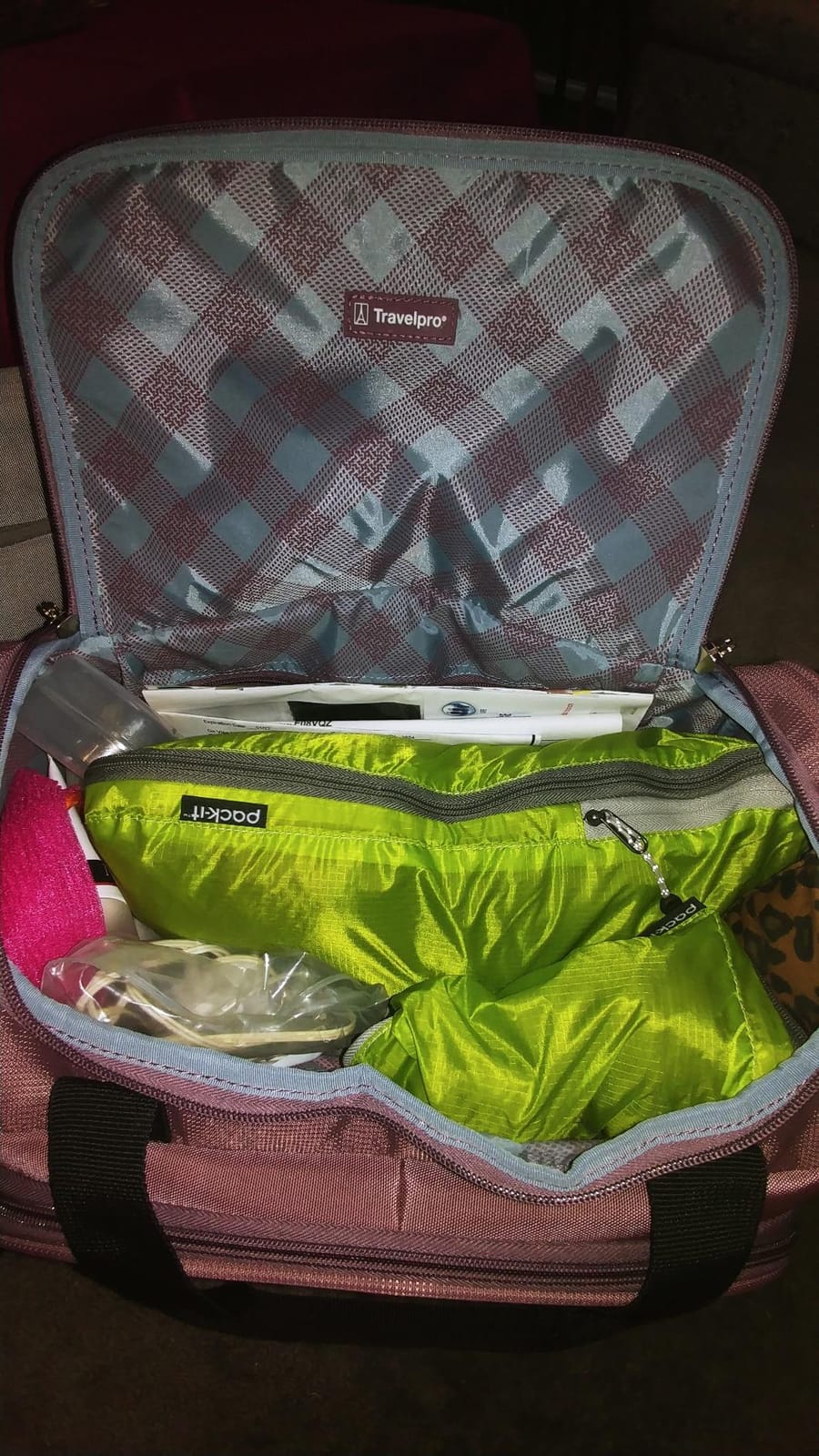
The 46 liters is genuinely useful and larger than most bags in this category that stay near a compact footprint. The recurring note from owners is that usable packing room feels smaller than the litre count suggests, because the liner and the handle housing take up room that a hard case would not. Packing cubes of a fixed size help here, because the interior is boxy rather than tapered.
Travelpro backs it with a limited lifetime warranty, which matters more than the warranty length suggests for anyone flying often. Airline damage is exactly the kind of thing a lifetime warranty is designed to cover, and this is a bag that will be checked eventually whether or not you plan for it. In the softside-luggage discussion on r/ManyBaggers, the Travelpro Maxlite line comes up repeatedly alongside the Away Softside as a bag people keep for years.
When this bag earns its place
It suits a traveller who packs light, flies often, and does not want to think about the lift. The warranty covers the scenario where a bag that has been through a hundred bins eventually gets gate-checked, which is the most common soft-shell failure mode there is. The exterior pockets handle a laptop and a document set without opening the main compartment.
It also works as a one-bag setup for a long weekend rather than a full week. Buyers upgrading from a larger hard case sometimes report it feeling smaller than expected, and that is accurate: the litre count is respectable but the shape is compact.
Where the trade-off bites
The 23-inch overall height is the number to check against your carrier before you rely on it for a specific route. On a 22-inch limit it is over by an inch, and on a carrier or a regional aircraft with a stricter height rule, that extra inch is the first thing a sizer will find.
Owners also characterise the wheels as functional rather than premium, and they are the part of the bag most likely to feel different after several years of curb drops. The shell itself is the durable part. Keep heavy items low and centred to avoid loading the spinner base unevenly.
2. Olympia U.S.A. 22 Inch Rolling Duffel for Eight Pockets and a Full Top Opening
- Eight pockets for documents and electronics
- water resistant 1200D polyester
- full-width top opening is easy to pack
- recessed in-line skate wheels roll quietly
- very low cost
- Two-wheel base tips on tight turns
- handle hides into a zipper pocket and can retract mid-journey
- will not stand upright unsupported
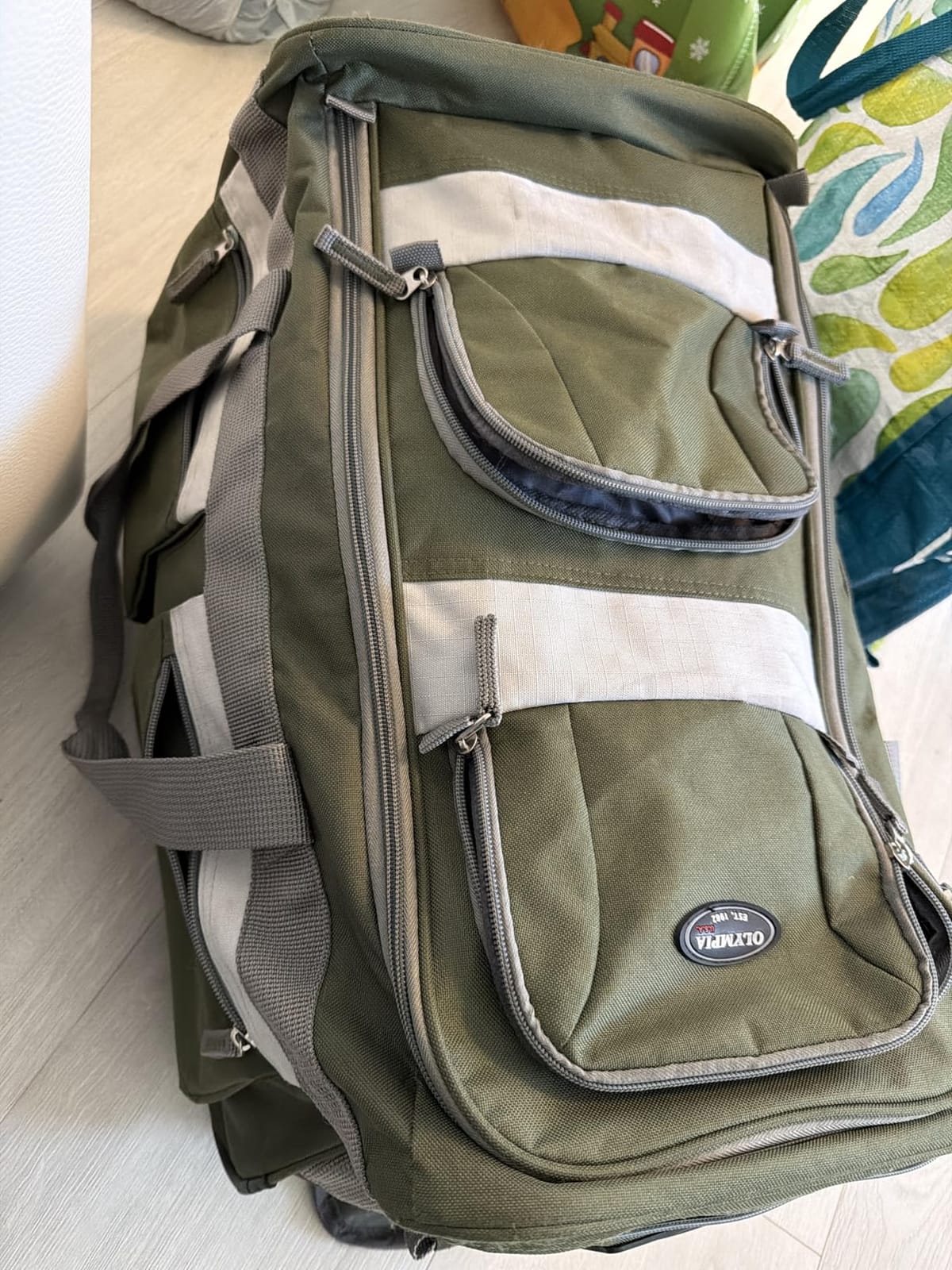
The rolling duffel format is the reason this bag keeps showing up in carry-on conversations at all. At 22 inches tall it lands inside the standard limit, and the full U-shaped top opening means you pack it like a laundry bag rather than a clamshell, which is faster and lets you see everything at once. Reviewers consistently describe it as a workhorse rather than a status object, which for carry-on duty is a compliment.
Eight exterior pockets is the standout number in this roundup, and it is not close. Documents, a tablet, snacks, chargers, a water bottle, and a jacket all live outside the main compartment, so a laptop does not get crushed under a week of clothes. The Protecflon 1200D polyester is a light, water-resistant weave that shrugs off a rained-on connection.
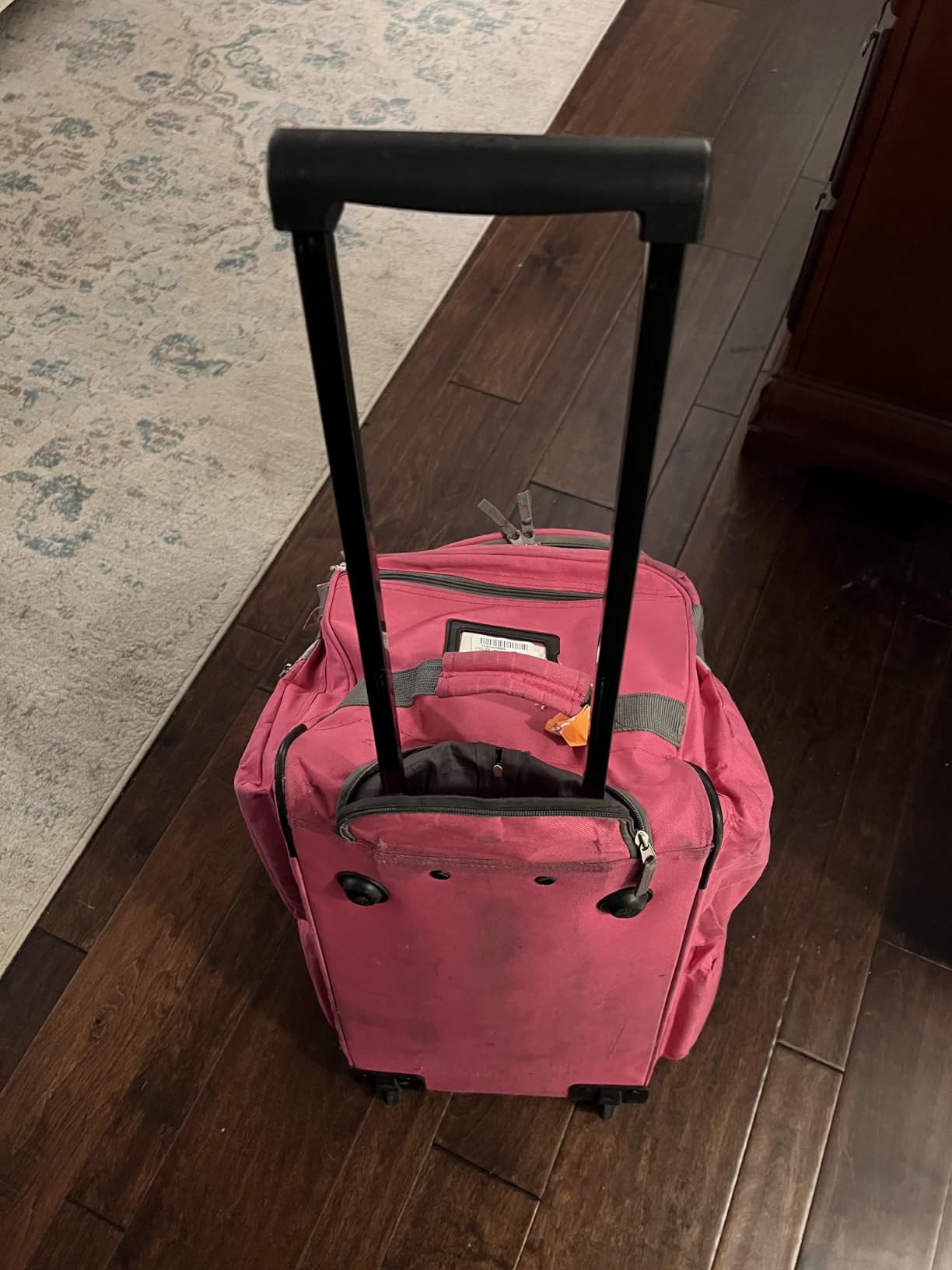
The wheel system is recessed in-line skate metal ball-bearing, which rolls smoothly and quietly but does not swivel. That is the trade-off for the format: in a narrow cabin aisle a two-wheel base is stable in a straight line and will tip if you corner hard, while a spinner can be steered out of trouble but needs more turning room. Neither is better universally, but the difference shows up in exactly the tight spaces an overhead bin creates.
Owners report stitching, zippers, and wheels holding up over years, with occasional zipper complaints on later units. The push-button retractable handle hides inside a zipper pocket when collapsed, which is good for the bin fit and bad if it collapses while you are moving fast.
Who should pack this one
It is built for the traveller who treats the bag as organised storage rather than a container. Anyone who carries a laptop, a camera, documents, or a lot of small items will find eight dedicated pockets easier to live with than one large cavity. It is also a natural fit for small feeder aircraft and last-mile legs where a soft duffel is sometimes the only bag shape accepted.
Because the top opens wide, it suits anyone who repacks mid-trip or who uses a single bag for a multi-leg itinerary. The interior is a straight-walled cavity, so packing cubes drop in without a fight.
Where it will frustrate you
The non-swivelling wheel base is the first thing to consider if you move through crowded terminals regularly. Pulling it sideways or cornering sharply can put the bag on its side, and the same base makes the bag impossible to push while your other hand is full.
It will not stand upright on its own, and the handle is shorter than some people expect. If you are tall or frequently roll long distances, that is a daily irritation rather than a trip-day one. The smaller pockets also only accept compact items, so a full-size laptop is going in the main compartment.
3. SwissGear Sion Carry-On Spinner for Durability and a 10 Year Warranty
SwissGear Sion Carry-On Spinner Luggage, Softside Expandable, Lightweight Suitcase, Blue, 22.75-Inch
- Durable soft shell with ballistic polymer trim
- 360 degree spinner wheels
- expandable gusset adds room
- two quick-access front pockets
- 10 year limited warranty
- Heaviest bag in the group at 8 pounds
- overall depth exceeds 9 inches
- zipper closure instead of a TSA lock
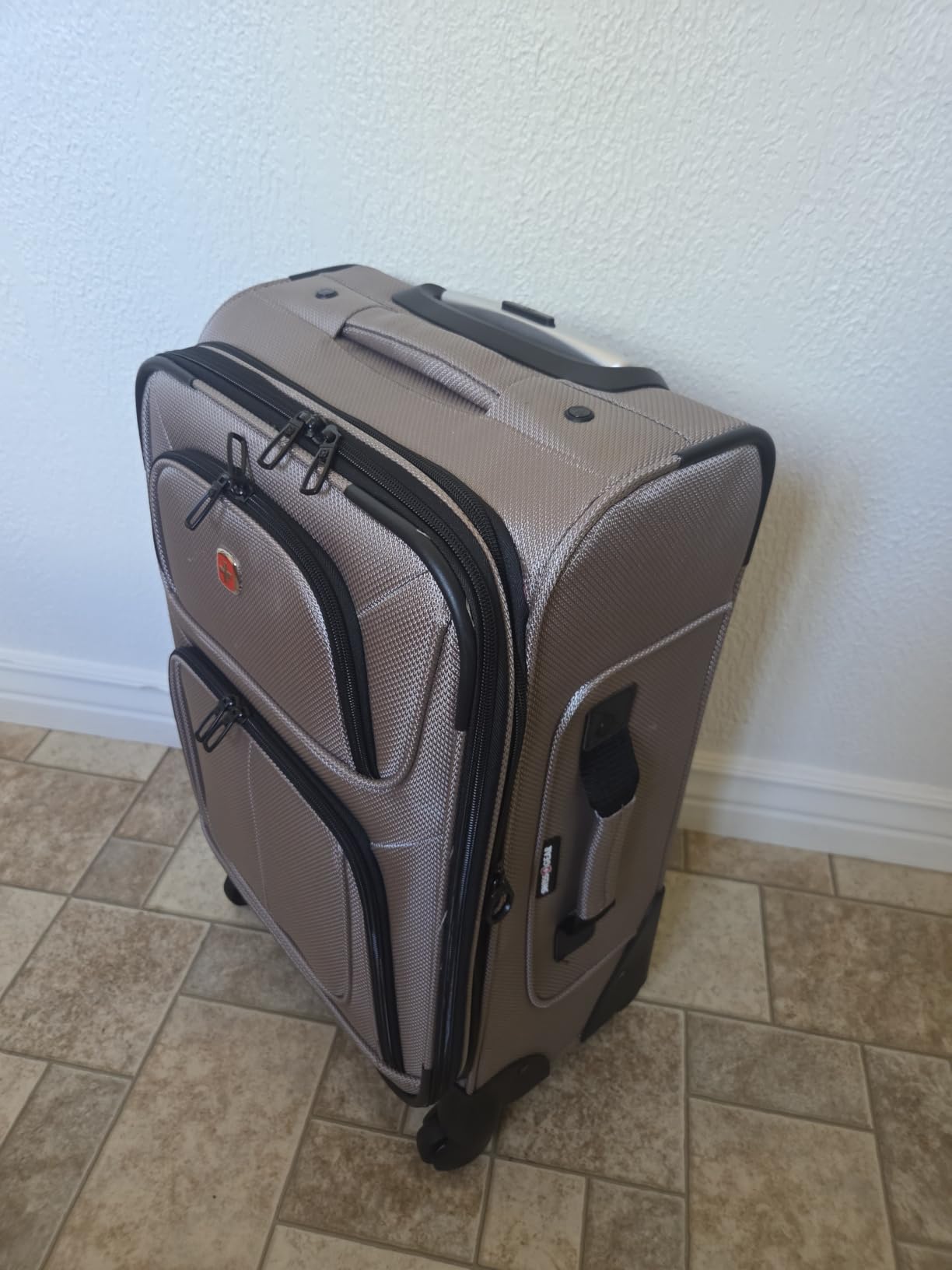
The Sion is the sturdiest softshell in this list, and the 10-year limited warranty is the longest in the group. The polyester shell carries ballistic polymer trim that holds its shape through handling rather than sagging into a soft rectangle after a few trips, which matters for anyone who treats a carry-on as a permanent piece of kit.
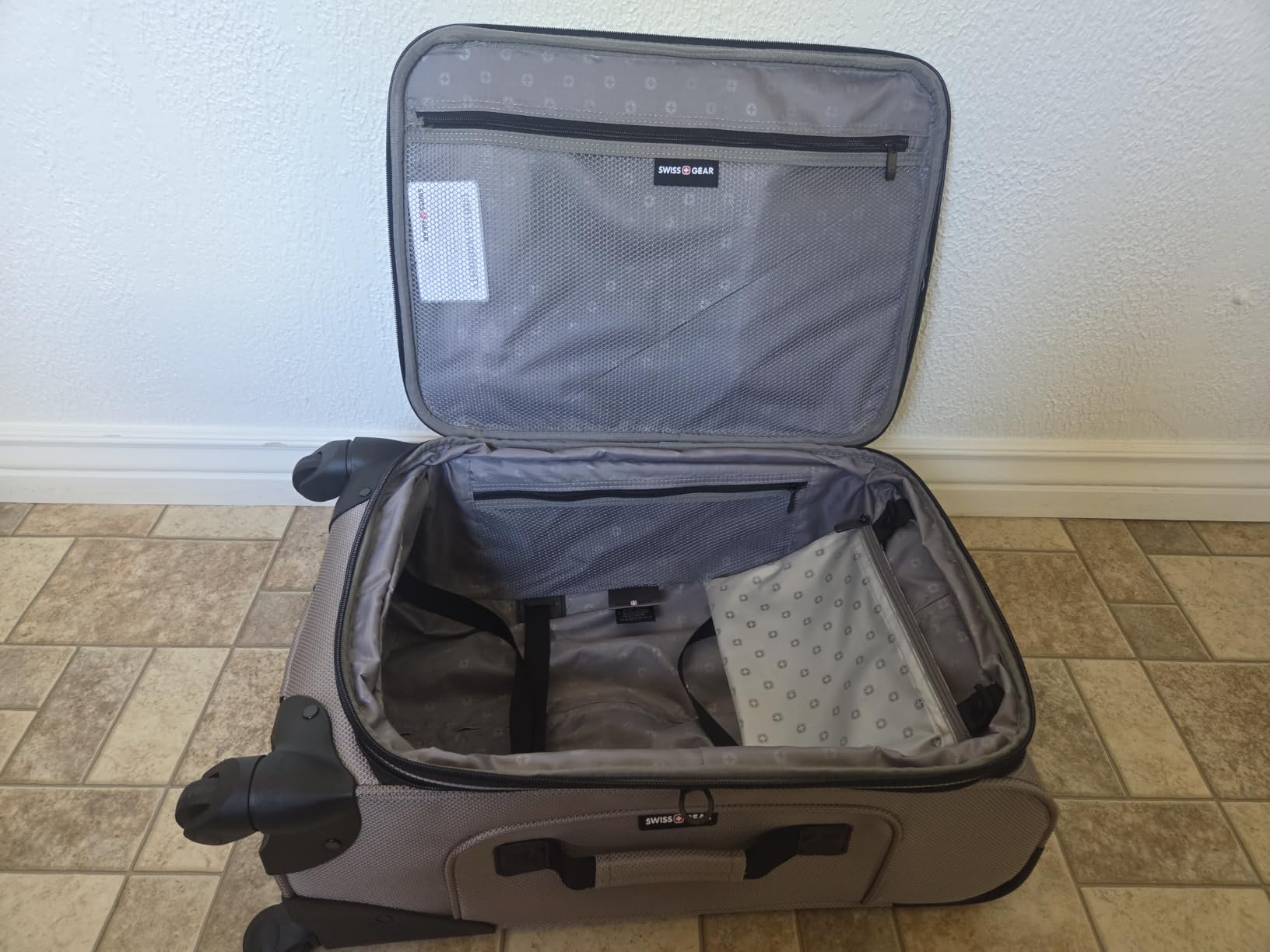
Two quick-access front pockets keep a boarding pass, a phone, and a snack away from the main compartment, and the expansion gusset gives extra room without changing the bag’s basic footprint. Spinner wheels roll smoothly through terminals and tight spaces, which is the part of cabin travel that is genuinely hard on a two-wheel format.
Here is the honest problem: the Sion measures 22.75 inches tall by 14.25 wide by 10.25 deep on the exterior, and 8 pounds empty. That is a domestic US carry-on and nothing more. On a 9-inch depth limit it is over, and at 8 pounds it is the heaviest lift in this roundup. If your itinerary is mostly domestic with generous bins, neither fact matters much.
The interior comes in at 21 by 12.75 by 10.25 inches, and 38 liters is enough for several days rather than a full week. The locking telescopic handle and the two carry handles, including a side handle, make it easy to move through a boarding queue without rolling it.
Where it makes sense
This is the pick for a traveller who checks bags often, travels on routes with generous bins, and wants a warranty that covers a decade of wear. The shell and trim are the reason reviewers call it durable rather than merely adequate, and it survives handling in a way lighter fabrics do not.
The expandable gusset is the useful part. It lets you bring back more than you left with, which is the most common trip-end problem with a fixed-size bag, and it does so without replacing the whole case.
Where it falls short
Weight and depth together make it the weakest bin-fit profile in this roundup. If you fly a carrier with a 9-inch depth limit or a European low-cost service, this bag will be the one that gets pulled, regardless of how well it rolls.
The zipper closure is a step below the built-in combination locks several competitors in this price range offer, and 8 pounds is a real cost every time you lift it into a bin with a laptop in the front pocket. Consider it a durability-first choice for domestic travel, not a universal carry-on.
4. LUGGEX 20 Inch Expandable Softside for a Built-In Laptop Bay
- Padded 15.6 inch laptop compartment with detachable pouch
- expands from 35 L to 40 L
- eight spinner wheels for 360 degree mobility
- 6.6 lb empty weight lifts easily
- reinforced bottom
- Not water resistant
- handle housing reduces main compartment room
- front pocket contents can push the case over size limits
The LUGGEX is the only bag here with a genuinely padded laptop compartment and a detachable pouch around it, which makes it the pick if the computer travels in the suitcase rather than on your back. Owners consistently rate it on feature density: a laptop bay, multiple organiser pockets, an expandable body, and an eight-wheel spinner base in a 6.6-pound softshell.
Eight wheels, meaning four spinner assemblies, roll quietly and glide in any direction. In a cabin aisle that is a genuine advantage, since the manoeuvre you need at the bin is usually a sideways pivot. The adjustable aluminium telescoping handle and the reinforced bottom add to a build that feels heavier-duty than the price tier suggests.
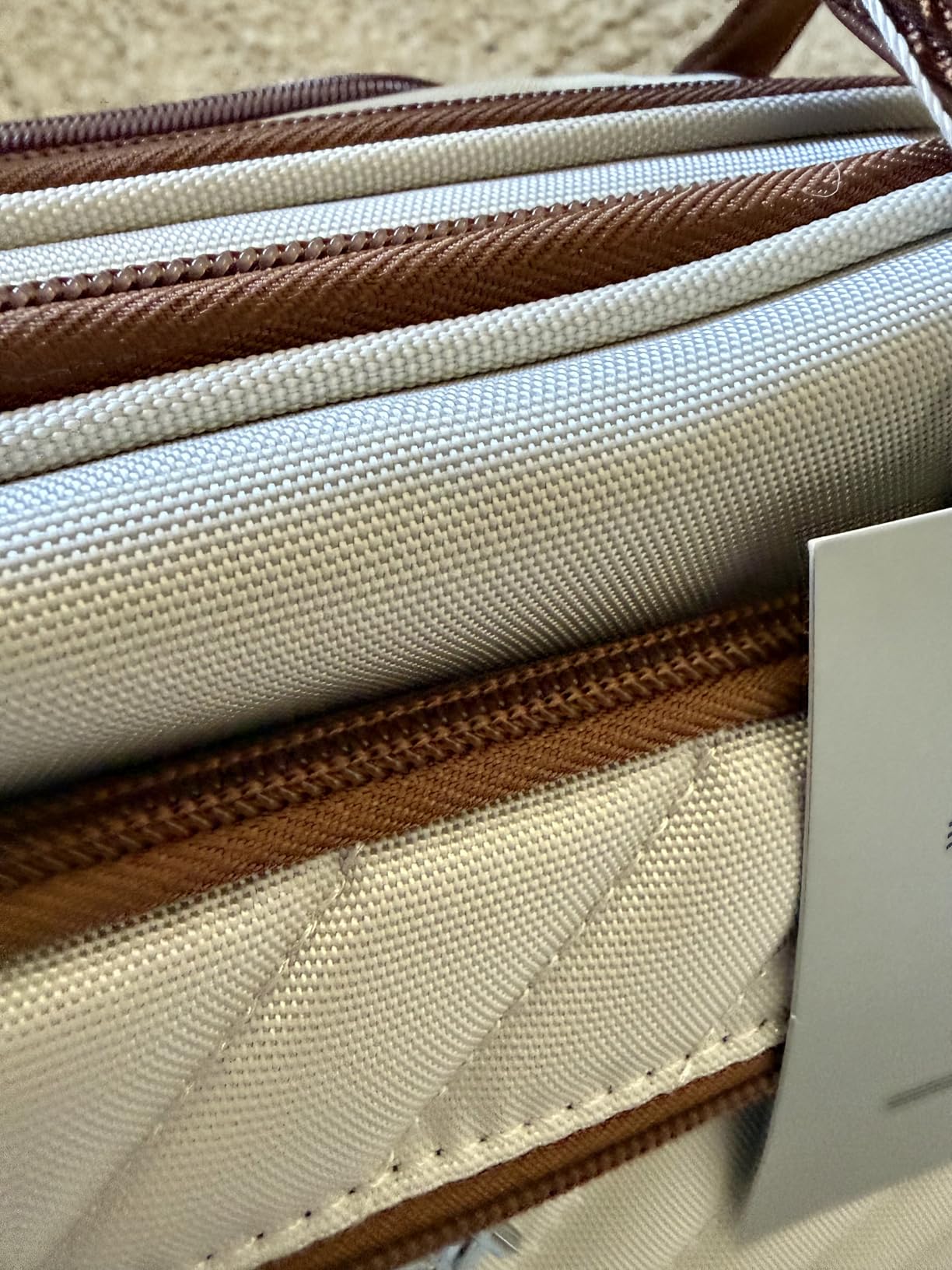
Two things to watch. The shell is not water resistant, which means a soaked jacket or a spilled drink in the cabin is a real event rather than a wipe-down. And the dimension figure listed here, 22 by 14.2 by 9.1 inches, puts the depth marginally over a 9-inch limit before any expansion is added. Packing the front pockets heavily is the fastest way to push a soft case past a sizer.
Owners also note that the telescoping handle housing and the front pockets eat into main-compartment room, so 35 liters is closer to the honest figure than 40. The expansion to 40 liters is genuinely useful on a return trip when the extra capacity is what you want.
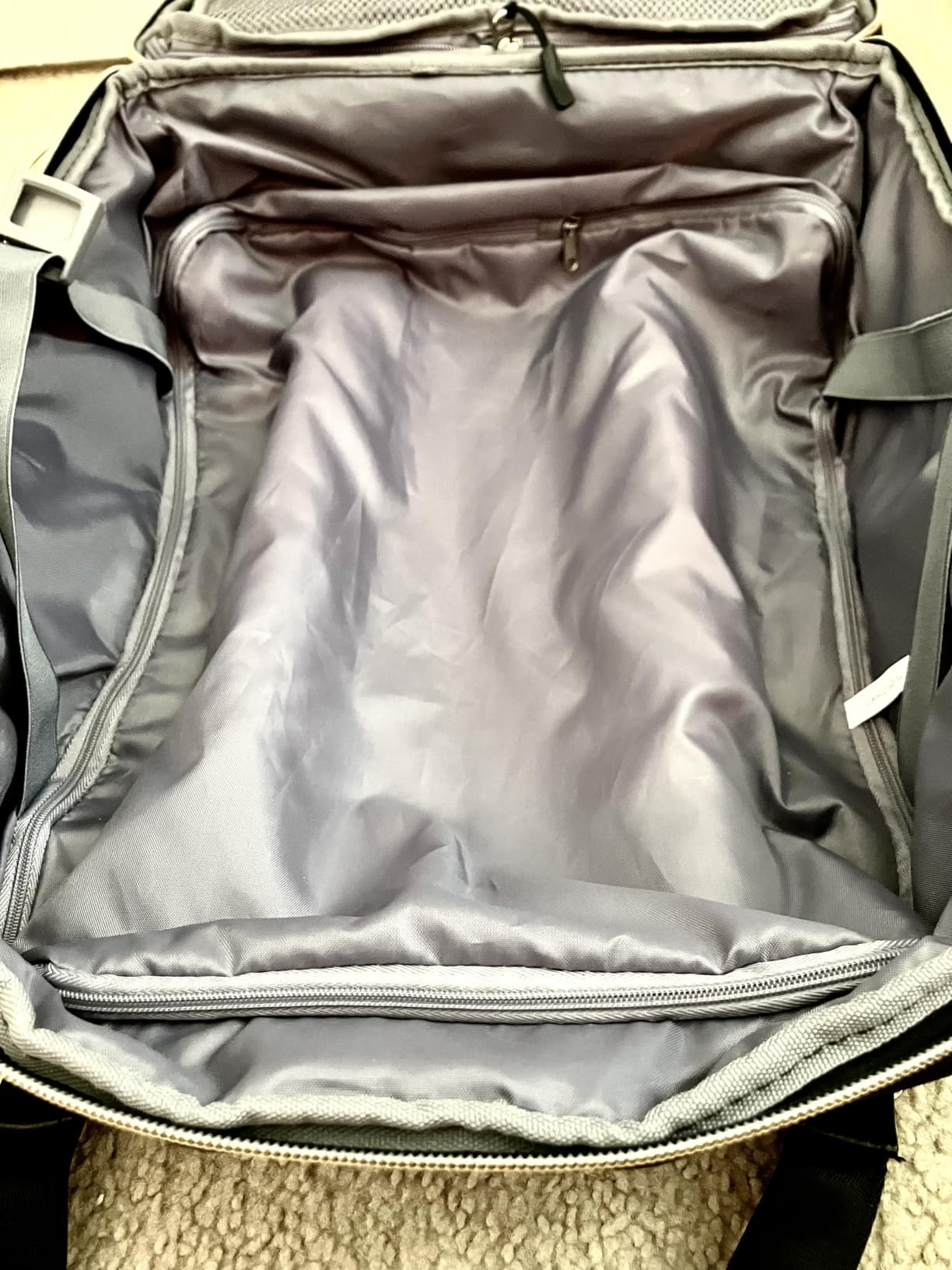
Who should buy it
Business and hybrid travellers who carry a 15.6-inch laptop plus a change of clothes are the core audience. The detachable pouch means you can move the computer to a smaller bag for a day meeting, which removes the usual reason to check the laptop in a separate case.
It also suits anyone who moves through airports fast and values quiet wheels over maximum empty weight. At 6.6 pounds it is mid-range for the lift, and the 360-degree base does most of the work in tight spaces.
Where the compromises are
The lack of water resistance is the most concrete drawback. There is no coating to slow a spill, and a soft shell absorbs what a hard case would bead. If you travel with liquids in the cabin, that matters.
And the dimension headroom is thin. With the expansion closed and the front pockets modest, it sits within a standard limit; fill either and it will not. Treat the laptop bay as the feature that justifies the trade-off, not the capacity.
5. American Tourister 4 KIX 2.0 Spinner for Short Domestic Trips
American Tourister 4 KIX 2.0 Expandable Softside Luggage with Spinner Wheels, 20 SPINNER, CLASSIC BLUE
- Handles 1 to 3 day trips in a compact carry-on
- ergonomic adjustable trolley grip
- wear-and-tear tested ball spinner wheels
- oversized zipper pulls are easy to grip
- carbon fiber trim looks refined
- Listed 9.5 inch depth is borderline for strict airline limits
- lighter construction than premium brands
- zipper closure rather than a TSA lock
The 4 KIX 2.0 is a short-trip bag and honest about it. Reviewers treat it as a compact carry-on for one to three days, and the styling gets called out more than the engineering. The carbon fiber texture trim and gunmetal hardware give it a considered look that usually costs more elsewhere.
The trolley grip adjusts to the user rather than sitting at a fixed height, and the ball spinner wheels were wear-and-tear tested for stability and comfort. Oversized zipper pulls are a small thing that you notice every single time you open the bag in a boarding queue, and most owners mention them positively.
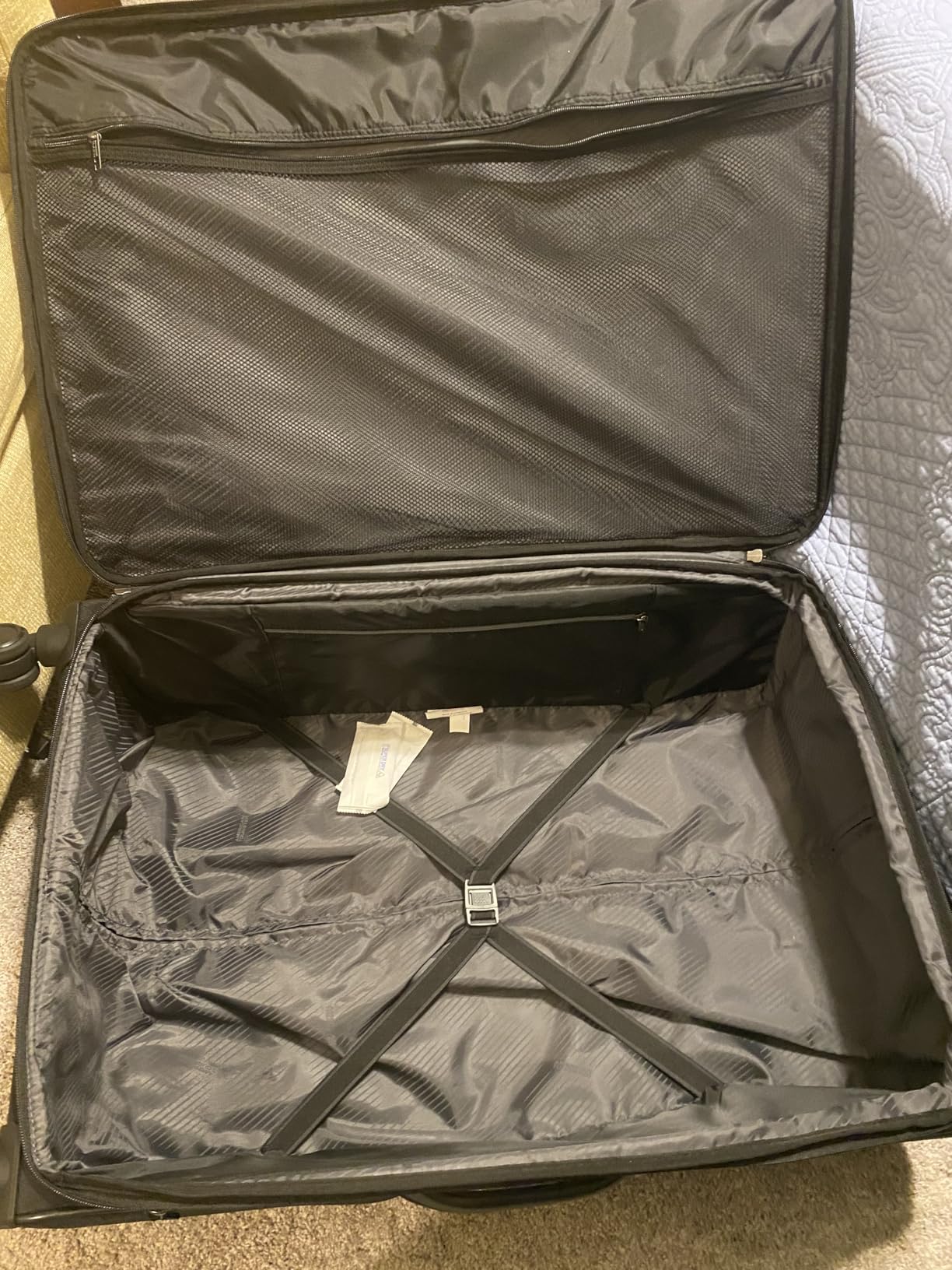
Here is the caveat that decides whether this bag flies with you. The exterior is listed at 23.5 by 14.5 by 9.5 inches, and 9.5 inches of depth is over the standard 9-inch limit before the 1-inch expansion is opened. On carriers that measure to the published limit, or on a regional jet with a shallow bin, this is a bag that gets asked about at the gate.
Construction is lighter and less reinforced than the premium bags in this roundup, which shows up in long-term durability rather than in the first few trips. Zippers are conventional rather than a built-in TSA combination lock, so the security model is the one most soft carry-ons use.
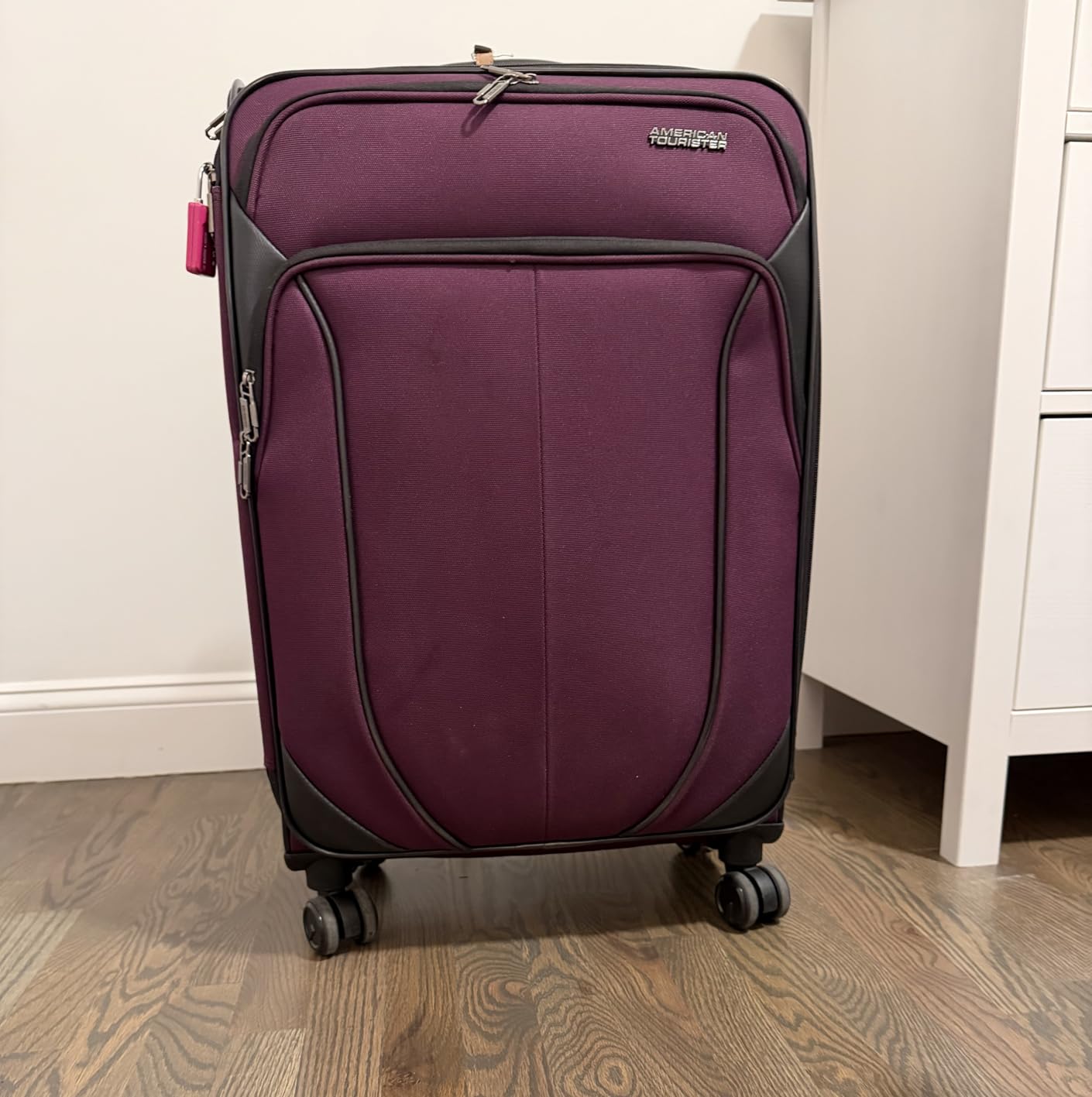
What it is good for
It suits a traveller doing frequent short domestic hops where the bag lives in a car boot between trips. The compact footprint and the spinner base make it easy to move through a terminal, and the adjustable handle means one bag can serve more than one person in a household.
It is also a sensible first soft-sided carry-on. The construction is simple enough to understand and sturdy enough to survive normal handling, and it is inexpensive enough that a first mistake is not an expensive one.
What to watch out for
The depth is the honest problem. Buyers who have taken it on short domestic trips mostly report success, and buyers who have flown stricter carriers report the depth being noticed. Check your route before you rely on it, and leave the expansion closed.
Lighter fabric also means more give at the seams after heavy use, and there is no lock to slow down anyone with a blade. Neither is a dealbreaker, but both argue for a separate packing strategy rather than simply throwing clothes in.
6. Briggs and Riley Baseline Cabin Softside Spinner for Compact Bin Fit
Briggs & Riley Baseline Cabin Softside Spinner Carry-On, Plum
- Compact cabin sizing that is easy to fit in overhead storage
- smooth-rolling spinner wheels
- multiple pockets for small items
- premium brand construction
- light for its class
- 24 L is small beyond a short trip
- highest cost in this roundup
- not water resistant
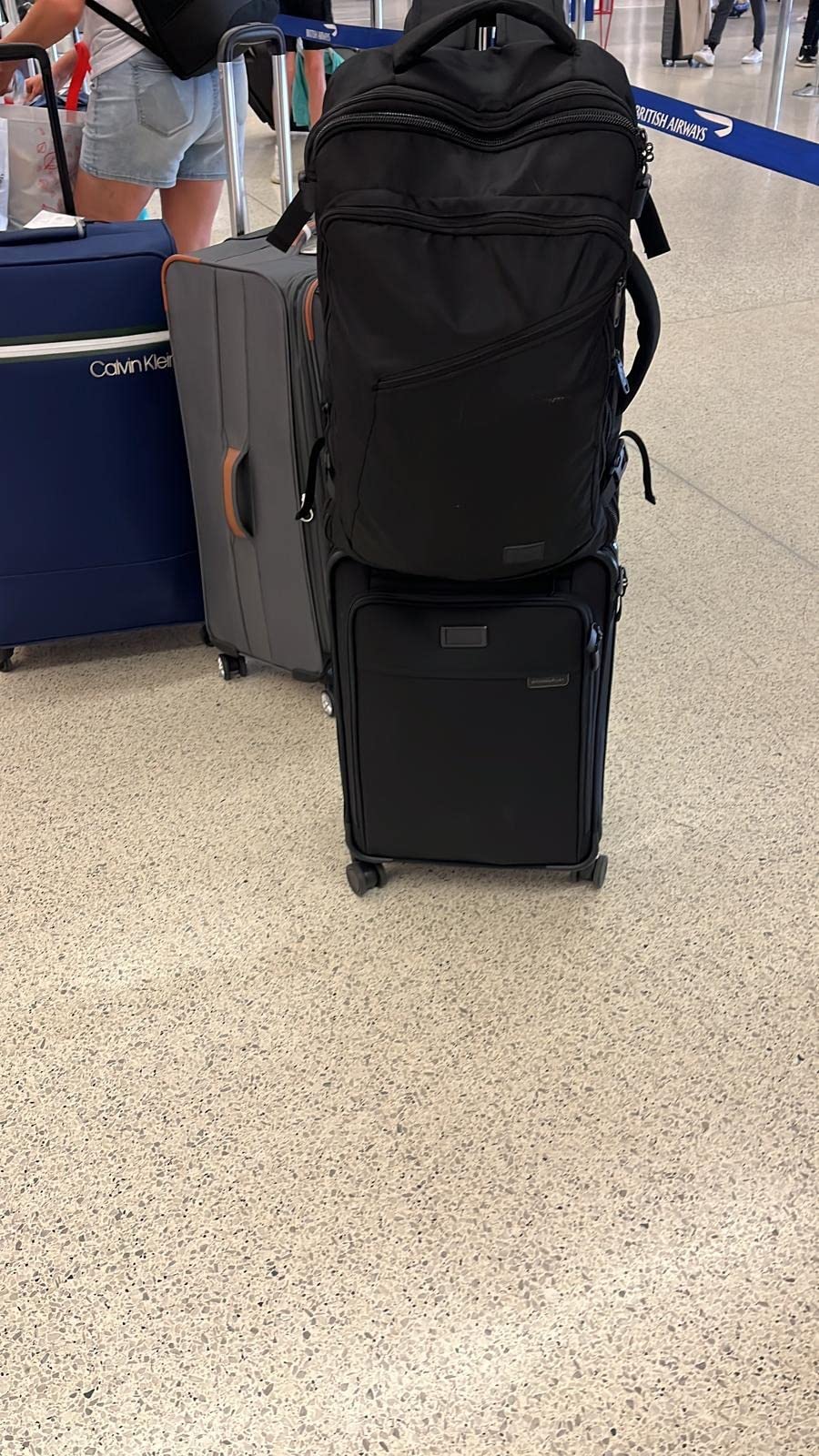
The Baseline cabin bag solves the bin problem by removing the variables. At 16.5 by 14.5 by 8.5 inches it is far under the standard carry-on limit, and soft nylon construction lets it compress further if a bin is genuinely tight. If your fear is the sizer box, this is the most conservative answer on the list.
It is a genuinely compact bag rather than a shrunk full-size one, and owners are clear about what that means. It carries documents, a change of clothes, electronics, and a laptop-adjacent load. The multiple pockets organise the smaller items, and the spinner wheels roll smoothly enough that the short external height never becomes an issue in a terminal.
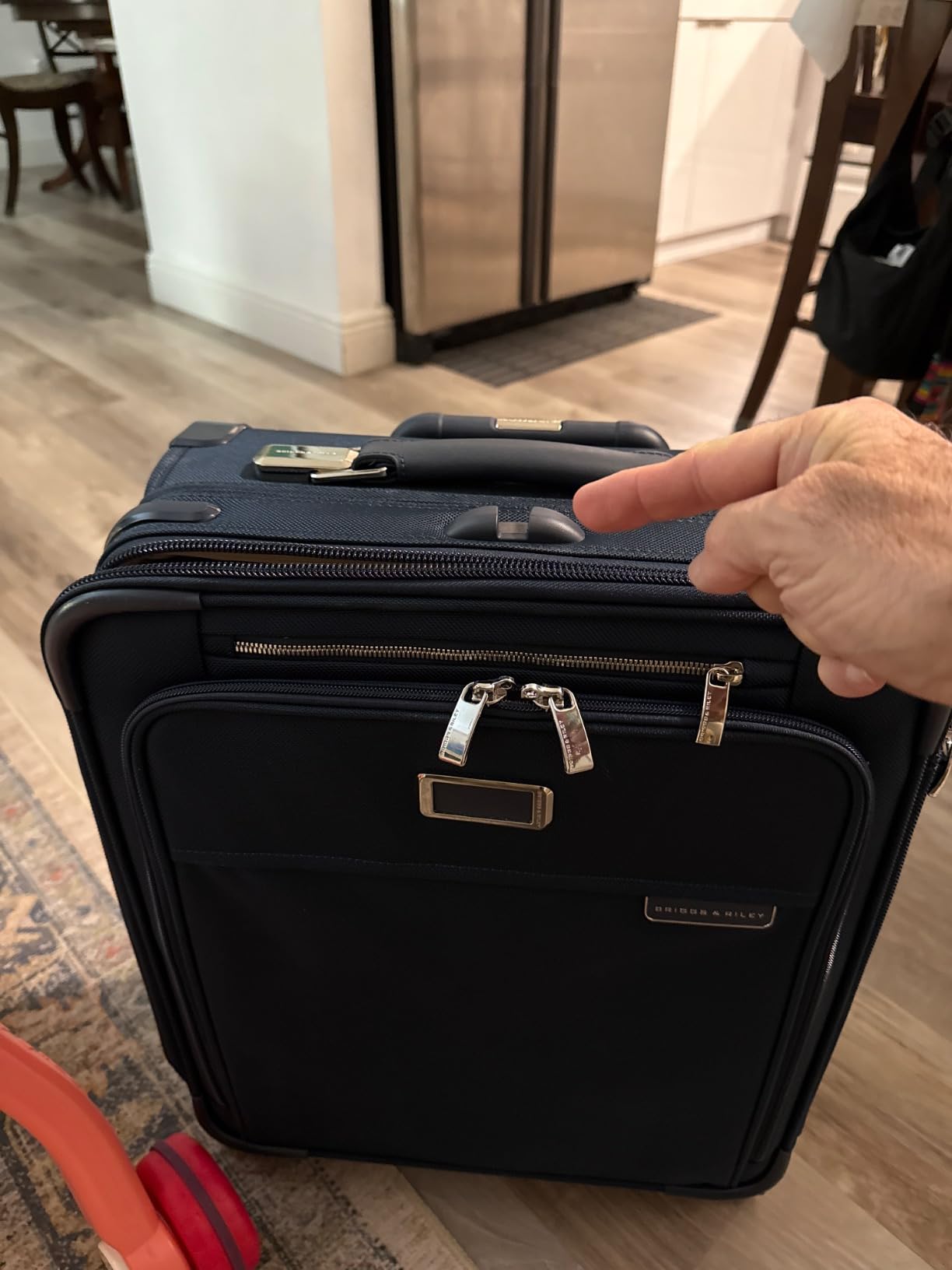
At 24 liters, this is not a week-long carry-on. Buyers consistently accept that trade in exchange for the dimensions and the construction, and the pattern in reviews is that people use it as a personal item or a short-trip bag and pair it with something larger. The telescopic handle plus a top handle makes it easy to lift into a bin that is already partly full.
The nylon shell is not water resistant, which is worth knowing before a walking holiday. The zipper lock is a basic one rather than a TSA-approved combination, and the price sits at the top of this group by a wide margin.
Where it is the right call
Pick this if gate-check anxiety is the dominant factor in how you travel. A bag this far under the limit removes the argument entirely, including on smaller regional aircraft where bins are shallow and sizers are less forgiving.
It is also a strong second piece. Travellers who carry a roller plus a personal item can use this as the personal item, and the small footprint means it fits under a seat on many layouts in addition to overhead.
What you give up
Capacity is the real cost. 24 liters is short-trip territory, and buyers upgrading from a full-size soft case report a significant downgrade in what fits. If you are the sort of traveller who buys souvenirs, this is the wrong shape of bag.
There is also no water resistance and a simple zipper lock, and the cost is the highest in the roundup. You are paying for construction and for a size that solves a problem no cheaper bag on this list does quite as cleanly.
7. KROSER 20 Inch Expandable Softside for Feature Density at a Mid Price
- Published dimensions of 22 x 14 x 9 inches including wheels and handles
- 6.2 lb empty weight
- built-in TSA-approved combination lock
- USB charging port in the front pocket
- many zippered compartments
- Tips forward when the front pockets hold a laptop
- front lid pockets smaller than expected once filled
- wheels can wander and need steering
Very few bags in this price range publish an overall dimension that matches the standard limit exactly. The KROSER lists 22 by 14 by 9 inches including wheels and handles, which makes the bin conversation simple: closed and lightly packed, it is compliant on the published numbers rather than compliant in theory.
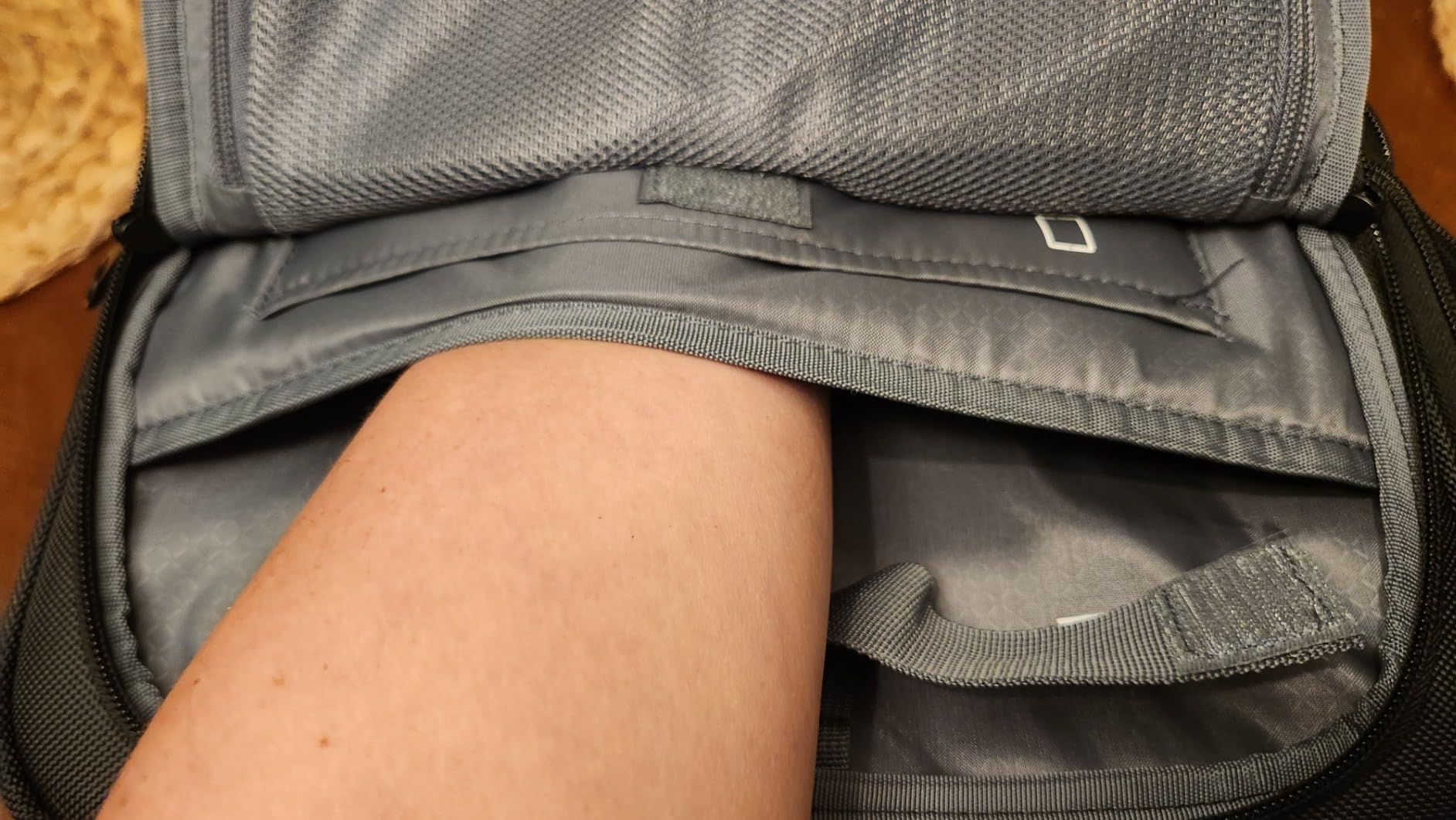
The feature list is unusually dense for a mid-tier softshell. A TSA-certified combination lock is built in, the front pocket has a USB charging port for a power bank, and there is a waterproof interior compartment plus a U-frame zippered divider. The bag fits a 16-inch laptop and an 11-inch tablet, which is a real size class rather than a nominal one.
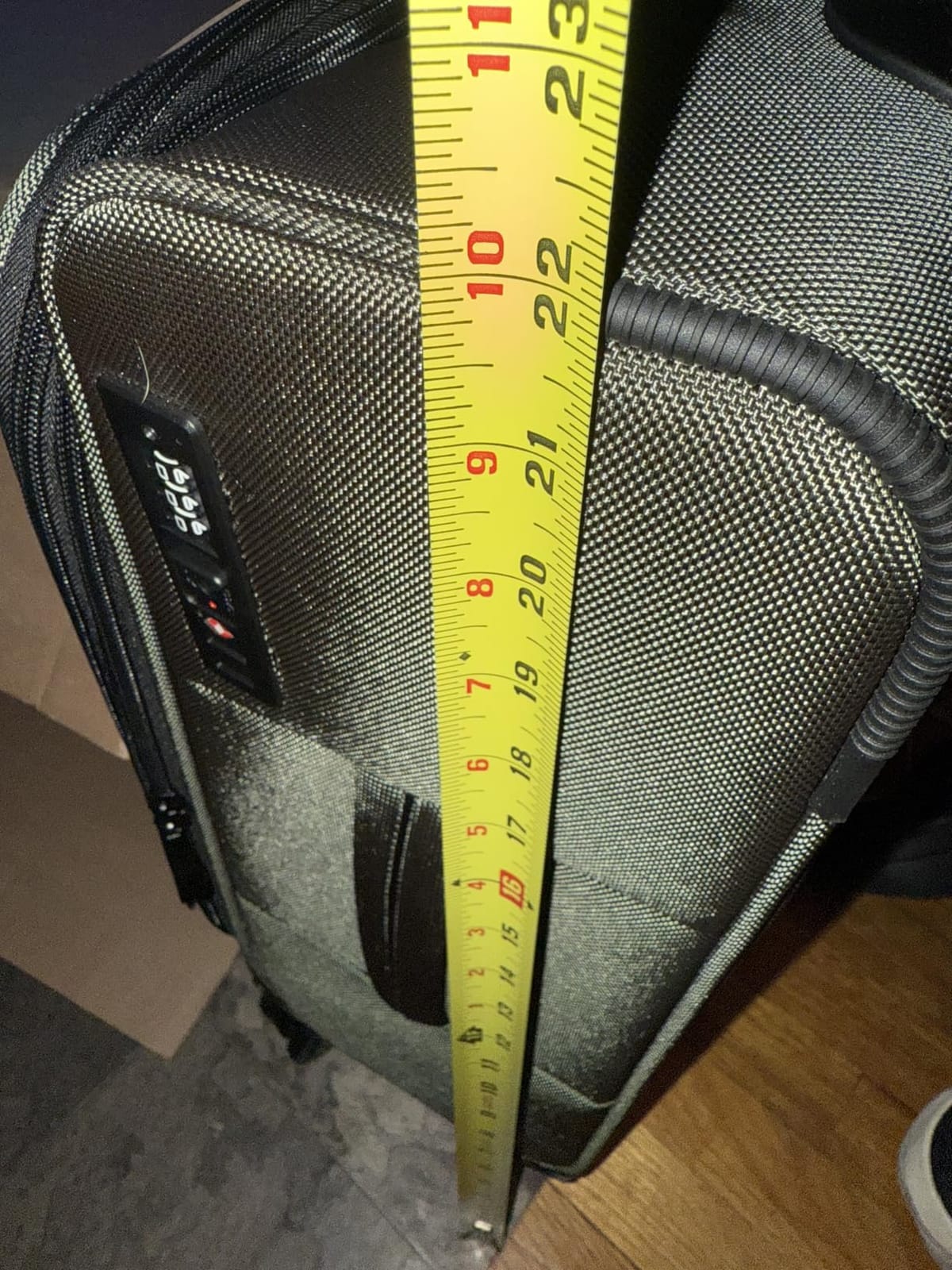
The repeated complaint is balance, and it is worth planning around. A front panel full of pockets puts weight ahead of the wheelbase, so the case tips forward unless heavy items are packed low. Owners who solve that by packing the main compartment first and the front pockets second report no problems at all; owners who do the reverse report tipping in the terminal.
At 6.2 pounds it is light for a bag with this much hardware, and the reinforced explosion-proof reverse-coil zippers hold up well. The multi-level telescopic handle and the expandable body add flexibility, with the usual caveat that expansion moves the depth past the limit.
Why business travellers pick it
The combination of a compliant published footprint, a laptop that fits, a lock, and a charging port covers most of what a working traveller needs in one bag. The USB port in particular is the feature owners single out, because it turns the front pocket into a charging station during a long connection.
The waterproof interior compartment and the U-frame divider also make it a good fit for anyone who carries liquids or a toiletry bag without wanting them against clothing.
Where it annoys people
The front-pocket balance issue is the one to plan for. Keep the heaviest items in the main compartment and low, and use the front pockets for flat, light things like documents and chargers.
Front lid pockets look larger empty than they are, and the wheels can wander slightly on an angle, which means the bag needs an occasional nudge rather than gliding indefinitely. Both are manageable; neither is invisible.
8. Delsey Paris Helium DLX Carry-On for Secure Zippers and Removable Lining
DELSEY PARIS Helium DLX, 20 Inch Carry-On Softside Luggage, Navy Blue
- 40 L capacity expanding to 46 L
- dual-density silent spinner wheels
- patented two-layer SECURITECH zippers
- removable washable lining and bi-fold toiletry bag
- 5 year worldwide warranty
- 10 inch overall depth exceeds many airline limits
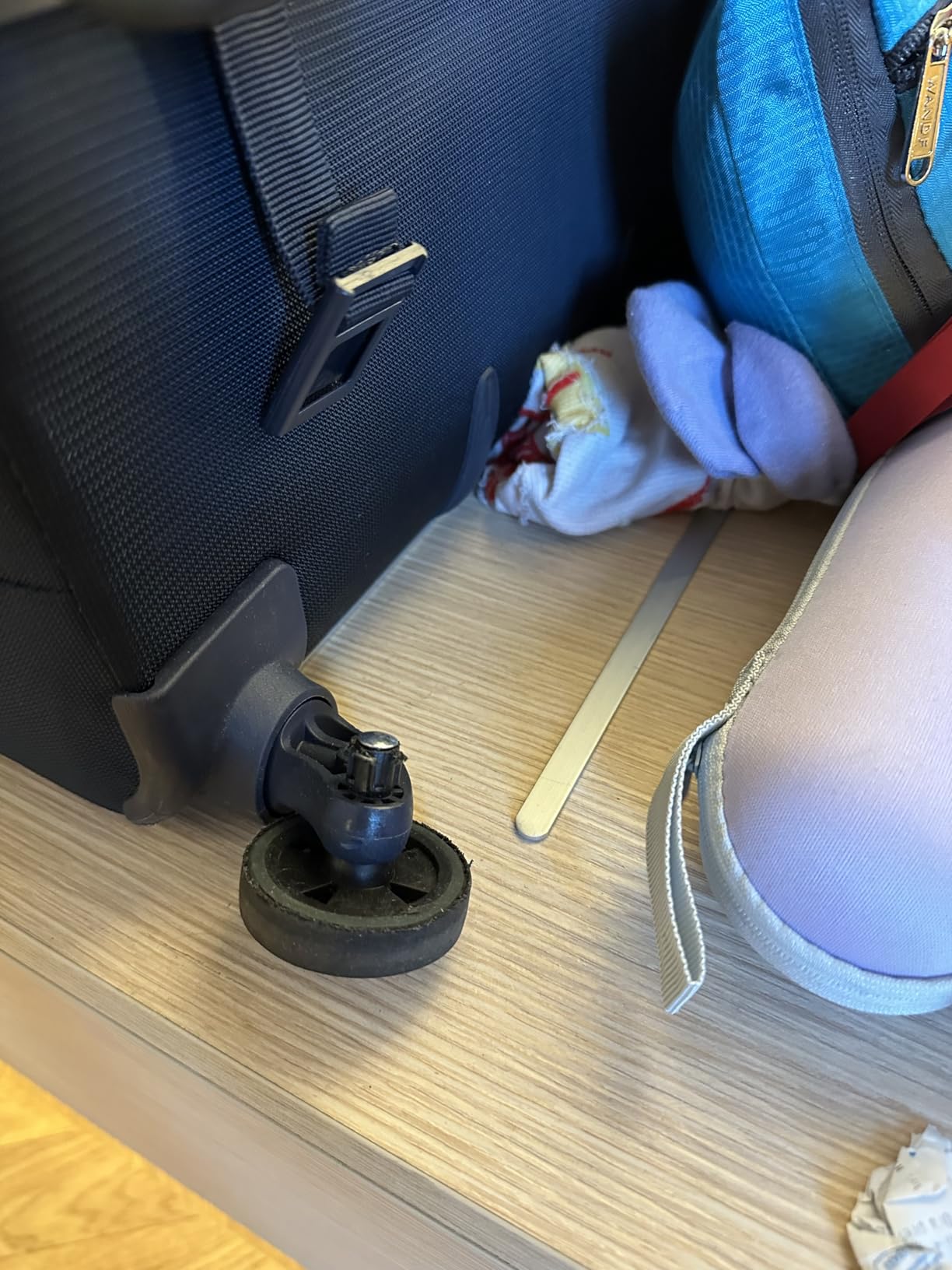
- front panel extends past the wheels so it tips forward
- occasional telescopic handle jamming
The Helium DLX is the best-organised bag in this roundup, and the reason is the removable washable lining. Pull it out and the interior is clean, which sounds minor until you have unpacked a leaking water bottle in a fabric-lined compartment. The bi-fold toiletry bag and the tie-down straps complete an interior that is genuinely designed rather than assembled.
The SECURITECH zipper is a two-layer system intended to resist intrusion, and it is the feature security-minded buyers are paying for. Dual-density silent-core spinner wheels keep the noise down, which matters in a cabin where a hard-rolling bag announces itself for the entire boarding queue.
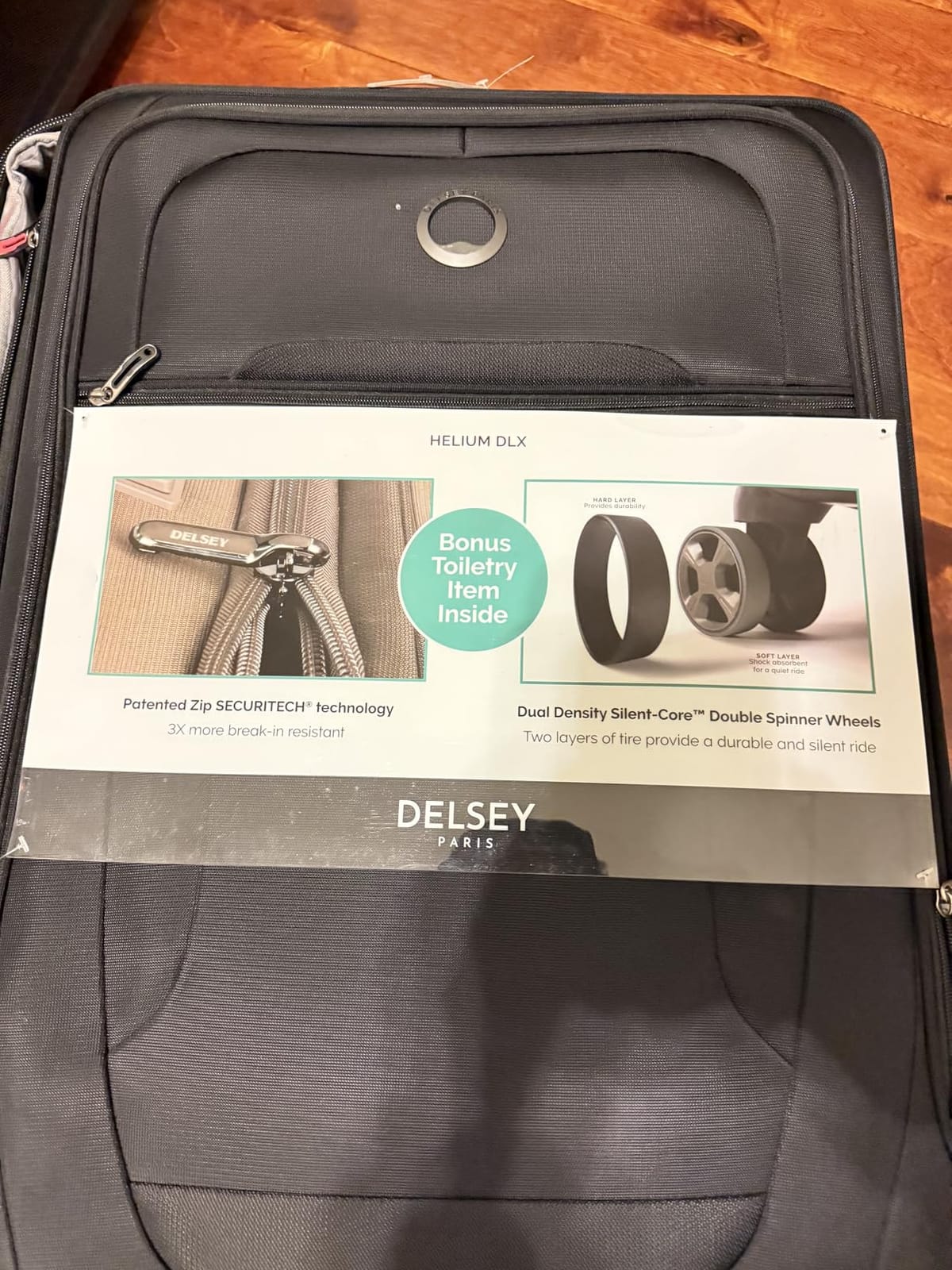
The dimension problem is the headline. The exterior measures 23.5 by 14.25 by 10 inches including wheels and handles, expanding to 11.25 inches deep. Ten inches of depth is over the standard limit before you touch the expansion, and 23.5 inches of height is over the 22-inch standard too. This is a carry-on-plus size that fits a generous domestic bin and gets questioned on a strict one.
Owners do report it packing well for a week, and the 40-to-46-litre range is generous. The tipping issue is related to the same geometry: the front panel extends beyond the wheelbase, so pushing it on all four wheels loads it forward.
Who it suits
It is the pick for anyone who packs a full week, cares about interior organisation more than exterior pockets, and flies domestic routes with bins that can take 10 inches of depth. The removable lining and washable toiletry bag make it a strong option for multi-trip use and for anyone travelling with children or medication.
It also works well for anyone who wants more security from a fabric shell. The two-layer zipper is a meaningful upgrade over a conventional zip on a bag full of electronics.
What limits it
Depth, first and foremost. If your itinerary includes a carrier with a 9-inch limit, this bag is over before you pack it, and no amount of careful stuffing changes that. The 5-year worldwide warranty is strong, but it does not solve a size problem.
The forward-tipping balance and occasional telescopic handle jamming are the other two. Neither is severe, but both show up in long-use feedback, and neither improves with expansion.
9. LOVEVOOK 22 Inch Softside Spinner for Meeting the Full US Limit
- Meets the maximum US carry-on dimensions including wheels
- padded external laptop compartment for 15.6 inch laptops
- waterproof wet pocket plus three front compartments
- rolls without tipping
- silent 360 degree spinner wheels
- Tips forward if the front cubbies are heavily loaded
- canvas-like material shows wear and marks
- lock and zipper hardware feel utilitarian
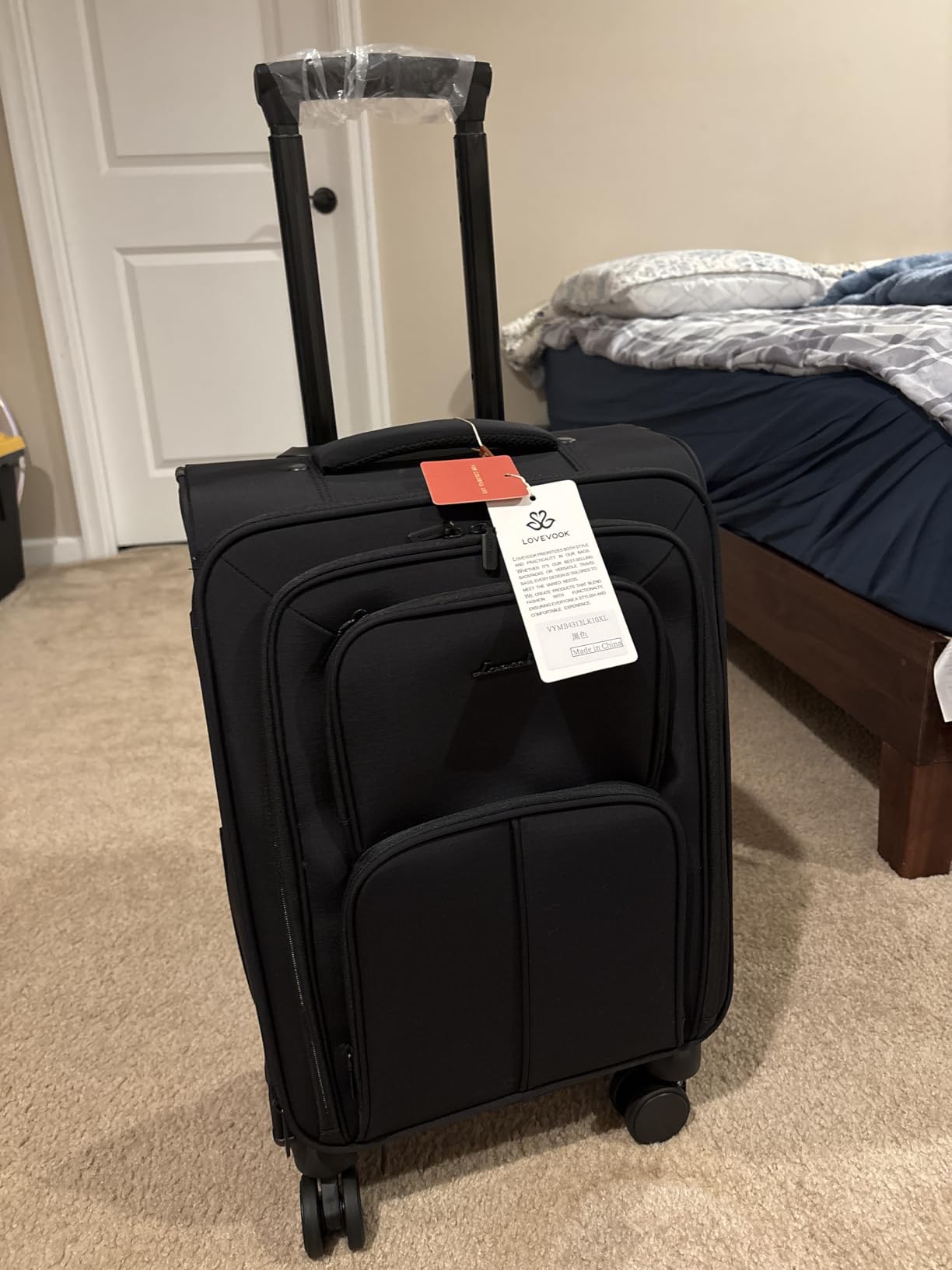
This is the bag that uses the full 22 by 14 by 9 inch allowance on purpose. The overall figure including wheels is exactly at the US maximum, and owners confirm it meets the limit rather than approaching it. That is a different proposition from a compact bag: you get the width and height allowance without exceeding the depth.
Because the case dimensions are listed at 18.7 by 14 by 9 inches with the wheels bringing the height to 22, the depth stays legal. That single design choice, wheels recessed rather than protruding, is what separates a bag that is technically compliant from one that is over.
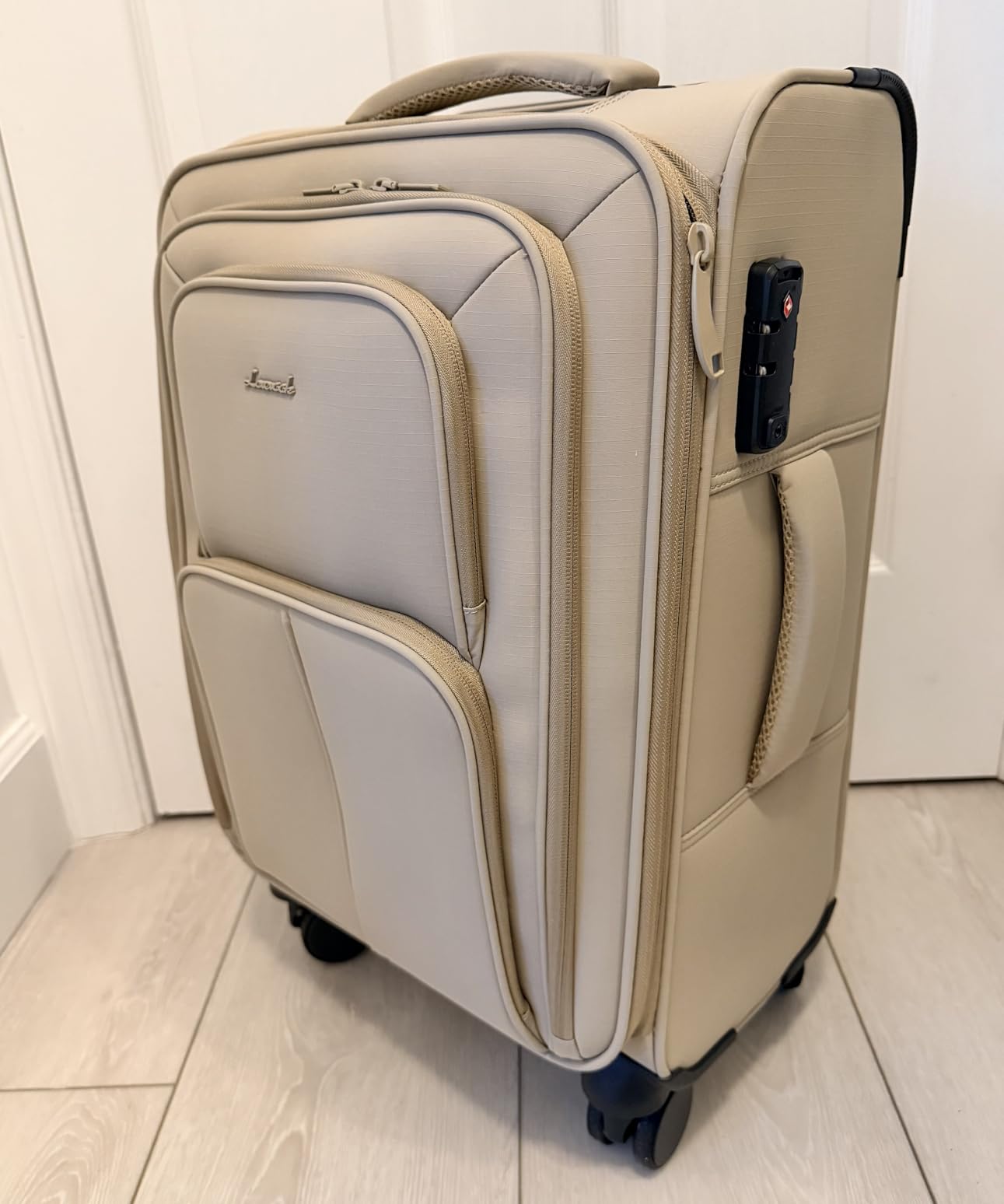
Owners report that it holds more clothing than the dimensions suggest, which is the softshell advantage in a measurable form. The padded external laptop compartment takes a 15.6-inch machine, and the three front compartments plus a side pocket cover documents, a bottle, and a charger without opening the main compartment.
The 360-degree silent spinner wheels with a precision shaft roll smoothly and, more importantly, the bag is reported not to tip when pushed, which is not true of every front-pocketed design here. The waterproof wet pocket and adjustable interior straps are the two details that come up repeatedly as useful.
Why it makes the shortlist
It is one of the few bags in this roundup that both fills the standard allowance and stays inside the depth limit, and it does so with a laptop bay and a wet pocket rather than an empty shell. For a traveller who wants maximum legal capacity with organised storage, that combination is hard to find.
It suits a four-to-five-day trip with a laptop, and the silent wheels and the non-tipping base make it pleasant in a terminal. The value for the money is consistently mentioned by owners who expected less at this tier.
What gives it away
Loading the front cubbies heavily shifts the centre of gravity forward and brings the tipping behaviour back, so the same rule applies as with any pocketed front panel: heavy items low and toward the wheels. The 6.9-pound empty weight sits mid-range for the lift.
The material is listed as canvas and behaves like a heavy woven fabric, which means it shows wear and marks more readily than a coated polyester shell. The lock and zipper hardware are functional rather than refined, which is the trade for everything else on this list.
10. BAGSMART 20 Inch Expandable with Matching Duffel for a Two-Piece Setup
BAGSMART Carry-On Luggage Airline Approved, 20 inch Expandable Suitcase with Duffel bag, Softside Lightweight Suitcases with Spinner Wheels, light tan
- Fits overhead compartments on major carriers
- includes a matching duffel for the under-seat slot
- expands 2 inches for about 20 percent more room
- two-step aluminium handle
- TSA lock
- Thin fabric wrinkles and shows scuffing
- main compartment smaller than the pocket layout suggests
- matching duffel has no padding
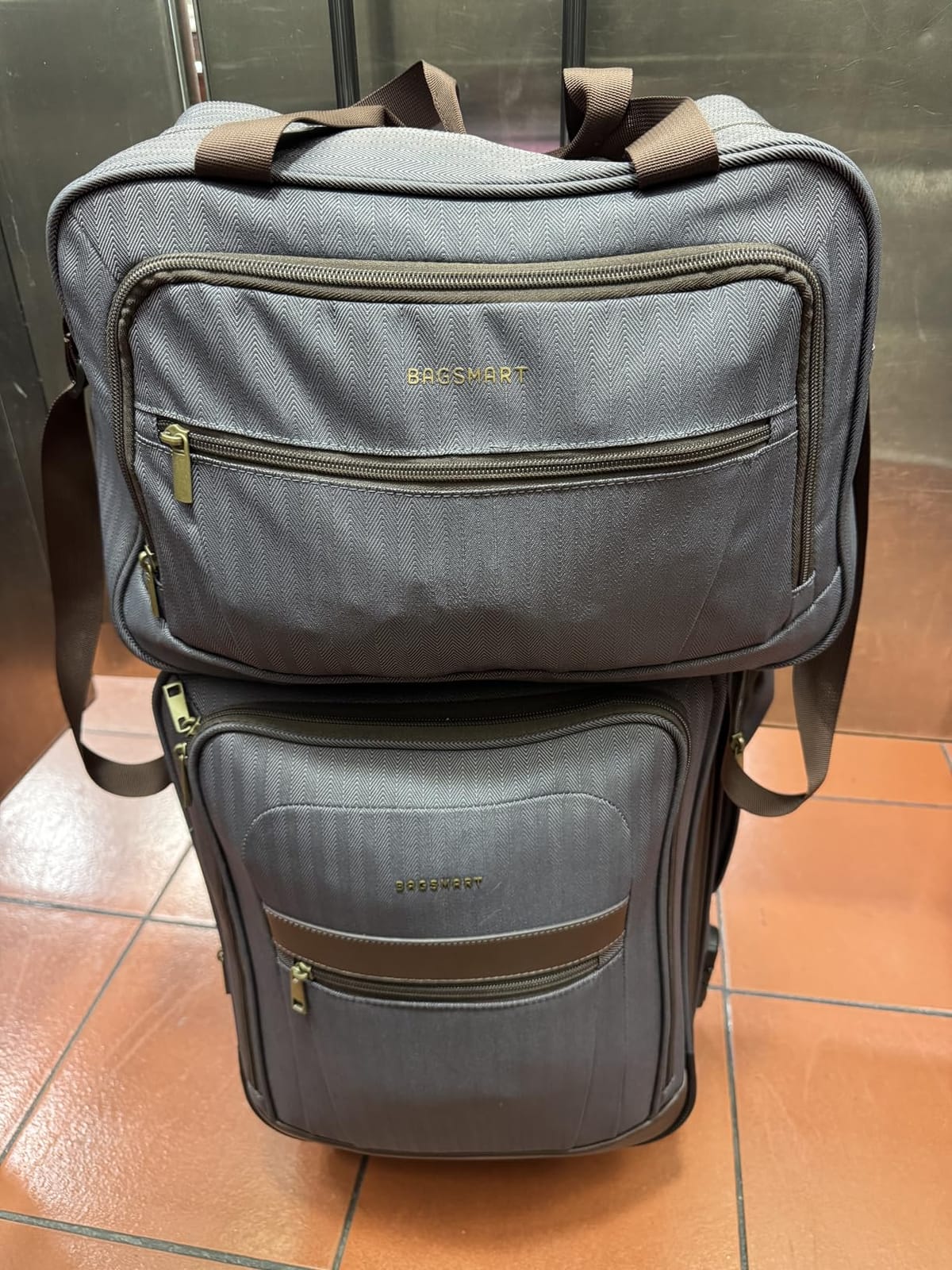
This is the only pick that solves the carry-on plus personal item problem with a matched set rather than a separate purchase. The case goes in the overhead bin and the duffel tucks under the seat or stacks on top, which is a genuinely useful configuration for a traveller who needs a few more hours of usable surface area than a single bag allows.
The case measures 21.25 by 13.38 by 9.84 inches, and with the handle included the depth figure is listed at 10.62 inches. It expands a further 2 inches for roughly 20 percent more room. Owners report it fitting overhead compartments on major carriers, which is consistent with the domestic figures rather than a strict international footprint.
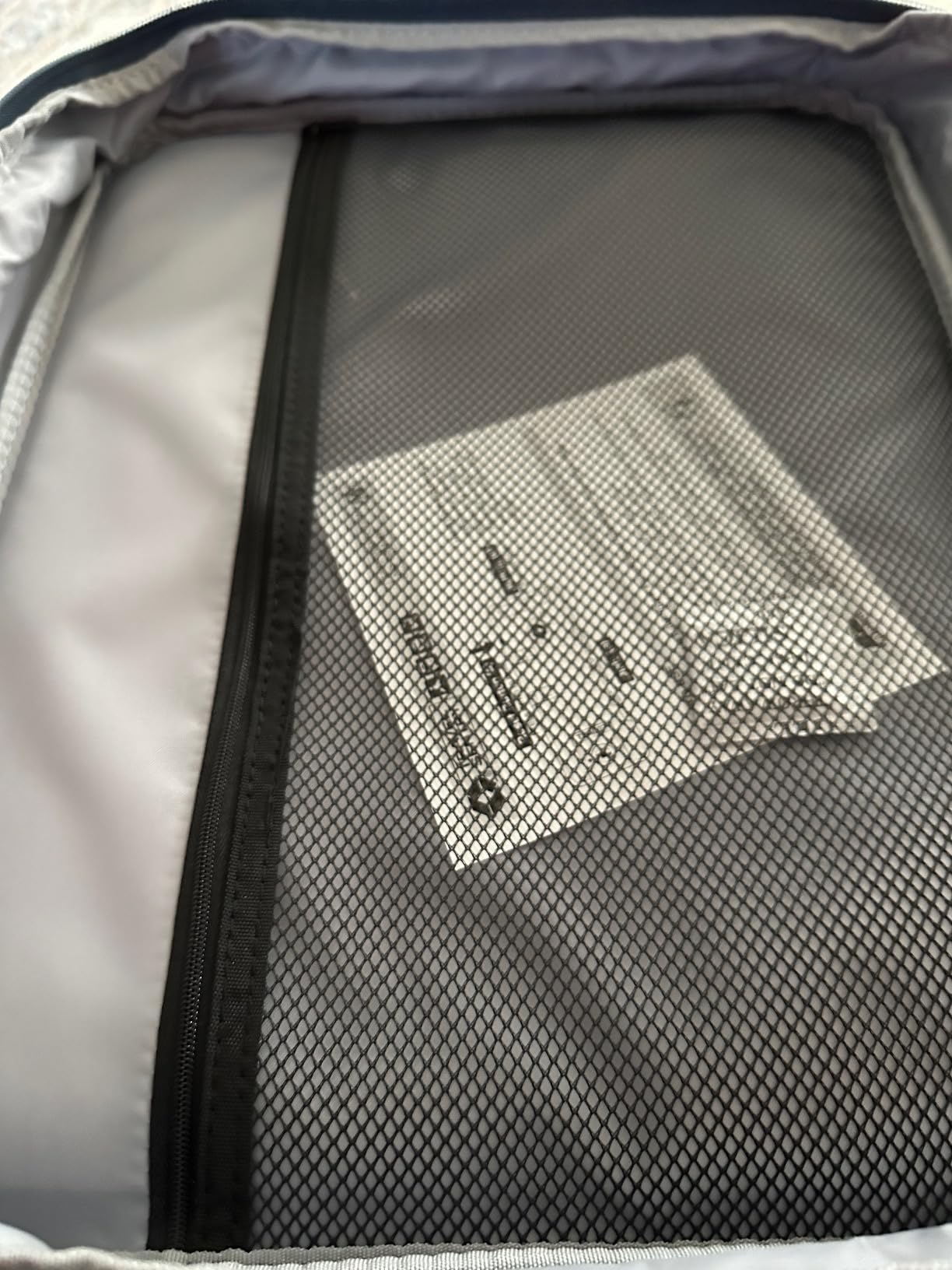
At 7.2 pounds empty the case is not a light lift, and the duffel adds to what you are carrying even though it stays under the seat. The two-step ergonomic aluminium handle and the 360-degree spinner wheels are competent, and the neutral camel colour is practical for a bag that will be handled.
The main criticisms are material rather than mechanical. The thin fabric wrinkles, and owners report scuffing and black marks after handling. The main compartment also runs smaller than the exterior pocket layout implies, so it is worth packing from the inside out rather than assuming the pocket count equals the capacity.
Who should buy the set
Travellers who want a personal item without buying a second, mismatched bag. The duffel works alone for a day trip or as an overflow layer, and the two-piece configuration is the most comfortable way to carry a full week without checking anything.
It also suits anyone starting a first travel setup, since the set covers the carry-on and the personal item in one purchase and the expansion gives room for a return trip. The two-year manufacturer warranty is shorter than most here, which is the main thing to weigh against the price.
Where it falls down
The thin fabric is the recurring note. It is light, which helps the lift, but it wrinkles, marks, and offers less protection for anything fragile than the heavier weaves in this roundup. If your trips involve checked handling, that matters more than the price gap.
The duffel itself is very thin with no padding, so it works for clothing and a tablet rather than for fragile equipment. And with the handle included the depth is listed at 10.62 inches, so check your carrier before you assume this is a universal carry-on.
11. Tonyeee 19 Inch Compact Softside for Regional Jets and Small Aircraft
Tonyeee 19 Inch Carry on Luggage 22x14x9 Airline Approved, Softside
- Compact 20.5 by 13.7 by 9 inch footprint including wheels
- removable spinner wheels for storage and replacement
- 180 degree opening speeds up TSA screening
- multiple exterior pockets
- water resistant twill
- Listing mixes case-only and wheels-included dimensions so airline fit is ambiguous
- 35 L suits short trips
- handle housing reduces usable compartment space
Regional jets and small feeder aircraft have shallower bins than wide-bodies, and this is the bag built for that environment. At 20.5 inches tall including wheels, with a 9-inch depth, it leaves real headroom under the standard limit, and the compact footprint is an advantage when the bin space is 19 inches rather than 22.
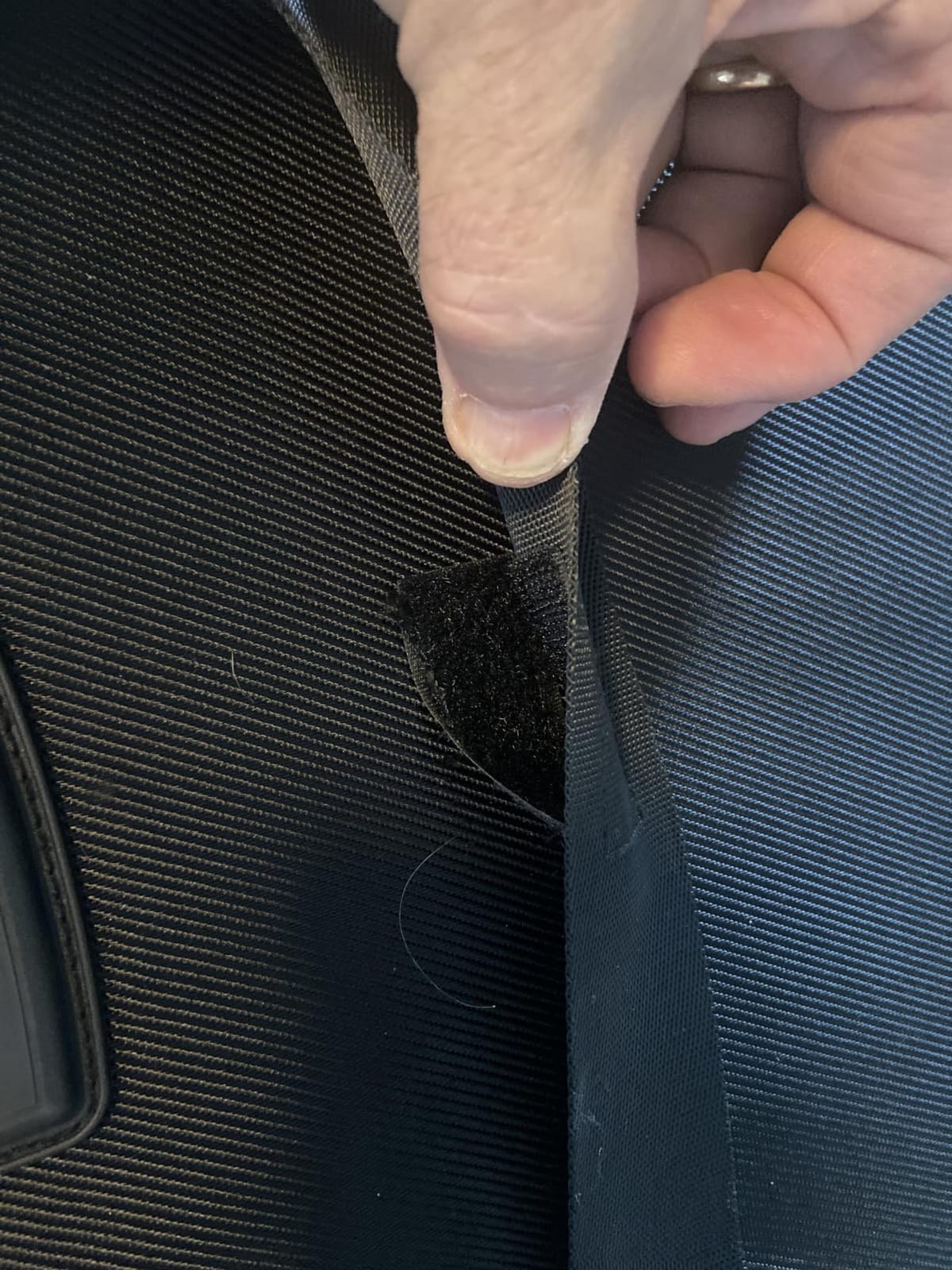
The removable spinner wheels are the detail that makes it a travelling companion rather than a checked item. Pull them off and the bag is short enough for a locker or a hotel wardrobe, and if a wheel is damaged you replace the assembly rather than the bag. There is also a cup holder on the wheel housing, which sounds trivial until you are standing at a gate.
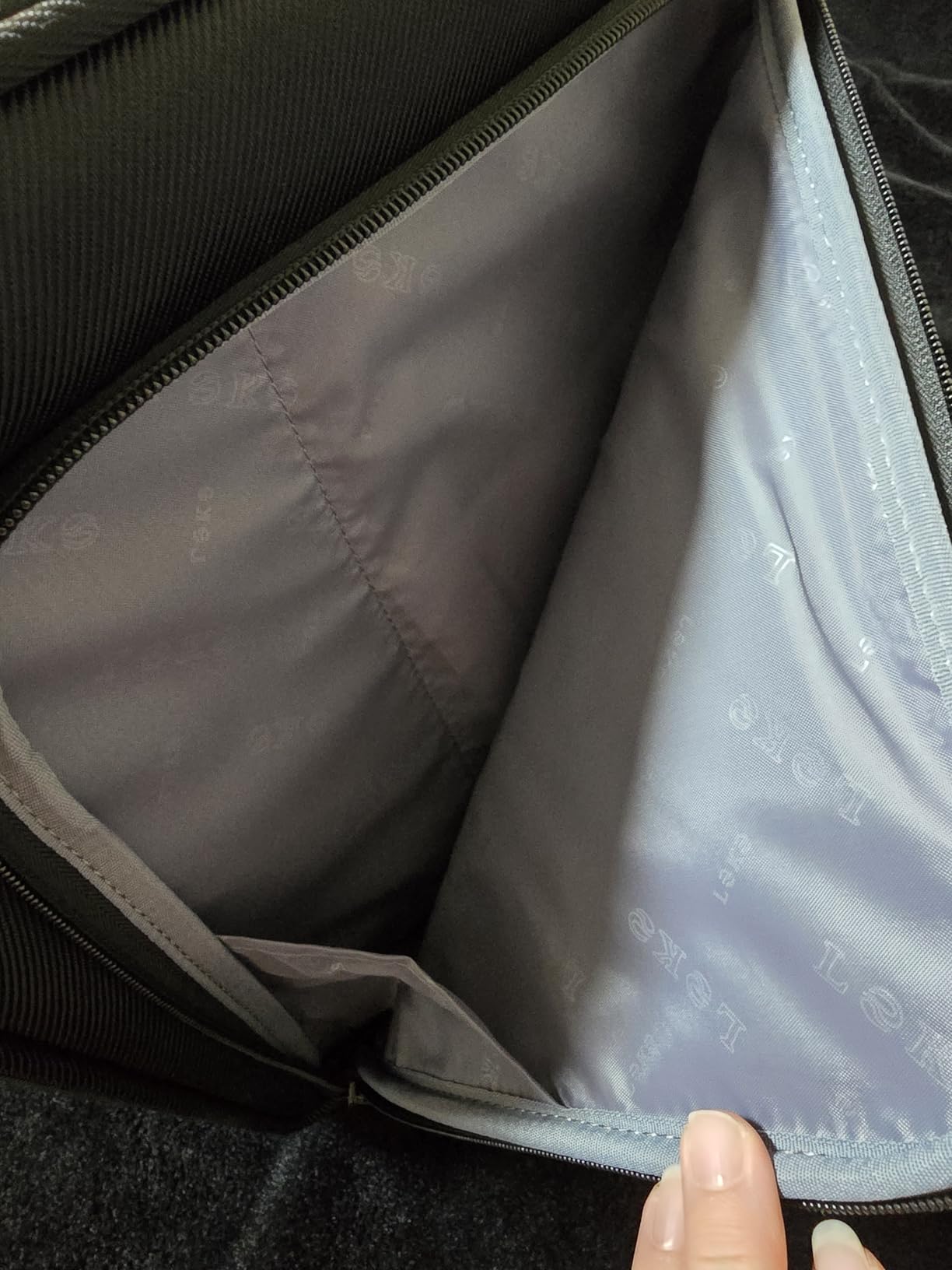
The 180-degree opening design is a practical choice for a bag this size. Instead of a full clamshell that consumes a metre of bin space, it opens far enough for TSA screening and folds back down again, which is exactly the behaviour you want on a feeder aircraft with a shallow bin. The three-stage height adjustable handle gives more height range than most bags at this size.
There is a measurement ambiguity worth flagging. The listed case dimensions are 16.53 by 12.59 by 7.08 inches and the wheels-included figure is given as 20.5 by 13.7 by 9 inches, so the two numbers in the listing describe different things. Measure the physical bag if your route is strict rather than trusting either figure alone.
Where it is the smart choice
It suits frequent fliers on regional aircraft, on last-mile feeder legs, and on any itinerary where the last plane is small. The 20.5-inch height and 9-inch depth sit comfortably inside a standard limit even with a bin that is a couple of inches shallower than the published figure.
The removable wheels also make it a good choice for anyone who does not want a suitcase occupying a corner of a small flat. Empty it, remove the wheels, and it is a compact weekender.
What to be careful about
35 liters is short-trip capacity, not week capacity, and owners are consistent about that. The handle housing reduces usable main-compartment space further, so the honest figure is smaller than the litre rating suggests.
The dimension inconsistency is the real issue to resolve. Get a tape measure out when the bag arrives, and check it against your most common carrier rather than against the listing. The rest of the design holds up well once you know the actual size.
12. Pelican Aegis 22 Inch Carry-On Duffel for Rugged, Quiet Rolling
Pelican Aegis Luggage – Carry On Duffel Bag with Wheels – 22 Inch Carry On Bag – Airline Approved (Sand)
- Rugged construction with strong zippers
- metal rods and compression straps
- recessed wheels preserve the true 22 inch measurement
- quiet oversized in-line wheels roll well on rough surfaces
- 47 L holds a week of clothing
- Not expandable
- semi-soft sides give less crush resistance than a full hardshell
- sits at a forward angle and tips if another bag is stacked on it
The Aegis comes from a case brand, and the construction reflects that. An EVA moulded front shell paired with 500D cordura weather-resistant fabric, metal rods running through the body, and compression straps across the outside make it the most damage-tolerant soft-sided bag in this roundup. Buyers arriving from Pelican luggage rate the build quality first and the sizing second.
The wheel design is the part that solves a problem the other bags here do not. The oversized in-line wheels are recessed behind the bag body, so they do not protrude into the 22-inch measurement. On rough surfaces they roll quietly and smoothly, and the two-wheel format is stable in a straight aisle in a way a spinner is not.
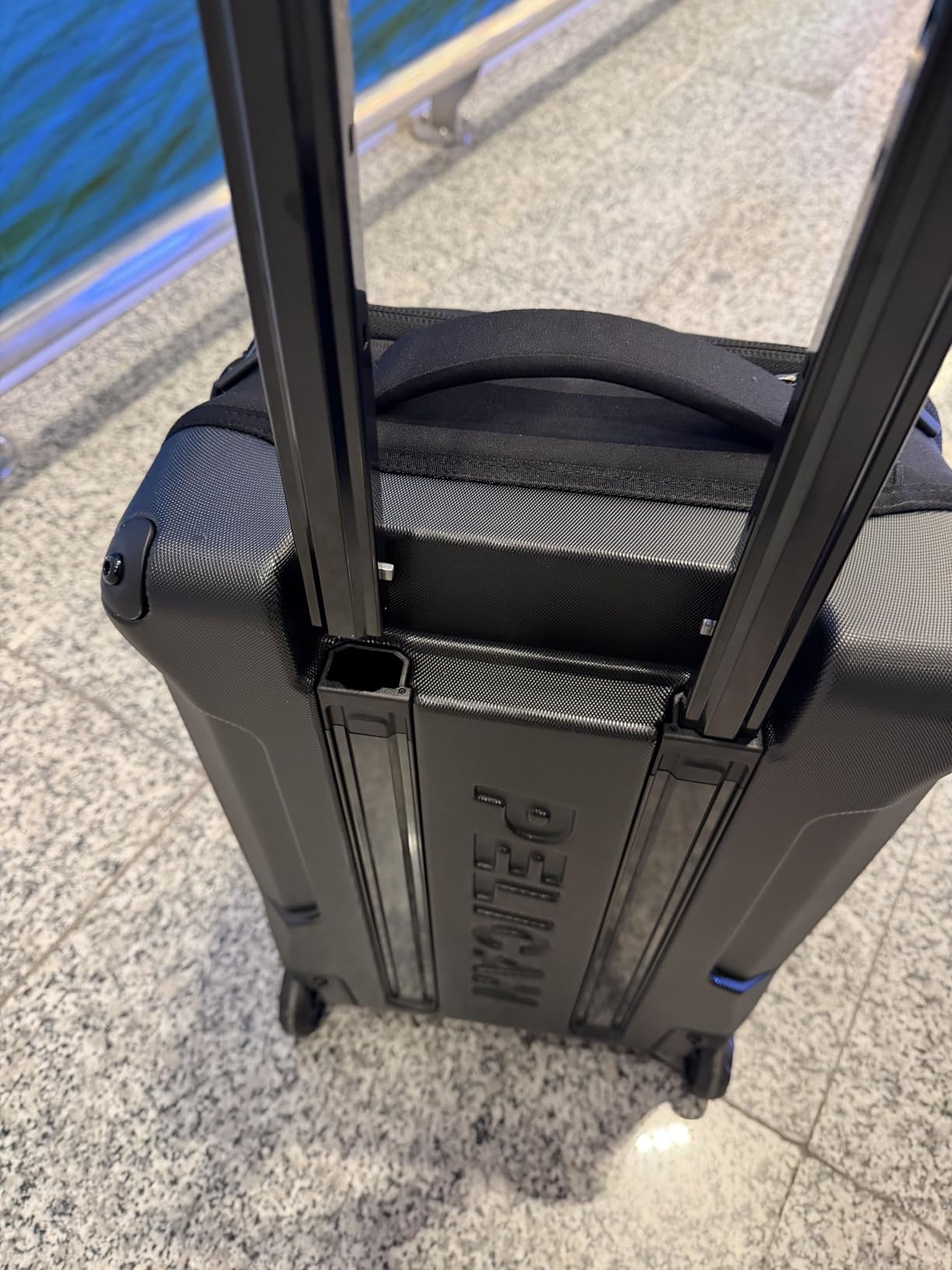
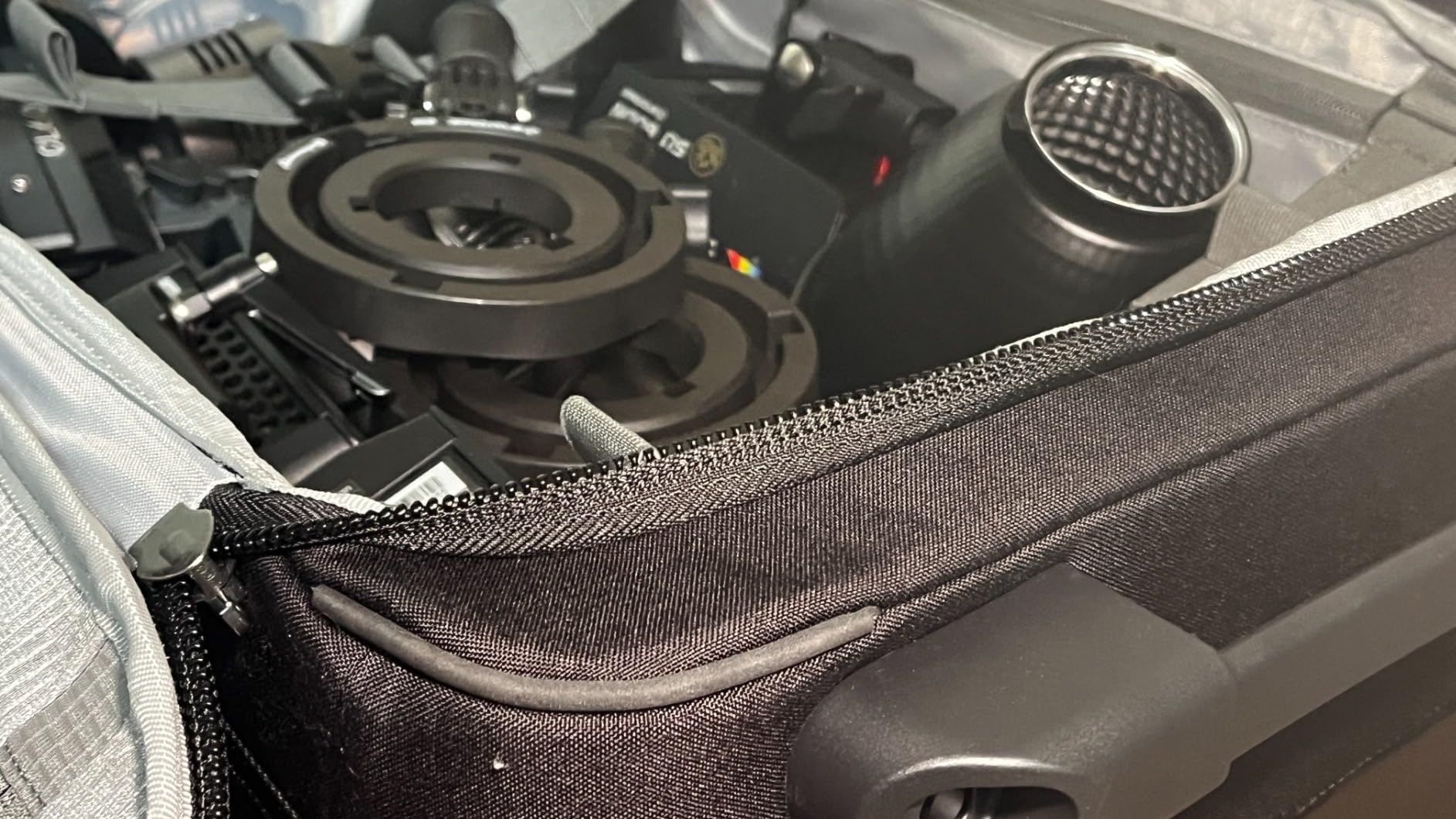
At 47 liters it holds a genuine week of clothing, which makes it the largest capacity in this group while staying at carry-on dimensions. The multi-stage extension handle, the multiple compression straps, and the easy-grab handles are all aimed at a specific problem: getting a loaded soft bag into a bin without it deforming and springing back out.
It is not expandable, and for a bag this rugged that is arguably the correct decision. An expansion zipper on a cordura body would weaken the structure and change the dimension story. The semi-soft side panels also offer less crush resistance than a full hardshell, so heavy items in the middle of the bag are worth wrapping.
Who it works for
It suits someone who treats luggage as equipment: overlanding, boat or safari travel, cobblestone cities, or simply a lot of airport floors. The 500D cordura and the moulded front shell shrug off handling in a way a coated polyester bag does not, and the sand colour means it will not look identical to every other bag on the carousel.
The compression straps are genuinely useful for an overpacker, because they pull the load in rather than letting the body bulge. That directly addresses the main soft-shell bin problem described later in this article.
What to know before you commit
The bag sits at a forward angle and will tip if another bag is placed on top, which matters if you plan to stack it in a trunk or on a luggage rack. The oversized in-line wheels also make the footprint deeper than a spinner of the same height, since there is no wheel housing to tuck into.
There are some reports of strap and buckle failures with limited responsiveness from the manufacturer on warranty claims, so check the hardware before a long trip. The five-year warranty is shorter than the Travelpro coverage at the top of this list, though the build is the toughest here.
Overhead Bin Size Limits by Airline Group
The 22 by 14 by 9 inch figure is the US domestic standard, and it is measured as exterior dimensions including the wheels and the retracted handle. That qualifier matters more for soft-sided bags than for hard shells, because a fabric body can be compressed into a sizer in a way a rigid case cannot. The practical rules we use when screening this list are below.
US major carriers, including the big three and the large network carriers, generally publish 22 by 14 by 9 inches, and the common enforcement method at the jet bridge is a rigid sizer box rather than a tape measure. Bags that are compliant when collapsed can still be refused if they are overpacked, because an overstuffed soft shell bulges past the box opening.
US low-cost carriers publish similar domestic allowances but enforce them more tightly, particularly on the depth. This is the group where a 10-inch bag gets noticed. If you fly a budget US service regularly, treat 9 inches of depth as a hard ceiling rather than a target.
Southwest publishes a larger allowance of 24 by 16 by 10 inches, which is the most generous major-carrier figure in common use. Bags that are over the standard limit occasionally travel on this carrier without consequence, but that is not a reason to buy an oversized bag, since the same bag will be over on the next flight.
International and European carriers are where the difference bites hardest. Many large international airlines use weight limits of 7 or 10 kilograms alongside a size limit, and the weight component is enforced strictly at check-in. European low-cost carriers run tighter size allowances, and the practical target for that group is around 20 inches rather than 22.
Small regional and commuter aircraft have shallower bins than wide-bodies. On those routes, a compact bag under 20 inches tall is the safer choice, and that is the argument for the Tonyeee at number 11 rather than any of the full-height bags above it.
Gate-Check Risk and the Soft-Bag Bulge Problem
Gate enforcement is usually a sizer box, not a tape measure, and that single fact explains most soft-side gate-check surprises. A gate agent puts the bag in a rigid box and sees whether it goes in. A soft shell that is compliant but underfilled will compress and go in. A soft shell that is compliant but overpacked will bulge at the seams and stop at the opening.
This is the failure mode that catches experienced packers. People who have flown with a bag before know exactly how much fits, and they often use the same loading method on a longer trip. Nothing about the bag changed, but the shape at the box changed completely. In the r/ManyBaggers discussion on softside brands, the recurring theme is that bag size alone does not determine the outcome at the gate, and the answer is that the same bag goes in unexpanded and does not go in expanded.
The expanded-versus-unexpanded trap is the most common soft-specific mistake. Several bags in this roundup are quoted at a size that is only compliant with the expansion zipper closed, and the difference is one to two inches of depth. Closing the expansion before you leave the gate area is the single most effective thing you can do.
What happens if a bag is one inch over depends almost entirely on the flight. If bins have space, the agent may tag it to the checked hold anyway, which costs a fee at the door and puts liquids over the limit. If bins are full, a compliant bag gets checked anyway, and a soft bag is arguably more likely to be accepted into a half-full bin than a rigid one, since it will conform to the remaining shape.
Enforcement is also carrier-specific and can change. A bag that works on a US domestic route is over on a European low-cost service, and policies can tighten. That unpredictability is a reasonable argument for buying a bag with real headroom, which is why several of the picks above sit under the limit rather than exactly on it.
Softshell vs Hardshell for the Overhead Bin
Airlines do not prefer either format. Enforcement is dimensional, and neither construction is favoured by policy. What differs is how a bag behaves in the sizer box: a soft shell flexes and can be compressed into a tight space, while a rigid case holds its exact shape and either fits or does not. A compliant soft bag is more forgiving; a compliant hard bag is more predictable.
Soft shells win on exterior pockets, expandability, weight, and price at a given capacity. They lose on security, water resistance, and crush protection, and they hold scuffs and marks rather than resisting them. A cut or a puncture in fabric is a more realistic cabin-adjacent risk than in a hard shell, which is the argument for keeping valuables in the main compartment rather than an external pocket.
Hard shells win on durability, weather, and appearance after handling. They lose on pocket access, on weight at a given capacity, and on the ability to overpack. They also do not compress, which means a hard bag at exactly 22 by 14 by 9 has no margin at all.
One more practical difference: the fabric vocabulary. Soft-sided, softside, and softshell all describe the same category, and you will see all three used by different brands. Ballistic nylon at 1680D is the durable tier, Cordura sits in a similar class, and lighter polyester or twill is common at the budget end. If you want a technical explanation of denier and weave weight, our soft shell jacket guide covers the same material science from a different angle.
How to Choose a Soft-Sided Carry-On That Always Fits
Start with the overall dimension, not the case dimension. The number that gets you through a sizer box is the outside of the bag with the wheels attached and the handle retracted, and most manufacturers publish both. If the two figures differ by more than an inch, plan around the larger one, and leave the expansion closed on the outbound leg.
Next, convert empty weight into a bin-lift judgement. Anything under 6 pounds is easy to raise into a bin one-handed, and anything over 8 pounds is a two-arm lift every single time. If you travel with a laptop in an external pocket, add that to the figure, because the load is ahead of your hands and further from your body.
Fabric is the next decision. Ballistic nylon and Cordura in the 500D to 1680D range resist abrasion and puncture, coated polyester sheds water, and uncoated twill or canvas is lighter but marks easily. The bags at the top of this list use coated or heavier weaves, and the complaints about scuffing cluster almost entirely around the thinner fabrics.
Wheel format is a bin decision as much as a terminal decision. Four spinner wheels steer out of a tight aisle but need turning room and can roll away on a smooth or sloped floor, a complaint that appears repeatedly in traveller discussions. Two inline wheels are stable in a straight line, take up no width in the aisle, and are more predictable when you are lifting the bag into a bin with one hand.
Expandable is a real trade. Expansion gives you somewhere to put a return-trip load, but it is almost always the expansion that pushes a bag over a size limit. Treat it as a return-trip feature and close it before boarding. Fixed-depth bags like the Pelican Aegis avoid the problem entirely and are the safest choice if your routes are strict.
Pockets and balance go together. Front panels with laptop bays and multiple cubbies move weight ahead of the wheelbase, which is the tipping problem reported on the KROSER, the LOVEVOOK, and the Delsey. The fix is simple and consistent: pack the main compartment first, heavy items low and toward the wheels, and use the front pockets for flat light items only.
Finally, warranty length is the metric that reflects how a bag will actually be used. A limited lifetime warranty covers the airline damage that every soft shell eventually accumulates, while a two-year warranty covers manufacturing defects and nothing else. If you fly weekly, the longer warranty is worth more than the difference in fabric weight.
Frequently Asked Questions
What is the best soft cabin luggage?
The Travelpro Maxlite 5 Softside is the best all-round soft cabin bag for overhead bins. It weighs 5.4 pounds empty, holds 46 liters, uses 360-degree spinner wheels, expands by 2 inches, and carries a limited lifetime warranty. The Olympia U.S.A. rolling duffel is the better value pick with eight pockets and a wide top opening, and the Briggs and Riley Baseline cabin spinner is the most compact option at 16.5 inches tall.
What is the lightest softside carry-on luggage?
Among the bags we screened, the Tonyeee 19 Inch Compact Softside is the lightest at 2.5 kg, and the Briggs and Riley Baseline Cabin Spinner is close behind as a compact nylon cabin bag. For a full-size soft spinner rather than a compact one, the Travelpro Maxlite 5 at 5.4 pounds is the lightest option, with the KROSER at 6.2 pounds and the LOVEVOOK at 6.9 pounds next.
Do airlines prefer hard or soft luggage?
Airlines do not prefer either format. Carry-on enforcement is dimensional and material-neutral, and gates use a rigid sizer box rather than a preference for construction. A compliant soft bag is more forgiving because the fabric compresses, while a compliant hard bag is more predictable because it holds its exact shape. Soft shells win on pockets and weight, hard shells win on durability and weather resistance.
What happens if my carry-on is 1 inch too big?
It depends on the flight. If bins have space, a gate agent may still tag the bag to the hold, which adds a fee and puts any liquids over the cabin limit. If bins are full, a compliant bag gets gate-checked anyway. Gate decisions usually come from a sizer box rather than a tape measure, so a soft bag that is slightly over and slightly underpacked may still go in. The reliable fix is to buy with real headroom.
Is a 22.5 inch carry-on too big?
The standard US domestic carry-on limit is 22 by 14 by 9 inches measured including wheels and the retracted handle, so a bag at 22.5 inches tall is over on height alone before anything else is considered. Several bags in this roundup are quoted by their case size and arrive larger once the wheels are counted, which is the most common reason a nominally compliant bag gets questioned. Measure overall, not case.
Is soft-sided luggage durable?
It depends on the fabric and the construction. Coated polyester, ballistic nylon, and 500D cordura builds hold up well over years, and the SwissGear Sion and Pelican Aegis are the most structurally robust picks here. The complaints cluster around thinner twill and canvas fabrics that wrinkle, scuff, and show black marks after handling. A limited lifetime warranty, as on the Travelpro Maxlite 5, is the strongest long-term signal.
The Best Soft-Sided Carry-On Luggage for Overhead Bins
The best soft-sided carry on luggage for overhead bins in 2026 comes down to how much headroom you want. The Travelpro Maxlite 5 is our pick: 5.4 pounds empty, 46 liters, spinner wheels, and a limited lifetime warranty, which makes it the easiest bag in this group to lift and the cheapest to replace if a gate has other ideas. If you need more pockets than anything else, take the Olympia U.S.A. rolling duffel. If your laptop travels in the suitcase, take the LUGGEX. If bin anxiety is the main variable, take the Briggs and Riley Baseline cabin spinner and give up the capacity entirely.
Whatever you choose, measure it overall with the wheels attached, close the expansion before you board, and keep heavy items low and toward the wheels. Those three habits remove most of the risk that a compliant bag gets talked into a checked one.