
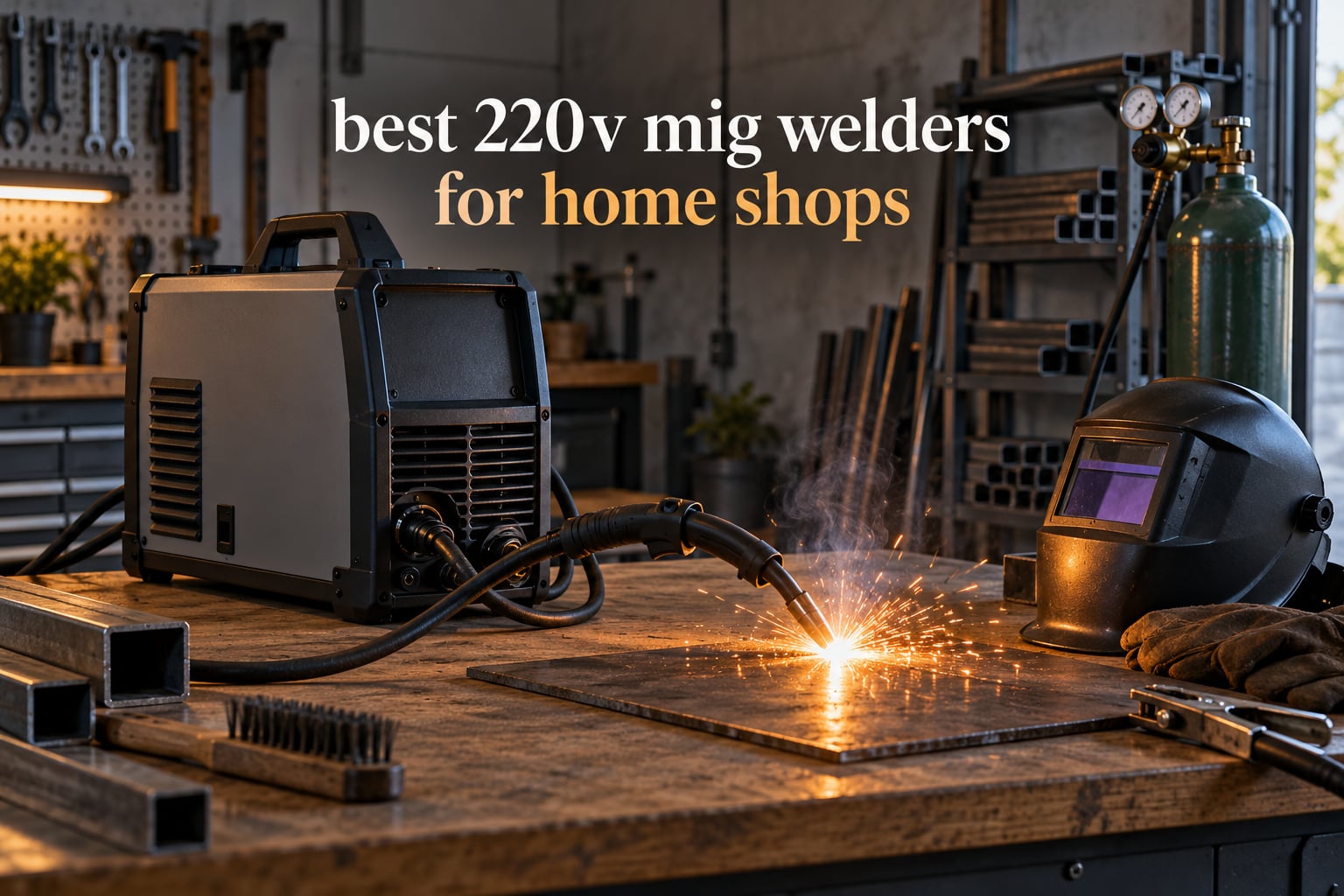
The best 220V MIG welder for a home shop is the YESWELDER MIG-205DS PRO, a five-process dual-voltage inverter that runs gas MIG, flux core, spool gun aluminum, lift TIG and stick from one chassis. It is the pick that gives a garage owner the most welding options without asking for a second machine.
That matters because a 220V circuit is the single biggest jump a home welder can make. A 110V machine of the same money typically tops out around 120 amps on steel, which means 16 gauge is comfortable and 1/8 inch is a fight. A dedicated 220V circuit roughly doubles usable output, raises the duty cycle, and is the difference between finishing a 3/8 inch bead in one pass and stopping mid-weld to let the machine cool.
We compared ten 220V-capable machines side by side on output, process count, wire handling, warranty length and the complaints owners actually report after owning them. Six of the ten are multi-process inverters from independent brands, two are ARCCAPTAIN models, one is PrimeWeld, and one is a Lincoln Electric machine that costs several times more than the rest and earns it in different ways. If you are still working out the basics, our general MIG welder roundup covers the entry-level options in more depth.
Read the outlet section before you pick a machine. A surprising share of welders bought for home garages arrive to a panel that cannot supply the circuit they need, and that problem costs more than the welder did.
Table of Contents
Top 3 Picks for the Best 220V MIG Welder in 2026

All 10 Picks at a Glance in 2026
| Product | Specifications | Action |
|---|---|---|
| YESWELDER MIG-205DS PRO 205A 5-in-1 |
|
Check Latest Price |
 ARCCAPTAIN MIG200 200A 6-in-1 ARCCAPTAIN MIG200 200A 6-in-1 |
|
Check Latest Price |
 Bestarc MIG145 145A 4-in-1 Bestarc MIG145 145A 4-in-1 |
|
Check Latest Price |
 PrimeWeld MIG180 180A PrimeWeld MIG180 180A |
|
Check Latest Price |
 FEMEROL MIG 250PRO 250A FEMEROL MIG 250PRO 250A |
|
Check Latest Price |
 FEIFANKE MIG250 250A FEIFANKE MIG250 250A |
|
Check Latest Price |
 ARCCAPTAIN MIG205MP 9-in-1 ARCCAPTAIN MIG205MP 9-in-1 |
|
Check Latest Price |
 Weldpro MIG210LCD 200A Weldpro MIG210LCD 200A |
|
Check Latest Price |
 ARCCAPTAIN MIG205-PRO 205A ARCCAPTAIN MIG205-PRO 205A |
|
Check Latest Price |
 Lincoln Electric Power MIG 211i Lincoln Electric Power MIG 211i |
|
Check Latest Price |
1. YESWELDER MIG-205DS PRO 205A 5-in-1 – the most flexible machine in the group
YESWELDER 205A MIG Welder, 110V/220V 5-In-1 MIG/Flux Core MIG/Spool Gun MIG/Lift TIG/Stick
- Five processes in one chassis
- Deepest review base at 1455 ratings
- Digital display with real-time current readout
- Synergic auto voltage match with -3V to +3V trim
- Over-current and over-heat protection
- Sparse instructions and a factory chart that misses real settings
- Supplied torch rated near 150A below machine output
- No hook on the MIG gun
Out of the ten machines we compared, the MIG-205DS PRO has the largest body of owner feedback behind it at 1455 ratings, and that shows in how consistent the reports are. Owners describe a smooth, steady arc across steel, aluminum and stainless, and a bead that stays consistent when the same settings are used on different thicknesses. That is the thing that matters most in a machine you plan to keep for years.
Wire feed speed runs from 58 to 858 inches per minute, and the synergic mode matches voltage to the wire diameter automatically. You can still trim the setting from -3V to +3V manually, which is what separates this from the machines that lock you into one program and hope it fits.
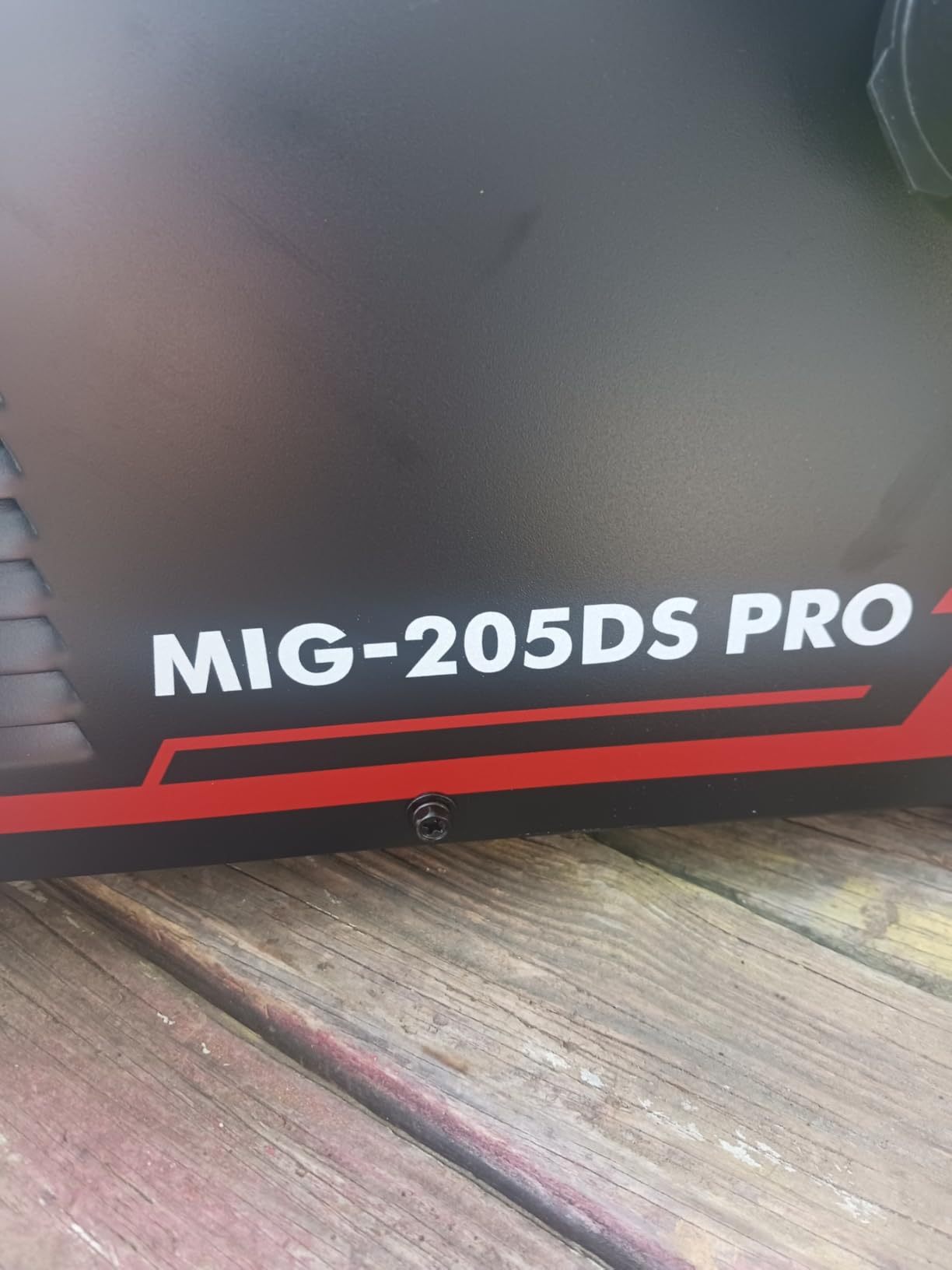
The five processes are gas MIG, gasless flux core MIG, spool gun aluminum MIG, lift TIG and stick. The spool gun and lift TIG torch are sold separately, which is worth knowing before you plan aluminum work, but the machine itself is spool-gun ready. At 37.5 pounds it is not a carry-it-up-the-stairs welder, but it moves around a garage floor without a fight.
The documentation is the weak point, and it comes up in a large share of reviews. The instruction booklet is thin, the factory settings chart does not match what owners end up running, and the supplied torch is rated around 150 amps even though the machine will push 200. Plenty of owners replaced the torch early, and the machine itself rarely gets the blame.
How it handles the work you will actually do
For someone moving up from a 110V stick machine, this is the box that removes the ceiling. Flux core at 220V digs into 1/4 inch plate without the machine balking, and switching to solid wire with gas gives the clean cosmetic bead that outdoor work cannot. The five processes also mean the machine stays useful as your skills grow, which is the main argument against buying a single-process box that you will replace in two years.
What to fix before your first long session
Budget for a replacement torch at the machine’s full rating rather than planning around the supplied one, and plan your first settings from published charts for your wire and gas rather than the card in the box. Some units also only accept .035 flux core wire in gasless mode, so check the drive roll before you buy a different size. None of that undermines the machine, but all of it costs an afternoon the manual should not have cost you.
2. ARCCAPTAIN MIG200 200A 6-in-1 – the best control per dollar
ARCCAPTAIN 200A MIG Welder 110V 220V 6 in 1 Aluminum Welding Machine MIG200
- Synergic mode plus full manual for real fine tuning
- Spot weld mode useful for sheet metal
- Quiet because the cooling fan runs on demand
- Dual voltage verified by owners on both 120V and 240V
- Two-year manufacturer warranty
- No supplied drive roll grooved for .035 wire
- Thin power cord that runs warm
- Flimsy plastic strain relief at the gun
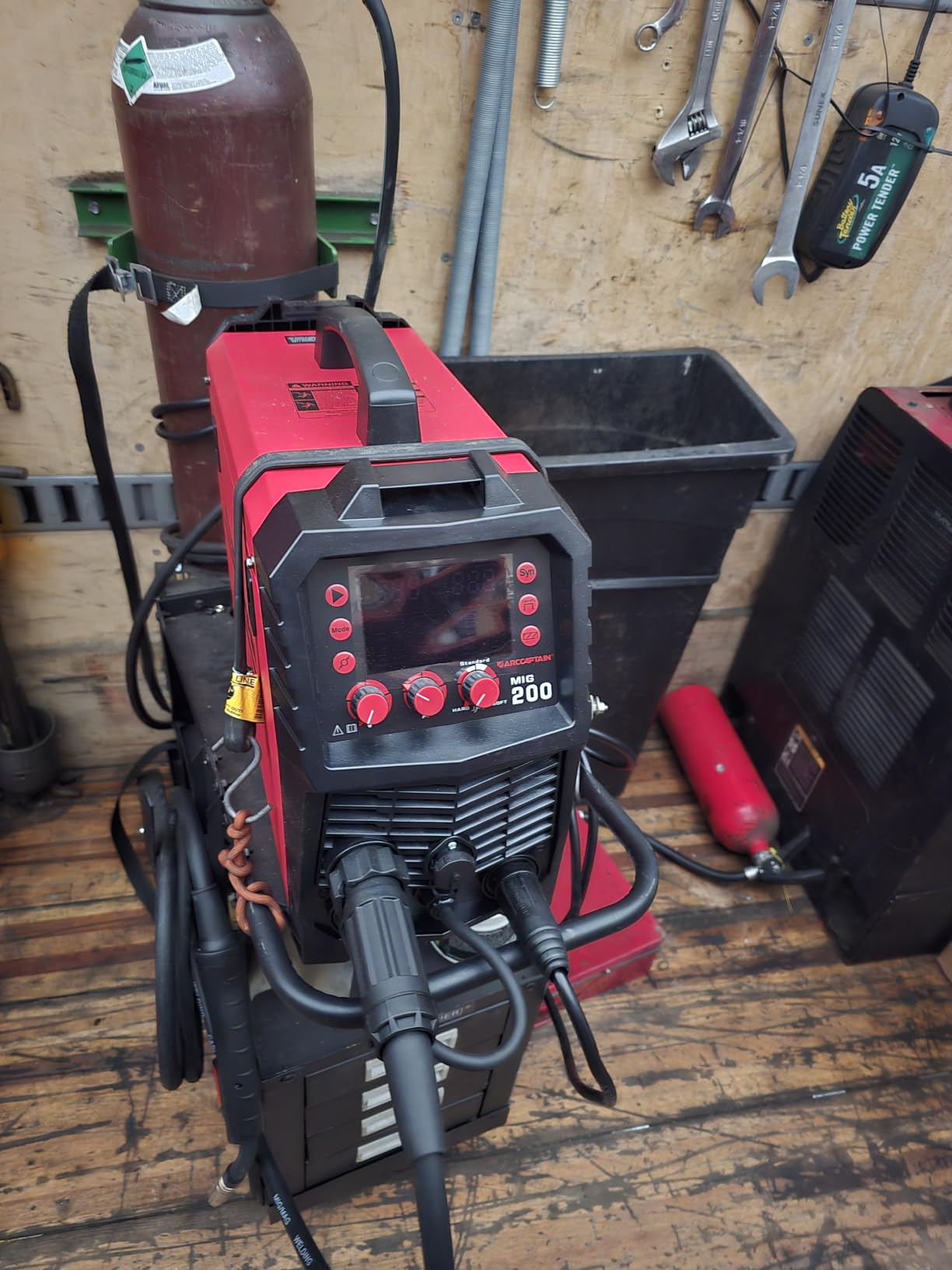
The MIG200 is the machine we would hand someone who wants to grow into their welder rather than out of it. It offers six processes, and unlike several competitors in this class it keeps a full manual mode alongside the synergic presets, so the machine is usable on day one and still tunable two years later.
It stores ten groups of settings, which sounds minor until you are welding the same bracket every week. Synergic mode matches current and wire feed speed to the wire diameter and gas, and the display shows the values without pulling the helmet off.
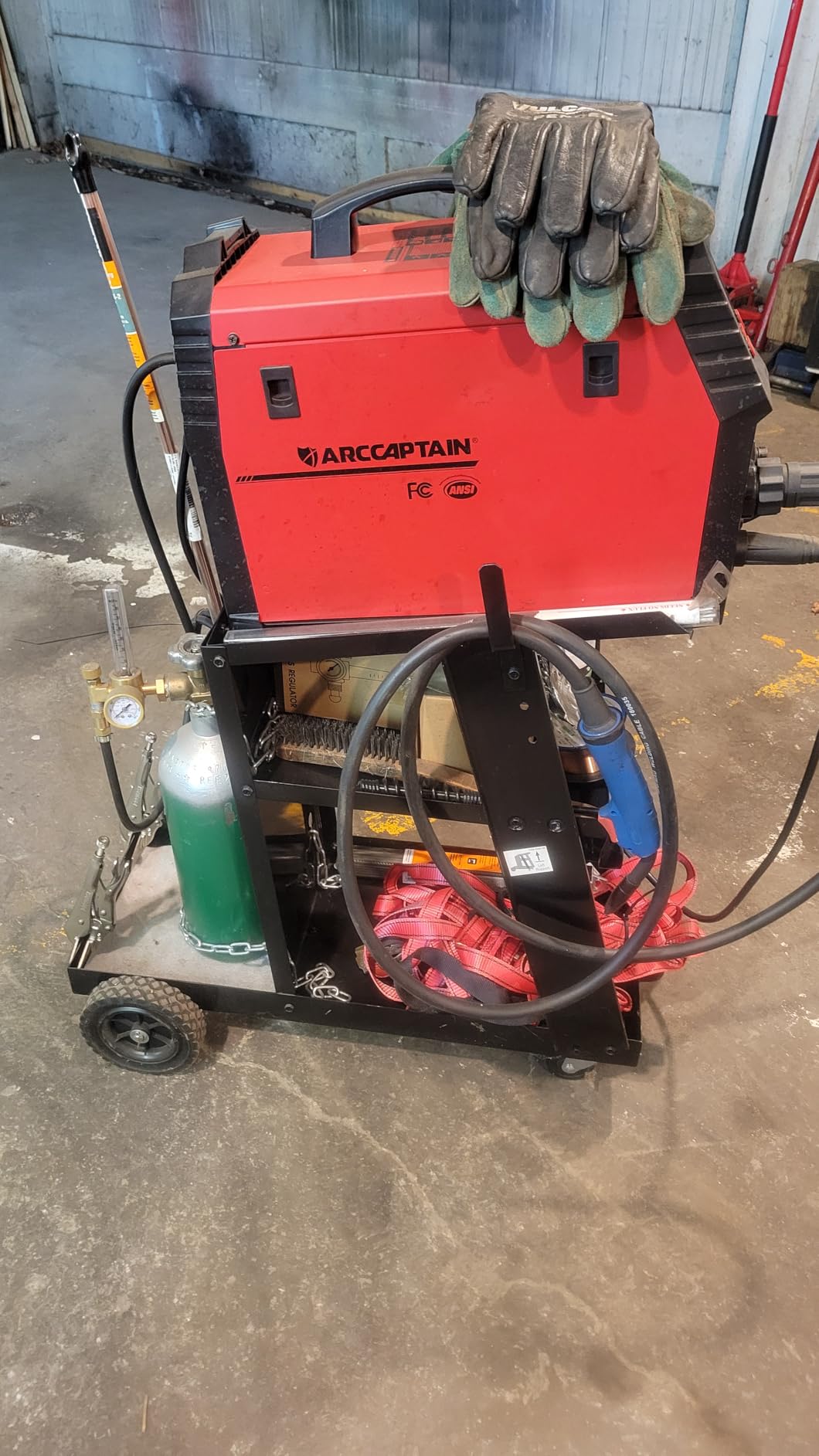
Owners moving up from old transformer machines talk about the jump in control more than the jump in power. The bead is described as smooth and easy to control in MIG, flux core and stick, and the spot weld mode gets specific praise for sheet metal work where you do not want a continuous seam.
The cooling fan runs on demand rather than continuously, so the machine is quiet when you are not welding. That is a small thing that matters in a shared garage. The two-year manufacturer warranty is also longer than most of the machines at this level.
Where the control advantage shows up
That combination of synergic and manual is the reason this machine keeps coming up in our comparison. Synergic setups get a beginner producing a decent bead in an afternoon, and manual mode means you are not locked into the manufacturer guessing what your wire and gas need. The ten memories mean the settings that worked last month are one button away instead of re-tuned.
What to check before you rely on it
None of the supplied drive rolls is grooved for .035 wire, so buy the correct roller before you run it. The power cord is thin and runs warm, and the machine ships wired for 110V with an adapter rather than a native 220V cord, so a heavy-gauge replacement cord is a reasonable early purchase. The factory setting chart is a starting point, not an answer.
3. Bestarc MIG145 145A 4-in-1 – the lowest-cost way onto a 220V circuit
Bestarc 145A MIG Welder, Flux Core/Gas MIG Stick Lift TIG Welding, 110/220V
- Dual voltage runs in a garage shop or on the farm
- Beats cheap 125A machines on bead quality
- Top-load wire and simple beginner controls
- Shoulder strap and compact body
- Ground clamp cable is thicker than typical
- Stock drive roll is a plain V-groove rather than knurled
- Spool tension spring is too tight and not adjustable
- No gas regulator included
The MIG145 is the entry point we would recommend for a first garage welder on a 220V circuit. It is rated 145 amps, which is honest for the class, and the automatic input voltage detection means it will figure out whether it is on 110V or 220V on its own instead of needing an adapter guess.
Reviewers consistently compare it against the cheap 125A machines and find better beads, particularly on flux core. That is a function of the inverter platform and the voltage match rather than raw amperage, and it is the difference that decides whether you keep welding or give up on it.
It handles 0.030, 0.035 and 0.040 flux core wire along with 0.030 solid, and the four processes are gas MIG, gasless flux core, lift TIG and stick. For a first machine in a garage or on a farm, that is enough range to cover most weekend projects without buying a second box.
At 22.6 pounds with a shoulder strap, it is one of the more manageable machines here, and the top-load wire layout means spool changes are quick. The included ground clamp uses a heavier copper-clad cable than most machines at this level ship with, which is the right place to save money.
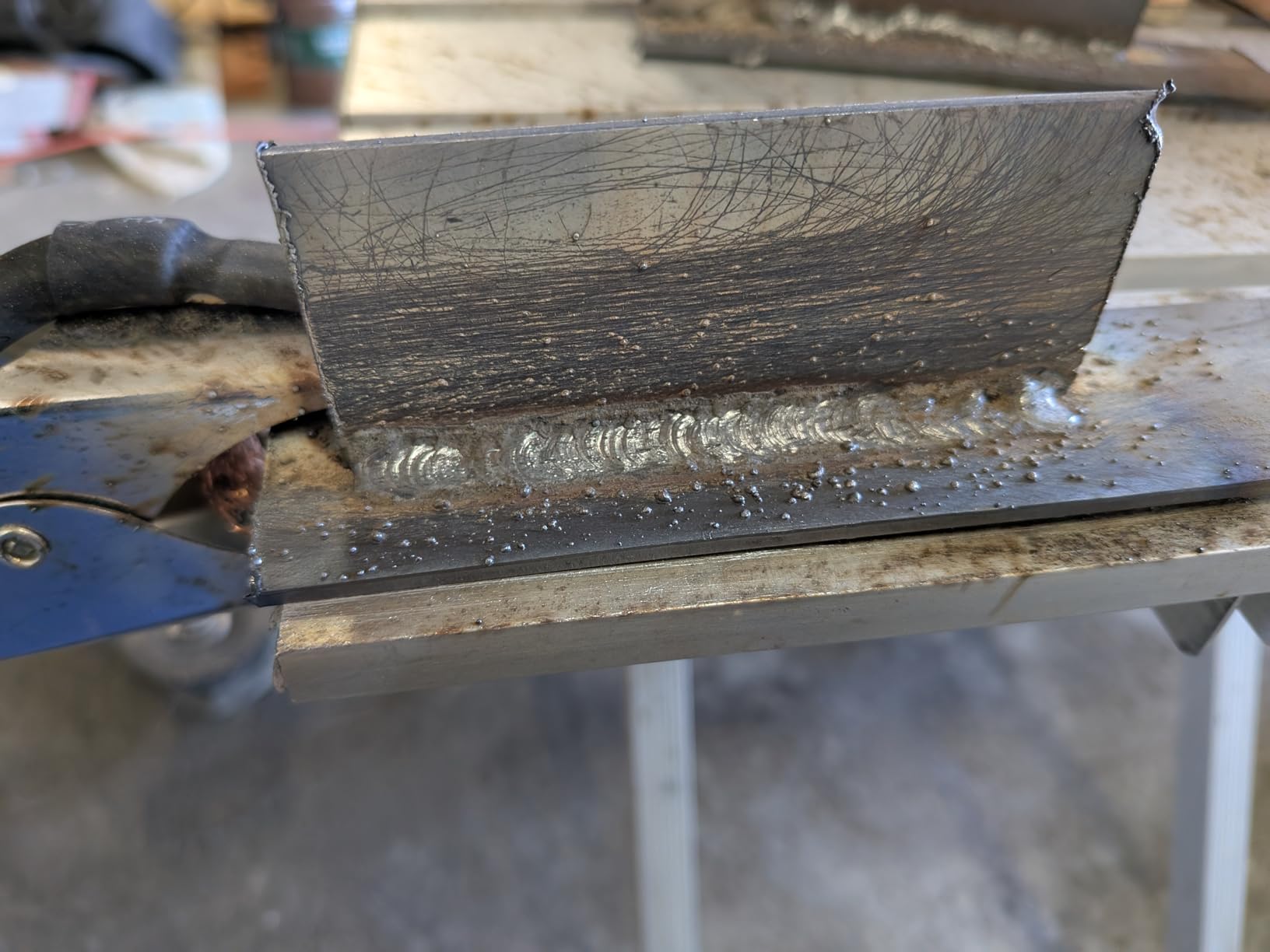
What 145 amps is good enough for
It covers 16 gauge through 1/8 inch mild steel comfortably, and reaches 1/4 inch with the right technique. It is not the machine for 3/8 inch plate or continuous production work, and the 145 amp ceiling is a real limit rather than a marketing number. For someone who wants to learn on a proper 220V circuit instead of fighting a 110V machine, that limit is acceptable.
Two hardware swaps worth making on day one
The stock drive roll is a plain V-groove rather than knurled, and knurling is what stabilises a flux core arc. Owners report low spatter once they fit the knurled roll, so make that your first purchase. The spool tension spring is also too tight and not adjustable on stock units, and no gas regulator is included, so plan on buying both along with your shielding gas and regulator before the first gas weld.
4. PrimeWeld MIG180 180A – the pick that ships ready for aluminum
PrimeWeld MIG180 Mig Welder, 180 Amp Wire Feed Welding Machine with Dual Voltage 220v, 110v
- Purpose-built spool gun runs aluminum without kinks or jams
- Highest average rating in the group
- Standard Tweco consumables mean no proprietary parts
- Ships with drive rollers and consumables included
- US-based parts and customer service
- Stock torch is undersized for material 5/16 inch and thicker
- Needs a 30A adapter to run on 220V
- Heavy at 55 lb for this output class
The PrimeWeld MIG180 is the machine in this group that treats aluminum as a first-class job rather than an accessory. The spool gun is purpose-built rather than adapted from the standard torch, which is exactly the problem that causes kinks and wire jams on aluminum with generic spool guns.
It carries the highest average rating here at 4.8 from 165 reviews, with 89 percent five-star. Professional shop owners and hobbyists both report it holding its own against Miller and Hobart units, and several describe running multiple 10 pound spools and a full spool gun reel without a fault.
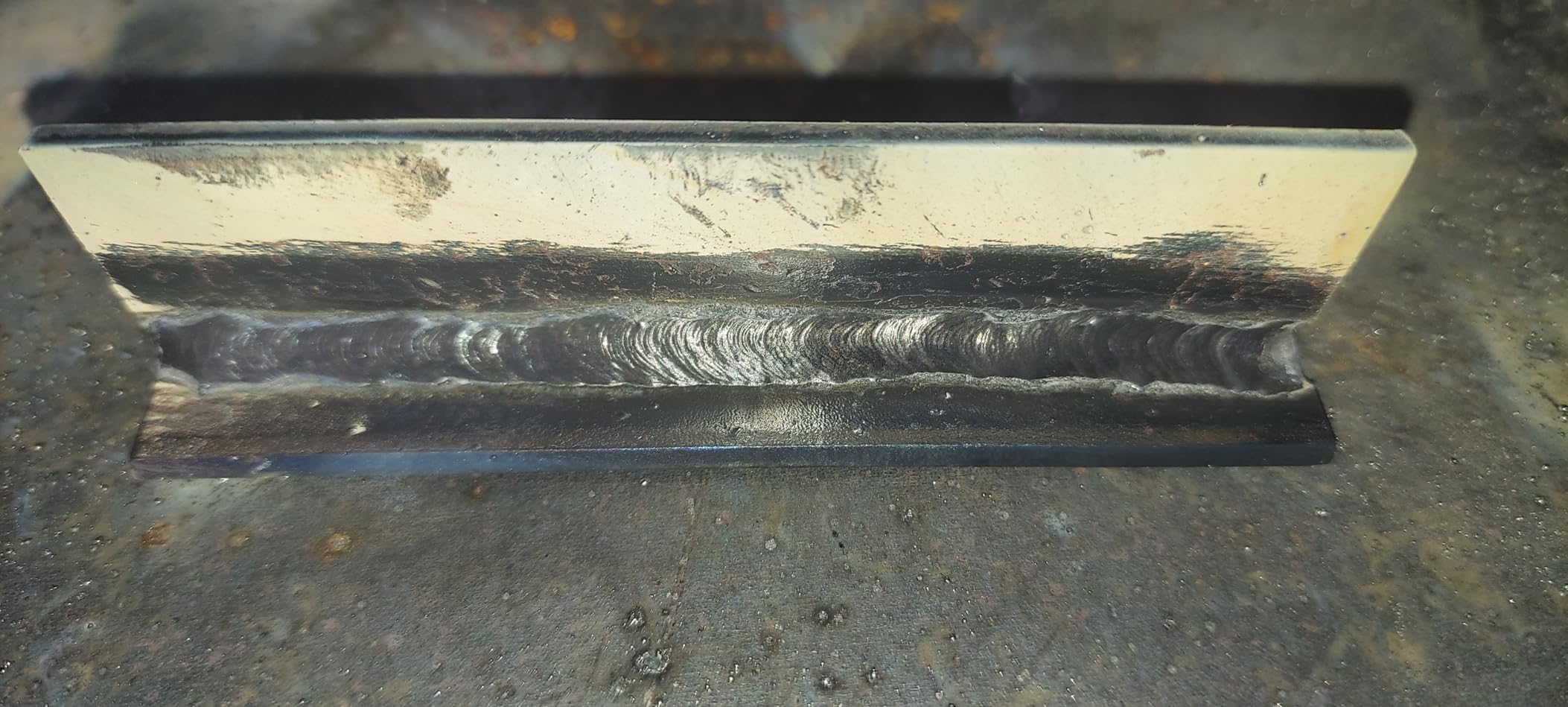
It runs 120 and 240V dual input, covering MIG, gasless flux core and DC stick out of the box plus the spool gun for aluminum. A settings chart and instruction guide get a new user to workable settings quickly, which matters more than it sounds when you are learning on your own.
Two details separate it from the budget boxes. It uses standard Tweco consumables, so tips, nozzles and liners come from any welding supply rather than a proprietary channel. And the company runs US-based parts and customer service, which is a real advantage when a gun cable fails two years in.
Why the spool gun matters more than the amp rating
Aluminum wire is soft and it buckles inside a gun that is not designed for it. A purpose-built spool gun removes the two failure modes that make people give up on aluminum: kinks and jams. If boat towers, intake pipes or trailer aluminium are anywhere on your project list, this machine removes the most common reason those projects stall.
Where you will need to spend more
The stock torch is the weak link. Owners running 5/16 inch and thicker recommend adding the optional 200 amp MIG torch, and at 55 pounds this is already one of the heavier machines in its output class, so plan where it will live before it arrives. It also needs a 30A welder plug adapter to run on 220V, which is a cheap part worth ordering with the machine.
5. FEMEROL MIG 250PRO 250A 6-in-1 – the most output for the money
- 250 amps at 60 percent duty cycle across every process
- Welds mild steel up to 14 mm
- Verified output near 245A after a cord and plug upgrade
- Generous 9.5 ft torch and lead lengths
- Aluminum works via teflon liner without birdnesting
- Cooling fan is loud and runs continuously
- Arc described as soft next to name-brand machines
- Stock power cord is undersized for the output
The 250PRO is the only machine here that rates 250 amps at a 60 percent duty cycle across MIG, stick and TIG, and it is welded to 14 mm mild steel. That is a genuine step up in plate capacity for anyone who builds in 1/4 to 1/2 inch steel, and it is unusual to see that combination at this level.
Owners who measure the machine report verified output near 245 amps after replacing the power cord and plug. That is a real caveat and a real fix: the undersized stock cord limits what the machine can deliver, and a heavier cord and proper 50A plug are the first things to upgrade.
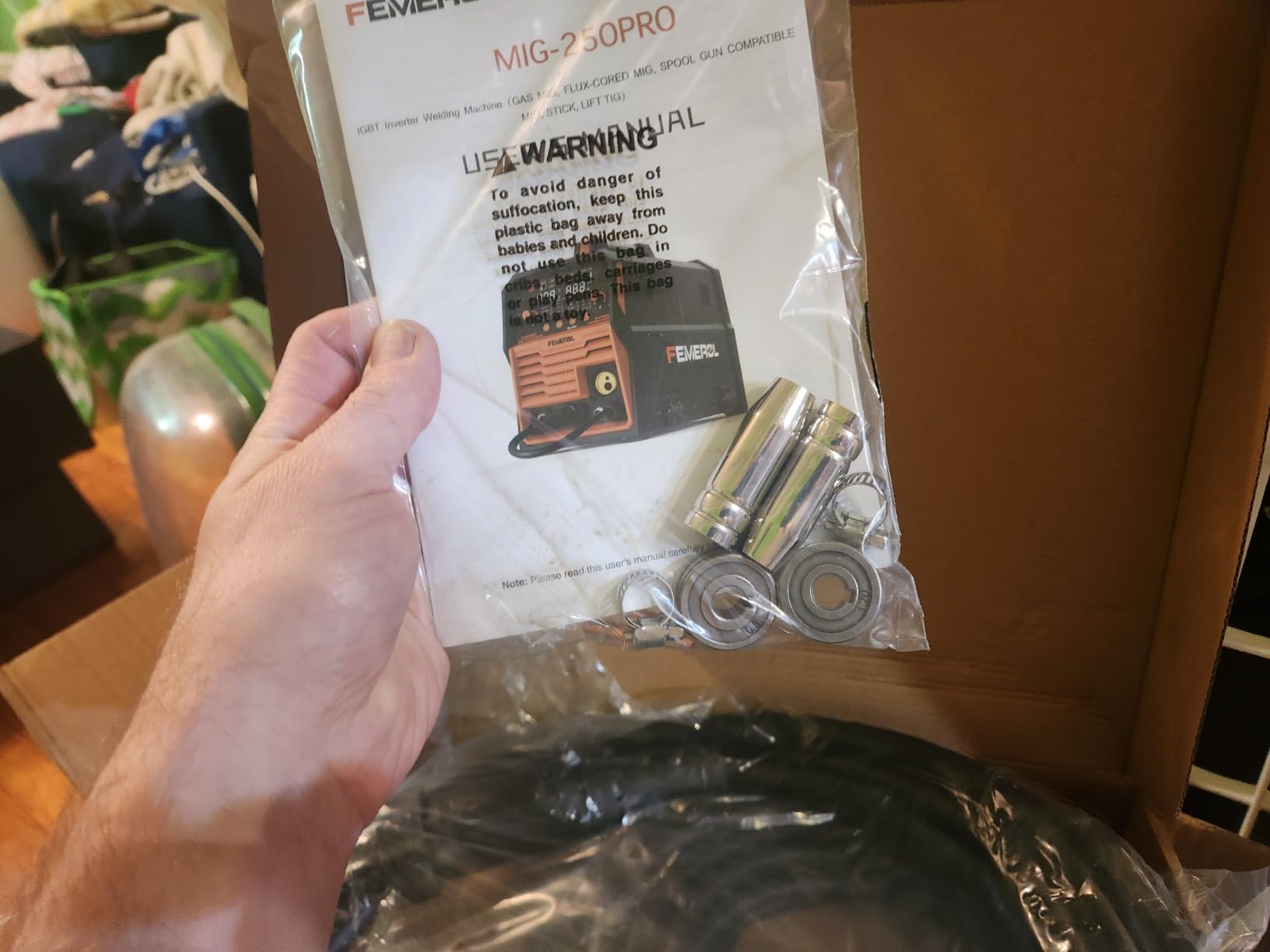
It handles 0.023 through 0.035 solid and flux core wire, plus 0.035 to 0.045 aluminum through a teflon liner, and the spot weld mode handles 24 gauge without burning through. The 9.5 foot torch and lead lengths are longer than most competitors ship and reduce the need for extensions.
It is also the lowest-rated machine in the group at 4.3 from 375 reviews, with a noticeably larger share of one and two-star ratings. The critical reviews tend to come from long-time welders calling the arc soft next to a name-brand machine, and several recommend starting with a name brand instead.
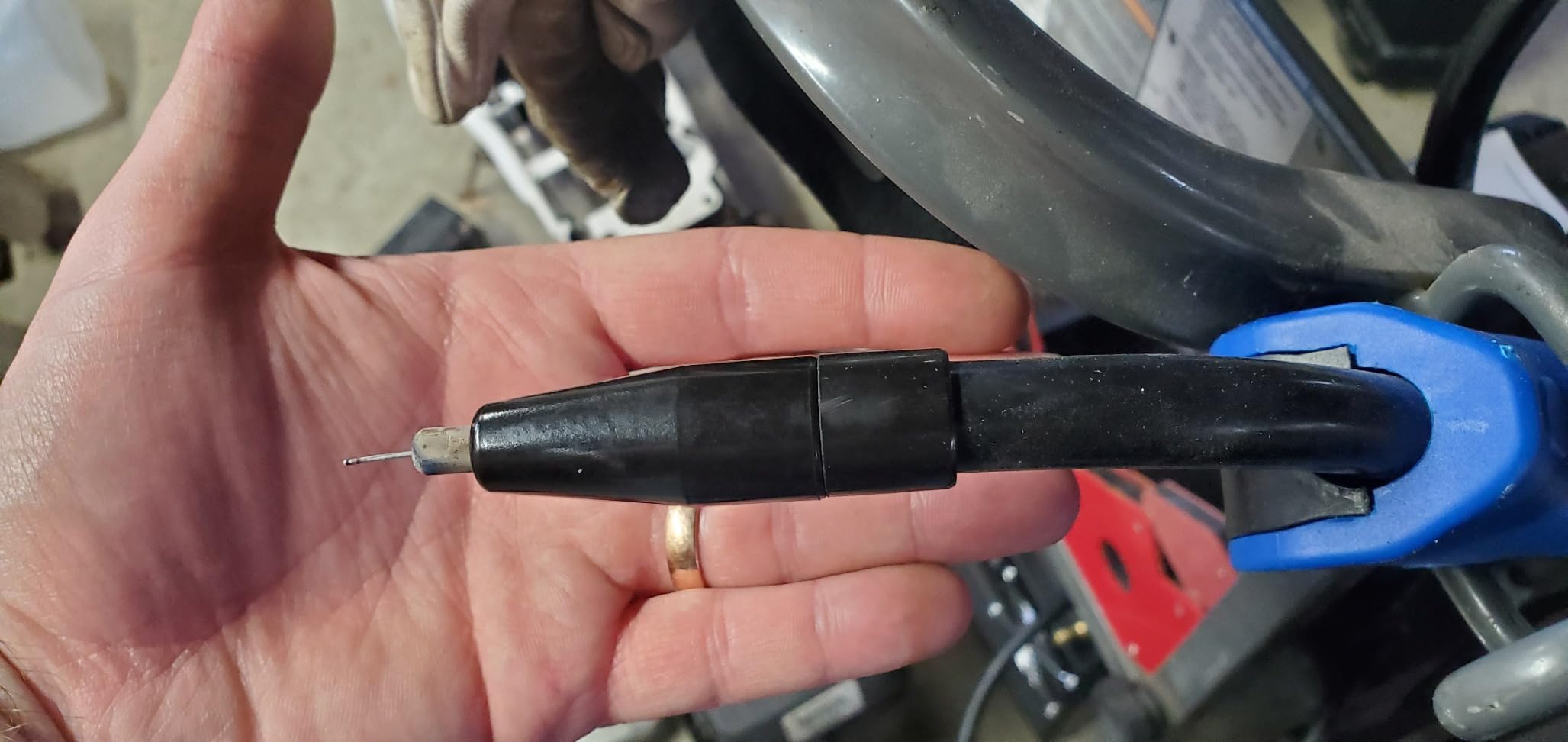
When the extra 50 amps is worth it
If your projects involve multi-pass work on 1/4 inch or heavier plate, the 250 amp rating and 60 percent duty cycle are the reasons to buy this. A welder that will not finish a bead before its thermal protection kicks in wastes the whole setup, and the sustained output rating is where the expensive machines earn their money.
The upgrades this machine needs first
Replace the power cord and 120V plug with proper 50A components before the first big job, because that is the difference between rated and actual output. The cooling fan runs continuously and is loud, the gas outlet is a barbed fitting rather than threaded, and the TIG amperage control is limited to a basic preset. If you TIG regularly rather than occasionally, that is a real limitation.
6. FEIFANKE MIG250 250A – the most complete box you get out of the carton
FEIFANKE 250A Aluminum MIG Welder 110V/220V, 6 In 1 Flux Core MIG Welder
- Two MIG torches plus wire liners tips and rollers in the box
- Pulse MIG with ALSi and ALMg aluminum programs
- Runs on a standard 15A 110V circuit and accepts 240V
- Light and compact for a 250A machine
- Quiet compared with older stick machines
- Does not reliably weld thin aluminum despite the marketing
- Weak penetration at the bottom of the amperage range
- Torch runs warm during extended use
The FEIFANKE MIG250 is the machine to look at if you want to start welding without a first hardware run to the supply house. The box includes two 10 foot MB15 MIG torches, three 1.1 pound spools of aluminum, flux core and solid wire, a graphite liner, five contact tips, four nozzles, three drive rollers, leads, a gas hose and a dual voltage power cord.
It is a six-in-one including pulse MIG, and the pulse programs have dedicated ALSi and ALMg settings for aluminum. It also has a thickness-based setup, so beginners do not have to tune wire speed manually before the first bead.
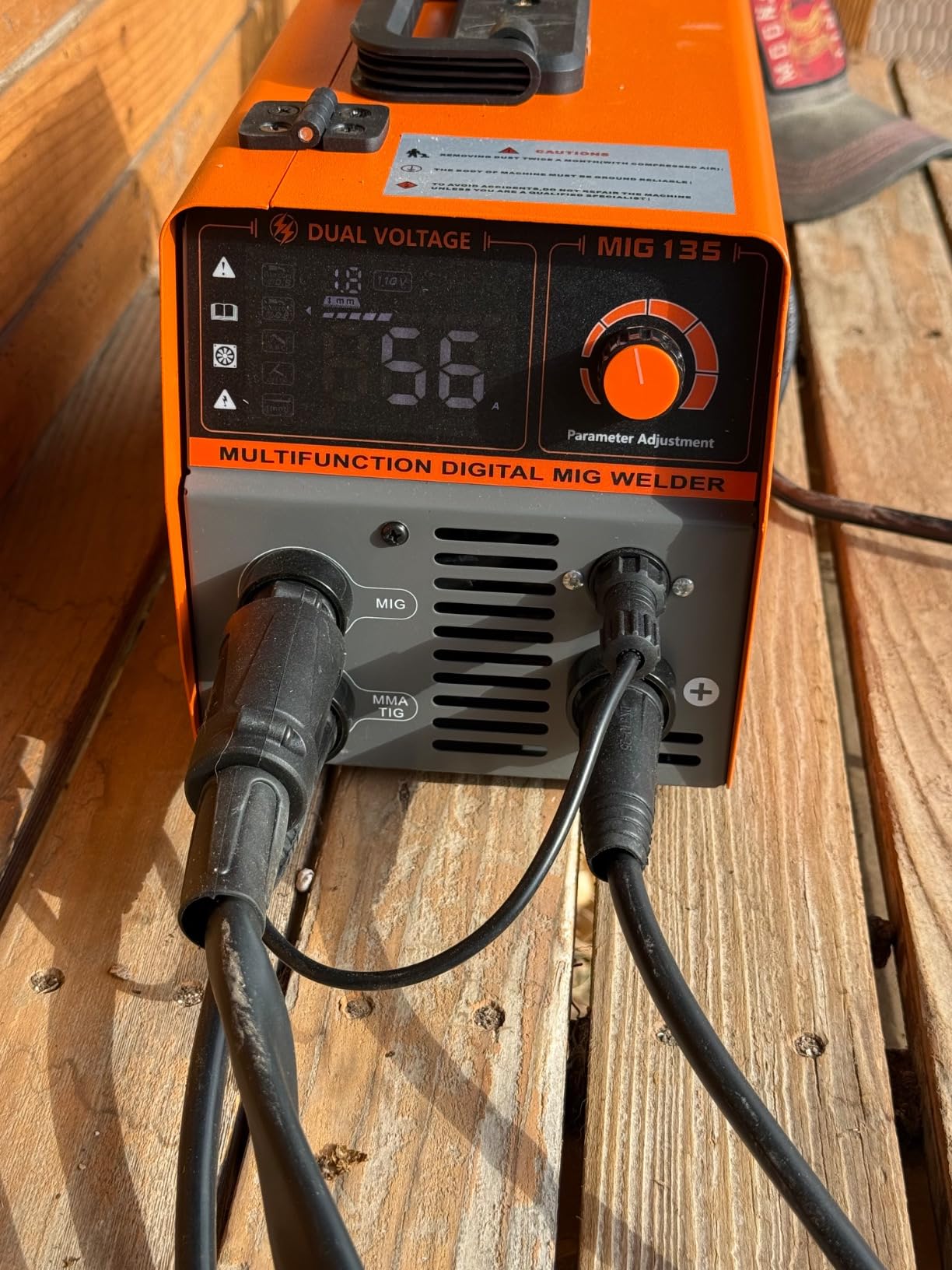
Owners report it handling 1/4 inch plate and exhaust tubing with flux core without trouble, and it runs off a standard 15A 110V circuit as well as accepting 240V through an adapter. At 34 pounds it is one of the lighter 250 amp machines here, which matters if the welder shares a space with a vehicle.
The honest caveat is the aluminum claim. Despite the pulse programs and the marketing, owners report it will not reliably weld thin aluminum, and on some units the wire speed is not adjustable, which creates a learning curve. Penetration is also weak at the bottom of the amperage range, so you want to work in the middle of the scale.
Treat it as a flux core workhorse with extras
The honest read on the owner feedback is that this is a capable gasless and gas machine for steel, with a kit that saves you a shopping trip. The pulse modes and aluminum wire in the box make the packaging look more aluminum-focused than the real-world results support, and anyone buying specifically for aluminum should look at the PrimeWeld instead.
What to expect on day one
Plan to spend your first session in the middle of the amperage range, because penetration drops off at the bottom. The included 6013 sticks are hard to strike and burn quickly if your angle is off, so treat the stick function as secondary. The torch also runs warm during extended sessions, which is normal at this output level but worth knowing before a long production day.
7. ARCCAPTAIN MIG205MP 9-in-1 – a welder and a plasma cutter in one box
ARCCAPTAIN MIG205MP MIG Welder with Plasma Cutter, 9 IN 1 Welding Machine
- 205A welder and plasma cutter in one chassis
- App control with unlimited named presets
- Large LED screen reads clearly on the bench
- Sixty percent duty cycle across all modes
- Dual cooling fans handle sustained work
- Works with foot pedals
- Soldering-style interface takes practice to learn
- App connectivity is a setup step of limited value in a shop
- 205A MIG output is modest for the machine size
The MIG205MP answers a question most home shops hit within a year: do I need a separate plasma cutter? This machine runs nine modes including gas MIG, gasless MIG, plasma cutting, DC HF TIG, DC lift TIG, stick, a cleaning mode, spot welding and spool gun aluminum, all in a 205A package on a 60 percent duty cycle.
Cutting capacity is rated at 10 mm for quality work with a maximum of 18 mm. That is not a substitute for a dedicated plasma cutter on a 205A MIG, and some reviewers note the cut is not as clean as a standalone unit, but it removes a machine from the shelf for most garage cutting.
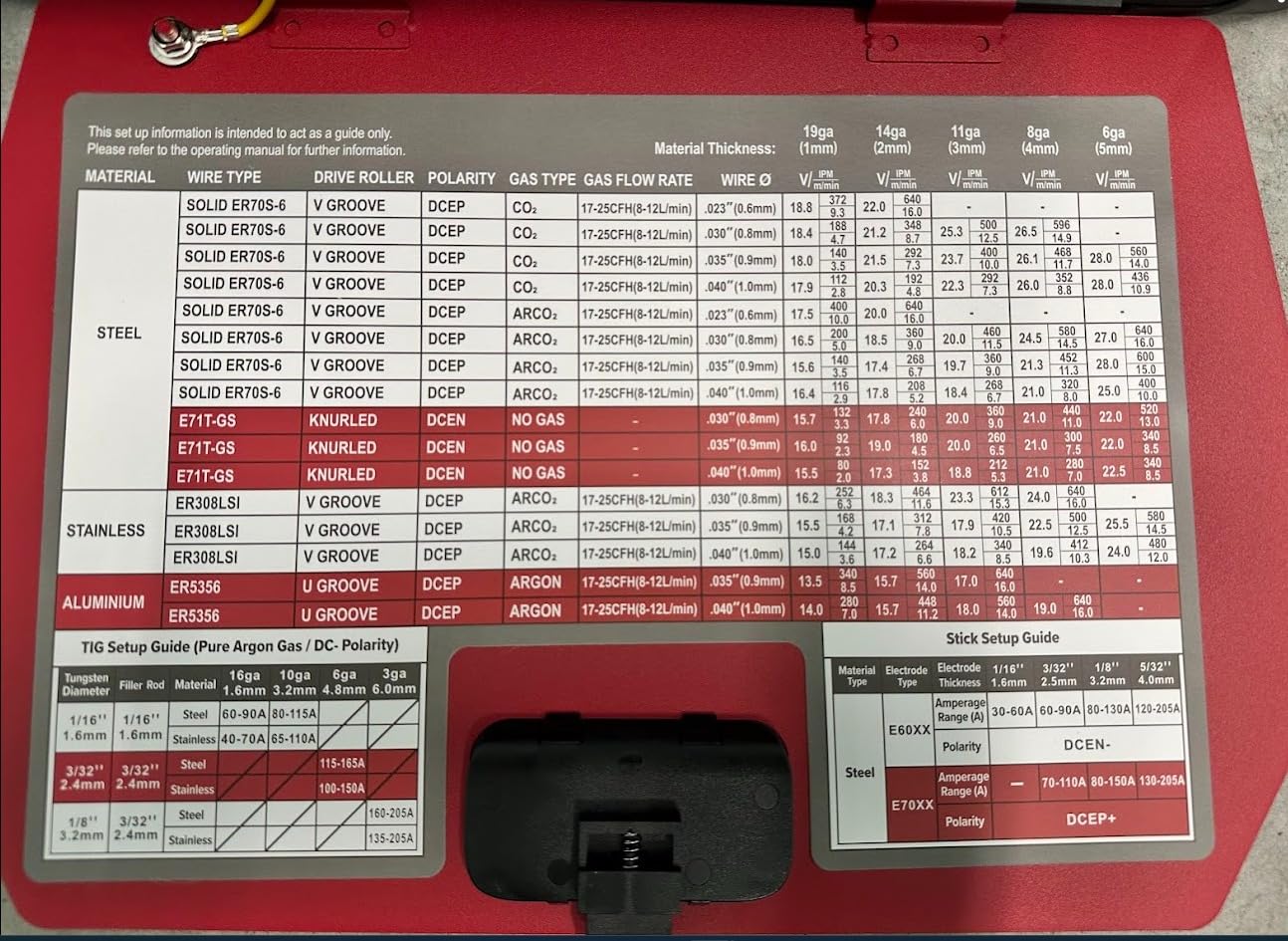
The tuning depth is the other draw. You get inductance, burn-back time, welding speed, pulse TIG frequency, initial, descent and finish current, hot start and arc force adjustments on a large LED screen, plus app control within 10 metres with unlimited named presets.
Dual cooling fans handle sustained duty, and VRD with a fault alarm covers the electrical safety side. The three-year service commitment is also the longest warranty among the independent brands in this roundup alongside Weldpro and the MIG205-PRO.
Who the combination actually suits
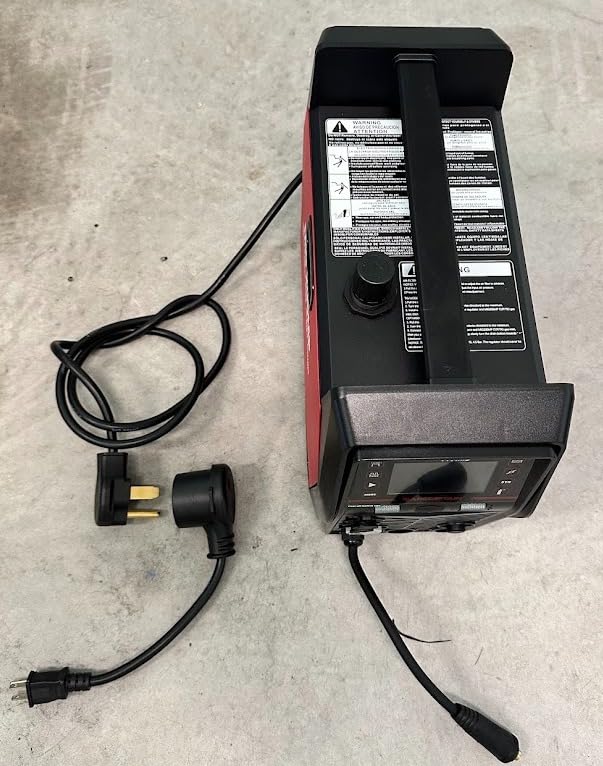
If your projects are mixed fabrication and teardown, having a cutter in the same chassis removes the second machine, the second power cord and the second outlet requirement. The tuning controls also mean this box keeps pace with a growing skill set, which is more than most budget multiprocess units can say. It works with foot pedals if you want finer control on long seams.
What the extra hardware costs you in convenience
The interface is arranged like a soldering station rather than a welder, and reviewers describe it as taking practice to feel natural. The app adds a setup step that is of limited value in a working shop, so treat it as a novelty. Several reviewers also find the 205A MIG output modest for the machine’s 46 pound size, which is the trade you accept when a cutter is bundled in.
8. Weldpro MIG210LCD 200A – the spot weld timer that earns its place
- Spot weld timer makes repeat spot welds consistent
- Swaps the 10 ft torch for a spool gun with one switch
- Large LED display readable in a working shop
- Three-year manufacturer warranty
- Handles thin sheet and heavy plate jobs
- Listed weight of 54.9 lb is heavy for a portable machine
- Spool gun is sold separately
- Product details are sparse relative to feature claims
The Weldpro MIG210LCD is a five-in-one at 200 amps on 110V/220V, and the feature that separates it from most of the group is the adjustable spot weld timer. Repeat spot welds are the kind of job that looks sloppy when the weld is manual and clean when it is timed, and this machine times it.
Spool gun conversion is a single switch with the 10 foot torch, so moving to aluminum does not involve reconfiguration. The IGBT inverter includes an integrated wire feed that auto-matches recommended voltage and wire speed, and the large LED display is readable in shop lighting.
Owner sentiment is unusually consistent at 4.6 from 244 reviews with only a 4 percent one-star rate. Reviewers focus on the breadth of processes, the spot timer and easy spool gun conversion rather than on raw power, and several describe running mixed thin sheet and heavy plate work through the same machine.
Two specification issues are worth flagging. The listed weight is 54.9 pounds, which is genuinely heavy for a machine marketed as portable, and the product listing describes the power source as gas powered, which is an error rather than a real feature. The spool gun is sold separately.
When a spot timer changes your work
Any project with repeated spot welds, whether that is a metal cabinet, a trailer panel or a patch job, comes out cleaner with a timer than with a trigger. It is the difference between a consistent array of spots and a row of inconsistent ones, and on this machine the timer is adjustable rather than fixed.
Plan around the weight
Treat this as a shop-floor machine rather than a mobile one. At 54.9 pounds, moving it to a job site means a cart, and the portability claim in the listing does not match the listed weight. If you need a machine you can carry to work, the MIG205-PRO is a different proposition entirely, and if you plan aluminum, budget for the spool gun as a separate purchase.
9. ARCCAPTAIN MIG205-PRO 205A – the one to carry to the job site
ARCCAPTAIN MIG205 Pro MIG Welder 205A 120V 240V 6-in-1 Aluminum Welding
- Lightest listed weight in the group at 10 lb
- Inductance burn-back and spot time all adjustable
- Spool gun operation confirmed by owners on aluminum
- App control saves and recalls settings
- Three-year warranty with fast service
- Highest five-star share in the group at 82 percent
- All cables are short so extensions are usually needed
- Power cord is about 10 gauge
- Setup and menu navigation take practice
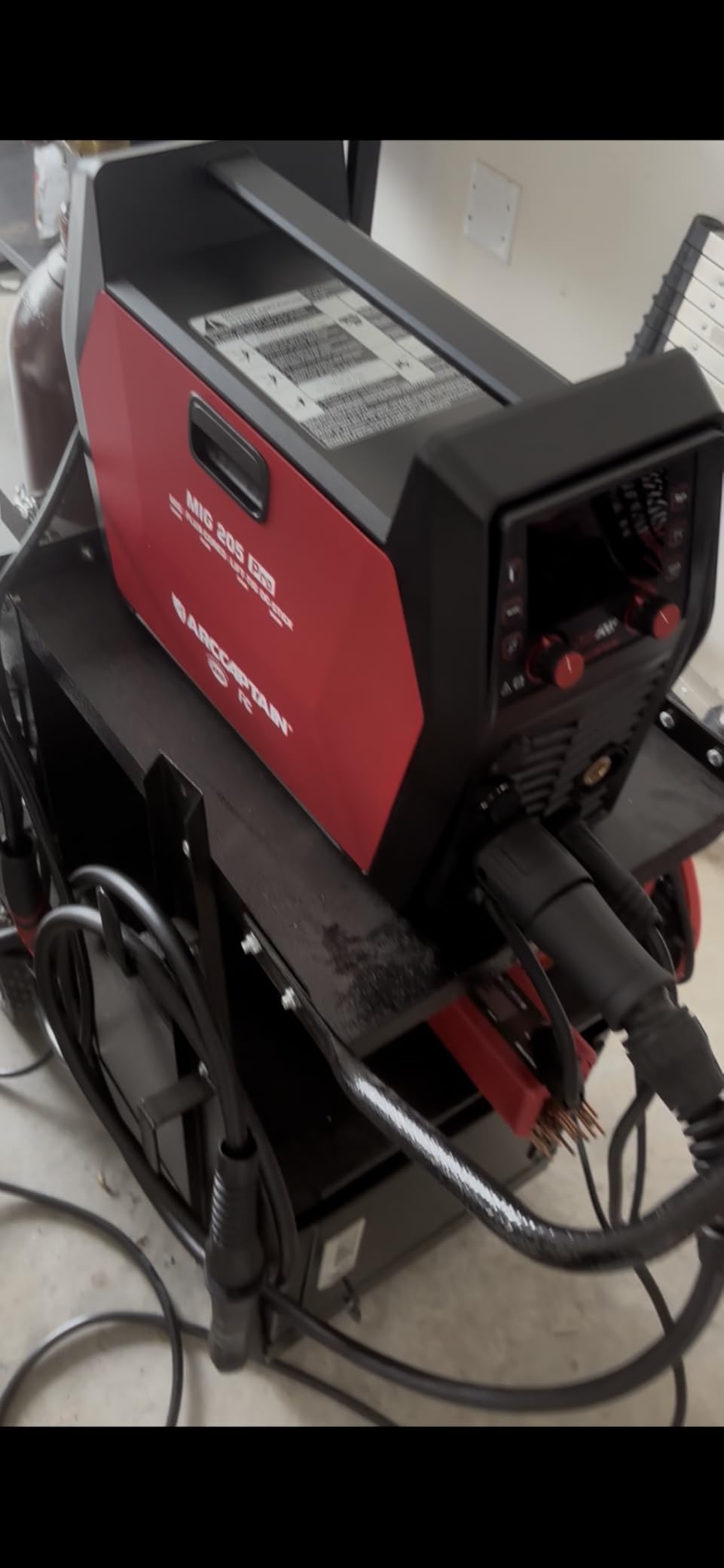
The MIG205-PRO is the machine to look at if the welder leaves the garage. Its listed weight of 10 pounds is the lowest here by a wide margin, and owners coming off older Lincoln and Miller machines report that the program presets get them to comparable results with far less setup time.
It is a six-in-one covering gas MIG, gasless MIG, stick, lift TIG, spot welding and spool gun aluminum, and the tuning is more serious than the price suggests. Inductance adjusts from -10 to +10, burn-back runs from 0.15 to 0.5 milliseconds, and spot time spans 0.5 to 5 seconds.
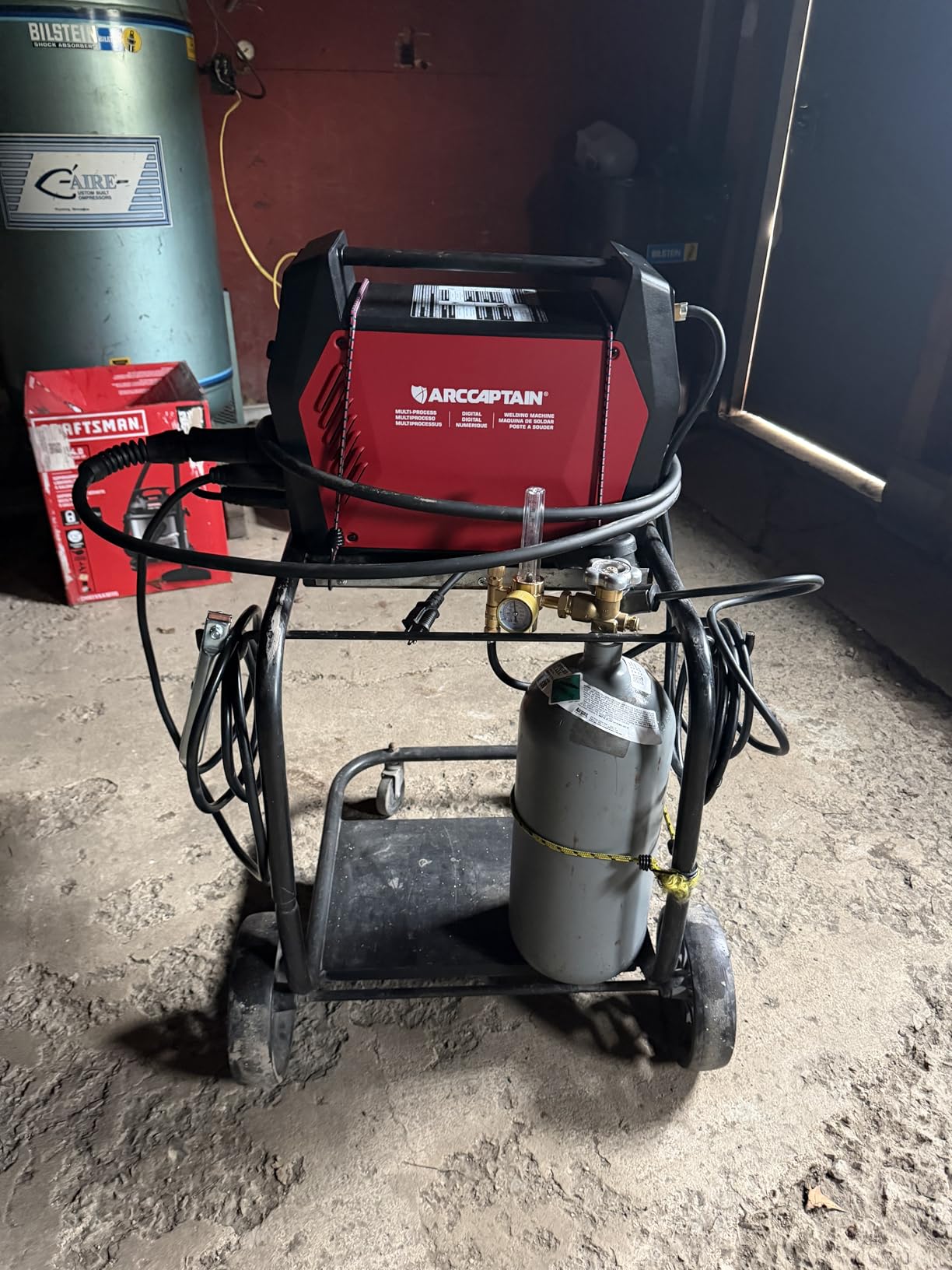
The wire feed motor is rated 40W and reaches 640 inches per minute, with 120V/240V dual voltage and two cooling fans. A large LED interface, a spacious lit wire compartment for spool changes and app control with saved settings round out a feature set that punches above its class.
Owners report clean, consistent wire feed and good beads on 1/8 inch steel, confirmed spool gun operation with aluminum, and weld quality comparable to considerably more expensive machines. The consistent criticisms are cord length and an initial setup curve, and customer service is repeatedly praised for resolving warranty issues quickly.
What the low weight means for a shop
At 10 pounds listed, this is the machine you can carry up stairs, load into a pickup unaided and use in a driveway. Two cooling fans and a three-year warranty make it viable for more than weekend duty, and the dual voltage means it adapts to whatever circuit you find. It is the only machine here we would call genuinely portable rather than merely movable.
The trade you accept for that portability
Every cable is short, so extensions are usually needed, and the power cord is around 10 gauge, which is thinner than we would like on a 205A machine. The stock amperage is modest for thicker plate, and the menu navigation takes a little practice before it stops being annoying. If you are doing 1/4 inch and heavier work, the 250PRO is a better output match.
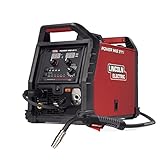
10. Lincoln Electric Power MIG 211i 20-211A – the name-brand buy
Lincoln Electric Power MIG 211i MIG Welder – Dual-Voltage 120/230 V, 20-211 A Output, Flux-Cored Ready, Portable 41 lb Machine, Model K6080-1
- Auto-sensing input removes adapters when moving between circuits
- Cast-aluminum drive reliably feeds a wide wire range
- Magnum Pro 100L gun reduces hand fatigue on long sessions
- Welds steel stainless and aluminum up to 3/8 inch
- Rugged case with multiple lift points
- 30 percent duty cycle at 175A is modest for heavy production
- Spool gun for aluminum sold separately
- Dual voltage tops out at 230V rather than 240V
The Lincoln Electric Power MIG 211i is the only name-brand machine in this group, and that changes what you are buying. Parts are stocked everywhere, the service path is a phone call rather a ticket form, and the machine is built to be repaired rather than replaced.
Auto-sensing input detects the power source without adapters, which is genuinely useful for a welder that moves between a home circuit and a job site. Output runs 20 to 211 amps and handles steel, stainless and aluminum up to 3/8 inch, with a seven-segment display and easy-turn voltage and wire speed knobs.
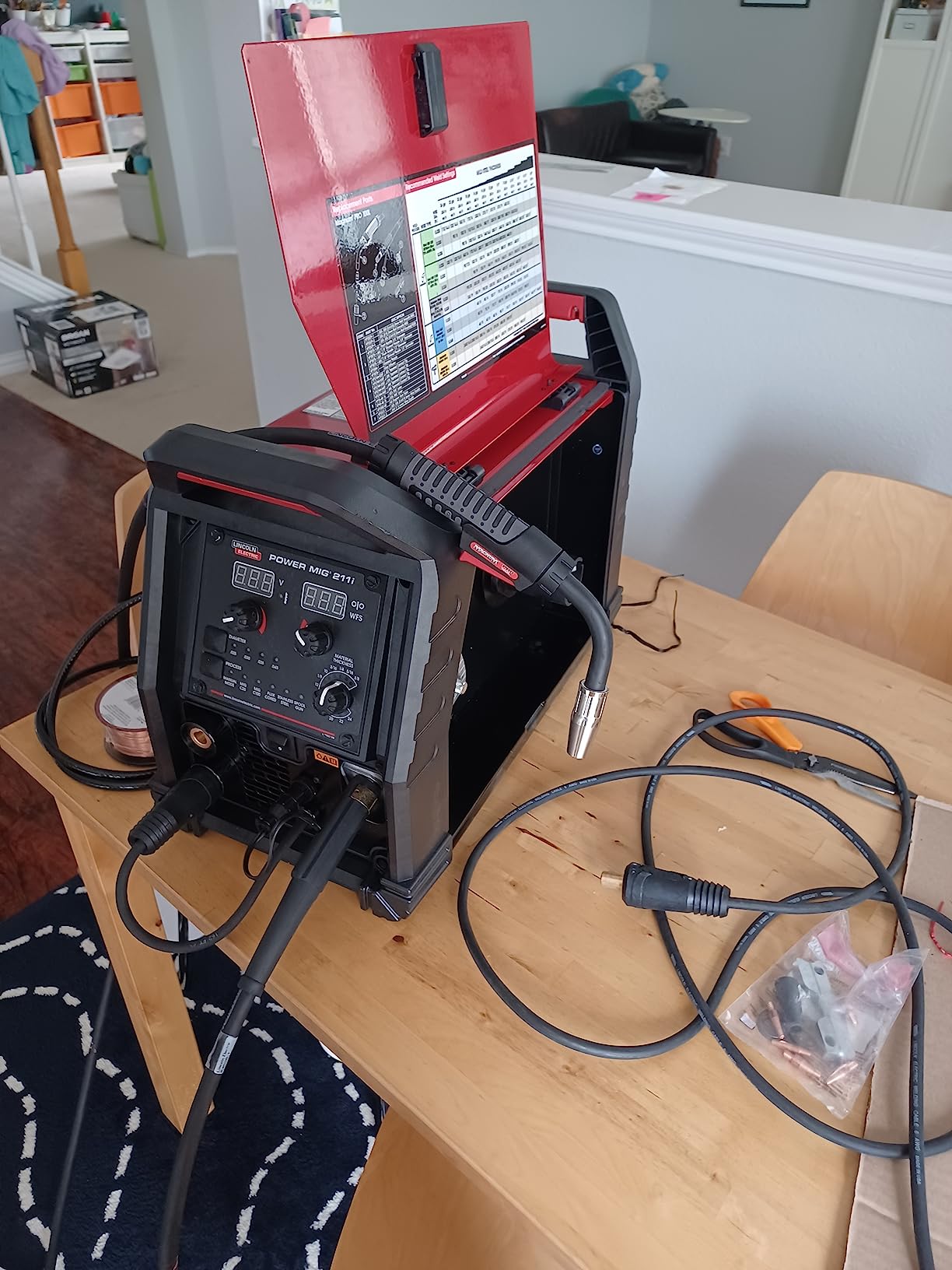
The drive is cast aluminum feeding 0.025 through 0.045 inch wire, which is a wider range than most machines in this roundup and a build type owners and forums treat as a quality marker. The included Magnum Pro 100L gun has an over-molded handle that reduces hand fatigue on long sessions, and the case has multiple lift points for moving around a shop.
It rates 4.7 from 97 reviews with 85 percent five-star, and the feedback skews toward serious hobbyists who want a name brand. The most cited limitation is the 30 percent duty cycle at 175 amps, which is modest for sustained heavy production work. The spool gun is sold separately, and the dual voltage ceiling is 230V rather than 240V.
What the brand name actually buys you
The forum consensus is consistent on this point: a used Miller, Hobart or Lincoln generally outlasts a new budget inverter, and a good chunk of that advantage is the parts and service network rather than the arc. If you plan to keep a machine for a decade and want it repairable, that is worth real money here.
Where the price does not buy you more power
This is not the machine for continuous plate work. At 30 percent duty cycle at 175 amps, a long 1/4 inch production job will hit the duty cycle ceiling in a way the 250PRO will not, and you need to buy a spool gun separately for aluminum. The 120/230V ceiling is also a small thing, but check your outlet before assuming full 240V compatibility.
Do I Have the Right Outlet? Wiring a 220V Circuit for a Home Shop
This is the first-time buyer’s biggest blocker, and the honest answer is: most residential 220V welders want a dedicated 50-amp circuit on their own NEMA 14-50 or 6-50 receptacle, and most garages do not have one. Confirm that before you choose a machine, because the electrical work frequently costs more than the welder.
On amperage, most of the machines here fall between 145 and 250 amps of welding output. Because MIG machines run at roughly 70 to 80 percent of welding output as input current, a 250 amp machine can draw close to 34 amps at 220V, and that is what sets the circuit requirement. Plan on 6 AWG copper conductors for a run of about 100 feet, with 8 AWG acceptable for shorter runs, and keep the run as short as you can.
The dryer outlet trap is worth spelling out, because it is a common and expensive mistake. A standard residential dryer receptacle is a NEMA 14-30 on a 30-amp breaker, and 30 amps is not enough for a 50-amp welder circuit. Plugging a 200 amp machine into a dryer outlet mid-project and having the breaker trip on every other bead is the single most common complaint in welding forums, and it is entirely avoidable.
A sub-panel is often the cleaner route in an attached garage with an older main panel that has no room for another 50-amp breaker. A licensed electrician can size it, and the work is well within a normal rough-in. Before calling anyone, test the outlet with a 240V outlet tester to confirm the voltage, and check the breaker label for the amperage rating.
Two more things to plan. Generators are a poor substitute for a dedicated circuit unless the generator is rated well above the machine and produces clean power, since dirty output causes erratic arc behaviour. And a GFCI-protected circuit is worth having for a shop, though some welders trip a GFCI on ignition, so the breaker type should be chosen with the machine in mind.
How to Choose a 220V MIG Welder for a Home Shop
Match amperage to material, not to a marketing number. Solid wire MIG settings scale roughly with wire feed speed, but the practical rule for mild steel is about 1 amp per thousandths of an inch of thickness. That puts 16 gauge around 70 amps, 1/8 inch at 120 to 130 amps, 1/4 inch around 175 to 200 amps, and 3/8 inch at 200 to 250 amps.
Read the duty cycle at the amperage you will use, not the headline figure. A machine rated 250 amps maximum is often rated at 20 to 30 percent duty cycle at 90 to 130 amps, and 60 percent duty cycle means six minutes of welding followed by four minutes of cooling in a ten-minute window. Every machine in this roundup with a stated duty cycle is rated substantially higher at its working amperage than at its maximum, which is why the FEMEROL 250PRO is unusual at 60 percent across all processes.
Decide gas versus gasless early, because it changes what you build. Gas-shielded MIG produces the cleanest beads and is the right choice for automotive, cosmetic and any work where the finish shows. Gasless flux core handles outdoor, windy, rural and rusty material with no cylinders, which is why it is the farm and fence standard. Many owners prefer gas because flux core leaves more smoke and a brown film they dislike, and if your projects are mixed, a multi-process machine is the compromise.
For aluminum, plan the path before you buy. Aluminum needs either a spool gun or a machine with a teflon liner and the right drive rollers, and the spool gun is almost always sold separately. The PrimeWeld MIG180 is the only machine here that includes one, which is why it wins the aluminum role despite its smaller output.
Warranty and parts support separate the tiers more reliably than amperage does. A one-year warranty flags hobbyist grade, three years is the norm for better machines, and the Lincoln 211i carries the service network advantage that independent brands cannot match. Watch for proprietary connectors and non-standard consumables, since a machine that locks you into one supplier for tips and liners is a machine that gets abandoned.
Finally, look at what actually breaks on budget inverters. The recurring complaints across reviews are thin power cords that run warm, drive rolls that do not match the wire size you want, torch cables too short to reach the work, and a MIG gun with no way to hang it while you swap ground clamps. None of these are fatal, and all of them are cheap to fix, but they are cheaper to know about before you buy.
New vs Used: What to Inspect Before Buying a Shop Welder
The most repeated recommendation across welding forums is consistent: a used Miller, Hobart or Lincoln usually beats a new budget 220V inverter on longevity. That is not a claim about arc quality so much as a claim about steel, copper, parts availability and whether anyone will still answer the phone in five years.
That said, buying used introduces its own risk, and the inspection matters more than the brand. Check the wire drive for grooved and knurled rollers that are not chewed or flattened, and look for consistent wear rather than shiny new rollers in a machine claiming low hours. Inspect the torch cable and ground clamp lead along their full length, because a break hidden under the insulation is the most common reason a used machine gets returned.
Look at the duty cycle plate and confirm it matches what the seller claims, and ask for the machine’s duty cycle at the amperage you care about rather than its maximum output. A rewelded transformer is a specific red flag, and so is a machine whose fan, contactor or drive motor has been replaced with a part that does not match the original spec.
Confirm the machine ships with its torch, ground clamp, electrode holder and the correct drive rollers, and check that the connectors are standard rather than proprietary. If the seller includes consumables, spools and a gas hose, that usually means the machine was actually used rather than moved from a box to a garage shelf.
Our broader beginner welder guide covers the entry-level cases in more detail. For a 220V home shop specifically, a used name-brand machine with a verified 50-amp circuit is a strong pairing, and a new independent-brand multiprocess unit is the other sensible route.
Frequently Asked Questions
What is the best 220v MIG welder for home use?
For most home shops, the YESWELDER MIG-205DS PRO is the strongest all-round choice. It runs gas MIG, flux core, spool gun aluminum, lift TIG and stick from one 205A dual-voltage chassis, and its 1455 reviews give you the widest body of owner feedback in this class. If aluminum is the priority rather than process range, the PrimeWeld MIG180 is the pick because it includes a purpose-built spool gun.
What is the best 240 volt MIG welder?
A 220V and a 240V welder are the same machine in US residential use. Both labels describe the same 240V nominal single-phase household circuit, and manufacturers label them interchangeably. The number on the machine tells you which receptacle and breaker you need, not a different class of performance. Any machine rated 110V/220V or 120V/240V will run on that circuit.
Is there a 220 volt MIG welder that uses gas?
Yes, and gas-shielded MIG is the better choice for clean, cosmetic and automotive work. A dedicated 220V circuit also gives a better gas MIG arc than the same machine on 110V, because there is more current available at the same wire feed speed. Just budget for shielding gas, a regulator, and a ground clamp that suits the job, since these machines are frequently sold without a regulator.
How many amps do I need for a 220v welder?
Match amps to material thickness. As a practical rule for mild steel, budget about 1 amp per thousandths of an inch of thickness: roughly 70 amps for 16 gauge, 120 to 130 amps for 1/8 inch, 175 to 200 amps for 1/4 inch, and 200 to 250 amps for 3/8 inch. Check the duty cycle at that amperage rather than the maximum rating, since headline output rarely carries a high duty cycle.
How many watts does a 220 welder use?
A 200 amp MIG welder typically draws around 22 to 27 amps of input current at 220V, which is roughly 5 to 6 kW of input power, and a 250 amp machine can draw closer to 34 amps. That is why these machines need a dedicated 50-amp circuit on a NEMA 14-50 or 6-50 receptacle with 6 AWG copper, rather than a general-purpose 20 amp household outlet.
Are cheap welders worth it?
For a first machine and light to moderate shop work, yes, and most machines in this roundup produce good beads. The trade-offs show up in details: undersized power cords, drive rolls that do not match your wire size, short torch leads, thin documentation and one-year service windows. If you plan to keep a machine for a decade or repair it yourself, a used Miller, Hobart or Lincoln is usually the better long-term buy.
Which 220V MIG Welder Should You Buy?
For most home shops, the YESWELDER MIG-205DS PRO is the pick. It covers the widest range of processes, has the deepest owner feedback base, and lets you grow into the machine rather than out of it. If you want the most control and the most processes per dollar, the ARCCAPTAIN MIG200 is the value pick.
Match the machine to the work instead. Aluminum on the project list means the PrimeWeld MIG180, because the included spool gun removes the most common reason those projects stall. Heavy 1/4 inch and 3/8 inch plate means the FEMEROL 250PRO and its 60 percent duty cycle. Welding that leaves the garage means the ARCCAPTAIN MIG205-PRO and its low listed weight. Spot welds and panel fabrication mean the Weldpro MIG210LCD. A machine you expect to keep and repair for a decade means the Lincoln Electric Power MIG 211i.
One last thing. Confirm your 50-amp circuit before any of these land, because a welder that arrives to a panel that cannot supply it is the most common way a good decision turns into an expensive mistake. Check the outlet with a tester this week, then pick your machine.