
There is no single best aquarium water test kit for reef tanks, because a reef does not need the same numbers a freshwater tank needs. A reef keeper is holding alkalinity, calcium, and magnesium steady for weeks at a time, and pushing nitrate and phosphate inside a band narrower than most entry-level color charts can resolve. Get that wrong and you dose a coral that was never out of balance.
So the honest answer is a category, not a product. The API Saltwater Master is the most-reviewed kit in this group and the best starting point for a first reef, but it does not measure the three parameters that decide whether a coral grows well. The Red Sea Reef Foundation Pro measures exactly those three and is the pick for anyone dosing to targets. The Salifert magnesium titration is the closest thing to a lab-grade hobbyist result on a single parameter.
Below, I break down the best aquarium water test kits for reef tanks by what each one actually measures, how many tests each bottle covers, and who it suits. I also cover the parameters every reef needs, why a freshwater master kit gives you false confidence, and how to read a color chart without fooling yourself. If you are still assembling equipment, start with our picks for aquarium filters, heaters, and air pumps before you worry about chemistry.
Table of Contents
Top 3 Reef Water Test Kits for 2026
API Saltwater Master Test Kit
- 550 tests per bottle set
- Tests pH ammonia nitrite nitrate
- Four test tubes and one color card

Red Sea Reef Foundation Pro
- Calcium alkalinity magnesium in one box
- Titration tests with a titrator tool
- 75 and 60 tests per reagent

Salifert Magnesium Test Kit
- Titration with a clear endpoint
- Up to 50 tests per kit
- Cross-checked against lab analysis
Each of these covers a different gap. The API kit handles the nitrogen cycle and pH, the Red Sea kit handles the three growth parameters, and the Salifert kit nails one parameter that most kits rush.
The Best Aquarium Water Test Kits for Reef Tanks in 2026
| Product | Specifications | Action |
|---|---|---|
| API Saltwater Master Test Kit 550-Test |
|
Check Latest Price |
 API Phosphate Test Kit API Phosphate Test Kit |
|
Check Latest Price |
| Salifert Magnesium Test Kit |
|
Check Latest Price |
 Salifert Calcium Test Kit Salifert Calcium Test Kit |
|
Check Latest Price |
| Red Sea Reef Foundation Pro Test Kit |
|
Check Latest Price |
 ATI ICP Lab Analysis Pro ATI ICP Lab Analysis Pro |
|
Check Latest Price |
 Salifert Alkalinity Calcium Magnesium Combo Salifert Alkalinity Calcium Magnesium Combo |
|
Check Latest Price |
 Red Sea Marine Care Test Kit Red Sea Marine Care Test Kit |
|
Check Latest Price |
 Salifert Master Reef Testing Combo Kit Salifert Master Reef Testing Combo Kit |
|
Check Latest Price |
 Hanna HI772 Alkalinity Colorimeter Checker Hanna HI772 Alkalinity Colorimeter Checker |
|
Check Latest Price |
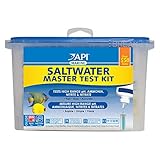
1. API Saltwater Master Test Kit 550-Test – Best First Kit for a New Reef
API Saltwater Master Test Kit 550-Test Saltwater Aquarium Water Test Kit
- Most-reviewed kit in this roundup at over 4700 reviews
- Covers ammonia nitrite and nitrate for cycling
- Four tubes let you run several tests at once
- Compact enough to keep in one cabinet
- Measures none of the three reef growth parameters
- Color card readings vary with lighting and angle
- Instructions leave room for interpretation on reading the chart
I keep this kit on the shelf in every tank I look after, and the reason is simple: it tells me whether there is a nitrogen cycle problem. That is the question on day seven of a new build, and nothing else on this list answers it. Ammonia, nitrite, and nitrate are all in the box, each with roughly 100 tests per bottle.
The 550-test figure covers the whole reagent set, not one bottle, and it is genuinely long-lasting. A reef keeper testing weekly gets well over a year before any bottle runs dry, which makes this the cheapest way to keep a running log of your nitrogen cycle over the long haul.
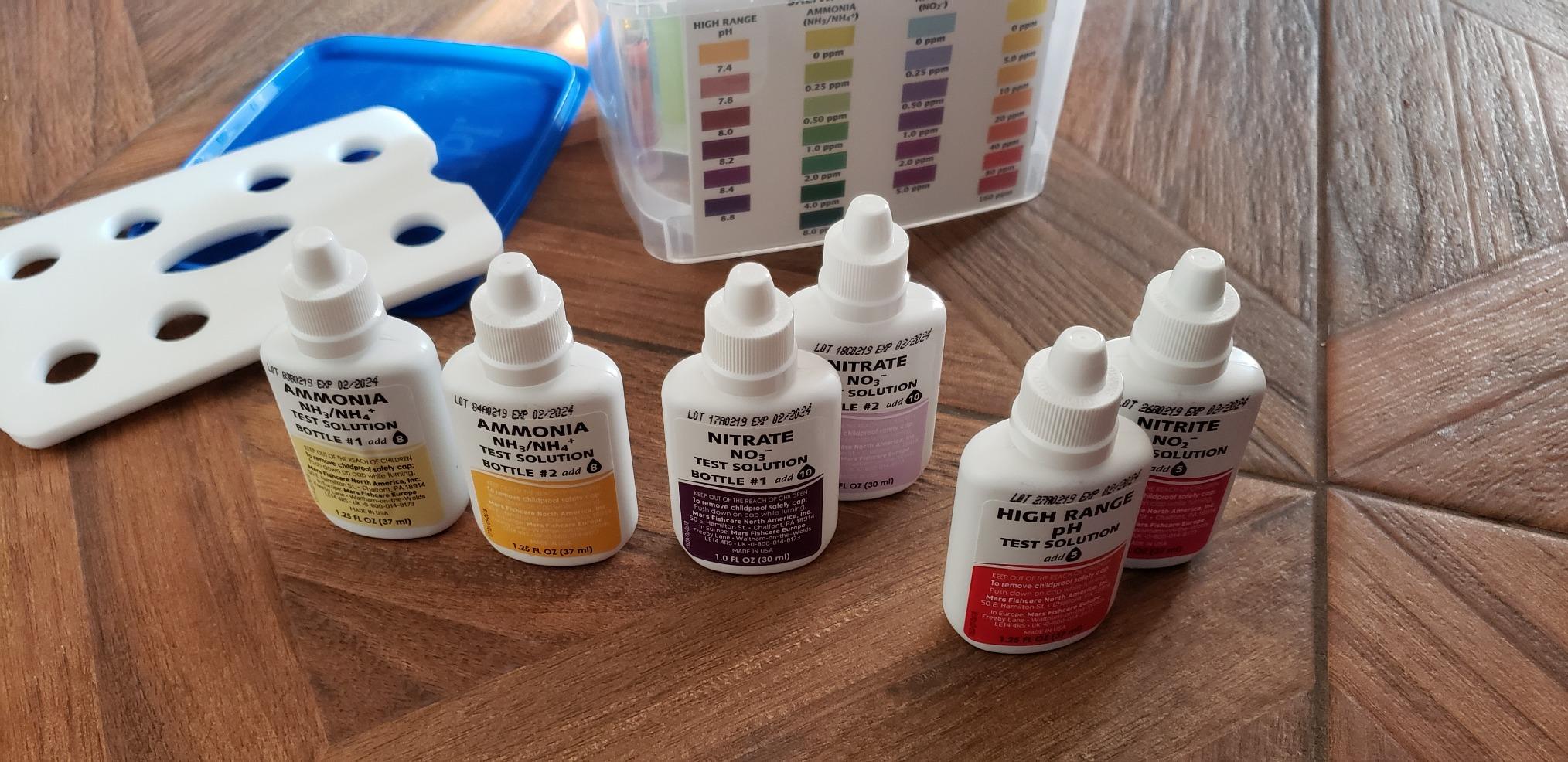
What it does not do is measure calcium, alkalinity, or magnesium. That is not a flaw in the design, it is a scope decision. API built this for the fish-only saltwater market, and for a FOWLR tank it is a complete kit. For a reef it is the front half of your setup, not the whole thing.
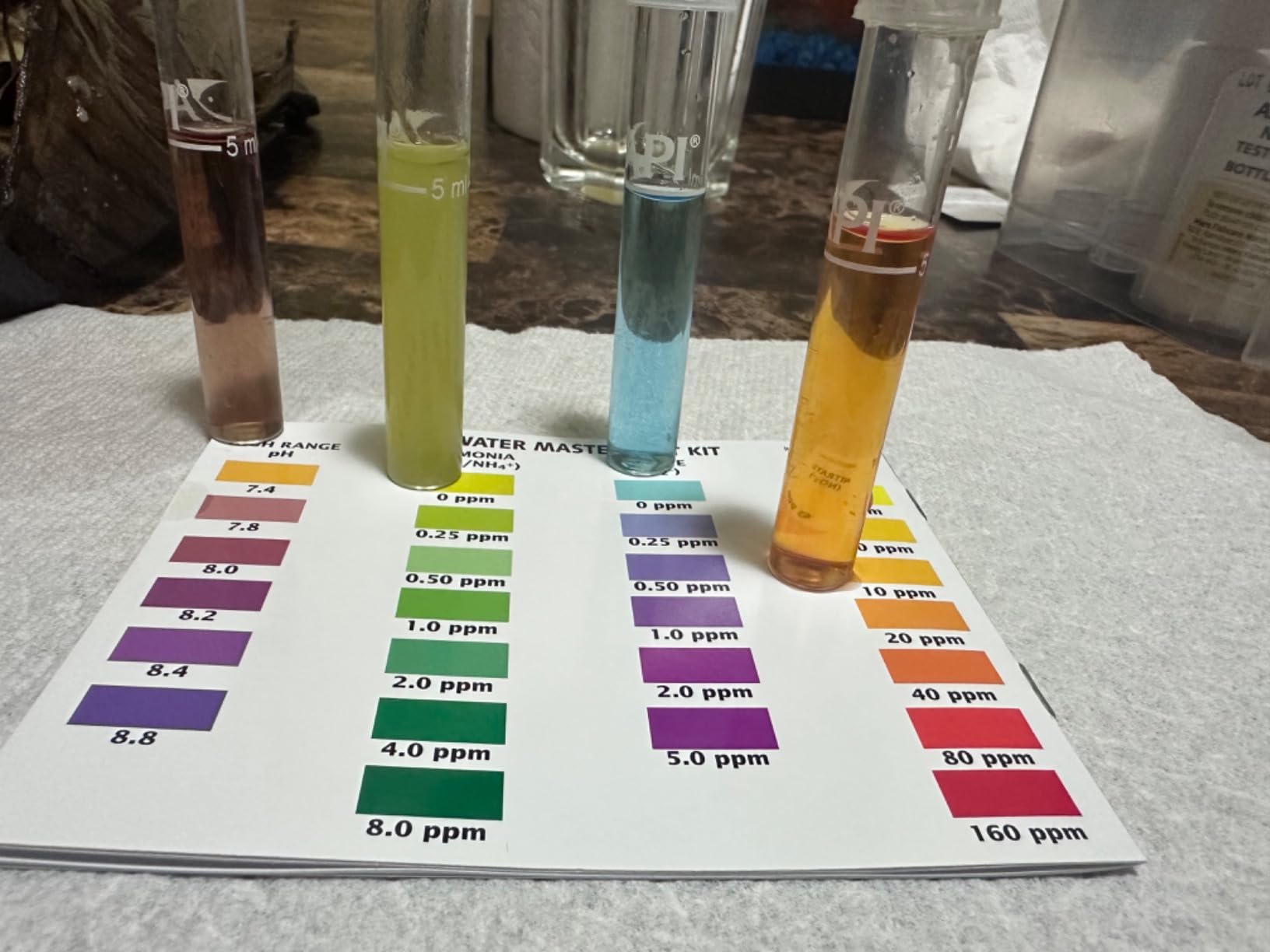
The reading experience is the weaker half. You fill a tube, add drops, wait, and match the color to a printed card. Under a bright window the shades blur together and you can read the same sample two different ways twenty minutes later. The Spruce Pets review team found the same thing, reporting that color-card results out of the box spread widely across samples.
Who this kit is right for
Buy this first if your tank is new, empty, or still cycling. It is also the kit I recommend to anyone who has inherited a saltwater system and has no idea what the nitrogen cycle is doing on their watch.
It is genuinely useful after that, too. A weekly ammonia and nitrite check costs almost nothing once the bottles are paid for, and a silent ammonia spike is the single most common cause of a reef that suddenly stops growing.
Where it falls short for reef work
The gap is nutrient management, not just chemistry. The kit’s total ammonia reading is the practical problem: it measures bound and free ammonia together, so saltwater at a normal pH reads high even when the free ammonia that actually harms fish is at zero.
That false positive sends people chasing a problem that does not exist. On r/ReefCentral, keepers who use API report the same habit from the other direction, keeping API for ammonia and nitrite while switching nitrate to another brand. Take the nitrogen cycle from this kit and get the growth parameters elsewhere.
2. API Phosphate Test Kit – Budget Pick Nutrient Test
- 150 tests per bottle pair for routine monitoring
- Covers the 0-10 ppm range reef keepers work in
- Compact footprint stores easily
- Low cost per test over a year
- Single parameter so other kits are still needed
- Color chart resolution is coarse near zero
- Two color cards are easy to misalign when reading
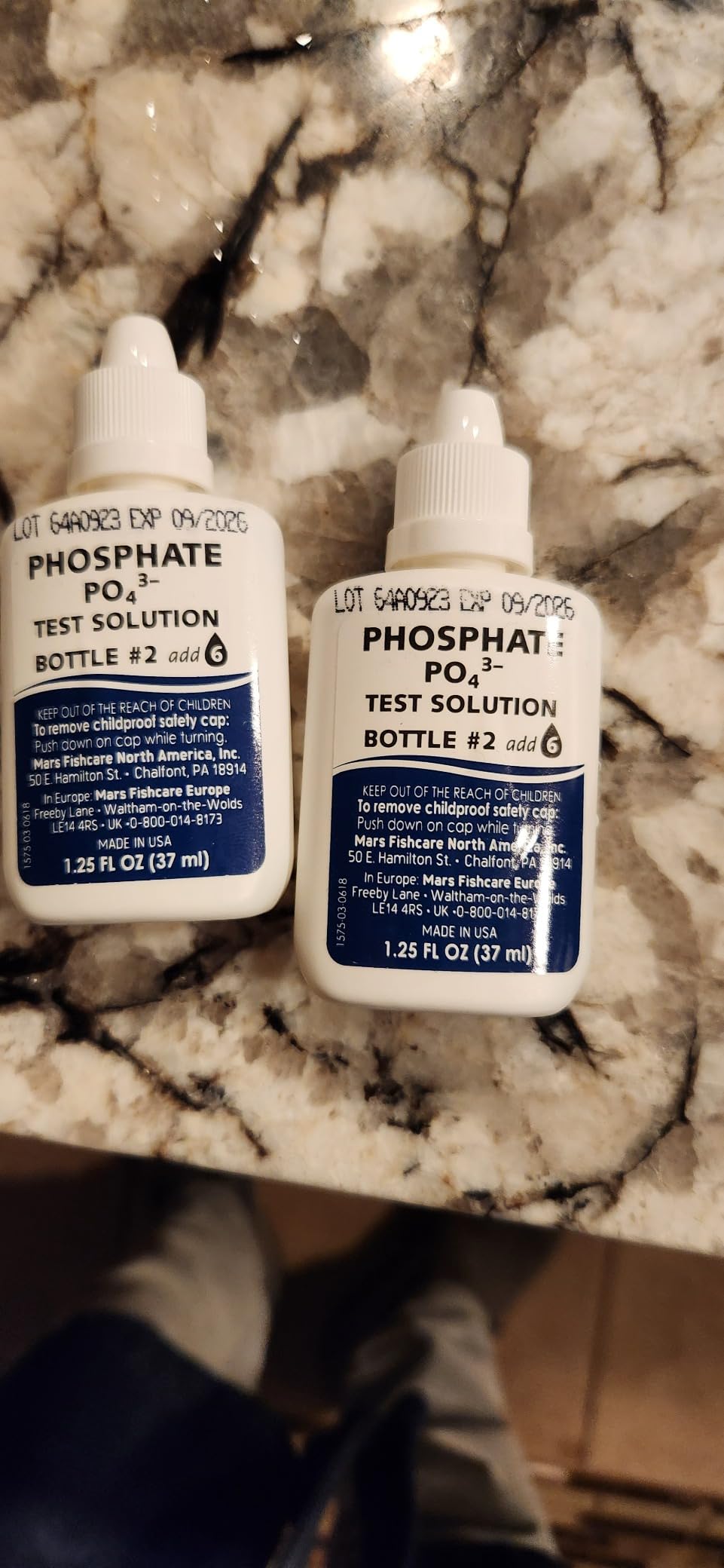
Phosphate is the nutrient most likely to wreck a reef, and this is the cheapest competent way to watch it. At 150 tests per bottle pair, a twice-weekly check runs for well over a year before refills, and the 0-10 ppm scale covers both the coral-safe zone and the algae-emergency zone.
The case for it is arithmetic. If you are running a low-nutrient system where the target band is 0.03 to 0.10 ppm, you need a test with fine resolution at the bottom of its scale. This kit resolves phosphate but not with laboratory precision, and a reef2reef thread exists entirely because two brands disagree about what a given water sample contains.
Phosphate reacts slowly, which makes it a good number to check weekly rather than daily. A reading that moved from 0.08 to 0.11 ppm overnight is usually technique, not biology, and weekly comparison of the same sample is far more informative.
Where this kit loses to the digital colorimeters is at the low end. On an ultra-low-nutrient system the two color cards are close together in shade and the gap between adjacent steps is thin, so a color match at 0.05 versus 0.08 ppm is a judgment call rather than a measurement.
Where it earns its place
For a soft coral or zoanthid tank, this is enough. Those systems run happily on a wider nutrient band than SPS, and the coarse low-end resolution does not matter when your target is 0.2 ppm rather than 0.05.
It is also the sensible first purchase for someone who already owns an API master kit and has realized the master kit does not cover phosphate. Owners consistently describe it as a dependable, inexpensive supplement, and the 150-test count is the longest-running supply of any kit here.
What to watch for
Read the color card in daylight with a white background behind it, and only compare the sample against the freshly mixed one. Reagent age changes the color, so a bottle that has been open a year produces a shifted reaction.
Do not dose a phosphate reducer based on a single reading. Run the test twice, once in the morning and once in the evening, before you act on it. On r/ReefTank, keepers chasing algae problems name conflicting readings between brands as their biggest source of confusion, and repeat testing is the cheapest fix.
3. Salifert Magnesium Test Kit – Best for Magnesium Accuracy
- Titration method with a clear endpoint
- Results cross-checked against professional lab analysis
- Color steps are easy to distinguish
- Straightforward instructions
- Only about 50 tests per bottle
- Keeping air bubbles out of the 1.0 mL syringe is the hard step
- A single bubble can shift the reading meaningfully
Magnesium is the parameter most reef keepers skip, and skipping it is why their calcium keeps drifting. Magnesium at roughly 1300 to 1400 ppm is what lets alkalinity and calcium stay in proportion. When magnesium falls, the tank burns through alkalinity and you are dosing a problem you never identified.
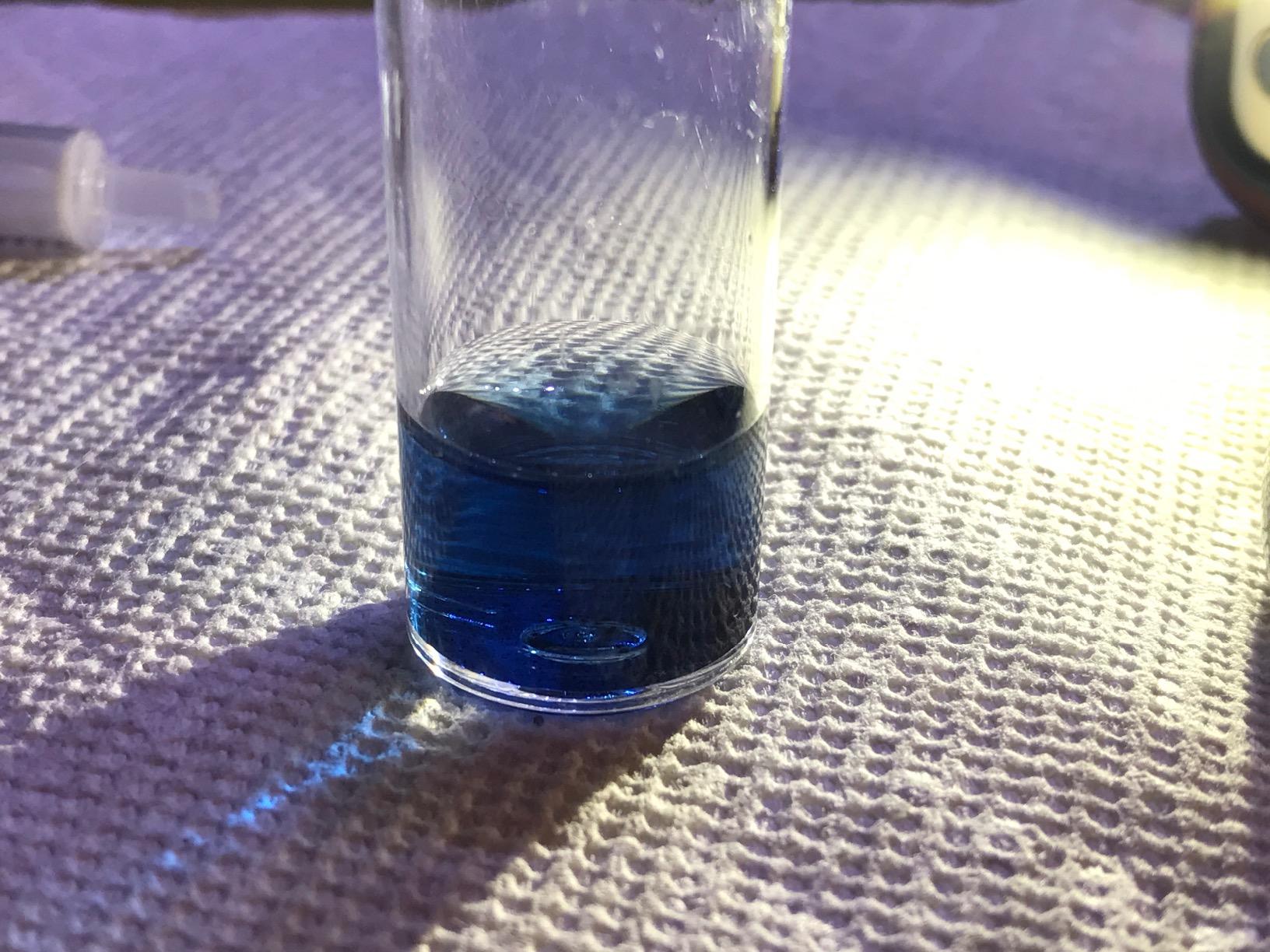
This is a titration test rather than a colorimetric one, which is why it is the most accurate magnesium method available to a hobbyist. You push drops from a 1.0 mL syringe until the sample hits a distinct blue endpoint, then read the volume. Owners who cross-check against professional ICP analysis report that it tracks the lab number closely.
The Red Sea kit listed later in this roundup gets the widest variance in published side-by-side testing, partly because its magnesium procedure has multiple wait times and mixing steps. The Salifert method has fewer of them, and a shorter procedure is a more repeatable one once you have done it five times.
The catch is syringe technique. The single most common error is an air bubble in the barrel, which displaces liquid and pushes the reading off by a meaningful number. Push the plunger, tap the tip, wipe it, and start from zero every time.
Why magnesium deserves the effort
If you run SPS and acropora, this is the test I would not skip. Those corals draw magnesium constantly to lay down skeleton, and a tank that runs low will show stalled growth long before alkalinity visibly swings.
A common hybrid build reported on r/ReefTank pairs Aquaforest or Salifert for magnesium and calcium, Hanna for alkalinity and phosphate, and NYOS for nitrate. Buying by parameter rather than by brand is the pattern most experienced keepers describe, and this kit is the magnesium half of that build.
When it is not worth it
At 50 tests per bottle this is the shortest supply of any kit here. If you want to test magnesium twice a week, you are refilling constantly and should weigh a colorimetric set instead.
It is also single parameter. A soft coral tank on a gentle dose schedule can get by checking magnesium monthly, and at that cadence the refill cost is irrelevant. The real question is whether you are chasing a number you will act on.
4. Salifert Calcium Test Kit – Best for Calcium Accuracy
- Up to 100 tests per kit which is the longest supply here
- Titration-based reading of a core reef parameter
- Compact box with graduated syringe and vials
- Strong repeatability across runs
- Listed under a different brand name than the classic kit
- Slow steady drop counting needed to catch the endpoint
- Single parameter only so alkalinity and magnesium are separate
Calcium is the number you will look at most often, because it is the one you can change fastest. Two-part dosing, a calcium reactor, and water changes all move it, which makes a reliable reading worth having before you adjust anything.
This is the same titration approach as the Salifert magnesium kit, with one practical advantage: 100 tests per kit. At twice-weekly testing that is close to a year of supply, which puts it ahead of the magnesium bottle on pure convenience.
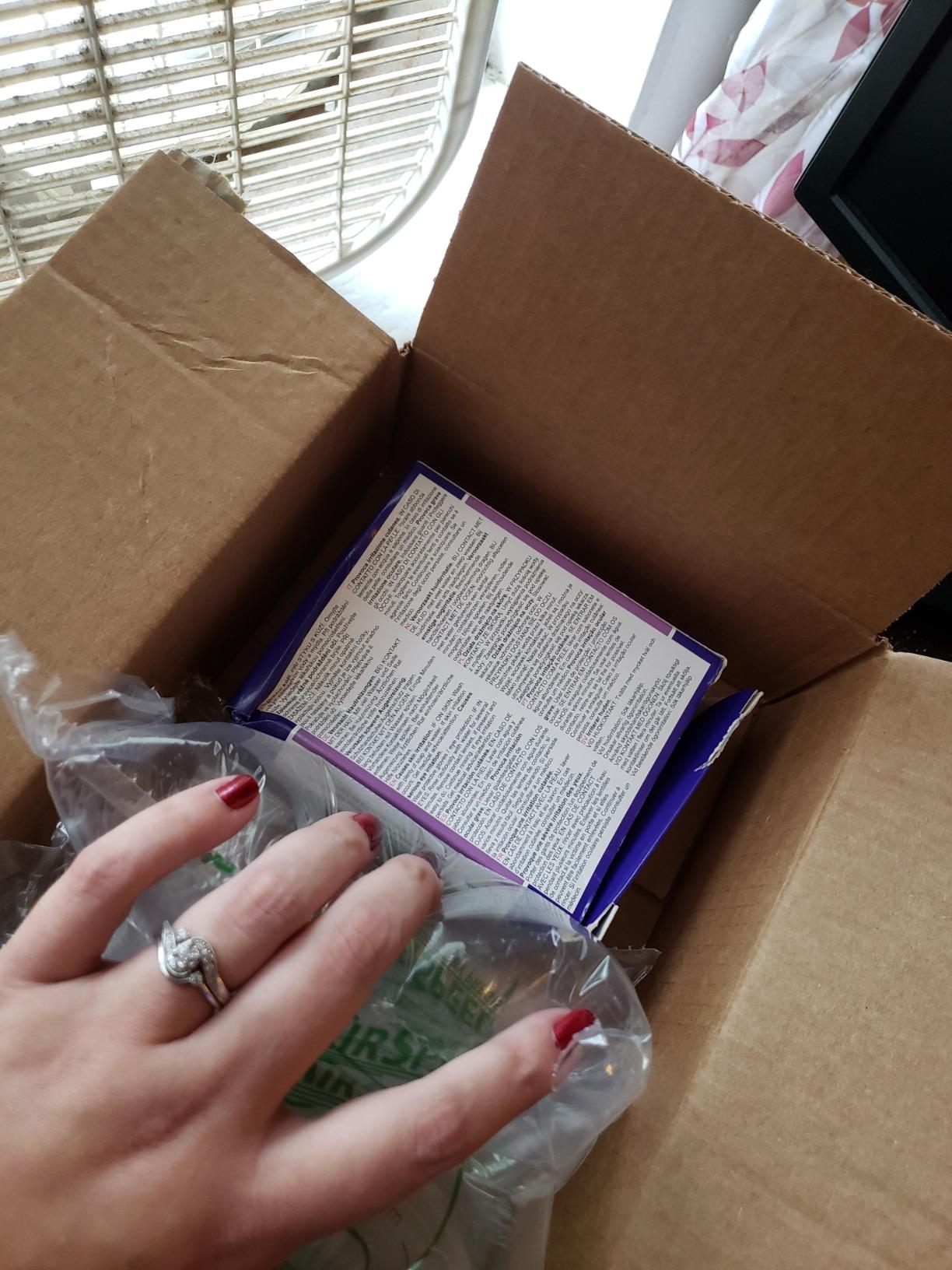
One thing to know before you buy: this listing carries the brand QianShouYan rather than Salifert, though it is the Salifert calcium design sold under a different brand entity. The kit itself is the same graduation and the same procedure, so treat the instructions as the Salifert ones you already know.
The endpoint is a color shift to blue, and catching it requires a slow, steady drop rhythm. Rushing the last few drops is how you end up 10 ppm high and wondering why your dosing stopped working.
How it compares to the digital option
A colorimeter gives you a number with no interpretation step, which removes the largest source of error. The tradeoff is that colorimeters cover one parameter per unit, and the reagent vials for them are a recurring consumable with a short test count each.
On reefs.com, keepers describe the common pattern of holding a Salifert kit as a backup on a parameter where they own a digital meter. That is a sensible arrangement, because it gives you a second opinion when the meter and the color chart disagree.
Where a cheaper kit would do
If your tank is a soft coral system on a loose schedule, you do not need 100 tests of precision. A master kit that includes a calcium titration at a lower test count covers the same ground.
The case for buying this on its own is the longevity. Combine it with the magnesium kit above and you have a two-parameter core with a year of supply in each box, at a lower total cost per test than most combo kits.
5. Red Sea Reef Foundation Pro Test Kit – Most Versatile for Dosing Accuracy
- Covers all three reef growth parameters in one kit
- Titrator tool makes drop counting easier and steadier
- Alkalinity resolution of 0.05 me/L per step
- Color-coded vials and glass containers
- Hard plastic case protects the glassware
- Magnesium procedure is more tedious than the other two
- Case is slightly too short to close with the titrator inside
- Some find the color contrast harder to read than Salifert charts
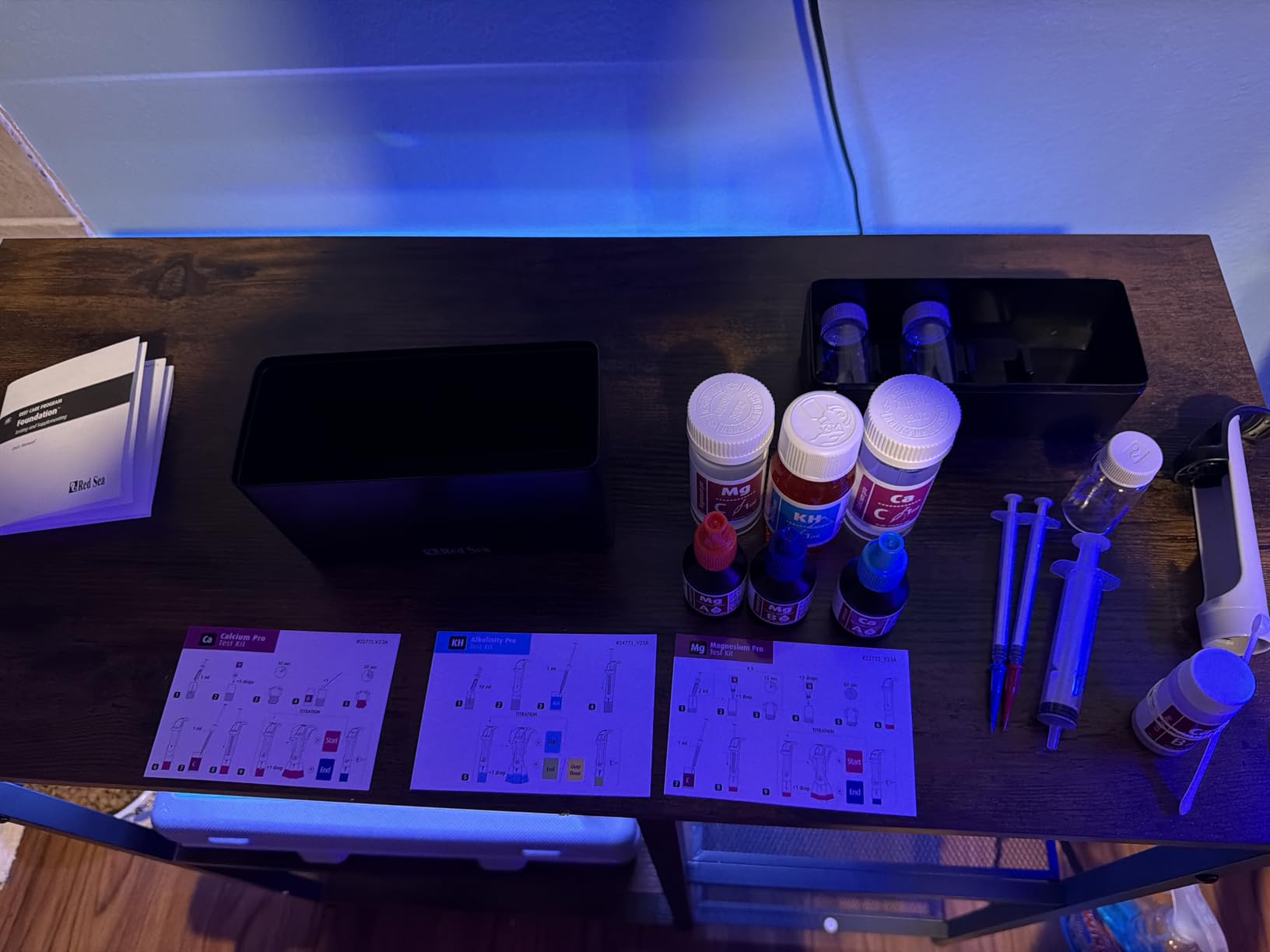
If you dose a reef to targets, this is the kit to buy. Calcium, alkalinity, and magnesium in one box means your dosing decisions all come from the same chemistry and the same set of color steps, which removes a whole category of cross-brand disagreement.
The resolution is what separates the Pro from the standard Red Sea line. Alkalinity resolves to 0.05 me/L per step and magnesium to 20 ppm, which is fine enough to see a 0.5 dKH swing rather than infering it. Owners report alkalinity readings landing within 0.1 dKH of a Hanna checker.
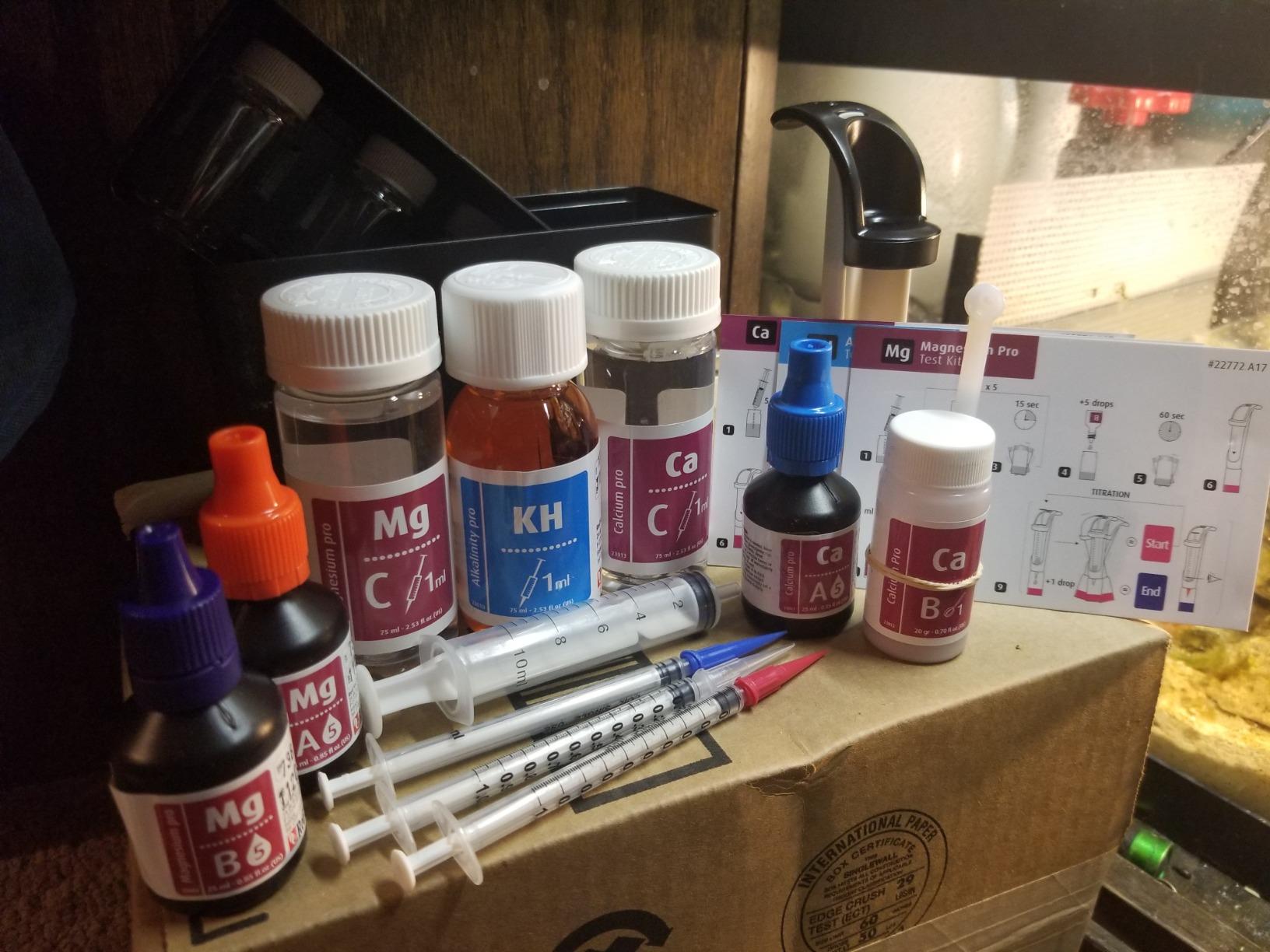
The titrator is the feature I did not expect to care about and now recommend to everyone. It holds the vial at a fixed angle over the sample so the drops land consistently, which takes the wobble out of the last few drops. It is a small thing that makes a measurable difference in repeatability.
The magnesium test is the weak leg. It has more wait times and mixing steps than the calcium and alkalinity tests, and in published side-by-side testing the Red Sea magnesium procedure showed the widest spread of any kit measured. Most owners work around it by testing magnesium monthly and calcium twice weekly.
Where this kit earns its place
On an SPS-dominated reef, a stable tank is the goal and your dosing is daily. This is the kit that supports that, because the numbers you get are fine-grained enough to tell a real swing from measurement noise.
It also doubles as a verification tool. If your dosing is already balanced and a daily test kit is drifting, running this alongside it for a week tells you which instrument is wrong. That is a cheap answer to a question that otherwise takes months.
What to expect day to day
Budget time for the magnesium test. It takes longer than the other two and rewards a calm setup with the reagents laid out in order before you start.
Check the case before you rely on it. Several owners report the lid does not fully close with the titrator stored inside, which is a minor annoyance until the day you need to find a syringe. The hard plastic shell still protects the glassware far better than the cardboard boxes used by entry kits.
6. ATI ICP Lab Analysis Pro – Best for Trace Elements and Source Water
ATI ICP Lab Analysis Pro for Reef Aquariums – Advanced Water Testing with RO Water Analysis – Nitrate, KH & Fluoride – 1 Test Kit
- Professional elemental results no home kit can match
- Covers nitrate fluoride and carbonate hardness alongside the standard panel
- Separate RO source water analysis included
- Email results with online registration and QR activation
- Results are not immediate for time-sensitive dosing
- Consumable sample vials must be reordered each submission
- Per-test economics improve with multipacks
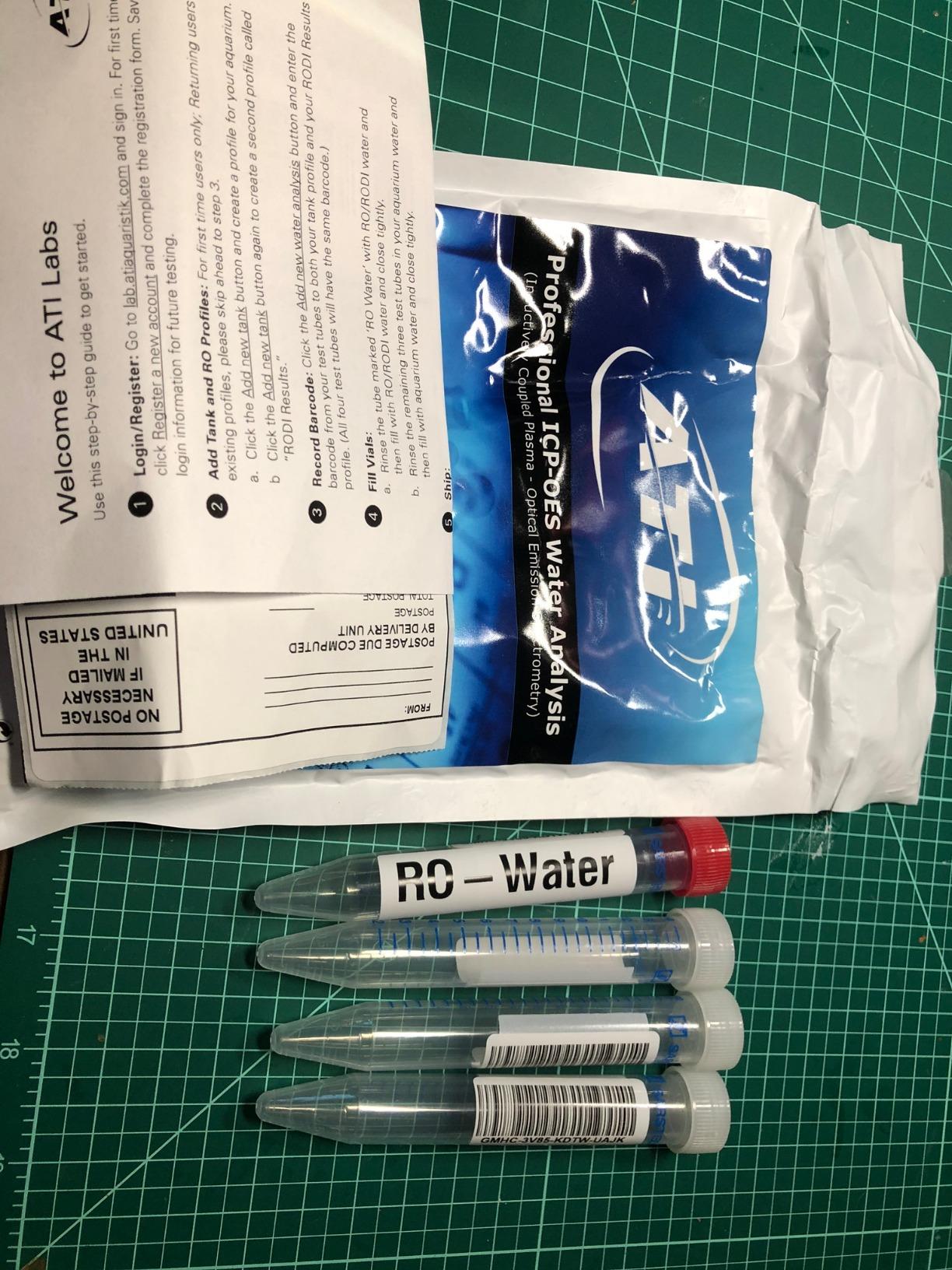
A mail-in lab test is the only way to see what a home kit cannot. ICP analysis reports dozens of elemental values at once, including trace elements that nobody’s color chart measures, and the Pro panel adds nitrate, fluoride, and carbonate hardness on top of the standard scope.
The separate RO source water analysis is the part I would not skip. A growing number of keepers treat dino outbreaks as a trace element problem they can never fix with a manual test, and the only way to see it is a lab panel.
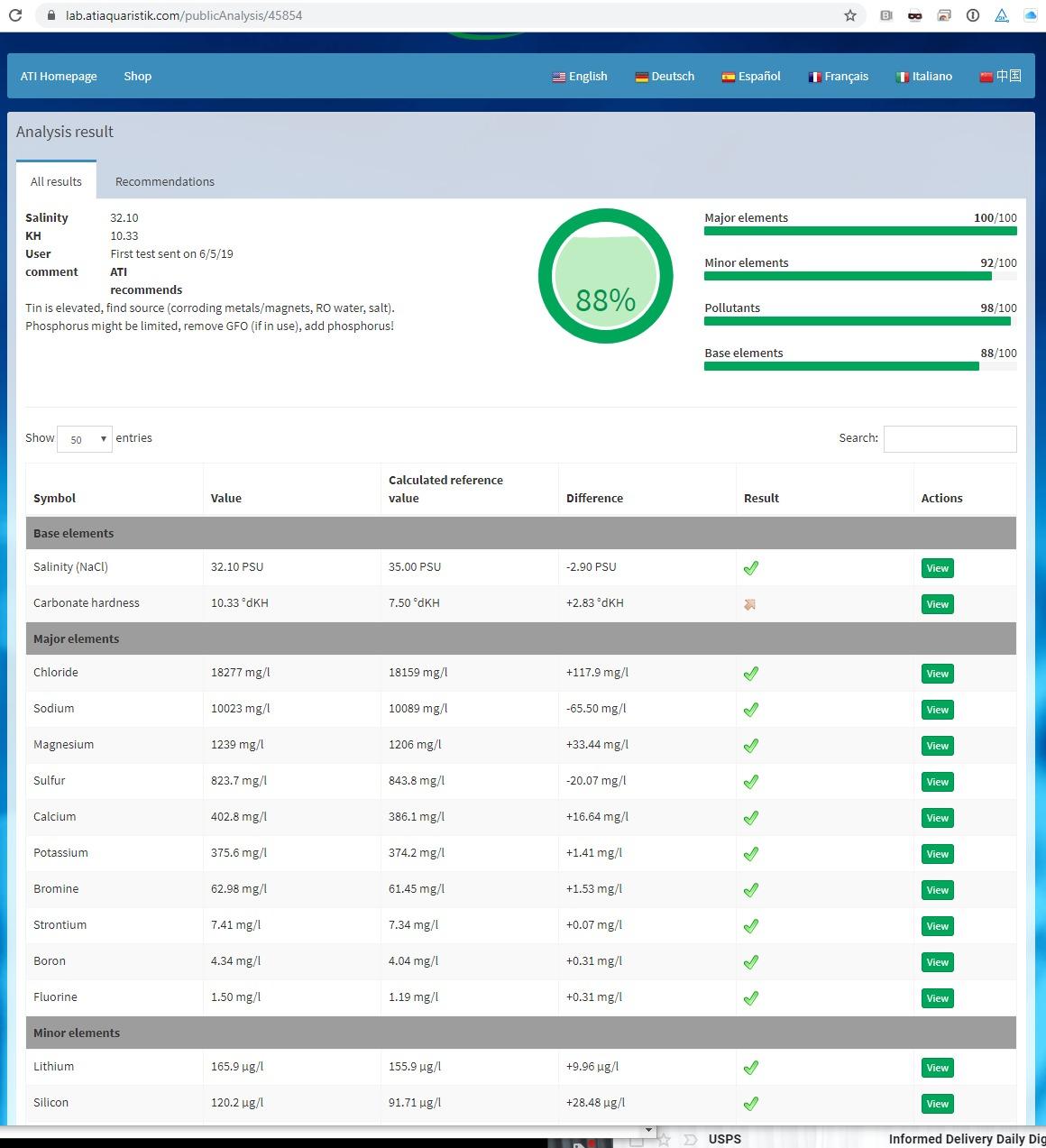
Registration is simple: activate online with a QR code, fill the sample vials, apply the barcodes, mail the box. Results arrive by email, which means your dosing decision for a parameter this kit covers is being made on last week’s data unless you plan the timing.
That timing is the real limitation. A home kit gives you a number in five minutes at 10pm when a coral looks wrong. A lab panel gives you a number you will read the next morning and cannot act on retroactively. Most keepers use mail-in testing to confirm a trend, not to chase a single afternoon.
When it beats a home kit
Once a tank is established and stable, mail-in analysis tells you about parameters no home kit reports. A stable SPS system with a stubborn growth plateau is a classic case, and the answer is often a trace element rather than anything you can see in a color chart.
It is also the right tool for new setups. Before you dose anything, a baseline panel tells you what your salt and your source water are actually delivering, so you are not correcting a problem you created yourself.
Where it does not help
It cannot replace daily testing. Alkalinity swings on a timescale of hours and a weekly lab report tells you nothing about yesterday.
The vial cost is recurring and buyers note that multipack options spread it further per submission. If you test monthly the economics work out fine. If you want weekly panels, you are spending far more than a home kit for data you already had.
7. Salifert Alkalinity Calcium Magnesium Combo Kit – Best Starter Trio
- All three reef growth parameters in one purchase
- No titration syringe needed so the procedure is simpler
- Ten test strips included for supplementary checks
- Recognized brand with a long reef-keeping track record
- Covers no nitrate phosphate or pH so more kits are needed
- Only ten test strips included
- Heavier box than the individual Salifert kits
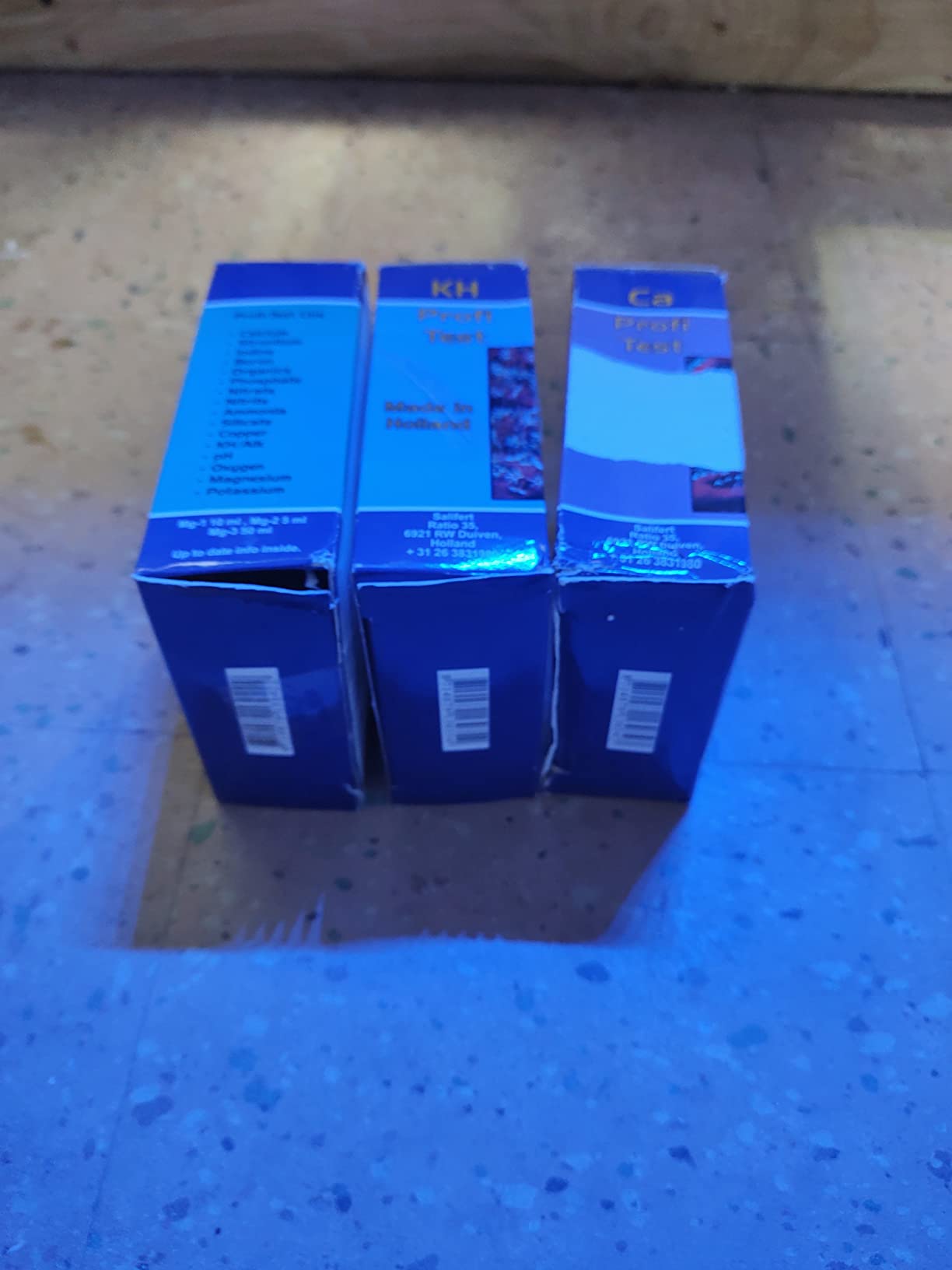
This is the version of the Salifert trio for people who do not want to drop-count with a syringe. All three growth parameters are in one box, and the procedure is add drops, wait, and compare color. There is no titration step to rush.
That simplicity is the whole argument. The single most common reason people get bad readings is that they hurried the last few drops of a titration, and a drop-and-wait test removes that failure mode entirely. For a new keeper building a habit, that matters more than marginal accuracy.
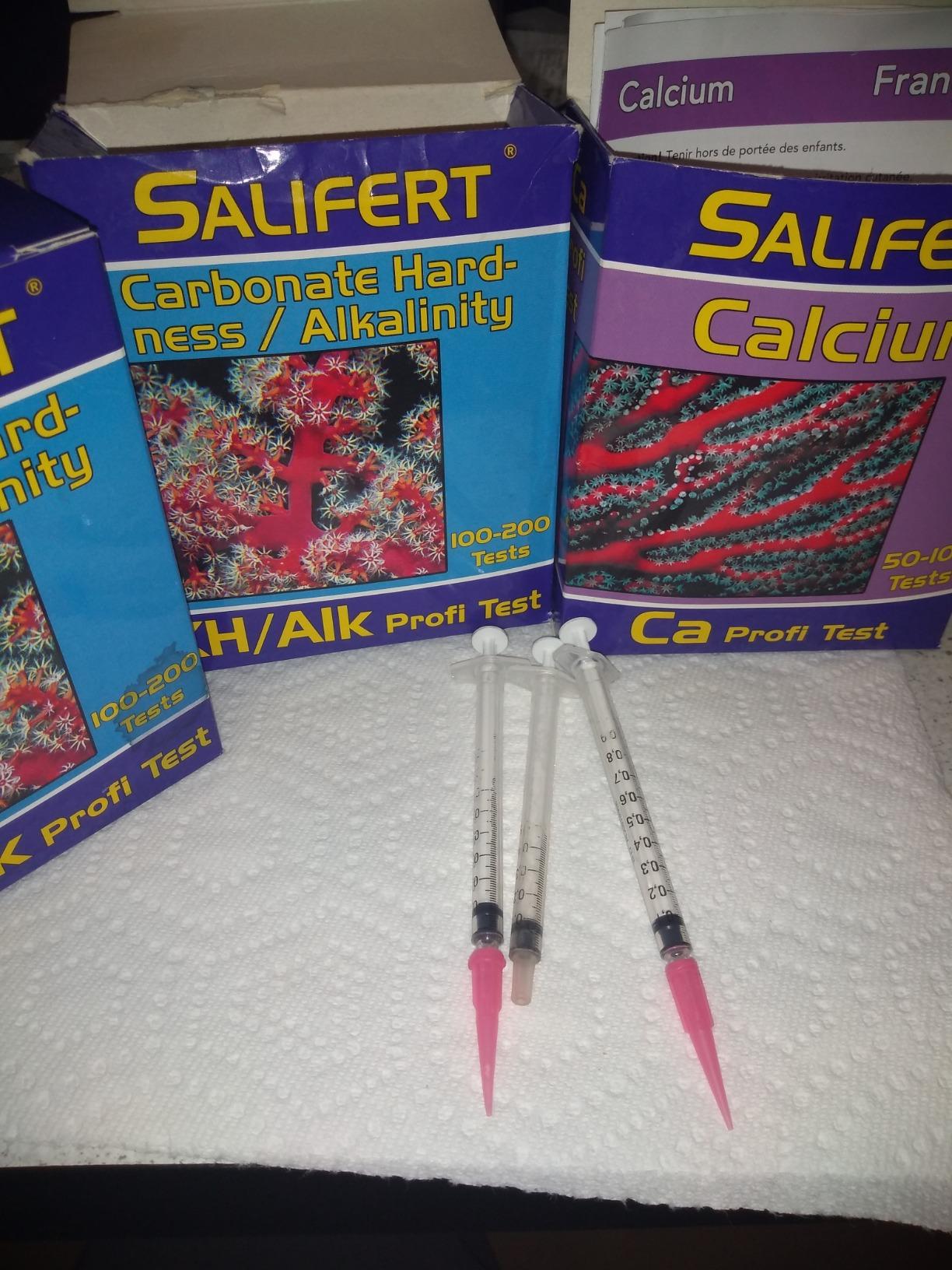
The tradeoff is resolution. A titration gives you a number you derive from a measured volume. A colorimetric test gives you a shade you match against a card, and the step size is whatever the card says it is. You will see 0.5 dKH movements and you will not see 0.2 dKH movements.
Owners commonly describe it as a starting trio rather than a complete monitoring set, and that is accurate. You will still need something for nutrients, and many keepers add an API phosphate test to fill that gap.
Who should start here
New reef keepers, and anyone who has been avoiding titration because it sounded fiddly. The learning curve on this kit is one afternoon, and the readings are good enough to dose against on a mixed reef.
On r/ReefTank, beginners are routinely pointed to Salifert and Red Sea as the pragmatic first kits, with the same caveat: tricky at first, then routine. That is an accurate description of this box, and the combination of three parameters in one order makes it the simplest way to get started.
Where it stops being enough
An SPS-dominated tank needs finer granularity than this provides. If you are chasing a 0.3 dKH alkalinity swing to explain why your acropora are stalling, a titration kit is the right upgrade.
The ten included test strips are a nice extra but not a monitoring plan. Ten tests is a month of spot checks, and strip results carry enough error that they are better for spotting a large change than for making a dosing decision.
8. Red Sea Marine Care Test Kit – Best for New Tanks and Water Changes
- Covers ammonia nitrite nitrate pH and alkalinity
- Reading design is far less ambiguous than tube and card kits
- Wide sample jars are harder to knock over
- Hard plastic case outlasts cardboard packaging
- No calcium or magnesium tests
- Instructions are printed in very small type
- Some tests use powders and more steps than simple colorimetry
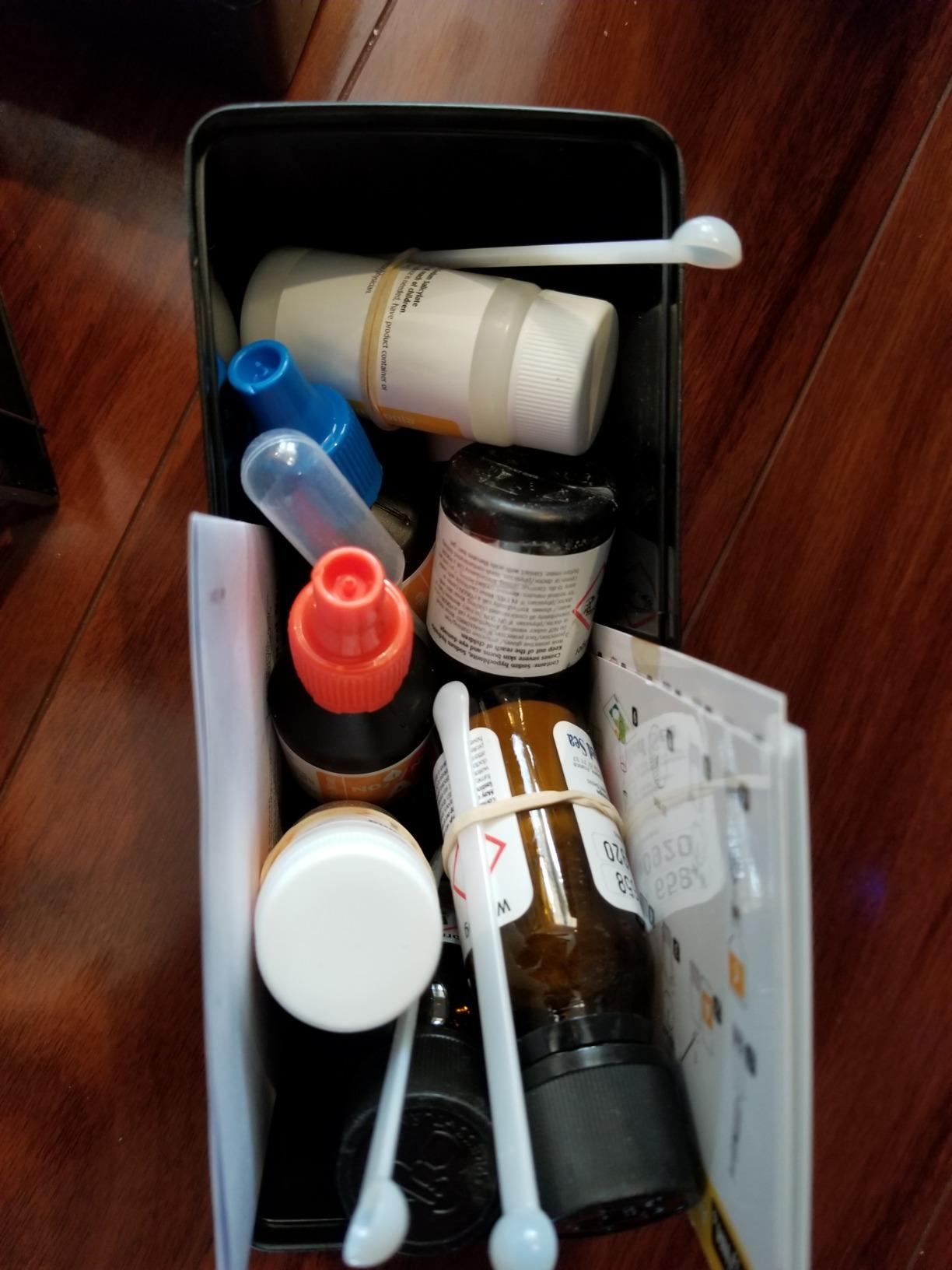
The thing that sets this kit apart is the reading method. The sample vial sits inside a white circle with the color scale printed around it, so you are comparing two shapes in the same field of view instead of holding a tube up to a card. A former clinical laboratory scientist wrote the most detailed owner review on this kit specifically to explain why.
Spec accuracy is genuinely good for a home kit. Ammonia resolves to 0.02 ppm, pH to 0.2, and there are two nitrate tests, one at 2 ppm resolution and one at 0.05 ppm for nutrient-limited systems. The alkalinity test is coarser at 1 dKH per step.
Multiple owners report switching to this kit from API and getting noticeably different, more trustworthy numbers. That is the same total-ammonia issue working in reverse, where a better-designed test gives you a reading you can act on instead of one that sends you looking for a problem.
It is a five-test kit, not a reef kit. There is no calcium and no magnesium, so you are still one purchase short of a complete reef setup. For a fish-only tank or a FOWLR system it is a complete answer on its own.
Where the reading design pays off
Any time you test in a room with mixed lighting. The white circle design removes the two biggest causes of misreads, which are ambient light color and viewing angle, and it makes the kit far more forgiving for a second person.
That matters if you are testing in a basement or next to a window at different times of day. Owners switching from API cite readability as the reason they changed, not just accuracy.
What to watch for
Buy a magnifier or photograph the vial under neutral light if the small print bothers you. Several owners note the instructions are hard to read, and a misread step count produces a wrong result with no warning.
Some of the tests use powders rather than liquids and have more steps than a simple colorimetric kit. Budget more time than you would for the Salifert combo, and check each bottle has been shaken before measuring.
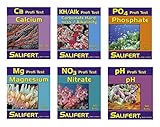
9. Salifert Master Reef Testing Combo Kit – Most Complete Single Purchase
- One purchase covers calcium nitrate phosphate pH alkalinity and magnesium
- Titration accuracy on the three growth parameters
- Consolidates six individual kits into one order
- Ample test counts for regular monitoring
- The largest and heaviest kit listed
- No ammonia or nitrite so cycling still needs another kit
- Sold under a different brand listing than the Salifert name
This is the one-order answer. Six professional Salifert kits covering calcium, nitrate, phosphate, pH, alkalinity, and magnesium, which is the parameter set a mixed reef runs on day to day once it is out of cycle.
The three growth parameters are titration tests, the same method as the standalone kits, so accuracy is at the level of the individual boxes rather than a compromise. That is the argument for buying the bundle over assembling single-parameter kits one at a time.

The combination framing is what makes this a genuinely different product. Owners cite wanting every core parameter in one order and not having to hunt for six separate bottles when a water change is due. For a large system testing multiple parameters twice weekly, that organization has real value.
It is also the most expensive box in this roundup, and the number of parameters does not change your cost per test. What you are paying for is the convenience of a complete, matching set rather than a better measurement.
Who it suits
Anybody starting a reef from scratch who wants one decision instead of five, and anyone with a system large enough that running six tests twice weekly is a normal evening routine rather than a chore.
On nano-reef and reefs.com, the common recommendation for a mixed reef is Salifert as the base with a digital meter added on the one parameter you care most about. This box is the base, in one delivery.
What it does not cover
There is no ammonia and no nitrite in the box, which is the gap that catches new keepers. You cannot cycle a tank with this kit alone, and you need a water quality kit for that stage.
It is also the bulkiest option here at 7.4 x 7.4 x 6.7 inches and 1.12 pounds. Plan the storage spot before you order, because a reef cabinet does not have unlimited room for a box that size.
10. Hanna HI772 Alkalinity Colorimeter Checker – Best Digital Alkalinity Readout
WLR Industries Hanna HI772 Checker Saltwater Aquarium Alkalinity Colorimeter Checker Tester
- Highest average rating in this roundup at 4.8 stars
- Digital readout removes the color matching step entirely
- Compact handheld unit with simple button operation
- Dedicated meter avoids drop counting errors entirely
- Portable for travel and field use
- Measures alkalinity only so it complements a suite
- Reagent vials are a recurring consumable cost
- Small screen and few buttons limit it to one parameter
This is the accuracy benchmark for a single parameter, and it earns the top rating in this roundup at 4.8 stars with 91 percent five-star ratings. The digital readout deletes the step where a human decides which of two similar colors is closer, which is the single largest source of error in every other kit here.
Alkalinity is the right parameter to spend that advantage on. It is the number that moves fastest, it is the one most tied to coral growth, and it is the one where a 0.5 dKH misread leads you to change a dosing schedule that was working.
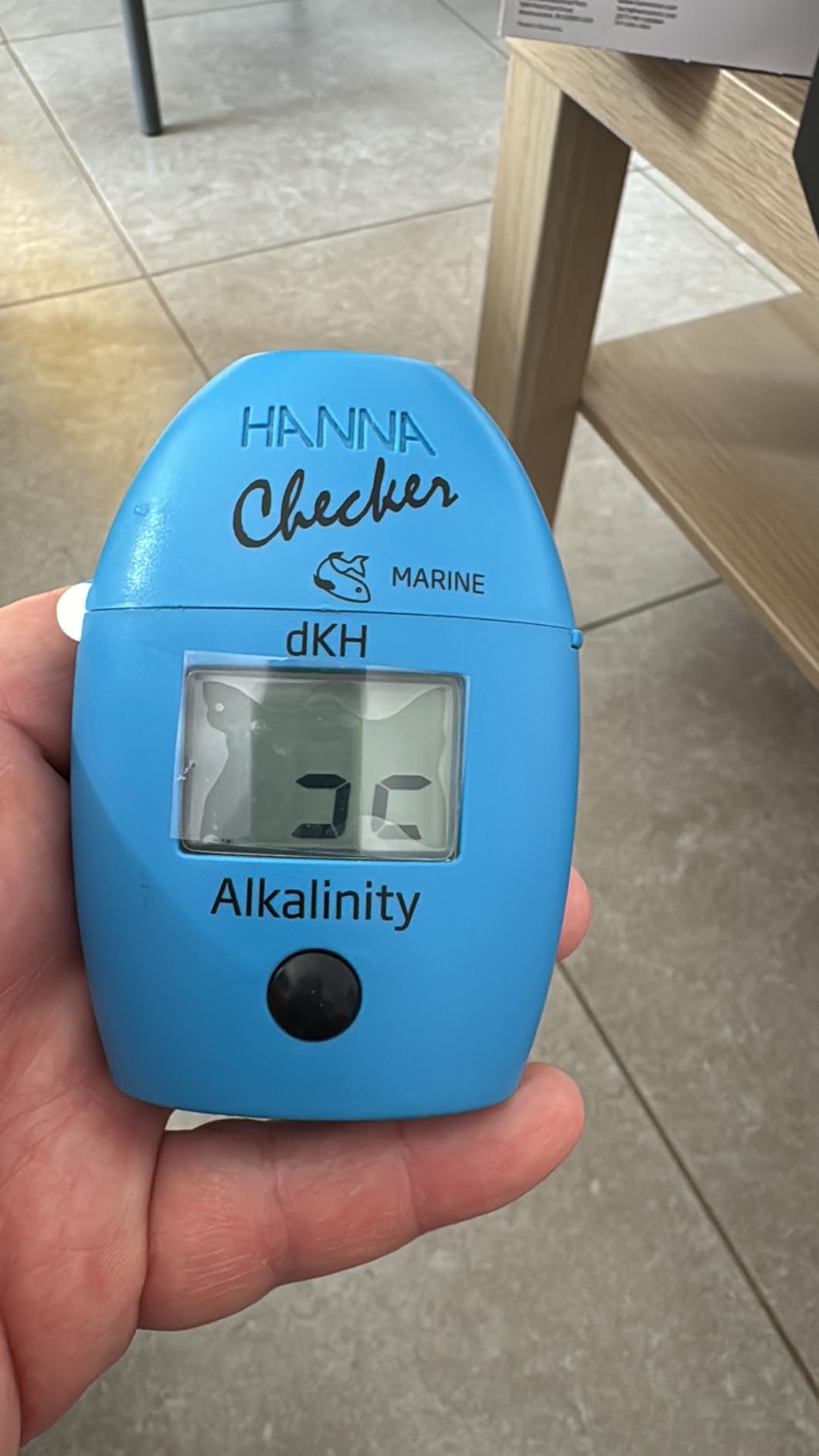
The form factor is genuinely portable at under 13 ounces, and the interface is two buttons and a small screen. You add a reagent vial, close the cap, press the button, and read a number. There is no chart to lose, no lighting to compensate for, and no interpretation to explain to a second person in your household.
What you give up is scope. This measures alkalinity and nothing else, so it sits alongside a calcium test, a magnesium test, and a nutrient test rather than replacing them. On humble.fish, keepers describe exactly this pattern, keeping a digital meter on the parameter they care most about.
Why a digital meter changes your decisions
A titration that reads 7.6 dKH twice in a row might read 7.9 dKH on a third run. That spread is real, and if you are dosing to a fixed daily volume it means you are sometimes correcting a swing that never happened. A digital readout removes the spread entirely.
That is why accuracy and consistency are different things, and why forum consensus treats Hanna checkers as the benchmark while Salifert and Red Sea get recommended for day-to-day consistency. Consistency is usually enough, until it is not.
What to know before buying
The reagent vials are a recurring consumable, and they are the ongoing cost of the meter. Buyers are usually surprised by how few tests each vial covers compared to a bottle of liquid reagent.
It is also a single-purpose device. If you are testing alkalinity weekly, the per-test cost adds up against a titration kit that covers a year of testing in one bottle. For a keeper running multiple tanks, or one who tests daily, the math works much better.
What to test for in a saltwater reef tank
Every reef tank needs alkalinity, calcium, magnesium, nitrate, and phosphate checked, in that order of priority. Alkalinity and calcium build coral skeleton, magnesium keeps those two in proportion, and nitrate and phosphate control algae and coral health. The nitrogen cycle parameters ammonia and nitrite matter during cycling and should stay at zero once a tank is established.
Alkalinity is the one to test first because everything else depends on it. A reef between 7 and 9 dKH is a healthy range for most systems, and staying steady inside that band matters more than hitting a single target.
Calcium typically sits between 400 and 450 ppm, magnesium between 1250 and 1400 ppm, nitrate between 2 and 10 ppm, and phosphate between 0.03 and 0.10 ppm for a low-nutrient system.
How the five parameters interact
Alkalinity, calcium, and magnesium form a ratio. Reef keepers describe magnesium as the catalyst because when it drops, the tank can no longer hold calcium and alkalinity in balance, and both fall out of their target ranges despite continued dosing.
This is why measuring calcium twice while skipping magnesium produces a tank that is slowly corrected in the wrong direction. If magnesium is low, adding more calcium achieves nothing until magnesium is fixed.
Nutrients work differently
Nitrate and phosphate are not targets you want to eliminate. Corals need both, and a reef held at absolute zero tends to grow slowly and struggle with pests. The range is the point, not the bottom of it.
Test strips are useful for spotting an algae problem, but they are not the tool for a low-nutrient system. Strip error at 0.05 ppm phosphate is wider than the entire target range, which is why ultra low range kits and digital colorimeters exist as a separate product category.
Test strips and budget master kits: where reef tanks break down
A freshwater master kit is the wrong tool for a reef, and the reason is chemical rather than practical. Most measure total ammonia, which counts ammonia bound to other compounds alongside the free ammonia that harms fish. Saltwater at a normal pH reads high on a total-only test even when the free fraction is at zero.
That false positive is the concrete reason reef keepers end up buying a second brand’s kit anyway. On r/ReefCentral, keepers describe using API for ammonia and nitrite while switching nitrate to another manufacturer, which is the same conclusion reached from the opposite direction.
What strips are genuinely good for
A strip is a five-minute smoke alarm. If phosphate has gone from 0.05 to 1.0 ppm, a strip shows it clearly and you investigate. If a reading looks like zero on a strip and you have been feeding heavily, you have not measured anything useful.
On an SPS system running a target band of 0.03 to 0.10 ppm, the strip’s error margin is wider than the band itself. It cannot tell you whether you are at 0.04 or 0.09, and that difference is the whole question in nutrient-limited systems.
What to do instead
Use a liquid kit for anything you intend to dose against, and keep strips only for the wide-range parameters where a rough answer is enough. If you are already running a tank, a single mail-in analysis panel will tell you which parameters actually need a precise tool before you spend on one.
For a mixed reef on a gentle schedule, the Salifert combo and an API phosphate test cover the decision-making parameters at a reasonable cost. For an SPS tank, a digital alkalinity meter plus titration calcium and magnesium is the setup most experienced keepers converge on.
Accuracy vs consistency: which one matters more in a reef
Accuracy is how close a kit reads to the real value. Consistency is how little that reading moves when you run the same sample twice. A kit can be accurate on average and still be inconsistent, and for most reef keepers consistency matters more.
The reasoning is simple. If your tank sits at 8.0 dKH and your kit reads 7.5 or 8.5 depending on the day, you still know roughly where you are and you keep dosing normally. If your kit reads 6.0 consistently because it is wrong, you will spend months correcting a problem that does not exist.
Bulk Reef Supply’s published investigation is the reference data most reefers cite for this distinction. They tested six popular kits across three parameters, with baselines of 512 ppm calcium, 7.81 dKH alkalinity, and 1389 ppm magnesium, using reefer experience levels to separate technique error from kit error.
What the testing showed
Red Sea calcium, Hanna alkalinity, and Aquaforest magnesium came out best for the average reefer in that investigation. Specific failure modes differed by brand: a dilution step in the Hanna calcium procedure produced a wide spread, and the Red Sea magnesium procedure showed the largest variance of any magnesium test measured, largely from its multiple wait times.
Forum consensus broadly agrees with the direction of those results. On r/ReefTank, the reliability ranking commonly given is Hanna first, Salifert second, then Red Sea, with the note that following the instructions exactly matters more than the brand.
When accuracy takes over
Accuracy wins when you are running near the edge of tolerance. An SPS-dominated tank targeting 8.5 dKH where a 1 dKH swing causes real stress cannot absorb a kit that wanders by half a point every reading.
That is why the digital colorimeter is worth it for alkalinity specifically on a high-target system, and why it is overkill on a soft coral tank running 7.5 dKH with plenty of margin. Match the tool’s precision to how much room your coral has.
How to read a reef color chart without fooling yourself
Most bad readings come from technique, not from a bad kit. Shaking a reagent that has settled, skipping a wait time, or reading a sample under a yellow bulb will produce a wrong number on the best kit money can buy.
Before you start, shake every reagent bottle hard for ten seconds. Reagents that have sat on a shelf settle, and the settled concentration is not the labelled one. This step is skipped more often than any other and it changes the result.
Set up the lighting and background properly
Work in neutral daylight or under a white light, never under a warm aquarium bulb, which shifts every shade. Put a plain white background behind the vial so you are not reading color through your tank glass.
Compare against a freshly mixed sample rather than a reading from earlier in the day, and read the chart from directly in front of you rather than at an angle. On wheel-style kits, read the top of the meniscus rather than the side.
Write the reading down immediately
Write the number, the date, and the water temperature in the same second you read it. Memory is where a week of trend data goes to die, and a parameter that looks alarming in isolation often turns out to be a slow slope you could have caught.
Compare across kits by testing the same sample twice. A reef2reef thread exists because two brands gave different answers to the same water, and the resolution is usually that the two kits disagree near the edge of a color step. Running a duplicate sample tells you which reading to trust before you change a dosing schedule.
What to look for when buying a reef tank test kit
Judge a reef test kit on four things: the parameters it covers, the measurement range, how many tests each bottle covers, and whether the readout removes human interpretation. Everything else is packaging.
Start with coverage. A kit that measures ammonia, nitrite, and nitrate but not calcium, alkalinity, or magnesium is a cycling kit, not a reef kit. No single kit here covers everything, which is why most keepers end up with two or three.
Then check the range against your target. A nitrate test that bottoms out at 5 ppm is useless on a low-nutrient system, and an alkalinity test with 1 dKH steps cannot show you the swing you are trying to correct.
Tests per bottle and the real ongoing cost
Test counts vary more than buyers expect. The Salifert calcium kit covers up to 100 tests, the magnesium kit about 50, and the Red Sea Pro gives 75 for calcium, 75 for alkalinity, and 60 for magnesium. Digital colorimeter reagent vials cover far fewer tests each, which is why refill cost rather than purchase price is the number to check.
Reagents are commonly reported as lasting about a year, or six months stored unrefrigerated, once opened. Buy refill bottles of the parameters you test most and store them cold. Running a reagent down to the last few drops is a common cause of a sudden false reading.
Titration, colorimetric, or digital
Titration tests are the most accurate at the hobbyist level because you measure a volume, not a color. They are also the easiest to rush, and an endpoint caught late is a wrong number you will not suspect.
Colorimetric tests are faster and harder to botch, at the cost of resolution. Digital colorimeters remove interpretation entirely and cover one parameter per unit. Refill availability and a US distributor matter more than most buyers expect, because an unsupported brand is a kit you will eventually stop using.
What to buy first when the budget covers one kit
Buy for the parameter you will act on. For most mixed reefs, that means the Salifert combo for calcium, alkalinity, and magnesium, then a phosphate test. For an SPS system, the digital alkalinity meter is the strongest single upgrade.
Add a nitrogen cycle kit during cycling only, and hold a backup on the one parameter you dose hardest. That is the hybrid build most keepers report, and it costs less than a full matching set of everything.
Frequently Asked Questions
What to test for in a saltwater reef tank?
Test alkalinity, calcium, magnesium, nitrate, and phosphate as your core five. Typical reef targets are 7-9 dKH alkalinity, 400-450 ppm calcium, 1250-1400 ppm magnesium, 2-10 ppm nitrate, and 0.03-0.10 ppm phosphate for a low-nutrient system. Ammonia and nitrite matter during cycling and should read zero once the tank is established. Salinity and trace elements come next.
Are Salifert test kits good?
Salifert is the value and reliability consensus pick among reef keepers, and it appears repeatedly in forum recommendations for a first reef. The calcium, magnesium, and alkalinity kits are titration tests, which measure a volume rather than a matched color and are the most accurate method available to a hobbyist. The tradeoff is technique: the last few drops must be added slowly to catch the endpoint.
Are Salifert test kits accurate?
Accurate enough to dose a reef to targets when the instructions are followed. Owners who cross-check against professional ICP analysis report the magnesium test tracks lab results closely. Forum consensus commonly ranks Hanna first, Salifert second, and Red Sea third for reliability, with the repeated caveat that following the instructions exactly matters more than the brand chosen.
Which aquarium test kit is the most accurate?
For a single parameter, a digital colorimeter such as the Hanna HI772 alkalinity checker removes the human color-matching step entirely and gives a repeatable number, which is why it carries the highest rating in this roundup at 4.8 stars. For titration parameters, Salifert calcium and magnesium tests are the most accurate hobbyist methods. Bulk Reef Supply’s published comparison of six kits found Red Sea calcium, Hanna alkalinity, and Aquaforest magnesium best overall for the average reefer.
Does the API freshwater test kit work for saltwater?
Not well for a reef. The API Saltwater Master is a legitimate saltwater kit covering ammonia, nitrite, nitrate, and pH, but it measures total ammonia, which counts bound ammonia alongside the free fraction that harms fish. Saltwater at a normal pH reads high on a total-only test. It also measures no calcium, alkalinity, or magnesium, the three parameters that decide coral growth.
What is the best salinity tester for a reef tank?
An ATC refractometer reading 1.025 to 1.026 specific gravity is the standard for a reef display tank. A handheld digital salinity meter is useful for a frag tank, a quarantine system, or a mixed aquarium where you want to compare samples side by side. Most liquid reef test kits do not measure salinity at all, so it is a separate purchase regardless of which chemistry kit you choose.
How often should I test reef tank water?
Test alkalinity and calcium two to three times per week on an SPS-dominated system, nitrate and phosphate weekly, and magnesium monthly. During the first weeks after a large water change, test daily so you can see the recovery curve. Frequency matters less than consistency: the same test on the same day each week is more useful than an irregular schedule.
How long do aquarium test kit reagents last?
Reagents are commonly reported as lasting about a year once opened, or about six months if stored unrefrigerated. Liquid titration reagents give 50 to 100 tests per bottle depending on the kit. Digital colorimeter reagent vials cover fewer tests each, which is why ongoing refill cost rather than purchase price determines the real per-test expense. Store bottles cold and shake them hard before use.
The reef test kit to buy first
There is no universal winner among the best aquarium water test kits for reef tanks, and the right first purchase depends on what your tank already has and what you plan to do with the number. Start with the API Saltwater Master if you are cycling or watching a nitrogen cycle, the Red Sea Reef Foundation Pro if you are dosing to targets, and the Salifert magnesium titration if magnesium is the parameter you keep losing.
Add a phosphate test whichever route you take, and treat a mail-in analysis panel as the way to check on the parameters no home kit can see. The brand matters less than matching the kit’s precision to how close you are running to the edge of a coral’s tolerance, and less than reading the bottle’s instructions properly every time.