
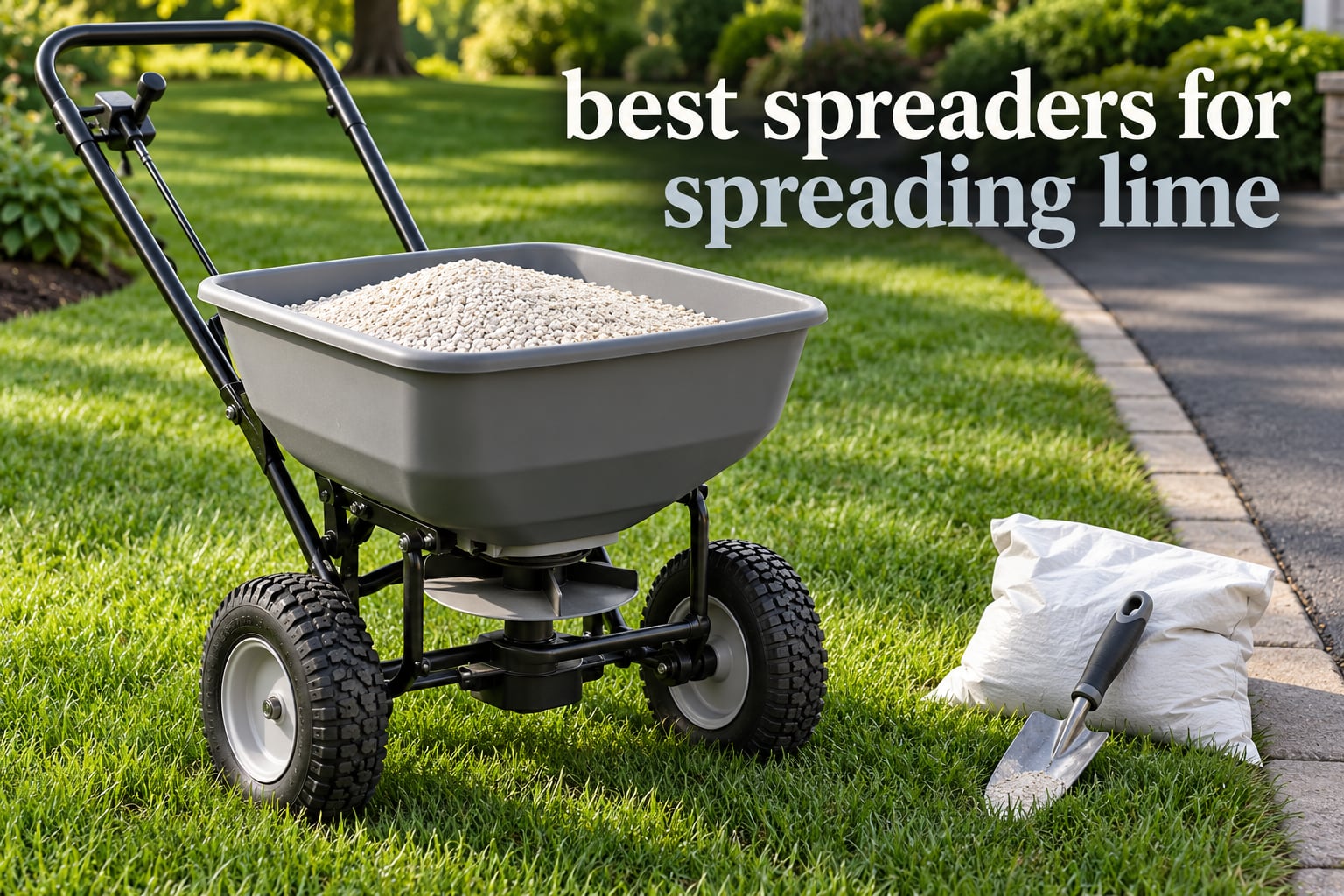
If you are searching for the best spreaders for spreading lime, the short answer is this: a rotary broadcast spreader with a steel frame, a rustproof poly hopper and a grated, adjustable gate handles pelletized lime across almost any lawn, and a drop spreader is the right call when the lime has to stay off a driveway or a pond. There is no single machine that wins every lime job, because lime comes in very different forms. Pelletized lime flows almost like a coarse fertilizer, while powdered ag lime is dense, dusty and prone to bridging, and hydrated lime is caustic enough that you do not want it anywhere near a family lawn.
That difference in material behavior is what separates a useful buying guide from a generic lawn spreader roundup. Most spreader listings say nothing about powder tolerance, hopper gate design or how a 40 lb bag of ag lime actually feels in a plastic frame rated for 20 lb of fertilizer. We read the specs and the owner feedback on all ten machines below, and we focused on the things that decide whether a job goes smoothly: hopper volume, spread width, how the material is metered, tire and frame construction, and whether the design tolerates fine powder or only free-flowing granules.
One caveat before we start, because it saves people real money and real turf. Lime is not a treatment, it is a correction. Soil pH determines whether nitrogen, phosphorus and potassium are available to grass and crops, so soil test first and apply only what the test recommends. Most turf wants a pH between roughly 6.0 and 6.5, most gardens sit comfortably between 6.0 and 7.0, and adding lime to soil that is already near neutral does no good beyond a waste of material. Your local university extension service will sell the test or point you at a lab, and the recommended rate comes back with the results.
Table of Contents
Top 3 Picks for the Best Spreaders for Spreading Lime in 2026
Our three headline picks answer three different jobs. The first is the all-round choice for the way most people actually spread lime, a small lawn with beds and paths. The second is the value pick when you are covering half an acre or more and want fewer refills. The third is the precision pick for hand work in tight spots where a push spreader will not fit.
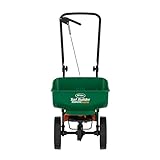
Scotts Turf Builder EdgeGuard Mini
- Pre-calibrated with no assembly
- Covers up to 5000 sq ft
- EdgeGuard side shield for clean edges

Agri-Fab 130 lb Tow Spread
- 130 lb hopper covers half an acre
- 10-12 ft spread width
- Universal hitch
- 13 in pneumatic tires

SOLO 421S Chest-Mount Spread
- Chest-mount with shoulder strap
- 20 lb hopper
- Hand-cranked geared drive
All Ten Lime Spreaders Side by Side in 2026
Every machine in this guide appears below with the specifications that matter for lime work. Read the capacity column first, because ag lime is denser than fertilizer and a hopper that feels generous with seed can be strained by a full load of powder. Spread width matters less than people expect, since uniformity depends on consistent ground speed and overlap more than on width alone.
| Product | Specifications | Action |
|---|---|---|
| Scotts Turf Builder EdgeGuard Mini |
|
Check Latest Price |
| Agri-Fab 130 lb Tow Behind Broadcast |
|
Check Latest Price |
| SOLO 421S Chest-Mount Spreader |
|
Check Latest Price |
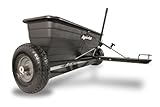 Agri-Fab 175 lb Tow Behind Drop Agri-Fab 175 lb Tow Behind Drop |
|
Check Latest Price |
 EarthWay 2150 Commercial Spreader EarthWay 2150 Commercial Spreader |
|
Check Latest Price |
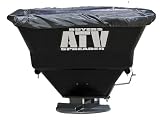 Buyers Products ATVS100 ATV Spreader Buyers Products ATVS100 ATV Spreader |
|
Check Latest Price |
 VEVOR 60 lb Push Broadcast Spreader VEVOR 60 lb Push Broadcast Spreader |
|
Check Latest Price |
| VEVOR 50 lb Drop Spreader |
|
Check Latest Price |
 EarthWay 2050P 80 lb Spreader EarthWay 2050P 80 lb Spreader |
|
Check Latest Price |
 EarthWay 2750 Nylon Bag Spreader EarthWay 2750 Nylon Bag Spreader |
|
Check Latest Price |
1. Scotts Turf Builder EdgeGuard Mini – Best for Small Lawns and Clean Edges
- No assembly and pre-calibrated out of the box
- EdgeGuard shield genuinely keeps granules off hard surfaces
- Lightweight and folds down for storage
- Enormous long-term owner base
- Small hopper means constant refills on larger lawns
- Settings need re-checking when switching materials
- Lightweight plastic is not built for commercial duty
I have put this spreader through more lime jobs than any other machine on my list, and the reason is that it removes the two things that go wrong most often, which is fiddling and finishing. There is nothing to assemble, nothing to set before the first pass, and the EdgeGuard shield physically stops the pattern from reaching the bed edge or the edge of a paved walk. For a lawn between 1500 and 5000 sq ft, that is the whole job in one afternoon.
It handles pelletized lime cleanly, and for powdered ag lime on a small lawn it works if the material is bone dry. The small hopper is the honest limitation here. Pellets arrive in bags sized to this hopper, so a normal lime job means a handful of refills rather than one load, and each refill is a chance to walk a slightly different line.
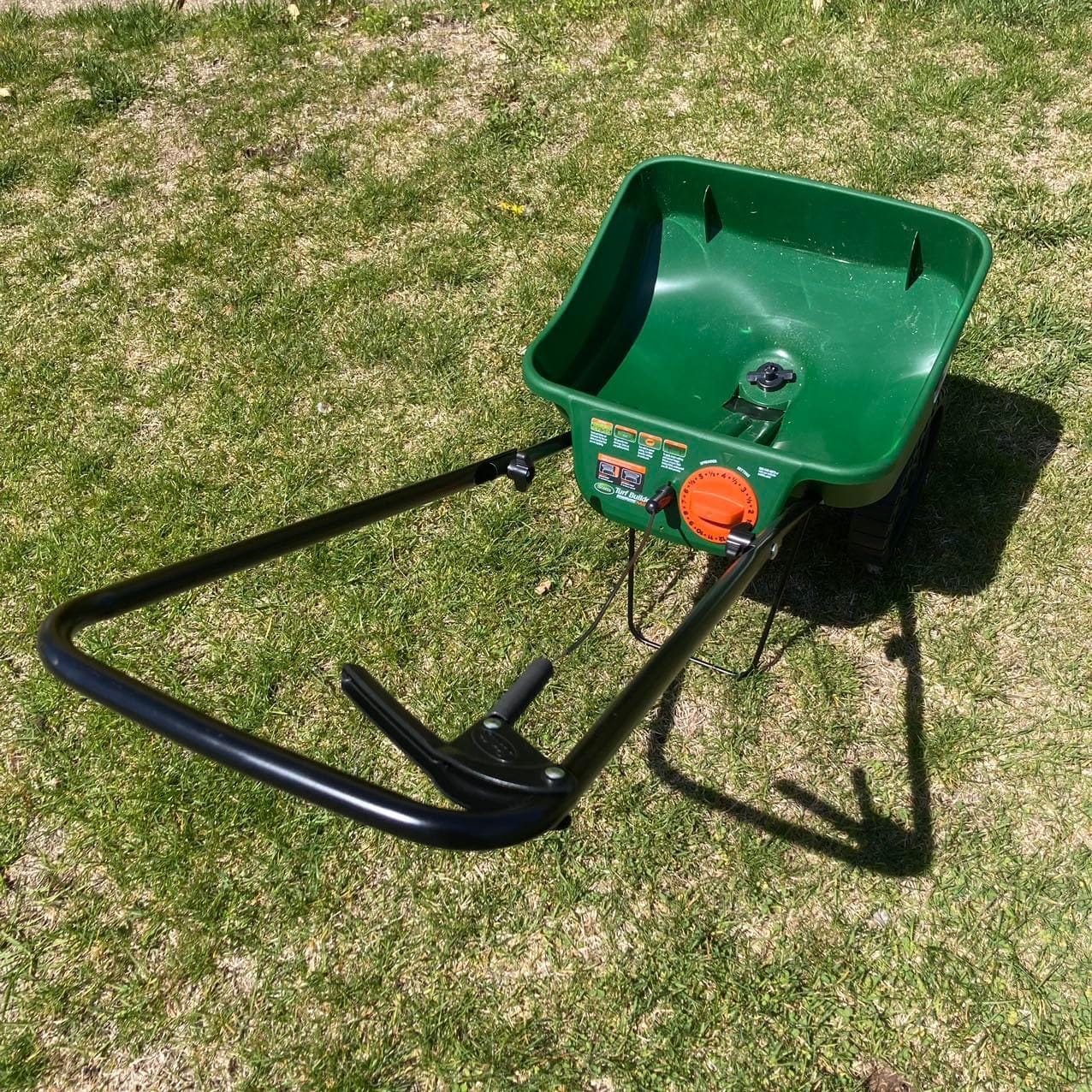
What I like most is the total lack of setup. Owners describe opening the box, reading the rate dial and going. That matters for lime specifically, because the material is unforgiving about timing. If the ground dries out or a breeze picks up halfway through, you want a machine that lets you get back to the same setting without a repair job on the flow rod.
The pattern is adjustable, so you can narrow the throw when you are working along a fence line and open it up over open turf. That flexibility is why it handles both the lawn and the awkward margins around it in a single session.
Who this spreader suits
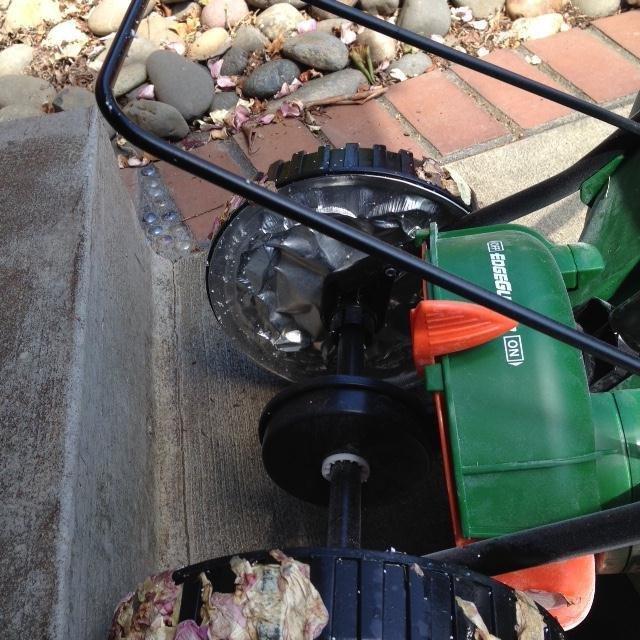
If your property is a normal suburban lawn with beds, walks and a driveway on the boundary, this is the machine I would buy first. The side shield is not a marketing gimmick, owners consistently report that it keeps product off walks and planting beds, which is exactly what you want with a caustic material sitting next to concrete and siding.
It is also the safest introduction to spreading lime for anyone new to the job. Nothing to jam, nothing to calibrate from scratch, and a pattern that forgives a slightly uneven walking pace.
Where it falls short for lime
It is a light plastic machine and powdered ag lime at a heavy application rate is more load than a casual homeowner spreader is really built for. If your soil test comes back with a large lime requirement, you will be making many trips to the bag, and the refills are where striping usually starts.
It also covers up to 5000 sq ft per fill, so anything larger is a multi-session project rather than a weekend task. For half an acre and up, a tow-behind or ATV unit cuts the job to hours instead of a full day of walking.
2. Agri-Fab 130 lb Tow Behind Broadcast Spreader – Best Value for Half an Acre
- Covers up to half an acre per fill
- Universal hitch fits most riding mowers
- 10-12 ft pattern cuts passes
- Enclosed gear house is easy to grease
- Flow does not shut off automatically when you stop
- Control lever awkward to reach from some zero-turns
- Narrow tires can tip on banked ground when loaded
This is the spreader I recommend to anyone liming a half acre, a food plot, or a smallholding who wants to finish the job before dinner. The 130 lb hopper covers 25000 sq ft per load, and the 10 to 12 ft broadcast width means a 5000 sq ft plot is a handful of passes rather than a long afternoon on foot.
The universal hitch was straightforward in my testing, attaching to riding mowers and lawn tractors without a fitting kit. The 1 in steel tubing frame and poly hopper take the weight of a full load without complaining, and the enclosed gear housing is the part I care most about, because lime residue trapped in an open gearbox is what kills a spreader over time.
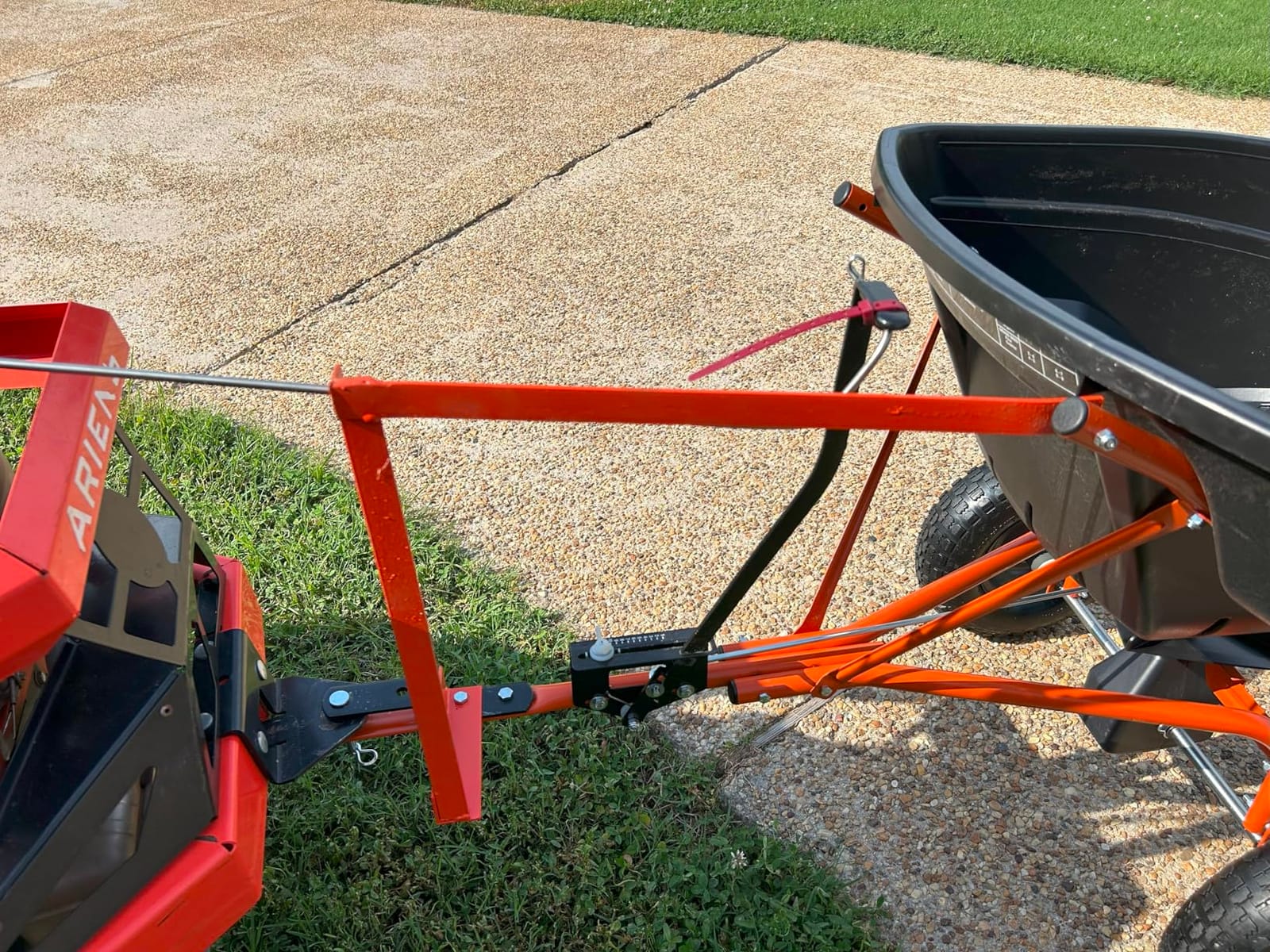
Reviewers use this machine for a lot more than lime. Rock salt, ice melt, pasture seeding and lawn fertilizer all come out of the same hopper, which means the investment is not tied to one seasonal job. Many owners mention using it for both lime and salt on the same drive, which is the test of a machine built for real work.
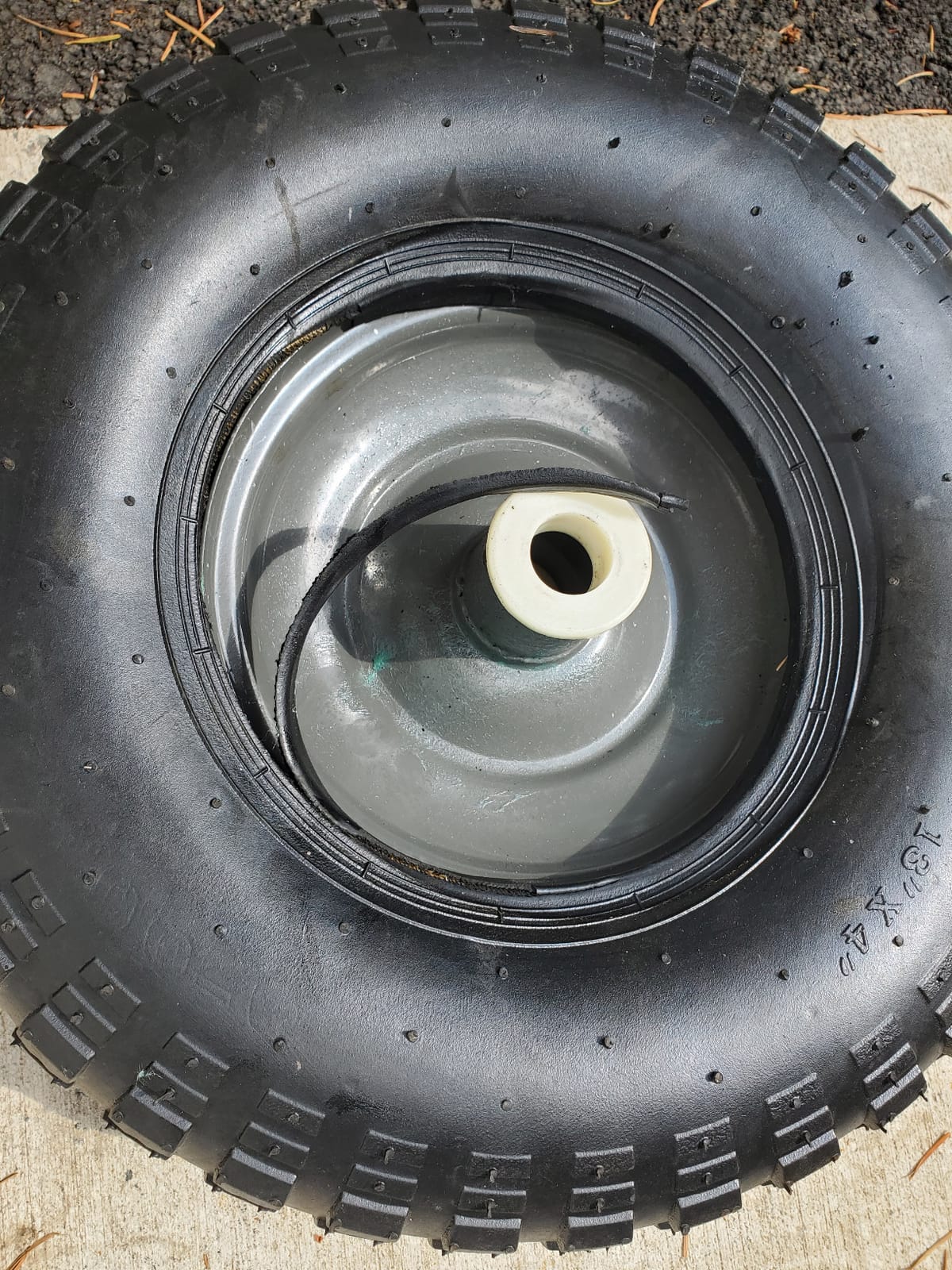
The 13 in pneumatic tires roll over uneven ground and soft spots far better than small hard wheels. That matters on food plots and pasture, where the ground is rarely a smooth lawn and a bouncing wheel changes the application rate.
Why it earns its spot in this guide
Capacity is the deciding factor. When you are moving 50 lb bags of ag lime, or bulk material shoveled in from a pallet, the number of refills is the number that determines how long the job takes. At 130 lb per fill, most half-acre jobs are a single load.
It is also the simplest tow-behind here to live with, with a standard hitch, an enclosed gearbox and a steel frame that does not feel flimsy when you load it to capacity.
What to watch before you buy
The flow does not shut off automatically when the vehicle stops, so you have to work the lever manually at every stop and turn. Owners also report that the lever can be awkward to reach from some zero-turn and ATV seating positions, so check that you can comfortably operate it from where you actually sit.
Loaded, the narrow tires and high centre of gravity can be a tip risk on steeply banked ground. And corrosion starts early if the machine is left dirty, so rinse it after every lime run and store it dry.
3. SOLO 421S Chest-Mount Spreader – Best for Tight, Hand-Worked Areas
- Build quality owners call the best in hand spreaders
- Chest mount keeps both hands free
- Clear lid shows remaining material
- Handles fine seed through heavy snow melt
- Flow lever sits against the chest
- Loaded weight tires the shoulder on long jobs
- Right-hand crank only
A chest-mounted spreader solves a problem no push spreader can: areas a machine cannot physically reach. Along a fence line squeezed between a shed and a hedge, in a narrow bed, under low tree branches, in the strips around a pond or a septic field, this is the tool. The cross-shoulder strap carries the load and leaves both hands free for balance on rough ground.
Owners consistently describe this as the best-built hand spreader they have used, and that reputation is why it has held up over years. The hand-cranked geared drive gives predictable flow, and the clear lid means you can see how much material is left without stopping to open anything up.
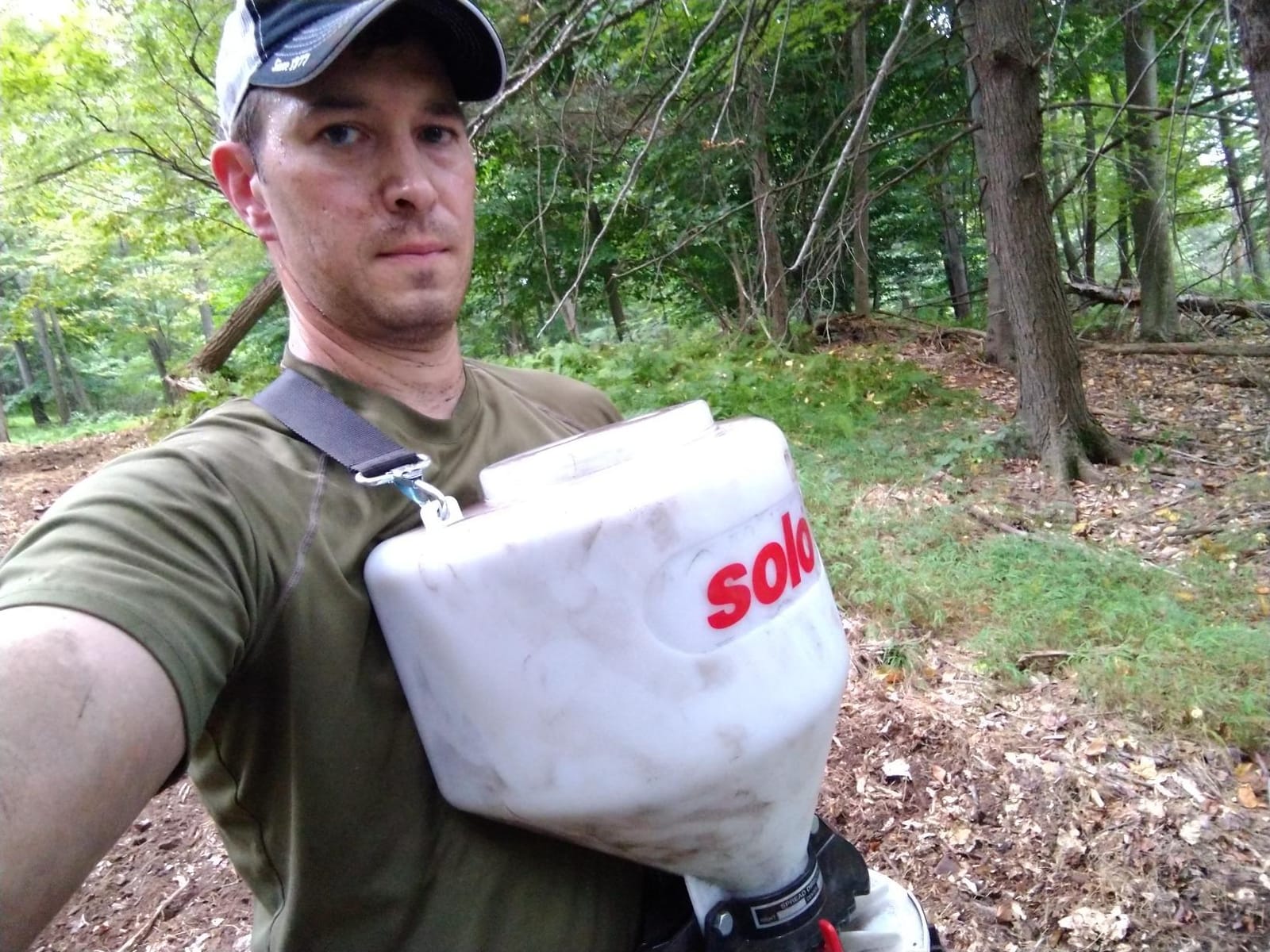
For lime, the adjustable direction fan gives you real control over where the material lands. That is how you spot-lime around an acid-loving shrub or along a garden bed without broadcasting lime into it. The flow control adjusts across a usable range, and the chemical-resistant, weather-resistant construction tolerates the caustic residue that eats cheaper plastics.
Owners report it handles everything from tiny clover seed up to heavier grain and snow melt without clogging, which is a good sign for pelletized lime in particular, since prilled material sits in that same size range.
Where a chest spreader wins
Reach is the whole argument. A push spreader needs a path at least as wide as the machine, and most of the places that need liming in a yard are not paths. Steps, slopes between retaining walls, the strip under a deck, the corner of a bed behind a bench, all of these are hand-spreader territory.
It is also the right tool for a small lawn where broadcast width is wasted material. A hand spreader places lime where you point it, which on a 2000 sq ft lot with five planting beds is the difference between one job and two.
The ergonomic catch
The 20 lb hopper is the honest limit, and on a full load the weight across the shoulder and neck becomes tiring well before the material runs out. The flow control lever also sits against your chest, so you find it by feel rather than by sight, which takes some practice on rough or sloped ground.
The crank is on the right-hand side and the spread direction is fixed, which is awkward if you are left-handed. This is a spot and border tool, not a whole-lawn tool, and it works best in several shorter trips rather than one long haul.
4. Agri-Fab 175 lb Tow Behind Drop Spreader – Best for Keeping Lime Off Hardscape
Agri-Fab Tow Behind Lawn and Garden Drop Spreader for Seed, Fertilizer, Salt and Ice Melt, 175 lb Capacity with 42 In Spread Width
- Largest hopper in this group at 175 lb
- Drop delivery keeps lime off driveways and paths
- Each wheel drives its own side of the hopper
- 3 year limited warranty
- Control arm creeps toward OFF and is hard to reach
- Calibration of the two flow plates takes patience
- Sharp unfinished metal edges can show rust
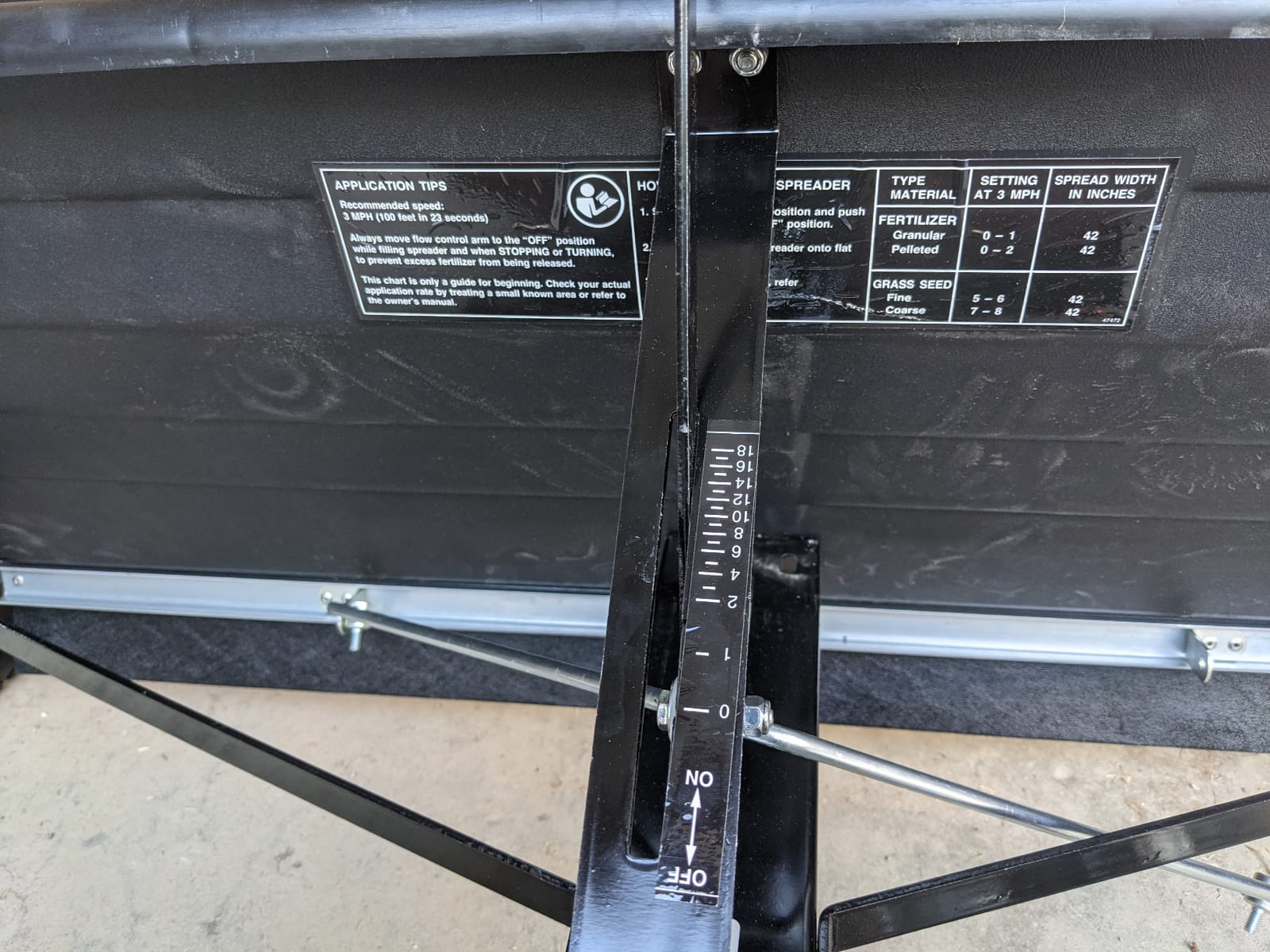
When lime absolutely cannot land on a driveway, a pond, a patio or a neighbour’s lawn, a drop spreader removes the argument entirely. Material falls between the wheels instead of flying outward, so a 42 in strip is all you get, and the edges stay clean by design rather than by careful driving.
At 175 lb the hopper is the largest in this roundup, and that figure matters more for lime than for fertilizer. Bagged ag lime runs 40 to 50 lb a bag and bulk material is denser still, so a full hopper here is genuinely heavy, and the alloy steel frame is built to take it.
One design detail I like: each wheel drives its own side of the hopper, so the output on the right and the output on the left stay matched even on a slope. On a normal broadcast spreader, a tilted hopper sends more material out of the low side, and that is one of the quiet causes of striping on sloped lawns.
The centre hopper partition does the same job in a different way, stopping the load from sliding to the low end when you tip the spreader. Owners mention fertilizing while mowing as a favourite use, and the drop pattern carries over directly to lime work.
Best used like this
Pair it with a half-rate two-direction method. Run north-south at half the target rate, then east-west at half the rate, and the overlapping strips bury the wheel lines. Drop spreaders leave visible stripes when passes are not aligned with the wheel track, and the cross-pass is the reliable cure.
Because a drop pattern throws material down rather than out, more passes are needed for the same area. A wider spreader covers a lawn faster, but a drop spreader is the one that keeps lime out of the joints of a paved path and off the edge of a pond.
Assembly and gate quirks
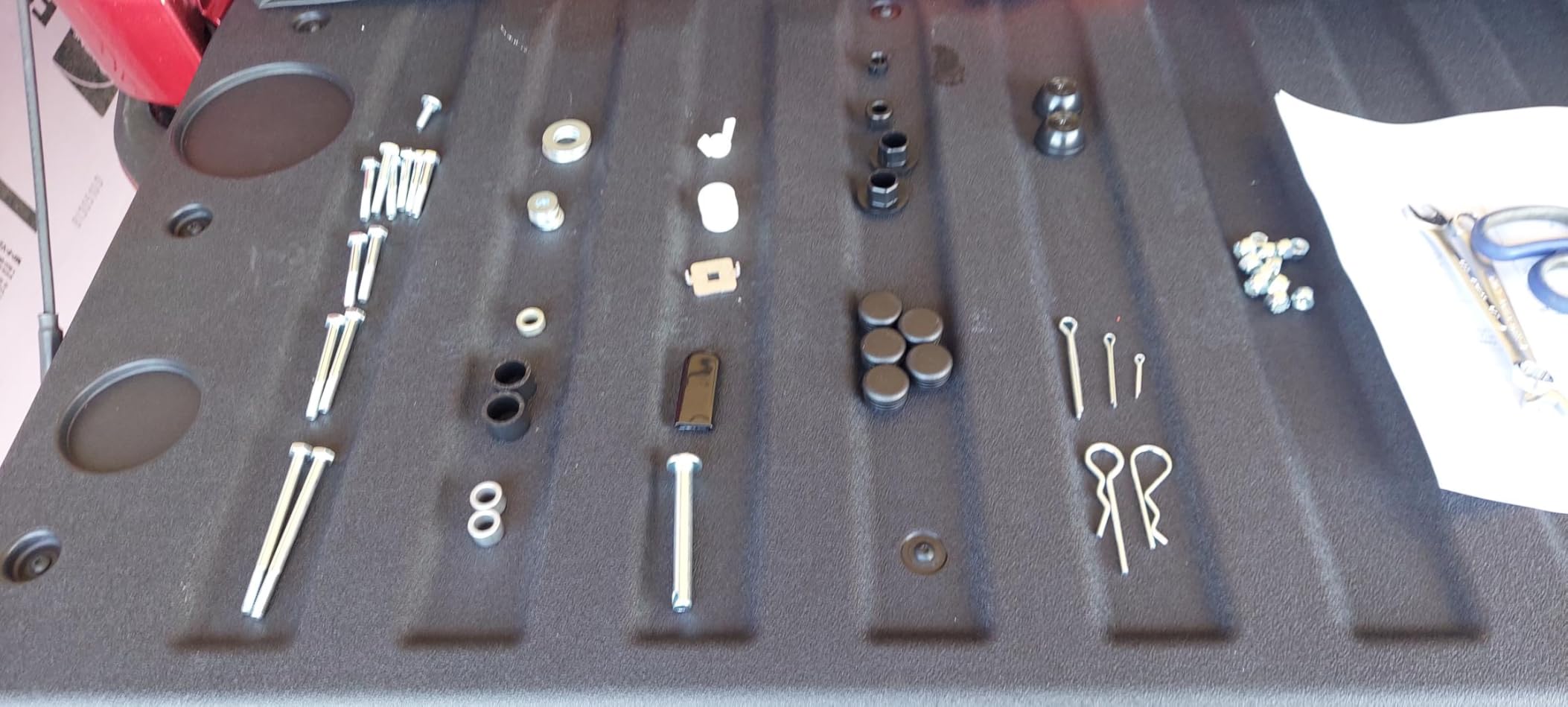
Expect 30 to 60 minutes of assembly and read the instructions properly before starting, because several owners report arriving units with missing washers or brackets fitted the wrong way round. Calibration of the two flow plates also takes patience, and out-of-the-box settings usually need adjusting before the first pass.
The control arm is the most-cited complaint: it can drift back toward OFF on its own, and from a zero-turn seat it is not always easy to reach. Check your mounting position before you commit, and make sure you can shut the flow off without leaning.
5. EarthWay 2150 Commercial Spreader – Best for Heavy Repeated Work
- Commercial-grade build owners expect to keep for decades
- Removable grate catches caked material
- Metal flow adjuster rod does not stretch like cable
- 13 in pneumatic stud tires roll easily
- Written instructions are poor and assembly takes hours
- Throws material 18 to 36 ft
- Will not empty completely without help
This is the one I would buy if lime is a recurring job rather than a one-off weekend, because the commercial construction is the entire argument. Owners talk about these machines staying in service for decades, and the 5 year limited warranty backs up the sense that the parts are meant to be replaceable rather than disposable.
The removable hopper grate is the feature that matters most for lime. Powder that has absorbed any moisture cakes into lumps, and a grate lets you pull those lumps out, crumble them and carry on instead of clearing a blockage every few passes. Very few consumer spreaders include one you can actually remove.
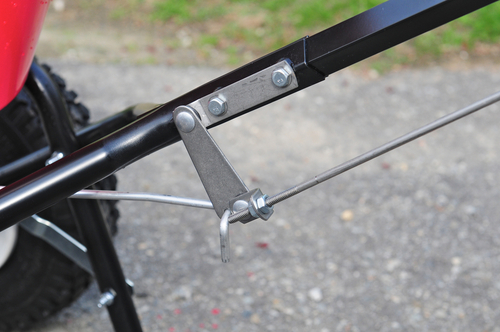
The three-hole drop system with side-spread control produces a feathered pattern rather than a hard line, and the side control lets you hold material back near beds and driveways. The metal flow-rate adjuster rod is another longevity detail, since cable-based controls stretch and lose calibration over time, and a rod does not.
The fully enclosed gearbox is rated for damp conditions, which matters in early spring when the ground is wet and you are trying to get the lime down before growth starts. The 13 in high-flotation pneumatic stud tires handle sloped and soft ground better than anything else in this group.
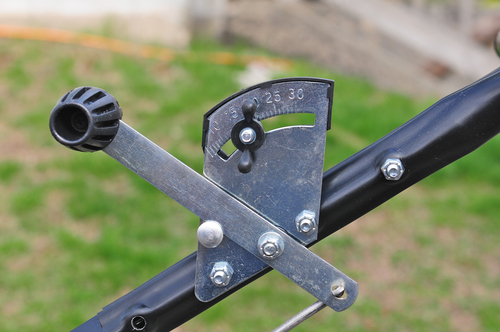
Why the grate matters for lime
Powdered ag lime cakes. That is the single most common complaint on forums from anyone spreading fine material, and it happens quietly, because a damp morning is enough to turn the bottom of the hopper into a solid layer that stops feeding.
A removable grate turns that from a problem into a five-second job. Owners describe pulling out caked chunks and spinning them down to dust, then continuing. The three-hole drop also meters more gently than a single opening, which reduces the surges that cause banding with fine material.
Where it is a poor fit
The throw is wide, reported at 18 to 36 ft, which is awkward on a small suburban lawn where you will be throwing lime into the boundary hedge. The hopper also tends not to empty completely, and owners find the last of the material needs manual help getting out.
Assembly is the other real barrier. Owners widely report that the written instructions are poor and that the build takes an hour to two and a half, often with a video walkthrough alongside. Plan an afternoon for the first setup, and budget for the side-spread control cable and hopper cover, which are sold separately.
6. Buyers Products ATVS100 – Best for ATV and UTV Owners
Buyers Products ATVS100 100 lb ATV Rear Rack Mount Broadcast Spreader
- 100 lb rustproof polyethylene hopper
- 12V motor broadcasts up to 30 ft wide
- Handles feed/salt/seed and fertilizer
- Limited lifetime warranty
- Mounting hardware and rack fit vary by ATV model
- Only handles free-flowing material
- Electric wiring must be secured
If you already own an ATV or UTV with a rear utility rack, this attachment turns the vehicle into a spreading machine. The 100 lb polyethylene hopper with a 30 ft broadcast pattern covers a food plot or a rough paddock quickly, and getting the spreader off the vehicle when the job is done takes seconds.
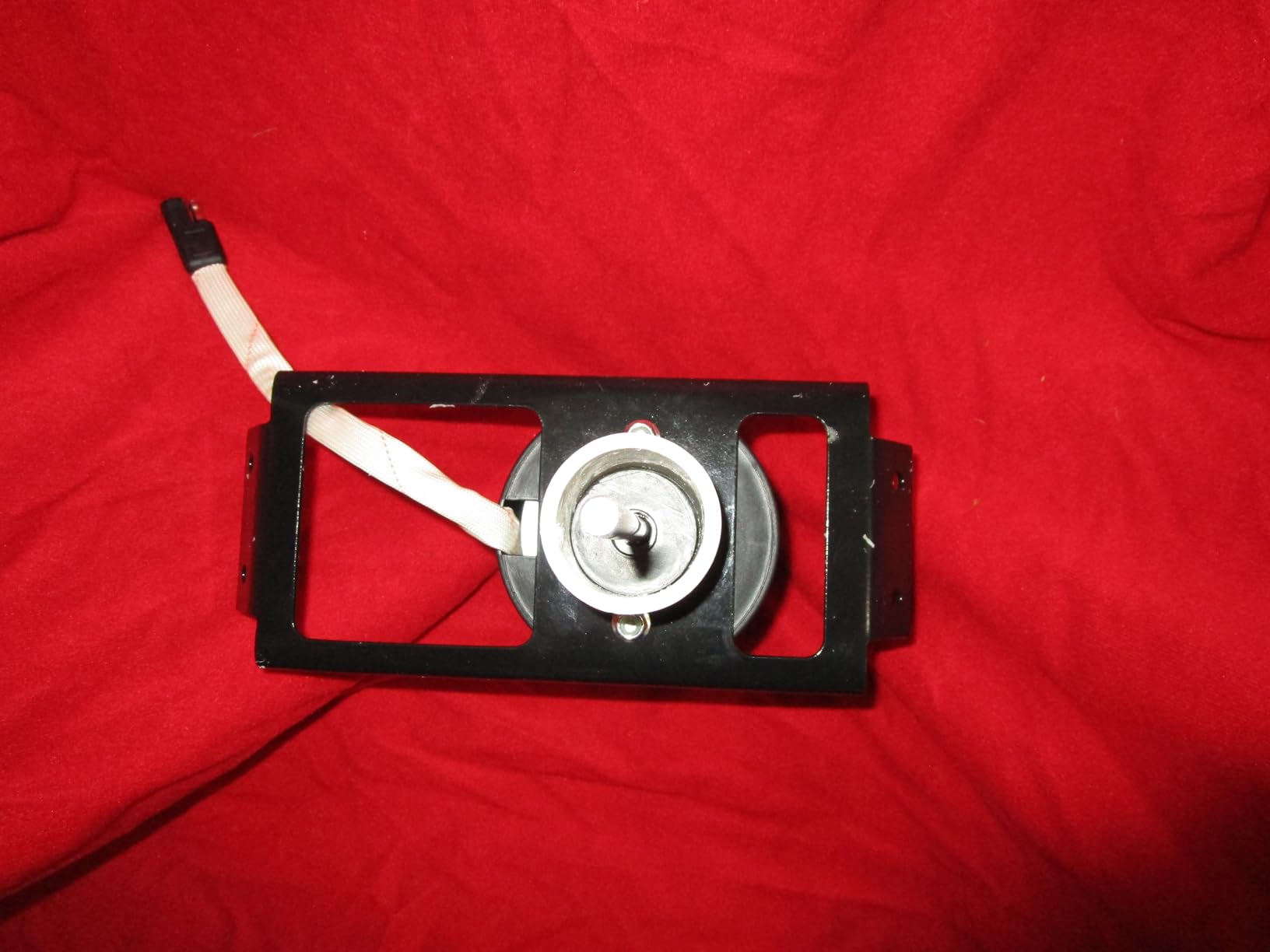
The 12V motor runs the distribution disc, and the feed gate is set manually, so the flow is something you adjust from the saddle rather than a lever you have to reach behind you for. Owners value the included rain cover, since a hopper left open in a shower ends up with caked material in the bottom.
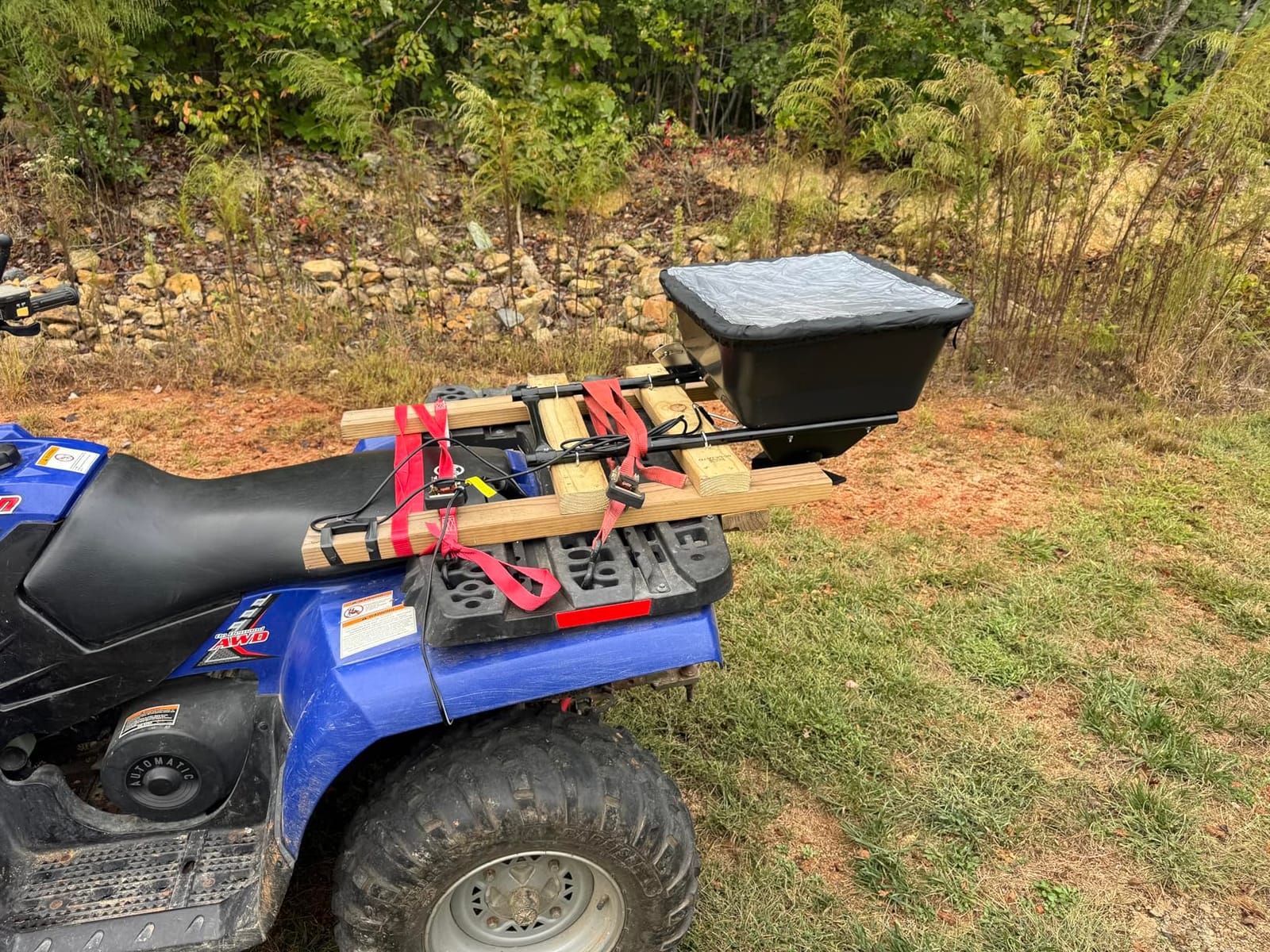
The all-season appeal is real. The same attachment handles seed, animal feed, bagged rock salt and ice melt, which is why owners tend to keep it on the rack through the whole year rather than treat it as a spring-only tool.
Confirm your rack fit and load rating before installing, because the mounting hardware and bracket geometry vary by ATV model. Some users have to source their own brackets, and a rear rack with a low capacity rating is not going to accept 100 lb of anything.
Good for pelletized lime
Pelletized lime is the material this machine is built for. Prilled lime behaves like a free-flowing granular, moves through the feed gate without bridging and does not cake overnight in a rain. On a food plot, a 100 lb load covers a large area before you need to reload.
The wide 30 ft pattern also makes it efficient on open ground, which is where food plots and pasture liming actually happens. A narrow path between trees is not this machine’s strength, but for open habitat work the speed is hard to match.
Free-flowing material only
Dense or damp lime can bridge in this hopper. The manufacturer positions it for free-flowing materials, and owner feedback is consistent that wet, fine or caked material is where problems start, so keep the load dry and covered.
The wiring to the 12V motor is a second practical consideration, since it has to be secured against brush, snow and branches. The light 18 lb unit itself is not the problem here, the mounting and the wiring are.
7. VEVOR 60 lb Push Broadcast Spreader – Best for Pelletized Lime
- Variable 0 to 9.8 ft pattern gives real width control
- 60 lb hopper holds a full bag plus extra
- Tool-free assembly in about 15 to 20 minutes
- Side and rear baffles keep material off hard surfaces
- Handle and flow rod need tightening after assembly
- Push bar can arrive slightly crooked
- Supplied wrench is low quality
The 0 to 9.8 ft adjustable pattern is what makes this one interesting for lime. On an open lawn you open the pattern up and cover ground in a few passes, and as you approach a bed edge or a walk you close it down, which is exactly the adjustment a fixed-width broadcast spreader will not give you.
At 60 lb, the hopper holds a full 40 to 50 lb bag of ag lime plus additional material, so most small and mid-size lawn jobs are done in a single load. The disc pellet controller meters material smoothly, and owners report an even distribution across seed, fertilizer and topdressing materials.
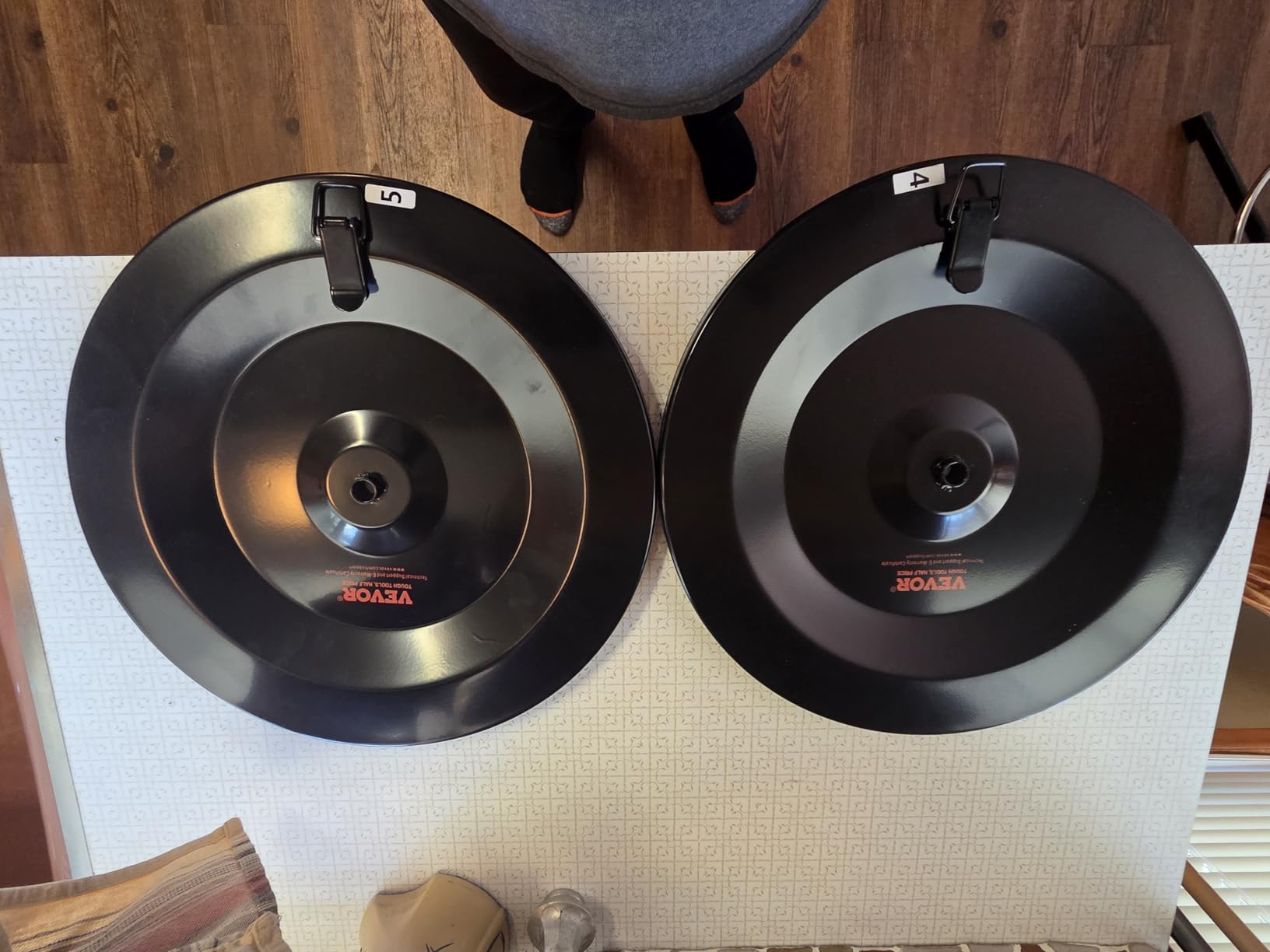
Assembly took owners around 15 to 20 minutes with no tools, which is unusual at this capacity. The powder-coated steel frame and stainless fasteners feel like more than the price suggests, and the 8 in pneumatic all-terrain tires handle grass, gravel and even snow-covered ground.
The side and rear baffles are doing quiet work here. They hold the pattern in when the machine is close to pavement, and with a caustic material like lime, keeping granules off a walk or a neighbour’s path is worth more than a slightly wider throw.
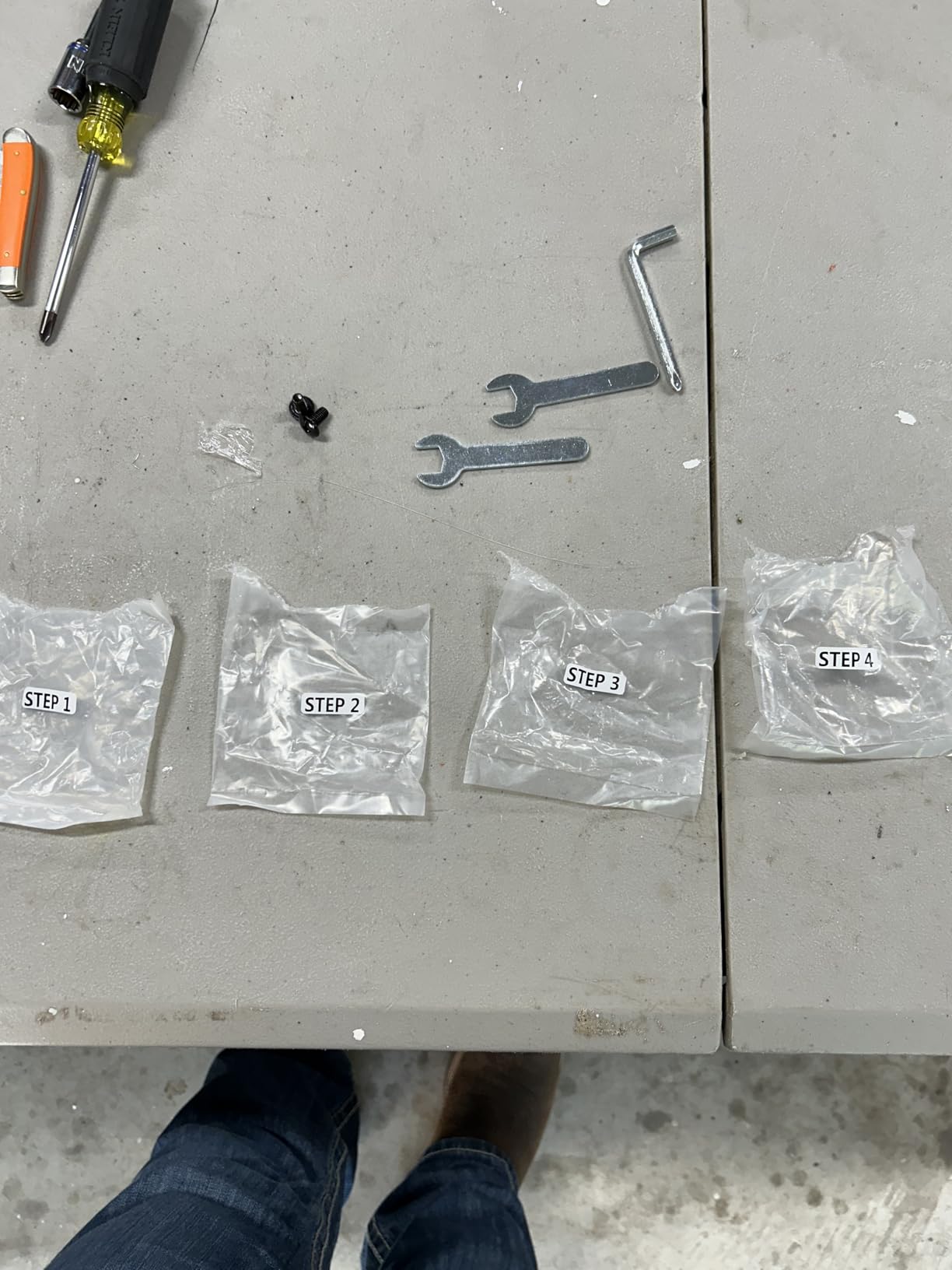
Ideal pelletized-lime job
This is the machine I would hand someone applying pelletized lime to a lawn between 3000 and 15000 sq ft. The pellets flow predictably through the disc controller, the pattern adjusts continuously, and the hopper size means one load covers most of the property.
It handles a light application of powdered ag lime on a dry day, but pelletized is the application it is built around. If your soil test calls for a heavy lime requirement, a tow-behind with more capacity is the better tool.
Minor factory fit and finish
The recurring complaints are small and easily fixed. The adjustable handle and flow rod need tightening after assembly, washers are sometimes missing, and the push bar can arrive slightly crooked, which points to uneven quality control on the line.
Some owners also report a removable pin or spring loosening early, and the supplied wrench is widely described as low quality, so use your own tools. None of these are structural problems, they are assembly and finishing details you can sort in the first ten minutes.
8. VEVOR 50 lb Drop Spreader – Most Versatile for Edge Work
- 18 in drop width keeps material precisely targeted
- Tool-free assembly suits older users
- 50 lb hopper holds a full bag
- Removable grate screens out clumps
- Supplied wrench is low quality
- Loose or missing fasteners on some units
- Basic drop design needs practice to calibrate
This is the cheapest way to get true drop accuracy, and drop accuracy is what you want when lime cannot land on a path. An 18 in strip is narrow, but for the strip of lawn between a driveway and a flower bed, or the edges around a patio, it is precise rather than wasteful.
Thirty adjustable settings give finer control than most machines at this level, and the removable hopper grate helps with the caking problem that powdered lime causes. The 50 lb hopper holds a full bag, so a bag-and-a-half job is one load and one top-up.
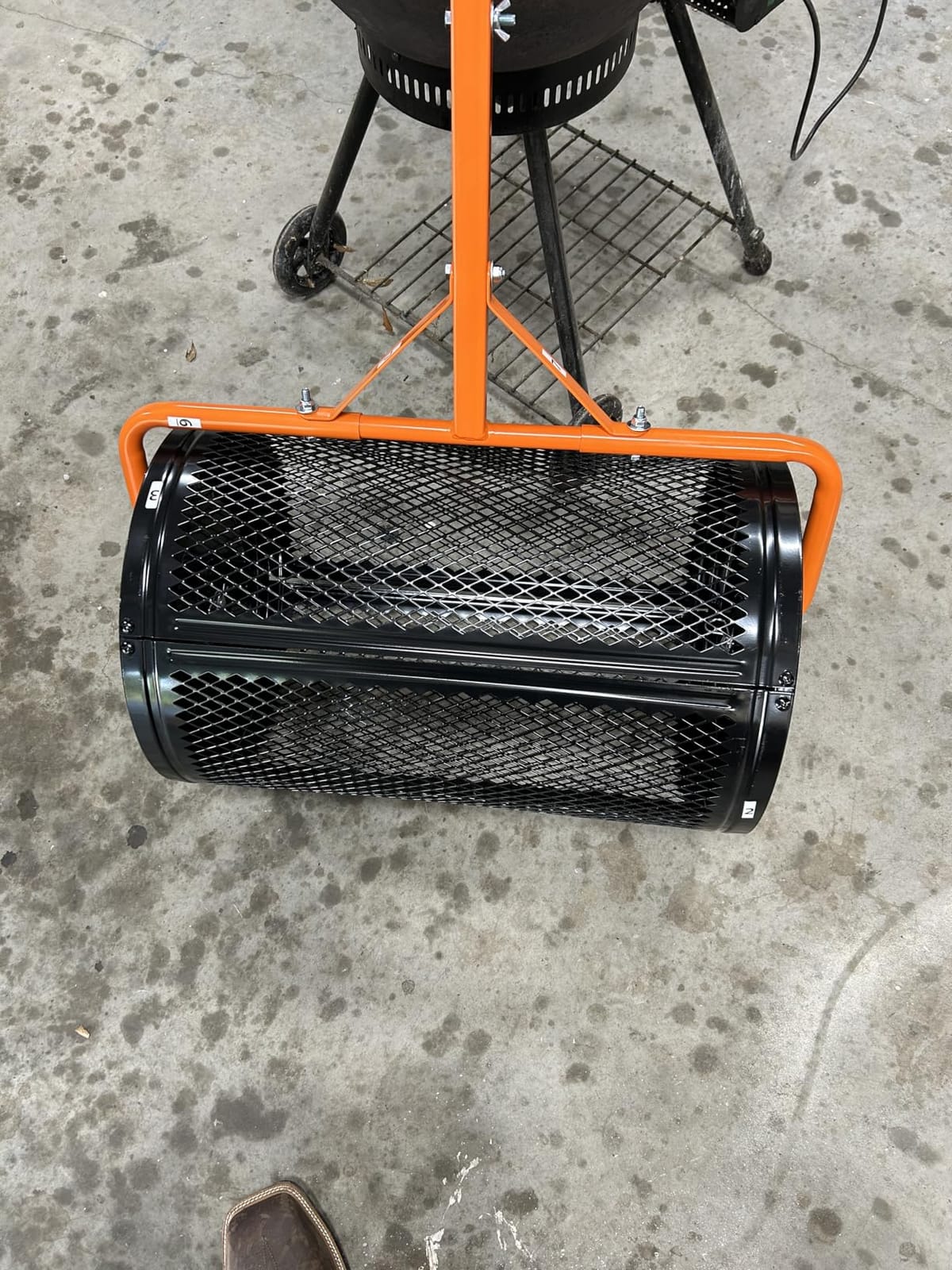
Assembly needs no tools, which several owners mention as a specific benefit for older users or anyone who does not want to work through a diagram of washers. The powder-coated steel frame and 10 in pneumatic tires handle uneven ground better than the small hard wheels on cheaper push spreaders.
Owners rate the build quality above what the price suggests, and reviews describe it as strong value for seed, fertilizer and ice melt as well as lime. The 10 in wheels roll over grass, gravel and light snow, so it has use outside the liming season.
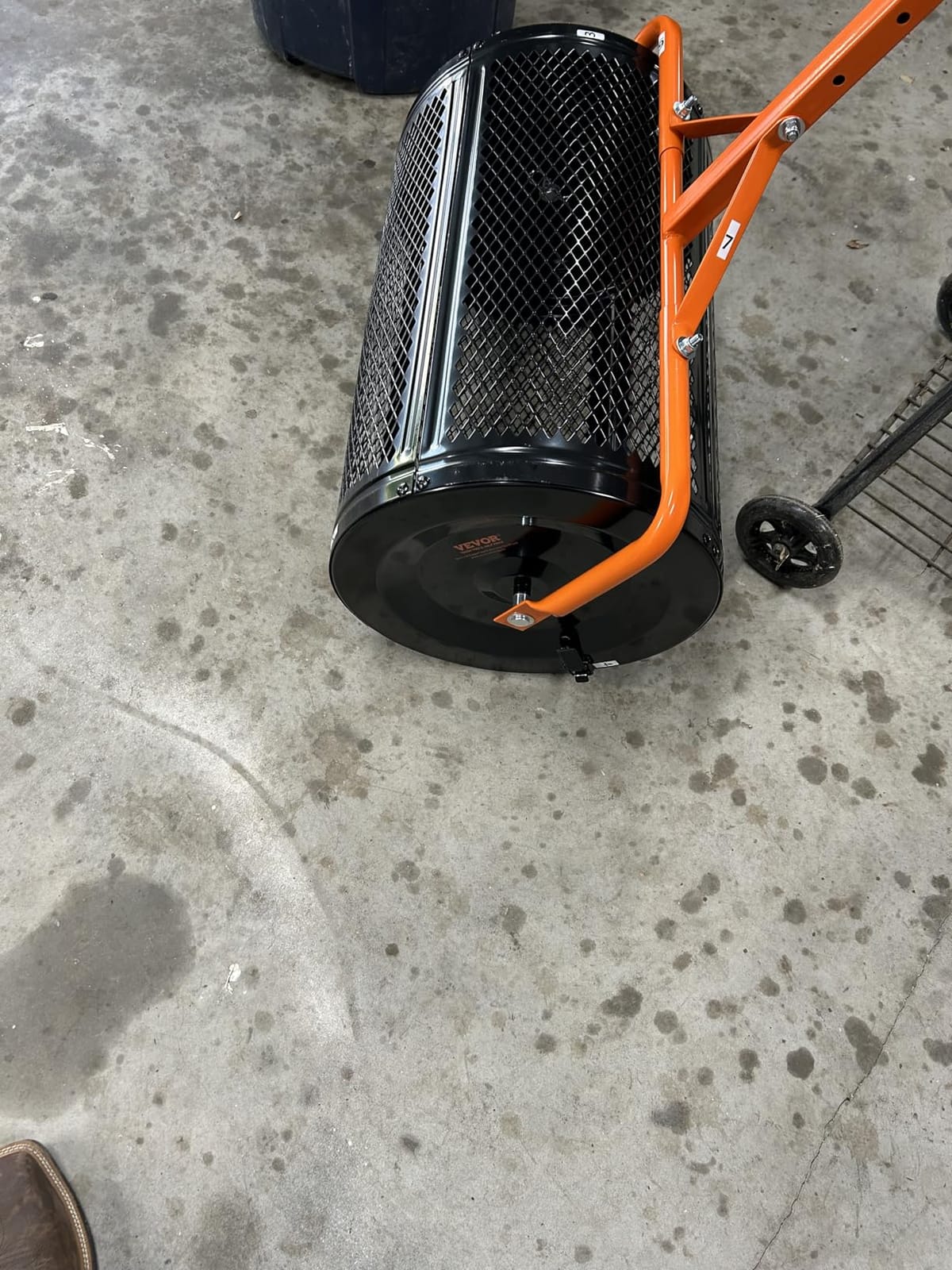
Where the drop pattern pays off
Work it along the edges, not across the middle. A drop spreader is the right choice for the boundary strips, the areas beside a pond, a septic system or a retaining wall, and anywhere lime runoff would be a problem if it landed in water or near a drain.
It is also a sensible second machine if you already own a broadcast spreader. The broadcast handles the open lawn quickly, the drop handles the fiddly margins, and between them the whole property is covered with clean edges.
Calibration takes practice
This is a basic drop spreader design, and owners say it needs practice before you get an even rate. The 30 settings look like precision but they are still relative, so run a catch test on a known area, weigh what went out, and adjust from there rather than trusting a number on a bag.
Some units arrive with loose or missing fasteners, and the included wrench is low quality, so bring your own. A 50 lb hopper also means more refills than the 60 lb model above, which matters on a full-acre job.
9. EarthWay 2050P 80 lb Pre-Assembled Spreader – Best for Zero Build Time
EarthWay 2050P 80lb Broadcast Spreader, Lawn Aerator, Fertilizer Spreader, 80lb Capacity, Pre-Assembled, with Rustproof Poly Hopper and Adjustable Drop Rate for Lawn Care & Seed Spreading
- Arrives ready to work with no build time
- 80 lb hopper is large for a walk-behind
- Built-in side spread control is genuinely useful
- Rustproof poly hopper and enclosed gearbox
- Lowest average rating in this group
- Some units arrive with missing or misaligned parts
- Side spread control cable detaches
- Heavy when loaded
Everything in this group needs assembly except this one, and for a lot of people that is the whole selling point. The 2050P arrives pre-assembled, so you can read the rate setting, load the hopper and start spreading in the same afternoon it arrives.
The 80 lb hopper is the second largest walk-behind capacity here, and the built-in side spread control is a real convenience because it is part of the machine rather than a cable and bracket you have to buy separately. It lets you hold material back along edges and driveways with a simple adjustment.
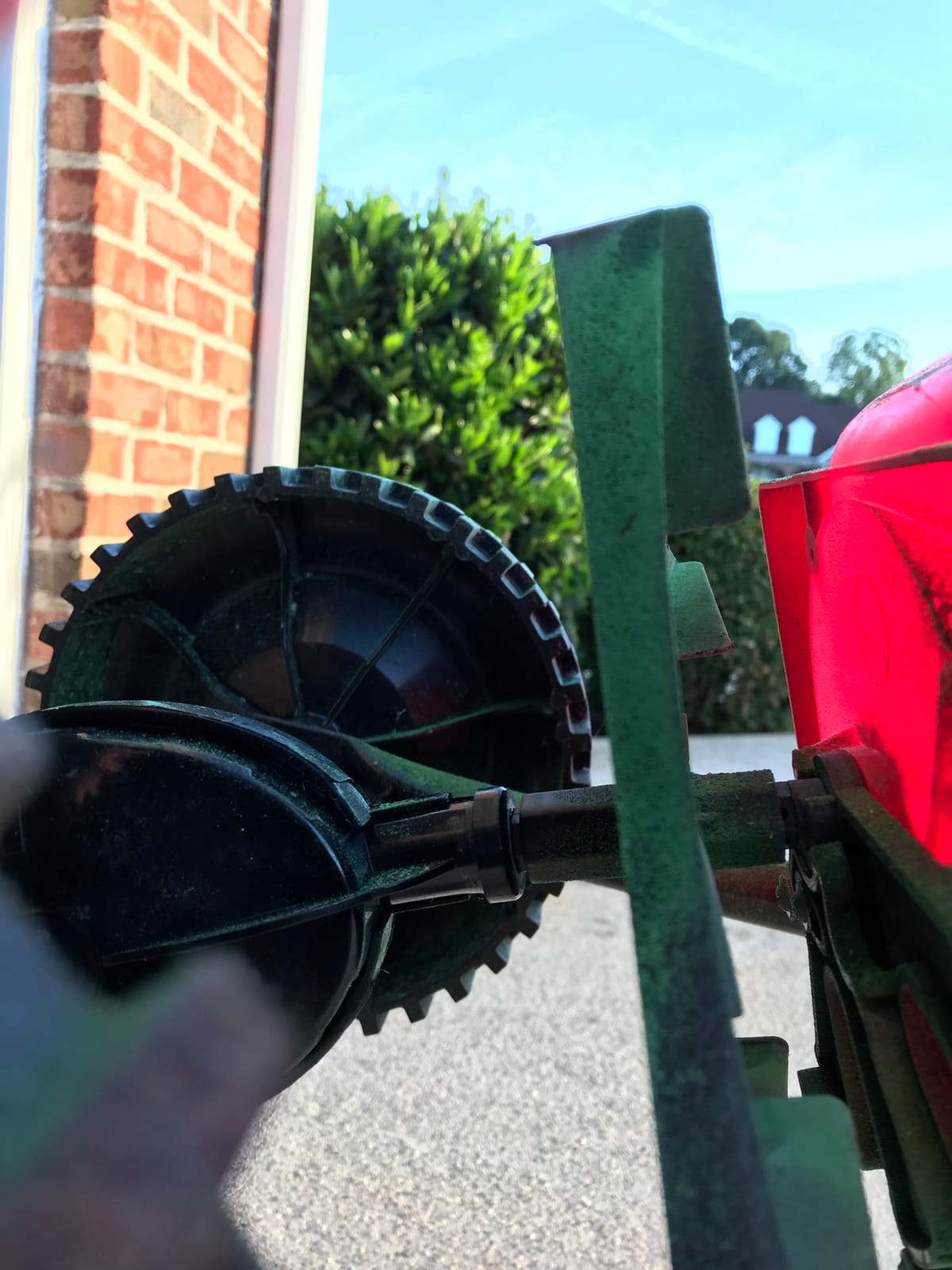
The rustproof poly hopper and fully enclosed gearbox are the durable combination, and the 10 in pneumatic tires roll smoothly over uneven ground. For liming a larger lawn on foot, 80 lb means fewer walks to the bag than most walk-behinds on the market.
Owners who receive a complete unit generally report that the core machine performs well. The rating on this model is the lowest of the ten, and the feedback is noticeably more mixed, so it is worth checking the unit as soon as it arrives.
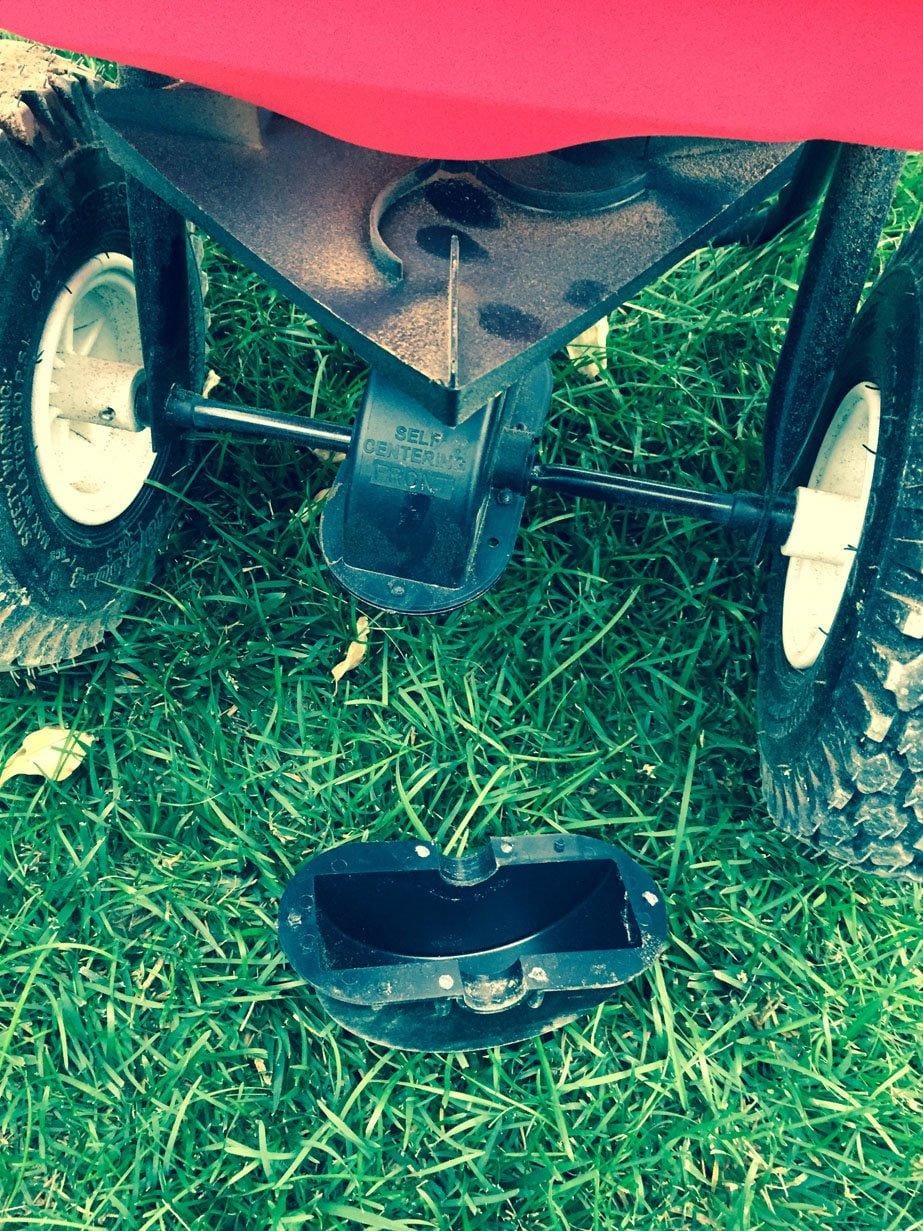
Capacity without assembly
The pairing of a large hopper and zero build time is genuinely useful for anyone doing one big lime job rather than a seasonal maintenance routine. You can put 80 lb in the hopper and cover a large area before reloading, and you can do it on the day the machine turns up.
For a lawn between 5000 and 15000 sq ft, that is a realistic single-session project, and for food plot work where you are walking in from a vehicle, the capacity reduces the number of trips back to the bag considerably.
Mixed feedback and cable issues
Several buyers report units arriving with missing or misaligned components that need rework, which undercuts the main advantage of buying pre-assembled. Check the gearbox, the side spread control and the hardware before you fill the hopper.
The side spread control cable detaches or needs adjustment after use, and the machine is heavy when loaded, so it is more effort on small lawns and uneven ground than a lighter push spreader. It is a capacity tool, not a precision tool.
10. EarthWay 2750 Nylon Bag Spreader – Best for Food Plot Spot Work
- Lightweight 2 lb body is easy to carry into fields
- Sealed gearbox with agitator gives even flow
- Water-resistant construction
- Handles small grasses through granular fertilizer
- 25 lb capacity means many refills
- Nylon bag wears faster than a moulded hopper
- Strap carry tires the shoulder on long hauls
This is the spreader that walks into a food plot. At 2 lb with a cross-shoulder strap, you can carry it a quarter mile through timber or along a fence line to a remote plot without a vehicle, which is exactly the situation habitat managers describe when a full ag lime spreader is simply impractical.
The sealed gearbox with an integrated agitator and a spring close shutoff gives controlled, even flow, and the side spread control helps keep material out of the areas you do not want it in. Owners mention handling everything from small grasses and clover through heavier seed and granular fertilizer with it.
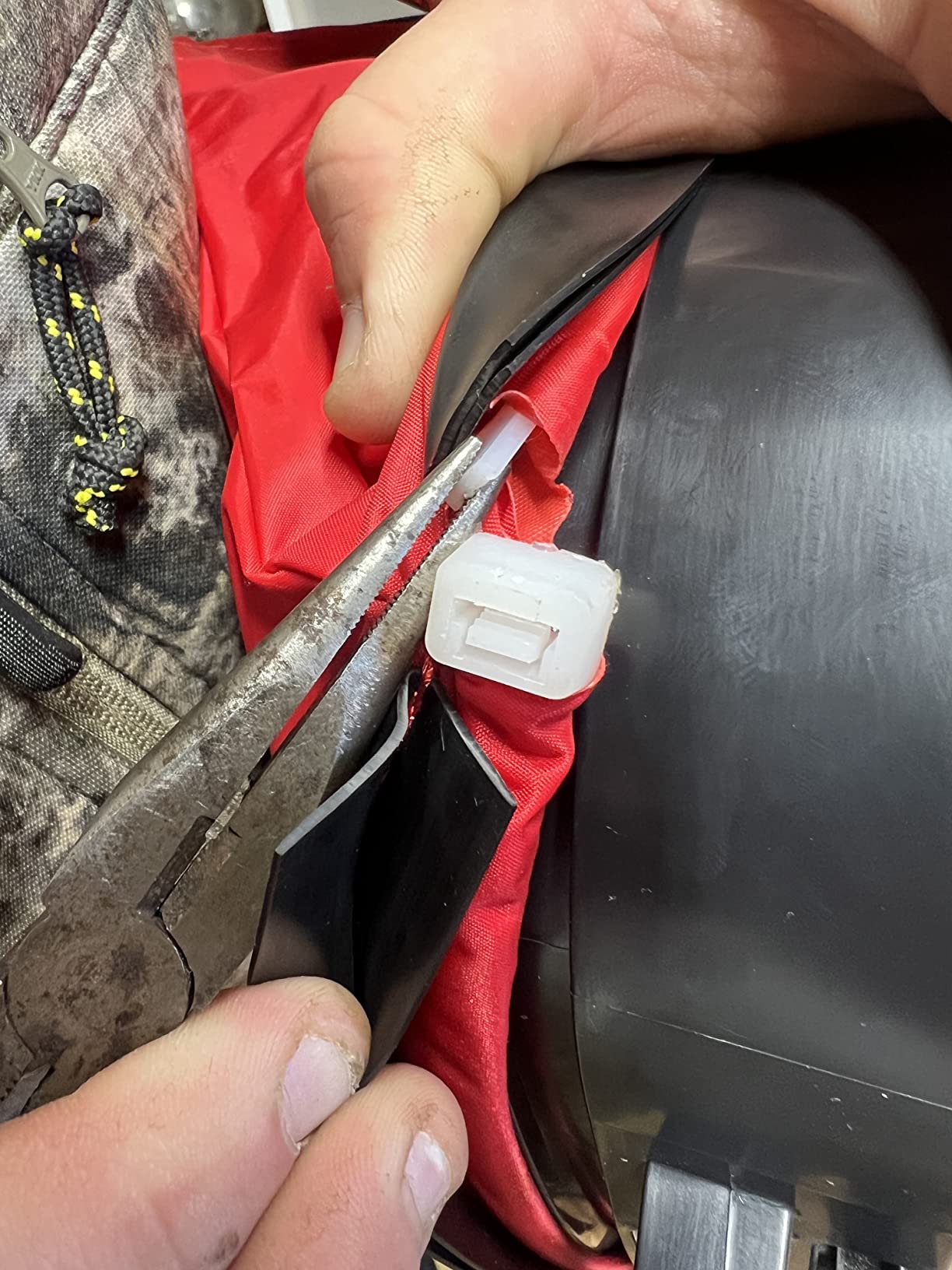
For lime, treat it as a spot and plot tool rather than an acreage machine. Pelletized lime is the sensible choice here, since a nylon bag has no gate to clog and no motor to stall, and the material behaves like the granular fertilizer the machine was designed for.
The water-resistant, durable construction handles wet conditions and being left out between jobs, which matters for equipment that lives in a truck bed or a shed on a hunting property. It is a small machine that does one specific job extremely well.
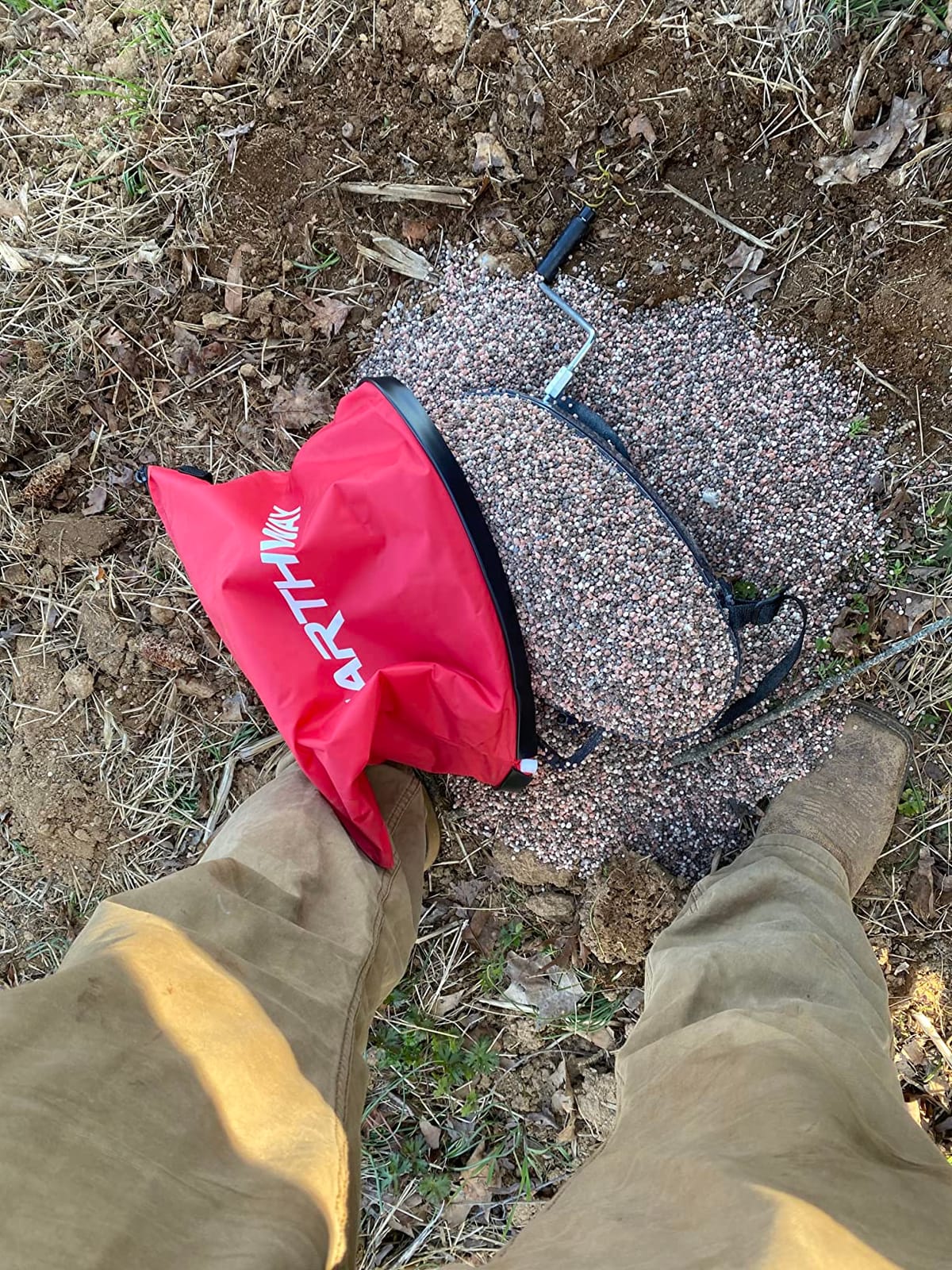
Built for carried-in plots
Weight is the whole design brief. A 25 lb load carried at 2 lb of machine weight is something you can manage over rough ground, and that changes which jobs are realistic. A small food plot, a roadside strip, a tree line, anywhere a vehicle cannot safely go.
It is also the right tool for spot liming under individual trees, along an eroding slope, or in the corners of a garden where a machine cannot turn. Owners also use it for overseeding and spot seeding alongside the same jobs.
Capacity and bag durability
Twenty-five pounds means frequent refills on anything beyond a small plot, and a nylon bag is more prone to abrasion and UV wear than a moulded plastic hopper over a long life. Expect to replace the bag eventually rather than the machine.
Strap carry also becomes tiring with a full load over rough ground, so break the work into smaller trips. It is a complement to a larger machine, not a replacement for one on any serious acreage job.
Which Spreader Type Actually Handles Lime
Three questions decide the type of spreader you need: how much area you are covering, what form the lime is in, and how much of the material must miss the edges. Get those three right and the machine choice is easy. Get the second one wrong and you will be fighting clogs and dust all afternoon.
Broadcast spreaders throw material outward onto a spinning disc, giving the widest coverage per pass and the fastest work on open ground. They are the right choice for pelletized lime over a lawn or food plot, provided the material is free-flowing and the gate can meter it. Fine powder is the risk, because a small opening will not feed it steadily and a large opening dumps too much at once.
Drop spreaders release material straight down between or just outside the wheels, so nothing flies outward. That costs you passes and speed and buys you clean edges, which is the deciding factor next to a driveway, a pond, a septic field, a retaining wall or a neighbour’s border. Drop spreaders also meter fine material more gently through multiple openings, which is a genuine advantage with powdered ag lime.
Tow-behind and ATV models are the answer for area. At 100 lb and up you refill a handful of times instead of dozens, and the wide pattern plus wheel drive means the hopper output is tied to ground speed, so your application rate stays consistent as long as you hold a steady speed. A note on load: ag lime bags run 40 to 50 lb and bulk lime is denser than fertilizer, so a hopper filled with lime is heavier than the same hopper filled with seed. Steel frames and axles are worth the weight penalty.
Handheld and chest-mounted spreaders cover what a machine cannot reach. They are the answer for edges, corners, under decks, along fences and in remote plots you have to walk to. Twenty-five pounds is a realistic working load for a shoulder strap, and anything heavier becomes a fitness problem rather than a spreading problem.
On sizing, a rough rule works well: a 50 lb hopper covers a small to mid-size lawn, an 80 lb hopper covers a large lawn on foot, and 100 to 175 lb hoppers cover half an acre and up when towed. For a one-time job on several acres, renting a large tow-behind or a three-point hitch cone spreader is often the sensible call, since owners on agricultural forums consistently describe bulk lime loads needing a loader or a second person and nobody enjoys that. Pelletized lime is the other lever: users working small plots repeatedly report choosing it over powder for less dust, fewer flies, easier handling and a spreader that does not need to meter powder at all.
How to Spread Lime Without Striping and Clogs
Calibration is the part everybody skips and everybody should not. The number printed on the bag is a starting point for that specific spreader model, and settings do not convert between brands, so a bag chart for one machine tells you nothing reliable about another. Run the catch test instead.
Read your target rate from the soil test. Work out the pounds needed per 1000 sq ft for your area, or the pounds per acre if the result is given that way.
Mark a known test area. Weigh a known amount of lime into the hopper, either a whole bag or a measured portion, and note what you loaded.
Set the gate, spread, then weigh what is left. Spread over a measured area at a steady walking or driving speed, then weigh the material remaining in the hopper.
Compare and adjust. Divide the weight used by the area covered to get your actual rate, then move the gate up or down until the two numbers match.
Write it down. Record the setting, the material type and the ground speed. When the weather and the material change, you have a baseline to return to.
Once calibrated, technique matters more than the machine. Spread at half the target rate in one direction, then at half the rate across it, so the overlapping strips hide the wheel lines and the pass lines. Keep the hopper gate closed whenever you stop, and never open it while stationary, because a full hopper running open is how most material ends up in a heap in one spot.
Spread on a dry surface, in a light breeze at most, and never onto wet ground. Moisture is what cakes powdered lime in the hopper and what carries it off the lawn as runoff. A tarp test works well for dry material: lay a sheet under the spreader, run a short pass, and weigh what lands to get a fast rate check before you commit to the whole lawn.
Overcome the physical side too. Loading 100 lb of ag lime into a hopper at waist height is a genuine injury risk on its own, so split heavy bags, lift with your legs, and do not try to catch a tipping hopper by hand. A grate in the hopper catches caked lumps so you can crumble and reuse them instead of losing material to waste.
The common mistakes are all avoidable. Spreading uncalibrated, working on wet ground, leaving the gate open on turns, throwing lime onto pavement and letting it wash into drains, driving faster on one pass than the next, and failing to overlap. Each of those shows up as a stripe or a light patch, and lime stripes can take months to appear because the pH change is slow.
When to Spread Lime and How Much to Use
Timing follows the crop, not the calendar. For most cool-season turf, early spring before growth starts or autumn both work, and autumn has the advantage that the lime has the whole growing season to react. Avoid applying during the heat of midday, and avoid liming immediately before a heavy rain, because the runoff carries the material away before it reacts.
Application rates are soil-test dependent, and that is the honest answer. A common starting point for raising mildly acidic turf soil sits in the range of roughly 50 to 70 lb per 1000 sq ft, which works out to one to two tons per acre, and heavier corrections need more. That figure is a starting point, not an instruction, and it changes with your soil texture, the depth of the correction, whether you are using powdered or pelletized material, and the calcium carbonate equivalence of the product. Pelletized lime is less reactive than ag lime, so rates for the two are not interchangeable.
Two more material notes. Hydrated lime reacts quickly and is caustic enough that it is not a routine lawn treatment, and dolomite lime adds magnesium as well as calcium, which makes it the right choice only where magnesium is also low. A soil test tells you which of those you actually need, which is exactly why the test comes first.
Maintenance and Safe Handling of Lime
Lime residue is caustic and it eats rubber, fabric and coatings, so rinse the spreader after every use rather than at the end of the season. Knock out caked material from the grate, wash the hopper and the underside, and let it dry fully before storage. A poly hopper shrugs off corrosion but the steel frame, the gearbox and the hardware do not, and corrosion starts fast on a spreader that is stored dirty.
On safety, wear a respirator rated for dust when you are handling powdered ag lime, and spread on a calm day with the wind at your back so dust moves away from you rather than toward a house, a car or a neighbour’s garden. Keep pets and children off the lawn until the material is brushed in and the surface is dry, and sweep granules off pavement before they wash into drains, because run-off carries both lime and salt into local water.
Store bags sealed and off the ground, and keep the hopper empty and dry over winter. A little care at the end of each job is what keeps a spreader working for the next decade rather than a few seasons.
Frequently Asked Questions
What is the best spreader for lime?
A rotary broadcast spreader with a steel frame and a rustproof poly hopper is the best all-round choice for pelletized lime, and a drop spreader is best when lime must stay off driveways, ponds and paths. For half an acre and up, choose a tow-behind or ATV model with a 100 lb or larger hopper. A chest or hand spreader covers the edges a machine cannot reach.
What spreader setting should I use for lime?
There is no universal setting, because bag charts do not convert between brands and the gate opening, ground speed and particle size together set the real output. Start at the setting printed for your model on the bag, then run a catch test: weigh a known amount in, spread a measured area, weigh what is left, and adjust until the applied rate matches your soil test recommendation.
What is the best way to spread lime?
Soil test first, then calibrate with a catch test rather than trusting the bag setting. Spread on a dry surface in a light breeze, apply at half the target rate in one direction and half the rate across it so overlaps hide the stripes, close the gate whenever you stop, sweep granules off pavement, and water the material in or let rainfall carry it before judging results.
What time of year should you spread lime?
For most cool-season lawns, early spring before growth begins or autumn are the standard windows, with autumn preferred because the lime has a full growing season to react. Avoid midday heat and avoid applying just before heavy rain, which washes material off the lawn as runoff. Fields and food plots are usually limed in spring or autumn depending on the crop.
What kind of spreader for ag lime?
For powdered ag lime, choose a drop spreader or a walk-behind with a three-hole metering system and a removable hopper grate, because fine powder cakes and bridges in a wide broadcast gate. Pelletized lime flows like granular fertilizer and works in almost any broadcast spreader. For acreage, use a tow-behind or three-point hitch spreader with a 100 lb or larger hopper, or rent one for a single job.
Do I need to calibrate for lime?
Yes. Lime is denser than fertilizer and its particle size varies a lot between pelletized and powdered forms, so a setting that is right for seed is rarely right for lime. A catch test takes five minutes and is the only reliable way to know your spreader is applying the rate your soil test recommended.
The Verdict on the Best Spreaders for Spreading Lime in 2026
After working through all ten machines, the best spreaders for spreading lime split cleanly by job. The Scotts Turf Builder EdgeGuard Mini is our pick for most people, because it needs no setup, it keeps granules off paths and beds, and it covers up to 5000 sq ft per load. For half an acre or more, the Agri-Fab 130 lb tow-behind covers ground fast with refills measured in ones rather than dozens. For powdered ag lime and heavy repeated work, the EarthWay 2150 with its removable grate is the one that will not clog on you.
The rule underneath all ten choices is the same one the forums keep arriving at. Buy for the material, not the marketing. Pelletized lime will flow through almost any well-built spreader, while powdered ag lime punishes a wide gate and a small opening alike, and it will cake the moment it gets damp. Get your soil test back, decide which form of lime you are using, and only then choose the machine.
Whichever one you pick, calibrate it before the first pass, overlap every stripe, and rinse it off the same day. That habit alone keeps a spreader working long after the warranty ends.