

If you have ever watched grass creep a few inches into a planting bed and wondered how a neat garden turns ragged, the fix is a machine with a steel blade rather than a spool of string. A walk-behind edger is a wheeled tool with a vertically mounted blade under a cutting head. You push it along the border between turf and a bed, path or driveway, and it cuts a vertical wall of sod and soil instead of just trimming the overhang. That is the difference between edging and trimming, and it is why a dedicated machine produces the cleanest bed line of anything in the yard.
This guide covers the best walk behind edgers for flower beds, from gas walk-behind machines built for long straight borders to cordless and corded models sized for a single suburban planting. We looked at engine displacement, blade diameter and tooth style, cutting depth range, wheel geometry, weight and the real friction points owners report, then narrowed it to 12 picks. Everything below reflects the spec sheets and the owner feedback in the product data, not marketing copy.
One thing to clear up early: most of these 12 are stick edgers rather than true walk-behinds, because that is what most gardeners actually use. The distinction matters and we cover it in the buying guide. Before you spend anything, it is worth deciding how much edging work you really have, and whether your beds sit close enough to a wall or fence that a wide machine will not fit. If you are planning a raised structure rather than a single-season tidy-up, our walk-in greenhouse guide for gardeners is a better read.
Our overall pick is the BLACK+DECKER LE760FF, a 12 Amp corded machine that holds a straight line on a first-time bed edge without the assembly wrestling that walks down most gas walk-behinds. It has 3955 owner reviews averaging 4.5 stars, and it includes a spare blade in the box. If your beds sit far from an outlet, jump to the Greenworks 40V instead, and if you want the deepest, most root-cutting bite available, the Earthquake 41273 is the machine.
Table of Contents
Top 3 Picks for Flower Bed Edging
These three cover the most common situations. The BLACK+DECKER is the do-everything choice for a normal yard, the Earthquake handles long straight borders and hardened soil, and the RYOBI 18V is the one to buy if you already own that battery platform. Each one sits at the top of our list for a different reason, and the reasoning matters more than the ranking.
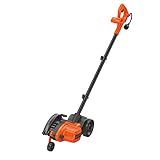
BLACK+DECKER LE760FF
- 12 Amp motor
- 7.5 inch blade
- Three depth positions with edge guide
- Spare blade included

EARTHQUAKE 41273
- 79cc 4-cycle engine
- Ten depths up to 2.5 inch cut
- Tri-tip steel blade
- Four-wheel chassis

RYOBI 18V ONE+ 22cm
- 22 cm serrated blade
- Four-step depth adjustment
- Two guide wheels
- Bare tool
All 12 Walk-Behind Edgers Compared in 2026
Every machine in the list appears below with the specs that actually change how it cuts a bed edge. Blade diameter decides how much edge you cover per pass, tooth style decides how it handles roots and dry soil, and the depth range decides how much of the grass mat you can remove in one run. Read the power source column before anything else, because it will rule machines in or out faster than any other spec.
| Product | Specifications | Action |
|---|---|---|
| BLACK+DECKER LE760FF |
|
Check Latest Price |
| EARTHQUAKE 41273 |
|
Check Latest Price |
| RYOBI 18V ONE+ 22cm |
|
Check Latest Price |
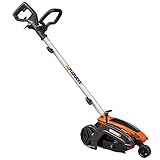 WORX WG896 WORX WG896 |
|
Check Latest Price |
 McLane 9 Inch Gas Walk-Behind McLane 9 Inch Gas Walk-Behind |
|
Check Latest Price |
 Amazon Basics 12 Amp Amazon Basics 12 Amp |
|
Check Latest Price |
 Greenworks 40V 8 Inch Greenworks 40V 8 Inch |
|
Check Latest Price |
 Greenworks 60V 8 Inch Greenworks 60V 8 Inch |
|
Check Latest Price |
 RYOBI ONE+ 18V 9 Inch RYOBI ONE+ 18V 9 Inch |
|
Check Latest Price |
 WORX WG898 20V WORX WG898 20V |
|
Check Latest Price |
 CRAFTSMAN 20V MAX CRAFTSMAN 20V MAX |
|
Check Latest Price |
 VEVOR 12 Amp 8 Inch VEVOR 12 Amp 8 Inch |
|
Check Latest Price |
1. BLACK+DECKER LE760FF – The Best All-Rounder for Beds and Paths
- Cuts through years of overgrown edge in a few passes
- Three height settings plus an edge guide hold a straight line
- Quick conversion between edging and trenching
- Spare blade included in the box
- Several owners report a first unit lasting 8 to 15 years
- Blade hex nut can loosen during use and needs a socket and torque wrench
- Body is hard plastic with only shaft and motor parts in metal
- Corded design means managing cable away from an outlet
- Some find it too wide for tight corners against walls
This is the machine I end up recommending to people who ask a single question: which one should I buy. The 12 Amp motor spins a 7.5 inch blade through a first-time bed edge that has not been cut in years, and owners consistently report finishing neglected borders in a few passes rather than a full afternoon. At 4.5 stars across 3955 reviews, it is also the most proven option in this group by a wide margin.
What sold me is the edge guide. Pull it up to the position you want and the cut registers against a physical reference, which turns a first attempt at a straight bed line into a repeatable one. The three-position depth adjustment handles everything from a monthly touch-up along an already-cut bed to a deeper slice when the grass mat has started to take over the border.
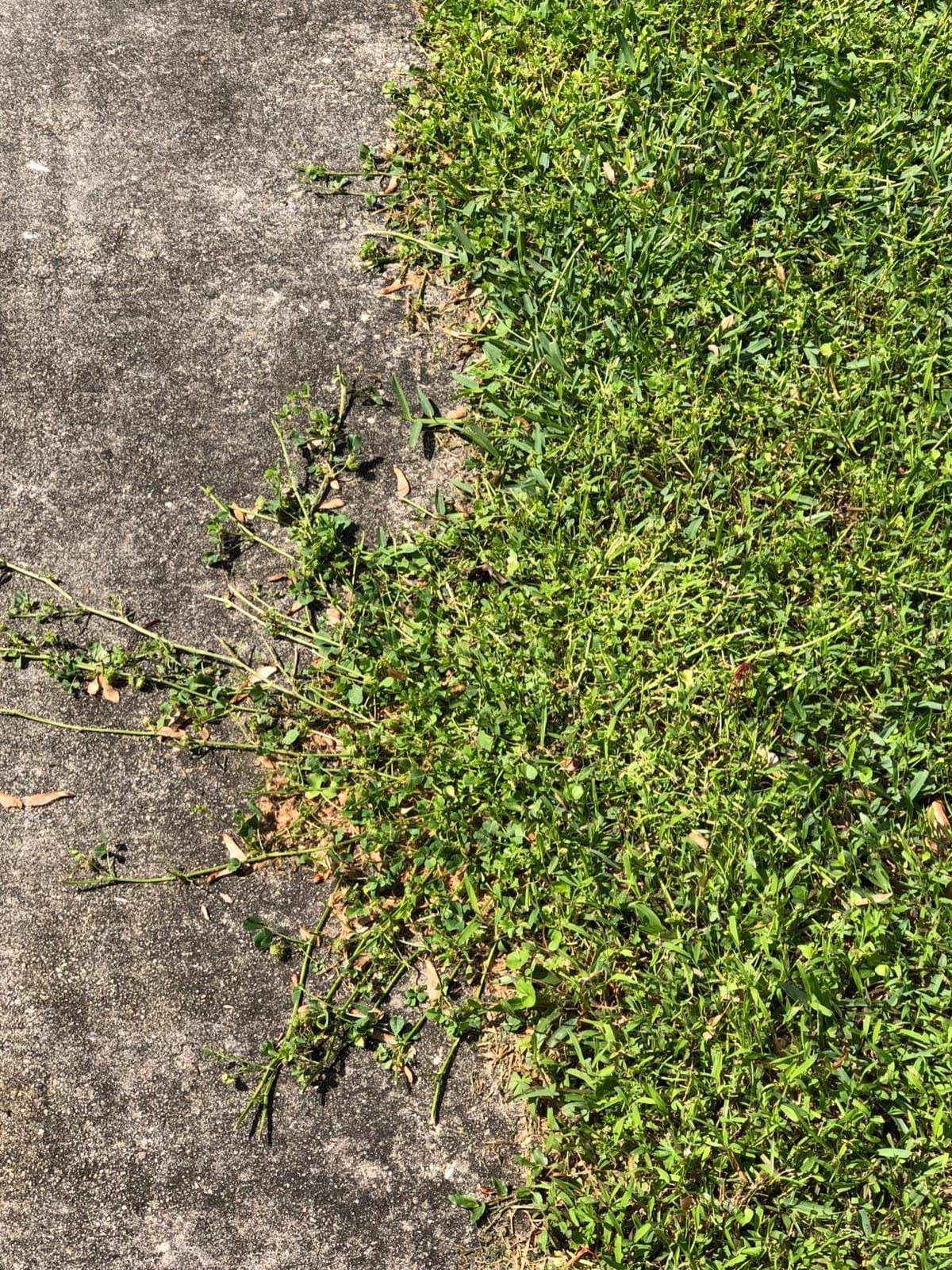
The two-in-one design matters more for flower beds than most guides admit. Switching to trenching mode lets you cut a channel for irrigation line, landscape lighting or wire fence, and that same cut is how you reset a bed line that has drifted. A second blade in the box means you are not waiting on a replacement the first time the edge hits a paver or a piece of edging rail.
Owners with back and shoulder problems rate this one well at 14.1 pounds, and it converts between edging and trenching without tools. It also runs equally well for either hand, which matters if you are working a bed that curves back toward a wall.
How close it cuts without nipping plant roots
The 7.5 inch blade is narrower than the 9 inch models in this list, which works in your favour at a bed edge. A narrower blade can be walked closer to a plant crown without the tip reaching under the root mass, and the three depth positions let you take the first pass shallow.
For a typical perennial bed, start on the shallowest position and only go deeper on the second pass. That two-pass approach removes the visible overhang without undercutting the root zone in a single aggressive cut.
Where it frustrates owners
The single most reported complaint is the blade hex nut loosening during use, which several owners worked around with a socket and torque wrench mid-job. Check it at the start of every session and it becomes routine rather than a problem.
The second issue is reach. This is a corded machine with a short lead, so beds far from an outlet are genuinely awkward, and the body is wide enough to feel clumsy against a wall. If either of those describes your garden, the cordless picks below fit better.
2. EARTHQUAKE 41273 – Best for Long Straight Borders and Hardened Soil
- 79cc 4-cycle engine delivers far more torque than handheld edgers
- Four-wheel chassis holds a straight cut without the wobble of three-wheel designs
- Ten depth positions plus a pivoting blade allow straight or bevelled decorative cuts
- Cuts to 2.5 inch deep to slow root regrowth
- Handles light trenching as well
- Assembly is time-consuming with blurred diagrams and thin instructions
- No pictured parts list of the actual nuts and bolts
- One painted axle rod needed a rubber mallet to seat
- A few owners report the steel blade thinning faster than expected
If you have a long straight border, a driveway edge that runs the length of a property, or soil that has baked hard over a season, this is the machine with the authority to cut it. The 79cc 4-cycle Viper engine produces noticeably more power and torque than any handheld edger in this list, and the four-wheel chassis keeps the cut square over a long run where lighter machines wander.
The ten depth positions and the pivoting blade are the features that matter for beds specifically. The blade pivots up to 20 degrees in either direction, which is what allows a bevelled decorative cut at the mulch line rather than a straight vertical slice. Ten positions let you creep down in small increments around shallow-rooted perennials and save the full 2.5 inch setting for turf that has already invaded the bed.
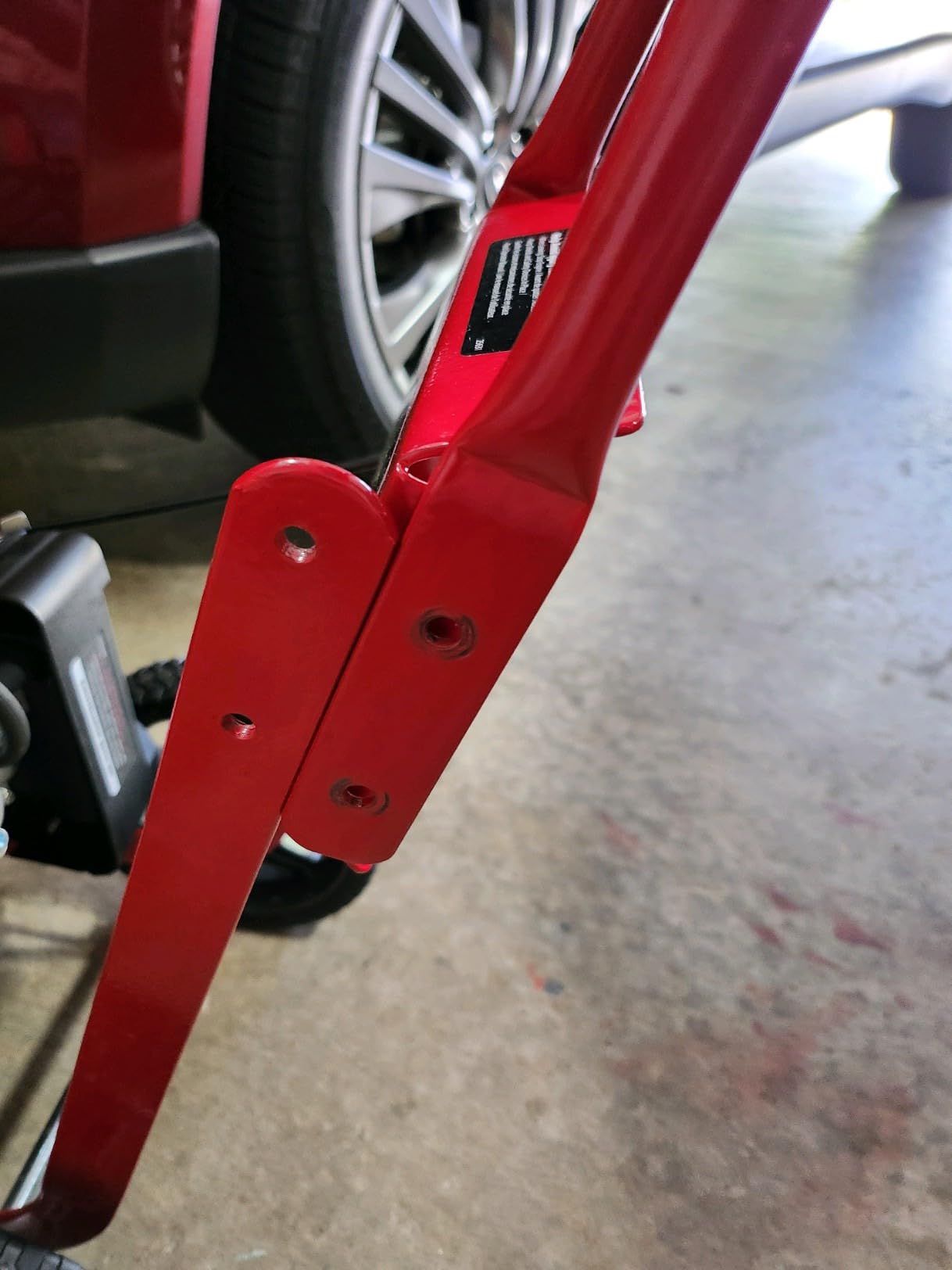
Owners report that once assembled it starts on the first or second pull, and the variable-speed throttle lets you slow down precisely where the blade approaches a plant. Several reviewers describe cutting 2.5 inches deep specifically to slow the regrowth of roots at the bed border, which is the one case where cutting deeper is the right call.
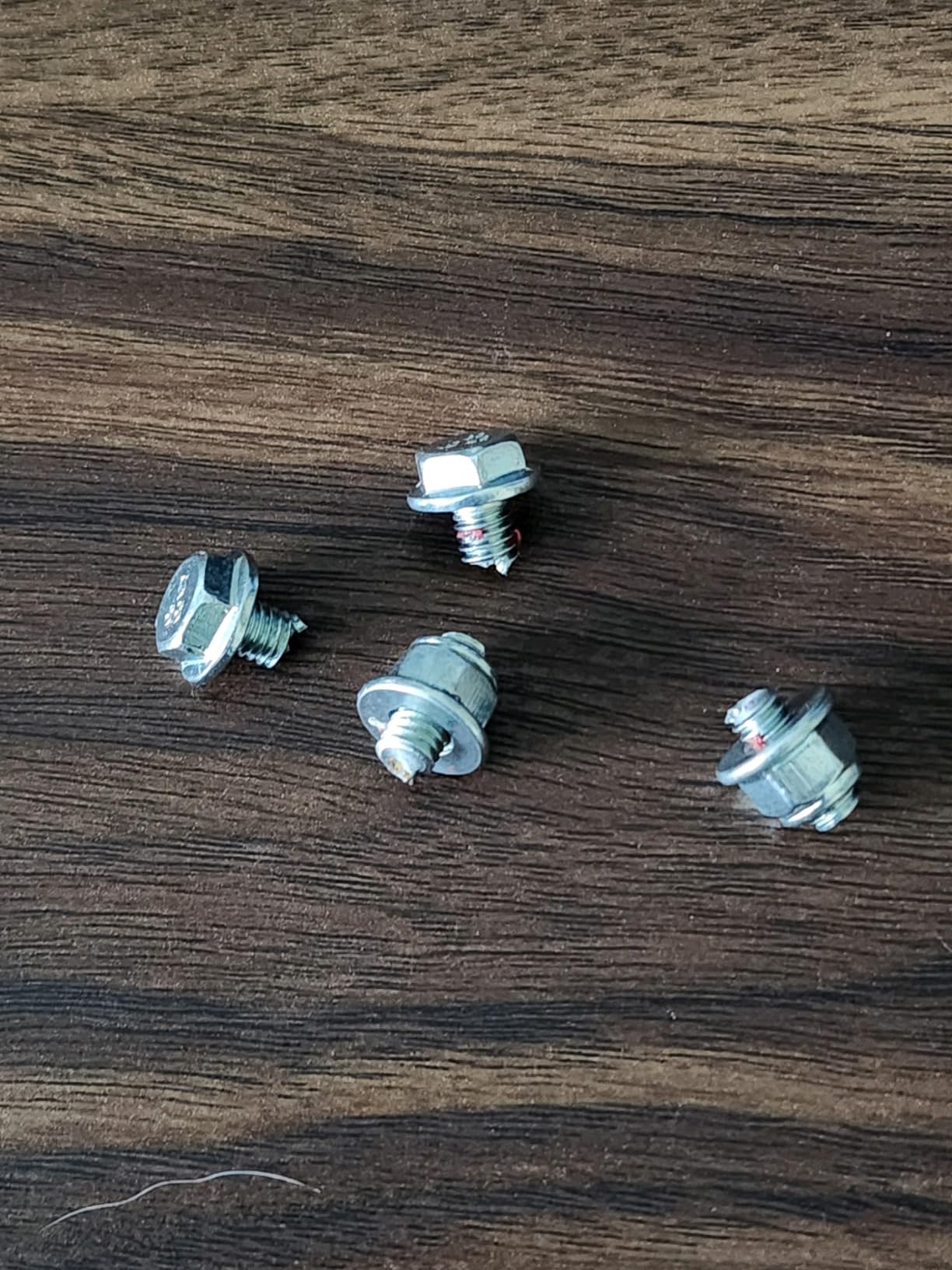
It is also a genuine walk-behind in the traditional sense, so it is worth setting expectations honestly. Assembly is the most repeated complaint in the reviews: blurred diagrams, few words in the manual, and no pictured parts list of the nuts and bolts. One owner needed a rubber mallet to seat a painted axle rod through the wheel hole.
When the extra torque pays off
This machine earns its bulk on a first-time edge in compacted soil, on a bed border that has grown a thick mat of grass roots, and on long straight runs where you want to set the depth once and walk. The 2.5 inch maximum is deeper than anything else in this group, and that is a real advantage when the goal is to remove turf rather than tidy it.
On a bed you are re-establishing after a season of neglect, a deeper cut is faster because you remove more material per pass. Just be more conservative on the second and third passes once the line is set.
Who should skip it
At 57 pounds this is not a machine you want in a bed two feet wide between a house and a fence. It is heavy, wide and awkward in tight geometry, and the wheel count that makes it stable on a straight run works against you on a curve.
There are also durability notes worth reading before you commit. A small number of owners report the steel blade thinning faster than expected and one long-term owner had a carburetor fuel-delivery failure after about a season. The 5-year limited warranty and US-based support are the safety net, but budget an afternoon for assembly.
3. RYOBI 18V ONE+ 22cm – Best Cut Quality on a Battery Platform
- Strongest rating profile in the set with a 79 percent five-star share
- Two guide wheels hold depth very well and produce clean root-deep edges
- Light enough to be comfortable for a range of users
- Assembly is extremely easy
- Serrated blade makes monthly edging jobs fast
- Bare tool
- battery and charger must already be owned in the 18V ONE+ platform
- No guide tab to register the cut against a sidewalk
- Can bog down in heavy overgrown grass
- Several owners report the motor failing in under two years
The RYOBI 18V ONE+ 22cm has the best rating profile of anything we looked at, with 79 percent of its reviews at five stars across 496 ratings. What earns those stars is the pair of auxiliary guide wheels. Two wheels rather than one hold cutting depth far more consistently, and owners repeatedly describe the result as a clean edge that runs down into the roots rather than skimming the surface.
At 3.42 kilograms it is light enough to be comfortable for a wide range of users, and several reviewers single it out as the edger they recommend to lighter operators. Assembly is described as extremely easy, which is a genuine change of pace after a gas walk-behind.
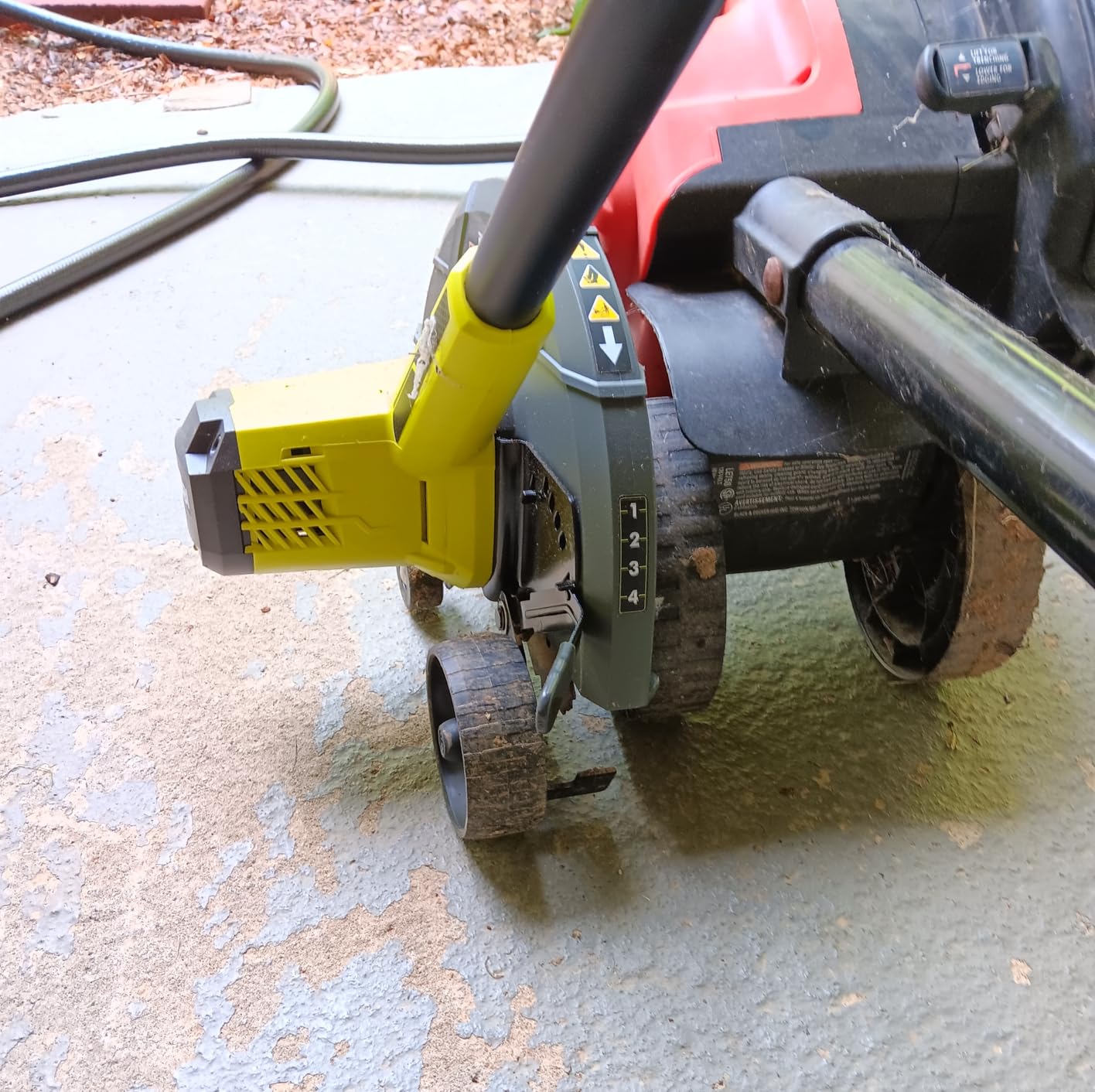
The 22 cm serrated blade runs at 7500 rpm, and the serrations are what separate this from a plain two-tipped blade. They bite into the soil surface and pull material in rather than pushing it along, which is why owners say monthly edging jobs go quickly on this machine. The four-step height adjustment gives you enough granularity to walk the depth down around a shallow-rooted planting.
This is a bare tool. The battery and charger are not in the box, so it only makes sense if you already own 18V ONE+ packs, and owners confirm it works with aftermarket packs too. If you are starting from nothing, look at the Greenworks models that include a battery and charger.
How it handles shallow-rooted perennials
The four-step adjustment is the part that earns its place at a flower bed rather than a lawn edge. Combined with the two guide wheels, it lets you set a consistent depth and hold it, which is what stops the blade from diving toward the root zone on the second pass of a curve.
Owners who edge monthly report that the serrated blade keeps the bed line crisp between cuts, and the design intent of the tool is specifically to keep borders crisp and stop invasive weeds and roots from crossing over. For a bed you visit every month, that consistency is the whole point.
Limits worth knowing
There is no guide tab for registering the cut against a sidewalk edge, so on hardscape lines you are working by eye. It can also bog down in heavy or overgrown grass, which means slowing your pace rather than forcing it.
The most serious note in the reviews is motor longevity: several owners report the motor failing in under two years. Contacting concrete also sparks and wears the blade, so keep it off paver edges if you want it to last. For a light-duty monthly job on an existing platform, though, owners rate it very highly.
4. WORX WG896 – Best Value for Small Yards and Short Bed Runs
WORX Electric Lawn Edger, 12 Amp 7.5″ Trencher for Lawn Landscaping, WG896
- Highest review volume in the set at 15479 ratings holding a 4.4 average
- 4700 RPM blade produces clean straight bed lines
- Three depth settings match the cut to the task
- Adjustable shaft and D-grip handle fit different heights
- Dual edging and trenching in one tool
- Requires an extension cord plus cable management for beds far from an outlet
- Included 1 foot cord is very short for most beds
With 15479 ratings averaging 4.4 stars, the WORX WG896 is the most reviewed machine in this guide by an order of magnitude, and the consistency of that score tells you something real. A 12 Amp motor spinning a 7.5 inch blade at 4700 RPM produces what owners consistently describe as clean, straight, professional-looking bed lines, and it does it on a budget.
Three cutting depths at 1 inch, 1-1/4 inch and 1-1/2 inch is a sensible spread for flower beds. The shallow position is your monthly touch-up, and the deepest is enough to bite into a root mat without going anywhere near the depths a walk-behind machine offers.
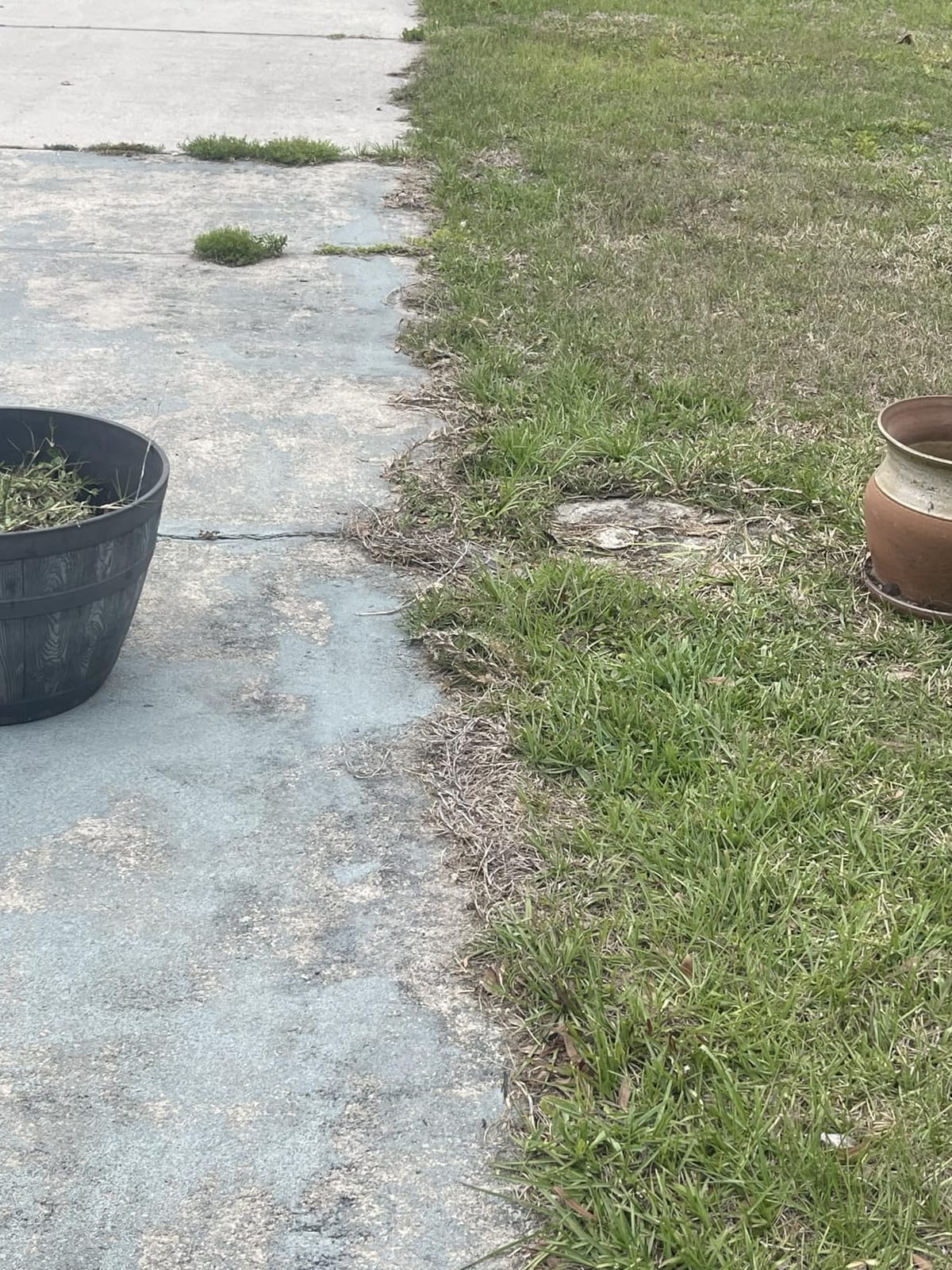
The cutting line indicator is the detail I appreciate most at a bed edge. It gives you a physical reference for the path the blade takes, which is exactly what a first-time user lacks. The adjustable shaft with a D-grip handle also lets you set a comfortable position, and owners mention that the straight handle works well for someone who wants a firm two-handed grip rather than a pole held against the hip.
It is 14 pounds, which is light for an edger with a steel blade, and the dual edging and trenching function means the same tool cuts a channel for wire or irrigation line along a bed border.
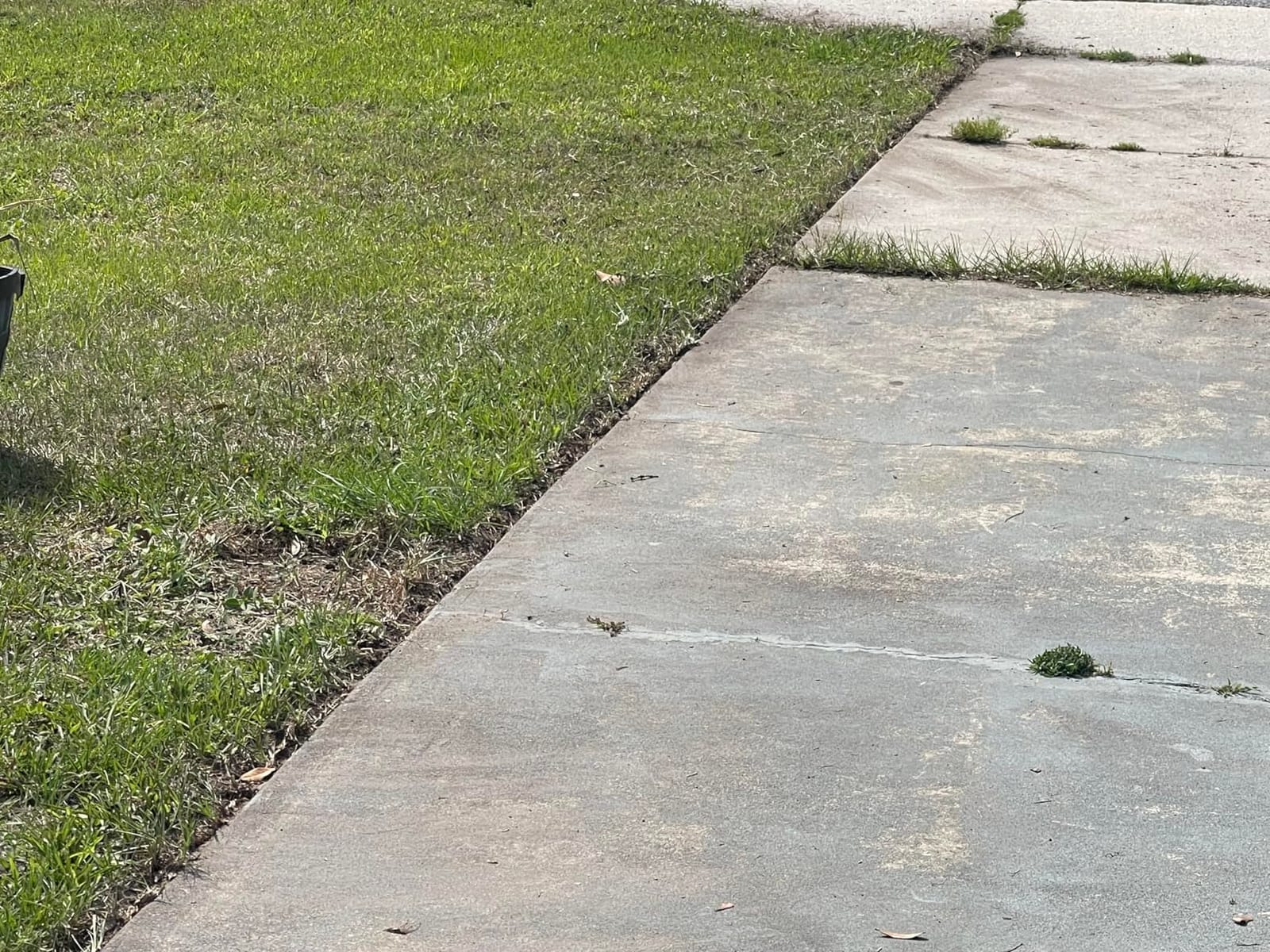
Best use: a bed within cord reach
This is the pick when your beds are within a cord’s length of an outlet, which in a typical suburban yard is most of them. Set the depth, register the line indicator against your paving or wall, and walk the edge. Owners report the resulting line is crisp enough that it looks like it was cut by a professional.
Because the three depths are coarse rather than fine, the trick is to run the tool twice at the shallowest setting instead of once at the deepest. That gets the same clean wall with far less risk near a plant crown.
Where it will not work
The included cord is one foot long, so an extension cord is required for any real work, and cable management around a curved bed is a genuine chore. On a long perimeter with beds far from power, this is the wrong tool regardless of how good the cut looks.
It is also a handheld rather than a wheeled walk-behind, so it will not handle the load of never-edged lawn. Reserve it for edges that are maintained on a schedule, where the 1-1/2 inch maximum is more than enough.
5. McLane 9 Inch Gas Walk-Behind – Best All-Steel Machine for Bed Work
McLane 9 Inch Gas Powered Walk Behind Lawn Edger with 4 Rubber Wheels, 5.50 Gross Torque Engine and Spring Steel Blade, Powder Coat Finish, Red/Yellow
- All-steel construction owners describe as self-serviceable year after year
- Plenty of power even at the deepest cut setting
- Four rubber wheels glide easily and hold a steady line
- Blade tilts to any angle including horizontal
- Six of the seven available depth positions sit in the shallow range that suits bed work
- Very heavy and top-heavy next to lighter consumer edgers
- Handle length and grip diameter can feel small for tall users
- Deepest setting can pull the machine forward
- Hot muffler housing and awkwardly placed oil caps
This is the machine in the group that is genuinely built rather than assembled, and the reviews reflect that. The 5.50 gross torque Briggs and Stratton engine has power to spare even at the deepest setting, and the 2 x 9 inch spring steel blade runs on sealed precision ball bearings. Owners with long service histories describe all-steel construction they can keep repairing themselves, which is a different category of ownership from a consumer machine with plastic housings.
The feature that makes it a flower bed tool rather than a lawn tool is the blade tilt. It angles to almost any position, including horizontal, so the same machine can trim the top of a bed edge and cut a vertical line at the border. One owner edged 400 feet of driveway with it and then angled the blade 70 degrees to work through 4000 square feet of flower beds.
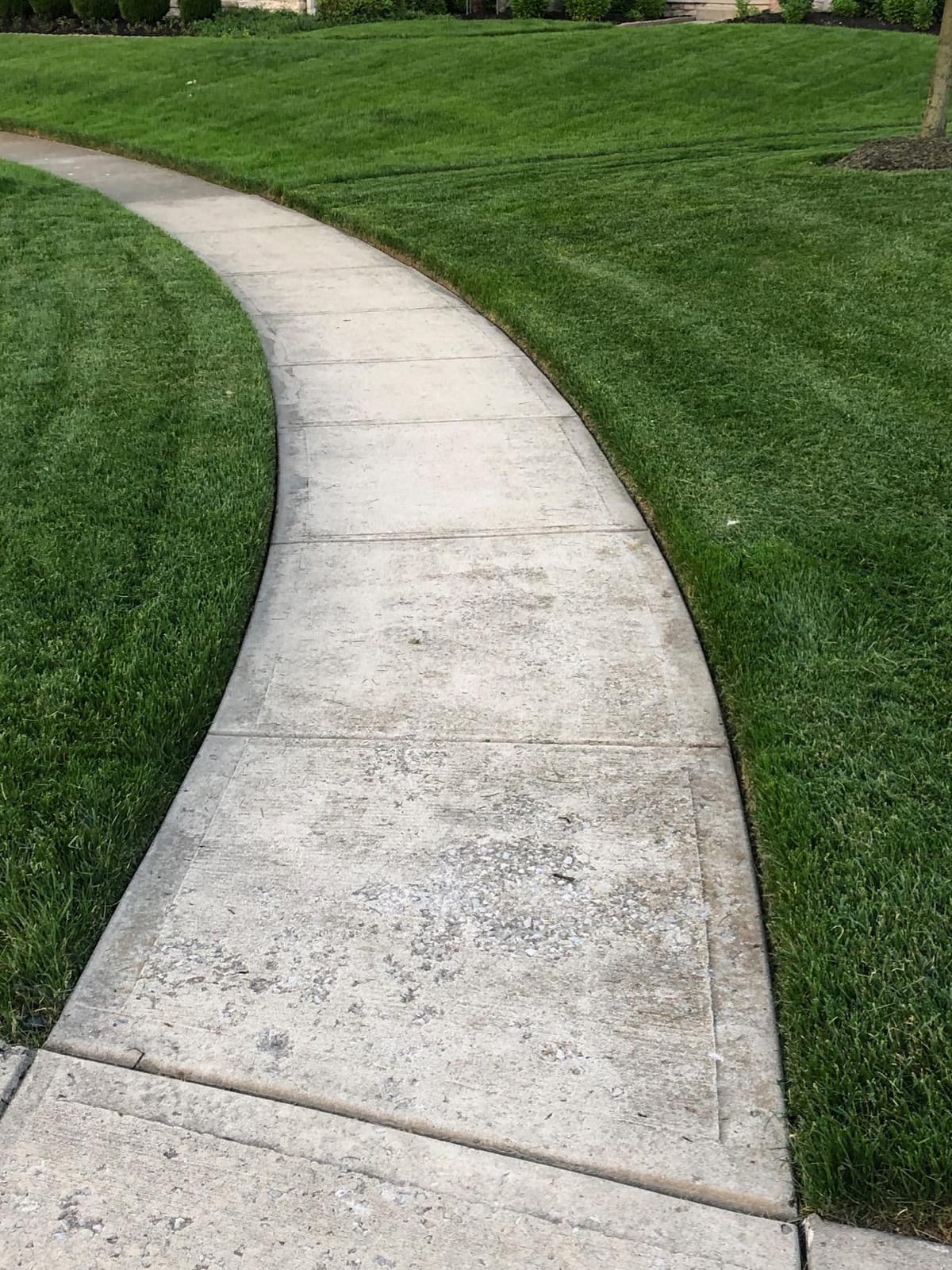
Four wide rubber tires on ball-bearing wheels give it a steady glide and the ability to ride on most curbs, and a single lever handles both the blade clutch and depth control. It is made in the USA and meets established safety standards, which is worth noting for anyone buying used.
I would pair the torque with restraint at a planted bed. Six of the seven available depth positions reach only about 1.5 inch, which is the range to use around perennials. Reserve the seventh for turf removal along a non-planted border.
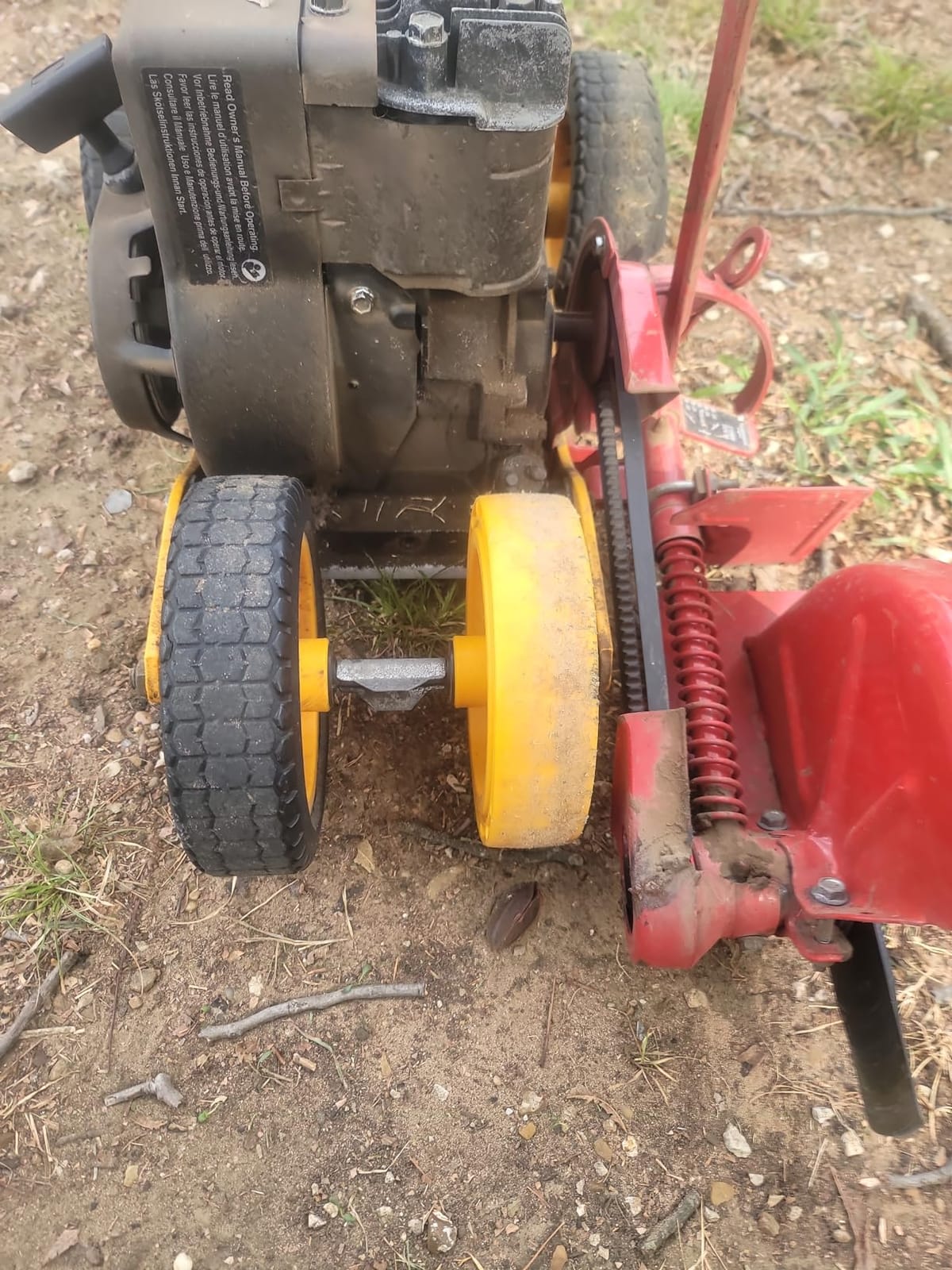
Why professionals reach for it
The all-steel construction and the torque are the two reasons. When a blade gets nicked on a paver or the housing cracks, a steel machine can often be repaired with basic tools rather than replaced, and owners describe keeping these running for decades.
For someone edging large quantities of bed every season, the ability to angle the blade and switch between edging and trimming without changing tools is the quiet productivity win.
Who should not buy it
Ergonomics are the recurring criticism. The heavy steel build is top-heavy next to lighter consumer edgers, the handle length and grip diameter can feel small for tall users, and the oil caps sit at roughly a 30 degree angle that makes oil changes messy.
The muffler housing gets hot enough to burn, the rubber debris flap behind the blade can push cuttings back into the fresh cut, and there is no guide line on the deck. The deepest setting also pulls the machine forward hard enough that you have to hold on, which is another reason to stay in the mid-range settings at a bed.
6. Amazon Basics 12 Amp Corded Edger – Best Budget Step Into Dedicated Edging
- Owners report build quality and durability beyond what the price suggests
- 12 Amp motor has plenty of power for neglected beds
- Double-edged blade handles both sides of a bed border
- Solid and controllable rather than squirly while cutting
- Replacement blades with new lock nuts are readily available
- Blade can loosen and needs retightening with a socket on long first-time jobs
- Guide wheel nut worked loose and replacement is hard to find
- Dirt builds up in the blade cover when edging wet ground
- Top-heavy feel and loud on contact with concrete
The Amazon Basics 12 Amp is the pick if you want a real edging machine rather than a string trimmer with a head, and you want to spend as little as possible doing it. Owners regularly report that the build quality and durability exceed what the price suggests, and the 12 Amp motor has more than enough power for a neglected bed edge.
The 7.5 inch double-edged blade is the reason to choose it over a single-edged design for beds. It handles both sides of a border in one pass, which cuts your time roughly in half on a bed with edging rail or a wall on one side.
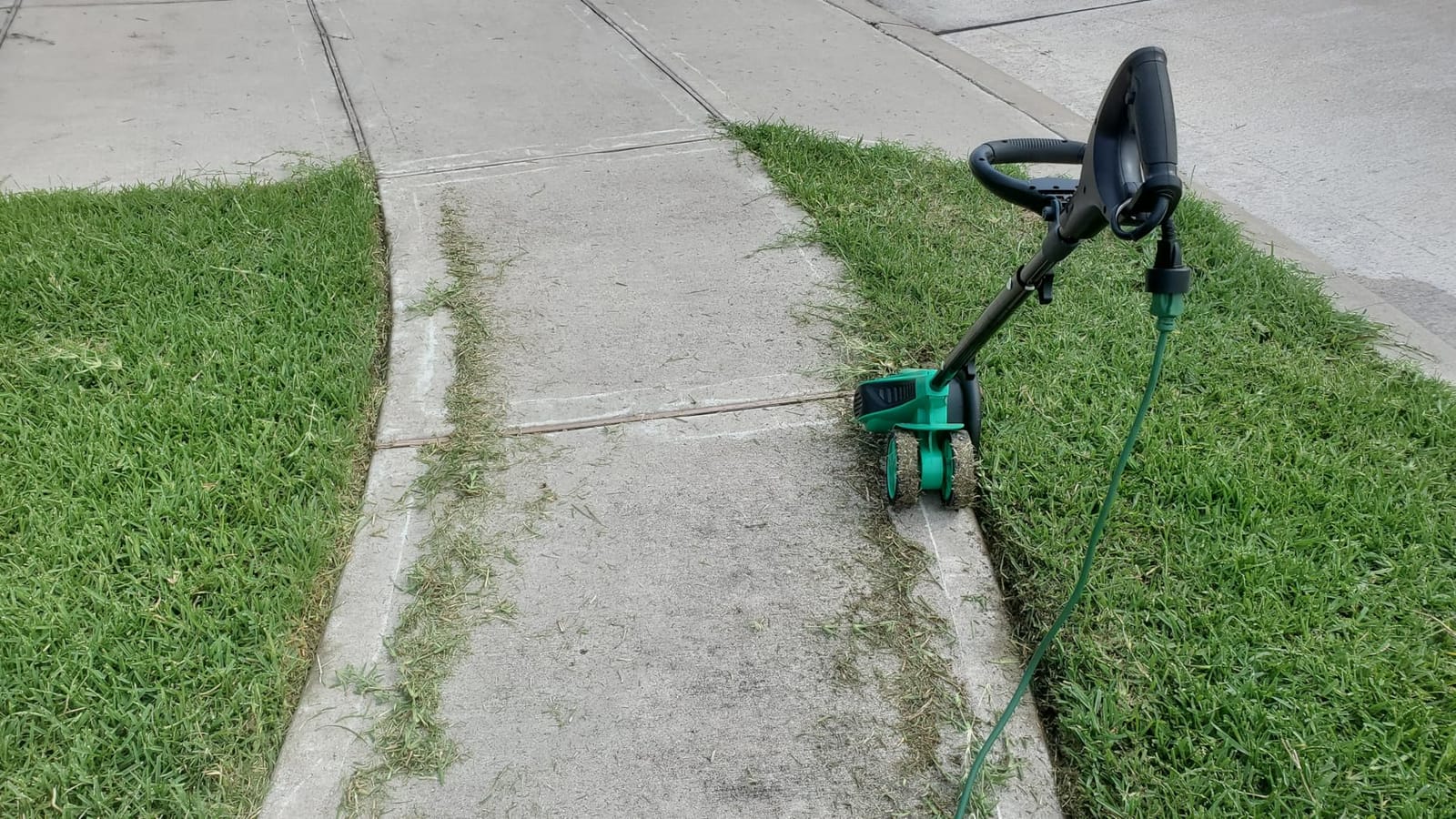
Owners describe it as feeling solid and controllable rather than squirly, and the spring assist front wheel handles depth adjustment smoothly. The eight inch wheels roll over uneven ground better than smaller wheels, and the whole tool doubles as a trencher for burying wire, cable and irrigation lines.
It is covered by a five-year power tool warranty, which is a longer commitment than most machines in this list offer. One practical note: it was previously sold under the Denali brand and is now Amazon Basics, so older review content may reference a different name.
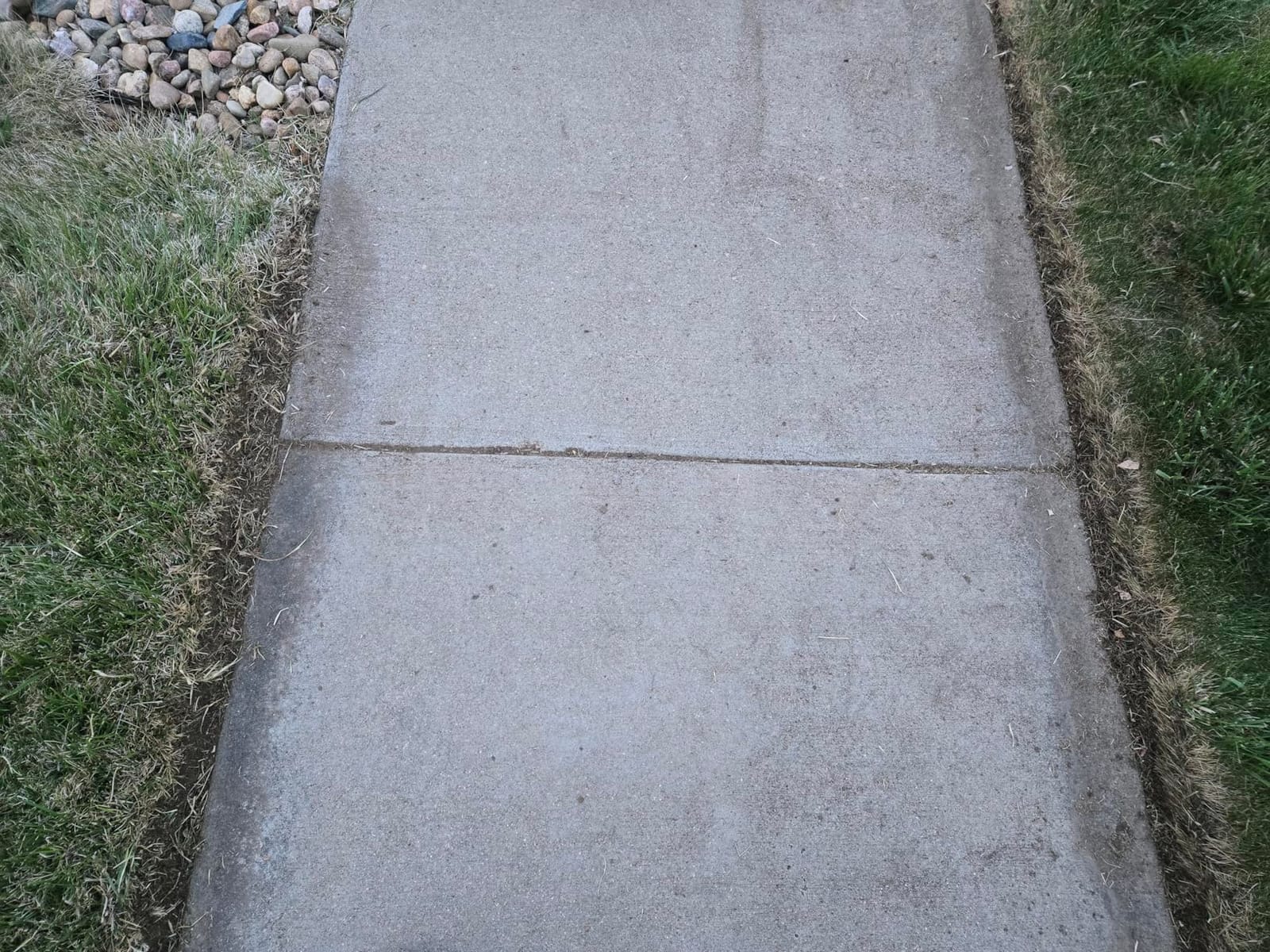
Depth control around shallow plantings
The blade digs to 1.5 inches, which is a sensible ceiling for most flower beds. That is deep enough to remove a root mat in a neglected edge and shallow enough to stay out of the way of established perennial root zones, which typically sit in the top few inches of soil.
Run the spring assist wheel setting on the shallow side for the first pass along a planted bed. You can always come back a second time rather than repairing a sliced root system.
Weak points to plan around
Blade hardware loosening mid-job is the most repeated issue, and the fix is a socket wrench. The guide wheel nut also worked loose for some owners and the replacement is hard to source, so check both at the start of a session.
Dirt builds up in the blade cover when you edge wet ground, and the tool becomes loud and top-heavy when the blade contacts concrete. Keep it out of wet soil and off hardscape edges and the cover stays clear.
7. Greenworks 40V 8 Inch – Best Cordless Pick for Beds Away From an Outlet
Greenworks 40V 8 in Cordless Electric Lawn Edger, 4.0 Ah Battery, Charger
- Brushless motor removes the small-part failures that killed a previous edger
- Strong enough to pull the operator through long-neglected edges
- One owner finished two driveways two sidewalks and a road frontage with charge remaining
- Quiet motor
- No cord to drag and no fuel to store
- Sizing suits users around 5 foot 6
- taller users may find the wheel does not reach the ground
- Blade rotation pulls the tool toward the work and takes practice
- Large 8 inch blade means replacements are needed sooner
- Battery will not charge while hot
For beds that sit away from a power outlet, the Greenworks 40V solves the problem that knocks out every corded machine on the list. The battery and charger are in the box, so there is nothing extra to buy, and at 11.9 pounds it is one of the lighter machines here with real cutting ability.
The brushless motor is the reason owners stay with it. One reviewer switched to it after a previous edger failed on small internal components, and another finished two driveways, two sidewalks and a road frontage and still had charge remaining. The design is also intended for uneven and sloped ground, which is exactly the condition of most bed borders.
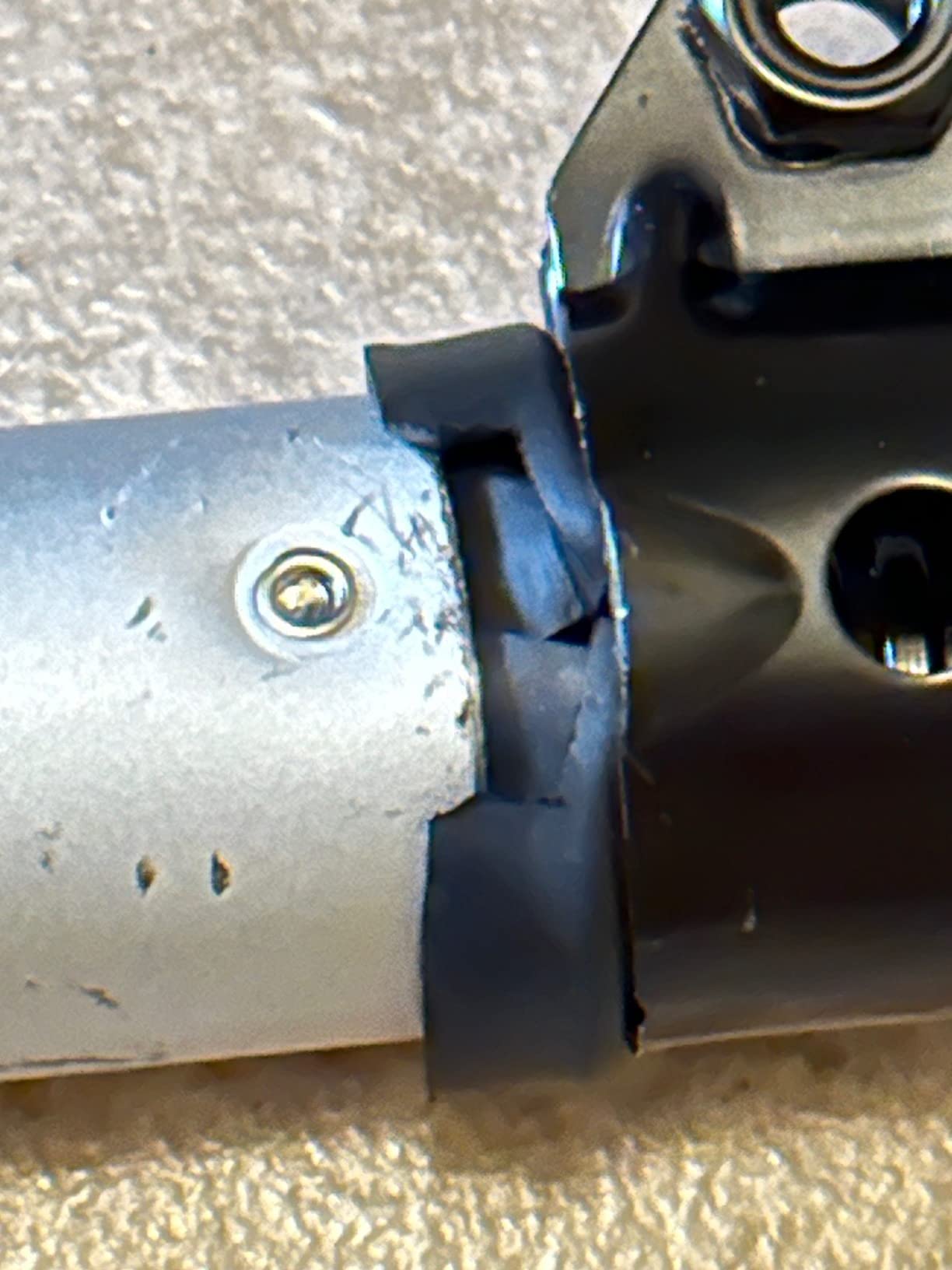
Tool-less cutting depth adjustment means no tools at the start of a job, and a tear-shaped hanger makes it easy to hang on a wall between uses. Owners also note the motor is quiet enough that it does not draw the neighbour complaints that come with gas.
At 4.4 stars from 564 ratings, this sits comfortably in the upper part of the range. The battery platform also has a broad accessory range, so if you already own 40V Greenworks equipment the decision is close to automatic.
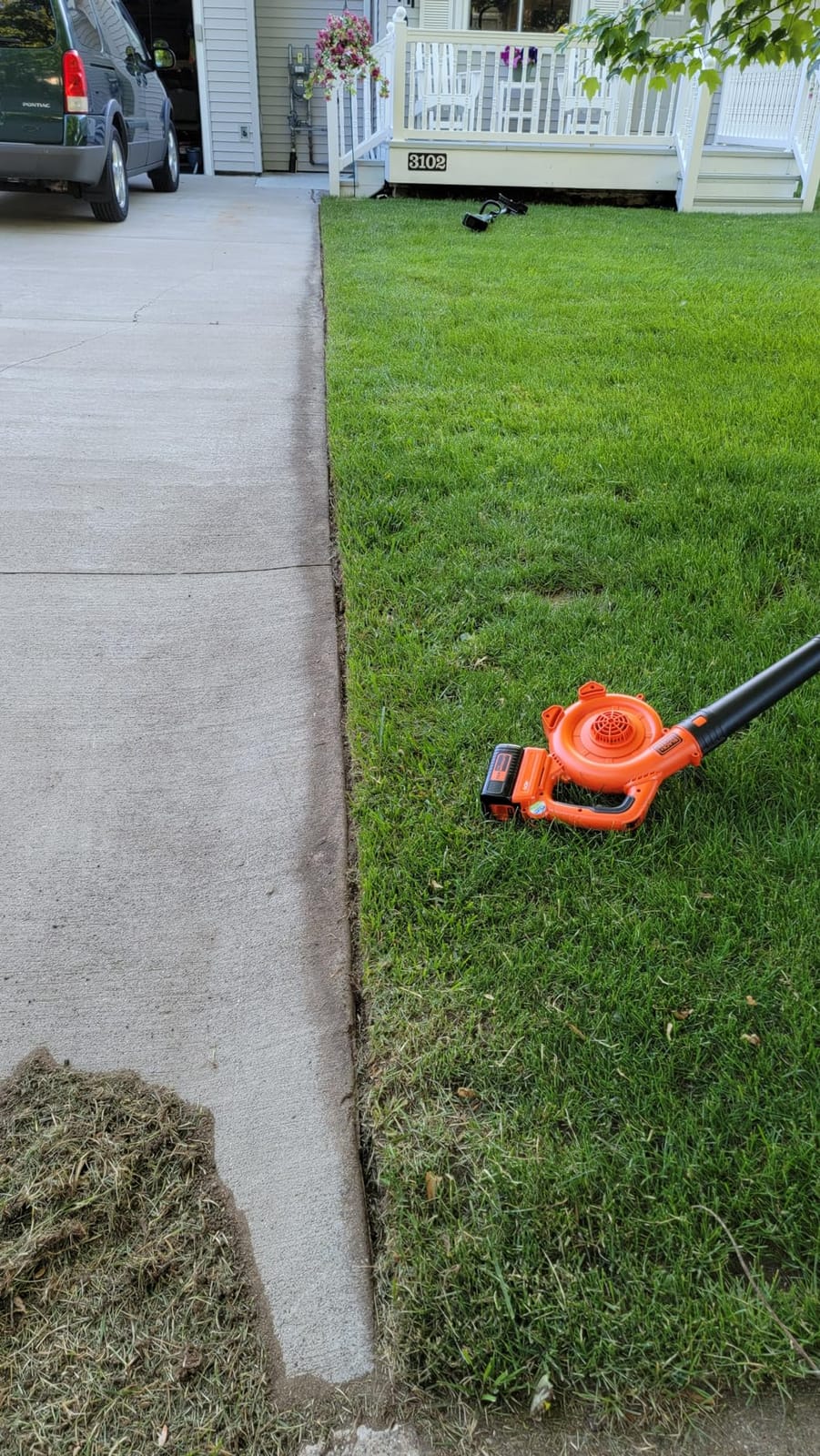
Fit, sizing and the pull of the blade
The most concrete fit note in the reviews concerns height. Owners report the sizing suits users around 5 foot 6, and that taller users may find the wheel does not reach the ground, which is worth checking before you commit if you are on the taller side.
Blade rotation pulls the tool toward the work, so the first few passes take practice. Let the machine come to you rather than pushing into it, and the line will settle quickly.
What to know before buying
The 8 inch blade is large, which covers a lot of edge per pass but means a fresh replacement blade is often needed once you have mastered it. The battery has to be recharged between jobs and it will not charge while hot, so let it cool first.
A small number of owners report the tool browning out and needing a restart under heavy load. That is not the dominant experience, but it is a real report worth knowing about if you plan to cut thick, neglected edges back to soil.
8. Greenworks 60V 8 Inch – Best Cordless Pick for Hardened Edges
Greenworks 60V 8 in Cordless Electric Lawn Edger, 2.0 Ah Battery, Charger
- Plenty of power to cut through thick established edges
- Owners upgrading from gas rate it best in class
- One owner finished 15 to 20 minutes of edging in a fraction of the usual time
- Brushless motor for long life and quiet running
- A short 10 minute top-up usually finishes a job
- Heaviest cordless option here at 19.8 pounds and tiring over long sessions
- Handle attachment screw tightens against the pole rather than threading in
- 2.0Ah battery can die before a large lot is finished
- Blade nut needs tightening multiple times per job
Where the 40V is balanced, the 60V is about raw cutting ability on edges that have been ignored. Owners report plenty of power to cut through thick established edges, and several bought it specifically as an upgrade after years with a gas trimmer. One owner finished 15 to 20 minutes of edging in a fraction of the time that job used to take.
Same brushless motor idea, same 8 inch steel blade, same tool-free depth adjustment. The difference is voltage, and on a bed edge that has turned to a root mat that difference shows immediately.
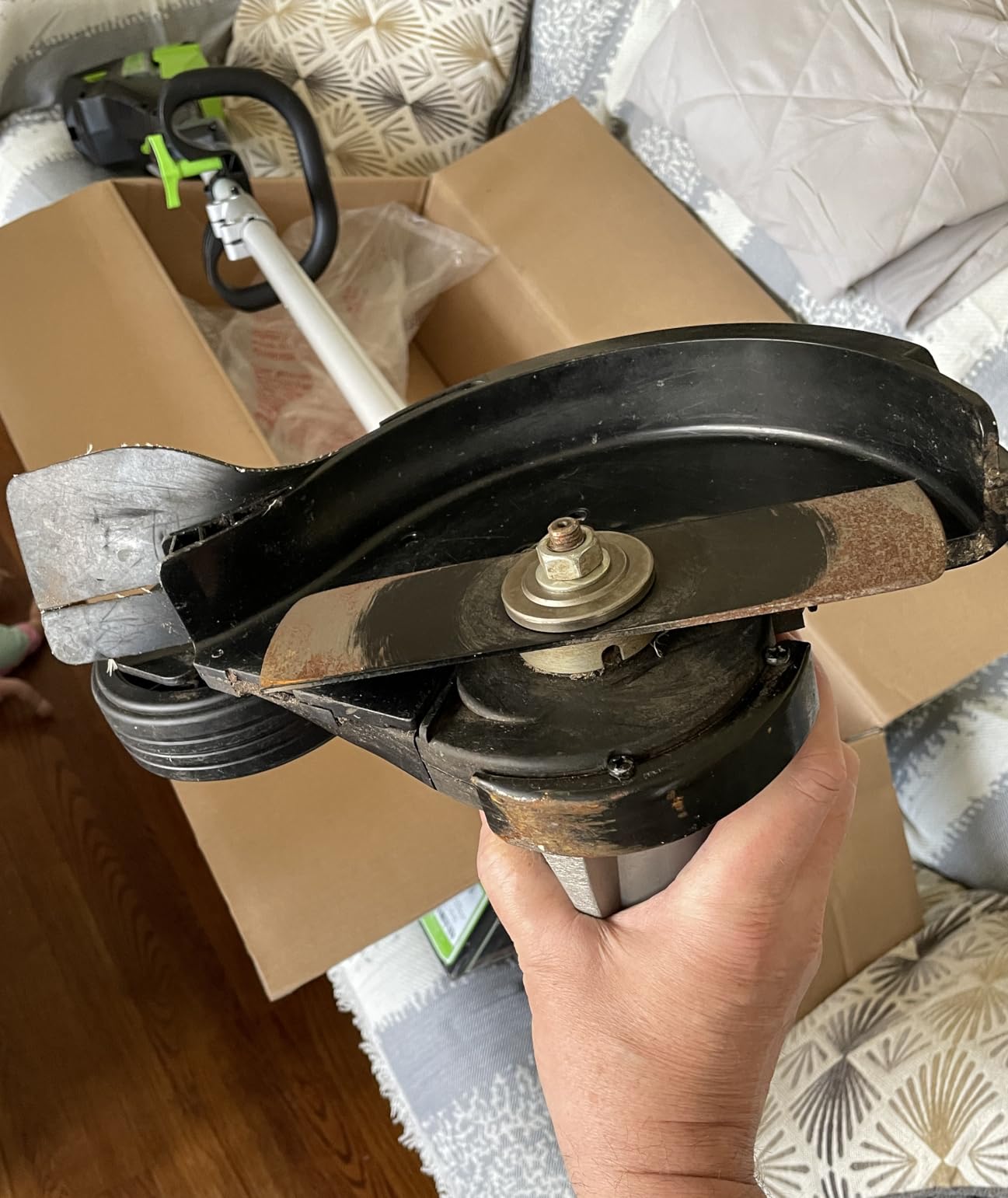
The tool is quieter than a gas machine and there is no fuel to store or mix. A short top-up is usually enough to finish an interrupted job, which makes it forgiving if you run out mid-bed.
It is also newer and less heavily reviewed than the 40V sibling at 181 ratings, so there is less long-term history behind it. The four-year warranty covers tool and battery.
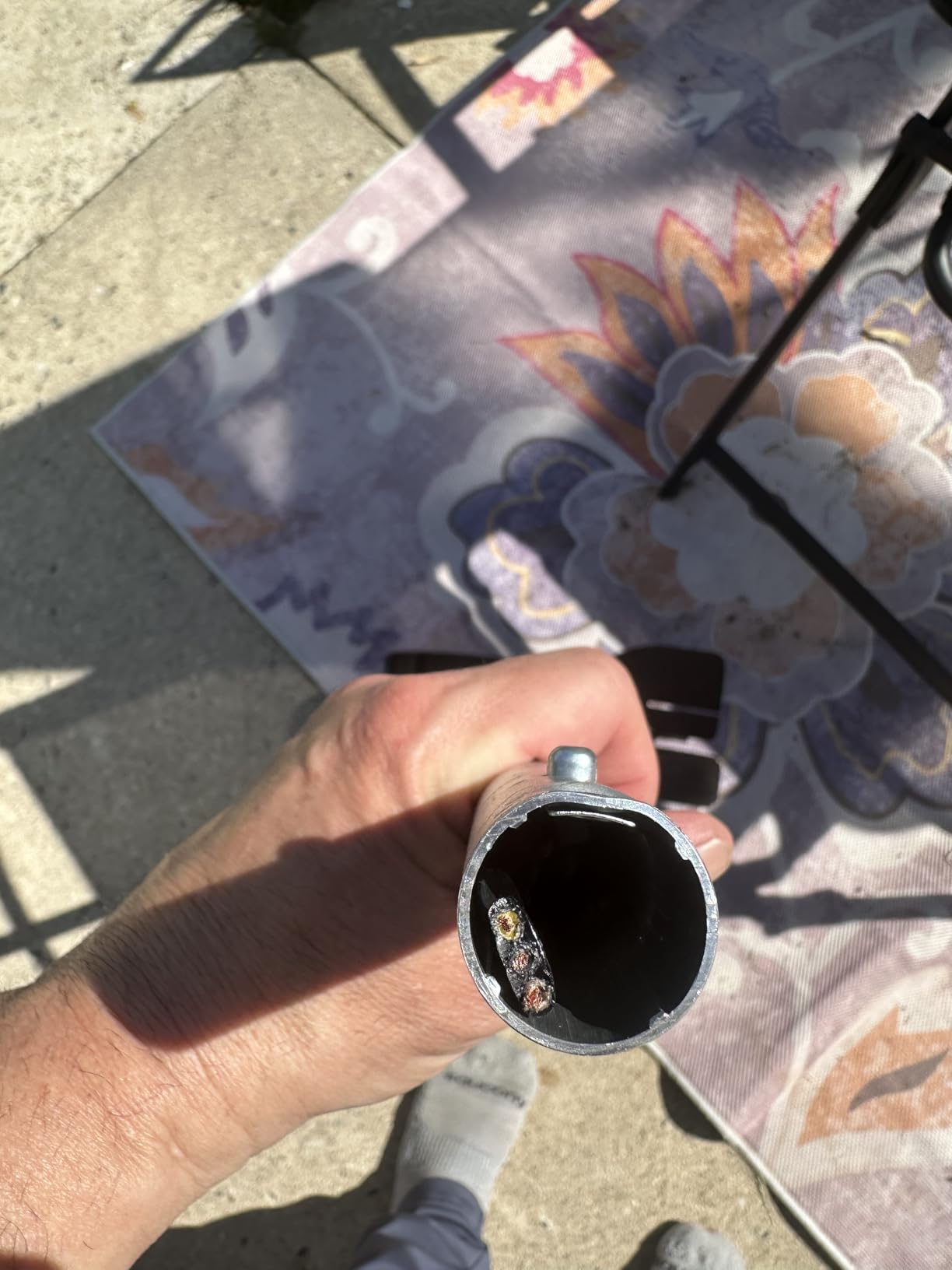
When the extra voltage is worth the weight
If your bed edges are overgrown, compacted, or full of established roots, this is the cordless machine for the job. The 60V platform gives it the torque to hold a cut through hard material rather than bogging, and the brushless motor keeps that torque available as the job goes on.
For a normal maintenance edge, the 40V is the better-balanced choice. Save this one for the reset job.
Honest drawbacks
At 19.8 pounds it is the heaviest cordless option in this guide, and owners report it becoming tiring over long sessions. The included 2.0Ah battery is the smaller of the two capacities on offer, and some owners find it runs out before a large lot is finished.
Two smaller but real issues: the blade nut needs tightening more than once per job, though a tool is included, and the handle attachment screw tightens against the pole rather than threading in, so the handle can twist under load. A small number of the 60V machines had batteries that would not hold a charge.
9. RYOBI ONE+ 18V 9 Inch – Best Wide-Blade Pick for Long Beds
RYOBI ONEAND 18V 9 in. Cordless Battery Edger Tool ONLY P2300BTL
- Widest blade in the set at 9 inches so it covers more edge per pass
- Guiding wheels glide steadily and the depth lever is easy to use
- Plastic cover above the cutting edge helps align the cut path
- Light and well balanced even with a larger 4Ah battery fitted
- Natural addition for existing ONE+ pack owners
- Light duty
- little torque for a first cut in never-edged lawn
- A 1.5Ah battery gives only about 10 to 15 minutes of run time
- Battery fuel gauge faces inward so you must turn the tool over
- Maximum cut depth is just under 1.5 inches
- Some RYOBI tools arrive without a manual
The widest blade in this guide is a genuine advantage when your beds are long rather than numerous. At 9 inches of cutting width, this RYOBI covers more bed edge per pass than any other machine here, and at 10 pounds it stays light and well balanced even with a larger 4Ah battery fitted.
Two guiding wheels keep the glide steady and the cut depth lever system is easy to use, which is the combination that produces a repeatable line once the edge exists. The plastic cover above the cutting edge also acts as a path alignment reference, similar in purpose to the edge guide on the corded machines.
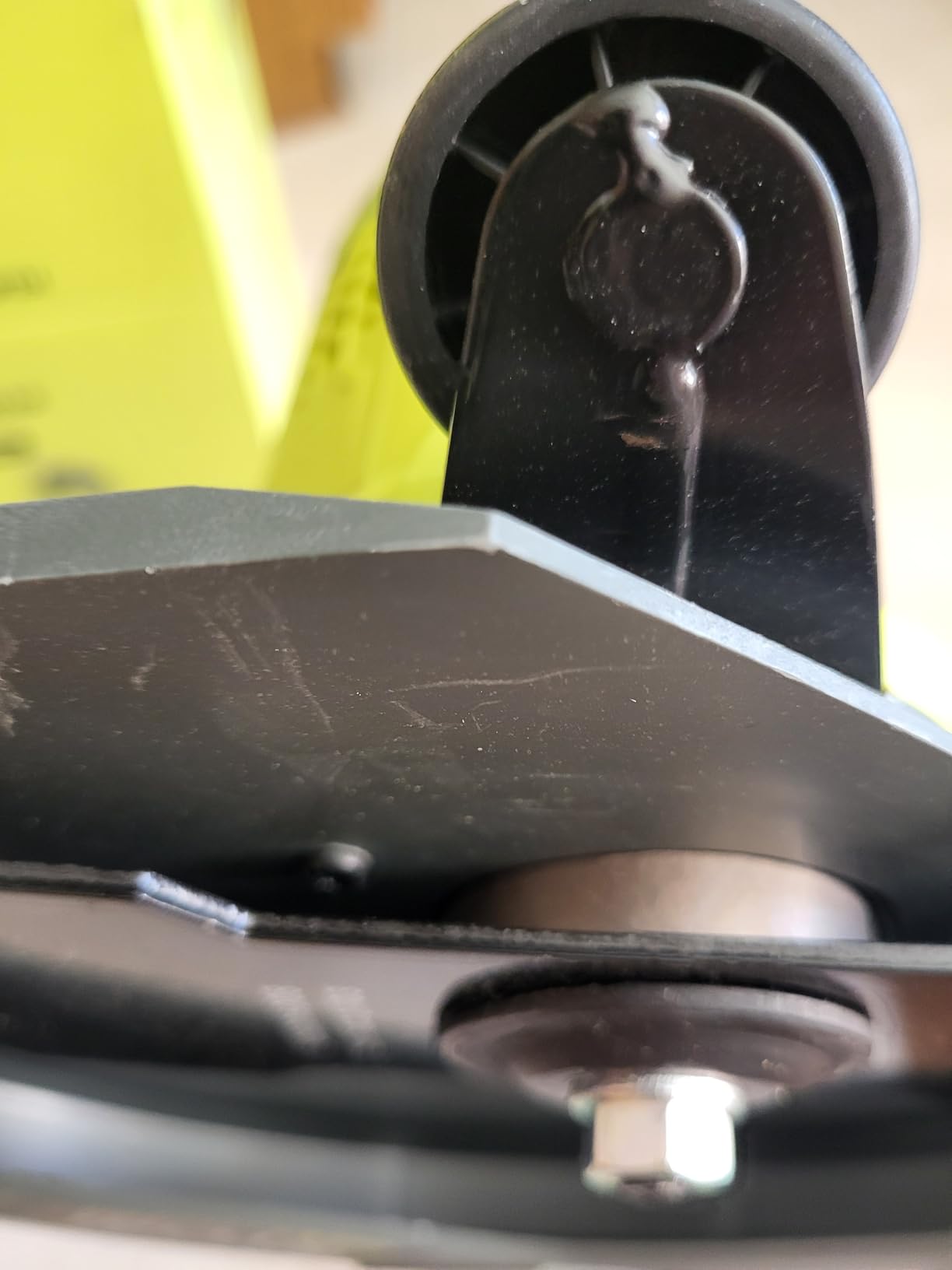
Owners with an existing ONE+ pack collection describe it as a natural platform addition, and it rates 4.5 stars across 627 reviews. The wide blade is the reason it earns its place on this list rather than as another bare-tool option.
Being honest about the limit: this is a maintenance machine, not a reset machine. The maximum cut depth is just under 1.5 inches, which is deliberately conservative and is the right ceiling for a planted bed.
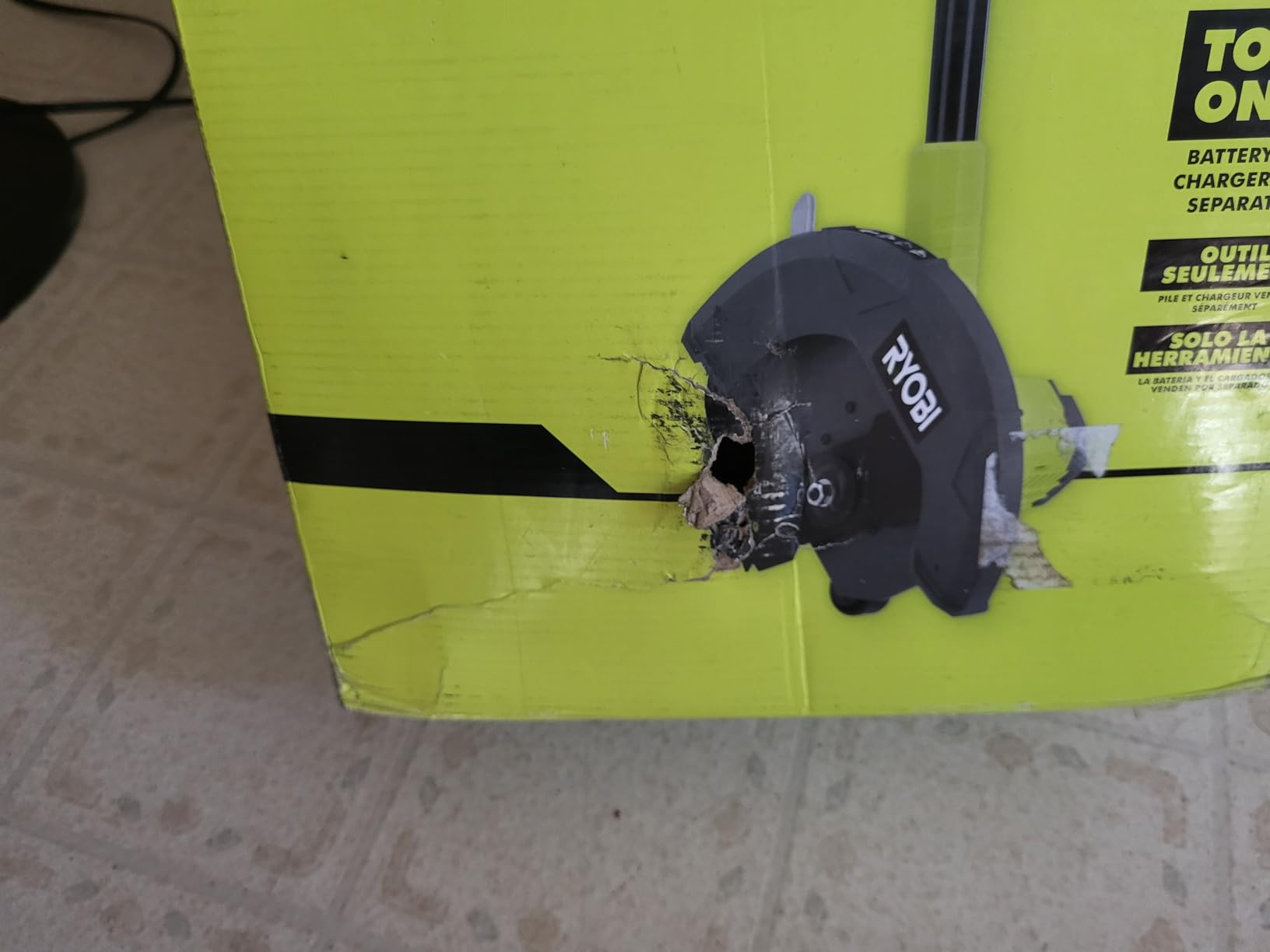
Best for existing edges rather than first cuts
Owners are clear that it does well once an edge is established and struggles on a first cut in never-edged lawn. For a bed you edge every month, that is precisely the situation you are in, and the wide blade makes each pass cheaper.
Use the 9 inch width on straight runs and slow down for curves, where the guiding wheels need a moment to settle into the new angle.
Known limitations
Battery runtime depends heavily on the pack. With a 1.5Ah battery, owners report roughly 10 to 15 minutes of run time, so a 4Ah pack makes far more sense for a full bed perimeter.
The battery fuel gauge faces inward, meaning you have to turn the tool over to check it, and some units arrived without an instruction manual. Low torque for hard ground is the other recurring note.
10. WORX WG898 20V – Best Cordless Cut Depth in This Group
WORX Cordless Lawn Edger, 20V 7″ Trencher for Lawn Border Tending, WG898
- Brushless motor delivers gas-comparable power with up to 2800 ft per charge
- One owner edged over 850 feet and finished with 85 percent charge remaining
- Deepest cut in the set at 2 inches
- Only 7 pounds without the battery
- Telescopic shaft adjusts and collapses for storage
- Supplied blade arrived blunt on at least one machine and the mounting bolt was very tight
- Spare blades are a different configuration and not a direct drop-in
- Assembly instructions described as useless and one arrived missing a handle screw
- May need a second pass through very thick grass
The WG898 is the cordless machine here that can actually go deep. Three cutting depth positions at 1.5 inch, 1.75 inch and 2 inch give it the deepest cut in this group, which matters if you are re-establishing a bed line that has been taken over by turf rather than simply tidying an existing edge.
The high-torque brushless motor runs at 5000 rpm and the brand claims up to 2800 feet of edging per charge. One owner edged over 850 feet of driveway and road frontage and finished with 85 percent of the charge remaining, which is a far better result than most cordless claims in this category.
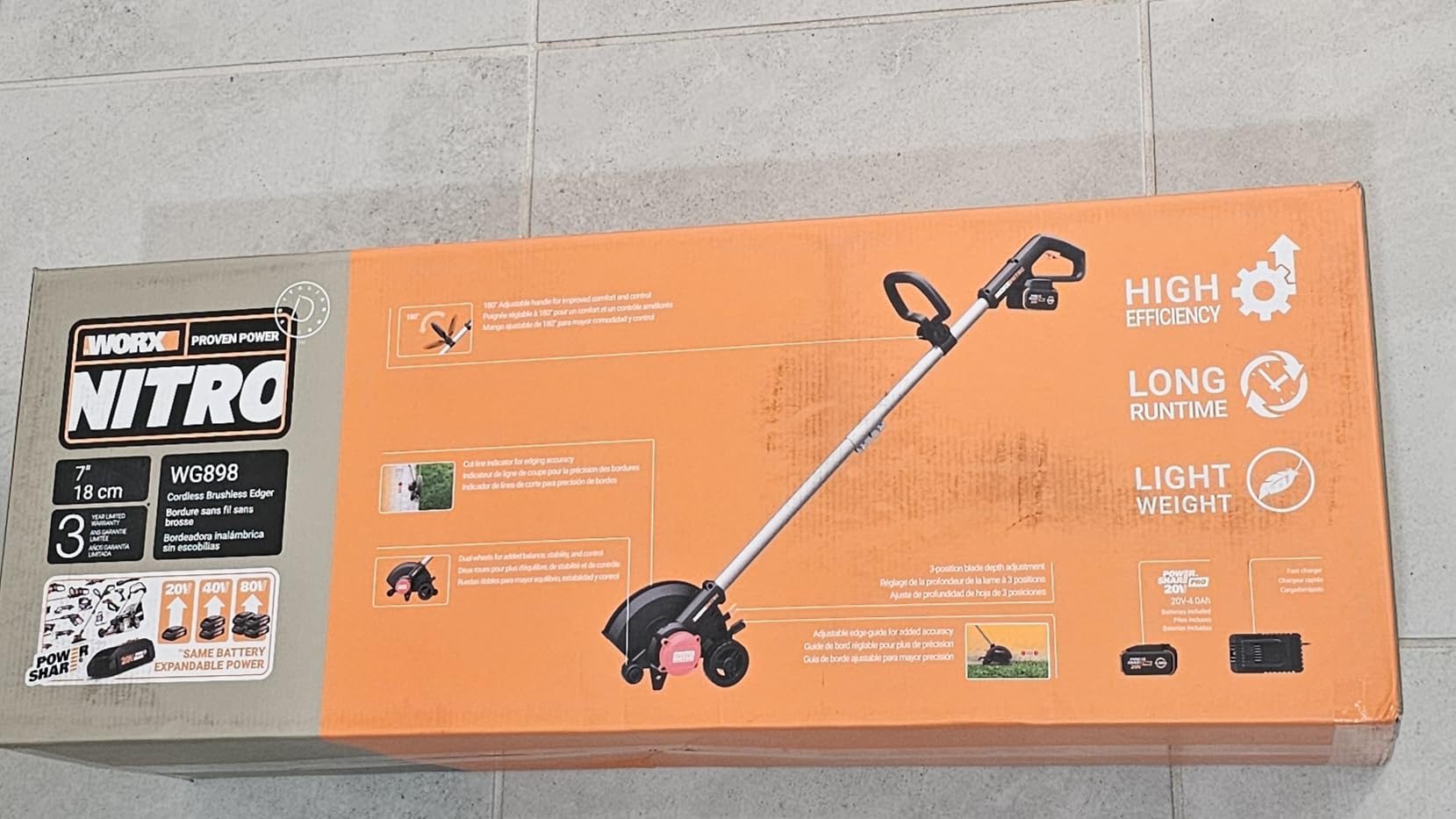
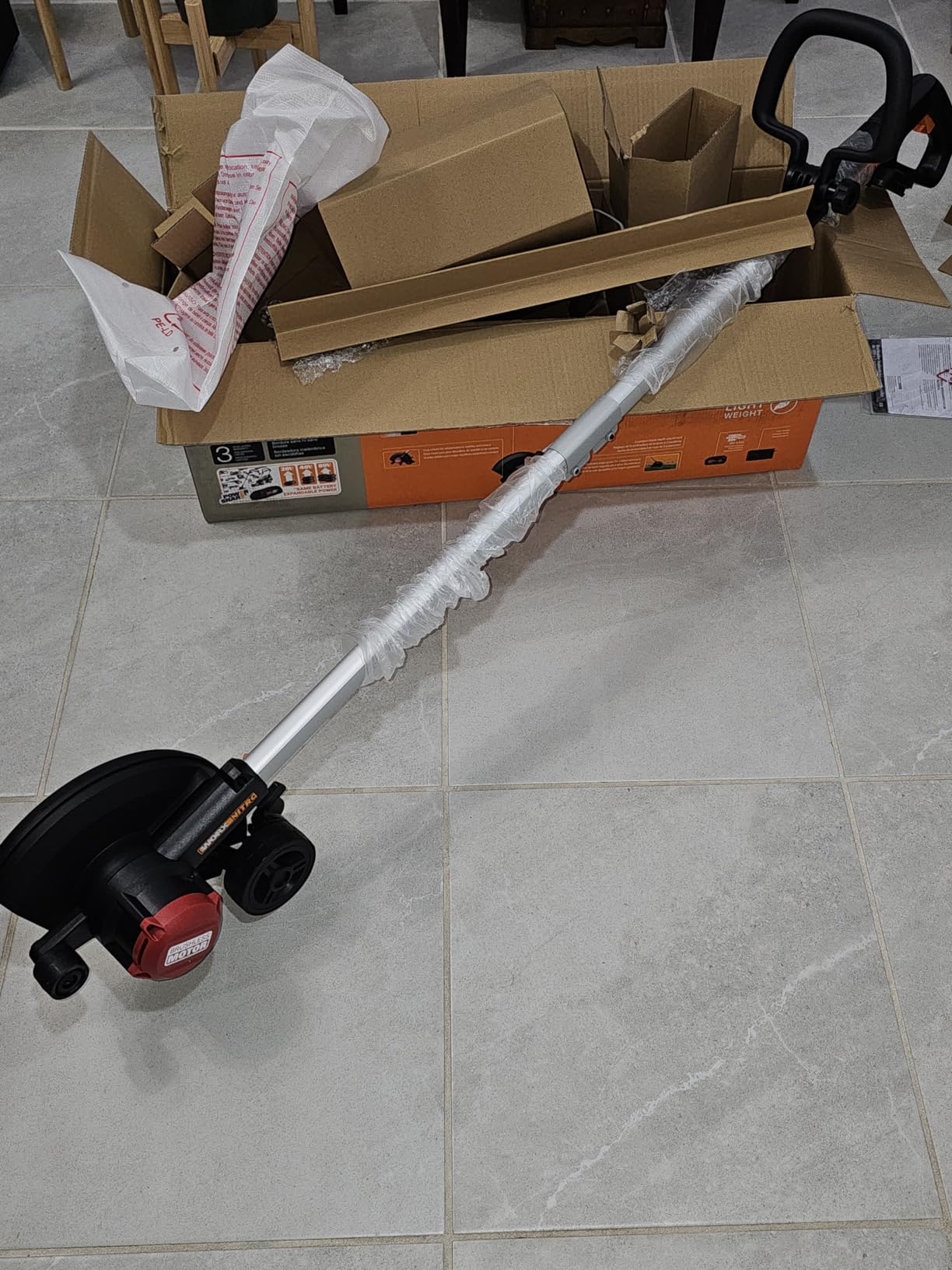
It weighs 7 pounds without the battery, the lightest tool-only figure in this list, and the telescopic shaft adjusts to your height and collapses for wall storage. The edge guide and blade indicator help you follow a sidewalk consistently, and a dual-wheel stabilising design keeps it honest on curves.
The box is unusually complete: edger, 4.0Ah battery, charger, blade, hex key and wrench. The Power Share battery also works with other WORX 20V tools and selected 40V and 80V tools.
Depth control and what it means at a bed
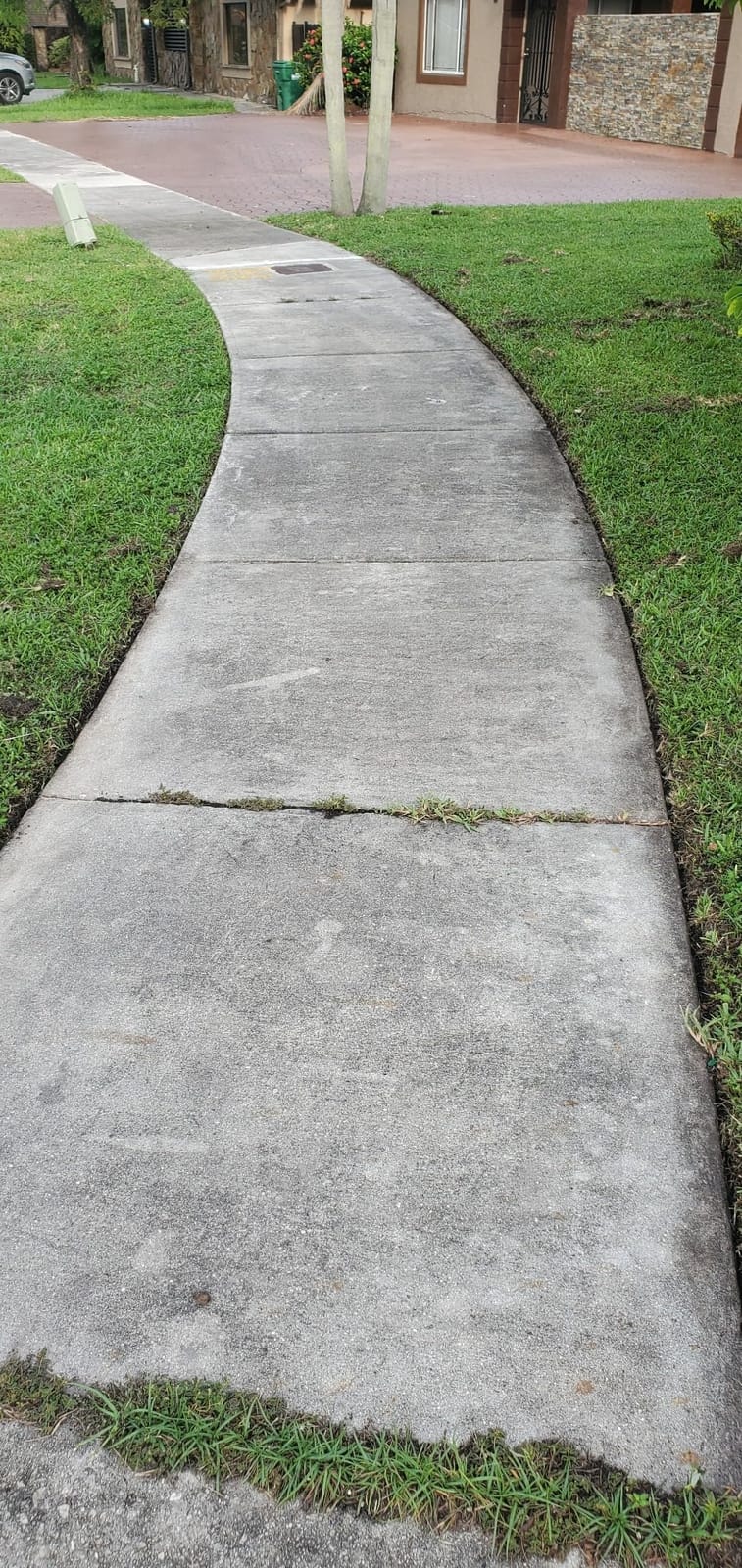
Two inches is deep enough to get under a root mat and reset the border, which no other cordless machine in this list can do. That is the machine to reach for when the grass has crossed the line and the bed edge no longer exists visually.
On a planted bed, start at 1.5 inch. The 2 inch setting is a turf removal setting, not a routine bed setting, and it is the one most likely to take a bite out of a root mass.
Quality control issues to expect
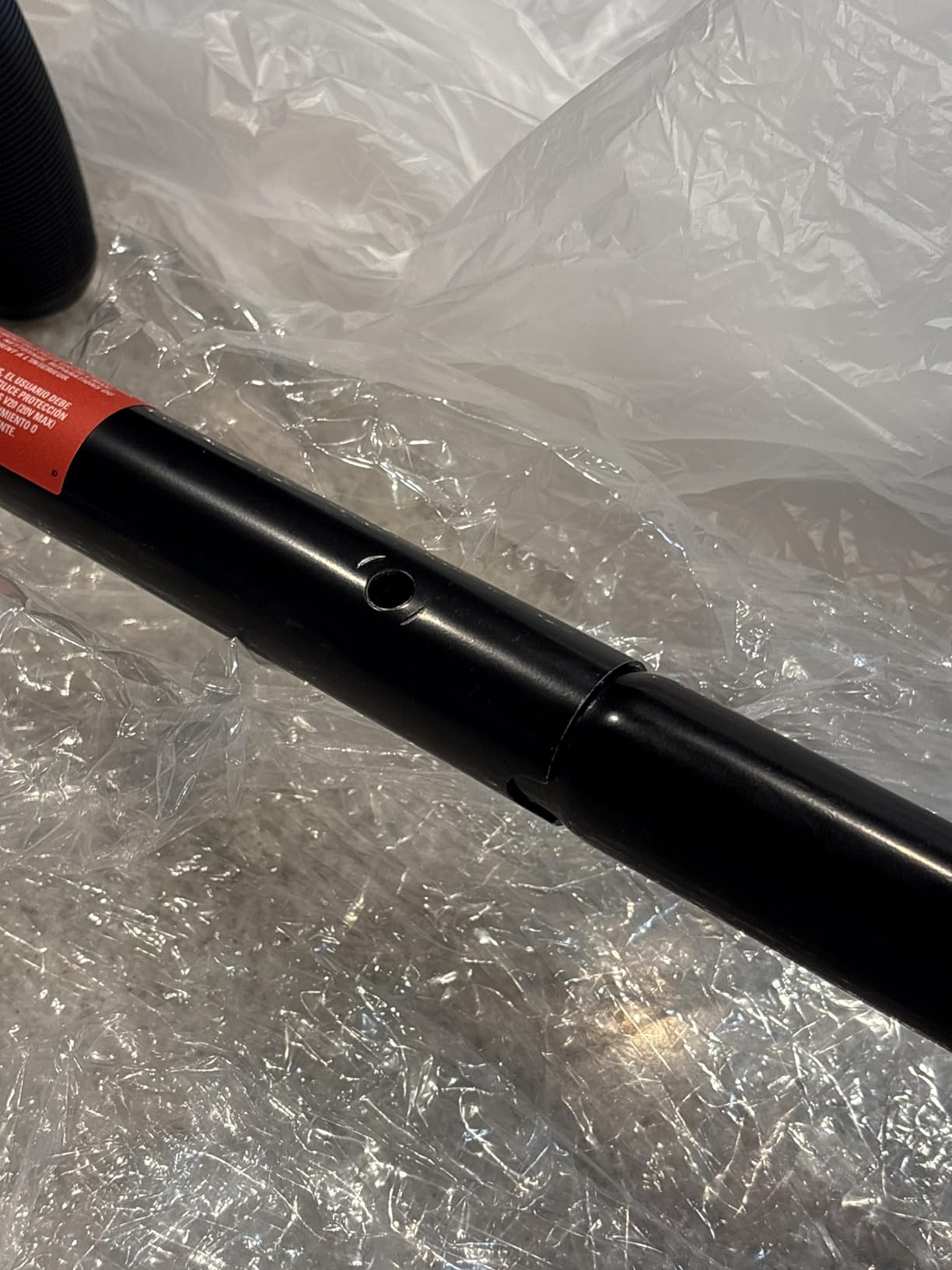
The negative reviews cluster on assembly and blade hardware. At least one unit arrived with a blunt blade and a mounting bolt that was extremely tight to remove, spare blades are a different configuration rather than a direct drop-in, and one owner reported a missing handle screw.
Owners also note it may need a second pass through very thick grass. Check the blade tightness before the first pass, not after, and this behaves like a much more expensive machine.
11. CRAFTSMAN 20V MAX – Best Lightweight Pick for Joints and Backs
- Lightest kit in the set at 8 pounds and owners with back problems credit it
- Integrated edge guide produces professional-looking lines on a first cut
- Folding handle for easy storage
- V20 battery shares with the rest of your CRAFTSMAN collection
- Battery charger and blade all in the box
- Included 2.0Ah battery gives about 10 minutes or 10 feet of edging per charge
- Weak on hard ground and badly overgrown edges
- Some owners report the battery overheating within about 5 minutes
- Professionals or heavy edging workloads are better served by gas or higher voltage
At 8 pounds for the whole kit, this is the lightest complete set we looked at, and owners with back problems specifically credit it with making edging possible again. If you already struggle with a heavier machine, that single fact outweighs most of what follows.
The integrated edge guide is the feature that makes the cut look professional on a first attempt, because it registers the blade against a fixed reference instead of leaving it to your eye. Owners also like the folding handle for storage and the integrated hook for VERSATRACK wall mounting.
The V20 2.0Ah battery is the same platform used across the rest of the CRAFTSMAN outdoor range and power tools, so if you own any of it this becomes a cheap addition to an existing battery collection. The kit includes the edger, battery, charger and edging blade.
At 4.0 stars from 749 ratings, the score is honest rather than glowing, and the reason is almost entirely the battery rather than the tool.
Best for a small bed and a short session
For a handful of beds that need a monthly tidy, the 8 pound weight and integrated guide make this the least tiring way to keep a line. Owners downsizing to a smaller property rate it as good value for exactly that use.
The manufacturer claims up to 1000 feet of edging per charge, but treat that as a best case. Plan for the opposite reality and you will not be caught out.
What the reviews actually say
The overriding criticism is the undersized included battery. Owners report about 10 minutes or roughly 10 feet of edging before a recharge is needed, and some report the battery overheating within about 5 minutes and taking days to recover. Several owners recommend buying a larger 4.0Ah pack or the bare tool instead.
It is also weak on hard ground and badly overgrown edges. For a first-time cut in a neglected bed, choose something with more voltage.
12. VEVOR 12 Amp 8 Inch – Best Corded Pick for Taller Users
- Dual-wheel guide and pivoting handle keep lines straight and consistent
- Three depth settings from 1 inch to 1.5 inch
- 12 Amp motor handles long-neglected edges and tangled roots
- Lightweight at 10.62 pounds and tall enough to reduce bending
- 65Mn high-carbon steel blade and steel tube frame resist flexing
- Corded AC power limits reach for beds far from an outlet
- Lower 4.1 star average than the other picks reflecting more mixed experiences
The VEVOR is a spec-led pick, and the spec that stands out is the 55.12 inch overall height. That extra length is a deliberate design choice to reduce bending, and it is the clearest answer in this group for anyone who found the shorter machines uncomfortable or who found that their guide wheel did not reach the ground.
It weighs 10.62 pounds, which is light for a steel-frame machine, and the steel tube construction resists the flexing common in cheaper edgers. The blade is 65Mn high-carbon steel, which owners describe as hard and tough, and the 8 inch width covers ground quickly.
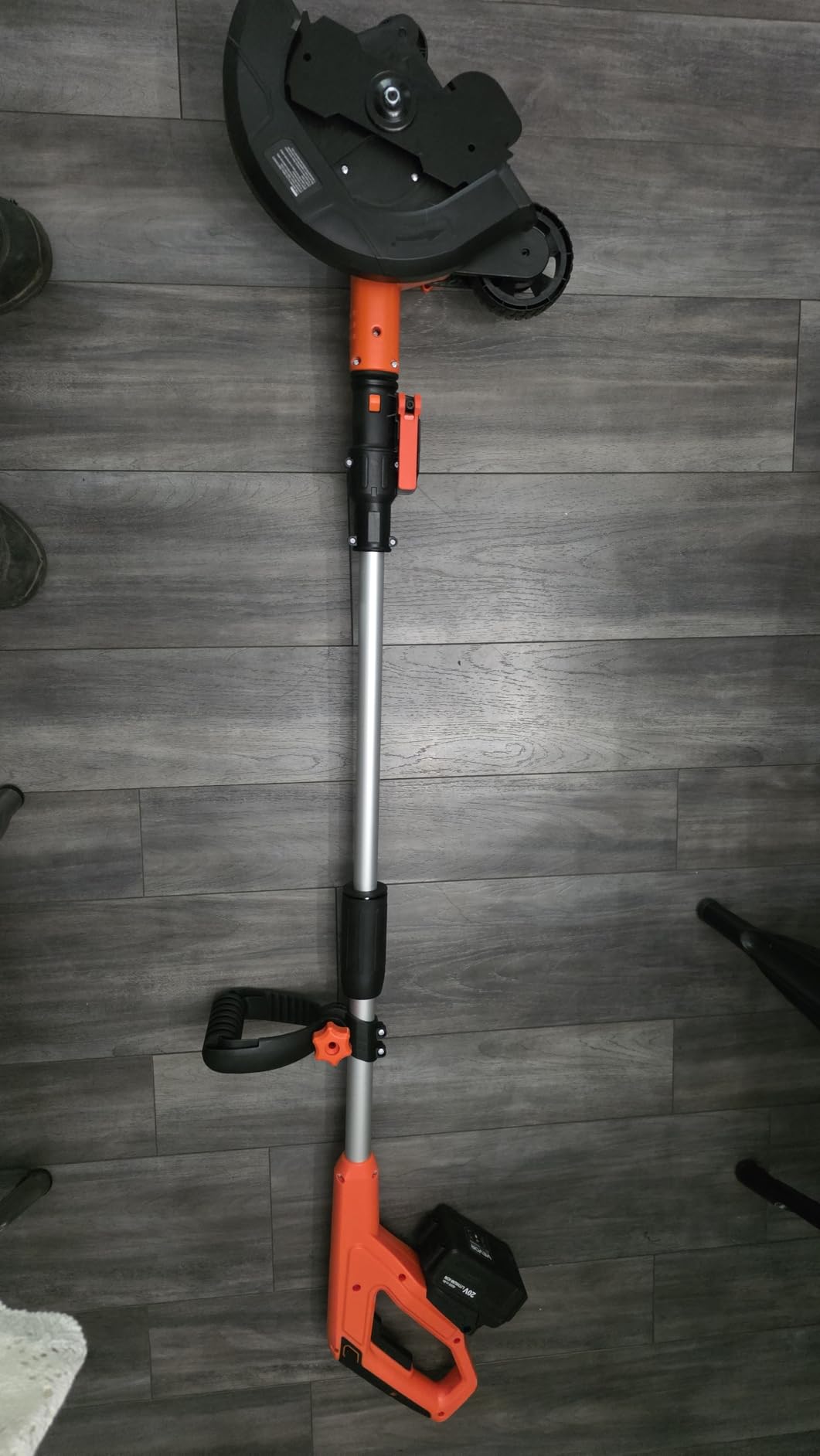
The dual-wheel guide and pivoting handle are what keep the line straight and consistent, and the pivoting head is useful when a bed edge wanders rather than running straight. Three cutting depth settings at 1 inch, 1.25 inch and 1.5 inch cover both light touch-ups and deeper bed work.
The 12 Amp motor handles long-neglected edges and tangled root areas, and the non-slip ergonomic handle is a sensible addition for a tool that will be held with two hands.
Why height matters more than it sounds
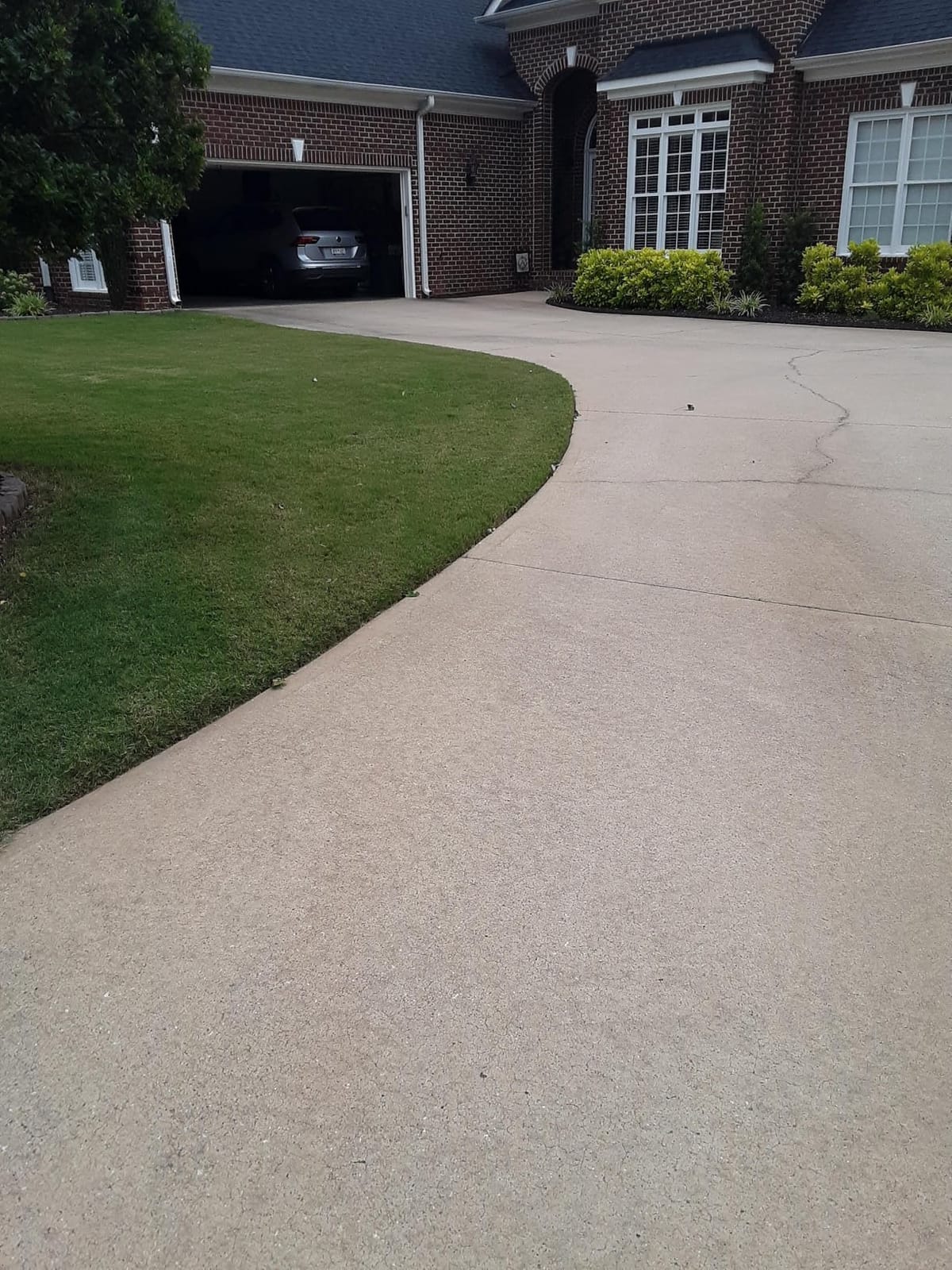
Most edger complaints about a wheel that will not reach the ground are height problems wearing a different name. A longer shaft puts the cutting head in the same plane as the operator’s natural arm position and reduces the hunch that turns a 30 minute job into a backache.
At 55.12 inches with an 8 inch blade, this machine is set up for someone who would otherwise be bending over the work. That is a real, testable difference rather than a comfort claim.
Where it falls short
Corded AC power limits the reach for beds far from an outlet, which is the same constraint as every other corded machine here. The 4.1 star average is the lowest in this group, which reflects more mixed experiences overall rather than one dominant fault.
It is also a brushed rather than brushless motor at up to 4000 RPM, so it makes more noise under load than the brushless cordless models. If you want quiet, look at the Greenworks options instead.
What Is a Walk-Behind Edger and Why Flower Beds Are Different
A walk-behind edger is a wheeled machine with a vertically mounted steel blade under a cutting head. You push it forward along the border between turf and a bed, and the spinning blade bites into the soil and lifts out a narrow trench of sod and dirt, leaving a clean vertical wall where there used to be a soft fade between grass and bed. A guide wheel and a front stabilising wheel keep the blade square to the line you are walking.
Flower beds are the demanding case, and the reason is not the machine. It is the geometry. A lawn edge is a long, straight, forgiving line. A bed edge is short, interrupted by plants, often curved, and bordered by soil you have already planted into. Cutting depth stops being a convenience setting and becomes a risk, because the difference between removing a grass mat and severing a perennial root is a fraction of an inch.
That is also why the machines in this guide are not all true walk-behinds. A stick edger does the same job with fewer wheels and a much smaller footprint, which is easier in a two-foot bed and harder to keep straight over a hundred feet of driveway. The wheeled machines win on long straight runs and on hardened soil. The sticks win everywhere else, including most flower beds.
Do You Actually Need a Walk-Behind Edger?
You probably do not, and the honest answer here is worth more than another list item. On r/lawncare the prevailing view among experienced users is that if you are already comfortable with a string trimmer, a separate edger is often a luxury rather than a necessity. That objection is correct for a small yard with two short beds, and no machine in this guide will change it.
What changes the answer is the workload. A walk-behind earns its place when you have long visible edges, a first-time bed line where turf has to actually be removed rather than trimmed, or a back or shoulder that will not tolerate holding a stick edger for a full session. Owners in the forums also make the outcome argument: a proper edger is worth the money for anyone who takes pride in the line, because no trimmer trick reproduces that vertical wall.
A practical middle path works well. Use a walk-behind in spring to set every edge for the season, then use a stick edger for in-season touch-ups. One owner in our testing cut 400 feet of driveway with the McLane in a single session, then spent the rest of the summer walking behind a lighter tool along the same line.
How to Choose a Walk-Behind Edger for Beds
Power source is the first filter because it eliminates more machines than any other spec. Corded electric gives unlimited run time and consistent power, and it is the best choice when a bed sits within a cord length of an outlet. Cordless gives you reach and quiet operation, and the 40V and 60V Greenworks machines now cut deep enough for most bed work. Gas gives you the deepest cut and the longest run time, and it is the only sensible option if you are clearing overgrown edges in compacted soil.
Blade width comes next. A 7.5 inch blade is more precise next to plants and narrower to steer, which is the right trade at a bed. A 9 inch blade covers more edge per pass and is better on long straight runs. Tooth style matters as well: a serrated blade pulls material in and bites into a root mat, while a plain two-tipped blade is smoother on established, cleanly cut edges.
Wheel geometry decides how you handle curves. Three-wheel designs turn tighter and follow a curve more easily, which is the deciding factor on an irregular bed. Four-wheel machines, like the Earthquake 41273 and the McLane, resist wobble and hold a straight line over a long run, but they fight you on a curve. If your beds are mostly straight, prioritise stability. If they are mostly curved, prioritise a small footprint and a pivoting head.
Cutting depth range is the last filter and the most important one for plants. The safe ceiling at a perennial bed is about 1.5 inch, because most herbaceous perennial roots sit in the top few inches of soil. Anything that reaches 2 to 2.5 inches is a turf removal setting for a neglected edge, not a routine setting around planting. A machine with more depth positions gives you finer control on the way down than a machine with three coarse settings.
Finally, consider the frictions owners actually hit. Assembly time is the top complaint on gas walk-behinds, blade torque is the top complaint on several corded models, and arriving with an uncharged battery is cited repeatedly as a top frustration. Check the blade hardware at the start of every job, keep a spare battery charged, and budget an afternoon for the first assembly if you are buying gas.
How to Edge Flower Beds Without Damaging Your Plants
Yes, you can use an edger around flower beds, and doing it well comes down to depth and sequence. The answer in one line: set the shallowest cutting depth, run the blade on the soil side of the line, and never go deeper than about 1.5 inch within a foot of a plant crown.
Trim before you edge, never the other way around. Mowing high first means the blade meets short grass rather than a tall curtain that can fold the machine and leave a ragged line. If you edge and then mow, the mower will re-cut the edge you just defined and undo the work.
Walk the machine with the blade positioned on the bed side of the boundary, cutting away from the planting. Cutting toward the bed means the blade travels into the root zone and lifts soil out of the bed rather than out of the turf.
Collect the debris before you walk the line a second time. Sliced sod and soil left in the trench will settle back and spoil the clean wall, and on a bed with mulch the clippings end up back in the bed anyway.
Take a second pass at the same depth rather than one pass at the deepest setting. Two shallow passes remove the same material with a fraction of the shock to roots, and they are much easier to control on a curve.
For shallow-rooted perennials, mums, lavender and most annual bedding, stay at or under 1 inch for the routine monthly pass. Save 1.5 inch and deeper for sod-free edges, walkway lines and the one-time reset of an overgrown border.
Frequently Asked Questions
What is the best walk-behind lawn edger?
The best walk-behind lawn edger for most homeowners is the BLACK+DECKER LE760FF, a 12 Amp corded machine with a 7.5 inch blade, three depth positions and an edge guide. It holds a straight line on a first-time bed edge, weighs 14.1 pounds, includes a spare blade and has 3955 owner reviews averaging 4.5 stars. For long straight borders and hardened soil, the EARTHQUAKE 41273 with its 79cc 4-cycle engine and ten depth positions to 2.5 inches is harder to beat.
Can you use an edger around flower beds?
Yes, and most flower bed work is safer with a stick edger than with a wide walk-behind. Set the shallowest depth setting, keep the blade on the soil side of the line so it cuts away from the planting, and stay at or under 1 inch for shallow-rooted perennials and 1.5 inches at most within a foot of a plant crown. Trim high first, edge second, clear the clippings, then take a second shallow pass instead of one deep one.
Which battery-powered lawn edger is the best?
Among the cordless picks here, the Greenworks 40V 8 inch is the strongest all-round option, with a brushless motor, an 8 inch steel blade, tool-less depth adjustment, an included 4.0Ah battery and charger, and 4.4 stars from 564 ratings. For the deepest cut on battery, the WORX WG898 reaches 2 inches with a brushless motor and a 4.0Ah pack. If you already own 18V ONE+ packs, the RYOBI 22cm produces the cleanest edges on that platform.
How deep should I cut when edging a flower bed?
About 1 inch for routine maintenance around shallow-rooted perennials and annuals, and no more than 1.5 inches within roughly a foot of a plant crown. Depths of 2 to 2.5 inches are turf removal settings for a neglected border that has to be reset, not routine bed settings. Most machines in this guide reach 1.5 inches, and the ones that go deeper are built for removing sod rather than trimming an existing edge.
Is a walk-behind edger worth it for a small yard?
For a small yard with two or three short beds, often not. Experienced users on r/lawncare generally argue that anyone comfortable with a string trimmer can maintain an edge without a separate machine, and that is usually true. A walk-behind earns its place with long visible edges, a first-time bed line where turf must be removed, or a back or shoulder that cannot tolerate holding a stick edger for a full session. A practical compromise is to use the walk-behind in spring and a stick edger for in-season touch-ups.
Can a string trimmer be used for edging?
You can flip the head and use the string, but you will not get the vertical wall a blade leaves. A string laid against the bed border shaves the overhang and bends grass rather than cutting it, so the edge softens within days and the line is never truly clean. A dedicated edger with a steel blade removes a strip of sod and soil, which is what stops turf from regrowing into the bed. For large areas, an in-ground sp edging strip is the only option that does this without a machine.
Conclusion
After working through all 12 machines, the BLACK+DECKER LE760FF is our pick for the best walk behind edgers for flower beds. Its 12 Amp motor, 7.5 inch blade, edge guide and included spare blade make it the most dependable option for a normal bed, and the 3955 reviews at 4.5 stars say the machine delivers on its claims. The EARTHQUAKE 41273 is the answer for long straight borders and hardened soil, and the RYOBI 18V ONE+ 22cm is the one to buy if you already own that platform.
The number one piece of advice is simpler than any of these machines. Set the depth shallow, keep the blade on the soil side of the line, and take two light passes instead of one heavy one. Get that right and the best walk behind edger for flower beds in 2026 is simply the one you can control in your own yard. Check current details for any of these machines before you buy, and pick a time when the grass is dry.