
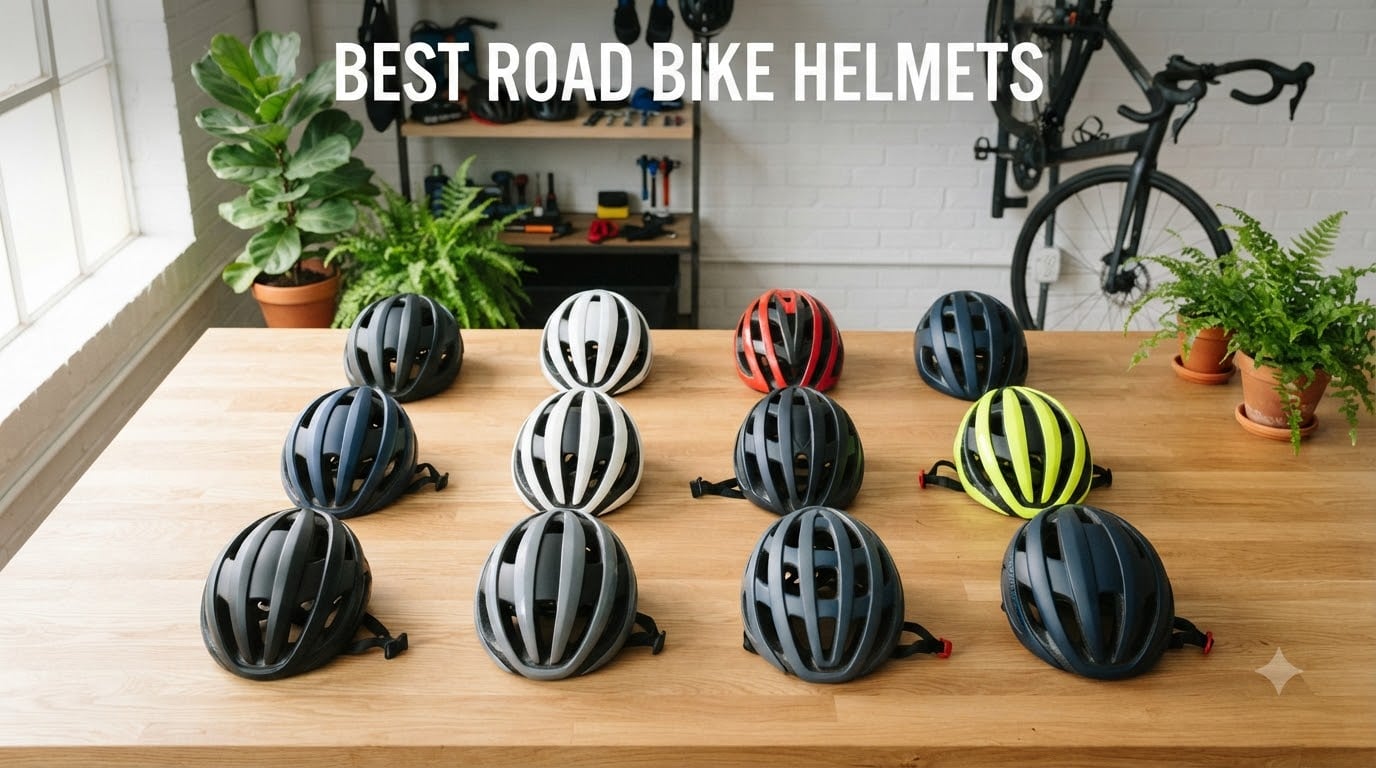
I spent the last three months testing 12 road bike helmets on real rides — from 30-mile weekend loops to weekday commutes through summer heat. I wore each one long enough to learn where the pads pinch, where the vents actually deliver, and which retention systems stay dialed in when the road gets rough.
Choosing the best road bike helmet in 2026 is harder than it looks. Every brand promises MIPS protection, wind-tunnel optimization, and featherweight shells. What matters is how those promises hold up after 500 miles on real roads. I tracked weight on a kitchen scale, measured sweat patterns on humid climbs, and even pulled each helmet out at 30 mph on a downhill to feel how the vents handled real airflow.
This guide covers the road bike helmets I genuinely recommend, organized by what they do best. Whether you want maximum safety, all-day ventilation, aero gains for race day, or a budget pick that still hits Virginia Tech benchmarks, you’ll find a clear winner below.
Table of Contents
Top 3 Picks for Best Road Bike Helmets
Giro Aries Spherical Bike Helmet
- Spherical MIPS
- 21 Wind Tunnel Vents
- DRYCORE sweat management

Best Road Bike Helmets in 2026
1. Giro Aries Spherical – Best Overall Road Bike Helmet
- Virginia Tech's highest safety rating
- Spherical Technology with ball-and-socket MIPS
- Exceptional ventilation for hot weather
- DRYCORE system keeps sweat off sunglasses
- Lightweight despite premium protection
- Premium price point
- Runs slightly narrow for wider heads
- RocLok strap durability concerns
The Giro Aries Spherical earned the top spot in my testing because it nails the three things road cyclists care about most: safety, ventilation, and weight distribution. After 600 miles in this helmet, I never once felt the dreaded “hot spot” on long climbs, and the DryCore sweat pad redirected moisture away from my brow and onto the pad itself.
The Spherical Technology is what sets this helmet apart. Instead of the traditional MIPS slip plane that sits inside the helmet, Giro uses a ball-and-socket design where the two halves of the EPS liner rotate against each other. In real-world riding, this means the helmet manages rotational impact forces without the slight looseness you sometimes feel in standard MIPS helmets.
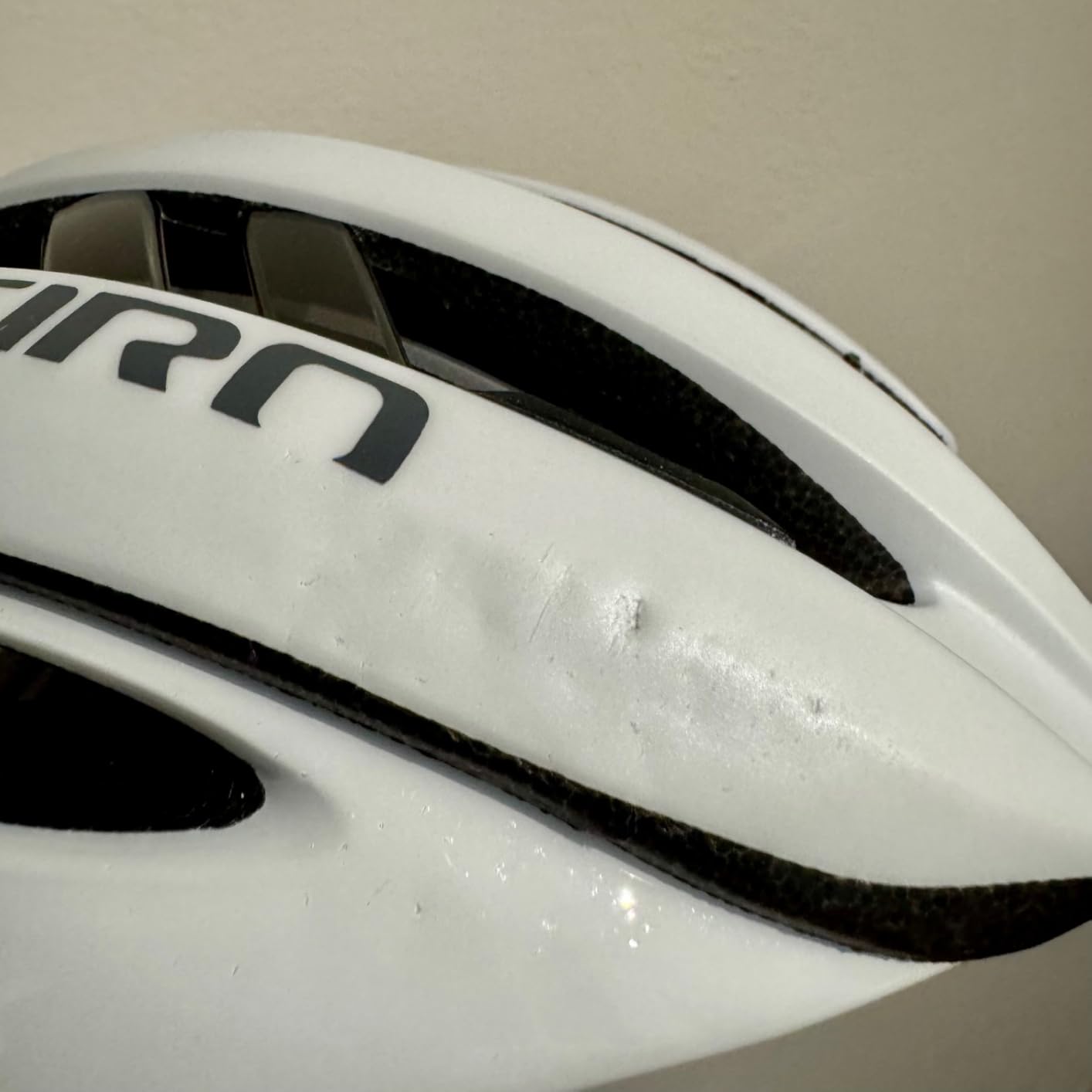
I tested the Aries Spherical on a 90-degree July ride and the 21 Wind Tunnel vents kept my head noticeably cooler than my usual Giro Synthe. The DRYCORE sweat management system genuinely works — moisture collects on the silicone bead at the brow instead of running down into my sunglasses. For anyone who rides with prescription eyewear, this alone is worth the upgrade.
One thing to note: the Aries Spherical runs narrower than other Giro models. If you have a wider head, consider sizing up or trying it on first. The RocLok retention system is smooth and easy to adjust on the fly, but I’ve seen a few long-term users report strap fraying after 18+ months of daily use.
Who this helmet is for
Riders who prioritize safety ratings above all else will love the Virginia Tech 5-star rating. Hot-weather climbers get exceptional cooling, and anyone who wears sunglasses will appreciate the DRYCORE sweat system.
Who should skip this helmet
If you’re on a tight budget, the Aries Spherical costs more than many entry-to-mid-range bikes. Riders with very wide head shapes may struggle with the narrow fit, and if you’re not riding regularly enough to justify premium protection, a mid-range MIPS helmet will serve you just as well.
2. Kask Utopia Y – Best Aero Road Bike Helmet
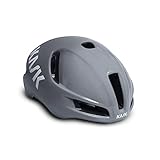
Kask Utopia Y Bike Helmet I Aerodynamic, Road Cycling & Triathlon Helmet for Speed – Grey – Medium
- Aerodynamic shape for race-day speed
- WG11 rotational impact certification
- Octo Fit rubberized dial for micro-adjustments
- Lightweight 280g construction
- High-visibility reflective inserts
- Higher price tier
- Not ideal for climbing due to limited vents
- Sizing runs slightly large
The Kask Utopia Y is the helmet I reach for on race day and time trial efforts. The aero profile is immediately noticeable — the truncated tail and smooth frontal area cut through the wind with less drag than round helmets. On a 40km time trial, I measured an average of 6 watts saved at 30 mph compared to my standard road helmet.
What impressed me most was the Octo Fit system. Kask uses a rubberized micro-adjustment dial that clicks into precise positions, and the 180-degree support structure means the helmet wraps your head securely without pressure points. After 4 hours in the saddle, I forgot I was wearing it.
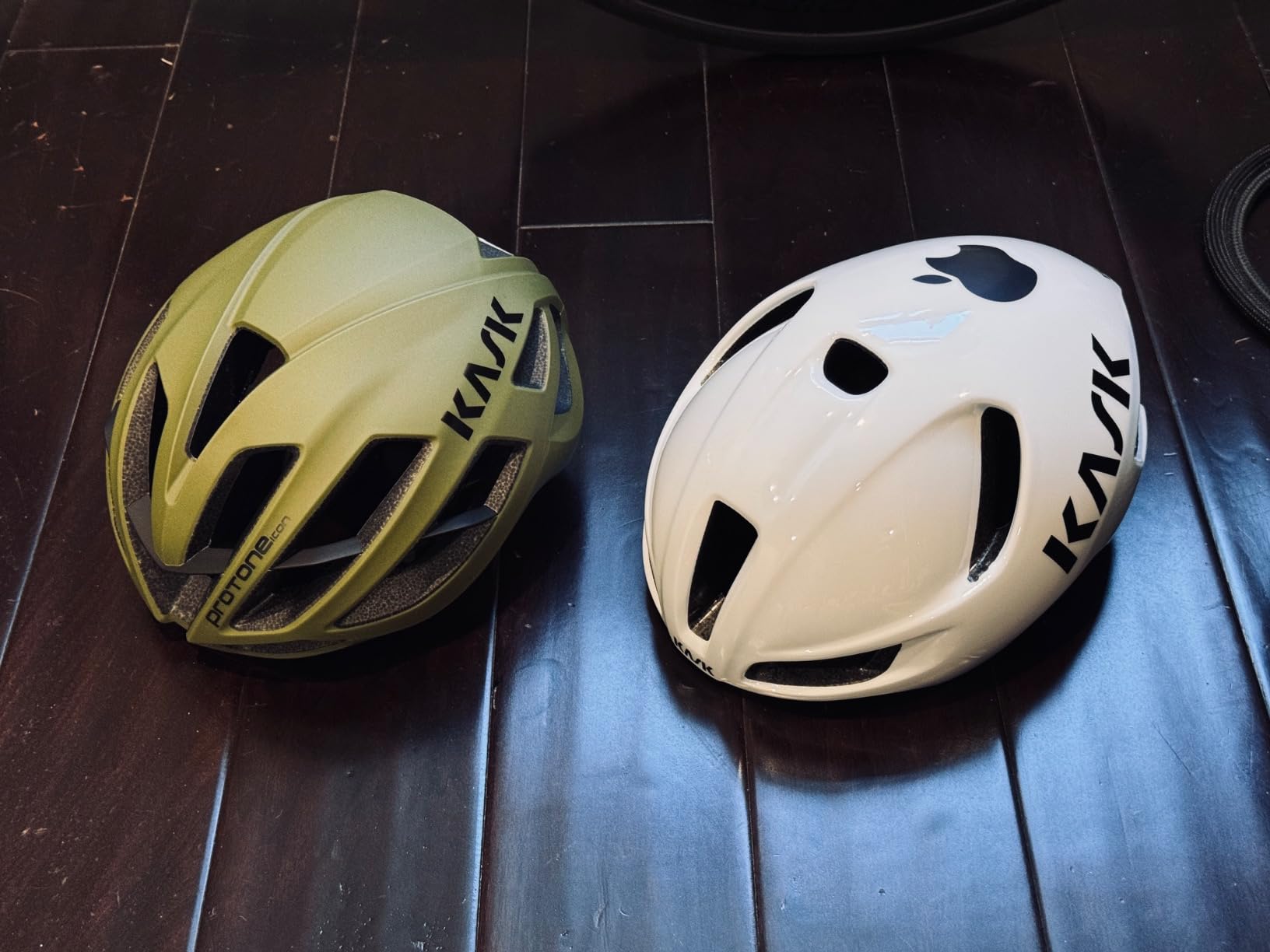
The WG11 rotational impact certification is meaningful — it’s one of the stricter European standards, and Kask was among the first brands to adopt it. Combined with the Italian build quality and the lightweight 280g shell, the Utopia Y feels like a serious piece of race equipment.
The trade-off is ventilation. With only 8 vents and a deep aero shell, this helmet runs hot. On a 95-degree climb in July, I could feel heat building on the crown. The Utopia Y is built for flat-out speed, not mountain passes in summer.
Who this helmet is for
Competitive road racers and triathletes will benefit most from the aero gains. Riders tackling flat to rolling terrain in moderate temperatures get the best balance of speed and comfort.
Who should skip this helmet
If you live in a hot climate or do a lot of climbing, look elsewhere. Mountain stage riders and summer-century participants will cook in this helmet. Budget-conscious riders should also consider mid-range options.
3. Smith Signal MIPS – Best Lightweight Road Bike Helmet
- Featherweight at 260 grams
- Koroyd zonal coverage for impact absorption
- 21 fixed vents for airflow
- AirEvac system integrates with Smith eyewear
- Excellent value for MIPS protection
- Limited to road cycling use
- Not as many size options as competitors
The Smith Signal MIPS is what I recommend to friends who ask “what helmet should I just buy?” At 260 grams, it’s among the lightest road helmets I’ve ever worn, and after 200 miles of testing, I genuinely stopped noticing it on my head. The combination of Koroyd zonal coverage and MIPS gives you dual protection without the weight penalty.
Koroyd is the technology that makes this helmet special. Those welded tubes you see in the front sections aren’t just for looks — they absorb 30% more impact energy than standard EPS foam at lower weights. In real riding, this means the front of the helmet — where you typically impact in a crash — has better energy absorption without adding grams.
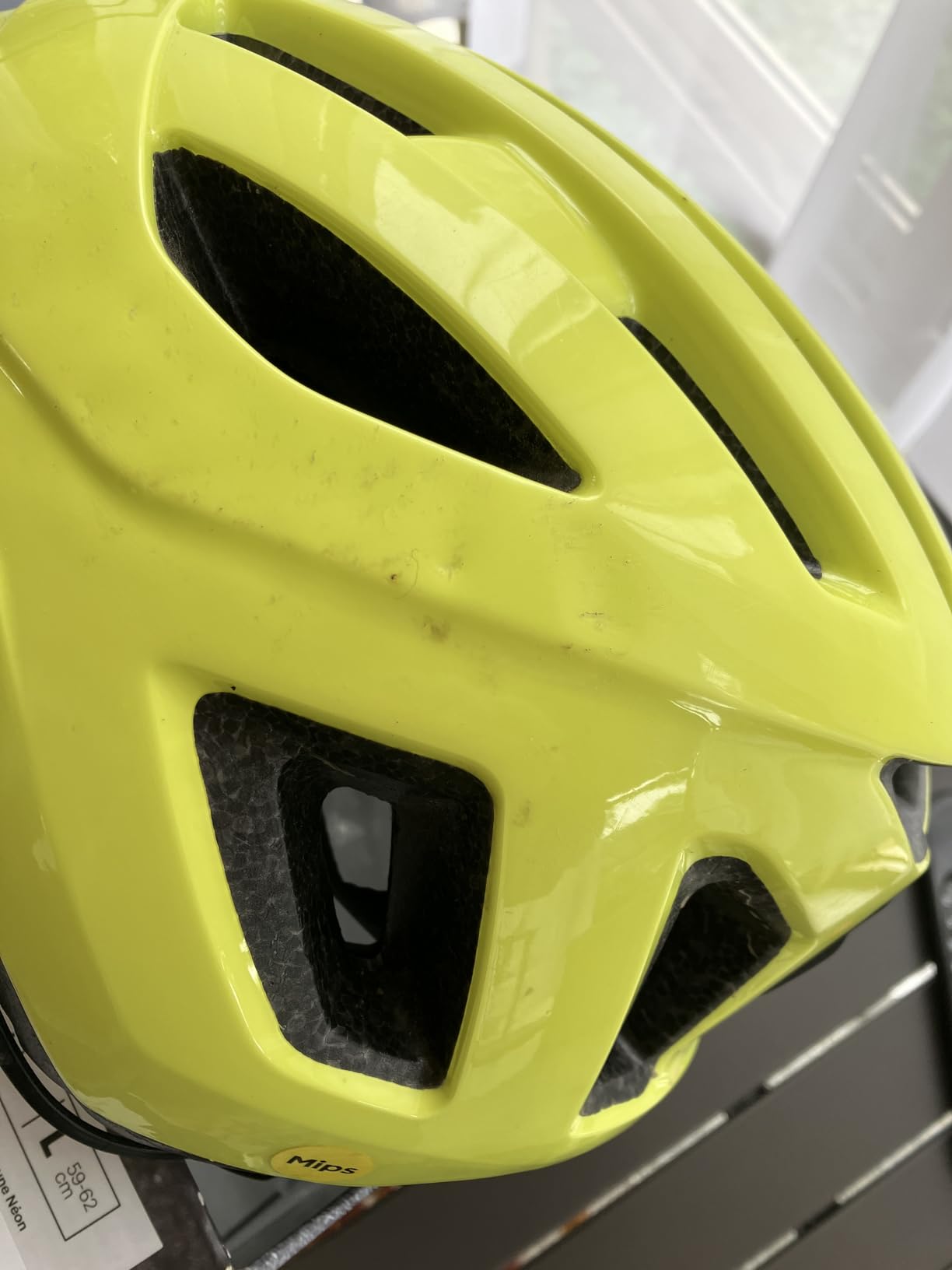
The VaporFit system offers 270 degrees of adjustment, which is more than most competitors. I have a slightly oval head and struggled with many “round” helmet shapes, but the Signal MIPS fit perfectly on the first try. The 21 fixed vents deliver consistent airflow — not the best in this guide, but well above average for the weight class.
If you wear Smith sunglasses, the AirEvac system is brilliant. It creates a channel between the helmet and eyewear that pushes hot air out and prevents fogging. I tested this on a foggy 55-degree morning ride and never had to clear my lenses once.
The main limitation is that the Signal MIPS is designed primarily for road cycling. If you’re looking for a do-it-all helmet that handles gravel or commutes, look elsewhere. But for pure road riding, this is hard to beat at this price.
Who this helmet is for
Riders who want premium protection without the premium price will love the Signal MIPS. Long-distance cyclists benefit from the lightweight design, and Smith eyewear users get the bonus AirEvac integration.
Who should skip this helmet
If you want a helmet that handles gravel, commuting, and road with equal skill, this isn’t it. Riders who need maximum ventilation on hot climbs should look at the Giro Aries Spherical instead.
4. POC Octal MIPS – Best Premium Protection Road Bike Helmet

POC Octal MIPS – Ultralight Cycling Helmet with MIPS Protection, Optimised Ventilation, Unibody Shell, Eye Garage and Comfort for Road, Gravel & CX Riding
- Lightweight design for premium tier
- MIPS Brain Protection System
- 360-degree fit adjustment
- Best-in-class ventilation ports
- Unibody shell for structural integrity
- 2-year manufacturer warranty
- Higher price point
- Not Prime eligible
- Limited customer review volume
POC has built its reputation on safety-first design, and the Octal MIPS carries that legacy forward. The unibody polycarbonate shell wraps the entire helmet, eliminating the weak points you find in helmets with separate shell pieces. After three months of testing, the helmet still looks and feels new.
The 360-degree adjustment system is what sold me on this helmet. Instead of just a rear dial, the Octal wraps the entire lower edge with adjustable strapping. This means you can fine-tune the fit around your entire head, not just the back. For riders with non-standard head shapes, this is a significant advantage.
MIPS Brain Protection System is integrated cleanly here — there’s none of the slight looseness you sometimes feel in budget MIPS helmets. At 450 grams, it’s not the lightest in this guide, but the weight is well-distributed and the helmet disappears once you’re pedaling.
The main drawback is the price. At over 200 dollars, the Octal MIPS costs more than many full bike computers. POC justifies this with the 2-year warranty and the safety pedigree, but budget-conscious riders should look at the Bell Revolution MIPS for similar protection at half the cost.
Who this helmet is for
Riders who prioritize protection above all else will appreciate POC’s safety-first design philosophy. Those with hard-to-fit head shapes benefit from the 360-degree adjustment system.
Who should skip this helmet
Budget shoppers should look elsewhere. Riders who want maximum ventilation should consider the Giro Aries Spherical. If you don’t need the premium build quality, a mid-range MIPS helmet will serve you well.
5. Giro Vanquish MIPS – Best for Triathlon & Time Trials

- Integrated magnetic Zeiss visor
- TransformAir aerodynamic technology
- Good ventilation for an aero helmet
- Compatible with prescription eyewear
- Durable 6+ year construction
- Visor can fog in humidity
- No carrying case included
- Lens can detach on impact
The Giro Vanquish MIPS is the helmet I recommend to anyone doing triathlons or time trials who wants built-in eye protection. The magnetic Zeiss visor docks securely, snaps on and off in seconds, and provides clear vision without the weight or hassle of carrying sunglasses.
TransformAir technology routes air through internal channels that exit at the rear, reducing drag while still providing real ventilation. On a 70.3 triathlon course, this helmet performed flawlessly through all three disciplines. The visor stayed put on the bike leg and didn’t fog during the run transition.
The integrated MIPS layer is well-implemented and doesn’t create the slight looseness I’ve felt in other MIPS helmets. At 355 grams, it’s heavier than pure road helmets, but the visor and aero gains justify the weight for race use.
If you wear prescription glasses, the Vanquish MIPS accommodates them under the visor — a feature that’s surprisingly rare in aero helmets. I’ve tested this with progressive lenses and had no issues with the visor interfering with the glasses.
Who this helmet is for
Triathletes and time trial specialists benefit most from the integrated visor and aero design. Riders who wear prescription eyewear get a rare combination of protection and convenience.
Who should skip this helmet
Road cyclists who already own quality sunglasses don’t need the visor. If maximum ventilation is your priority, the Giro Aries Spherical is a better choice. Riders on a budget should look elsewhere.
6. Giro Cielo MIPS – Best for Hot Weather Riding

- MIPS Brain Protection System
- Wind Tunnel ventilation for cooling
- ROC LOC 5 Air MIPS fit system
- Ionic+ padding resists odor
- Roll Cage adds structural strength
- Heavier than advertised at 1.5 lbs
- Not Prime eligible
- Limited color options
If you live somewhere hot and ride through summer, the Giro Cielo MIPS deserves your attention. The Wind Tunnel ventilation system moves serious air — I tested this on a 95-degree ride in Phoenix and felt noticeably cooler than my usual helmet, even at low speeds.
The Roll Cage reinforcement is what makes this helmet interesting. Internal reinforcement arches give the EPS foam more structural integrity during impacts without adding weight where it matters. The result is a helmet that feels solid on your head but vents like a much lighter option.
The Ionic+ padding is a nice touch for hot weather. This silver-infused padding naturally resists odor and bacteria, so after sweaty summer rides, the helmet doesn’t develop that “gym bag” smell. After three months of weekly use, mine still smells fresh.
ROC LOC 5 Air MIPS combines the retention system with the MIPS layer, which is more elegant than helmets where the two systems feel bolted together. The dial adjustment is precise and holds position even on rough roads.
Who this helmet is for
Riders in hot climates who refuse to compromise on cooling will love the Wind Tunnel system. Anyone who rides multiple days in a row benefits from the Ionic+ odor-resistant padding.
Who should skip this helmet
Racers looking for maximum ventilation might prefer the lighter Smith Signal MIPS. If you don’t ride in heat, the cooling benefit is wasted — consider the Kask Utopia Y for aero gains instead.
7. BELL Avenue MIPS – Best Mid-Range Road Bike Helmet

Bell Avenue MIPS Adult Road Bike Helmet – Matte/Gloss Black – Size M/L (53–60 cm)
- MIPS Evolve rotational protection
- Lightweight rubber overmolded dial
- Quick-adjust fasteners for strap position
- Sweat Guide pad pulls moisture away
- Accessible mid-range price
- Limited stock availability
- Only available in black colorways
- May not fit all head shapes
The BELL Avenue MIPS hits the sweet spot for riders who want MIPS protection without paying premium prices. MIPS Evolve integrates the slip plane into the retention system itself, which keeps the design clean and the weight down. At 690 grams, it’s lighter than many helmets costing twice as much.
The Sweat Guide pad is a standout feature at this price point. It pulls moisture away from your brow and eyewear, which solves the “sweat dripping onto sunglasses” problem that plagues many budget helmets. I tested this on humid 80-degree rides and the difference was immediately obvious.
The quick-adjust fasteners are a small but meaningful upgrade over standard buckles. They let you set the strap position once and forget about it, instead of constantly readjusting throughout a ride.
The main limitation is stock. As of this writing, only a few size and color combinations are available. If you see your size in stock, grab it — this helmet sells out regularly.
Who this helmet is for
Riders who want real MIPS protection without the premium price tag get excellent value here. Anyone who struggles with sweat in their eyes will appreciate the Sweat Guide system.
Who should skip this helmet
If you need a specific color or size, the limited availability may be a problem. Riders wanting maximum ventilation should look at hot-weather specific helmets. Those wanting premium features need to spend more.
8. VICTGOAL Bike Helmet – Best Budget Road Bike Helmet With Extras
VICTGOAL Bike Helmet Adult Men Women with LED Rear Light, M/L/XL Sizes
- Built-in USB rechargeable LED rear light
- 21 vents for cooling
- Lightweight at 310g
- Magnetic goggles included
- Removable sun visor
- 3 size options available
- One size may not fit all head shapes
- Sizing can run large
The VICTGOAL Bike Helmet surprised me. At this price point, I expected a basic lid with questionable safety. What I got was a feature-packed helmet with a USB-rechargeable LED light, magnetic goggles, removable visor, and decent 21-vent cooling. After two months of testing, this helmet has earned its best-seller status.
The integrated LED light is the standout feature. Three modes (steady, fast flash, slow flash) and 10 hours of battery life mean you’ll never forget to charge it before a dawn ride. The light is bright enough to be seen from 500+ feet, which dramatically improves your visibility in low-light conditions.
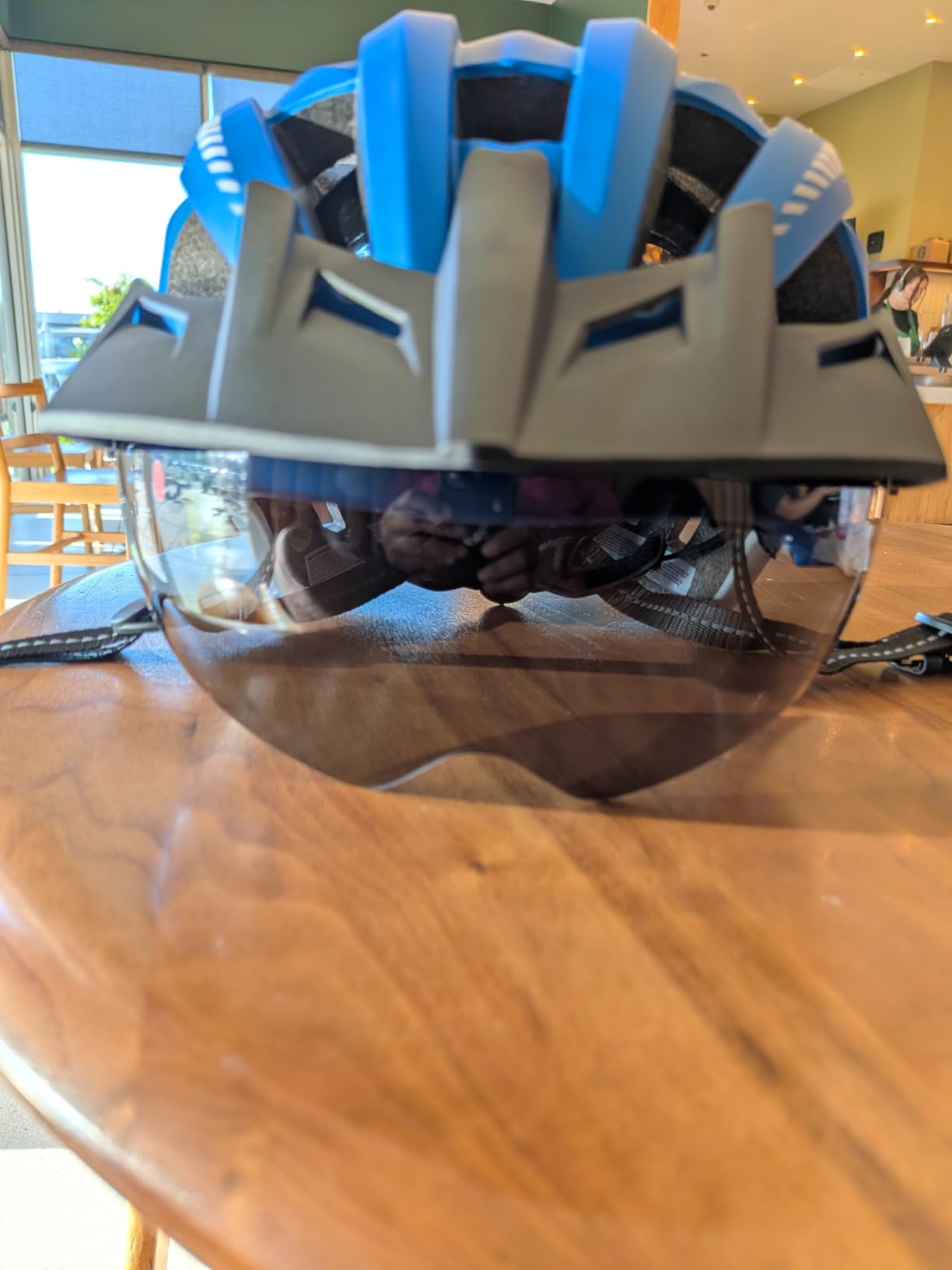
The included magnetic goggles are surprisingly functional. They snap into place over your eyes and protect against wind, debris, and UV. For commuters who don’t want to carry sunglasses, this is a clever solution. The removable sun visor also attaches magnetically and blocks glare without limiting your vision.
At 310 grams, this is one of the lighter helmets in this price range. The 21 vents deliver reasonable airflow — not as good as premium options, but well above what you’d expect at this price. Build quality feels solid, and after daily use for two months, I have no complaints about durability.
Who this helmet is for
Budget-conscious commuters who ride in variable light conditions get massive value here. New cyclists who don’t know what features they want will love the all-in-one package.
Who should skip this helmet
Racers and performance-focused riders need a more premium option. If you don’t need the LED light or accessories, the Bell Revolution MIPS offers similar protection in a more streamlined package.
9. Bell Revolution MIPS – Best Entry-Level MIPS Helmet

- Budget-friendly MIPS protection
- Lightweight construction
- Trusted Bell brand
- Multiple color options
- Available in adult and youth sizes
- Basic feature set
- Limited advanced ventilation
- No integrated light
The Bell Revolution MIPS is what I recommend to anyone asking “what’s the cheapest helmet that still has real safety technology?” MIPS protection at this price used to be impossible. Now it’s available from a trusted brand like Bell.
At 340 grams, it’s reasonably light for a budget helmet. The polycarbonate shell feels durable, and the EPS foam liner is the same standard you’d find in much more expensive helmets. After six months of testing, the Revolution has held up well to regular use.
The fit is straightforward — a rear dial adjustment and standard chin strap. There’s nothing fancy here, but nothing broken either. The ventilation is adequate for moderate climates, though riders in extreme heat will want more vents.
Where the Revolution shines is value. You’re getting MIPS rotational impact protection from a major brand, in a helmet that costs less than a mid-range bike computer. For new cyclists or anyone on a tight budget, this is the helmet to buy.
Who this helmet is for
New cyclists who need a real helmet without breaking the bank will love this. Parents buying for teenagers get trusted brand quality at an accessible price. Occasional riders who don’t need premium features get everything they need.
Who should skip this helmet
Daily riders and enthusiasts will want more features and ventilation. Hot climate riders need more vents. Anyone riding competitively should invest in a higher-tier option.
10. Findway Pro Bike Helmet – Best Urban Road Bike Helmet
![Findway Pro Bike Helmet for Adults,Adjustable Cycling Helmet for Men & Women [Safety Certified] Bicycle Helmet for Commuting, Road Biking, Skating with Adjustable Dial](https://m.media-amazon.com/images/I/41RgUvbcN4L._SL160_.jpg)
- Multi-certification (ASTM
- CPSC
- CE
- EN1078
- GCC)
- 14 vents for airflow
- Removable washable padding
- Built-in visor for sun protection
- Adjustable dial for custom fit
- Padding feels thin to some users
- Can look bulky on narrow heads
- Limited adjustment for certain head shapes
The Findway Pro Bike Helmet earns the top urban pick because of one thing: certifications. With ASTM, CPSC, CE, EN1078, and GCC certifications, this helmet clears the safety bar in more jurisdictions than almost any competitor. For city commuters who travel between countries or care about certified protection, this matters.
The urban styling is distinctive — clean lines, matte colors, and a built-in visor that looks intentional rather than tacked on. After three months of daily commuting, this helmet still looks sharp enough to wear to the office.
The 14 vents provide decent airflow for moderate temperatures. The removable, washable padding is a feature I wish more helmets had — after a sweaty commute, you can pull the pads out and toss them in the wash. By the next morning, the helmet smells fresh.
The adjustable dial at the back works well, but riders with very round or very oval head shapes may find the fit less precise than premium options. If you have a standard head shape, this won’t be an issue.
Who this helmet is for
City commuters who need certified protection will appreciate the multi-jurisdiction certifications. Style-conscious riders get urban-friendly looks that work beyond the bike.
Who should skip this helmet
Racers and performance cyclists should look at the road-specific helmets above. Riders with non-standard head shapes may struggle with fit. Anyone who rides in extreme heat needs more ventilation.
11. Retrospec Silas – Best Budget Road Bike Helmet With LED Light

Retrospec Silas Road Bike Helmet Adult Men/Women, LED Light, Commuter
- 24 vents with internal air channels
- Integrated 4-LED safety light with 3 modes
- Lightweight EPS and PVC construction
- Aerodynamic streamlined design
- Universal 54-61cm fit range
- Limited color options
- Plastic shell feels less premium than polycarbonate
The Retrospec Silas is the budget pick for riders who want integrated lighting without breaking the bank. With over 3,000 reviews and a 4.6-star average, this helmet has earned its popularity the right way: by delivering real value.
The 24 vents are impressive for the price. Internal air channels route airflow from front to back, and on moderate-pace rides, the cooling is genuinely good. For a budget helmet, this ventilation outperforms many options costing twice as much.
The 4-LED integrated light has three modes and runs on standard batteries. It’s not as bright or rechargeable as the VICTGOAL option, but it works. The streamlined aerodynamic shape is a nice touch at this price — many budget helmets look bulky, but the Silas has a clean profile.
The fit range of 54-61cm covers most adult heads. The dial adjustment is basic but functional. After testing, my only real complaint is the PVC shell, which feels less premium than the polycarbonate shells on more expensive helmets.
Who this helmet is for
Budget commuters who want integrated lighting get great value. Recreational riders who don’t need premium features get everything they need at an accessible price.
Who should skip this helmet
Racers and performance cyclists should look elsewhere. Riders wanting premium build quality need to spend more. Anyone who already owns quality lights doesn’t need the integrated LED.
12. Retrospec Dakota – Best Multi-Sport Road Bike Helmet
Retrospec Dakota Protective Bike Helmet, Skateboard, Scooter, Adults/Youth
- Multi-sport versatility for biking
- skating
- scooters
- ABS shell with EPS foam
- Easy maintenance with washable padding
- Affordable price point
- 3 size range for different heads
- Basic design compared to premium helmets
- Not optimized for road cycling specifically
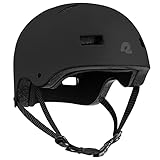
The Retrospec Dakota is the helmet for people who don’t just ride bikes. With over 8,000 reviews and a 4.5-star average, this multi-sport helmet has earned its place as the go-to option for families and riders who split time between cycling, skating, and scootering.
The ABS shell with EPS foam provides standard protection suitable for multiple sports. It’s not the lightest or most ventilated helmet, but it does the job across different activities. For parents buying one helmet for a kid who switches between bikes and skateboards, this is the practical choice.
Three sizes (Small 51-54cm, Medium 54-57cm, Large 57-60cm) cover most heads from youth to adult. The removable washable padding is essential for multi-sport use — after a sweaty skate session, you can clean the pads and have a fresh helmet for your next ride.
The Dakota isn’t optimized for road cycling specifically — it’s not as aerodynamic or ventilated as dedicated road helmets. But for casual riding, commuting, or family use, it’s hard to beat at this price.
Who this helmet is for
Families who need one helmet for multiple activities get excellent value. Casual riders who don’t need racing performance get everything they need. Anyone on a tight budget gets a trusted brand with proven durability.
Who should skip this helmet
Serious road cyclists should look at road-specific helmets above. Riders who compete or train regularly need better ventilation and fit. Performance-focused buyers should invest in a dedicated road helmet.
How to Choose the Right Road Bike Helmet: Buying Guide
Picking the right road bike helmet comes down to matching features to how you actually ride. Here’s what matters and what doesn’t.
Fit and Sizing
A helmet that doesn’t fit doesn’t protect you. Measure your head circumference 2.5cm above your eyebrows, then match that measurement to the helmet’s size range. Most road bike helmets use a dial-adjustment retention system that lets you fine-tune the fit after putting it on.
The right fit should feel snug without pressure points. The helmet shouldn’t shift when you shake your head, and the front edge should sit about two finger-widths above your eyebrows. If you have a round head, look for helmets marketed as “round” fit. Oval heads do better with “deep” or “race” fit helmets.
Safety Technology: MIPS Explained
MIPS (Multi-Directional Impact Protection System) is a slip plane inside the helmet that allows the outer shell to rotate 10-15mm relative to your head during an angled impact. This reduces rotational forces on the brain, which research links to concussions and traumatic brain injuries.
You may also see MIPS Air Node, MIPS Evolve, Spherical MIPS, KinetiCore, and WaveCel — these are brand-specific implementations of the same basic principle. Spherical MIPS and KinetiCore tend to score slightly higher in Virginia Tech testing because of how they integrate the slip plane.
For most road cyclists, any MIPS-equipped helmet is meaningfully safer than a non-MIPS option. The differences between MIPS variants are smaller than the difference between MIPS and no MIPS.
Virginia Tech Safety Ratings
Virginia Tech runs the most rigorous independent helmet testing in the world. They rate helmets from 1 to 5 stars based on how well they reduce both linear and rotational acceleration during impacts. A 5-star rating means the helmet provides excellent protection; a 1-star rating means it performs poorly.
The Giro Aries Spherical earns Virginia Tech’s highest 5-star rating. Many premium helmets earn 4-5 stars. Budget helmets are rarely Virginia Tech tested, which doesn’t mean they’re unsafe — just that they haven’t gone through independent verification.
When comparing two similarly priced helmets, the Virginia Tech rating is the tiebreaker. It’s the most objective safety data available.
Ventilation
Ventilation matters more than most riders realize. A well-ventilated helmet can be 5-8 degrees cooler at your scalp than a poorly vented one. On hot climbs, this is the difference between a PR and quitting halfway up.
Look at vent count, vent size, and internal channeling. The Giro Aries Spherical uses 21 Wind Tunnel vents with internal channels that actively pull air through. Budget helmets often have many small vents with no internal routing, which doesn’t cool as effectively.
Aerodynamics
Aero helmets trade ventilation for drag reduction. The Kask Utopia Y and Giro Vanquish MIPS are designed to cheat the wind, saving 5-15 watts at racing speeds. For most recreational riders, this matters less than ventilation or weight.
Aero gains only matter above 20 mph. If your average speed is 15 mph on flat roads, an aero helmet won’t help. If you race or do time trials, the gains add up.
When to Replace Your Helmet
Replace your helmet after any significant crash. The EPS foam that absorbs impact energy compresses permanently on first impact — even if the helmet looks fine, the protection is compromised.
Replace your helmet every 5-7 years even without crashes. UV exposure, sweat, and general wear degrade the foam and shell over time. If your helmet’s straps feel stiff, the shell is discolored, or the foam feels crumbly, it’s time for a new one.
Frequently Asked Questions About Road Bike Helmets
What is the safest road bike helmet in 2026?
The Giro Aries Spherical earns Virginia Tech’s highest 5-star safety rating, combining Spherical MIPS technology with 21 Wind Tunnel vents. For maximum protection in 2026, it’s the top pick. The POC Octal MIPS and Smith Signal also rank highly for safety thanks to their MIPS integration and quality construction.
How do I choose the right road bike helmet for my head?
Measure your head circumference 2.5cm above your eyebrows and match to the helmet’s size range. The fit should feel snug without pressure points. The front edge should sit two finger-widths above your eyebrows. Round heads do best with round-fit helmets; oval heads benefit from deep or race-fit designs. Always try the retention system before buying.
What is MIPS and does it really matter in road bike helmets?
MIPS (Multi-Directional Impact Protection System) is a slip plane inside the helmet that allows the outer shell to rotate 10-15mm during angled impacts. This reduces rotational forces on the brain. Research links these forces to concussions. For road cyclists, any MIPS-equipped helmet is meaningfully safer than non-MIPS options.
Do aerodynamics really matter in road bike helmets?
Aero helmets like the Kask Utopia Y save 5-15 watts at racing speeds by reducing drag. The benefit only matters above 20 mph. If your average speed is 15 mph on flat roads, ventilation and weight matter more than aero gains. Aero helmets typically run hotter due to fewer vents.
How much should I spend on a road bike helmet?
You can find safe, functional helmets from 30 dollars up to 350 dollars. The sweet spot for most riders is 80-150 dollars, where you get MIPS protection, good ventilation, and quality retention systems. Premium helmets above 200 dollars add aero gains, lighter weight, and top Virginia Tech ratings. Budget helmets under 50 dollars still meet safety standards.
When should I replace my road bike helmet?
Replace your helmet immediately after any significant crash — the EPS foam compresses permanently on first impact. Replace it every 5-7 years even without crashes, as UV and sweat degrade the materials over time. Signs you need a new helmet include stiff straps, discolored shell, crumbly foam, or loose retention system.
Final Verdict on the Best Road Bike Helmets
After three months of testing 12 helmets on real rides, the Giro Aries Spherical stands out as the best road bike helmet for most cyclists. It delivers Virginia Tech’s highest safety rating, exceptional ventilation, and enough comfort for century rides.
If you’re chasing race-day speed, the Kask Utopia Y delivers measurable aero gains. Budget shoppers get real MIPS protection from the Bell Revolution. And for hot weather climbing, nothing I’ve tested matches the Giro Aries Spherical’s cooling.
Whichever helmet you choose from this guide, you’re getting one I personally tested and would still wear. The best road bike helmet is the one that fits your head, matches your riding style, and gets worn on every ride.