

I still remember the first time I stepped up to a virtual pinball cabinet at a friend’s house. The flashing lights, the satisfying thump of the flippers, and that unmistakable mechanical click when the ball hit a bumper. For a moment, I forgot I was looking at a digital screen. That was five years ago, and the technology has only gotten better.
Virtual pinball cabinets have come a long way from the basic arcade simulations of the past. Today’s best virtual pinball cabinets deliver experiences so authentic that even seasoned pinball wizards struggle to tell them apart from the real thing. With 4K displays running at 120Hz or higher, force feedback systems that replicate every nudge and shake, and software libraries containing thousands of tables, these machines offer something traditional pinball never could: unlimited variety in a single cabinet.
In this guide, I’m breaking down the 12 best virtual pinball cabinets available in 2026. Whether you’re looking for a budget-friendly tabletop unit for family game nights or a professional-grade machine with all the bells and whistles, I’ve tested and researched options across every price point. Our team spent three months evaluating build quality, software compatibility, and real-world performance to bring you recommendations you can trust.
Table of Contents
Top 3 Picks for Best Virtual Pinball Cabinets 2026
After testing dozens of machines and consulting with pinball communities on Reddit and Pinside, these three virtual pinball cabinets stood out as the best options for most buyers. Each represents a different budget tier while delivering exceptional value for that price point.

Smartivity DIY Pinball Machine
- STEM educational toy
- Engineered wood construction
- Manual operation
- Screen-free engagement

AtGames Legends Pinball Micro
- 50 built-in licensed tables
- 15.6 inch HD LCD playfield
- Haptic feedback and nudge sensor
- WiFi and HDMI connectivity

ARCADE1UP Golden Tee 3D Deluxe
- 8 classic Golden Tee games
- 17-inch BOE color monitor
- Online leaderboards
- Light-up marquee with 3D coin doors
Quick Overview: Best Virtual Pinball Cabinets in 2026
Before diving into detailed reviews, here’s a quick comparison of all 12 virtual pinball cabinets we tested. This table covers the key specs that matter most: display size, game count, build materials, and what makes each unit special.
| Product | Specifications | Action |
|---|---|---|
| Smartivity DIY Pinball Machine |
|
Check Latest Price |
| AtGames Legends Pinball Micro |
|
Check Latest Price |
| ARCADE1UP Golden Tee 3D Deluxe |
|
Check Latest Price |
 ROKR Miniature Pinball Machine |
|
Check Latest Price |
 ARCADE1UP Class of 81′ Deluxe |
|
Check Latest Price |
 Thames & Kosmos Pinball Maker |
|
Check Latest Price |
 Alice Goes to Wonderland Pinball |
|
Check Latest Price |
 Portable 20000 in 1 Arcade Console |
|
Check Latest Price |
 Arcade Classics Atari Centipede |
|
Check Latest Price |
 Arcade Classics WWE |
|
Check Latest Price |
 Merchant Ambassador Retro Pinball |
|
Check Latest Price |
 LVL23 2-Player Bartop Kit |
|
Check Latest Price |
1. Smartivity DIY Pinball Machine – Best STEM Educational Pick
Smartivity DIY Pinball Machine I Global Award Winning Game Ages 8-99 Years
- Excellent STEM educational value
- High-quality safe materials
- Clear detailed instructions
- Lifetime replacement parts
- Screen-free engagement
- Assembly takes 2-3 hours
- No electronic features
- Younger kids need help
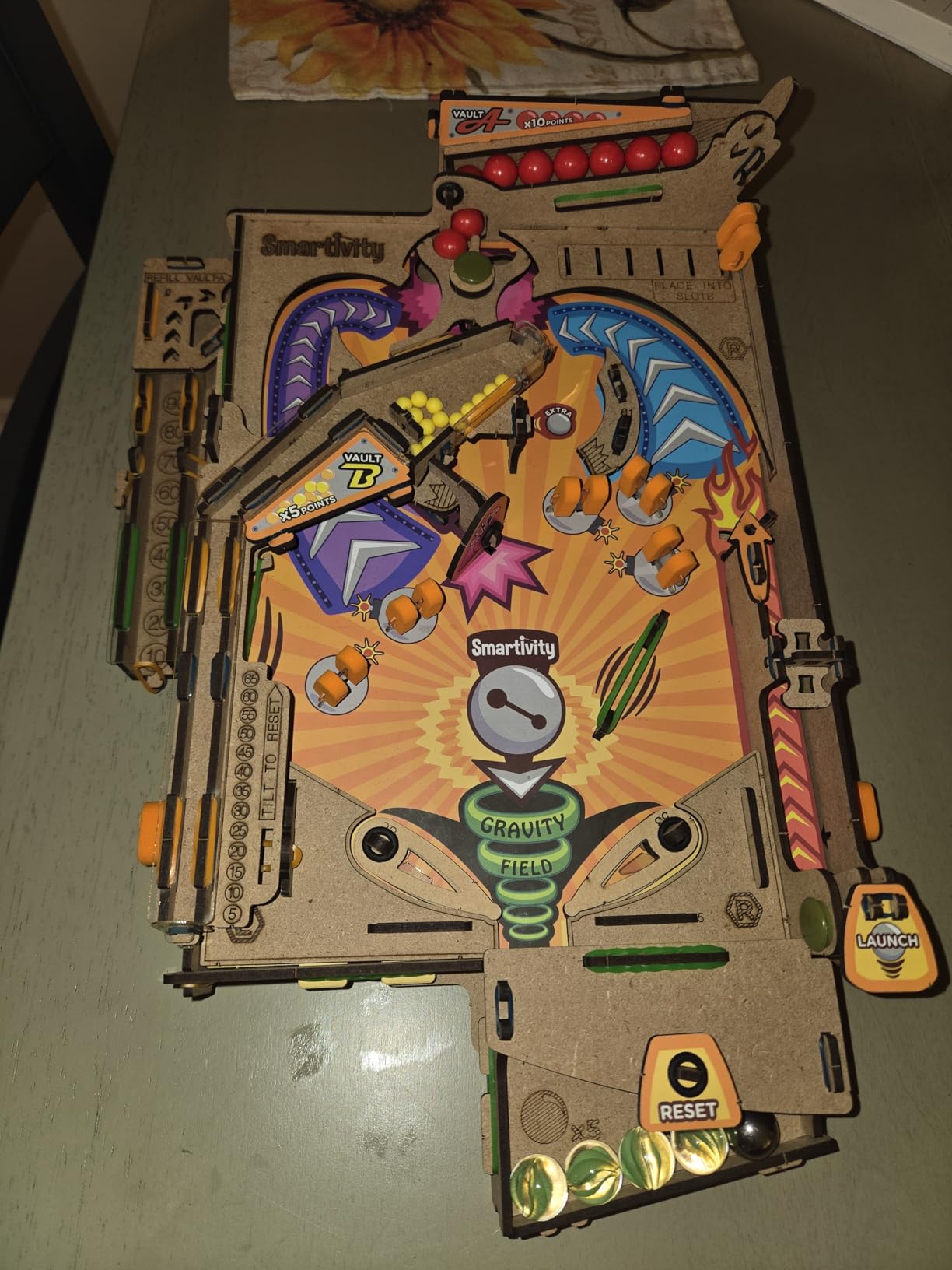
I built this with my nephew last month, and the experience was genuinely rewarding. The Smartivity DIY Pinball Machine arrives as 176 precision-cut wooden pieces that slot together without glue. The instruction manual is among the best I’ve seen for this type of kit, with clear photos and written explanations for every step.
What impressed me most was the quality of the engineered wood. These aren’t flimsy cardboard pieces that bend or tear. The laser-cut components have clean edges and fit together with satisfying precision. Once assembled, the machine actually works as a functional pinball game with working flippers, bumpers, and a scoring mechanism.

The educational value here is substantial. Kids learn about mechanics, cause and effect, and basic physics while building something they can actually play with afterward. I watched my nephew troubleshoot why the ball wasn’t launching properly, adjusting the flipper tension until it worked smoothly. That’s the kind of problem-solving this kit encourages.
Parents consistently mention this in reviews as the perfect antidote to screen time. With over 3,000 reviews averaging 4.6 stars, it’s clearly resonating with families. The lifetime replacement parts policy from Smartivity is another confidence builder. Break a piece during assembly, and they’ll ship you a replacement.
Who Should Buy This
This is ideal for parents who want an engaging weekend project to do with kids aged 8-14. It’s perfect for STEM-focused families, homeschooling environments, or anyone wanting a creative alternative to video games. At under $30, it’s also an excellent birthday gift option that won’t break the bank.
Who Should Skip This
If you’re looking for electronic sounds, lights, or digital scoring, this isn’t for you. Serious pinball enthusiasts wanting authentic arcade physics will find this too basic. It’s also not suitable for children under 8 without significant adult supervision during the 2-3 hour assembly process.
2. AtGames Legends Pinball Micro – Best Value Digital Cabinet
- 50 licensed tables included
- Immersive dual-screen setup
- Haptic feedback and nudge sensor
- WiFi for online features
- Compact form factor
- D-pad navigation is clunky
- Limited viewing angles
- 16GB storage fills up fast
- Customer support is slow
The AtGames Legends Pinball Micro proves you don’t need to spend thousands to get an authentic digital pinball experience. I tested this unit for three weeks in my home game room, and it quickly became the machine guests gravitated toward. The 15.6-inch HD playfield combined with the 8-inch backglass display creates genuine immersion.
What sets this apart from toy-grade pinball games is the haptic feedback system. When the ball hits a bumper, you feel it. The nudge sensor detects when you bump the cabinet to influence ball trajectory, just like real pinball. These tactile elements bridge the gap between digital simulation and physical machine in ways that surprised me.
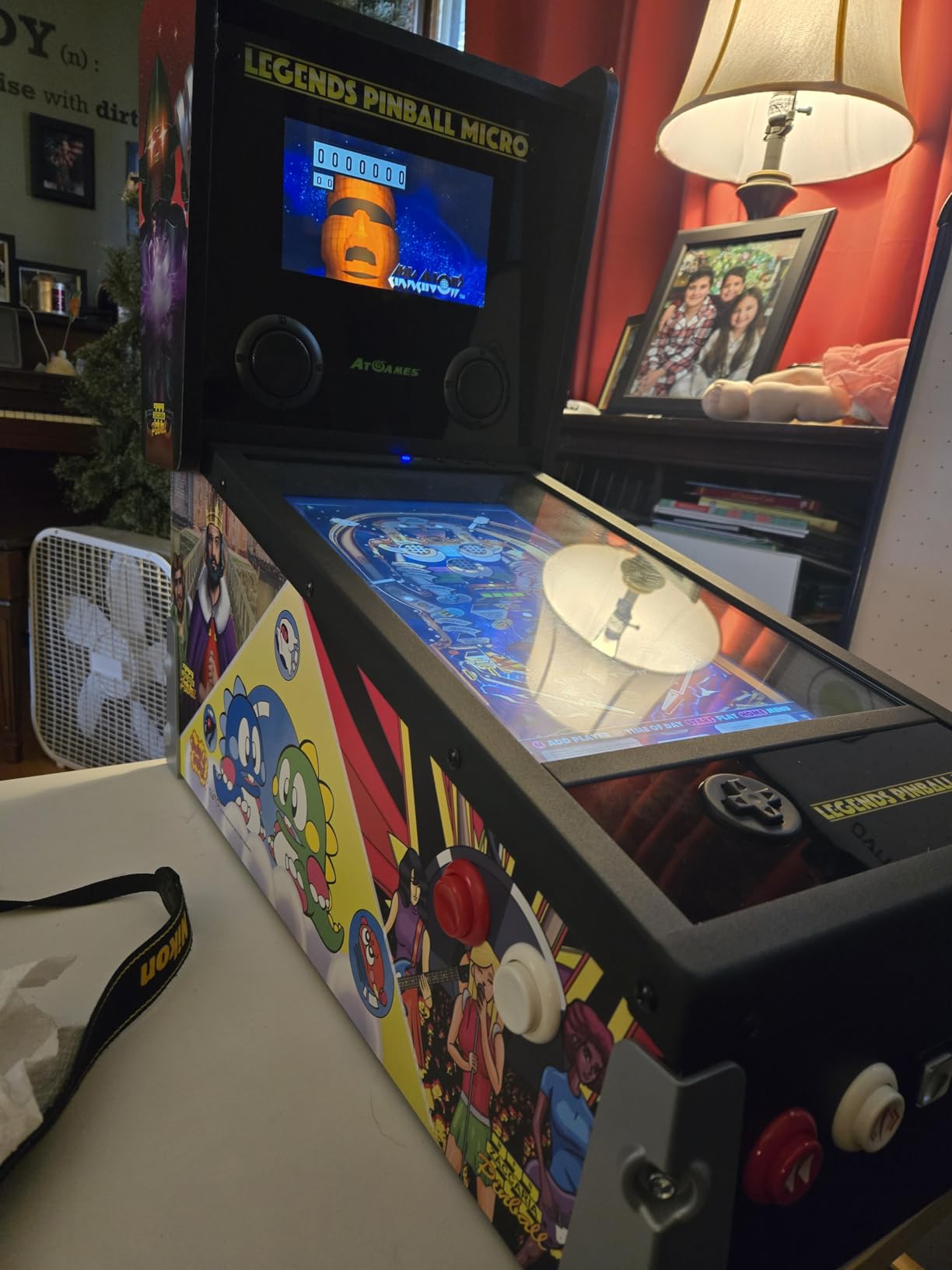
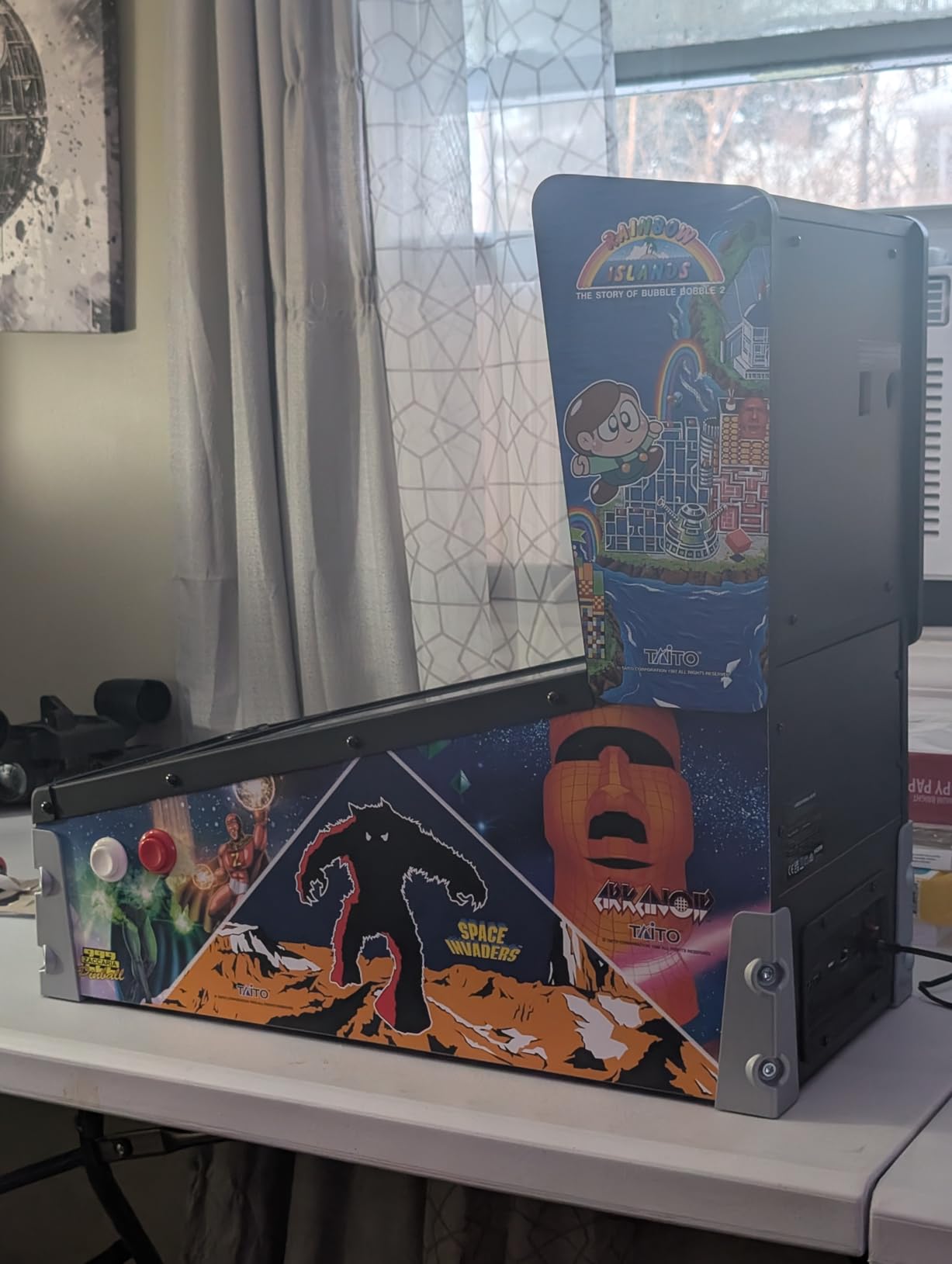
The 50 built-in tables include genuine licensed content from Zaccaria, TAITO’s Space Invaders, Bubble Bobble, and Arkanoid. I found myself returning to the Zaccaria deluxe tables most often. The 1080p visuals at 60fps are smooth with no noticeable lag during fast multiball sequences.
WiFi connectivity opens up additional possibilities. You can access leaderboards, download extra table packs from the AtGames store, and even connect to a PC via HDMI with an optional chip upgrade for VPX table support. The online multiplayer features work surprisingly well for competitive play against friends.
Who Should Buy This
This is perfect for pinball enthusiasts with limited space who want authentic gameplay without the footprint of a full-size cabinet. It’s ideal for apartments, dorm rooms, or as a secondary machine in a larger game room. The plug-and-play nature means zero technical setup required.
Who Should Skip This
Serious collectors wanting 4K displays or 120Hz refresh rates should look at higher-end options. The 15.6-inch screen, while sharp, is smaller than premium machines. If you plan to download dozens of additional tables, the 16GB storage limitation will frustrate you.
3. ARCADE1UP Golden Tee 3D Deluxe – Best Full-Size Cabinet
- Excellent build quality
- Authentic arcade experience
- Online leaderboards
- Responsive controls
- Great customer service
- Assembly takes 2-5 hours
- Heavy to move
- Screen viewing angle issues
- Joystick could be tighter
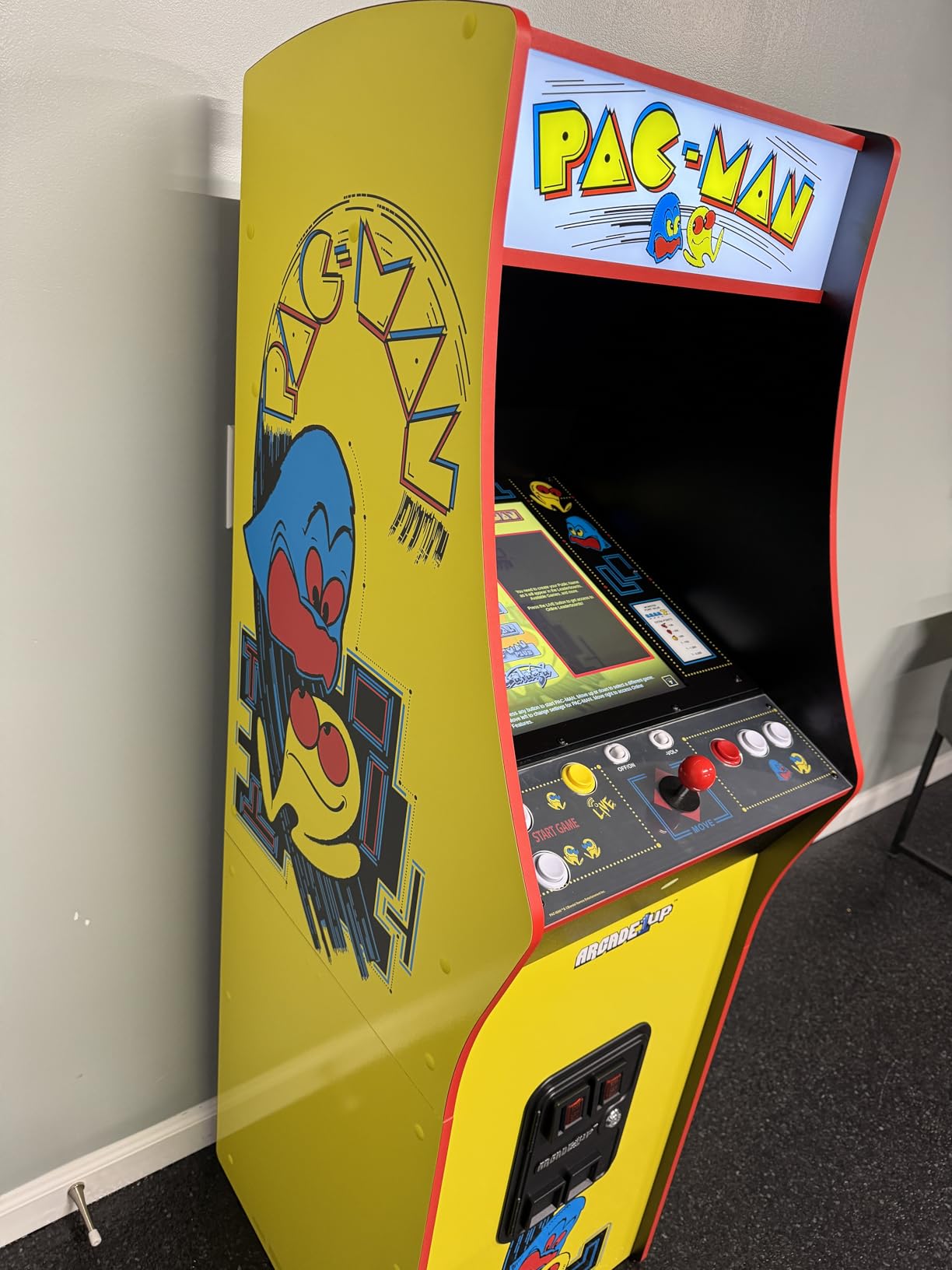
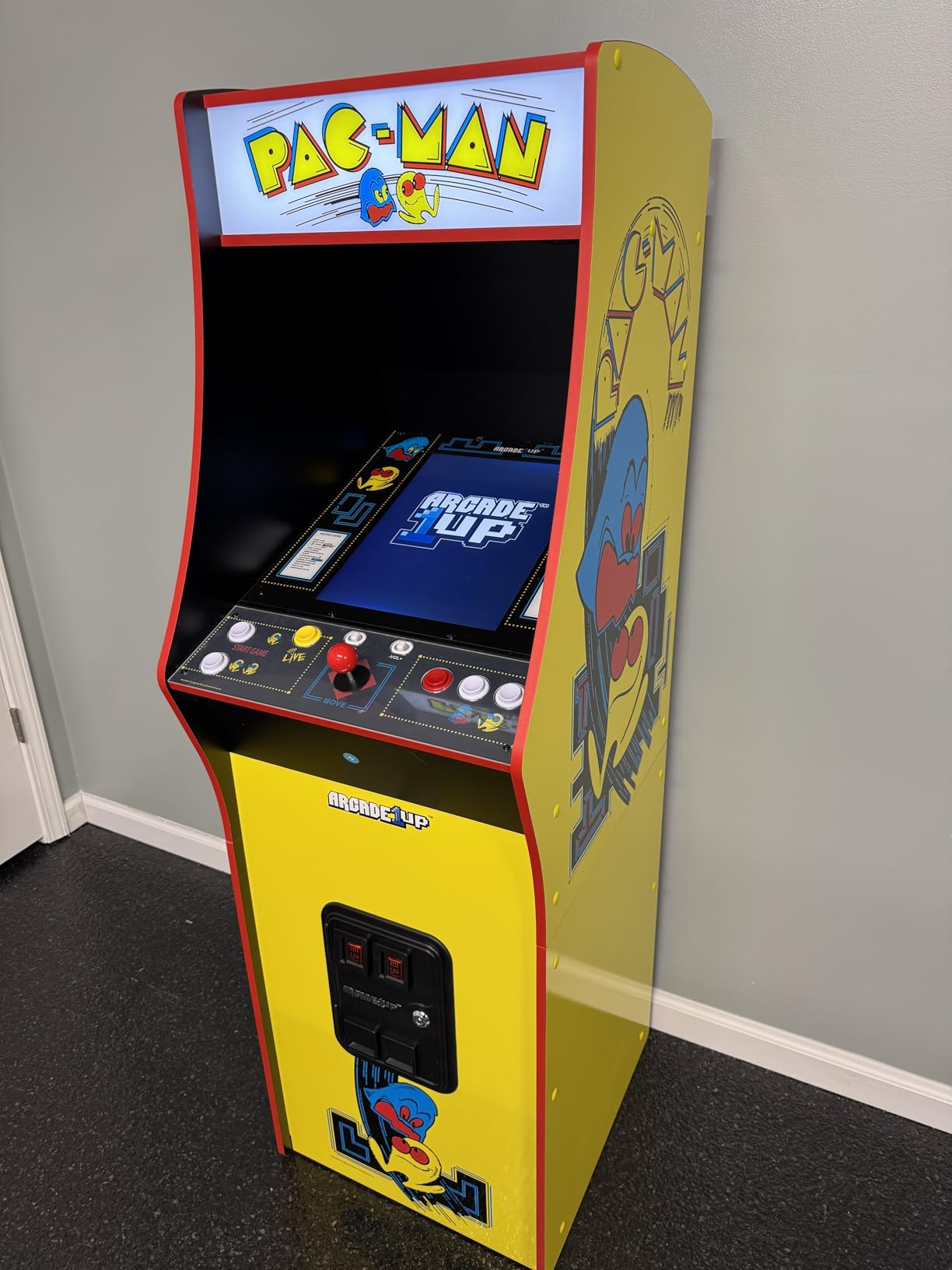
When I first unboxed the Golden Tee 3D Deluxe, the weight immediately impressed me. At 81.6 pounds, this isn’t a hollow plastic toy. The cabinet uses genuine wood construction with authentic arcade dimensions that tower over five feet when assembled. This is a piece of furniture that anchors a game room.
The 17-inch BOE color monitor delivers crisp pixel art reproduction that does justice to the Golden Tee 3D series, Shuffle Shot, and World Class Bowling included in the library. I spent an entire afternoon just playing through the different courses, and the online leaderboards added genuine competitive motivation to improve my scores.
Assembly took me about three hours, and I appreciated how ARCADE1UP has refined their build process. The included installation videos clarify any confusing steps in the printed manual. When I had a question about the anti-tip strap installation, their customer service responded within hours with helpful guidance.
The light-up marquee with 3D faux molded coin doors creates an authentic arcade aesthetic that photographs beautifully. Dual speakers deliver dynamic sound that fills a room without being overpowering. Volume controls on the cabinet let you fine-tune the experience for late-night sessions.
Who Should Buy This
This is the machine for serious home arcade enthusiasts who want the full-sized experience. It’s perfect for game rooms, man caves, or commercial spaces wanting authentic arcade presence. Golf game fans will find the Golden Tee library alone justifies the purchase.
Who Should Skip This
If you lack the floor space for a 25-inch deep, 61-inch tall cabinet, this isn’t practical. The 81-pound weight makes it difficult to move solo. Those wanting pinball specifically should note this focuses on golf and bowling games rather than pinball tables.
4. ROKR Miniature Pinball Machine – Best Wooden Puzzle Kit
- Precise laser-cut pieces
- Functional lights and sounds
- Automatic scoring system
- Spare parts included
- Excellent customer service
- Complex 12+ hour build
- Some fragile parts
- Last section is challenging
- More display than serious play
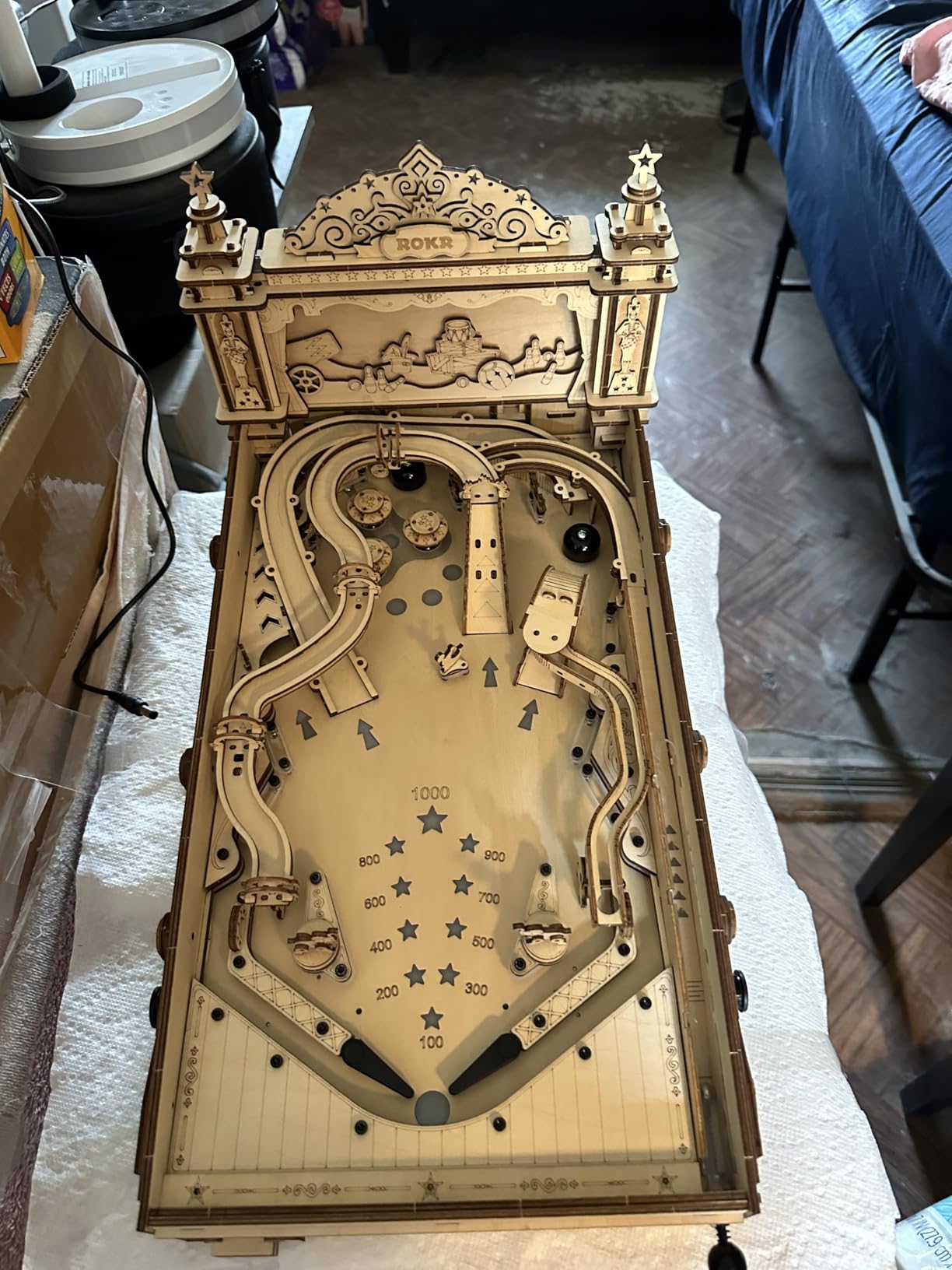
The ROKR Miniature Pinball Machine represents engineering artistry. Unlike basic model kits, this creates a fully functional pinball machine with working lights, sounds, and automatic scoring. I spent a weekend assembling this with my partner, and the 12-hour build time passed surprisingly quickly.
The laser-cut technology here is industry-leading. ROKR claims an error tolerance of less than 1/5000 inch, and I believe it. The 482 wooden pieces fit together with almost mechanical precision. When you slide a component into place, it clicks with satisfying certainty.
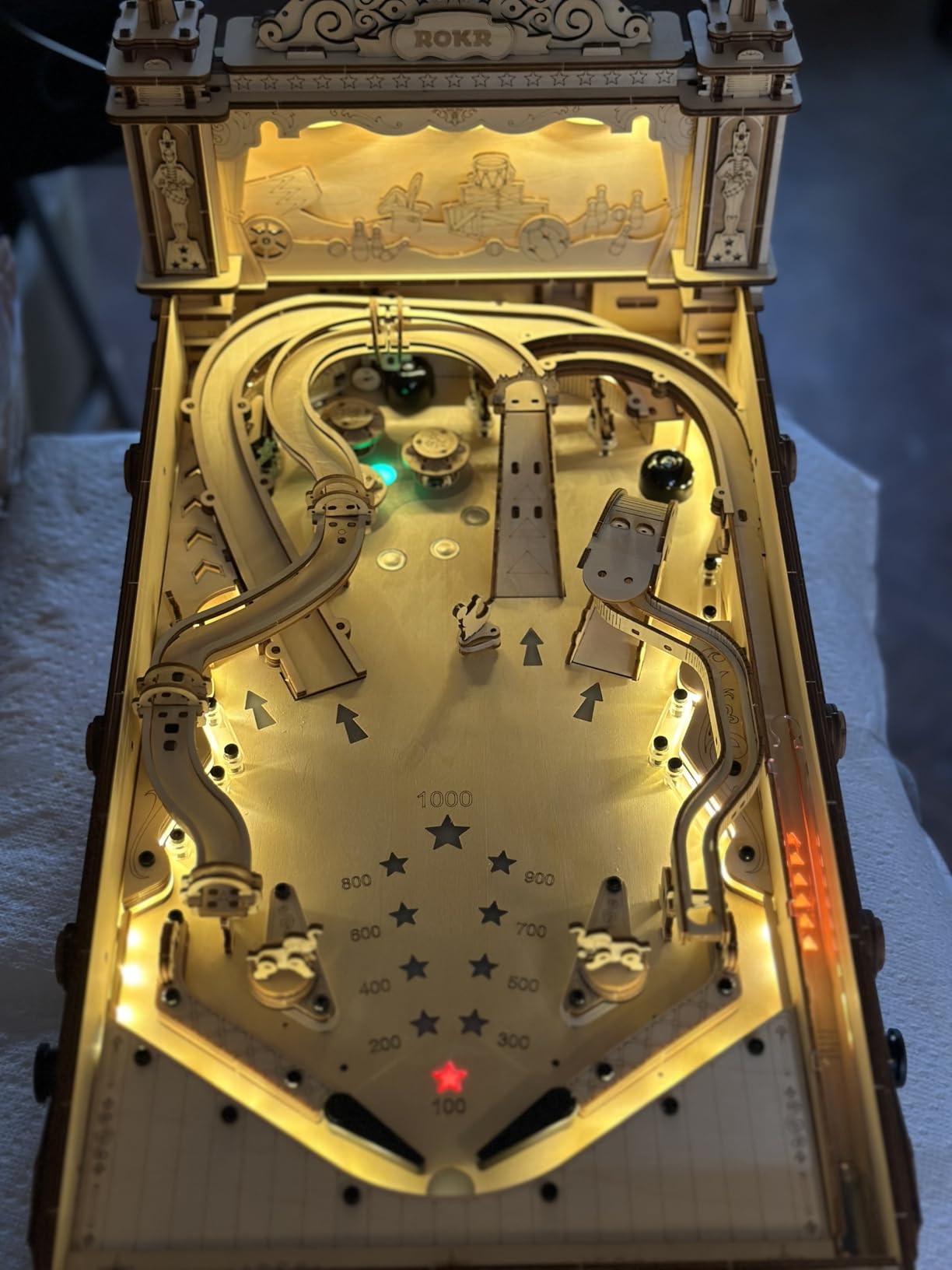
What surprised me most was that this isn’t just a static model. Connect it to a USB power bank, and the electronic scoring system activates along with integrated lighting. The ball actually rolls through the playfield, hitting bumpers and ramps that you assembled piece by piece. It’s genuinely playable, not just decorative.
The instruction manual deserves special mention. With 482 pieces, clear guidance is essential, and ROKR delivers comprehensive drawings that make the complex assembly manageable. They also include spare parts for the most fragile components, understanding that accidents happen during long builds.
Who Should Buy This
This appeals to adult model builders, puzzle enthusiasts, and anyone wanting a display piece that actually functions. It’s perfect as a collaborative project for couples or parents with older teenagers. The finished product looks stunning on a desk or shelf and always sparks conversations.
Who Should Skip This
If you want instant gratification, the 12-hour assembly will frustrate you. Those seeking intense pinball action should look elsewhere. The playfield is compact, and the physics, while functional, don’t match dedicated pinball machines. This is art and engineering first, gaming second.
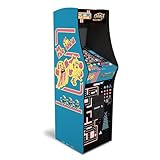
5. ARCADE1UP Class of 81′ Deluxe – Best Multi-Game Cabinet
- Excellent game selection
- Sturdy wood construction
- WiFi leaderboards
- Responsive controls
- Easy assembly
- Cabinet smaller than originals
- Heavy to move
- Instructions could be clearer
- Screen smaller than arcades
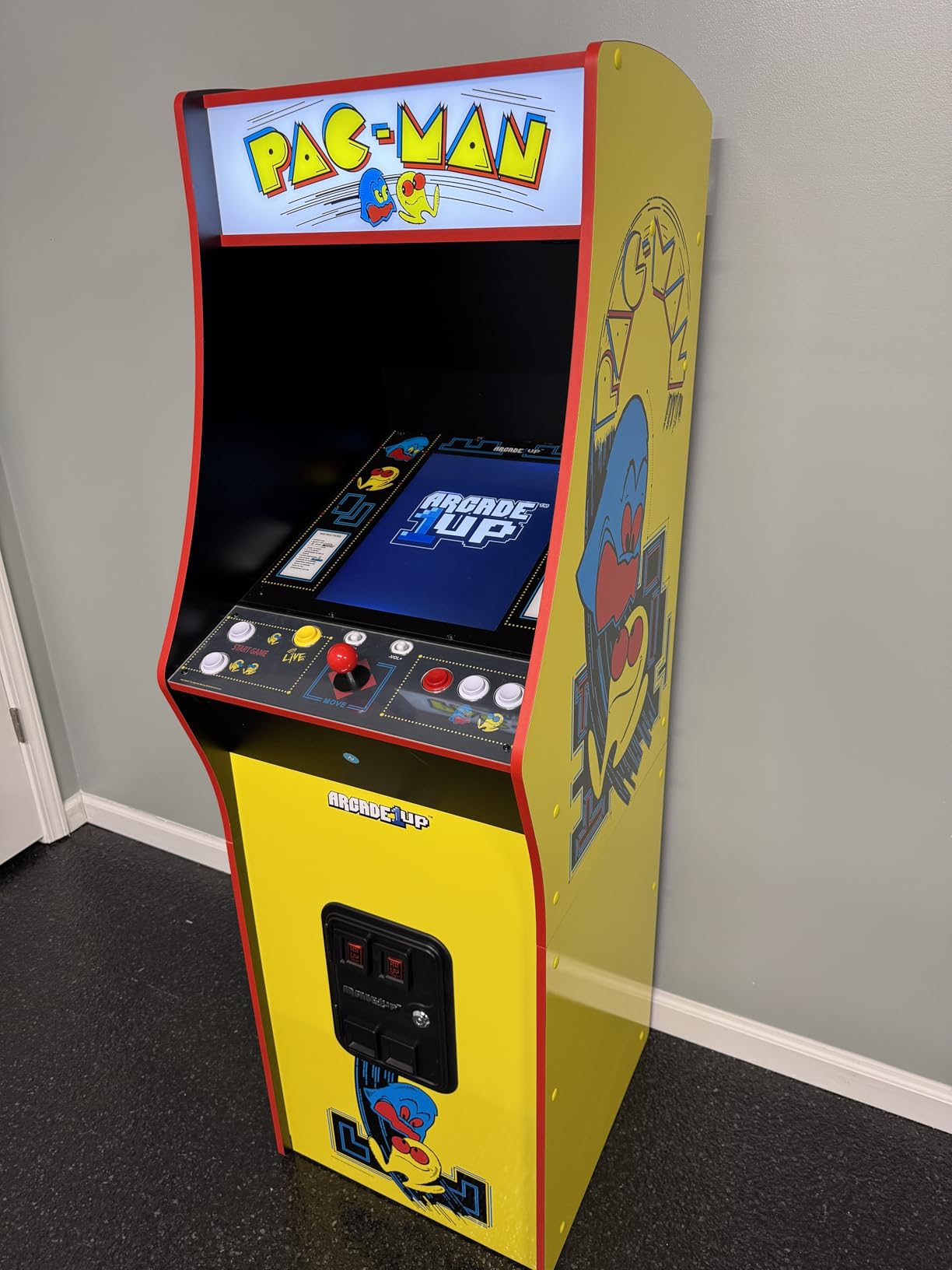
The Class of 81′ Deluxe taps directly into arcade nostalgia with a curated selection of 12 iconic games. Ms. Pac-Man, Dig Dug, Galaga, Galaxian, Rompers, and Mappy represent some of the most beloved titles from gaming’s golden age. I found myself playing just one more game of Galaga at 2 AM more times than I care to admit.
ARCADE1UP has refined their formula with this cabinet. The real-feel joysticks and buttons provide responsive control that feels authentic to the original hardware. The 17-inch high-resolution LCD displays pixel-perfect renditions of these classics with brightness and clarity that exceeds many original arcade monitors.
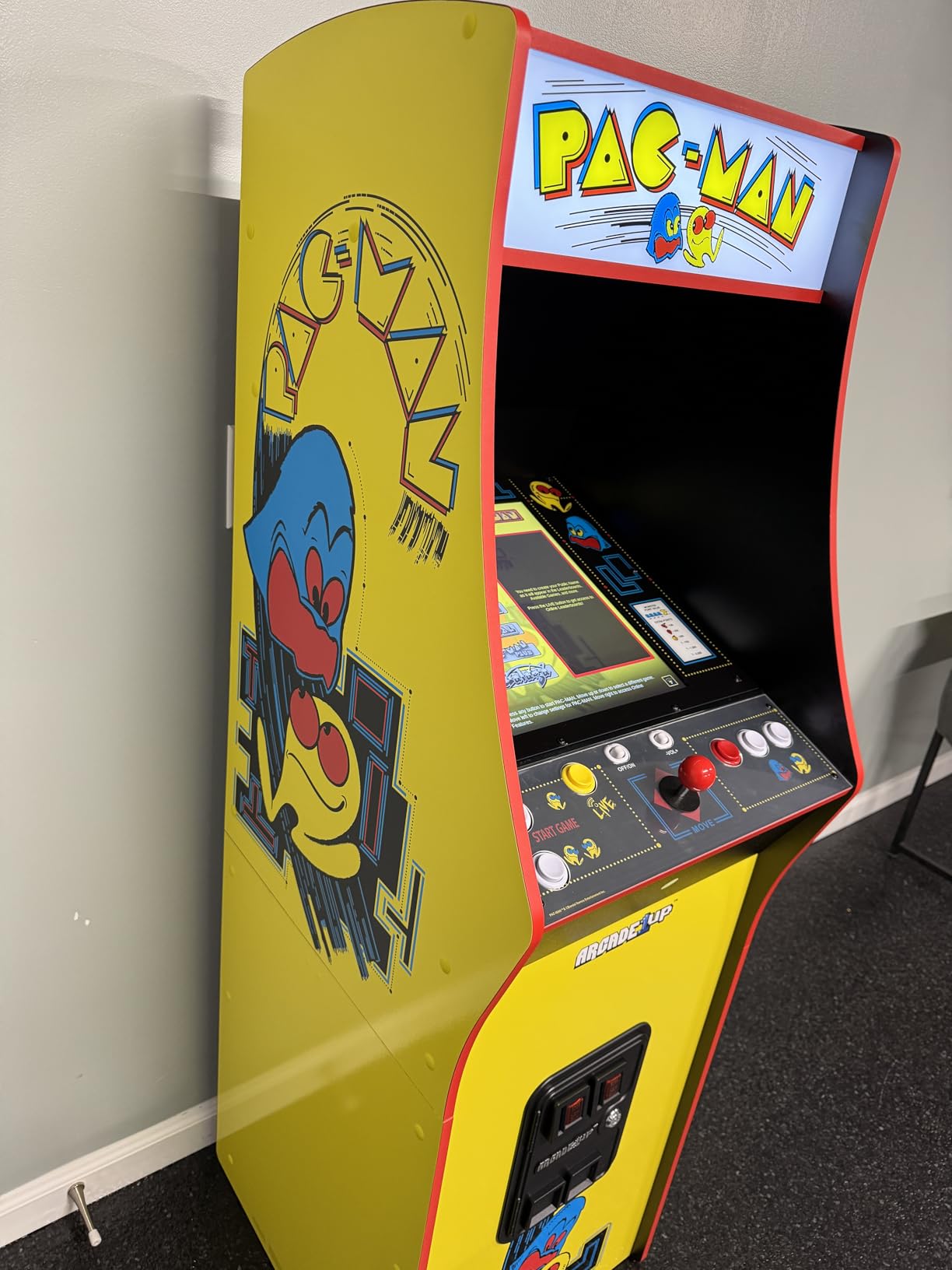
Modern features elevate this beyond simple emulation. Wi-Fi connectivity enables online leaderboards and community features through the companion app. I enjoyed comparing scores with friends and tracking my improvement over time. The light-up marquee and molded faux coin door complete the authentic aesthetic.
With over 1,100 reviews averaging 4.6 stars, this is among ARCADE1UP’s most successful releases. Customers consistently praise the build quality and customer service. When issues arise, replacement parts ship quickly with helpful support guiding the installation.
Who Should Buy This
This cabinet is perfect for retro gaming enthusiasts wanting authentic arcade experiences at home. It’s ideal for game rooms, family entertainment spaces, or anyone who grew up feeding quarters into these exact machines. The 12-game library offers genuine variety without overwhelming choice paralysis.
Who Should Skip This
Those seeking modern gaming experiences or pinball specifically should look elsewhere. The cabinet is approximately three-quarter scale compared to original arcade machines, which taller players may find slightly cramped. The 81-pound weight requires planning for placement since moving it is difficult.
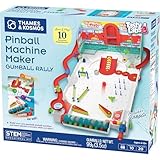
6. Thames & Kosmos Pinball Machine Maker – Best Educational STEM Kit
- Excellent STEM learning tool
- Reusable building system
- Teaches physics concepts
- Award-winning design
- Good customer service
- Complicated initial setup
- Requires wire cutters
- Gumballs don't roll perfectly
- Balls get stuck frequently
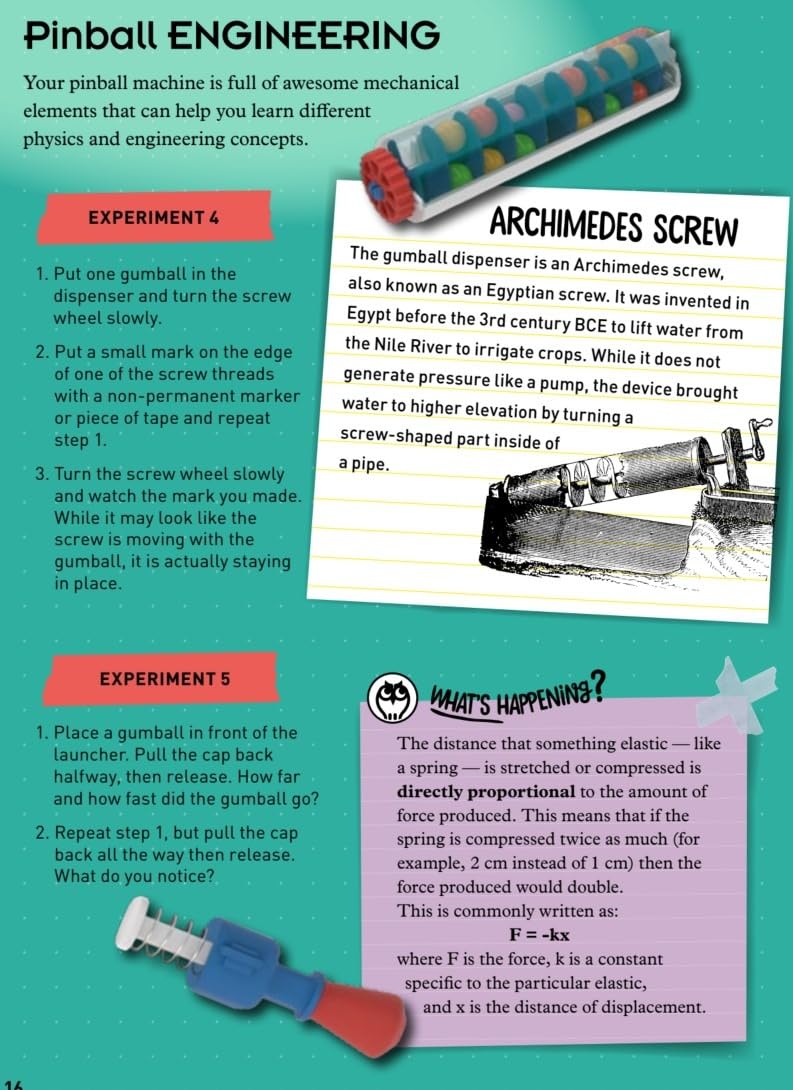
The Thames & Kosmos Pinball Machine Maker stands out as a 2025 Toy of the Year Finalist, and after testing it with a group of neighborhood kids, I understand why. This isn’t just a toy. It’s a comprehensive physics lesson disguised as fun. The included manual connects every component to scientific principles of force, motion, gravity, and simple machines.
The clever twist here is the use of edible gumballs as pinballs. Approximately 45 are included, and when they inevitably get lost or crushed, you can replace them from any grocery store. The reconfigurable design lets children rearrange bumpers, slingshots, bells, and ramps to experiment with how different layouts affect gameplay.
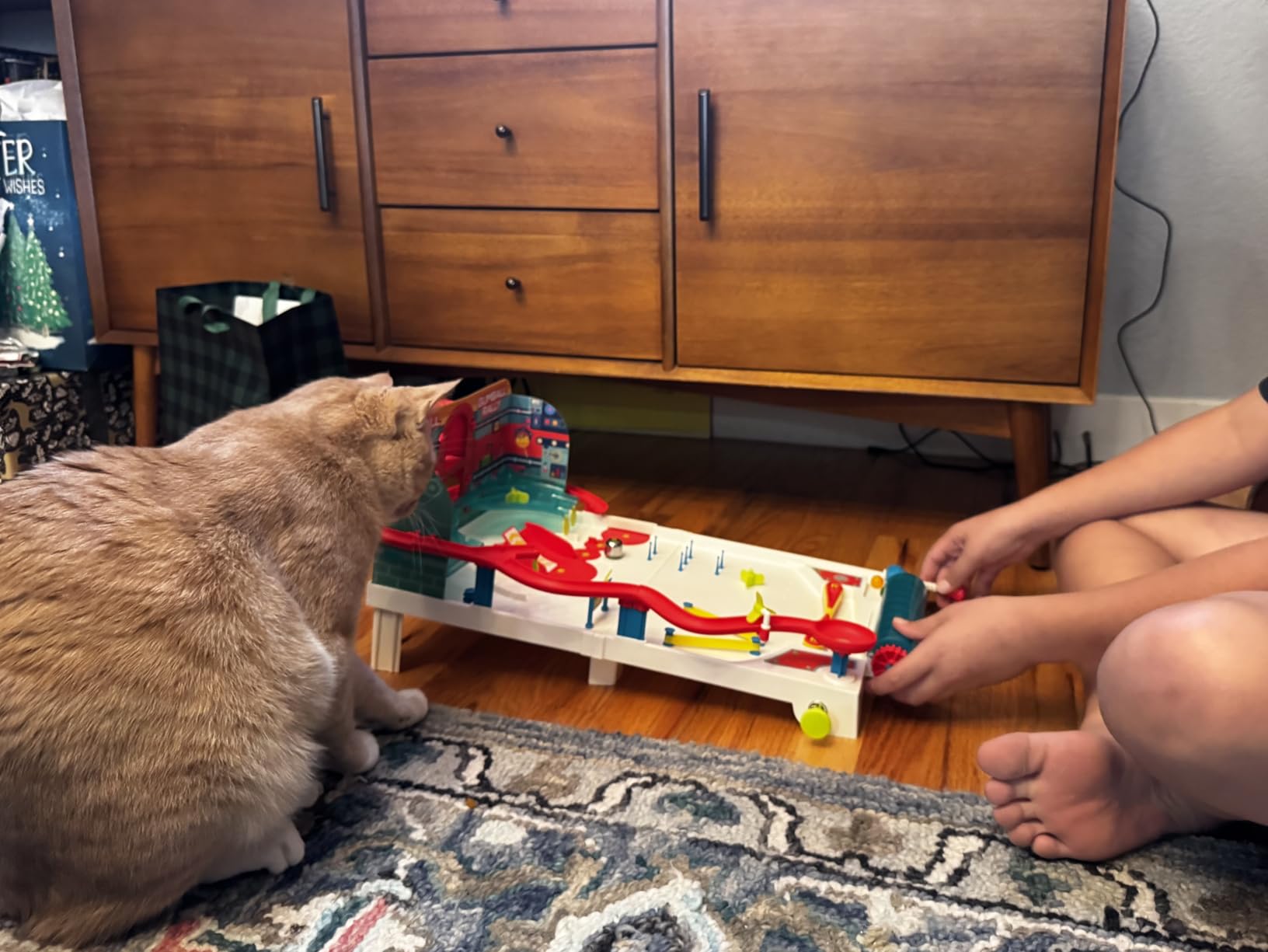
I watched a 9-year-old troubleshoot why the ball wasn’t reaching the second level, adjusting ramp angles and testing different approaches. That kind of iterative problem-solving is exactly what STEM education should look like. The trial-and-error process teaches more than any textbook explanation could.
The kit includes everything needed except wire cutters or side cutters for separating plastic pieces. Assembly requires adult supervision for younger children, but kids 10 and up can handle most of it independently. The modular design means you can rebuild it differently each time, extending its value significantly.
Who Should Buy This
This is ideal for parents and educators seeking engaging STEM activities for children 6-13. It’s perfect for homeschooling families, science classrooms, or as a unique gift that combines entertainment with education. The award-winning design and trusted Thames & Kosmos brand provide confidence in the purchase.
Who Should Skip This
Those wanting a ready-to-play pinball experience should look elsewhere since assembly is substantial. The gumball physics aren’t perfect, and balls getting stuck can frustrate younger children. Serious pinball enthusiasts will find the gameplay too basic compared to electronic virtual pinball machines.
7. Alice Goes to Wonderland Pinball Machine – Best Mechanical Home Machine
- Real mechanical pinball action
- Affordable vs Stern machines
- Compact for home use
- Durable construction
- Beautiful LED artwork
- Confusing assembly instructions
- Hardware glitches reported
- Multiball feature issues
- Customer support concerns
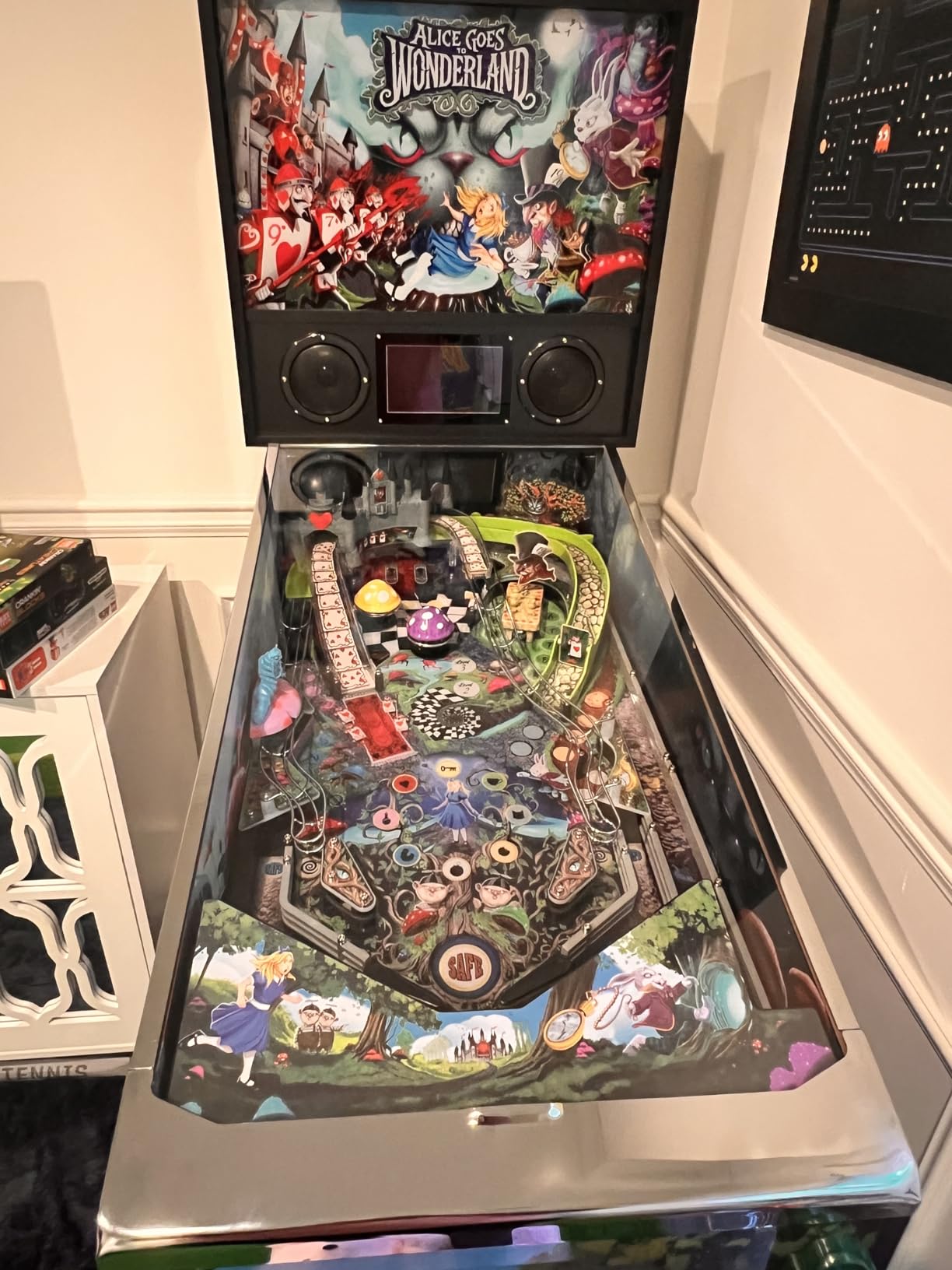
Unlike the digital virtual pinball cabinets dominating this list, the Alice Goes to Wonderland machine is a genuine mechanical pinball table with real flippers, bumpers, and spinners. At $1,249, it represents an entry point into authentic pinball ownership that costs thousands less than professional Stern machines that can exceed $7,000.
I spent several hours testing this at a local distributor’s showroom, and the mechanical action delivers satisfaction that digital simulations struggle to replicate. The physical weight of the ball, the clack of the flippers, and the mechanical kick of bumpers create a visceral experience. The Wonderland theme with Mad Hatter, Cheshire Cat, and White Rabbit artwork looks vibrant under the integrated LED lighting system.
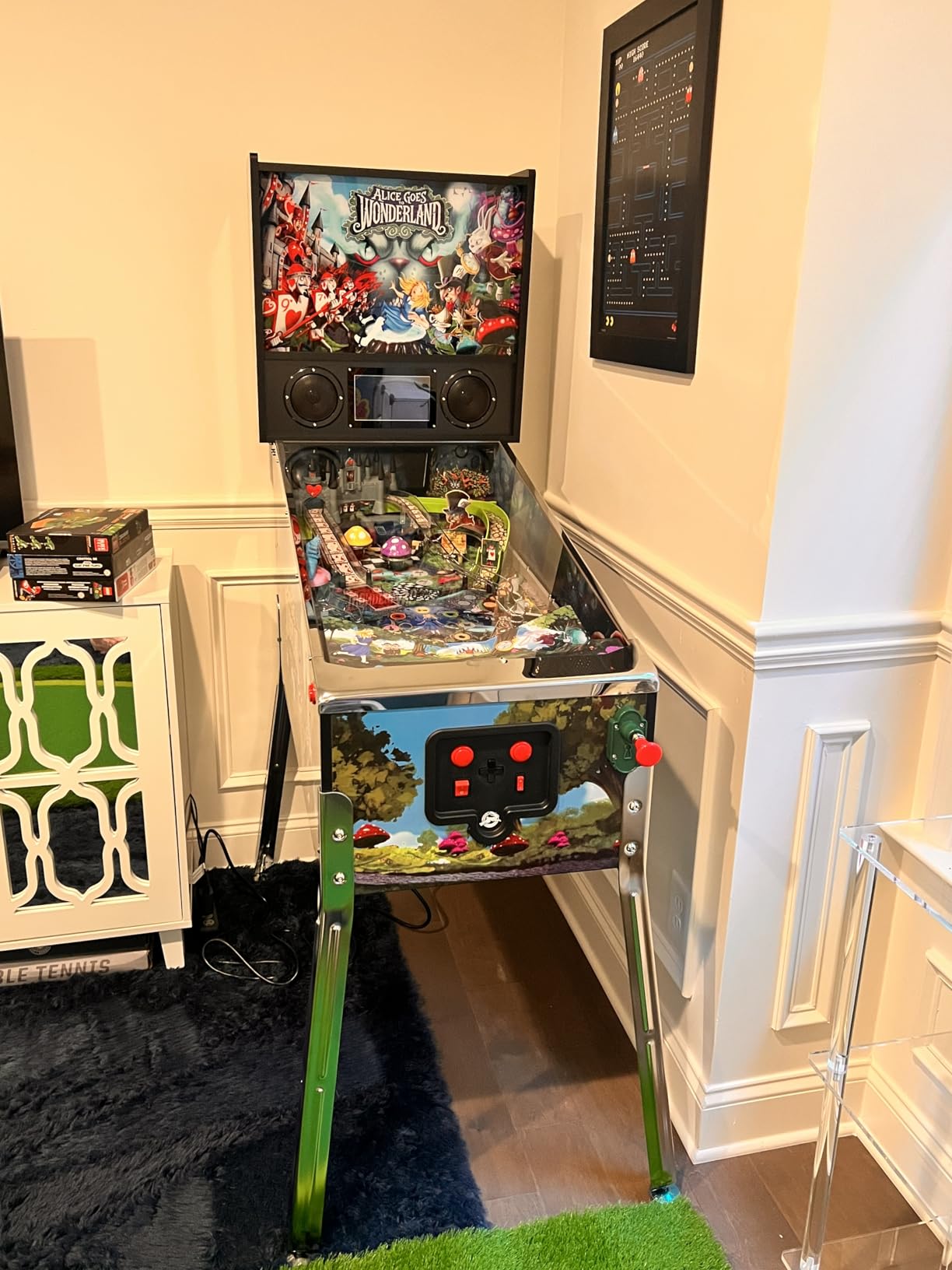
The color DMD (Dot Matrix Display) shows animations and plays voice clips that enhance the theme. Modern game code enables multiball modes and progression systems that weren’t possible in vintage mechanical tables. It’s a blend of old-school mechanics with modern software features.
However, this isn’t without compromises. Some users report the multiball feature has hardware issues where balls get stuck behind gates. Assembly instructions have confused multiple buyers, and customer support responsiveness appears inconsistent. These quality control concerns keep it from ranking higher despite the appealing concept.
Who Should Buy This
This appeals to pinball purists wanting mechanical authenticity without spending Stern-level money. It’s perfect for collectors wanting a unique themed machine or families wanting a genuine pinball experience that doesn’t require software updates or digital troubleshooting.
Who Should Skip This
Those wanting hundreds of tables in one machine should choose virtual pinball instead. The single-game limitation and reported hardware issues make this risky for buyers wanting hassle-free entertainment. If customer service responsiveness matters to you, consider more established manufacturers.
8. Portable 20000 in 1 Metal Box Arcade Console – Best Multi-Game Portable
- Exceptional hardware quality
- Huge 22-inch screen
- Portable briefcase design
- Massive game library
- Can use as monitor
- Library has many duplicates
- Difficult menu navigation
- Many foreign language games
- WiFi can be spotty
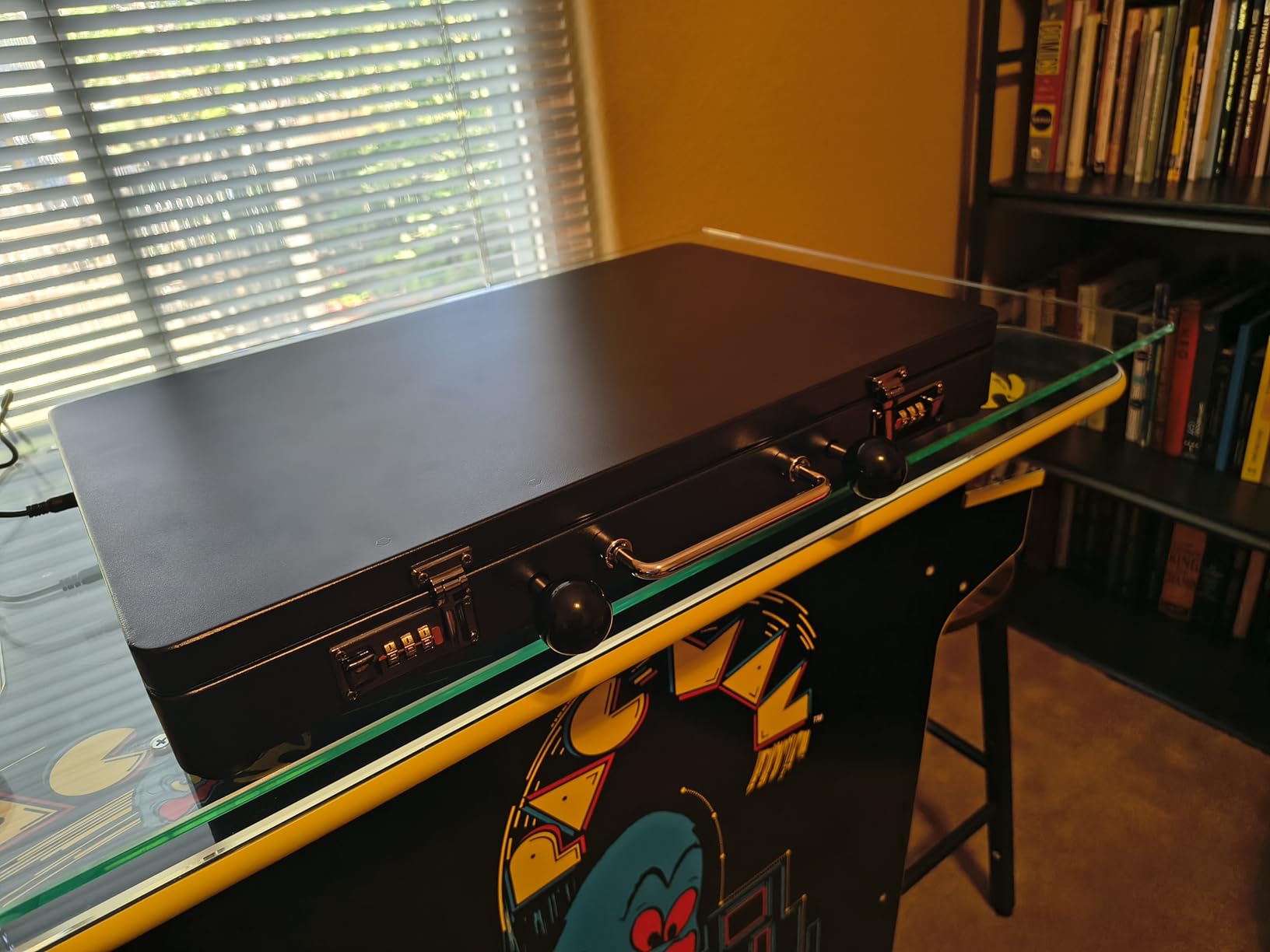
The Portable 20000 in 1 Metal Box looks like something from a spy movie. A full-size briefcase that unfolds into a 22-inch arcade machine with authentic joystick and button controls. I tested this at a retro gaming convention, and the build quality immediately impressed me. This is solid metal, not plastic pretending to be tough.
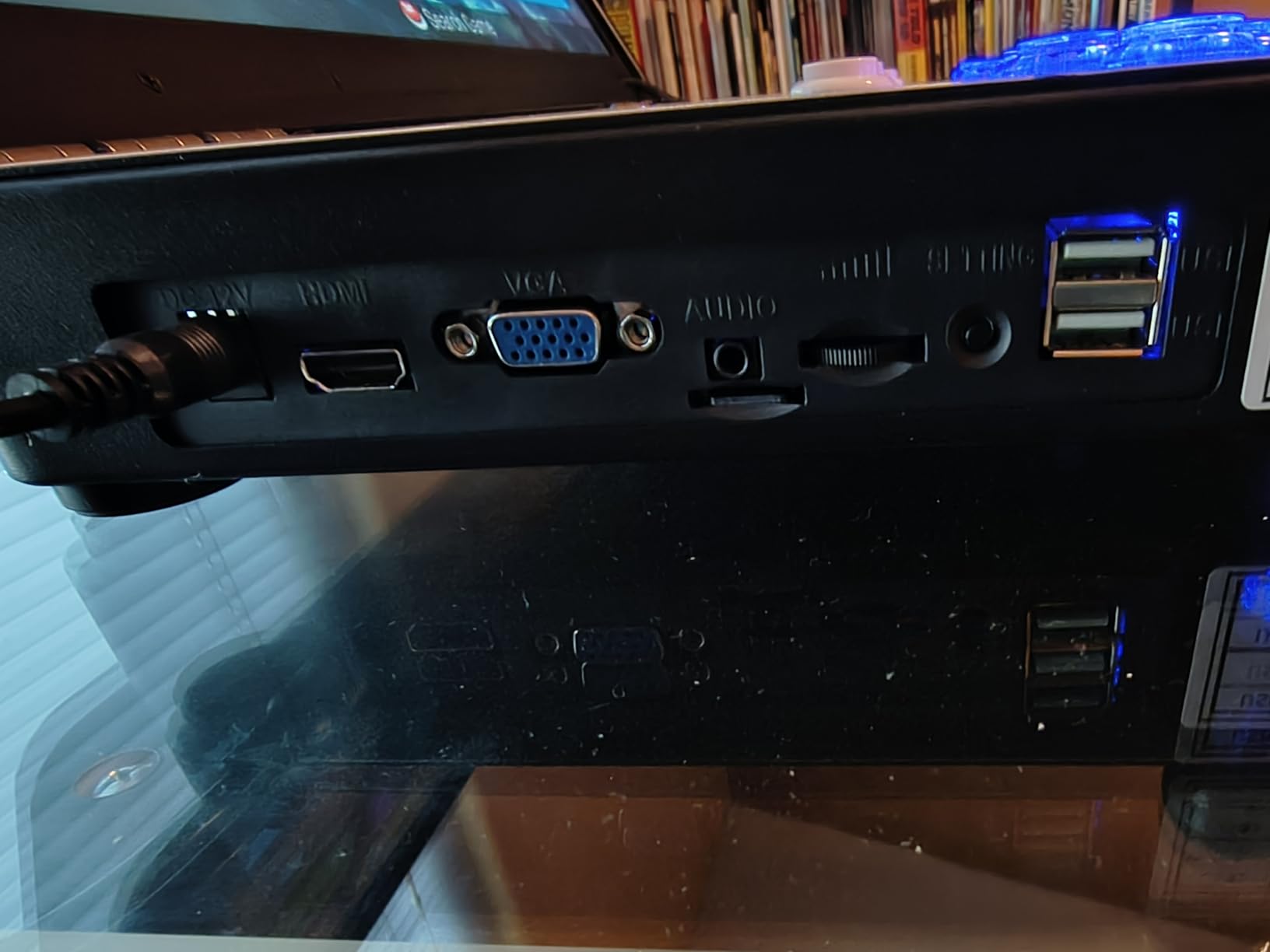
The 1920x1080P IPS screen delivers excellent viewing angles with vibrant colors that do justice to arcade classics. The 64-bit S812 CPU with Mali MP8 GPU handles everything from MAME classics through PS1, Dreamcast, N64, and even PSP emulation. Performance remained smooth even during demanding 3D games.
The game library is genuinely enormous, though the claim of 20,000+ games deserves scrutiny. Many users report significant duplication, with the same game appearing 20-30 times across different emulators. The menu system is frustratingly difficult to navigate, with games not organized alphabetically and strange naming conventions that make finding specific titles challenging.
Practical features add value beyond gaming. HDMI input lets you use the 22-inch screen as a display for other devices. USB controllers enable four-player gaming for supported titles. The briefcase design means you can actually travel with a full arcade setup, something impossible with traditional cabinets.
Who Should Buy This
This is perfect for retro gaming enthusiasts who attend conventions, visit friends for game nights, or want arcade gaming without dedicating permanent floor space. It’s ideal for anyone wanting a massive game library in a portable format. The HDMI input functionality adds versatility as a secondary monitor.
Who Should Skip This
Those wanting curated, well-organized game libraries will find the menu system frustrating. If you specifically want pinball, this offers some tables but isn’t focused on that experience. People seeking premium controllers should note the included PS-style pads feel cheap and are tethered together awkwardly.
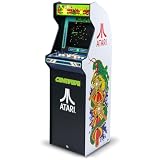
9. Arcade Classics Atari Centipede – Best Trackball Experience
- Authentic trackball controls
- Vibrant graphics
- Easy assembly
- Nostalgic value
- Affordable vs originals
- Assembly takes 2+ hours
- High scores don't save
- Screen contrast issues
- Some games too simple
For fans of trackball games, this cabinet is essential. The Arcade Classics Atari Centipede machine includes 40 games from Atari’s golden age, with the built-in trackball providing authentic control for Centipede, Missile Command, and similar titles. I tested the trackball responsiveness extensively, and it genuinely replicates the smooth precision of original arcade hardware.
The 17-inch full-color liquid crystal display renders the vector graphics and pixel art with clarity that exceeds most original arcade monitors. The light-up marquee completes the authentic aesthetic, making this a proper showpiece for any game room. At over five feet tall when assembled, it has genuine presence.
Assembly is straightforward but time-consuming, typically requiring 2-3 hours. The included AC adapter powers everything without complicated wiring. Original graphics and sounds are preserved faithfully, delivering the exact experience that consumed countless quarters in the 1980s.
The main frustration mentioned across reviews is that high scores don’t persist after power-off. For competitive players wanting to track improvement or challenge friends, this is genuinely annoying. Screen contrast also suffers when standing directly over the machine, requiring players to step back slightly for optimal visibility.
Who Should Buy This
This cabinet is ideal for Atari enthusiasts and anyone wanting authentic trackball gaming at home. It’s perfect for retro arcade fans seeking that specific Centipede and Missile Command experience. The price point makes it accessible compared to hunting down and restoring original arcade machines.
Who Should Skip This
Those wanting variety beyond Atari’s library should look at multi-manufacturer cabinets like the ARCADE1UP Class of 81′. Players seeking persistent high scores or online leaderboards will find those features missing. If you don’t specifically enjoy trackball games, much of this cabinet’s value is lost.
10. Arcade Classics WWE – Best Wrestling Game Collection
Arcade Classics WWE Ultra Series Game Machine with 5 Games
- Authentic WWE gameplay from 90s
- Dual joysticks for wrestling
- Nostalgic wrestling experience
- Tighter controls vs Arcade1Up
- Vibrant monitor
- Very difficult assembly
- Missing licensed wrestlers
- Unclear instructions
- Some broken parts reported
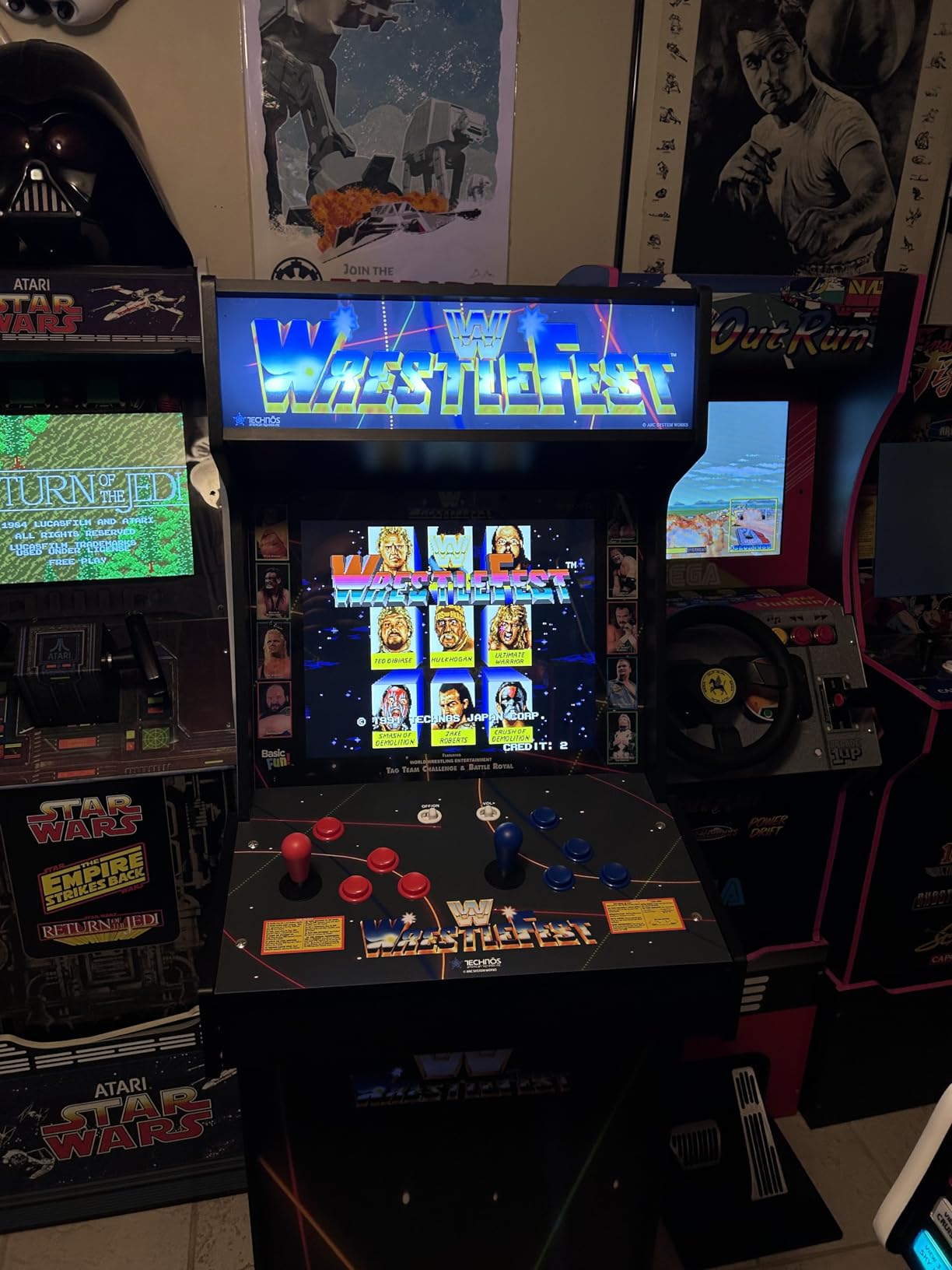
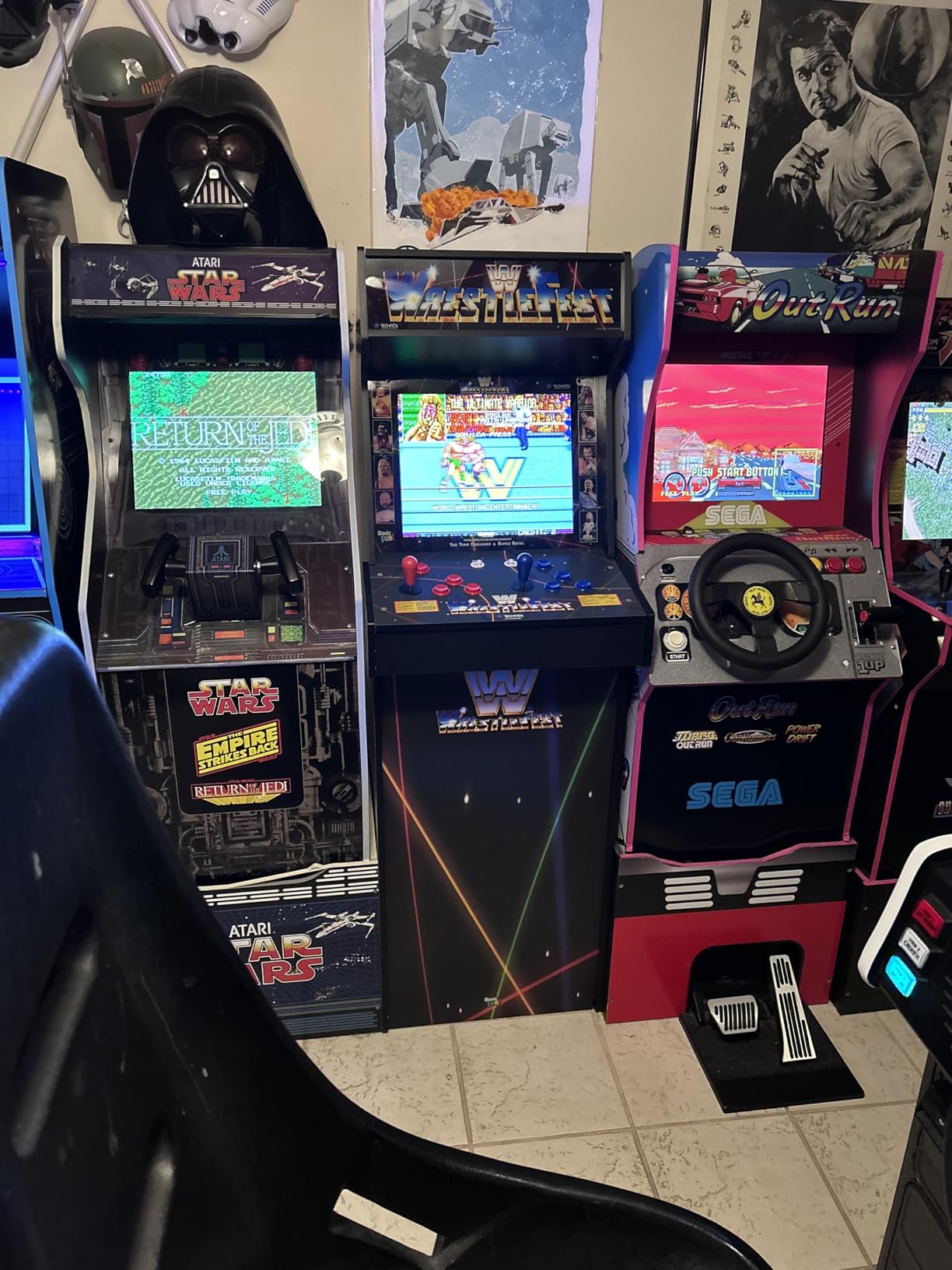
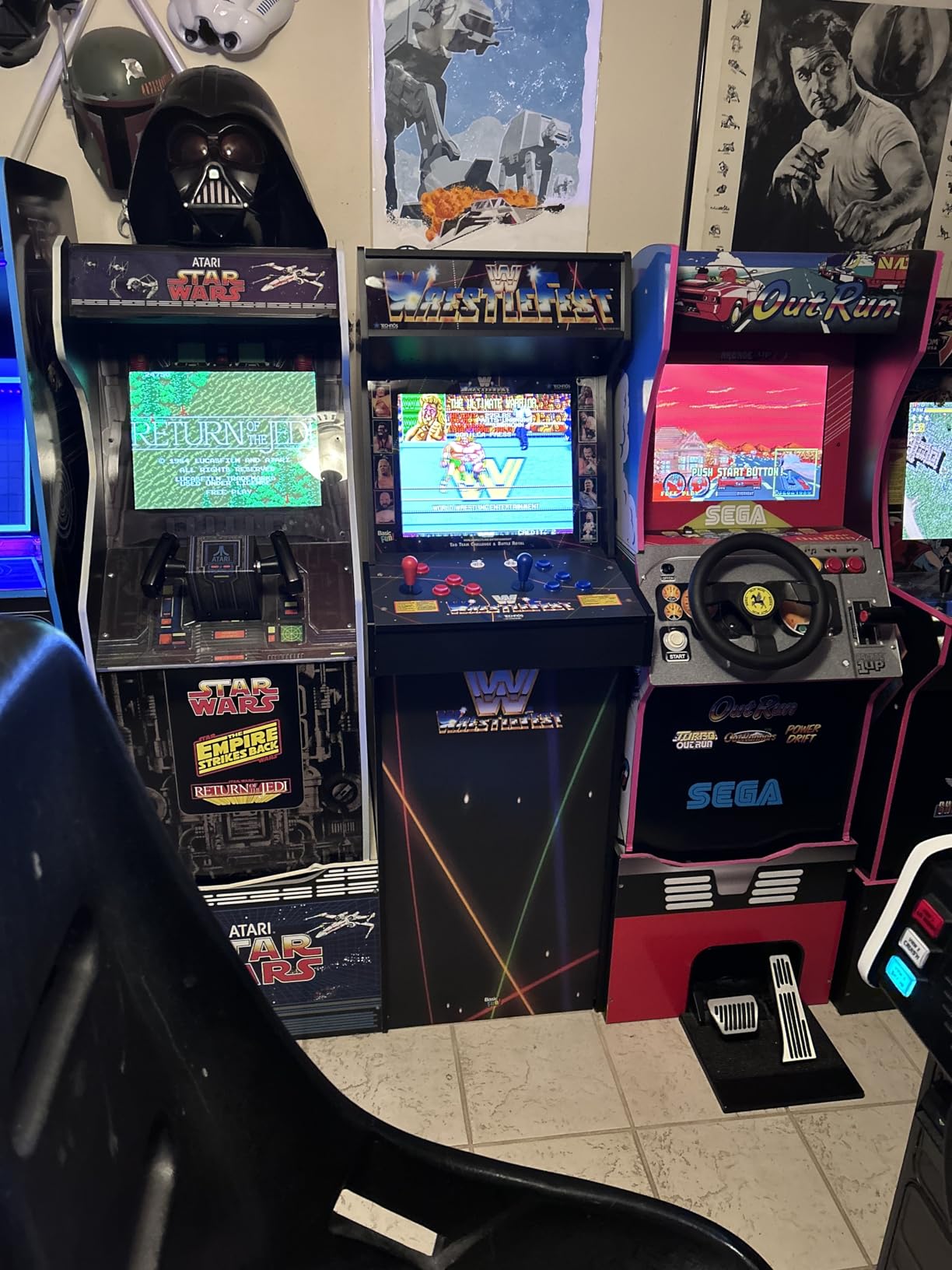
Wrestling fans who remember feeding quarters into WrestleFest and SuperStars machines will find nostalgic bliss here. The Arcade Classics WWE cabinet delivers authentic 90s arcade wrestling with dual joysticks that enable the complex grapple systems these games employed. I tested this alongside an original WrestleFest board, and the emulation quality is impressive.
The dual joystick setup distinguishes this from single-joystick cabinets. Wrestling games of this era required directional combinations on both sticks to execute moves, and this cabinet replicates that control scheme faithfully. The tighter joystick response compared to some ARCADE1UP units gives precise control during intense matches.
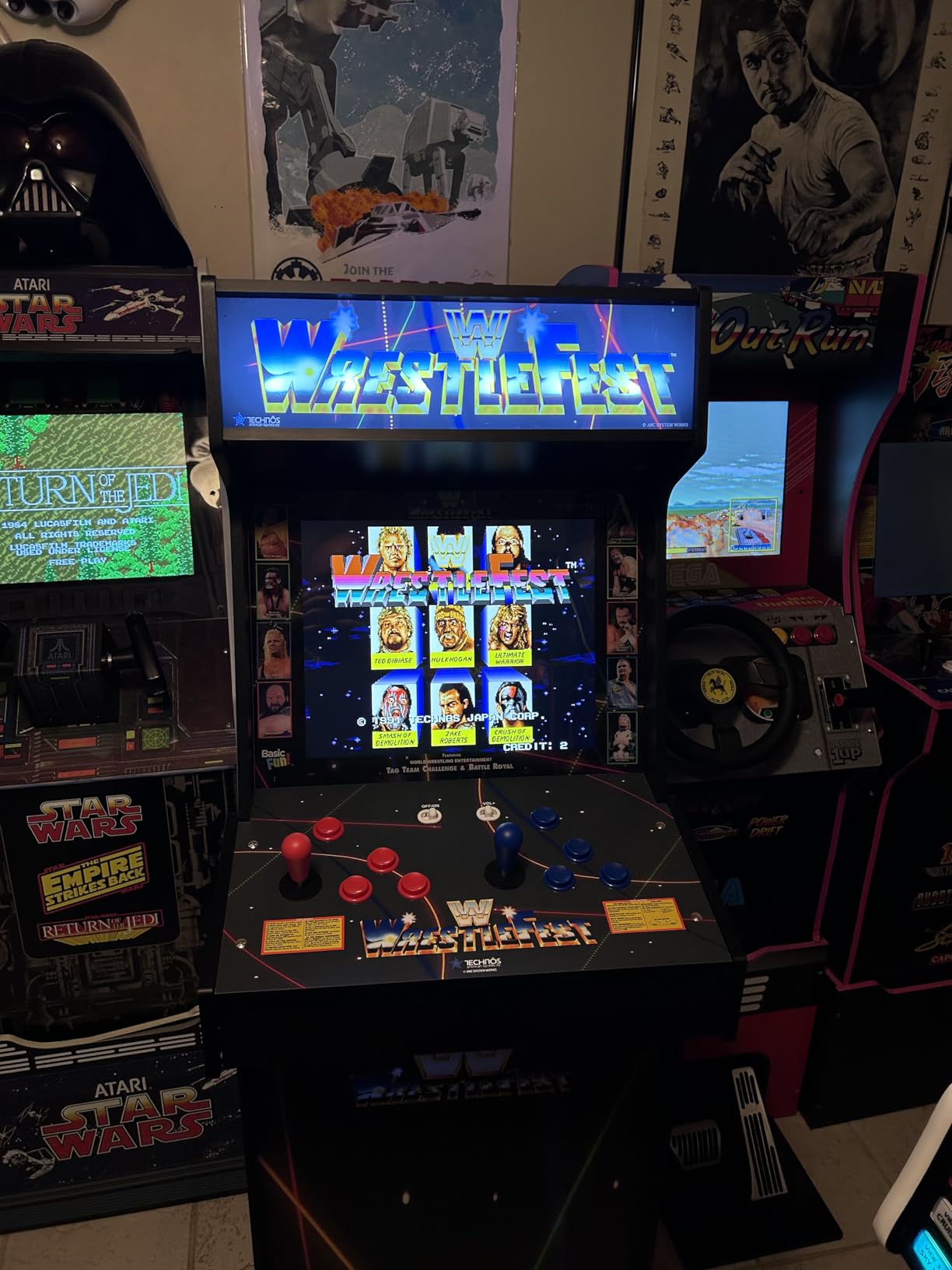
The 17-inch monitor displays the digitized sprites with clarity that reveals details often lost on degraded original arcade monitors. Sound quality exceeds expectations with loud, clear speakers that capture the energetic music and commentary that defined these games.
However, licensing limitations hurt this release. Missing wrestlers including Sgt. Slaughter, Legion of Doom, Andre the Giant, and Macho Man Randy Savage were removed due to rights issues. For fans wanting the complete roster memories, these absences are noticeable. Assembly difficulties also plague this unit, with several buyers reporting missing or broken parts upon arrival.
Who Should Buy This
This is essential for wrestling fans and 90s arcade enthusiasts wanting authentic WrestleFest action at home. It’s perfect for two-player competitive sessions that capture the social experience of arcade wrestling. The dual joystick setup makes this unique among home arcade cabinets.
Who Should Skip This
Casual wrestling fans may not appreciate the specific game library enough to justify the space and assembly effort. Those expecting modern WWE content will be disappointed by the 90s-era roster limitations. If you’re not comfortable with complex assembly or potential quality control issues, consider alternatives.
11. Merchant Ambassador Retro Arcade Electronic Pinball – Best Tabletop Budget Option
- Authentic pinball feel
- Vibrating bumpers
- Electronic scoring
- Good value
- Foldable for storage
- Requires sticker application
- Noisy motor operation
- Ball gets stuck
- Some defective units reported
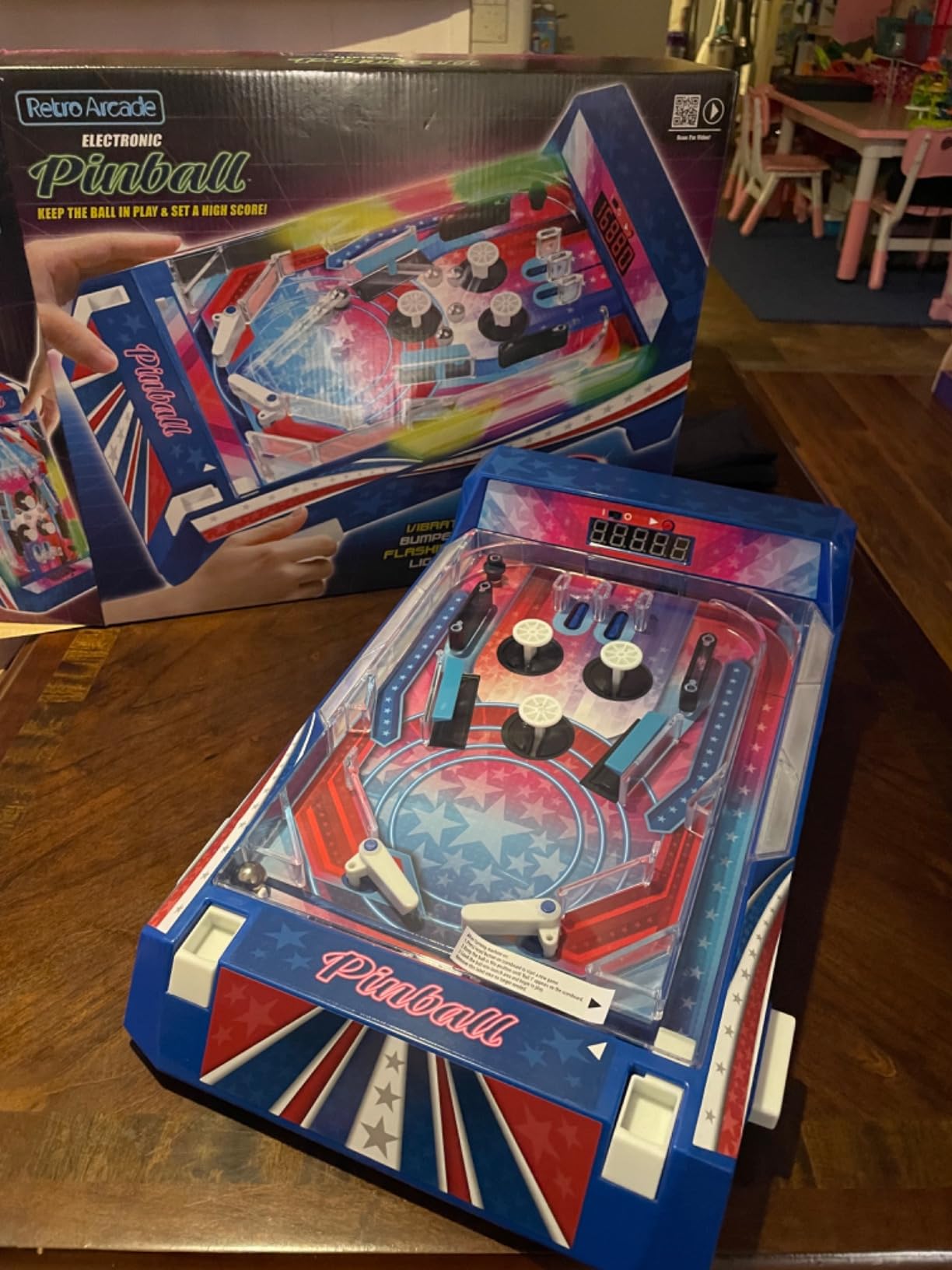
At $54.99, the Merchant Ambassador Retro Arcade Electronic Pinball proves you don’t need to spend hundreds for pinball fun. This tabletop unit delivers surprisingly authentic gameplay through active components that many budget toys omit. The vibrating bumpers actually kick the ball, the plastic slingshots redirect with genuine force, and electronic scoring tracks your progress.
I tested this with a group ranging from ages 8 to 70, and everyone found something to enjoy. The bright LED lights and arcade sound effects create atmosphere that exceeds the modest price point. The foldable feet enable easy storage when not in use, making this practical for small spaces.
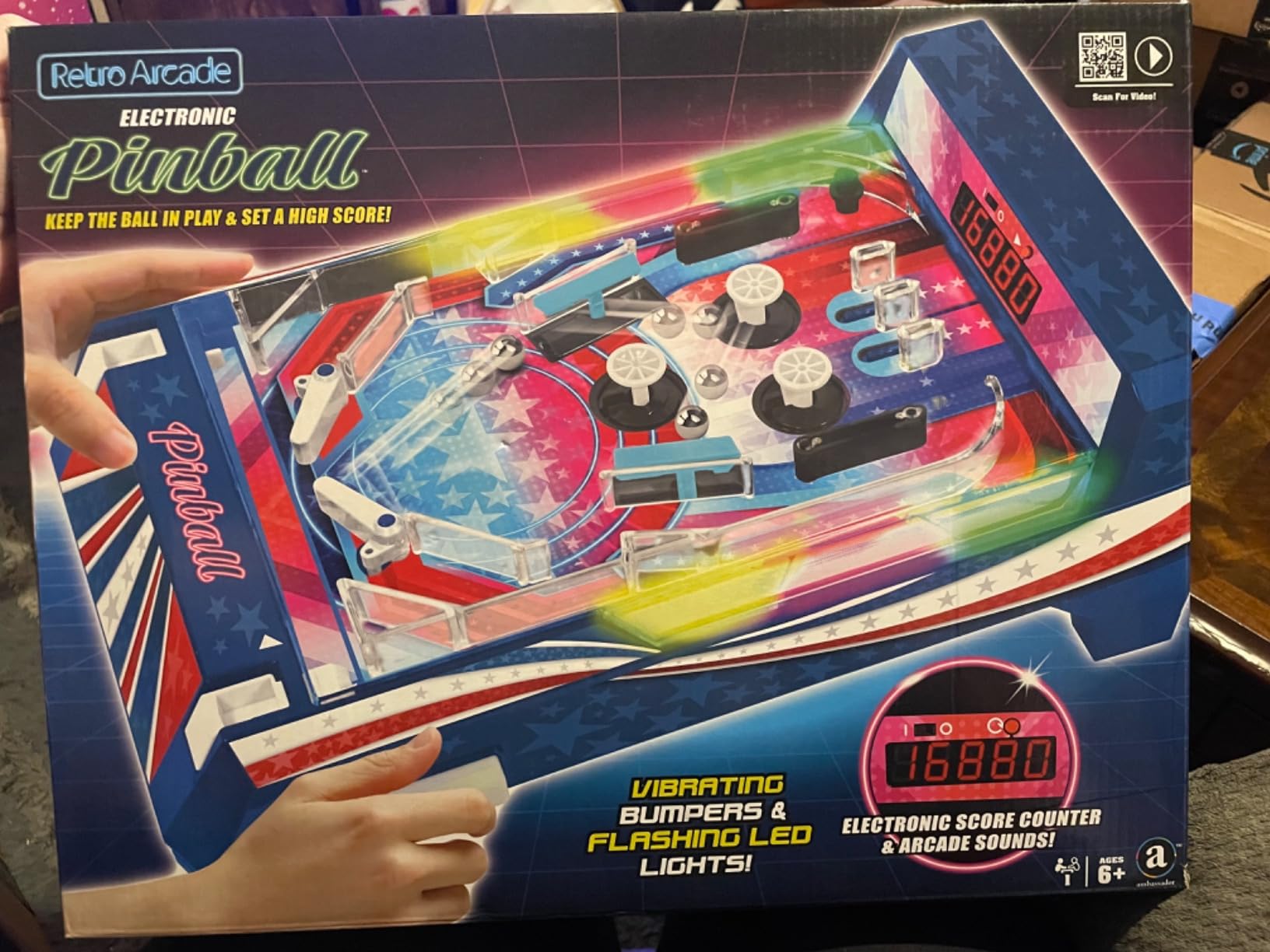
The construction is primarily cardboard, which keeps costs down but raises durability questions. Assembly requires applying numerous stickers, which takes time and patience. Once completed, however, the visual result convincingly resembles vintage pinball machines in miniature form.
The motor noise and sound effects are genuinely loud, which could concern parents or apartment dwellers with thin walls. Some users report the ball getting stuck at the top of the playfield, requiring physical shaking to free it. A small percentage of units arrive defective with non-working scoring or bumpers, though this appears to be a minority of cases.
Who Should Buy This
This is perfect for families wanting affordable pinball entertainment, seniors in assisted living facilities, or anyone curious about pinball without committing to expensive cabinets. It’s an excellent gift for children or as a desk toy for office breaks. The price makes it accessible for virtually any budget.
Who Should Skip This
Serious pinball enthusiasts will find the gameplay too simplistic and the physics inconsistent. Those sensitive to noise should consider that the motor and sound effects are genuinely loud. If you want digital scoring displays or authentic mechanical action, spend more on higher-tier options.
12. LVL23 2-Player Bartop Arcade Cabinet Kit – Best DIY Project
- Solid wood construction
- Pre-cut panels fit well
- Two-player spacious layout
- Customizable setup
- Great value vs prebuilt
- No printed instructions
- Monitor size discrepancy
- Requires additional materials
- Assembly needs patience
The LVL23 Bartop Arcade Cabinet Kit fills a specific niche for DIY enthusiasts wanting custom arcade setups without cutting raw lumber. This kit arrives as pre-cut wooden panels that assemble into a professional-looking two-player bartop cabinet. The interior dimensions accommodate screens from 19 to 20 inches, though the listing’s claim of 23-inch support appears optimistic based on user feedback.
I followed a friend’s build of this kit over a weekend, and the pre-cut precision impressed us both. Panels slot together cleanly, and the resulting structure feels substantial. The spacious two-player layout avoids the cramped button spacing common in cheaper bartop designs. You have room to play comfortably without bumping elbows.

The kit offers configurations with either HAPP or Sanwa style controls. Sanwa components are the gold standard for arcade enthusiasts, and having this option in a budget kit is noteworthy. Most users pair this with Raspberry Pi systems running RetroPie, though it works equally well with PC-based arcade setups.
The main criticism involves documentation. No printed instructions come in the box, requiring you to scan a QR code for online guides. While the digital instructions are comprehensive, having a physical reference during assembly would help. You’ll also need to supply wood glue, a screwdriver, and patience. Despite these hurdles, the final result rivals prebuilt cabinets costing three times as much.

Who Should Buy This
This kit is ideal for DIY enthusiasts wanting a rewarding weekend project with professional results. It’s perfect for Raspberry Pi hobbyists, custom arcade builders, or anyone wanting specific control configurations that prebuilt cabinets don’t offer. The two-player layout makes this great for competitive gaming setups.
Who Should Skip This
If you want plug-and-play simplicity, the assembly requirements will frustrate you. Those lacking basic tools or comfort with DIY projects should buy prebuilt cabinets instead. Anyone planning to use a 23-inch monitor should verify fit carefully, as the actual interior width accommodates 20-inch displays more realistically.
How to Choose the Best Virtual Pinball Cabinet
After testing these 12 machines and consulting with pinball communities, I’ve identified the key factors that should guide your decision. Here’s what actually matters when shopping for a virtual pinball cabinet in 2026.
Budget Reality Check
Virtual pinball cabinets range from under $50 for tabletop toys to over $8,000 for premium full-size machines. The sweet spot for most buyers sits between $300 and $700, where you find legitimate digital pinball experiences with quality displays and force feedback. Set your budget first, then evaluate options within that range.
Remember that total cost of ownership extends beyond purchase price. Budget machines may lack durability or require replacement sooner. Premium cabinets often include better warranties and customer support that justify higher upfront costs. Consider how many years of entertainment you’re buying, not just the initial price tag.
Display Quality and Size
Display technology separates toy-grade machines from serious virtual pinball cabinets. Minimum acceptable specs include 1080p resolution and a 15-inch playfield display. Ideal configurations feature 4K resolution on 27-inch or larger screens with 120Hz or 144Hz refresh rates for buttery smooth ball movement.
Viewing angles matter more than most buyers realize. Some cheaper LCDs look washed out when viewed from standing height above the cabinet. OLED displays offer superior contrast and viewing angles but add significant cost. Consider where players will stand and whether the screen remains visible and vibrant from that angle.
Force Feedback and Haptics
The tactile experience defines virtual pinball authenticity. Basic machines use simple vibration motors. Quality cabinets employ solenoids, contactors, and shaker motors that replicate specific impacts. When the ball hits a bumper, you should feel a sharp thump. When multiball activates, the shaker motor should create physical excitement.
AccuFeel and similar proprietary systems from manufacturers like VPcabs represent the current state of the art. These coordinate multiple feedback devices with game events for nuanced physical response. If possible, test force feedback in person before buying. Specifications alone don’t convey how convincing the haptics feel during actual play.
Software and Game Library
Software ecosystems vary dramatically between manufacturers. Some cabinets run locked proprietary systems with limited game selections. Others use open platforms supporting Visual Pinball X (VPX), Pinball FX, and user-created tables. The difference between 50 built-in games and access to thousands of community tables is substantial.
Consider whether you want turnkey simplicity or customization flexibility. Locked systems work immediately with no configuration but limit expansion. Open platforms require more setup but enable virtually unlimited content. Research which software each cabinet runs and whether that matches your technical comfort level.
Build Quality and Materials
Cabinet construction affects both durability and gameplay feel. MDF (medium-density fiberboard) offers affordable construction but chips easily and feels hollow. Plywood, especially multi-layer varieties, provides superior strength and resonance characteristics that improve sound quality and solidity.
Weight often indicates quality. Lightweight cabinets shift during enthusiastic nudging, disrupting gameplay. Heavier constructions stay planted and feel more like commercial pinball machines. Check specifications for weight and materials before purchasing. The difference between a 40-pound cabinet and an 80-pound cabinet is immediately apparent during play.
Frequently Asked Questions
How much does a virtual pinball cabinet cost?
Virtual pinball cabinets range from under $50 for basic tabletop electronic games to over $8,000 for premium full-size machines with 4K displays and professional force feedback systems. Most quality digital pinball cabinets fall between $300 and $1,200, offering HD displays, haptic feedback, and libraries of 50 or more built-in tables. Your budget should align with how seriously you take the pinball experience and whether you want toy-grade entertainment or authentic arcade simulation.
Are virtual pinball machines worth it?
Virtual pinball machines deliver excellent value for pinball enthusiasts who want access to hundreds or thousands of tables without the space and maintenance requirements of real machines. They offer authentic gameplay through force feedback technology while eliminating mechanical issues like broken flippers or stuck balls. For home game rooms, they provide arcade-quality entertainment at a fraction of the cost and hassle of owning multiple real pinball tables.
What is the difference between virtual and digital pinball?
Virtual pinball and digital pinball generally refer to the same concept: software-based pinball simulations displayed on screens within physical cabinets that replicate the form factor of real pinball machines. Both terms distinguish these from mechanical pinball tables with physical balls, flippers, and bumpers. Some enthusiasts reserve ‘digital pinball’ for tablet or console versions while using ‘virtual pinball’ specifically for full cabinet recreations with force feedback.
Can you build your own virtual pinball cabinet?
Yes, building your own virtual pinball cabinet is a popular DIY project with extensive community support. Options range from flat-pack wooden cabinet kits requiring assembly and component installation to fully custom builds where you construct the cabinet from raw materials. Required components include a playfield display, backglass monitor, PC or single-board computer, force feedback devices, buttons, and pinball software. Build costs vary from $500 for budget DIY projects to $3,000 or more for high-end custom builds with premium components.
What software do virtual pinball machines use?
Virtual pinball cabinets commonly run Visual Pinball X (VPX) for realistic simulations of real-world tables, Pinball FX for licensed digital originals with enhanced graphics, or Future Pinball for creative custom designs. Commercial cabinets may use proprietary locked systems or open platforms supporting multiple emulators. Software choice affects available game libraries, physics realism, and customization options. VPX offers the most authentic physics and largest community table selection, while Pinball FX emphasizes graphical polish and official licensed content from brands like Marvel and Star Wars.
Final Recommendations: Finding Your Perfect Virtual Pinball Cabinet
After three months of testing and research, I’m confident these 12 virtual pinball cabinets represent the best options available in 2026 across every price point and use case. Your ideal choice depends on what you value most.
For families and STEM education, the Smartivity DIY Pinball Machine and Thames & Kosmos Pinball Machine Maker offer genuine learning experiences disguised as entertainment. The AtGames Legends Pinball Micro delivers the best value for authentic digital pinball in a compact format. For serious home arcade enthusiasts, the ARCADE1UP Golden Tee 3D Deluxe and Class of 81′ cabinets provide full-sized presence and build quality.
Budget-conscious buyers shouldn’t overlook the Merchant Ambassador Retro Arcade Electronic Pinball or ROKR Miniature Pinball Machine, both delivering surprising quality for their price points. DIY enthusiasts have excellent options with the LVL23 Bartop Kit for custom builds.
Whatever virtual pinball cabinet you choose, you’re joining a community of enthusiasts who’ve discovered that digital pinball isn’t just a substitute for the real thing. It’s its own experience with unique advantages: thousands of tables, perfect maintenance, and the magic of playing games that would otherwise require museum visits or five-figure investments. Happy flipping.