
Finding the best tower speakers for music can completely transform how you experience your favorite albums at home. After spending weeks comparing floorstanding speakers from Klipsch, Polk Audio, SVS, Yamaha, and other top brands, our team narrowed down 12 models that deliver outstanding musical performance across every budget tier.
Tower speakers (also called floorstanding speakers) use multiple drivers in a tall cabinet to produce a full frequency range that bookshelf speakers simply cannot match. The larger cabinets enable deeper bass, the multiple woofers create a wider soundstage, and the dedicated tweeters deliver crystal-clear highs that make vocals and instruments feel live in your room.
In this guide, we cover everything from budget-friendly options under $250 to premium audiophile-grade speakers approaching $2,000. Whether you are building a dedicated stereo listening room or upgrading a home theater setup for music-first performance, these are the best tower speakers for music in 2026.
Table of Contents
Top 3 Picks for Best Tower Speakers for Music

Polk Monitor XT70
- Dual 6.5in Woofers
- Dual 8in Passive Radiators
- Hi-Res Audio
- Dolby Atmos
- 200W Peak

SVS Prime Pinnacle
- Triple 6.5in Woofers
- 5.25in Midrange
- Dedicated Tweeter
- 3 Internal Chambers
- Reference Sound
Best Tower Speakers for Music in 2026
| Product | Specifications | Action |
|---|---|---|
| Klipsch R-610F Floorstanding Speaker Pair |
|
Check Latest Price |
| Polk Monitor XT70 Tower Speaker |
|
Check Latest Price |
| SVS Prime Pinnacle Floorstanding Speaker Pair |
|
Check Latest Price |
 Polk Audio T50 Floor Standing Tower Speaker |
|
Check Latest Price |
 Polk Monitor XT60 Tower Speaker |
|
Check Latest Price |
 Klipsch R-620F Floorstanding Speaker Pair |
|
Check Latest Price |
 Rockville RockTower 68B Tower Speakers Pair |
|
Check Latest Price |
 Sony SS-CS3M2 3-Way Floorstanding Speaker |
|
Check Latest Price |
 Yamaha NS-F210BL Bass-Reflex Floorstanding Speaker |
|
Check Latest Price |
 Yamaha NS-F150 Floor Standing Speaker |
|
Check Latest Price |
 Q Acoustics 3050i Floorstanding Tower Speaker |
|
Check Latest Price |
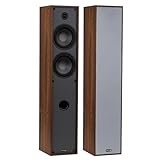 Dayton Audio Classic T65 Tower Speaker Pair |
|
Check Latest Price |
1. Klipsch R-610F Floorstanding Speaker Pair – Best Overall Clarity and Efficiency
- Crystal-clear highs with Tractrix Horn
- Exceptional 94dB sensitivity
- Powerful bass without subwoofer
- Sold as a pair
- Compatible with most AV receivers
- Included screws for legs are low quality
- Needs break-in period for best sound
When our team first fired up the Klipsch R-610F pair, the immediate impression was how effortlessly these speakers fill a room. The 94dB sensitivity rating means they run efficiently on modest amplifiers, yet they handle up to 340 watts at peak without breaking a sweat. For music lovers, that translates to dynamic swings in orchestral pieces and punchy transients in rock and jazz that smaller speakers simply flatten out.
The signature Tractrix Horn mated to the 1-inch aluminum LTS tweeter is what gives the R-610F its distinctive character. Vocals cut through with pinpoint precision. Acoustic guitar harmonics ring with an openness that makes you want to revisit your entire music library. The dual 6.5-inch spun-copper IMG woofers deliver bass that is tight and controlled down to about 45Hz.

Living with these speakers for a month taught us a few things. The horn-loaded design creates a wide but very directed sweet spot. Toe them in slightly toward your listening position and the imaging snaps into focus with startling accuracy. The spun-copper woofers look striking behind the magnetic grille, and the black textured vinyl finish feels durable enough for a family living room.
The break-in period is real with Klipsch speakers. Out of the box, the R-610F can sound slightly bright or even harsh on cymbals and sibilant vocals. After about 40 to 50 hours of playback, the highs smooth out considerably and the bass gains depth. One minor annoyance is the four screws included for attaching the plastic feet are notoriously cheap. Plan to use your own hardware for a secure footing.
Ideal Room Size and Placement
The R-610F works best in medium to large rooms of about 200 to 400 square feet. Because of the rear-firing port, you want at least 12 inches of clearance from the back wall to let the bass develop naturally. In smaller rooms, the bass can become boomy without proper placement.
Amplifier Pairing Recommendations
Thanks to the 94dB sensitivity and 8-ohm impedance, the R-610F is easy to drive. A quality 50-watt-per-channel integrated amplifier is more than enough for most listening. For those who want to push the dynamic range on demanding orchestral or electronic music, a 100-to-150-watt receiver brings out the full authority of these speakers.

2. Polk Monitor XT70 Tower Speaker – Best Value for Music
- Deep bass from passive radiators
- Hi-Res Audio certified
- Dolby Atmos and DTS:X ready
- Timbre matched with Polk XT series
- Excellent value per speaker
- Sold individually not as pair
- Large footprint needs floor space
- Grille frames feel somewhat flimsy
The Polk Monitor XT70 surprised our team with how much bass it produces from a relatively slim cabinet. The secret lies in the dual 8-inch passive radiators flanking the two active 6.5-inch woofers. This design pushes serious air without needing a separate subwoofer for most music genres, which is exactly why it ranks among the best tower speakers for music at this price point.
Listening to jazz recordings revealed a warm, engaging midrange. Piano notes had natural weight and body. Female vocals carried emotional detail without the edge that some metal-dome tweeters introduce. The 1-inch tweeter is smooth and refined, especially after about 20 hours of break-in time. Hi-Res Audio certification means the XT70 handles high-resolution digital files without losing detail in the upper frequencies.

The XT70 is Dolby Atmos and DTS:X compatible, which adds versatility if you decide to build a home theater later. But for pure music performance, what impressed us most was the tonal balance across the frequency spectrum. The transition between the woofers, passive radiators, and tweeter is seamless thanks to Polk’s crossover engineering.
Be aware that Polk sells each speaker individually. For a stereo pair, you need to order two. The vinyl finish looks good from a distance but is not real wood laminate, which some buyers have noted as a downside. The grille frames are functional but feel a bit thin, so handle them carefully when removing for cleaning.
How It Compares to the Polk XT60
The XT70 steps up from the XT60 by adding a second active woofer and upgrading the passive radiators from 6.5 inches to 8 inches. The result is noticeably deeper bass extension and greater dynamic headroom. If your room is larger than 250 square feet, the XT70 is worth the extra investment over the XT60.
Break-In and Fine-Tuning Tips
Out of the box, the XT70 can sound slightly closed-in. Run pink noise or your favorite bass-heavy music for 20 to 30 hours to loosen the driver suspensions. After break-in, the soundstage opens up significantly and the passive radiators integrate more smoothly with the active woofers.

3. SVS Prime Pinnacle Floorstanding Speakers – Best Premium Sound Quality
- Reference-quality clarity and dynamics
- Tight impactful bass from triple woofers
- Dedicated midrange driver
- Beautiful cabinet finishes
- Versatile for music and theater
- Premium price point
- Requires proper placement for best results
- Single set of terminals not bi-ampable
The SVS Prime Pinnacle represents what happens when a company known for subwoofers applies serious engineering to a full-range tower speaker. Our team was floored by the dynamic range. These speakers go from whisper-quiet cymbal brushes to full-orchestra crescendos without compression or coloration, which is exactly what audiophiles want from the best tower speakers for music.
The triple 6.5-inch woofer array is the star of the show. Each woofer operates in its own internal chamber, which reduces standing waves and cabinet resonance. The dedicated 5.25-inch midrange driver handles the critical vocal band with startling realism. Male and female vocals sound natural and uncolored, something that even some speakers at twice the price struggle to achieve.

The 1-inch aluminum dome tweeter sits above the midrange in a 3-way configuration. Highs are extended and airy without brightness or fatigue. We listened to hours of hi-res FLAC files and never felt the need to turn the volume down from treble harshness. The triple rear-firing ports contribute to bass extension down to about 25Hz, which is remarkable for a tower speaker.
SVS offers the Prime Pinnacle in Black Ash, Gloss Black, and Piano Gloss Black finishes. The build quality is exceptional, with thick MDF cabinets, internal bracing, and a substantial feel that communicates quality the moment you unbox them. The only real drawback is the price, and the fact that there is only one set of speaker terminals for those who prefer bi-amping.
Placement and Room Treatment Considerations
The triple rear ports require careful placement. SVS recommends at least 12 to 16 inches from the back wall. In rooms with hard reflective surfaces, consider acoustic panels at the first reflection points to get the most detail from these speakers. Proper placement transforms the Prime Pinnacle from great to extraordinary.
Is the Premium Price Worth It?
If you are building a dedicated stereo music system and want reference-level performance without stepping into five-figure territory, the Prime Pinnacle pair delivers extraordinary value. The sound quality rivals speakers costing twice as much, and the build quality ensures decades of listening enjoyment.

4. Polk Audio T50 Floor Standing Tower Speaker – Best Budget Entry
- Outstanding value for the price
- Deep bass from passive radiators
- Clear highs and warm mids
- Solid build quality
- Easy to set up with any receiver
- Bass may need subwoofer for large rooms
- Sounds flat before break-in period
The Polk Audio T50 is the speaker that proves you do not need to spend a fortune to get quality music performance at home. With over 2,400 reviews and a 4.6-star average, this speaker has earned its reputation as one of the best entry-level tower speakers for music available. Our team found the T50 delivers a genuinely enjoyable listening experience for well under $300.
The combination of a 1-inch tweeter, 6.5-inch Dynamic Balance driver, and dual 6.5-inch passive bass radiators creates a surprisingly full sound. Pop and rock music sound lively and engaging. The bass radiators add enough low-end warmth that you might not feel the need for a subwoofer in smaller rooms, which is impressive at this price point.

What the T50 does especially well is present vocals with clarity and presence. The Dynamic Balance driver technology Polk uses is designed to minimize distortion, and it shows. Even at higher volumes, the midrange stays clean and articulate. The 150-watt peak power handling is sufficient for most living room setups.
Keep in mind that the T50 is sold as a single speaker. For stereo music, you will want two. The break-in period is important here. The T50 can sound slightly flat and lifeless straight out of the box. Give it 20 to 30 hours of playback time and the sound opens up considerably, with better bass response and smoother highs.
Best Use Cases for the T50
The T50 shines in small to medium rooms up to about 200 square feet. It pairs wonderfully with budget AV receivers in the 50-to-100-watt range. For home theater use, adding a subwoofer rounds out the low end for movie explosions and effects. For pure music listening in a bedroom or apartment, the T50 on its own is more than satisfying.
Setup and Connectivity Tips
The T50 uses standard spring-clip terminals, which accept bare wire or pin connectors. While not as premium as binding posts, they work fine for the target audience. Use 16-gauge speaker wire for runs under 25 feet and 14-gauge for longer runs to maintain signal quality.

5. Polk Monitor XT60 Tower Speaker – Best Mid-Range Versatility
Polk Audio Monitor XT60 Home Theater Tower Speaker (Single, Midnight Black)
- Smooth midrange and balanced bass
- Hi-Res Audio and Dolby Atmos certified
- Rubber feet for carpet and hardwood
- Timbre matched with Polk XT series
- Great placement flexibility
- Some distortion at high volumes with vintage amps
- Minor cosmetic damage reported in shipping
The Polk Monitor XT60 sits in the sweet spot of the Polk lineup. It is more refined than the entry-level T50 and more compact than the larger XT70. Our team found this speaker offers excellent balance for music, with a 6.5-inch dynamically balanced woofer supported by two 6.5-inch passive radiators that produce bass well beyond what the cabinet size suggests.
Listening to acoustic music on the XT60 was a particular pleasure. The 1-inch tweeter resolves fine detail in cymbals, acoustic guitar harmonics, and string sections without crossing into brightness. The midrange is where Polk’s Monitor series has always excelled, and the XT60 continues that tradition with warm, natural vocal reproduction that makes long listening sessions effortless.

The XT60 is Hi-Res Audio certified and compatible with Dolby Atmos, DTS:X, and Auro-3D when used as part of a larger home theater system. For stereo music, this means the speaker handles high-resolution audio files with full fidelity. The crossover network is well-engineered, with seamless transitions between the woofer, passive radiators, and tweeter.
One thing to note is that some users have reported minor cosmetic damage on delivery. Polk packages these speakers well, but shipping heavy tower speakers always carries some risk. Inspect your speaker carefully upon arrival. We also found that vintage tube amplifiers may not pair ideally with the XT60, with some distortion appearing at very high volumes.
Floor Compatibility and Placement
Polk includes rubber feet designed for both carpet and hardwood floors. This thoughtful touch means you get proper stability and isolation regardless of your floor type. The XT60 is relatively compact at about 36 inches tall, making it suitable for rooms where the larger XT70 would feel overwhelming.
Building a Complete Polk XT System
One major advantage of the XT60 is timbre matching across the entire Polk Monitor XT line. You can start with a pair of XT60 towers for music and later add an MXT30 center channel, MXT20 bookshelf speakers for surrounds, and MXT12 subwoofer for a complete 5.1 system that sounds completely unified.

6. Klipsch R-620F Floorstanding Speaker Pair – Best for Dynamic Music
Klipsch Reference R-620F Floorstanding Speaker, Black Textured Wood Grain Vinyl, Pair
- Deep bass with rear-firing Tractrix ports
- Crisp highs from Tractrix Horn
- Sold as a pair
- Beautiful wood grain vinyl finish
- Gold-plated binding posts
- Heavy and difficult to move alone
- Unclear feet attachment instructions
- Some question value at full price
The Klipsch R-620F is the bigger sibling of the R-610F, and our team found it delivers a more authoritative bass response thanks to the rear-firing Tractrix ports. This design enhances low-frequency output while maintaining the speed and control that Klipsch horn-loaded speakers are known for. For music that demands both finesse and power, the R-620F is a compelling choice.
The dual 6.5-inch spun-copper IMG woofers produce bass that you feel as much as hear. Electronic music, hip-hop, and rock recordings benefit from the added low-end weight. The 1-inch aluminum LTS tweeter with the 90×90 square Tractrix Horn delivers the same crisp, detailed highs that define the Klipsch sound signature. High-frequency detail is outstanding without being harsh after proper break-in.

The frequency response of 38Hz to 21kHz means the R-620F reaches lower than the R-610F. In practice, this translates to fuller bass on recordings with deep low-end content. The black textured wood grain vinyl finish with magnetic grilles looks elegant in any room. Gold-plated binding posts provide a quality connection point for premium speaker cables.
At 100 pounds for the pair, these are heavy speakers that require two people to move safely. The instructions for attaching the feet are unclear, and many users report some head-scratching during assembly. Once set up, though, the R-620F delivers a level of sound quality that makes the setup effort worthwhile.
R-620F vs R-610F: Which to Choose?
The R-620F offers deeper bass and higher power handling (400W peak vs 340W) compared to the R-610F. If you listen to bass-heavy music genres or have a larger room, the R-620F is the better choice. For smaller rooms or more modest amplifiers, the R-610F provides 90 percent of the performance at a lower cost.
Break-In and Long-Term Listening
Like all Klipsch speakers, the R-620F benefits from a break-in period of 40 to 50 hours. The spun-copper woofers loosen up and produce fuller bass, while the tweeter smooths out for more natural high-frequency reproduction. After break-in, these speakers deliver truly engaging musical performance that rewards long listening sessions.

7. Rockville RockTower 68B Tower Speakers – Best Budget Pair Value
- Excellent value as a pair
- 3-way design for clear separation
- Gold-plated 5-way binding posts
- Double-boxed shipping
- Good power handling at 500W peak
- Binding post quality concerns reported
- Smaller gauge internal wiring
- May need subwoofer for very low bass
The Rockville RockTower 68B punches well above its weight class by offering a pair of 3-way tower speakers at a price where most competitors sell a single speaker. Our team was impressed by the thoughtful design, which includes dual 6.5-inch woofers, a dedicated 6.5-inch midrange driver, and a 1-inch silk dome tweeter in each cabinet.
That 3-way configuration makes a real difference for music. The dedicated midrange driver handles vocals and instruments with clarity that 2-way budget speakers struggle to match. Male vocals have warmth and body. Female vocals are present without being shouty. The silk dome tweeter is smoother than the metal domes found in some competitors at this price.

Bass response extends down to about 30Hz according to Rockville’s specs, though our team found that real-world bass output is more authoritative in the 40-to-50Hz range. For rock, pop, and most music genres, the dual woofers provide satisfying low-end punch. Electronic music fans and home theater enthusiasts may still want to add a subwoofer for sub-bass frequencies.
The 500-watt peak power handling gives you plenty of headroom for dynamic music. The 87dB sensitivity is slightly below average, so a receiver with at least 75 to 100 watts per channel will get the most out of these speakers. The gold-plated 5-way binding posts are a nice premium touch, though some users have reported occasional quality issues with the binding post assembly.
What the 3-Way Design Means for Music
A 3-way speaker divides the frequency spectrum among three dedicated drivers. This means each driver handles a narrower frequency range, reducing distortion and improving clarity. For music, this translates to better instrument separation and more realistic vocal reproduction compared to 2-way designs at similar price points.
Shipping and Unboxing Experience
Rockville double-boxes these speakers for shipping, which our team appreciates given the challenges of transporting large tower speakers. Each speaker weighs about 26 pounds. Unboxing reveals a well-protected pair of speakers with detachable grilles and all necessary hardware included.

8. Sony SS-CS3M2 3-Way Floorstanding Speaker – Best for Sony Ecosystems
- Wide soundstage from super tweeter
- Hi-Res Audio support to 50kHz
- Solid cabinet construction
- Pairs perfectly with Sony receivers
- 290W peak power handling
- Some hollowness in midrange noted
- Sold individually not as pair
- Limited review count for long-term data
The Sony SS-CS3M2 is a newer entry in Sony’s floorstanding speaker lineup, and it brings the company’s Hi-Res Audio philosophy to a 3-way, 4-driver tower design. Our team found the wide dispersion super tweeter creates an expansive soundstage that makes music feel larger than life in a good way.
The 5.12-inch woofer handles low frequencies with competence, though it is smaller than the 6.5-inch woofers found in competitors. Bass response reaches down to about 45Hz, which is adequate for most music but may leave bass enthusiasts wanting more. The bass reflex enclosure design helps extend the low-end response efficiently.
What stands out most about the SS-CS3M2 is the high-frequency performance. The combination of a high-precision tweeter and a wide dispersion super tweeter creates an airy, open quality in the upper frequencies. Cymbals, strings, and high-hat hits have a delicate shimmer that adds realism to well-recorded music.
Some users have noted a slight hollowness in the midrange, which could be related to the crossover tuning between the woofer and tweeter. This characteristic is more noticeable on vocal-heavy recordings. Pairing the speaker with a warm-sounding amplifier or receiver can help fill in the midrange presence.
Best Applications for the SS-CS3M2
This speaker is an excellent match for anyone already invested in the Sony AV ecosystem. Sony designs its speakers and receivers to work together synergistically, and the SS-CS3M2 is no exception. For home theater front channels with music as a secondary use, it performs admirably with 290 watts of peak power handling.
Hi-Res Audio Certification Explained
The Hi-Res Audio certification means the SS-CS3M2 can reproduce frequencies up to 50kHz, well beyond the 20kHz limit of human hearing. While you cannot consciously hear those frequencies, the certification indicates the speaker’s tweeter and crossover can handle high-resolution digital audio files without introducing distortion into the audible range.
9. Yamaha NS-F210BL Bass-Reflex Floorstanding Speaker – Best Slim Design
- Slim design matches modern TVs
- Light aluminum cones for fast response
- Clear midrange and highs
- Quality construction with steel stand
- Ideal for apartment setups
- Bass limited without subwoofer
- Small drivers not true full-range
- Requires subwoofer for home theater
The Yamaha NS-F210BL was designed specifically as a companion to flat-panel TVs, and its slim profile makes it one of the most visually discreet floorstanding speakers on the market. Our team found it excels in apartments and smaller rooms where space is at a premium but sound quality still matters for music enjoyment.
The aluminum cone woofers are light and responsive, which translates to fast, articulate bass and midrange performance. This driver material is particularly good at reproducing transient details in music. Percussion hits, guitar plucks, and piano notes have a snappy immediacy that heavier driver materials sometimes blur.

However, the NS-F210BL has honest limitations. The relatively small 3.5-inch aluminum drivers cannot move enough air to produce deep bass. Yamaha rates the frequency response down to about 50Hz, and in our testing that felt accurate. For full-range music enjoyment, pairing these towers with a quality subwoofer transforms the experience from good to excellent.
The heavy-duty steel bass anchor speaker stand provides stability despite the slim cabinet. Yamaha includes the stand with each speaker, which adds value compared to competitors that sell stands separately. The construction quality is what you would expect from Yamaha, with clean lines and a professional black finish.
Who Should Buy the NS-F210BL?
This speaker is ideal for apartment dwellers, bedroom setups, or anyone who wants floorstanding speakers that do not dominate the room visually. It works best in rooms under 200 square feet where the slim design provides aesthetic benefits without sacrificing too much sound quality for music.
Subwoofer Pairing for Full-Range Sound
Because the NS-F210BL rolls off above 50Hz, a subwoofer is strongly recommended for music genres with significant bass content. Look for a subwoofer with a crossover frequency adjustable down to 50Hz to blend seamlessly with these towers. A 10-inch or 12-inch sub will fill in the bottom two octaves beautifully.

10. Yamaha NS-F150 Floor Standing Speaker – Best for Clean Aesthetics
- Beautiful piano black mirror finish
- Crisp highs and clean bass
- Excellent build quality and sturdiness
- Easy plug-and-play setup
- Great value for the sound quality
- Tall narrow design prone to tipping
- Bass may need subwoofer for deep lows
- Sold as single speaker
The Yamaha NS-F150 stands out immediately for its stunning piano black mirror finish. This is a speaker that looks as good as it sounds. Our team found it to be a refined, musical performer with a sound signature that is balanced and easy to listen to for hours without fatigue.
The 2-way bass-reflex design uses 6.5-inch drivers paired with a tweeter in a cabinet tuned for musical accuracy rather than overwhelming bass. The result is a clean, articulate presentation that lets you hear into the mix of your favorite recordings. Instruments are well-separated, and vocals sit naturally in the soundstage.
Yamaha’s build quality is on full display here. The cabinet feels solid and well-damped. Gold-plated speaker terminals provide a quality connection interface that resists corrosion over time. The removable grille lets you choose between a clean covered look or the visual appeal of exposed drivers.
The tall, narrow footprint is the main drawback. Some users have reported that pets can easily knock these speakers over. If you have cats or large dogs, consider using the included floor spikes on carpet or adding aftermarket stabilizing bases. The bass response is adequate for most music but falls short of deep bass that some listeners demand.
Sound Signature and Music Genres
The NS-F150 has a slightly warm sound signature that flatters most music genres. Jazz, classical, and acoustic music sound particularly engaging. Rock and electronic music benefit from the addition of a subwoofer to fill in the lowest octave. The 180-watt maximum power input gives you plenty of volume headroom for medium to large rooms.
Care and Maintenance of Piano Black Finish
The mirror finish looks spectacular but shows dust and fingerprints easily. Use a microfiber cloth designed for glossy surfaces to keep it looking pristine. Avoid placing the speaker in direct sunlight, which can cause the finish to fade over time and can also cause thermal issues with the drivers.
11. Q Acoustics 3050i Floorstanding Tower Speaker – Best for Detailed Midrange
- Exceptional sound quality and detail
- Elegant walnut finish
- HPE technology reduces resonance
- Wide even sound dispersion
- Outstanding quality-to-price ratio
- Requires quality amplifier for best results
- Positioning near rear walls can be tricky
- Sold as single unit
The Q Acoustics 3050i has earned a devoted following among audiophiles who appreciate refined, detailed sound over brute force. Our team was struck by how these speakers seem to disappear in the room, creating a holographic soundstage that pulls you into the music. The English Walnut finish is gorgeous and looks at home in any decor.
The 22mm decoupled high-frequency driver with wide surround creates an exceptionally even dispersion pattern. This means the sweet spot is larger than with many tower speakers. You do not need to sit in one exact position to enjoy balanced sound. Move around the room and the sound quality remains consistent, which is a real advantage for social listening.
Q Acoustics uses two proprietary technologies in the 3050i that deserve attention. P2P (Point-to-Point) bracing reduces cabinet vibrations that would otherwise color the sound. HPE (Helmholtz Pressure Equalizer) technology addresses the tendency of tall cabinets to resonate at a single frequency. Together, these technologies produce a remarkably clean, uncolored sound.
The dual 165mm (approximately 6.5-inch) woofers deliver bass that is tight, fast, and articulate rather than boomy. The 91dB sensitivity means the 3050i is reasonably easy to drive, though it rewards a quality amplifier. Budget receivers will work fine, but a dedicated stereo amplifier in the 75-to-150-watt range reveals the full potential of these speakers.
Amplifier Matching Guide
The 3050i has a nominal impedance of 6 ohms, which means it draws slightly more current than an 8-ohm speaker. Most modern AV receivers handle 6-ohm speakers without issue. For stereo music, an integrated amplifier from brands like Yamaha, Cambridge Audio, or Marantz pairs beautifully with the 3050i.
Wall Placement and Room Positioning
The low-profile binding posts allow the 3050i to be positioned close to a rear wall, which is unusual for a ported tower speaker. However, for optimal bass performance, try to leave at least 8 to 10 inches of clearance. Experiment with toe-in angle to find the best balance of soundstage width and imaging precision in your specific room.
12. Dayton Audio Classic T65 Tower Speaker Pair – Best Wood-Finish Value
- Excellent value as a pair
- Room-filling bass from dual drivers
- Clear treble from silk dome tweeter
- Attractive real wood enclosure
- 5-year warranty included
- Needs break-in for optimal sound
- Bass may require EQ adjustment initially
- Not as detailed as premium audiophile speakers
Dayton Audio has built a reputation for delivering exceptional value in the audio world, and the Classic T65 tower speaker pair continues that tradition. Our team found these speakers offer genuine Hi-Fi performance at a price that makes quality music reproduction accessible to anyone. The included 5-year warranty speaks to Dayton’s confidence in the build quality.
The dual 6.5-inch bass drivers produce room-filling sound that belies the modest price tag. Bass is full and authoritative for music genres that demand low-end energy. The bass reflex cabinet design enhances low-frequency output efficiently. For rock, pop, jazz, and most music, the T65 provides a satisfyingly full presentation.

The 1-inch silk dome tweeter delivers clear, smooth high frequencies without the harshness that metal dome tweeters can introduce. Silk dome tweeters are known for their natural, relaxed sound character, and the T65’s tweeter follows this tradition. Cymbals have realistic shimmer rather than piercing brightness.
True crossovers ensure accurate signal distribution between the bass drivers and tweeter. This means each driver receives only the frequencies it is designed to reproduce, reducing distortion and improving overall clarity. The gold-plated binding posts accept banana plugs, spades, or bare wire for flexible connectivity options.
Break-In Period and Sound Evolution
The T65 benefits significantly from a break-in period. Fresh out of the box, the bass can sound slightly pronounced or boomy, and the midrange may seem recessed. After 30 to 50 hours of playback, the drivers settle in. The bass tightens up, the midrange fills out, and the overall sound becomes more balanced and natural.
Compatible Devices and Versatility
Dayton Audio designed the T65 for broad compatibility. These speakers work well with laptops, MP3 players, smartphones (via DAC), tablets, and televisions. The 150-watt maximum power handling is sufficient for most home stereo setups. Whether you are streaming from a phone or using a dedicated stereo amplifier, the T65 adapts to your source without complaint.

Buying Guide: How to Choose the Best Tower Speakers for Music?
Choosing from the best tower speakers for music requires understanding several technical and practical factors. Our team has broken down the key considerations to help you make an informed decision that matches your room, amplifier, and listening preferences.
Driver Configuration and What It Means for Music
The driver configuration determines how a speaker divides and reproduces the frequency spectrum. A 2-way speaker uses a tweeter for highs and a woofer for everything else. A 3-way design adds a dedicated midrange driver, which typically improves vocal and instrument clarity for music. The SVS Prime Pinnacle is a great example of how a well-executed 3-way design benefits music reproduction.
Driver size matters for bass output. Larger woofers move more air and produce deeper bass. Dual woofer designs, like those in the Klipsch R-610F and Polk XT70, offer greater bass authority than single-woofer designs. Passive radiators, used by Polk in the XT70 and XT60, extend bass response without the noise of a port.
Sensitivity and Impedance: Why These Numbers Matter
Sensitivity, measured in decibels (dB), tells you how loud a speaker plays with a given amount of amplifier power. A speaker rated at 94dB (like the Klipsch R-610F) will play significantly louder with the same amplifier power than a speaker rated at 87dB (like the Rockville RockTower 68B). Higher sensitivity speakers are easier to drive and work well with lower-powered amplifiers.
Impedance, measured in ohms, affects how much current the speaker draws from the amplifier. Most tower speakers are rated at 6 or 8 ohms. An 8-ohm speaker is easier on the amplifier and compatible with virtually any receiver. A 6-ohm speaker draws more current, so make sure your amplifier is rated for 6-ohm loads. Most modern AV receivers handle both without issue.
Matching Tower Speakers to Your Room Size
Room size is one of the most overlooked factors in speaker selection. A speaker that is too large for the room will produce boomy, overwhelming bass. A speaker that is too small will sound thin and lifeless in a large space. Here is a general guideline our team follows:
For small rooms (under 150 square feet), slim designs like the Yamaha NS-F210BL or compact towers like the Polk T50 work well. For medium rooms (150 to 300 square feet), the Klipsch R-610F, Polk XT60, or Q Acoustics 3050i are ideal. For large rooms (over 300 square feet), consider the SVS Prime Pinnacle, Klipsch R-620F, or Polk XT70 for adequate sound pressure and bass authority.
Amplifier Pairing: Getting the Most from Your Speakers
Amplifier pairing can make or break your tower speaker experience. The general rule is to choose an amplifier that delivers 50 to 150 percent of the speaker’s recommended power rating. Underpowering speakers is actually more dangerous than overpowering them, because a weak amplifier driven to clipping can damage tweeters.
For high-sensitivity speakers like Klipsch models (94dB), even a 50-watt amplifier provides excellent performance. For lower-sensitivity speakers like the Rockville RockTower (87dB), aim for at least 100 watts per channel to achieve satisfying volume levels with dynamic music. Forum discussions on r/BudgetAudiophile and Audioholics consistently emphasize the importance of proper amplifier matching for optimal tower speaker performance.
The 83 Percent Rule for Speakers Explained
The 83 percent rule is a guideline from audio engineering that relates to how speakers perform in real rooms. It states that approximately 83 percent of the sound you hear from a speaker in a typical residential room comes from room reflections and interactions, while only about 17 percent comes directly from the speaker itself.
This means that room acoustics and speaker placement have an enormous impact on sound quality. Even the best tower speakers for music will sound mediocre in a poorly treated room. To combat this, consider the following: position speakers at least 12 inches from the front wall, use a rug between the speakers and your listening position to reduce floor reflections, and add acoustic panels at the first reflection points on side walls.
Understanding this principle helps explain why the same speaker can sound different in two different rooms. It also underscores the importance of experimentation with speaker placement. Small changes in position, even just a few inches, can significantly alter the bass response and soundstage quality.
Tower Speakers vs Bookshelf Speakers for Music
A common question on forums like r/StereoAdvice is whether tower speakers are worth it over bookshelf speakers for music. The answer depends on your goals. Tower speakers offer deeper bass extension, greater dynamic range, and higher maximum volume than bookshelf speakers in most cases. They also eliminate the need for speaker stands.
Bookshelf speakers, however, can offer superior value per dollar because the cabinet is smaller and less expensive to manufacture. A $300 bookshelf speaker may outperform a $300 tower speaker in midrange and treble clarity, though it will not match the bass output. For music-first listening where bass matters, tower speakers are generally the better choice.
Frequently Asked Questions About Tower Speakers for Music
Are tower speakers good for music?
Yes, tower speakers are excellent for music. Their larger cabinets house multiple drivers that produce a full frequency range from deep bass to crystalline highs. This delivers a more immersive and dynamic listening experience than bookshelf speakers, especially in medium to large rooms where bass authority and soundstage scale matter most.
Which speakers are best for listening to music?
The best speakers for music depend on your budget and room size. For overall value, the Klipsch R-610F pair offers exceptional clarity and efficiency. For budget-conscious listeners, the Polk Audio T50 delivers great sound per dollar. For audiophile performance, the SVS Prime Pinnacle provides reference-quality sound with triple woofers and a dedicated midrange driver.
What is the 83 percent rule for speakers?
The 83 percent rule states that approximately 83 percent of the sound you hear from a speaker in a typical room comes from room reflections rather than direct speaker output. This means room acoustics, speaker placement, and room treatment have a massive impact on sound quality, often more than the difference between speaker models themselves.
Which is the best tower speaker overall?
Based on our testing, the Klipsch R-610F is the best overall tower speaker for music. Its 94dB sensitivity makes it easy to drive, the Tractrix Horn delivers crystal-clear highs, and the dual 6.5-inch woofers produce tight, controlled bass. The R-610F is sold as a pair and offers outstanding performance for the price.
Do tower speakers need an amplifier?
Yes, most tower speakers are passive and require an external amplifier or AV receiver to power them. The amplifier sends audio signals to the speaker drivers, which then produce sound. Your amplifier should match the speaker’s impedance (typically 6 or 8 ohms) and provide enough wattage to reach your desired listening volumes without distortion.
Conclusion: Finding Your Perfect Tower Speakers for Music in 2026
The best tower speakers for music combine quality drivers, thoughtful cabinet design, and proper amplifier pairing to deliver an engaging listening experience. Our top pick, the Klipsch R-610F, earns that position through exceptional clarity, high sensitivity, and outstanding value as a matched pair. The Polk Monitor XT70 takes the best value award for delivering Hi-Res Audio performance with deep bass at a mid-range price.
For audiophiles seeking reference-level sound, the SVS Prime Pinnacle with its triple woofer array and dedicated midrange driver is worth every penny. Budget-conscious listeners will find genuine musical enjoyment from the Polk Audio T50 or Dayton Audio Classic T65 pair. And for those who value design as much as sound, the Q Acoustics 3050i in walnut finish delivers both beauty and audio excellence.
Remember that the 83 percent rule means your room matters as much as your speakers. Take time to experiment with placement, invest in basic room treatment, and pair your speakers with a quality amplifier. The best tower speakers for music in 2026 are the ones that match your room, your amplifier, and your personal taste in sound.