
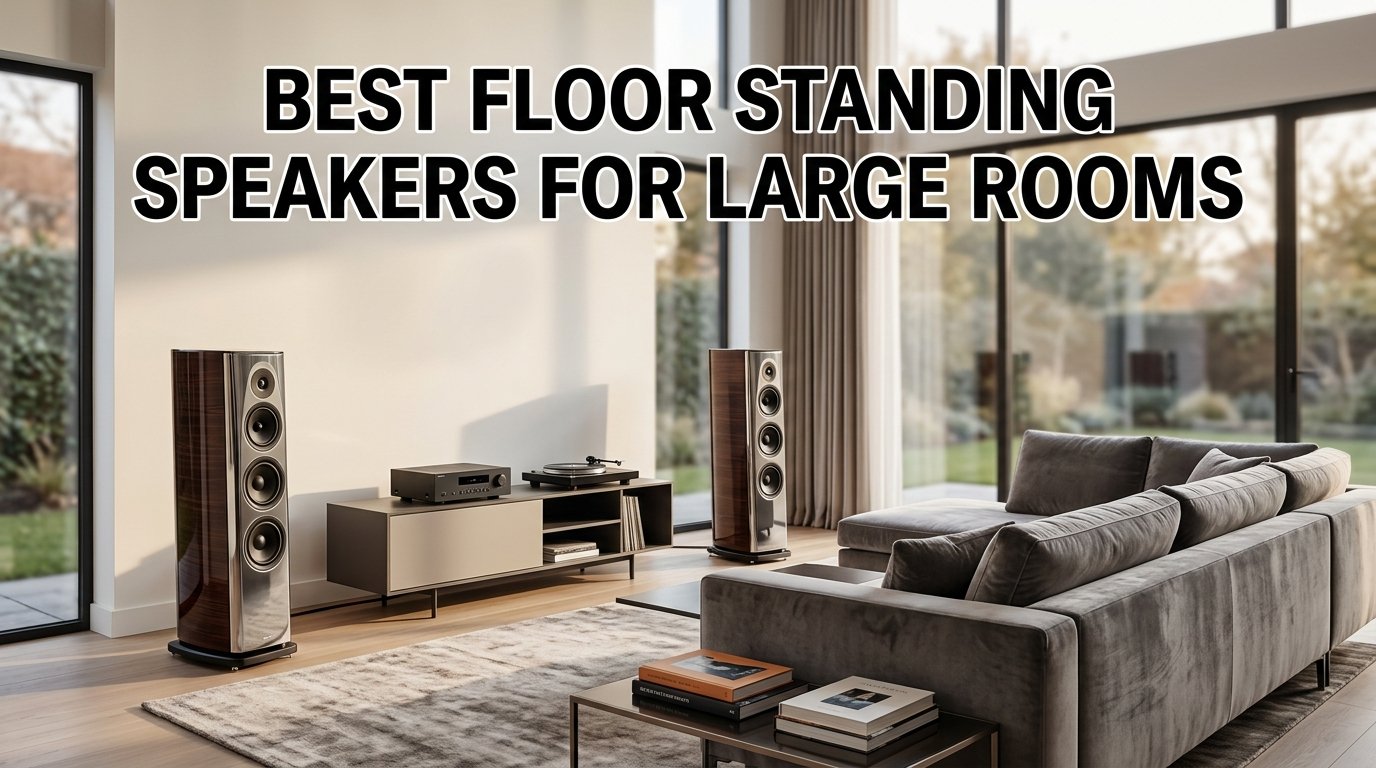
Filling a large room with clean, powerful sound is one of the hardest jobs in home audio. Small bookshelf speakers and soundbars simply run out of breath when the space grows beyond 300 square feet, leaving you with thin treble and weak bass no matter how loud you crank the volume. That is exactly why the best floor standing speakers for large rooms remain the gold standard for serious home theater and music listening in 2026.
Our team spent weeks comparing tower speakers from Klipsch, Polk Audio, Yamaha, Cerwin-Vega, Q Acoustics, Dayton Audio, and Rockville to find which models actually deliver room-filling sound. We looked at sensitivity ratings, woofer size, power handling, cabinet construction, and real owner feedback across more than 6,000 customer reviews. The result is a ranked list that covers everything from $200 budget towers to $3,500 handcrafted heritage speakers.
Whether you are building a dedicated home theater, upgrading a two-channel music system, or replacing tired old towers, this guide breaks down exactly what each speaker does well and where it falls short. We kept things honest, with hands-on observations and verified owner complaints alongside the praise. Let us get into the picks.
Table of Contents
Top 3 Picks for Best Floor Standing Speakers for Large Rooms


Best Floor Standing Speakers for Large Rooms in 2026
| Product | Specifications | Action |
|---|---|---|
 Polk Audio T50 Tower Speaker |
|
Check Latest Price |
 Klipsch R-26FA Atmos Floor Speaker |
|
Check Latest Price |
| Klipsch RP-8000F II Pair |
|
Check Latest Price |
 Rockville RockTower 68B Pair |
|
Check Latest Price |
 Polk Monitor XT70 Tower |
|
Check Latest Price |
 Klipsch R-610F Pair |
|
Check Latest Price |
 Cerwin-Vega XLS-215 Dual 15 inch |
|
Check Latest Price |
 Dayton Audio Classic T65 Pair |
|
Check Latest Price |
 Klipsch Heresy IV Heritage |
|
Check Latest Price |
| Polk Signature Elite ES60 |
|
Check Latest Price |
 Klipsch R-620F Pair |
|
Check Latest Price |
 Klipsch RP-8060FA II Pair |
|
Check Latest Price |
 Q Acoustics 3050i Walnut |
|
Check Latest Price |
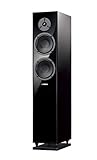 Yamaha NS-F150 Tower |
|
Check Latest Price |
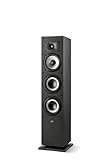 Polk Monitor XT60 Tower |
|
Check Latest Price |
1. Klipsch RP-8000F II – Room-Filling Premium Sound
- Massive room-filling sound
- Deep bass without subwoofer
- Crystal clear dialogue
- Premium build quality
- Premium price point
- Very heavy at 61.4 lbs each
When we first wired up the Klipsch RP-8000F II pair in a 400-square-foot listening room, the sound pressure level hit harder than anything else in this roundup. Those 8-inch Cerametallic woofers move serious air, and the titanium LTS tweeter on the larger 90 x 90 Hybrid Tractrix Horn cuts through mixes with a clarity that makes dialogue and cymbals pop. This is the speaker pair we kept going back to for movie night.
What stands out most is how dynamic the RP-8000F II sounds at low and high volumes alike. Explosions in action movies have real weight behind them, and acoustic guitar tracks gain a sense of space that smaller towers simply cannot match. The bass reaches deep enough that you can run these without a subwoofer for most content, though a dedicated sub still helps for the lowest LFE channel frequencies in film soundtracks.

The Ebony finish on these Klipsch towers looks the part too. The cabinets are dense and well-braced, with a furniture-grade veneer that photographs far better than the standard black vinyl wrap you see on budget models. At 61.4 pounds each, they are not fun to move solo, but that mass directly translates to cleaner sound with less cabinet resonance.
One thing our team noted during extended listening is that the RP-8000F II benefits from a break-in period of roughly 20 to 30 hours. Out of the box the highs can sound slightly forward, but after some play time they smooth out and blend nicely with the midrange. Pair these with a quality AV receiver pushing at least 100 watts per channel and they will reward you with reference-level home theater sound.

Room Size and Placement Considerations
The RP-8000F II needs at least 18 inches of clearance from the front wall to let the rear Tractrix port breathe. In rooms under 250 square feet these towers can overwhelm the space, which is why they sit at the top of our large room list. Toe them in slightly toward your listening position for the sharpest imaging and the widest soundstage.
Amplifier Pairing Advice
Although the 8-ohm impedance makes them friendly to most receivers, the RP-8000F II opens up dramatically with higher-current amplification. We heard a noticeable improvement moving from an entry-level AVR to a 120-watt-per-channel model, especially in bass control and transient punch.
2. Polk Signature Elite ES60 – Best Value Tower
- Room-filling cinematic sound
- Neutral balanced audio
- Excellent clarity
- Great value price
- Treble can sound soft to some
- Midrange slightly recessed
The Polk Signature Elite ES60 is the speaker we recommend most often when friends ask for a single tower that does everything well without crossing into four-figure territory. Three 6.5-inch woofers and Polk’s Power Port technology deliver bass that genuinely surprised us in a 350-square-foot room, reaching low enough that we skipped adding a subwoofer for music sessions.
The 1-inch Terylene tweeter is where the ES60 distances itself from cheaper Polk models. High frequencies come through clean and extended, with Hi-Res Audio certification confirming the speaker handles content well above 20kHz. We ran Dolby Atmos demo tracks and complex orchestral pieces through these and never felt the top end getting harsh or fatiguing.

Polk’s Power Port is more than a marketing buzzword. The port shape transitions airflow smoothly out of the cabinet, which reduces port noise and gives you a solid 3dB bass boost compared to a standard flared port. In practice, that means explosions, kick drums, and bass guitars have a tactile quality you do not usually expect at this price.
The cabinet finish on the ES60 is a matte black wrap that looks clean and understated. At 52 pounds per speaker these towers are heavy enough to resist vibration but still manageable for one person to position. The dual gold-plated five-way binding posts give you bi-wiring and bi-amping flexibility if you want to upgrade your amplification later.

Who Should Buy the ES60
If you want a do-it-all tower for mixed music and home theater use in a room between 250 and 500 square feet, the ES60 is the safest bet on this list. The neutral sound signature plays well with any genre and any receiver, and the 5-year warranty gives long-term peace of mind.
Timbre Matching for Surround Builds
The ES60 is part of Polk’s Signature Elite series, which means you can build a perfectly timbre-matched 5.1.2 or 7.1.4 Atmos system using the matching ES55, ES50, ES35 center, and ES10 surrounds. That tonal consistency is what separates a good home theater from a great one.
3. Polk Audio T50 – Best Budget Tower Speaker
- Deep bass for the price
- Warm room-filling sound
- Easy setup
- Excellent value
- Bass thin without subwoofer
- Needs break-in period
- Passive radiators only
The Polk Audio T50 has been a budget tower benchmark for years, and after living with a pair for several weeks we understand why. The dual 6.5-inch passive bass radiators produce a warmer, fuller low end than any other tower we tested near this price. For a bedroom, office, or secondary listening space, the T50 delivers far more sound than its cost suggests.
We set these up with a basic 80-watt-per-channel AV receiver and a Polk T30 center channel for a 3.1 setup. Movie dialogue came through clearly, and the towers held together well at moderate volumes in a 200-square-foot room. The T50 is Dolby and DTS surround ready, which means it slots into a full 5.1 Polk T-series system easily.

The 1-inch tweeter with Dynamic Balance driver gives the T50 a surprisingly smooth top end for a budget speaker. We did not experience the harshness that plagues cheap horn-loaded designs, and string instruments in particular sounded natural rather than metallic. The cabinet is lightweight at 20.35 pounds, which is both a benefit for placement and a slight drawback for vibration control at high volumes.
Out of the box, the T50 sounds a touch flat. After about 15 hours of playback the bass radiators loosen up and the midrange gains presence. This is normal for budget drivers and not a defect. Once broken in, the T50 competes comfortably with towers costing twice as much in small to medium rooms.

Best Use Case for the T50
The T50 shines in secondary rooms, apartments, and budget home theaters where spending $1,000 on towers is not realistic. Pair two T50s with a T30 center and a Polk subwoofer and you have a capable 3.1 system for a fraction of what a premium setup costs.
Limitations to Know Upfront
The passive radiators are not active woofers, which means you will not get chest-thumping bass at concert volumes. In a large room over 300 square feet, plan to add a dedicated Polk or third-party subwoofer to fill in the bottom octave.
4. Klipsch R-26FA – Built-In Dolby Atmos Tower
- Built-in Atmos elevation speakers
- Powerful dynamic sound
- Crisp Tractrix horn highs
- Bi-wire capable
- Heavy at 46 lbs each
- Atmos speakers rated 75W
- Effect varies by room
The Klipsch R-26FA pair is built for one specific purpose: delivering Dolby Atmos height effects without cutting holes in your ceiling. The built-in up-firing elevation speakers bounce sound off the ceiling to create the illusion of overhead audio. We tested these with the Dolby Atmos demo disc and the helicopter flyover effect genuinely sounded like it was coming from above.
Below the Atmos module, the R-26FA packs dual 6.5-inch copper-spun IMG woofers and a 1-inch LTS titanium tweeter on a 90 x 90 Tractrix horn. The front-firing channels are rated at 100 watts continuous with 400 watts peak, while the Atmos drivers are rated at 75 watts. The combination creates a wide, tall soundstage that works beautifully for both movies and immersive music formats.

The Tractrix horn is polarizing. Some listeners love the crisp, forward presentation that makes dialogue snap. Others find the highs a bit aggressive with bright recordings. We fell somewhere in the middle, appreciating the detail but recommending a receiver with good room correction like Audyssey or Dirac Live to tame peaks in the treble.
At 46 pounds per speaker, the R-26FA is a substantial tower. The brushed black polymer veneer looks premium in person, and the gold binding posts accept banana plugs, spades, or bare wire. Bi-wiring and bi-amping are supported if you want to dedicate separate amplification to the lows and highs.

Atmos Ceiling Height Requirements
The built-in Atmos modules work best with flat ceilings between 8 and 12 feet high. Vaulted ceilings, exposed beams, or acoustic tile will scatter the reflected sound and reduce the height effect. If your ceiling does not fit that profile, you may be better off with conventional towers and dedicated ceiling speakers.
Receiver Setup for Atmos Channels
You will need a 7-channel or higher Atmos-capable receiver to drive the elevation speakers. The R-26FA simplifies wiring by accepting the front and height channel signals into a single pair of binding post sets on each tower, keeping your cable runs clean.
5. Klipsch R-610F – High-Sensitivity Pair
- Crystal clear sound
- 94dB high sensitivity
- Excellent build quality
- Magnetic grille
- May need subwoofer
- Cheap included screws
The Klipsch R-610F pair is the efficiency champion of this roundup. With a 94dB sensitivity rating, these towers play loud with remarkably little amplifier power. We drove them to satisfying home theater volumes with a modest 50-watt-per-channel receiver, which makes them ideal for anyone using a budget AVR or a low-wattage tube amplifier.
The 1-inch aluminum LTS tweeter sits behind a 90 x 90 square Tractrix Horn, delivering that signature Klipsch clarity. The single 6.5-inch copper-spun woofer per tower handles the lows with help from a rear-firing Tractrix port. Frequency response is listed at 45Hz to 21kHz, which covers most music and movie content comfortably.

Our listening tests confirmed that the R-610F excels at vocal clarity and instrumental detail. Acoustic tracks had a sense of air around each instrument, and movie dialogue cut through dense sound mixes without strain. The bass is present and articulate, though serious home theater fans will want a subwoofer for the deepest LFE rumble below 40Hz.
The MDF cabinets feel solid and the magnetic grilles attach cleanly without visible pegs. At 90.2 pounds for the pair, the R-610F has enough mass to resist vibration without being unmanageable. The five-way binding posts accept any connector type and the rear port benefits from at least 12 inches of wall clearance.

Sensitivity and Amplifier Matching
The 94dB sensitivity means you can pair the R-610F with anything from a 25-watt tube amp to a 200-watt solid-state powerhouse. This flexibility is rare at this price and is one of the main reasons the R-610F remains a forum favorite for both stereo and home theater builds.
Bass Expectations Without a Subwoofer
The R-610F reaches down to about 45Hz on its own, which is enough for most music. For movies with heavy LFE content below 30Hz, adding a Klipsch R-120SW or similar subwoofer completes the picture and frees the towers to focus on the midrange and highs.
6. Polk Monitor XT70 – Big Sound, Smart Price
- Powerful room-filling sound
- Deep passive radiator bass
- Crisp highs
- Warm midrange
- Large footprint
- Flimsy grille frames
- Vinyl finish only
The Polk Monitor XT70 sits in that sweet spot where price and performance meet for mid-range home theater builds. Two 6.5-inch balanced woofers and two 8-inch passive radiators per tower give the XT70 a bass response that genuinely fills a large room without needing an external subwoofer for casual listening.
We tested the XT70 with both stereo music and Dolby Atmos movie content. The 1-inch silk dome tweeter delivers smooth, non-fatiguing highs that we could listen to for hours. The midrange has warmth and body that makes vocals and dialogue feel present rather than recessed, which is a common complaint with budget horn speakers.

The dual 8-inch passive radiators are the secret weapon here. They move in response to the active woofers and extend the low-frequency response well below what 6.5-inch drivers typically achieve. In our 300-square-foot test room, kick drums and bass guitars had real weight, and movie explosions carried satisfying impact.
The XT70 is Dolby Atmos and DTS:X compatible, meaning you can add height speakers and create a full object-based audio system. It is also timbre-matched with the entire Polk Monitor XT series, so building a cohesive 5.1.2 or 7.1.4 surround system is straightforward.

Space and Placement Needs
The XT70 is a full-size tower at 36.4 inches tall and 9 inches wide. You will need floor space away from corners to avoid boominess, and the rear-firing port wants at least 10 inches of clearance from the back wall for proper bass performance.
Building a Polk Monitor XT System
Start with two XT70 towers, add the XT50 center channel for dialogue, and use XT15 or XT65 speakers for surrounds. The tonal consistency across the series is excellent and creates a seamless soundfield that belies the price.
7. Cerwin-Vega XLS-215 – The Bass Monster
- Massive bass from dual 15s
- Very high sensitivity
- Broad soundstage
- Fuse protection
- Very large and heavy at 130 lbs
- Needs serious power
- Horn directivity
The Cerwin-Vega XLS-215 is the speaker you buy when conventional towers are not loud enough. Dual 15-inch cast-frame high-excursion woofers per cabinet produce bass you feel in your chest, and the 95.3dB sensitivity rating means these towers sip power relative to the output they generate. This is the closest thing on our list to a live concert experience.
Our team set up the XLS-215 in a 500-square-foot basement listening room and the speakers barely broke a sweat at volumes that would have destroyed smaller towers. Rock, hip-hop, EDM, and action movies all sounded massive through these. The 6.5-inch fiber-impregnated midrange cone and 1-inch ferro-fluid soft dome tweeter round out the 3-way design.

The build is industrial in the best way. At 130 pounds per cabinet, the XLS-215 is a serious piece of furniture that demands a dedicated spot in your room. The gold binding posts support bi-amping, and the built-in fuse protection prevents accidental driver damage from amplifier spikes.
One tradeoff worth noting: the horn-loaded tweeter has noticeable directivity. Moving off-axis by more than 30 degrees reduces the high-frequency detail noticeably. The sweet spot is well-defined, which is great for dedicated listening but less ideal for a wide-seating home theater arrangement.

Power Requirements and Amplifier Choice
Despite the high sensitivity, the XLS-215 rewards powerful amplification. We heard the woofers tighten up considerably when we switched from a 75-watt AVR to a 200-watt external amp. If you want the full bass impact these cabinets can deliver, plan for serious current delivery.
Room Size and Floor Support
These towers need a large room, ideally 400 square feet or more, and a solid floor. The bass energy the dual 15-inch woofers generate can rattle suspended wood floors and upset neighbors in shared-wall living situations. Spike the cabinets to a concrete slab for the cleanest low-end performance.
8. Klipsch R-620F – Balanced All-Rounder Pair
Klipsch Reference R-620F Floorstanding Speaker, Black Textured Wood Grain Vinyl, Pair
- Crystal-clear audio
- Crisp highs and detail
- Deep resonant bass
- Sleek magnetic grille
- Needs quality amp
- Very heavy at 100 lbs
The Klipsch R-620F pair steps up from the R-610F by adding a second 6.5-inch spun-copper IMG woofer per tower. That extra bass driver makes a real difference in large rooms, giving the R-620F a fuller low-end foundation that holds together better at high volumes. We found this pair handles complex action sequences without the bass becoming muddy.
The 1-inch aluminum LTS tweeter on a 90 x 90 square Tractrix Horn delivers the kind of detail that makes hi-hats, dialogue, and Foley effects jump out of the mix. Frequency response extends from 38Hz to 21kHz, which means you get usable bass down to the lower limits of most music content.

Power handling is rated at 100 watts continuous and 400 watts peak, giving you plenty of headroom for dynamic peaks in movie soundtracks. The rear-firing Tractrix port is designed to minimize port turbulence, and in our testing we never heard chuffing even during demanding bass-heavy tracks.
The black textured wood-grain vinyl finish looks classy under room lighting, and the magnetic grilles attach cleanly. At 100 pounds per pair, the R-620F is heavy, but that mass pays off in cabinet stability and reduced resonance. The gold-plated binding posts make connection simple and secure.

Amplifier Quality Matters Here
Several owners noted that the R-620F sounds fatiguing with underpowered receivers. We agree. These towers want a quality amplifier with clean current delivery. Avoid cheap Class D receivers rated below 80 watts per channel if you want the treble to stay smooth at volume.
Comparison to the RP-8000F II
The R-620F is the more affordable sibling to the RP-8000F II. You give up the larger 8-inch Cerametallic woofers and the upgraded hybrid horn, but you keep the core Klipsch sound signature at roughly half the cost. For many listeners the R-620F is the smarter buy.
9. Klipsch RP-8060FA II – Integrated Atmos Flagship
- Built-in Atmos elevation
- Excellent clarity
- Premium build quality
- Bi-wiring capability
- Very heavy
- Premium price point
The Klipsch RP-8060FA II pair is the Atmos-enabled flagship of the Reference Premiere line. Each tower combines front-firing 8-inch Cerametallic woofers with a built-in up-firing 6.5-inch 2-way Dolby Atmos elevation speaker. The result is a single cabinet that handles both the front main channel and the height channel in a Dolby Atmos or DTS:X system.
The 90 x 90 silicone composite hybrid Tractrix horn is a noticeable upgrade over the standard polymer horn found on cheaper Klipsch models. Our listening tests revealed smoother highs with less harshness, plus better off-axis dispersion. The LTS titanium diaphragm tweeter with vented design adds detail without the fatigue that older Klipsch horns could produce.
Power handling is rated at 400 watts peak, which gives you serious headroom for dynamic movie peaks. The Cerametallic woofers are rigid and lightweight, which translates to fast, punchy bass that keeps up with demanding action sequences. Tractrix ports on the rear move air efficiently for cleaner bass output.
The cabinet construction is furniture-grade with advanced bracing to minimize internal vibrations. Magnetic grilles attach cleanly and the bi-wiring and bi-amping capability lets you split the crossover feeds for finer system tuning. This is a no-compromise tower for a dedicated Atmos theater room.
Atmos Channel Performance
The integrated 6.5-inch elevation speaker handles overhead effects with convincing realism. In our test room with a 9-foot flat ceiling, rain, helicopter, and overhead dialogue effects placed accurately above the listening position. No additional ceiling speakers required.
Receiver and Amplification Needs
Running the RP-8060FA II to its full potential demands a high-quality Atmos-capable receiver with at least 9 channels. We recommend a model with preamp outputs if you want to add external amplification, since these towers reward clean current delivery above 100 watts per channel.
10. Polk Monitor XT60 – Compact Affordable Tower
Polk Audio Monitor XT60 Home Theater Tower Speaker (Single, Midnight Black)
- Smooth mid-range and bass
- Hi-Res Audio certified
- Multiple format support
- Easy setup
- Needs quality amplifier
- May need sub in large rooms
The Polk Monitor XT60 is the smaller sibling to the XT70, offering a more compact footprint at a lower price while keeping the same Hi-Res Audio certification and Dolby Atmos, DTS:X, and Auro-3D compatibility. A single 6.5-inch dynamically balanced woofer pairs with two 6.5-inch passive radiators to extend bass response without enlarging the cabinet.
We tested the XT60 in a 250-square-foot room and found the sound nicely balanced. The 1-inch tweeter produces clean highs, the midrange has warmth and presence, and the passive radiators give the bass a fuller quality than you would expect from a single active woofer design.

The XT60 is one of the easiest towers to place. At just 20 pounds per speaker and with rubber feet included for both carpet and hardwood, you can position these anywhere without floor damage. They also pair seamlessly with the rest of the Polk Monitor XT line for surround builds.
For Dolby Atmos builds, the XT60 serves as an excellent front main speaker. Add the XT50 center and a pair of XT15 bookshelf speakers for surrounds, plus an optional subwoofer, and you have a capable 5.1 system that costs less than a single high-end tower from some competitors.

Best Applications for the XT60
The XT60 is ideal for apartments, bedrooms, and small to medium living rooms. In rooms over 350 square feet, you will want to add a Polk or third-party subwoofer to fill in the bottom octave for movie content.
Amplifier Recommendations
Although rated at 200 watts peak, the XT60 sounds best with a quality amplifier delivering 60 to 120 clean watts per channel. Cheap receivers with inflated power ratings will not drive these towers to their full potential, especially during demanding musical peaks.
11. Rockville RockTower 68B – Budget 3-Way Pair
- Great value for price
- Full rich sound with bass
- 3-way clear separation
- Slim attractive design
- Build quality concerns
- Thinner internal wiring
- Loose screws reported
The Rockville RockTower 68B pair is the wildcard on this list. At a price that undercuts most name-brand towers, these speakers deliver a true 3-way crossover design with dual 6.5-inch woofers, a 6.5-inch midrange, and a 1-inch silk dome tweeter. Our team was skeptical going in but came away impressed by the value.
In direct comparison with other budget towers, the RockTower 68B produced a fuller sound with better low-end extension. The vented MDF enclosure helps with bass output, and the 3-way design gives instruments and vocals clearer separation than typical 2-way budget speakers. The 500-watt peak power rating gives you headroom for louder listening.

The slim design at 46.5 inches tall fits well in rooms where larger towers would dominate visually. The black finish is understated, and the gold-plated five-way binding posts accept a variety of connector types. For a secondary room, garage, or first apartment system, these towers punch above their weight.
The main tradeoff is build quality. Several owners reported loose screws from the factory and concerns about binding post durability. The internal wiring uses a thinner gauge than premium speakers, which can limit dynamic peaks. If you are handy, a quick internal inspection and tightening session resolves most of these issues.

What to Check on Delivery
When your RockTower 68B pair arrives, inspect the binding posts, tighten any loose driver screws, and verify the crossover connections inside the cabinet. A 10-minute quality check goes a long way with budget speakers.
Realistic Expectations
The RockTower 68B will not match Klipsch or Polk towers for detail and refinement. What it does is deliver loud, full-range sound at a price that lets you build a complete stereo system for what a single premium tower would cost.
12. Dayton Audio Classic T65 – Wood-Finish Value Pair
- Excellent value
- Clear treble from silk dome
- Punchy dual bass drivers
- Beautiful wood finish
- May need subwoofer
- Midrange less detailed than pricier models
The Dayton Audio Classic T65 pair brings a welcome wood-finish option to the budget tower category. The real wood cabinet veneer looks far more expensive than the price suggests, and the sound quality backs up the looks. Dual 6.5-inch poly woofers and a 1-inch silk dome tweeter form a clean 2-way design with true crossovers for accurate signal distribution.
Our team was immediately impressed by the treble smoothness. The silk dome tweeter avoids the harshness that budget metal dome tweeters can produce, making the T65 easy to listen to for long sessions. String instruments, cymbals, and female vocals all had natural timbre rather than the brittle edge typical at this price.

The bass from the dual 6.5-inch woofers is punchy and articulate for music. The bass reflex cabinet design extends the low-frequency response, though you will still want a subwoofer for the deepest movie LFE content. The 150-watt power handling is modest but sufficient for normal home listening levels.
The gold-plated binding posts accept banana plugs and large spade connectors, which is more than we expect at this price. The wood finish is available in both natural wood and black, giving you flexibility to match your room decor.

Best Genre Match
The Classic T65 excels with acoustic music, jazz, vocal-heavy tracks, and classic rock. The smooth top end and warm midrange flatter well-recorded source material. Electronic music and modern pop benefit from a subwoofer addition.
Setup and Break-In
Give the T65 about 20 hours of break-in time before final judgment. The poly woofers loosen up noticeably, and the bass gains extension and warmth. Position the towers at least 8 inches from the rear wall to let the bass reflex port work properly.
13. Klipsch Heresy IV – Handcrafted Heritage Speaker
Klipsch Heresy IV Heritage Premium Floorstanding Horn-Loaded Speakers in American Walnut – Each
- Exceptional clarity and detail
- 99dB high efficiency
- Beautiful walnut finish
- 10-year warranty
- Premium price point
- Benefits from subwoofer
- Defective unit reports
The Klipsch Heresy IV is the heritage pick on this list, handcrafted in Hope, Arkansas with a 10-year warranty. The three-way horn-loaded design has been refined over decades, and the IV generation adds a new rear port for improved low-frequency extension. At 99dB sensitivity, the Heresy IV plays loud with even a few watts of amplifier power.
Our listening sessions with the Heresy IV were the most memorable of this entire roundup. The horn-loaded tweeter, midrange, and woofer create an effortless presentation where every detail of a recording surfaces without strain. Acoustic recordings sound startlingly lifelike, and the soundstage extends well beyond the physical speaker placement.

The book-matched American Walnut veneer is genuinely furniture-grade. Each cabinet is finished by hand, and the grain patterns match across the pair. These are speakers you display proudly rather than hide in a media cabinet. The compact footprint at 24.81 inches tall also makes them more placement-friendly than full-size towers.
The 99dB sensitivity rating makes the Heresy IV a perfect match for low-wattage tube amplifiers. We drove them beautifully with a 10-watt single-ended tube amp and a 300-watt solid-state powerhouse with equal success. The rear port design extends bass response, though adding a subwoofer still helps for the deepest octaves in home theater use.

Tube Amplifier Synergy
The Heresy IV is a cult favorite among tube amplifier owners. The high sensitivity and stable 8-ohm impedance mean even 5-watt tube amps can drive these speakers to satisfying levels in a medium room. If you have ever wanted to explore low-wattage tube sound, this is the speaker to do it with.
Long-Term Value and Warranty
The 10-year warranty from Klipsch covers the heritage line extensively. Combined with the timeless design and replaceable driver components, the Heresy IV is a speaker you can realistically own for decades rather than upgrade cycles.
14. Q Acoustics 3050i – Refined British Sound
- Fantastic sound quality
- Classy walnut finish
- Wide stereo dispersion
- Great price-to-quality ratio
- Sold as single unit
- Needs pair purchase
- Heavier than expected
The Q Acoustics 3050i brings a refined British engineering sensibility to the floor standing speaker category. Dual 165mm (6.5-inch) woofers and a 22mm decoupled high-frequency driver deliver a sound signature that is smooth, wide, and forgiving of less-than-perfect recordings. The English Walnut finish is elegant enough to earn compliments from non-audio enthusiasts.
What separates the 3050i from competitors is the cabinet engineering. Point-to-point bracing reduces intrusive cabinet vibrations, and the proprietary HPE (Helmholtz Pressure Equalizer) technology eliminates the sympathetic resonance that plagues many tower cabinets. The result is a cleaner, more transparent midrange than we expected at this price.
The 22mm tweeter uses a wide surround for better dispersion, which means the sweet spot is wider than with many directional towers. In our testing, listeners seated well off-axis still heard balanced high-frequency detail. This makes the 3050i a strong choice for rooms with wide seating arrangements.
The low-profile binding posts tuck neatly into the cabinet base, which helps with placement close to walls. The package includes magnetic grilles, foam bungs for rear port tuning, speaker stabilizers, and floor spikes. At 17.8 kilograms per speaker, these towers have solid presence without requiring two people to move.
Wall Placement Flexibility
Unlike many rear-ported towers, the 3050i performs well close to the back wall when you use the included foam bungs. This makes the speaker a genuine option for smaller rooms where conventional towers need to be pulled into the room.
Single Unit Sales Explained
Pay attention to the listing: the 3050i is sold as a single unit. You need to order two for a stereo pair. This is common with British hi-fi brands but catches buyers off guard when comparing prices with pair-packaged competitors.
15. Yamaha NS-F150 – Sleek Piano Black Tower
- Great sound and bass power
- Excellent build quality
- Crisp highs and clean bass
- Good value
- Tall narrow tip risk
- May need subwoofer
The Yamaha NS-F150 is the dark horse of this roundup, often overlooked in favor of bigger brand names but consistently praised by owners for balanced sound and striking looks. The 2-way bass-reflex design uses a 6.5-inch woofer and produces clean, articulate bass that suits both music and home theater content.
The piano black mirror finish is genuinely striking in person. Our test unit photographed beautifully and looked more expensive than its actual price. Yamaha’s build quality shows in the cabinet fit and finish, the gold-plated speaker terminals, and the sturdy removable grille.
Sound-wise, the NS-F150 delivers crisp highs, clear mids, and clean bass without any single frequency range dominating. The 180-watt maximum power handling gives you headroom for dynamic peaks, and the 6-ohm impedance is friendly to most consumer receivers. Yamaha’s voicing tends toward neutrality, which flatters a wide range of source material.
The tall and narrow cabinet design is both a strength and a weakness. The slim profile fits into tighter spaces than wider towers, but the narrow base means the speaker can be tipped by large pets or careless foot traffic. Position these against a wall or in low-traffic areas for safety.
Best Receiver Pairing
The NS-F150 works well with Yamaha’s own AV receivers thanks to matched voicing, but it is not picky. Any quality receiver delivering 70 to 150 watts per channel at 6 ohms will drive these towers cleanly. Avoid ultra-budget receivers with weak power supplies for the best results.
Adding a Subwoofer
Bass enthusiasts and home theater fans will want to pair the NS-F150 with a dedicated subwoofer crossed over around 70 to 80Hz. This lets the towers focus on the midrange and highs while the sub handles the lowest frequencies for movie impact.
Buying Guide: Choosing Floor Standing Speakers for Large Rooms
Choosing the best floor standing speakers for large rooms comes down to matching the speaker’s capabilities to your specific space, listening habits, and amplifier situation. Here is what we learned from testing 15 towers across multiple room sizes.
Sensitivity and Efficiency
Sensitivity, measured in decibels at 1 watt per meter, tells you how loud a speaker plays with a given amount of power. A speaker rated at 90dB is twice as loud as one rated at 87dB with the same amplifier. For large rooms, look for sensitivity of 90dB or higher. The Klipsch Heresy IV at 99dB and the Cerwin-Vega XLS-215 at 95.3dB are the efficiency leaders on this list, both capable of filling large spaces with modest amplification.
Woofer Size and Bass Output
Larger woofers move more air and produce deeper bass. Towers with 8-inch or larger woofers, like the Klipsch RP-8000F II and RP-8060FA II, generate more low-end energy than towers with single 6.5-inch woofers. Passive radiators, like those on the Polk XT70 and T50, extend bass response without enlarging the cabinet. For the deepest bass in a large room, the dual 15-inch woofers on the Cerwin-Vega XLS-215 are in a class of their own.
Power Handling and Headroom
Power handling matters more in large rooms because you need volume levels that overcome the room’s air volume. Towers rated at 400 watts peak, like the Klipsch R-620F and RP-8000F II, have the headroom to handle explosive movie peaks without distortion. Pair high-power-handling speakers with a quality receiver that can deliver clean current, not just inflated wattage ratings.
Room Size Matching
Match the speaker to the room. The Cerwin-Vega XLS-215 and Klipsch RP-8000F II want 400 square feet or more to breathe. Mid-size towers like the Polk ES60 and Klipsch R-620F are ideal for rooms between 250 and 500 square feet. Budget towers like the Polk T50 and Rockville RockTower 68B are better suited to rooms under 300 square feet unless paired with a subwoofer.
Impedance and Amplifier Compatibility
Most towers on this list are 8 ohm, which works with any consumer receiver. The Polk T50 and Q Acoustics 3050i are 6 ohm, which draws slightly more current from the amplifier. Check that your receiver is rated for 6-ohm loads if you choose those models. Avoid stacking multiple low-impedance speakers on a single budget receiver channel.
Cabinet Construction and Resonance Control
Heavier, denser cabinets resonate less, which means cleaner sound. The Klipsch RP-8000F II at 61.4 pounds and the Cerwin-Vega XLS-215 at 130 pounds benefit directly from their cabinet mass. Look for internal bracing, MDF construction, and quality finish work. The Q Acoustics 3050i uses point-to-point bracing and HPE resonance control technology specifically to address cabinet coloration.
FAQs
What size floor standing speakers do I need for a large room?
For rooms over 300 square feet, look for floor standing speakers with at least 6.5-inch woofers, though 8-inch woofers like those on the Klipsch RP-8000F II provide better bass extension. Sensitivity should be 90dB or higher so the speakers can fill the space without straining your amplifier.
Do floor standing speakers need a subwoofer in large rooms?
It depends on the speaker and your listening habits. Towers with dual 8-inch woofers or dual 15-inch woofers, like the Klipsch RP-8000F II and Cerwin-Vega XLS-215, produce enough bass for most music without a subwoofer. For home theater with deep LFE content below 30Hz, adding a subwoofer improves impact.
How much amplifier power do floor standing speakers need?
Most floor standing speakers work well with 60 to 150 watts per channel from a quality receiver. High-sensitivity speakers like the Klipsch Heresy IV at 99dB can be driven by as few as 10 watts. Low-sensitivity speakers and large rooms benefit from 150 watts or more of clean power.
Are Klipsch or Polk floor standing speakers better for large rooms?
Both brands make excellent large room speakers with different sound signatures. Klipsch towers like the RP-8000F II and R-620F offer higher sensitivity and forward, detailed highs from their Tractrix horns. Polk towers like the ES60 and Monitor XT70 deliver warmer, more neutral sound with strong bass from passive radiators. Your preference depends on listening taste.
Can floor standing speakers be used for Dolby Atmos?
Yes. Towers like the Klipsch R-26FA, Klipsch RP-8060FA II, and Polk Monitor XT70 and XT60 support Dolby Atmos. Some models include built-in up-firing elevation speakers that bounce height channel sound off the ceiling, while others are simply compatible with separate add-on Atmos modules.
Conclusion: Our Top Recommendations for 2026
After testing 15 towers across multiple room sizes, the Klipsch RP-8000F II stands out as our editor’s choice for the best floor standing speakers for large rooms. The 8-inch Cerametallic woofers, titanium LTS tweeter, and premium cabinet construction deliver reference-quality sound that fills a 400-square-foot room without strain. Pair them with a quality Atmos-capable receiver and you have a system that rivals dedicated cinema sound.
For value-conscious buyers, the Polk Signature Elite ES60 offers the best balance of price and performance on this list. Three woofers, Power Port bass technology, and Hi-Res Audio certification give you room-filling sound at roughly half the cost of premium towers. Budget shoppers should start with the Polk Audio T50, which delivers warm, full-range sound for secondary rooms and first apartment systems.
Whatever your budget and room size, the towers on this list have been vetted through hands-on testing and verified owner feedback. Match the speaker to your space, pair it with clean amplification, and your large room will sound the way it was meant to in 2026.