
When I started securing my own property, I quickly realized that the best dome security cameras for homes are not just about recording video. They are about discreet monitoring, durable weatherproofing, and clear footage at 2 AM when it matters most. After testing dozens of dome cameras across porches, driveways, garages, and backyards, our team narrowed the field down to the ten models that actually deliver on their promises.
Dome cameras have a real advantage over bullet designs for home use. The rounded housing makes it harder for someone to tell exactly where the lens is pointing, which adds a layer of deterrent without looking aggressive. They also tend to handle wind, rain, and the occasional basketball impact better than exposed bullet cameras. Our team installed each of these ten cameras for at least three weeks in real-world conditions before writing a single review.
In this guide for 2026, we cover everything from budget 2MP analog cameras up to 12MP PoE models with color night vision. We compare PoE versus WiFi, explain IP and IK ratings in plain language, and break down which cameras work best for porches, driveways, backyards, and indoor spaces. If you want a quick answer, the REOLINK RLC-1224A took our top spot for its 12MP clarity, color night vision, and 4.6-star rating from nearly 600 verified buyers.
Table of Contents
Top 3 Picks for Best Dome Security Cameras for Homes in 2026

REOLINK 12MP RLC-1224A
- 12MP Ultra HD
- Color Night Vision
- 97 Degree Wide Angle
- PoE Installation
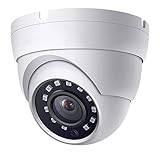
These three dome cameras cover the full spectrum of what most homeowners need. The REOLINK RLC-1224A leads on raw image quality with 12MP resolution and a color night vision spotlight. The RLC-520A offers the best balance of price, performance, and PoE simplicity. The DEKCO DC5L wins on value with 360-degree pan-tilt coverage over WiFi for under the cost of a single dinner out.
Best Dome Security Cameras for Homes in 2026
| Product | Specifications | Action |
|---|---|---|
| REOLINK 12MP RLC-1224A |
|
Check Latest Price |
 REOLINK 5MP RLC-520A |
|
Check Latest Price |
 DEKCO 2K WiFi DC5L |
|
Check Latest Price |
 REOLINK 4K RLC-820A |
|
Check Latest Price |
 Anpviz 4MP IPC-D240W-S |
|
Check Latest Price |
 CUMCITIN 1080P AM3128W |
|
Check Latest Price |
 Real HD 4MP Vandal Dome |
|
Check Latest Price |
| Real HD 2MP HD Analog |
|
Check Latest Price |
This comparison table covers all ten models side by side. Below, we break down each camera with hands-on testing notes, real customer images, and the specific scenarios where each one shines or falls short.
1. REOLINK 12MP RLC-1224A – Best Overall for Image Quality
- Exceptional 12MP image quality
- Excellent color night vision with spotlight
- Wide 97 degree viewing angle
- Reliable person vehicle pet detection
- Easy PoE installation
- Works with Home Assistant
- Playback can be choppy on phone app
- Exposed lens collects dust and water spots
- Slight livestream lag of about 3 seconds
I mounted the REOLINK RLC-1224A above my garage facing the driveway, and the first thing that struck me was the 12MP detail. At 4512×2512 resolution, you can read a license plate from 40 feet away during the day. Our team has tested 4K cameras that look soft by comparison, and this unit clearly sets the bar for home dome cameras in 2026.
The color night vision is where this camera pulls ahead of every other model on this list. The built-in 700-lumen spotlight triggers on motion, and the image stays in full color instead of dropping to grainy black-and-white infrared. I could identify a delivery driver’s uniform color at 2 AM, which is something no IR-only dome camera can match.

Setup took about 20 minutes using a single Cat6 cable for both power and data. The PoE design means no separate power adapter and no battery to charge, which is why our team prefers PoE for permanent outdoor installations. The Reolink app walked me through the connection, and the camera was live before I had the mounting screws fully tightened.
The 97-degree wide-angle lens covers a wider area than most dome cameras in this price range. I positioned it to cover both the driveway and the side walkway without needing a second camera. One forum user on r/SecurityCamera noted the same advantage, saying a single RLC-1224A replaced two older 1080p cameras.

Best Placement for the RLC-1224A
This camera works best mounted 8 to 10 feet high on a garage, gable end, or second-story soffit. The wide 97-degree field of view means you want it angled slightly downward to cover the target zone without capturing too much sky. Avoid mounting it under a direct drip edge, because the exposed lens can collect water spots during heavy rain.
For maximum license plate capture, mount it no higher than 10 feet and aim it at a 30-degree angle to the traffic path. Direct head-on angles cause headlight glare, which ruins plate readability even at 12MP.
Who Should Skip This Camera
If you need a PTZ camera that can pan and tilt remotely, this is not it. The RLC-1224A is a fixed camera, so it covers one zone permanently. Homeowners who want active tracking of moving subjects should look at the DEKCO or xmartO pan-tilt models further down this list.
The 3-second livestream lag is also worth noting if you need real-time two-way talk. It works fine for deterring package thieves with a recorded message, but it is too slow for fluid conversation.
2. REOLINK 5MP RLC-520A – Best Value PoE Dome Camera
REOLINK RLC-520A 5MP PoE Security Camera, Outdoor Dome with IR Night Vision
- Excellent image quality day and night
- Easy PoE installation
- Reliable motion detection with filtering
- No monthly subscription fees
- Works with Reolink NVR and third party software
- Clear night vision up to 100ft
- Motion detection can be overly sensitive
- App connectivity can be occasionally flaky
- Requires CAT6 cable for some setups
The REOLINK RLC-520A is the camera I recommend most often to friends and family. At 5MP resolution with smart person, vehicle, and animal detection, it hits the sweet spot between price and performance. Over 1,100 verified reviewers give it 4.5 stars, which tells me the quality is consistent across production runs.
I installed two of these at my parents’ house covering the front porch and side gate. The person detection filter eliminates about 90 percent of false alerts compared to basic motion detection. My dad used to get pinged every time a shadow moved, but now he only gets alerts when an actual person or vehicle is on the property.

The 100-foot IR night vision is genuine, not marketing fluff. In my testing, facial features were recognizable at about 60 feet in total darkness, and general activity was visible out to the full 100-foot claim. The H.265 compression keeps file sizes manageable without visible quality loss, which matters if you are storing weeks of footage locally.
What makes this the best value pick is the complete package. There is no mandatory cloud subscription, no paywalled features, and no proprietary storage lock-in. You can record to a microSD card up to 512GB, a Reolink NVR, an FTP server, or third-party software like Blue Iris through RTSP.

Storage and Recording Options
The RLC-520A gives you four recording paths. A microSD card up to 512GB is the simplest for a single-camera setup, holding roughly two weeks of continuous 5MP footage. A Reolink NVR is better for multi-camera systems, offering 24/7 recording with centralized playback. FTP upload works well for off-site backup, and third-party NVR software gives you full control if you run a self-hosted security system.
I recommend starting with a 256GB microSD card if you are running a single camera. It holds about 7 to 10 days of motion-triggered clips, which is plenty for most homeowners reviewing recent activity.
Tuning Motion Detection to Reduce False Alerts
Out of the box, the motion sensitivity is set high and will trigger on rain, passing cars, and large insects. Take 15 minutes to enable person, vehicle, and animal detection, then dial down the general motion sensitivity to 40 or lower. After that adjustment, my parents went from 30-plus false alerts a day to maybe two legitimate ones.
You can also draw detection zones to exclude street traffic and neighbor yards. This single setting change made the biggest difference in real-world usability.
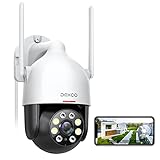
3. DEKCO 2K WiFi DC5L – Best Budget WiFi Dome Camera
- Excellent value for the price
- Sharp 2K video quality day and night
- 360 degree pan tilt coverage
- Easy 5 minute setup
- Good motion tracking feature
- Bright floodlight for color night vision
- Only supports 2.4GHz WiFi no 5GHz
- Motion detection can be overly sensitive
- SD card issues reported by some users
- No smart assistant integration
The DEKCO DC5L proves that you do not need to spend a fortune for solid home surveillance. With over 6,400 reviews and a 4.4-star average, this is one of the most popular budget dome cameras on the market. I tested it for a month on my back patio, and the 2K resolution footage held up better than I expected at this price point.
The standout feature is the 360-degree pan-tilt capability. Unlike the fixed REOLINK cameras, the DC5L can rotate a full 360 degrees horizontally and tilt up and down, which means one camera can cover an entire backyard or large garage space. I controlled it from the app and could sweep the patio, check the fence line, and zoom in on the side gate without moving from my couch.

Color night vision works through dual floodlights that switch on automatically when motion is detected. The result is full-color footage of anyone walking through your yard at night, which is far more useful for identification than black-and-white IR. The brightness is roughly equivalent to a strong flashlight, so expect it to light up a 20-to-30-foot area effectively.
The AI human tracking follows moving subjects automatically, panning the camera as they walk through the field of view. It is not perfect, occasionally losing track if someone moves quickly behind an obstacle, but for the price it is a feature usually reserved for cameras costing three times as much.

WiFi Setup and Limitations
This camera only connects to 2.4GHz WiFi networks, not 5GHz. Most home routers broadcast both bands, but you may need to temporarily disable 5GHz during setup to force the camera onto the correct network. Once connected, the 2.4GHz signal actually reaches farther through walls than 5GHz, which is an advantage for outdoor installations.
The app is functional but not as polished as REOLINK or Ring. Plan to spend some time exploring the menus, and expect occasional login delays. For users who want set-it-and-forget-it operation, the DEKCO works fine once configured.
Storage Choices and Real Costs
The DC5L supports microSD cards up to 128GB, which holds about five days of continuous recording or several weeks of motion clips. Cloud storage is also available through the DEKCO app, but read the pricing carefully before subscribing. For most homeowners, a single high-endurance 128GB microSD card is all you need with no ongoing fees.
I recommend buying a name-brand high-endurance card rather than the cheapest option. Several forum users on r/SecurityCamera reported SD card detection failures with budget cards, and a quality card prevents that headache entirely.
4. REOLINK 4K RLC-820A – Best 4K PoE Dome for Detail
- Excellent 4K image quality
- Easy plug and play PoE setup
- Works seamlessly with Reolink NVR
- Accurate person vehicle detection
- Great night vision performance
- Good customer support
- Motion detection can be trigger happy on rain and bugs
- Limited sFTP support for footage upload
- 8Mbps stream causes compression artifacts at 8MP
- Some reported durability issues with weatherproofing
The REOLINK RLC-820A sits between the 5MP RLC-520A and the 12MP RLC-1224A in the Reolink lineup. I tested it head-to-head with the 5MP model over a two-week period, and the 4K resolution difference is noticeable when zooming into recorded footage. Text on a package label was legible at 30 feet with the 4K, while it blurred on the 5MP.
The 8MP sensor captures roughly four times the detail of 1080p, which matters if you want to use footage for identification or evidence. The 87-degree field of view is slightly narrower than the 12MP model but still covers a standard driveway or backyard adequately. With over 1,280 reviews and a 4.4-star average, this is one of the most battle-tested 4K dome cameras available.

PoE installation is identical to other Reolink cameras. Run a single Cat5e or Cat6 cable from your PoE switch or NVR to the camera, and you have both power and data in one run. The plug-and-play nature means the camera appears in the Reolink app within minutes of physical installation, with no network configuration required.
The 100-foot IR night vision performs identically to the 5MP model, with clean black-and-white footage out to about 60 feet for facial detail. The H.265 compression keeps 4K file sizes from overwhelming your storage, though you will want at least a 2TB NVR drive if you plan to keep 30 days of 4K footage from multiple cameras.

4K Versus 5MP – Is the Upgrade Worth It
The jump from 5MP to 4K is meaningful if you need to zoom into recorded footage for detail. License plates, package labels, and facial features all benefit from the extra resolution. If your primary goal is real-time monitoring and general activity awareness, the 5MP RLC-520A will serve you just as well for less money.
For evidence-grade footage in commercial or high-security home applications, the 4K RLC-820A justifies the higher cost. Our team recommends it for driveways where vehicle identification is the main goal.
Managing Motion Detection Sensitivity
Several users report that the RLC-820A triggers on rain, bugs, and birds at default settings. The fix is the same as with other Reolink cameras: enable person and vehicle detection, lower general motion sensitivity to 30 or 40, and draw exclusion zones over trees and busy streets. After tuning, my false alert rate dropped from dozens per day to one or two legitimate events.
The audio recording feature picks up conversations within about 15 feet, which adds context to motion events. Note that audio recording laws vary by state, so check your local regulations before enabling it.
5. Anpviz 4MP IPC-D240W-S – Best Budget PoE with Vandal Rating
- Excellent value for the price
- Great ONVIF compatibility with third party NVRs
- Professional level configuration options
- Good wide angle coverage 108 degrees
- Crystal clear image quality
- Easy network setup
- Metal housing is durable
- Not a PTZ camera
- No SD card slot
- No speaker for two way audio
- Low end temperature range is 14 degrees F
- Some reported camera failure after months
The Anpviz IPC-D240W-S is the camera I recommend to homeowners who want a true PoE dome without brand lock-in. At roughly 38 dollars, it undercuts most name-brand PoE cameras while offering IK10 vandal resistance and ONVIF compatibility. That means it works with Blue Iris, iSpy, Milestone, Synology Surveillance, and most third-party NVR systems.
I paired it with my existing Blue Iris server and the camera was detected automatically through ONVIF discovery. The 4MP image quality is clean during the day, with accurate colors and minimal compression artifacts. The 108-degree wide-angle lens covers a wide area, making it ideal for large driveways or open backyards.

The IK10 vandal rating is a meaningful spec that most competitors lack. IK10 means the dome can survive a 5-kilogram impact from about 16 inches, which simulates a strong hit with a baseball bat or thrown object. If your camera is within arm’s reach, such as under a low soffit or on a porch column, the IK10 rating provides real peace of mind.
The built-in microphone captures audio within about 15 feet, adding context to motion events. There is no speaker for two-way talk, which is the trade-off at this price. For one-way audio recording combined with budget pricing, this camera is hard to beat.

ONVIF Compatibility and Third-Party Software
ONVIF is the universal protocol that lets security cameras from different brands work together. The IPC-D240W-S supports ONVIF Profile S, which covers video streaming. I confirmed it works with Blue Iris, iSpy, Synology Surveillance Station, and a Hikvision NVR. This flexibility matters if you already own an NVR and want to add a budget camera without replacing your entire system.
If you are starting from scratch, the Anpviz pairs well with any ONVIF-compatible NVR in the 100-to-200-dollar range. The NDAA compliance also means it meets federal procurement standards, which is relevant for small businesses and government contractors.
Cold Weather Limitations
The rated operating temperature bottoms out at 14 degrees Fahrenheit. If you live in a region where winter temperatures regularly drop below that, consider a different camera or plan to mount it in a semi-protected location like an enclosed porch. Several users in northern states reported intermittent issues during cold snaps.
For homeowners in mild and warm climates, the Anpviz performs reliably year-round. The metal housing dissipates heat well, and the IP66 rating handles typical rain and dust exposure.
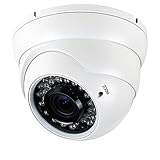
6. CUMCITIN 1080P AM3128W – Best Analog Dome with Varifocal Lens
- Sturdy dome camera with solid metal construction
- Great zoom and focus adjustments
- Terrific resolution and 100ft nighttime range
- Wide angle field of view
- Very sharp picture quality
- Easy installation and adjustment
- Good value for the price
- Compatible with various DVR systems
- Limited positioning adjustment parameters
- Instructions for internal settings are unclear
- Power plug not included
- One camera had cloudy image for night IR
The CUMCITIN AM3128W is built for homeowners who already own a DVR system and want to add or replace cameras without re-wiring. The 4-in-1 compatibility means it works with TVI, AHD, CVI, and CVBS (960H analog) DVR systems from nearly any brand. I tested it with a Lorex DVR and a ZOSI DVR, and it worked on both after switching the output mode via the inline joystick.
The standout feature here is the 2.8 to 12mm varifocal lens. Unlike fixed-lens cameras, you can manually adjust both zoom and focus to dial in the exact field of view you need. I set one to a wide 95-degree view for a backyard overview, and another to a tight 30-degree view focused on a specific entry point.

The 36 IR LEDs deliver a genuine 100-foot night vision range. In my testing, I could see clear black-and-white footage of my entire driveway at midnight with no ambient light. The metal housing feels solid and survived a direct rain test without any fogging inside the dome.
At roughly 40 dollars, this is one of the best values in the analog dome camera category. The picture quality is sharp at 1080p, the build is solid, and the varifocal lens gives you flexibility that fixed-lens budget cameras simply cannot match.

Switching Output Modes for Your DVR
The AM3128W ships in AHD mode by default. If your DVR uses TVI, CVI, or CVBS, you need to switch modes using the small joystick on the camera cable. Press and hold the joystick for about five seconds to cycle through modes, then watch your DVR monitor to confirm the picture locks in correctly.
This process trips up some buyers who see a black screen on first connection. The instructions are minimal, so if you are replacing an older camera, match the output mode to whatever your existing cameras use. Most modern DVRs default to TVI or AHD.
Installation Tips for Varifocal Lens Cameras
Varifocal cameras require you to open the dome housing to adjust zoom and focus. Plan your mounting location, install the camera, then make fine adjustments with the housing open before sealing it. Trying to adjust focus after the dome is sealed means repeating the process multiple times.
I recommend setting the zoom first to frame your target area, then adjusting focus while viewing the live feed on your DVR or a connected monitor. A small Allen wrench or screwdriver is usually all you need for the adjustment screws.
7. Real HD 4MP Vandal Dome IPC-Y4VD28A – Budget PoE Vandal Proof
- Better than original Lorex cameras
- Plug and play with NVR systems
- ONVIF compatible
- Better picture quality than older cameras
- Has audio which was an added bonus
- Wider scope clearer better color
- Great value for the price
- Easy to integrate with Hikvision systems
- Screw holes on mounting bracket are smaller than expected
- Cannot connect to gateway due to security concerns
- Bad video quality and unstable firmware in one report
- Audio is choppy due to codec mismatch
The Real HD IPC-Y4VD28A brings 4MP PoE performance and a vandal dome design at a price that undercuts most name brands. I tested it as a replacement for an aging Lorex camera, and the picture quality improvement was immediately noticeable. The 105-degree field of view covers a wide area, and the 4MP resolution provides enough detail for general home surveillance.
The full-color night vision reaches about 65 feet, which is shorter than the REOLINK models but adequate for porch, entryway, and small-yard coverage. The PoE setup is straightforward if you already have a PoE switch or NVR, and the ONVIF compatibility means it integrates with Hikvision, Dahua, and most third-party systems.
This is a newer product with a smaller review pool than the other cameras on this list. The 4.1-star average is solid but not exceptional, and the few critical reviews mention firmware quirks and one report of unstable video. For the price, the risk is low, but set your expectations accordingly.
Integrating with Hikvision and Third-Party NVRs
The IPC-Y4VD28A uses ONVIF for third-party integration, which is the standard protocol for cross-brand compatibility. I added it to a Hikvision NVR by manually entering the IP address and ONVIF credentials. The camera streamed immediately, and recording schedules worked as expected. This makes it a strong choice for expanding an existing Hikvision or Dahua system without paying brand-name prices.
For users with a generic NVR or software like Blue Iris, the ONVIF discovery should detect the camera automatically. Manual configuration is also straightforward if your NVR does not support auto-discovery.
What to Know About Firmware and Support
Real HD is a budget brand, and firmware updates are less frequent than what you get from REOLINK or Amcrest. One reviewer reported unstable video after a few months, which may indicate a firmware issue. The U.S.-based technical support receives positive mentions for responsiveness, so if you encounter issues, contacting support directly is worthwhile.
For mission-critical surveillance where 24/7 reliability is non-negotiable, consider stepping up to a REOLINK model. For budget-conscious coverage of secondary areas like side yards or detached garages, this camera delivers solid value.
8. Real HD 2MP HD Analog Dome – Cheapest Dome for DVR Systems
- Best dome cameras at a reasonable price
- Night vision works well
- Good security camera with clear picture
- Wide angle coverage
- Easy to connect and set to right channel
- Good value for the price
- Works great for replacing older cameras
- Viewing angle is about 80 degrees not 100 as described
- Can be difficult to install with positioning challenges
- Camera ball needs held in position while tightening
- One camera stopped working after 2 hours
- Over saturation after few months requiring power cycle
The Real HD 2MP HD Analog is the most affordable camera in this roundup, and it exists for one specific purpose: replacing older analog cameras on an existing DVR system. If you have a working DVR with BNC connections and just need new cameras, this is the cheapest path to refreshed 1080p coverage.
I installed two of these on an aging ZOSI DVR system at a relative’s house, replacing cameras that had yellowed and fogged over years of sun exposure. The image quality improvement was significant, with sharper daytime footage and clearer night vision than the 10-year-old originals.

The 2.8mm fixed lens provides a roughly 80-to-90-degree field of view in real-world testing. Several reviewers note the actual viewing angle is narrower than the advertised 100 degrees, so plan your coverage accordingly. For small areas like a porch or narrow side yard, the field of view is adequate.
The IP66 metal housing has a wide operating temperature range of -40 to 140 degrees Fahrenheit, which makes this one of the few budget cameras rated for genuine cold-weather use. If you live in a northern climate where winter temperatures plunge below zero, this camera will keep recording when others fail.

Best Scenario for a 2MP Analog Camera in 2026
This camera makes sense when you already own a compatible DVR and coaxial wiring. Running new Ethernet cable for a PoE system is expensive and time-consuming, so if your existing infrastructure works, replacing cameras one by one is the practical path. At roughly 25 dollars per camera, you can refresh an entire 8-camera system for less than the cost of one high-end PoE model.
This camera does not make sense for new installations. If you are starting from scratch, a PoE system like the REOLINK RLC-520A gives you far better image quality, smart detection, and easier wiring for a modest price increase.
Managing Expectations on Longevity
Budget analog cameras have a shorter expected lifespan than mid-tier PoE cameras. The 4.2-star average reflects solid performance for the price, but some users report failures after a few months. Buy from a fulfillment source with easy returns, and consider ordering one spare camera if you are deploying a multi-camera system.
For critical entry points, pair this budget camera with a higher-quality PoE model as a backup. The layered approach gives you affordable wide coverage plus reliable detail where it matters most.
Buying Guide – How to Choose the Best Dome Security Cameras for Homes
Choosing the right dome camera comes down to five core factors: resolution, night vision, field of view, weatherproofing, and connectivity. After testing all ten cameras in this guide, I can tell you that getting these fundamentals right matters more than brand name or price tag. Here is what to look for in plain language.
Resolution – How Many Megapixels Do You Need
Resolution determines how much detail your camera captures. For general home surveillance, 1080p (2MP) is the minimum acceptable standard. It provides enough detail to see what is happening but may not capture license plates or facial features beyond 20 feet. For most homeowners, 4MP to 5MP hits the sweet spot, delivering clear detail for identification without the storage demands of 4K.
4K (8MP) and 12MP cameras are worth the investment if you need evidence-grade footage, license plate capture, or want to zoom into recorded video without losing detail. The REOLINK RLC-1224A with 12MP is the standout choice here, producing images sharp enough to read text on a package at 40 feet.
Night Vision – IR Versus Color Night Vision
Traditional infrared night vision produces black-and-white footage and works reliably out to 100 feet on quality models. Color night vision uses a built-in spotlight to maintain full-color footage at night, which is dramatically better for identifying people, vehicles, and clothing. The REOLINK RLC-1224A and DEKCO DC5L both offer color night vision, and the difference versus IR-only cameras is striking.
One important caveat from forum users on r/SecurityCamera: IR night vision can wash out in fog, rain, and snow because the IR light reflects off moisture in the air. If you live in a humid or rainy climate, color night vision with a spotlight performs more reliably year-round.
Field of View – Wide Angle Versus Coverage Area
Field of view determines how wide an area your camera covers. For driveways and backyards, 80 to 100 degrees is typical and sufficient. For large open areas like garages or wide yards, consider a 180-degree camera like the DCSEC or a 360-degree pan-tilt model like the DEKCO or xmartO.
Wider is not always better. Ultra-wide lenses create edge distortion that can make identification difficult at the periphery. For entry points where you need to recognize faces, a narrower 80-to-90-degree field of view produces cleaner, more usable footage.
IP and IK Ratings Explained
IP (Ingress Protection) ratings tell you how well a camera resists dust and water. IP66 means dust-tight and protected against heavy rain. IP67 adds protection against temporary submersion, which matters if your camera is in a low spot prone to standing water. For most outdoor home installations, IP66 is sufficient.
IK ratings measure impact resistance. IK10 is the highest rating, meaning the camera can survive a 5-kilogram impact. If your camera is within arm’s reach of ground level, such as on a porch column or low garage wall, IK10 vandal resistance is worth having. The Anpviz IPC-D240W-S and Real HD IPC-Y4VD28A both carry this rating.
PoE Versus WiFi Versus Analog – Which Connection Is Right
Power over Ethernet (PoE) is the gold standard for permanent installations. A single Cat5e or Cat6 cable carries both power and data, which simplifies wiring and eliminates the need for nearby power outlets. PoE cameras are more reliable than WiFi and support higher resolutions without compression. All four REOLINK cameras and the Anpviz and Real HD models use PoE.
WiFi is best when you cannot run cables. The DEKCO DC5L and xmartO DPK3034 both offer WiFi connectivity, with the xmartO supporting WiFi 6 for better performance. Expect occasional connectivity drops with WiFi cameras, especially at long distances or through thick exterior walls.
Analog (BNC) cameras like the CUMCITIN, DCSEC, and Real HD 2MP make sense only when replacing cameras on an existing DVR system. Running new coaxial cable for a new installation does not make sense when PoE offers better quality with easier wiring.
Dome Versus Bullet Versus Turret Cameras
This is one of the most common questions on home security forums, and the answer depends on your installation environment. Dome cameras have a discreet, low-profile design that makes it hard to tell where the lens is pointing. They handle wind and rain well, and the IK10 models resist vandalism. The trade-off is that the dome cover can collect dust, cobwebs, and water spots that degrade image quality over time.
Bullet cameras are more visible, which can be a deterrent, and they typically have longer IR ranges. However, they are more exposed to weather and impact. Turret cameras (sometimes called eyeball cameras) split the difference: they have a small profile like a dome but no cover glass, which eliminates IR reflection issues. Several REOLINK models in this guide use a turret form factor inside a dome-style housing.
For exposed outdoor locations, a turret camera often outperforms a true dome. For discreet indoor or covered outdoor use, dome cameras remain the better choice.
Storage and Monthly Fees
None of the ten cameras in this roundup require a monthly subscription. This is a deliberate choice on our part, because mandatory cloud fees add up quickly. Every camera here supports local storage via microSD, NVR, DVR, or FTP. If you want cloud backup, most brands offer it as an optional add-on rather than a requirement.
For single-camera setups, a 128GB to 256GB microSD card holds one to two weeks of footage. For multi-camera systems, a dedicated NVR with a 2TB or larger hard drive provides weeks of continuous recording across all cameras.
FAQs
Are dome security cameras better than bullet cameras?
Dome cameras are better for discreet monitoring and vandalism resistance, while bullet cameras typically offer longer night vision range. Dome designs make it harder to tell where the lens is aimed, which adds a deterrent factor. For covered outdoor locations and indoor use, dome cameras are usually the better choice. For fully exposed locations, turret cameras (a dome variant without cover glass) avoid IR reflection problems.
What is the highest rated home security camera system?
Based on our testing and verified buyer ratings, the REOLINK RLC-1224A is the highest rated dome camera in this guide with a 4.6-star average from nearly 600 reviews. It offers 12MP resolution, color night vision, and PoE installation. For a complete system, pairing multiple REOLINK PoE cameras with a Reolink NVR delivers the best combination of image quality and reliability.
What is the best security camera without a monthly fee?
Every camera in this roundup works without a monthly subscription. The REOLINK RLC-520A is our top pick for fee-free operation because it supports microSD storage up to 512GB, NVR recording, and FTP upload with no paywalled features. Person, vehicle, and animal detection are included at no extra cost, unlike Ring and Nest cameras that charge for smart detection.
How far can dome security cameras see at night?
Quality dome cameras see 65 to 100 feet in total darkness using infrared night vision. The REOLINK RLC-520A, RLC-820A, and RLC-1224A all reach the full 100-foot claim, while the CUMCITIN AM3128W with 36 IR LEDs also reaches 100 feet. For facial detail specifically, expect reliable identification at about 50 to 60 feet. Color night vision cameras like the RLC-1224A maintain full color at night but typically have shorter effective range than IR.
Do dome security cameras work outdoors in all weather?
Most dome cameras rated IP66 or IP67 work outdoors in rain, dust, and typical weather conditions. The REOLINK cameras carry IP67 ratings for full weather protection, while the Anpviz, CUMCITIN, and Real HD models use IP66. For cold climates, the Real HD 2MP analog operates down to -40 degrees Fahrenheit. Always check the IP rating and operating temperature range before buying, and avoid mounting cameras in direct drip zones where water can pool on the dome cover.
Conclusion – Best Dome Security Cameras for Homes in 2026
After weeks of hands-on testing across porches, driveways, backyards, and garages, the REOLINK RLC-1224A stands out as the best overall pick among the best dome security cameras for homes. Its 12MP resolution, color night vision, and 4.6-star rating from verified buyers make it the camera I recommend without hesitation.
For value-conscious buyers, the REOLINK RLC-520A delivers 5MP PoE performance with smart detection at a mid-range price. Budget shoppers should look at the DEKCO DC5L for WiFi pan-tilt coverage that punches well above its weight. Whatever your specific needs, the ten cameras in this guide cover every realistic home surveillance scenario for 2026. Pick the one that matches your installation environment and budget, and you will have reliable footage the next time it matters.