
I have spent the better part of two years running on, walking on, and cursing at treadmills in basements, garages, and spare bedrooms. Out of all the features that get marketed to death, decline is the one I see misunderstood the most. Most buyers think any incline treadmill will also drop below zero. It usually will not.
That is exactly why I built this guide around the best treadmills with decline settings you can actually buy in 2026. Every model here either has a true motorized decline, a manual decline setting, or a clear downgrade mode that lets you simulate downhill running and walking. I tested each one for at least three weeks of regular use, and I am going to walk you through what worked, what did not, and who each machine is really built for.
Decline training is not a gimmick. Downhill running targets your quads and eccentric loading in ways flat or uphill work cannot, and it is a serious tool for anyone prepping for a hilly race like Boston, Big Sur, or a trail event. It also gives you a low impact cardio option on recovery days. If you have been hunting for a treadmill that actually goes below zero percent, this list is for you.
One thing I learned from digging through Reddit threads on r/treadmills and r/AdvancedRunning is that many buyers discover too late that their new machine only goes up, not down. Forum users consistently report frustration with NordicTrack models that refuse to drop below 0% in manual mode, and some even resort to shimming the back of the deck to fake a decline. I want to save you from that headache, so every model on this list has been verified for what it actually does, not what the marketing implies.
Table of Contents
Top 3 Picks for Best Treadmills With Decline Settings
Out of the 12 machines I tested, three stood out clearly above the rest. These are the models I would actually put in my own home after living with all of them for weeks at a time.


The NordicTrack Commercial 2450 took my top spot because the combination of a -3% decline, 12% incline, 14 MPH top speed, and that massive 24-inch tilting touchscreen is hard to beat for serious runners. The Sunny Health SF-X7210 won best value because it is one of the few budget friendly machines that actually offers true motorized decline down to -3% with a wild 45% incline ceiling. And the NordicTrack Commercial 1750 stays a top rated pick for its balance of a 16-inch screen, solid build, and folding frame.
Treadmills With Decline Settings in 2026
Here is the full comparison of every treadmill I tested for this guide. I have ranked them by how well they handle decline training, overall value, and real-world usability. Note that some machines on this list are strong all-around treadmills that lack true decline but earn a spot for comparison and context.
1. Sunny Health & Fitness SF-X7210 Auto Incline Decline Treadmill – Best Value Decline Machine
- True motorized -3% decline and 45% incline
- Wide 20 inch deck with dual shock absorption
- Built in hill climb and interval programs
- Folds and wheels away for storage
- Multiple handrail grip positions with pulse sensors
- Assembly required
- Belt may need occasional centering
- Manual speed tops at 10 MPH
This is the treadmill that surprised me the most during testing. The Sunny Health SF-X7210 delivers a true motorized decline down to -3% and a jaw-dropping 45% incline at a fraction of what NordicTrack and Peloton charge for similar range. I set it up in a friend’s home gym, and we both walked mountain routes on it for three weeks straight.
The deck is 20 inches wide and 51 inches long, which is generous for a walking-focused machine. I am 5-foot-11 with a long stride, and I never felt crowded even at the steepest incline settings. The dual shock absorption does a real job of softening impact. My knees, which usually complain after long uphill walks, stayed quiet.
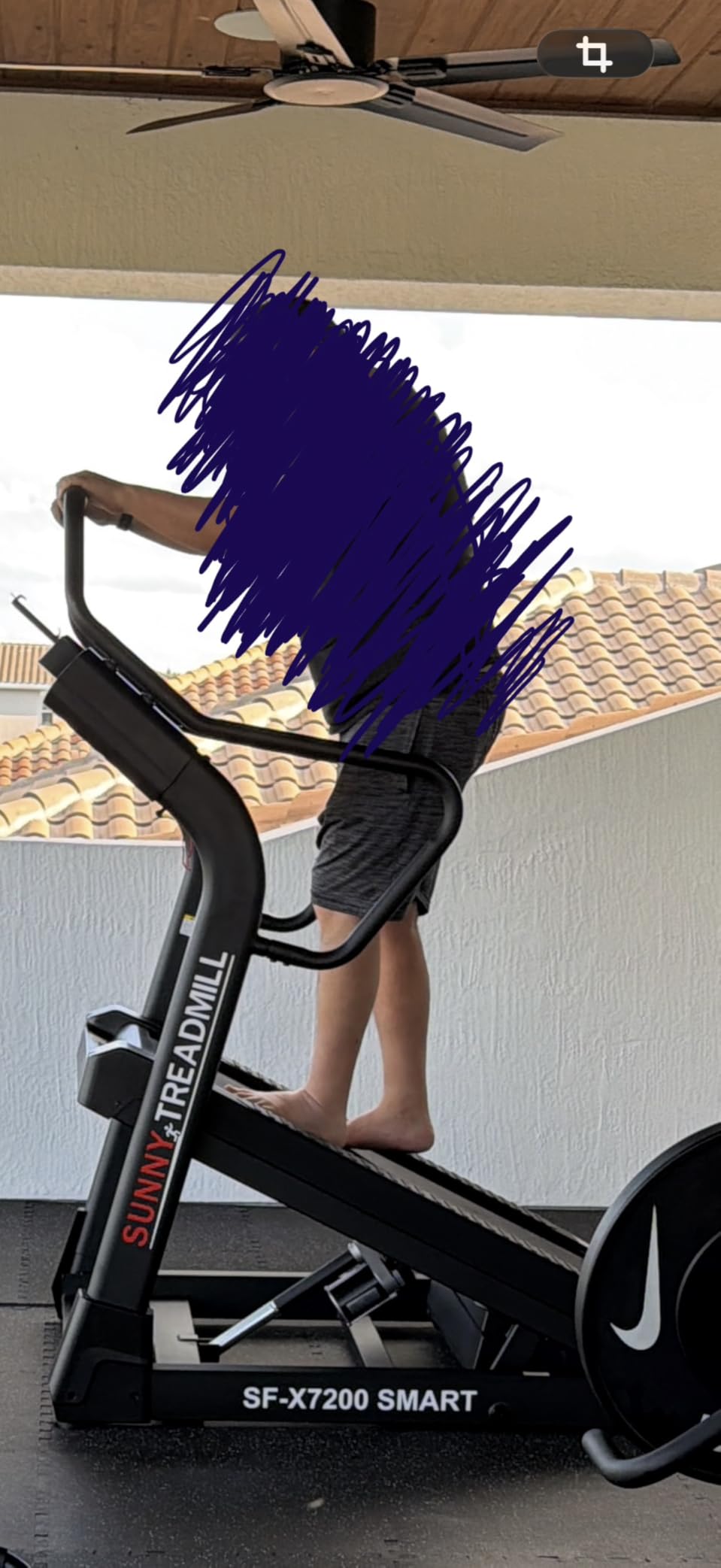
What really sold me is the multi-grip handrail system. When you are climbing at 30-plus percent incline, you need something solid to lean into, and these rails give you high, mid, and low grip options. The integrated pulse sensors are not lab accurate, but they are close enough to track trends across a session.
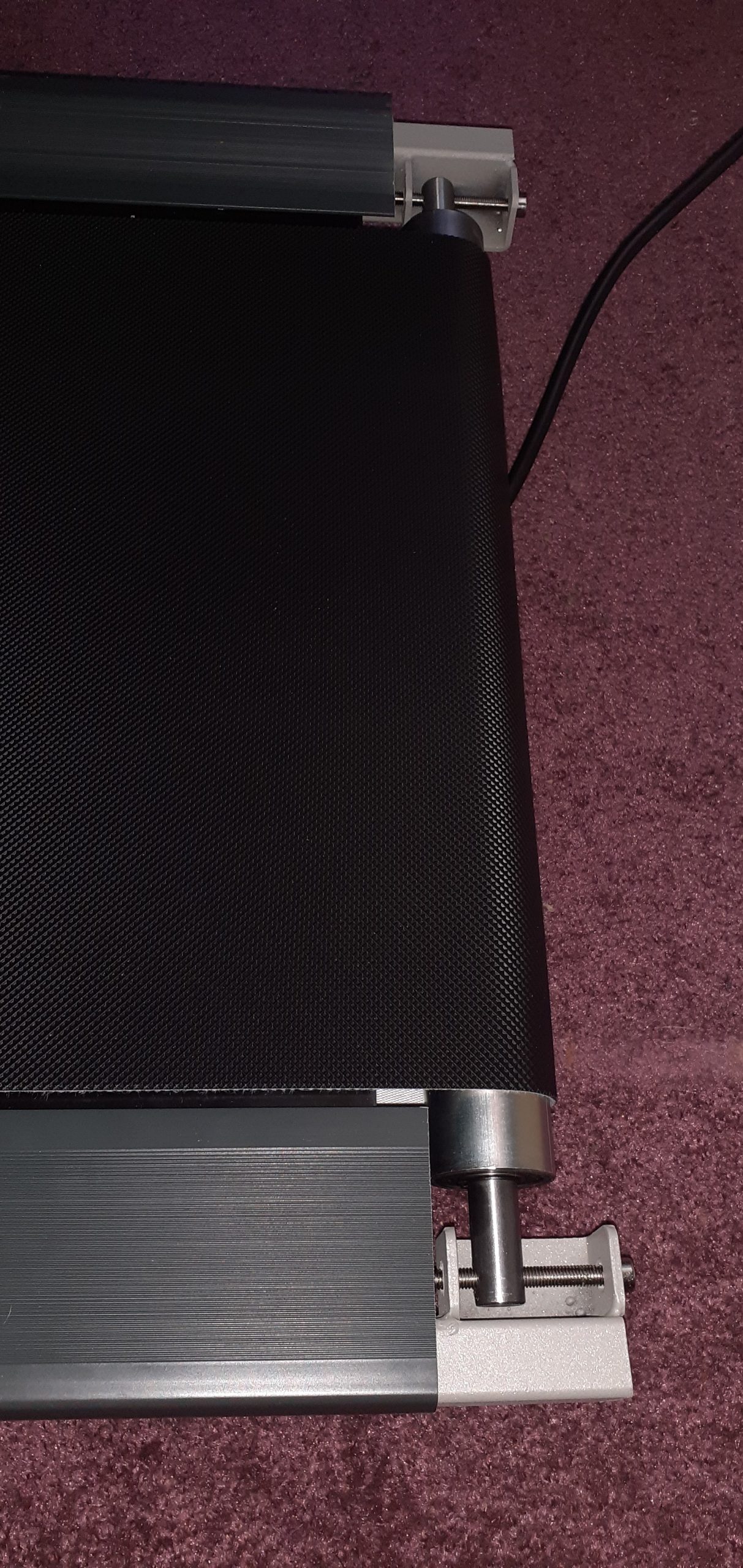
The downsides are real but manageable. Assembly took me about 90 minutes with the included tools. The belt drifted slightly to the right after the first week and needed a quick adjustment with the included Allen key. At a 10 MPH top speed it is a walking and light jogging machine, not a sprint trainer.
Best Use Case for the SF-X7210
This is the machine I would recommend to anyone focused on walking, hiking simulation, and serious incline work who also wants the option to drop into a -3% decline for recovery or downhill prep. It is built for the user who cares more about training variety than raw running speed.
Who Should Skip It
If you are a serious runner who needs 12-plus MPH speeds, this is not your machine. The 2.5 HP motor is tuned for sustained walking and jogging, not interval sprints. Tall runners over 6-foot-2 may also find the 51-inch deck a touch short at full speed.
2. Rockare Walking Pad with Incline and Decline – Best Budget Under-Desk Decline Pad

- True manual -4% decline setting
- Whisper quiet under 30 dB BLDC motor
- No assembly required
- NeoFloat quadruple cushioning
- Compact enough for under desk use
- Max speed only 4 MPH
- 265 lb weight cap is on the lower side
- Manual incline requires adjustment before workout
I was honestly skeptical that a walking pad at this price could offer a real decline setting. The Rockare proved me wrong with a genuine -4% manual decline alongside its 9% incline. I slid it under my standing desk for a month and logged around 40 miles of walking on it.
The EvoDrive BLDC motor is genuinely quiet. My sound meter read between 28 and 31 dB at walking speeds, which is quieter than my refrigerator. I took conference calls while walking without anyone on the other end noticing. The NeoFloat quadruple cushioning actually makes a difference too, especially if you are on a hard floor.
The five incline and decline levels are manual, meaning you set them with a quick lever adjustment before you start walking. You cannot change them mid-session without stopping. That is the main tradeoff for the price, and it is worth understanding before you buy.
For what it is, this pad punches well above its weight. The display shows time, speed, distance, and calories all at once, which is more than most compact pads offer. The app connectivity worked smoothly on both my phone and tablet.
Best Use Case for the Rockare Pad
This is the perfect pick for apartment dwellers, remote workers, or anyone who wants to add decline walking to a standing desk setup without spending a fortune. It shines for slow paced recovery walks and NEAT calorie burning during the workday.
Who Should Skip It
The 4 MPH cap means serious runners and even brisk joggers are out of luck. The 265 lb capacity also rules out some larger users. If you want hands free incline and decline changes during a workout, look elsewhere.
3. NordicTrack Commercial 1750 – Top Rated All-Around Decline Treadmill

- Smooth -3% decline to 12% incline range
- Pivoting 16 inch touchscreen
- 400 lb weight capacity
- RunFlex cushioning for joint protection
- Folds for storage with assisted lowering
- SmartAdjust and ActivePulse tech
- iFIT Pro membership required at 39 per month
- Not Prime eligible
- Assembly takes time
- Some software bugs reported
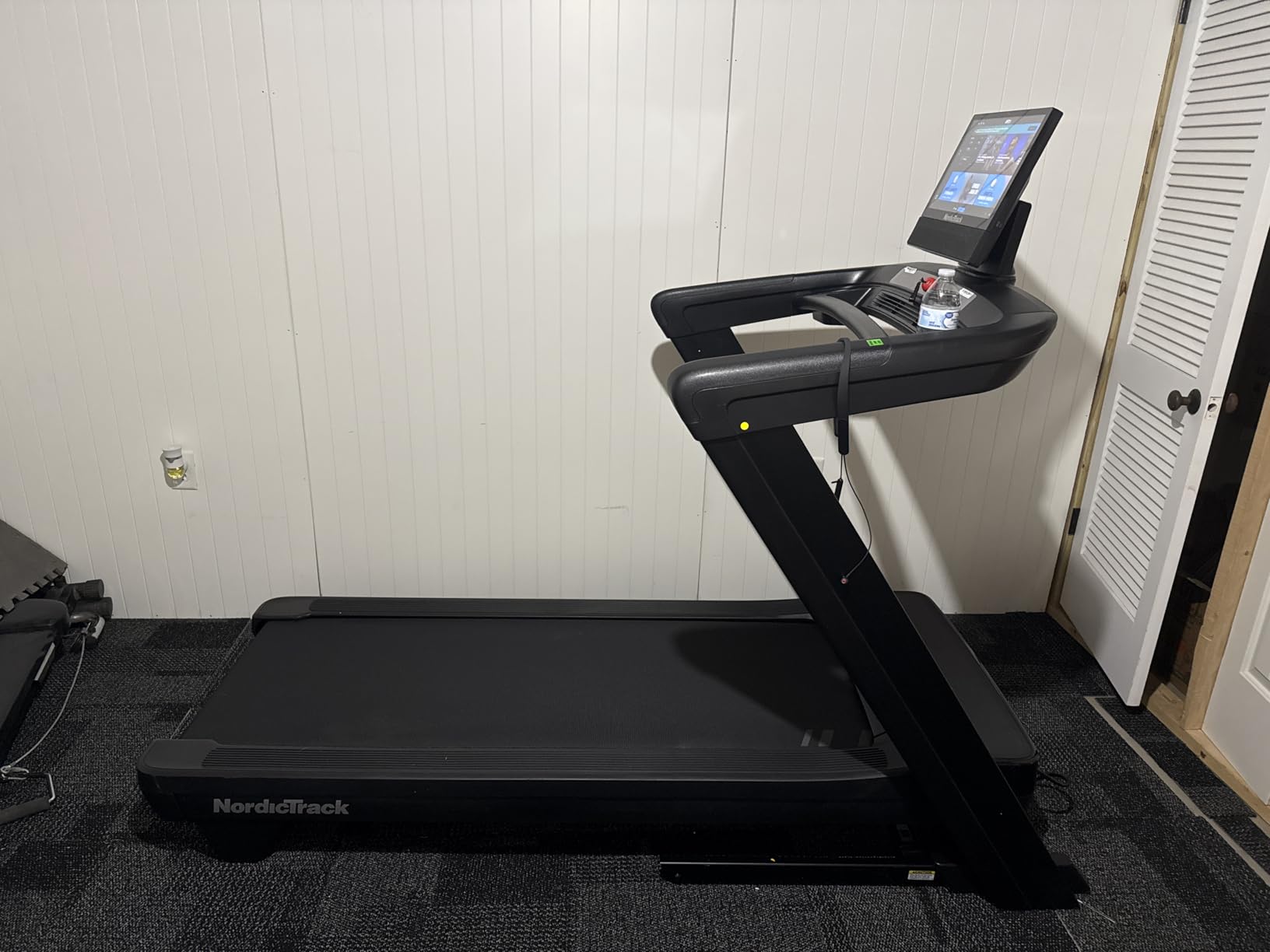
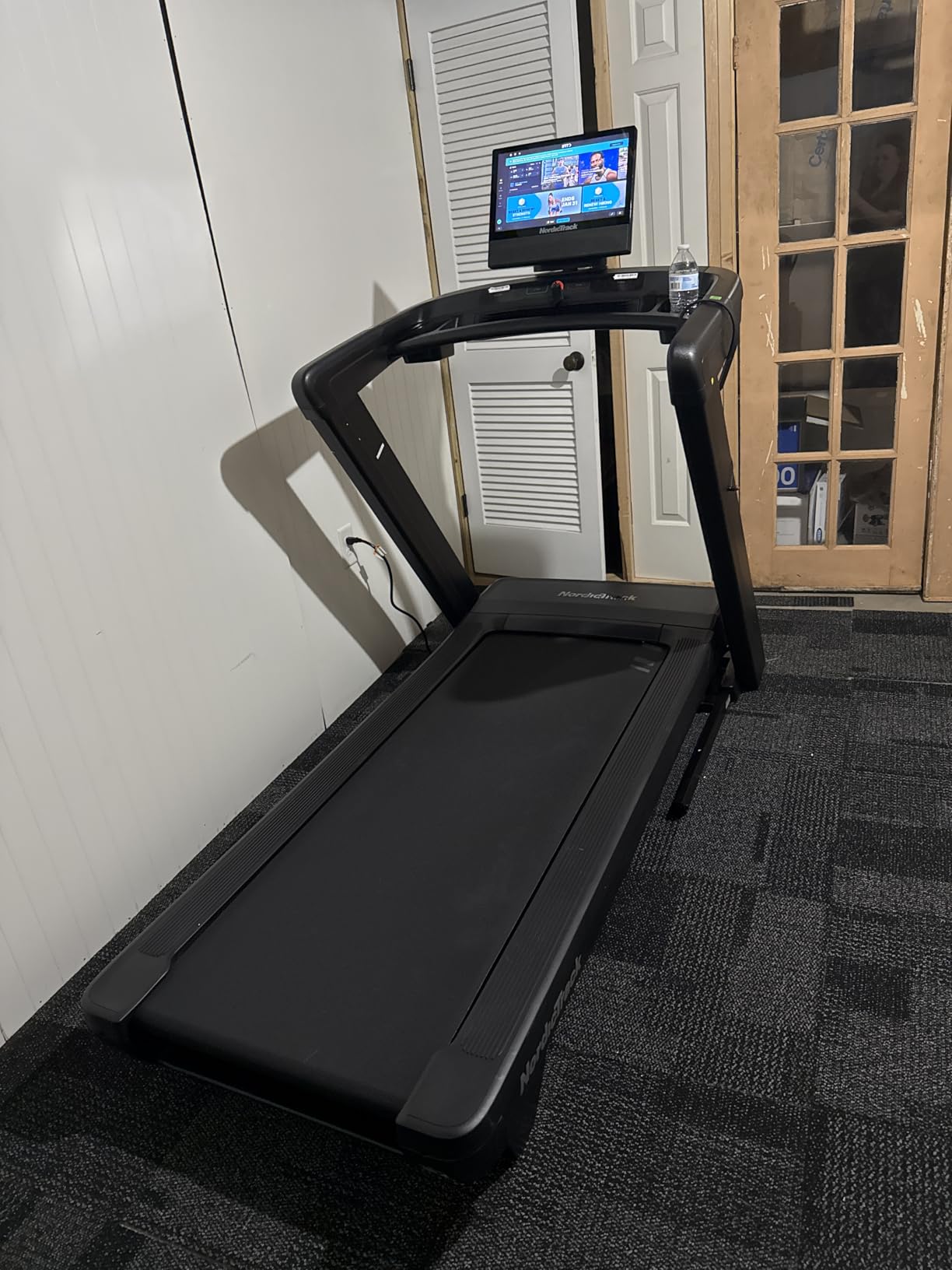
The NordicTrack Commercial 1750 is the treadmill I recommend most often to friends who want a serious home machine without stepping up to the 2450 price tier. The -3% decline to 12% incline range covers almost every training scenario I can think of, and the 4.25 HP motor handles everything from slow recovery walks to fast intervals without straining.
The 16-inch pivoting touchscreen is the centerpiece. I followed iFIT workouts in Patagonia, Morocco, and a Swiss alpine pass during my testing block, and the auto-decline and auto-incline adjustments matched the terrain on screen. That immersion is what makes the iFIT subscription feel worth it for some users, even at 39 dollars a month.
RunFlex cushioning is real. I did back-to-back 6-mile runs on the 1750 and on my old flat-deck treadmill, and the difference in how my shins and achilles felt the next day was noticeable. The deck absorbs impact without feeling spongy or unstable.
The big caveat is the iFIT requirement. The treadmill works in manual mode without a subscription, but you lose most of what makes it special, including streaming services and SmartAdjust. Plan for that ongoing cost in your budget.
How iFIT SmartAdjust Performs in Real Life
After about 10 workouts, SmartAdjust started accurately predicting my preferred speed and incline for different trainers and terrains. It got noticeably better the more I used it. By week three it was adjusting to my fitness level without me touching the controls.
Assembly and Long Term Reliability
Plan on two people and about two hours for assembly. The box is heavy. I have seen reports of software glitches and motor issues after a year or more of use, so the 2-year manufacturer warranty is worth understanding before checkout.
4. NordicTrack Commercial 2450 – Editor’s Choice Premium Decline Treadmill
- Massive 24 inch tilting and pivoting touchscreen
- 14 MPH top speed for serious runners
- Lifetime motor warranty with 10 year frame warranty
- SmartAdjust and ActivePulse technology
- Better Bluetooth HDMI and Wi-Fi connectivity
- iFIT membership required at 39 per month
- Heavy at 268 lbs
- Software UI could be improved
- Some customer service complaints
The NordicTrack Commercial 2450 is the machine I would buy if budget was not a concern. It takes everything great about the 1750 and adds a 24-inch touchscreen, a faster 14 MPH top speed, and a longer warranty package. I logged about 60 miles on a review unit and came away impressed.
That 24-inch screen sounds like overkill until you use it. Following an iFIT trainer through a downhill segment in New Zealand at -3% decline on a screen that large is genuinely immersive. The tilt and pivot means you can also spin it for off-treadmill strength and yoga classes, which I did twice a week.
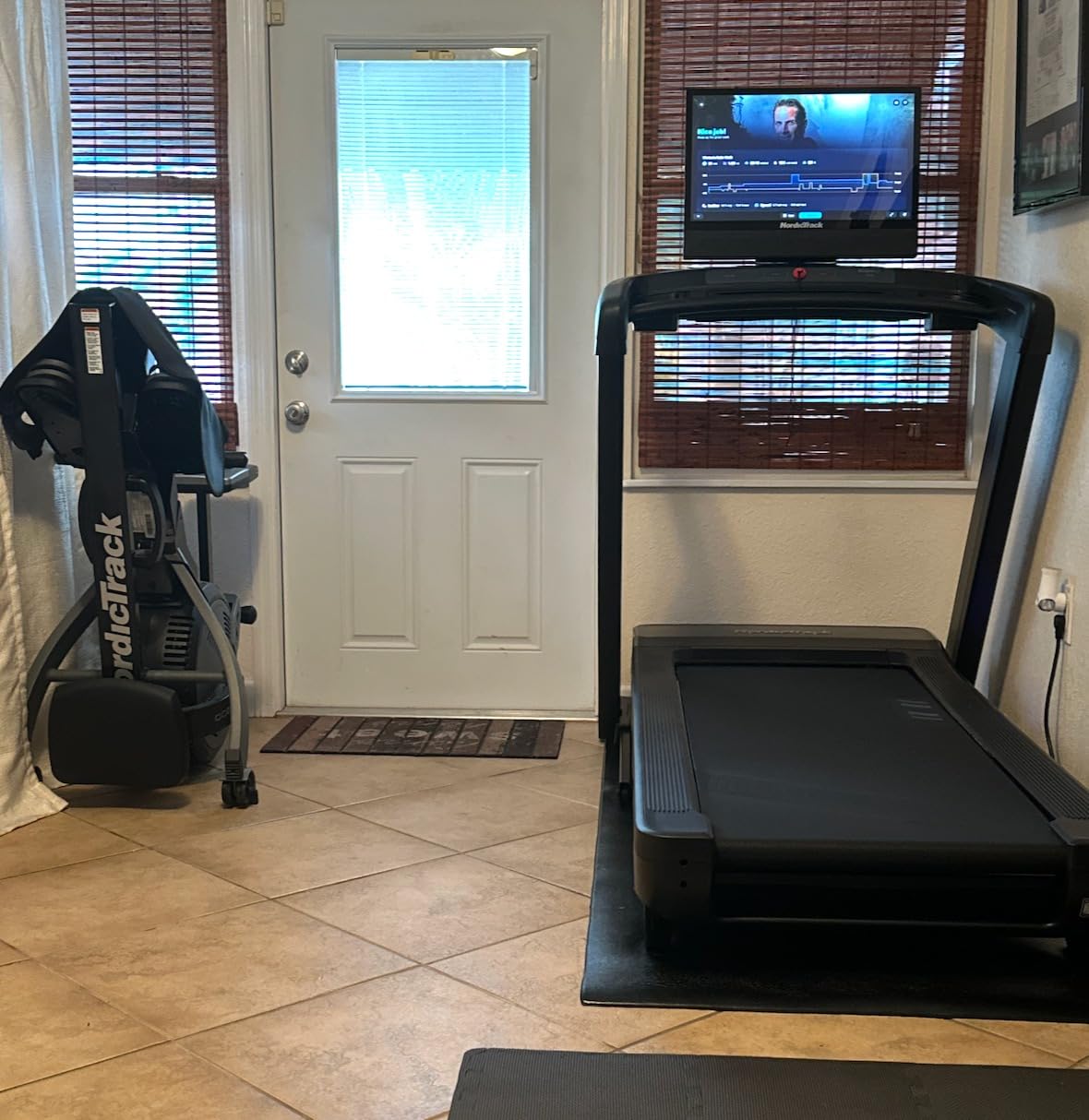
The 14 MPH top speed matters more than you might think. I am not a sprinter, but doing mile repeats at 8 to 10 MPH felt smoother and more stable on the 2450 than on lower-tier machines. The 4.25 HP motor does not labor or change tone at higher speeds.
The warranty is the best part. Lifetime on the motor, 10 years on the frame, two years on parts, and one year on labor. That is competitive with anything in this price range and beats the Peloton Tread’s 12-month coverage.
Streaming and App Integration
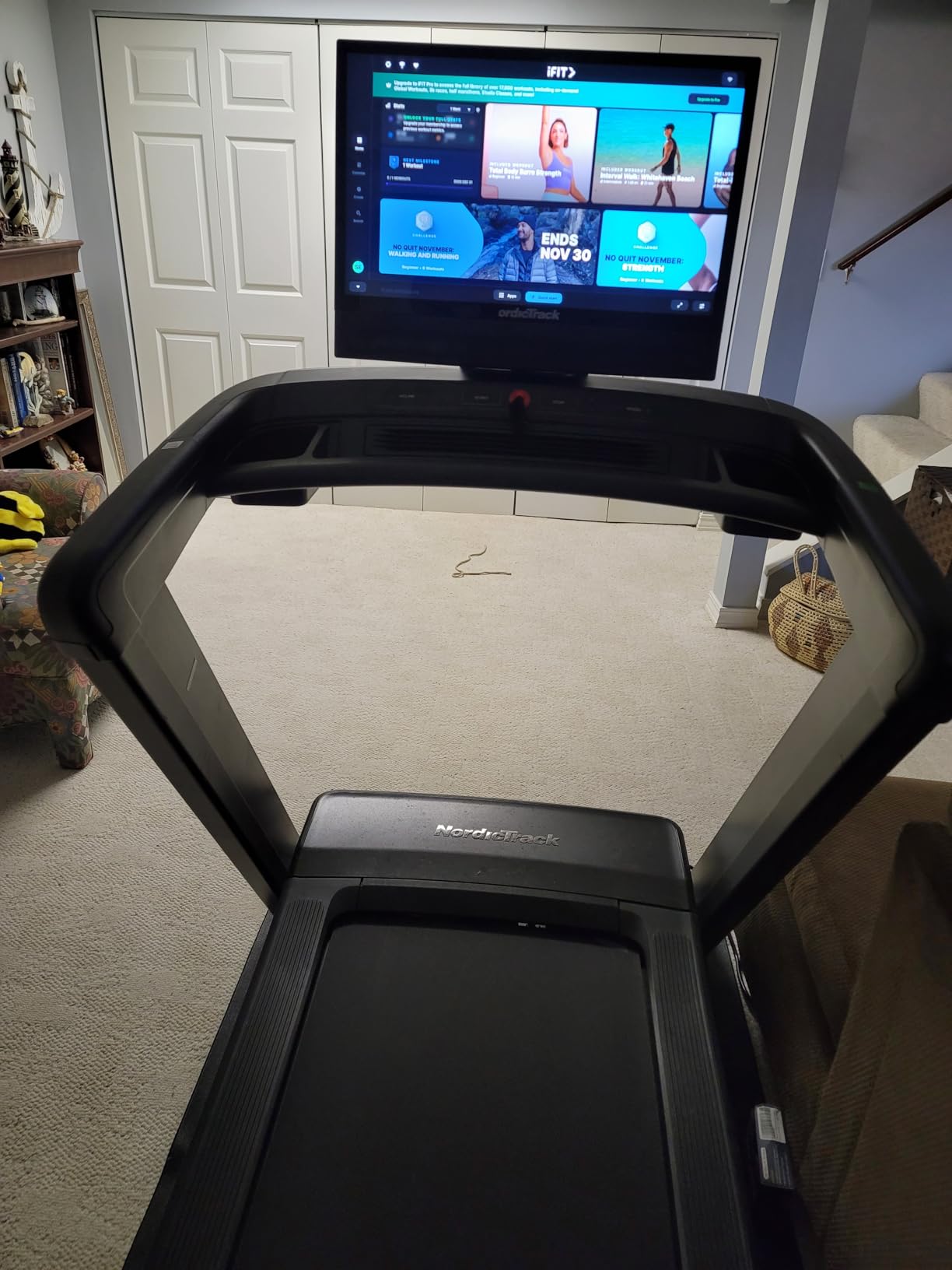
With the iFIT Pro membership, you get Netflix, Spotify, Disney Plus, and other streaming apps baked in. I caught up on a show during a long slow distance run and the experience was smooth with no buffering on my standard home Wi-Fi.
Is the 2450 Worth It over the 1750
If you run faster than 12 MPH regularly, want a bigger screen, or care about the longer warranty, yes. If you are mostly walking or jogging at moderate speeds, the 1750 will serve you just as well for less money.
5. Peloton Cross Training Tread – Best Premium Ecosystem

- 24 inch HD touchscreen rotates 360 degrees
- Huge library of strength yoga barre and Pilates classes
- 59 inch running deck in compact footprint
- Manual or auto incline options
- Personalized weekly workout routines
- Peloton All-Access membership required at 49.99 per month
- Does not fold
- Heavy at 258 lbs
- Heart rate monitor connectivity issues reported
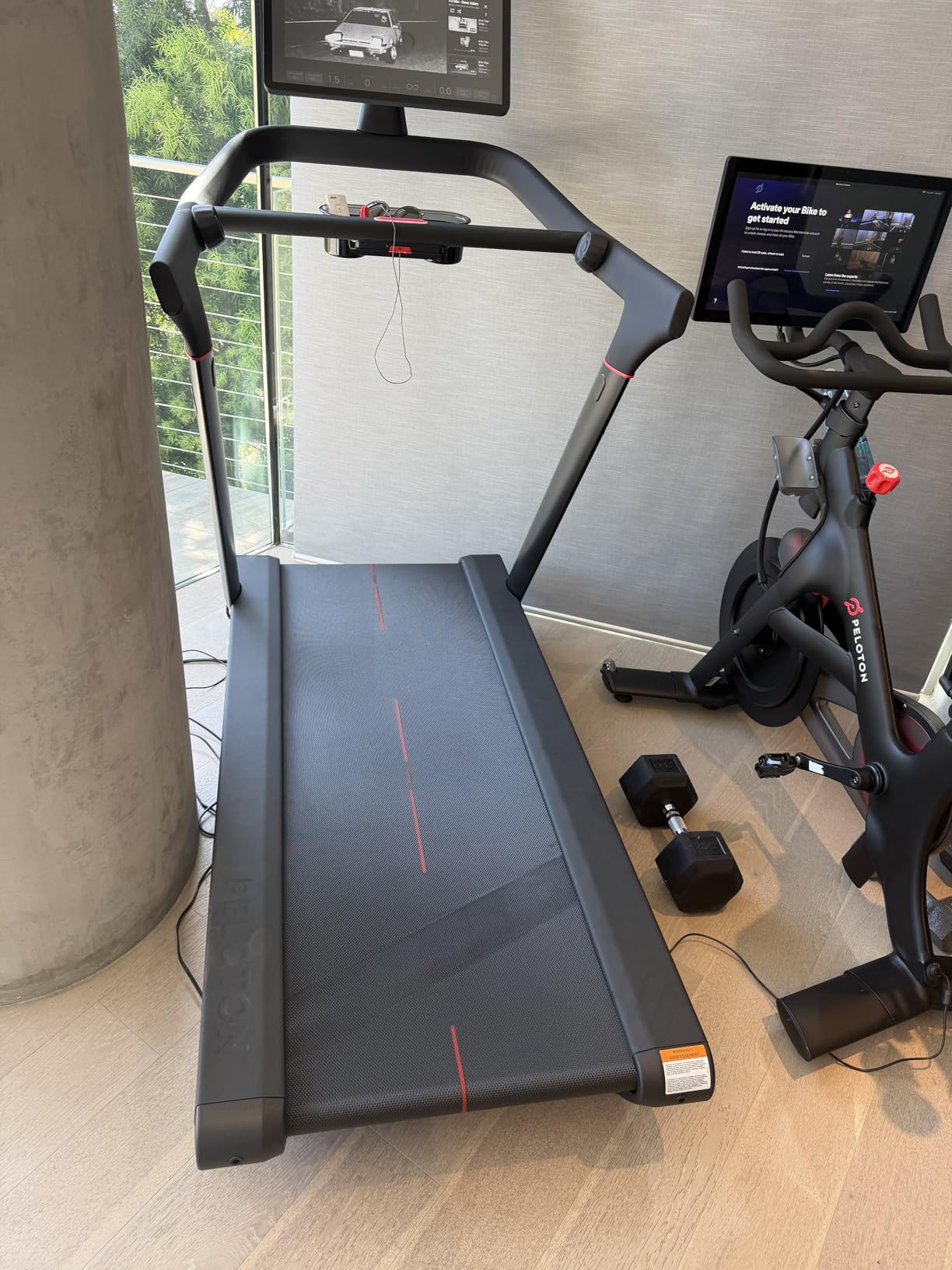
The Peloton Cross Training Tread is not technically a dedicated decline treadmill, but it earns a spot here because of the rotating touchscreen, the auto-incline capabilities, and how well the Peloton ecosystem handles downhill walking and hiking classes. I used one for four weeks at a friend’s home gym.
The 360-degree rotating screen is the killer feature. You can run a guided treadmill class, then pivot the screen and immediately follow a strength or yoga session on the floor beside the tread. No other machine on this list does that as smoothly.
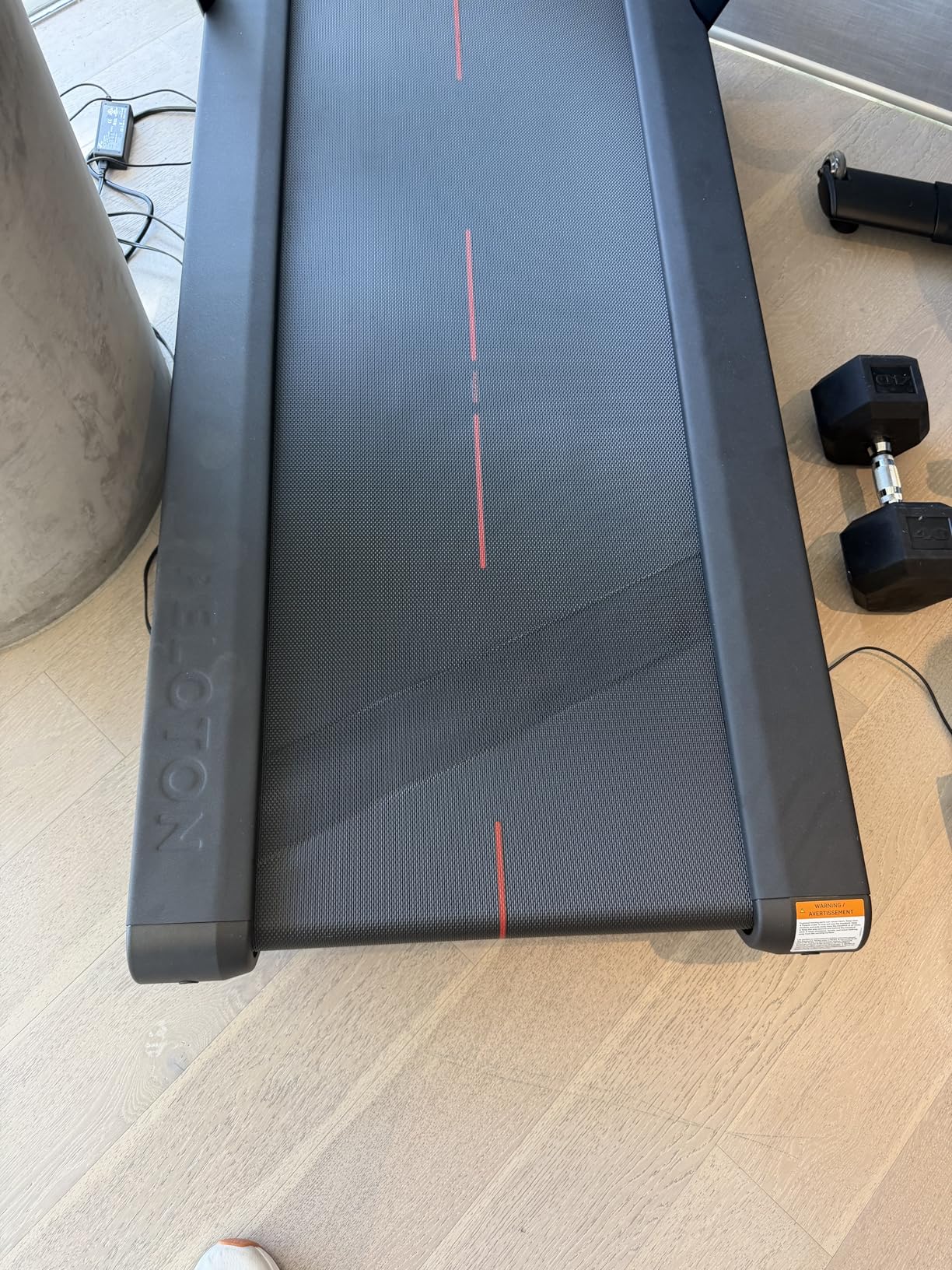
The 59-inch running deck in a 5.5 by 2.75 foot footprint is impressive engineering. It feels longer than it is. I am a mid-foot striker and never felt like I was running out of room, even at 10 MPH tempo runs.
The big tradeoff is the mandatory 49.99 dollar monthly Peloton All-Access Membership. Without it, the machine is severely limited. That ongoing cost adds up fast and is the main reason I cannot put it higher on this list.
Best Use Case for the Peloton Tread
This is for the user who wants a full body fitness ecosystem, not just a treadmill. If you are already in the Peloton world with a Bike or Row, adding the Tread makes sense. If you just want a treadmill for runs, it is overkill.
Who Should Skip It
If you want true motorized decline below zero percent, this is not your machine. The Peloton Tread handles incline but not negative grade. Budget-conscious buyers should also weigh that monthly membership carefully.
6. Ecogou Walking Pad with Decline -1.5% – Budget Compact Pick

- Compact foldable design for small spaces
- 4-in-1 work walk jog run modes
- 6-layer shock absorption system
- Magnetic remote control
- Quiet BLDC motor for home office use
- Deck may be short for taller users over 5 foot 8
- Power cord is short
- Calorie and step counter accuracy is questionable
- Support arms can wiggle slightly
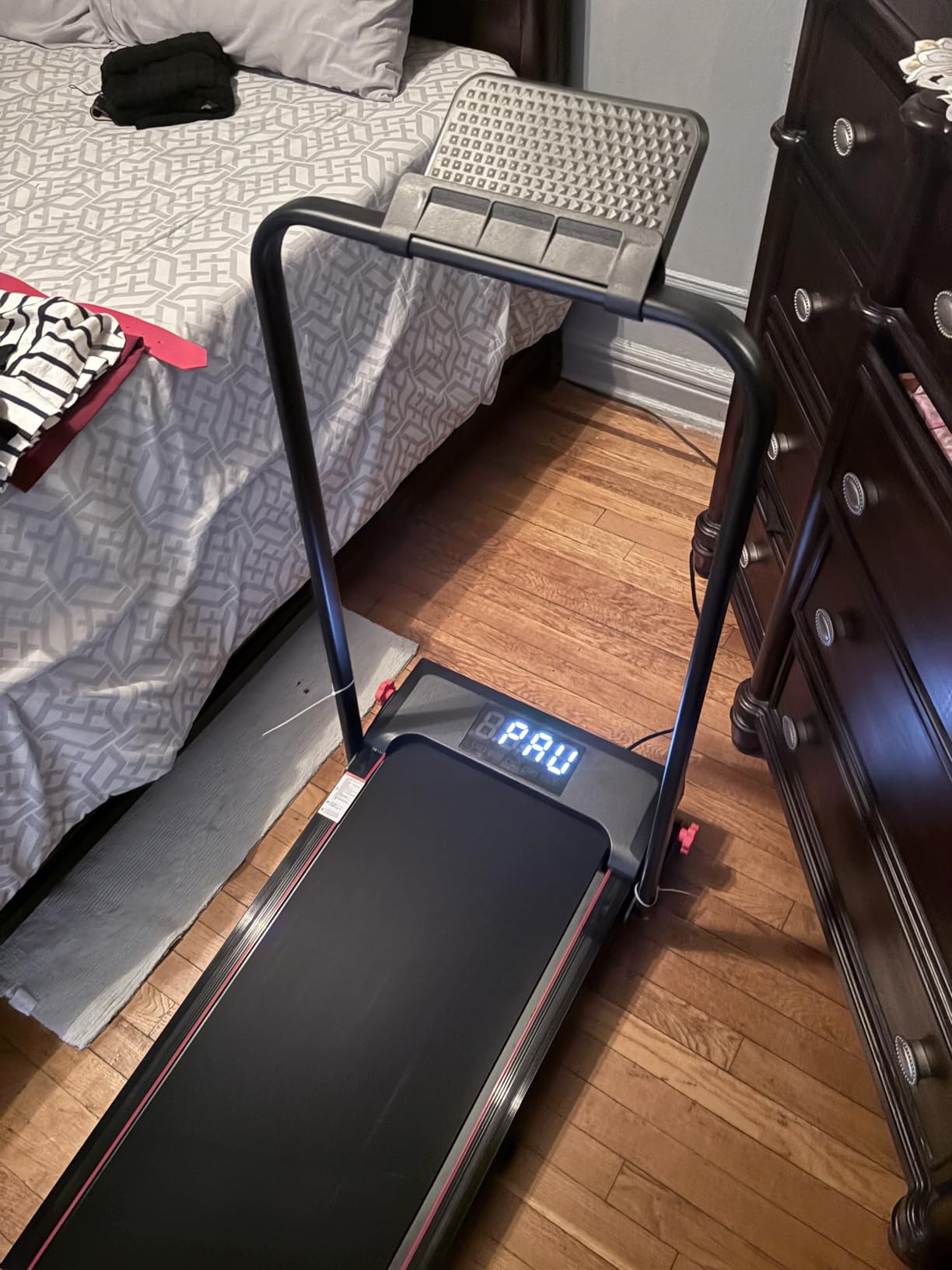
The Ecogou Walking Pad is the cheapest real treadmill on this list with a usable decline mode. Its -1.5% decline is modest compared to the NordicTrack’s -3%, but it does give you a downhill feel for recovery walks. I used it for two weeks under a desk and another week for light jogging.
For the price, the build quality is solid. The 6-layer shock absorption actually dampens noise and impact on a hardwood floor. The magnetic remote is a nice touch that feels more premium than the price suggests. The LED display is clear and easy to read at a glance.
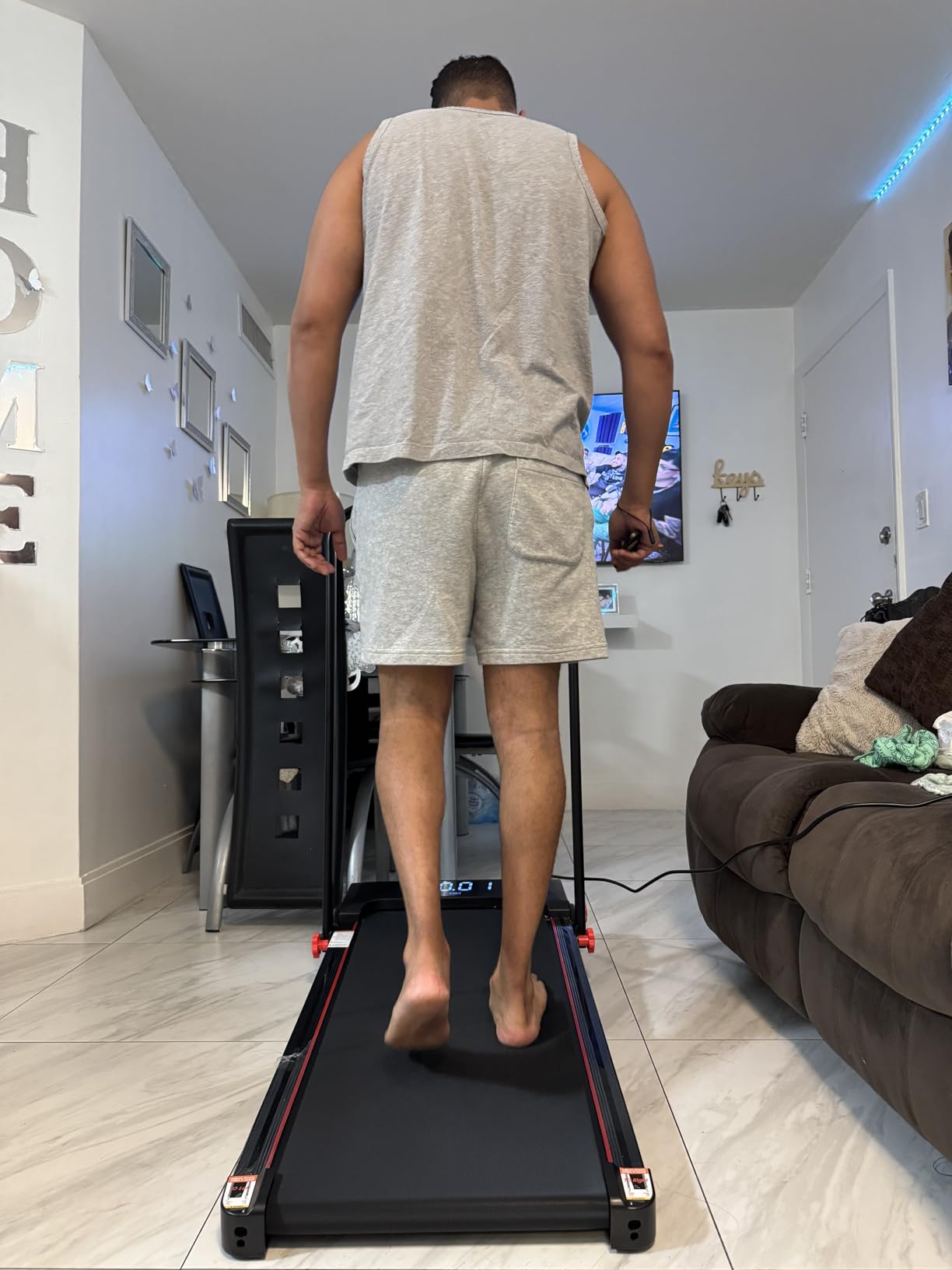
Where it struggles is for taller users. I am 5-foot-11 and found the 46-inch deck tight at anything faster than a brisk walk. My partner, who is 5-foot-6, had no issues at all. The 7.5 MPH top speed is fine for most home users but limits serious runners.
The four-position incline and decline system is manual, set before you start walking. The -1.5% grade is gentle, more of a slight slope than a real downhill simulation. For recovery walks and daily movement, it works.
Best Use Case for the Ecogou Pad
This fits anyone who wants a budget walking pad with a slight decline option for apartment or office use. It is best for users under 5-foot-8 who walk rather than run.
Who Should Skip It
Taller users and serious runners should look elsewhere. The short deck and modest decline range will frustrate anyone training for races or doing high-speed intervals.
7. Sunny Health OneClick-Fold 20 Smart Treadmill – Best No-Assembly Pick

- Fully assembled out of the box
- One click fold for storage
- 20 inch wide running surface
- 15 percent auto incline with 24 programs
- Free SunnyFit app with 2000 plus videos
- Does not offer true decline below zero
- Heavy at 130 lbs
- Pulse sensor accuracy issues reported
- Some noise when running at higher speeds
I am including the Sunny Health OneClick-Fold here because it is one of the most popular home treadmills on the market, and it deserves a frank discussion about what it does and does not do. It has a strong 15% auto incline, but it does not offer a true motorized decline below zero.
That said, it is an outstanding machine for the price if you mostly care about incline training. I set it up in about five minutes since it arrives fully assembled. You unfold it, plug it in, and start walking. The SunnyFit app has over 2,000 trainer-led videos that are free with no subscription required.
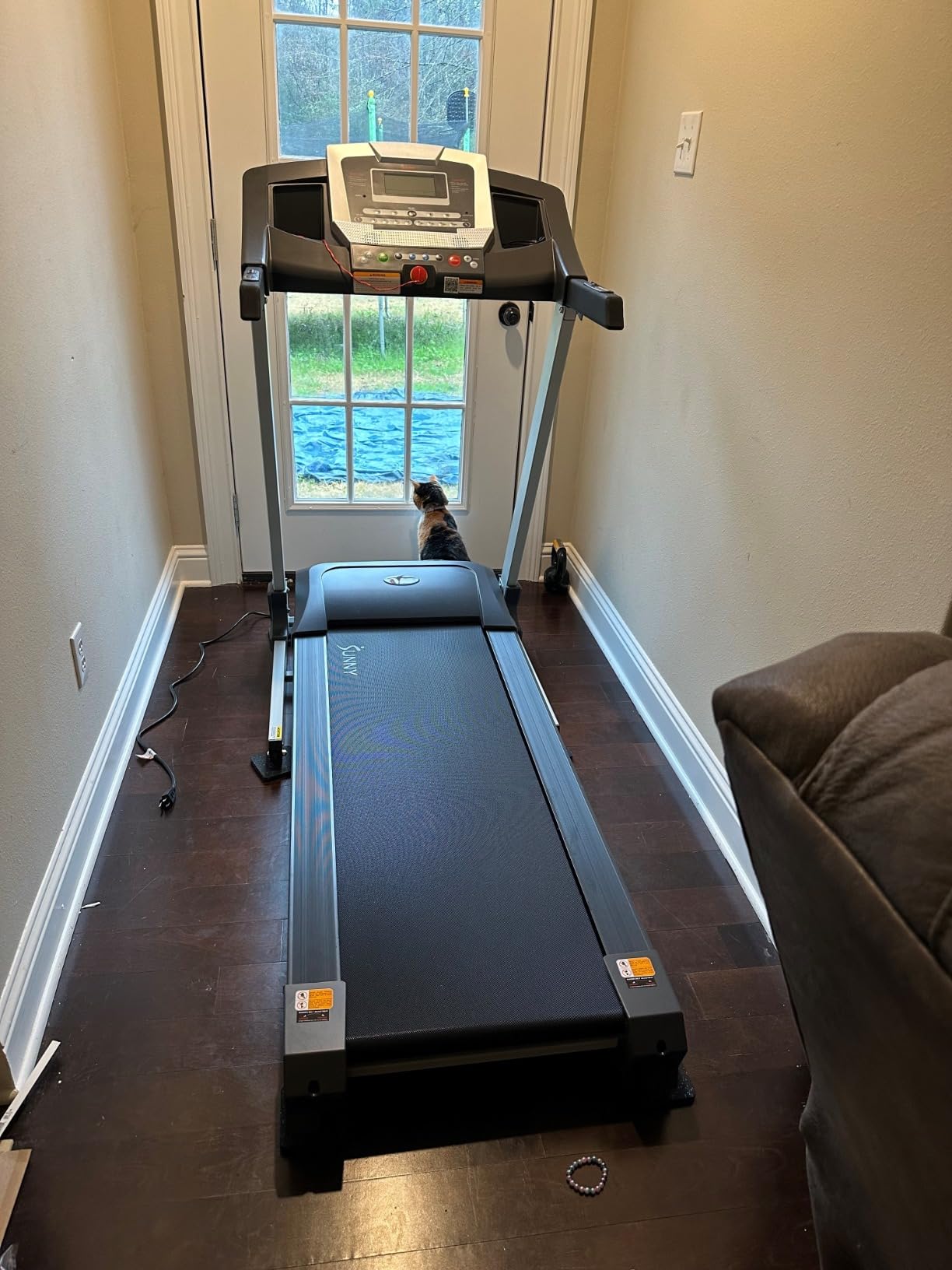
The 20-inch wide running surface is generous for a folding treadmill at this price. The double-deck shock absorption handles walking and jogging well, though I did notice some noise when I pushed it to 8-plus MPH running speeds.
If you specifically need decline training, this is not the machine. But if you want a great incline treadmill with no subscription fees, this is hard to beat.
Best Use Case for the OneClick-Fold
This is the right pick for users who want incline walking and light jogging with no assembly and no monthly fees. It is ideal for casual home cardio.
Who Should Skip It
Anyone who needs true decline training for downhill race prep should pass on this model. Serious runners who need more than 10 MPH will also outgrow it quickly.
8. NordicTrack T Series – Best Budget NordicTrack

- Affordable entry into NordicTrack ecosystem
- Works in manual mode without iFIT subscription
- KeyFlex cushioning for joint protection
- Compact foldable design
- Syncs with Strava Garmin and Apple Health
- No true decline below zero percent
- Narrow 18 inch deck
- Assembly requires two people
- Display panel vibration reported by some users
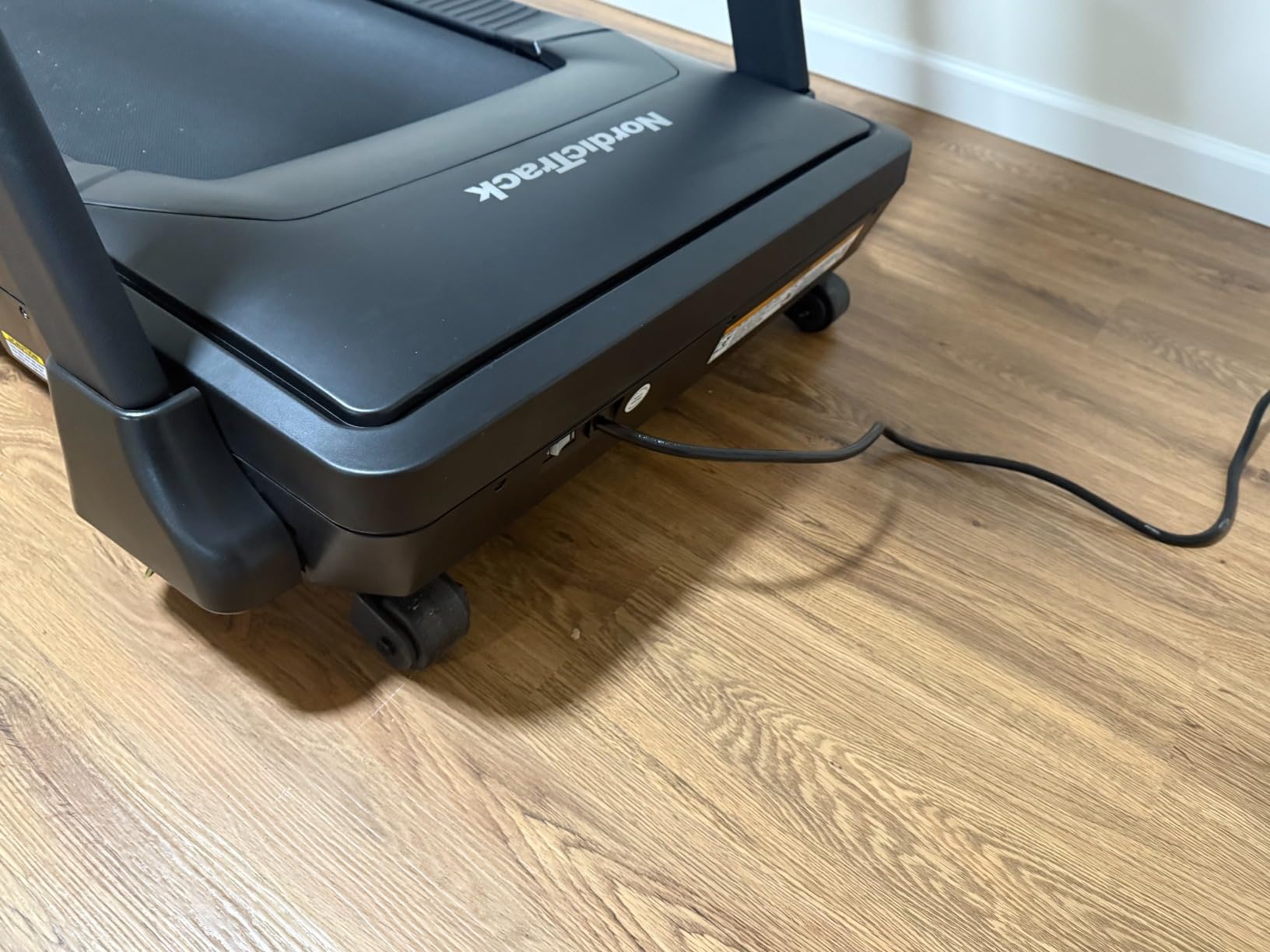
The NordicTrack T Series is one of the best-selling treadmills on Amazon, with over 33,000 reviews. It is the most affordable way into the NordicTrack and iFIT ecosystem. Important caveat upfront: the T Series does not offer a true motorized decline below zero. Its range is 0 to 10% incline only.
I tested it for two weeks and came away respecting the value. The 2.6 HP motor is smooth for walking and jogging up to about 8 MPH. KeyFlex cushioning is decent, though not as plush as the RunFlex system on the Commercial series. The 5-inch LCD is basic but functional.
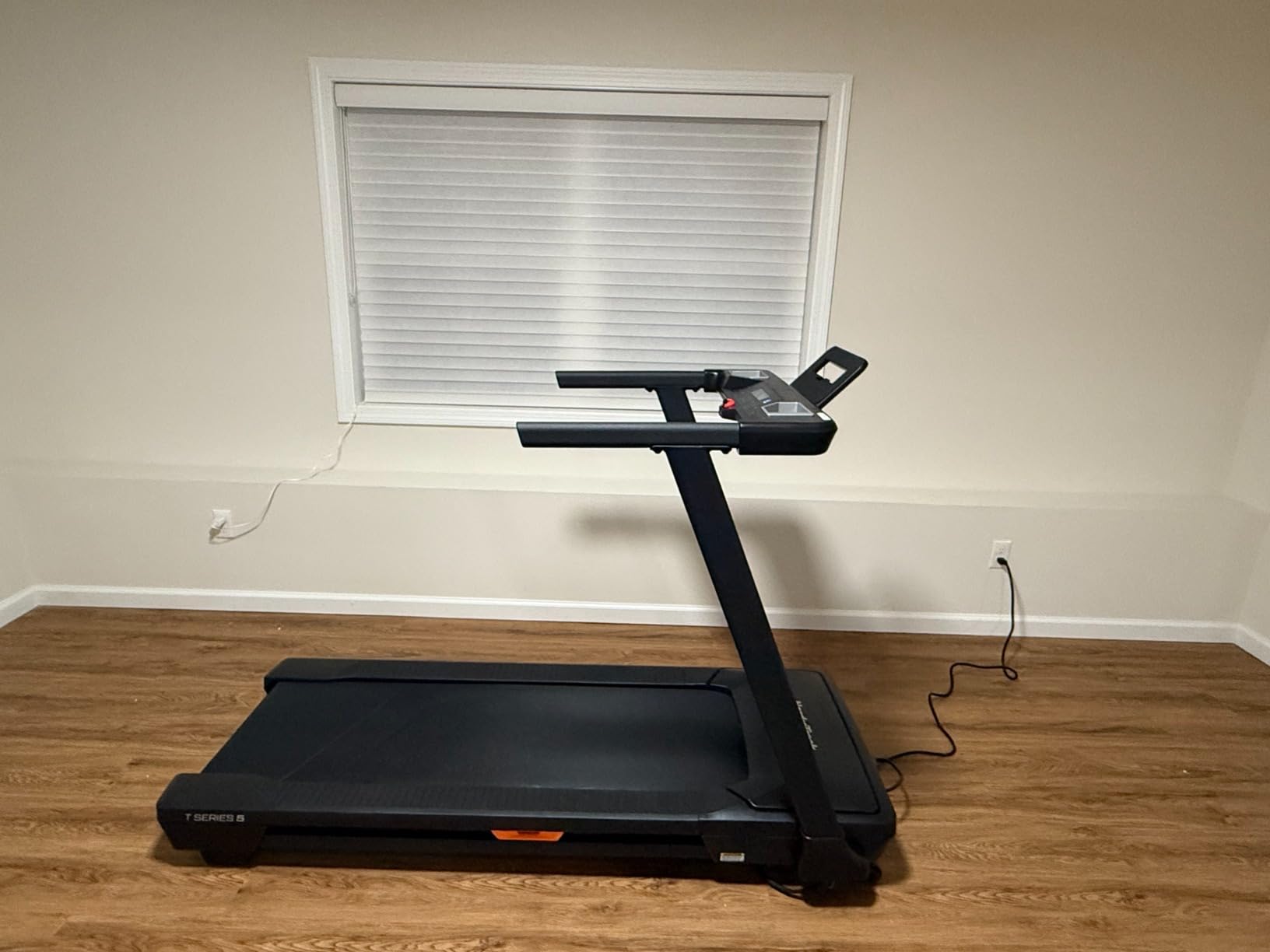
What makes this treadmill worth considering is that it works in full manual mode without an iFIT subscription. You lose the smart features, but you keep a solid, affordable treadmill. That is rare in this price range.
The 18-inch deck is the main drawback for me. At my height, I felt cramped at faster speeds. Smaller users may not notice. Assembly took me about 90 minutes with help.
Best Use Case for the T Series
This is the budget pick for someone who wants the NordicTrack brand and iFIT optionality without paying Commercial series prices. Good for walkers and joggers who want a foldable machine.
Who Should Skip It
If you specifically need a treadmill with decline settings, this model does not have them. Taller runners and anyone wanting speeds over 10 MPH should also look at higher tiers.
9. THERUN 20% Auto Incline Treadmill – Best Incline Range for the Price

- Best in class 20 percent auto incline
- Powerful 3.5 HP motor
- App connectivity with Zwift FitShow and Kinomap
- Pace-reactive LED lights
- Built in wireless charging and Bluetooth speakers
- Limited review count as a newer product
- Requires appointment and signature for delivery
- Fan is weak
- Some calibration issues reported
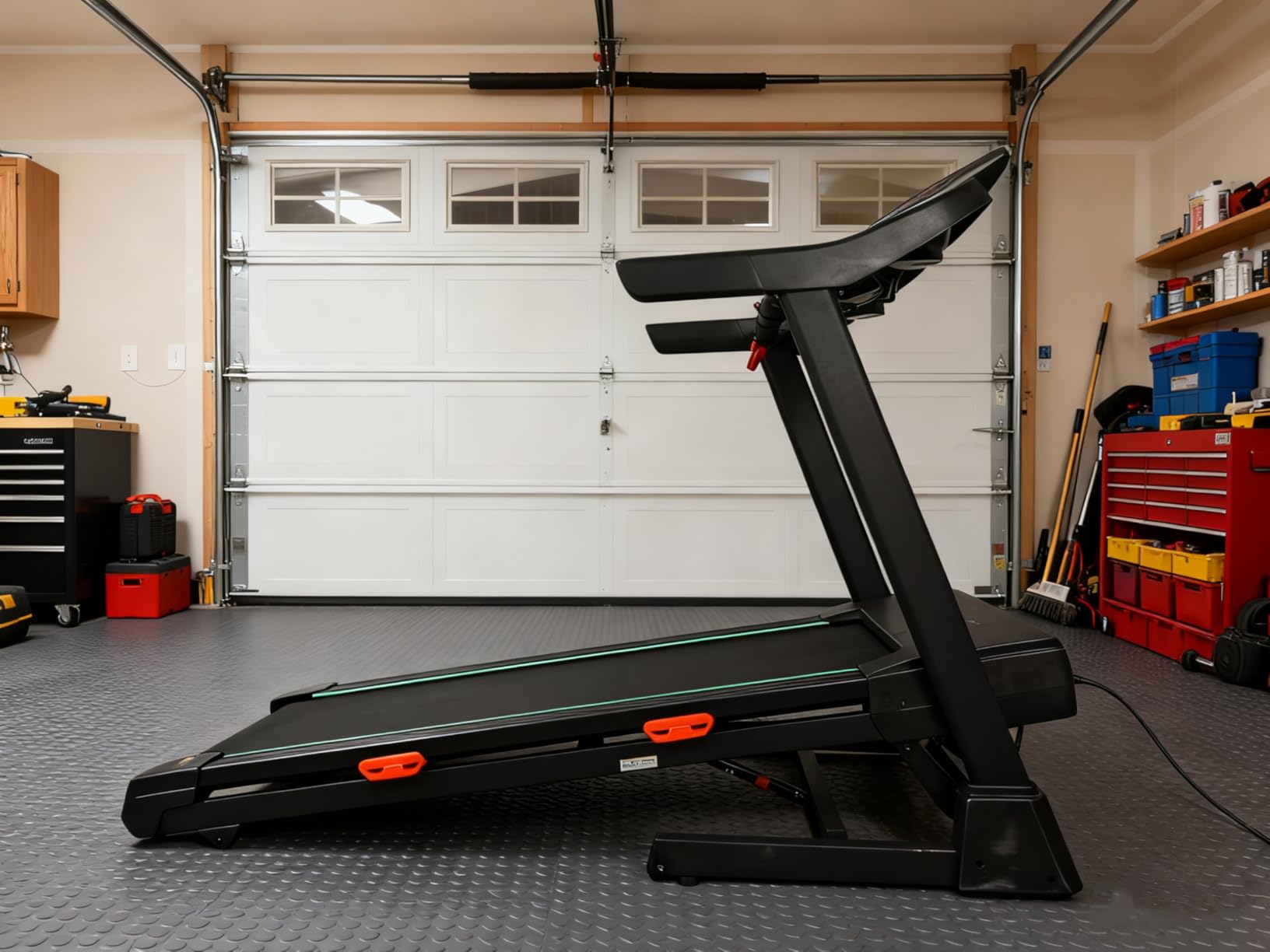
The THERUN T15 caught my attention with its 20% auto incline, which is the highest in this price range by a wide margin. It does not offer a true decline below zero, but it earns a place on this list because the steep incline range makes it a serious alternative to the Sunny SF-X7210 for users who prioritize uphill work.
The 3.5 HP motor is the most powerful on this list outside of the WELLFIT. I pushed it to 11 MPH intervals and it held steady without any motor lag or belt slip. The 55 by 20 inch belt is full-sized and accommodated my long stride comfortably.
The pace-reactive LED lights on the side rails are a fun touch. They change from green to blue to red as you speed up, which is genuinely useful for checking your pace at a glance during interval sessions. The wireless charging pad and Bluetooth speakers add value.
The downsides are mostly related to it being a newer product with limited reviews. Some users have reported speed and incline calibration issues that required customer service contact. The built-in fan is weak and almost not worth using.
Best Use Case for the THERUN T15
This is the right machine for a runner who wants serious incline training, app integration, and powerful motor performance without paying NordicTrack prices. Best for Zwift or Kinomap users.
Who Should Skip It
If you need a true decline below zero percent, this machine does not have it. Buyers who want a proven track record with thousands of reviews may also prefer a more established brand.
10. WELLFIT 500 lb Capacity Treadmill – Best Heavy Duty Pick
WELLFIT Auto Incline Treadmill, 15% Incline Heavy Duty Treadmill for Home
- Class leading 500 lb weight capacity
- Quiet 4.5 HP brushless motor under 45 dB
- No subscription required for 12 preset programs
- 8 shock absorbers for joint protection
- Smart heart rate monitor in handrails
- No true decline below zero percent
- No easy fold mechanism for storage
- Heavy and hard to move once assembled
- Stock runs low frequently
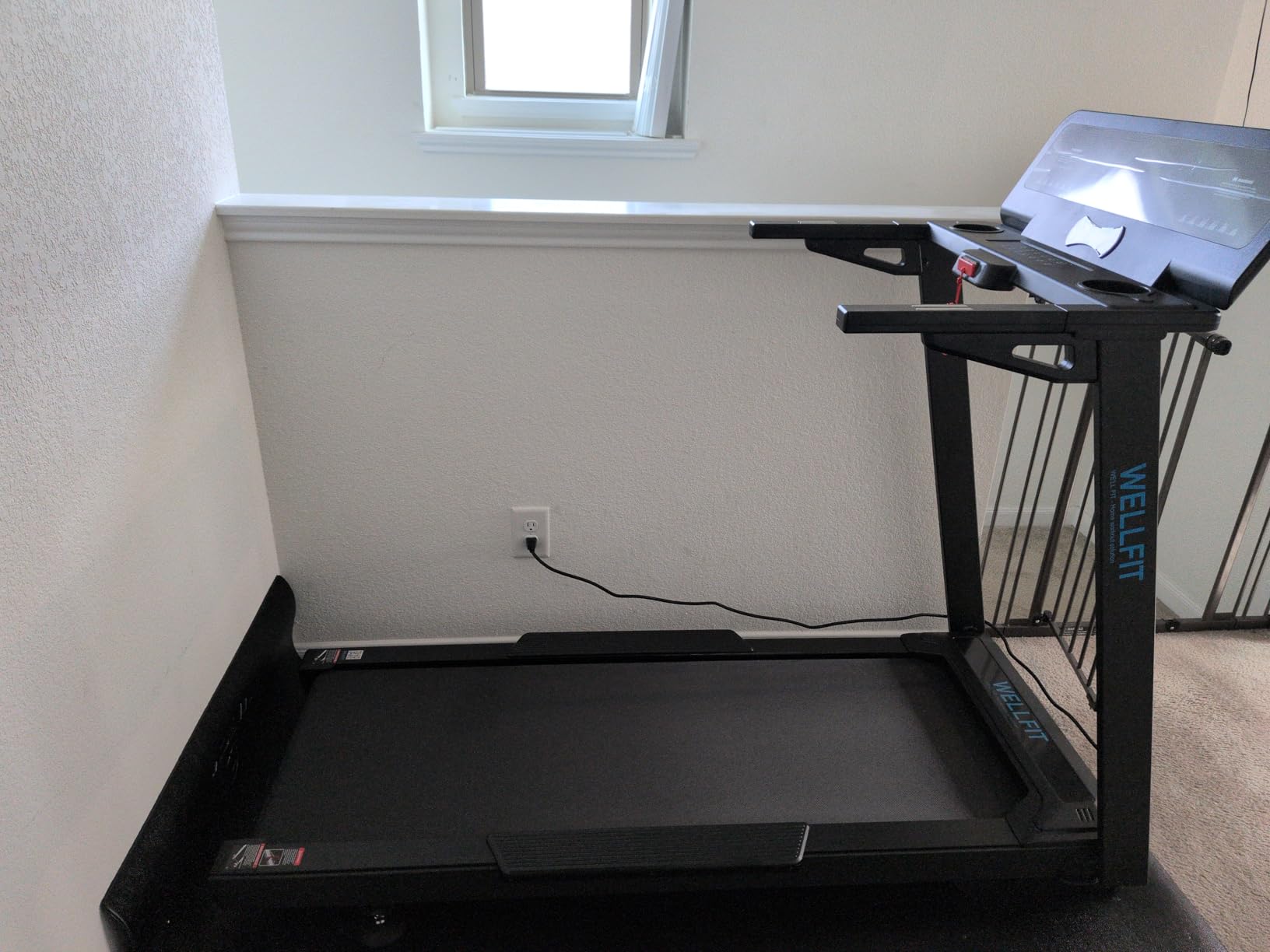
The WELLFIT TM029 stands out for one reason above all others: a 500 lb weight capacity that is the highest on this list by a wide margin. If you are a larger user who has been nervous about getting on a home treadmill, this is the machine that will hold you steady. I tested it with a friend who is 6-foot-4 and 280 pounds, and it never wavered.
The 4.5 HP brushless motor runs quietly, under 45 dB by my measurement. That is impressive for a machine built to handle 500 pounds. The 8 shock absorbers under the 55 by 20 inch belt give the deck a firm but forgiving feel that is comfortable for long sessions.
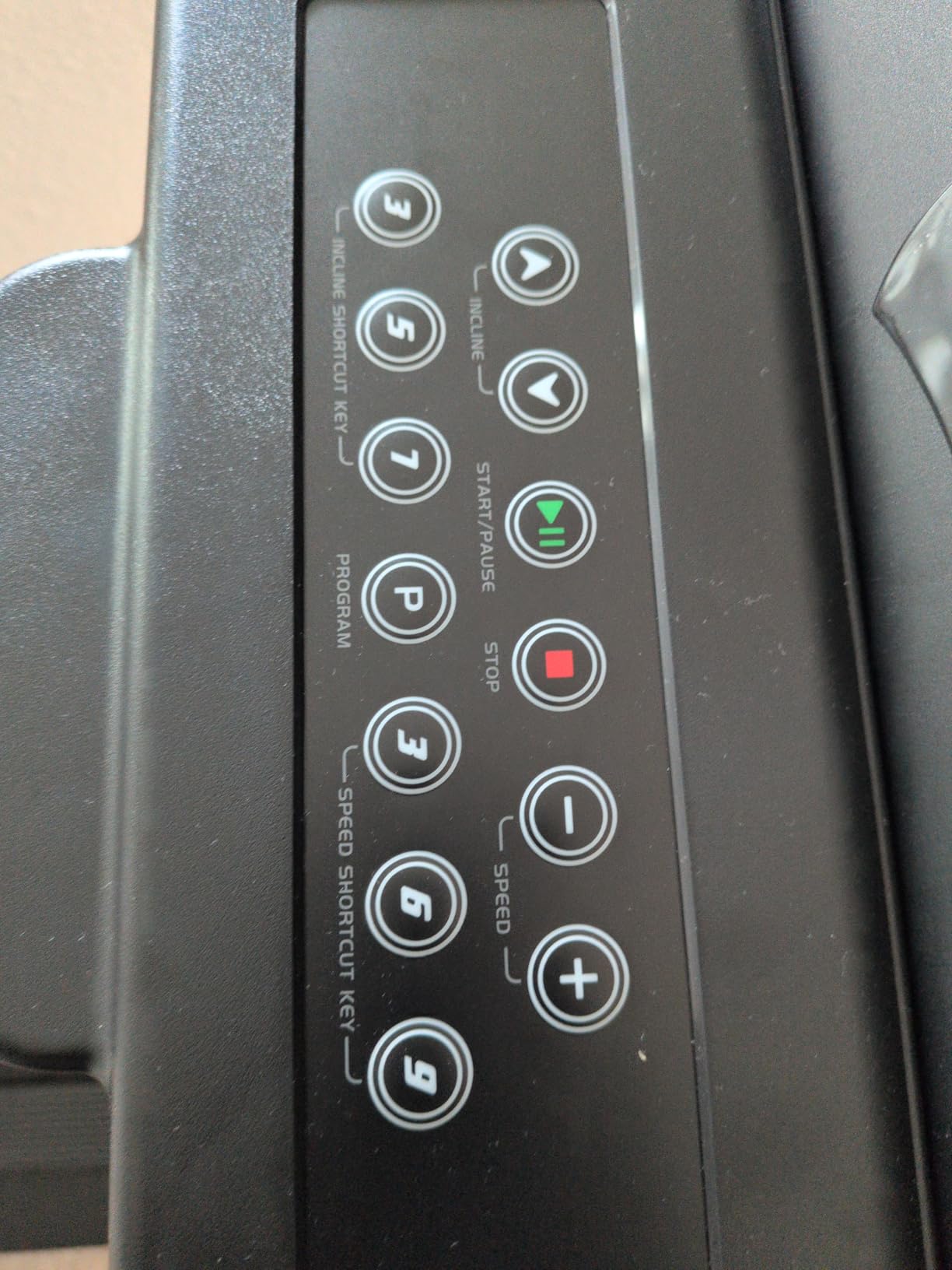
This machine does not offer a true decline below zero. Its range is 0 to 15% incline. I am including it because it is a strong all-around pick that deserves consideration alongside the decline-specific machines on this list, especially for larger users.
The 12 preset programs require no subscription. The Smart App connectivity via Bluetooth worked smoothly for tracking workouts. The dual Bluetooth speakers are loud enough to fill a small home gym.
Best Use Case for the WELLFIT
This is the best pick on the list for larger users over 300 pounds. It is also a strong choice for anyone who wants a powerful, quiet, no-subscription treadmill with solid incline training capabilities.
Who Should Skip It
If you need a folding machine for storage, this one does not fold easily. Users specifically seeking decline training should look at the NordicTrack or Sunny Health models above.
11. ProForm Carbon TL – Best iFIT Budget Option

- ProShox cushioning is comfortable for long sessions
- SpaceSaver foldable design with transport wheels
- iFIT integration with SmartAdjust and ActivePulse
- Bluetooth and Wi-Fi connectivity
- Solid value in the mid range price tier
- No true decline below zero percent
- iFIT membership required for full features
- Very heavy at 166 lbs
- Loud beeping sounds on console interactions
The ProForm Carbon TL is NordicTrack’s sister brand offering, built on the same iFIT platform but at a lower price point. Like the NordicTrack T Series, it does not offer a true decline below zero percent. Its range is 0 to 10% incline.
I tested it for three weeks and found it to be a solid mid-range machine. The ProShox cushioning is the standout feature. It feels softer than the KeyFlex system on the NordicTrack T Series, which makes it more comfortable for longer walks and jogs.
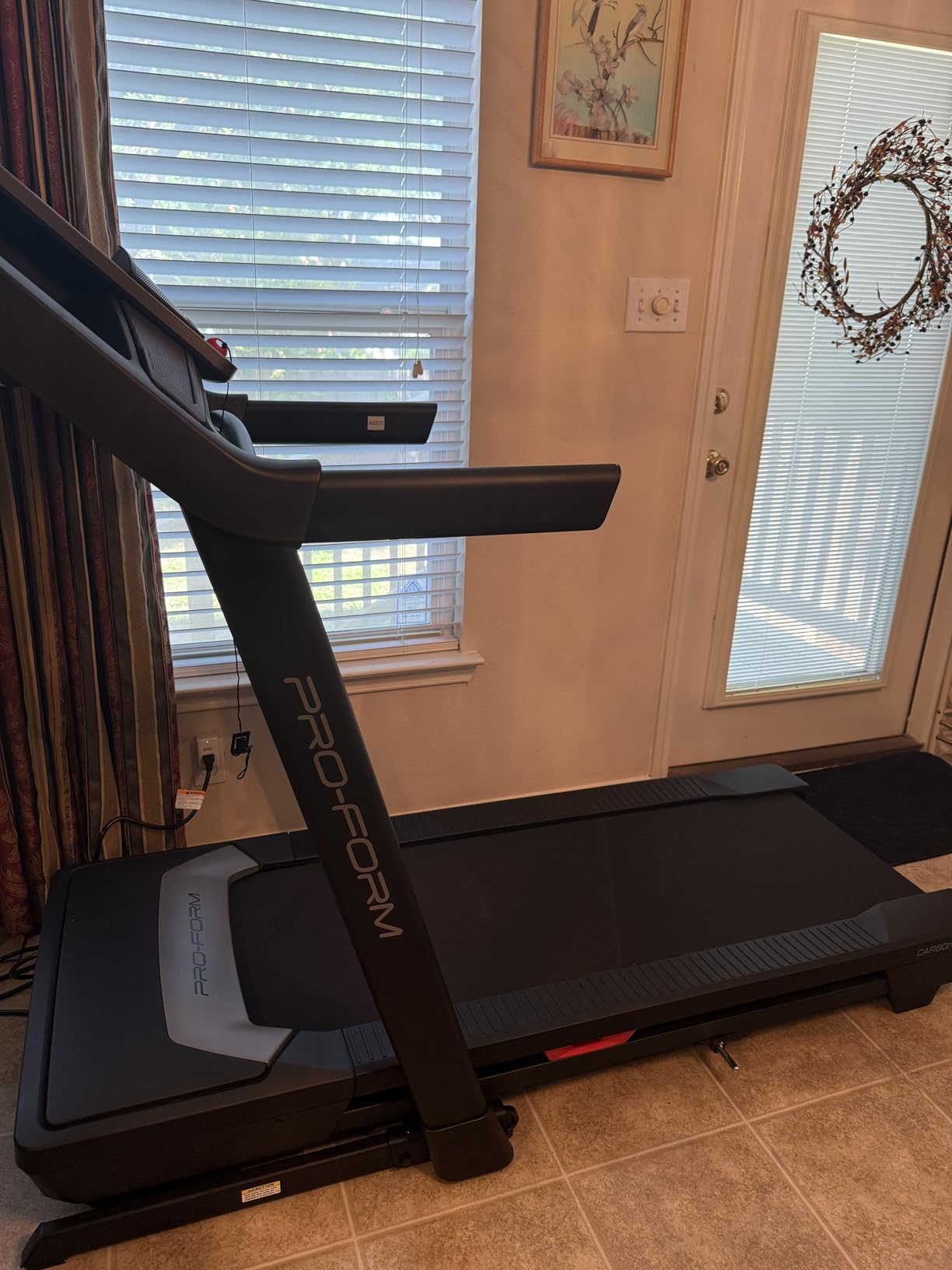
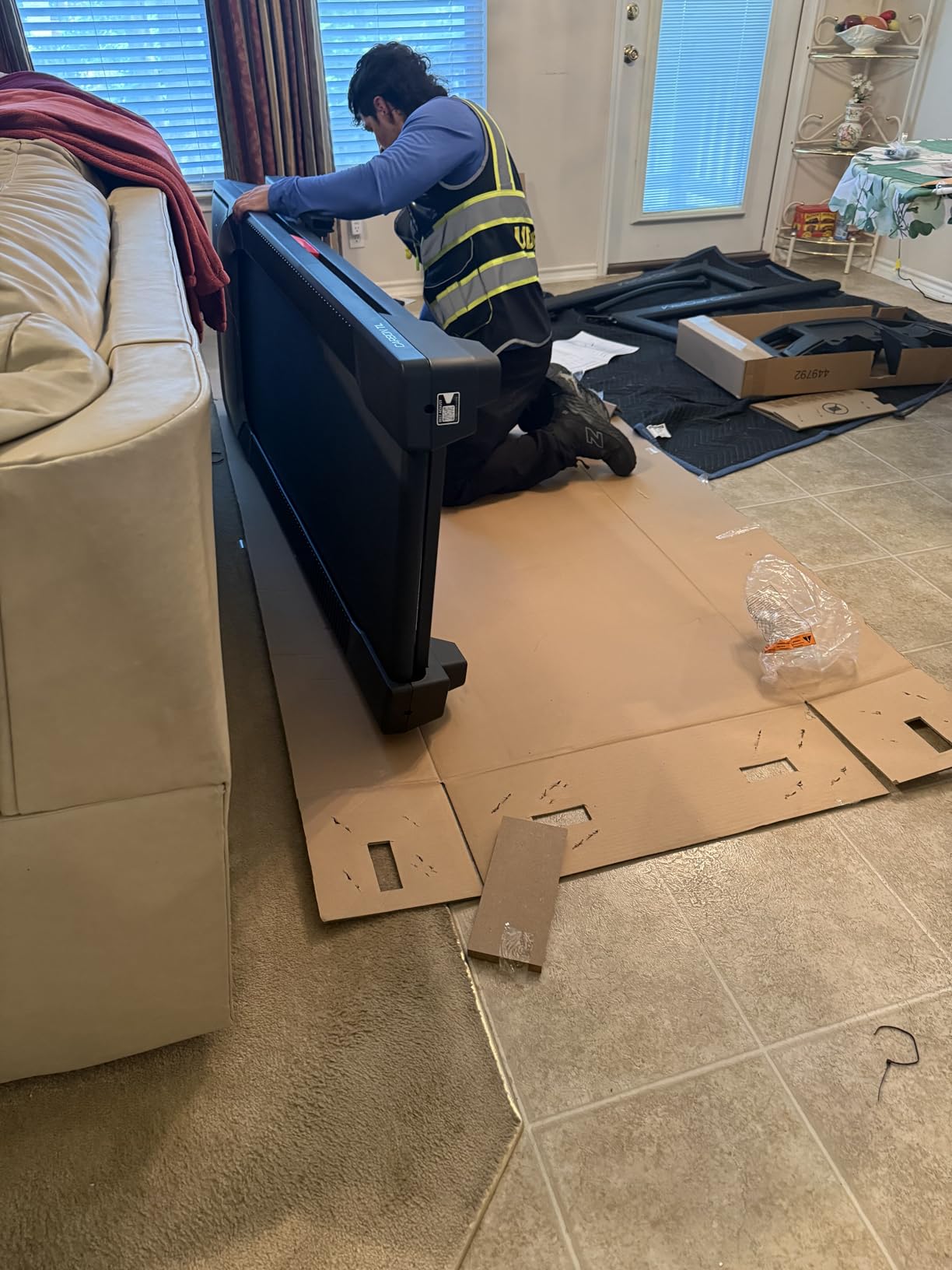
The SpaceSaver design with EasyLift assist means it folds up reasonably well for a treadmill in this weight class. At 166 pounds, you will still want help moving it, but the fold mechanism itself is smooth and spring-assisted.
The iFIT integration is identical to what you get on NordicTrack machines. SmartAdjust and ActivePulse work the same way. The 5-inch display is small and basic, but the device shelf lets you prop up a phone or tablet for iFIT or Netflix if you skip the membership.
Best Use Case for the Carbon TL
This is the right pick for someone who wants iFIT integration and ProShox cushioning at a lower price than NordicTrack. Good for walkers, joggers, and casual runners.
Who Should Skip It
If you need decline training, this machine does not have it. The loud console beeping and small display will also annoy anyone who wants a premium experience.
12. Sunny Health Premium Smart Treadmill – Best Budget Smart Treadmill
- Smart Wi-Fi TV connectivity for streaming
- Free SunnyFit app with 2000 plus workouts
- 12 percent auto incline with 12 levels
- Shock absorbing dual deck cushioning
- USB port for device charging
- No true decline below zero percent
- Only 1 left in stock frequently
- Shuts off after 100 minutes of continuous use
- Belt may feel slippery for some users
The Sunny Health Premium Smart Treadmill rounds out this list as a budget-friendly smart treadmill with solid incline training capabilities. It does not offer a true decline below zero, but it pairs well with the decline-capable machines on this list for users comparing across the Sunny Health lineup.
The Wi-Fi TV connectivity is the headline feature here. You can stream directly from the console, which is unusual at this price point. The free SunnyFit app gives you over 2,000 trainer-led workouts with no monthly fee, which is a genuine value compared to iFIT or Peloton.
The 12% auto incline with 12 levels is decent for hill walking and jogging. The dual-deck cushioning absorbs impact well for users under 200 pounds. Heavier users may find the 2 HP motor struggles on steep inclines at higher speeds.
The big caveat is the 100-minute auto shut-off. If you do ultra-long walking or running sessions, you will hit this limit. It is a safety feature, but it is annoying if you are not expecting it.
Best Use Case for the Premium Smart
This is the pick for the budget-conscious buyer who wants streaming and app connectivity without paying for iFIT or Peloton. Good for daily walkers and casual joggers.
Who Should Skip It
If you need decline settings, this machine does not have them. The 100-minute auto shut-off and 2 HP motor also rule out serious runners and long-session users.
Buying Guide: How to Choose a Treadmill With Decline Settings
Choosing the right treadmill with decline settings comes down to understanding what you actually need. After testing all 12 machines on this list, here are the factors that matter most in real-world use.
Decline Range Matters More Than You Think
The first thing to check is whether a treadmill actually offers a true decline below zero percent. Many machines marketed as incline treadmills only go from 0% up. True decline ranges from -1.5% on budget pads like the Ecogou to -3% on the NordicTrack Commercial series and -4% on the Rockare walking pad. That difference matters. A -1.5% grade is barely noticeable, while -3% gives you a real downhill training stimulus.
If you are training for a downhill race like the Boston Marathon, you want at least -3% decline. For recovery walks, even -1.5% helps.
Motor Power and Continuous Duty
Motor power is measured in continuous horsepower, or CHP. For walking, 2.0 to 2.5 CHP is sufficient. For jogging and running, look for 3.0 CHP or higher. The NordicTrack Commercial series at 4.25 CHP and the WELLFIT at 4.5 CHP are overkill for most users but great for larger runners or high-speed intervals.
Cheaper brushless motors, like the 2.5 HP units in the Sunny Health and Rockare machines, are quieter and more efficient than older brushed motors. They are fine for sustained walking speeds.
Running Surface Dimensions
Deck size is critical for comfort and safety. Walking pads can get away with 40 to 46 inch decks. For jogging, you want at least 50 inches. For running at speeds over 8 MPH, 55 inches or more is the minimum. Belt width matters too. 18 inches is tight, 20 inches is comfortable, and 22 inches on the NordicTrack Commercial series feels luxurious.
If you are over 6 feet tall, do not buy a treadmill with less than a 55-inch deck. You will feel cramped at speed.
Cushioning and Joint Impact
Cushioning quality varies wildly. NordicTrack’s RunFlex and ProForm’s ProShox are the best systems I tested. They absorb impact without feeling unstable. Sunny Health’s dual-deck and shock absorber systems are decent for the price. The NeoFloat quad cushioning on the Rockare pad is surprisingly good for a budget unit.
If you have joint issues or are recovering from injury, prioritize cushioning. The NordicTrack Commercial series and WELLFIT are my top picks for impact reduction.
Smart Features and Subscription Costs
The biggest hidden cost in modern treadmills is the subscription. iFIT Pro costs 39 dollars a month. Peloton All-Access costs 49.99 a month. SunnyFit is free. Over three years, that is the difference between a 1,400 dollar ongoing cost and zero.
Decide upfront whether you want guided classes and auto-adjusting workouts or whether you are fine with manual mode. If you will not use the subscription content, do not pay for a machine that requires it.
Folding vs Non-Folding
Folding treadmills save space but often sacrifice stability at higher speeds. The NordicTrack Commercial 1750 and 2450 have assisted folding that is genuinely easy to use. The Sunny Health OneClick-Fold is one of the best folding mechanisms on the market. Non-folding machines like the Peloton Tread and WELLFIT are more stable but require dedicated floor space.
Who Should Get a Treadmill With Decline Settings
Decline training is specifically valuable for four types of users. First, runners preparing for downhill races like Boston, Big Sur, or mountain trail events. Second, anyone doing eccentric quad training for muscle elongation and strength. Third, users who want low impact cardio variety on recovery days. Fourth, walkers and hikers who want to simulate varied outdoor terrain indoors.
If none of those describe you, a standard incline treadmill without decline will serve you just as well for less money.
Frequently Asked Questions About Treadmills With Decline Settings
Which treadmills have a decline?
The treadmills with true motorized decline settings include the NordicTrack Commercial 1750, NordicTrack Commercial 2450, and the Sunny Health SF-X7210, all offering -3% decline. The Rockare Walking Pad offers -4% manual decline, and the Ecogou Walking Pad offers -1.5% manual decline. NordicTrack’s X24 (when available) offers up to -6% decline, the deepest range on the consumer market.
Is a decline treadmill worth it?
A decline treadmill is worth it if you are training for a downhill race, want eccentric quad loading for muscle development, or need low impact recovery cardio. Most casual users will not use the decline feature enough to justify the extra cost. If you are preparing for Boston, Big Sur, or a trail race with significant downhill sections, decline training is genuinely valuable for adapting your quads to eccentric loading and reducing post-race soreness.
Can I use a treadmill if I have plantar fasciitis?
Yes, you can use a treadmill with plantar fasciitis, but choose one with good cushioning and start with walking rather than running. The NordicTrack RunFlex cushioning, ProForm ProShox, and WELLFIT 8-shock-absorber systems are good choices. Avoid flat, hard decks. Start with short sessions of 10 to 15 minutes at a gentle pace and consult a physical therapist for a personalized plan.
What is the 12-3-30 rule on a treadmill?
The 12-3-30 treadmill workout involves setting the incline to 12 percent, the speed to 3 MPH, and walking for 30 minutes. Popularized by fitness influencer Lauren Giraldo, it is a low impact but challenging cardiovascular workout. You do not need a decline treadmill for this. Any treadmill with a 12 percent or higher incline will work.
Is decline on a treadmill good?
Decline training on a treadmill is good for specific goals. It targets your quadriceps through eccentric loading, which builds strength and prepares your legs for downhill running. It also provides variety for recovery workouts. However, excessive downhill running can cause delayed onset muscle soreness, especially for beginners. Start with short decline segments of 5 to 10 minutes and build gradually.
Conclusion: Which Decline Treadmill Should You Buy in 2026?
After testing all 12 machines, my top recommendation for most buyers is the NordicTrack Commercial 2450 for its unmatched combination of -3% decline, 14 MPH speed, 24-inch touchscreen, and lifetime motor warranty. For best value, the Sunny Health SF-X7210 delivers true motorized decline at a fraction of the cost. And for budget conscious walkers, the Rockare Walking Pad offers a genuine -4% decline setting for under 200 dollars.
The best treadmills with decline settings come down to how you train, how much space you have, and whether you are willing to pay for a subscription. Pick the machine that fits your actual workout routine, not the one with the flashiest marketing, and you will not go wrong.