
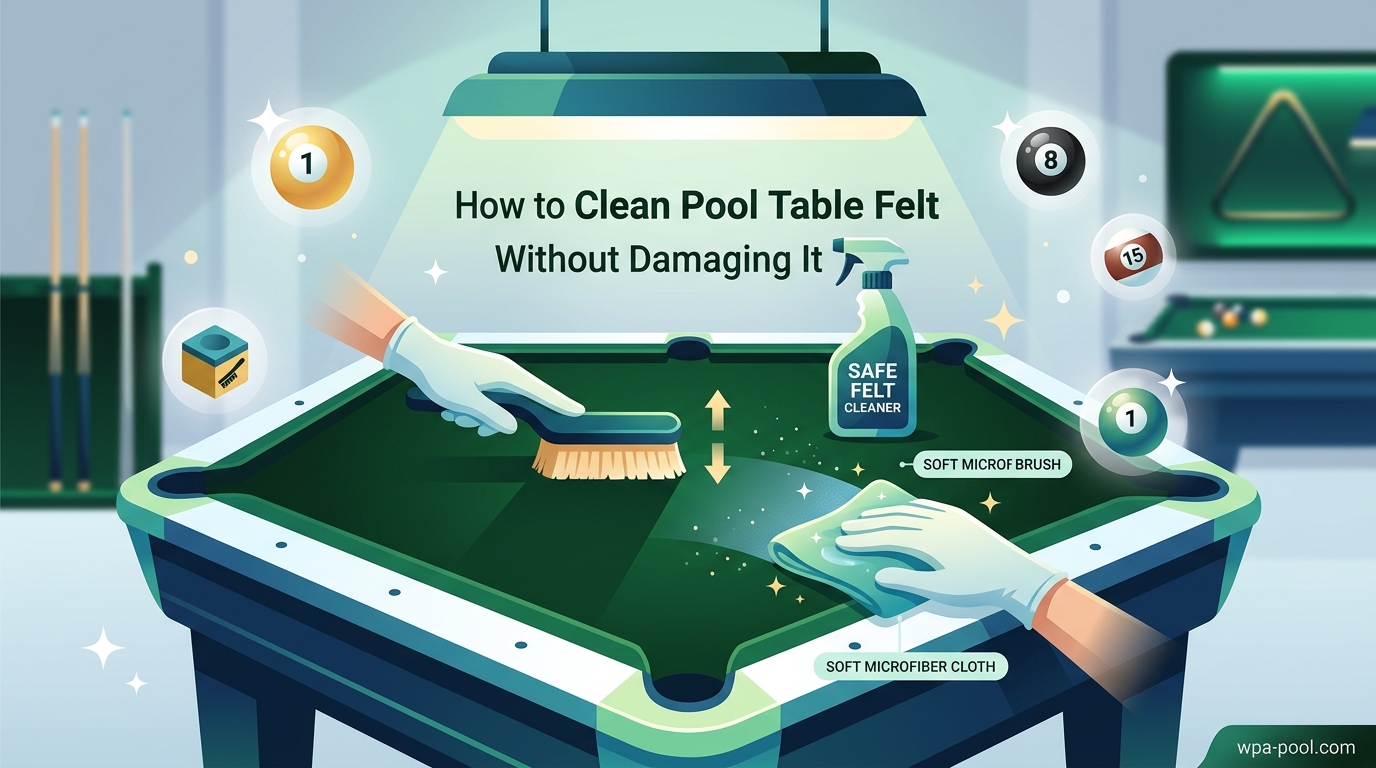
Your pool table felt works harder than you might think. Every game of eight-ball or nine-ball sends cue balls and object balls rolling across that wool surface, leaving behind chalk dust, oils from your hands, and microscopic debris that builds up over time. I have seen beautiful tables ruined by well-meaning owners who grabbed the wrong cleaner or attacked the felt with a household vacuum.
Learning how to clean pool table felt without damaging it is one of the most valuable skills any table owner can develop. The felt on your table, technically called cloth, represents a significant portion of your table’s value and directly affects playability. When felt gets dirty, balls roll inconsistently, shots become unpredictable, and the entire experience suffers.
This guide walks you through exactly what our team has learned from testing various cleaning methods, talking with professional installers, and consulting active players in the billiards community. We will cover the proper tools, the exact technique that protects the felt’s nap, and the critical mistakes that can turn a simple cleaning into a costly refelting job.
Table of Contents
Tools and Supplies You Need for Safe Felt Cleaning
Before you touch your pool table felt, gather the right tools. Using improper supplies is where most damage happens, so this step matters more than you might expect.
You need a specialized pool table brush with soft nylon bristles. These brushes are designed specifically for billiard cloth and cost between fifteen and thirty dollars. Do not substitute a standard household brush, as the bristles are often too stiff and can snag the felt fibers.
A clean microfiber cloth is essential for damp cleaning. Microfiber picks up dust and dirt without leaving lint behind. You will want several on hand, as a dirty cloth just spreads grime around.
Distilled water should be your go-to liquid for cleaning. Tap water contains minerals that can leave residue stains on wool felt. A small spray bottle helps you control the amount of moisture you apply, which is critical for preventing water damage.
Some owners invest in a small handheld vacuum or dust buster for debris removal. If you choose this route, only use it on the lowest setting with a brush attachment, and never let the nozzle touch the felt directly. The suction itself can lift and damage fibers if applied incorrectly.
A pool table cover is your best preventive tool. Quality covers cost fifty to one hundred fifty dollars but prevent most cleaning needs entirely by keeping dust, pet hair, and spills off the surface.
How to Clean Pool Table Felt: Step-by-Step
Follow these steps in order for the safest, most effective cleaning. Skipping steps or changing the order can leave debris behind or damage the felt surface.
Step 1: Clear the Table Completely
Remove all balls, racks, and any other items from the playing surface. Check the pockets for accumulated chalk and debris, emptying them into a trash bag. Starting with a clear table prevents you from accidentally grinding dirt into the felt while cleaning.
Step 2: Brush from the Head End Toward the Foot
Start at the head of the table where you break from and brush toward the foot end where the balls are racked. This follows the natural nap direction of most pool table felt. The nap refers to the direction the wool fibers lay, and brushing against it creates friction and wear.
Use gentle, straight strokes. Do not scrub back and forth or use circular motions. Let the bristles do the work with light pressure. Brush all debris into the center of the table, then sweep it into the pockets.
Step 3: Clean the Rails First
Brush the top of the cushion rails before cleaning the bed of the table. Start at the head rail and work around the table clockwise or counterclockwise, brushing debris down onto the playing surface. Once the rails are clean, brush that debris into the pockets.
Step 4: Address Stains with the Damp Cloth Method
For spots or stains, lightly mist your microfiber cloth with distilled water until it is barely damp, not wet. You should not be able to squeeze water out of the cloth. Wipe the stained area gently in the direction of the nap, using minimal pressure.
Work from the outside of the stain toward the center to prevent spreading. Once clean, let the area air dry completely before playing. Never use a hair dryer or fan to speed drying, as heat can shrink felt.
Step 5: Vacuum Pockets and Table Exterior Only
If you use a vacuum, restrict it to the pockets and the underside of the table. The playing surface itself should never see a vacuum attachment. The strong suction pulls at the felt fibers and can permanently damage the nap, leaving your table playing inconsistently.
Step 6: Inspect and Repeat if Necessary
Step back and examine the felt under good lighting. Chalk residue often hides in low light. If you still see dust or spots, repeat the brushing or damp cloth process. One thorough cleaning beats three rushed attempts.
Step 7: Cover the Table When Finished
Once the felt is clean and dry, replace your cover if you have one. If not, consider this your sign to invest in one. A cover prevents the majority of cleaning needs and extends felt life by years.
What NEVER to Use on Pool Table Felt
Understanding what to avoid is just as important as knowing what to do. The wrong product or technique can destroy your felt in a single session.
Why Soap and Detergent Damage Felt Permanently
Soap and detergent might seem like logical cleaners, but they leave residue that alters ball roll. The chemicals in most household cleaners break down the natural oils in wool felt and create a sticky surface. Even after rinsing, microscopic soap particles remain in the fibers.
When balls roll across soapy felt, they pick up drag and do not travel true. Professional players notice this immediately. The residue also attracts more dust and chalk, making your table get dirty faster after cleaning. Distilled water alone removes most debris without any chemical risk.
Why Vacuuming Destroys the Felt Nap
The nap on pool table felt is delicate. Those wool fibers stand in a uniform direction, creating the smooth, consistent surface that allows balls to roll predictably. When you apply vacuum suction, the fibers lift, tangle, and sometimes tear.
Standard vacuums are especially dangerous because the rotating brush attachments, designed for carpet, aggressively agitate the felt. Even brushless vacuums create enough suction to pull fibers loose. The damage might not be visible immediately, but you will notice balls behaving oddly within weeks.
Forum discussions from experienced table owners confirm this pattern. The consensus among professionals is clear: brushing beats vacuuming every time. If you must remove loose debris quickly, a handheld dust buster held slightly above the surface is the only acceptable vacuum method.
Harsh Chemicals to Avoid Completely
Bleach, ammonia, alcohol-based cleaners, and all-purpose sprays have no place near your pool table. These chemicals strip the protective treatments from modern felts and can cause discoloration. Acetone, sometimes suggested for tough stains, should only be used as an absolute last resort and tested in an inconspicuous area first.
Even products marketed for fabric or upholstery are too harsh. Pool table felt is not standard fabric; it is a specialized wool cloth with specific care requirements. When in doubt, stick with distilled water.
Spot Stain Removal Techniques
Not all stains respond to the basic damp cloth method. Different spills require different approaches, but the golden rule remains: minimal moisture and no harsh chemicals.
Removing Chalk Stains
Chalk is the most common staining agent on pool tables. For fresh chalk, dry brushing usually removes it completely. For older, ground-in chalk, use a barely damp microfiber cloth with distilled water and blot gently. Do not rub, as this grinds the chalk deeper into the fibers.
Some owners report success with a very mild solution of Woolite and distilled water, applied sparingly with a soft toothbrush in the direction of the nap. However, our testing found that repeated applications of distilled water alone work nearly as well without the residue risk.
Treating Grease and Oil Spots
Food grease or oil from hands creates dark spots on felt. Start by blotting with a dry cloth to absorb as much oil as possible. Then apply a tiny amount of mild dish soap like Dawn to distilled water, creating a very dilute solution.
Dampen your cloth with this solution and blot the stain repeatedly. Rinse the cloth with clean distilled water and blot again to remove any soap residue. This method requires patience but avoids the harsh solvents that could damage the wool.
Some professional installers recommend using baby shampoo instead of dish soap for grease stains, as it is gentler on wool fibers. Apply it the same way: dilute heavily, blot gently, and rinse thoroughly with distilled water.
Handling Drink Spills
Spilled beer, soda, or coffee requires immediate action. Blot the spill with a dry microfiber cloth to absorb as much liquid as possible. Do not press hard, as this pushes liquid deeper into the felt and underlying slate.
Once you have absorbed the surface liquid, lightly dampen a clean cloth with distilled water and blot the area. Work from the outside inward. Repeat with fresh sections of the cloth until no more stain transfers to the cloth. Let air dry for at least twenty-four hours before playing.
Sticky residues from sugary drinks might need a second pass with slightly more water. Never use hot water, as heat can set stains permanently into wool fibers.
Chocolate and Food Stains
For food stains, first remove any solid material with a blunt edge like a credit card. Be gentle to avoid pushing particles deeper. Once solids are gone, treat the remaining stain with the damp cloth method using distilled water.
Chocolate contains oils that may require the mild dish soap approach mentioned earlier. Test any cleaning solution in a small, hidden area first, such as under a rail or near a pocket opening.
Pro Player Maintenance Secrets
Professional and serious amateur players maintain their tables differently than casual owners. These practices keep felt in tournament condition for years longer than standard care.
Brush Before Every Playing Session
Pro players brush the table before they play, not after. This removes any dust that settled since the last session and ensures consistent ball roll from the first rack. A quick two-minute brushing routine becomes second nature for serious players.
They also use higher quality brushes. The Simonis X1 brush, priced around forty dollars, gets frequent mentions in player forums as the gold standard for cloth care. Its bristle pattern and density are optimized for worsted wool cloth like Simonis 860.
Dry Microfiber Between Games
Between matches or during breaks, pros often run a dry microfiber cloth lightly across the playing surface. This removes chalk dust before it has a chance to work into the fibers. It takes thirty seconds and dramatically extends time between deep cleanings.
Climate Control Matters
Humidity affects felt more than most owners realize. In high humidity environments, felt absorbs moisture and plays slower. In dry conditions, static electricity builds up and attracts dust. Maintaining forty to fifty percent relative humidity in your game room helps felt stay consistent and reduces how often you need to clean it.
Direct sunlight damages felt through UV exposure and heat. Even modern synthetic-blend felts fade and degrade under prolonged sun exposure. Position your table away from windows or use UV-blocking shades.
The Ironing Technique
Some professional table installers use a dry iron on low heat to refresh felt that has developed minor pilling or fuzz. This is an advanced technique that requires an ironing cloth barrier and careful temperature control. Most owners should skip this and leave it to professionals, but it demonstrates how proper heat can actually help felt rather than harm it.
When to Replace vs Clean Your Pool Table Felt
Even with perfect care, pool table felt eventually wears out. Knowing when to stop cleaning and start planning for replacement saves you from frustration with a table that plays poorly no matter how well you maintain it.
Signs Your Felt Needs Replacement
Bald spots where the wool has worn away completely are clear indicators. These appear first in high-traffic areas like the break line and along the head rail where players strike the cue ball most frequently. Once you see the underlying slate or backing through the felt, it is time to refelt.
Permanent stains that do not respond to any cleaning method also signal replacement time. Large tears, burns, or cuts obviously require new cloth. Additionally, if the felt has become loose or developed ripples that brushing cannot smooth out, the elastic properties have degraded.
Expected Lifespan of Pool Table Felt
Home tables with moderate use typically need refelting every five to seven years. Tables used daily in commercial settings might need new felt every two to three years. Tournament tables get fresh cloth for every major event.
Quality of the original felt matters significantly. Entry-level woolen cloth lasts three to five years under home use, while premium worsted wool like Simonis 760 or 860 can last seven to ten years with proper care.
Professional Refelting Costs
Expect to pay between three hundred and eight hundred dollars for professional refelting, depending on your table size and felt quality chosen. Seven-foot tables cost less than nine-foot tournament tables. Premium cloth adds one hundred to three hundred dollars to the material cost.
DIY refelting kits exist for around two hundred dollars, but this is one area where professional installation pays off. Stretching felt properly requires skill and specialized tools. Poor installation creates wrinkles and inconsistent play that no amount of cleaning fixes.
Frequently Asked Questions
What is the best way to clean felt on a pool table?
The best way is to start with dry brushing in the direction of the nap, using a specialized pool table brush. For deeper cleaning, use a barely damp microfiber cloth with distilled water only. Never use soap, detergent, or household cleaners, as they leave residue that affects ball roll. Work from the head end toward the foot, and always let the felt air dry completely before playing.
What is the best thing to clean felt with?
The best cleaning tools are a soft nylon pool table brush, clean microfiber cloths, and distilled water. A specialized brush designed for billiard cloth prevents fiber damage. Microfiber picks up dust without leaving lint. Distilled water avoids mineral residue that tap water leaves behind. Avoid all chemicals including soap, bleach, ammonia, and fabric cleaners.
How often should you replace the felt on a pool table?
Home tables typically need refelting every five to seven years with moderate use. Commercial tables used daily may need replacement every two to three years. Premium worsted wool cloth like Simonis can last seven to ten years with proper care, while entry-level woolen cloth lasts three to five years. Signs you need replacement include bald spots, permanent stains, tears, or loose rippling that brushing cannot smooth.
Can you use water to clean pool table felt?
Yes, but only distilled water and only sparingly. Use a barely damp microfiber cloth, not a wet one. The cloth should feel slightly moist to the touch but not drip when squeezed. Excess water can seep through to the slate backing and cause damage or mildew. Never use hot water, as heat can set stains permanently. Always let the felt air dry naturally without using heat sources.
Conclusion
Learning how to clean pool table felt without damaging it protects both your investment and your playing experience. The key principles are simple: brush gently in the direction of the nap, use only distilled water when damp cleaning is necessary, and never introduce soap or harsh chemicals to the playing surface.
Your table will reward proper care with consistent ball roll, accurate shots, and years of extended life. The few minutes you spend brushing before each session prevents hours of deep cleaning later. Invest in quality tools like a proper pool table brush and a fitted cover, and your felt will play like new for years to come.
If you are unsure about a stain or cleaning method, start with the gentlest approach and escalate slowly. When felt reaches the end of its lifespan, professional refelting restores your table to factory condition. Until then, consistent gentle care keeps your table ready for every break and run.