
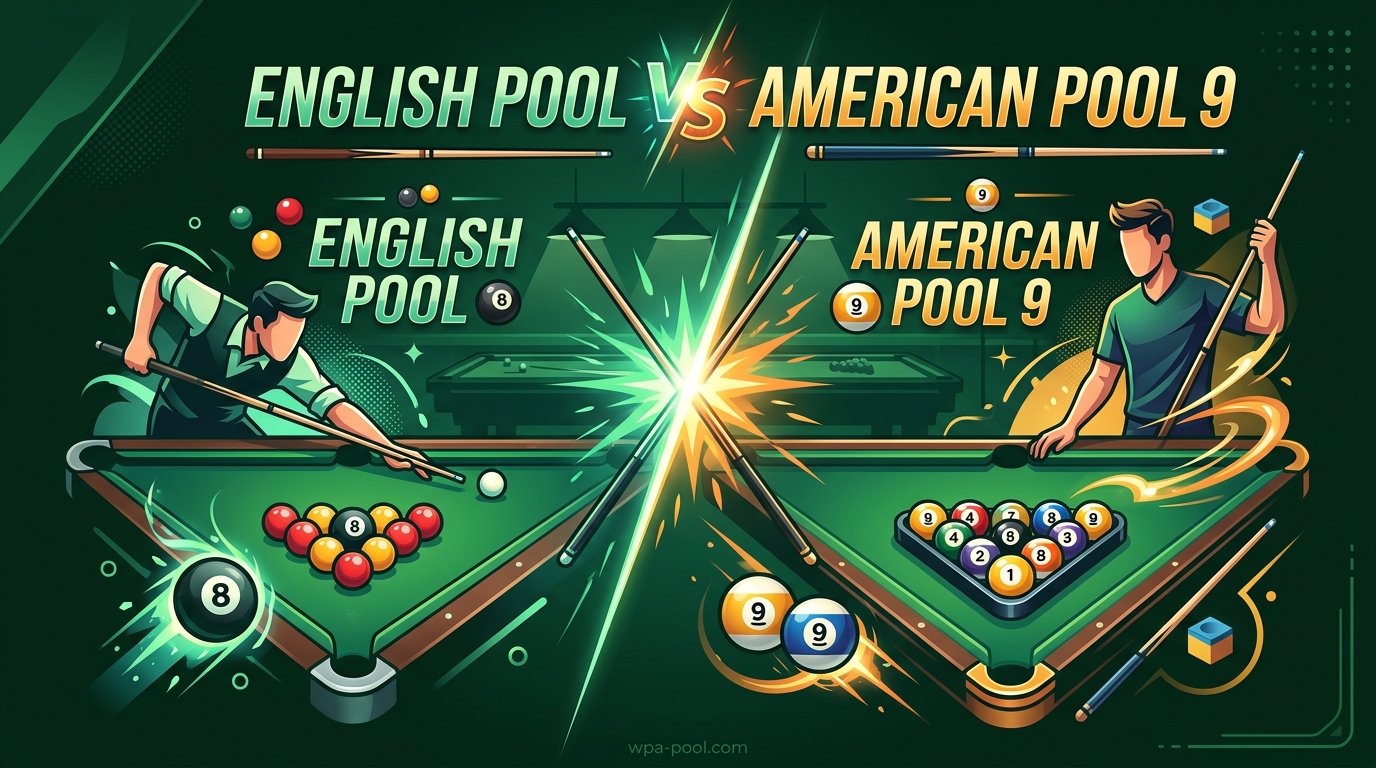
Walking into a pool hall for the first time can be overwhelming when you notice the tables look different. Some are compact with tight pockets, while others stretch across the room with gaping pockets that seem to swallow balls whole. Understanding English pool vs American pool differences will help you choose the right table for your home or improve your game no matter where you play.
Our team has spent years playing both styles across pubs in London and pool halls in Chicago. We have tested equipment differences, spoken with professional players, and analyzed how each format changes the way you approach the game. This guide breaks down every key distinction so you can make informed decisions about tables, cues, and playing strategies.
The most obvious difference is table size, but that is just the beginning. Ball dimensions, pocket shapes, cloth types, and even cue construction vary significantly between the two styles. Each element affects gameplay speed, shot difficulty, and the overall experience.
Table of Contents
Quick Comparison: English Pool vs American Pool
Before diving into details, here is a side-by-side look at the main differences between English and American pool.
| Feature | English Pool (British Pool) | American Pool |
|---|---|---|
| Table Size | 7 feet (2.13m) standard | 9 feet (2.74m) standard |
| Ball Diameter | 2 inches (51mm) | 2.25 inches (57mm) |
| Cue Ball | Same size as object balls | Slightly larger (2.375 inches) |
| Ball Sets | Reds and yellows, or spots and stripes | Solids and stripes |
| Cloth Type | Worsted wool with directional nap | Napless nylon or worsted cloth |
| Play Speed | Slower, more controlled | Faster, more aggressive |
| Pocket Shape | Straight-cut, flat-sided | Curved, rounded entry |
| Cushion Profile | L-shaped, flat-faced | Pointed, triangular profile |
| Pocket Size | Smaller, tighter pockets | Larger, more forgiving pockets |
| Cue Tip Size | 8-10mm diameter | 12-13mm diameter |
| Cue Wood | Ash wood preferred | Maple wood standard |
| Pocket Type | Drop pockets (no return) | Internal ball return system |
English Pool vs American Pool: Table Size Differences
Table size represents the most immediately visible difference between these two pool styles. English pool tables measure 7 feet in length as the tournament standard, though 6-foot versions appear in many British pubs. American pool tables typically stretch to 9 feet for professional play, with 8-foot home models also widely available.
This size difference affects everything from shot angles to room space requirements. A regulation American table demands at least 14 feet by 18 feet of floor space for comfortable play. English tables fit comfortably in 12 feet by 15 feet rooms, making them practical for UK homes and pubs where space comes at a premium.
Why English Tables Are Smaller
The compact size of English pool tables reflects British pub culture where space efficiency matters. British pubs needed games that fit alongside bar seating without dominating the room. The 7-foot dimensions became standardized through decades of pub installations across the United Kingdom.
Smaller tables also suit the tactical nature of English pool. Players focus on positional play rather than power shots, and the reduced surface area emphasizes precision over distance. The tighter proportions reward careful cue ball control rather than aggressive breaking.
American Table Construction
American pool tables emphasize grandeur and spectacle. The 9-foot tournament size creates dramatic sightlines across the playing surface and accommodates the larger ball set. Professional American tournaments rarely use anything smaller than regulation size.
Construction quality differs significantly between styles. American tables typically feature three-piece sectional slate beds that provide consistent ball roll across the massive surface. English tables often use single-piece slate or even high-quality MDF in home versions, though tournament tables use slate exclusively. The heavier American construction adds stability but increases weight and installation complexity.
Ball Size and Type Differences
The balls used in each style differ in diameter, weight, set composition, and even cue ball behavior. These variations fundamentally change how shots feel and how the game unfolds.
Ball Dimensions
American pool balls measure 2.25 inches (57 millimeters) in diameter and weigh approximately 6 ounces. English pool balls are noticeably smaller at 2 inches (51 millimeters) and lighter at around 4.5 ounces. This size gap affects everything from pocketing difficulty to cue ball reaction off cushions.
The cue ball shows another key distinction. In American pool, the cue ball is slightly larger than the object balls at 2.375 inches. This size difference enables automatic ball return systems to separate the cue ball from pocketed object balls. English pool uses a cue ball identical in size to the object balls, requiring magnetic or weight-based separation systems where ball returns exist.
Ball Set Configurations
American pool uses the familiar solids and stripes configuration with numbered balls 1 through 15. The 8-ball sits as the black neutral ball in the center of the rack. This set supports multiple game variations including 8-ball, 9-ball, and straight pool.
English pool traditionally uses unnumbered balls in red and yellow sets, though spots and stripes variations exist. The black ball serves as the equivalent of the American 8-ball. This simpler color system suits the pub environment where quick game recognition matters more than complex rotation games.
Material and Construction
Both styles use phenolic resin balls for professional play, though polyester resin appears in casual home sets. American balls feel heavier and create more impact on the larger cushions. English balls roll more delicately and respond to subtle spin effects with greater sensitivity.
Pocket and Cushion Differences
Pocket design and cushion profiles create perhaps the most dramatic gameplay differences between English and American pool. These elements determine shot difficulty, acceptable angles, and the overall character of each game.
Pocket Shapes and Sizes
English pool pockets feature straight-cut openings with flat sides that create a narrow target. The pocket mouth measures approximately 3.5 inches across on a 7-foot table, barely wider than the 2-inch balls themselves. This tight configuration demands precision and punishes even slight misalignment.
American pool pockets curve generously with rounded shoulders that guide balls toward the opening. Tournament pockets measure 4.5 to 5 inches across on 9-foot tables, creating a forgiving target relative to the 2.25-inch balls. The curved entry allows balls to rattle in from angles that would reject them on English tables.
Cushion Profiles
English cushions use an L-shaped profile with flat faces that meet the slate bed at right angles. This design creates predictable rebounds with less variance in angle response. The flat cushion face emphasizes geometric precision in shot planning.
American cushions feature a pointed triangular profile that narrows toward the pocket entry. This design produces livelier rebounds and allows for more aggressive carom shots off multiple cushions. The pointed profile works with the larger balls to create faster, more dynamic gameplay.
Ball Return Systems
Most American pool tables include internal ball return systems that collect pocketed balls and deliver them to a central staging area. The larger cue ball gets separated mechanically and returns to the head of the table. This convenience speeds up gameplay in commercial settings.
English tables traditionally use simple drop pockets where balls remain until manually collected. This slower pace suits the contemplative style of English pool but requires more maintenance in busy venues. Some modern English tables incorporate magnetic ball returns, but these remain less common than in American installations.
Cloth and Fabric Differences
The fabric covering the slate bed fundamentally affects ball speed, spin response, and table maintenance requirements. English and American pool use distinctly different cloth types that shape the playing experience.
Napped vs Napless Cloth
English pool tables traditionally use worsted woollen cloth with a directional nap. This raised fiber surface creates friction that slows ball speed and makes the cloth directional. Balls roll faster with the nap and slower against it, adding a strategic element to shot planning.
American pool favors napless nylon or worsted cloth with minimal fiber directionality. This smooth surface allows balls to travel faster and farther with the same stroke power. The consistent speed in all directions simplifies shot prediction but reduces tactical nuance.
Speed and Play Characteristics
The slower English cloth rewards controlled cue ball movement and precise positioning. Players must account for speed loss over distance and the directional effects of the nap. The cloth wears visibly over time, with high-traffic areas showing paths of frequent ball travel.
American cloth enables power breaking and aggressive run-out attempts. Balls retain speed across the larger table surface, making long shots feasible and exciting. The napless surface shows wear less dramatically and typically requires less frequent replacement than traditional woollen cloth.
Brands and Quality Levels
Simonis cloth dominates professional American pool with its worsted wool construction that plays fast despite having minimal nap. English tournaments often use Hainsworth or Strachan cloth with traditional napped surfaces. Home tables in both styles may use less expensive cloth that wears faster and plays inconsistently.
Cue Stick Differences
Cue construction varies significantly between English and American pool, reflecting the different demands of each game. Using the wrong cue type seriously impacts your ability to control shots and apply spin effectively.
Tip Size and Shape
English pool cues feature small tips measuring 8 to 10 millimeters in diameter. This compact contact point allows precise striking of the smaller 2-inch balls and delicate spin application. The smaller tip demands better technique but rewards skilled players with exceptional control.
American pool cues use larger tips of 12 to 13 millimeters to accommodate the bigger 2.25-inch balls. The larger striking surface provides more forgiveness on off-center hits and transfers power more efficiently for breaking. Players transitioning between styles often struggle initially with the tip size difference.
Cue Construction and Materials
English cues traditionally use ash wood for the shaft, prized for its distinctive grain pattern and consistent density. The wood is typically hand-spliced to the butt section, creating a visible decorative joint. English cues often include a brass ferrule between the tip and shaft.
American cues almost exclusively use maple for the shaft, valued for its straight grain and uniform playing characteristics. The construction typically uses a hidden joint or simple collar design rather than the visible splices of English cues. The ferrule is usually made from synthetic materials like melamine or carbon fiber.
Length and Weight
English cues measure 57 to 58 inches in length with weights around 17 to 19 ounces. The shorter length suits the compact tables and the closer stance English players typically adopt. American cues stretch 58 to 59 inches and weigh 19 to 21 ounces, providing the reach and mass needed for the larger table and balls.
Can You Use English Cues on American Tables?
While technically possible, using an English cue on an American table creates significant disadvantages. The small tip struggles to strike the larger cue ball cleanly, reducing power and accuracy. The shorter length may require stretching uncomfortably for shots on the 9-foot table. Serious players maintain separate cues for each style or use a hybrid cue designed for crossover play.
Gameplay Style and Rules Differences
Beyond equipment differences, English and American pool diverge significantly in playing philosophy, rule variations, and strategic approaches. Understanding these distinctions helps players adapt when switching between styles.
Pace and Aggression
English pool emphasizes tactical positioning and controlled safety play. The smaller table and tighter pockets reward patience and precise cue ball control over power. Matches often develop slowly with players exchanging defensive shots until an opportunity emerges.
American pool generally plays faster and more aggressively. The larger pockets and forgiving cushions encourage run-out attempts and powerful breaking. Spectators often prefer American pool for its excitement and the dramatic possibility of clearing the entire rack in one turn.
Popular Game Variations
Both styles feature 8-ball as the most common casual game, though rules differ significantly. American 8-ball uses the striped and solid designation system with open choice after the break. English 8-ball (often called Blackball) assigns reds and yellows and typically requires calling pockets for the black.
American pool offers 9-ball as a popular rotation game where balls must be pocketed in numerical order. This format rarely appears in English pool venues. Conversely, English pool includes variations like Killer and three-ball games that emphasize the tactical elements of the smaller table.
Skill Transfer Between Styles
Players transitioning from English to American pool often struggle initially with the faster cloth and larger target areas. The instinct for careful positioning can lead to overplaying shots that would have stopped perfectly on English cloth. Breaking technique requires significant adjustment due to the heavier cue ball and different rack dynamics.
American players moving to English pool face even steeper challenges. The tight pockets reject shots that would drop easily on American tables. Spin control becomes more critical as balls react differently to the napped cloth. Most American players require months of regular English play before feeling comfortable with the smaller equipment.
Which Pool Style Is Harder?
Arguments persist about which style demands superior skill. English pool’s tight pockets and smaller balls require exceptional accuracy in shot-making. American pool’s larger scale and faster pace test break control and long-distance cue ball management.
Most professionals agree that English pool presents a steeper learning curve for beginners due to the unforgiving equipment. However, reaching elite levels in either style requires comparable dedication and natural ability. The difficulty lies in different aspects of the game rather than one style being universally harder.
Which Style Should You Choose?
Selecting between English and American pool depends on your available space, budget, playing preferences, and local venue options. This decision impacts your long-term enjoyment and skill development.
Beginner Recommendations
New players often find American pool more immediately rewarding due to the forgiving pockets and faster action. Successfully pocketing balls builds confidence during the crucial early learning phase. The larger equipment also feels less cramped for adult players adjusting to proper stance and bridge techniques.
However, English pool develops precision habits that benefit players who later transition to American tables. The tight margins teach accurate alignment and controlled stroke delivery from the beginning. Players who start with English pool often find American pockets surprisingly generous when they make the switch.
Room Size Considerations
Measure your available space carefully before choosing a table style. American tables require at least 5 feet of clearance on all sides for comfortable cue strokes. This means a 9-foot table needs a room minimum of 19 feet by 14.5 feet. Many UK homes and apartments simply cannot accommodate regulation American tables.
English tables fit comfortably in spaces as small as 16 feet by 12.5 feet. The 7-foot dimensions work in converted garages, basements, and spare rooms that would never house an American table. For home installation in typical British homes, English pool tables offer practical advantages.
Budget Factors
Quality English pool tables generally cost less than equivalent American tables due to smaller dimensions and simpler construction. Entry-level English tables with slate beds start around £800-£1,200. Comparable American tables typically begin at £1,500-£2,000 for 8-foot models.
Maintenance costs also favor English tables for home use. Cloth replacement costs less for the smaller surface area. The lack of ball return systems reduces mechanical components that might require repair. Over a decade of ownership, English tables typically cost less to maintain.
Local Venue Availability
Consider what style dominates your local area before investing in home equipment. American pool prevails across most of the United States, Canada, and parts of Asia. English pool dominates the United Kingdom, Ireland, Australia, and Commonwealth nations. Playing the locally popular style ensures you can practice between home sessions and find opponents easily.
Frequently Asked Questions
What’s the difference between British pool and American pool?
British (English) pool uses 7-foot tables, 2-inch balls, napped woollen cloth, and tight flat-sided pockets. American pool uses 9-foot tables, 2.25-inch balls, napless nylon cloth, and larger curved pockets. The equipment differences create slower tactical play in English pool versus faster aggressive play in American pool.
Is American pool harder than English pool?
Most players find English pool harder to learn initially due to tight pockets and smaller balls requiring exceptional accuracy. American pool offers more forgiving equipment that lets beginners succeed sooner. However, both styles require comparable skill to reach professional levels, just in different aspects of the game.
Can you use an English pool cue for American pool?
You can use an English cue on American tables but it creates disadvantages. The 8-10mm tip is too small for the 2.25-inch balls, reducing power and accuracy. The shorter 57-inch length may require uncomfortable stretching on 9-foot tables. Serious players use different cues for each style or choose a hybrid cue around 10-11mm tip size.
What size pool table should a beginner buy?
Beginners should choose based on available space and local preferences. If you have room for a 9-foot table and American pool dominates your area, choose American style. For smaller spaces or UK locations, a 7-foot English table fits better and develops precision skills. Both styles teach fundamentals that transfer partially to the other format.
Why are English pool tables smaller than American tables?
English pool tables evolved to fit British pubs where space efficiency matters. The 7-foot dimensions became standard through decades of installations in compact venues. The smaller size also suits the tactical nature of English pool, emphasizing precision over power. British homes and social venues simply could not accommodate the larger 9-foot American tables.
Can you use American pool balls on an English pool table?
American balls are too large for English pool tables. The 2.25-inch diameter balls will not fit through the tight 3.5-inch pockets designed for 2-inch balls. Even if they pocketed, the heavier balls would damage the smaller cushions and cloth over time. Always use properly sized balls for your table to protect the equipment and ensure fair play.
Conclusion
Understanding English pool vs American pool differences helps you choose the right equipment and playing style for your situation. English pool offers compact precision on 7-foot tables with tight pockets and napped cloth, rewarding tactical thinking and accurate shot-making. American pool delivers fast excitement across 9-foot tables with forgiving pockets and napless cloth, emphasizing power and aggressive run-outs.
Neither style is objectively superior. English pool develops precision habits that benefit any cue sports player. American pool builds confidence with its accessible pocket sizes and dramatic shot possibilities. Your choice should depend on available space, local venue preferences, and whether you prefer methodical tactics or dynamic action.
Whichever style you choose, invest in proper equipment sized correctly for your table. Use English cues with English balls on English tables, or American cues with American balls on American tables. Mixing equipment creates frustration and can damage your table. Master one style first, then consider learning the other to become a truly versatile pool player.