
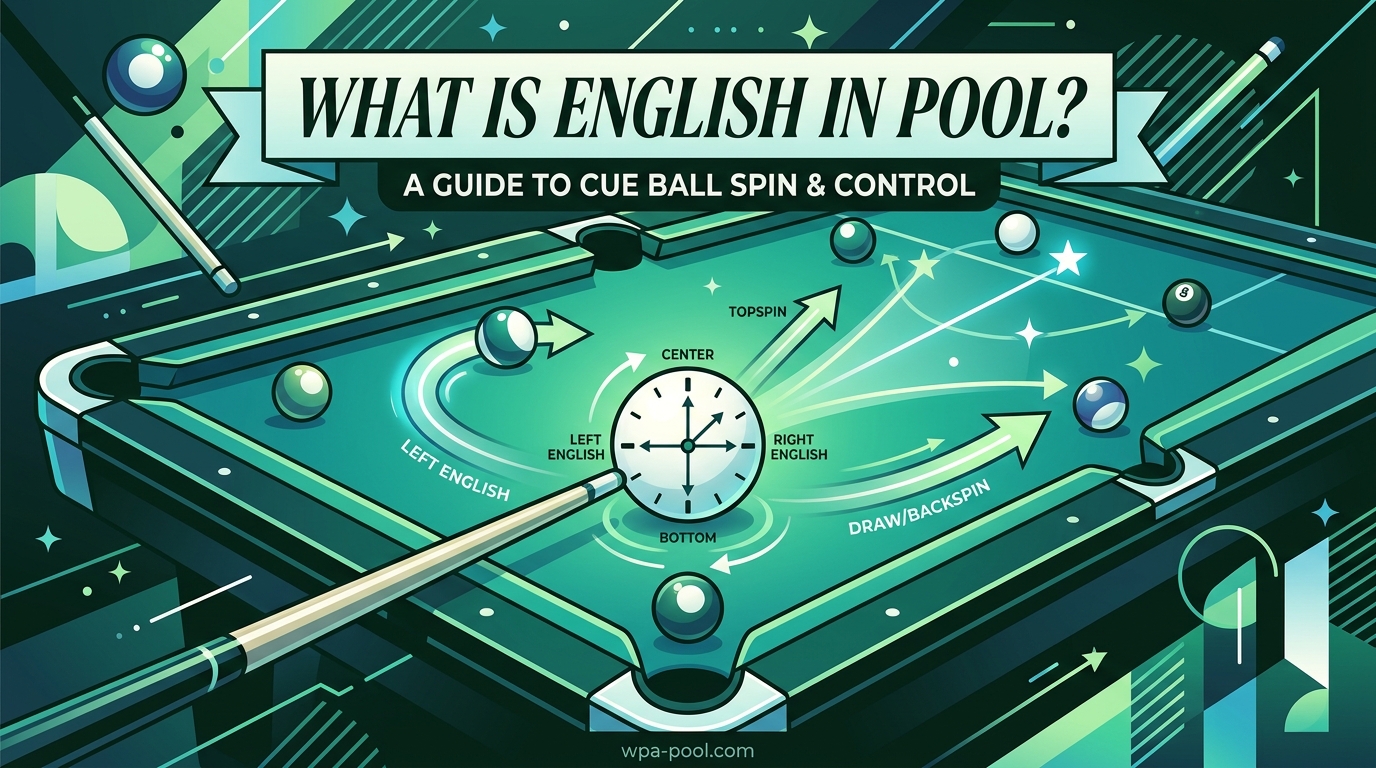
English in pool is the technique of applying sidespin to the cue ball by striking it to the left or right of center. This spin changes how the cue ball behaves after contacting an object ball or rail, giving you control over its path and final position. When I first started playing pool, I thought English was just fancy spin that pros used to show off. I learned quickly that it is actually a fundamental skill for controlling the table and setting up your next shot.
In this guide, I will explain exactly what English is and what it is not. You will learn the different types of English, how each one affects the cue ball, and when to use them in real game situations. Whether you are a beginner trying to understand the basics or an intermediate player looking to refine your technique, this guide will give you the clarity you need.
Understanding English starts with knowing your equipment. If you are setting up your playing space, you might want to reference regulation pool table dimensions to ensure you have the right setup for practicing these techniques.
Table of Contents
What is English in Pool
English is specifically sidespin applied to the cue ball. When you strike the cue ball to the left or right of its vertical center line, you create sideways rotation that affects its trajectory. This is different from topspin (follow) or backspin (draw), which involve hitting above or below the horizontal center line.
Many beginners confuse English with follow and draw shots. Hitting the cue ball high creates topspin that makes the ball roll forward after contact. Hitting low creates backspin that pulls the ball backward. These are vertical spin effects, not English. True English only comes from horizontal off-center hits that create left or right rotation.
The physics behind English involves friction between the spinning cue ball and other surfaces. When the spinning cue ball contacts an object ball, the friction between them causes the object ball to deviate slightly from the expected path. This effect is called “throw.” When the cue ball hits a rail, the spin causes it to rebound at a different angle than a center-hit ball would.
Why is it Called English in Pool
The term “English” has an interesting history that dates back to the 2026-1800s. British snooker and billiards players were known for their advanced spin techniques, which impressed American players who encountered these methods. American players began referring to this sidespin technique as “English” because of its association with English players who excelled at it.
There is some debate about the exact origin story. Some sources suggest the term came from the “English twist” applied to billiard balls. Others believe it simply reflected the dominance of English players in international competitions during that era. Regardless of the precise origin, the name stuck in American pool terminology while British players often use “side” or “side spin” instead.
Today, the term is used almost exclusively in American pool and billiards. International players and those trained in snooker typically refer to the same concept as “side” or “running side” and “check side.” Understanding these regional differences can help when watching international tournaments or learning from coaches with different backgrounds.
Types of English in Pool
There are four main categories of English that every player should understand. Each type creates different effects on the cue ball and is suited for different situations on the table. Learning to distinguish between them is essential for accurate shot-making.
Left English
Left English occurs when you strike the cue ball to the left of its center point. This creates counterclockwise spin when viewed from above. The effect on the cue ball depends on what it contacts next. When hitting an object ball with left English, the cue ball will deflect to the right due to a phenomenon called “squirt” or deflection. This means you need to aim slightly left of your intended target to compensate.
Right English
Right English is the mirror of left English. You strike the cue ball to the right of center, creating clockwise rotation. The squirt effect pushes the cue ball to the left upon contact with the object ball, requiring you to aim slightly right to compensate. Many players find one side more natural than the other, but developing proficiency with both is essential for complete cue ball control.
Inside English
Inside English refers to spin applied on the same side as the direction the cue ball will travel after hitting the object ball. For example, if the cue ball needs to travel to the left after contact, applying left English would be inside English. This type of English actually reduces the amount of throw between the cue ball and object ball because the spinning surfaces oppose each other less.
Outside English
Outside English is applied on the opposite side of the cue ball’s intended path. If the cue ball needs to go left but you apply right English, that is outside English. This creates maximum throw effect because the spinning surfaces grip each other more strongly. Outside English is often used when you want to change the object ball’s path significantly or when you need the cue ball to hug the rail after contact.
How English Affects Cue Ball Behavior
When you apply English to a shot, three main phenomena occur that affect the outcome. Understanding these effects helps you predict where the cue ball will go and how to adjust your aim. I spent months confused about why my English shots never went where I expected until I understood these concepts.
Deflection (Squirt)
Deflection, commonly called “squirt,” happens immediately when the cue tip strikes the cue ball off-center. The cue ball pushes away from the direction of the spin. Right English causes the ball to squirt to the left, and left English makes it squirt to the right. This happens before the cue ball even travels a few inches. The amount of squirt depends on how far off-center you hit and how hard you strike the ball.
The squirt effect is why beginners often miss shots when trying to use English. You might aim perfectly at the object ball, but the squirt pushes the cue ball off line before it gets there. Experienced players subconsciously adjust their aim to compensate for squirt based on the amount of English and the power of the shot.
Throw Effect
Throw occurs when the spinning cue ball contacts the object ball. The friction between the balls causes the object ball to be pushed slightly off its expected path. With outside English, the throw effect is maximized because the spinning cue ball drags the object ball in the direction of the spin. Inside English minimizes throw because the spin directions work against each other.
This effect is particularly important on cut shots where you are hitting the object ball at an angle. The throw can make the difference between pocketing the ball and hitting the jaw of the pocket. At slower speeds, throw is more pronounced because the friction has more time to act between the balls.
Rail Interaction
When a spinning cue ball hits a cushion, it rebounds at a different angle than a center-hit ball would. The spin causes the ball to either grip the rail and come off at a sharper angle or slide along the rail depending on the spin direction and speed. This is why English is crucial for position play when you need the cue ball to travel along multiple rails to reach your desired position.
Running English occurs when the spin direction matches the direction the ball is traveling along the rail. This helps the ball maintain speed and travel farther. Check English is when the spin opposes the direction of travel, causing the ball to slow down and come off the rail at a different angle. Mastering these rail effects is essential for advanced position play.
Factors That Affect Deflection
Several variables influence how much deflection and throw you will experience when using English. Understanding these factors helps you adjust your technique for different situations. I learned through trial and error that what works on one table might not work on another due to these variables.
The amount of English you apply is the primary factor. Hitting closer to the edge of the cue ball creates more spin and therefore more deflection. Maximum English requires you to aim significantly off your target line to compensate for squirt. Light English has minimal deflection and is often all you need for position control.
Shot speed dramatically affects deflection behavior. Harder shots have less time for friction effects to act, so throw is reduced. However, harder shots create more squirt initially because the cue tip pushes the ball farther off line. Softer shots maximize throw but minimize squirt. Finding the right speed for your intended English effect is a key skill.
Distance between the cue ball and object ball also matters. Longer shots give squirt more time to affect the cue ball’s path before contact. On long shots with heavy English, you need to compensate more for deflection than you would on short shots. This is why professional players often use softer speeds with English on long shots.
Table conditions affect English effectiveness significantly. New, clean balls with smooth surfaces create less throw than worn, dirty balls. Similarly, smooth table felt allows the cue ball to spin more freely, while worn felt can reduce spin retention. Humidity also affects friction between balls, increasing throw in damp conditions. Professional tournaments often change balls regularly to maintain consistent throw characteristics.
When to Use English in Pool
Knowing when to apply English separates intermediate players from advanced ones. English is not always necessary or desirable. Sometimes a simple center-ball hit is the most reliable path to success. I wasted years using English on every shot because I thought it made me look skilled, when it often complicated simple situations unnecessarily.
Use English when you need to change the cue ball’s path to reach a specific position. If a center-ball hit sends the cue ball into a pocket or to an awkward position, English can redirect it to safety. When you need the cue ball to travel around an obstacle ball to get position on your next target, English makes those shots possible.
Rail shots often require English to achieve proper angles. When the cue ball must travel off multiple cushions to reach position, running English helps maintain speed while check English helps control the angle of departure. These techniques allow you to navigate the table when a direct path is blocked.
English can help you pocket difficult cut shots by using throw to your advantage. When the natural angle of a shot sends the object ball toward the wrong part of the pocket, outside English can throw the ball into the pocket. This technique requires precise judgment of spin amount and speed but can save you from difficult kick shots or bank shots.
Beginner Tips for Learning English
If you are new to pool, the advice from experienced players is clear: avoid English until you have mastered center-ball hits. The Reddit billiards community consistently tells beginners that English complicates shots and causes unexpected cue ball movement. I wish I had followed this advice earlier in my playing career. It would have saved me months of frustration.
Focus on developing a consistent stroke with center-ball hits first. Learn to control speed and basic position without adding spin variables. Once you can consistently pocket balls and achieve reasonable position with center hits, then begin introducing light English. This foundation makes learning English much easier because you understand how the cue ball behaves without spin.
When you do start practicing English, begin with small amounts. Hit just slightly off center rather than near the edge of the ball. Light English has minimal deflection and is easier to predict. As you gain confidence and understanding of how the cue ball reacts, gradually increase the amount of spin.
Practice the following drill to develop English control. Place the cue ball one diamond from the side rail and the object ball one diamond from the opposite side rail. Practice hitting the object ball with different amounts of left and right English, observing how the cue ball deflects. Start with soft speeds and gradually increase power as you learn to compensate for squirt.
Another excellent practice routine involves the cue ball alone. Place the cue ball near a corner pocket and shoot it up and down the long rail using English to control where it rebounds. Try to make the cue ball travel specific distances using only English changes. This isolated practice helps you understand deflection and rail effects without worrying about pocketing object balls.
Frequently Asked Questions About English in Pool
How does English in pool work?
English works by applying sidespin to the cue ball through off-center hits. This spin causes deflection (squirt) at the moment of contact with the cue tip, throw when contacting object balls, and altered rebound angles from rails. Right English makes the cue ball squirt left initially but can throw the object ball right depending on contact dynamics.
Why is English called English in pool?
The term originated in the 1800s when American players observed British billiards players using advanced sidespin techniques. American players began calling this spin technique English due to its association with English players who excelled at applying sidespin. British players today typically use the terms side or sidespin instead.
What does English mean in pool?
In pool, English refers specifically to sidespin applied to the cue ball by striking it to the left or right of center. It does not include topspin (follow) or backspin (draw), which are vertical spin effects. English affects cue ball trajectory through deflection, throw, and rail interaction.
How to know what English to use in pool?
Choose English based on where you want the cue ball to go after contact. Use left or right English depending on which direction you need the cue ball to travel. Apply inside English when you want to minimize throw and outside English when you want to maximize it or change the object ball’s path. Beginners should master center-ball hits before attempting English.
Conclusion
English in pool is a powerful tool for controlling the cue ball’s path and achieving better position on every shot. It refers specifically to sidespin applied by striking the cue ball left or right of center, creating effects like deflection, throw, and altered rail rebounds. Understanding the four types of English and when to apply them will elevate your game significantly.
Remember that English is an advanced technique. Beginners should focus on center-ball hits and fundamental stroke mechanics before introducing spin variables. When you do begin practicing English, start with light amounts and progress gradually. With consistent practice and an understanding of the physics involved, English will become a natural part of your pool game in 2026.