
Getting the right pool ball size for your table can make the difference between smooth, satisfying gameplay and constant frustration. I learned this the hard way after buying a standard ball set for my compact home table only to discover the balls were too large for the pockets. Whether you are replacing worn balls or buying your first set, understanding pool ball sizes explained properly will save you time, money, and disappointment.
In this guide, I will walk you through everything you need to know about pool ball dimensions. We will cover the standard sizes used in tournaments and homes, how to match ball size to your table, and practical tips for measuring your existing balls. By the end, you will know exactly what size pool balls you need.
Table of Contents
What Are Pool Ball Sizes?
Pool ball sizes refer to the diameter of billiard balls used in pocket billiards games. Unlike weight, which can vary slightly between sets, diameter is the critical measurement that determines whether balls will work properly with your table.
The diameter is measured across the widest point of the ball, passing through its center. Pool balls are spherical, so this measurement is consistent regardless of which angle you measure from. Professional manufacturers maintain tight tolerances, typically within plus or minus 0.005 inches, ensuring consistent play across regulation-grade ball sets.
Understanding pool ball dimensions matters because balls that are too large for your table will not pocket properly, while balls that are too small can create unpredictable rebounds and reduce gameplay satisfaction.
Standard Pool Ball Sizes
Pool balls come in two primary sizes used in North America, with specific measurements in both imperial and metric units.
The Standard Size: 2-1/4 Inch (57.15 mm)
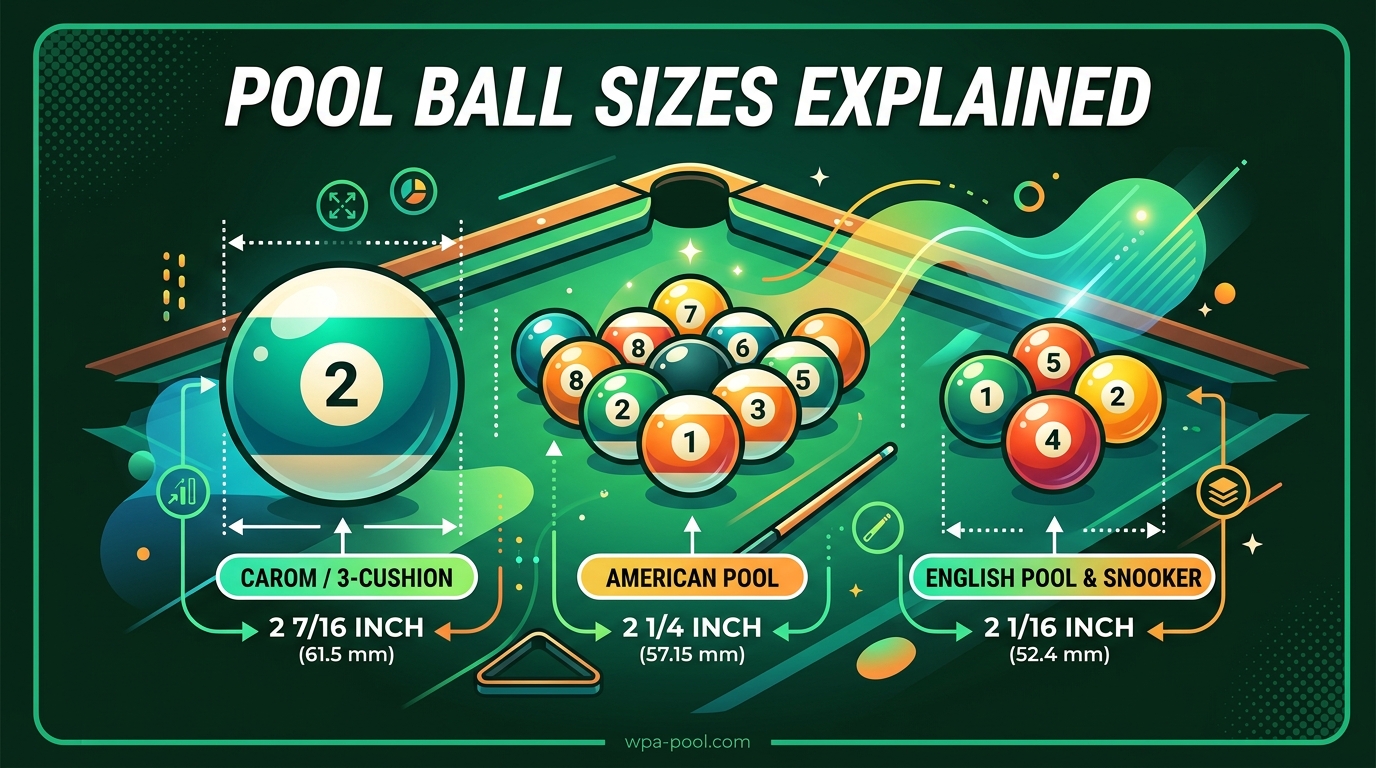
This is the regulation pool ball size used in professional tournaments, commercial pool halls, and most full-size home tables. The 2-1/4 inch diameter translates to exactly 57.15 millimeters. If you play in leagues or tournaments, this is the size you will use.
American pool tables measuring 8 feet or 9 feet in length almost exclusively use this ball size. The larger balls provide satisfying weight and momentum, creating predictable ball roll and reliable pocketing on standard-sized pockets.
The Compact Size: 2-1/16 Inch (52 mm)
The smaller 2-1/16 inch pool balls, measuring 52 millimeters in diameter, are designed for compact tables commonly found in homes, apartments, and some bars. These balls are approximately 5 millimeters smaller than standard balls.
Many 7-foot tables and most 6-foot tables use this ball size. The reduced diameter allows proper pocket clearance on tables with smaller pocket openings. Using standard-sized balls on these tables often results in balls sitting in pockets rather than dropping through, disrupting gameplay.
Complete Pool Ball Size Chart
Here is a quick reference chart showing the standard pool ball sizes and their specifications:
| Ball Size Name | Diameter (Inches) | Diameter (mm) | Typical Use |
|---|---|---|---|
| Standard/Regulation | 2-1/4″ | 57.15 mm | 8ft and 9ft tables, tournaments |
| Compact/Bar Size | 2-1/16″ | 52 mm | 6ft and 7ft home tables |
| Small/Mini | 2″ | 50.8 mm | Some 7ft tables |
| Children’s Size | 1-7/8″ | 47.6 mm | 6ft mini tables, kids tables |
The 2-1/4 inch and 2-1/16 inch sizes account for approximately 95% of all pool tables in North America. The smaller sizes are becoming less common as manufacturing standards have consolidated around these two primary options.
Pool Ball Sizes for Different Table Sizes
Matching your ball size to your table size is essential for proper play. Here is what I have learned from researching table specifications and talking to table owners about their setups.
6-Foot Tables
Six-foot tables, often called mini pool tables or tabletop models, typically require the smallest balls. Most use 1-7/8 inch (47.6 mm) balls, though some higher-quality 6-foot tables may use 2-inch (50.8 mm) balls.
If you own a 6-foot table, check the pocket openings before purchasing. Many of these tables come with balls included, so replacing them with the same size is usually safest.
7-Foot Tables
Seven-foot tables, commonly called bar tables or coin-operated tables, usually take 2-1/16 inch (52 mm) balls. This is the most common size for home recreational tables and bar room setups.
However, some modern 7-foot tables are built to regulation specifications and use 2-1/4 inch balls. Check your table manual or measure the pocket opening width to confirm. The pocket should be approximately 1.5 times the ball diameter for proper clearance.
8-Foot Tables
Eight-foot tables are the most common home table size and almost universally use the standard 2-1/4 inch (57.15 mm) balls. These tables offer a good balance between space requirements and authentic playing experience.
If you are buying balls for an 8-foot table, the standard 2-1/4 inch size is almost certainly correct. Only custom or specialty 8-foot tables would use different sizes.
9-Foot Tables
Nine-foot tables are regulation tournament size and exclusively use 2-1/4 inch balls. These tables are found in professional venues, serious home game rooms, and pool halls catering to competitive players.
Using any size other than regulation 2-1/4 inch balls on a 9-foot table would be unusual and likely indicate a custom setup or incorrect equipment.
Table Size to Ball Size Reference
| Table Size | Recommended Ball Size | Ball Diameter |
|---|---|---|
| 6-foot | Children’s/Mini | 1-7/8″ to 2″ (47.6-50.8 mm) |
| 7-foot | Compact/Bar Size | 2-1/16″ (52 mm) |
| 8-foot | Standard/Regulation | 2-1/4″ (57.15 mm) |
| 9-foot | Standard/Regulation | 2-1/4″ (57.15 mm) |
Cue Ball Size Specifications
The cue ball in a standard pool ball set uses the same diameter as the object balls. In a regulation 2-1/4 inch set, the cue ball measures exactly 2-1/4 inches in diameter. Similarly, 2-1/16 inch sets have cue balls matching that size.
However, cue balls often differ in weight and sometimes in material composition. Regulation cue balls typically weigh between 5.5 and 6 ounces, matching object ball weights. Some cue balls used on coin-operated tables contain magnets to enable ball separation mechanisms.
When replacing only your cue ball, always match the diameter exactly to your object ball set. Using a cue ball of a different size than your object balls will cause inconsistent play and make accurate shooting impossible.
How to Measure Pool Ball Size
If you are unsure what size balls you currently have or need to verify table specifications, measuring is straightforward with the right approach.
Method 1: Using Digital Calipers (Most Accurate)
Digital calipers provide the most accurate measurement. Place the ball between the caliper jaws and close them until they touch the ball lightly. Read the measurement on the display.
For 2-1/4 inch balls, you should see approximately 57.15 mm or 2.250 inches. For 2-1/16 inch balls, expect approximately 52 mm or 2.0625 inches. Measure multiple balls from your set to ensure consistency.
Method 2: Using a Standard Ruler (Good Estimate)
Place the ball on a flat surface against a wall. Hold a ruler or measuring tape perpendicular to the wall, touching the opposite side of the ball. The measurement from wall to ruler edge gives you the diameter.
This method is accurate within about 1/16 inch, which is sufficient to distinguish between standard and compact sizes.
Method 3: Using Pocket Opening as Reference
Measure your table pocket opening width. Standard pockets for 2-1/4 inch balls are approximately 4.5 to 5 inches wide at the opening. If your pockets measure closer to 4 inches, you likely need 2-1/16 inch balls.
The pocket should be roughly 1.5 times the ball diameter for proper clearance. If the ball barely fits or sits on the pocket ledge rather than dropping through, your balls may be too large.
Step-by-Step Measuring Guide
Follow these steps to determine your pool ball size without specialized tools:
Step 1: Gather a ruler or measuring tape showing both inches and millimeters.
Step 2: Place the ball on a flat, level surface.
Step 3: Position the ruler so the zero mark touches one side of the ball.
Step 4: Read the measurement where the ruler touches the opposite side.
Step 5: Compare to standard sizes: 2.25 inches = standard, 2.06 inches = compact.
Pool Ball Sizes vs Snooker and Carom Balls
Understanding how pool balls compare to other billiard game balls helps clarify why specific sizes matter for each game type.
Snooker Balls: 52.5 mm (2-1/16 inches)
Snooker uses 22 balls total, including 15 reds, 6 colors, and 1 cue ball. All measure 52.5 mm in diameter, virtually identical to compact pool balls. However, snooker balls are typically lighter and made from different materials than pool balls.
Despite the similar diameter, snooker balls are not interchangeable with pool balls due to weight differences and the specific gameplay requirements of each game.
Carom Billiard Balls: 61.5 mm (2-7/16 inches)
Carom billiards, played on pocketless tables, uses only three balls: two cue balls and one red object ball. These balls measure 61.5 mm (2-7/16 inches), significantly larger than pool balls.
The larger size and heavier weight suit the different physics of carom play, where balls must rebound off cushions without the escape route of pockets.
British-Style Pool Balls
British-style eight-ball pool, popular in the UK and Australia, uses balls measuring 2 inches (50.8 mm) in diameter, falling between compact and standard American sizes. These sets typically include reds and yellows rather than solids and stripes.
If you are purchasing balls for a table imported from the UK or following British rules, verify whether you need 2-inch British-style balls.
Why Does Ball Size Matter for Gameplay?
Using the correct ball size for your table affects multiple aspects of play. Here is why getting this right matters.
Pocket Clearance and Ball Drop
Balls that are too large for the pockets will not drop properly. They may sit on the pocket shelf, roll back onto the table, or require excessive force to pocket. This disrupts game flow and can damage both balls and pockets over time.
Balls that are too small for the pockets can rattle in the opening, causing unpredictable bounces and frustrating near-misses.
Rebound Angles and Physics
Ball size affects how balls interact with cushions and each other. Standard 2-1/4 inch balls are designed to rebound predictably from standard cushion heights and angles. Smaller balls on tables designed for larger balls may rebound differently than expected.
While experienced players can adapt, consistent equipment ensures the skills you develop transfer between tables.
Shot Making and Control
The weight difference between ball sizes affects how balls roll and respond to spin. Larger balls carry more momentum and are less affected by table imperfections. Smaller balls may be more sensitive to cloth conditions and level issues.
Using the size your table was designed for provides the intended playing experience the manufacturer engineered.
Common Problems from Wrong Ball Size
If you experience balls frequently refusing to drop despite appearing to hit the pocket cleanly, your balls may be too large. If balls seem to rattle excessively or bounce unpredictably from pockets, they may be too small.
Measure your balls and pockets to identify the correct size before purchasing replacements.
How to Choose the Right Pool Ball Size
Selecting the correct ball size requires checking a few key factors about your table and intended use.
Check Your Table Manufacturer Specifications
The most reliable method is consulting your table manual or manufacturer website. Most tables list the recommended ball size in the specifications. Look for phrases like “uses standard 2-1/4 inch balls” or “designed for 52mm balls.”
If you cannot find specifications, contact the manufacturer with your table model number. They can confirm the correct size.
Measure Pocket Openings
Use a measuring tape to check the width of your pocket openings at the narrowest point. Standard pockets for 2-1/4 inch balls measure 4.5 to 5 inches across. Pockets measuring 4 to 4.25 inches typically indicate 2-1/16 inch ball compatibility.
Measure multiple pockets to ensure consistency, as pockets may vary slightly or wear differently over time.
Consider Your Playing Style
If you plan to play in leagues or tournaments, practice with regulation 2-1/4 inch balls regardless of your table size. This ensures your skills translate to competitive play.
For casual home play, using the size your table was designed for provides the best experience and protects your equipment from unnecessary wear.
Factor in Table Age and Origin
Older tables, particularly those from the 1970s and 1980s, sometimes used non-standard sizes that are now uncommon. Imported tables may follow British or European sizing standards different from North American norms.
Research your specific table model if it is vintage or imported to ensure compatibility.
Common Mistakes When Buying Pool Balls
Avoid these frequent errors that lead to returns and frustration.
Assuming One Size Fits All
Many buyers assume all pool tables use the same ball size. This mistake leads to purchasing standard 2-1/4 inch balls for compact 7-foot tables, resulting in balls that will not pocket properly.
Always verify your table specifications before ordering.
Ignoring Table Age and Condition
Older tables may have pockets that have loosened or tightened over time due to wear, humidity, or repairs. A table originally designed for 2-1/4 inch balls might now work better with slightly smaller balls if the pockets have narrowed.
Test different balls if possible before committing to a purchase.
Confusing Metric and Imperial Measurements
The conversion between inches and millimeters causes confusion. A 57 mm ball is not the same as a 2-1/4 inch ball (57.15 mm). While the difference seems small, it matters for pocket fit.
When ordering, verify whether specifications are given in inches or millimeters and ensure they match your needs exactly.
FAQ
What does 2-1/16 pool ball mean?
The notation 2-1/16 refers to a ball diameter of 2 and 1/16 inches, which equals approximately 52 millimeters. This is the standard compact size used for many 7-foot home pool tables and bar tables. The fraction 1/16 represents one-sixteenth of an inch, making these balls slightly smaller than the regulation 2-1/4 inch balls used in tournaments.
What are the different sizes of pool balls?
Pool balls primarily come in two sizes: standard 2-1/4 inch (57.15 mm) balls used for 8-foot and 9-foot tables and tournament play, and compact 2-1/16 inch (52 mm) balls used for many 7-foot home tables. Additionally, some 6-foot tables use smaller 2-inch or 1-7/8 inch balls. Snooker balls measure 2-1/16 inch (52.5 mm), while carom balls are larger at 2-7/16 inch (61.5 mm).
What size pool balls for a 7 ft table?
Most 7-foot pool tables use 2-1/16 inch (52 mm) compact balls. This smaller size allows proper pocket clearance on tables with narrower pockets typical of compact home and bar tables. However, some modern 7-foot tables are built to regulation specifications and use standard 2-1/4 inch balls. Check your table manual or measure the pocket opening to confirm.
How do I know the size of my pool balls?
Measure the diameter using digital calipers for accuracy, or use a ruler for a close estimate. Place the ball on a flat surface and measure from one side to the other through the center. Standard balls measure 2.25 inches (57.15 mm), while compact balls measure 2.0625 inches (52 mm). You can also check your table manual or measure the pocket opening: 4.5-5 inch pockets typically use standard balls, while 4-4.25 inch pockets use compact balls.
Can I use standard size balls on a smaller table?
Using standard 2-1/4 inch balls on a table designed for 2-1/16 inch balls is not recommended. The balls will likely not drop into the pockets properly, causing them to sit on the pocket shelf or bounce back onto the table. This creates frustrating gameplay and can damage your balls and pockets over time. Always use the ball size your table was designed for.
What is the tolerance for pool ball size?
Professional pool ball manufacturers maintain tight size tolerances of plus or minus 0.005 inches (approximately 0.13 mm). This means a regulation 2-1/4 inch ball can measure between 2.245 and 2.255 inches and still meet tournament standards. Quality balls from reputable manufacturers like Aramith maintain consistent sizing across entire sets.
Conclusion
Understanding pool ball sizes explained clearly is essential for anyone setting up a game room or replacing worn equipment. The key takeaway is matching your ball size to your table size: use 2-1/4 inch (57.15 mm) balls for 8-foot and 9-foot tables, and 2-1/16 inch (52 mm) balls for most 7-foot home tables.
Take time to measure your existing balls or table pockets before purchasing. The few minutes spent verifying specifications will save you from the frustration of balls that do not fit properly. With the right size balls, you will enjoy smoother gameplay, proper pocket action, and equipment that performs as intended.
If you are unsure about your table specifications, consult the manufacturer or measure carefully using the methods outlined in this guide. Proper pool ball sizes ensure your table plays the way it was designed to, whether you are practicing for tournaments or enjoying casual games with friends.